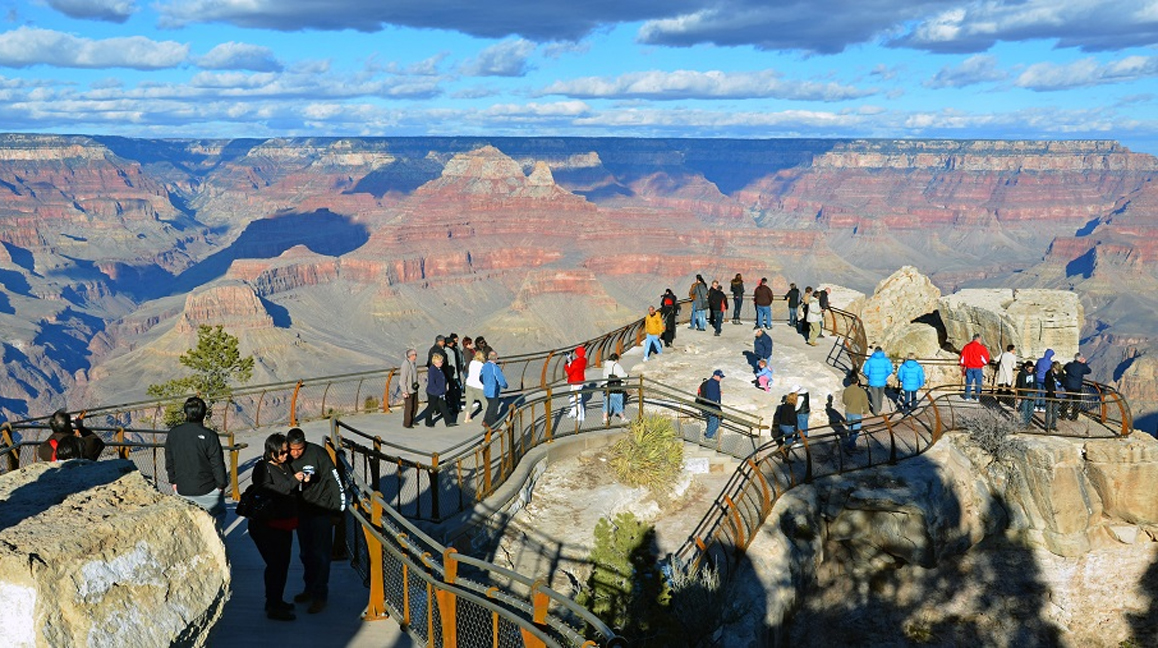
America’s national parks remain as popular as ever. Campground reservations fill months in advance, entrance stations see long lines during peak season, and millions of visitors continue to pass through park gates each year.
But while demand for national parks has grown, funding has not increased as quickly as visitation. At the same time, inflation and rising operating costs have continued to pressure park budgets. Congress has increased park funding in some years, and separate federal programs have helped tackle deferred maintenance projects. Even so, budget analysts say inflation and growing visitation continue to put pressure on the system.
For RVers, the issue matters because those dollars help maintain campgrounds, roads, restrooms and visitor services.
A recent Congressional Research Service (CRS) analysis highlighted the challenge. The report noted that visitation and operating costs have increased over time, raising questions about whether funding growth has kept pace with demand.
More visitors, more pressure
National parks have become increasingly popular over the past decade.
According to the CRS, national park visitation climbed from about 294 million visits in 2014 to roughly 325 million in 2023. More recent National Park Service figures show visitation remains near historic highs.
More visitors means more wear and tear on roads, campgrounds, restrooms, water systems, trails and visitor facilities. As usage grows, so do maintenance and operating costs.
“More visitors meanS more wear and tear on everything from campgrounds and roads to restrooms and trails.”
Inflation changes the picture
The CRS report notes that most National Park Service funding comes through annual congressional appropriations.
But while demand for national parks has grown, funding hasn’t kept pace with visitation. According to the CRS, inflation-adjusted National Park Service funding increased about 7 percent between 2014 and 2023. Visitation grew about 10 percent during the same period. At the same time, labor, construction and other operating costs continued to rise, putting additional pressure on park budgets.
A Government Accountability Office review found that National Park Service funding declined in inflation-adjusted terms between 2005 and 2014, even as visitation and operating costs continued to grow. In simple terms, the agency received funding, but those dollars bought less than they had in the past.
Labor costs, construction expenses, utilities and other operating costs have continued to rise. When funding growth doesn’t match those increases, park managers must stretch available resources further.
Staffing enters the conversation
Staffing often enters the conversation, as well.
The National Parks Conservation Association says National Park Service staffing declined by about 13 percent between 2012 and 2022, while visitation increased about 10 percent during the same period.
Whether measured through staffing levels, maintenance needs or operating costs, the underlying challenge remains the same: Demand for park services has continued to grow.
That doesn’t mean parks are falling apart. Congress has approved funding increases in some years, and separate federal programs have directed billions of dollars toward deferred maintenance projects. Still, budget analysts continue to debate whether overall funding growth has matched long-term needs.
What visitors may notice
Most travelers will never read a federal budget report, but they will notice the visitor experience.
Funding pressures can show up as delayed maintenance projects, reduced operating hours, postponed facility improvements or increased pressure on existing staff and infrastructure.
The effects vary widely from park to park. Some parks have benefited from major infrastructure investments in recent years. Others continue to manage aging facilities while serving growing numbers of visitors.
For RVers, the issue is especially relevant because campgrounds, roads, dump stations, restrooms and visitor facilities all require ongoing maintenance.
The bottom line
Most RVers don’t spend much time thinking about federal budget formulas. They do notice when a campground needs repairs, a restroom is closed, or a visitor center cuts its hours.
America’s national parks remain one of the country’s most popular travel destinations. Visitors continue to arrive in historically high numbers, and public interest shows little sign of fading.
National parks remain one of America’s great travel bargains. But as visitation stays high and costs continue to rise, the question of how to pay for those parks isn’t likely to disappear anytime soon.
Sources
• Congressional Research Service, National Park Service (NPS) Appropriations: Ten-Year Trends (R42757)
• U.S. Government Accountability Office, National Park Service: Revenues from Fees and Donations Increased, but Some Enhancements Are Needed to Continue This Trend (GAO-16-166)
• U.S. Government Accountability Office, The National Park Service Is Turning 100—How Are Its Finances?
• National Park Service visitation statistics (2025 visitation announcement)
RELATED
- National parks drop timed-entry reservations in 2026; RVers may pay the price
- National parks avoid major funding cuts, a key concern for RV travelers
- Why staffing shortages in national parks are changing the visitor experience
- Poll finds 7 in 10 Americans want to protect national parks from budget cuts
- Visitors may not see the strain, but national parks are operating with thinner teams
- What the public doesn’t see in national park budget cuts
RVT1265b