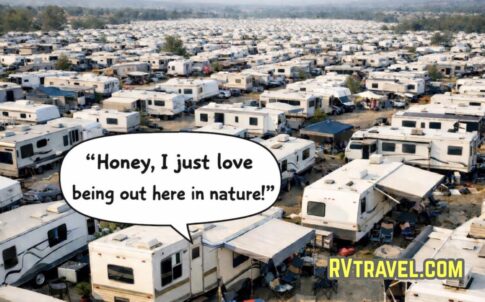
Have you been to an RV show? (Perhaps that should be a poll.🤔) But if you’ve ever been to almost any RV show out there, then you have an idea what it’s like—endless rows of RVs, often organized by manufacturer, with RV salespeople hovering around like the proverbial land sharks Jimmy Buffett sang about.
“Fins to the left, fins to the right and you’re the only bait in town.”
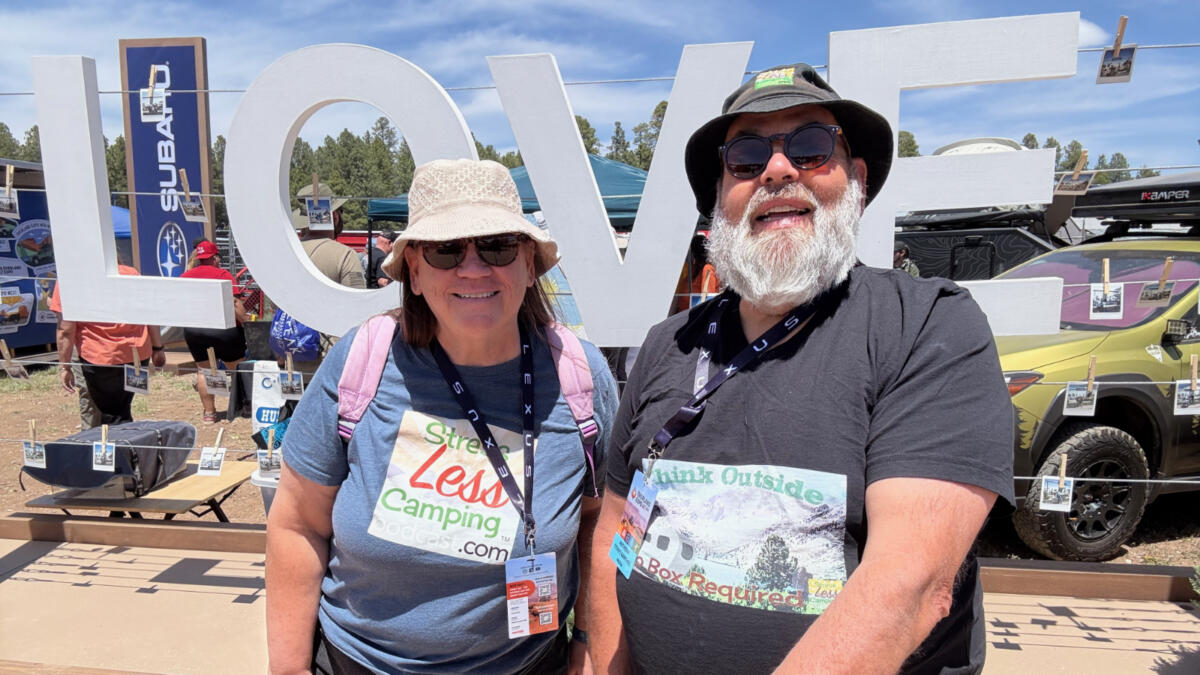
Peggy and Tony Barthel
Overland Expo five times a year
Five times a year, there’s a different sort of RV show: the Overland Expo. This is a monster event where tens of thousands of people attend to look at the latest in overlanding gear and rigs. In fact, Winnebago chose to debut its new Winnebago ARKA model at the show.
Yes. There are RVs at Overland Expo (OE) along with RV dealers and manufacturers, of course. But there are also all sorts of other things to support the overlanding experience. And many of these supporting things cross over into regular RV life.
I suspect, based on the comments, that many of us are not likely to take a heavily-modified four-wheel-drive vehicle way, way into the back country where few humans have traipsed in the past. Yes. I have a vehicle that can. No, I haven’t gone very far off the beaten path with it.
I love the way the show is done
The reason I love this show is just the way it’s done. There are all kinds of people who have invented all kinds of things, from camp chairs to portable toilets to fire pits. I was told the number of fire pits at the show this year was off the charts. Propane, wood, charcoal—and ways of cooking over said fires, too.
Perhaps few among us are going to hike into the woods and stay there for days on end. But there are all sorts of clothing options that are weather-resistant, and that, too, plays into the RV lifestyle. Who hasn’t had the misfortune of having to dump tanks or level an RV on a rainy day?
Camping at Overland Expo
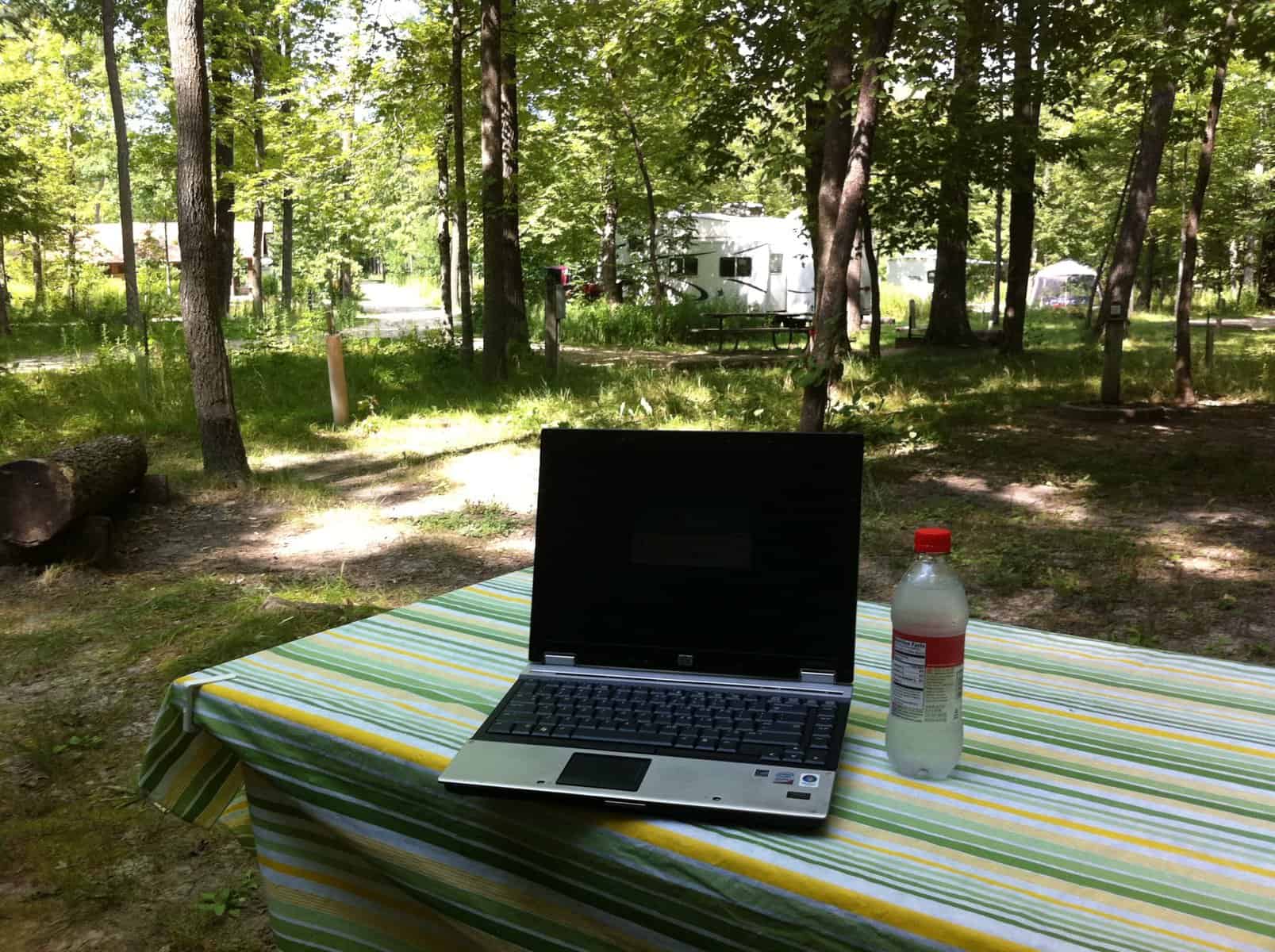
Another thing they have there is camping. You can actually camp on the grounds. And you’re camping with other like-minded individuals who love this lifestyle.
There used to be camping at the Florida RV show that was relatively integrated with that show, but that’s been changed. I know you can camp at the Hershey Show and, if I go again this year, that’s what I’m going to do.
I have not camped at Overland Expo. I’ve only been told that it’s a very communal experience.
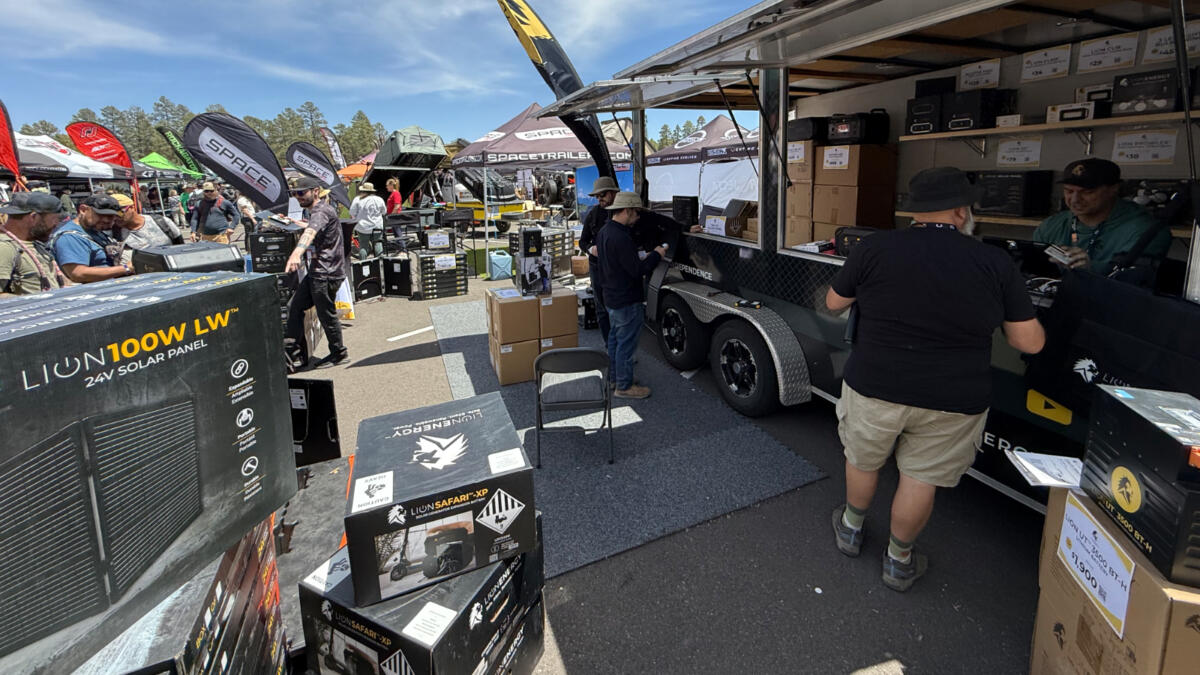
Gadgets, gizmos, and gear a-plenty at Overland Expo West
New technologies
Something else there’s a lot of at Overland Expo are new technologies in all sorts of camping-related systems. This is where I saw several 12-volt and 48-volt air conditioning systems. It’s where I first saw SDG’s RV mini-split system, which happened to be installed in a Grand Design Class B van. That was at the show, too.
In fact, that system is the one you’ll find in the Winnebago ARKA, too. Imagine—RVs that didn’t have the big lump of an air conditioner on the roof?
Though Ember RV was showing their Overland Series trailers and running the air conditioners. On solar and battery power. This is what I do, too. Seeing it last year at Overland Expo West was reinforcing my thoughts that this is entirely possible.
Not slick marketing folks
Something else I noticed at OE was that you can go and totally nerd out with the people in the booths. It’s not the slick marketing folks with their polished shoes and brand-name shirts, for the most part. Instead, it’s people who actually go camping, which might be why there aren’t that many traditional RV companies there.
But, from what I’ve been told, several RV decision makers were actually roaming the aisles of the show without their name tags. Perhaps curiosity is in the air, too.
Gadgets and gizmos to modify vehicles for overlanding
Something that is reportedly common among true overlanders is that they love to take their vehicles and modify them to make them better at the task of adventuring. So, there are all sorts of gadgets and gizmos to accomplish that, from suspension upgrades to wheel and tire companies. In fact, even Subaru has a big presence here, and there’s a huge community of Subaru owners, too.
And many of the systems that enable us to go and stay off the grid are also the systems that allow RVs to run more efficiently, even in the campground.
You should go
If you have the chance, I’d encourage you to attend an Overland Expo event and just look at the new technologies, the cool gadgets, the clothes, and attend some of the workshops and seminars.
Truth be told, last year I was in Flagstaff and just loved the event, so I got passes for this past year and, well, I didn’t go. Life-related nonsense got in the way, and I combined the cost of fuel and all of that to make the decision to stay home.
And then I talked to friends who were there, including fellow podcasters Jason Epperson from RV Milesand Kenny Phillips from Beyond the Wheel. So, now I’ve got FOMO—Fear of Missing Out—pretty badly and I’ll be back next year to cover the event. Perhaps you, too, might consider joining me in Flagstaff or you may choose to attend one of these shows. I heartily recommend the experience.
If you’ve spent any amount of time RVing, you’ve probably heard the stories. A mouse sneaks in through a tiny opening and turns a storage compartment into its personal condo. A squirrel decides your engine bay looks like a great place to build a nest. Or, if you’re especially unlucky, you discover a family of rats has moved in and made themselves completely at home.
This week, Nanci Dixon shared a painful lesson she learned after leaving her RV stored. After getting busy with other projects and letting her usual checks slide, she ended up facing an infestation of pack rats—big ones. Really big ones. Let’s just say they weren’t the cute, cartoon variety.
The truth is, RVs can be incredibly inviting to critters. They offer shelter from the weather, cozy hiding places, and sometimes even access to food, water, or nesting materials. And it doesn’t seem to matter whether your RV is parked in the woods, a storage lot, your driveway, or even a campground.
Many RVers have their own stories. Some discovered chewed wiring. Others found nests in air conditioners, under sinks, or inside engine compartments. A few have opened a cabinet door only to receive the surprise of a lifetime. And while mice and rats get most of the attention, they’re hardly the only unwanted guests. Squirrels, chipmunks, raccoons, snakes, birds, ants, wasps, and even bats have been known to make themselves at home in RVs.
Of course, some RVers seem blessed with good luck. They park their RV for months at a time and never find so much as a single mouse dropping. Others wage a constant battle with traps, deterrents, peppermint oil, steel wool, and every other critter-fighting tactic imaginable.
We’ve been RVing for years, so why do we need a shakedown trip? Aren’t those trips for RV “newbies”?
Well, yes. However, an annual RV shakedown trip is one of the easiest ways to save yourself from a miserable first big trip of the season, and I believe you should take one once a year.
In storage
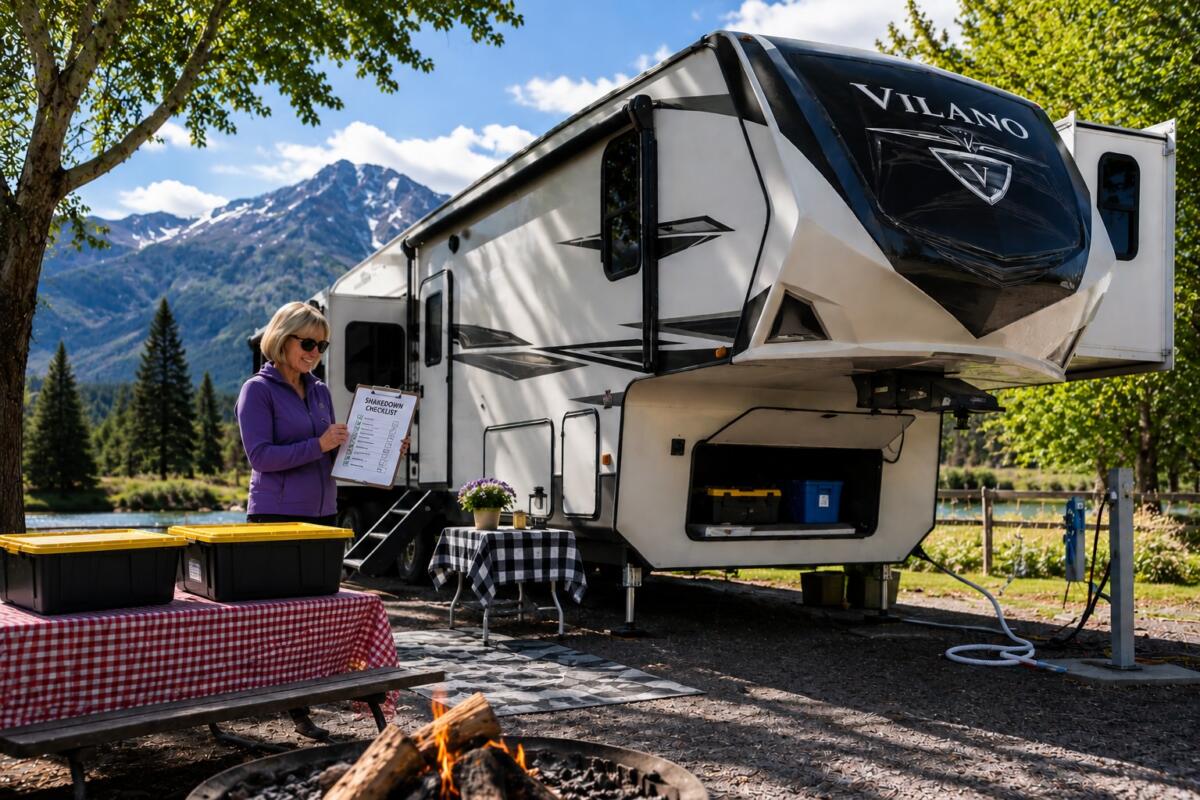
Our Vilano fifth wheel RV sat in storage much longer than in years past. Due to my travel buddy’s wonky knee, we skipped our annual trip south this winter. That means we haven’t traveled in our RV for several months. We winterized the rig in September, and that’s the last time we spent any real time in it.
If your rig has been in a similar situation, or you haven’t traveled in your rig for a few months, you may want to consider a shakedown trip, too.
Definition
Let’s begin with a definition. A “shakedown trip” is simply a short overnight or two at a campground near your home. Or, if you are fortunate to have full hookups at your stix-n-brix home, a shakedown trip doesn’t involve any real travel. You simply spend a day or two of “pretend camping.”
A shakedown trip lets you make sure your RV still behaves the way it should before you depend on it for a longer vacation. Think of it as a low-stress systems check that gives you a chance to find problems early, when they are still manageable and much cheaper to deal with.
It matters!
The biggest reason a shakedown trip matters is that RVs do not like to sit untouched for months. Seals may dry out, batteries can weaken, appliances get rusty in the memory department, and the owner often needs a refresher, too.
A short local trip helps you catch any surprises while you are still close to home and not already committed to a long haul across state lines. Staying local keeps the trip lower-stress, and you’ll consume less fuel, to boot!
What to do
A good shakedown trip should exercise as many RV systems as possible. Operate the auto leveling system, extend the slides, run the water system, test electrical hookups, verify propane appliances, check the air conditioner and vents, open and close windows, and use every outlet, as well.
Tires deserve special attention before you start out on an extended trip. Check the condition of each tire and also check the pressure. Also, make sure your carbon monoxide detector, smoke alarm, LP detector, and fire extinguishers are working.
This practice run is a smart way to confirm that the gear still works after storage or disuse. It provides peace of mind knowing that your RV’s major systems are in working order before the season starts.
And more
A shakedown trip is also the right time to refresh the little things that make a trip go smoothly. Check that your vehicle insurance card and registration are current and use your pre-trip checklist. Add any missing details to update your list and place the list where you can easily locate it.
The best shakedown trip is usually short, simple, and close enough to home that you can discover surprises before they negatively affect the whole season. One or two nights nearby is enough for most RVers.
That first shakedown trip can tell you whether you packed enough of the right gear, whether your RV routines still feel smooth, and whether any maintenance items need attention before your summer travels.
Cleaning, too
I use our annual shakedown trip to clean the interior of our RV. I open all of the windows and keep them open as I clean. A quick dust and vacuum removes any accumulated dead insects, dirt, and cobwebs. I use this opportunity to wipe down the refrigerator and countertops, too.
If our plans call for RV travel within a week, I’ll make the bed and pack towels into closets. Canned foods and spices will once again find their place, and I double-check that drawers and doors are secured and ready for travel.
Long-term payoff
A shakedown trip provides long-term payoff. When you keep notes on what worked, what failed, and what you fixed before the real trips begin, you build better maintenance records and make it easier to stay on top of future service. Maintaining quality records can help maximize resale value, which is one more reason this annual habit is worth the time and effort.
Bottom line
An annual RV shakedown trip is one of those small habits that protects your investment. It gives you a chance to catch leaks, dead batteries, tire trouble, appliance issues, and setup mistakes before they turn into road trip disasters. For RVers who want a calmer start to the season, it’s hard to beat a short practice run before the long summer miles begin.
Do you take an annual preseason shakedown trip? Tell us in the comments below.
By Dustin Simpson
In this video, we dive into the truth about RV roof repairs and explore why EternaBond tape or similar products may not always be the best solution for maintaining your RV’s roof.
Join me and my wife, Ashley, owners of an RV business, as we share our professional insights and discuss why proper roof maintenance requires more than just a quick fix.
Why EternaBond tape isn’t always the ideal solution
1. Temporary fix vs. long-term solution
EternaBond tape is often seen as a quick, easy fix for RV roof leaks, but it’s important to understand that it may not provide a long-lasting solution. While it can be effective for sealing small cracks and gaps temporarily, it doesn’t address the root cause of roof damage and may fail over time as the roof expands and contracts.
2. Limited durability under extreme conditions
The tape may not withstand extreme weather conditions, especially in areas with fluctuating temperatures. As your RV roof expands and contracts with heat and cold, the tape can lose its adhesion or crack, leading to leaks that were initially sealed.
3. Incomplete roof repair
Using EternaBond tape on an RV roof doesn’t fix underlying issues, such as damaged roofing materials, improper installation, or structural problems. Simply covering the problem with tape may allow moisture to accumulate underneath, leading to mold or rotting in the long term.
4. Aesthetic and structural concerns
While tape may seal leaks, it can often look unappealing and may not blend in with your RV’s exterior. Additionally, improper application or overuse of tape could damage the surface of your roof, compromising its overall appearance and functionality.
The proper way to maintain your RV roof
1. Inspect regularly
Regular roof inspections are key to identifying any damage or wear before it becomes a significant problem. Look for cracks, worn seals, or signs of water damage. Early detection is essential for avoiding costly repairs down the road.
2. Clean and treat your roof
Keeping your roof clean is essential for maintaining its integrity. Use the proper cleaning products to remove dirt, debris, and mildew. Applying UV protectant treatments will help protect the roofing material from sun damage and extend the lifespan of your roof.
3. Professional repairs when necessary
For more significant damage, a professional repair may be required. This could involve resealing the entire roof or replacing damaged sections. A proper roof repair ensures that your RV is protected from leaks and water damage.
4. Use the right materials
When performing any roof maintenance or repair, always use materials designed specifically for RV roofs. This ensures that the repair is durable, effective, and compatible with your roof’s materials.
Key takeaways
EternaBond tape is a useful tool for emergency repairs but should not be relied upon as a permanent solution for your RV roof maintenance.
Always prioritize regular inspections, proper cleaning, and professional repairs to maintain the longevity of your roof.
In the long term, investing in high-quality materials and professional services will save you money and time, preventing future issues and potential damage.
Conclusion
While EternaBond tape can offer a temporary fix for small leaks, it’s important to understand that it is not the best long-term solution for maintaining your RV’s roof. For lasting protection, regular maintenance and proper repairs are essential.
The answers came from owners of fifth wheels, motorhomes, travel trailers, camper vans, and even a vintage Ultra Van. While the RVs themselves were all different, the reasons people love them often weren’t. Again and again, readers mentioned thoughtful floor plans, home-like comforts, reliability, adventure, and the ability to spend time with the people they care about.
One thing became clear very quickly: The “best” RV isn’t necessarily the biggest, newest, or most expensive one. It’s the one that perfectly fits the owner’s lifestyle.
The perfect floor plan makes all the difference
If there was one theme that came up more than any other, it was floor plans. RVers repeatedly mentioned layouts that simply work for the way they travel and live. And these are only a fraction of the floor plan comments we received!
“We love the opposing slides and fireplace in the living room. We also chose this model because we have access to the refrigerator, bathroom, and closet on travel days.” —Mary Trnka, 2019 Grand Design Reflection 295RL
“The Flagstaff MicroLite 21 FBRS has the north-south bed, a slide with a couch instead of a dinette, and is short enough to fit in our barn. With the slide-out, we have room to dance if we want, and with the slide-in, we still have full access to everything in the trailer. For the two of us, it’s just the right size and layout.” —George Thaxton, Flagstaff MicroLite 21 FBRS
“The biggest reason we bought our ’07 Tiffin and why we love it is the bedroom layout! You can walk all around the bed. It has a big comfy chair and ottoman, a desk, a big closet, and overhead storage. The doors close so that it becomes a separate room to sit and read, talk on the phone, or watch TV without disturbing anyone in the front section. They only made this layout for four years.” —Marie Beschen
“Bath and a half. It’s the marriage saver floorplan!” —Thom Ritter
Many RVers spend countless hours researching floor plans before they buy. Judging by these responses, that’s time well-spent.
Comforts that make it feel like home
For some readers, the features they love most are the ones that make everyday life more comfortable.
“The electric trays in the basement are nice, but our favorite feature is heated floors when it’s cold in the morning. Our cat, Midnight, likes it also.” —Dick Burgman, 2021 Tiffin Allegro Bus
“It is right-sized for me, a solo traveler. I have a man cave with a large TV, fireplace, computer, files, and more, all within reach of my recliner. It is solidly built, reliable, and a stable, easy tow.” —Robert Cordy, 2019 Outdoors RV 21RD
Photo credit: David Sisson
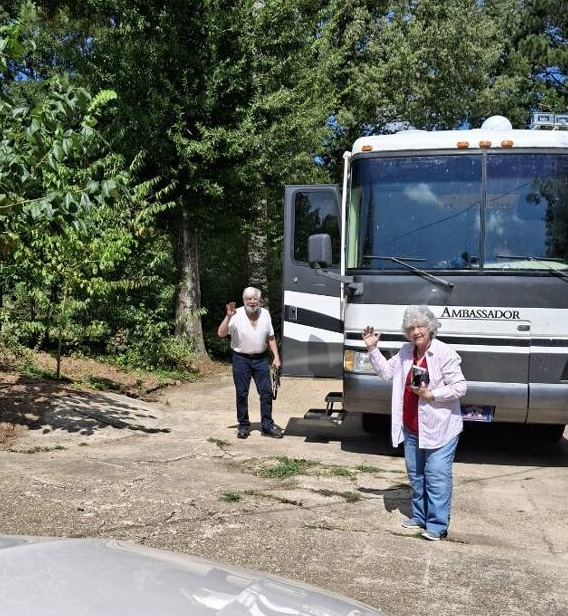
“I have a bathroom everywhere I go, and I don’t have to use a public restroom!” —David Sisson, 2003 Holiday Rambler Ambassador
Sometimes the little conveniences end up being the features owners appreciate the most.
RV kitchen love
Ask RVers what makes a great floorplan, and the kitchen often enters the conversation quickly.
Photo credit: Tim Currey
“Hands down, it is the kitchen. Our Outdoors RV 21KVS has a rear kitchen with lots of windows, cupboards, and countertops, all in a 21-foot trailer. It makes cooking meals in the great spots we dry camp a true pleasure.” —Tim Currey, Outdoors RV 21KVS
“I love the floor plan of our 2024 East to West Ahara fifth wheel RV. So much so that now, when I look at a house I might buy, I look for a kitchen layout the same as my RV. The refrigerator, stove, and sink are in easy reach of each other. A coffee bar that holds our toaster oven. And a large island with additional flip-up counter space on each end.” —Melody Thomas, 2024 East to West Ahara Fifth Wheel
For many RVers, the kitchen isn’t just where meals get prepared. It’s where mornings begin, where conversations happen, and where memories are made after a day of exploring.
Simplicity and reliability still matter
Not every reader was focused on luxury features or high-tech gadgets. Several specifically mentioned simplicity as one of the things they love most.
Photo credit: Steve Salzman
“Our 2010 Keystone Passport 199ML was purchased new, and we’ve come to appreciate its low-tech simplicity. The only integrated circuit chip in the whole trailer is probably in the microwave. No mysterious gremlins to diagnose. When something stops working, it’s usually obvious what needs to be fixed—and often something we can handle ourselves. Sometimes simple really is better.” —Steve Salzman, 2010 Keystone Passport 199ML
Photo credit: Carl Jones
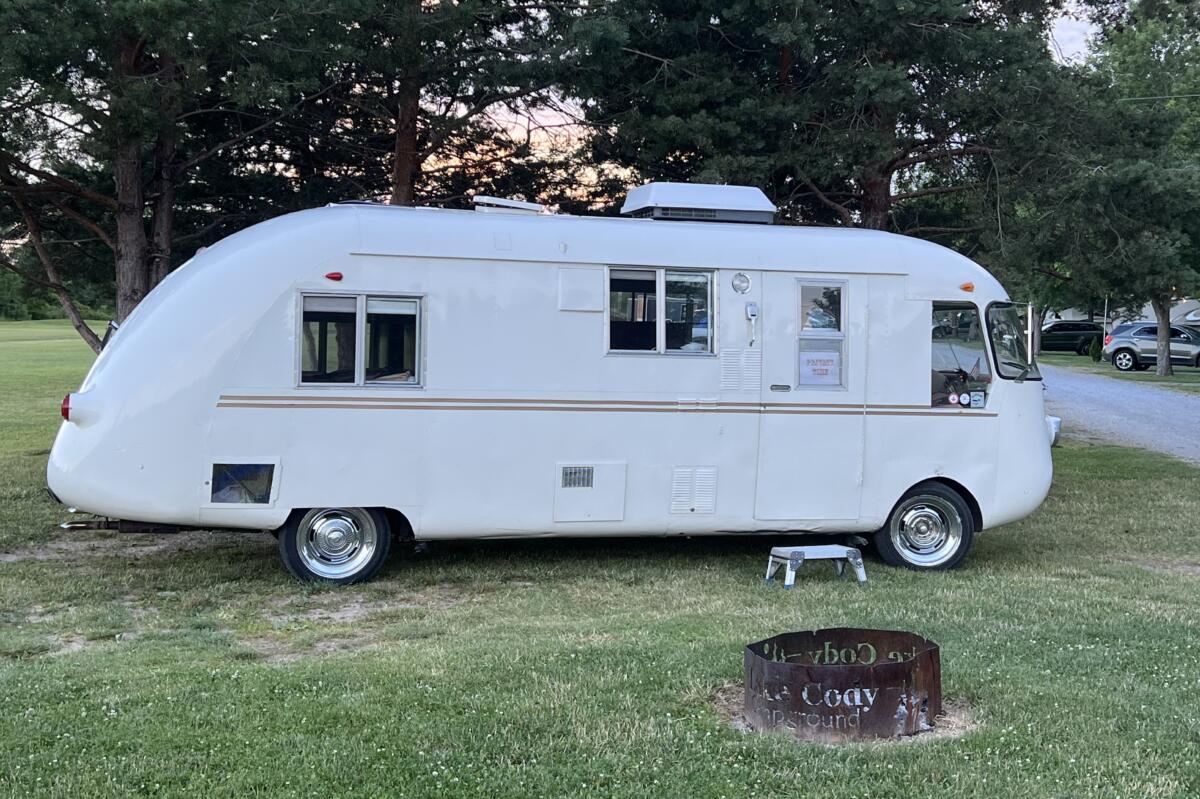
“I like that it’s unique, almost as old as me, and I can fix everything that breaks on it, as something usually breaks! It’s a 1968 Ultra Van!” —Carl Jones
“I happily bought an Aliner, which is very basic. The inside is designed to use every bit of space, like a ship’s cabin. I’ve been happily Aliner-ing for 10 years. I can break down and pull away in 15 minutes.” —Zoe Zall
For these owners, fewer systems often means fewer headaches and more time enjoying the trip.
Freedom and adventure
Many readers focused less on the RV itself and more on what it allows them to do.
“The trailer is small enough to fit in most sites yet feels big once inside. We travel a lot and never stay in hotels anymore because this trailer is so easy to tow and find a place to camp with. It’s truly our home away from home.” —Susan Ruzzamenti, 2023 Grand Design Reflection 226RK Fifth Wheel
“It fits our lifestyle and sense of adventure just fine for us. It has gotten us from the East Coast to the Rockies, on highways and paths less than byways. It has allowed us to see people, places, and things throughout this great nation that many have not had the privilege to do. My ‘let’s see what’s down this road’ attitude has gotten us into adventures my wife never thought she would endure, but our Roadtrek always got us out of those tight spots and left us with amazing memories.” —Kelly R., 2014 Roadtrek Ranger Class B
Photo credit: Gregory Illes
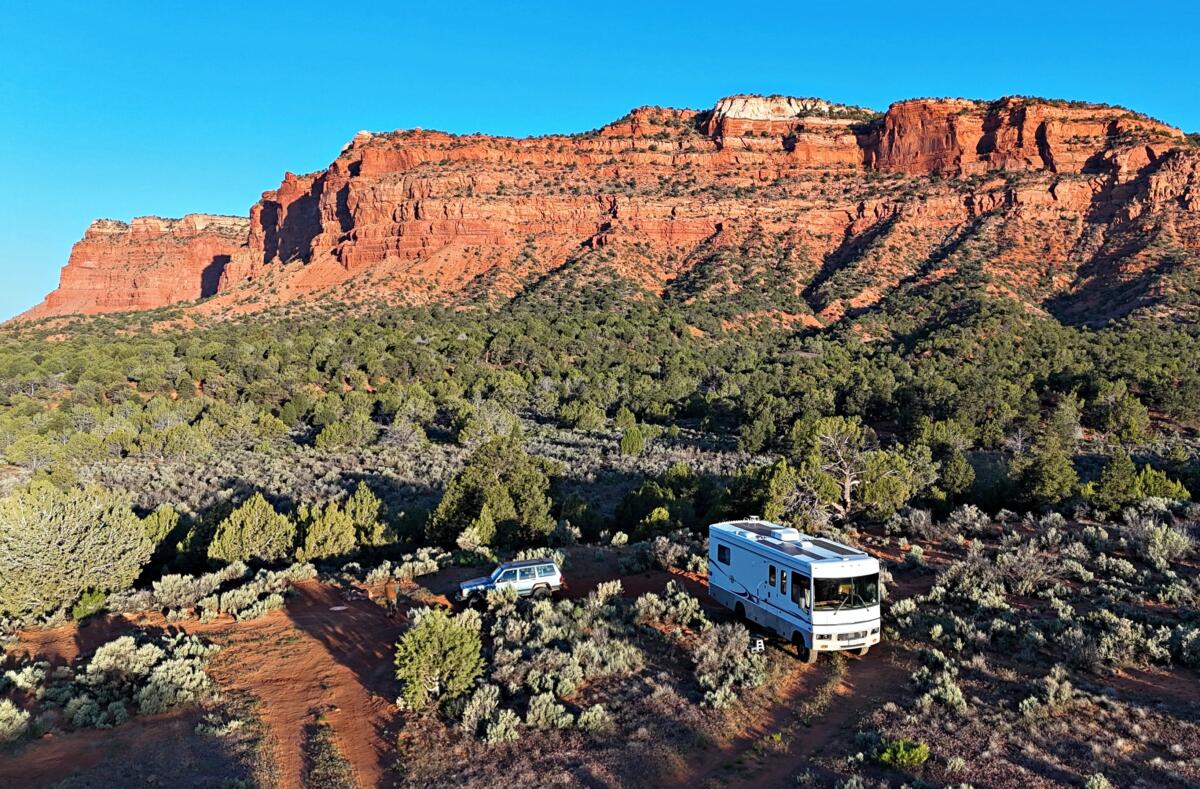
“Reliable, highly modified to my boondocking needs. Fully self-contained for at least two weeks. Full 4×4 conversion takes me most places I want to go—and gets me back out again, too. The high-up Class A seating is a grand point of view while traveling and while camped.” —Gregory Illes
Whether it’s a weekend getaway or a cross-country journey, many readers said the freedom to explore is the feature they value most.
RVs that bring families together
Some of the most heartfelt responses weren’t about layouts, appliances, or towing characteristics. They were about people.
Photo credit: Ernie Wright
“I love this travel trailer! The fact that my entire family can sleep inside (10), the fact that my children and grandchildren get to get out and see and experience things that they wouldn’t have otherwise had the opportunity. Having this trailer has brought me closer to my family, especially my grandkids.” —Ernie Wright, 2022 Shadow Cruiser 280QBS
Photo credit: Cathy Consla
“I purchased it for the layout. It has just enough space and storage and is perfect for watching TV and being comfortable while holding conversations. Most importantly, the best thing about the layout is that it is perfect with ample space for the dogs!” —Cathy Consla, Chateau 27R
For some RV owners, the greatest feature isn’t something you can see on a spec sheet. It’s the memories created along the way.
There’s no such thing as the perfect RV
Reading through all these responses, one thing becomes obvious: There is no single RV that works for everyone.
Some owners love heated floors. Others love giant windows, spacious kitchens, or a bedroom that feels like a private retreat. Some want a highly capable boondocking rig, while others are happiest with a simple camper that can be packed up in 15 minutes.
But nearly every response pointed back to the same idea. The best RV is the one that fits your needs, your travel style, and the life you want to live.
And if these readers are any indication, that’s exactly what makes an RV feel like home.
Thank you to the many, many of you who submitted! Stay tuned for more opportunities to share more about your RVs.
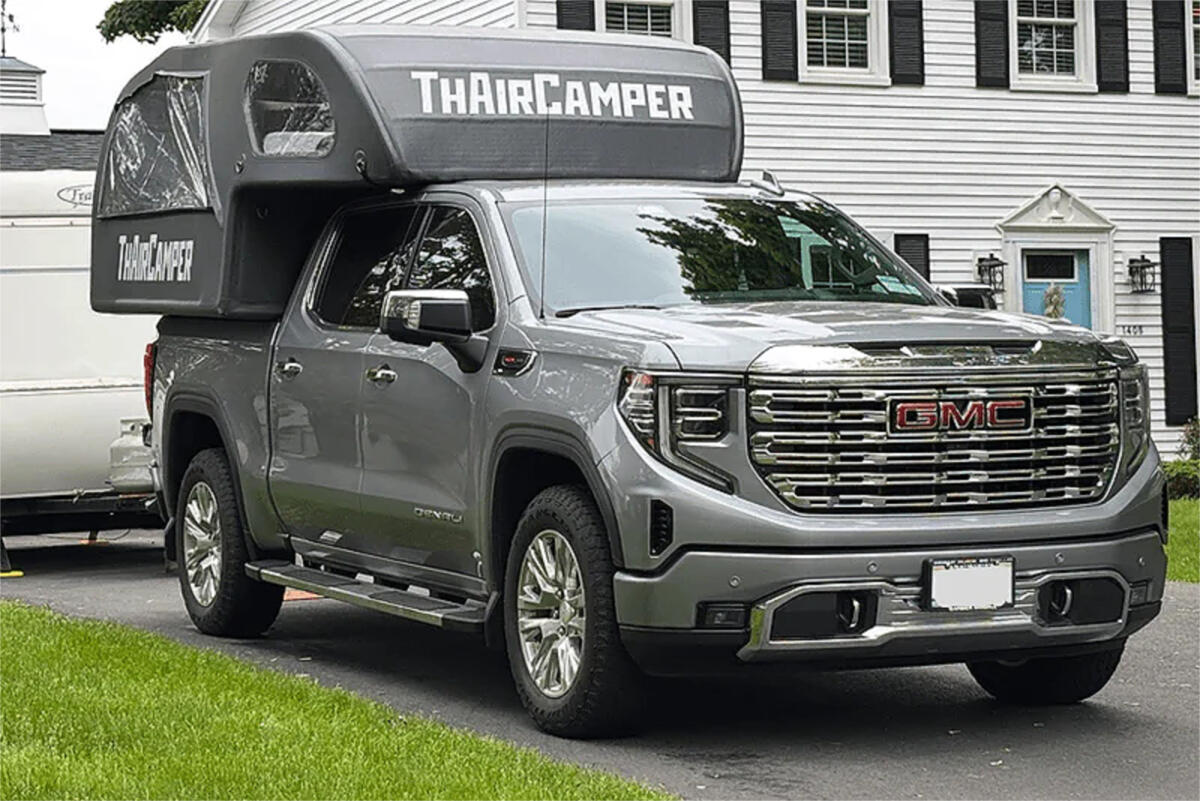
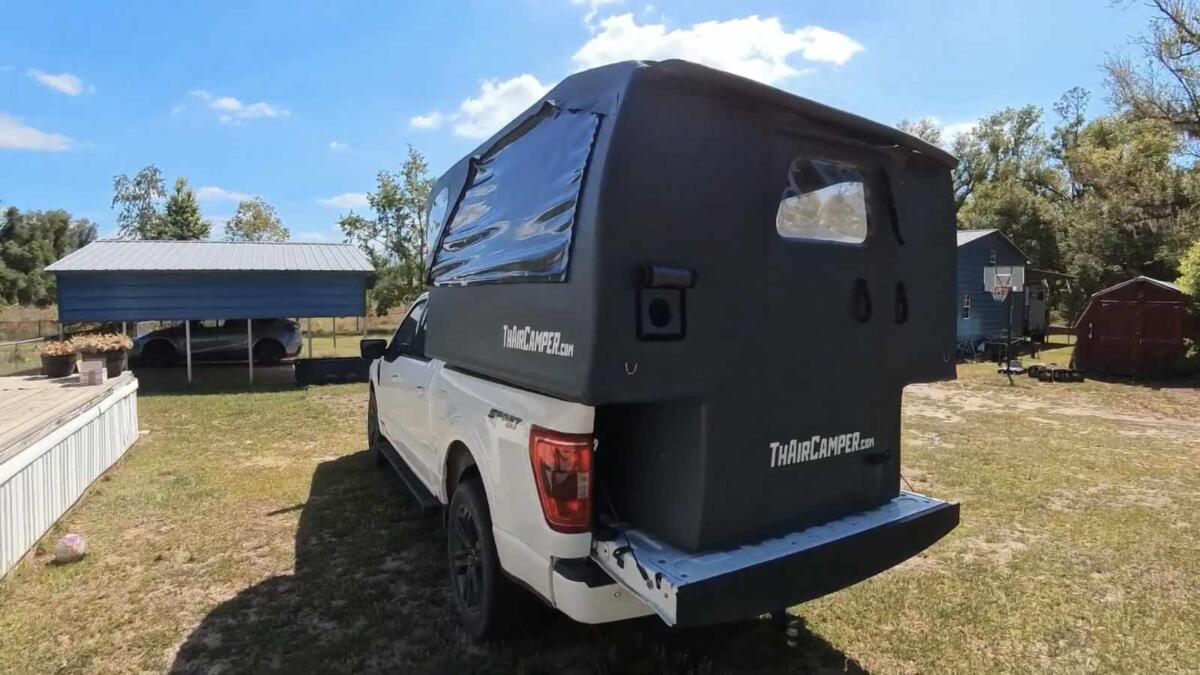
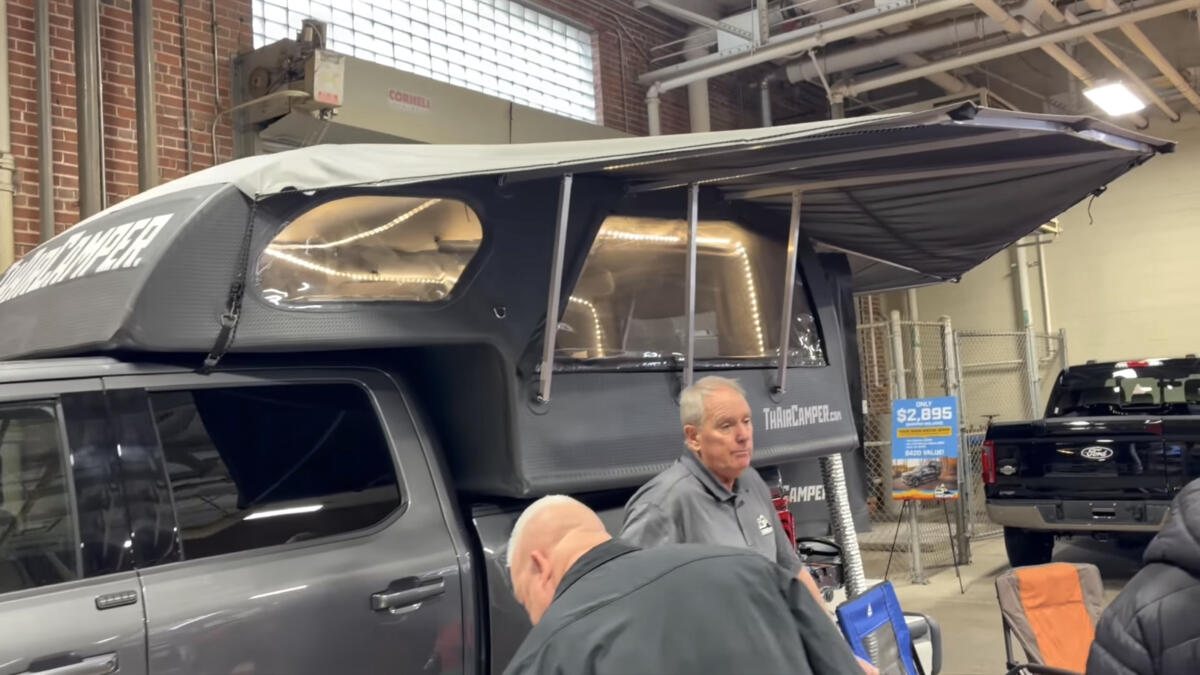
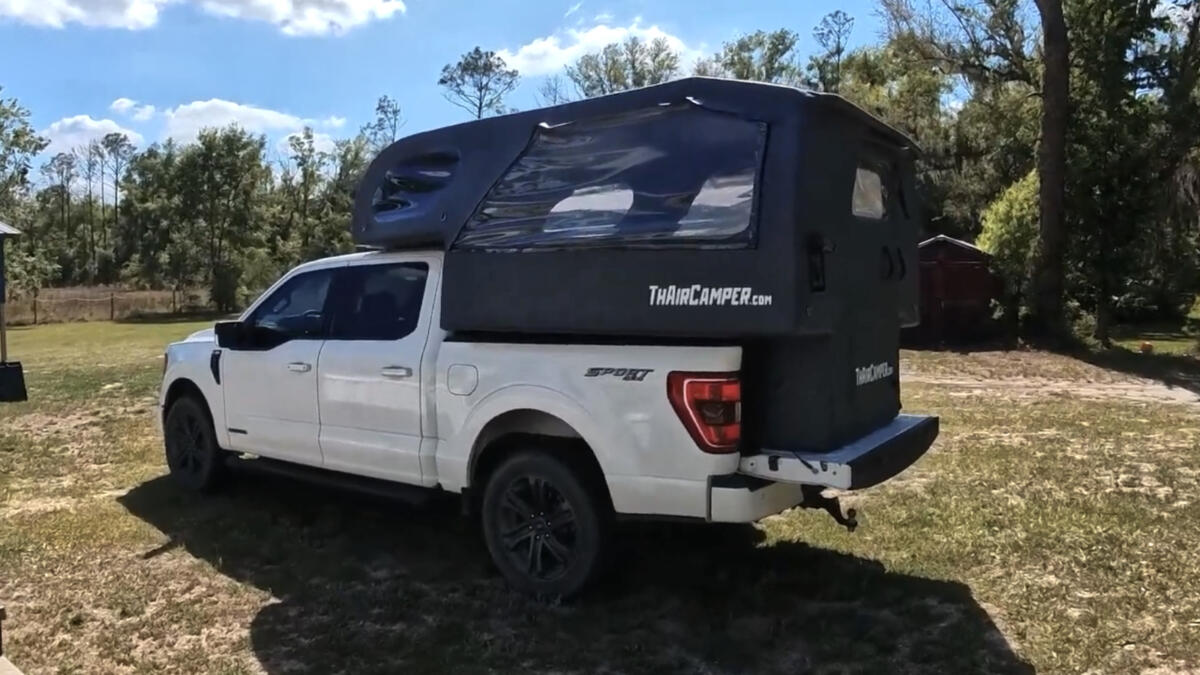
Today’s RV review looks at the ThAirCamper for pickup trucks. What you have here is a very simple inflatable pickup camper that fits, and is appropriate for, a variety of trucks, including some mid-sized pickups. It’s a very simple solution, but it may not be for everybody.
What is the ThAirCamper?
The ThAirCamper is an inflatable cabover pickup camper that’s more of a foundation for your camping adventures than a finished product. In many ways, this is the kind of thing that appeals to me.
There are a lot of reasons why this can be a great idea for some RVers, er, campers, but also might not be enough of a finished product for others.
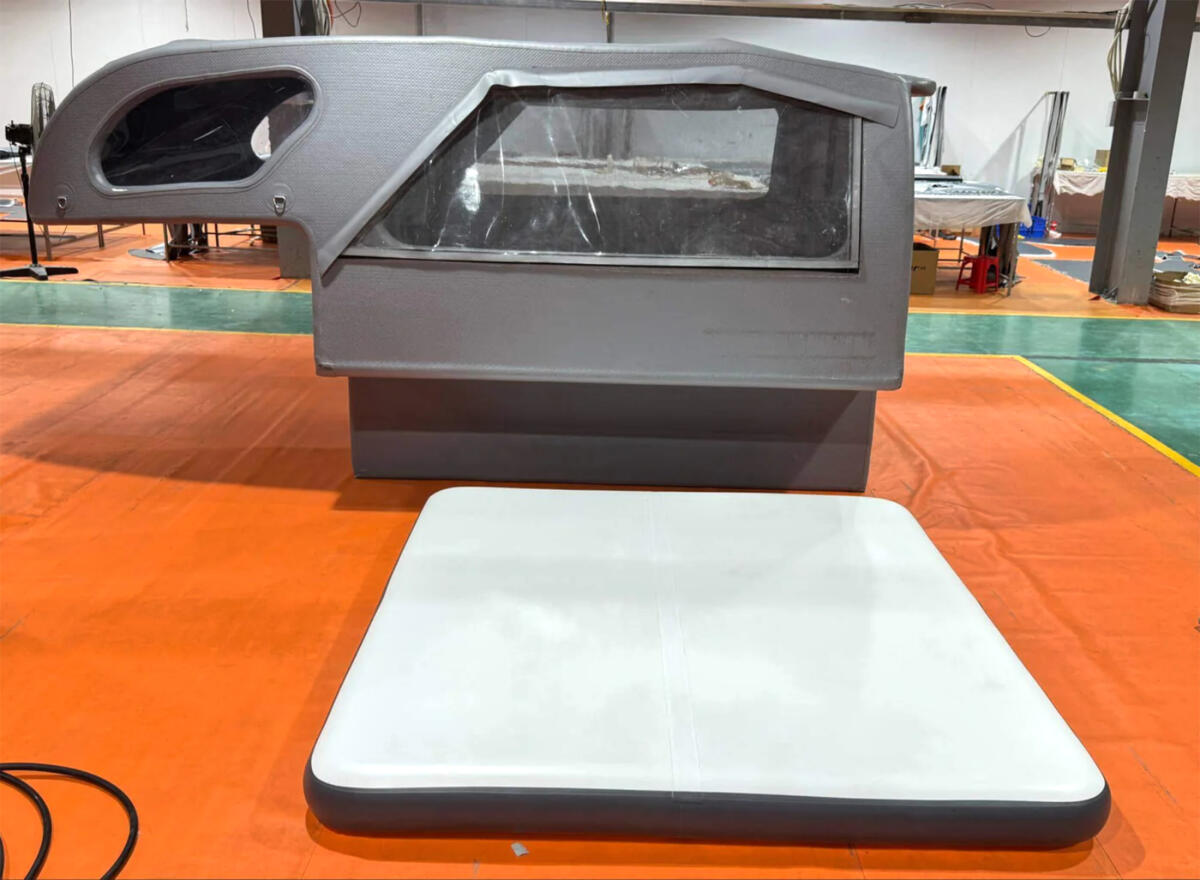
What this camper offers is a number of choices of sleeping surfaces for campers, and pretty much that’s it. Everything in this camper is made of a similar material to an inflatable kayak or some of the other inflatable things like that.
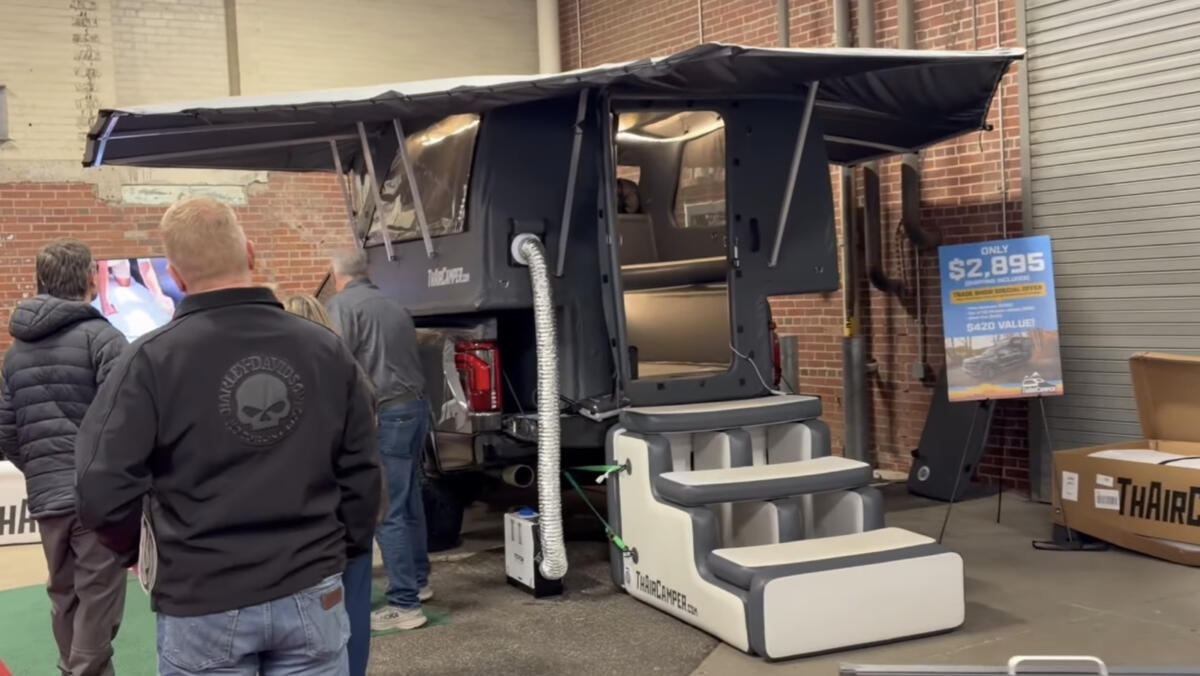
Yes, I’ve seen inflatable couches, and ThAirCamper even offers inflatable stepsas an option.
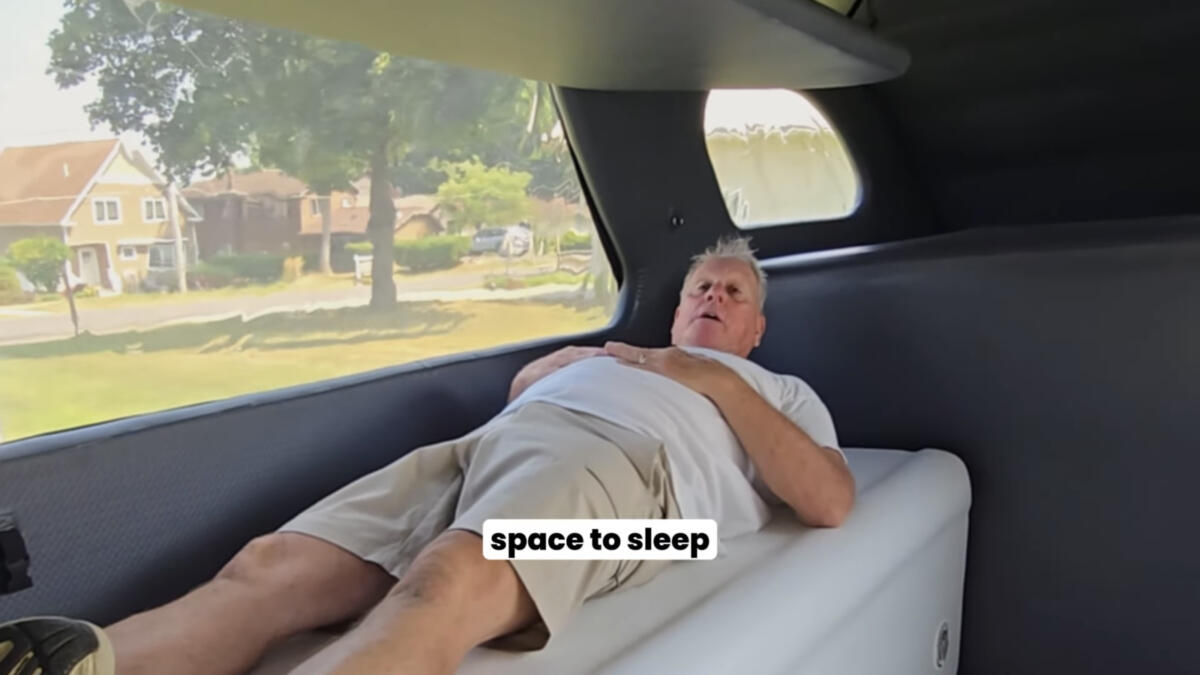
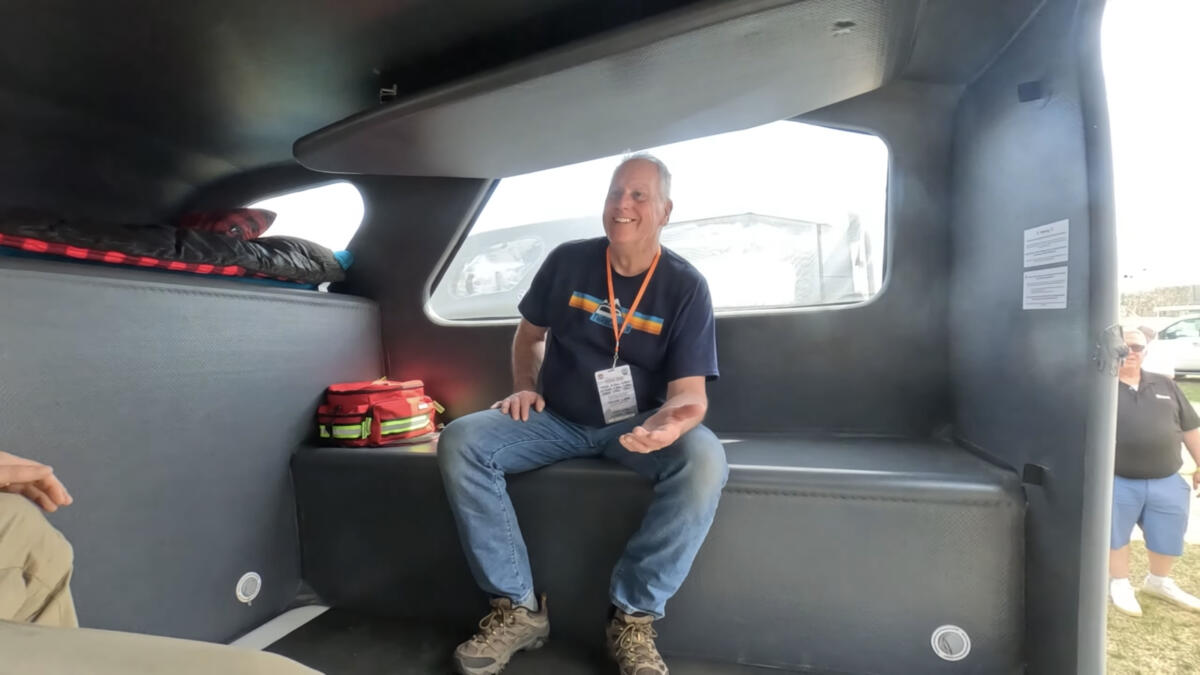
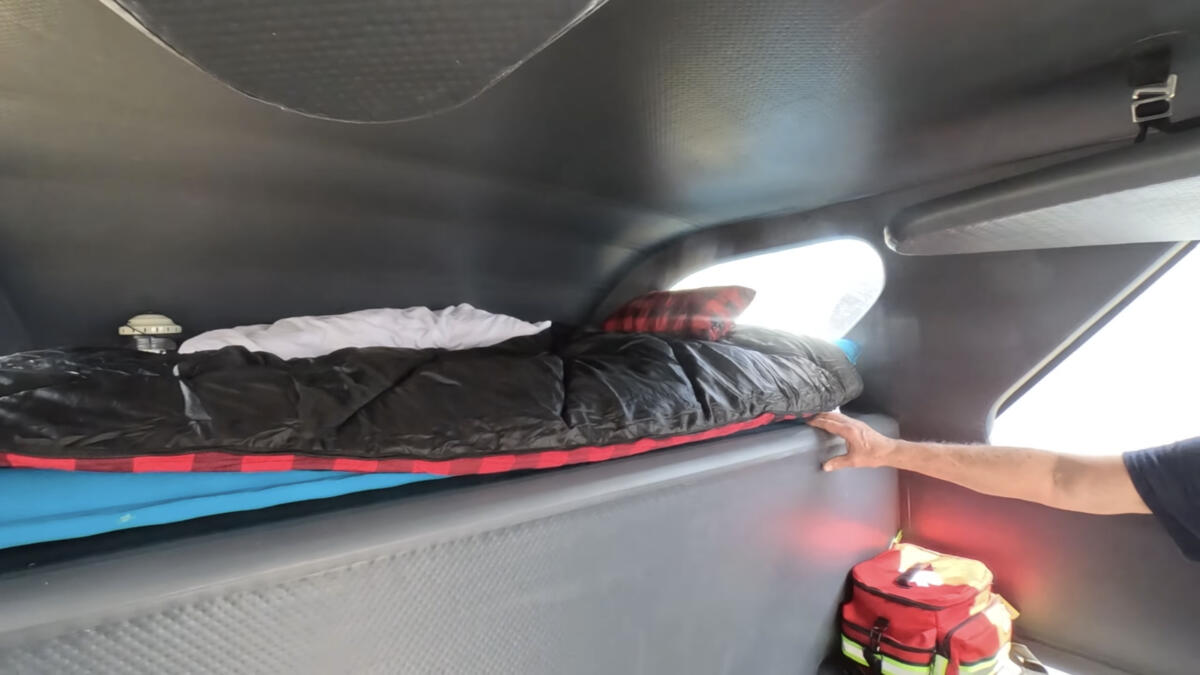
When you step into the camper from the rear, you’re faced with a bench on either side of the space. The benches are made of inflatable material, as is the floor, with that floor being white, the rest being a gray color.
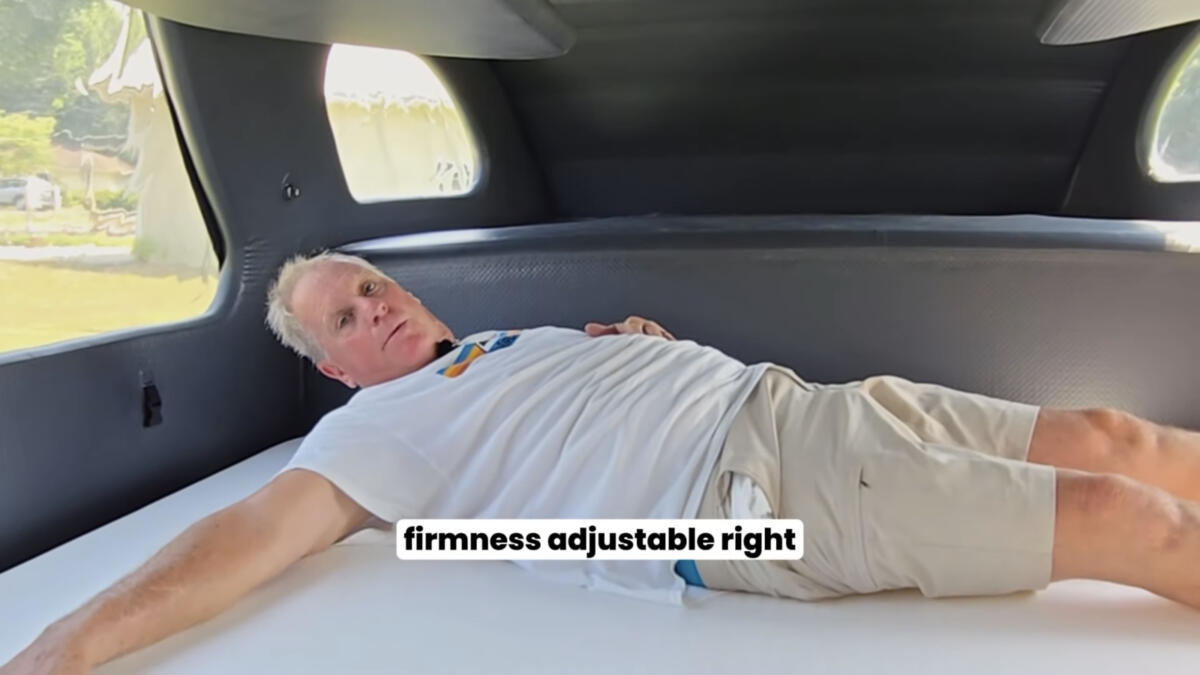
The floor of this is actually intended to be an air mattress, and the air is intended to provide a thermal barrier of sorts. You can also vary the amount of air in this space, making the floor harder or softer.
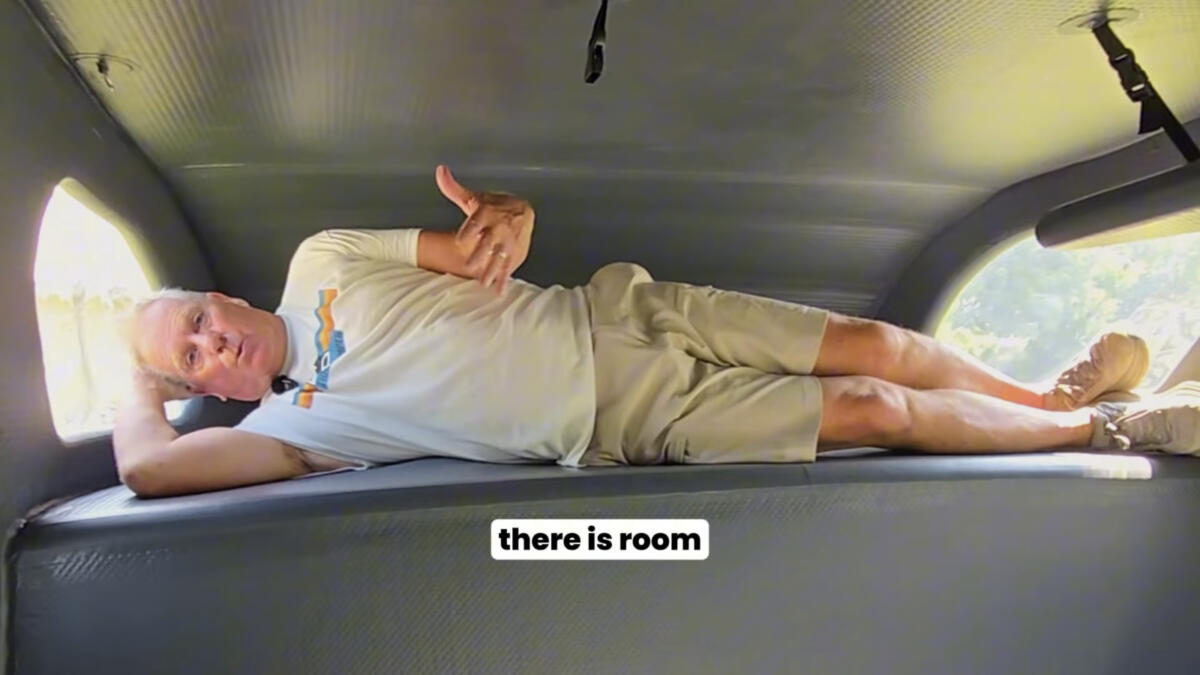
Of course, you can also use the cabover area as a bed. The founder of the company, Parr Wiegel, has demonstrated using that space on video. Wiegel brags about being over 6’ tall and weighing in at 240 pounds, and claims the space works well for him.
Optional inflatable mattress/awning
But there’s another option. You can also get an inflatable mattress that bridges itself between the two side bolsters and offers a raised sleeping position that also offers the ability to inflate to your comfort level. In my mind, this would sag in the space in the middle, but Wiegel can be seen bouncing around between different positions on this mattress without any noticeable sag.
Interestingly, you could also use this optional inflatable mattress as an awning, as Wiegel showed at Overland Expo, where he attached the mattress to the outside of the ThAirCamper and used a couple of supports to keep it raised.
The window curtains in this are also inflatable, sort of. Essentially, there are pads that zip onto the window openings on the side. These can be ratchet-strapped down while driving or ratchet-strapped vertically to open the windows. Again, the inflatable nature of this means that these pads serve as a pretty decent source of insulation. There are screens that stay in place over the window all the time and clear panels that can zip open or closed to block the breeze without blocking the view. The side windows are pretty large.
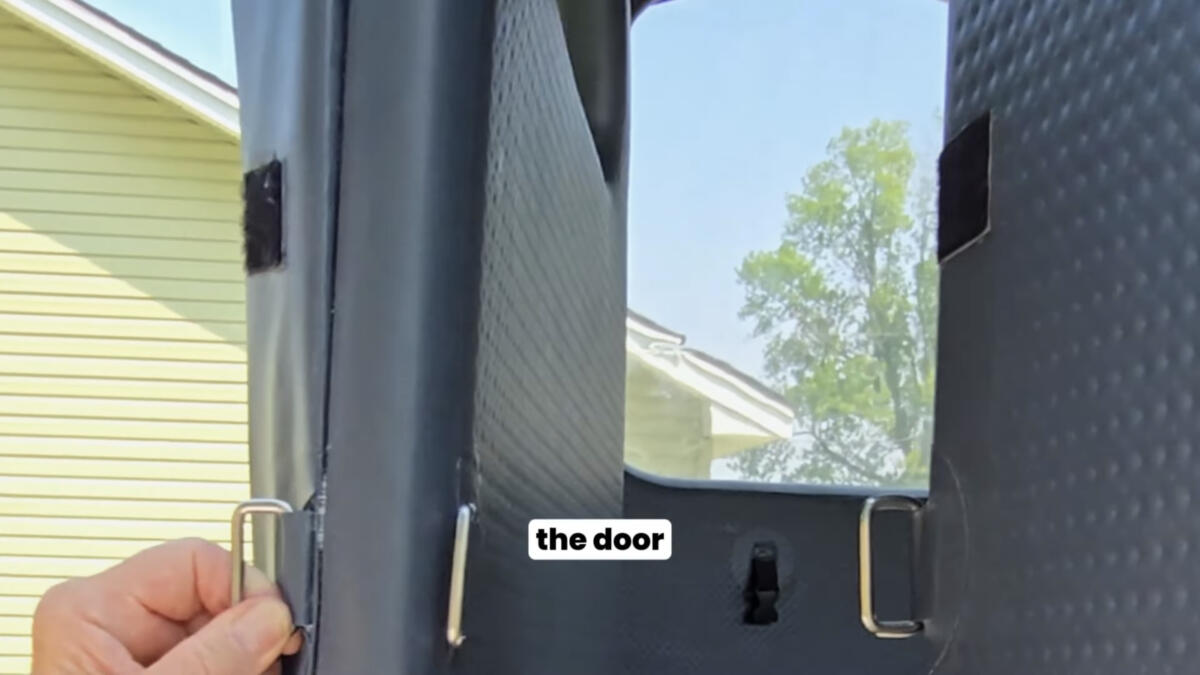
I had mentioned accessing this through the rear door, and this has a provision to lock the door in place. There’s a set of metal rings and you can push them through the exterior or the interior. With that, you can lock these from the outside or inside, depending on where you are. There are also straps that can hold the upper and lower portions of the door in place that you can secure, again, from outside or inside.
Installing the ThAirCamper
Installing this topper, or camper, is quite simple. It comes with a battery-powered pump as well as a manual pump, sort of like an old bicycle pump. You simply inflate the various sections and then rock the camper back onto the back edge and push it up onto your truck.
There are straps that tie into the cargo tie-downs on the back of the truck. Then you also tie the overhanging front into the metal under the door insulation for the back door of the truck.
It’s funny, to me, that almost no mention is made of anything other than a four-door truck. But nowadays, it’s almost unusual to see anything but a four-door truck.
The one challenge I can imagine comes from having to pull back the rubber door insulation on the back door of your truck and hooking the topper onto the metal beneath that, although it’s done with a hook.
I saw one video on the internet where they simply used a ratchet strap to span the ceiling of the cab of their truck. I guess this would give you a hanging provision inside the cab as well. Okay.
ThAirCamper - 2026
1 of 13
The entry door of the ThAirCamper
A locking provision is integrated into the entry door of the ThAirCamper
An optional bat wing awning for the ThAirCamper
An optional secondary mattress for the interior of the ThAirCamper
Founder Parr Wiegel demonstrates the optional air mattress in the ThAirCamper
Founder Parr Wiegel demonstrates the optional side bolster system in the ThAirCamper
Founder Parr Wiegel demonstrates the over-cab bunk in the ThAirCamper
Founder Parr Wiegel shows the space in the ThAirCamper
Large side windows in the ThAirCamper
The optional bat wing awning, inflatable steps and demonstrating feeding a diesel heater into the ThAirCamper
A set of inflatable steps is optional from ThAirCamper
Taking advantage of the over-cab bunk on the ThAirCamper
Some interesting options for ThAirCamper
The company has come up with some interesting choices for buyers. I’ve already mentioned the additional mattress pad and the inflatable steps. You can also get a bat wing awning, of sorts, that wraps around the top of the ThAirCamper. This would have to be installed and removed after each outing.
Another provision in the camper is a 4” hole in the back. Wiegel has intended that to be able to route a hose into the space for either a diesel-powered heater or one of those small, portable air conditioners. The company also offers a 4” fan that can utilize this hole. When you’re not using the hole, there’s a flap that drops down and is held in place with Velcro.
You can also get a bolstered piece for either or both of the side bench areas. These have a lip on the outside edge, so it transforms the bolstered side into more of a bed, but still leaves the middle open if you want to use that for a bed too.
How durable is an inflatable topper?
I have shared with you that I have owned a Flated Air-Topper for my truck for about two years. That thing has been all over the place and from elevations as high as 7,000 feet (Flagstaff) to sea level. I figure it’s got at least 30,000-40,000 miles on it.
Thus far, aside from being dirty, it’s as solid as the day I first put it on the truck.
Like this ThAirCamper, one of the things I really like about the Flated Air-Topper is that I can deflate it and put it in my garage if I just need a regular old-fashioned pick ‘em up truck.
The main reason I bought the Flated originally is that it was far, far less expensive than a fiberglass topper. My expectations were that it wouldn’t last as long as it has, and I don’t see that changing any time soon. Whatever magic material this inflatable topper is made out of, it’s pretty darned durable.
So, let’s talk about camping
Okay, so you have beds. In fact, you can sleep four people in here in a pinch. That’s one on the cabover section, two on the inflatable sides or on the optional mattress, and one on the floor.
I have used my truck with the Flated Air-Topper as a camper, too. Here’s how I did that.
I’ve written about a bunch of camping gear here, including the Camco Travel Toilet. When we bring this gadget, we enclose it in that SylvanSport Privy Bivy. In fact, we did just this last weekend in Seligman for the kickoff of the Route 66 Centennial.
Whenever we go camping in the truck, I also bring our Lippert Picnic Popup Gazebo, and we have slept in that on cots rather than in the truck. Oh, it’s not because it’s full of all the stuff that I had already mentioned. All that fits in the back seat, so I can charge the power station with the truck. However, I can and do sometimes just bring portable solar panels.
The thing that is absolutely overwhelming about camping with that gear is how stress-free it is. I’m not thinking about plumbing leaks or slide seals or roof maintenance or any of the other things that whir in my brain while we’re towing our trailer. Our trailer has been very good. Still, this off-grid camping is really relaxing for me.
I also like that it all fits into our four-wheel-drive truck, and I can go where nobody else is. That, too, is pretty great.
But would this camper work in your traveling style? If I didn’t already have the Flated Air-Topper, I would likely buy the ThAirCamper. At $2,895, it’s still cheaper, by far, than fiberglass or other toppers, and you get the benefit of this being a camper.
Almost every thread on “tire life in RV usage” has said something about “tire inspection.” What hasn’t been properly or completely covered is the “how to” and “who can” do a competent job of inspecting tires. Well, in this post, I am going to try.
What is a tire inspection
When we talk about tire inspection, most of the time we are referring to inspecting a tire after a few years of use. The owner wants to know if it is OK to use the tire for a few more years.
This post is not about the “inspection” every owner should do before leaving on the next trip. That inspection just covers the basics of looking at the tread and sidewall and checking tire inflation. This post is about an inspection done to determine if it is OK to use your tires for another year or two.
How to find a competent tire inspector
I have read some posts where people point out the difficulty of finding someone they can trust to do a competent job. Yes, answering the question of “Who do you trust?” is difficult.
Here is what I would consider:
A “complete” inspection would include, at a minimum, a visual inspection of the internal and external surfaces of the tire with bright lighting and running hands across and touching every inch of the interior and external surfaces. This would require each tire to be removed from the RV and dismounted. This presents other problems as dismounting and remounting a 5+-year-old tire must be done with extra care, as the old rubber is more susceptible to tearing.
Ideally, on steel-body tires, an “X-ray” or “holographic” inspection is desirable. This type of inspection is many times done before a steel-body tire is retreaded. But because of the potential for tire damage, not many dealers are willing to risk damaging a customer’s tire, so they are not willing to do the dismount and remount.
Also, I doubt that you will find any regular tire dealer has the necessary equipment to do X-ray or holographic inspection. Even if you found a retread shop willing to do the inspection, you would probably discover the cost of such an inspection to be very high, maybe more than the cost of a new tire. So what are your options?
Don’t do a complete inspection and hope you have no problems.
Or do an inspection without dismounting the tire from the wheel yourself.
If you do the tire inspection yourself
If you decide to do the inspection yourself, I would strongly urge you to educate yourself on what to look for. You need to be aware that a thorough inspection of a tire on your RV should take at least 10 minutes for each tire.
BEFORE you start, review and be sure you understand all the points in these 7 blog posts:
Signs of the tire being “out-of-round”. You can learn this by doing a “free-spin-inspection” (see link in the “How do I inspect my tires” post).
Bumps or depressions in the tread or sidewall.
Cuts or snags in the sidewall or tread.
Punctures, rocks, nails or screws in the tread.
Ask yourself, “Has the tire ALWAYS been fully inflated?” This means you NEVER had a Low Pressure Warning from your TPMS (tire pressure monitoring system).
Did you do a test of your TPMS and the TPMS warning system within the last 12 months?
If you see anything suspicious or “different” in one of your tires, you should probably take that tire to a dealer that sells that brand of tires. Have the store manager inspect the tire to determine if it needs to be replaced.
If you ever had a TPMS warning, that might be an indication of potential internal structural damage and that tire needs extra examination.
Roger Marble
*****
If you have tire questions, check out Roger’s posts on RVtravel.com. There are hundreds of posts covering everything to do with tires.
If you still have a question for Roger after searching the above posts, send your inquiries to him using the form below.
This article was originally published in 2022, but we can’t help sharing it again. We love you, Nanci!
By Nanci Dixon
Recently, at one of our RVtravel.com staff and writers’ meetings (yes, we are real RV people, not artificial intelligence [AI] “androids”!), someone asked why we write for RVtravel.com and not other publications. They were referencing publications where the pay might be better, but the articles don’t need to be as accurate or truthful. I only had to reflect for a moment.
Passion
I had been reading, devouring, really, RVtravel.com for years as an ardent RVer long before I ever submitted an article to the newsletter. I am passionate about RVing. From the time I was 15 and saw my first Winnebago Brave, I knew that camping in an RV was what I wanted, no, had to do. From a van converted in the backyard to a truck camper to building a Class C, then two Class A’s, I was hooked. I dragged my family with me!
The day I retired, we sold our house and all our stuff except for a few mementos and took off in ten-degrees-below-zero weather. These last eight years of full-time RVing have been a gift and an adventure. Recently, we have become 3/4-timers, but I can still write from some of the most beautiful spots in the country.
Expertise
RVtravel.com taught me a lot over those years. The writers are experts. I continue to learn from them. They are real RVers and have extensive backgrounds in operation, maintenance, and repair.
Building the van and Class C from the ground up taught me a lot, too. Decades of RVing and seminars have honed my skills, both through mistakes and triumphs. I want to continue to share my learning and expertise with others, particularly those just starting out.
The RVtravel.com community
The readers of RVtravel.com have become my community. You have become familiar through emails and comments. You have sent condolences when my dad died and sympathy when our RV had its big “oops” accident.
Your comments keep me on my toes. When I put a photo of the wrong snake in an article, you let me know immediately! You have sent me suggestions with the best RVing apps, and you even sent me info about getting the rinser out of the hot water tank. (Sigh. I tried, but it’s still in there.)
You don’t always agree with some of my thoughts or writing (and yes, you are sometimes very vocal about it), but that is part of the community of RVers. We are all different and yet so much alike in our love of camping and RVing.
When I address you as “Dear readers,” I mean it. You have become very dear to me. You, dear readers, along with the staff of RVtravel.com, have become family. This is why I write for RVtravel.com.
I was all ready to write an article about getting ready for a long trip—things like sanitizing water lines, checking that everything works, cleaning and clearing out things no longer needed.
But life lessons got in the way of that article. Last year, we bought a project house in the Southern Arizona mountains. We were living in the RV for about ten months while traveling, camp hosting, and discovering that our project house was really a fixer-upper.
After those ten months of angst, rising costs, and four contractors, we finally moved into the house, unpacked the RV, cleaned it up, turned off the water and the fridge. Every couple of days, I would go in and check the RV’s mouse traps.
Every day brought new challenges with the house: something new to fix, a leak to stop, paint, stain, or patch. We were busy and fell into bed exhausted every night.
Fence down, rats in
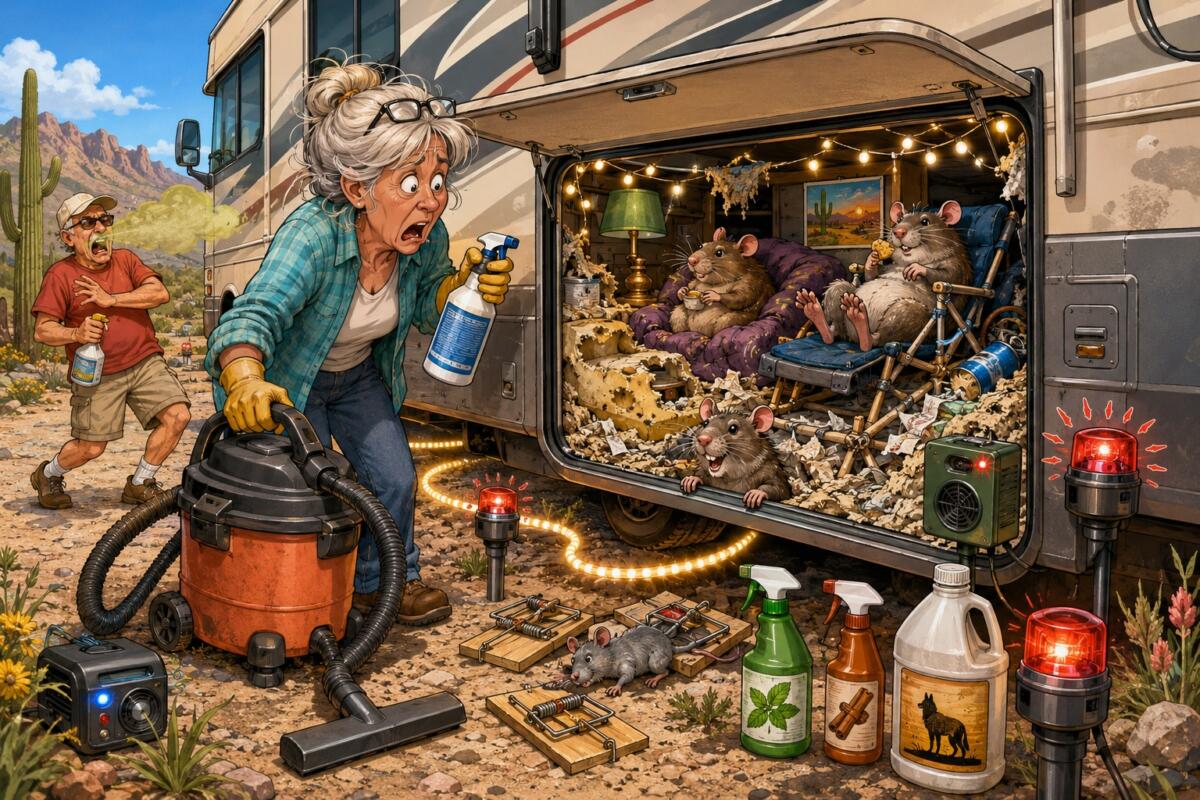
When 40 feet of the solid block snake fence needed to be taken down and rebuilt, we started an epic battle against pack rats. Beady black-eyed, fat, so-and-so pack rats. I had traps everywhere, little snap traps, big snap traps, ones that would have taken my finger off if a stick hadn’t set it off first. Electronically flashing lights with sirens. Everything!
Glue traps
Glue traps, too. A word of advice about using glue traps outside: Don’t. On the first day, we got two rats in one trap. On day two we had to peel off both a large lizard and a small bird. Both survived, although a bit traumatized with sticky feet and a few less feathers. That was the end of glue traps outside.
My big mistake
With the rats semi-under control, it was time to get the RV ready for our northern trek: vacuum the bays, and clear out stuff we won’t need and haven’t used. That clearing out is where I found out my big mistake, big time. I opened a bay door and terrified both a live rat and myself.
First, I rolled out the tray in the bay, found lots of little paper shreds and… ughhhhhh… rat droppings. More droppings, more shreds of everything chewable. Three large nests under the pull-out trays. Even though I diligently checked all the mouse traps in the RV, I did not think of the bays; I ignored them. I actually ignored the whole RV for the last several months.
Three arduous days later, it was finally done. I took everything out of the bays, disinfected and washed everything that could be cleaned, and threw out what couldn’t. I had to buy a $99 shop vac. No way was I going to get rat droppings in my house vacuum! I went through two bottles of 409, two economy-size cans of disinfectant, and a full dose of regret. Because, as a decades-long RVer, I knew better.
No sympathy
I found a place for the glue traps, though. Inside the RV bays, weighted down so they couldn’t be dragged off. They worked. One of the rats was the size of a small cat. Ugh, ugh, ugh! Rats on glue traps are not for the faint of heart! They are stuck but not dead. They require what the package directions advise: “Humanely euthanize before disposing.”
I don’t actually do the kill; that is my husband’s lot in life. When he suggests that I should kill the rats, I just mention that he grew up on a farm. I thought I would feel sorry for them—they are kinda cute. But, no. One look into their black soulless eyes and another glance at my favorite now-chewed-up camping rocker ended any sympathy I might have had.
Prevention is worth a pound of cure!
So we went into our old tried and true methods of mouse and rat prevention, but on steroids. We checked for entrance points and sealed them with foam spray. We put rope lights under the RV, peppermint spray in the bays, ultrasonic mouse repellers, snap traps, glue traps, solar flashing lights with sirens around the RV, and coyote pee. So far, so good.
The moral…
So, the moral? You can’t ignore an RV, no matter the circumstances. You just cannot ignore an RV.
And when spraying coyote pee around the RV, don’t spray into the wind…
What we used (and has worked)
Being 20 miles from the closest Home Depot and any hardware store, Amazon has become our go-to, and a lot of those items can be found there.
What works and what doesn’t? Mice and rats can get used to anything if food and shelter are available. Best to seal everything and make sure no food source is available.
America’s Original RV Newsletter. Since 2001 Issue 1262
Today’s thought
“The brave die never, though they sleep in dust: Their courage nerves a thousand living men.” —Minot J. Savage
Need an excuse to celebrate? Today is National Lucky Penny Day!
On this day in history: 1980 – “The Shining,” the psychological horror film directed by Stanley Kubrick, premiered on 10 screens in New York City and Los Angeles on the Memorial Day weekend. Have you seen it?
Featured news
Congress backs away from deep national park cuts
The House Appropriations Committee recently backed away from some of the deepest proposed cuts to the National Park Service, approving a spending bill that keeps most core park operations funding in place. Deeper cuts could have made staffing shortages, delayed maintenance projects, and other visitor-service problems worse at parks dealing with heavy crowds. But will this actually make a difference on the ground this summer?
Some of America’s best-rated campgrounds are still free. Why more RVers may be looking for them
Campground rates are climbing, but not every great campsite comes with a hefty price tag. A newly released list from The Dyrt highlights America’s best free campgrounds—places where RVers trade luxury amenities for stunning scenery, peace and quiet, and a campsite bill of exactly $0. See which campgrounds made the list.
Feds warn of scammers demanding payments for traffic violations
The National Highway Traffic Safety Administration is warning Americans of scammers claiming to be from NHTSA and demanding payment for traffic violations. These messages often refer to fake judges, case numbers, and serious consequences to appear more official and scare recipients into clicking a link and paying. Do not fall for this!
Campgrounds keep adding amenities. Are RVers getting more value—or just higher rates?
Campgrounds keep adding new amenities, but this one may surprise you: on-site bars and breweries. Some Wisconsin campgrounds are now serving drinks as part of a growing trend toward destination-style camping. Is this giving RVers more value—or just another reason campground rates keep rising? Read more and decide for yourself.
Exploding bear spray cans spark growing safety problem near national parks
Millions of visitors buy bear spray before visiting national parks—but what happens when the trip is over? A growing problem near Yellowstone is revealing an unexpected hazard: Discarded bear spray cans are exploding inside garbage trucks and trash compactors, exposing workers to powerful irritants. This is not good!
Starlink just raised prices again and some RVers will feel it
For RV owners who rely on Starlink to stay connected from remote campsites, boondocking spots, and seasonal winter destinations, another round of price increases is on the way. The latest changes affect several Starlink plans, including the Roam service popular with RV travelers and the Standby Mode option many seasonal users depend on when they’re not actively using the system. More info here.
No relief at the pump for Memorial Day travelers As holiday travelers start hitting the road in record numbers, Memorial Day weekend gas prices are the highest they’ve been in four years. According to AAA, the national average for a gallon of regular was $4.56 on Thursday, up 3 cents over last week and far higher than the $2.98 average right before the war in Iran began. Learn more.
One RV. Several snakes. A lighter. What could possibly go wrong?
What could go wrong with that scenario? Apparently, quite a lot. Authorities in Arkansas say an attempt to deal with snakes in an RV ended with two destroyed campers, damage to three other vehicles, and felony charges after a fire spread through part of an RV park. If somebody asked how the story would end, we’d probably guess “not well.” We still wouldn’t have guessed this badly.
California expands digital driver’s license options
Now, California residents can store digital driver’s licenses and state IDs in Samsung Wallet, giving Samsung smartphone users another option alongside the CA DMV Wallet, Apple Wallet, and Google Wallet. California launched its mobile driver’s license pilot program in 2023 as part of a broader effort to modernize DMV services. Here are the details.
Visit the Planet of the Apes
It’s late notice, but if you happen to be in Southern California tomorrow, you might want to head over Malibu Creek State Park in Calabasas for a trip down movie-memory lane. Since the era of silent movies, the area has been the backdrop of countless films and TV shows including the original Planet of the Apes and M.A.S.H. Join guide Mike Malone for a 3-mile moderate hike to where intelligent apes and Korean War surgeons once roamed. Meet in the park’s main trailhead parking lot by the restrooms at 10 a.m. Rain cancels. For more details, contact dean.arnold333@gmail.com.
RV review The “apocalypse” camper is here, and it has bear-spray cannons
Some RVs come with solar panels. Some come with outdoor kitchens. This one comes with bullet-resistant windows, blast shields, night-vision cameras, a Geiger counter, a gun safe, a flare launcher, and four remotely activated bear-spray cannons. Yep. It’s real. The new Mammoth Overland XLE—short for “Xtinction-Level Escape”—looks like somebody combined an off-road trailer, a survival bunker, and an overlanding trailer, then decided it still needed a few more gadgets. Check this beast out!
Beyond the headlines with Tony Barthel
GM’s surprise exit (not good), industry insights, and RV tech careers
GM is pulling the plug on another vehicle platform used in the RV world, leaving manufacturers scrambling once again. Tony also sits in on the RV Industry Power Breakfast, where executives discuss rising prices, fewer camping nights, unhappy owners, AI’s impact on RV sales, and the industry’s growing technician shortage. What they said—and what Tony thinks they should have said—makes for some interesting reading.
DO YOU APPRECIATE THE NEWS WE BRING YOU? We publish the most important news for RVers seven days a week. Please help us continue to bring you quality, unbiased coverage of RVing with a voluntary donation. Thank you very much!
Tanner Toons with Tanner Woods
You may share this Tanner Toon, unaltered, on your website, blog or social media with our compliments. The musings from Tanner Woods’ creative mind appear in this newsletter every Saturday and Sunday and in many RV Daily Tips newsletters through the week. Sign up for our RV Daily Tips Newsletter so you don’t miss them.
FREE ENTRY!Blue Star Museums, a partnership between the National Endowment for the Arts and Blue Star Families, is now offering free admission to more than 2,000 museums to active-duty military personnel and their families, including National Guard and Reserve, through September 7.
OUR FAVORITE PRODUCTS FOR RVERS, all in one place! We’ve compiled a list of all our favorite RVing gizmos and gadgets. It’s what we, and all the experts, use. Click here—this is fun!
News briefs
If you have been waiting for a good summer to point your RV north, 2026 just might be the year! Parks Canada and the Government of Canada say the Canada Strong Pass will bring free admission to Parks Canada places from June 19 through September 7, 2026. And that’s not all! Here are the biggest travel savings Parks Canada has offered for campers and RVers.
Yosemite National Park is a beautiful place and often packed with visitors. It can be tempting to park for just a few minutes (or longer) at an overlook to get the perfect picture or a choice location for a hike. Now, Yosemite is warning: Do not be like this RVer!
Visitors to Utah’s Zion National Park should expect heavy traffic, limited parking, shuttle bus lines and long waits as the park enters its busy summer season. So advise park officials.
Walmart signaled Thursday that it may raise retail prices in the coming months to compensate for soaring fuel costs as a result of the Iran war.
California Gov. Gavin Newsom is urging drivers to skip Chevron stations this Memorial Day weekend, blaming the company for charging up to 80 cents more per gallon than unbranded gas, which he says meets the same standards. Chevron argues that California fuel policies are driving prices higher, the highest in the nation.
Love’s Travel Stops has opened a new location with 7 RV hookup sites in Truth or Consequences, New Mexico, along I-25 at exit 79.
A 70-year-old hiker has died after being struck by a bull bison on a popular hiking trail in Custer State Park on Monday. According to the South Dakota Game, Fish & Parks Department, the woman was with her husband when they encountered a group of bull bison on the Grace Coolidge Trail. The hiker was struck by the bison in the back and died from injuries.
Grand Canyon National Park has reopened the North Rim for the 2026 summer season, following the 2025 Dragon Bravo Fire. Visitors can once again experience the North Rim’s overlooks, trails and visitor services.
Yogi Bear’s Jellystone Park has added new locations in Cincinnati, Ohio; Williamsburg, Virginia; Pigeon Forge, Tennessee; and Ogemaw County, Michigan.
As camping season begins, U.S. Forest Service officials are warning campers to conserve water, as some Colorado campgrounds may have limited or no well water available due to ongoing drought conditions and an unusually low snowpack this winter.
A female gray wolf was tracked into Sequoia National Park in California, making her the first known gray wolf to do so in more than a century.
A new analysis of Google search data found that Americans struggle most with spelling words like “favorite,” “through,” and “niece.” Researchers at Unscramblerer.com analyzed searches for “How do you spell…” and found the most-searched word was “bougie,” followed by “favorite,” “through,” “business,” “tomorrow,” “because,” “definitely,” “beautiful,” “niece,” and “separate.”
The podcast RV Out West has released its 200th episode, marking five years of independent podcasting about RV life, travel and experiences in Washington, Oregon and Idaho. Listen on major podcast platforms.
California State Parks is offering free admission to veterans and active military at 145 participating state parks on Memorial Day, Monday, May 25.
Often considered the unofficial start of summer, Memorial Day kicks off a season of outdoor grilling and entertaining. But with the increase in grilling comes more home grilling fires. July is the peak month for home grilling fires, followed by June, May and August. Be careful!
A Kansas Ford dealership is temporarily holding a sold Ford F-250 after a robin built a nest on one of its tires and hatched four baby birds there. Because active robin nests are federally protected, the truck can’t be moved until the young birds leave the nest. The customers who bought the pickup have reportedly been understanding about the delay.
Wonder what’s going on with the RV industry in Spain? New Zealand? Australia? France? Find out here with the latest news highlights about RVing in countries around the world.
FACTOID: The Cozy Dog Drive-In on Route 66 in Springfield, Illinois, is the birthplace of the corn dog on a stick. The diner is packed with Mother Road memorabilia and neon signs. Signature “Cozy Dogs” are still made with the original secret batter.
Use this portable, battery-operated ceiling fan anywhere!
This is pretty cool, isn’t it? This portable, battery-operated ceiling fan can hang anywhere like: over the picnic table, over your bed, over your hammock, over your desk, even over the BBQ… see? Anywhere! And it’s battery-operated and USB-rechargeable, so you don’t have to worry about outlets or long extension cords. This is the perfect summer gadget to keep cool. Learn more or order.
RV and RV-related recalls
Keystone is recalling certain 2024 Cougar, 2025-2026 Alpine, 2026 Montana, and Walkabout trailers. The shock bolts may have been incorrectly tightened, which could break the bolt or vibrate loose if under-torqued. More info here.
Reader poll Would you ever stay at a campground specifically because it has a bar or brewery?
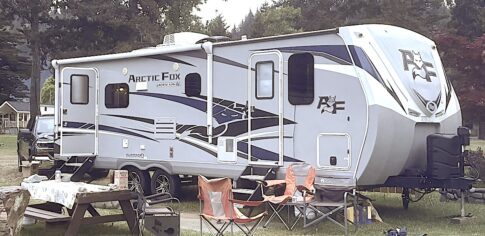
This 30-foot Northwood Arctic Fox trailer was stolen Sunday, south of Bandon, Oregon, along the coast on U.S. 101. The Oregon license plate is R02251A. If you know its whereabouts, contact the Oregon State Police.
Early American settlers called bison “bufello” due to the similar appearance between the two animals, and the name “buffalo” stuck for the American variety. But it’s wrong. The American bison (Bison bison) lives only in North America, while the two main buffalo species reside in Africa and Asia.
? MYSTERY PRODUCT OF THE DAY ? Have you ever wondered what it would be like to be a duck? Just out there quackin’ around? Well, you don’t have to wonder anymore! Here’s why.
Laugh of the week
The perfect scam
Summer travel season is here—and scammers are targeting people on the move. Here are three scams showing up more often this week:
Fake parking and traffic violation texts: This is the latest twist on the toll-text scam. Messages claim you owe a small parking, toll, or traffic fine and often include a QR code to pay immediately. Officials across multiple states are warning that these are phishing attempts.
Package delivery scams at campgrounds: Texts claim a package couldn’t be delivered to your campsite or RV park and ask you to click a link to update your information. The goal is to steal payment details or personal information.
AI-powered impersonation scams: Scammers are increasingly using AI-generated voices and messages to impersonate family members, banks, government agencies, and even roadside assistance providers. The messages sound more realistic than ever and often create a sense of urgency.
REMEMBER:You do not need to receive an email alert from us to read our newsletters. Just visit our homepage, www.rvtravel.com, at any time of day, and the latest issues and articles will be there.
Here are some of the latest developments affecting RVers and caravanners outside of North America — from new travel fees and campground changes to tourism crackdowns and road-trip trends. We have only included a limited number of countries this time. We’ll include more in posts to come.
• ITALY — Venice has expanded its controversial day-visitor fee system for 2026, charging tourists between about $5 and $11 on peak days. Rome is also considering small admission fees at some previously free attractions. RVers touring Europe this summer may want to budget for added local tourism charges in several Italian cities.
• SPAIN — Popular tourist areas are tightening rules aimed at reducing over-tourism. Some coastal regions are increasing tourist taxes and imposing stiffer fines for behavior such as overnight beach camping, public intoxication and littering. Travelers report that crowded destinations are becoming stricter about parking larger campervans in urban areas.
RVing in Norway
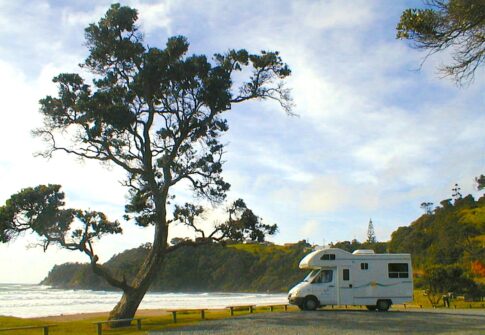
• NORWAY — Norway plans to allow heavily visited communities to add a tourism surcharge to overnight stays. Tent campers and caravanners are expected to be exempt in many cases, which could make RV travel more economical than hotel stays in high-demand destinations.
• FRANCE — More French cities are increasing overnight tourism taxes as officials attempt to deal with overcrowding and infrastructure costs. Some popular areas are also limiting overnight parking for self-contained motorhomes outside designated camping areas.
• EUROPEAN UNION — A long-delayed electronic entry system for non-European visitors is still expected to launch in stages beginning in 2026. Travelers from the United States and Canada will eventually need advance electronic authorization before entering many European countries. RVers planning extended European caravanning trips should monitor the rollout closely.
• SOUTH AFRICA — Caravanning continues to grow in popularity in South Africa as more travelers seek affordable road-trip vacations and outdoor experiences. Industry observers cite expanding rental options, improved camping infrastructure and growing interest in nature-based tourism. Fuel prices and limited infrastructure in remote regions remain challenges for long-distance caravan travelers.
• AUSTRALIA — Caravan and camping travel remains extremely popular, with industry officials reporting continued strong demand for caravan parks and camping reservations. Rising fuel prices and campground costs, however, are becoming bigger concerns for retirees traveling long distances around the continent.
Campervan in New Zealand. Photo by Chuck Woodbury
• NEW ZEALAND — Several local councils continue tightening restrictions on “freedom camping,” the New Zealand term for overnight camping outside formal campgrounds. Travelers using self-contained RVs generally face fewer restrictions than tent campers or vans without onboard toilets. Some towns are adding designated RV-only parking areas to reduce conflicts with residents.
• CHINA — China is promoting more self-drive tourism as part of a broader effort to boost domestic travel and leisure spending. Government officials recently announced support for road-trip travel, expanded vehicle-modification industries and improved tourism infrastructure. Analysts say the changes could encourage more RV and campervan travel among China’s growing middle class, especially younger travelers seeking flexible vacations.
• JAPAN — Tourism officials in some heavily visited areas are considering new measures to limit overcrowding as international tourism surges. RV travel is growing slowly in popularity there, with more campgrounds adding hookups and services for small motorhomes and campervans.
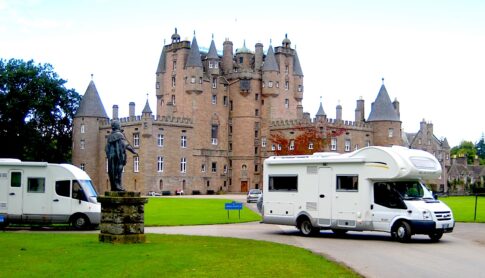
Scotland castle: Photo by Chuck Woodbury
• UNITED KINGDOM — Several caravan parks and holiday parks are adding luxury glamping units and upgraded amenities as demand for domestic travel remains high. At the same time, some coastal communities are debating tighter restrictions on overnight roadside parking by campervans.
• GERMANY — Germany continues to be one of Europe’s strongest caravanning markets, with growing interest in RV rentals and campground travel. Industry analysts say many younger travelers are embracing RV vacations as a lower-cost alternative to hotels and air travel.
• GREECE — Greece has introduced new visitor fees on many cruise passengers visiting its islands, part of a broader effort to reduce overcrowding. Independent RV travelers may benefit as some tourists shift away from cruise vacations toward slower-paced overland travel.
Overall, RV and caravanning travel continues to grow worldwide, but travelers are increasingly encountering higher tourism fees, tighter parking regulations, and efforts to control overcrowding in popular destinations. For RVers willing to travel more slowly and stay flexible, the road remains wide open.
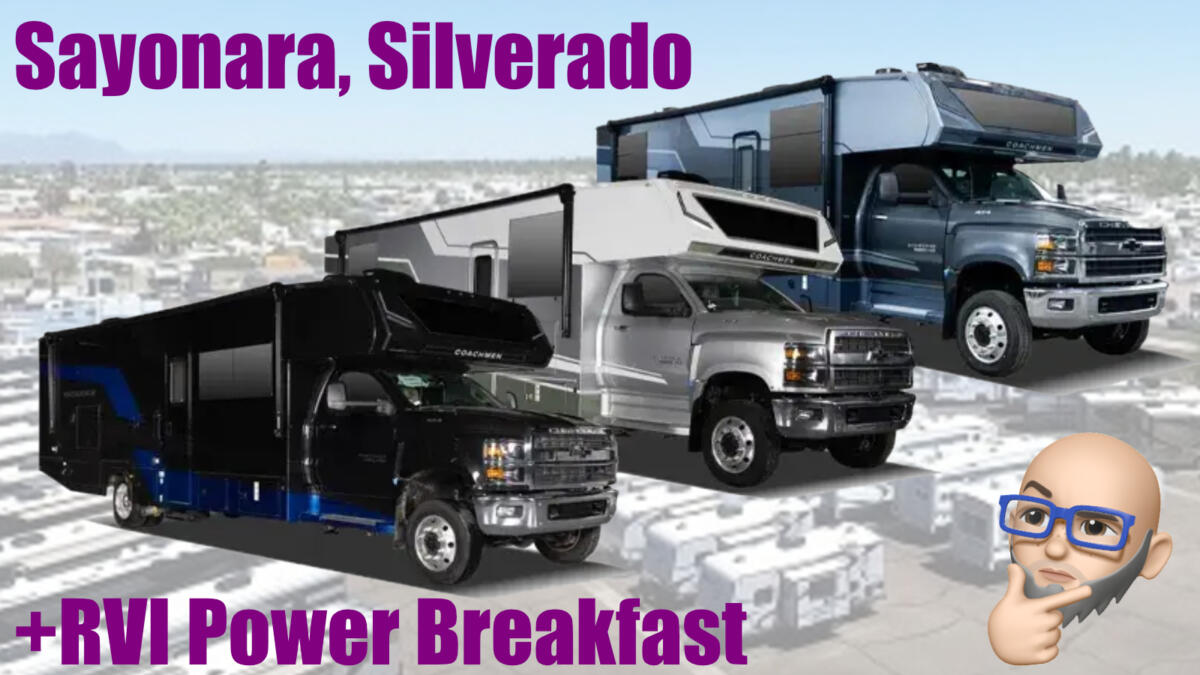
This week, we look at how the decision by GM to dump the Silverado medium-duty trucks will affect the RV industry. Then we also sit in on the RV Industry Power Breakfast and review the conversation.
More bad news for poor Coachmen
Coachmen, one of the many divisions of Forest River, does some pretty cool stuff, and one of the cool things they did was work with GM to create the first-ever legitimate EV motorhome—the RVEX. In fact, they were justifiably proud of the rig at last year’s Open House and had plans to move forward.
But GM pulled the rug out from under them and dropped the BrightDrop van that it was based on, so all that effort Coachmen put into the RVEX got sent to the black tank.
Well, it seems that we’re about to see a repeat of that offense as GM has announced the discontinuation of their medium-duty platform on which the Coachmen Entourage Super C is based. Of course, Coachmen isn’t the only brand facing this, but GM claims sales of the model have been very disappointing, with the numbers dropping 37% over the same period last year. Yikes.
These things wear the Silverado badge, but are actually produced in a joint venture with Navistar (you know, International) and are dubbed Silverado 4500HD, 5500HD, and 6500HD. Production is scheduled to end when the agreement with International comes to a close on September 30.
Motorhome sales, in general, are tanking, so don’t expect this to be the last you hear of this kind of thing. However, GM likely planned to sell these things more to construction and other industries. In the grander scheme of things, RVs aren’t a big part of most chassis builders’ pictures.
What’s for breakfast?
The RV industry has a big event every year called the Power Breakfast, where everybody who’s anybody in the RV space gathers to compare how shiny their shoes are and hear speakers. This year, Toby O’Rourke, president and CEO of KOA, was one of those speakers.
If you haven’t read it yet, KOA does a remarkable job surveying us camping types in their Hospitality Report, and it’s a fun look into the general state of camping and campers.
O’Rourke stated that we’re getting out there even more with 52 million people camping, a 24% increase over 2019. But we’re not doing it as much, with frequency down.
In 2019, 12% of camping households camped just once a year; this rose to 34% in 2025.
“Two-thirds of all people who are camping are doing so just once or twice a year compared to 55% in 2019,” she said. “That’s a significant loss in camper nights at campgrounds.”
So, the whole idea is that if people camp more infrequently, they’re not going to buy RVs (again, this was the RV industry’s breakfast gathering), and campgrounds are going to feel it, as well. The core of the issue: affordability.
According to what I could find, more than 250,000 of us are part of Harvest Hosts, which is a matchmaker that puts us in touch with almost 10,000 locations that allow overnight camping.
While you could argue that these overnight experiences aren’t free, they’re usually very experiential. A campground might have a pool, but some Harvest Hosts have alpacas or are farms or even drive-in theaters now.
Newer RV batteries and efficiency technology have made camping without hookups less and less of a compromise. Maybe we are still camping, we’re just not going to campgrounds. But this is pure speculation on my part.
Bob Parish of Wells Fargo, right, moderated a dealer panel featuring, from, left, Ben Hirsch, COO of Campers Inn RV; Nathan Hart, partner, Walnut Ridge RV; Jon Ferrando, CEO and president of Blue Compass RV; Loren Baidas, CEO of General RV Centers; and Jarrod McGhee, president of Fun Town RV. Photo by RV Business
Moderator Bob Parish of Wells Fargo was joined onstage for the panel discussion by Ben Hirsch, COO of Campers Inn RV; Nathan Hart, partner, Walnut Ridge RV; Loren Baidas, CEO of General RV Centers; Jon Ferrando, CEO and president of Blue Compass RV; and Jarrod McGhee, president of Fun Town RV.
One of the most telling things shared was from Ben Hirsch of Campers Inn RV: “The reality is that we’re facing a very real structural change. Artificial intelligence is leveling the playing field for information. It costs almost nothing for a consumer at the flip of their phone to find out what real information is, what real quality is…
“That’s going to drive a difference in our industry. Our industry right now is very sales-focused; it’s going to have to become very service-focused and ownership-focused. If we as an industry don’t actually look at what’s happening under our feet right now and start adapting to the ownership experience economy, some of us won’t be in this room in a few years.”
So, in other words, they’re finally realizing that mistreating customers and building RVs that constantly need repairs isn’t such a great idea for the industry long term? Shocker.
Poor quality RVs
Quite honestly, the drumbeat of frustration is palpable on social media. So many new owners step into the ring only to feel like it’s a TKO by all the things that don’t function as expected and all the repairs necessary.
That used to be the case with cars, too. In fact, when you go back a century, it wasn’t unusual to have to be very mechanically inclined to drive a car; today, they’re very reliable. Well, until they get recalled because the technology isn’t working as hoped.
But affordability, too, was cited, with Ferrando stating, “I looked at our invoices on our most popular RVs in each segment from 2020 and today, and they’ve gone up.” He continued, “The lowest was by 24%. The next one was 36% and then 60%. So, for a customer walking into our showrooms today, it’s 24% to 60% more expensive for the product that they’re coming in to trade in for. How do we figure out a way to stop the product inflation or find a way to bring it down?”
The group repeated things I’ve heard within the industry—demand is there, with used units accounting for sales increases.
Manufacturers listen to dealerships
But the other thing that kinda bugs me about the industry is that manufacturers mostly listen to dealerships. Do you remember the telephone game? You sit in a circle and tell your neighbor you want a bologna sandwich, and by the time it gets back around to you from one telling the next, it’s a ham and Swiss on rye. With Miracle Whip. Disgusting.
That’s part of what I see as the problem within the RV industry. If you’ve ever asked, “Who thought this would be a good idea?” it’s that telephone game. You mention something to a salesperson, who tells their sales manager, who ultimately tells the dealer, and then they tell the RV industry.
Except the dealership owners are rich white guys, for the most part, and generally also aren’t RVers or campers. I guess this is why Overland Expo is so refreshing to me. It’s more the real deal, at least to me, and not the polish of corporate America. Although you’d better have your savings in place to buy a lot of what’s at the Overland Expo. (More on that tomorrow.)
Photo: RV Technical Institute
One last thing
If you’re not aware, there is a shortage of RV techs out there. There are also a lot of younger folks looking for a great career. If you know of someone who’s looking for a job, perhaps direct them to the RV Technical Institute. There are some great programs to help people learn to be certified RV techs.
That will help them, help the industry, and also might help you with your next RV repair.
We use cookies to ensure that we give you the best experience on our website. By continuing to use our site, you consent to accepting cookies. We NEVER have or will sell reader's data. For more info, please see our privacy policy page.








 Visit the Planet of the Apes