Home Blog Page 322

Watch this BEFORE RVing to Glacier National Park

3

By Cheri Sicard
Glacier National Park. The name conjures up images of picture-perfect mountains, unbelievable wildlife, and pristine natural landscapes. It’s a must-see destination that promises an unforgettable experience. But if one plans to visit Glacier National Park in an RV, one should know it’s not as simple as just hitting the road. Closed roads, a confusing permit system, and undersized campgrounds can quickly turn that dream trip into a logistical nightmare.

The video below from the team at Less Junk, More Journey aims to help you navigate the complexities of RVing in Glacier National Park.

According to our hosts, Glacier National Park has changed a lot over the last few decades:

Then (teenager): Simpler times with tent camping and fewer rules.

2017 (30 ft. Airstream): Changes were starting, but manageable.

2024 (25 ft. motorhome): Permit chaos and a whole new level of complexity.

Hurdle #1: Conquering Going-to-the-Sun Road

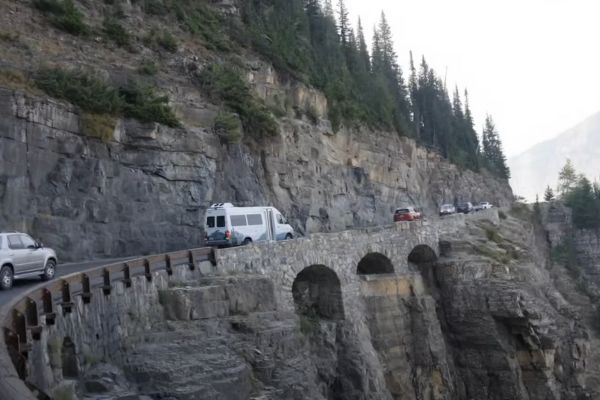
Going-to-the-Sun Road is a spectacular drive and one of the most popular attractions in Glacier National Park. However, the road is only open for a short time each year because of its high elevation, typically from early July to mid-October. Landslides, avalanches, wildlife, and construction create additional challenges. The road’s limitations, like tight turns and tunnels, also restrict the size of vehicles that can use it.

Smoke from wildfires is another factor to consider. Smoke often impacts views in late July and early August. Staying informed about air quality is important.

There are length and height restrictions in place for safety reasons. Even some dually trucks may be too long.

Nonetheless, there are four ways to experience Going-to-the-Sun Road:

Option 1: Drive your own vehicle. This option offers the most flexibility and convenience. However, a vehicle reservation permit is required, especially if entering from the west side of the park.

Option 2: Rent a vehicle. Renting a Jeep or convertible is a unique experience that avoids RV restrictions. Many local rental companies offer options.

Option 3: Take a Red Bus tour. The Red Buses are historic touring vehicles with open tops. Knowledgeable guides provide information about the park’s history and natural features. The Red Bus tours offer convenient pick-up from some campgrounds, such as the KOA and Johnson’s RV Park. Tours range from $60 to $120.

Option 4: Use the free National Park shuttle. The free National Park shuttle is the least flexible option. Expect long waits, limited stops, and potential overcrowding. This option should be considered a last resort.

Hurdle #2: Decoding the Glacier National Park permit maze

Glacier National Park requires a variety of permits:

• An entrance fee or a National Park Pass is required.

• Separate vehicle reservations or permits are needed for the Going-to-the-Sun Road.

• Area-specific permits (for example, Apgar, St. Mary, or North Fork) may also be required.

The National Park Service website has more information about permits.

Hurdle #3: Navigating Glacier’s campgrounds with an RV

Size matters… a lot! Most campgrounds in Glacier National Park are not designed for large RVs. Sites are tight, turns are challenging, and width can be an issue, especially with slides.

• RVs under 25 feet can fit in about 60–70% of the sites.

• RVs around 30 feet can fit in about 30–40% of the sites.

• RVs around 40 feet can fit in about 10–15% of the sites.

Expect limited or no hookups (water, electric, sewer) at most campgrounds. Dump stations are available. The sites may not be level.

Camping inside Glacier National Park offers several benefits. Campers have direct access to trails, can enjoy the affordability compared to private campgrounds, and the sites are spacious with fire pits and picnic tables. However, know that there is limited or no cell signal in many campgrounds. Tree cover can also affect Starlink performance.

Hurdle #4: Preparing for the unexpected (road closures)

Road closures can happen because of weather, animal activity, and construction. Check the National Park Service website daily for updates. Having backup plans is vital if your chosen route or activity is unavailable.

Smoke, fire, or wildlife activity can lead to evacuations. Pay attention to the surroundings and be prepared to leave if necessary.

Despite these logistical concerns, our hosts insist that Glacier National Park is still well worth the effort to visit. It’s a one-of-a-kind destination that will leave you in awe. But knowing what to expect in advance can definitely help.

RELATED

RVT1206

REAL ID deadline is coming—Here’s what RVers need to know

43

RVers travel. Usually, we take to the open road, but there are times when situations call for air travel. Enter REAL ID and, yes, there’s a real deadline to get yours! It’s May 7, 2025.

Just what is REAL ID? Do RVers even need one? Let’s see…

What is REAL ID?

REAL ID is a set of federal standards for state-issued driver’s licenses and identification cards. The REAL ID Act of 2005 established these standards. REAL ID standards help bolster security because they ensure that the documents you carry are authentic and issued under strict verification guidelines.

Starting from the upcoming deadline on May 5, 2025, only REAL ID-compliant IDs or other accepted forms of identification (like passports) will be permitted for boarding commercial flights, entering certain federal facilities, and more.

Why RVers should care

Even though most of our current travel means RVing on our nation’s highways, RVers do occasionally plan a trip that involves air travel. There are also times when we choose to visit federal sites where REAL ID may soon be required. Here’s why RVers should get a REAL ID:

Streamlined security: With a REAL ID in your wallet, you can breeze through TSA checkpoints if your journey takes you to a nearby airport for a quicker connection.

Access to federal facilities: Whether it’s entering a federal government facility or military installation, having the proper ID means you won’t be left out.

Future-readiness: Regulations won’t wait for anyone. Be prepared with your REAL ID now and you’re prepared for any travel plans, whether scheduled in advance or spontaneous.

How to get your REAL ID

Getting your REAL ID is a straightforward process. The exact documents required can vary slightly from state to state, but in general, you’ll need to:

Gather necessary documents: Typically, you’ll need to prove your full name, date of birth, Social Security Number, and residence. Check your state’s requirements online for a complete list of acceptable documents.

Visit your local DMV: Schedule an appointment, if possible. The process is often similar to getting or renewing your driver’s license, though there might be an extra fee.

Submit your application: Present your documents, fill out the application form, and have your photo taken. The DMV will verify your information and issue a REAL ID–compliant license.

Stay on top of deadlines: The federal deadline for using a REAL ID for air travel and other specific situations is approaching fast. Make sure to submit your application before the deadline to avoid travel disruptions.

Planning ahead is especially crucial for RVers with busy travel schedules. Research your local DMV office’s requirements well in advance. Consider scheduling your appointment during an off-peak time to avoid long waits.

Preparing for the deadline

If you haven’t updated your driver’s license or identification card yet, now is the time. Here are a few tips to ensure a smooth process:

Plan ahead: Don’t wait! Now is the time to get your REAL ID, especially if you’ll be traveling by air soon. (Processing may take a week or longer.)

Check your state’s website: Each state administers its own REAL ID process, so the requirements may differ. Double-check the details on your state DMV website.

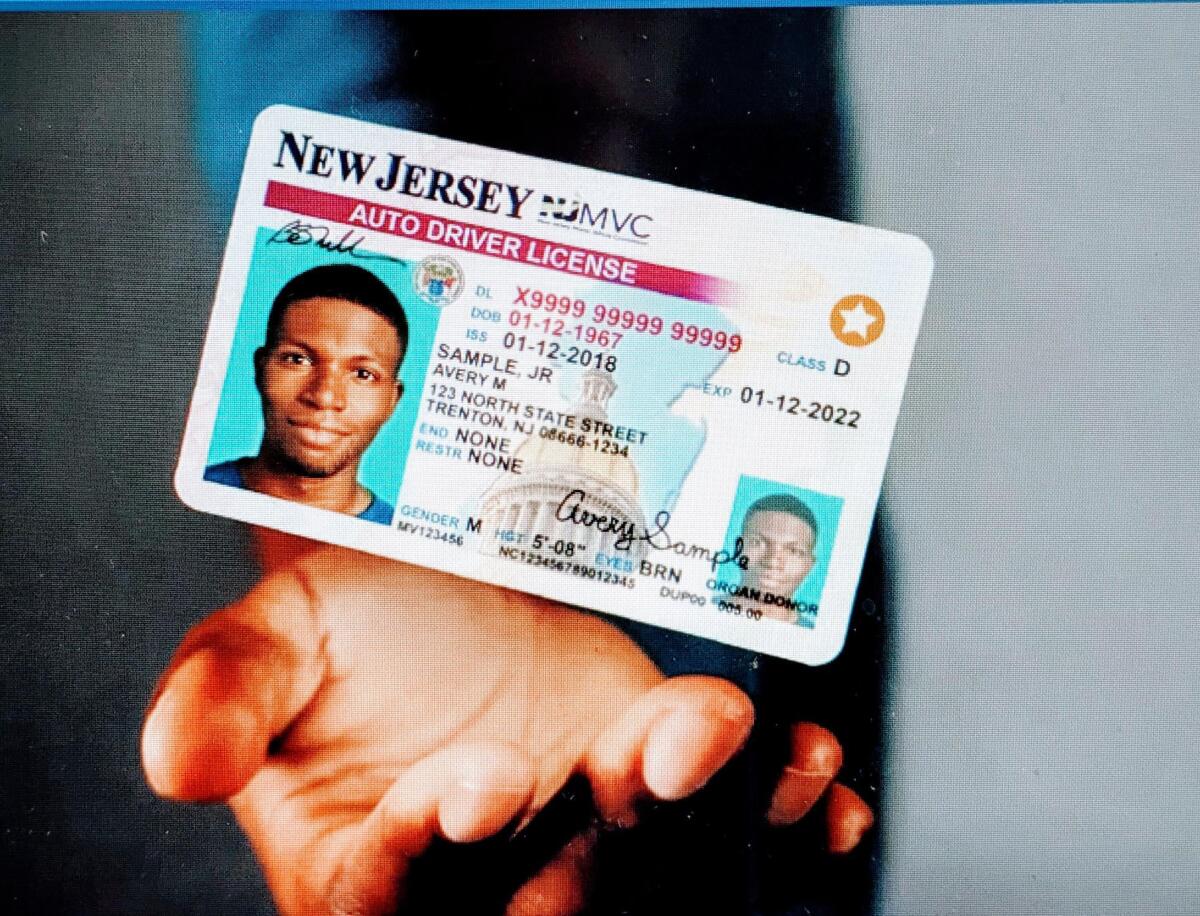
Keep alternative IDs handy: If you still have a non-compliant ID, remember that other forms of identification, such as a passport, might suffice for certain travels. However, having a REAL ID simplifies things. (REAL ID cards feature a star in the upper right corner.)

Inform yourself: Stay up-to-date on any last-minute changes by checking reliable news sources and official government pages regularly.

RELATED

RVT1206

Have you ever loaned your RV to a close friend or family member?

23

Have you ever loaned your RV to a friend or family member or, better yet, would you? Some people have the mentality, “What’s mine is yours!” While others would be fine if they never had to share anything again. Which are you?

If you don’t use your RV often, or keep it in storage for a season or two, why not loan it to someone you know and trust? Well, OK, sure, a few things could go wrong…

It’s a generous gesture—handing over the keys to something as personal (and valuable) as your home-on-wheels. Maybe you’d be more open to loaning your rig to someone who’s experienced, or who has taken RV trips before. Or perhaps just the thought of someone using your sewer hose is enough to make you cringe.

On the flip side, some RV owners love the idea of introducing friends or family to the RV lifestyle. It could be a chance for a loved one to make lasting memories, or even to see if RVing is something they’d want to do long-term. You might even get a few good stories—or favors—in return!

Of course, things like insurance, damage, and how well your RV is treated can be big concerns. Even with the best of intentions, accidents can happen. So where do you draw the line between being helpful and protecting your investment?

Please leave a comment below the poll telling us why you would or wouldn’t loan your RV out. And, of course, vote in the poll, too. Thanks!

MORE POLLS YOU MIGHT ENJOY:

RVT1206

Check your exterior RV refrigerator vent door latch

By Dustin Simpson
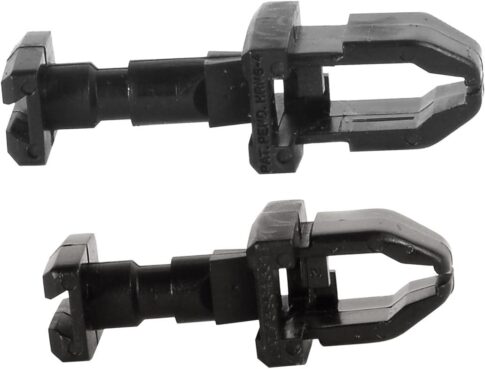
Join me on the California RV Specialists lot, where I noticed a refrigerator vent door latch was broken on one of the RVs currently on our repair lot. In the video below, I show you this very easy repair!

I recommend that you order an extra set of latches to have on hand. This will easily save you from losing your refrigerator vent door while in transit.

Here are the RV refrigerator vent door latches I use and recommend: RV Designer E377, Refrigerator / Converter Vent Latch, 2 Per Pack

Make sure you see your owner’s manual on refrigerator maintenance and visit your local dealership or repair shop. Travel safe!

Please follow us on YouTubesee our published articles on RVtravel.com and other social media pages.

Thank you,
Dustin

RELATED

##RVT1206

Searching for fun? This hobby could be for you

8

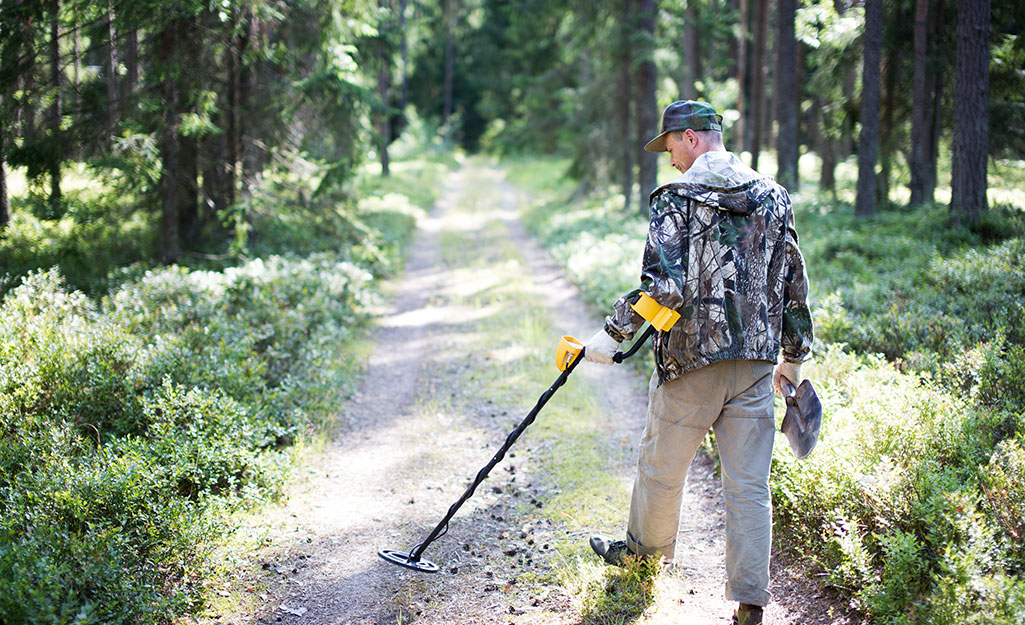
There’s something exciting and exhilarating about searching for treasure! If you feel that way, too, perhaps you’d enjoy the hobby of metal detecting.

It’s really no surprise that many RVers enjoy metal detecting. After all, RVing itself involves the search for adventure. The joy of discovering new places and things is baked into the DNA of most RVers. We love to spend time in the great outdoors, too! As it happens, all of these qualities perfectly fit with the hobby of metal detecting.

On a recent trip I met an RVer, Tim, who was a seasoned detectorist. His enthusiasm and knowledge, plus his detecting experiences, made for great conversations around our evening campfires.

Here’s a bit of what I learned from Tim. I hope the information will perhaps encourage you to think about making metal detecting a hobby for yourself!

Why RVers love detecting

There’s a lot to love about becoming a detectorist. Check this out:

Outdoor exploration. Metal detecting gets you out of your RV recliner and into nature. No matter where you go, you could discover hidden gems while getting a bit of exercise, too.

Thrill of the hunt. There’s a rush when your detector beeps—could it be a silver coin, a piece of jewelry, or a relic? That element of surprise keeps the hobby fresh for years.

Historical connection. Every find tells a story about past inhabitants—coins from the 1800s, buttons from military uniforms, or old tools—all offer a hands-on link to local history.

Social community. Detectorists often share tips, photos of finds, and trip reports online and at local clubs, making it easy to connect with fellow RVers who share your passion.

Tips for beginners

Not sure how to begin? Here are some tips:

Choose the right detector. Look for entry-level models that balance ease of use with essential features. Popular picks include the Minelab Vanquish 340/540 and the Nokta Simplex. Both offer good depth and discrimination without breaking the budget. Consider weight and ergonomics before you purchase. Lighter machines reduce fatigue and allow you to hunt for longer periods of time.

Learn discrimination and ground balance. Discrimination settings on your detector let you filter out unwanted metals like iron or aluminum foil, focusing on more valuable targets. Ground balancing reduces interference from mineralized soil, especially near rivers and beaches. Many modern detectors have automatic ground balance, but learning manual adjustment can improve your overall performance.

Practice. Begin in your own backyard. It’s important to practice how to control your coil detector. (You may benefit from watching a video like this one.) You should sweep the coil slowly and close to the ground. Overlap each pass by about one-third of the coil’s width to ensure you cover the entire search area. Practice maintaining steady height and speed. Inconsistent motion can lead to missed targets or false signals.

Once you’ve practiced controlled sweeping, place a handful of coins and small metal objects buried at different depths in your yard. This helps you learn how targets sound at various depths and angles.

Understanding land ownership and permits

Before you head out to begin your metal detecting adventure, you must know and understand the rules:

Private property: Always obtain written permission from landowners before detecting on private land.

Public land: Laws vary by jurisdiction. Some state and national parks allow detecting only in designated areas or require permits; others ban it entirely.

Archaeological protection: Federal sites and Indian lands fall under the Archaeological Resources Protection Act, which prohibits excavation without a permit.

How to check regulations

Park websites: Most state parks publish rules online or provide maps of permitted zones.

Park offices: Calling the park office or visitor center can clarify current restrictions and permit fees.

Local metal detecting clubs: Club websites often compile state-by-state regulations and can advise on lesser-known sites.

Federal resources: The Bureau of Land Management (BLM) and U.S. Forest Service websites list metal detecting policies for public lands. [Google “BLM metal detecting” or “U.S. Forest Service metal detecting” for info in pdf.]

Essential equipment

Metal detector: Choose based on budget, terrain (all-terrain vs. beach-specific), and feature settings.

Digging tools: A trowel or sand scoop plus a folding hand shovel help recover targets without damaging them. Tim (the RV detectorist I mentioned earlier) also recommends a pin pointer. Here are several to choose from depending on where you plan to search.

Headphones: Waterproof models can be indispensable for water hunts and help you hear faint signals clearly.

Finds pouch and trash bag: Separate target finds from debris to keep your site tidy and compliant with “leave no trace” principles. (Note: You can improvise and use your own bags, too.)

GPS or smartphone app: Mark locations of high-yield spots to revisit later; apps like Avenza Maps or Gaia GPS work well offline.

Protective gear: Gloves, knee pads, and sturdy shoes will keep you comfortable and safe on varied terrain.

You should try it!

Metal detecting is a mobile hobby that’s tailor-made for RV travel. It can enrich your journey with exciting discoveries and wonderful memories. Best of all, the necessary metal detecting tools are few, lightweight, and easily packable in all sizes of RVs. So, what are you waiting for?

Are you an RV detectorist as you travel? Tell us about it using the comments below.

YOU MIGHT ALSO ENJOY:

RVT1206

Borrego Springs, CA: A perfect desert oasis for RVers

5

Nestled in the heart of Southern California’s Anza-Borrego Desert State Park lies Borrego Springs. This hidden gem offers RVers a unique desert experience that’s hard to beat.

Discovering Borrego Springs

Located approximately 90 miles north and east of San Diego, Borrego Springs is a small, unincorporated community in San Diego County. With just over three thousand people, the town is uniquely surrounded by the vast expanse of Anza-Borrego Desert State Park—the largest state park in California, covering more than 600,000 acres.

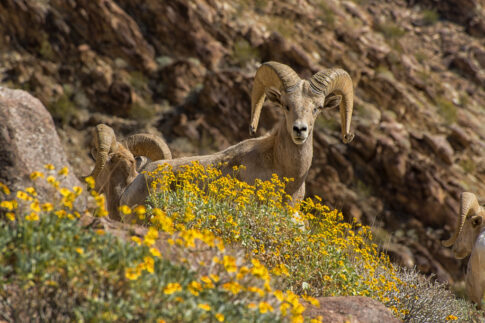
Big Horn sheep in Anza-Borrego DesertImage: parks.ca.gov
California State Parks, photo by Brian Baer

The name “Borrego” comes from the Spanish word for “sheep.” No doubt that’s because of the bighorn sheep that inhabit the area. The town’s history dates back to the late 18th century. That’s when Spanish explorer Juan Bautista de Anza led an expedition through the region.

Significant development began in the 1920s with the establishment of water wells. This led to a boom in agriculture and settlement.

Must-see attractions

Borrego Springs boasts a variety of attractions that cater to nature lovers, art enthusiasts, and adventure seekers:

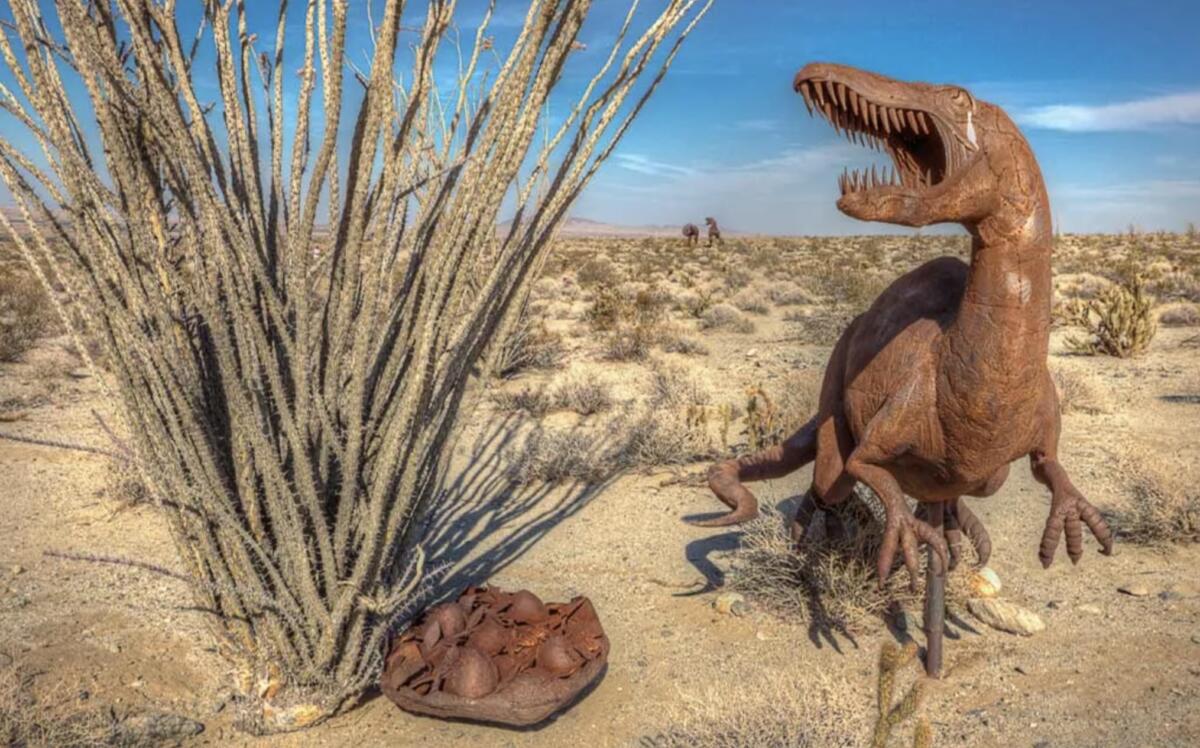
Serpent sculpture in Galleta Meadows AZ Image: https://www.borregoexperience.com/galleta-meadows
https://www.borregoexperience.com/galleta-meadows

Galleta Meadows sculptures: Scattered throughout the desert landscape are more than 130 metal sculptures crafted by artist Ricardo Breceda. These life-sized artworks depict prehistoric creatures, desert wildlife, and even a 350-foot-long serpent. It’s a surreal experience as you explore the open desert, and it’s free.

Anza-Borrego Desert State Park: Encircling the town, this state park offers 500 miles of dirt roads, 12 designated wilderness areas, and numerous hiking trails. Popular spots include the Borrego Palm Canyon Trail, which leads to a native palm oasis, and Fonts Point, renowned for its panoramic views of the Borrego Badlands.

Stargazing: Recognized as an International Dark Sky Community, Borrego Springs provides some of the clearest night skies in the country. The minimal light pollution makes it a prime spot for astronomy enthusiasts to observe stars, planets, and meteor showers.

RV campgrounds

For RV travelers, Borrego Springs offers several campgrounds equipped with a range of amenities for a fun and comfortable stay. Here are a few to consider:

The Springs at Borrego RV Resort & Golf Course: This resort features 200 spacious, full hook-up sites. Also, you’ll find a 9-hole championship golf course, mineral baths, and a variety of recreational activities. Guests can enjoy the swimming pool, fitness center, and organized social events.

Palm Canyon Hotel & RV Resort: Offering a blend of Old West charm and modern conveniences, this resort provides full hook-up RV sites, two outdoor pools, hot tubs, an on-site restaurant and saloon, and a general store. Its proximity to Anza-Borrego Desert State Park makes it a convenient base for exploration.

Borrego Palm Canyon Campground: Situated within Anza-Borrego Desert State Park, this campground offers a more rustic experience. Here, you’ll have options for full hook-up and non-hook-up sites. Amenities include restrooms, showers, and easy access to hiking trails. It’s an excellent choice for those looking to immerse themselves in nature.

Tips for RVers

Best time to visit: The ideal time to visit Borrego Springs is during the cooler months, from October to April. This is the time when daytime temperatures are mild, making outdoor activities more enjoyable.

Reservations: Given the town’s growing popularity, especially during wildflower super blooms, it’s advisable to book campground reservations in advance.

Supplies: While Borrego Springs has essential services, it’s a good idea to stock up on necessary supplies before arrival, as options can be limited.

You should go!

Borrego Springs offers a unique blend of natural beauty, cultural attractions, and modern amenities. If you’re looking for a memorable desert adventure, this is the place!

RELATED

##RVT1206

Are America’s national parks home to feral people?

10

By Cheri Sicard
The internet has been ablaze for the past few years over the topic of feral people in national parks. If you have ever searched for information about national parks on YouTube, your feed, like mine, has inevitably been filled with video after video about mysterious feral people living in our national parks.

Some of the descriptions of these wild and sometimes cannibalistic people come from park visitors sharing their alleged personal experiences. Others are conspiracy theorists trying to tie these tales to those of missing persons who disappeared in national parks through the years (and there are, in fact, many of these).

The team from Drivin’ and Vibin’ wanted to know how all this started and if there was any truth to the claims. So they set out to investigate.

How did the feral people rumors start?

The stories started exploding in late January and early February of 2021, beginning with a viral TikTok video about an experience one woman and her family had while camping in Texas’ Big Bend National Park.

While sitting around the campfire one night, they say they heard multiple people screaming off in the distance. She then heard a woman’s voice scream, “We’re going to die.” More screaming followed until she was able to make out the words, “Just know that I love you.”

Creepy as the story is, they immediately called the police and a park ranger, who found nothing. Even stranger when she asked about it the next day, none of the employees or rangers claimed to know what she was talking about.

After posting the video about the experience on TikTok, other viewers began to share their own experiences.

The Great Smoky Mountains National Park seems to have the most feral people sightings.

As so many people have gone missing through the years, conspiracy theorists have started linking the missing people stories to the feral people stories. However, it must be noted no actual evidence of feral people exists and the missing people more than likely can be attributed to under-prepared hikers who got lost, or who had an unfortunate encounter with wildlife.

So what do you think? Are cannibalistic feral people living in America’s national parks, or is this just one more ridiculous conspiracy theory?

YOU MIGHT ALSO ENJOY:

##RVT1206

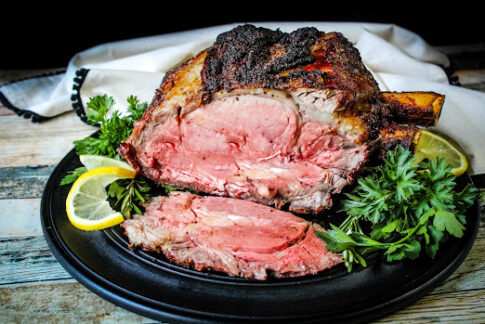
Celebrate National Prime Rib Day with these mouthwatering recipes

0

King Timmy’s Prime Rib Salad

by Sherri Williams from Crestview, FL

With plenty of fresh vegetables to keep things interesting, this flavorful salad is fit for a king! Thin shavings of prime rib are mixed with savory Parmesan cheese. Thick, sweet, and tangy, the dressing is fantastic. We loved this delicious and lighter way to use prime rib leftovers. Click here for the recipe.

Prime Rib Casserole

by Raymond Spencer from St Bernard, LA

Made with prime rib, this is not your typical leftover casserole. It has a rich and decadent cheesy cream sauce that coats the hearty penne. Garlic adds robust flavor and is the perfect contrast to the sweet carrots. A buttery topping holds in the big chunks of flavorful prime rib that have been mixed into the creamy pasta. After a holiday meal, this is the perfect way to use precious prime rib leftovers. Here’s the recipe.

Perfect Prime Rib Every Time (The Best Ever)

by Brenda-Lee Barajas from Watertown, NY

Prime rib can be intimidating but if you follow this easy recipe it will come out perfect. It’s a perfect entree for your holiday meal or a special occasion. The trick is when you turn off the oven, do not open the door. Trust the process. We like ours on the rare side and followed her method. The prime rib was cooked perfectly. Guests are guaranteed to feel special when they sit down to this meal. Get the recipe here.

Steak-n-Cheese Stuffed Biscuits

by Brenda Savage from Indianapolis, IN

In the Test Kitchen, this recipe reminds us of a Philly cheesesteak stuffed inside a biscuit. It’s a great handheld snack packed with flavor. Quick and easy to make, these are perfect for your next tailgate or football party. Yummy! Here’s the recipe.

Smoked Prime Rib

by Pamela Rappaport from The Villages, FL

The entire Kitchen Crew loved this prime rib recipe. Cooking low and slow results in a fantastic prime rib. Smoking adds tons of smoky flavor and cooked the roast to perfection. The meat is tender and succulent. We used tri-color peppercorns and they gave the roast a beautiful color. Using a smoker also frees up the in-demand oven. If you like horseradish, the sauce is a delicious addition. Here’s the recipe.

MORE RECIPES YOU MIGHT LIKE:

RVT1206

Future RVer says, ‘Design RVs for the people actually buying them—older people!’

We received this letter earlier this week from Janet, whose comments made us both laugh and nod our heads. Even if you’re not an older RVer, we bet you’ll agree with much of what she has to say. Read on.

“I am looking to sell my house and jump into a motorhome for a while to become a full-time traveler, but I am shocked at what they are putting in RVs!

“I realize that there are families that travel during summer vacation, but it would seem to me that a good portion of RV buyers are seniors. So why put a step from the bedroom to the rest of the RV? Some of them are even between the bedroom and the bathroom! Have they ever heard of a broken hip? Twisted ankle? Broken anything just from missing that step.

“My biggest pet peeve is the microwave under the stove. I would have to get on my knees to clean it. How would I know where the buttons are? You can’t even bend down to see it! Not everyone travels with a 10-year-old. I did have a problem with no oven, but I guess I can order a pizza, right?

“And what is up with the hospital curtains? They use glass doors in the shower now that are stacked, so why not stack doors to make a wall between the bedroom and the rest of the RV? No one wants curtains across the bunk over the cab—talk about making your child claustrophobic.

“Now let’s talk about TVs—32-inch? Come on, people need to be able to read the screen from across the RV, at least go up to a bigger TV. No one uses a 32-inch TV. I am not sure why they even make them anymore.

“We want bigger windows! No valances, we hate them! They are ugly and dusty and useless.

“King beds…  speaking of beds, stop splitting mattresses and making the top rise. And, for that matter, adjustable beds are all the rage right now. Spend all day in a museum, and you want your feet up.

“100 watts of solar? Seriously? Put in 1,000 watts, cover the roof, and give us full solar so we don’t have to hook up to electric. Boondocking is in!

“Just my opinion.” —Janet Lewis

MORE LETTERS FROM OUR READERS

RVT1206

Finally, a practical solution for RV spice storage

If you are a cook or foodie, RV spice storage is a real struggle.

I was taking up FAR too much RV real estate on storing my extensive collection of herbs and spices. Yes, there are clips that hold bottles to a wall, but reviews on how well they work and how safely they stay in place are mediocre at best. I don’t have enough metal surfaces to make use of magnetic spice jars so, instead, I ended up carrying two large shoe boxes of spices. Two boxes, just for spices! But no more.

I recently switched to Mason jar-style zip-lock bags for storing spices, and I’m obsessed! These clever little bags look like Mason jars but are lightweight, resealable, and space-saving—absolutely ideal for tiny kitchens on the go. They keep everything fresh, are easy to label, and fit perfectly in drawers or baskets.

No more clunky jars rattling around while driving.  No more spilled spices from jars that did not stay put.

Know that if you like this concept, the bags are available in lots of sizes, so you can get similar ones to hold far more than just spices, although that is what I use them for most.

What I especially like about Mason jar spice bags

• They hold a lot of spices but pack flat.

• The bags’ design allows them to stand upright when in use.

• You can wedge a lot of them into a small basket, bin, or drawer.

• The airtight zipper seal keeps spices fresh.

• See-through for easy identification. I also use a Sharpie to write directly on the bag.

• Durable and leakproof.

• Freezer-friendly.

• Easy to clean, even dishwasher friendly.

• Without the need for jars, you can save money and buy spices in bulk.

What can be improved?

Honestly, nothing. This is by far the best RV spice storage solution I have ever found.

You can find them on Amazon here.

MORE GADGETS YOU MIGHT LIKE:

RVT1206

My RV tire pressure is showing a significant increase. Is this OK?

Here is a recent question received from a reader of RVtravel.com: “I run 80 psi cold in my tires on my RV (F53 chassis). I often see hot pressure 100 to 105 psi and sometimes a little more on the two tires behind the exhaust pipe. is this normal or is the hot psi too much?” —Mike M.

My reply

I would not consider a 20% to 25% increase “too much.” BUT I am assuming that you have confirmed that you are not exceeding the GAWR (gross axle weight rating) as shown on the RV Certification Label.

We know that most RVs are running near or at the max spec load so you are fully exercising the tire. The tires near the exhaust are reacting to the increase in air temperature, which is both normal and expected.

Where to find more info on RV tire pressure

I have covered this and similar questions about tires on RVtravel.com in the “Maintenance and Repair” section found here. Or click here for all of my posts on RVtravel.com.

Just do a simple search such as “hot tire pressure” and the website will give you a number of posts on that topic. I have also covered similar questions on my personal Blog  www.RVTireSafety.net

Checking the above sites can get this and many other questions answered quickly and many times from experts in the topic you are asking about.

Roger Marble

*****

If you have tire questions, check out Roger’s Blog as well as his posts on RVtravel.com. There are hundreds of posts covering everything to do with tires.

If you still have a question for Roger after searching the above posts, send your inquiries to him using the form below.

Name
Drag & Drop Files, Choose Files to Upload

MORE POSTS FROM ROGER ON TIRE PRESSURE

RVT1206