Home Blog Page 50

What is the difference between a surge protector, EMS, and EPO? Do I need one?

Dear Dave,
I am getting ready to purchase an RV. I need to know if I need the EMS, EPO and surge protector features. Progressive Industries has an EMS w/surge protection listed for $159. Hughes Watchdog Gen ll EMS, EPO, w/surge protection is listed on their website for $380. The only difference I see is the WiFi feature. From research, it appears these are the two top brands. Please help me know what to purchase. Thanks for your help. —Chris, 2018 Coach House Platinum II 241XL DT

Dear Chris,
From what info I can find on the Coach House models, the Platinum II is a Class C unit on a Mercedes chassis. Their website describes it as a “Luxury Class B+” motorhome, which frustrates me as the RVIA (RV Industry Association) does not have a B+ classification. If they purchase a chassis with a cab and frame rails called a “cutaway” chassis and build the box, it is a Class C. Whether it has a bunk over the top or not, building on a cutaway chassis is a Class C and you can tell by the bump out or “wing walls” behind the cab to the box. OK, enough on that.

It looks like the unit has a 30-amp shoreline cord going to the distribution center. It also lists a lot of what I call “glamping” features such as USB charge slots built into 120-volt outlets, wireless cell phone charging systems, 3000-watt inverter, and TVs with sound bars. Those and other items need to be protected from not only high power surge but low power, as well. So, yes, I believe you need some type of power protection device, which can be confusing.

Surge protectors

The term “surge protector” has become a generic description of the pigtail most RVers use at the pedestal to regulate voltage coming to the rig from the campground power pedestal. Most of us are familiar with the residential surge protectors or “power strips” that simply trip the breaker if there is a power surge. Most RV “surge protectors” actually protect your RV from high and low voltage, miswired pedestals, open neutral, open ground, reverse polarity, high neutral current, surges, and overheating plug/receptacles.

Surge Protector
Surge protector

The difference in price comes with the amp size of 30 or 50, the features offered, and how often it can reset after a shut down. I have used both the Southwire Surge Guard and the Hughes Power Watchdog models in the basic pigtail version for years.

Some cheaper models plug into the campground source and will shut down with a surge such as a lightning strike but will not protect against high and low voltage. They will not reset and you will need to purchase a new unit.

The protection device in these are called joules, which dissipate the energy of an electrical surge. The higher the joules capacity, the more resets available, and the higher the cost.

Cheaper surge protectors do not have a display showing voltage and amp draw. I feel that is important when you have a 30-amp system as it is important to know what your energy demands are. More on this later. Also, the more expensive models will actually shut down temporarily when there is high or low voltage. They reset after 90 seconds when power is restored to an acceptable level. The Hughes Power Watchdog you are referring to has a low joules count of 3,000. However, you can replace just the surge module if you use it up. That is free for the first two years and only $39 after that.

EMS/EPO

Electrical management system (EMS) is another description that I believe has been used in generic terms, as well. Originally, an EMS was an energy management system that was installed inside the rig. It would have major 120-volt appliances connected to monitor power management. An example would be the Winnebago Powerline using the Intellitec system. If the energy draw exceeded 30 amps, the system would temporarily shut down components to protect an overload situation.

In the case of the Powerline, the first system to shut down was the refrigerator, then the rear air conditioner fan, then compressor. Typically when there is an overload situation, it is for a short time such as turning on a microwave oven or other appliance which would only create a short additional draw. Turning off the refrigerator for a couple minutes as well as the back air conditioner would not affect the performance of those units.

I noticed doing a Web search that AI Overview lists the Hughes Watchdog Gen II as an EMS (electrical management system), which I feel is a little misleading. I guess technically it could be called an EMS, as it does shut off power. However, it really doesn’t “manage” power like the Intellitec models. You will notice the Hughes website does not list the EMS description on their website, just the EPO.

Progressive Industries does list their EMS PT30X as an electrical management system. It will shut off power not only during a surge such as a lightning strike, but also if the incoming power is higher than 134-volts and lower than 104-volts. It does seem to have similar functions as the Hughes Watchdog. However, it only has 1760 Joules and does not look to have a replacement module.

How many joules will be absorbed

It is not possible to estimate how many joules will be absorbed as it depends on the amount of the surge. I believe the higher price of the Hughes Watchdog is the higher joule capacity, ability to replace the module, and the Bluetooth capabilities that allow you to see error codes from inside your rig rather than going outside to read the LED. That could be an issue during inclement weather.

I would also suggest looking at the Southwire Surge Guard model 34931, which is also Bluetooth enabled with 2450 joules. It seems to have the same functionality at a lower price than the Hughes Watchdog. You can find it on Amazon here.
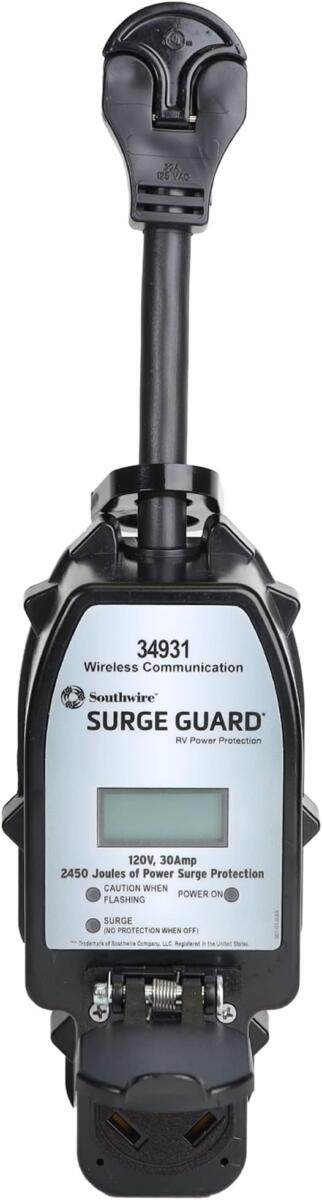
Surge Guard 34931


 You might also enjoy these posts from Dave 

DAVE HAS ANSWERED MORE THAN 1,000 readers’ maintenance and repair questions. Read a directory here. There is so much to learn!


Dave Solberg is a leading expert in the RV industry and the author of the “RV Handbook.”

HAVE A QUESTION FOR DAVE?

Send your inquiries to him using the form below.

Name
Drag & Drop Files, Choose Files to Upload

RVDT2885

How to easily refresh your RV’s bedroom

2

If your RV bedroom feels a little tired, the best (and easiest) ways to give it a refresh are to consider the following areas: window coverings, bedding, lighting, storage, and personal details.

Using light colors, soft textures, clean lines, and smart design makes a small RV bedroom feel calmer and more finished. Read on to see what I mean.

Note: Remember that whatever you bring into your RV adds to the overall weight. Use caution so as not to overload your rig.

Window coverings

Replacing bulky valances with roller shades is one place to begin your bedroom refresh. Use a flashlight to locate the valance mounting brackets. The brackets are usually held in place with an “L” bracket and a few screws. Once you remove the valances, a bit of spackle usually covers over the resulting screw holes. A curtain or roller shade mount can also be positioned to visually cover the holes.

You want your RV bedroom to feel calm and welcoming, but don’t forget that your bedroom requires privacy, as well. Install roller shades and pair them with airy curtains to dramatically change the look. (You may want to consider blackout roller shades to promote better sleep.)

Light-filtering curtains in a neutral or light hue will help make the space feel larger. Remember that you have several options when it comes to curtain length and mounting position. A short curtain valance mounted at the top of the window will allow the maximum amount of natural light into the bedroom. There are also café-style curtains that are mounted halfway down the window. Your bedroom curtains need not cover the entire window. They can simply drape both sides of the window to add softness.

Wherever you choose to mount curtains, remember to allow easy access to the window mechanism. You must be able to quickly open the emergency window. Don’t let your decorating efforts impede safety!

Here are some of my easy, no-sew curtain ideas for RV windows.

Bed linens

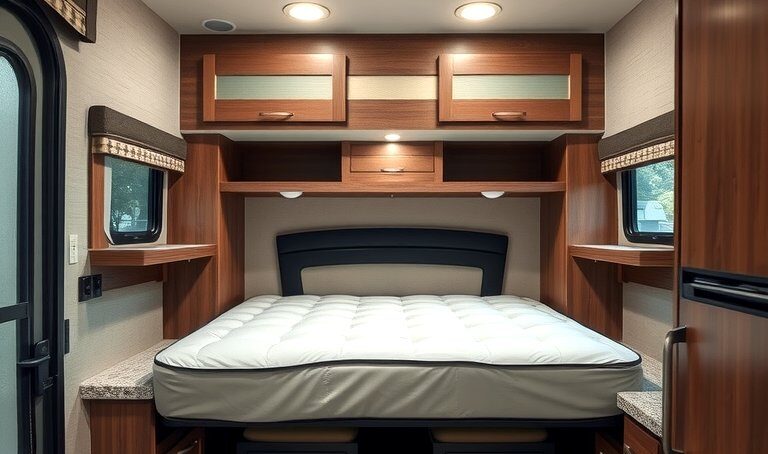
The “elephant in the room” is, of course, your bed. It takes up the majority of visual and physical space, so bed linens are important. Layered textiles can make the bed look finished without taking up extra room.

RV bedroom Image: rvinspiration

If you make your RV bed “the easy way,” consider coordinating sheets and pillowcases. What is the “easy way”? Only make the bed halfway. Bring the sheet and blanket/coverlet halfway up the bed. Then fold them back and smooth them into place. Using this bed-making method, your bed sheets and pillowcases look best when they coordinate with the bedspread or coverlet.

Updated pillows and blankets can help your RV bedroom feel more homelike. My husband vetoed the idea of any decorative pillows on our RV bed. I have to agree because there’s little space to put them at night. But you do what works best for you.

Occasionally, I enjoy an afternoon nap, so I’ve added a colorful throw to the end of our bed. It helps brighten the room and serves a practical need as well.

Here are a bunch of RV-specific bedding options. You deserve an upgrade!

Headboard and wall treatment

Many RV bedrooms feature a headboard. If your bed lacks one, consider adding some interest in that space. Options are endless if you are a DIYer. You can fashion a custom headboard. Or use peel-and-stick wallpaper, beadboard, slat-wall installation, or even add a foam-padded headboard.

This can also be a place to add your personal touch with a piece of art, macrame hanging, or photos of past travels. (Just remember to securely fasten whatever you choose so it doesn’t fall down on you as you sleep.)

Lighting

RV bedroom lighting matters more than most people think because it affects both mood and function. For a cozier feel, try stringing twinkly lights or a lamp that gives off a soft glow. Under-cabinet lighting and low-profile strip lighting strategically placed can also bathe the room with a calming glow.

We lived in our RV for three years before we realized the bedroom lights could be dimmed. Check to see if yours are dimmable. Or consider adding a light fixture for a restful ambiance.

Bedside nightstands

Many RV bedrooms lack a nightstand. If this is true for you, consider baskets or floating bedside shelves for a solution. Wall-mounted pieces won’t block floor space, which is often at a premium in an RV bedroom. Some nightstand brackets fit under the mattress, so no holes in the walls.

Before ordering or crafting a nightstand solution, think carefully about how you’ll use it. Think: will this accommodate the CPAP machine? Will this impede access to the bed? Is this the best-sized solution, or might a smaller version work just as well? How will I use this nightstand? Remember that whatever nightstand configuration you add to your RV bedroom will take up actual space and add to the visual space, too.

Wall decor and personal touches

A few lightweight photos, artwork, or travel-themed pieces can change the feel of the room fast. Personal photos make the room feel less generic and add your personality to the space. In a moving rig, lightweight and easy-to-remove pieces are the safest choice. Secure the items to the walls with Command hooks, Museum Putty, or Velcro.

Rugs and flooring

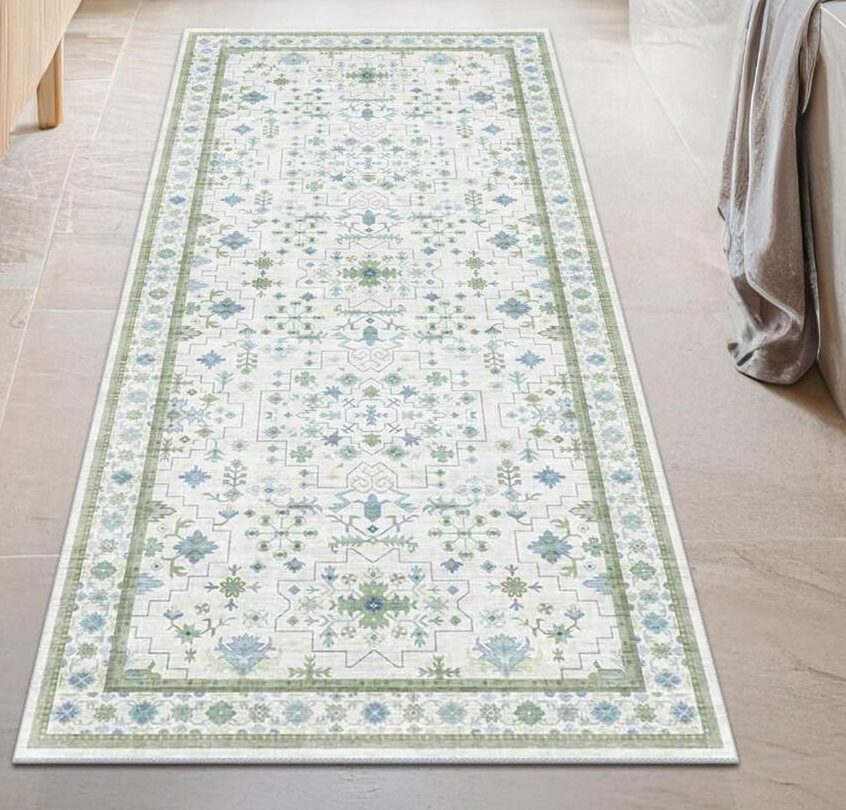
If the room feels cold underfoot, a rug can soften the space and add comfort right away. An area rug adds color and texture. It gives a cozier feeling, while also helping define the bedroom as its own zone.

green patterned floor rug runner Image: Amazon

I really like the washable rugs that are now available. A seasonal rug can bring the holiday spirit into your room and is easily changed with the season. Consider size, color, and texture as well as cleanability when choosing your bedroom rug. Also, remember safety. (An easily rumpled rug can become a tripping hazard.)

If your RV bedroom sits in a slide-out, take that into consideration when measuring for a rug.

Finishing touches

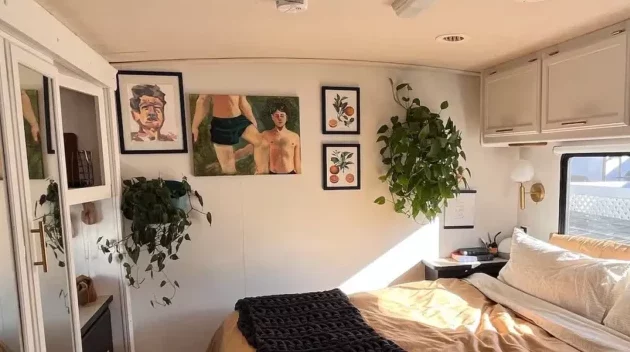
artwork and plants to refresh rv bedroom image: Worrells

Greenery adds a homey feel to any space. It doesn’t matter if the greenery is faux or real. A plant or group of plants instantly brings life into a tired RV bedroom.

Mirrors also make an impact and are useful, too. A mirror reflects the light and can make a small space feel brighter and bigger. If you don’t use your RV bedroom mirrors, consider making them a statement “wall” by adding window clings in a coordinating color with your bed linens.

Can you add to this list of RV bedroom refresh ideas? Use the comments to do so.

RELATED

RVDT2885

Essential IKEA RV gear for 2026

A lot of RV owners make the same mistake at first. They spend too much on camping gear that looks smart on the shelf, then find out it works worse than regular home stuff.

In the video at the end of this post, Jason Epperson of RV Miles makes a simple case for IKEA. For RV living, the best buys are often cheap, compact and easy to store, and not fancy. That idea shows up right away in the most-used parts of the rig.

Why IKEA works so well in an RV

An RV is small, but it is still a house on wheels. That is why IKEA makes so much sense. Its products are built for tight spaces, and many of them cost less than so-called camping versions.

Epperson points to a few easy wins near the door and in the closet. The BAGGMUCK shoe tray keeps dirt, sand, and mud in one spot, whether it sits inside the door or outside. The MURVEL shoe organizer also helps, because double-stacking shoes saves a surprising amount of closet space.

Closets get another boost from SPRUTTIG hangers, which are thinner than standard plastic ones. KOMPLEMENT drawer organizers also help keep clothes and small items from sliding around and clattering during travel.

The kitchen is where IKEA shines

The kitchen is the strongest argument for skipping pricey camping gear. IKEA 365+ stainless steel pots and pans are affordable, durable, and often more satisfying than ultra-light specialty cookware.

LEGITIM cutting boards are another smart pick. They are small, cheap, and easy to keep in multiples, which works well for indoor use, outdoor prep, or separating meat and vegetables. The NÄRP utensil set fits the same theme: low cost and easy to replace.

For storage, KLIPPKAKTUS containers help stop food from rolling around in the fridge on a travel day. VARIERA’s plastic bag dispenser turns grocery bags into ready-made trash liners, and HÅLLBAR bins make good trash, recycling, or storage containers because their straight sides waste less space.

One item did not impress Jason as much, however. IKEA’s TILLREDA induction cooktop can be useful for RVers with a solid inverter and battery setup, especially for outdoor cooking, but similar burners often cost less at Target or Walmart.

Bathroom basics and one useful RV extra

In the bathroom, simple storage matters more than style. The RINNIG shower basket keeps bottles together, both in the RV and during campground bathhouse runs. TISKEN suction hooks and organizers are even more useful because they stick well and can hold shower items, helmets, wreaths, or even a Starlink cable. The one warning: Do not stick them to RV graphics.

IKEA also does well with towels, sheets, comforters, and pillows. Jason especially likes towels with hanging loops, because they stay put while the RV is moving.

What stands out in the SOLUPPGÅNG outdoor collection

IKEA’s limited SOLUPPGÅNG outdoor line mixes useful camping gear with campsite style. Some of it leans decorative, but several pieces fit RV life well.

The enamel plate, bowl, and mug set looks classic and stacks easily. The spork earns its place for quick meals. A folding eucalyptus table adds prep space, while the bamboo cooler basket and knife with a sheath feel practical enough for picnic days and outdoor cooking. The cast-iron hibachi grill looks solid, too, although its price is about the same as similar grills sold elsewhere.

One small drawback stood out. The collection was hard to find in-store, because items were spread across different departments instead of one camping display. You can shop for them more easily online, however.

RELATED

RVDT2885

In the last 5 years, how many people have slept overnight at once in your RV?

11

Your RV might be really, really small. Like, tiny A-frame small. Or it might be really, really big, like a 46-foot-long fifth wheel. If it’s tiny, you most likely only have one bed, maybe two. If it’s big, you might have four or five beds.

But we’re not asking you about the number of beds in your RV. Not exactly. We’re wondering how many people have slept in your RV at once. Say you, your partner, your kids and grandkids? Your best friend? And, for a time frame, let’s say within the last five years.

We know that sometimes creative sleeping arrangements are part of the fun—or the chaos—of RV life. Maybe someone curled up on the dinette, another person took over the couch, and one lucky grandkid got the coveted cabover spot. Maybe there were even a couple of sleeping bags on the floor. It’s not always about comfort—it’s about togetherness, even if that means stepping over Uncle Joe to get to the bathroom.

Or perhaps your RV was the central hub at a family reunion or a weekend tailgate party, and it became the crash pad for a rotating cast of cousins, friends, and last-minute guests. One night it was three people, the next it was six, and somehow everyone made it work. That’s the magic (and the mystery) of RV space: it stretches when it has to. Mostly…

Of course, for some RVers, it’s a strict two-person setup, no exceptions. Others might say, “The more the merrier!” So we’re curious—what’s your max occupancy story? Whether your record is two or ten, we want to hear it.

After you vote, feel free to leave a comment. Thanks!

MORE POLLS THAT MIGHT INTEREST YOU:

RVDT2885

Checking out the Dicor Butyl Rubber Sealant

By Dustin Simpson
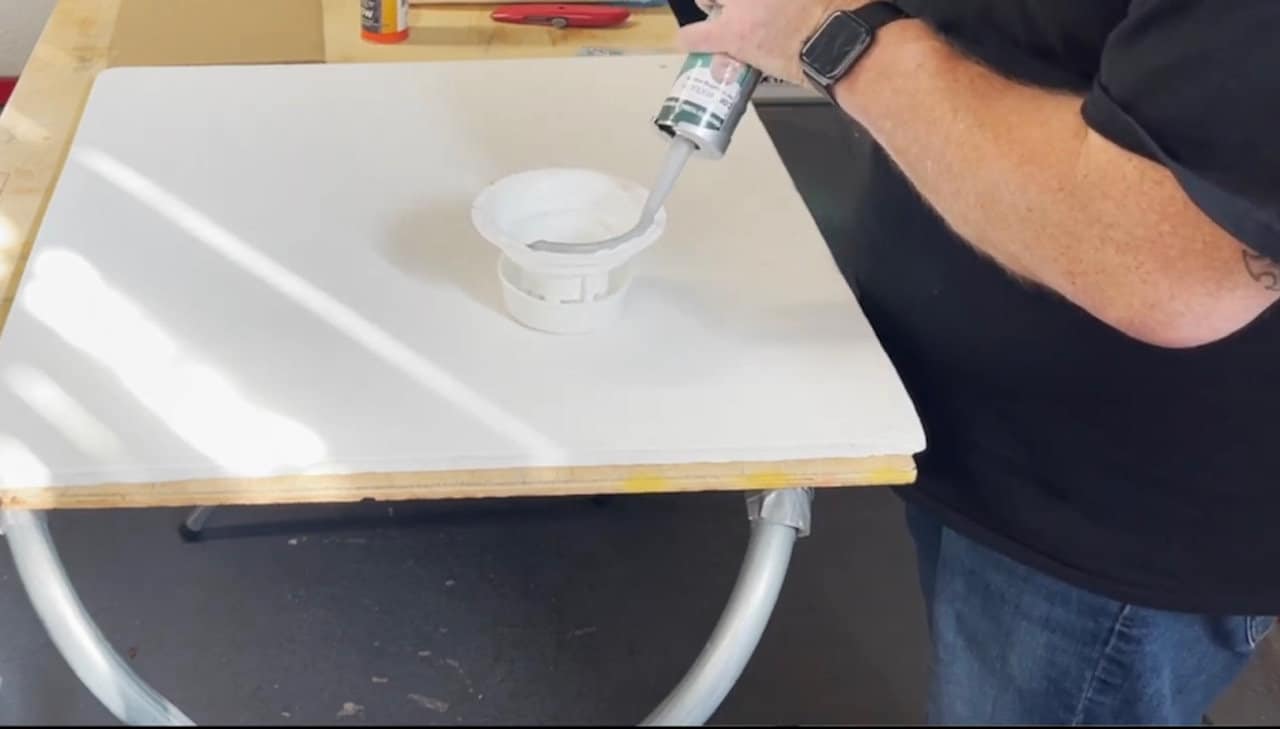
In the video below, I compare the original butyl/putty tape application to Dicor Butyl Rubber Sealant. I share my initial thoughts and the pros and cons of this product.

P.S. Before you ask, no, that isn’t me on the tube! It’s actually “Rudy, the Dicor Products Answer Man.” (Well, he’s actually busy actor/model Gary Dellmo.)

About Dicor Butyl Rubber Sealant

• Can be used on skylights, vents, windows, and termination rails.

• Adheres to TPO, EPDM, PVC, glass, metals, aluminum, concrete, wood and some plastics.

• Boasts a mess-free, easy application and is UV resistant.

• Cures to a putty-like consistency.

• Creates an airtight, strong seal that resists degradation.

Below is a list of the products we used during the repairs in this video:

Acrysol Cleaner

Scraper Tool CRL Blue Stick

Tapered Tip Stick and Handle

The Best Caulking Gun

Dicor Lap Sealant Self-Leveling, Black and white

More from Dustin

Read more of Dustin’s articles here.

RELATED

RVDT2885

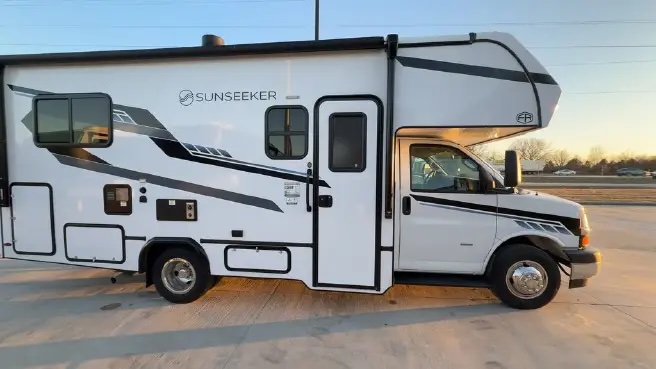
2026 Forest River Sunseeker 2350LE— comfort for couples

The 2026 Forest River Sunseeker 2350LE is a compact Class C. It makes the most of its short footprint and is best suited for couples or single travelers.

If you’re looking to downsize or jump into RVing, this may be a good choice. What’s more, you have the option to choose either a Chevy 3500 or Ford E350 chassis.

Behind the walls

2026 Sunseeker 2350LE review Image: Sunseeker website

This is an RV that relies on practical construction instead of flashy extras. Forest River lists 2-inch aluminum-framed laminated sidewalls and a Superlite composite substrate. It features a gel coat fiberglass exterior, block foam insulation, a fiberglass roof, and a one-piece fiberglass front cap.

Key specs

  • Model: 2026 Forest River Sunseeker 2350LE
  • Chassis: Chevy 3500 or Ford E350
  • Length: 25’0″ on the Chevy version, 24’6″ on the Ford version
  • Height: 11’3″
  • Width: 8’4″
  • Fresh water: 44 gallons
  • Gray water: 39 gallons
  • Black water: 39 gallons
  • Awning size: 15’6″
  • Heated underbelly
  • 4,000-watt generator
  • 200-watt solar
  • Price: $188,300

Interior and living space

2026 Sunseeker 2350LE review Image: Sunseeker website

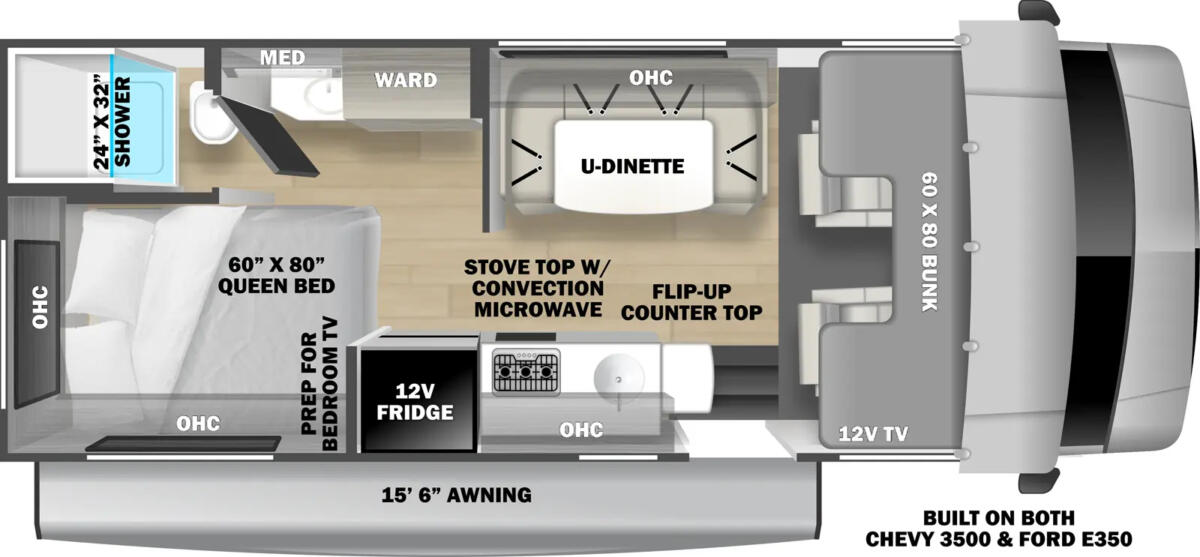
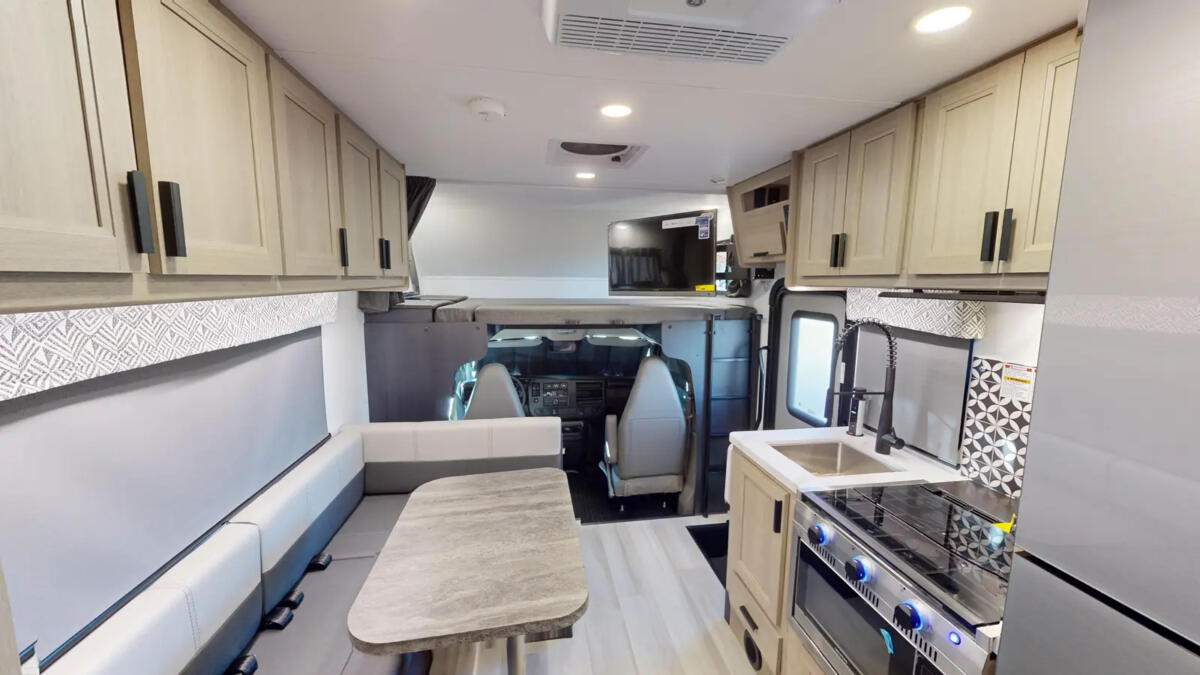
When I stepped inside, the first thing I noticed was how open the coach feels for a non-slide Class C. The layout runs cleanly from the cab-over sleeping area into the kitchen and dinette. It extends back to the private rear sleeping and bath zone. To me, that straight-through layout makes the RV feel organized rather than cramped, which is a big plus in a 25-footer.

Kitchen

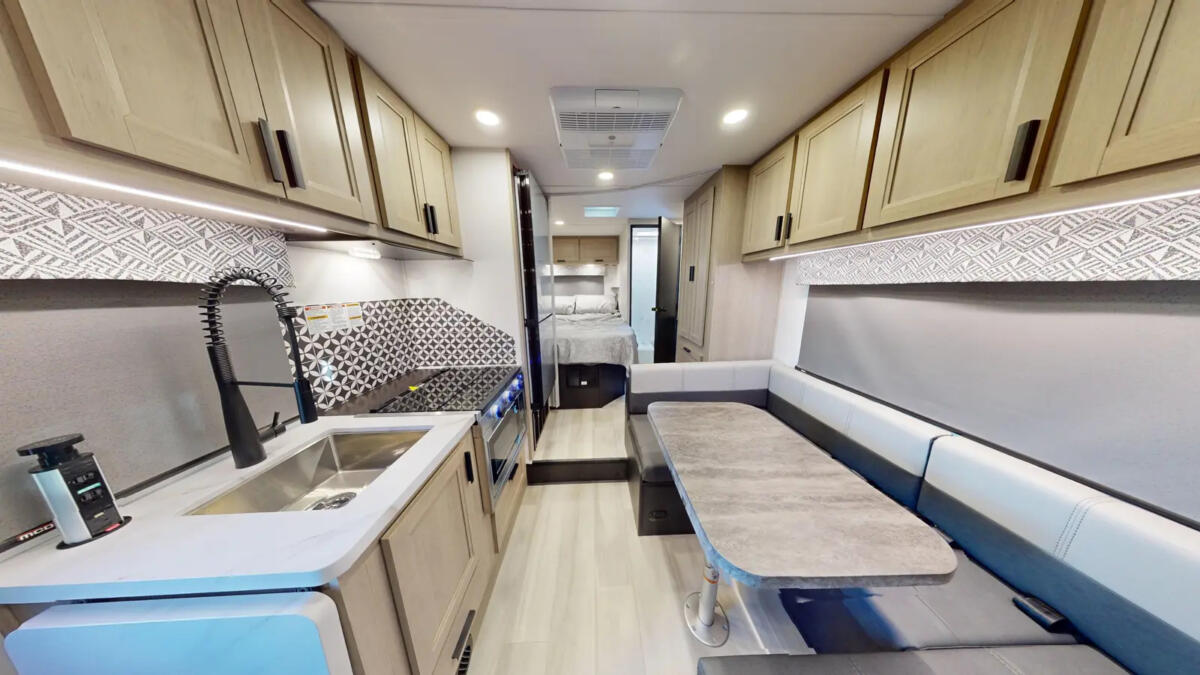
The kitchen is basic, sensible, and set up for real travel use. The Sunseeker 2530LE has a recessed 3-burner range with a flush glass cover. This would be fine for the way we cook when RVing. I like that this coach features a 1.3 cu. ft. convection microwave, but I’m not so thrilled with the low placement. You’ll also find a 10.7 cu. ft. 12V refrigerator.

Drawers throughout this RV offer soft-close guides, and while simplistic in style, I like how the numerous cabinets are handily positioned.

The kitchen sink offers a flip-up counter extension, which is a nice touch when you need just a little more prep room. The tradeoff is that this is not a galley for big, elaborate meals. It’s really designed for quick and easy eating.

Living area

2026 Sunseeker 2350LE review Image: Sunseeker website

The main living area centers on the U-shaped dinette. It provides a second sleeping surface for an occasional guest RVer. There are multiple seatbelts, so it works as both a travel spot and a hangout area.

The 12V LED flat panel TV and the Maxxair fan keep the space useful without clutter. Without a slide, the living area isn’t huge. However, we spend most of our RV time outside, and on rainy days, there is plenty of space for table games or television viewing.

Bath

The bathroom is tucked at the rear, and that placement helps preserve the open feel in the middle of the coach. This Sunseeker 2530LE features a 24″ x 32″ shower with a molded surround. I was pleasantly surprised to find a separate shower, as opposed to a wet room shower. The bathroom is tight, but it has an electric roof fan, an oxygen-infused shower head with a flexible extension, and a skylight shower. The skylight really helps the bathroom feel less boxed in.

The sink is outside the bathroom to conserve space. I like that there’s a dedicated medicine cabinet over the sink.

2026 Sunseeker 2350LE review Image: Sunseeker website

Bedroom

The bed space is in the rear of the coach and has a 60″ x 80″ queen bed. I appreciate the bed’s size; however, without a slide, one sleeper must crawl over the other to exit. That’s not ideal for us, but given the overall size and the no-slide configuration, it makes sense.

Two large windows in the Sunseeker’s bedroom open up the visual space and provide welcome light into the coach during the daytime. Both windows feature blackout roller shades for good nighttime sleep.

The bed area can be sectioned off with a privacy curtain, which I like. It makes the sleeping area function as a semi-private master space.

Overall take

The 2026 Sunseeker 2350LE is a good choice for RVers who want a manageable Class C that still covers all of the basics. The biggest advantages for me are the compact length, practical kitchen, full rear bath, and storage space throughout (both inside and outside the coach).

The biggest compromise is space, since a no-slide design will naturally feel tighter when spending extended time inside. Even so, this is a smart, road-friendly motorhome for first-time RVers or couples looking to downsize.

Video

You can watch a video walkthrough tour. Tell us your thoughts about this RV in the comments below.

MORE CLASS C REVIEWS LIKE THIS:

RVDT2885

Love’s opens new RV-friendly stop in Alabama

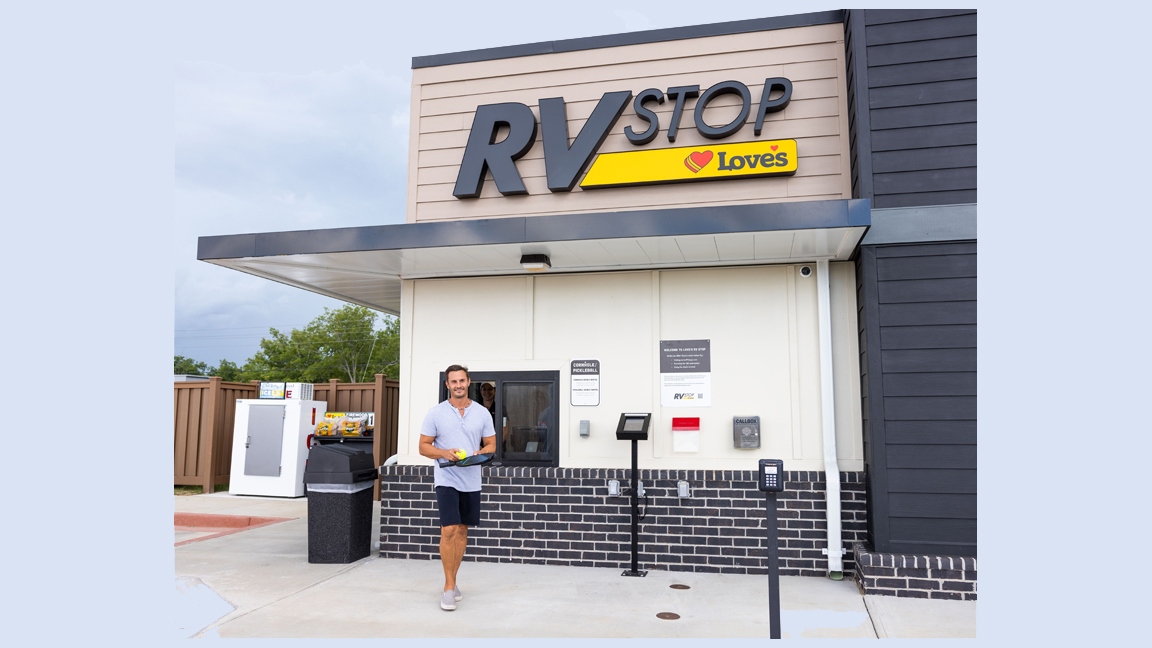
If you’re rolling down I-22 northwest of Birmingham, there’s a new place to land for the night—and the Love’s RV hookups Alabama push just added another pin to the map. Love’s Travel Stops & Country Stores has opened a travel stop in Quinton, and this one isn’t just a corner of the lot you negotiate with a row of semis. It includes a small, purpose-built setup for RVs.

This location offers a handful of hookup sites along with a dump station and extra parking set aside for rigs. It’s not a campground, and it doesn’t try to be one. But it does give you a place to plug in, reset, and move on without hunting down a full park or racing a check-in window. For RVers threading northern Alabama, or trying to stretch a long haul across the Southeast, that kind of stop can make the difference between pushing on and calling it early.

What you’ll find at the Quinton stop

The Quinton location follows the same pattern we’ve been seeing from Love’s lately. A few dedicated RV spaces include hookups, and there’s a dump station on site; still a welcome sight at a fuel stop. Add in easy on-and-off access from I-22, plus the usual showers, restrooms, and store, and you’ve got a stop that works for a quick overnight or a mid-trip reset.

The keyword here is predictable. You know what you’re getting when you pull in, and that counts when plans shift on the fly.

Love’s doesn’t publish a set overnight rate for each location, and the new Quinton stop didn’t include pricing in its opening details. But based on other Love’s hookup sites, RVers can generally expect something in the $30 to $50 range depending on the setup and demand. A lot more expensive than boondocking, but, hey, there are a few more amenities here.

Why Love’s is leaning into RVers

This isn’t happening by accident. RVers have used travel stops for years out of necessity, especially on routes where campground options run thin or book up fast. Love’s appears to be meeting that demand head-on by building in hookups and RV-specific features instead of treating rigs as an afterthought.

The Love’s RV hookups Alabama addition is just one more example of a broader rollout. It’s not a nationwide network yet, but you can see the direction: more locations with at least a few hookups, a dump station, and enough room to get in and out without drama.

The tradeoff you already know

No one’s confusing this with a quiet campground. You’re near the highway, and truck traffic runs around the clock. With only a handful of RV spaces, timing matters. Pull in late and you may be improvising.

But there’s a flip side. You don’t need a reservation. You don’t need to plan your day around an office closing time. Pull in when you need it, handle what needs handling, and get back on the road.

You don’t need a reservation. You don’t need to plan around a check-in window. just pull in, reset, and move on.

What it means for RVers

For a lot of travelers, that flexibility is the whole game. The Quinton stop isn’t a destination—it’s a tool. And as more of these locations come online, RVers are slowly getting a network of “good enough” stops in places where campground options can be scarce, crowded, or locked behind reservations.

That may not sound glamorous. But when you’re tired, low on tank space, and ready to call it a day, it can feel like exactly what you needed.

RELATED

RVT1257b

Brinkley factory tour highlights push for better RV build quality

Most RVers don’t need a factory tour to know what goes wrong with a rig. Loose wiring, hard-to-reach plumbing, cabinets that shift, systems buried where no human hand can reach—those are the complaints we hear over and over. That’s why RV factory build quality matters so much, and why some RVers are taking a closer look at how rigs actually go together.

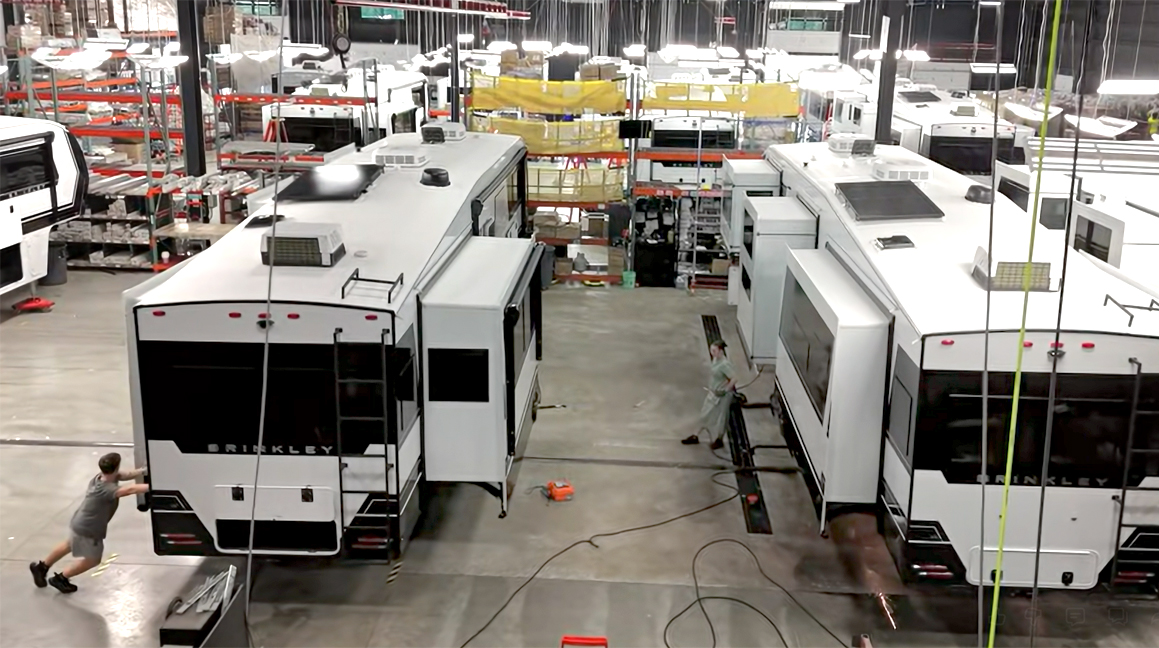
A recent look inside the production plant at Brinkley RV offers a glimpse at a builder that appears to be trying to tackle those frustrations at the source: on the factory floor. It’s a 40+ minute video, so grab your favorite beverage and a soft seat if you want to watch.

What stands out inside the factory

Watch enough RV factory footage, and it all starts to look the same. Staple guns, fast-moving lines, and not much time spent on what happens after the sale.

What’s different here, at least from what’s visible, is the attention paid to the parts owners usually don’t see until something breaks.

Wiring runs appear bundled and routed with some intention. Plumbing doesn’t look buried behind immovable panels. Components seem placed with at least some thought toward future access. In other words, someone on the line appears to be asking: What happens when this needs to be fixed?

That may sound basic, but in the RV world, it hasn’t always been.

Why this matters to RV owners

Most of our readers have lived the other side of this.

You open a panel and find a tangle of wires that look like they were dropped in by the handful. Chase a water leak that disappears behind a wall you can’t remove. You try to service a component that requires half the coach to come apart. And no matter where you go, there’s always stacks of sawdust. Doesn’t anybody care?

Those are the differences between a quick fix and a trip-ending problem.

So when a builder focuses on process—how things are routed, mounted, and accessed—it can translate into:

  • Easier DIY repairs
  • Shorter shop time when something fails
  • Less frustration when troubleshooting

And for a lot of RVers, that’s more important than fancy finishes or the latest gadget.

A factory approach that’s getting attention

RV factory build quality
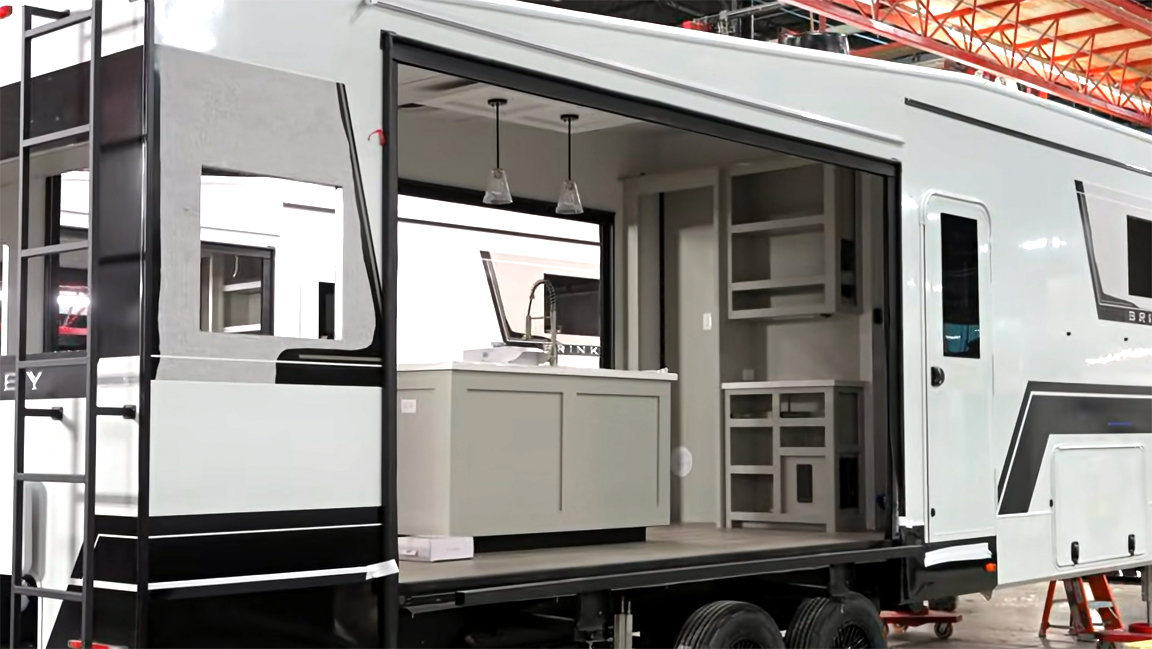
Brinkley fifth wheel taking shape.

Part of what’s driving the interest in Brinkley isn’t just the product—it’s the idea that the company is trying to build differently from the ground up.

There’s a visible emphasis on consistency. Stations appear organized. Workflows look designed, not improvised. And there’s a sense—again, based on what’s shown—that feedback from owners is making its way back into how units are assembled.

That last piece matters. Many RVers feel like once a unit leaves the lot, the builder disappears. A feedback loop—if it’s real—can change that equation.

A dose of reality

None of this means any RV is perfect. Early reputation can be strong, but long-term durability only shows up over years of use, not in a factory walkthrough.

And even brands with good intentions can miss things once production scales.

So, it’s fair to say: It’s a promising approach, but it’s still being proven in the real world.

The bigger picture for RVers

You might not be shopping for a Brinkley. Price alone puts it out of reach for many. But that doesn’t make this irrelevant—far from it.

When a builder pushes on build quality and serviceability, it tends to ripple outward. Competing manufacturers notice. Features and practices that start in higher-end rigs often work their way down into more affordable models over time.

That’s why it’s worth paying attention.

At the end of the day, this isn’t really about one factory. It’s about whether more of the RV industry starts asking a simple question before a unit leaves the line:

How hard will this be to live with—and to fix—once it’s out in the real world?

RELATED

RVT1257b

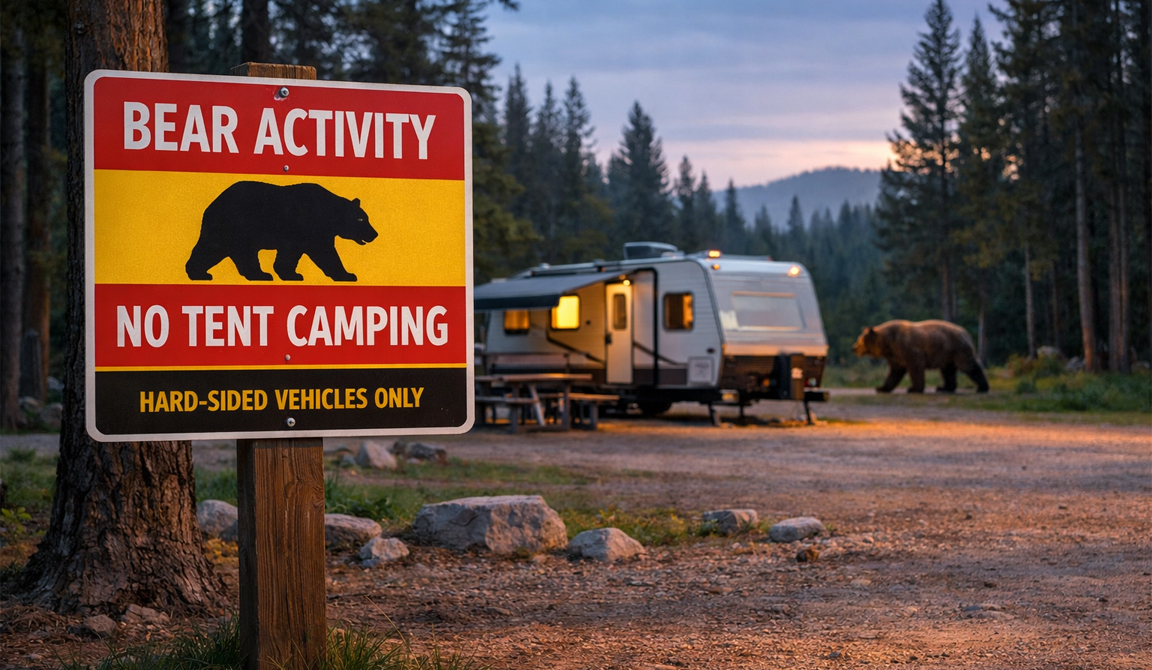
Bear activity near Yellowstone triggers tent bans, RVers allowed to stay

Campgrounds near Yellowstone National Park don’t always stay open to everyone. When Yellowstone bear camping restrictions kick in, some sites flip to a hard-sided-only rule—no tents, no exceptions. For RVers, that can mean the difference between staying put and packing up.

It’s not a new policy, but it still catches people off guard. When bears start frequenting campgrounds, especially those that have learned to associate people with food, land managers act quickly. In some cases, that means shutting out tent campers entirely, while allowing RVs and other hard-sided units to remain.

When bears move in, the rules can change overnight

The example that sparked this discussion comes from three campgrounds near Yellowstone where officials have previously banned tent camping after bears became a regular presence. The concern wasn’t just that bears were nearby—it was that they were lingering, returning, and showing behavior that suggested they were getting comfortable around human food sources.

A tent offers no real barrier. A bear that wants what it smells can get through fabric in seconds. A hard-sided RV, while not “bear-proof,” at least creates a physical separation and buys time.

So when risk rises, the rule kicks in: soft-sided camping out, hard-sided only.

Why RVs get the green light

Wildlife managers know they can’t eliminate bears from these areas. The Greater Yellowstone ecosystem supports a healthy grizzly population, and encounters are part of the deal. What they can do is reduce the chances of a dangerous interaction.

RVs help do that in a few ways. They limit direct access, reduce scent spread compared to open camps, and give occupants a better chance to stay secure if a bear wanders through. That doesn’t make RV camping “safe,” but it makes it safer than sleeping in a tent when bears are actively working a campground.

What this means if you’re heading that way

If your travel plans include Yellowstone or nearby national forest campgrounds, it’s worth understanding how quickly conditions can shift.

A campground that welcomes tents one day can restrict them the next. If you’re in a tent, that may mean relocating with little notice. If you’re in an RV, you’re more likely to be allowed to stay—but you’re still expected to follow strict food storage and campsite rules.

And those rules matter. Most of these restrictions don’t come out of nowhere. They follow repeated bear visits, unsecured food, or garbage issues that teach animals to come back.

The bigger shift RVers should notice

In high-risk wildlife areas, especially around Yellowstone, access increasingly depends on what you’re camping in. Hard-sided units aren’t just more comfortable, they’re often the only option when conditions tighten.

That doesn’t mean RVers should get complacent. Bears don’t care what you’re sleeping in. But when restrictions go up, your RV may be what keeps your trip from getting cut short.

And in bear country, that’s not a small thing.

RELATED

RVT1257b

RV Daily Tips. Thursday, April 16, 2026

America’s Original RV Newsletter. Since 2001
Issue 2884 • New issue every weekday
If you find this newsletter helpful, please consider supporting our work with a donation of your choice. Thank you!


Today’s thought

“Too many people spend money they haven’t earned to buy things they don’t want to impress people they don’t like.” —Will Rogers


Need an excuse to celebrate? Today is National Eggs Benedict Day! Like poached eggs, but can’t quite make them perfect? This helps!

On this day in history: 1908 – Natural Bridges National Monument is established in Utah.


Tip of the day
A contractor’s RV advice for maintaining your RV

Jared Gillis from All About RVs used to be a contractor. He says when it comes to looking at RVs, he just can’t turn his contractor’s brain off. So in the video below, he shares some practical RV advice from a contractor’s perspective. Jared starts the video by looking at the RV’s electrical components. That’s because with all the moving and jarring around an RV does, things can shake loose, and that can lead to big problems. Be sure to watch the video as Jared shows how to check and tighten your electrical connections in order to avoid possible issues. Continue reading and watch the video.


Article and video
How to camp next to the St. Louis Gateway Arch

The St. Louis Gateway Arch and the Gateway Arch National Park are iconic pieces of American history. Just because you might be traveling through St. Louis in your RV does not mean you have to miss this popular must-see attraction. Here, the team from Less Junk More Journey shares how you can actually camp near the Arch itself and immerse yourself in this national landmark. This is a good “secret”!

TAKE A GUESS: How do the St. Louis Gateway Arch’s dimensions compare? A) It is taller than it is wide; B) It is wider than it is tall; or C) It is exactly the same height and width. Scroll down to find out.


Featured article
Found inside a barn, this perfectly preserved RV is an amazing 1955 time capsule

By Paul Lacitinola
This 1955, 24-foot Boles Aero Ensenada was sitting in the back of a massive barn on a wheat farm in eastern Oregon. This was a real barn find! … Not one piece or part was missing or broken. The original curtains, Venetian blinds, upholstery, knobs, gaskets, and Bakelite handles were all there. All of it! And even more amazing, each and every item was in perfect condition, including the beautiful birch interior. Read more and check out the pictures here.


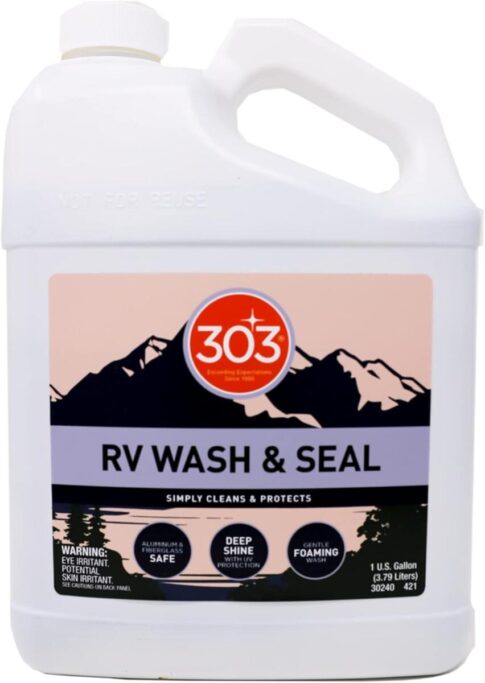
303washTime to make your RV shine!
It’s the perfect time of year to get your RV looking as good as new. Make sure you wash and seal it. Here’s the product to get you started. One wash delivers a deep clean, streak-free shine, and UV protection—keeping your RV protected and looking like new all season long.


Recent news for RVers:


Ask Dave
LED bulbs are not created equal. Cheap ones can cause issues

Learn about them here.


Reader poll
How much of your RV’s floor is covered with wall-to-wall carpet?

Respond here.


Quick tip
More money-saving tips on the road

By Bob “BoondockBob” Difley
Here are some more ways to save money on the road:

• Maintain your RV to save on repair bills.
• Eat out less—prepare your own meals.
• Treat your batteries right so they last longer.
• Buy from farmers’ markets, roadside farm stands, U-pick farms, and orchards.
• Barter for a campsite if you have something to offer.
• Reduce food costs by buying from bulk bins.
• Eat right and exercise (at least 30 minutes a day) to cut down on meds and doctor visits.
• Stay at great locations for the cost of a membership fee at Harvest Hosts and Boondockers Welcome.
• Volunteer or become a camp host, which usually comes with a free campsite.
• Take a caretaking position for free rent. The Caretaker Gazette is a good resource.
• Shop at charity/thrift stores to save on just about everything.
If you missed the first part of this helpful list yesterday, click here.

You can find Bob Difley’s e-books on Amazon Kindle.


Smelly or slow-draining shower? This is what you need
RV shower smells or drains slowly? The HepvO valve might be the fix. Unlike a traditional P-trap, this waterless valve blocks tank odors without relying on standing water, so there’s no drying out or freezing issues. It’s compact, low-maintenance, and a smart upgrade (or replacement) for RVers who want better drainage and a fresher-smelling bathroom. Learn more about it here, or order one here.


On this day last year…


Website of the day

Best Photo Editing Apps in 2026 (free and paid)
If you’re a photographer and want to step up your editing game (hey, even if you’re not a photographer!), check out this list. We’re going to try some of these out!


And the survey says…

We’ve polled RVtravel.com readers more than 5,000 times in recent years. Here are a few things we’ve learned about them:

• 7 percent say they go geocaching all the time.
• 66 percent have adopted a pet from an animal shelter.
• 11 percent say they absolutely could not live in their RV as their only home.

Recent poll: To tell or not to tell: Would you tell other RVers about the ‘perfect’ campground?


Trivia

Women in the U.S. gave birth to roughly 710,000 fewer children last year than at the country’s peak in 2007, according to preliminary data from the Centers for Disease Control and Prevention.


? MYSTERY PRODUCT OF THE DAY ?
What would you rather be doing: cleaning your bathroom or out RVing? Going to the post office and standing in line or RVing? Drinking a pint of dirty dish water or RVing? If you answered RVing to the above options, you need these!


ANSWER: The St. Louis Gateway Arch is exactly the same height and width—630 feet tall and 630 feet wide.


Readers’ pets of the day

Img 4303 Bcb0dafdd06f66bc23e34b702b5bd9fe“Rusty and Willow (Bordoodles–Border Collie/Poodle, ages 7 and 5) love to camp and travel with us. They are siblings who are two years apart. They love attention from people.” —Dawn Ward

Send us a photo of your pet with a short description. No blurry photos, and please do not submit your photo more than once. Thanks!

Pet Food and all pet products at Amazon
RVing with Dogs group on Facebook. You’ll love it.


FREE IS GOOD! Tubi.tv is a free streaming service with the world’s largest collection of Hollywood movies and TV shows. (More than 100 million users monthly.) No account needed.


Leave here with a laugh

(Click to enlarge.)

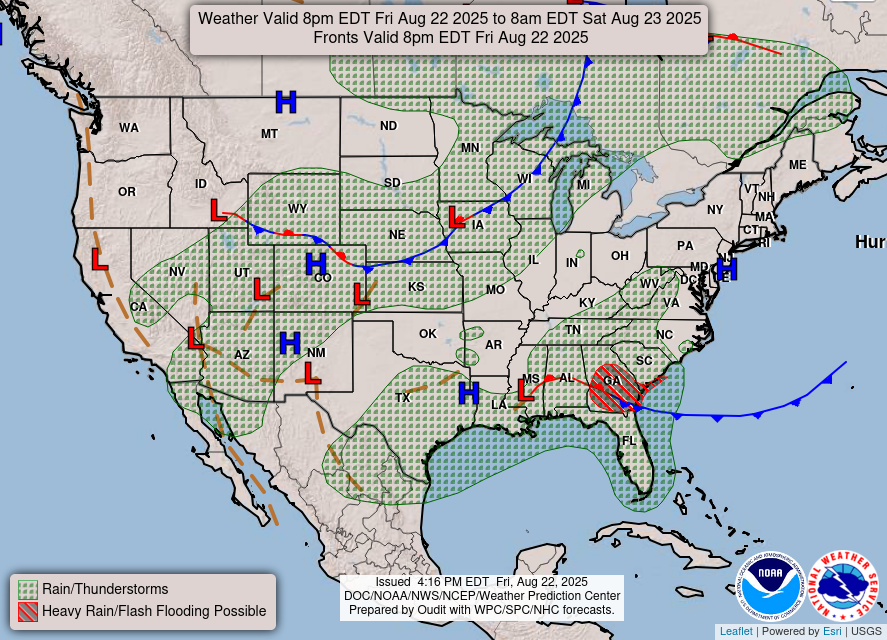
Today’s weather forecast across the nation
THIS MAP UPDATES TWICE A DAY

Visit Current National Radar Weather Map


Did you miss the latest RV Travel Newsletter? If so, read it here.
Oh, and if you missed the Latest News for RVers, make sure to catch up here.


If you shop at Amazon.com we’d appreciate you using this link. We get an itty bitty commission if you buy something, but they add up and help us pay our bills (most importantly our hard-working writers!). 


RVtravel.com All-Star Team

Click here for information about our staff and how to contact us.

WHY WE ASK FOR DONATIONS INSTEAD OF SELLING SUBSCRIPTIONS.

Our policy on using artificial intelligence.

LED bulbs are not created equal. Cheap ones can cause issues

This spring I conducted more than 100 seminars at RV shows across the country, and the “Boondocking, Getting Off The Gird” seminar was a very popular one. One of the topics is how to extend battery life, and LED lights have been part of the discussion. Also, we recently had a post on RVtravel.com concerning LED lights flickering.

I believe every new RV now comes with LED lights. However, there are still a large number of units out there with halogen lights and some with the old energy-hog incandescent bulbs. Incandescent bulbs run 1.5 amps per hour, while quality LEDs only use 0.15 amps per hour.

Not all LED bulbs are created equal

Before we get into the specifics of lumens and color temperature, we need to discuss the difference between quality LED bulbs and some of the generic “cheapies” that are flooding the market.

Several years ago we changed all the bulbs in a 1992 Itasca Suncruiser that had the old incandescent bulbs. We did extensive research on bulb quality with several dealers and original equipment manufacturers (OEMs).

I came across a company called M4 Products that had an impressive product offering and even more impressive LED tutorial. The owner is an RV owner/enthusiast. He got frustrated with the cheap LED bulbs only available at auto parts stores and started his own line of products.

When LED lights first started hitting the RV aftermarket, you could only get the entire fixture rather than just a bulb swap. At that time, a single fixture would cost about $50+ and was not an inexpensive option to do a front-to-back change out. So, many RVers would just change one or two in the living area and bedroom for reading.

Today there are bulbs available for almost every fixture and they are fairly inexpensive.

Identifying quality LED bulbs

How can you determine if it is a quality LED bulb? Here are some of the main factors.

Most manufacturers use the same chip. However, the difference comes in the number of chips used in an array, and the housing material. The chip is the most expensive component in an LED bulb. Most cheap manufacturers use fewer chips to save money.

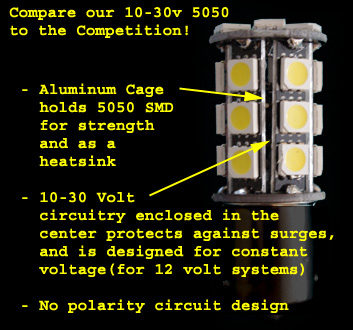
The housing is also important as the paperboard design does not hold up in an RV application. A metal or aluminum cage not only is stronger but also acts as a heat sink, as even LED bulbs give off some heat. This means the bulb will not break down when the light is used for a substantial amount of time, unlike a bulb that is just used for brake or turn signals.

An aluminum cage also reflects light from chips that are angled in different directions so they illuminate a superior light pattern.

M4 LED
M4 Products Lumens and Quality

Quality LED lights are also non-polarity specific. That means they will work as designed even if the light fixture is wired wrong. We found that more than half the lights in the Suncruiser were wired backwards. This is common with RV fixtures.

I remember doing factory tours at Winnebago.As the unit came down the line, the wires hanging from the ceiling and under cabinets were purple and green. The light fixtures were white and black. All incandescent and halogen bulbs will “glow” no matter how they are wired, as it is just resistance.

Rather than check and rewire all your light fixtures, just get a quality bulb.

Lumens and color temperature

Over the years I have swapped out many old household lights with new LED bulbs and have wrestled with matching the intensity of light or Lumens. Lumen ratings are a measure of light output rather than what we perceive as visible light. Color temperature can also affect what we see as visible light.

Quality larger LED bulbs use 5050 Surface Mounted Diode (SMD) chips that are rated at 15 lumens per chip. So, the number of chips times 15 gives the lumens rating. Smaller bulbs use 3528 SMD chips rated at 5 lumens per chip. M4 Products’ Elite Series use Samsung 5630 chips rated at 35 lumens per chip.

As stated above, the reflection of an aluminum cage enhances the visual light, and color temperature is also a factor. The sterile bright light from a cool bright white bulb will look more intense than the warm white bulb.

For more information on color temperature, go to M4 Products LED Color Range Choices webpage here.

I personally like the cool white light for reading areas and the warm white light for the bathroom ceiling light.

Example of difference in lighting

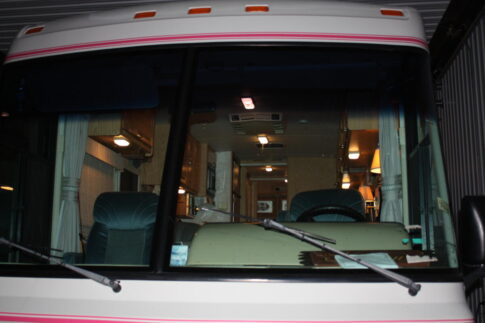
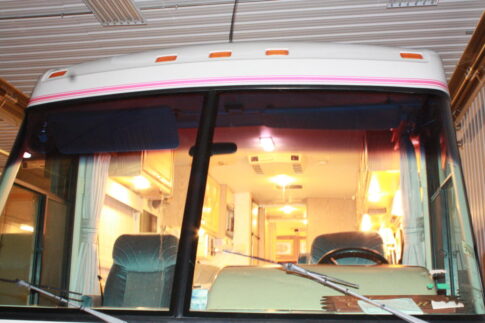
Here is the difference between the old incandescent lights of the Suncruiser and the new LED ones from M4 Products. We went with the brighter cool white bulbs throughout, as requested by the owner.

Suncruiser Old Lights

Note: We had to turn the lights in the room off to be able to capture the interior lights due to the camera aperture.

Suncruiser LED

Note: We turned the room lights on for this picture because the intensity of the lights created an “explosion,” once again due to the camera aperture. The difference looks almost AI enhanced; however, it was a very dramatic difference in visible light.

As a final note, it is best to research the quality of bulb, lumens, and color temperature that best fits your RV application. It might also prevent the flickering or intermittent twitch some are experiencing.


 You might also enjoy these posts from Dave 

DAVE HAS ANSWERED MORE THAN 1,000 readers’ maintenance and repair questions. Read a directory here. There is so much to learn!


Dave Solberg is a leading expert in the RV industry and the author of the “RV Handbook.”

HAVE A QUESTION FOR DAVE?

Send your inquiries to him using the form below.

Name
Drag & Drop Files, Choose Files to Upload

RVDT2884

A contractor’s RV advice for maintaining your RV

By Cheri Sicard
Jared Gillis from All About RVs used to be a contractor. He says when it comes to looking at RVs, he just can’t turn his contractor’s brain off. So, in the video below, he shares some practical RV advice from a contractor’s perspective.

RV advice from a contractor

Jared starts the video by looking at the RV’s electrical components. That’s because with all the moving and jarring around an RV does, things can shake loose, and that can lead to big problems. Be sure to watch the video as Jared shows how to check and tighten your electrical connections in order to avoid possible issues. Some of these issues, such as fires, are potentially dangerous, but Jared says a little preventive maintenance can help you avoid them.

Jared then looks at the topic of the potential damage water can cause and the importance of properly sealing your RV. In fact, it’s a good idea to have multiple layers of RV seals to protect against water damage and leaks. Watch the video for details.

Tips for using EternaBond tape on your roof are next. This tape can be a good help on roofs, but you must be sure to get the proper tape for your particular roof. Jared says that prep work is key to success when using EternaBond tape. Fail to do the prep work, it’s just not going to work. You also must get full compression on the tape. Jared shows how in the video.

Cleaning the copper connections on your RV’s plugs can go a long way toward protecting the cords. If you have ever seen melted RV power cords, Jared says taking the time to properly clean and maintain the copper might have prevented this. Jared shows how to remove the buildup and oxidation in order to achieve a good connection.

Jared’s last tip is about directing water flow off the RV’s roof in order to prevent standing water and buildup. Jared shows how to add extra protection where the roof and walls meet.

Check out the invaluable video below for details on all of these tips.

RELATED

RVDT2884