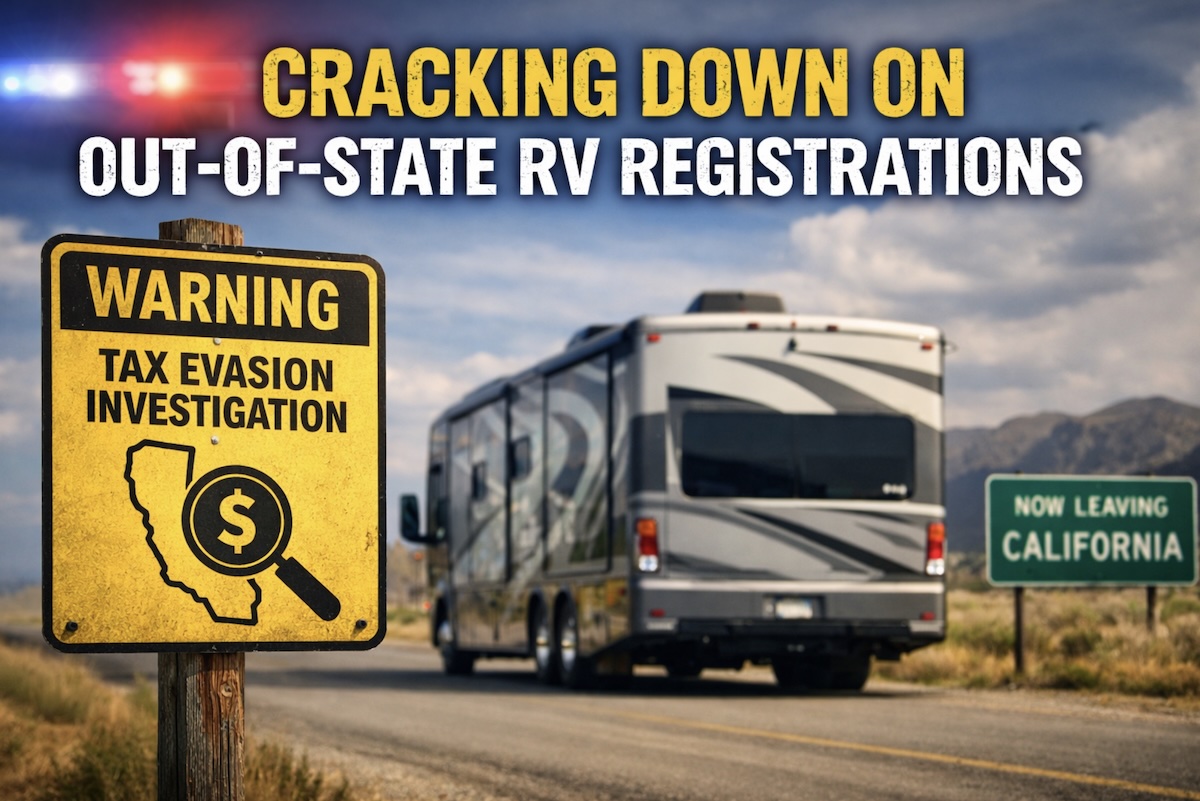
California officials are cracking down on a popular tax-avoidance strategy used by some RV and luxury vehicle owners.
The California Department of Tax and Fee Administration (CDTFA), working with the Department of Motor Vehicles (DMV), is investigating dealers and buyers tied to the so-called “Montana loophole,” where vehicles are registered out of state to avoid California taxes and fees.
In states with sales tax rates ranging from 6 to 10 percent, the purchase of a luxury RV using the loophole could result in tens of thousands of dollars in tax obligations, hence the appeal.
The state has identified about 500 dealers connected to more than 2,500 such sales since 2023, costing California more than $10 million a year in lost revenue.
SOURCE: California DMV
The tactic, often used for high-end motorhomes and exotic vehicles, relies on forming out-of-state LLCs, typically in Montana, which has no sales tax. The tactic has been going on for years and has been reported in RVtravel.com for more than a decade with warnings to avoid the tactic.
Officials say enforcement is increasing, with hundreds of investigations underway. Penalties can reach 50% of the unpaid tax.
For RVers, the message is clear: If your rig is primarily used in California or another state, registering it elsewhere could trigger audits, fines and budget-busting back taxes.
The idea of a Starlink hybrid plan for RVers sounds simple: one plan, one connection, everywhere you go. But the real question isn’t what it can do—it’s when RVers will actually be able to use it.
For travelers juggling a phone plan, a hotspot, and a satellite dish just to stay online, the appeal is obvious. A single service that handles everything could finally simplify staying connected on the road.
That’s what US Mobile is proposing with a bundled cellular and Starlink offering, starting at under $50 a month. The concept is straightforward: combine cellular and satellite so your connection doesn’t drop when cell towers disappear. For RVers, it sounds like the all-in-one solution many have been waiting for—but when it will truly be available for travelers is still unclear.
What this hybrid plan actually is
At its core, this isn’t just a cheaper version of Starlink. It combines the two systems most RVers already rely on: cellular for everyday coverage and satellite for the places cellular can’t reach. Now wrap them into a single managed service. Instead of deciding when to switch between them, the system would handle that choice, leaning on cellular when it’s available and falling back to satellite when it’s not.
That idea gets attention for good reason. RVers have built their own versions of this setup for years, often with multiple plans and plenty of trial and error. What’s new here isn’t the concept—it’s the promise that one provider handles the switching, the billing, and the integration. Whether it delivers that smoothly still needs to be proven.
When RVers could actually use it
Right now, you can’t sign up for this and take it straight on the road. The rollout appears staged, and early versions target home users more than travelers. That approach makes sense for a launch like this, but it means RVers may wait before they see the real benefit.
The likely path starts with residential-style service in early 2026. If things go as planned, more portable options would follow later in the year. Only after that would we expect something closer to true hybrid mobility, where the system switches between cellular and satellite wherever you park. That final step matters most to RVers, and it hasn’t clearly arrived yet.
How it would work on the road
If this develops the way it’s being pitched, daily use should feel familiar—just with less hands-on management. When you park in a campground with decent signal, the system would likely use cellular first because it connects quickly and costs providers less to deliver. Move out to a remote boondocking site, and once cellular drops away, Starlink would carry the load.
While you roll down the highway, cellular would handle the connection again, since standard Starlink equipment still isn’t built for motion unless you step up to more expensive in-motion hardware. In that sense, the hybrid model doesn’t replace what RVers already do; it streamlines it.
The big question: Can you actually travel with it?
Here’s where things get murky. The current bundle appears tied to residential-style Starlink service, which is designed for a fixed location. That differs from the roaming plans RVers rely on today, and it raises practical concerns that still need answers.
Will the service continue to work as you move from state to state? Will speeds or priority change outside a home area? Will providers add extra costs for travel? Until those answers come into focus, full-time RVers should treat this as a developing option rather than a ready replacement.
Why this still matters
Even with those questions, the direction deserves attention. Today, most RVers piece together multiple services, from cellular plans to hotspots to satellite subscriptions, just to stay connected. It works, but it isn’t simple, and it rarely comes cheap.
This hybrid approach points toward something different. It suggests a future where connectivity behaves more like a utility and automatically uses whatever network works best. Carriers like T-Mobile already test satellite links for basic coverage in dead zones. Add full satellite internet into that mix, and the path forward becomes easier to see.
What RVers should do now
For now, this is one option to watch, not one to jump on just yet. The idea has real promise, especially if pricing holds and mobility rules loosen, but right now it still looks better suited to folks who stay put.
The same questions keep coming up. Can you really roam with it? What does “unlimited” mean once you’re out there using it? And what does it take to make it work from an RV? If those answers fall into place, a Starlink hybrid plan RVers can rely on could make life a whole lot simpler and maybe cheaper, too. Until then, it’s a sign of where things are headed, not quite the solution many travelers are waiting for.
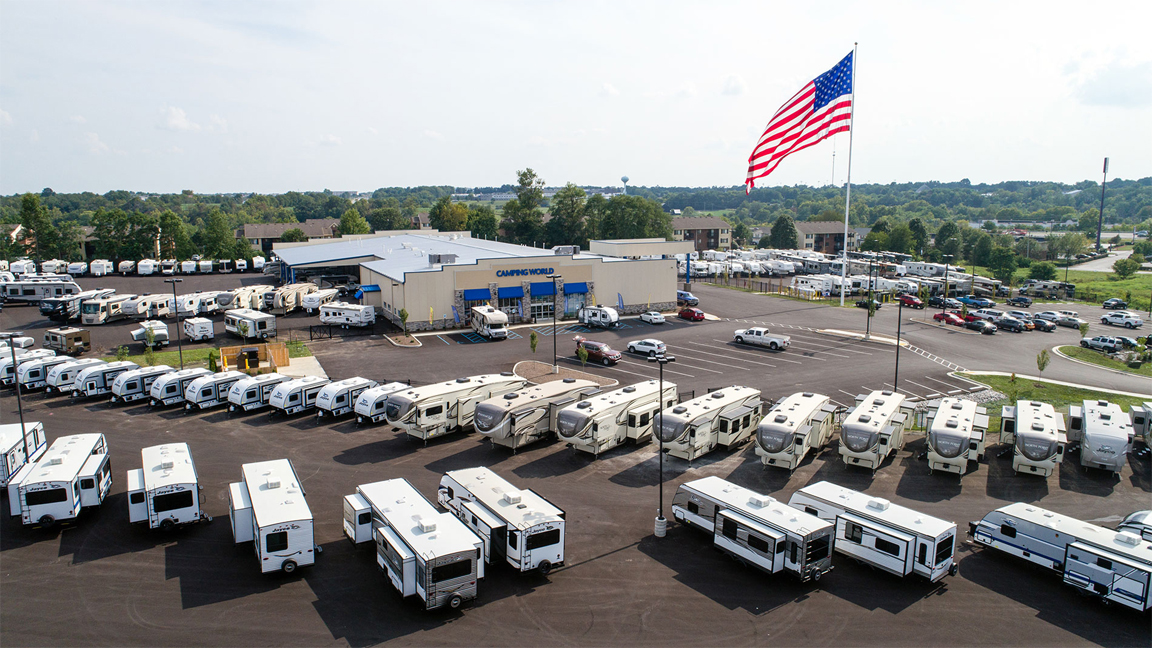
A national plaintiffs’ law firm has filed a class-action lawsuit against Camping World Holdings Inc., alleging the company misled investors about its inventory management and demand forecasting.
The lawsuit, announced by Berger Montague PC, covers investors who bought shares between April 29, 2025, and Feb. 24, 2026.
According to the complaint, the company overstated retail demand and its ability to manage inventory using data analytics. The suit alleges Camping World failed to disclose it would need stricter inventory controls that would hurt profit margins.
On Oct. 28, 2025, the company reported declining new RV revenue, lower selling prices and reduced margins for the third quarter. Shares dropped nearly 25% the next day.
On Feb. 24, 2026, Camping World said it had implemented tighter inventory controls that would weigh on margins into 2026. It also reported a $109.1 million fourth-quarter loss and paused its dividend. Shares fell about 16.5% the following trading day.
The lawsuit seeks damages on behalf of affected investors. If you are a Camping World investor and would like to learn more about this action, call 215-875-3015 or 267-764-4865.
America’s Original RV Newsletter. Since 2001
Issue 2880 • New issue every weekday If you find this newsletter helpful, please consider supporting our work with a donation of your choice. Thank you!
Today’s thought
“You cannot have a positive life and a negative mind.” —Joyce Meyer
Need an excuse to celebrate?Today is National Farm Animal Day!
On this day in history:1916 – The Professional Golfers’ Association of America (PGA) is created in New York City.
Tip of the day Why you need a multimeter for your RV
By Mike Sokol
As an RV electrical expert, I’ve learned that a basic digital multimeter can save you a world of trouble on the road. In this article, I’ll show you how to quickly test pedestal voltage, check your battery’s state of charge, and find a blown fuse—simple steps that can prevent major problems. These are easy checks every RVer should know, and I’ll walk you through them.
RV review
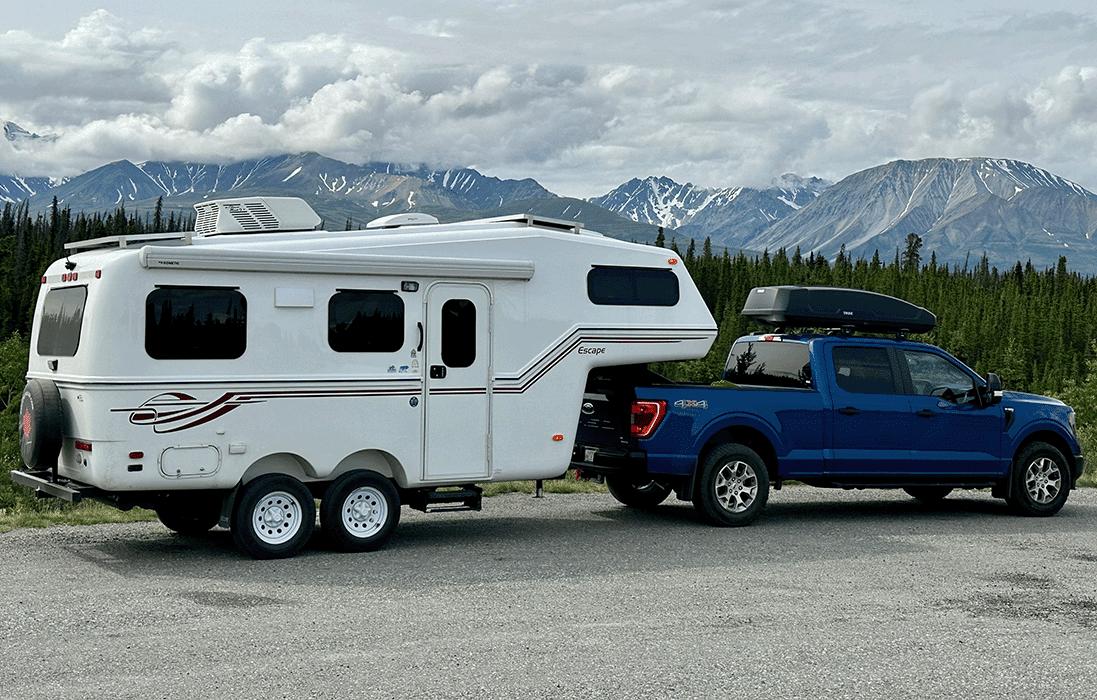
Escape 5.0 fiberglass fifth wheel—warm and cozy
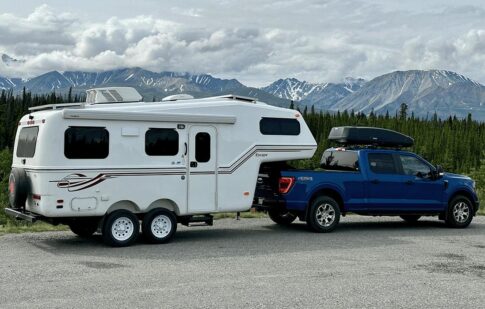
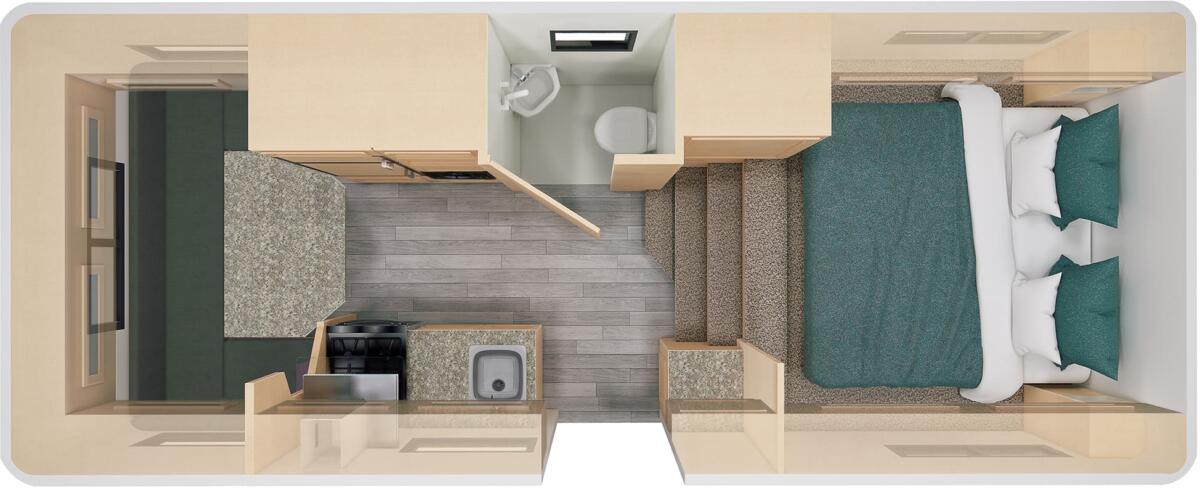
At Escape Trailer Industries in Chilliwack, British Columbia, the 2025 Escape 5.0 makes a strong first impression. It’s a molded fiberglass fifth wheel that stays compact, yet still fits the features most campers want. The Escape 5.0 stands out because it uses its space well. The loft, dual-use dinette, two-way fridge, and outside utility features all work together in a trailer that stays light for its class. That’s the hook here. It’s not only compact, but it’s also thoughtfully arranged. Check it out.
In the RV shop with Dustin An easy fix for a shower that won’t drain
If you’re showering in your RV and you’re standing in a couple of inches of water, or if the water just isn’t draining as quickly as it should, you have an issue that needs to be resolved. So why isn’t your RV shower draining? Let’s take a look at one of the most common issues that lead to a clogged RV shower and/or slow draining.
500+ bucket-list adventures for your next RV trip
Looking for ideas for where to go next? This Fodor’s guide is packed with more than 500 unforgettable experiences across all 50 states—from iconic national parks and scenic drives to quirky roadside stops and local food must-tries. With smart itineraries and regional maps, it’s a fun, inspiring roadmap for RVers planning their next adventure. Check it out. [NOTE: New edition is coming out June 2. You can pre-order here. Currently at a 42% discount.]
Article and video DIY RV hacks tested: What worked and what was a bust
Small RV problems can eat up more time than the big ones. A loose fender skirt, a towel with nowhere to dry, or a hose that won’t stay put can turn into daily annoyances fast. Here, Jared Gillis from All About RVs put several low-cost fixes to the test to see which ones were worth keeping. Some were smart, some were only okay, and one failed by the next morning.
Featured article Avoid these three words when RVing
By Gail Marsh
I need to make a confession. I have a very bad habit, and it’s negatively affecting the way my husband and I communicate while RVing. My habit? It’s constantly saying three little words … Do you do this?
Ask Dave Why does the trailer model number not match the length?
Using a conventional ice cube tray, place a coin on top of an ice cube. If you ever find it at the bottom of the ice cube, you will know the power has been off for some time. —Thanks to Paul K.!
Wine map of the United States
Like drinking wine? This map is for you, especially since you’re an RVer! You’ll be able to see every wine region by state all in one place. Cheers!
? MYSTERY PRODUCT OF THE DAY ? Forget using a lantern to see at night. This is quite brilliant, and we’re wondering why these don’t accompany more campers around the picnic table at night? It’s sorta perfect for that and it’s cute!
Trivia
The icy dwarf planet Pluto has an average temperature of negative 387 degrees Fahrenheit. It’s home to mountains, valleys, glaciers, plains, and craters. If you were to stand on its surface, you would see blue skies with red snow.
FINISHED READING TODAY’S NEWSLETTER? Congratulations! You are our favorite kind of reader! Now, if you moved on to yesterday’s brand-new Great RV Accessories newsletter, you’d be our favorite favorite reader!
Readers’ pet of the day
“Merlin (Mini Golden Doodle, age 5) loves the fifth wheel and is a great traveler. Must have a nap!” —Vicki Demkey
Send us a photo of your pet with a short description. No blurry photos and please do not submit your photo more than once. Thanks!
LIVE: Mission to the Moon
As bandwidth allows, this stream will feature live views from Artemis II’s Orion spacecraft, without commentary, as it makes its journey around the Moon. You will see a blue screen if there is a loss of signal, or if the bandwidth is needed for mission activities. You may see what appears to be a black screen when the vehicle is in darkness.
Leave here with a laugh
A man went to a job interview. He was being interviewed for a big sales position at a pretty large company. The sales manager said to the man, “I want you to sell me this laptop.” The man put it under his arm, left the building, and went home. Later that day he got a phone call from the manager: “Bring my laptop back now! You can’t steal it like that!” The man responded, “Okay. $1,000 and it’s yours.”
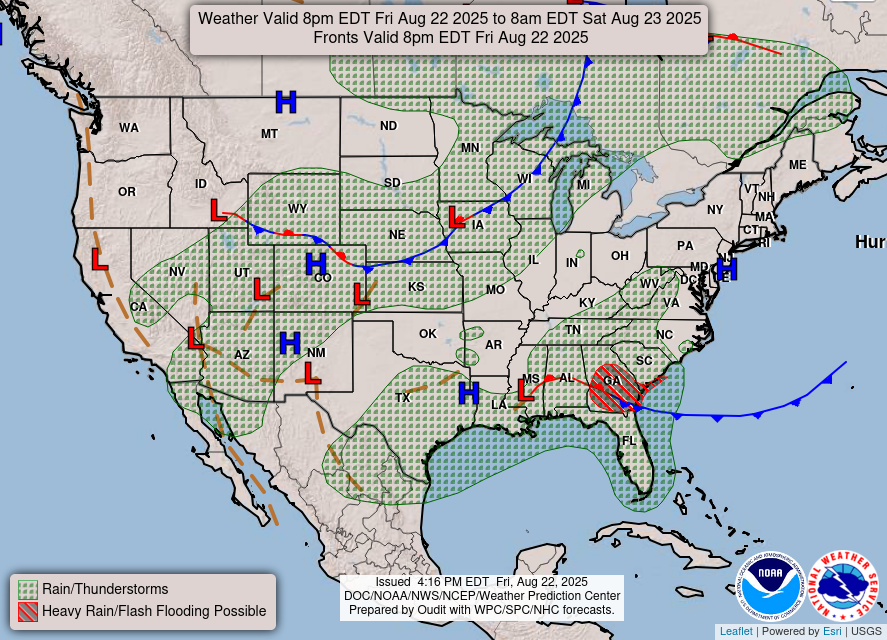
Today’s weather forecast across the nation THIS MAP UPDATES TWICE A DAY
If you shop at Amazon.com we’d appreciate you using this link. We get an itty bitty commission if you buy something, but they add up and help us pay our bills (most importantly our hard-working writers!).
Dear Dave,
How does one know whether the advertised length of a travel trailer includes the tongue? I have seen the question asked online and it has been answered both “yes” and “no”. —Lynn, 19-ft. Keystone Springdale TT
Dear Lynn,
Quick answer, the advertised travel trailer length seldom includes the tongue, but rather it is the interior living space.
Trailer model numbers and lengths never seem to match
This has been a long-running issue in the RV industry, as model numbers and lengths seem to never match up. At Winnebago we jokingly commented that a 32RQ model was, in fact, 32’ – 32” in length.
Every manufacturer has their own take on what they should call the model. Some have the theory that the floorplan is the interior length, so people shopping for a traditional length will look for or “shop” that model.
Over the years, I followed various models. The 34RQ was a very popular floorplan with a full size bed, large bathroom, a couch, and dinette in a fairly easy to drive length. Then the front cap was redesigned to utilize what the engineers called a uniformed “H” design that added about 20” to the front cap.
Then the Adventurer got a facelift with a full fiberglass molded back cap and stylized bumper which also added approximately 20”. But the unit was still listed as a 34RQ (rear queen). The theory was it still had the same 34RQ interior floorplan. However, most of the time the actual length was listed correctly in the brochure.
Length from front cap to back wall
As for travel trailers, it seems most RV manufacturers list the actual length as the front cap to the back wall. I checked with a few companies and found a wide variety of descriptions given with a few that stated the length posted on the brochure or website was interior length. It did not include a rear bumper or even a spare tire mounted to the back. And most do not include the length of the front frame and hitch.
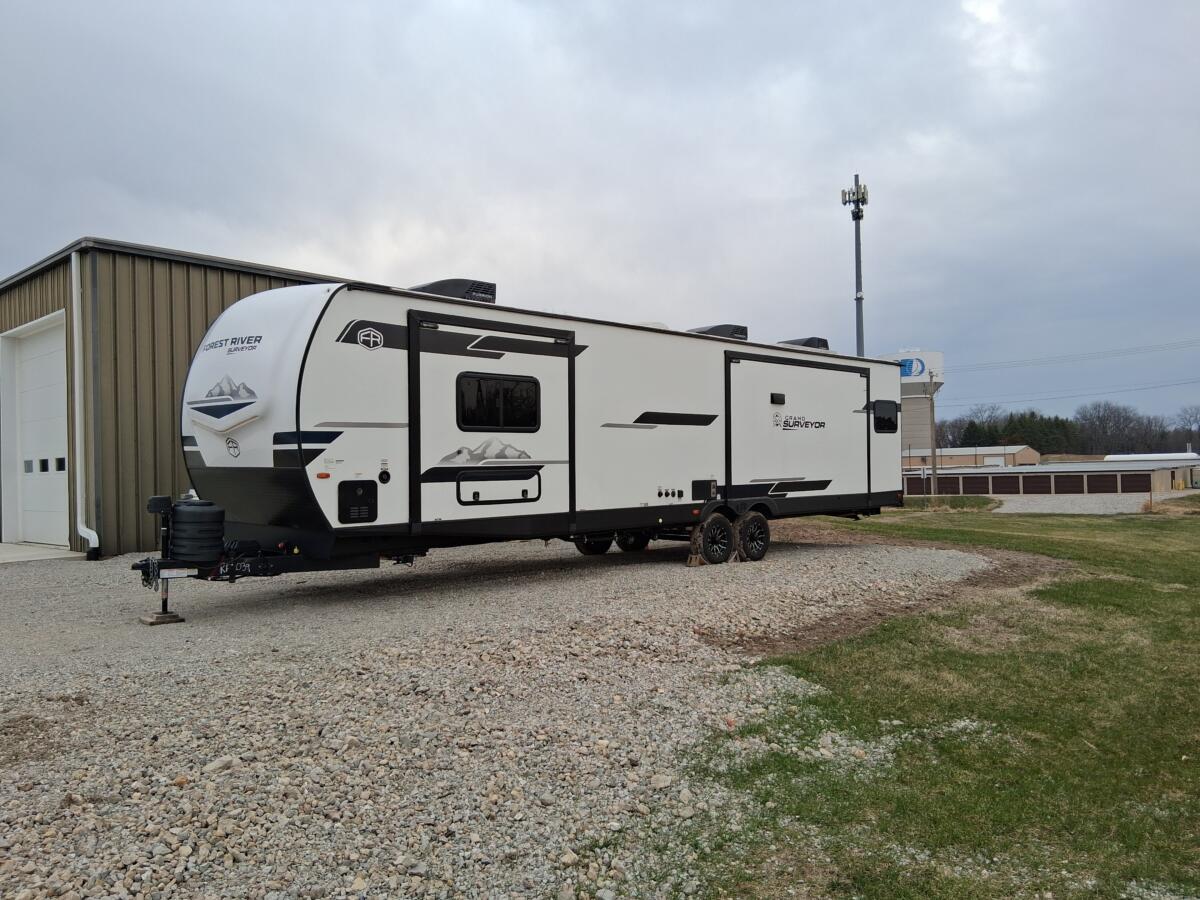
For example, this 2024 Forest River Grand Surveyor is stored next to my office, so I did some measuring.
Forest River Grand Surveyor
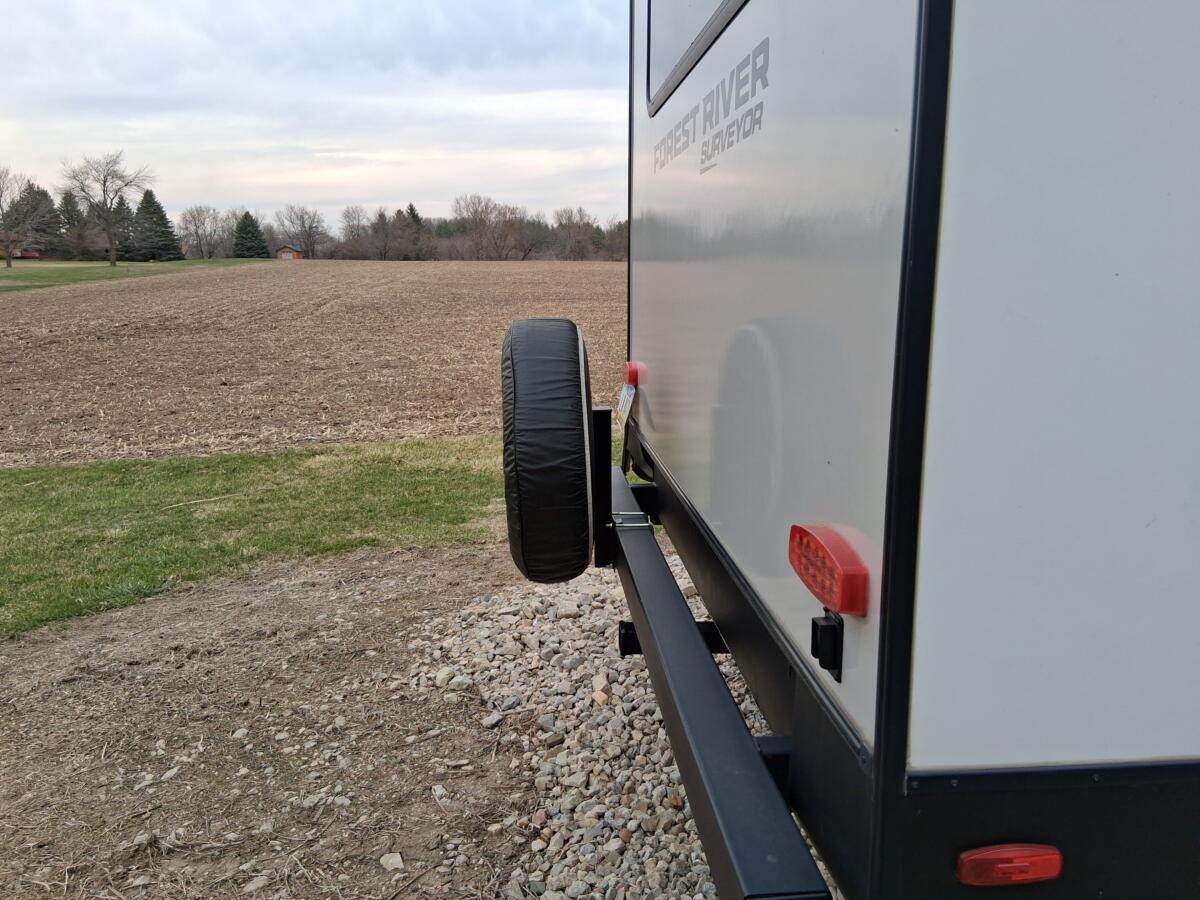
It is a model 305RLBS and is listed in the brochure at 38’10” exterior length. I measured the unit and the box is actually 35’9″ from the back end to the farthest point of the rounded front cap. The bumper and spare tire are another 18″ off the back, and the front tongue is 30″ out from the front cap. So that makes it a total of 39’16”.
Maybe they are measuring the front tongue/coupler back to the back of the bumper, as I believe the spare tire and mount might be optional.
Another example of a Surveyor
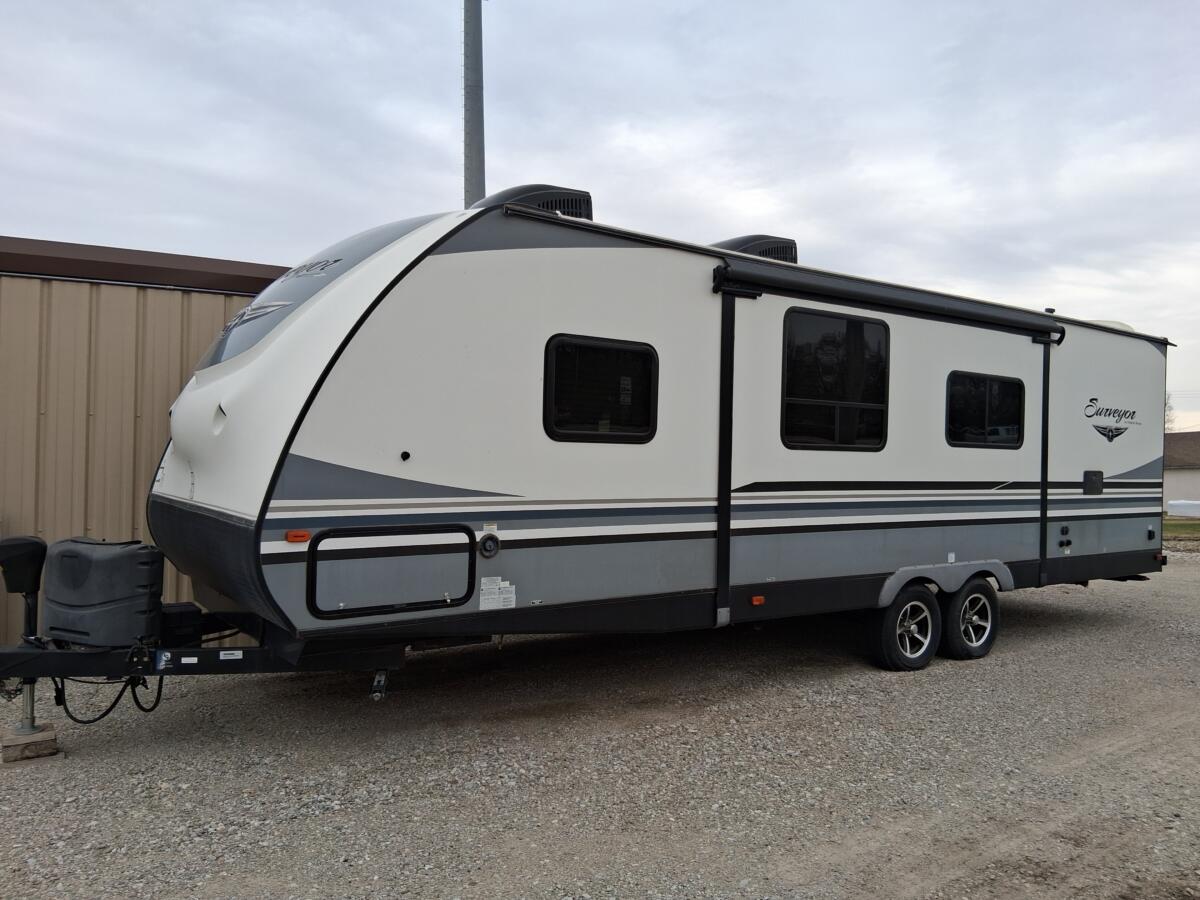
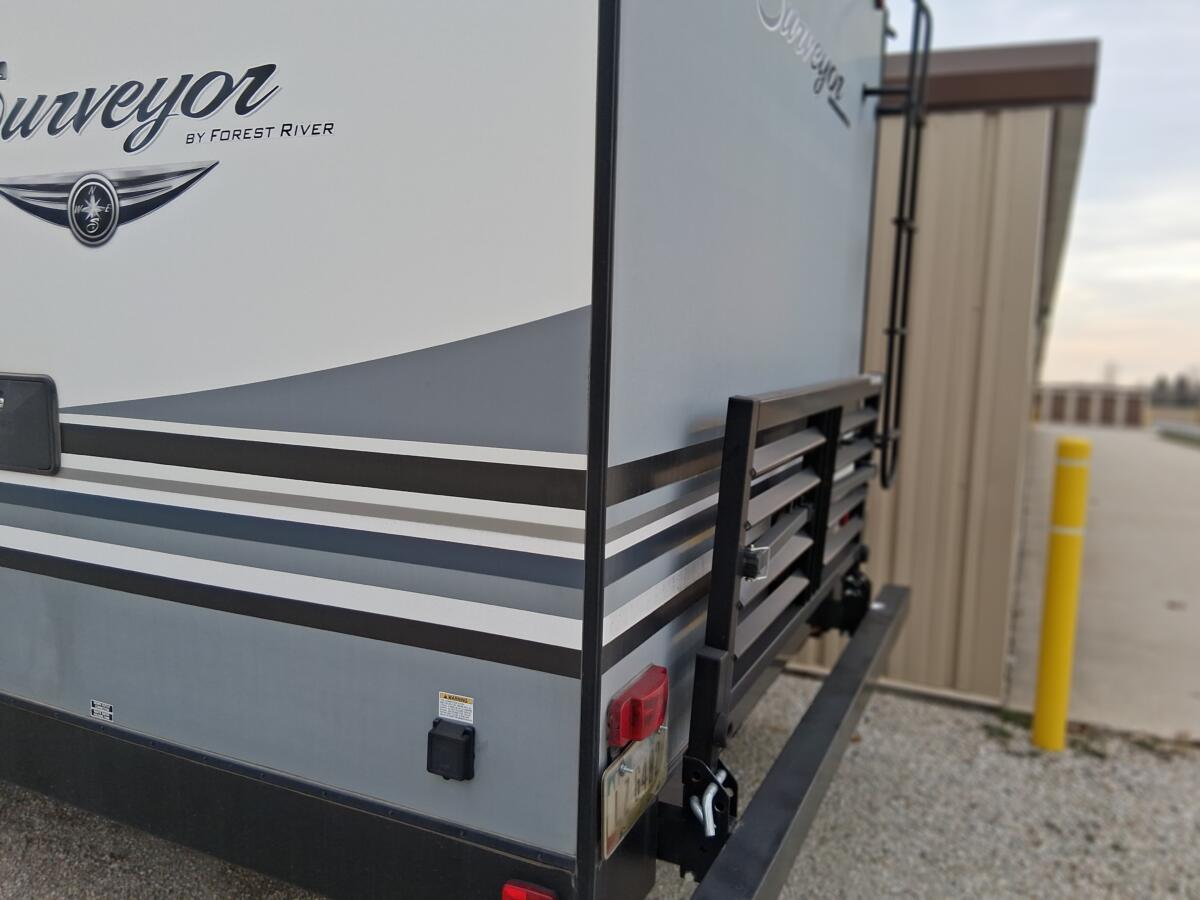
Here is another example of a 2018 Forest River Surveyor 287BHSS, which lists a length of 32’10”. The actual length from the front coupler to the bumper in the back was 33′.
Forest River Surveyor
This unit had a ladder and cargo carrier that was not included in the measurements. However, I believe the total length was fairly accurate.
Surveyor bumper
Here is an example of the designation of a couple Keystone Springdale models.
Keystone Springdale 2100RL – Actual length posted is 25’5”. This is from the back bumper to the front cap and does not include the tongue and hitch.
Keystone Springdale 2300BH – Actual length posted is 27’6”. The same measurements are used.
No standardized length of extensions
I also found there is no “standardized” length of front “A” frame or tongue and hitch/coupler, with some smaller units having a short 3’ extension and others as long as 6’.
We found this out the hard way during one of the Ford Towing Bootcamp events in Dallas. The local dealer, Fun Town RV, offered to bring ten travel trailers for use in the hands-on demonstrations. We specified units needed to be under 27’. We had a 25RLS that was actually 31’ front to back. Wow!
Hopefully, we can get more actual “specs” from readers. And maybe we can get some information from Lippert on the reason for the different lengths of front frames/couplers. Unfortunately, I just finished conducting seminars at eight different RV shows around the country and could have gotten some real world measurements. Guess it will have to wait until fall.
As an RV electrical expert, I’ve learned that a basic digital multimeter can save you a world of trouble on the road. In this article, I’ll show you how to quickly test pedestal voltage, check your battery’s state of charge, and find a blown fuse—simple steps that can prevent major problems. These are easy checks every RVer should know, and I’ll walk you through them.
Testing AC pedestal voltage
Use a meter to test a pedestal for proper voltage and polarity before plugging your RV into it. It’s actually pretty easy. Here’s the diagram I made years ago that shows all the voltage readings for a correctly wired pedestal.
If the voltage reads much below 105 volts or above 128 volts, then there’s a problem with the campground electrical system that could damage your RV or even create a hot-skin voltage condition. Below is a video I made that shows how to test a pedestal for proper voltage.
Testing DC battery voltage
Few things are more disheartening than waking up in the middle of the night with a dead house battery. Any digital multimeter will be more accurate than the simple 4-bar battery gauge in many RVs. But you will need to know what kind of batteries you have (such as flooded lead acid, AGM, or lithium).
Then find a SoC (State of Charge) chart like this one that shows battery SoC at different voltages.
Battery State of Charge
This is also a great way to determine if your converter/charger is working. When you’re plugged into shore power, you should measure between 13.5 and 14.5 volts on your battery terminals, depending on battery chemistry. If you read in the 12-volt range, then your converter isn’t charging, and you’ll soon have dead batteries.
Finding a dead fuse
All these meters have a continuity setting, which will beep when there’s a low-resistance connection across the probes. By pulling the fuse and placing the probes across the fuse contacts, if the meter “beeps,” then the fuse is okay.
If the meter doesn’t “beep,” then the fuse is blown. It’s also possible to check the fuse in-circuit. With the power and the load on, set the meter to 20 volts DC. If you measure 12 volts across the fuse, then it’s opened up and not passing current. But if it reads close to 0 volts (maybe 0.5 volts DC), then the fuse is good and is supplying current to the load.
Lots more things to test
Click to enlarge.
The list of things you can test with a basic digital multimeter is nearly endless. You can measure hot-skin voltage, find a dead GFCI, troubleshoot an open contact in a generator transfer switch, check AA and 9-volt batteries for juice, and a whole lot more. I won’t go anywhere without my trusty multimeter.
But you need to learn how your meter works when you’re not under pressure. So get a multimeter and read about how to use it HERE. And then when something in your RV stops working, you can pull out your meter and start troubleshooting.
HERE is the article I wrote previously about various meter kits you can purchase at big box stores and Amazon. You can get a nice kit for about $45, or just a digital multimeter for around $25. Here’s the kit I recommend.
This question to Mike and his response were originally posted on RVtravel.com in 2022.
Mike Sokol is an electrical and professional sound expert with 50+ years in the industry.
By Cheri Sicard
Small RV problems can eat up more time than the big ones. A loose fender skirt, a towel with nowhere to dry, or a hose that won’t stay put can turn into daily annoyances fast.
In the video at the end of this post, Jared Gillis from All About RVs put several low-cost fixes to the test to see which ones were worth keeping. Some were smart, some were only okay, and one failed by the next morning.
Pop rivets made the fender skirt fix better
Fender skirts often lose screws over time, and the plastic around those screw holes can crack when it gets brittle or gets pulled too tight. Jared tested pop rivets as a replacement, and this one landed in the win column.
The big plus is simple. Rivets don’t back themselves out as screws can. That solves one of the most common problems right away. He also liked the look of using rivets that match the skirt color, such as black pop rivets, instead of bright metal ones.
Still, rivets don’t fix over-tightening on their own. A washer or spacer may still help keep the plastic from being pulled too close to the metal.
The outdoor towel ideas were decent, but the power cord trick fell short
For drying towels outside, a pair of suction cups and a broom handle worked well enough. The better setup kept the handle slightly away from the wall, helping avoid scratching the RV. The downside was size, because it only held a couple of towels. Jared also liked a simpler backup idea, clipping towels to the rear ladder so they don’t blow into the dirt.
That same suction-cup approach did not work for power-cord strain relief. The idea was to support the cord’s weight and reduce stress on the inlet. It looked promising at first, but the suction cup was on the ground by morning. A 90-degree power adapter still sounds like the safer fix.
Two cheap interior DIY RV hacks stood out
A piece of black foam board cut to fit behind the smoked cabinet glass did a nice job of hiding clutter. It kept the glossy look from the outside, cost very little, and didn’t need glue because the board fit snugly in place.
Under-bed airflow was harder to test, since Jared hadn’t seen mold under his own mattress. Even so, the idea made sense. Mattress air pads or vent tiles can help air move between the mattress and the plywood, which may matter more in cold or damp places.
The freshwater fill hack was ugly, but it worked
The last trick solved a problem many RV owners know well. The hose slips out of the fresh water fill, so someone ends up standing there holding it.
Jared tried using a simple pressure regulator on the hose end and sliding that into the fill port. It looked rough, but it worked. If the part is already in the toolbox, it’s a smart save. If not, the Camco tank fill adapter is the cleaner option.
Here in Washington, where I’m writing this from, it’s finally tulip season! The beautiful Skagit Valley, about an hour north of Seattle, comes alive with tulip fields that transport you right to the fields of Holland. The 1,000 acres of fields are amazing! They produce 75 percent of the country’s tulips each year.
Photo credit: Emily Woodbury
We’re also fortunate to have the beautiful University of Washington cherry blossoms. The UW Quad comes to life with 29 gorgeous cherry blossom trees that spring to life each March/April.
University of Washington cherry blossoms. Photo credit: Emily Woodbury
This spring, will you plan a special day trip, outing or drive to see spring flowers? Perhaps you’re in Texas and will take a drive to see the Texas Bluebonnets. Or maybe you’re near Boston and will head to Commonwealth Avenue to see the beautiful Magnolia trees. Or maybe you’ll see the tulips in Michigan.
Please vote in the poll then leave a comment and tell us your plans.
By Dustin Simpson
If you’re showering in your RV and you’re standing in a couple of inches of water, or if the water just isn’t draining as quickly as it should, you have an issue that needs to be resolved.
So why isn’t your RV shower draining? Let’s take a look at one of the most common issues that lead to a clogged RV shower and/or slow draining. There are a number of other reasons that could cause the shower to clog or backup. For example, it could be something as simple as that your gray water tank is full. It could also be that your tank sensors are reading incorrectly, or it could be something else…
For most of us, we are all somewhat familiar with a P-trap being under the galley or bathroom sinks. But did you know that most RV showers don’t use a standard P-trap anymore?
Standard P-trap
For the most part, the RV industry has been using a device called a HepvO valve. Unlike a typical P-trap, the HepvO requires no water to seal off nasty waste tank odors. Since the valve is waterless, there is zero chance of freeze damage, or water that can evaporate from a P-trap letting tank odors in the rig.
HepvO kits allow different space-saving connections.View underneath most RV showers.
HepvO maintenance
Cleaning
The HepvO sanitary waste valve does not require routine or seasonal maintenance. However, if you need to blow out your drainage lines, make sure not to exceed 80–100 psi.
HepvO is highly resistant to standard caustic-based drain cleaners and can withstand acid-based cleaners with concentrations up to 10%. If you need to flush with higher concentrations of acid-based cleaners, the valve must be removed before the operation.
If you plan to use mechanical drain cleaning devices, it is important to first remove the HepvO from the waste system. This allows for easy access to service downstream pipework. After any maintenance procedure, it is recommended to rinse the HepvO valve with clean water.
Blockages
To clear a pipe blockage downstream of a HepvO, it is advisable to temporarily remove the HepvO valve before using a pipe rodding technique. Rodding the pipeline with the HepvO valve in place may result in potential damage to the internal components of the valve.
What does a blockage in a HepvO P-trap look like?
I would recommend that you add this inspection and cleaning to your regular RV maintenance schedule at least once a year, depending on use. You should be able to access the HepvO P-trap by removing a panel underneath the shower, or you will need to see if it is located in a compartment underneath the shower area.
Remove the HepvO P-trap for cleaning.This is the drain end of the HepvO, as you can see the hair trapped inside it.This is the inlet side of the HepvO P-trap clogged.This cut-a-away shows you an example of how it works.Cleaned the inlet side of the HepvO P-trap.Cleaned the inside of the HepvO outlet side.
If you’re battling odors in the bathroom or a slow or clogged drain, we would recommend that you check your HepvO P-trap. Please see the manufacturer’s website for installation and additional resources if needed.
What is the life expectancy of a HepvO valve?
Installed correctly, it can be expected to have a life expectancy at least equivalent to current water-sealed traps. In addition, HepvO is guaranteed against defects in materials or manufacturing for a period of 3 years.
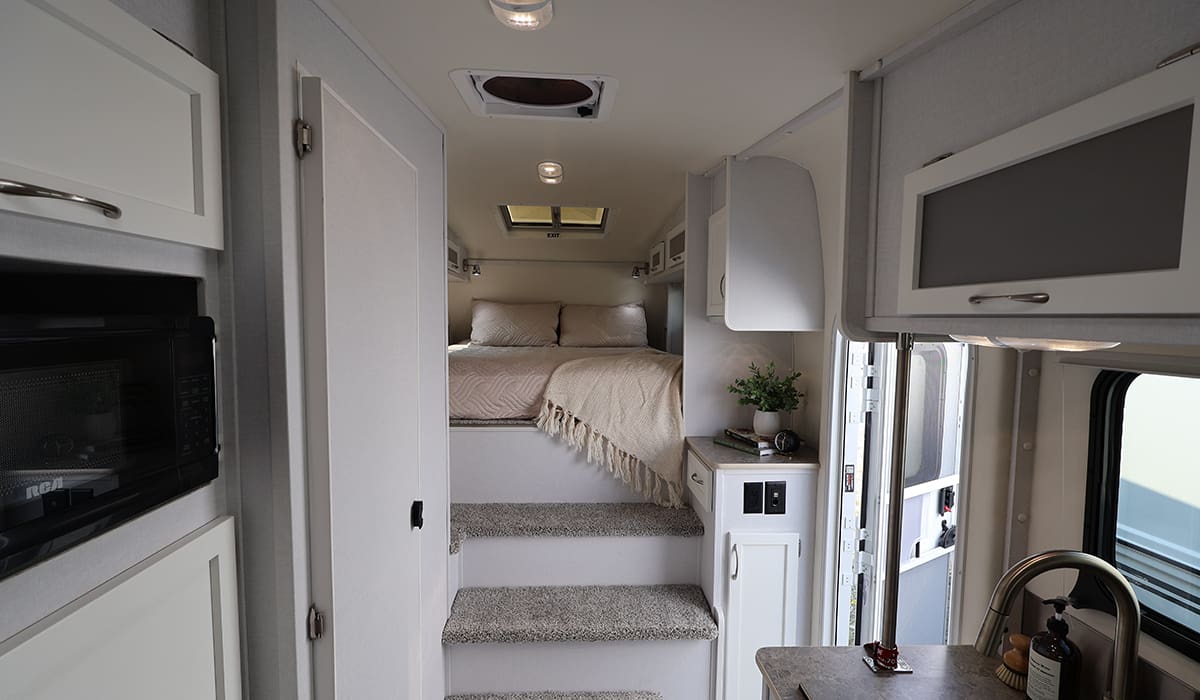
At Escape Trailer Industries in Chilliwack, British Columbia, the 2025 Escape 5.0 makes a strong first impression. It’s a molded fiberglass fifth wheel that stays compact, yet still fits the features most campers want.
In the video at the end of this post, Steve from Retro Renos walks through the trailer and points out the details that shape daily camping life, inside and out.
Interior
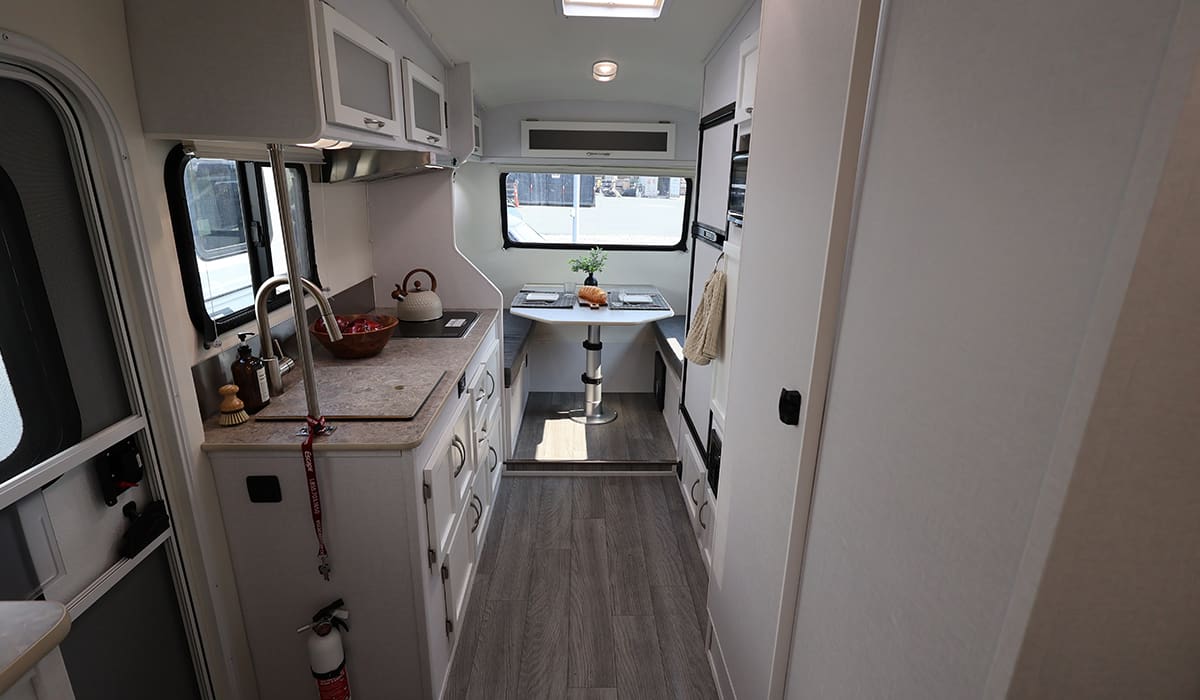
The model in the video has a maple interior, and that finish helps the space feel warm instead of cramped. At the rear, the bench seating works as both a dinette and an extra bed because the compression table drops down when it’s time to sleep.
Storage shows up early in the layout. The stair system to the loft includes built-in storage, and there’s also small cabinetry nearby, plus a wardrobe closet for hanging clothes.
That mix gives the Escape 5.0 a smart balance. It feels small enough to tow easily, but it doesn’t give up the basics that make a trailer pleasant to use for more than a quick overnight stop.
The upper bed is one of the trailer’s best features. Families will likely understand why the description says kids call it “the clubhouse.”
Up top, the loft gets captain’s lights and reading lights at the back. Cabinets run along the sides of the bed, so clothes, books, and small items stay close instead of ending up on the floor. There are also electrical outlets on both sides of the bed, which makes overnight phone charging easy.
Next to the bathroom area, the galley keeps the basics simple and useful. It includes a stainless steel sink, a pull-down faucet, and a sink cover that matches the countertop. Cooking gets a solid setup, too, with a three-burner Suburban stovetop and an oven.
Cabinet space is spread around the kitchen instead of being stacked in one place. There’s storage below the counter, drawers, under the sink, and upper cabinets, as well. The Norcold two-way refrigerator runs on 120V power or propane, and the freezer section looks large enough for frozen food and ice cream.
Above and around that area, the trailer also adds a microwave and a Houghton AC unit, with air conditioner, a heat pump, a dehumidifier, and a soft start. Meanwhile, the acrylic windows include pull-up screens, blackout shades, and outward-opening panels for airflow.
Exterior features that make setup easier
Outside, the Escape 5.0 keeps the same practical feel. The dry weight lands at 3,910 pounds, which helps support smoother towing for a fifth wheel of this size.
Entry looks stable, thanks to the exterior stair system and grab handle. There’s an outside shower for dishes or cleanup on one side, plus exterior outlets and access to storage under the bench. On the other side, a second exterior shower sits near the gray and black tank area, which makes rinsing that zone much easier.
The trailer also includes exterior lift controls and a Girard® electric awning with buttons for extending and retracting, LED lights, and full close-off, plus a safety switch for travel.
The Escape 5.0 stands out because it uses its space well. The loft, dual-use dinette, two-way fridge, and outside utility features all work together in a trailer that stays light for its class. That’s the hook here. It’s not only compact, but it’s also thoughtfully arranged.
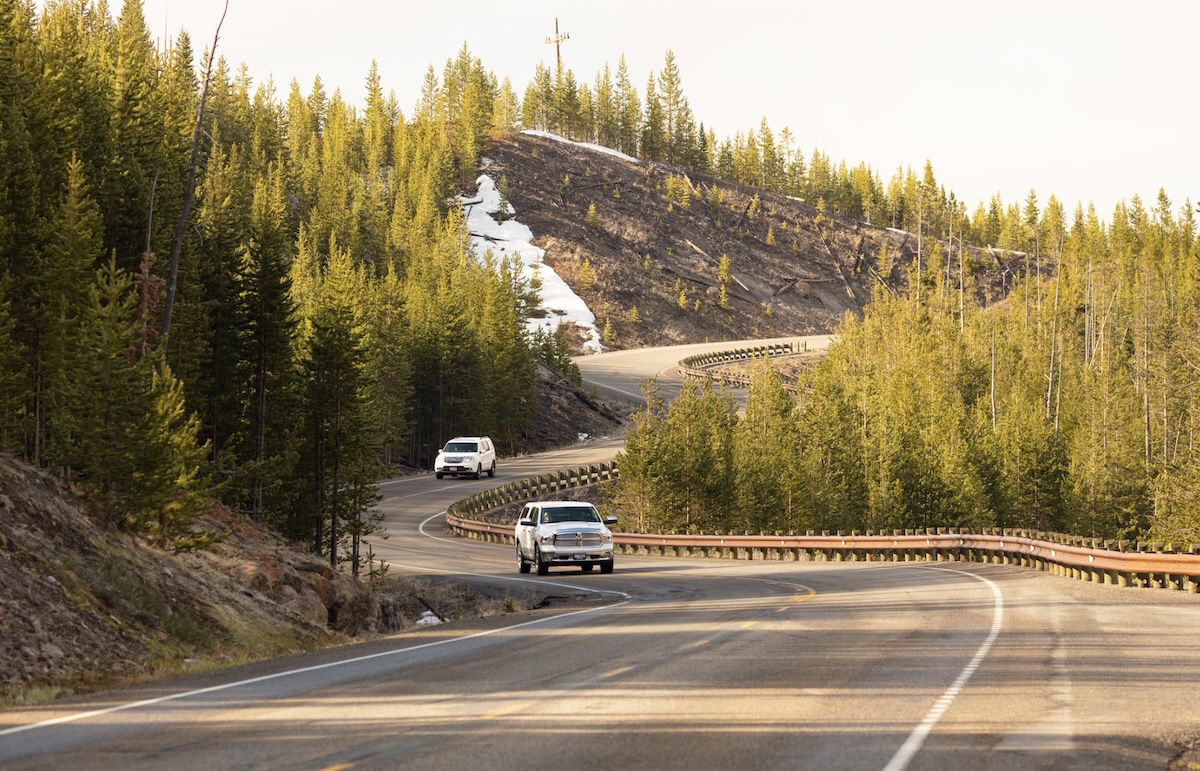
Beginning next Friday (April 17) at 8 a.m., select entrances and roads in Yellowstone National Park will open for the summer season, weather permitting, as part of the annual spring opening.
Entrances open on April 17
• North Entrance (Gardiner, Montana)
• West Entrance (West Yellowstone, Montana)
From either entrance, visitors may access the following destinations:
• Mammoth Hot Springs
• Lamar Valley
• Norris Geyser Basin
• Grand Canyon of the Yellowstone
• Old Faithful
• Northeast Entrance (Silver Gate and Cooke City, Montana)
Additional roads within the park will open throughout May, weather permitting. Specific routes and directions can be found at Park Roads.
Bring appropriate footwear and clothing for winter conditions. Many trails and boardwalks are still snow covered this time of year.
Expect limited services in spring and come prepared. Visit Operating Dates for area-specific information.
Anticipate possible road closures due to inclement weather and dangerous driving conditions. Temporary travel restrictions or closures can occur at any time without notice. Have flexible travel plans.
Expect delays of up to 30 minutes due to road improvement projects.
Stay informed about road conditions and delays in Yellowstone
Receive Yellowstone road alerts on your mobile phone by texting “82190” to 888-777 (an automatic text reply will confirm receipt and provide instructions).
Reduce wait times at park entrances by purchasing a pass online ahead of time.
Use caution when driving and watch for ice, snow and gravel on road surfaces.
Bison, elk, bears and other wildlife use roads as travel corridors. Roadside snowbanks prevent them from easily moving off the roads. Do not crowd, harass or push wildlife. Be mindful as wildlife endure this difficult time of the year.
Stay at least 100 yards away from bears, wolves and cougars and 25 yards from all other wildlife. It is your responsibility to maintain safe distances at all times.
If you were hoping the U.S.–Iran ceasefire would bring relief at the fuel pump, you’re not alone. On paper, easing tensions should mean lower oil prices—and eventually cheaper gas and diesel.
But that’s not what’s happening.
Reports of a possible truce or pause in hostilities did move markets—but only briefly. After the news broke, markets reacted exactly how you’d expect. As one report put it, “crude oil, gasoline, and diesel futures briefly dropped” following the announcement.
That’s the good news.
The problem is, it didn’t stick. The drop was real—but short-lived.
Energy markets react fast to geopolitical risk, and signs of easing tensions briefly took some of that fear out of the system. In fact, refined fuel markets overseas saw “double-digit drops … in the wake of the tentative ceasefire.” But even in the same breath, the reality showed through. Prices “remain at levels that point to a supply crunch.”
That’s really the story in a nutshell. Relief showed up, but the underlying problem didn’t go away.
Why prices didn’t follow through
Here’s where it matters for RVers.
Reports of a ceasefire or de-escalation didn’t resolve the bigger issue: supply disruptions and uncertainty. The Strait of Hormuz—the choke point for a significant share of the world’s oil—has seen disruptions, delays, and ongoing risk. That uncertainty keeps pressure on prices even when tensions appear to ease.
Market watchers put it plainly: “Fuel sellers [are] reluctant to lower prices amid unstable supply conditions.”
Even with signs of easing tensions, analysts say prices can stay elevated if supply concerns linger.
Diesel is still taking the harder hit
If you’re running a diesel rig, this part matters.
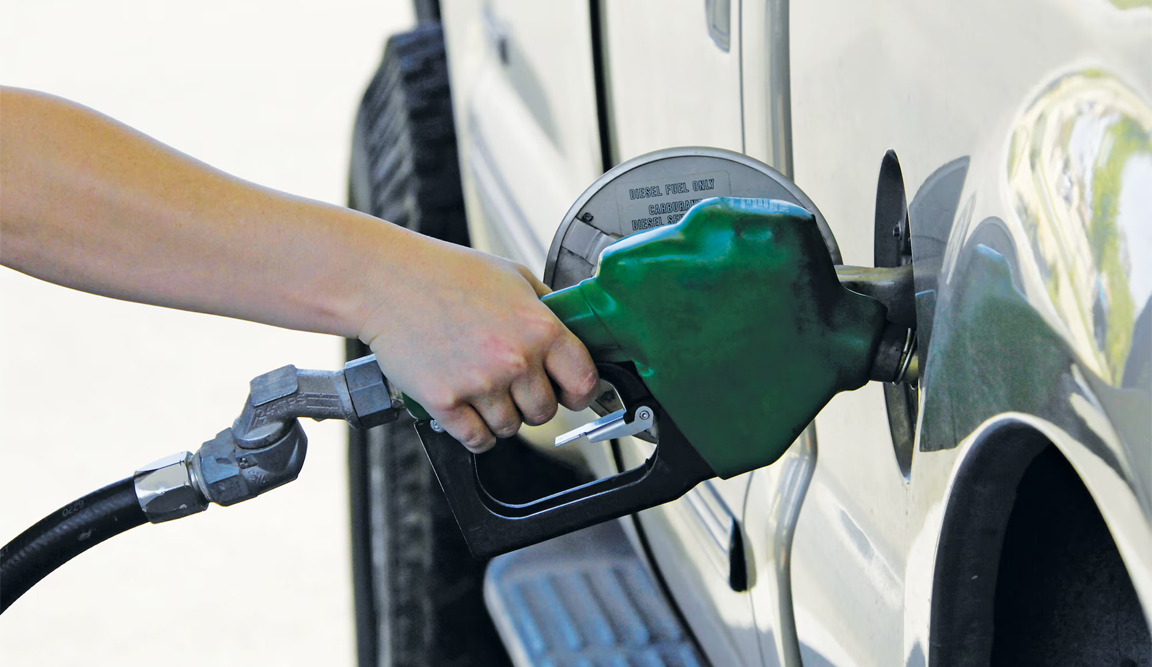
Even after the ceasefire reports, gasoline barely moved, while diesel continued higher, hitting levels not seen since 2022. There’s a reason for that. The Middle East plays a larger role in diesel-related supply chains, and when things get uncertain there, diesel tends to spike more sharply—and stay elevated longer.
The bigger picture: Prices don’t fall as fast as they rise.
Here’s the part folks often miss
Even if tensions ease further, prices don’t snap back overnight. According to federal energy analysts, “Fuel prices could keep rising for months even after the Strait of Hormuz reopens.” Supply chains take time to stabilize, refineries depend on steady crude flow, and markets continue pricing in risk until stability is clear. So, while oil can drop quickly on headlines, pump prices tend to move more slowly—and often unevenly.
What this means to RVers
Right now, we’re in a gray zone. Not full conflict, not fully resolved—and the market reflects that.
You might see small day-to-day dips, but don’t expect a meaningful drop in fuel costs unless shipping routes stabilize, supply disruptions ease, and tensions stay low over time. Until then, a risk premium remains baked into fuel prices.
Bottom line
Reports of a ceasefire or pause in hostilities did take some pressure off oil markets—but only briefly. As long as supply concerns and uncertainty remain, fuel prices are unlikely to drop in any meaningful way.
Put simply: A quick dip in oil doesn’t necessarily translate into relief at the pump—especially when diesel is still running high.
We use cookies to ensure that we give you the best experience on our website. By continuing to use our site, you consent to accepting cookies. We NEVER have or will sell reader's data. For more info, please see our privacy policy page.