Home Blog Page 278

RV nightmare: How to prevent mold on a memory foam mattress

By Cheri Sicard
Memory foam mattresses are a popular way to upgrade RV mattresses. But did you know that mold on a memory foam mattress can turn your RV sweet dreams into nightmares?

It’s true that mold issues with memory foam mattresses in RVs can be a common headache. And once memory foam mold issues set in, there is sadly not much you can do besides get rid of that mattress.

The folks from New Family Dream learned this lesson the hard way.

The family made one fundamental mistake. That mistake then invited some nasty toxic mold to come and take up residence under their brand-new memory foam mattress.

What’s the answer? Prevention!

That’s where the video below, covering how to prevent mold on a memory foam mattress from ever forming in the first place, comes in. It also shows how to safely get rid of a moldy memory foam mattress from your RV.

So what was the family’s fundamental mistake that many other people make every day?

They failed to read the instructions that came with their mattress. If they had, they would have known NOT to place the memory flat mattress directly on a flat wooden surface.

Watch what happens when you neglect this important bit of information in the video. The couple has nasty-looking black mold growing UNDER the mattress. Mold that is beginning to spore and spread.

Even worse, the spores are growing INSIDE the memory foam mattress, not just on the surface.

Ewww!!

How to prevent mold on a memory foam mattress

You MUST provide some breathability under your mattress. Placing the mattress on a flat wooden surface invites moisture to accumulate, and where moisture accumulates, mold grows.

The video covers these important points:

  • How to get a moldy mattress OUT of an RV with the least amount of mold and spore spread. (If you are watching before you buy a memory foam mattress for your RV, this will not be an issue for you.)
  • The importance of dehumidifiers.
  • How to protect wooden surfaces against mold. Spoiler alert: Bleach doesn’t do it!

While this video is a good resource to show you how to deal with mold on your memory foam mattress and how to treat your wooden platform, it does stop short.

While it tells you that you need to leave airspace under your RV memory foam mattress, it does not go into how to do it.

I suggest one of these two under-mattress pads: one synthetic, the other all-natural.  Using either one will leave air space between the memory foam and the wooden platform and discourage moisture buildup.

Memory foam mattresses, while less expensive than custom-made RV mattresses, are nonetheless a substantial investment in your RV’s comfort. Combine one of the pads above with treating your wooden RV bed platform to prevent mold, and you can enjoy memory foam sweet dreams for years.

RELATED

RVT1215

Home run destinations: Visiting MLB stadiums and where to camp nearby

3

Touring America’s iconic baseball stadiums as you travel is a grand slam for baseball-loving RVers. Plan to tailgate, attend a game, or take a stadium tour at your favorite park.

Major League Baseball ballparks are well worth your visit. Or, if you’re a diehard fan, plan a road trip to visit several parks. Excellent parks are located throughout the U.S. Here’s to home run travel!

National League parks

These are only a few of the NLB parks to consider. Set your own criteria for which ones you choose to visit. No matter where you go, you will not be disappointed.

Oracle Park (San Francisco, CA)

Oracle Park sits nestled on the China Basin waterfront. The park boasts neoclassical architecture and McCovey Cove, where splash hits land smack dab into San Francisco Bay.

The stadium offers a mobile “Ballpark” app for digital tickets, food ordering, and interactive maps. Lot A provides RV space for informal tailgating and spaces open three hours before the first pitch. Tailgaters must leave no later than one hour after the last out.

If you prefer, nearby campgrounds like Marin RV Park and San Francisco RV Resort keep you close to city sights and the ballpark’s energy.

Busch Stadium (St. Louis, MO)

Located in the heart of downtown St. Louis, Busch Stadium blends classic ballpark vibes with modern amenities and unbeatable views of the Gateway Arch. Home to the St. Louis Cardinals, the stadium is known for its passionate fans, signature toasted ravioli, and postgame fireworks shows.

Busch Stadium doesn’t have designated RV parking on-site. However, you can book a site at Casino Queen RV Park. It features full hookups, security, and easy public transit access to the stadium.

Want to make a weekend of it? Visit Ballpark Village next to the stadium for food, drinks, and live music. It’s just steps from the diamond.

Everyone will enjoy the world-class museums, zoo, and eateries St. Louis offers, too.

Truist Park (Cumberland, GA)

Home of the Atlanta Braves, Truist Park features the iconic Coca‐Cola section in left field, and The Battery entertainment district sits nearby.

Tailgating is confined to Lot 29. Note that you’ll need proof of parking to enter. (Get parking passes ahead of time here.)

After the game, retreat to Atlanta Marietta RV Resort or Sweetwater Creek RV Reserve. Both RV parks are located just a few miles from the stadium.

Camden Yards (Baltimore, MD)

Oriole Park at Camden Yards is often credited with sparking the retro ballpark movement. Its mix of classic design and modern comfort is sure to please. Located just a short walk from Baltimore’s Inner Harbor, Camden features red brick architecture, warehouse views, and iconic local eats (e.g., crab cakes, Old Bay fries).

While RV parking isn’t available directly at the stadium, RVers can reserve oversized spots at nearby lots with advance notice. (Check out the Baltimore Convention Center Garage or Lot B.)

A great RV home base is Cherry Hill Park. This park is about 30 minutes away in College Park. It offers premium RV amenities, a shuttle service to the Metro, and easy access to downtown attractions. For a bonus adventure, spend the day exploring Fort McHenry or take a water taxi around the harbor before catching a night game under the lights.

American League favorites

American League baseball fans have many outstanding parks to visit, as well. Here are just a few:

American Family Field (Milwaukee, WI)

Formerly Miller Park, this retractable‐roof ballpark is known for its Midwest charm and hearty local fare. RVers can tailgate in the Uecker and Yount lots. Spaces fill fast, so contact Brewers Group Sales at (414) 902‑4777 to reserve your spot.

For extended stays, consider Wisconsin State Fair RV Park and Lake Lenwood Beach and Campground. Both offer full hookups and resort‑style amenities just north of the city.

Globe Life Field (Arlington, TX)

This “mallpark” under the retractable roof keeps you cool year‐round. What’s more, it boasts countless team shops and eateries. Tailgating is allowed on grassy areas of the park, from lot opening until the second inning on regular‐season dates.

Traders Village RV Park, six miles southeast of Globe Life Field, provides 50‑amp power, Wi‑Fi, and easy road access for RVers heading to games in the Dallas–Fort Worth metroplex.

Angel Stadium of Anaheim (Anaheim, CA)

As the fourth‑oldest stadium in Major League Baseball, Angel Stadium still delights visitors. You’ll experience panoramic concourses and California‑style concessions.

Oversized vehicles, including RVs, may tailgate in general parking areas (Big A, Orangewood, State College, and Douglass lots). The cost is $20 per space.

Orangeland RV Park sits less than a mile from the ballpark. It has a heated pool and outdoor activities, making it a perfect post‑game retreat.

National Baseball Hall of Fame and Museum (Cooperstown, NY)

If your RV trip takes you to New York, you won’t want to miss the National Baseball Hall of Fame. It’s an unforgettable experience for baseball fans.

Located in the quaint village of Cooperstown, New York, the National Baseball Hall of Fame is a must-visit for any baseball enthusiast. Inside, you’ll find thousands of artifacts celebrating the game’s greatest players, historic moments, and baseball culture. You can also enjoy interactive exhibits, film screenings, and the iconic Hall of Plaques honoring legends like Babe Ruth and Jackie Robinson.

While the museum itself doesn’t offer RV parking, nearby lots in town can accommodate oversized vehicles. (Check out the Red or Blue Trolley lots.)

For a comfortable stay, Cooperstown Shadow Brook Campground or Beaver Valley Campground offer full RV hookups with just a short drive to the Hall of Fame.

Unique baseball experience

Civil War era base ball game Image: NPS

Plan to step back in time as you visit the 1860s “Base Ball” game at Appomattox Court House. Baseball and history buffs alike will enjoy this unique event at Appomattox Court House National Historical Park.

Located in Appomattox, Virginia, the special event will take place soon: Saturday, July 5, 2025. Visitors are invited to take the field and experience a friendly game of 1860s-style “base ball.” (Yes, in Civil War times the name of the game was spelled as two words.)

The games will be played at 10:00 a.m. and 1:00 p.m., weather permitting. Each game will last about an hour to 90 minutes.

This won’t be your typical baseball game. The games will be played using Civil War era rules. No gloves or mitts are needed. The game will use vintage-style, softer balls, and the park will supply replica bats and equipment. It’s a fun, hands-on way to relive how soldiers—both Union and Confederate—once found a moment of escape and camaraderie during wartime.

For RV travelers planning to attend, there are several places to stay nearby.

Holliday Lake State Park (about 30 miles away) offers peaceful wooded campsites. Electric and water hookups are available. Campers will enjoy access to hiking trails, swimming, and fishing.

James River State Park (about 40 minutes from the park) is a scenic riverside campground with full RV facilities. RVers can rent kayaks and enjoy stunning mountain views.

Thousand Trails Lynchburg RV Campground in Gladys, VA, offers pull-through sites, Wi-Fi, and full hookups. It’s a convenient base for exploring the historical area.

This event is a great way to combine your love of RV travel, American history, and baseball, all in one unforgettable summer stop.

Pro tips for RVers

If your travel team wants to visit or tailgate at a ballpark, here are some tips:

  • Reserve early: RV spots at popular ballparks sell out quickly, especially for weekend games and playoffs.
  • Check stadium policies: Tailgating rules vary. Some parks strictly limit cooking or require advanced reservations.
  • Plan campground stops: Good Sam and KOA parks often offer ballpark shuttles.
  • Pack smart: Bring a small grill, if allowed, a sturdy dining setup, and plenty of water and shade to stay comfortable outdoors.

For a homerun experience, plan to visit favorite ballparks, the Baseball Hall of Fame, or participate in this summer’s Civil War baseball experience. You’ll make lifelong memories!

YOU MIGHT ALSO ENJOY:

RVT1215

Pilot turns Southwest Airlines catering truck into incredible RV

1

By Gail Marsh
Mark Pankey is a Southwest Airlines pilot. He’s also the owner of an RV he built out of (wait for it!) a decommissioned Southwest Airlines catering truck! His may be the only RV in existence equipped with a scissors lift, generally used by airlines to load snacks and beverages into its airplanes. It’s a fascinating story, so let’s get into it!

Van life

Pankey is no stranger to truck renovations. He’d remodeled a van already and was living in it. By parking his van in airport parking lots, he saved money on hotel costs while working. He lived this way for a few years and was making do until he was ready to build a house on a lot he’d purchased in Colorado.

COVID hits

When the COVID-19 pandemic hit, the airline industry all but stopped. Pilots were given time off with partial pay. With the future looking less than bright, Pankey put his house-building plans on hold.

He was re-evaluating his future goals when a fellow pilot texted Pankey. He told Pankey that a number of decommissioned airline catering trucks were being auctioned off in Seattle. Pankey attended the auction and purchased his future RV for just $3,300.

A Southwest Airlines RV rebuild

The truck was all but empty, so Pankey started his rebuild from scratch. He refashioned the roof to make it slanted. This made the inside ceiling taller and also enhanced Pankey’s ability to collect rainwater. The slanted roof was also better for using the solar panels that he eventually positioned on top.

Pankey used foam insulation on all of the truck’s interior walls, and then installed the floor, walls, and interior cupboards etc. He built a loft to hold a queen-size mattress, installed a composting toilet, and built a shower, too.

A water tank is filled by rainwater or Pankey’s occasional stops at truck fueling stations.

Cost

Pankey estimates that his unusual Southwest Airlines RV conversion cost between $30,000 and $35,000, including the initial cost of the truck. He has since sold his apartment and land lot to live in his catering truck RV, which he’s named “The SnakPak.” Pankey’s lived full-time in his amazing RV for two years and counting.

Take a tour of his RV and learn more about it in the video below.

RELATED

RVT1215

The RV laundry conundrum: Do you/would you remove unattended clothes from washer/dryer?

20

By Gail Marsh
Picture it: A small group of RVers stand inside the campground laundry room. They huddle around a washer with its lid raised. One RVer peeks inside the washing machine and shakes his head. Other RVers, in turn, either frown, humph in frustration, or sit down to read a book. What’s going on? It’s the RV laundry conundrum! (Read my laundry tips here.)

What to do?

This unfortunate scenario is one played out in almost every campground at one time or another. Perhaps it’s happened to you, as well. You arrive at the campground “wash house” only to find all three washing machines and dryers sitting idle. Before you pat yourself on the back for getting to the machines ahead of your fellow campers, take a look inside the machines. Every washer is full of clean, wet clothes. This is the RV laundry conundrum! What’s an RVer to do?

Choices

Having faced this RV laundry challenge myself, I see only two options for handling the situation: Leave everything as is and wait for the clothing’s owner to retrieve them; or take the clothes out of the washer and place them on the folding table. The problem is that not every camper agrees with these choices.

A recent RV online conversation addressed this issue. Here’s what folks said:

Hands off! Wait and see

R.J. was vehement: “I’m not touching anyone else’s property! And they better not touch mine either.”

“Getting into another RVer’s property could get you in trouble. I say, ‘hands off,’” Hank posted.

“I just wait for 15-20 minutes. You know how it is. People lose track of time. They might be dealing with their kids or pets. Give folks a break! Relax! You’re on vacation, right?” That’s how Pam feels about the RV laundry conundrum.

Gia V. agrees. “It doesn’t hurt to wait for a little while. I always bring along a book, so I don’t mind the wait.”

Take clothes out

Dee offered, “I swear some RVers leave their laundry in the machines for days! That’s rude! I stay with my clothes until everything’s done. If others can’t be bothered, they shouldn’t mind me moving their clean, wet clothes to the folding table.”

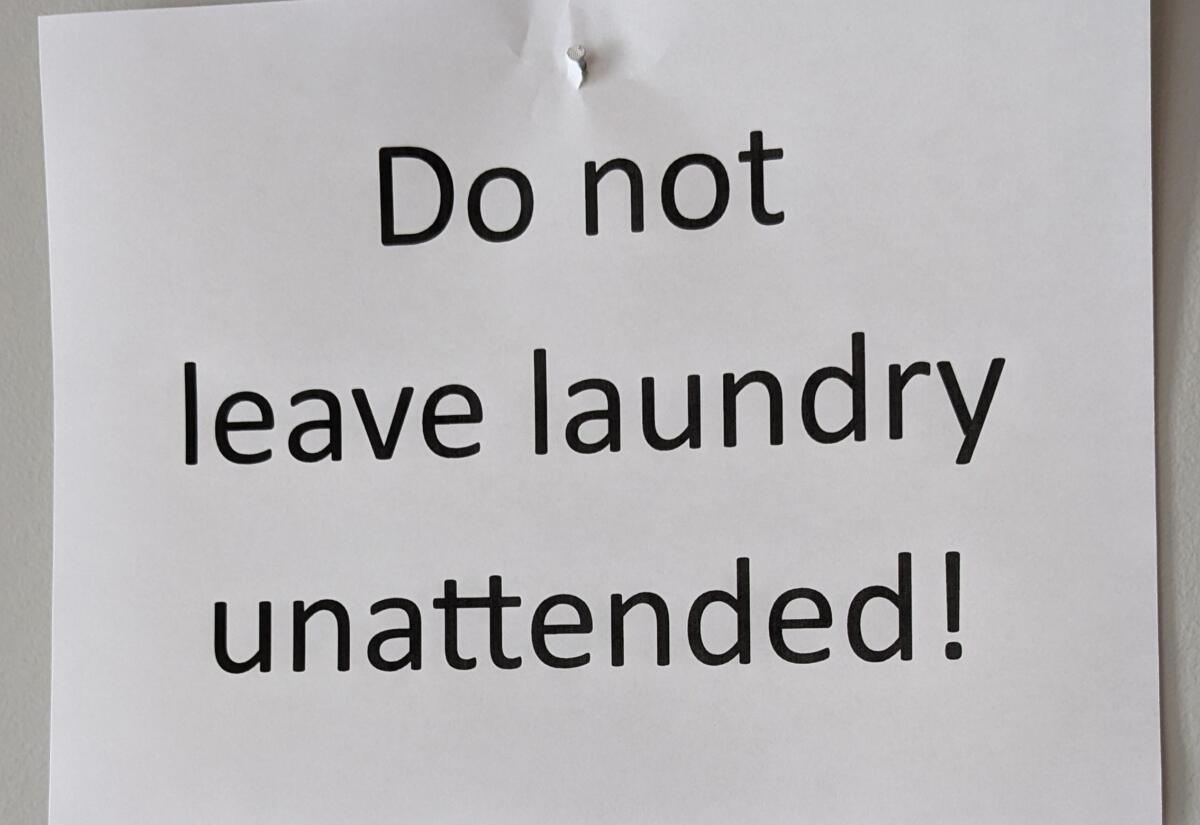
Carl agrees: “There’s usually a sign: ‘Stay with your clothes.’ If you ignore the rules, I’m moving your duds! You can count on that.”

Your turn

What do you think? Vote in the poll and then tell us what prompted your vote in the comments below.

How do you feel about the RV laundry conundrum? If you need a washing machine or dryer, but it’s full of clothes, what do you do?

RELATED

RVT1215

Report reveals deadly consequences of impaired driving

0

By Chuck Woodbury
Transportation editor

As I have said for many years, if you drink while driving, then make it Root Beer. Water works, too. Coke works. Apple juice works. But nothing that buzzes your brain.

I say this after coming across a report from the Idaho Transportation Department (ITD). While it reported an 18% decrease in fatalities from impaired driving crashes from 105 in 2023 to 86 in 2024, impaired driving still accounted for more than a third (36%) of all traffic crash fatalities in Idaho last year.

Of the 86 people killed in impaired driving crashes in 2024, 80 (an overwhelming 93%) were either the impaired driver, a passenger riding with an impaired driver, or an impaired pedestrian.

“Drivers aged 30 and under are involved in impaired driving crashes at a disproportionately high rate,” said Josephine Middleton, Highway Safety Manager with ITD’s Office of Highway Safety. “It’s encouraging to see fewer fatalities, but the numbers show the problem is far from solved. We need people to understand that impaired driving doesn’t just put their own life at risk. It endangers everyone on the road.”

To help prevent further tragedies, ITD and its law enforcement partners will participate in a statewide impaired driving mobilization from July 1 to July 13, 2025. During this time, drivers can expect to see an increased presence of high-visibility patrols dedicated to stopping impaired drivers and saving lives.

ITD continues to focus on education and prevention through law enforcement partnerships, community outreach, and youth engagement initiatives. The department emphasizes the importance of planning ahead, using designated drivers, and making responsible choices every time you get behind the wheel.

Impaired driving is preventable. If you feel different, you drive different.

For more information on impaired driving prevention efforts in Idaho (good advice for anywhere), visit shift-idaho.org.

RELATED

RVT1215

Yes, dogs can get sunburned!

1

Now that warmer (hotter!) weather is here, you and your furry RV companion are undoubtedly eager to begin this year’s camping adventures, if you haven’t already. Here are some ways to protect your dog from sunburn.

Understanding risk factors

Dogs can get sunburned like we do. Even if your dog has a thick coat, areas with little fur are prone to burning. Lighter-colored dogs, or breeds with sparse coats, are especially at risk. It’s important that you take preventive measures tailored to your dog’s unique needs to avoid canine sunburn.

Tips to prevent sunburn

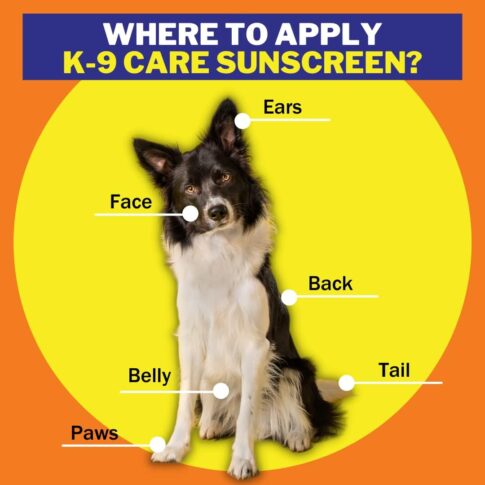
Sunscreen for dogs Amazon image

1. Use dog-safe sunscreen. Not all sunscreens are safe for pets—human products can contain chemicals that are toxic if ingested. Instead, opt for pet-specific, dog-safe sunscreens. These are designed to be gentle on your dog’s skin and are often tested for safety if your dog decides to give it a lick! For instance, products like Epi-Pet Sun Protector Spray are FDA-approved specifically for dogs, making them a trusted choice.

2. Dress for protection. Consider using UV-protective clothing for your dog. Lightweight shirts and hats with a high UPF (Ultraviolet Protection Factor) rating will shield your pup’s vulnerable areas. These garments are especially useful during midday when the sun is at its peak.

3. Provide shade. When parked at your RV site, make sure your dog has access to shaded areas when outside your rig. Think: pop-up canopy, a doggy tent, or even a shaded corner near your RV. It’s vitally important to give your dog a cool retreat and reduce their sun exposure.

4. Timing is everything. Plan your outdoor activities for the cooler parts of the day—early mornings or late afternoons. Avoid long walks or play sessions during the midday hours when the UV rays are strongest. This not only prevents sunburn but also helps protect your dog from overheating.

5. Hydration and aftercare. Keeping your dog well-hydrated is also essential. Offer fresh, cool water frequently to help regulate your pup’s body temperature. After outdoor adventures, gently wipe your dog’s exposed skin with a damp cloth to remove any salt, dust, or sunscreen residue that might irritate the skin. Regular checks for redness or irritation can help you catch a sunburn early.

What if your dog gets sunburned?

Despite your best efforts, sometimes canine sunburn may occur. Here are a few steps you can take if you notice signs of sunburn on your dog:

Cool the affected area: Apply a cool, damp cloth to soothe the skin. Avoid ice or overly cold water, which can further irritate the skin.

Limit further sun exposure: Move your dog to a shaded or air-conditioned area as soon as possible.

Consult a veterinarian: If your dog shows signs of severe pain, blistering, or if the sunburn covers a large area, it’s important to seek veterinary advice promptly.

Do you have additional tips (or experiences) concerning canine sunburn? Share your thoughts in the comments below.

RELATED

RVT1215

How do I prevent an RV LP gas leak?

By Dustin Simpson
Over the last few years, I have been very active on social media, in particular, Facebook groups. My wife and I created a YouTube series called, “What’s in the RV Groups?” Here, we sit down to discuss the various posts and direct messages for our Facebook group members.

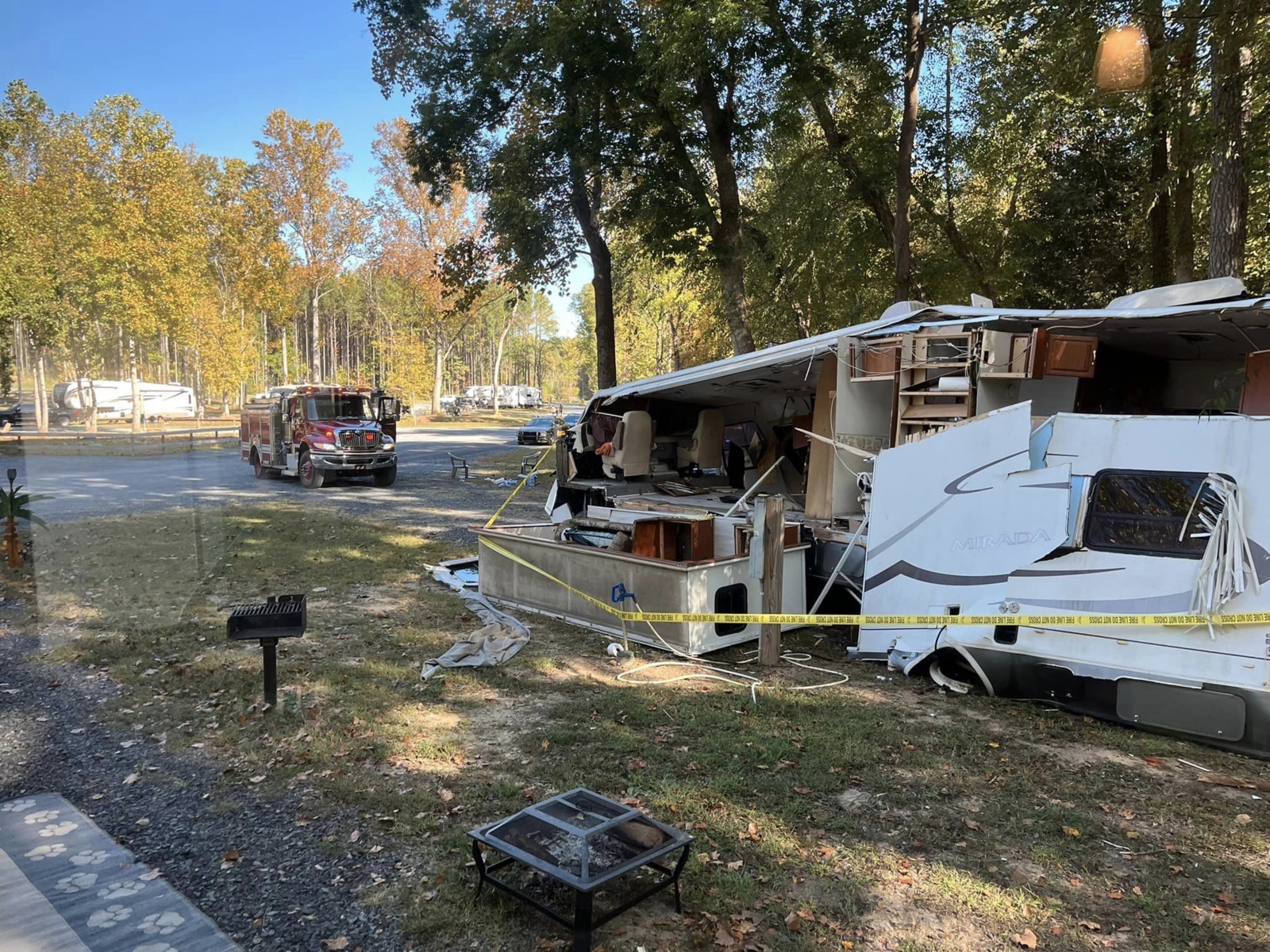
In this video, we talk about a post that went viral involving an LP gas leak. Two campers were not aware that their RV had an LP gas leak. One of them lit the propane stove to cook breakfast, and it caused the RV to explode and catch on fire.

Check out the post and our discussion:

RV propane detector basics

An RV propane detector is meant to alert you to a possible propane leak. These propane detectors do have an expiration date and, on average, their expiration date is five years. Additionally, these detectors are typically wired into the RV’s 12-volt power supply. Should your power supply go below 12 volts, that alarm will sound as a safety mechanism because it needs to have the right power supply to properly detect LP. If your alarm sounds, it could very well be that the alarm has expired or you don’t have ample power supply. Or you could have an LP gas leak.

Propane itself does not contain odor or color. This is why gas companies add mercaptan to give it a distinctive smell. But a propane leak may be slow enough that it might not produce a strong enough odor to be detected early, which is why a functioning detector is a must! Additionally, should you be sleeping, the smell of mercaptan will most likely not wake you. Even though propane isn’t highly toxic, if the propane leak is large enough it can suffocate you as it forces oxygen out of the unit.

Propane detectors are typically installed low on your wall because propane is heavier than air. When the detector senses a certain concentration of propane, it sounds an audible alarm as well as a light indicator alerting you to possible danger.

What should you do if your LP detector alarms?

As mentioned earlier, your detector could alarm due to low voltage or the detector is expired. Even so, propane is a combustible gas so you need to be cautious! Should your detector alarm, turn off the propane supply before you do anything. The shut-off valve is located on the LP tank. Turn the valve clockwise (“righty-tighty”) to turn off the propane supply. Have everyone vacate the RV, including pets. On your way out of the RV, open some windows to help ventilate the unit.

True alarm

Should the alarm shut off after you have turned off the LP supply and ventilated the unit, this indicates you truly do have an LP gas leak and it needs to be located and repaired as a priority. The leak could be something simple, such as a stovetop burner didn’t get completely turned off, or the knob got bumped allowing propane to leak.

If your stovetop knobs are all in the complete off position, it could be other RV appliances (refrigerator, water heater, furnace) failing to ignite, also allowing propane to continue to escape.

Lastly, your unit goes through an earthquake going down the road. If you are not comfortable working on propane appliances and/or the leak isn’t somewhere obvious, it’s time to seek assistance from your certified RV repair facility.

False alarm

However, if the alarm is still chirping after 30 minutes of having the LP supply turned off and windows opened, it’s possible you have a false alarm. Check the expiration date on your detector, and check your battery voltage.

Don’t pull a “Tim Allen”

My wife is constantly on my case and often reminds me, “Don’t pull a Tim Allen” whenever I am tempted to take on a project that I am not skilled in. We hope this article serves as your reminder to take your LP gas system seriously. Ensure your batteries are in good condition to provide the right power supply to your detector. Set a calendar reminder when your detector is close to expiring. And let the experts step in when a propane leak isn’t obvious. The risk simply isn’t worth it!

LP detectors and more

Do you need a new LP detector? They are available in many different shapes, sizes, mountings and colors. Please measure and find the right fit for your needs below.

More from Dustin

Read more of Dustin’s articles here.

Dustin owns and operates California RV Specialists, an independent RV repair shop located in Lodi, CA. He thrives on sharing his knowledge and enthusiasm of RV repair and maintenance with his team, customers, and virtual friends.

Be sure to check out his YouTube channel where he shares what’s going on in the shop and the product offerings in the store. Dustin is also very active on Facebook. Join his group, RV Repairs and Tips – What’s in the shop!

RELATED

##RVT1215

How to keep your home safe while you are away

7

By Dave Helgeson
We all take steps to keep ourselves and our RV safe while on the road. But how many take extra steps to deter burglars from our homes while on the road?

Pages have been written here and elsewhere about staying safe from crime while RVing.  However, little has been written about how to deter burglars from burglarizing your home in your absence while RVing. Full-timers no longer have to worry about a sticks-and-bricks house, but what about the rest of us? Personally, my home has been burglarized twice over the past 40 years while my wife and I have been traveling. After the last burglary, I studied up and doubled down on the steps I take to deter burglars from my home. So far, so good.

Here is what I learned and the steps I take to deter burglars:

Monitor the premises

Having a set of eyes or more on your home lets potential burglars know it is being watched.

• Let trusted neighbors know you will be departing on an RV trip and ask them to keep an eye on your place. You might also ask them to pick up any papers lying in your driveway along with removing any door hangers placed by solicitors. By making your home look lived in you will deter burglars from targeting your house.

• Make use of the Vacation Home Watch service if offered by local law enforcement. Seeing a marked law enforcement vehicle randomly stopping at your home from time to time is a sure way to deter burglars.

Vacation Home Watch Flyer
Make use of vacation house check programs

• Install cameras inside and outside of your home that you can monitor via your smartphone while you are away. Be sure and look up the non-911 number for the law enforcement agency in your hometown. Add it to the contact list in your cell phone. If you ever do spot someone burglarizing your home via a camera while enjoying a distant point in your RV, calling 911 isn’t going to be very effective. That’s because it will connect to law enforcement in the vicinity of your campsite, not your hometown.

• Having a housesitter is the ultimate set of eyes to have on your home, if you have a trusted friend or relative that is available to do so.

Make some noise

Crime experts agree that noise is one of the best ways to deter burglars as they don’t want to draw attention to themselves.

• Install audio annunciators around the exterior of your home. The audible tone will tell would-be burglars that their presence on your property has been detected. They have no idea what the annunciators are connected to. Therefore, they have no idea if it has alerted the police, a neighbor, etc.

• Install vibration alarms on your windows and doors. These devices will deter burglars by emitting a loud, shrill siren when someone bangs on a window or door.

• Use a Wireless Motion-Sensing Control Transmitter with an Outlet Receiver to activate source noise. When motion is detected by the sensing control outside your home it will activate the outlet receiver turning on a radio or other 120V device of your choosing in your home. The sudden and unexpected noise will deter burglars as they will question if someone is home.

Varying light sources to deter burglars

Lights can be used to indicate your home is occupied and expose burglars to others.

• Set lights on timers to mimic your normal home routine.

• Use a fake TV to simulate the flickering light of the real thing as it bounces off walls in the house or is seen through window shades. Would-be burglars will think the home is occupied and move on to a different target.

• Install real or fake security cameras with indicator lights on the exterior of your home to deter burglars. Knowing/thinking the house is monitored will likely send would-be burglars to an easier payday.

Security Camera
Deter burglars with the use of security cameras

• As suggested for noise, above, use a Wireless Motion-Sensing Control Transmitter with an Outlet Receiver to activate an interior light source. When motion is detected by the sensing control outside your home, it will activate the outlet receiver, turning on a lamp or other 120V light source of your choosing in your home. While burglars might expect an exterior motion detector that activates an exterior flood lamp, seeing an unexpected light source come on within the home, as if the resident turned it on, will likely change their plans. Roaming neighborhood cats will also randomly trip the sensor, keeping anyone watching the house guessing if the occupants are home or not.

• Install motion lights that will illuminate exterior doors and other vulnerable parts of your home when motion is detected. Being suddenly lit up and exposed to the neighbors will deter burglars from proceeding.

Don’t advertise

Criminals are opportunists. Don’t make their job easier by announcing you are not home.

• Don’t share your real-time location on social media while away from home in your RV. While it’s tempting to post pictures of your awesome campsite and the beautiful scenery you are enjoying, it could let a burglar know you are not currently at home and not likely to return soon. With all the information on the internet, it only takes a few clicks for a criminal to determine where you live. Even if you have a housesitter, why invite trouble? Save posting pictures until you return home. Friends and family will enjoy them just as much then.

Deter burglars by not sharing on social media
Don’t share that you are not at home

• Loose lips sink ships! Only tell people you trust that you are leaving on a trip and do so in private. Who knows who else is listening to your conversation while you are standing in line at the grocery store, getting your hair done, etc.?

• Question if you should suspend services. When you suspend a service like garbage collection, you are not only telling those in your neighborhood that you aren’t home, but also the person responding to your request at the garbage service office, the garbage truck driver, internet hackers and whoever else they care to share the information with.

Reinforce points of entrance

Burglars like homes that they can easily gain access to. Deter burglars by reinforcing entry points with tried-and-true methods.

• Bar doors and windows to make it more difficult for a burglar to gain access to your home.

Barred door
Bar entry doors from the outside to deter burglars from kicking them in

• Install deep throw deadbolts and reinforced strike plates on all entry doors to make your doors harder to force open.

Deter burglars by implementing some or all of these items. The peace of mind knowing that your home is secure will allow you to more fully enjoy your RV and destination.

RELATED

##RVT1215

RV awnings are reminiscent of a simpler time in America

When RVers think of awnings, most think of a sheltered area outside their RV’s front door. It’s a place to enjoy fresh air without getting soaked from the rain or burned by the sun. For many RVers, it’s also an extra room in an otherwise small living space. Some RVers go to great lengths to furnish their “awning room” with chairs, tables, a rug — all to make the space more inviting.

What this area is — if you boil it down — is the equivalent of the old front porch.

Before home air conditioning, Americans spent summer afternoons and evenings on their front porches watching the world pass by. Sitting in comfy chairs, sometimes rocking chairs, they idled away the time, waiting for their homes to cool. Neighbors, even strangers, would pass by. Some became friends. “Join us for iced tea,” the homeowners might say. They would share stories about their families and neighbors. For better or (occasionally) worse, everybody knew everyone else’s business.

Parents watched neighbors’ children grow, and the kids came to know and respect their elders. It made for a strong sense of community, where people not only knew their neighbors but watched out for them.

I remember visiting with a friend’s grandmother in her home in a tiny town in Missouri, where every house had a front porch and everyone knew everyone else. “We never lock our doors,” the woman told me. “When I go away, I come home with pie in the refrigerator that wasn’t there when I left.”

Alas, front porches began to disappear when home air conditioning came along, and the pace quickened with television and other comforts to keep people inside. Suburbs with their fenced backyards provided the final blow. It became easy, as it is today, to live for years without ever knowing one’s neighbors, much less caring about them.

Homes with front porches in Hershey, Pennsylvania.

AND THIS IS WHY I SAY America needs more awnings. I’m referring to RV awnings, of course. Anyone who has taken an evening walk through a campground or RV park has noticed their neighbors relaxing beneath their awnings, inviting conversation, much as people did in the old days on their front porches. “Nice RV you have there,” one might say to another. “What kind of dog is that?” another might ask. “Oh, I see you’re from Ohio. We are, too!” Etc.

And so, just as it is with the old front porch, friendships begin. Most don’t amount to anything, but occasionally a bond is made, and a friendship may last for years — all because of an awning, some idle time, and a desire to be sociable.

If you have made friends with RVers you met beneath their awning or your own, please leave a comment and tell us about it.

MORE ESSAYS BY CHUCK:

RVT1215

Don’t pay for more solar than you need, part two

1

This is the second in a series of articles on RV solar system sizing. Before you continue, make sure you read part one to discover just how much power and energy you need.

Why solar needs vary, and what to know before you buy

The right answer to the question of how much power and energy you need is “it depends.” How much solar (and battery) capacity you need in an RV varies widely depending on how and where you use your rig, which is very difficult to estimate accurately, but relatively easy to measure with a current shunt. Depending on how and where you use your rig, you may not need to install any solar panels or add any other gear. If you want to use your rig for extended periods off-grid, you’ll need to know how much and what kind of electrical upgrades to make.

You should find out how much power and energy you will need, regardless of whether you will hire someone else to install your solar system or you plan to install some or all of it yourself. Otherwise, you may end up paying a lot more than you need to, or not have enough power or energy when you use your rig off-grid. Accurate RV solar system sizing prevents these costly mistakes.

Using a current shunt to measure power

The first article covered collecting actual usage data to determine how much 12-volt DC power and energy you will need from your house batteries to run the various items in your RV. This is achieved by adding a device called a current shunt to your house battery and measuring how much power each item requires. This is done by turning on all the 12-volt electrical loads (12DC-powered devices) one at a time and noting how much power each item takes to operate.

You will also need to determine how much energy capacity your existing house batteries can hold, usually specified in Ampere-hours (Ah), usually at 12 volts DC. Many RVs come from the factory with a single 100Ah 12V lead-acid battery (or two 6V batteries connected in series to provide 12V).

Understanding battery capacity and energy

The energy capacity is the product of the voltage and Ah capacity: Watt-hours=12*Ah. So a 12V battery rated at 100Ah will store a maximum of 12*100 = 1200 Wh or 1.2kWh. If it’s a lead-acid battery, you only want to use half that, or 600Wh. Over a 24-hour period, that’s only 600Wh/24 hours = 25 Watts average—not much power. That may be about what your rig uses when most everything is turned off!

Testing battery usage without shore power

The next step in RV solar system sizing is to go to a place where you have 120VAC shore power available (120 volts alternating current).

First, plug into the power pedestal or other source and ensure your house batteries are fully charged. Then turn off the circuit breaker and unplug your RV, and make a note of the time. Then use your rig as you normally would when using it in a location where you don’t have shore power, keeping track of the amount of power and charge in your house batteries.

If you have traditional lead-acid batteries, don’t let the batteries discharge below 50% to avoid degrading their long-term life and capacity. Those are either liquid sulfuric acid batteries that need to be refilled with distilled water occasionally or AGM (Absorbed Glass Mat, no maintenance) batteries.

If you have lithium batteries, also called LFP, or LiFePO4 (Lithium Iron Phosphate), you can let them drain down to 10-20% of full capacity or lower with no adverse effects over a roughly 10-year service life.

There are some very different scenarios for using your electrical devices when disconnected from shore power. It might only be for brief stops on a travel day between parks with full hookups. Or you might be leaving your RV parked unoccupied for a while, or boondocking for a night along the way. Or it might be an all-out, off-the-grid stay for multiple days on public lands.

Track energy use over time

Once you have recorded the amount of energy used over a typical usage period in each case, you can plug in your shore power cord and turn on the corresponding circuit breaker to restore the charge to your house batteries.

Estimate your runtime and battery limits

You will also find out how long you will be able to last on battery power only using the shunt’s display or phone app to see how much energy is left in your existing battery. Lead-acid batteries that come with most RVs should not be discharged below 50% of their rated capacity or their service life (typically 3-5 years) will be impaired and require early replacement.

Planning the right-sized solar system

Once you have that info, it will be easy to figure out how many solar panels, what kind of battery, and how much battery capacity you will need for your DC 12V system.

The next part will address the calculations you need to perform to determine how much 12V DC power you need. Later parts will discuss the AC (120-volt) power system in your RV to help you decide what, if anything, you want to use when you aren’t connected to shore power.

What’s coming next?

In the next installment, we’ll determine the size (and cost) of the components required to meet your needs for the way you use your RV.

Terms defined:

Battery capacity is rated in Ampere-hours (Ah), usually how many hours the battery will last at a very low current such as 1 Amp.

Battery energy capacity in Watt-hours (Wh) is the product of Ah*Voltage. A typical 100Ah 12V house battery stores 1200Wh = 1.2kWh, at most.

RELATED

Six new RV accessories everyone will want in 2025

For RV owners, the new model year always brings plenty of gear upgrades and accessories. This season, the focus is on smarter tech, stronger protection, and more convenience inside and out.

In today’s video, Ross from RV Tips & Travels shares six innovative RV accessories that promise to solve real-world pain points—no fluff, just practical value.

Best new RV accessories for 2025

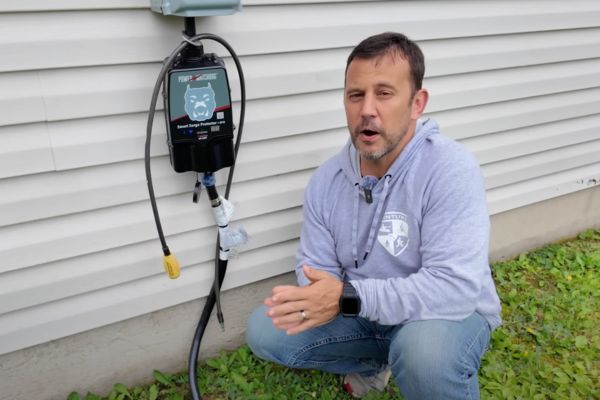
#1 Hughes Autoformer Power Watchdog Gen Two

The latest Power Watchdog Gen Two from Hughes Autoformer brings several must-have upgrades for protecting your RV’s electrical system. The Gen Two moves the plug beneath a sturdy door, shielding it from rain and weather. There’s even a built-in light, making late-night hookups easy. The unit now allows you to fasten or lock the door, adding peace of mind in unfamiliar campgrounds.

Both surge protector and EMS (emergency power off) models are available. Although Hughes calls these “surge protectors with EPO,” they effectively function as full EMS units. Gen Two supports both Bluetooth and, new for this generation, Wi-Fi connectivity. That means owners can monitor power, disconnect from the pedestal, and dim the indicator light remotely through the phone app—even if they’re miles away. This app also includes a resettable energy meter for tracking power usage at metered sites.

#2 Camco EvoFlex 2 Drinking Water Safe Hose

A fresh take on RV water hoses, the Camco EvoFlex 2 offers both safety and space-saving design. Key features include:

  • NSF and ANSI certified
  • BPA and lead-free
  • Collapsible and lightweight for easy storage
  • Full 5/8″ inner diameter, so water flow matches standard hoses
  • Includes a breathable storage bag
  • Available in multiple sizes

Past collapsible hoses often had small diameters or weren’t safe for drinking. This new design solves both issues for a hassle-free and healthy setup.

#3 Camco Rhino Sewer Adapter Pro Drain Lock

Managing the RV sewer hose can be a challenge, especially when campground drains vary. The Camco Rhino Sewer Adapter Pro Drain Lock locks the hose into the drain, reducing spills and movement. The Rhino Adapter fits most 3″, 3.5″, and 4″ NPT threads and a 3″ slip fitting. If the drain doesn’t match, it’s smart to keep a clear elbow on hand for full compatibility.

#4 Micro-Air EasyTouch RV Thermostat Update

Keeping the RV comfortable is easier with the Micro-Air EasyTouch Thermostat. The latest update brings:

• Full touchscreen interface

• Bluetooth and Wi-Fi remote monitoring

• Set both heating and cooling to switch as needed

• Alerts if the temperature drifts from safe settings

• Screen can be always lit or fully dark, perfect for bedroom use

Programming takes the worry out of monitoring temperature, especially for pet owners. The new model also fits single-zone GE thermostats, broadening compatibility.

#5 Blu Technology 4-Stage UVC Water Filter System

Clean drinking water matters on the road. The new Blu Technology 4-Stage UVC Water Filter System uses UVC light—a method trusted in medical and food industries—to fight a wide range of bacteria and viruses. Owners can purchase the full kit or add the UVC upgrade to an existing Blu Tech system by contacting support.

#6 Haloview Backup Camera and Tire Pressure Monitoring System (TPMS)

The new Haloview BT7 system combines a backup camera with tire pressure monitoring, both controlled by a seven-inch touchscreen monitor. This single interface declutters the dash and supports up to four cameras, including blind spot and dash cams. The system records dash cam video and supports an antenna extension for large rigs.

Practical benefits of app-controlled RV accessories

App-controlled RV gear offers more than convenience—it makes RV life easier, less stressful, and safer:

• Turn off power or monitor surge protectors remotely

• Receive alerts about temperature or power issues, whether in the next campsite or across the country

• Dim indicator lights for better sleep

• Automate climate control and monitor it from anywhere

Pet owners, night owls, and road warriors all benefit from these improvements.

These upgraded RV essentials focus on smarter tech, safety, and comfort. With new solutions for power, water, climate, and security, RVers get more control and fewer hassles at home or on the road. For those upgrading their rigs in 2025, these accessories are worth a closer look. Explore the links above and get ready for an easier next camping season.

YOU’LL ALSO ENJOY…

RVT1215

Sidewall bulge equals bad tire? Probably not

Here are comments from Dave on an RV forum, regarding tire sidewall bulge:

Do not get bullied by either the RV manufacturer or the tire manufacturer. We had a McKenzie trailer. When new, every place that the cords overlapped was a depression. We stopped for gas in Needles, CA. The gas station attendant had this horrified look on his face and showed us bulges on 3 of the 4 tires. He also showed us a pile of blown tires out back. We bought 4 tires with the next higher load rating. We took the bad tires with us on our whole vacation.

After we got home, I tried to get warranty from Monaco Coach (parent company) shortly before they folded. They do not do warranty on the tires. Contacted the tire manufacturer. The U.S. customer service manager stated that where the cords overlapped was the strongest part of the tire (BS). I told him that he was wrong.

Per my years of experience with custom industrial lamination equipment at HP, the rubber surface where the cords overlapped looked like very fine sandpaper. This is what rubber looks like when it is repeatedly compressed and stretched. By the time the rubber surface looks like this, the rubber gets soft and will pull away from the cords, form the bulge, and then blow up.

I wrote up what happened, who I talked with, and researched the management of the company. With my person’s email, I looked on the website under investor relations, sent what happened and technical description to North American and International heads of Customer Service.

I got no reply, but the guy I talked to called me two days later and told me he called a local dealer to get pricing and they were sending me a check for full retail on the four tires. And no, no one else had contacted him.

Difference between tire bulge and tire depression

I found Dave’s comments interesting but rather confusing and misleading. Pictures of the tires would be a big help as many times people, even gas station attendants, have a hard time telling the difference between a bulge and a depression. Tires are a pressure vessel and not an “industrial laminate,” so his experience seems to have misled him

There is a big difference between a “bulge”, that sticks outward from the rest of the tire sidewall, and a “depression”, that goes inward toward the air chamber.

Most radial tires will have one or more sidewall depressions. These occur due to the small overlap of the body cord ply that occurs when the tire is being “built”. These depressions would actually be at the location of more cords, which prevent the inflation air pressure from bulging a tire outward when inflated.

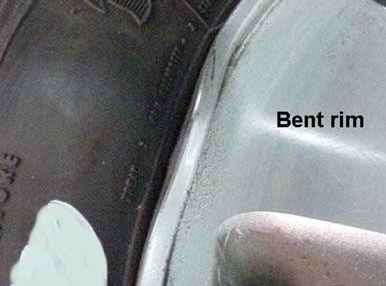
A bulge, as seen in these pictures, would be the result of an impact where the body cords were broken.

Bent rim

In these cases the tire clearly hit something and the body cords are broken. This condition is not warranted unless a “Road Hazard” warranty was purchased.

I have covered impact breaks, with pictures, that I discovered on my personal car and on my wife’s car. I posted the results of the forensic tire inspection with pictures on my RV Tire Safety.net blog.

Sometimes, dismounting a tire and inspecting the interior can provide the extra evidence to confirm impact or body splice.

Side comment: Any “tire store” that can’t properly identify the impact or splice should be avoided as they apparently have zero training in inspecting tires, such as the “gas station attendant” mentioned above.

Roger Marble

If you have tire questions, check out Roger’s Blog as well as his posts on RVtravel.com. There are hundreds of posts covering everything to do with tires.

If you still have a question for Roger after searching the above posts, send your inquiries to him using the form below.

Name
Drag & Drop Files, Choose Files to Upload

MORE ON TIRE SIDEWALL BULGES

RVT1215