Home Blog Page 37

20 rare vintage RVs most people have never seen

0

By Cheri Sicard
Homes on wheels feel modern, but the idea started more than a century ago. Long before interstates and packed campgrounds, early travelers dealt with dirt roads, scarce fuel, and few places to stay, so some builders turned cars and trucks into tiny rolling homes. That idea grew fast. By the early 1900s, some rigs already had beds, sinks, storage, and even toilets.

The video at the end of this post from Vintage Vehicles highlights 20 rare vintage RVs that most travelers today have never seen.

The first motorhomes were built for people with money

The 1910 Pierce-Arrow Touring Landau is one of the earliest true motorhomes. Built on a Model 66 chassis with a 6-cylinder engine, it packed in a folding sink, pressurized water tank, bed conversion, chamber pot, driver phone, and roof storage, but its $8,000 price kept it in wealthy hands.

By 1915, Roland R. Conklin pushed the idea much further with the Conklin Gypsy Van. Built on a 3-ton Packard chassis, it had a kitchen, Pullman-style berths, a folding table, a hidden shower bath, and even a rooftop garden.

Aircraft ideas and giant show rigs changed the look

Glenn Curtiss brought aviation thinking to the 1930 Curtiss Aerocar Land Yacht. It used a light tubular frame and had an airplane-style nose with a compass, barometer, and altimeter, plus a kitchen, flush toilet, desk, and wicker chairs.

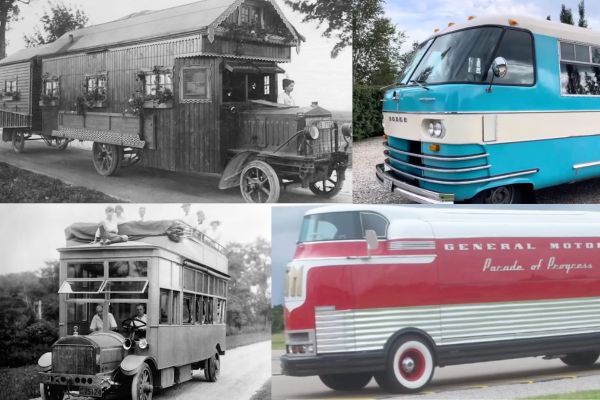
The 1940 GM Futureliner went in a different direction. Harley Earl designed it for GM’s Parade of Progress, and each huge coach carried display stages and light towers inside its red, white, and chrome body.

Then the 1947 Westcraft Westwood brought travel back to families with its canned-ham shape, wood-and-aluminum build, kitchenette, and small bath.

Postwar trailers made road travel feel easier

The late 1940s and 1950s filled campgrounds with smarter, lighter trailers. The 1948 Flexible Clipper started life as a bus, then became a roomy motorhome with a kitchen, bath, beds, generator, and available air conditioning. The 1950 Spartan Manor used aircraft-style aluminum and richer interiors, while the 1953 Airstream Flying Cloud paired polished aluminum with strong construction and a $2,795 price.

Then came the 1954 Holiday Rambler with its aluminum frame and better insulation; the 1956 Shasta Airflyte with its rear wings; and the rare 1957 L-Ray with cork floors, bamboo counters, and a full shower. By 1961, Winnebago entered with a more affordable motorhome on a Ford chassis.

The 1960s pushed motorhomes into a new phase

The 1962 Airstream Tradewind kept the trailer side strong with a 24-foot aluminum body, full kitchenette, and shower. On the motorhome side, Ray Frank’s 1963 Dodge Travco used an all-fiberglass body and a Chrysler 318 V8, helping define the mass-produced motorhome.

The 1966 Clark Cortez added front-wheel drive and unitized steel construction, though its slant-6 engine struggled with the weight. GM’s motorhome project, developed in the late 1960s and sold for 1973, brought a lower floor, air suspension, panoramic windows, and a more car-like ride.

By the 1970s, comfort had become the main selling point

The 1973 FMC 2900R came from a company better known for military and farm gear, yet it offered a rear 440 V8, big fuel and water tanks, dual air conditioning, and flexible sleeping layouts.

Airstream answered the budget side with the 1974 Argosy, a painted aluminum trailer that kept the familiar shape at a lower price.

Near the top of the luxury ladder sat the 1978 Blue Bird Wanderlodge, built on a school bus chassis with a Caterpillar diesel and optional washer and dryer.

The 1979 Itasca Sun Cruiser rounded out the list with a Chevrolet chassis, full kitchen, bath, furnace, and optional roof air.

These old RVs show how fast mobile living grew, from handmade luxury cars to serious family coaches. The biggest surprise is how many modern ideas, such as kitchens, baths, storage, insulation, and better ride quality, were already in place decades ago.

YOU MIGHT ALSO LIKE:

RVDT2895

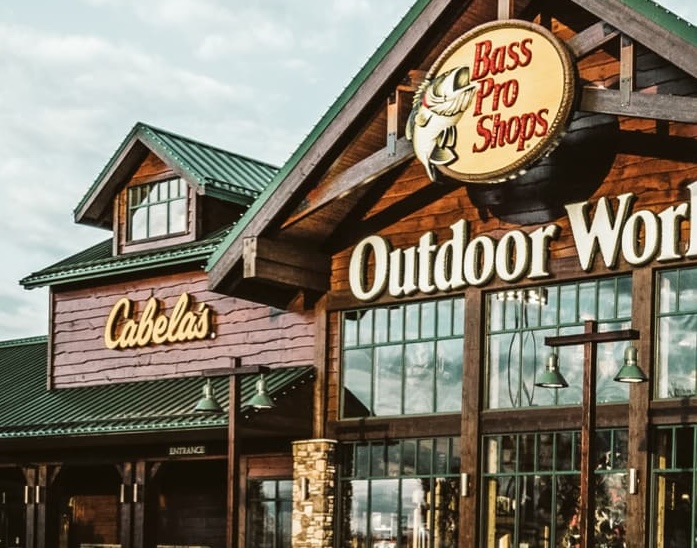
Have you ever stayed overnight in a Cabela’s parking lot with your RV?

14

Every Cabela’s store has a different policy about overnight parking, but many of them allow or even encourage it. Have you stayed overnight with your RV in a Cabela’s parking lot within the last year? If so, what was your experience like?

While Cabela’s doesn’t offer any hookups or potable water, some of the stores do have dump stations or water stations, so you might not be completely without amenities.

Many RVers say they feel welcome at Cabela’s, especially because of the wide parking areas and well-lit lots. Some locations even have designated RV parking sections, giving you a bit of peace of mind when pulling in for the night. Others note that staff were friendly and didn’t mind a quick overnight stop, especially if you made a purchase or asked permission.

That said, not every experience is perfect. A few travelers have reported noise from nearby highways or early-morning deliveries. Some locations may also have stricter local ordinances or security patrols that limit or prohibit overnight stays. That’s why it’s always smart to call ahead or check online reviews before banking on a night there.

Still, staying at Cabela’s can be a great fallback when you’re between campgrounds or just need a quick overnight rest. The combination of large lots, potential amenities, and the ability to restock on gear or snacks makes it a convenient option for road-weary RVers.

There are more than 180 Cabela’s stores across the U.S. and Canada, which means there’s a good chance you’re near one right now. Take a look at their store locator map if you want somewhere free to stay overnight.

RELATED

RVDT2895

When do I release my RV slide-out button?

By Dustin Simpson
Back in the day, Dave Solberg and I did a weekly livestream where RVers could come on and ask us questions. Below is an excerpt from one of those shows where one of our viewers wanted to know when he should release his RV slide-out button.

Question: When extending or retracting slide-outs, when should I release the button? I usually count three seconds after the slides are fully extended or retracted before releasing the button. Am I damaging the hydraulic motor holding for that long?

Answer: Unfortunately, there is not just one answer to this question. There are several different slide-out systems and they all function differently. For the most part, hydraulic slide-out systems should be extended or retracted 95 percent of the way and then “bumped” the rest of the way back in or out to rest into place.

On the contrary, if you have a Schwintek slide-out system, you will want to hold the button until the room comes out and the motor stops.

Do you need more information on your slide-out system? I have linked several resources for you. They can help you identify the slide-out system you have as well as provide you with information regarding proper use and maintenance required for your system.

Lippert Slide-Outs

HWH Slide-Outs

Accu-Slide Slide-Outs

More from Dustin

Read more of Dustin’s articles here.

Dustin owns and operates California RV Specialists, an independent RV repair shop located in Lodi, CA. He thrives on sharing his knowledge and enthusiasm of RV repair and maintenance with his team, customers, and virtual friends.

Be sure to check out his YouTube channel where he shares what’s going on in the shop and the product offerings in the store. Dustin is also very active on Facebook. Join his group, RV Repairs and Tips – What’s in the shop!

RELATED

RVDT2895

130 pounds of dog poop pulled from two Colorado trails, raising serious concerns

14

A recent local report shared by Colorado’s Summit Daily said volunteers pulled more than 130 pounds of dog waste off just two trails during two cleanup days.

That is the kind of number that should stop any pet owner in their tracks. It shows how fast “just one little mess” turns into a trail problem that everybody else has to deal with.

Harmless?

Dog poop is not harmless. Pet waste can bring harmful bacteria into water sources and spread disease to wildlife. And that’s not all! The CDC reports that dog and cat waste can contain germs and parasites that affect people and animals.

In other words, the pile you leave behind is not just ugly. It can become a contamination problem for the trail, the creek, the lake, and the next family walking through.

The health risks go well beyond a bad smell. The CDC says toxocariasis can spread through contact with infected dog or cat feces, and pet waste can also involve other illnesses linked to animal germs.

Public health agencies regularly warn that dog waste may carry bacteria and parasites such as E. coli, Salmonella, Giardia, roundworms, hookworms, and other organisms that can survive long enough in soil or water to matter. That puts hikers, kids, other dogs, and even campsite grass at risk when waste is not picked up and properly disposed of.

Wildlife gets hit, too. The U.S. Fish and Wildlife Service says dog feces is not natural fertilizer and can spread diseases and parasites to wildlife and people, while also polluting water sources. The problem is especially ugly on hiking trails because rain, runoff, and foot traffic can move waste into nearby habitat. That means the impact does not stay on the trail where it started. It spreads outward into the places RVers and hikers are supposed to be enjoying.

Trail managers are also noticing that bad dog behavior can lead to tighter rules. The National Park Service says visitors should bag pet waste and dispose of it properly.

The Bureau of Land Management says hikers with dogs need to keep them under control and check local leash rules. In one real-world example, a park cut off trail access for dogs after officials said owners were leaving poop bags behind and not leashing their pets. Once land managers see repeated messes, they are far more likely to respond with restrictions.

More consequences

There are real consequences for pet owners who ignore the rules. Washington County in Colorado says violations involving leash, license, or dog-waste codes can bring a ticket with a maximum fine of $500.

Other parks and public lands require immediate pickup, proper disposal, and leash control. Some will ask owners to remove troublesome pets or simply limit dog access when the behavior becomes a pattern.

The point is simple: if you do not clean up after your dog, you are not just being rude. You may be breaking local rules and helping push trails toward stricter dog policies.

Dispose properly

abandoned poop bag NPS image
Photo credit: NPS

For RVers, this is one of those travel habits that should never be negotiable. Carry more bags than you think you need. Pick up dog feces immediately. Pack it out if there is no trash can. Do not hang a bag on a branch, drop it beside the trail, or assume someone else will handle it later.

The people who volunteer to clean up after careless pet owners should not have to keep rescuing our favorite trails one pile at a time. If you love your dog and love hiking, then act like it: Pick up after your dog every single time.

RELATED

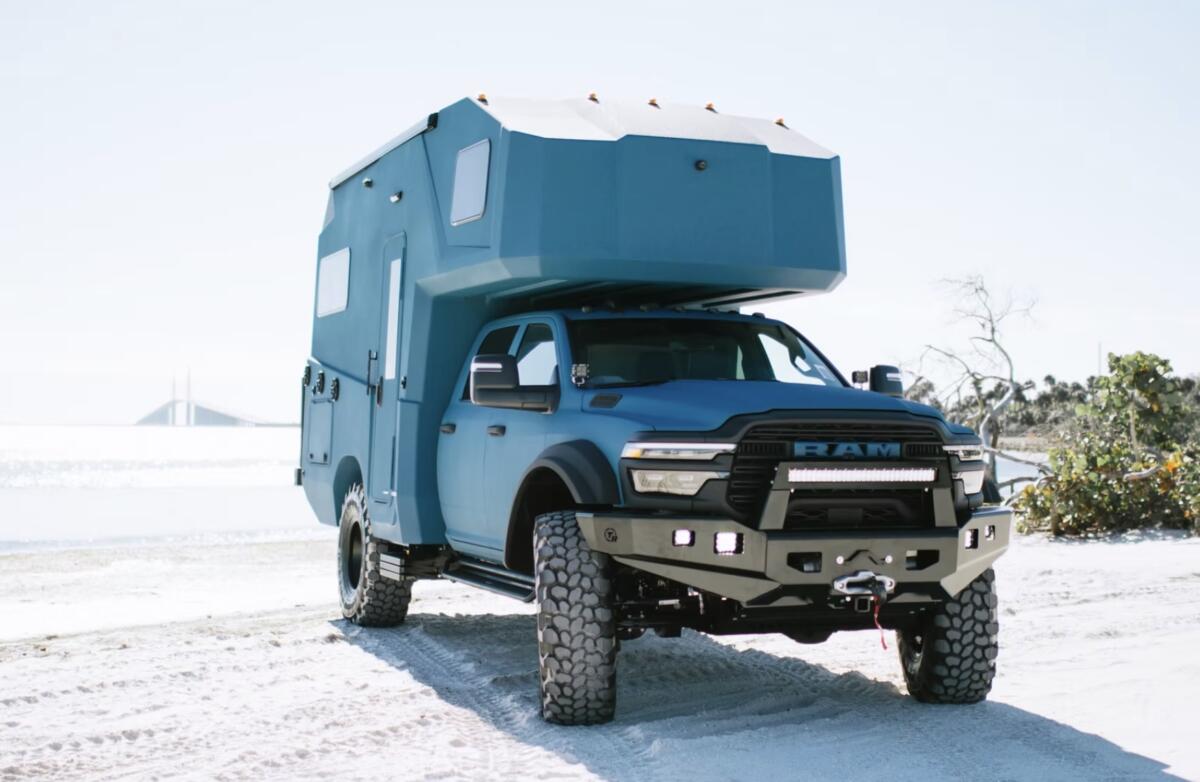
First look at the 2026 27North TR27 Trekker on Ram 5500

Million-dollar expedition rigs have owned this space for years, so anything new gets judged fast. At the 2026 Florida RV SuperShow, Patrick Botticelli of New Jersey Outdoor Adventures found a truck camper that looks ready for that test and he gives us a tour in the video at the end of this post. The 27North TR27 Trekker is a Ram 5500 camper conversion with real off-grid hardware, heavy-duty running gear, and a cabin that feels far more custom than basic.

A Ram 5500 build that looks ready to leave the pavement

The TR27 starts with a Ram 5500 chassis, a 6.7L Cummins diesel, and a six-speed transmission. Outside, 27North gives it an “Adventure Skin” finish that wraps over the wheel wells and even the front logo area, so the whole truck has one tough, coated look.

Up front, the bumper carries a Warn winch, a light bar, and fog lamps. Rigid Industries ditch lights add more side visibility. It rides on 365/80 R20 tires mounted on Buckstop rims. LiquidSpring suspension and the lifted stance give it the ground clearance expected from an expedition truck.

The side details matter too. Arctic Tern windows “awning” outward, Go Rhino running boards help with entry, and a power step plus grab handle make the tall doorway easier to manage. This is also a single-rear-wheel setup, which is a better fit for off-road travel than a dually.

Big power, big water, and real towing numbers

The TR27 backs up the rugged look with strong off-grid specs. It carries three 5 kWh EcoFlow batteries for 15 kWh total, a 3600-watt inverter, roof solar, and extra ports for portable panels when parked in the shade. Side storage is insulated, and some compartments pass through from one side to the other.

Water and waste capacity are a big part of the story. Fresh water is 100 gallons, and gray capacity is 25 gallons. Service hookups include a 30-amp SmartPlug shore power inlet, city water, an outdoor shower, and tank flush fittings. It also uses a cassette toilet, which slides out for dumping and rolls by its handle.

At the rear, the truck gets integrated bumper lights, parking sensors, a full-size spare, seven-way trailer wiring, and space for auxiliary fuel. Towing is rated at 15,000 pounds, and GVWR is 19,600 pounds.

Inside, it feels more custom than camper

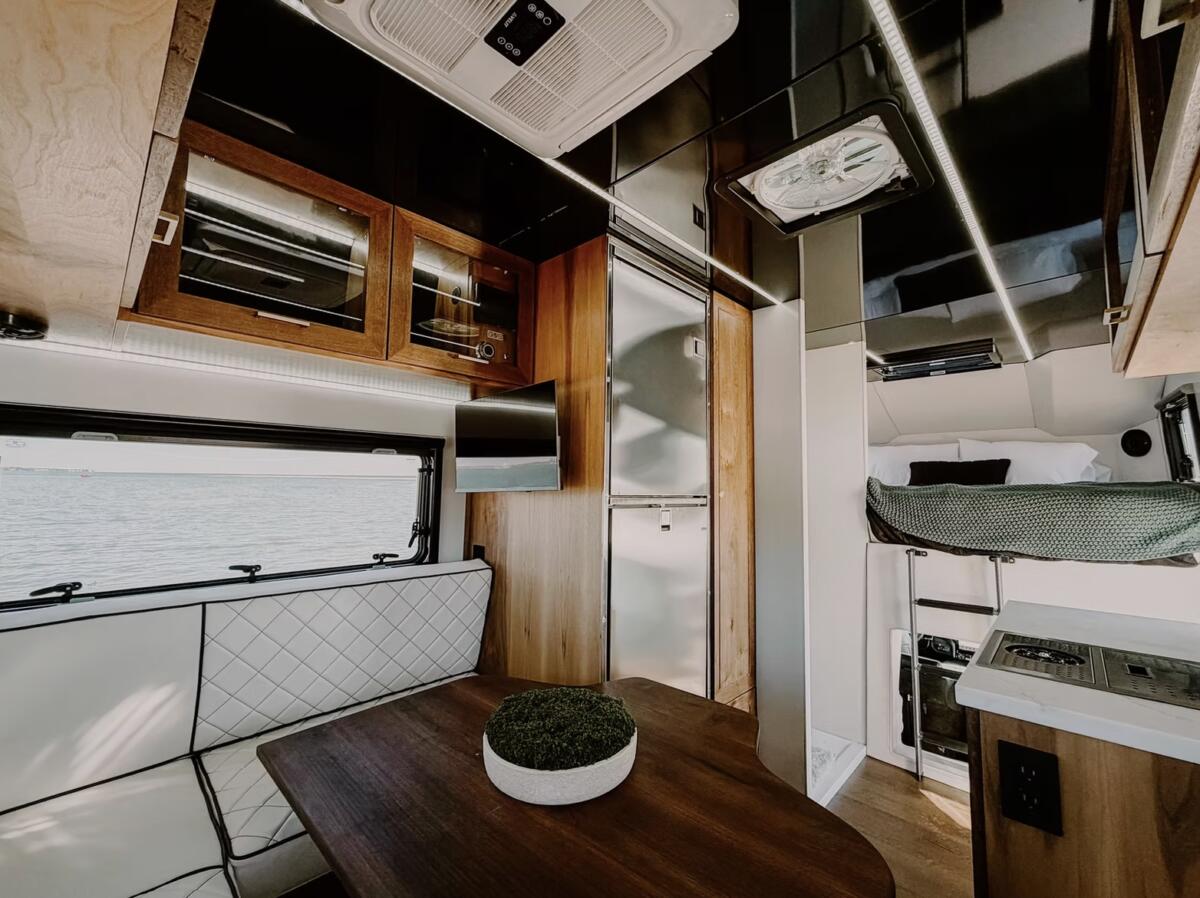
The entry steps lead into a cabin finished in solid hardwood, not laminate. There is an integrated screen door, plus switches for the awning, step, and lights right by the door.

Up front, the cab-over sleeping area becomes a king bed. It has speakers, windows with shades and bug screens, cup holders, outlets, USB ports, heat and A/C ducts, and a large skylight for light and airflow. The rear seat can also fold down for another sleeping spot.

The wet bath uses solid-surface walls, an integrated sink and shower, a roof fan, and a swivel cassette toilet that opens floor space when not in use.

The kitchen includes a convection microwave, induction cooktop, pull-out counter extension, cutting board, and a sink cover system that lifts up for washing and drying. Glass-panel hardwood cabinets are backlit, and the refrigerator is a 12V Isotherm 9-cubic-foot fridge and freezer.

In the back, a large lounge slides for access and TV viewing. The TV swivels, windows open up the view in multiple directions, and the seating converts into a queen bed. Other nice touches include a Wet Sounds audio system, EcoFlow controls, a Truma Combi, a Maxxair fan, and RVIA certification items like a smoke detector.

Screenshot

Final thoughts

The 2026 27North Trekker looks serious because the specs and layout match the styling. It has the hardware for rough travel, the battery and water capacity for time off-grid, and an interior that avoids the stripped-down feel common in some overland builds. For shoppers who want EarthRoamer-style capability without stepping into that price tier, this Ram 5500 conversion makes a strong case.

Learn more about the TR27 camper here. MSRP: $575,000.

MORE RV REVIEWS LIKE THIS:

RVDT2895

Gas prices jump nearly 30 cents in a week

20

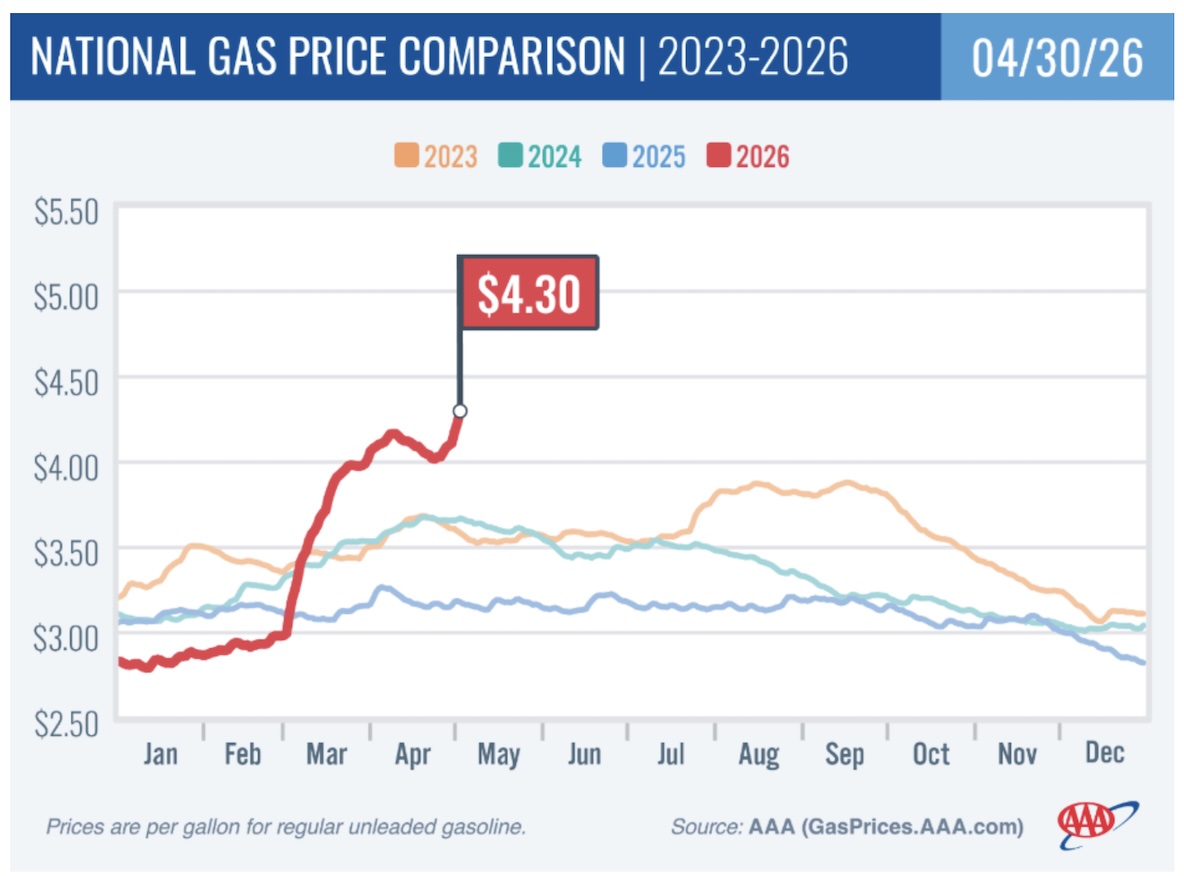
The cost of RVing took a big jump last week as the price of fuel rose in dramatic fashion, climbing nearly 30 cents per gallon, according to AAA. The sudden increase follows a spike in crude oil prices, driven by global supply concerns, refinery issues, and ongoing market uncertainty.

The national average for regular gasoline has risen quickly after weeks of relative stability, catching many drivers off guard. For RVers, the timing is especially challenging as spring travel ramps up and summer trips are being planned.

Analysts say the increase may not be short-lived. If crude oil prices remain elevated or supply disruptions continue, drivers could see additional increases at the pump in the coming weeks.

Gas-price-chart-4-30-26Seasonal demand typically rises this time of year as more Americans hit the road, which can further push prices higher.

For RV owners, even modest increases can add up fast. Larger motorhomes and tow vehicles often get lower fuel mileage, meaning a 30-cent jump can significantly raise the cost of a long trip.

Some RVers may adjust travel plans, shorten routes, or seek out closer destinations to manage expenses.

Experts recommend monitoring prices closely, using fuel apps to find lower-cost stations, and budgeting extra for fuel as part of trip planning this season.

RELATED

RVT1259b

Could AI become the next tool in an RVer’s repair kit?

As RV travel season ramps up, many owners are discovering the usual post-storage surprises: dead batteries, appliance glitches, mysterious warning lights, and slide-outs that suddenly sound “different.”

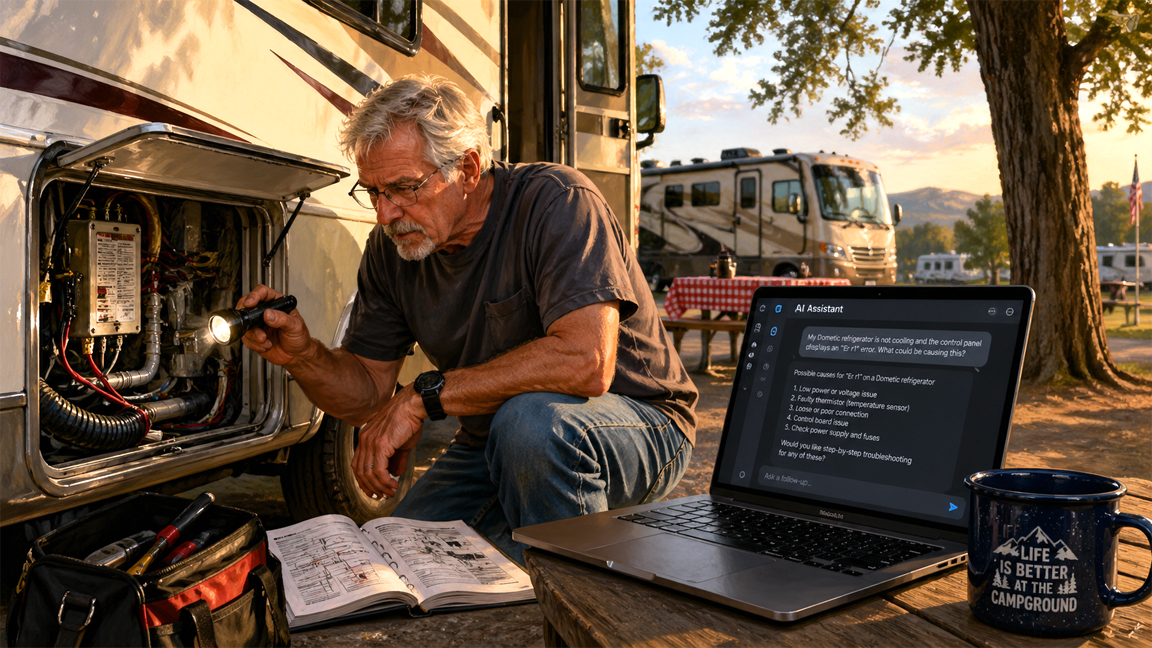
As RV repair backlogs continue frustrating owners—sometimes stretching for weeks during busy travel seasons—some RVers are beginning to experiment with artificial intelligence before making the service call. A recent article from The Happy Camper explored how AI-powered tools are beginning to enter parts of the RV service and support world, particularly as owners and companies look for ways to reduce repair bottlenecks and simplify troubleshooting.

Why some RVers are turning to AI for troubleshooting help

For years, RVers have turned to manuals, YouTube videos, owner forums, and mobile technicians for help diagnosing problems on the road. Now, some are experimenting with AI tools such as OpenAI’s ChatGPT, Google’s Gemini, and other systems to explain manuals, interpret warning messages, and suggest troubleshooting steps.

The appeal is easy to understand. Modern RVs combine plumbing, electrical systems, propane appliances, HVAC equipment, leveling systems, slide mechanisms, batteries, inverters, and automotive components into one rolling package. Even experienced owners sometimes struggle to pinpoint what failed, or whether a problem is serious enough to interrupt a trip.

RV repair delays are pushing owners toward new tools

At the same time, RV service delays remain a major frustration across the industry. In some areas, dealership appointments can take weeks to schedule, while mobile RV technicians may already be booked days in advance during the busy travel season.

That combination is pushing some RVers to experiment with AI as a kind of “first-stop” troubleshooting helper.

Industry observers say AI-assisted diagnostics are becoming increasingly common in the broader automotive repair world. Automotive service publications have reported growing interest in AI tools that help technicians interpret fault codes, organize repair information, and narrow likely causes before beginning repairs.

Some RV-focused AI troubleshooting services have also begun appearing online, including systems trained specifically around RV manuals and repair information.

AI may help explain confusing manuals and error codes

For many RVers, the most practical use may simply be translating confusing technical information into plain English.

A typical RV manual might say little more than “low-voltage protection activated” or display an unfamiliar error code with minimal explanation. AI tools can sometimes help owners better understand what that message may indicate and suggest logical next troubleshooting steps.

Simple questions such as:

  • “What does this refrigerator error code usually mean?”
  • “What could cause a slide-out to stop halfway?”
  • “Why would my RV battery drain overnight?”
  • “What should I check first?”

may produce useful starting points—provided owners verify the information carefully.

Experts warn AI can still generate dangerous misinformation

That does not mean the information is always correct.

Experts continue warning that AI systems can still produce inaccurate or completely fabricated information—sometimes delivered with convincing confidence. Researchers commonly refer to these errors as “hallucinations,” where AI generates incorrect answers that sound believable.

That can become dangerous when electrical systems, propane components, brakes, suspension parts, or structural repairs are involved.

Some automotive professionals who have tested consumer AI tools report mixed results. In certain situations, AI systems provided surprisingly useful troubleshooting guidance. In others, they delivered incomplete, oversimplified, or flat-out incorrect repair advice.

Why RV systems can be especially difficult for AI to diagnose

Unlike automobiles, many RVs contain equipment from dozens of different suppliers. Two rigs from the same manufacturer may use different refrigerators, leveling systems, water heaters, inverter setups, or battery configurations depending on model year and trim package.

That complexity can make accurate troubleshooting difficult even for experienced technicians.

There is also the problem of incomplete information. AI systems can only work with the details users provide. A vague symptom description—or even an incorrect model number—can easily send troubleshooting in the wrong direction.

Where AI may actually help RV owners today

Still, some RV owners say AI tools can help narrow possibilities before paying diagnostic fees or waiting for service appointments.

The safest and most practical use may be education and organization rather than final decision-making.

For example, AI may help:

  • summarize complicated manuals,
  • generate maintenance checklists,
  • explain unfamiliar terminology,
  • organize troubleshooting steps,
  • or suggest questions to ask a repair technician.

For newer RVers especially, that ability to translate technical jargon into simpler language may reduce frustration and help them better understand their rigs.

What RVers probably should not trust AI to handle

Experienced RVers and technicians still recommend caution whenever safety systems are involved.

That includes:

  • propane leak diagnosis,
  • brake repairs,
  • suspension failures,
  • structural damage,
  • electrical safety decisions, or
  • towing and weight calculations without independent verification.

In those situations, manufacturer guidance and qualified technicians remain the safest path.

AI may become a useful helper—but not a replacement for experience

AI may eventually become another common tool in the RV toolbox. For now, though, it appears most useful as a digital helper, not a substitute for experience, judgment, or proper repair work.

RELATED

RVT1259b

RV Daily Tips. Thursday, April 30, 2026

America’s Original RV Newsletter. Since 2001
Issue 2894 • New issue every weekday


Today’s thought

“We don’t need a list of rights and wrongs, tables of do’s and don’ts: we need books, time, and silence. Thou shalt not is soon forgotten, but Once upon a time lasts forever.” ―Philip Pullman


Need an excuse to celebrate? Today is National Adopt A Shelter Pet Day! If you’re not ready to adopt a new friend just yet, you can celebrate National Oatmeal Cookie Day instead.

On this day in history: 1885 – Governor of New York David B. Hill signs legislation creating the Niagara Reservation, New York’s first state park, ensuring that Niagara Falls will not be devoted solely to industrial and commercial use.


Tip of the day
A hydroplaning safety guide for RVers

By Gail Marsh
When the skies open up and the roads turn slick, hydroplaning can become a serious threat. This may be one of my biggest fears when driving our RV.

Even a small amount of water—often as little as 1/12 of an inch—combined with speeds as low as 35 mph can set the stage for hydroplaning.

Nothing reduces fear like information, so let’s take a closer look at what hydroplaning is, discover ways to avoid it, and learn basic safety tips if it does happen when you’re driving your RV. Continue reading.


Article and video
Tour a rare 1954 Ranger—the first popup camper

Some vintage trailers are charming. This 1954 Ranger is charming and oddly important. At the Murphy Auto Museum in Oxnard, California, David Neal points to a camper that helped start a style people now take for granted. The trailer came from Anaheim, California, and was built for only two years. That short run is part of why the Ranger popup camper still grabs attention.


🔥 Reader favorite
Stick-on drain cover catches hair, food in bathroom and kitchen drains

Stick-on drain covers are perfect for RV sinks and showers, and work for all RV drains. Don’t spend money on plumbing issues when something as simple as this will prevent future issues. Stick on a drain cover and leave it on until it needs to be replaced. Learn more in this article by Dave Solberg, or order a pack for yourself here.


Featured article
Traveling with an RV refrigerator—Leave it on or off?

By Gail Marsh
Off or on? That seems to be the question RVers face when it comes to travel days. Do you keep your RV refrigerator on or off while traveling down the road? This was the latest topic for discussion around the campfire. Read what these RVers had to say.


PRO TIP: Properly orient your LP regulator! LP gas regulators have a vent. If the regulator is mounted with the vent side up (yeah, it’s been known to happen), moisture is far more likely to make its way inside. Positioning the vent down means you’re less likely to have regulator problems.


Ask Dave
I can’t wrap my head around a load-leveling hitch. Do I need one?

Read Dave’s answer.


Reader poll
What would you prefer? A great steak or a great piece of seafood?

Respond here.


Quick tip
Protect yourself from kingpins at night

Marker lights

A cheap set of rope lights around the pin box of my 5th wheel keeps me and others from walking into the kingpin, especially at night. I turn them off at bedtime in respect of my neighbors. I use two sets and run them along the side of the RV. —Thanks to George B.


Version 1.0.0Balance for seniors: Easy-to-perform fall prevention exercises 
This easy, step-by-step program shows you simple exercises to improve stability, coordination, and confidence so you can get out of your RV, hike around camp, explore town, or just walk through the grocery store with less worry about a tumble. Gentle, practical moves you can do daily help reduce fall risk and keep you moving well. This might save your life!


On this day last year…


Website of the day

30 Top Things to Do in New Jersey
New Jersey is a beautiful state with tons to do! And did you know that it’s the “diner capital of the world”?


And the survey says…

We’ve polled RVtravel.com readers more than 5,000 times in recent years. Here are a few things we’ve learned about them:

• 10 percent always bring golf clubs when they travel with their RV. An additional 10 percent sometimes do.
• 28 percent say they’ve been turned away from an RV park or service center because their RV is 10 years or older.
• 32 percent have an extended warranty for their RV.

Recent poll: Would you avoid a park if cell service is poor or nonexistent?


? MYSTERY PRODUCT OF THE DAY ?
Maybe you already have this, but if not, you’ll see why every RVer is going to want to buy one (or two!). This is a brilliant invention!


Trivia

A little Oreo cookie trivia for you. The actual creme filling does not contain milk. A recent study revealed that “[the creme] is more of a frosting rather than a cream like cream cheese or cream fillings in pastries.” The study also revealed that an Oreo experiences “significant structural loss” within a minute of exposure to milk. So all those times you thought it was taking forever for milk to soften your Oreos, all you had to do was wait 60 seconds. And if you thought vegans couldn’t eat anything like this, well, you’re wrong. Oreos are a pretty tasty vegan treat, don’t you agree?


Readers’ pets of the day

Img 8078 943d2fbf2d65310201c873574e560a11“Suzy & Lola (Cockapoo & Parti Goldendoodle, ages 8 and 2). Both breeds are loving, sweet, and quite anxious. Require lots of attention, which, as retirees, my wife, Paula, and I are happy to provide.” —Jim Peabody

Send us a photo of your pet with a short description. No blurry photos and please do not submit your photo more than once. Thanks!

WANT A “RESERVED FOR THE DOG” PILLOW FOR YOUR PUP? Find all styles and designs here.


FREE IS GOOD! Free Box of Signature Dipped Strawberries, plus birthday vouchers, when you register to become a Club Fondue member at Melting Pot.


Leave here with a laugh


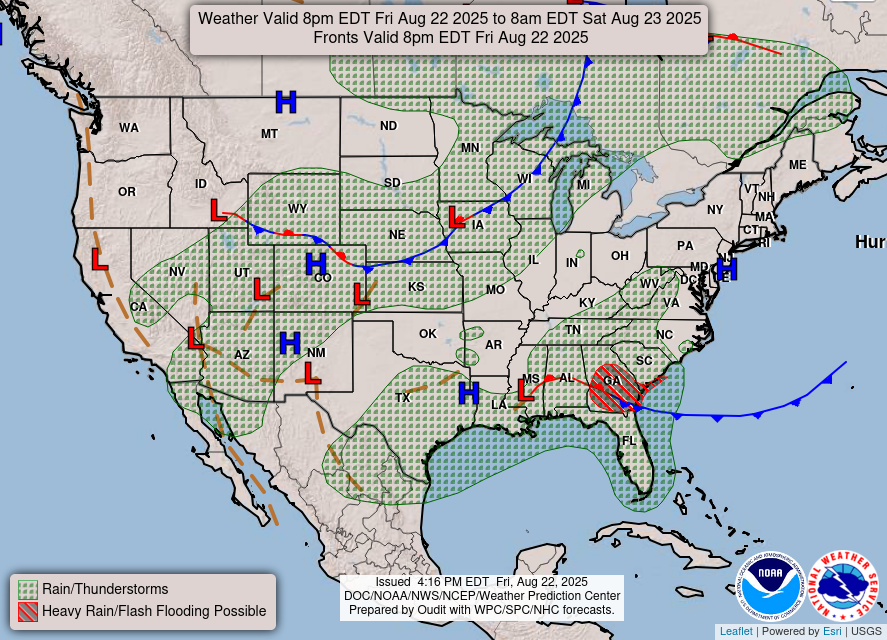
Today’s weather forecast across the nation
THIS MAP UPDATES TWICE A DAY

Visit Current National Radar Weather Map


Did you miss the latest RV Travel Newsletter? If so, read it here.
Oh, and if you missed the Latest News for RVers, make sure to catch up here.


If you shop at Amazon.com we’d appreciate you using this link. We get an itty bitty commission if you buy something, but they add up and help us pay our bills (most importantly our hard-working writers!). 


RVtravel.com All-Star Staff

Click here for information about our staff and how to contact us.

WHY WE ASK FOR DONATIONS INSTEAD OF SELLING SUBSCRIPTIONS.

Our policy on using artificial intelligence.

I can’t wrap my head around a load-leveling hitch. Do I need one?

Dear Dave, 
Our Redwood is a fifth wheel. We are considering downsizing to a travel trailer. I can’t wrap my head around how a load-leveling hitch system on a travel trailer works. I understand the importance of insuring that the trailer is loaded in such a way that the weight is properly distributed. To my thinking, no matter what you have on the trailer, it all comes down to the single hitch on the back of the truck. The weight of the trailer is not placed anywhere else on the truck. —Gary, 2013 Redwood

Dear Gary,
This has been a very hot topic not only here at RV Travel but at my seminars and this past year at the Ford Towing Bootcamp. I believe what you are referring to is a weight distribution hitch.

What a weight distribution hitch does

I have had the same struggle trying to figure out the dynamics of what it actually does. However, one of the best descriptions I got was from a CURT technician, who explained that it acts like placing an I-beam underneath the truck receiver hitch back to the trailer tongue. That makes everything level and relieves excess weight on the connection point, which is the ball.

I know it’s more technical than that, and I’ve gotten many comments in past posts. So, to be more clear, I’ve included some information from the Lippert/CURT website.

Lippert/CURT

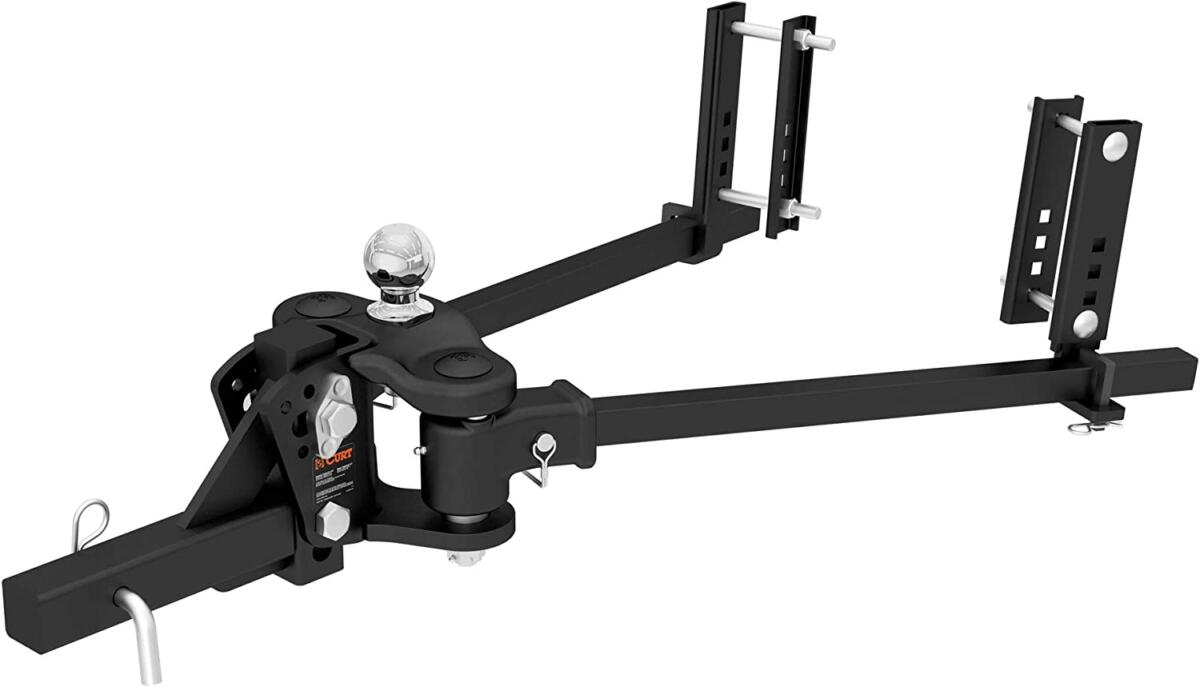
CURT has been, in my opinion, one of the leading experts on everything towing for many years. It is part of the Lippert (LCI) family. It has an impressive lineup of weight distribution hitches. One of my favorites is the TruTrack™ WD Hitch with integrated sway control. Here is their description:

Curt Trunion
CURT trunnion bar

What is a weight distribution hitch?

A weight distribution hitch (aka “WD hitch”) is a type of trailer hitch designed to evenly distribute the tongue weight of a trailer between the tow vehicle and the trailer itself. This is particularly useful when towing heavy loads like RVs, which can otherwise cause the tow vehicle to become unbalanced.

The weight distribution hitch works by altering the transfer point of the trailer’s load onto the vehicle. Instead of concentrating the tongue weight solely at the connection point, the hitch disperses it across the axles of both the trailer and the vehicle. This is achieved through the use of spring bars, which are attached to the hitch on either side of the trailer’s A-frame. These bars help to minimize the vertical pivoting at the hitch ball, ensuring that the tongue weight remains within a safe range of 10-15% of the overall load. This balance is crucial in preventing excessive swaying of the trailer, which could lead to loss of control, or excessive diving, which could cause the driver to lose control.

What does a weight distribution hitch do?

A weight distribution hitch evenly spreads trailer tongue weight across all axles, restoring balance to the tow vehicle and trailer to improve steering, braking, and overall towing control.

What exactly is a weight distribution trailer hitch? It’s pretty much exactly what it sounds like: a hitch that helps distribute weight better and more evenly.

In more technical terms, a weight distribution hitch (also called a load-equalizing hitch or load leveler hitch) distributes the tongue weight of a trailer across all four wheels of the tow vehicle. Any time a trailer is hooked up to your vehicle, it puts a certain amount of weight on the rear axle, which is called the tongue weight. The job of a weight distribution hitch is to even out that weight over the entire vehicle so that both the trailer and vehicle ride more levelly. This gives you more control on the road and makes the job of towing easier on your vehicle.

Do you need a weight distribution hitch?

When I was younger, I didn’t know what I didn’t know. Isn’t that a country song? Full of piss and vinegar, as my grandpa would say. Now I see on Facebook, or whatever they call it, you can mix that with gelatin and lose weight! My wife often asks, “Do you always have to be funny?” I say, “Yes, but looks aren’t everything!”

As I have aged like a fine wine, I now realize what I don’t know. WD hitches fall into that category. All I know is that they work. Most truck manufacturers, Ford included, recommend them for anything more than 5,000 lbs. being towed.

Why I use a WD hitch

I have a 2016 SOB (Some Other Brand) truck, and it has a very soft/weak rear suspension. Therefore, I use the WD hitch for anything over 3,500 lbs. Even though all my specific weight ratings such as GVWR, GAWR, GCWR, hitch weight, and payload are good, the truck still “squats” and I get highway hop or porpoising.

Truck & Trailer

Here is my truck with a lightweight trailer before the WD hitch.

Plus, driving/towing in the state of Iowa is a challenge with the frost heaves on the highways and the constant wind from EVERY direction!

Keep in mind, a weight distribution hitch/sway control device does not increase towing capacity or weight carrying capacity at the hitch or rear axle. Also, it will add almost 100 extra pounds to the hitch or connection point.


 You might also enjoy these posts from Dave 

DAVE HAS ANSWERED MORE THAN 1,000 readers’ maintenance and repair questions. Read a directory here. There is so much to learn!


Dave Solberg is a leading expert in the RV industry and the author of the “RV Handbook.”

HAVE A QUESTION FOR DAVE?

Send your inquiries to him using the form below.

Name
Drag & Drop Files, Choose Files to Upload

RVDT2894

A hydroplaning safety guide for RVers

1

By Gail Marsh
When the skies open up and the roads turn slick, hydroplaning can become a serious threat. This may be one of my biggest fears when driving our RV.

Nothing reduces fear like information, so let’s take a closer look at what hydroplaning is, discover ways to avoid it, and learn basic safety tips if it does happen when you’re driving your RV.

What is hydroplaning?

Hydroplaning, sometimes called aquaplaning, occurs when a thin layer of water builds up between your tires and the road. This water film prevents your tires from making proper contact with the pavement, drastically reducing traction. Without that crucial grip, your vehicle can slide uncontrollably, making it hard to steer, brake, or accelerate as intended.

Even a small amount of water—often as little as 1/12 of an inch—combined with speeds as low as 35 mph can set the stage for hydroplaning.

Why hydroplaning is especially dangerous for RVs

RVs are built for comfort and adventure, but their size and weight can work against them in wet conditions. Here’s why:

Increased stopping distance: RVs are significantly heavier than regular cars. This extra weight means you need more time and distance to stop. If you lose traction, recovery can be challenging.

Tire vulnerability: With long trips on the horizon, many RVers might overlook regular tire maintenance. Worn-out tires or underinflated ones can’t channel water away effectively, making hydroplaning more likely.

Handling characteristics: Motorhomes, travel trailers, and fifth wheels all have different handling dynamics. When hydroplaning strikes, the loss of control can be more dramatic in these larger vehicles. It can potentially lead to dangerous spinouts or swerving into oncoming traffic.

Tips for avoiding hydroplaning

The best safety strategy is to prevent hydroplaning before it starts. Here are some actionable tips for staying safe on wet roads:

Slow down. Reducing your speed is the single most effective way to lower your risk. Lower speeds give your tires more time to displace water, maintaining better contact with the road. Remember, even new tires can lose traction on wet pavement if you’re driving too fast.

Check your tires regularly. Make sure your tires are in top condition. Check the tread depth (tires with less than 4/32 [1/8] inch of tread are more likely to hydroplane) and ensure they’re inflated to the manufacturer’s recommendations. Proper tire maintenance is critical for effective water dispersion.

Avoid cruise control. While cruise control is a handy feature in dry conditions, it can be dangerous on wet roads. If your vehicle begins to hydroplane, you need full control over acceleration and braking—something cruise control doesn’t allow. Turn it off to stay in control.

Following distance. Wet roads mean longer stopping distances. Give yourself extra space from the vehicle in front of you so that you have ample time to react if something unexpected happens.

Drive in the tracks of the vehicle ahead. When conditions are slick, following the tire tracks of the vehicle ahead can help as those tracks are more likely to be free of standing water. This can improve traction and reduce the chance of sliding.

Avoid standing or deep water. If you see puddles or areas where water is pooling, try to avoid them. Standing water not only increases the risk of hydroplaning but can also hide road hazards like potholes or debris.

What to do if you start hydroplaning

Even with all precautions in place, sometimes hydroplaning can still occur. If you find yourself sliding, here’s how to regain control:

1. Stay calm: It’s natural to panic, but keeping a cool head is key. Panicking can lead to overreacting, which may worsen the situation.

2. Ease off the accelerator: Gently lift your foot off the gas pedal to gradually reduce your speed. Avoid slamming on the brakes—they can lock up your wheels and lead to further loss of control.

3. Steer smoothly: Hold the steering wheel firmly and steer in the direction you want the front of your RV to go. Avoid abrupt or forceful steering inputs, as they can trigger a spin.

4. Wait for traction to return: Once your tires reconnect with the road, gently steer to realign your vehicle and then apply brakes gradually, if needed.

Following these steps can help you regain control of your RV and avoid a serious accident if hydroplaning strikes.

Have you ever experienced hydroplaning while RVing? Tell us about what happened in the comments below.

RELATED

RVDT2894

Tour a rare 1954 Ranger—the first popup camper

Some vintage trailers are charming. This 1954 Ranger is charming and oddly important.

At the Murphy Auto Museum in Oxnard, California, David Neal points to a camper that helped start a style people now take for granted. The trailer came from Anaheim, California, and was built for only two years. That short run is part of why the Ranger popup camper still grabs attention.

We get a closer look in the video at the end of this post from Fireball Tim.

A short-lived idea ahead of its time

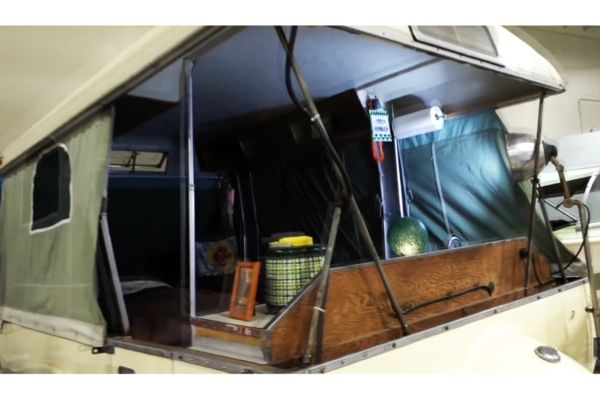
1954 Ranger camper interior

Neal describes the Ranger as rare, and for good reason. He says it was the first fiberglass crank-up trailer, a design that feels normal now but was a new idea in the mid-1950s. Ranger got there first, even if other companies later refined the concept.

The price did not help. Neal says a new Ranger cost $1,500 in the 1950s, or about $13,000 in today’s money. For many buyers, that was a lot to spend on a trailer meant mostly for summer use. He also jokes that it was not bear-proof, which says plenty about how limited its appeal could feel at the time.

Production never got far. Neal estimates that maybe 200 were made, and not many are known to survive now. The example at the museum was also offered for sale because it could not make an upcoming move with other museum changes. That adds one more layer to its story, because it is both a museum piece and a rare chance for a buyer. [Since the video was from 2019, and the Murphy Auto Museum does not list it on its website, we assume it’s being enjoyed by its newest owner.]

The 1954 details that make this one more collectible

This Ranger has one styling cue that matters to collectors. It carries a spear over the wheel well on both sides, and Neal says that only happened in 1954. By 1955, that detail was gone.

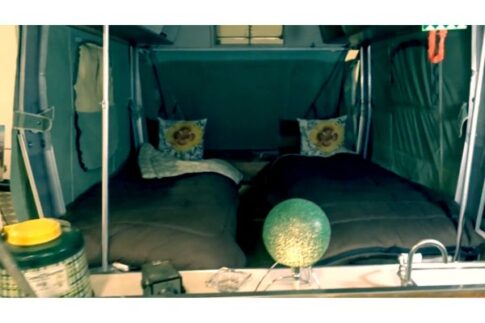
Inside, the layout is compact but smart. Beds run along both sides over the wheel wells, so the parents could sleep lengthwise in the trailer. A second bed in the rear runs across the trailer for the kids, and that same area also works as storage while the trailer is moving.

There is also an ice box. The stove was not on display during the walkaround, but he notes where it would sit. Even the side panels had some flexibility, because campers could add or remove sections based on where the breeze was coming from.

The Jay Leno moment and the taillight surprise

One of Neal’s best stories involves Jay Leno, who showed up at the museum unannounced about two years earlier. The Ranger was sitting out front on display, and Neal pointed out its unusual taillights.

Leno recognized them right away as 1954 Ford parts. Neal says that if someone owned a big 1954 Ford wagon or car, the taillights would match this trailer. That little detail gives the Ranger extra personality on the road.

What sticks with this Ranger is not size or luxury. It is the fact that this small camper tried something early, looked different doing it, but sadly didn’t survive long enough to tell the tale.

YOU WILL ALSO LIKE:

RVDT2894

What would you prefer: a great steak or great piece of seafood?

10

Okay, say you’re at a BBQ and your friend offers you two things: a nice, juicy steak or a great piece of seafood. Which would you pick, the steak or the seafood?

We know it can be a tough decision, so in today’s poll, you have the option to say that you’d like both equally. (“Surprise me!” you’d say.) Or, perhaps you’re a vegetarian or just don’t like either option, and you could say “neither” and just eat the sides. (Hey, sometimes the sides are the best part, we wouldn’t judge!)

Some folks don’t even need to think about it. The second they hear “steak,” the decision is made. Maybe it’s the smell coming off the grill, the char marks, or that first bite of a perfectly cooked piece of beef. For many people, steak just feels like classic BBQ food.

Others hear “seafood” and they’re sold. Maybe it’s buttery shrimp, grilled salmon, fresh halibut, crab legs, or a perfectly seasoned skewer right off the flame. Seafood can feel a little lighter, a little fresher, and for some people, a whole lot harder to pass up.

Then there are the strategic eaters among you. You know better than to choose too quickly. First, you need more information. What kind of steak are we talking about? What kind of seafood? Who’s doing the cooking? Is there garlic butter involved? These details matter!

And let’s not forget that the sides can influence everything. A loaded baked potato next to that steak? Tempting. Fresh corn on the cob and pasta salad with the seafood? Also tempting. Sometimes the supporting cast can sway the main decision.

Well, what’re you having? Tell us below, and feel free to leave a comment after you vote, too.

Great… now we’re hungry.

MORE POLLS LIKE THIS:

RVDT2894