If you’ve spent any time around RVers, you’ve heard it or said it yourself: “These things just aren’t built like they used to be.”
There’s truth in that. But talk to the folks who actually crawl under, climb on, and fix RVs every day, and you’ll hear something a little different. Many of the most common RV repair problems don’t start with a catastrophic failure. They start small. They start quietly. And they often start with things owners didn’t know—or didn’t think mattered.
That’s the takeaway from a recent industry guest column appearing in RVBusiness that tries to explain what’s really going wrong out there. Strip away the insider language, and what you’re left with is a message RVers may not love, but probably need to hear.
The problems techs keep seeing
Mobile repair techs, who increasingly get called when dealers aren’t available, see the same patterns over and over:
Leveling issues that lead to slide problems.
Battery systems run down or damaged from neglect.
Roof maintenance skipped until a leak shows up inside.
Overloaded rigs stressing frames, axles, and components.
None of those failures happens overnight. They build. And that’s the part that surprises a lot of owners. Even though the failure can feel sudden, the cause usually isn’t.
Where things break down for owners
A big part of the disconnect comes down to expectations.
Many buyers walk onto a dealer lot expecting something closer to a house: solid, forgiving, and able to handle a bit of neglect. But an RV is closer to a rolling earthquake. It flexes, vibrates, twists, and bakes in the sun. Even sitting still, materials expand and contract, seals dry out, and systems drift out of adjustment.
That means maintenance isn’t optional; it’s survival.
The industry piece makes the case that too many owners leave the lot without a clear understanding of what their rig needs and what happens if they skip it. When something finally fails, it feels like poor build quality. Sometimes it is. But often it’s deferred maintenance catching up all at once.
Most RV problems don’t start big—they start ignored.
Why the repair system feels broken
If you’ve tried to get service lately, you already know this part.
Dealer backlogs can stretch for weeks, too often into months. Communication can be spotty. And when something breaks on the road, waiting that long often isn’t an option.
That’s one reason mobile RV repair has taken off. Independent techs are stepping in to handle everything from electrical issues to slide adjustments right at your campsite. They’re not replacing dealers, but they’re filling a gap that’s gotten hard to ignore.
The downside? Not every job can be done mobile. Major structural work, warranty repairs, and parts-dependent fixes still send you back into the dealership queue.
What RVers can do to stay ahead of it
This is where the rubber meets the road.
Most of the issues techs see fall into a handful of preventable categories. Staying ahead of RV repair problems doesn’t mean becoming a full-time mechanic, but it does mean paying attention to the basics.
Level your rig carefully every time. Slides and doors depend on it.
Keep batteries maintained and monitored, not just “working.”
Inspect your roof regularly—even when nothing looks wrong.
Watch your weight. RVs don’t tolerate overload the way trucks do.
A few minutes of prevention is a lot easier than dealing with a soaked ceiling, a dead electrical system, or a slide that won’t move when it’s time to leave.
The bigger takeaway
It’s easy to blame the RV when something breaks. And sometimes, that blame is justified.
But the folks doing the repairs see a different pattern. Many failures don’t come out of nowhere. They build slowly, quietly, and predictably—until they finally demand attention.
Understanding that may not make breakdowns any less frustrating. But it can make them a lot less frequent.
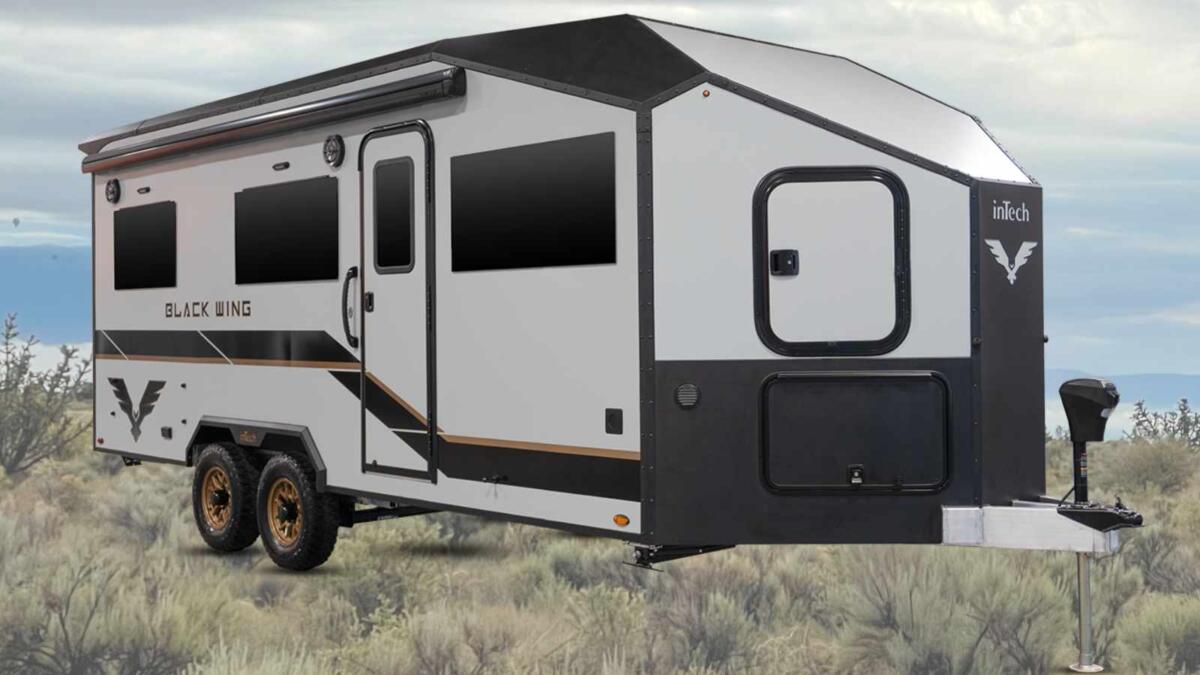
Today’s RV review is of the 2027 inTech Black Wing 826-X toy hauler. This is a no-slide wide-body toy hauler built by inTech, a company that definitely builds things very differently than is the norm in the RV space.
Like many toy haulers, this one clearly prioritizes hauling and supporting side-by-sides or other motorized vehicles. But what really stands out to me is how closely it resembles something I’ve often imagined building myself—a custom trailer based on a cargo hauler. Of all the production models I’ve seen, this might be the closest to that vision.
Hmm, perhaps my wife, who also serves as my adult supervisor and keeps me from making extraordinarily stupid decisions, might actually be okay with this rig. I’ll show her this review!
How the inTech Black Wing 826-X toy hauler is built
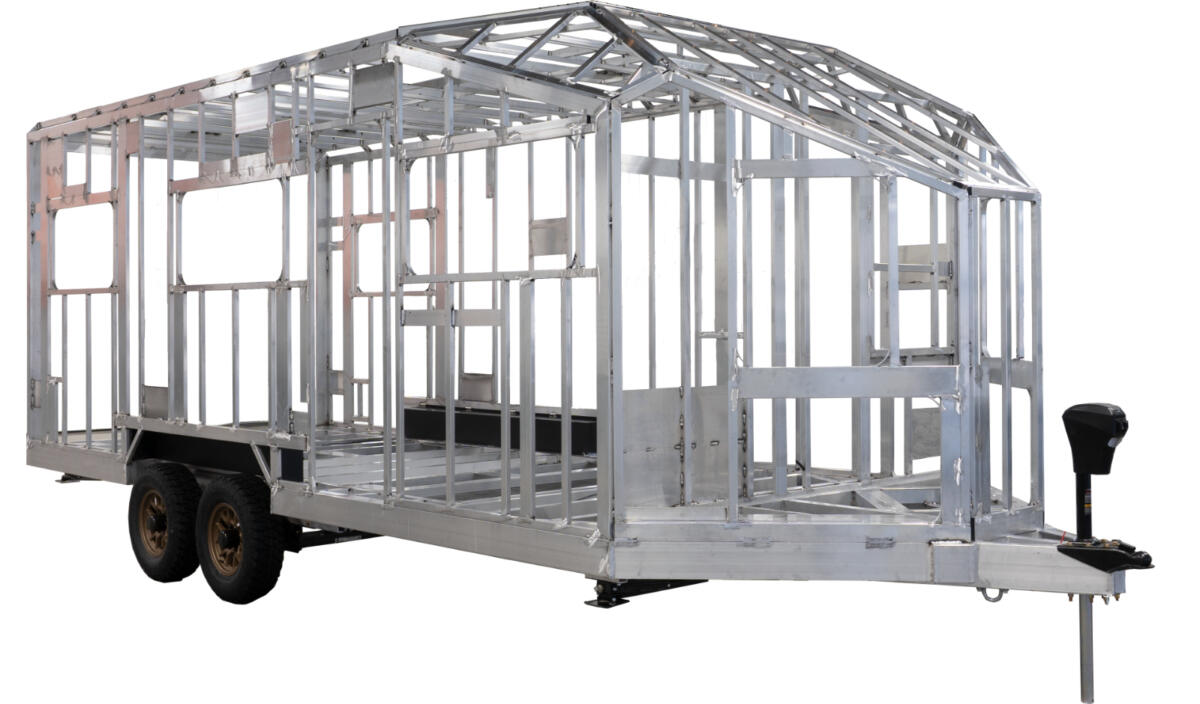
While most towable RVs start with a steel frame, typically provided by an outside firm like Lippert or BAL (Norco), inTech builds its own structure in-house. I call it a structure because the frame itself is an all-aluminum heavy-duty frame, but then they also weld a full aluminum frame together to form one very strong build.
This aluminum cage includes the roof structure, so there is quite literally no structural wood in this trailer whatsoever. Even the floor is an anodized aluminum sheet.
To that, all the interior and exterior finished walls are attached, as well as all the other RV bits that turn this into a camper.
The suspension on these is a torsion axle design, so each wheel operates semi-independently. I really like torsion axle suspensions.
Quite honestly, I can’t imagine a better way to build a trailer than this.
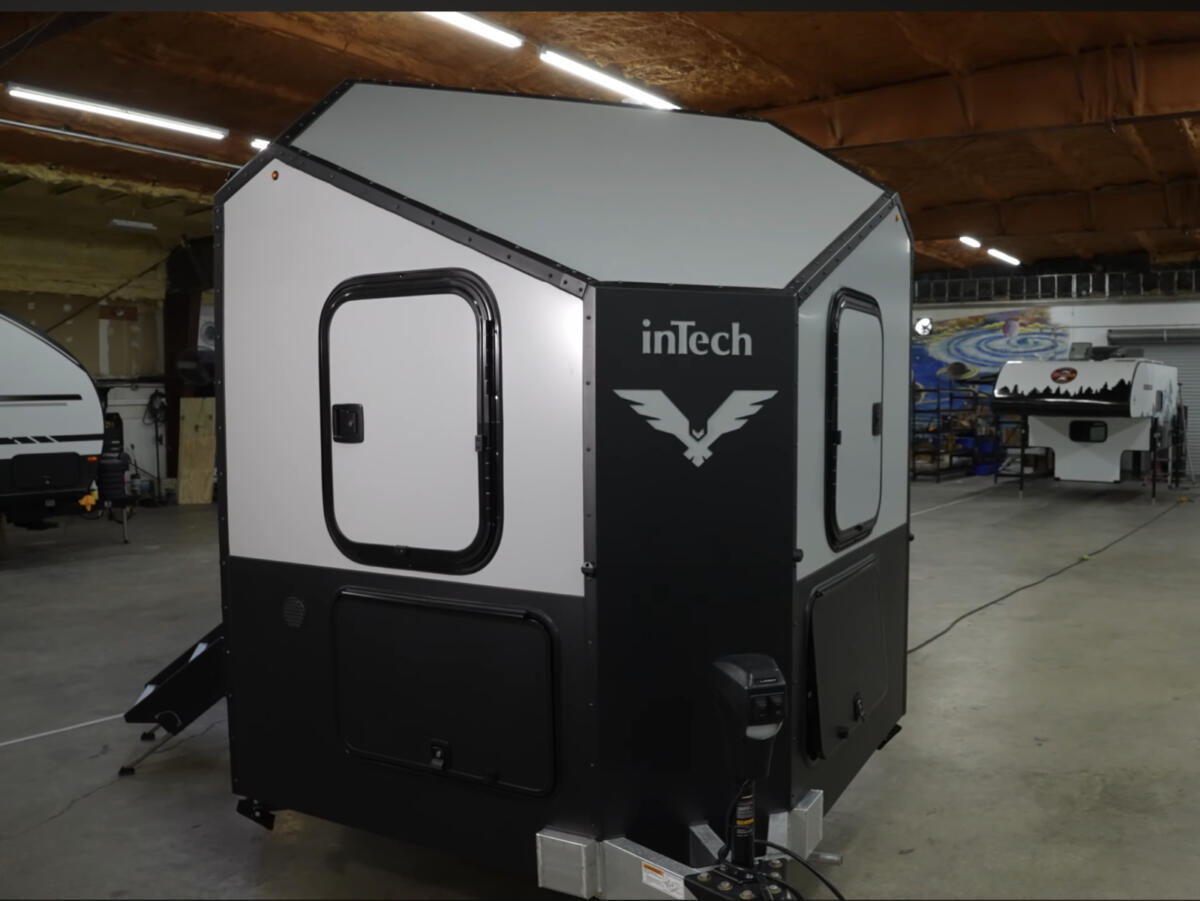
Interestingly, the trailer’s shape is a bit different, with a pointed front that should help improve aerodynamics—something most towables struggle with.
Inside that nose are two levels. The upper level is a full pass-through storage area lined with aluminum walls and accessible from both sides. Below it, the camp side houses two 20-pound propane tanks in an enclosed compartment. The road side includes a space designed for an optional 4,500-watt gasoline generator. If you skip the generator, that space becomes additional storage.
That upper pass-through is especially generous—more so than in many toy haulers. Those typically prioritize large rear garage space but sacrifice pass-through storage up front.
There is also a smaller compartment that can arguably be used for your 30-amp electrical cord. They also provide a plastic tube under the trailer for your sewer hose.
I also like the windows inTech is using, which are the frameless tilt-out windows whose structure includes both light and bug shades.
inTech Black Wing 826-X - 2026
1 of 19
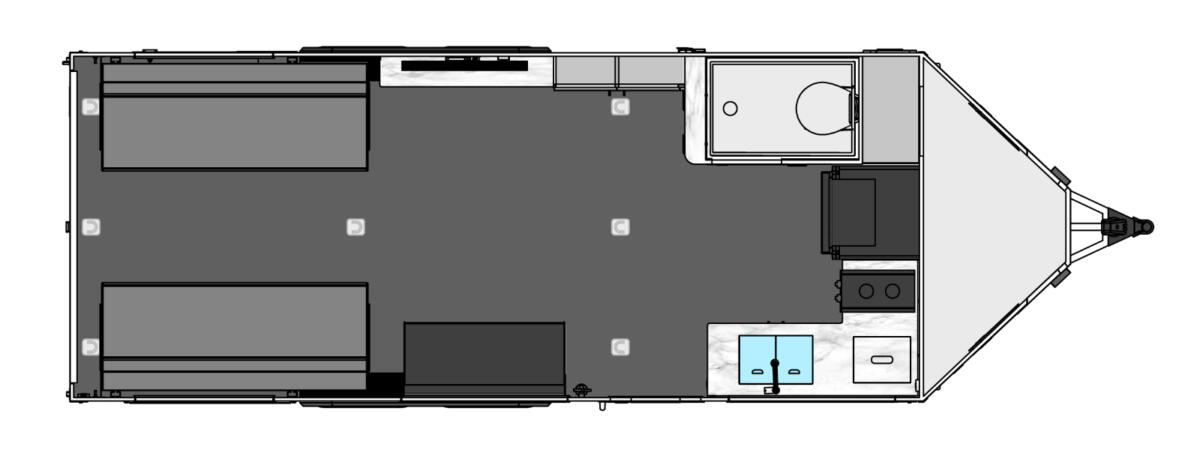
inTech 826-X floor plan
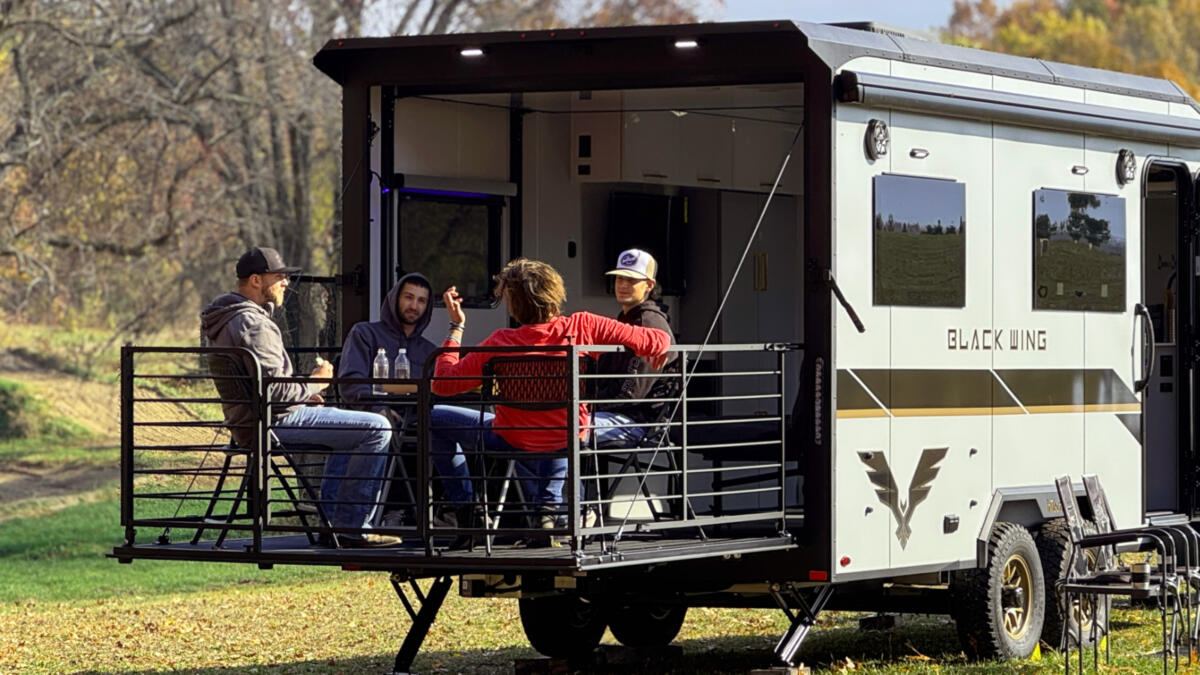
Using the ramp door on the inTech 826-X as a patio deck
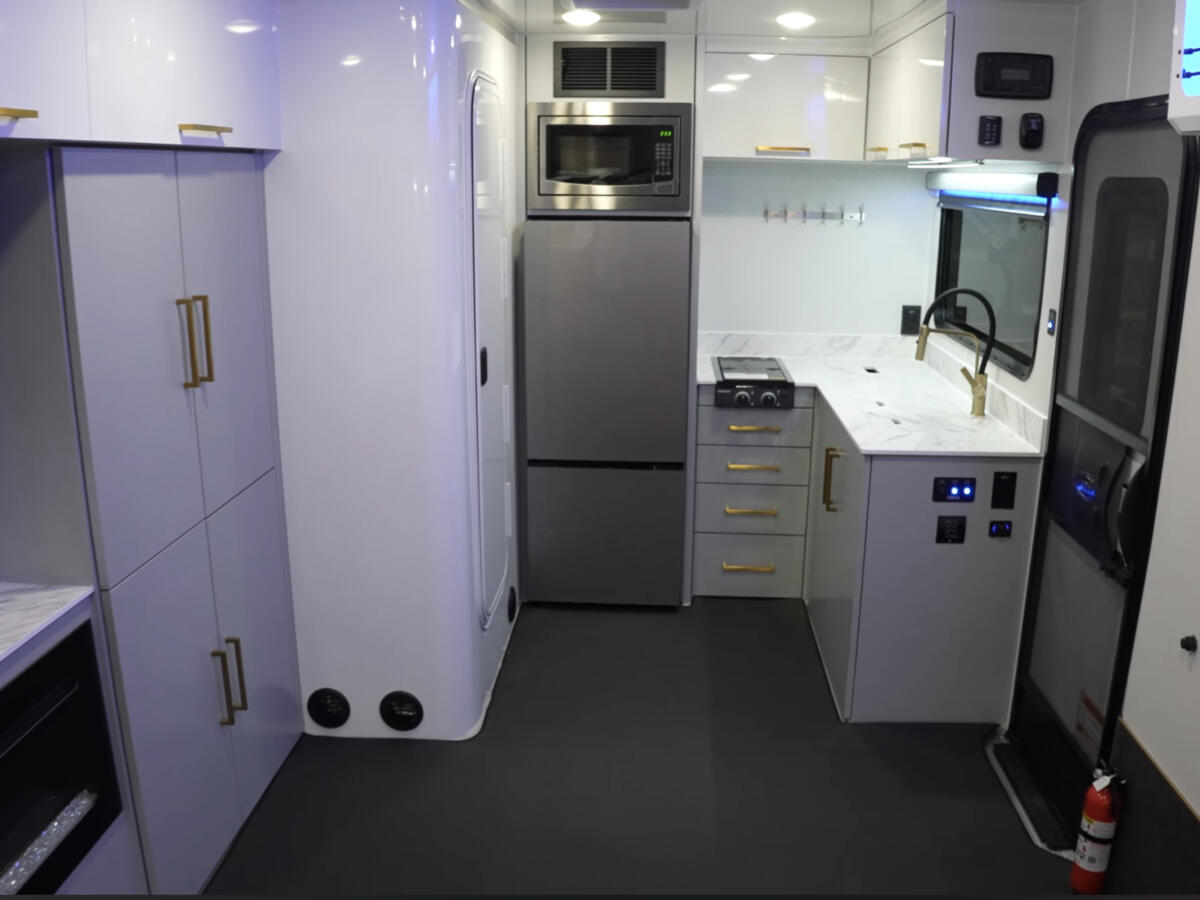
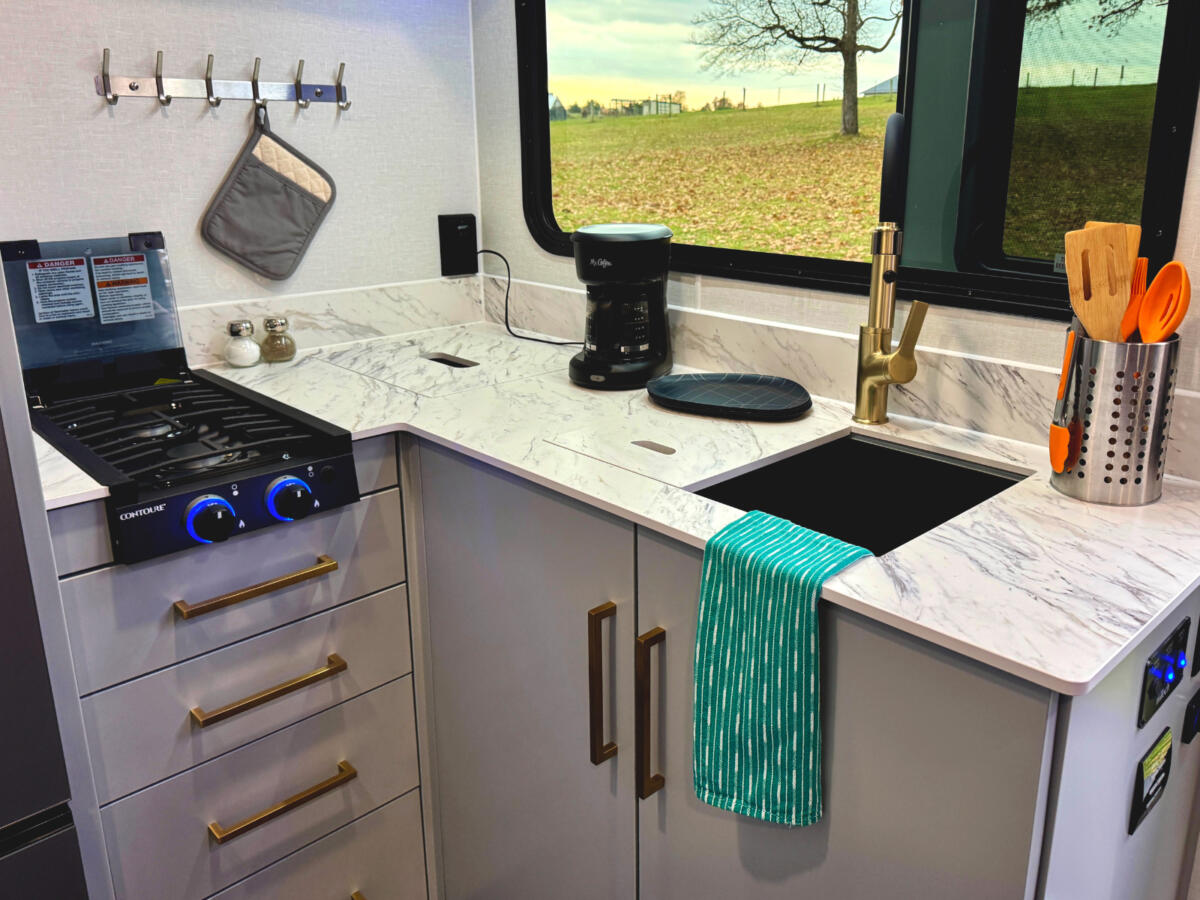
A small but usable kitchen in the inTech Black Wing 826-X
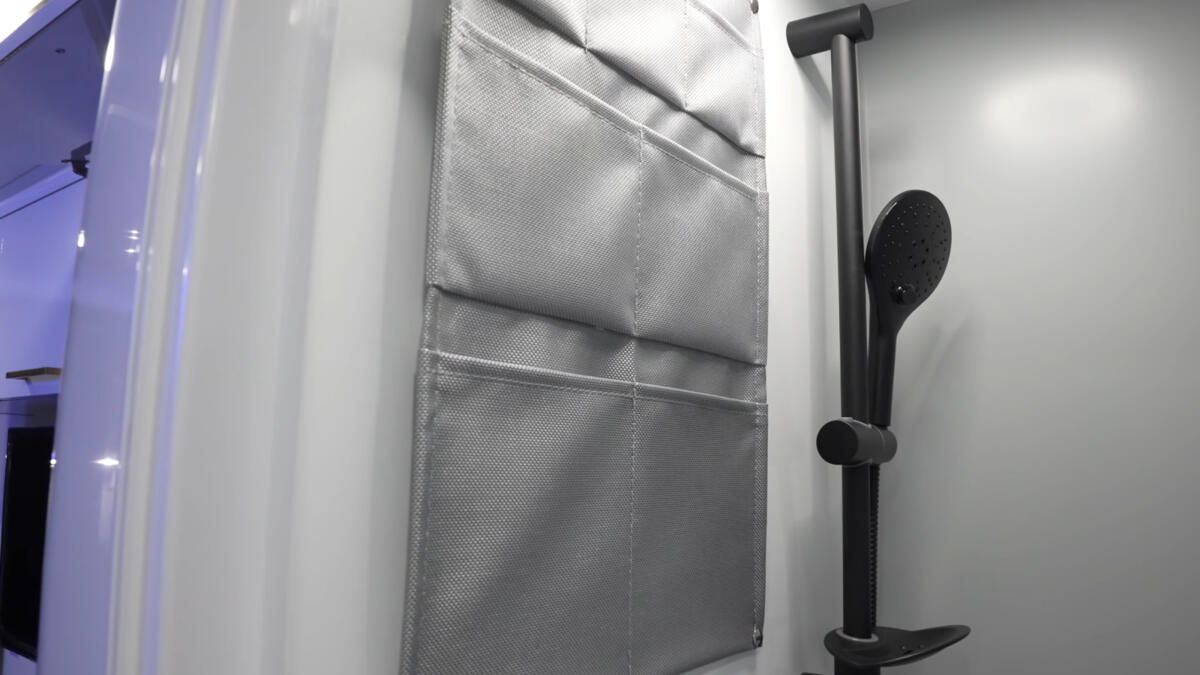
A nice adjustable shower head plus netted storage bag in the inTech Black Wing 826-X
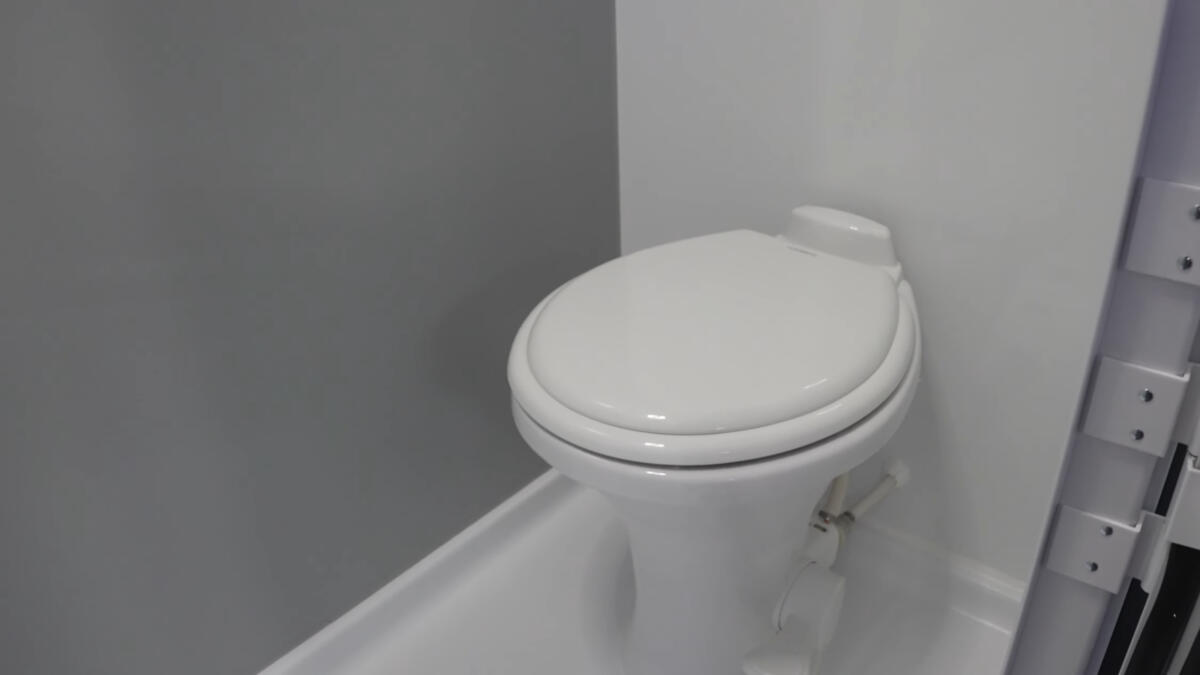
A porcelain foot flush toilet in the bathroom of the inTech Black Wing 826-X
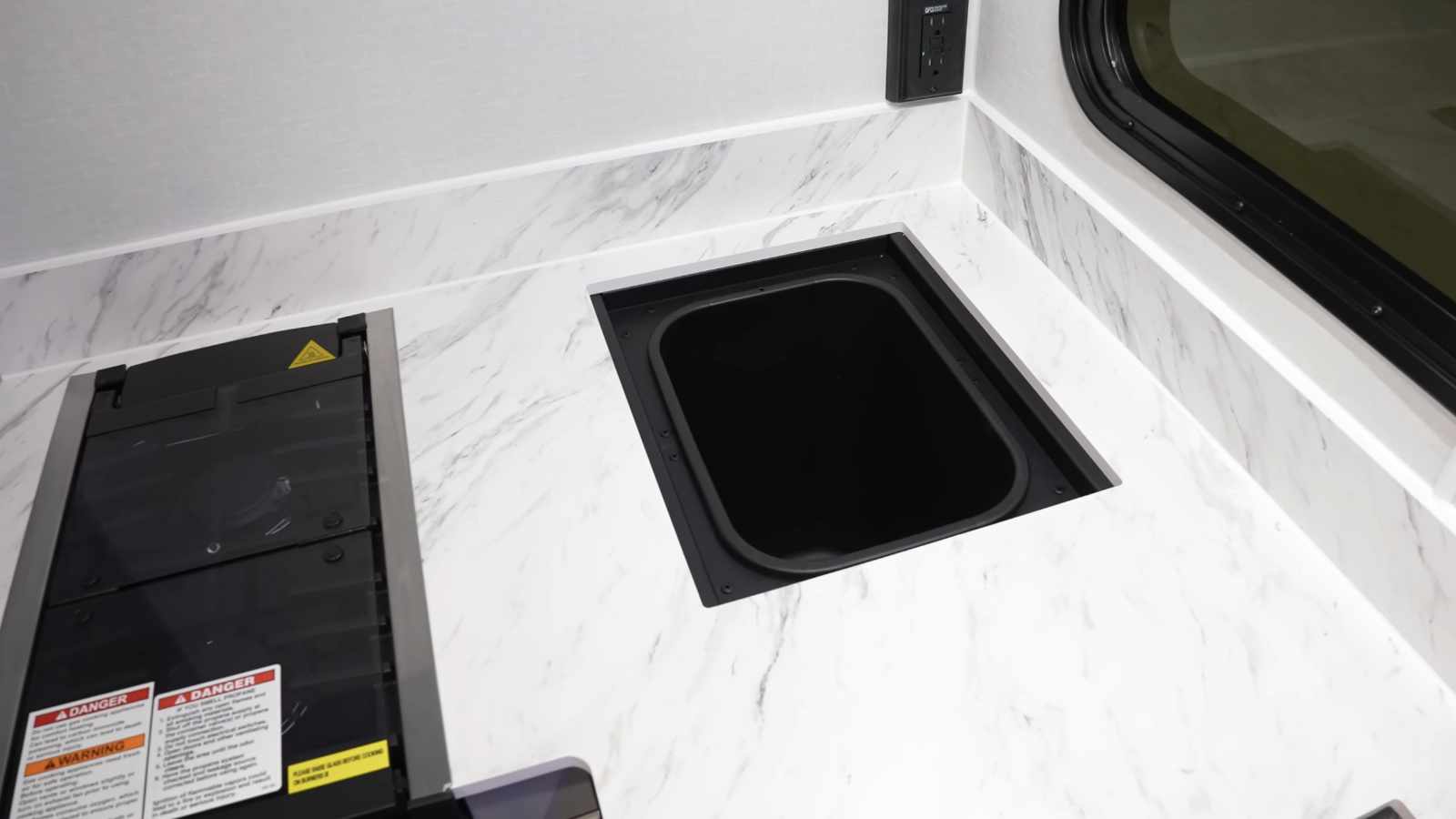
A hidden trash can under the kitchen counter is a very usable feature in the inTech 826-X
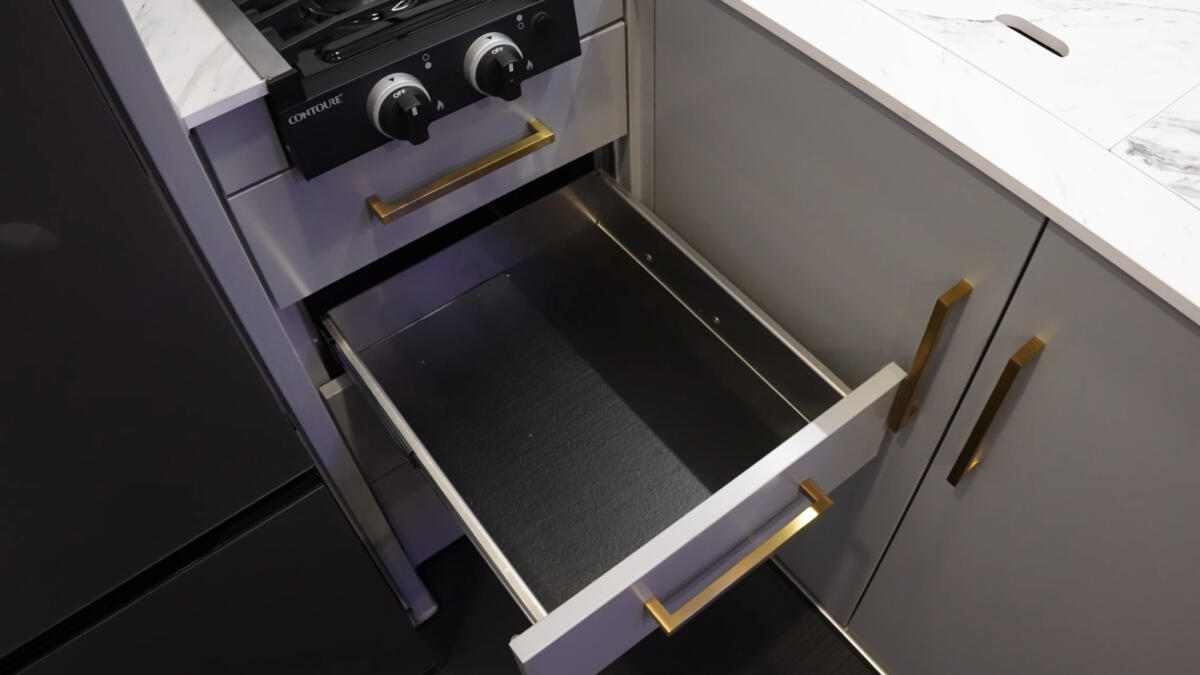
Drawers and cabinets are high-quality metal in the inTech 826-X
Good counter space with the covers in place in the inTech Black Wing 826-X
inTech 826-X bed-cargo space overview
inTech 826-X interior overview
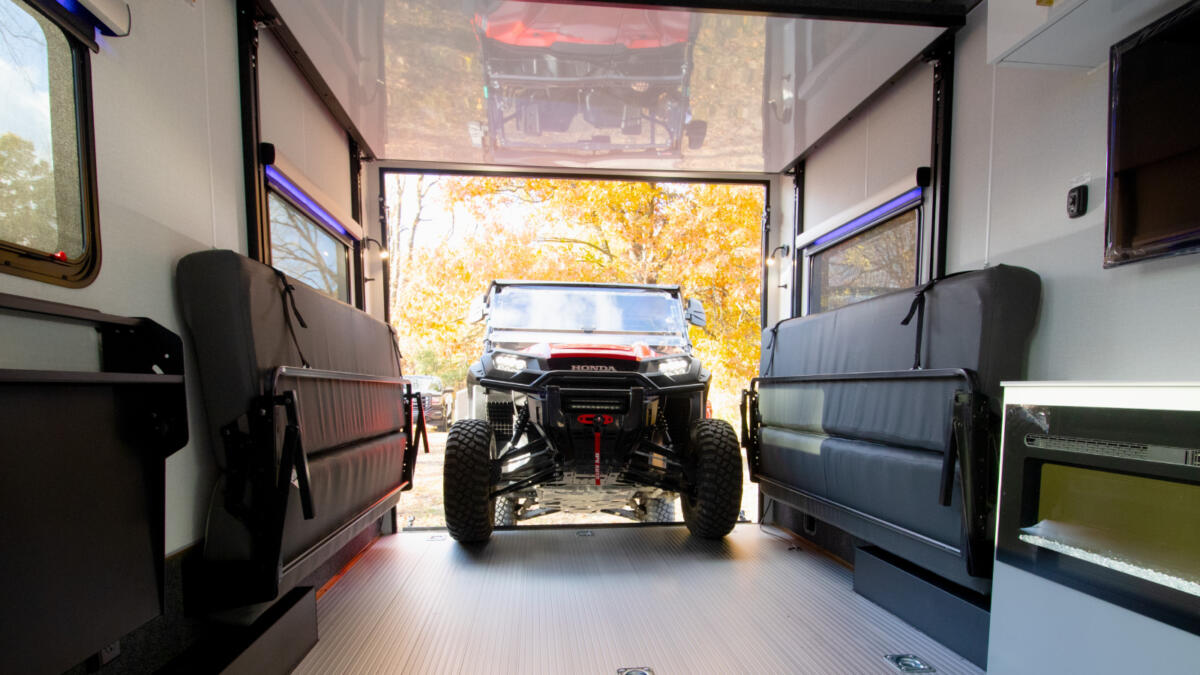
inTech 826-X with side-by-side inside
inTech 926-X kitchen overview
Loading a side-by-side into the inTech Black Wing 826-X
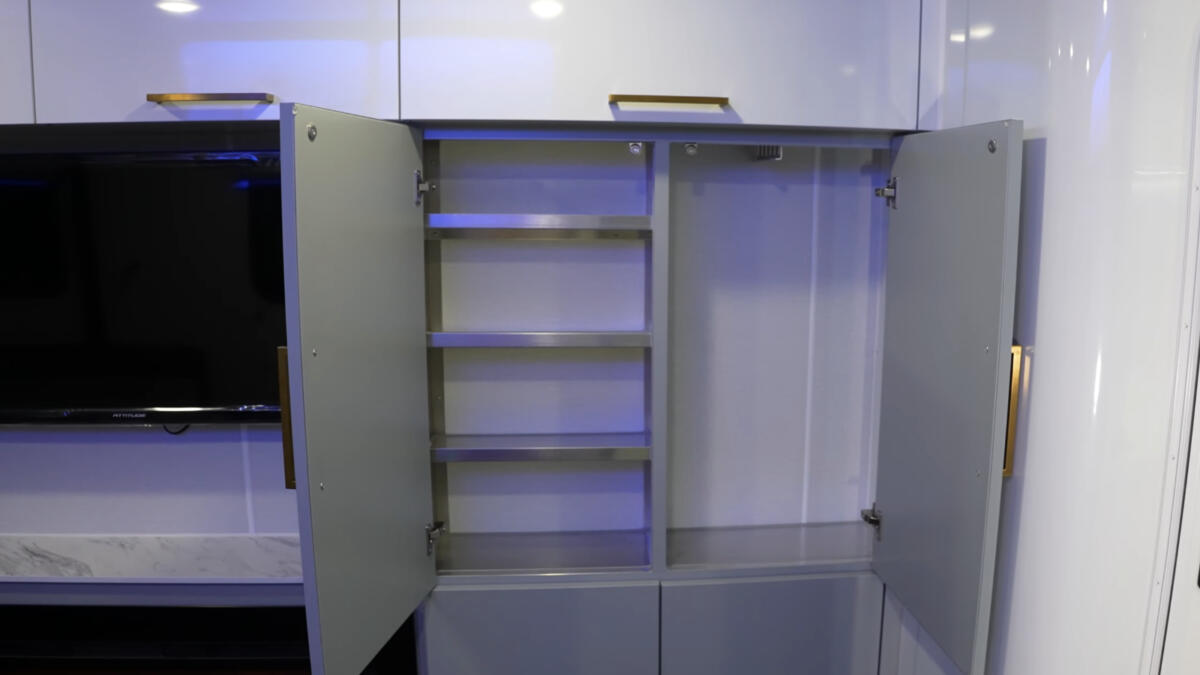
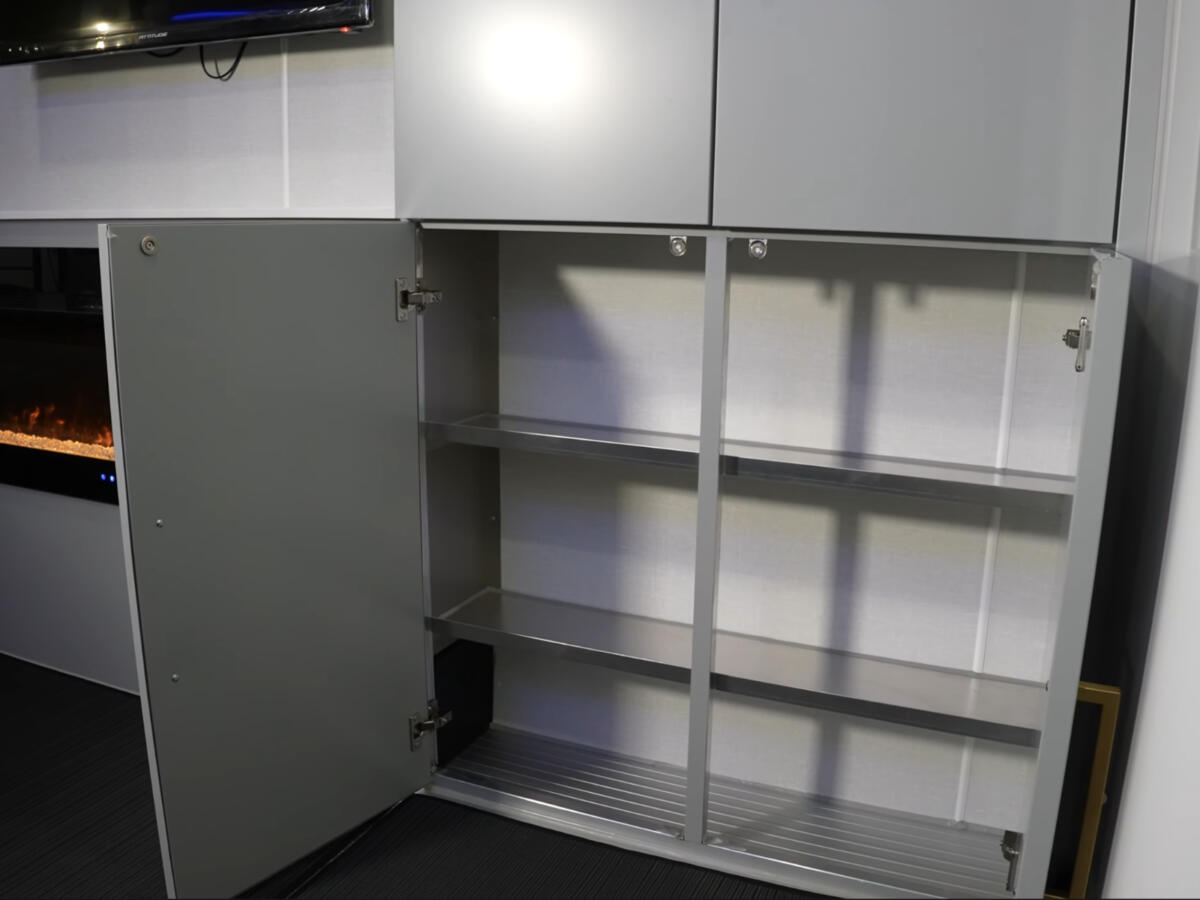
Segmented and open shelving on the road side of the inTech Black Wing 826-X
Shelving on the road side with aluminum cabinet structure
The pointed nose houses a large pass-through storage and helps with aerodynamics
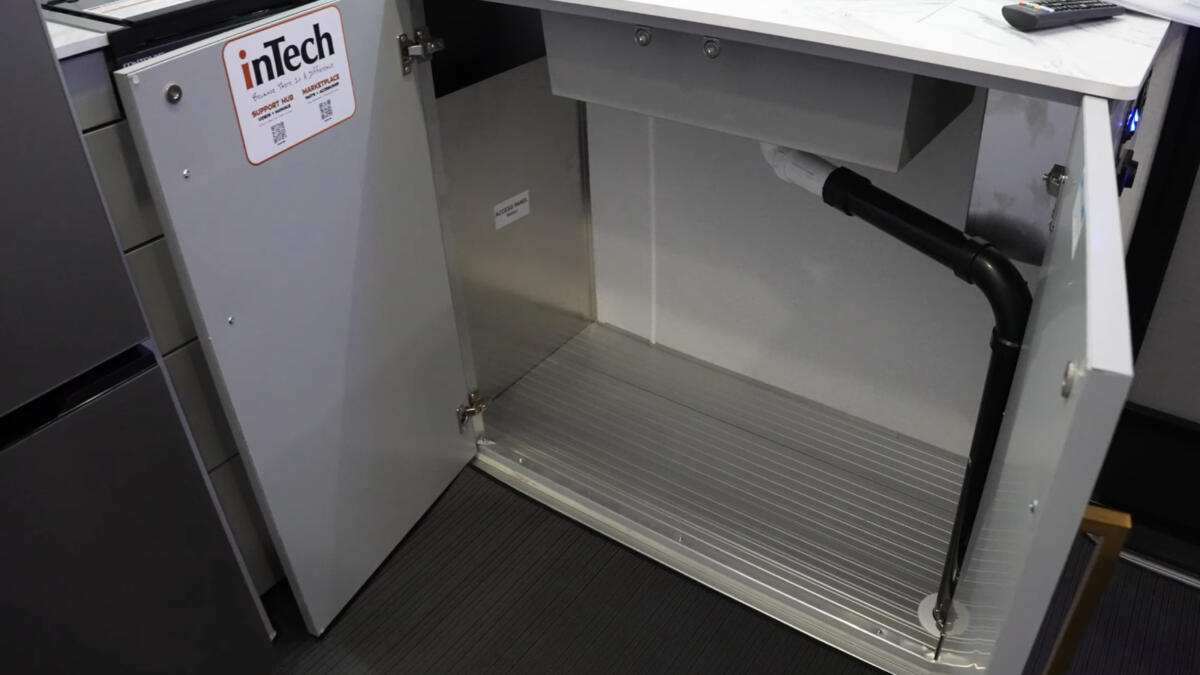
You can see the aluminum structure in this large under-counter storage cabinet in the inTech Black Wing 826-X
What’s inside the inTech Black Wing 826-X toy hauler
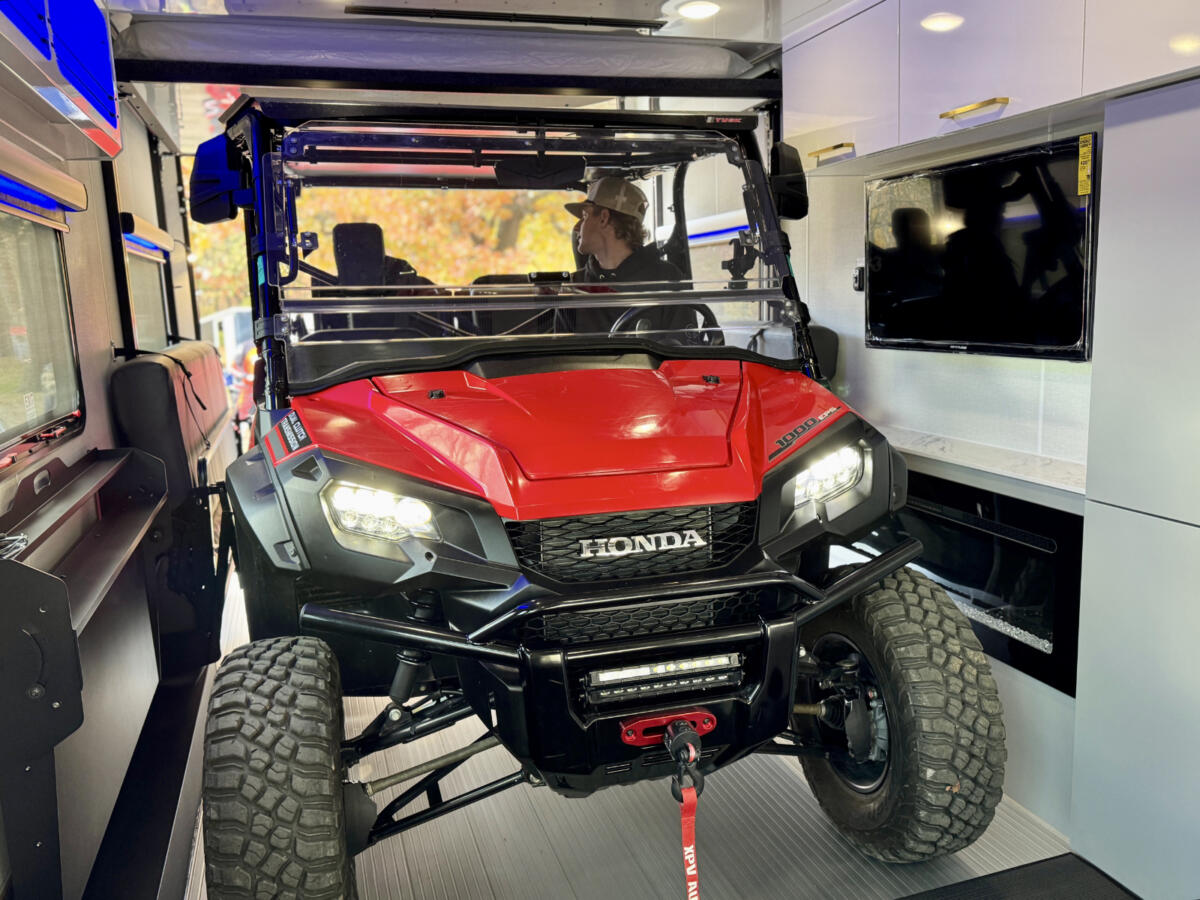
The business of hauling toys in an RV means that the interior of this is prioritized for that purpose with six tie-downs directly into the frame, each capable of 5,000 pounds. (You can’t haul 30,000 pounds in here—that’s just a measure of how well each will keep your moving vehicles from actually moving.)
I had mentioned that the floor in this is a sheet of anodized aluminum, but inTech puts down a segmented mat to make the interior cozier. This mat is pretty durable and quite cleanable—it’s that marine-grade stuff that many RVers are going to.
There is a ramp to drive/ride your toys into the back. You can opt to have a folding fence around the perimeter of the ramp when it’s deployed in patio deck position. The fence inTech uses they build themselves.
Sleeping in the inTech Black Wing 826-X
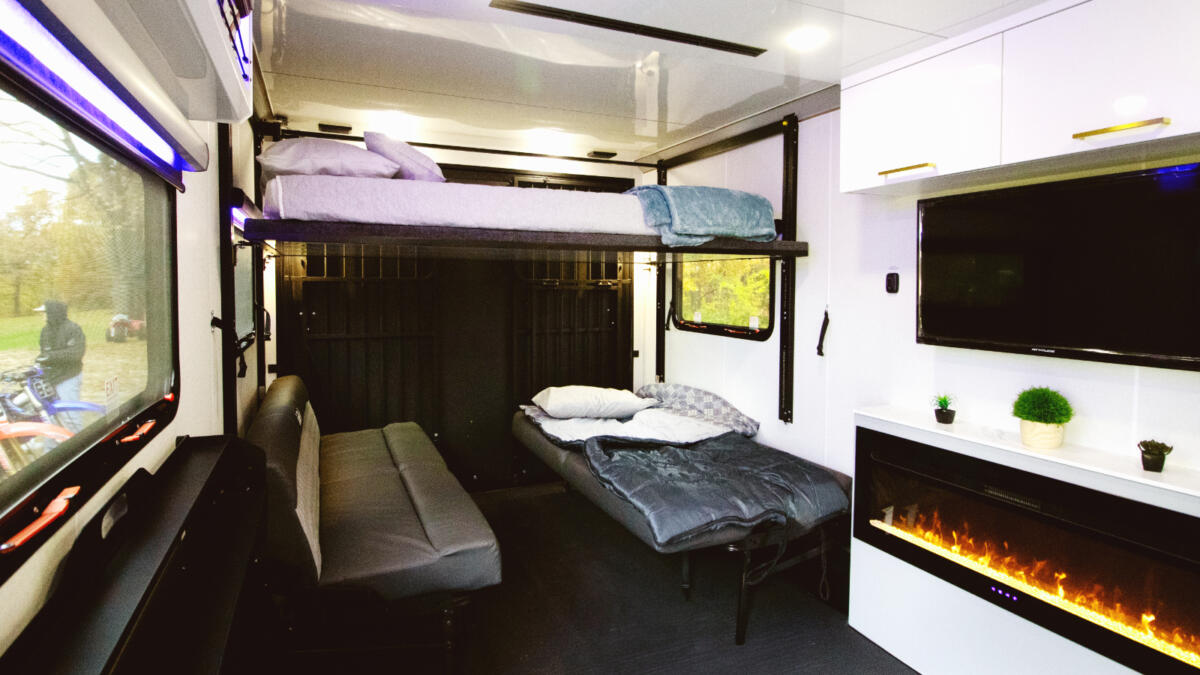
On the interior, there are opposing couches at the very back, which can fold down to become two 40” x 76” long beds or fold up against the walls when you want to bring in those toys.
There’s another bed on a lift, called a HappiJac®, that measures 60” x 80”. This one stays higher above the floor even when deployed, so it comes with a ladder to get into it. You should remember that you’re up there if you have to make a midnight run to the potty. Apparently, a lot of owners just use the fold-down couch beds, although they don’t look that comfortable.
I have mentioned theRVSuperbag before, and this would be another case where that just makes sense to serve as your bedding. You’d have one each for the lower beds and then one larger one for the upper bed.
Interestingly, the way inTech has done the ceiling in this rig is to have a dropped section at the front and then a raised section so that the bed can lift higher to accommodate toys. (There’s no A/C ducting above the upper bed when it’s lifted to the ceiling.)
When I was selling RVs, we had a fair number of taller customers. Toy haulers were always something we suggested because the ceilings tended to be higher on these.
Living/dining in the inTech Black Wing 826-X
The only seating space provided is those opposing couches, but you could bring a folding table and really seat six people. This would be a good thing for game night.
There’s also an interesting folding metal table that slots into a space on the camp side of this trailer. That table can be mounted inside or taken and mounted outside.
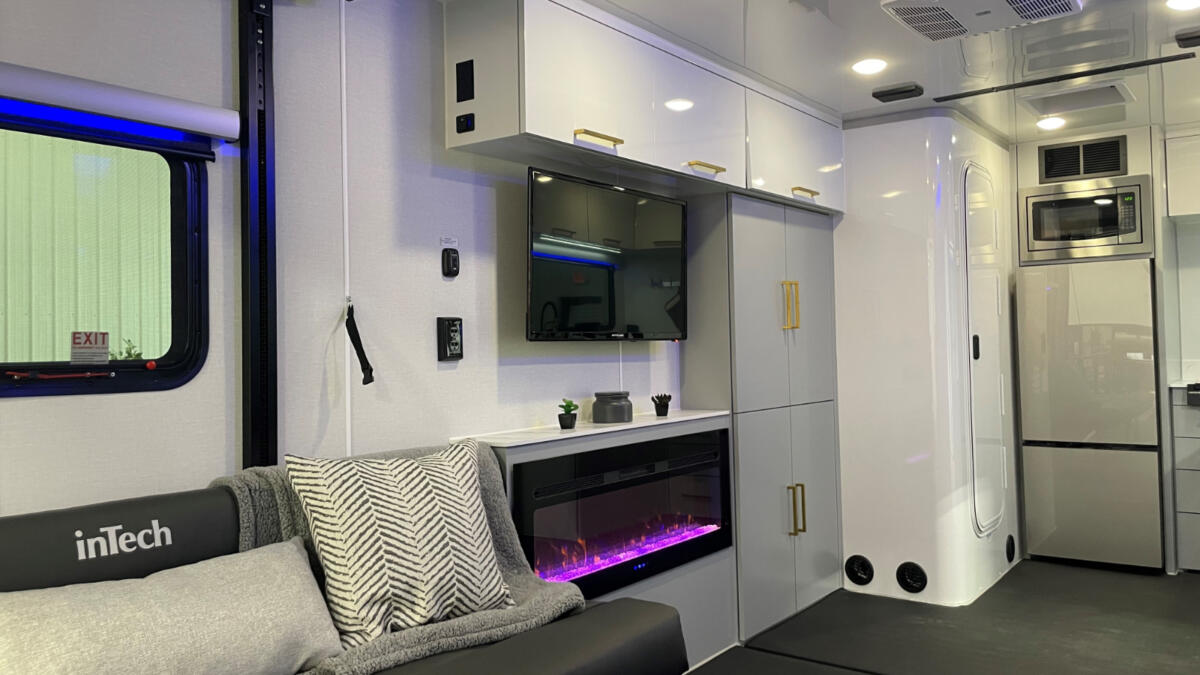
Opposite the table is an electric fireplace and a 40” 12-volt TV. Surrounding that are several cabinets, so storage space in here isn’t bad at all—not typical for a toy hauler.
If you wanted a super comfortable spot to sit and watch TV, you could always pack one of those zero-gravity camp chairs or whatever you like best. The one I have seems to be as comfortable as any home furniture. It’s pretty great.
Kitchen in the inTech Black Wing 826-X
I can see this kitchen being one of the several polarizing features in this trailer. It’s not a bad kitchen at all, though.
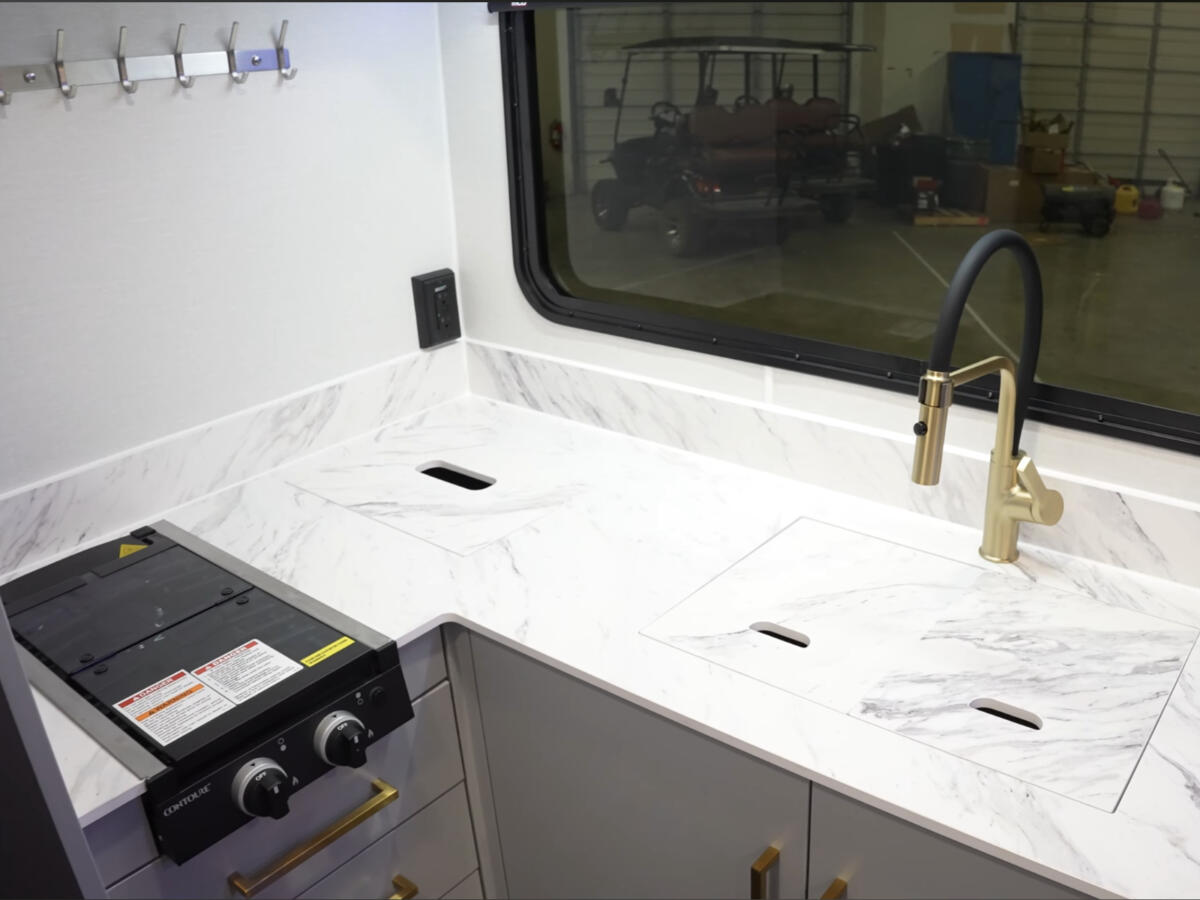
There is an L-shaped counter at the front of the trailer with three overhead compartments for storage. The countertop is a faux marble solid material. There are three cut-outs in the surface—two over the sink and a third over a trash can. Under the sink is also a large storage space, and the floor is more of that anodized aluminum, so no worries about putting stuff in here that’s hot or wet.
There are also four drawers under the two-burner propane cook top. Those drawers are all metal, as is much of the rest of the structure of this trailer. This thing is built to last.
There’s also the obligatory 12-volt refrigerator plus a microwave. However, unlike many RVs with two-burner stovetops and no oven, this microwave is just a microwave as opposed to being one of those convection air fryer rigs. Bummer.
Bathroom in the inTech Black Wing 826-X
I don’t know why I saved this for last, but it’s going to be a deal breaker for a lot of the people who read this because it’s a wet bath. I will say, inTech does a good job with their wet bathrooms because the whole interior can get wet without being ruined.
A lot of RVs with wet baths still have wooden walls, which seems silly to me. But I understand ya’ gotta cut corners where ya’ can. Bleh. This is all human-made materials. Even the door is an exterior-style gasketed door, so you can splash to your heart’s content in here.
Oh, the toilet paper is contained in a plastic enclosure, so no worries on that front.
Boondocking and travel access in the inTech Black Wing 826-X
This trailer has no slides, which is another reason I absolutely love it. So, that also means everything’s fully accessible, even for a travel stop, depending on what you load into the back of the trailer.
The fresh water tank in this is 90 gallons—Wow.
This can be fitted with a gasoline-fired generator. There is an on-board 40-gallon fuel tank. It powers the generator but also can be used to fuel up any toys one might bring along for the ride.
Solar is an option, and there’s also a port on the side for portable solar panels. The optional solar packages can include a 2,000-watt inverter.
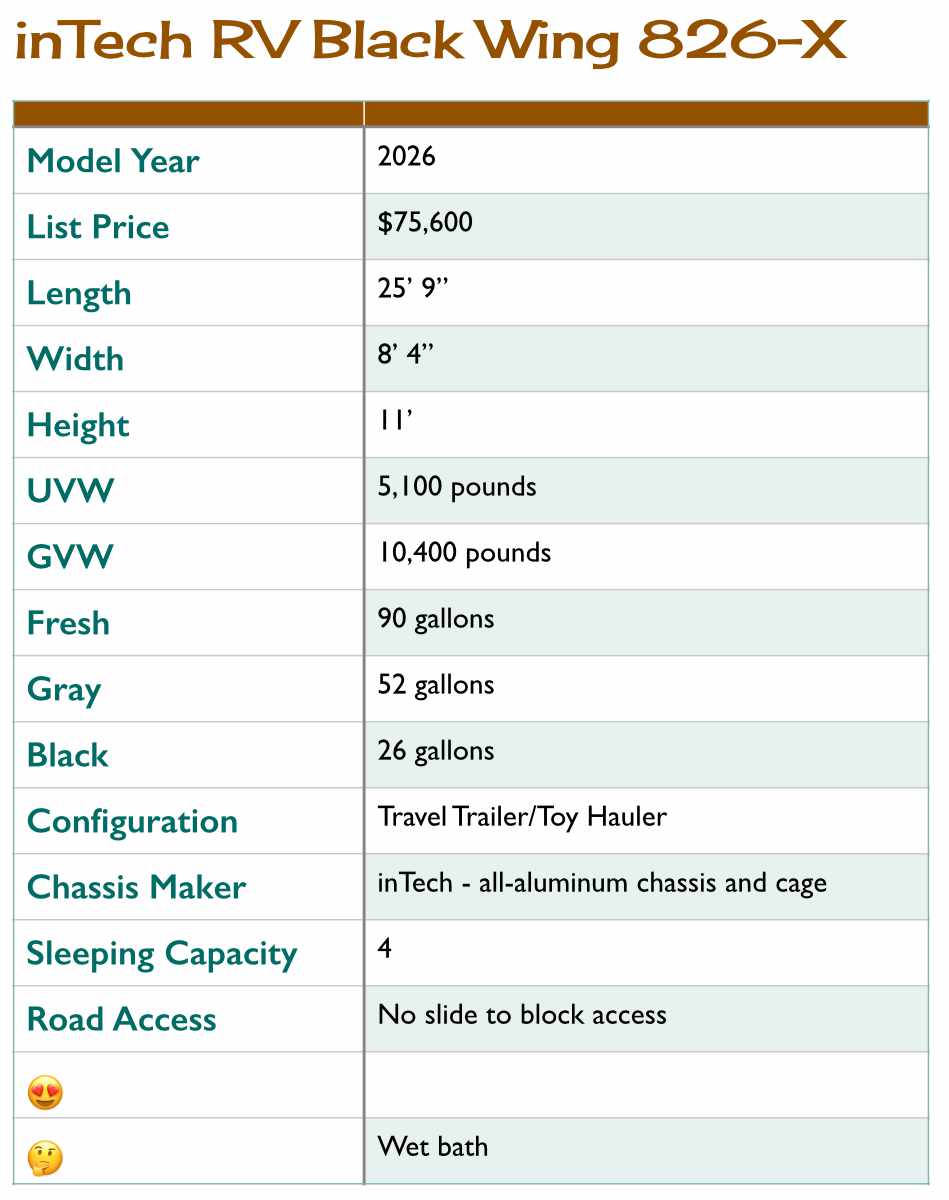
inTech RV Black Wing 826-X specifications
Final thoughts on the inTech Black Wing 826-X
One of the things about inTech interiors is that they do have an austere feel to them. However, this can be easily overcome with stick-on wallpaper, including removable wallpaper from a company likeSpoonflower. You could go with rustic cabin look, walls, or whatever.
I also know there are a number of aspects of this trailer that are likely going to lose favor with more fancy folk—the wet bath, a HappiJac bed, things like that. But then that’s why there are 31 flavors at the ice cream store—something for everyone.
The combination of the build quality, easy cleaning, durable structure, lack of a slide room, metal cabinetry, more aerodynamic shape, and a number of other things makes me very, very interested in this design. It would solve my mental issues of wanting to build a cargo trailer without having to actually build something terrible.
I’m more the Tim Taylor from Home Improvement, not Al Borland.
Of course, I love your feedback and look forward to what you think of this rig.
By Nanci Dixon
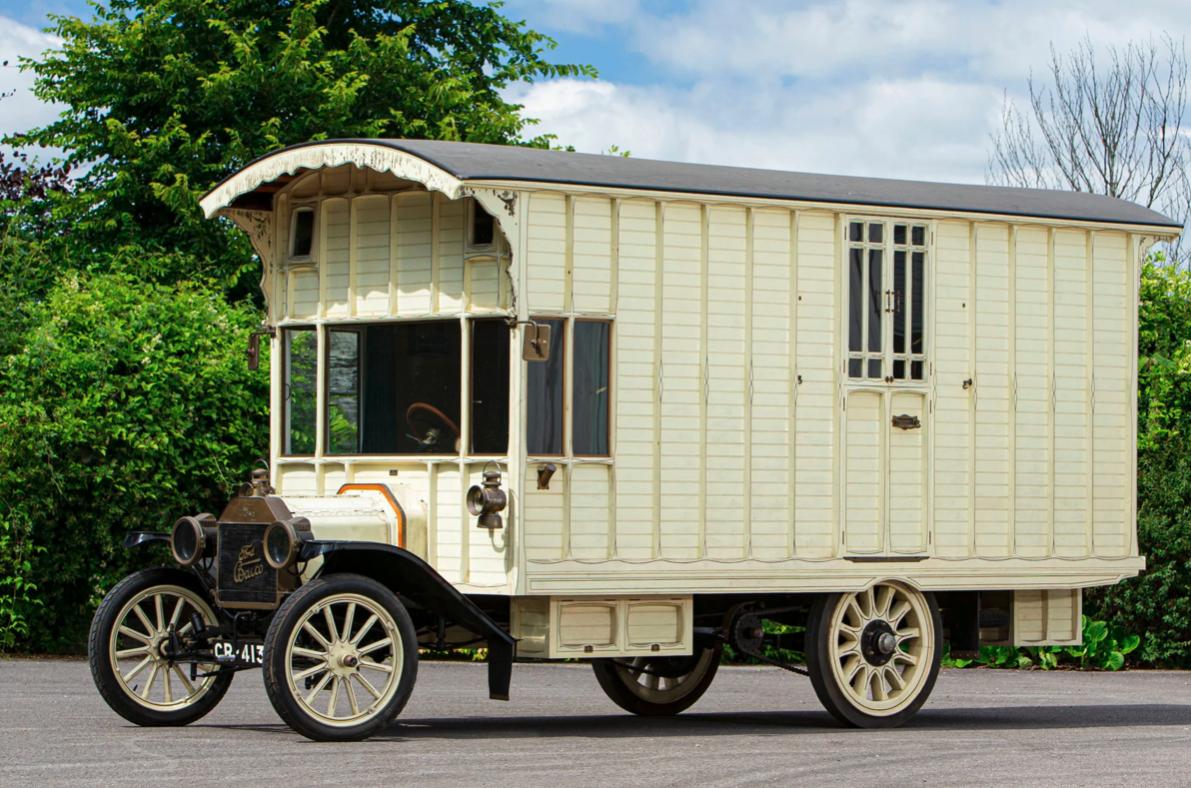
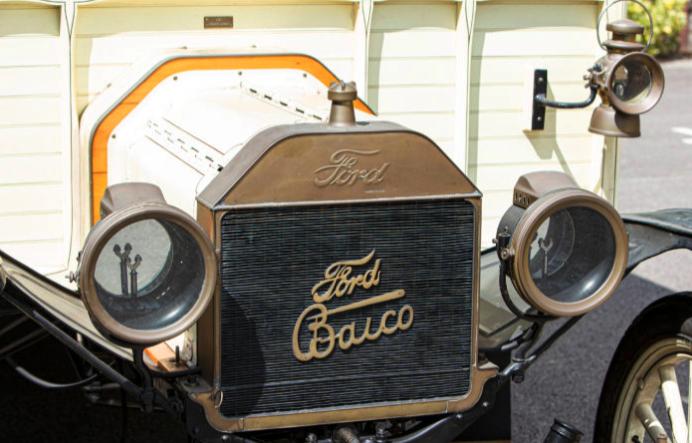
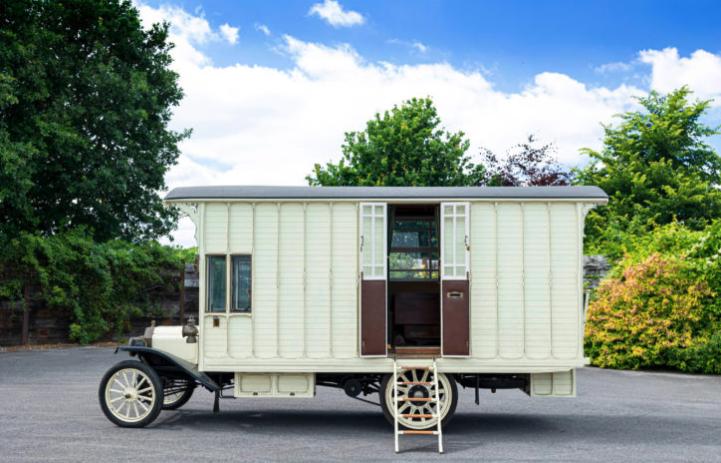
Check out this 1914 Ford Model T Caravan! It may just be the oldest surviving motorhome in the world! While the Pierce-Arrow Motor Car Company produced one of the first motorhomes in 1910, none are known to have survived. This 1914 Caravan falls between the Pierce Arrow and the 1915 Gypsy Caravans.
Right before World War I, this Caravan was built on a Ford chassis for the wealthy Bentall British family. It is built on a lengthened Ford Model T chassis with the Caravan body built by Dunton in England.
It has a 2.9-liter Ford Model T engine capable of a whopping 20 horsepower. The top speed is 45 miles per hour, but probably less with the additional Caravan weight.
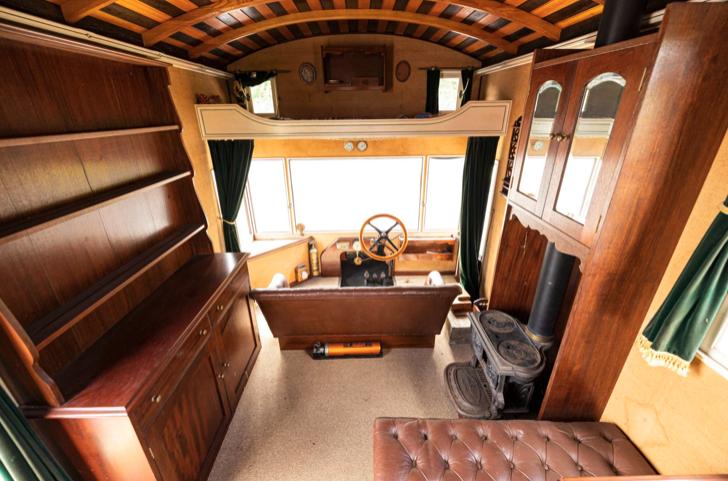
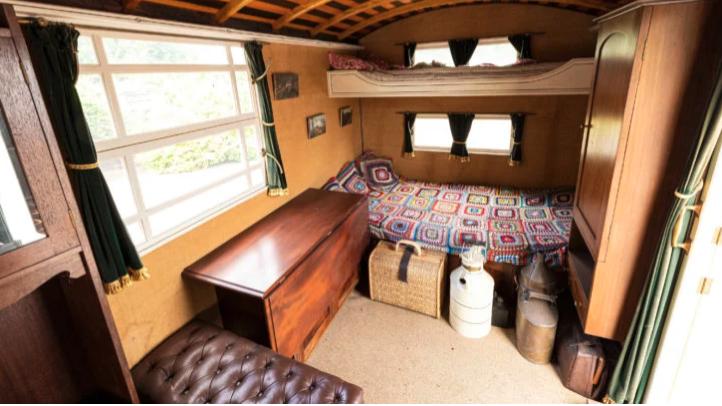
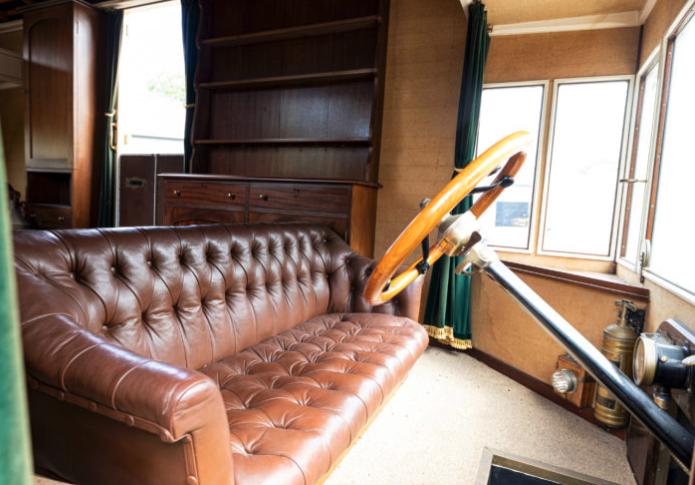
The driver’s seat is designed to rotate to provide a sofa in the living area. The back has two single bunks and a double bed below. A wood stove provides both heat and cooking. There is even a mail slot!
The 1914 Ford Model T Caravan’s early history is lost to time, but it was rediscovered in 1970 and restored by Leo Smith and Robin Tanner.
It is made mainly of wood and built similarly to a railroad car. It was styled and suited for a wealthy traveling family of the time.
All images are courtesy of Ben Branch and Bonhams Auction House.
Cheap gear usually comes with a catch. In this case, the surprise is that the cheapest hitch cargo carrier that Tristan of SUV Camping could find held up far better than expected. After two months, 3,000 miles, wet weather, and off-road use, this $60 Harbor Freight rack proved to be more than a throwaway buy. The details in the video at the end of this post show where it works, where it falls short, and why he plans to keep it.
Why this $60 Harbor Freight carrier stood out
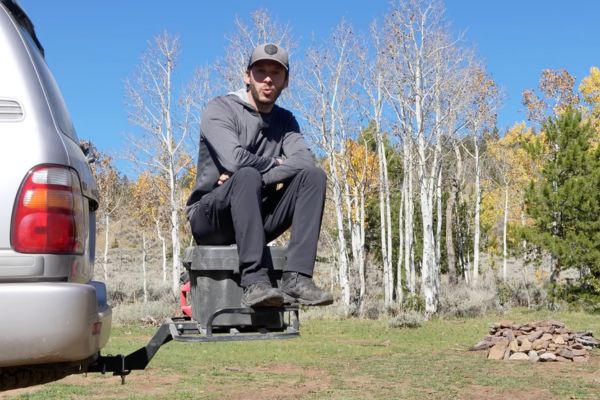
Harbor Freight sells four hitch cargo carriers, and this one made the most sense because of its shape. The HAUL-MASTER 300 lb. Capacity ATV Cargo Carrier uses a 45-degree angled shank instead of a straight one, so it keeps better ground clearance and a better departure angle.
It also has an open rear edge. That matters because longer gear can stick out, instead of being boxed in on all four sides. The other $60 model is similar, but it sits straight and has a full basket edge. The pricier options include an aluminum version and a hinged carrier.
Assembly, setup, and the one accessory that matters
The carrier arrives in pieces, but assembly took only 10 to 15 minutes. It bolts together easily, and installation is simple, too. It slides into a standard 2-inch hitch receiver and locks in with the included pin.
The carrier is light and easy to remove, so a folding setup may not be necessary for many drivers.
How Tristan used it on trips
The carrier filled a gap left by a rooftop tent and an old roof box. It gave him a place for wet fishing gear, muddy clothes, trash, a gas can, and a water jug, all without stinking up the cabin.
His usual setup included a heavy-duty plastic truck box strapped down with ratchet straps, plus a gas can beside it. A similar plastic cargo box gives a good idea of the size and style.
It also works for firewood, coolers, bins, generators, propane tanks, bikes, camp chairs, luggage, lawn mowers, and even wheelchairs.
What held up, and what buyers should watch
After several thousand miles, including dirt roads and dips that dragged the rear edge, the carrier stayed intact. It did not bend, crack, or fall apart. Tristan also found no rust, though long-term outdoor use could change that.
However, there are limits. The 300-pound rating is enough for his needs, but buyers still need to check the vehicle’s hitch rating. Rear access can also be tight, depending on the vehicle and load. On some SUVs, a swing-out or lift-up rear door may hit the cargo.
Some one-star reviews mention pin-hole alignment problems on the shank. Tristan did not run into that issue, and Harbor Freight will likely swap out a bad unit if needed. A pivoting hitch adapter is also an option for anyone who wants a fold-up function, and a similar straight carrier on Amazon shows the more common layout.
Final verdict
For $60, this carrier looks like a bargain rather than a compromise. It kept dirty gear outside, handled off-road use, and stayed solid with an anti-rattle clamp.
Proper tire inflation is obviously a critical safety item. Here are definitions of the terms I am using when discussing tire inflation.
“Cold pressure inflation”
This is the pressure number you see published in tire company “Load & Inflation” charts. It is also the pressure you see on the Certification Label sticker aka tire placard that vehicle manufacturers apply to all cars, trucks and RVs.
It appears that some folks have a little difficulty with the word “cold.” This does not mean the tire needs to be refrigerated or that inflation pressure needs to be “adjusted” by calculating the difference between some theoretical laboratory standard and the current air temperature. “Cold” for tires simply means at ambient air temperature and not warmed by either being driven on or being in sunlight for the previous two hours.
When I am discussing tire pressure, I am always referring to the cold inflation, unless we are specifically discussing the pressure increase due to sun exposure or due to being driven on and reported by the TPMS, or if the driver checked the “hot” pressure at a rest stop with their hand gauge.
Number on tire sidewall
Finally, the pressure number molded on the sidewall of tires is the cold inflation pressure required to support the load, that is also molded into the tire sidewall. The load number is the maximum load capacity for the tire. So the cold inflation would be considered the minimum cold inflation required to support that load.
The wording on tire sidewalls does vary a bit. If you look at a variety of tire types from different manufacturers, you will see some variation in the wording. In my opinion, this contributes to some of the confusion. One fact that many do not think about is that increasing the tire cold pressure above the number on the tire sidewall will not increase the load capacity number molded on the tire sidewall.
It is also important for people to understand that tires can tolerate a significant increase in pressure due to operation under load or at speed. I can’t provide information on the specific design limits used by different tire companies. But I can say that, in my personal experience, many new tires are capable of tolerating inflation increase of 100% or more over the number molded on the tire sidewall. So the idea that an undamaged tire will explode due to an increase in inflation due to operational heat is not justified.
Tire pressure increases
In my post of March 3, 2014, in my RV Tire Safety blog, I covered the science and math of pressure change due to temperature change. You can read that post here, or just accept the rule of thumb that pressure changes by about 2% for each change in tire temperature of 10° F.
While we are talking about pressure change, you can review my post of July 8, 2011, where we pointed out that driving from Death Valley to Denver, CO, will only result in about +2.5 PSI theoretical increase. However, the change (drop) in ambient temperature will probably decrease the pressure by more than that increase due to elevation. This is why we tend to ignore tire pressure due to changes in elevation.
Tire load is important information
You know the GAWR, or Gross Axle Weight Rating, is on your certification label. The problem is that the actual load is almost never split side to side to give a 50/50 split. While many RVs may have a 48/52%, or similar, side-to-side split on an axle, the actual scale readings have confirmed some RVs have as much as a 1,000 lb. unbalance. So, without actual scale readings, we could only guess which tire is loaded more.
A tire on one end of an axle has no idea about the load on the tire on the other end of the axle. So simply dividing the axle load by two is not sufficiently accurate to be confident that you “know” the actual load on your tires.
The other problem is that many people simply estimate the load on their tires. The reality is that a majority of RVs (10,000+) that have actually checked the tire loads have been found to have a tire or axle in overload.
This data demonstrates the importance of learning the actual load on your tires. While learning the load on each tire position is not easy, at a minimum RV owners need to confirm the load on each individual axle. This is easily done with a visit to a local truck stop. This needs to be done with the RV loaded with as much “stuff” as you ever carry. With the axle loading known, and until you can get individual tire position weights, I suggest you assume one end has 53% of the axle load.
Reserve load
My final point for this post is reserve load, and this is where we get to the “set pressure.”
First, we need to remember that reserve load is the load capacity of the tire at its cold inflation pressure that is in excess of the measured or calculated load of the RV on the tire. Some use the term “safety factor,” but as an Engineer, this term is not really appropriate.
In general, it is suggested we have at least a 15% reserve load. Most new cars come with 20% to 30% reserve load. This is a major reason why we seldom see tire failures on cars. An exception was seen in the ’90s, when one vehicle manufacturer provided for less than 10% reserve load. A number of tire failures occurred and even made the TV news.
Many motorhomes may have less than 10% reserve load even if the inflation pressure and the loading shown on the Certification pressure are followed. In my opinion, this is a major reason for the relatively high failure rate of tires in RV motorhome application. RV trailers have it worse. In addition to having 0% to 10% reserve load, the suspension design contributes to high interply shear due to being dragged rather than steered around corners.
So, what should an RV motorhome owner do?
1. Learn your actual loads on your tires by getting on a scale for each tire position.
2. If you can’t get individual axle end loads, assume the heavy end has 53% of the axle load until you learn the actual axle end loads.
3. Use the tire Load & Inflation tables to learn the minimum cold inflation needed to support your actual (or 53%) load.
4. Consider applying +15% to the load figure to give yourself a reasonable reserve load and consider that your minimum cold inflation. You could also consider adding 10% to the load table pressure, if that is easier for you to calculate.
5. Consider adding 5% to the inflation in #4 and use that as your “set pressure.” This gives you a cushion for day-to-day temperature variation, which can change inflation pressure 2% to 5%.
So what should an RV trailer owner do?
Do 1, 2 and 3 above.
4. If you want to try and lower the interply shear, I recommend you increase the inflation to the number on the tire sidewall and use that for your set pressure. If you have increased the tire load range from, say, an LR-D to LR-E, you can use as an inflation number the 65 PSI for LR-D and the 80 PSI for LR-E tires, and use that as your set pressure.
5. Try and learn the wheel max pressure rating and do not exceed that number.
If you have tire questions, check out Roger’s Blog as well as his posts on RVtravel.com. There are hundreds of posts covering everything to do with tires.
If you still have a question for Roger after searching the above posts, send your inquiries to him using the form below.
The weather is warming up, and air conditioners are a popular topic here on RVtravel.com right now. There’s a new A/C on the market, and we recently just told you why we love SoftStartRV™ so much. So, today, we want to remind you why this could be the summer your RV’s A/C fails…
If you’ve spent any time RVing in the heat, you already know which appliance gets pushed the hardest. It runs for hours on end, often at full blast, and when it quits, your entire trip can go downhill fast.
Yep. Your RV’s air conditioner.
Every summer, RV techs see the same pattern: Once temperatures climb and travel ramps up, A/C problems spike. And it’s not because these units are poorly made; it’s because of how hard they’re being pushed, often in conditions they weren’t really designed for.
Why RV air conditioners struggle in summer
RV air conditioners live a tough life. Unlike residential systems, they’re compact, rooftop-mounted, and exposed to direct sun all day. Add in summer heat, and you’ve got a perfect storm.
Here’s what’s working against them:
• Extreme heat loads: When it’s 95°F–105°F outside, your A/C may only be able to cool the interior 15–20 degrees below ambient. That means it’s running nonstop just to keep up.
• Direct sun exposure: Sitting on the roof, the unit itself gets baked, which reduces efficiency.
• Long run times: Unlike at home, where your system cycles on and off, RV A/C units often run continuously in hot weather.
• Power limitations: Campground voltage drops and marginal hookups can strain the system even more.
Put it all together, and it’s no surprise these units are the first to complain.
The most common ways they fail
Most RV A/C units don’t just suddenly die; they start showing signs of trouble. The problem is, those signs are easy to ignore until it’s too late.
Watch for these common issues:
• Weak airflow: Often caused by clogged filters, dirty coils, or a struggling fan motor.
• Blowing warm or lukewarm air: Could be low efficiency, a failing compressor, or heat overwhelm.
• Frequent cycling or not shutting off at all: Thermostat issues or the unit simply can’t reach the set temperature.
• Unusual noises: Grinding, buzzing, or rattling can point to motor or internal component wear.
• Tripping breakers: A big red flag—often tied to electrical strain or failing components.
The small problems that turn into big ones
A lot of A/C failures start with simple maintenance issues that snowball:
• Dirty air filters restrict airflow and force the system to work harder.
• Dusty or clogged coils reduce cooling efficiency.
• Blocked vents inside the RV prevent proper circulation.
• Loose or aging seals let cold air escape and hot air creep in.
What you can do to keep it running
You don’t need to be an RV tech to give your air conditioner a better chance this summer. A few simple steps can make a noticeable difference:
• Clean or replace your air filters regularly (especially during heavy use).
• Check vents and airflow inside your RV—make sure nothing is blocked.
• Park smart when possible—shade helps more than you think.
• Use reflective window covers or shades to reduce heat load.
• Avoid running high-draw appliances at the same time on limited power.
• Start cooling early in the day before the heat peaks.
These won’t turn your RV into a meat locker in 100-degree heat, but they can keep your A/C from getting overwhelmed.
Most RVers learn the hard way
RV air conditioners aren’t designed to perform like residential systems. If you’re new to RVing and/or have mostly used a residential A/C or heat pump system, this may come as a surprise to you.
They’re smaller, less powerful, and built to balance weight, space, and cost. That means in extreme heat, even a perfectly working unit can struggle.
So if your A/C seems like it’s barely keeping up during a heat wave, it may not be “failing,” but it may be maxed out. Treat it nicely, and you can help it perform.
Bottom line
If one appliance is most likely to let you down this summer, it’s your RV air conditioner—not because it’s unreliable, but because it’s working harder than anything else in your rig.
Pay attention to the early warning signs, keep up with basic maintenance, and manage expectations in extreme heat. Do that, and you’ll give yourself the best chance of staying cool when it matters most.
And if it does quit? You’ll understand why and what you can do to take better care of it next time.
America’s Original RV Newsletter. Since 2001 Issue 1258 If you find this newsletter helpful, please consider supporting our work with a donation of your choice. Thank you!
Today’s thought
“An arrogant person considers himself perfect. There is no greatness where there is no simplicity, goodness and truth.” ―Leo Tolstoy
Need an excuse to celebrate? Today is National Hug A Plumber Day!
On this day in history: 1901 – New York becomes the first U.S. state to require automobile license plates.
Featured news
Two RV parts giants may merge—and RVers could pay the price
A possible merger between RV suppliers Patrick Industries and LCI Industries (Lippert) has the industry buzzing. Together, they already supply a huge share of the parts that make an RV, and a deal could mean even fewer companies controlling more of the supply chain—raising fresh concerns about competition, which could be a big deal for RVers.
Gas prices may have peaked, but RVers shouldn’t expect relief anytime soon
Gas prices RVers are watching may have finally stopped climbing—but don’t mistake that for good news. After weeks of volatility tied to tensions in the Middle East, there are signs the worst of the spike may be behind us. But between global oil risks, political crossfire, and long-term forecasts, the road ahead still looks expensive—and uncertain.
Grand Design rolls out a “worry-free” RV roof, promises fewer leaks
Roof maintenance isn’t glamorous, but it’s one of the most important—and most dreaded—parts of RV ownership. Now, Grand Design RV says it has a better idea. The company is expanding what it calls a “worry-free” roof system to more of its lineup. Here’s what that looks like.
Starlink satellites are becoming a problem in space
Starlink has been a game-changer for RVers, bringing internet to places cell service can’t reach. But as thousands more satellites launch, experts warn space is getting crowded fast—with growing concerns about congestion, collisions, and what comes next overhead. Continue reading.
California announces major expansion of its State Parks system
California just announced a major expansion of its State Parks system, and RV travelers should keep an eye on it. Governor Gavin Newsom unveiled State Parks Forward recently. It’s a plan that would create three new state parks in the Central Valley and add thousands of acres to existing parks. Learn more.
Carrying a gun in national parks? The rules change when you step inside a building
If you’re carrying a firearm in a national park, the rules can change faster than you might expect. Guns in national park buildings are treated very differently from guns out on the trail—and that’s where many RVers can get tripped up.
Charlie Sheen’s old tour bus could be your new RV for “cheap”
A used Prevost bus conversion that once cost around $500,000 just went begging at auction. The 1998 Marathon-built coach, originally owned by Charlie Sheen and later converted into a band tour bus, stalled at $84,525 with the reserve unmet. So what’s the deal?
RV review Explore the 10 best 2026 fifth wheels under 30’
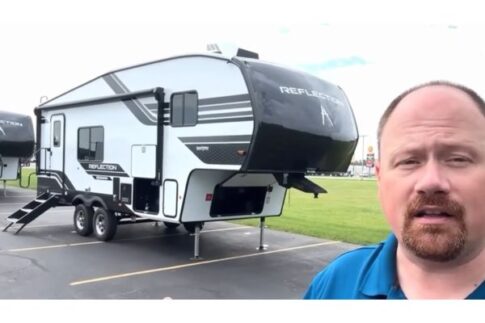
Small fifth wheels solve a common problem. Many campers want the road manners of a fifth wheel, but they do not want a giant rig that limits campsites, parking, or travel days. To help solve the problem, Josh the RV Nerd at Bish’s RV rounded up 10 models that stay under 30 feet tip to tail. The mix includes budget picks, luxury layouts, and a few smart travel-focused floor plans that keep the bathroom, bed, and kitchen usable with the slide closed. Here are his picks.
FACTOID: The first flush toilet was invented in Crete (Greece) in 1700 B.C. Impressive!
🔥 Reader favorite Keep your windshield clean!
No more dirty windshield—inside or out! This windshield cleaner comes in three different sizes, and the large, swivel head easily wipes dirt, grime, dust, and whatever else is dirtying up your windshield right off. Too easy! Thank us later. Learn more or order.
Beyond the headlines with Tony Barthel
What does a Lippert–Patrick merger mean for RVers?
If you haven’t read Russ and Tiña De Maris’ article yet, know that RV suppliers Lippert (LCI Industries) and Patrick Industries announced that there were discussions about a potential merger between them. As usual, Russ and Tiña did a great job with the details, but since this column is “Beyond the headlines,” I thought I’d reach out to my friends in the RV industry and see if they had anything to share. Everybody I spoke with, from decision makers to line workers, had the same comment…
Tanner Toons With Tanner Woods
You may share this Tanner Toon, unaltered, on your website, blog or social media with our compliments. The musings from Tanner Woods’ creative mind appear in this newsletter every Saturday and Sunday and in many RV Daily Tips newsletters through the week.
News briefs
Think rookie mistakes only happen to first-timers? Rangers say even seasoned RVers still make the same national park errors—from getting too close to wildlife to assuming cell service and road conditions will cooperate. Experience can create the biggest blind spots.
Glacier National Park is reminding visitors about important changes for the 2026 season. They include the elimination of vehicle reservations anywhere in the park this year, as well as a new reservation-only shuttle system and three-hour parking limits at Logan Pass.
National Park Service archaeologists have identified the burial site of a 19th-century Army private inside Fort Jefferson, a massive coastal fortress in Dry Tortugas National Park about 70 miles west of Key West. Officials say it is the only known service member buried within the historic fort’s walls.
New data from The Dyrt shows campers are warming up to AI trip planning. About one-third say they trust AI to recommend a campground, yet only around 1 in 10 have actually used it to plan a camping trip so far—suggesting curiosity is growing faster than adoption.
Public tours of Nevada’s Great Basin National Park’s Lehman Caves will resume on Friday, May 22, in time for the Memorial Day weekend.
Great Smoky Mountains National Park rangers responded to three bear‑related incidents at Ramsey Cascades Trail last weekend, including two encounters in which a bear approached visitors and took two backpacks, and a third in which a bear briefly chased a group. Ramsey Prong Road and Ramsey Cascades Trail are temporarily closed.
STAY COOL ALL SUMMER LONG!
Now, run your RV’s air conditioner when you normally could not! Learn why our publisher, Chuck Woodbury, raves about this.
Speaking of Great Smoky Mountains…Enter the lottery NOW, April 24 through April 27, for a chance to see the famous synchronous fireflies at Great Smoky Mountains National Park this May.
Timed-entry reservations are no longer required at Arches. Visitors may enter the park at any time during operating hours. Vehicles may be diverted from park entrances when areas become too congested. Reservations continue to be required for Devils Garden Campground and self-guided and ranger-led Fiery Furnace hikes.
Jellystone Park Camp-Resorts is expanding pet-friendly amenities, stays, and activities at more than 75 locations across the U.S. and Canada as more RVers hit the road with pets. The company says it’s now as pet-friendly as it is family-friendly.
Washington State Department of Natural Resources will close four campgrounds for the 2026 season and reduce access at others after more than $8 million in recreation budget cuts. The affected parks include sites near Elbe, Conconully, and Forks, as demand for public lands continues to rise.
Alabama’s Gulf State Park has opened reservations for its new RV resort, giving travelers first access to a highly anticipated campground on the former golf course property. Officials expect strong demand for the modern new sites and are urging guests to book online early.
Hurry! If you have a Maine library card, then you may want to head over to your favorite state park or historic site today. Admission is free until closing time.
Indiana Department of Natural Resources is offering free annual entrance passes to foster families, giving them no-cost access to Indiana State Parks properties statewide. Eligible families can apply by submitting a simple form.
Totally weird news
New Chinese passenger car would include hidden, built-in toilet
A proposal for a built-in toilet in a passenger car is way too weird to ever get into production. That’s what we think. But who knows? A toilet that magically appears so you can do your business without leaving your seat. This is a joke, right? Nope. It’s a real deal! At least in theory.
? MYSTERY PRODUCT OF THE DAY ? Okay, now THIS is handy. It’s made for traveling, which meansit’s made for RVers, which means it’s absolutely the perfect space-saver. Brilliant, we tell you! Brilliant!
Trivia
According to various accounts, Walmart founder Sam Walton’s last words were “I blew it.” These words reportedly reflected his regret over spending too much time working and building his business empire, rather than spending meaningful time with his family.
Laugh of the week
Top scams RVers should watch for right now
Travel season is heating up—and so are scams aimed at people on the move. Here are three more RV-related scams to watch for this week:
Fake mobile RV techs: Someone offers fast same-day repairs online, asks for payment upfront, then never shows.
Fuel pump distraction scams: While you’re fueling, someone distracts you while an accomplice grabs a wallet, phone, or card info.
Package delivery texts: Messages claim a campground delivery or package is delayed and ask you to click a link to update details.
Everybody I spoke with, from decision makers to line workers, had the same comment: “No comment.” Since the press release said that nobody at Lippert or Patrick was going to make any further announcements beyond the initial press release, I didn’t bother reaching out to decision makers at either company, although I have good contacts there, too.
In fact, a few people I know who work for both companies said they, too, were in the dark about the details, if there even were any.
So, then, what’s the point of this? Just this.
Between these two companies, they make just about enough parts that they could build an entire RV. In fact, I think they do make enough parts and components that they could make an entire RV.
One of the people I spoke with, off the record, of course, said: “All they need is an assembly line, and we’re all out of business.”
“I fell out of my chair—How is that even going to be legal?” said another, who then speculated that Lippert makes enough stuff not in the RV industry that that could be the way this gets through any regulatory oversight.
Indeed, Lippert makes all sorts of parts for boating; they own Curt, which makes a lot of things to modify pickups and off-road vehicles; they make things for hotels; and more.
I don’t have as much experience following Patrick, but I can say that when Lippert took over Furrion, it seemed that there was a notable improvement in the product and processes.
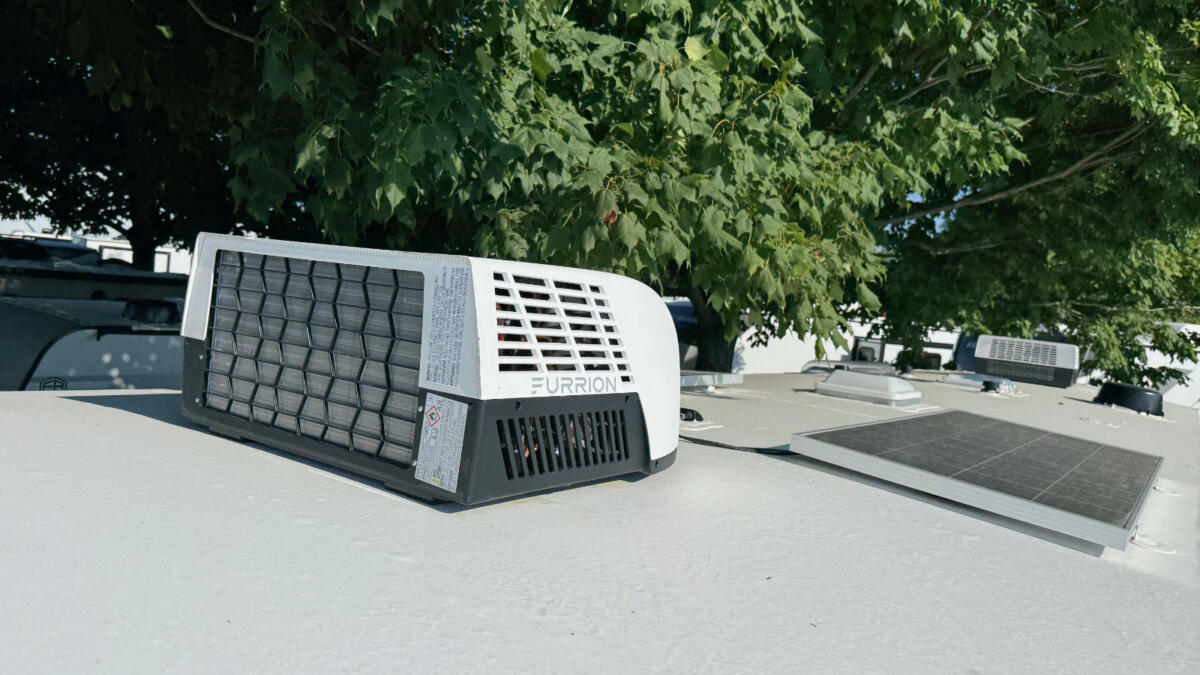
One of the newer things that has come about under the Furrion name, for example, is the Furrion Chill Cube, which I wrote about here. That is a completely new product, and I will say it’s probably the most sought-after (in the aftermarket) RV air conditioner on the market.
In fact, it’s the only A/C unit that I’m aware of that is a recognized name in the RV aftermarket. Yes, there are other A/C units, and there is a lot of noise in the 12-volt and 48-volt space. But everybody I know of who has replaced their A/C units for whatever reason has specifically sought out the Chill Cube.
The point of this is to say that Lippert seems to be interested in pushing things further in areas where they see an opportunity.
I also spoke with a Lippert engineer a few years ago, who stated that their newest 12-volt refrigerators are quite remarkably efficient. This was borne out in my own unit, which is branded Magic Chef. I wrote this article about how efficiently my RV refrigerator operates.
But I also know more than a few people who aren’t happy with the quality of components in their RVs. Do know that most suppliers would gold plate and hand build any component if that’s what customers demanded. But also know that most people shop on price, primarily, and you don’t get the best quality when price is your primary consideration. The RV industry is very receptive to building what people ask for, in most cases.
But there are challenges when there are fewer suppliers in any industry, to be sure. The example I can think of first is when Atwood and Suburban aligned, and now we don’t get the Atwood water heaters that don’t have an anode rod in them.
If this merger goes through, it will be interesting to see what happens, and it will absolutely affect all new RVs sold in the U.S.
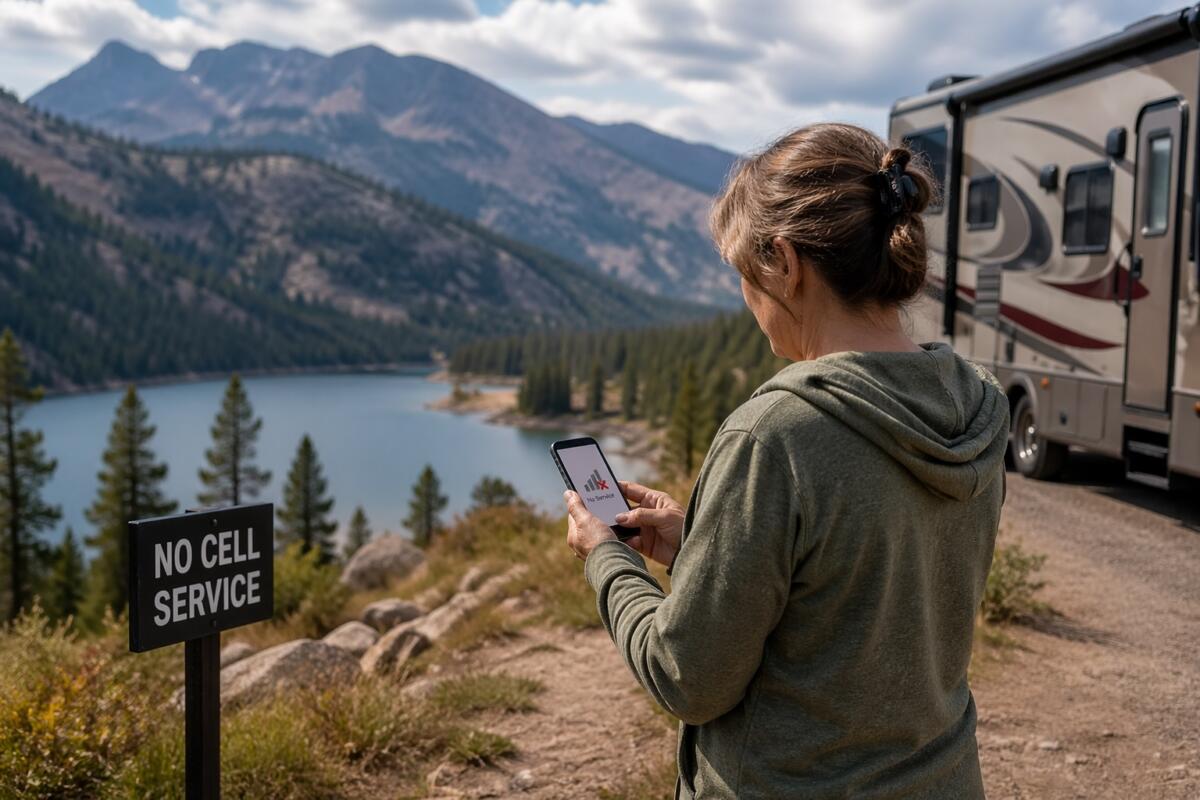
There was a time when heading to a campground with no cell service sounded like a dream. No calls, no emails, no alerts buzzing in your pocket—just fresh air, quiet mornings, and a chance to truly unplug. For many RVers, that still sounds pretty wonderful.
But times have changed. These days, a lot of travelers rely on their phones for much more than chatting. You may use yours for maps, weather alerts, campground reservations, checking in with family, paying bills, streaming entertainment, or even working remotely from the road. Suddenly, “no bars” can feel less peaceful and more inconvenient.
Some RVers won’t think twice about staying off-grid for a few days. In fact, they seek it out. Others would rather know they can make a call, send a text, or look something up whenever needed. And for some, it may depend entirely on where they are and how long they’re staying.
There’s also the safety side of it. In remote areas, being unable to contact help quickly can make some travelers uneasy—especially when towing, hiking, or exploring unfamiliar roads.
So what about you? If a campground or park had poor cell service—or none at all—would that make you choose somewhere else?
After you vote, feel free to leave a comment. We’d love to hear whether you enjoy unplugging or prefer to stay connected. Thanks!
Small fifth wheels solve a common problem. Many campers want the road manners of a fifth wheel, but they do not want a giant rig that limits campsites, parking, or travel days. To help solve the problem, Josh the RV Nerd at Bish’s RV rounded up 10 models that stay under 30 feet tip to tail. The mix includes budget picks, luxury layouts, and a few smart travel-focused floor plans that keep the bathroom, bed, and kitchen usable with the slide closed.
You can get a closer look at all of them in the video at the end of this post.
Why these small 2026 fifth wheels stand out
Across these models, a few patterns show up again and again. Better tires, improved suspension, enclosed heated underbellies, solar options, and 3,000-pound rear hitches are no longer rare in this size range. That matters because these trailers are built for people who want to move often, not just park for a season.
Some also push beyond the usual small-RV compromises. Several keep strong road access with slides closed, while others squeeze in features like washer and dryer prep, larger fridges, direct-view entertainment, or wider-body interiors.
The 10 models at a glance
Model
What stands out
Full video tour
Grand Design Reflection 22RK
Smallest and most affordable Reflection, under 28 feet, with strong in-transit access and Reflection “golden thread” features like auto-leveling and weather protection
Quietly loaded with 16-inch Goodyear tires, TPMS, Touring Coil suspension, optional 400 watts of solar, a bigger 12-cubic-foot fridge, and both a closet slide and washer and dryer prep
The layout that helped start the copycat wave, now updated with a longer bed, better bedroom storage, strong travel access, and a 0- to 110-degree package
The clear trend is easy to spot. The Cougar 23MLE floor plan helped shape this whole category, and brands like Grand Design and Jayco built their own versions because the layout works so well for couples.
The layouts that feel bigger than they are
The Brinkley Z2700 is the head-turner in this group because it borrows the feel of a large luxury toy hauler without crossing the 30-foot line. Meanwhile, the Avenue 23ML uses its wider body to create comfort that many 8-foot models cannot match. The Reflection 270BN also deserves a close look because its slide-in usability fits the whole point of a travel trailer made for travel.
The biggest takeaway is simple. Under-30-foot fifth wheels are no longer stripped-down niche rigs. This class now includes smart couple’s campers, family-friendly oddballs, and a few small luxury options that tow far easier than their interiors suggest.
By J.R. Montigel
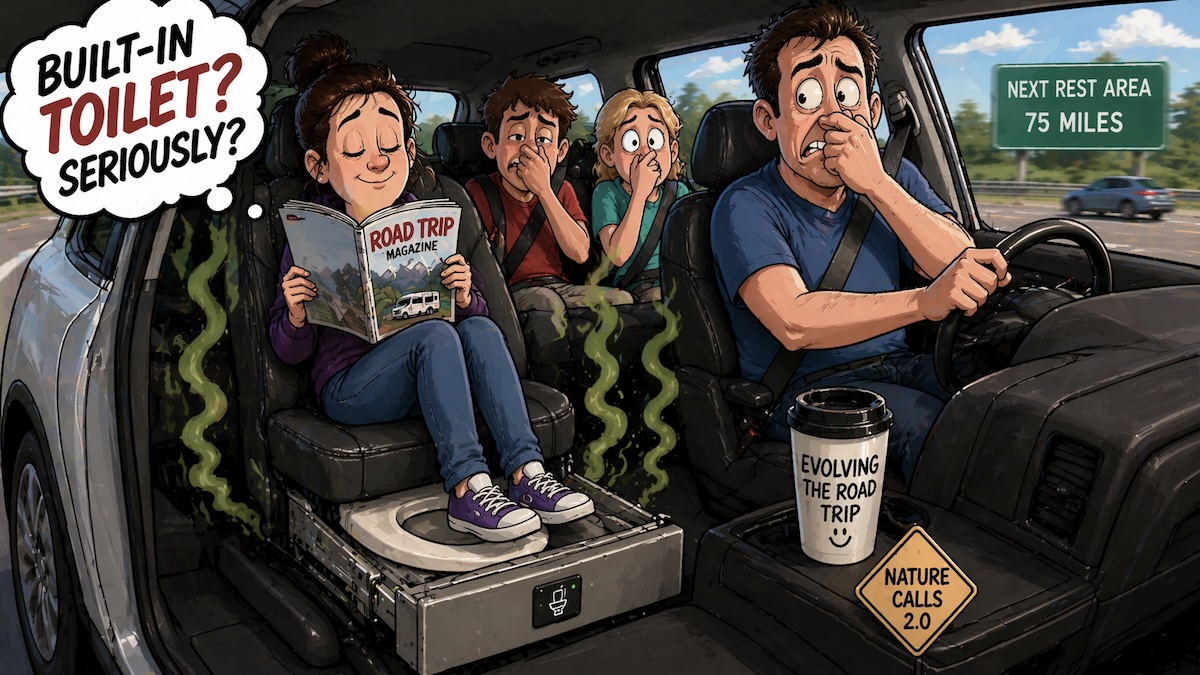
A proposal for a built-in toilet in a passenger car is way too weird to ever get into production. That’s what we think. But who knows? Frankly, I’m not waiting in line for this car to hit the market. Come on? A toilet that magically appears so you can do your business without leaving your seat. This is a joke, right?
Nope. It’s a real deal! At least in theory.
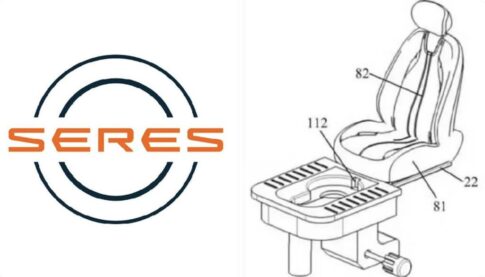
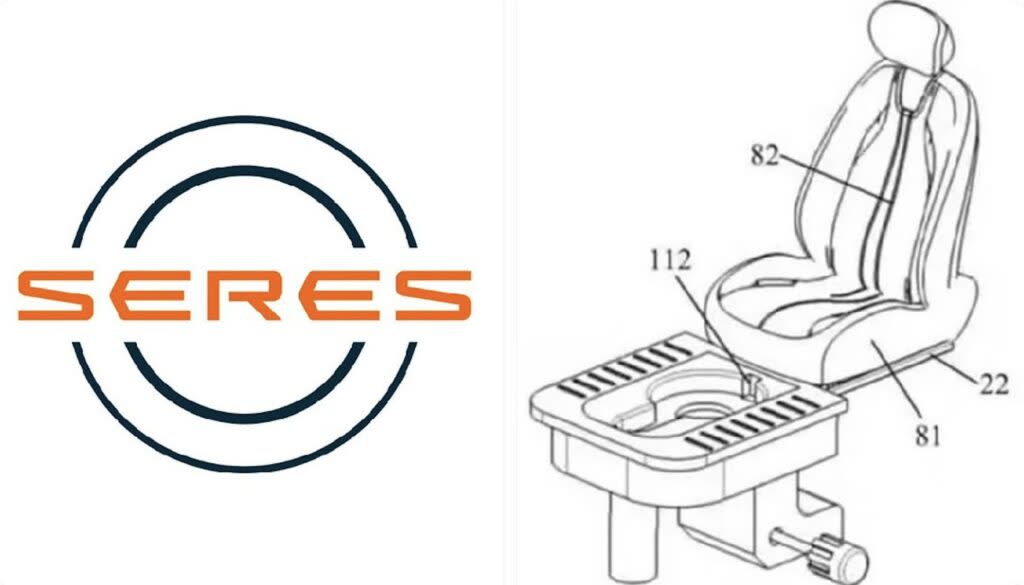
A Chinese automaker, Seres, has patented such a device for future electric vehicles. We kid you not. The idea is simple: A small toilet seat slides out from under the passenger seat when nature calls, then tucks neatly away when you’ve completed your business. No need to “hold it” until the next rest area.
And while you do your due diligence, fellow passengers sit a few feet away observing, and perhaps hearing and smelling, too, whether #1 or #2. Thank goodness the device is not part of the driver’s seat. A visual image of a driver doing his thing while driving is best avoided.
What the system includes
The system includes a waste tank (think RV cassette toilet), plus a fan and exhaust pipe to deal with odors. There’s even a heating element designed to speed up evaporation and make cleanup easier.
If this sounds familiar, it should. RVers have been solving this “problem” for decades—with actual bathrooms. The difference? Space, privacy… and not sitting two feet from your traveling companion, obeying the call of nature.
The concept, it seems, is designed for long drives, traffic jams, and perhaps camping situations where restrooms aren’t available.
But before you trade your rest stops for a rolling restroom, consider the downsides: emptying the tank, lingering smells, and the awkward reality of using it inside a compact vehicle and then sharing the vehicle’s new aroma afterwards with your passengers. Perhaps an enhanced version could be marketed for carpools, where each seat would do double-duty as its own comfort station.
For now, the idea is merely a patent. No production plans have been announced, and if we were betting people, we’d consider the chances of it ever happening a very long shot.
California just announced a major expansion of its State Parks system, and RV travelers should keep an eye on it.
Governor Gavin Newsom unveiled State Parks Forward this week. It would create three new state parks in the Central Valley and add thousands of acres to existing parks. State officials say the effort would bring the total number of California state parks to 283 and grow the system by 30,000 acres by the end of the decade.
For RVers, the biggest takeaway is simple: More public land usually means more places to explore, more scenic drives, and more options for day trips once the parks open. The new parks are still in the planning and acquisition stage, so they are not ready-made travel stops yet, but California says it will begin public engagement right away before submitting a visioning report later this fall. As of now, there is no mention of public campgrounds at these new parks.
New parks
One of the planned parks is Feather River Park in Yuba County. California says the site covers nearly 2,000 acres along the Feather River. It would be the first state park in the county. The proposal includes river access, a boat launch, and a riverside beach, which makes it especially interesting for travelers who like fishing, paddling, or a relaxed stop near the water.
Another proposed addition is the San Joaquin River Parkway in Fresno and Madera counties. Officials say this would join several public properties into an 874-acre state park and help create a bigger recreation hub near Millerton Lake State Recreation Area. For RVers crossing the Central Valley, that could eventually mean a stronger cluster of outdoor stops in one stretch of the state.
The third site, Dust Bowl Camp in Bakersfield, would bring a different kind of experience. California says the Sunset Migratory Labor Camp is listed on both the National Register of Historic Places and the California Register of Historical Resources. It was among the first federal camps set up for farm workers who came to California during the Dust Bowl. The state says the roughly 2-acre site could become a history-focused stop tied to “The Grapes of Wrath” and the migrant labor story of the Great Depression.
Existing parks to add land
California is also adding land to existing parks. The announcement says three recent property donations already total about 804 acres. This includes additions to Montgomery Woods State Natural Reserve, South Yuba River State Park, and Pigeon Point Light Station State Historic Park. State officials describe the broader expansion as a mix of low-cost land transfers and conservation partnerships that should increase access without adding major operating costs. These areas are currently day-use only.
Future trip?
If the planning process moves forward as announced, these spots could become smart additions to future California RV routes.
We use cookies to ensure that we give you the best experience on our website. By continuing to use our site, you consent to accepting cookies. We NEVER have or will sell reader's data. For more info, please see our privacy policy page.