By Cheri Sicard
Proper RV storage keeps your camper secure, dry, and ready for the next adventure. With so many options—from uncovered storage to fully enclosed, climate-protected garages—the right choice depends on your budget, where you live, and how often you want to access your RV.
In today’s video, Jason Epperson of RV Miles shares a practical guide to help you decide where and how to store your RV for peace of mind all year long.
Storing an RV at home: What matters most
Parking an RV at home is convenient, but it isn’t always hassle-free. Local laws or HOA rules may limit how long or where an RV can sit on your property. Some towns only allow it in the driveway for a few days; others require parking out of sight. Before you decide, check these:
• Local parking ordinances and HOA guidelines
• Whether your driveway or yard can handle the RV’s weight and size
• If you have a suitable concrete, grass, or gravel spot available
• If you’re prepared to lose the space for daily parking
Commercial RV storage choices and costs
Commercial storage facilities offer options for every need and budget. Choices include pull-through spots (easy to park), back-in sites, open lots, or fully enclosed garages. Some lots number each spot so your RV always has a place. 24/7 gate access, wide lanes, and multiple entry points make loading or picking up the RV much smoother.
However, not all storage locations are created equal. Safe storage typically means features like:
• Secure fencing and gated entry
• Surveillance cameras and bright lighting
• Keypad or code access, with unique or frequently rotated codes
Being in a low-traffic area and having a garage add safety, but code access isn’t perfect. Thieves look for easy targets, so any extra step—from hitch locks to cameras—can help deter them. Review photos online and visit in person, because rundown fences or neglected storage lots can mean trouble.
Surface options
Where you put your RV matters—a lot.
Concrete:
• Pros: Stable, lowest moisture, durable
• Cons: Higher cost, less common
Gravel:
• Pros: Cheaper, fewer puddles than dirt
• Cons: Some moisture, jacks can sink, rust
Grass:
• Pros: Cheapest, sometimes only choice
• Cons: Moisture from underneath can cause rust or jack damage
Covered vs. uncovered RV storage
Covered storage guards against sun, hail, and repeated freeze-thaw. But it’s not always available. Using an RV cover is another option—though fitting one is awkward. It may require extra hands and ladders. Cheap covers can flap in the wind and scuff your RV, or trap moisture underneath. If using a cover, choose a quality one. A simple, sturdy tongue jack cover can also prevent damage where weather hits hardest.
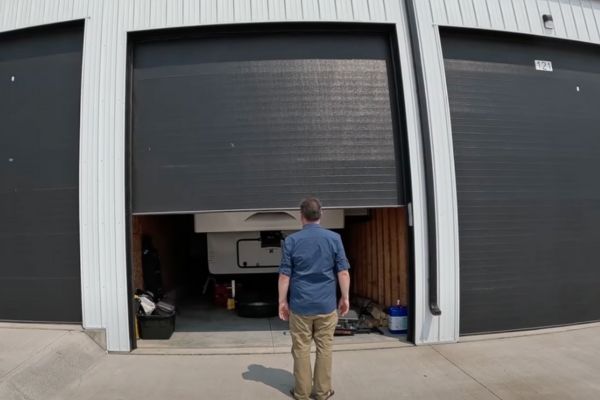
Enclosed RV garages offer unbeatable protection from storms, sun, mildew, even pests. Amenities like power for battery charging or running the fridge add value. The downside? Cost. Expect to pay up to $600/month for indoor storage, compared to $50–$350/month for an outside site. Space is tight—precision parking is a must, and sometimes steps have to be removed for room. Owners storing a valuable or sentimental RV may find the expense worthwhile.
Storing indoors also allows you to prep, clean, and organize out of the weather. Plug in for power to keep fridges cold or batteries charged. Solar setups can work for outdoor storage, but plugging in removes worries about cloudy days. Fully enclosed garages cut down on pests, especially compared to open outdoor spots. It’s another layer of protection against bugs and mice finding a home in your trailer.
Making parking and access easier
Wide drives, angled parking, and pull-through sites turn moving a big RV into a simpler task. Tight rows make it hard to use slide-outs or steps, especially if your storage spot is narrow. Removable steps can help, and clear lines or guides on the ground help line things up.
Accessibility tips:
• Look for sites with extra room to maneuver.
• Make sure you can access your RV whenever you need.
• Confirm there’s space to briefly open slides.
Finding the right location
Putting your RV close to home saves time and hassle, especially when prepping for trips. Balance cheaper prices farther away against repeated drives back and forth. Ask:
• How far are you willing to drive?
• Is it worth saving $20/month for a storage lot that’s an hour away?
• Do you have to load up and drive back home again multiple times?
Plan storage early
Desirable storage options often have long waitlists. Start looking when you shop for an RV so you’re not stuck with a spot that doesn’t meet your needs. Secure, well-lit, or enclosed storage can reduce your insurance bill. Ask your agent if your chosen spot qualifies for a discount.
Final RV storage tips
Think about these details before you decide:
• Surface quality
• Security features
• Proximity to home
• Accessibility
• Total cost
• Climate protection
Always check reviews and visit potential storage locations for the best fit. Finding the right storage ensures your RV is ready when you are—dry, secure, and easy to access for your next trip down the road.
RELATED
- Key features to look for when choosing an RV storage facility
- 5 steps to keep mice out of your RV during storage
- Lessons learned from the theft of our RV in storage
RVDT2929