Home Blog Page 72

The local U-Haul says my LP tank needs to be recertified? What you need to know

Dear Dave,
While filling up propane at a U-Haul, I was told my LP tank certification would expire soon. Do the LP tanks on a Class C motorhome have to be recertified? —Anthony, 2015 Thor Chateau

Dear Anthony,
The propane cylinder that came standard on your Class C is classified as an American Society of Mechanical Engineers  (ASME) propane tank. It is mounted to the chassis rail horizontally. Propane cylinders used on trailers are classified as Department Of Transportation (DOT) cylinders.
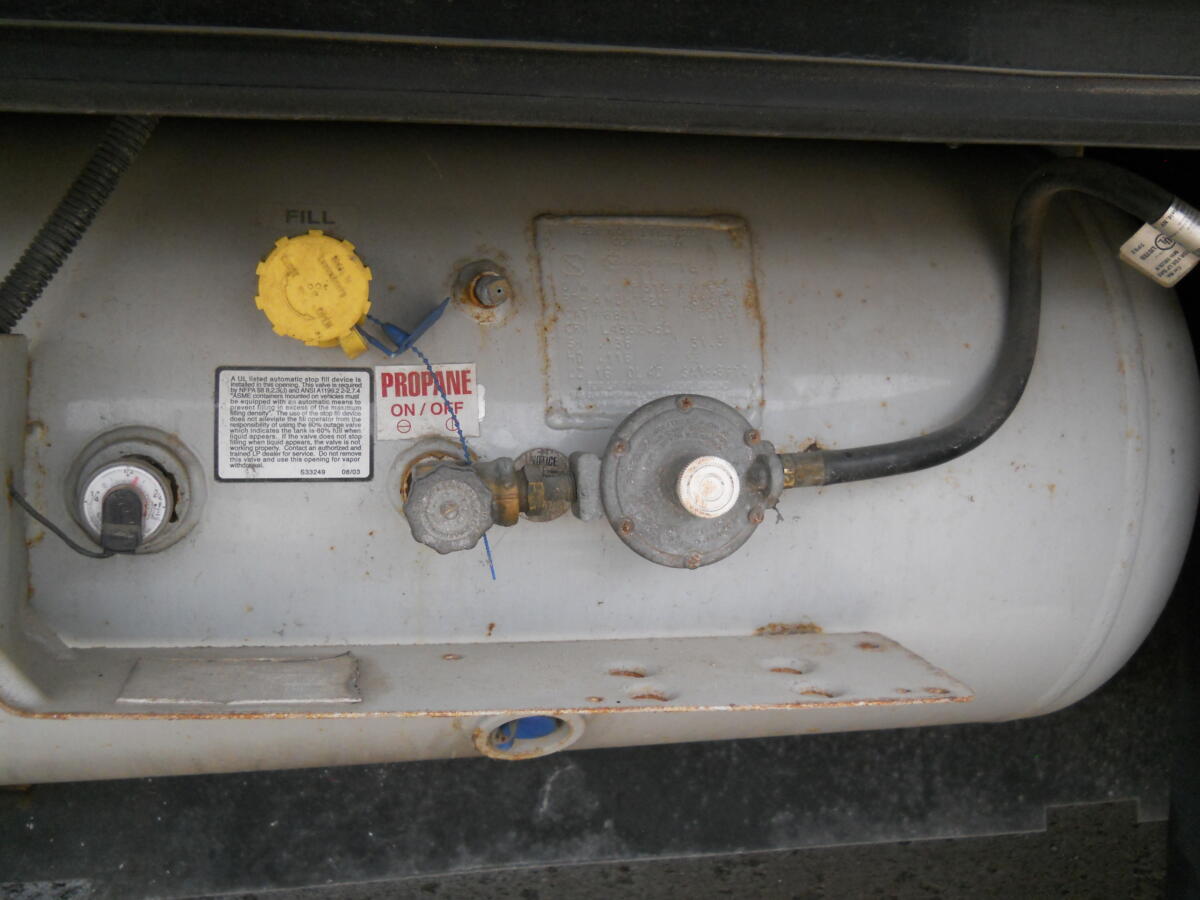
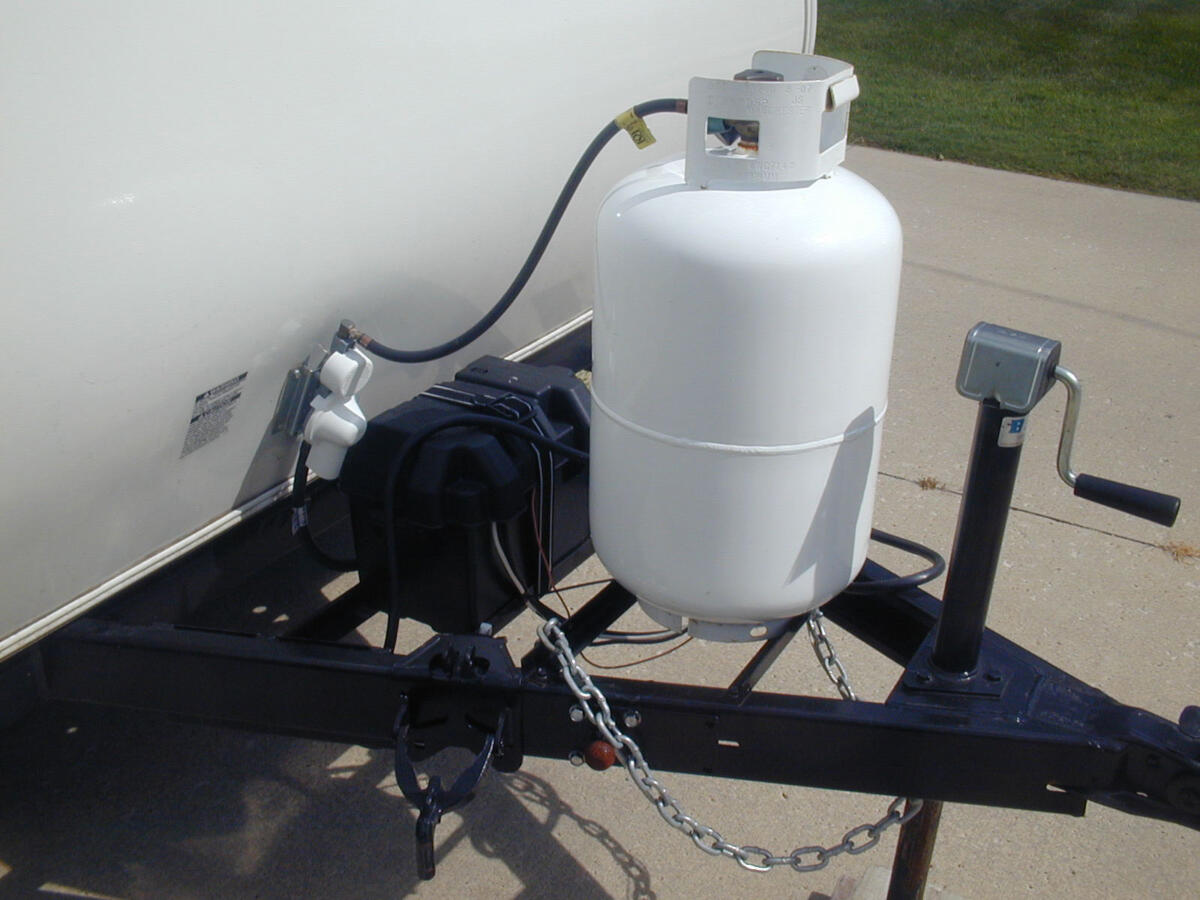
LP Tank
ASME tank on motorhome
DOT Cylinder
DOT cylinder on trailers

DOT cylinders must be recertified

According to the Code of Federal Regulations (49 CFR 180.209(e)), DOT cylinders (types 4B, 4BA, 4BW, and 4E) must be recertified 12 years after their manufacture date, and every 5 years thereafter if requalified by visual inspection. If recertification is completed using a proof pressure test, the interval extends to 10 years. The cylinder type and manufacture date are stamped on the upper collar or handle.

For more specific information, visit the Code of Federal Regulations for DOT Requalification of Propane Cylinders here.
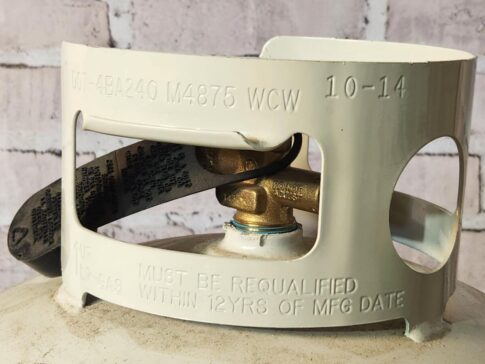
DOT Cylinder Date
DOT cylinder date

ASME tanks do not require formal recertification

According to Manchester Tank and the RV Safety & Education Foundation (RVSEF), ASME tanks used on motorhomes are made of a thicker metal component and do not require recertification. Instead, they require visual inspection for excess rust and pitting, loose or missing brackets, and damage. DOT cylinders must also be inspected for the same issues.

Overfill prevention device

Both DOT cylinders and ASME tanks are equipped with an overfill prevention device (OPD), which prevents the cylinder from being filled beyond 80% capacity. This allows room for expansion of the LP during hot temperatures.

Since October 1, 1998, DOT cylinders have been required to include an OPD with a triangular handle. Filling stations are not permitted to refill DOT cylinders that do not have this triangular valve.
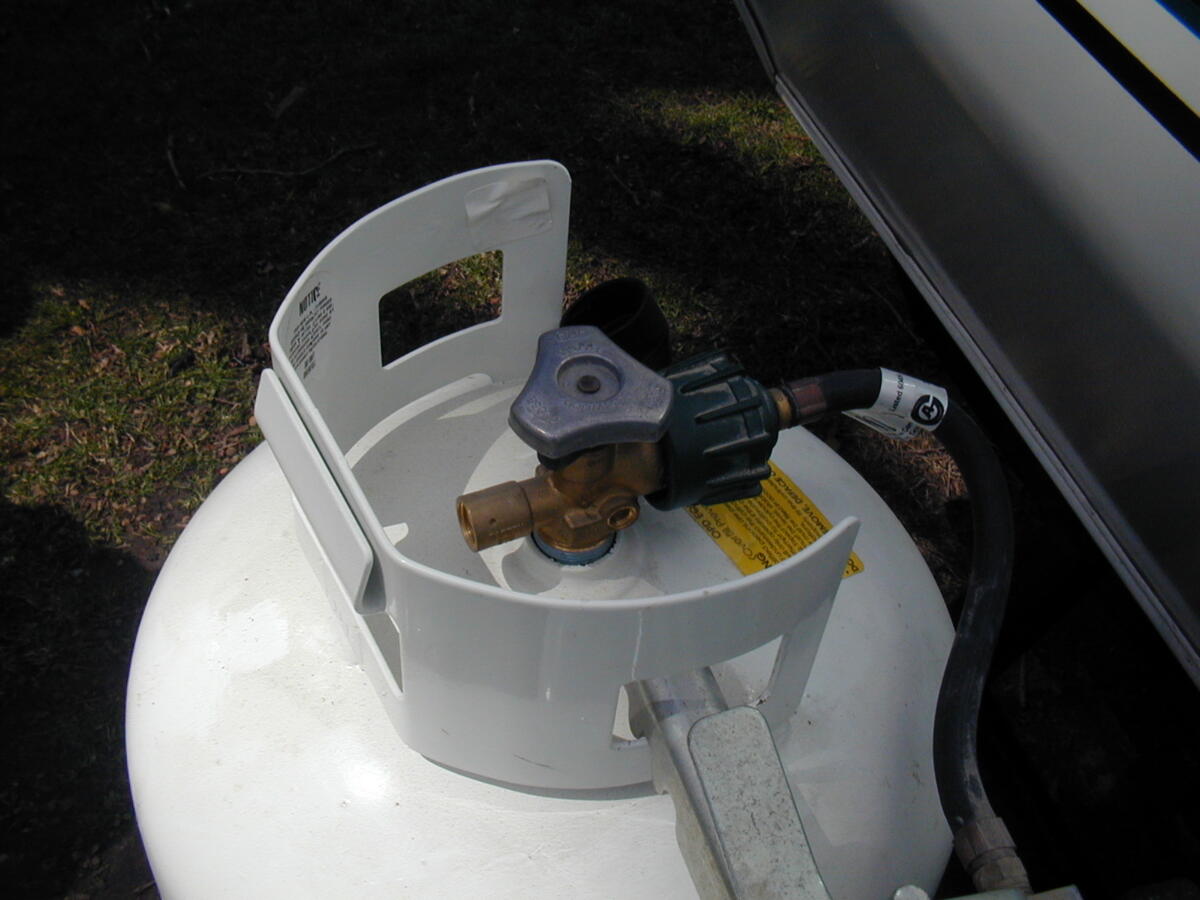
OPD Handle
OPD handle

ASME tanks, however, may still have the older-style valve but have long included OPD protection and can be legally refilled.

What you experienced is common at many filling locations. Some employees misinterpret the regulations and assume that all propane containers require recertification, often using the general term “propane tank” to describe all cylinder types.


 More posts from Dave on LP cylinders 

DAVE HAS ANSWERED MORE THAN 1,000 readers’ maintenance and repair questions. Read a directory here. There is so much to learn!


Dave Solberg is a leading expert in the RV industry and the author of the “RV Handbook.”

HAVE A QUESTION FOR DAVE?

Send your inquiries to him using the form below.

Name
Drag & Drop Files, Choose Files to Upload

RVDT2869

Use your smartphone’s camera these 14 ways to make life easier while RVing

13

By Gail Marsh
Winter weather is winding down and spring has finally arrived. Are you planning to go RVing soon? Your smartphone camera can help so much! And not just for sending travel pictures to family and friends back home. Curious? Then, by all means, read on!

Note: Always use a secure phone storage app (like Keepsafe) when storing critical, confidential information in your smartphone.

Personal information

Credit cards. Take a photo of the front and back sides of your credit cards and store them in a secure app on your phone. When buying things online, you can refer to the credit card photo without digging through your purse or wallet to find it.

Credit cards (part 2). Open your wallet or credit card holder just enough to see the tops of your credit cards and take a picture. That way if your wallet is ever lost or stolen, you’ll know what cards to cancel.

Medications. Take a photo of all your medications. Or make a list of them and take a picture of the list. Be sure to record dosages, prescribing doctors, and drugstores where you had the prescriptions filled. You can also take a picture of your health insurance card(s).

Make RV life easier

Video. We’ve made videos of some RV procedures (e.g., emptying tanks, winterizing) with our smartphone cameras. The videos were a huge help when we first began to RV, and now we share the “how to” videos with newbie RVers.

Vehicle plates. Keep a photo of your RV’s and vehicle’s license plates in your phone for quick reference. Also, take a picture of your VIN number(s) for future reference.

RV parts. Your smartphone camera can help if you need assistance with your RV. For example, when we needed a new awning, we sent a photo of the awning manufacturer’s tag to our RV parts store. The photo helped them determine which awning to order for us.

Out and about

Route. Take a screenshot of your travel route. That way, if you lose cell service you can still stay on the right roads.

Parking. When visiting a new-to-you location, your camera can help you remember where you parked your car. This is especially useful in large, multilevel parking lots or expansive concert venues. Take a quick photo as you exit your car along with other visual cues, like parking level, section number, etc.

Shopping. Take a photo of the mall’s map kiosk and you’ll quickly locate the store(s) you want to visit. When you see an item that you want to buy, snap a photo of it along with the cost. Use the photo to check other stores or online for a lower price.

Claim check. A quick photo of your claim check can help you retrieve your coat or other belongings, if you misplace your claim check ticket.

Accident record. If your RV is involved in an accident, use your smartphone camera to record damages to your vehicle as well as any other involved vehicles. Take a photo of everyone’s insurance cards and driver’s license.

Hobbies. If you see a project you’d like to replicate, take a picture of it. Use it as a guide when designing and making it for yourself.

Refrigerator. Take a photo of the inside of your RV fridge before you head to the grocery store. That way when you shop, you’ll know what items you have back in the RV and won’t double up on purchases.

Menu. If you forget your reading glasses, take a photo of the menu. You can enlarge the picture to read it better—even without your glasses.

Do you use your smartphone camera in an unusual way? Tell us your ideas in the comments below.

RELATED

##RVDT2868

What do RVers 60 years or older have in common?

By Chuck Woodbury
I am putting my byline on this article, but I didn’t write most of it. Technically, nobody wrote it, no person except for this paragraph and the next few that I wrote.

It’s the product of artificial intelligence. I’ll take a guess that you are likely as tired of hearing about A.I. as I am. I detest it. I fear it for its potential abuse. It has caused me incredible grief as I see it used to write articles, books and anything else that involves words, printed or in cyberspace.

But it is here to stay! Period!! So I live with it, and use it for ethical purposes.

I trust only a fraction of what I see and read online anymore as being human-created. You shouldn’t. Don’t trust what you read, what you see on YouTube, what you hear … the technology is already so good that anything we say or do can be faked.

That said, I personally like using A.I, mostly ChatGPT. I use it for research, proofreading, generating ideas, and for taking long, technical discussions and turning them into short articles that I can understand, and that you can understand.

Like I said, it’s here to stay. Remember years ago when cheap hand calculators came out and everybody screamed that nobody would ever learn math again? Same deal.

I am constantly frustrated that I cannot tell you what I am learning about A.I. There is good about it, but there is very bad “bad” about it. I will not go into more detail because it would take forever to explain it all to you and how I feel about it. That frustrates me!

So, back to the headline of this article. I went to ChatGPT a few minutes ago to see if it could help me understand the readers of RVtravel.com better so we could write articles that were of special interest to you. I’m always looking for insights about what you want to read so we don’t bore you.

Most of our audience is older than 60. Some are in their 50s, but 95 percent are 60 and up, even into their 80s and even a handful in their 90s.

So I asked ChatGPT what RVers aged 60 and older had in common. I wondered if it could provide an insightful answer. Below is what it spit out to me in about 30 seconds. Yes, 30 seconds! How does it do it???

So, again, full disclosure… What is written below was created entirely by an algorithm. I don’t see anything wrong with the results. What do you think? Please leave a comment.

Here we go…

Again, every word below was written using Artificial Intelligence. Not a word was changed.

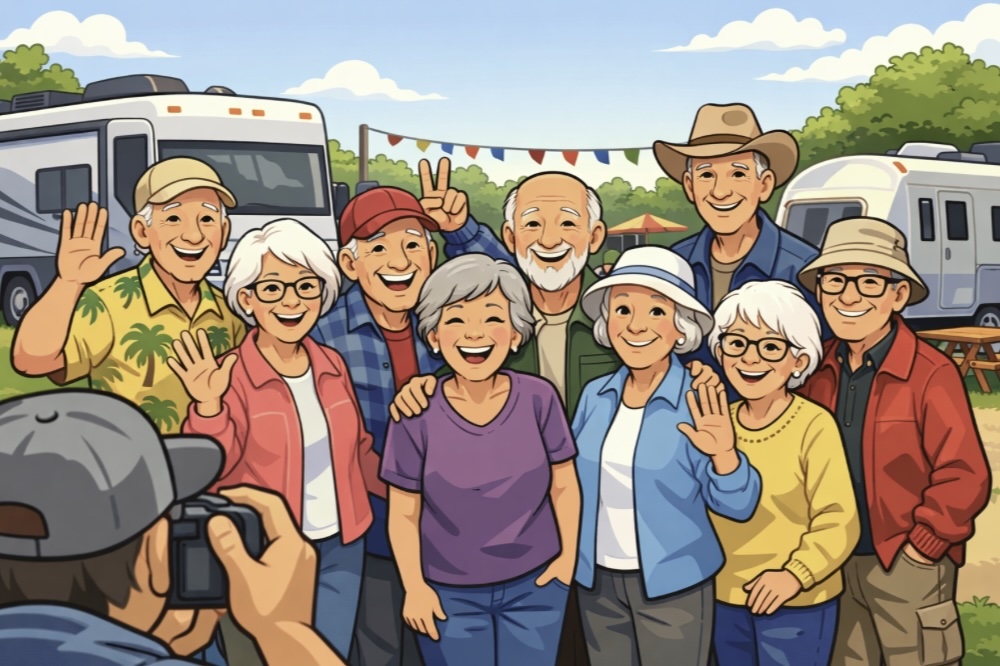
The photo at the top of this article and the cartoon version below were also created nearly instantly using ChatGPT.
Older RVers, image created using artificial intelligenceWhat RVers Over 60 Tend To Have In Common

If you spend time around RV parks, rallies, or even the RVtravel.com readership, one thing becomes obvious: a large share of RVers are over 60 — and they’re not slowing down. In many ways, they’re redefining retirement.

Freedom is the big draw.
With careers winding down or finished, schedules loosen up. Many older RVers travel when they want, stay longer in places they love, and skip the rush that defined earlier decades.

Comfort usually matters more than “roughing it.”
That doesn’t mean luxury for everyone, but dependable rigs, comfortable beds, easy leveling systems, and full hookups often rank high. Convenience counts when you want travel to be relaxing, not exhausting.

Finances shape travel decisions.
Many live on fixed incomes — Social Security, pensions, or retirement savings — so budgeting campground fees, fuel, and maintenance becomes part of the lifestyle. Value, reliability, and cost predictability often outweigh flashiness.

Community is part of the experience.
Older RVers often enjoy campground friendships, rallies, shared meals, and swapping stories. For some, RV travel replaces workplace social circles with a new, mobile community.

Health and safety stay top of mind.
Trip planning may include proximity to medical care, pharmacy access, and safe, well-reviewed campgrounds. These considerations rarely stop travel — they just shape it.

Perhaps most important: attitude.
Many RVers over 60 aren’t retreating from life — they’re leaning into it. They’re checking off bucket-list destinations, visiting grandkids, volunteering, or simply waking up to new scenery whenever the mood strikes.

If anything unites RVers in this age group, it may be this: They’ve worked hard for the freedom — and now they intend to use it.

Your comments, please…

RVT1250

The five details most RV buyers overlook

By Cheri Sicard
Most RV buyers focus on price, floor plan, and flashy features first. That makes sense, but the biggest regrets usually come from the less obvious stuff. A better RV choice often comes down to build quality, weight, ride, tank sizes, and whether the rig actually works well on a normal travel day.

Jason Epperson of RV Miles breaks it all down in the video at the end of this post. Here are Jason’s five important factors to keep in mind whenever you find yourself RV shopping. (I know the video says 8, but I counted 5, as some are combined.)

#1 Build quality comes first

Many RVs look similar on the lot, yet they can be very different once a buyer checks the hidden areas. One brand may build strong slides but weak cabinets. Another may be solid one model year and rough the next. Since RVs are not built like cars, a certified RV inspector is a smart move on both new and used units. A good inspection can catch problems before delivery, and reviews or referrals help because inspector quality varies, too.

During a walk-through, buyers should also check under the bed and inside the pass-through storage. Solid wood cabinetry, ceramic toilets, and solid-surface counters usually hold up better. Fiberglass trailers often use welded aluminum framing, while metal-sided trailers usually use wood framing.

#2 Cargo capacity is not a throwaway spec

Cargo carrying capacity tells a buyer how much weight the RV can actually handle. It is the difference between the unloaded weight and the GVWR (gross vehicle weight rating). Some large fifth wheels offer less than 1,200 pounds, while some smaller trailers carry 3,000 pounds or more. For a larger trailer, 2,500 pounds or more is a healthy target. The factory loading sticker is the number that matters, not the online listing. Water adds up fast, too, because 50 gallons weighs more than 400 pounds.

#3 Better suspension can add years

Suspension affects ride quality, towing stability, and long-term wear. Coil springs and independent systems handle potholes and washboard roads much better than basic leaf springs, and they can also reduce sway. Torsion axles and slip or roller systems help, though not as much. On motorhomes, especially gas Class A and Class C models, suspension quality can change the whole driving feel. Owner forums and Facebook groups often reveal more than a brochure.

#4 Tank sizes and factory prep should fit the trip

Tank size only matters when it matches the way the RV will be used. Off-grid campers need enough fresh water first. Campers who stay in parks with water but no sewer need larger gray and black tanks. Bigger RVs do not always have bigger tanks, so buyers should check the numbers.

Factory prep can matter too. Inverter prep, solar prep for small add-ons, winterization kits, and easy plumbing access all make ownership easier. On the other hand, cheap extras like outdoor speakers or Wi-Fi prep are usually not worth much.

#5 Daily usability beats flashy extras

A buyer should check a few plain, everyday things before signing:

  • Whether under-bed storage lifts easily
  • Whether full-size plates fit in cabinets
  • Whether there is space for shoes, trash, towels, laundry, and toilet paper

Slides deserve extra attention. The RV should still allow access to the fridge, sink, and bathroom with slides in. Hydraulic and rack-and-pinion slides are usually stronger for bigger rooms, while in-the-wall systems like Schwintek are better left to smaller, lighter slides.

Power setup matters just as much. A 30-amp RV fits almost any campground pedestal, but a 50-amp rig can run far more, especially multiple air conditioners. Buyers should also check outlet placement, bedside charging, and whether USB or USB-C ports work on battery power or only when plugged in.

The bottom line

Price and floor plan still matter, but they should not make the whole decision. The best RV for a buyer is the one that carries the load, handles the road, and still works well with the slides in on a travel day. A careful check before purchase can save a lot of money and frustration later.

Thinking about buying an RV soon? Here’s all the information you’ll ever need to get started. 

RVDT2868

How would you describe your mental health?

8

You can be honest. Remember, we (or anybody else) can’t see how you vote. How would you describe your mental health?

Are you happy all the time—what some would describe as happy-go-lucky? Is your mental health pretty good? Is it pretty bad? Really bad? Please vote as you most often feel. We know some days can be harder than others.

Mental health is a deeply personal journey, and it can shift over time. Some people find joy in small, everyday moments, while others may be navigating challenges that feel overwhelming.

If your mental health feels steady, that’s great—celebrate that. If it feels shaky or like you’re struggling to keep afloat, know that it’s okay to feel that way too. Everyone experiences highs and lows, and there’s no shame in admitting when the lows feel heavy.

Sometimes, just putting words to how you feel can be a step toward clarity. Are you noticing patterns, like mornings that feel brighter or nights that seem heavier? Are there specific triggers that weigh on your mind? Awareness is a powerful first step in addressing mental health, whether through self-reflection, talking with loved ones, or seeking professional support.

If you’re feeling depressed or alone, you can call or text the Suicide and Crisis Lifeline 24/7 at 988. There is always someone there to talk to. Reaching out can make a difference—you don’t have to go through it alone.

MORE POLLS THAT MIGHT INTEREST YOU:

RVDT2869

Grand Design recall: Steps may open unexpectedly

2

Grand Design RV is recalling certain 2025-2026 Lineage Class C motorhomes. The entry door position switch may have been improperly installed, which can lead to intermittent or unreliable contact.

As a result, the position of the door may be misinterpreted by the RV, potentially causing the entry steps to deploy unintentionally and without warning while the vehicle is in motion.

Steps extending while in transit increase the risk of a crash. This is not good, of course, and can result in injury or damage to the vehicle and, more importantly, people.

There is little to no warning to the driver that this condition has occurred.

As many as 1,127 motorhomes may be affected by the recall, which was issued March 20.

Remedy

Dealers will replace the door position switch, free of charge. The remedy will involve the dealer disabling the mechanical plunger style switch and installing a magnet switch, which should take less than one hour.

Owner notification letters are expected to be mailed May 11. Owners may contact Grand Design customer service at 1-574-825-9679. Grand Design’s number for this recall is M910058.

MORE GRAND DESIGN RECALLS

The RVtravel.com newsletter is an “original,” says Google!
What is the longest continuously published newsletter about RV travel in the United States? Here’s what Google says: “The RV Travel Newsletter has been in continuous publication online since 2001… It is widely recognized as ‘America’s longest continuously published RVing newsletter’.” BE HISTORIC! SIGN UP (if you aren’t already)

RVT1254b

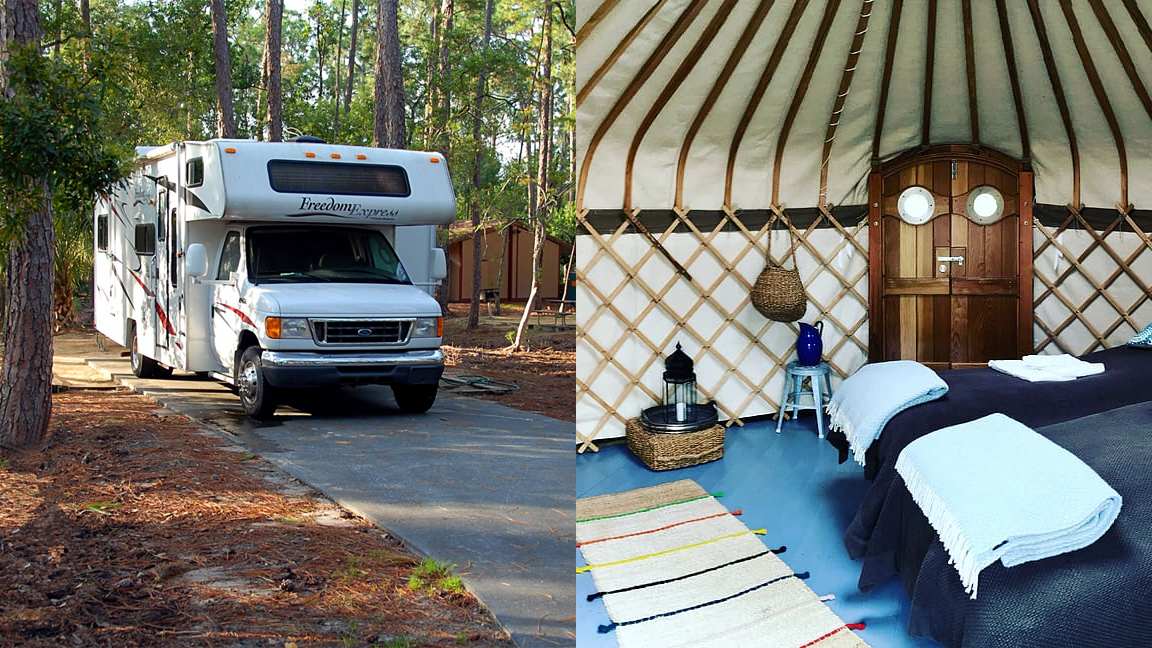
Glamping may be booming—but older campers aren’t buying it

If you’ve noticed more retirees in campgrounds—and not many lining up for glamping tents—you’re not imagining it. The older campers’ glamping trend is going the opposite direction of the hype: Older campers are traveling more, but they’re choosing RVs over luxury camping by a wide margin.

New survey data from a 2026 camping report backs that up. Among campers 65 and older, RV use dominates, while glamping barely registers. And many in that age group say they’re camping more often than before—not less.

By the numbers

The shift shows up clearly in the data:

  • A large majority of campers 65+ say they’re camping more often, or plan to.
  • About two-thirds of older campers choose RVs.
  • Just a small fraction—around 3%—opt for glamping-style stays.

In other words, the older the camper, the less likely they are to trade their rig for a canvas tent with a chandelier.

Why older campers are skipping glamping

Spend a few nights in a typical campground and the reasons come into focus pretty quickly.

First, there’s familiarity. Many older campers already own RVs. They know their setup. Their bed, their kitchen, their routines—it all travels with them. Glamping, by comparison, often means adjusting to someone else’s idea of comfort.

Then there’s value. RV ownership may be a sunk cost, but once you have it, each trip can be far cheaper than booking a glamping stay. For folks camping more often—or staying longer—that adds up fast.

And, finally, there’s control. With an RV, you choose where you go, how long you stay, and how self-contained you want to be. Glamping trades some of that independence for convenience, which doesn’t appeal to everyone—especially experienced travelers.

Donation request image

What this means for RVers

If this trend continues—and it likely will—it has a few practical ripple effects.

Campgrounds may keep leaning toward more RV sites and fewer glamping-style accommodations. Operators follow demand and, right now, older campers are clearly signaling where that demand sits.

At the same time, competition for traditional RV sites could tighten, especially in popular snowbird and shoulder-season destinations. Retirees have the flexibility to travel longer and more often, which means sites stay occupied.

You may also notice longer stays becoming more common. Instead of quick weekend trips, more campers are settling in for weeks—or even months—at a time.

The bigger picture

Glamping isn’t going away. It’s growing, especially with younger travelers and folks testing the camping waters without committing to an RV.

But among older campers—the backbone of many campgrounds—the story looks different. They’re not chasing the trend. They’re doubling down on what they already know works.

And if you’ve been RVing for a while, that probably doesn’t come as much of a surprise.

RELATED

RVT1254b

National Park Week 2026 gets new dates, expands to two weekends

1

If you have been waiting for a good excuse to plan your next RV trip, National Park Week 2026 just handed you one.

The National Park Service recently announced that this year’s celebration will run from August 22-30, 2026.

Later dates

This year’s celebration dates have been changed from their usual April timing around Earth Day. The later dates are intentional. They stretch the event across two weekends, which gives travelers more time to explore and celebrate.

Theme for this year

The theme for 2026 is “Celebrate America’s Story.” It ties neatly into the nation’s 250th anniversary and will highlight the people, places, and events that helped shape our country.

NPS National Park Week shield Image: NPS

Fee free

One of the highlights of National Park Week is August 25. On this day, entrance fees will be waived in honor of the National Park Service’s 110th birthday. It’s one of several free days offered throughout the year. This one lands right in the middle of peak travel season. That makes it especially appealing for RVers already on the road or planning a late-summer getaway.

According to the National Park Service, visitors can take part in hundreds of ranger-led programs, educational events, and community celebrations across more than 400 park sites nationwide.

History of National Park Week

National Park Week itself has grown into one of the most recognized annual celebrations of public lands, but it started as a much smaller effort.

The National Park Service was established in 1916 to manage and protect America’s growing collection of parks, monuments, and historic sites. For decades, individual parks held their own events, but there was no unified national celebration. That changed in the early 1990s, when the National Park Service introduced National Park Week as a way to bring attention to the system as a whole and encourage more Americans to visit.

Over time, the event expanded from a few days of programming into a full week of coordinated activities. The goal has remained consistent: to connect people with parks, promote conservation, and showcase the cultural and natural resources preserved within our parks’ system.

In recent years, themes have been added. Digital tools like the NPS App have made it easier for travelers to plan visits, find campground availability, and discover lesser-known sites.

Your 2026 trip

For RVers, National Park Week has become more than just a celebration. It’s a strategic travel window. With extended dates in 2026, you can build a loop that hits multiple parks without feeling rushed.

Whether you are drawn to iconic destinations or smaller historical sites, the week offers a mix of activities that go beyond scenic drives and hiking trails. Living history demonstrations, wildlife talks, and guided tours will give you a deeper connection to each stop along your route.

Planning ahead is key, especially if you want to stay inside the parks. Many national park campgrounds require reservations through Recreation.gov, and popular locations can fill months in advance.

The National Park Service recommends checking individual park pages for details on campground size limits, road restrictions, and any timed entry requirements that may affect your visit. That extra bit of prep can make the difference between a stressful arrival and a smooth check-in.

Another thing to keep in mind is that free days tend to draw larger crowds. While skipping the entrance fee is a nice perk, arriving early in the day or visiting less-trafficked areas of a park can make your experience more enjoyable. RVers who prefer a quieter stay might even choose to camp just outside a park boundary and drive in for the day’s activities.

Celebrate!

At its core, National Park Week is about reconnecting with the landscapes and stories that define our country. For RV travelers, it offers a ready-made opportunity to combine the freedom of the open road with meaningful stops along the way.

With a later summer schedule, a milestone birthday for the National Park Service, and a theme that celebrates the nation’s heritage, 2026 is shaping up to be an especially memorable year.

You can learn more about the 2026 National Park Week here.

Will you visit a national park this year? Tell us in the comments below.

RELATED

RVT1254b

Amazon is ramping up its Starlink rival—but RVers may be waiting a while

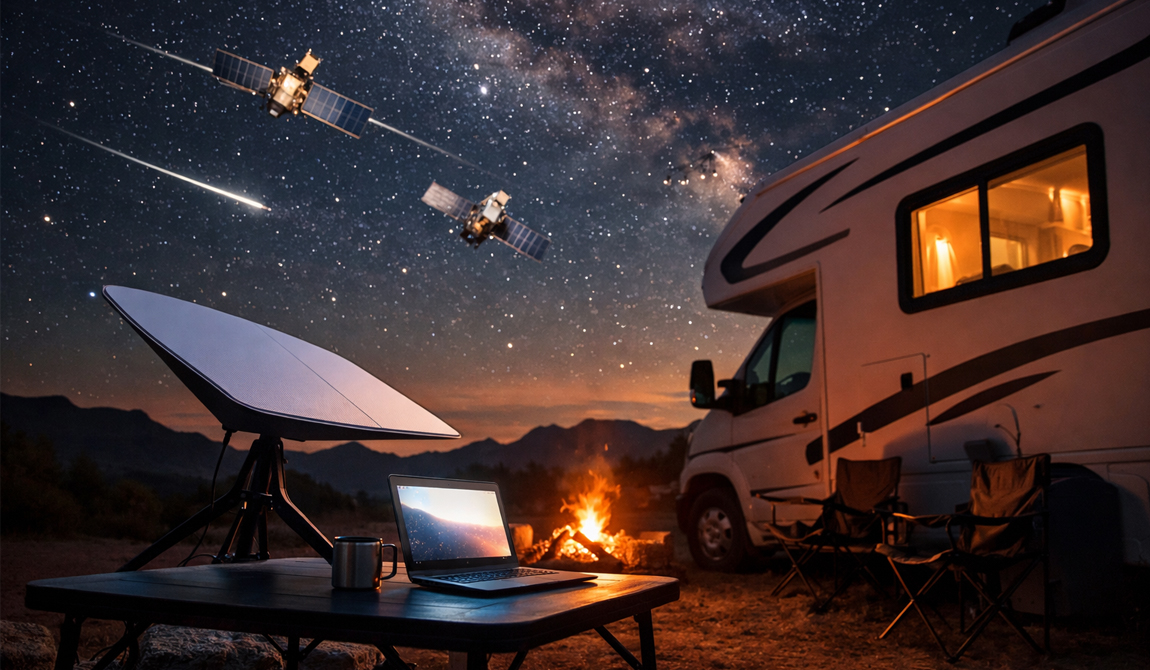
Amazon’s Starlink rival is suddenly accelerating—and RVers are hearing about it now for a reason. The company has more than 80 rocket launches lined up as it races to meet a federal deadline requiring it to deploy a large share of its satellites by the middle of this year.

That kind of push gets attention. But for RVers hoping for a cheaper alternative to Starlink, the timeline still doesn’t line up with real-world travel needs—at least not yet.

Amazon is moving fast—but starting from behind

Amazon’s satellite internet system, often called Project Kuiper, has shifted from a slow rollout to a much more aggressive buildout. Launch contracts are in place, rockets are being scheduled, and the company is clearly trying to make up for lost time.

The reason is simple. The FCC requires Amazon to get roughly half of its planned constellation into orbit by a set deadline or risk losing access to the spectrum it needs to operate.

That pressure tends to focus both timelines and budgets.

Even so, Amazon is still building from scratch compared with what’s already out there.

Starlink still owns the road—for now

While Amazon is racing to catch up, Starlink already has thousands of satellites in orbit and a working network used daily by RVers across the country. From desert boondocking to forest campgrounds, it has proven it can deliver internet where cellular signals fall short. It isn’t perfect, but it’s established—and that matters when you’re depending on a connection miles from the nearest town.

Amazon isn’t there yet.

Donation request imageThe price question everyone is asking

The interest in Amazon’s Starlink rival comes down to one thing: cost. Amazon is expected to compete aggressively on pricing, with lower-cost hardware and potentially cheaper monthly plans. If that happens, it could put real pressure on Starlink and finally bring more competition to a space that has had few real alternatives.

But price only matters once a service is widely available. And right now, availability is the biggest hurdle.

What this means for RVers right now

If you’re trying to decide whether to wait or act, the takeaway is fairly straightforward.

If you need reliable internet this year, Starlink remains the only proven option for RVers who travel off-grid. If you’re willing to wait a couple of years, Amazon’s system could become a real alternative—especially if it delivers on price.

And if Amazon meets its FCC deadline and builds out quickly, the biggest win may be competition itself. More players typically lead to better pricing, improved hardware, and more choices.

The bottom line

Amazon is speeding up launches of its Starlink rival because it has to—not just because it wants to. That urgency could eventually benefit RVers in the form of more options and lower costs.

But for now, the road still belongs to Starlink.

RELATED

RVT1254b

Cougar hides under RV, RVer told to ‘stay inside’

She heard what sounded like raccoons under her RV—angry ones.

But in this case, the noise coming from beneath a Parksville woman’s rig wasn’t small critters at all. It was a full-grown cougar, resting just feet away.

A noise RVers hear all the time—until it’s not

Lorelei Scott had lived in her RV at Park Sands Beach Resort in Parksville, British Columbia, for four years. Strange noises under the rig weren’t unusual. Like many RVers, she’d come to expect the occasional nighttime visitor—usually raccoons.

So when she heard a loud rustling and what she described as “angry cats” around 7 p.m. on March 15, her first instinct was to go outside and take a look.

Something stopped her.

That hesitation may have been the smartest move she made all day.

Minutes later, a message from the park manager confirmed it: A cougar had just been seen slipping underneath her RV—and she needed to stay inside.

Donation request imageA very large “houseguest”

A neighbor soon confirmed what Scott had been warned about.

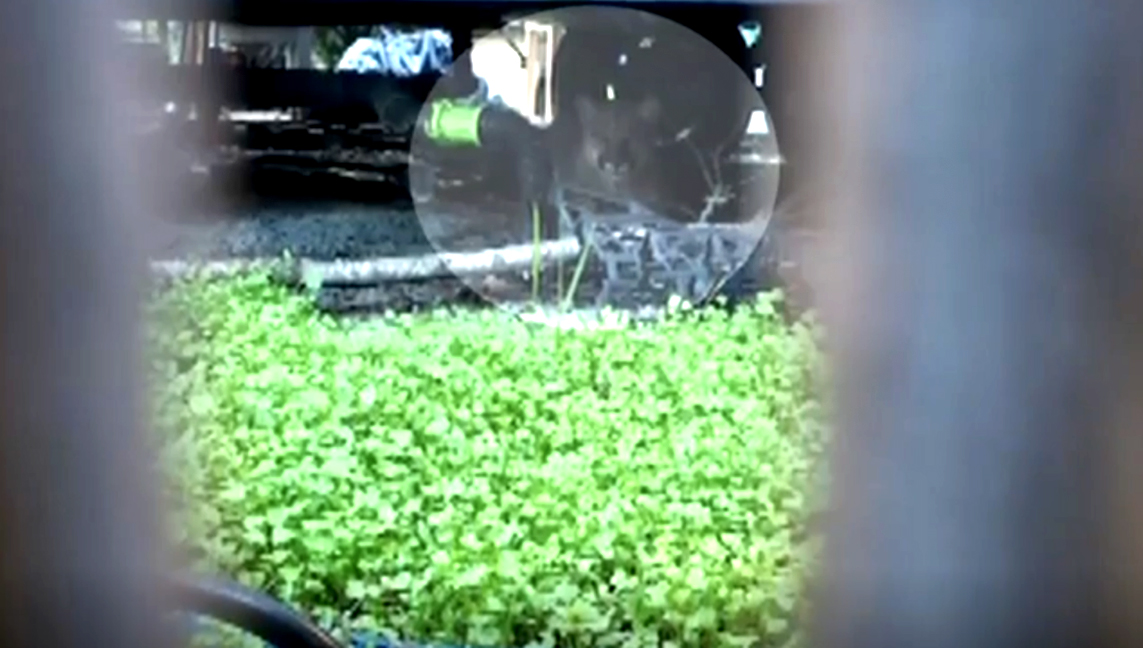
Meg Conarroe spotted the animal and even managed to slide a camera through a gap in a shared fence to capture a photo. The big cat, she said, appeared calm—“just chilling”—as it rested beneath the RV.

For Scott, the realization hit hard.

“Big cougar… I wasn’t expecting the sound of a cougar,” she said. Had she gone outside to check on what she thought were raccoons, she could have walked straight into a dangerous encounter.

The cougar eventually moved on and hasn’t returned, according to reports. Wildlife officials were notified.

Why this matters for RVers

Most RVers have heard noises under their rigs. Usually, it’s nothing more than small animals looking for shelter or scraps.

But this story is a reminder: Not everything that rustles in the dark is harmless.

Cougars—also known as mountain lions—are common across much of the West and parts of Canada. They tend to avoid people, but they do move quietly and can settle into surprising places, especially where there’s cover.

An RV skirt, shadowed undercarriage, or quiet park can look like a safe resting spot.

What to do if you hear something under your RV

If something sounds off beneath your rig, especially at night:

  • Stay inside and turn on exterior lights if you have them.
  • Don’t assume it’s a small animal.
  • Avoid stepping outside to investigate in the dark.
  • Make noise from inside—talk loudly, tap on walls, have a barn dance on your kitchen floor.
  • Alert park management if you’re in a campground.

In most cases, the animal will move on. But giving it space is the safest move.

Trust that gut feeling

Scott didn’t go outside that night—and that decision likely prevented a close encounter she wasn’t prepared for.

It’s an easy habit to slip into. You hear something, you go check it out. RV life teaches you to deal with the little stuff.

But every now and then, it’s not little.

And sometimes, the best move is the one you don’t make.

RELATED

RVT1254b

RV Daily Tips. Wednesday, March 25, 2026

America’s Original RV Newsletter. Since 2001
Issue 2868 • New issue every weekday
If you find this newsletter helpful, please consider supporting our work with a donation of your choice. Thank you!


Today’s thought

“The past is never where you think you left it.” ―Katherine Anne Porter


Need an excuse to celebrate? Today is National Tolkien Reading Day! Sit down with The Hobbit, heat up your coffee, and have a great day!

On this day in history: 1948 – The first successful tornado forecast predicts that a tornado will strike Tinker Air Force Base, Oklahoma.


Tip of the day
Tips for dealing with unresponsive RV shops

By Gail Marsh
We never had cause to complain before. In fact, I previously had a hard time believing the horror stories my RVing friends told about their rig repairs. But then, things changed. We quickly learned the most effective ways for dealing with unresponsive RV shops. I sincerely hope you never have problems like ours, but if you do, perhaps you will find these RV tips useful, as well.


EVOTREK PG5 travel trailerRV review
Evotrex-PG5 travel trailer: Supercharger on wheels for EV truck camping

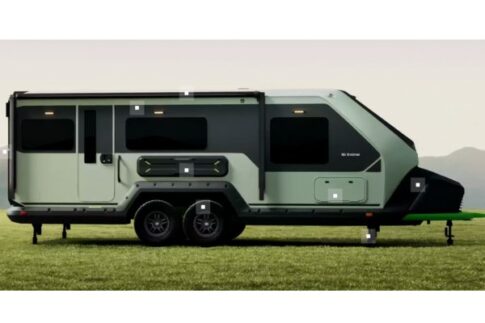
Jace Sparks loves chasing sunsets past the mountains and falling asleep under a sky of stars. Lately, the places he wants to reach are far from chargers, and campgrounds still don’t make it easy for electric rigs. That’s where the Evotrex-PG5 comes in. It’s designed for people who want comfort without giving up the ability to camp away from plug-in sites. The finish, lighting, and layout all point to the same idea: stay off-grid longer, and don’t feel like you’re roughing it. This is nice! 

MORE RECENT RV REVIEWS:


DARN IT! That’s what you’ll say if you miss a super great bargain today only on something you really want! CHECK HERE!


In the RV shop with Dustin
Keep this product on hand for easy RV underbelly repair

You may have encountered some debris on the road that has caused impact damage underneath the RV. Or maybe you’ve experienced a tire blowout that caused damage to the RV underbelly or fender area, which has required you to need some undercarriage repair. If you have experienced either of these situations, you may be asking yourself, “Now what do I do about it?” Find out here.


Article and video
Farm and ranch store RV gear—Finding essentials in unexpected places

Sometimes you can find great RV gear in unexpected places on the road. Case in point: In this article and video, we go shopping with the Grateful Glamper to check out some farm and ranch store RV gear. You might be surprised by the hidden gems you can find.


CAMPGROUND TRUTH: There are two types of RVers: 1. Those who enjoy a peaceful, quiet campsite, and 2. Those parked next to them.


Featured article
Google Earth helps avoid sharp turns and narrow roads

By Nanci Dixon
Have a big rig? Well, don’t go here! Some places are just not big-rig friendly. Looking for an idyllic off-the-beaten-path campground in Trinidad, California, I found what looked like a little piece of floral heaven! Azalea Glen RV park sounded beautiful. The reviews were amazing. The enticement to drive just a bit out of the way was extreme. So I booked! … Find out what happened to Nanci and her husband here.


Ask Dave
Time to reseal your RV roof seams? Here are caulking tips

Read Dave’s tips here.


Are ye ol’ eyes giving you problems? Is the small type getting too small to read? (It happens to the best of us.) This will save your day.


Reader poll
How many times a day do you brush your teeth?

Respond here.


Quick tip
Three sets of keys means not losing all

“I have three complete sets of RV keys. One is in my pocket, one is in a secret but accessible place on the outside of the coach, and one is with my son (or friend) in a Fed-X envelope filled out with my account number ready to address and send to me in an emergency.” Thanks to Joe B.


Website of the day

25 Amazing Hot Springs In the U.S. You Must Soak In
They’re not lying—You must soak in these! Okay, it’s not a requirement, but after seeing the photos, you’re sure going to want to! (We do!)


Trivia

Today, cigars are sometimes referred to as stogies. As American pioneers traveled west, Conestoga wagon drivers frequently smoked cigars. They thought the cigar would act as a filter and keep dust from their throats. So many wagon drivers smoked cigars that they eventually became known as “Conestogas,” or stogies for short.


? MYSTERY PRODUCT OF THE DAY ?
If you have a dog, there’s no way you won’t laugh at this. It made us laugh out loud!


Readers’ pet of the day

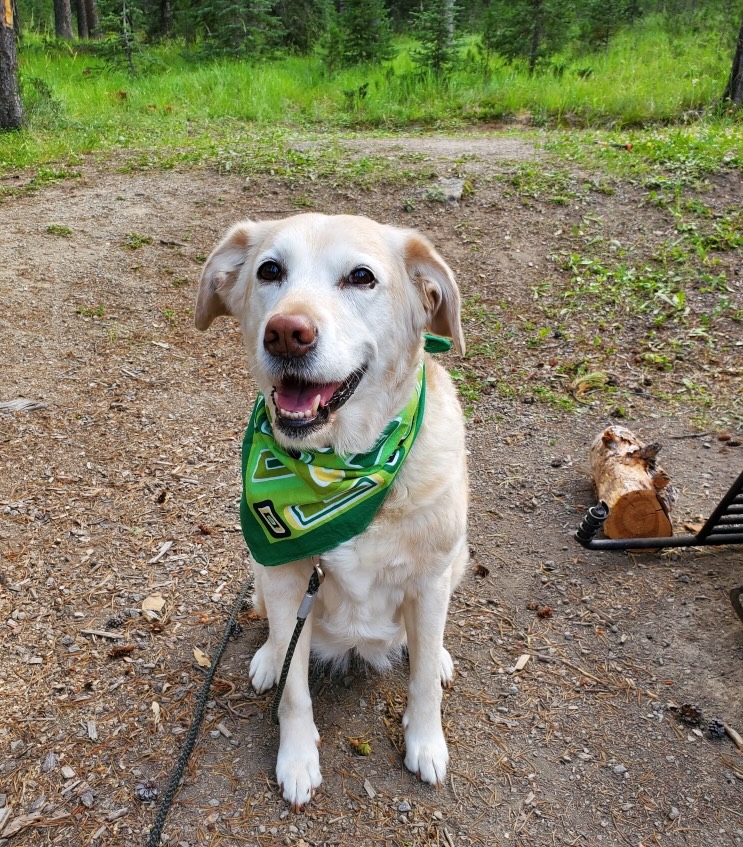
Resized 20220805 1823342 E10ddd3bc95791bc42d6ac5d574184a3“Our sweet girl, Autumn (Lab/Golden mix), has been camping with us since she was a 4-month-old rescue pup. She will be 16 in a few months. She enjoys walks around the campground, all the outdoor smells, and especially snuggling in bed with us on a chilly morning.” —Cynthia Westover

Send us a photo of your pet with a short description. No blurry photos and please do not submit your photo more than once. Thanks!


Leave here with a laugh


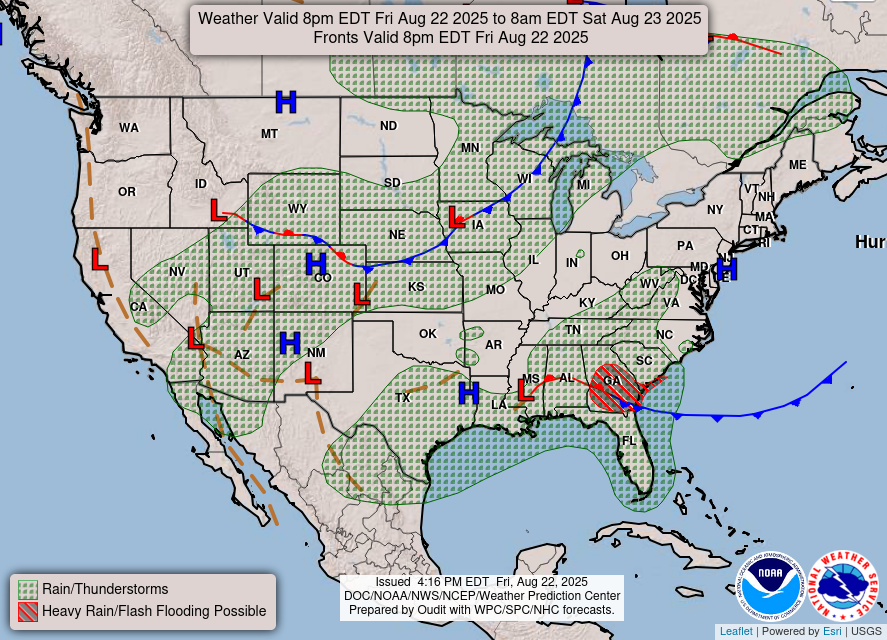
Today’s weather forecast across the nation
THIS MAP UPDATES TWICE A DAY

Visit Current National Radar Weather Map


Did you miss the latest RV Travel Newsletter? If so, read it here.
Oh, and if you missed the Latest News for RVers, make sure to catch up here.


If you shop at Amazon.com we’d appreciate you using this link. We get an itty bitty commission if you buy something, but they add up and help us pay our bills (most importantly our hard-working writers!). 


RVtravel.com All-Star Team

Click here for information about our staff and how to contact us.

WHY WE ASK FOR DONATIONS INSTEAD OF SELLING SUBSCRIPTIONS.

Our policy on using artificial intelligence.

Time to reseal your RV roof seams? Here are caulking tips

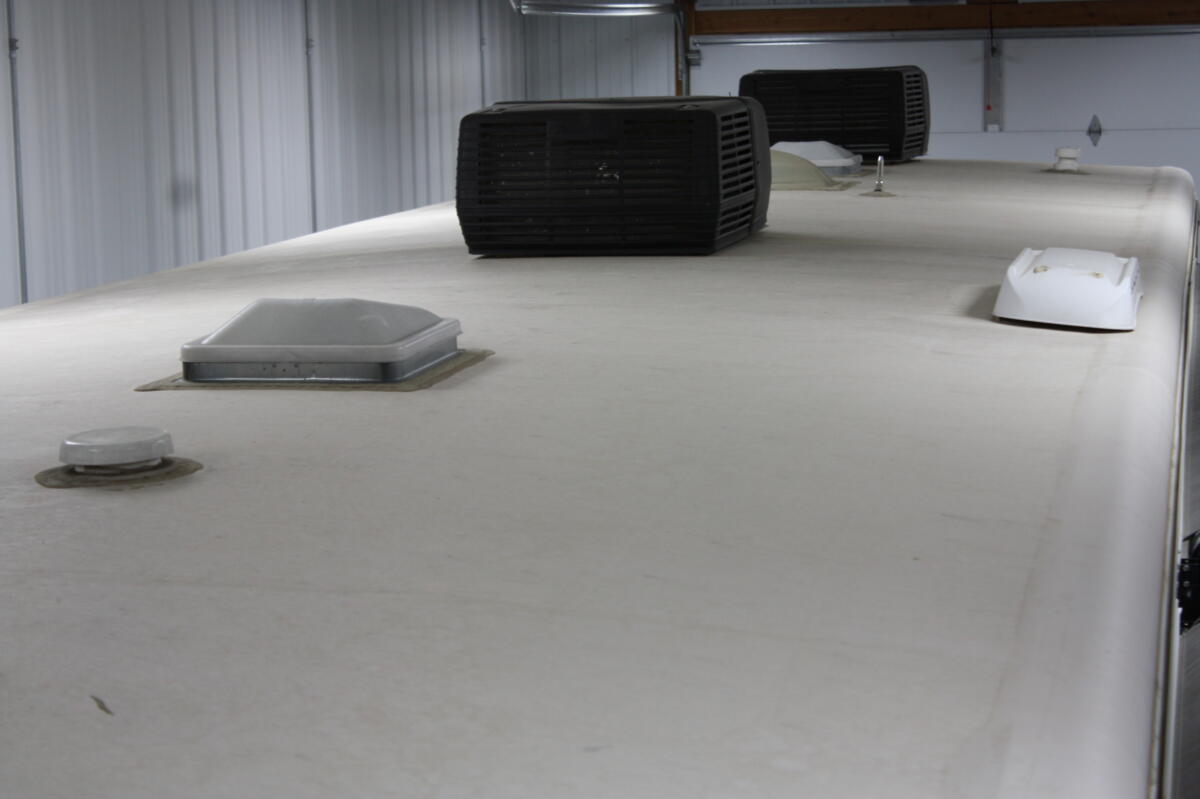
All RVs need routine inspection and maintenance of sealants used to protect seams, gaps, and other openings. Up on the roof there is the front cap that connects to the roof structure, openings cut into the roof for vents and skylights, the roof-to-sidewall seam, and other areas that require sealants to prevent moisture penetration.

These sealants are subjected to harsh conditions when they experience major temperature changes, such as a cool morning and hot afternoon. Different materials used will expand and contract at different rates. These sealants need to also expand and contract or “move” with the materials and keep moisture out.

That is why it is important to visually inspect the sealants and reseal the area when they start to dry out and crack or separate.

Roof

Choose the right sealant

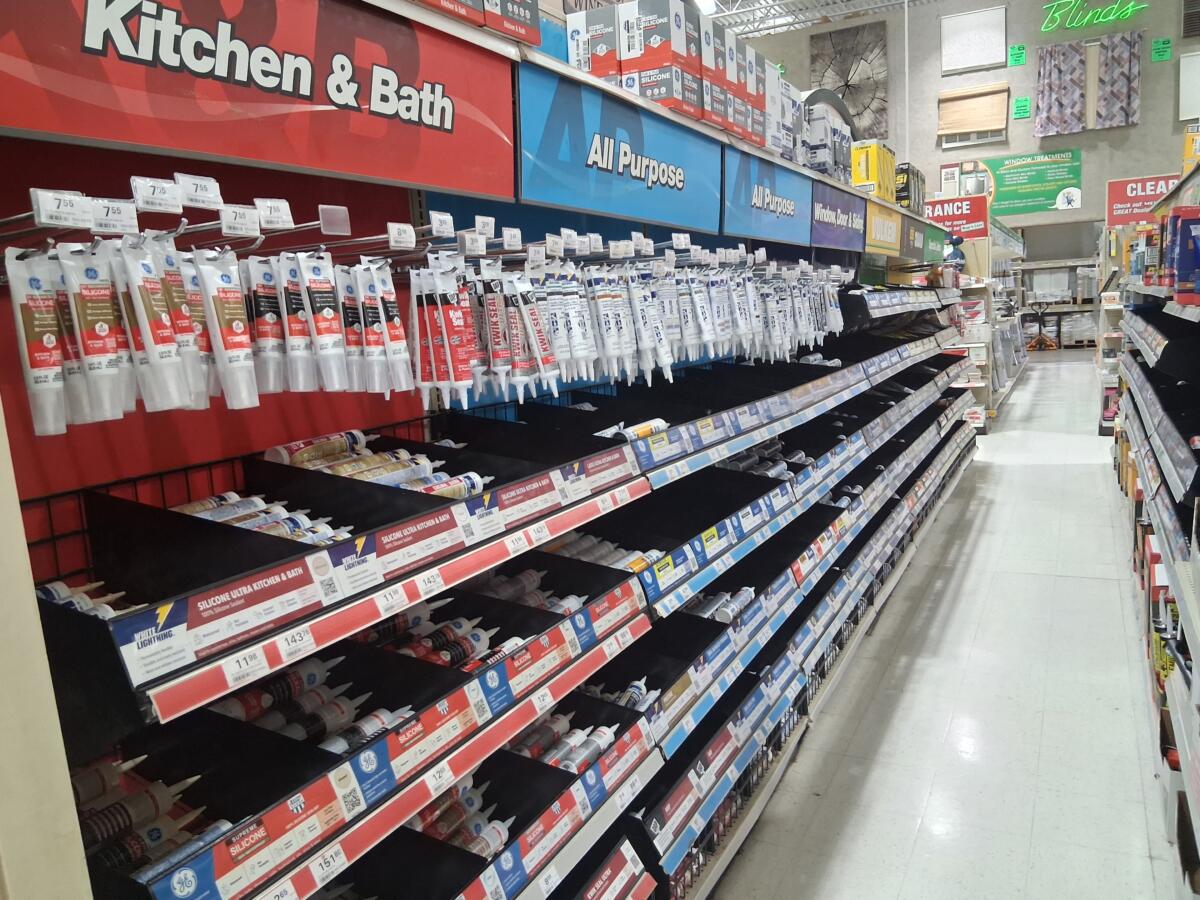
It is important to use the proper sealant for the material that is being sealed. Silicone is a word that is used generically by many to describe the sealant used for just about everything. However, there are several types of “silicone.” Visit a home improvement store and you will find an entire aisle with what seems like a hundred different types for various use. Those include types for indoor versus outdoor use, windows, paintable, and more.

Silicone Aisle
Silicone aisle

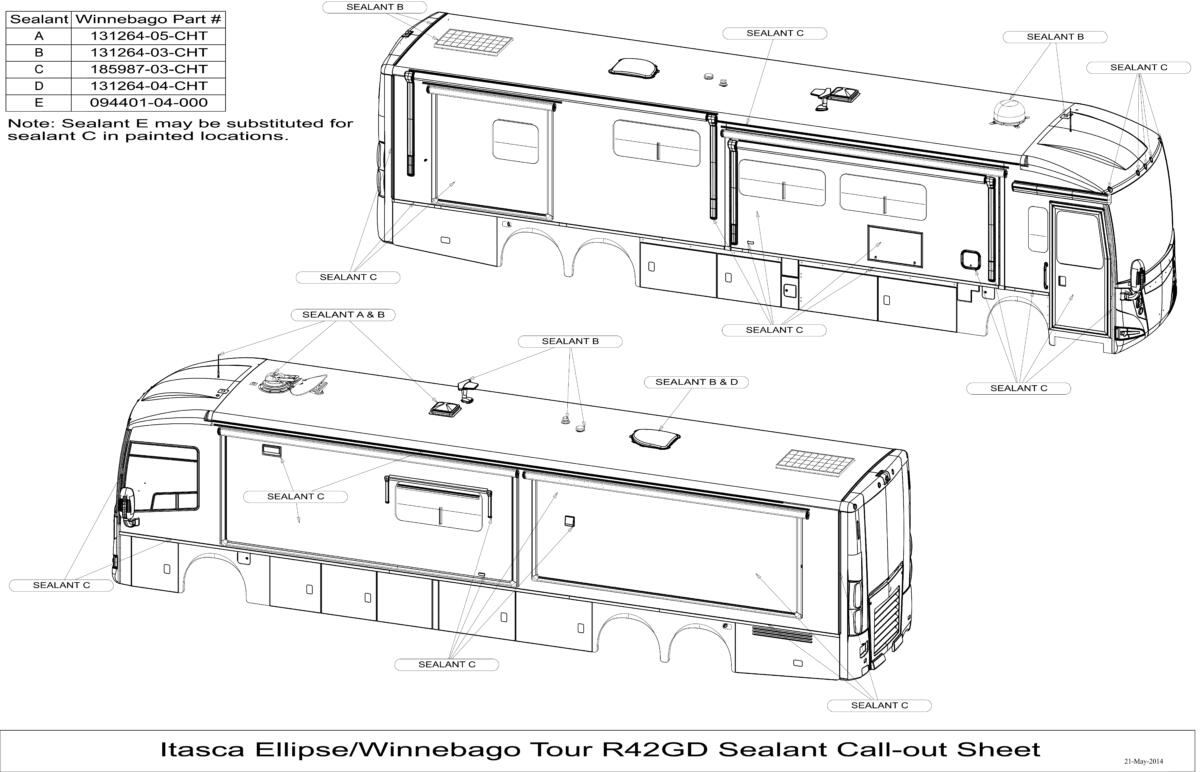
It is important to determine the type of material you will be applying the sealant to, such as a rubber membrane or fiberglass on the roof or plastic for shower surrounds. Winnebago has developed a sealant chart for their units that identify the proper sealant to use in various locations. Using a cheap, “generic” silicone found at a home improvement store might not stay in place and will allow moisture penetration.

Sealant Chart
(Click to enlarge.)

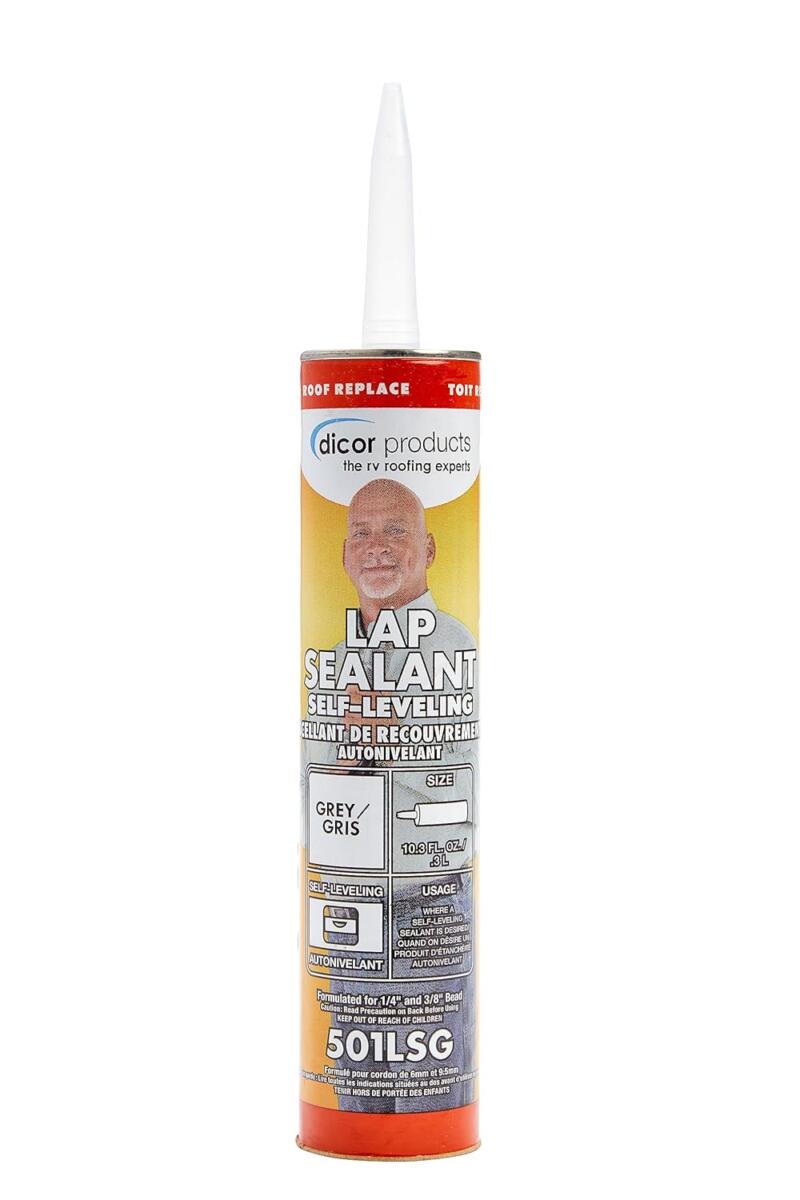
Also, you will want to use a “self-leveling” sealant on the roof. It will flatten and provide a wider seal. Non-self-leveling sealant should be used on the sides. It has the consistency of toothpaste and will stay in the seam rather than running down the side and not sealing.

Dicor Sealant
Dicor sealant

Caulk gun tips

Most novice DIYers don’t realize there is a variety in caulk guns, opting to just buy the cheapest as they will not be using it on a daily basis. The two most common types found in stores is the ratchet rod and smooth rod versions.

Donation request image

The ratchet rod gun has gears that provide a thrust of 5:1 ratio. It is designed for thinner viscosity sealants such as latex.

The smooth rod gun has a 10:1 thrust and is also designed for less drip at the tip when the handle is released. You can control the pressure and the rod actually moves back slightly to stop the pressure on the sealant. This type of gun is best to use with roof sealants as they are self-leveling and a much thicker viscosity.

Cutting the tip

It is best to cut a 45-degree angle for the tip. You can do with  a razor knife. Also, many caulk guns have a cutting hole in the handle. Simply insert the tip in the hole and squeeze the handle.

You will also need to pierce the inner seal by using the rod found on most guns or a long narrow screwdriver. Some caulk tubes have a plastic tip inside which requires removal of the tip and cutting off the cover.

The size of the cut end depends on the viscosity of the sealant and the application. Tight corners and seams, especially inside, would benefit from a smaller hole to reduce excess sealant for a more precise bead and less clean up.

When applying the sealant for roof applications, the hole should be larger for more sealant as it needs to level. The application is not as critical for a smooth finished look.

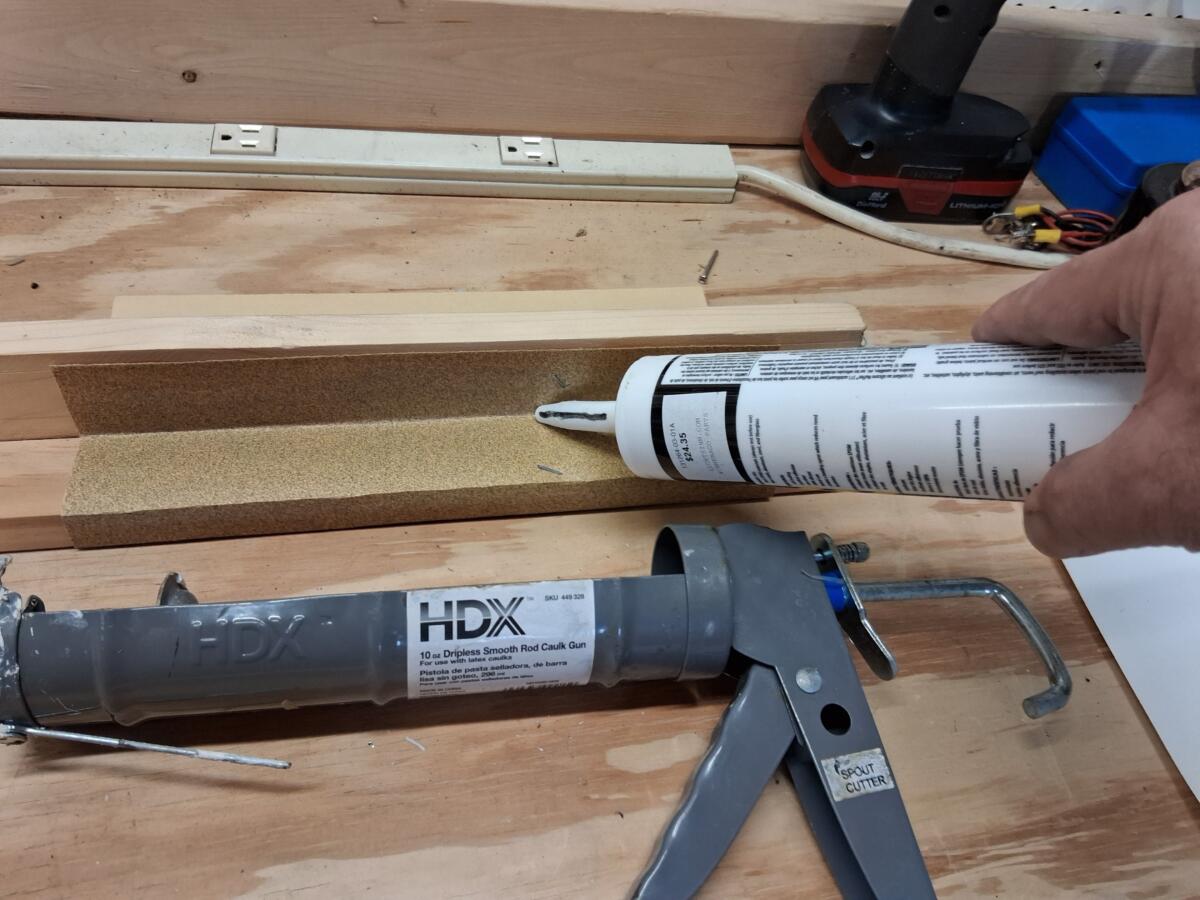
If you are applying sealant to an inside corner or reveal molding, add another angle to the 45 matching the application surface. I have built a template for this with two blocks of wood fastened at a 90-degree angle and lined with sandpaper. Running the tip over the corner a few times gives me the perfect tip design for the application.

Caulk Tip Sand
Sanding the caulk tube tip

Proper tip alignment

With the tip in the proper position, draw a line with a marker down on the top to help identify the proper tip alignment. As you apply sealant, the tube can twist and turn, the tip gets out of alignment, and the sealant application is not correct.

To install the sealant tube, pull the rod and plunger all the way back to the handle, place the bottom or open end of the tube over the round plunger, and pivot the tube and tip into the front cradle.

Finishing tips

Before jumping into an application, practice running a bead of caulking on a piece of scrap cardboard. The smaller the tip, the more precise bead application and less messy clumps you will get. Several smaller beads can be applied to reduce cleanup.

Wet your finger with a moist paper towel and run your finger over the bead to create a smooth finish. You will not need to do this for the self-leveling sealant on the roof as you want as much coverage here as possible.

To store the sealant tube after application, I like to insert a machine bolt or thick screw into the tip and tape it to keep the sealant from drying inside the tip.


 You might also enjoy these posts 

DAVE HAS ANSWERED MORE THAN 1,000 readers’ maintenance and repair questions. Read a directory here. There is so much to learn!


Dave Solberg is a leading expert in the RV industry and the author of the “RV Handbook.”

HAVE A QUESTION FOR DAVE?

Send your inquiries to him using the form below.

Name
Drag & Drop Files, Choose Files to Upload

RVDT2868