Have you ever met up with friends for dinner and their dinner time is way, way different from yours? If you usually eat dinner at 5:30, their 8 p.m. reservation might seem extremely late—and vice versa! (Some of you may call this meal “supper.” We’re referring to the last big meal of the day.)
Have you ever noticed how regional habits—or even your travel schedule—can shift your dinner time without you realizing it? RVers who crisscross time zones often find themselves eating “early” or “late” without meaning to, especially when their stomach says one thing and the clock says another.
And then there’s campground life, where your schedule might revolve more around sunset than the hour on your watch. Maybe you eat right after a sunset walk or wait until after your campfire’s crackling.
On a typical day, what time do you usually eat dinner? Before 5? Around 6? 7? Does it just depend on the day?
As always, thanks for voting. Please feel free to leave a comment, too.
“If you’re trying to act your age, then you’re just acting, not living. Forget the date on your birth certificate. How old would you be if you had no idea how old you were?” —Satchel Paige
Touring the best Love’s RV stop. Is this the future of RVing?
By Cheri Sicard
Travelers searching for a comfortable and practical RV stop will struggle to beat the beautiful views and thoughtful setup of Love’s RV Stop in Walsenburg, Colorado. RVers Karri and Bob have tried other Love’s RV stops with mixed luck. Here, things were different from the start. Walk-ins are welcome; no reservation needed. Instead of a cold kiosk, guests meet a friendly staffer and breeze through the process in about ten minutes. The personal touch set the tone for a positive stay. This RV stop goes well beyond the basics.
Roadside Journal: Random observations from the road in 1988 America
This is from the Summer 1988 edition of Chuck Woodbury’s newspaper, “Out West: The Newspaper That Roams”—the only “on the road” newspaper. Join Chuck as he travels the back roads of America and takes a look at what a “small town” means to him, plus much, much more in this essay from an early issue of the publication. (You will love this!)
Why RVers should be using truckers’ road atlases
By Gail Marsh
Planning is the cornerstone of any successful RV adventure. Smartphone apps and GPS devices have become commonplace for navigation. However, they’re only as reliable as your signal strength. That’s where a trusted, up-to-date truckers’ atlas comes in. What makes a truckers’ atlas better than a regular road atlas? Gail explains all the benefits here.
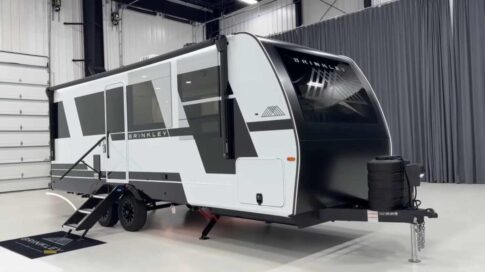
Today’s RV review… Brinkley Model I 235—Time to make our voices heard
By Tony Barthel
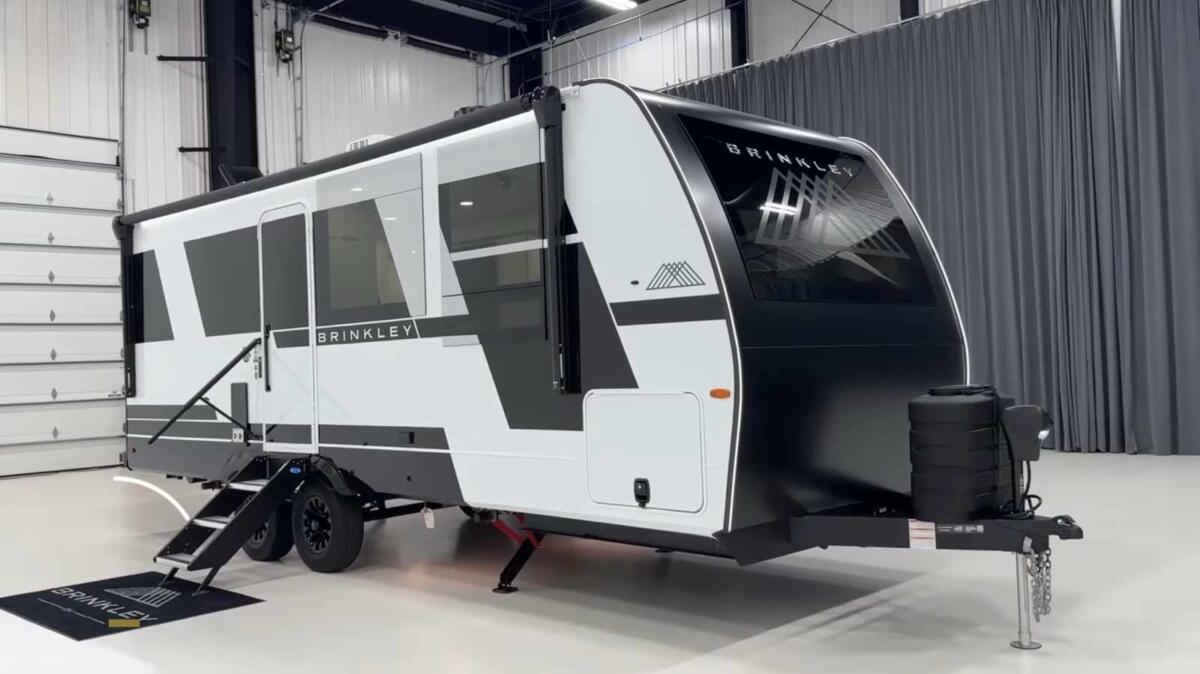
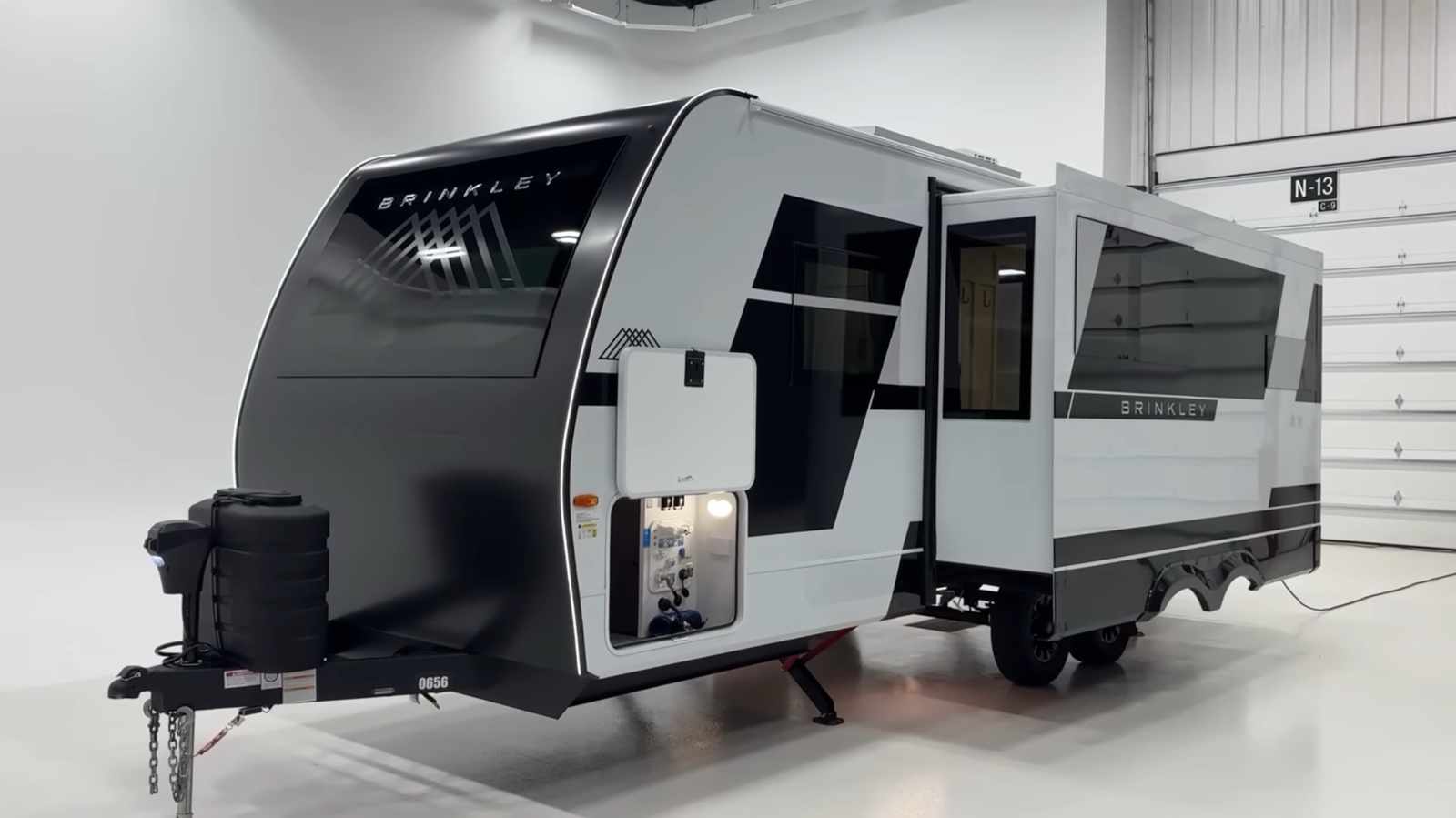
Today’s RV review is of the new Brinkley RV Model I 235 travel trailer. But it’s more than just an RV—it’s an opportunity. This trailer’s floor plan is somewhat similar to a few others. This is a very popular floor plan. The opportunity here is for RV buyers to make a statement by voting with their wallets. What makes this RV worth so much more than those others in this category? Or is it worth more than those others in this category? Well, here are some things.
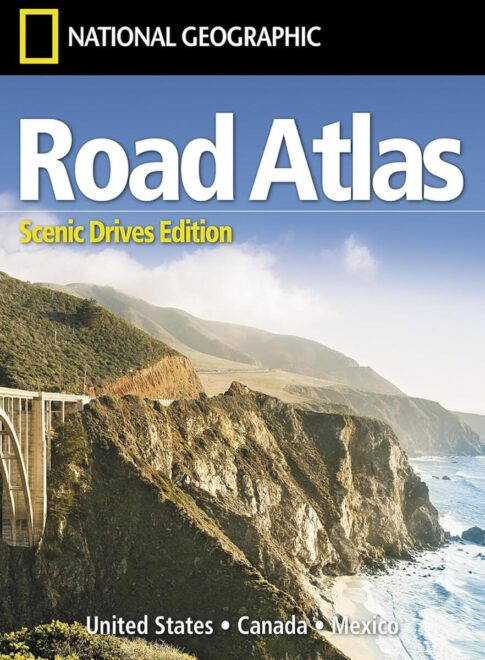
JUST RELEASED: National Geographic Road Atlas 2026: Scenic Drives Edition
National Geographic’s Road Atlas: Scenic Drives Edition, is the ideal companion for the next time you hit the road. Includes up-to-date road maps for all 50 U.S. states, plus Canada, Mexico, and Puerto Rico. Cities are shown in detail with inset maps that include popular attractions and points-of-interest. It also includes carefully researched scenic drives and a map and guide section for the 20 most popular National Parks. Learn more or order.
How frame flex and torsion can quietly destroy your RV
By Stefan Price
You take care of your tires. You torque your lug nuts. You check your suspension and know your weight limits. But here’s something even veteran RVers often overlook: Your RV’s frame might be bending and twisting more than it should, and it’s slowly tearing your rig apart from the inside out. It’s basic physics. And it’s happening to thousands of travel trailers, fifth wheels, and motorhomes right now. Learn more.
Keep covers from falling off the RV bed with this PVC footboard hack
By Russ and Tiña De Maris
There’s nothing quite as maddening as having the covers fall off the end of the bed. Sticks-and-bricks homes have room for elaborate footboards, but RV beds? Here’s an easy hack—a PVC footboard. Read on to learn more about this handy DIY mod.
The untold story of the hobos who traveled America for work
By Gail Marsh
Growing up in Iowa’s farm country, I often heard stories about hobos. My elderly relatives reminisced about handing out food to these traveling wanderers in exchange for a day’s work, and these stories sparked my interest in the history of hobos. Traveling from place to place was their way of life. These original road warriors intrigued me, so I decided to learn more. (This is fascinating!)
Letter to the Editor Why are campground check-in times so late?
We received this letter from Laura G. last week, and we think many of you can relate. How many times have you arrived at a campground early, only to find that you can’t park until your check-in time? How many times have you “killed time” to get to that hour of the day when you can check in? Read on, and please leave a comment for Laura.
Reader poll If you had a time machine, would you take a month-long trip 200 years into the past or future?
If you have a Stanley tumbler, you know how well they work to insulate your cold drinks. This stein is what you need next! It can hold two full cans of the beverage of your choice.
How to win We’ll select a winner at random out of all entries we receive today by 7 p.m. Pacific time. You can only enter once.
RANDOM RV THOUGHT: Pay close attention to how many other cars you might be holding up behind you on a two-lane road. Pull over and let them by when convenient. Even though most of the motorists are too rude these days to even raise their hands to thank you, you will have done the right thing.
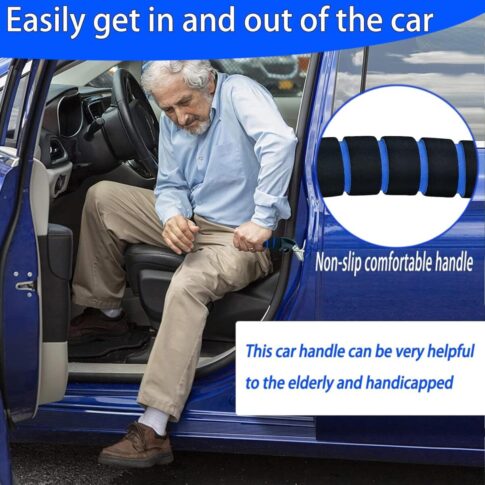
Don’t struggle to get in or out of your car!
Easily get in and out of your car with these car door handle assist supports. The ergonomic design is comfortable and is suited for almost all U-shaped latch cars and will ease any worries of falling. They’re made of high-quality steel and are anti-rust and anti-corrosion. Each handle holds up to 400 lbs. Learn more about these here, and never struggle to get in or out of the car again!
Travel destinations Visit the Cody Firearms Museum in the heart of Buffalo Bill Country
By Gail Marsh
Nestled in the heart of Cody, Wyoming, the Cody Firearms Museum welcomes visitors with an unparalleled collection of firearms and related artifacts. Whether you’re a firearms enthusiast or simply curious about the role guns have played in shaping our past, this museum is well worth a visit.
?? MYSTERY PRODUCT OF THE DAY ?? You’ve seen these before, but never like this! And actually, we quite like this! As long as it doesn’t distract you while you drive, of course.
Highlights from this week’s RV Daily Tips Newsletter
In the RV shop with Dustin Cool Tools: The Magnetizer Demagnetizer
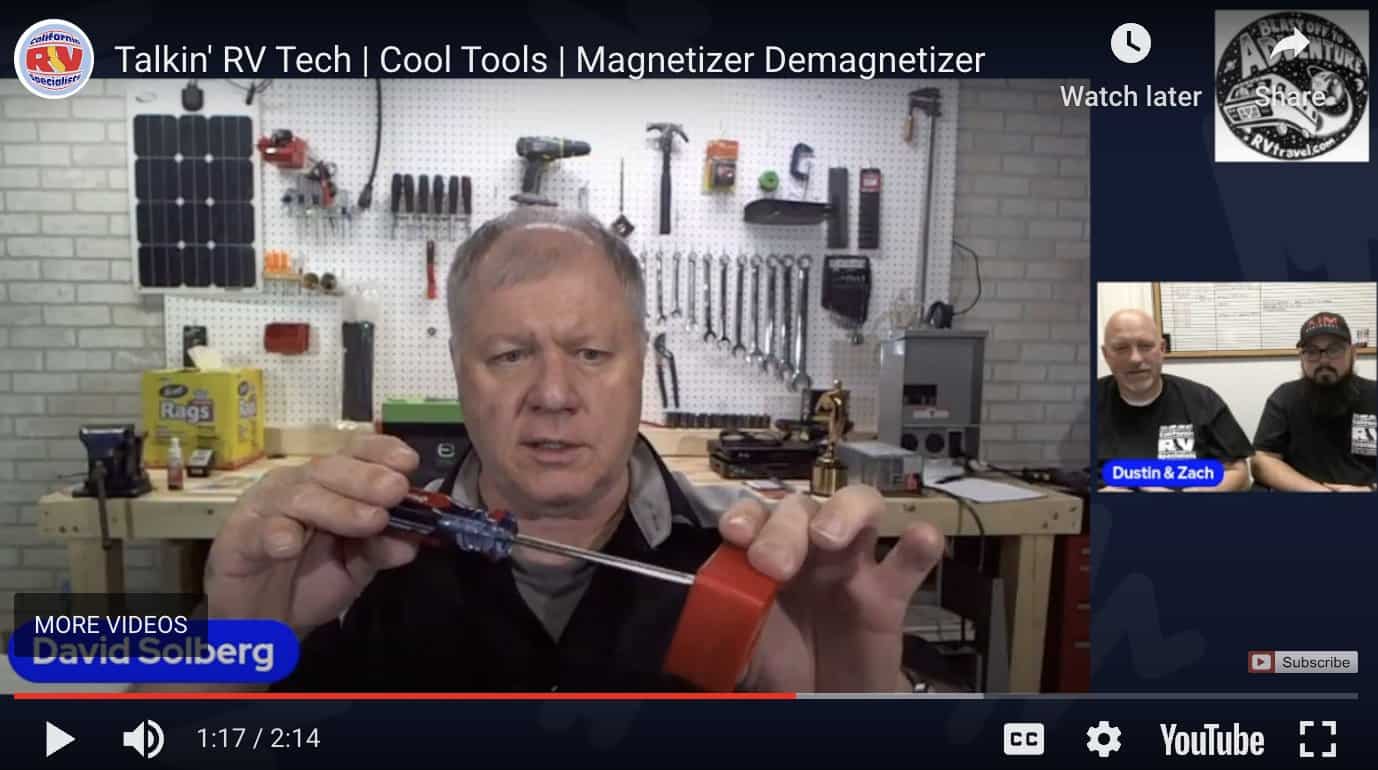
In the past, Dave Solberg and I met for a livestream called Talkin’ RV Tech. We not only answered technical questions, but we also shared what we like to call “cool tools.” These are tools and gadgets that we actually use! We believe they will be helpful to you. Here’s a clip of one of those videos where we discuss the Magnetizer Demagnetizer for Screwdriver Tips.
RV tire safety Do you think tires ‘magically’ fail? Here are some facts
By Roger Marble
As I monitor a number of RV Forums, I continue to see where someone posts about a tire failure. What then follows are dozens of people adding their thoughts on why the tire failed. Many are basically: “That tire failed because it was a (fill in a tire brand name) and you should be using (fill in a tire brand name).”
I would like to think that the readers of RVtravel.com are a bit smarter than those who simply follow the ramblings of “internet influencers” who have no actual tire design or failure analysis experience. Ya, this stuff does “set me off.” Continue reading to find out what “set off” Roger this week.
RV gadgets and gizmos 10 books for RVers and their kids or grandkids
By Gail Marsh
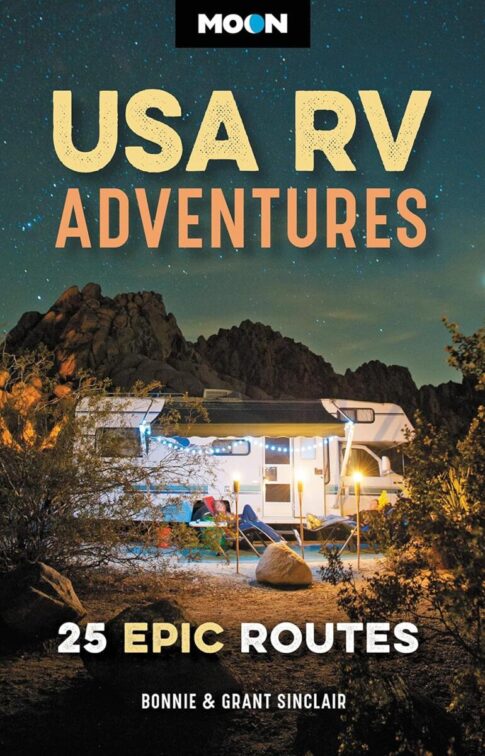
If you’re an RVer who wants to inspire an adventuring spirit in your kids or grandkids, this article and these RV, camping and travel books are for you! If you enjoy RVing with your grandkids or simply want to give them a glimpse into your RV lifestyle, check out these books you all will love.
Want to see your pet in this newsletter? Please send us a photo of your pet with a short description. No blurry photos and please do not submit your photo more than once.
BUMPER SNICKER: “IF YOU CAN READ THIS MY TRAILER FELL OFF”
Prevent costly mistakes with these RVminders
Check out these RVminders and easily prevent costly mistakes! These bands wrap around your steering wheel and remind you to check things before you drive away. Never leave the steps or ladder down again. Antenna or satellite down? Slide locks in place? Doors, vents and windows closed? Compartment locks locked? Hookups disconnected? These are so easy to use they should be in every RV! Check ’em out.
Trivia
The most searched video tutorial on YouTube is “How to kiss.” [Dang! What did we all do before YouTube?!😉]
And finally… A song from the past “Somewhere Over the Rainbow”
About five minutes into the “Wizard Of Oz,” Dorothy (Judy Garland) sings this classic song after failing to get Aunt Em, Uncle Henry, and the farmhands to listen to her story of an unpleasant incident involving her dog, Toto, and the town spinster. Aunt Em tells her to “find yourself a place where you won’t get into any trouble.” This prompts Dorothy to walk off, musing to Toto, “Do you suppose there is such a place, Toto? There must be. It’s not a place you can get to by a boat, or a train. It’s far, far away. Behind the moon, beyond the rain…”, and then she begins singing. Later, Garland recorded the song with the Tommy Dorsey Orchestra as a promise to World War II soldiers of better days to come.
We received this letter from Laura G. last week, and we think many of you can relate. How many times have you arrived at a campground early, only to find that you can’t park until your check-in time? How many times have you “killed time” to get to that hour of the day when you can check in?
Read on, and then please leave a comment for Laura.
Hi, RVtravel.com,
Here’s something that’s been bugging me for a while now: Why do so many campgrounds have check-in times as late as 3 or sometimes even 4 p.m.? Hotels, I get. They need time to clean rooms. But with RV sites, we’re pulling into a slab of gravel or dirt—there’s not much to “turn over.”
More than once, we’ve arrived early after a long day on the road, hoping to settle in, only to be told, “You’ll have to wait until check-in.” Meanwhile, we sit in our RV or make loops in town, burning time and fuel, staring at empty campsites that we’re not allowed to use yet. They’re usually empty!
I understand needing time between guests, but when it’s a basic pull-through with no one on it since the day before, why do they need three or four hours? What’s the harm in letting someone park a couple of hours early?
Has anyone figured out a way to handle this? Do you call ahead and ask nicely? Pay a fee? Or just show up and hope they let it slide? I’d love to know how others deal with it.
And if any campground owners are reading this, maybe consider adding some flexibility?
Best,
Laura
P.S. I’m a travel nurse and have been reading RVtravel.com for a few years. Love every issue!
Nestled in the heart of Cody, Wyoming, the Cody Firearms Museum welcomes visitors with an unparalleled collection of firearms and related artifacts.
Whether you’re a firearms enthusiast or simply curious about the role guns have played in shaping our past, this museum is well worth a visit.
Location and accessibility
The Cody Firearms Museum is located at 720 Sheridan Avenue, Cody, WY 82414, within the iconic Buffalo Bill Center of the West complex. As part of a larger cultural center that includes museums dedicated to Western art, natural history, and Plains Indian culture, it’s easy to combine your visit with other attractions.
RVers will find plenty of street parking nearby for tow vehicles. Cody’s downtown area is RV-friendly with several municipal lots and pull-through spaces. The museum is open daily, and tickets can be purchased on-site or in advance through the Buffalo Bill Center’s website.
What you’ll see
Firearms. The museum boasts more than 7,000 firearms in its permanent collection, with roughly 4,000 on display at any given time. Exhibits span from early flintlocks dating back to the 1400s to cutting-edge modern sport rifles.
The centerpiece of the collection is the Winchester Collection, donated by the Olin Corporation. This collection features prototypes, production models, and competitor firearms.
Interactive displays. The Cody Firearms Museum has interpretive displays that demonstrate how firearms played a significant part in the Western expansion and military conflicts.
Touchscreens allow visitors to access firsthand accounts, technical diagrams, and animations demonstrating how certain mechanisms work.
You can browse displays on firearms used by notable figures, such as mountain man Jeremiah Johnson’s real hunting rifle. Or marvel at engraved presentation pieces once owned by Oliver Winchester.
Special tours
For a more in-depth experience, you can book a private, expert-led tour that grants access to artifacts not regularly on display.
Firearms safety and science
Beyond history, the Cody Firearms Museum emphasizes the science and safety aspects of firearms. Exhibits explain ballistics, engraving artistry, and the physics behind gun operation.
Whether you’re a shooter, collector, or a family traveling with children, the museum’s balanced approach educates visitors on the multiple dimensions of firearm culture.
Situated on a bluff overlooking Cody, Buffalo Bluff RV Park offers large pull-through sites, full hookups (water, sewer, 50-amp electric), and free Wi-Fi. Its elevated location provides scenic views of the surrounding valley. It’s less than three miles from the Buffalo Bill Center of the West, making it a quick 10-minute drive to the museum. Amenities include clean shower facilities, a laundry room, and friendly Western hospitality, ensuring a comfortable stay for RVers.
Located at 2001 Highway 14/16/20 (just east of town), Absaroka Bay RV Park is a clean, well-maintained campground with level sites and reliable full-utility hookups. Friendly staff, spacious layouts for big rigs, and easy access to local restaurants make it a practical choice. It’s under four miles from the museum—about a 12-minute drive—so you can spend the afternoon exploring firearms history and return to camp for evening stargazing.
Insider tips for RVers
• Reservations: Campgrounds around Cody fill up quickly between June and September. Book RV spots two to three months in advance to secure a pull-through site, especially for larger rigs.
• Weather prep: Wyoming’s weather can shift rapidly. Even in summer, nights can dip into the 40s. Pack layers and bring a small space heater or full propane tanks to power your furnace.
• Fuel and supplies: Cody has several truck stops and big-box stores (like Walmart) just off Highway 14/16/20. Fill up your propane and grab groceries before heading into more remote areas like Yellowstone.
You should go!
• Hours and admission: The Cody Firearms Museum is open daily from 10:00 a.m. to 5:00 p.m. (hours may vary seasonally). Adult admission is typically around $16, with discounts for seniors, students, and members of the Buffalo Bill Center. Children under 6 get in free, and family passes are available.
• Best time to go: Summer (June through August) sees the highest attendance. Spring and fall offer mild weather with fewer crowds. This may be ideal for RVers who prefer quieter experiences.
TRAVEL WITH A FIREARM? YOU NEED THIS!
The 2025 edition of the annual Traveler’s Guide to the Firearm Laws of the Fifty States is hot off the press. Because so many of our readers carry, we believe it’s important to let you know about this very popular guide. The 2025 edition covers all the basics for armed travel in the United States, Canada, and Mexico. What is legal in one state could be a felony in another. This book should be used as a reference before entering a new state (or into Canada or Mexico) to know what to expect before you cross the border. Learn more here.
By Stefan Price
You take care of your tires. You torque your lug nuts. You check your suspension and know your weight limits. But here’s something even veteran RVers often overlook: Your RV’s frame might be bending and twisting more than it should, and it’s slowly tearing your rig apart from the inside out.
This isn’t some freak accident. It’s basic physics. And it’s happening to thousands of travel trailers, fifth wheels, and motorhomes right now.
RVs are built on frames that flex by design—but not this much
Every RV frame flexes. That’s normal. It has to, as you roll over uneven terrain, curbs, gas station ramps, or badly graded campsites.
But repeated torsion and sagging—especially in longer trailers and fifth wheels—can start to separate slide walls, crack fiberglass, tear roof seals, and destroy your floors. And once that flex goes too far, your RV starts to behave like it has a broken spine.
How to know if you have a frame flex problem
Even seasoned RVers often don’t recognize the signs:
• You hear creaking or popping sounds when entering or exiting the RV.
• Your entry door sticks or doesn’t latch after leveling.
• You notice recurring slide issues—seals don’t align, or corners scrape.
• Interior cabinets separate from the ceiling.
• You have to relevel unusually often on seemingly flat ground.
• A wall or roof seam keeps needing resealing.
These symptoms aren’t just cosmetic. They’re structural.
Why long trailers are at higher risk
If your rig is more than 32 feet, it is much more vulnerable to:
• Frame sag in the middle (especially when tanks are full);
• Torsional twist across axles on uneven roads; and
• Stress near the pin box (for fifth wheels) or tongue jack (for bumper pulls).
Even well-maintained rigs can suffer if the frame was underbuilt or overloaded over time.
Some brands use “C-channel” or I-beam frames with minimal cross-bracing to save weight and money. This is where the problems usually start.
Your stabilizers and leveling jacks might be making it worse
Using leveling jacks or stabilizers to force your RV into position can actually twist your frame even more.
If you’ve ever cranked one corner of your stabilizer jacks way down to “stop the wobble,” you might be flexing the entire structure—and separating your walls, roofline, or slide gear in the process.
Always level first, then gently deploy stabilizers to touch the ground, not to lift or force.
Upgrades that can help prevent frame damage
If you’re full-timing or travel often on rough roads, consider these long-term upgrades:
• MORryde rubber pin box or Gen-Y hitch (for shock absorption);
• Frame reinforcements or cross-bracing, especially near axles and overhangs;
• Equa-Flex® or CRE3000 (from MORryde) suspension upgrades to reduce bounce stress;
• Install shock absorbers if your rig didn’t come with any;
• Add a frame-flex sensor (or measure door gaps/cabinet shifts over time);
• A mobile RV tech or frame specialist can often weld reinforcement in problem areas before it becomes a cracked weld or delaminated wall.
Frame flex is the slow-motion killer of RVs. It doesn’t make a big bang. It makes 100 tiny groans, shifts, and creaks that add up to major structural damage, often just outside of warranty coverage.
Even if you’ve been RVing for decades, it’s time to think about your rig’s spine.
Today’s RV review is of the new Brinkley RV Model I 235 travel trailer. But it’s more than just an RV—it’s an opportunity. This trailer’s floor plan is somewhat similar to the Keystone Cougar 22MLS, which we looked at a while ago. Another similar model is the Grand Design Imagine 22MLE. In other words, this is a very popular floor plan.
The opportunity is for RV buyers to make a statement by voting with their wallets. I know we’ve all complained about the quality of RVs, but many of the things we’ve complained about are addressed here. But the MSRP difference between this rig and the other two is close to $25,000. That doesn’t take into account any discounts, but it illustrates a big point.
What makes this RV worth so much more than those others in this category? Or is it worth more than those others in this category? Well, here are some things.
Start at the road with the Brinkley Model I 235
The first place to start with any RV shopping experience is at the road, and here you have Hankook E-rated 10-ply tires. Nice. But then there’s also an anti-lock braking system that incorporates some sway mitigation. Basically, it uses some sensors to apply brakes to help minimize sway when towing. Honestly, that is a fantastic safety feature and one that’s becoming more widespread.
There’s also a predictive braking, of sorts, where the trailer can sense if you’re going downhill and can apply additional braking force. They call it dynamic brake boost, but it’s a big safety advantage.
This does ride on leaf springs, unfortunately, but at least there’s a Road Armor dampening system to minimize vibration and harshness.
Another thing I like under here is the fact that there’s just one dump connection point. Also, the cap on this is clear so you can see if there’s impending doom because you may have forgotten to close the gate valve, and now you’re going to emulate Robin Williams’ scene from the movie “RV”.
Another interesting thing is that this trailer is rated for camping in 0°F – 100°F with holding tank heaters and an enclosed and heated underbelly.
Okay, there’s something silly under here, too. They put LED lights under the trailer. While I know a lot of you have done that, my question is, why? Well, actually, why leave the bleeping things on all night long?
More build quality features in the Brinkley Model I 235
If you’re already down there looking at the suspension and all of that, you might have noticed that the sides of the RV feel different. Smooth. Extra shiny. This is different.
The walls are actually aluminum and they’re painted. Those aren’t stickers you’re looking at—that’s paint. The wall construction is an aluminum outer skin laminated to an Azdel substrate and then insulation. Years from now, there aren’t going to be faded stickers. This will likely still look good, so you’d better like the way it looks if you’re writing a check.
There are also those frameless windows. Those are a different build where the interior incorporates both a screen and a shade with a metallic backing on it to help repel heat.
The roof, too, is better, using an Alpha Ply material and associated sealants. So, the likelihood of a leak is lessened and there is less maintenance required. Also, notice that there isn’t a skylight in the bathroom that you can see from up here. That’s a common point of failure that just isn’t there.
Another thing, and this is what would sway me to write a check, is the plumbing. There are no flexible hoses with PEX clamps, which is one of the most common failure points in RV plumbing. You have brass fittings in most places with PEX clamps on PEX lines, as it should be, and braided stainless lines where they need to be flexible.
Also, the space behind the Nautilus water system in the front pass-through has a compartment door, so if the plumbing gods aren’t being kind to you, you can get in there and do a repair. But you’re not likely going to have to.
This also uses the game-changing Furrion Chill Cube 18,000 BTU air conditioner.
Brinkley Model I 235 - 2025
1 of 14
2026 Brinkley Model I 235 Travel Trailer
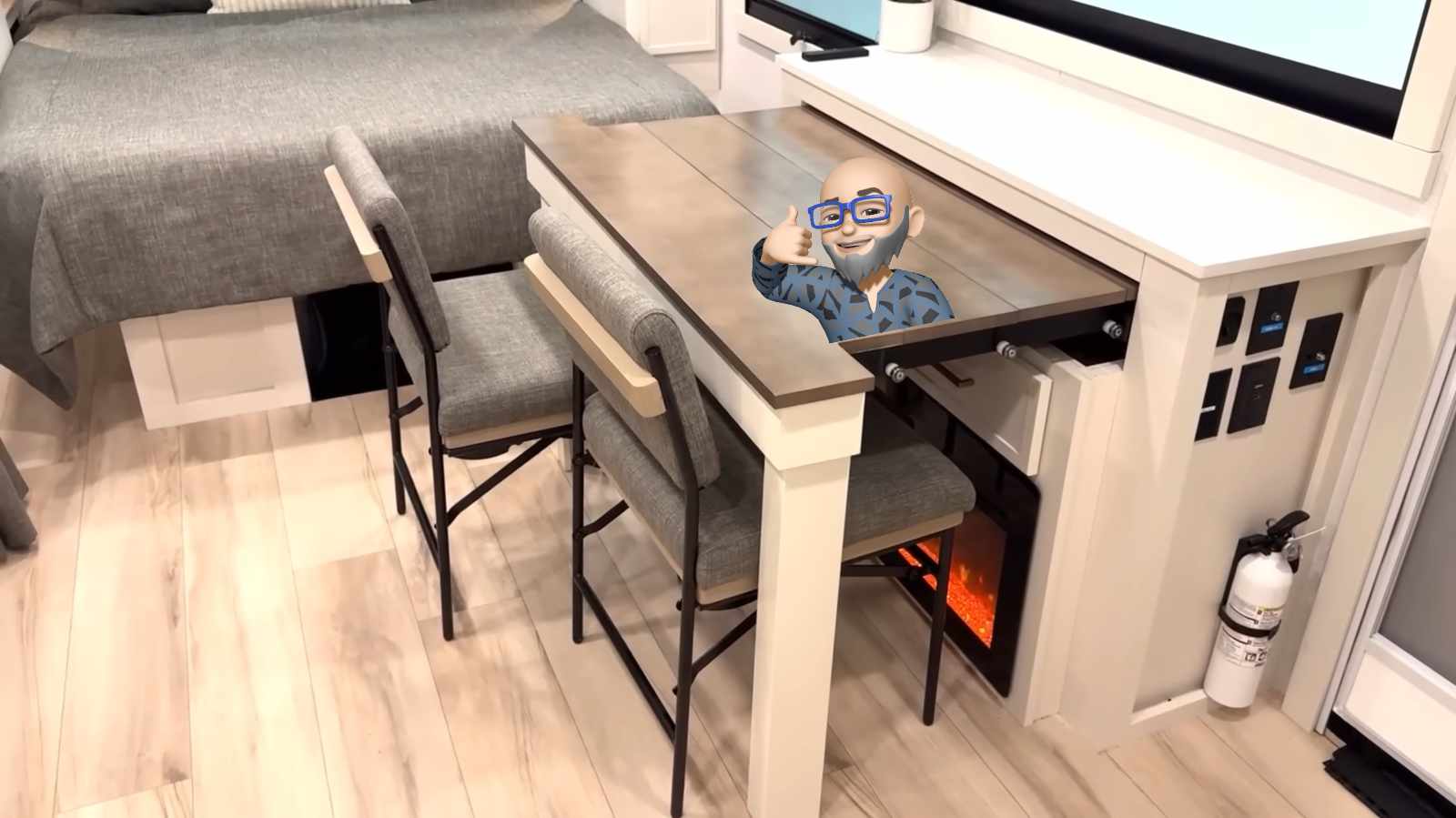
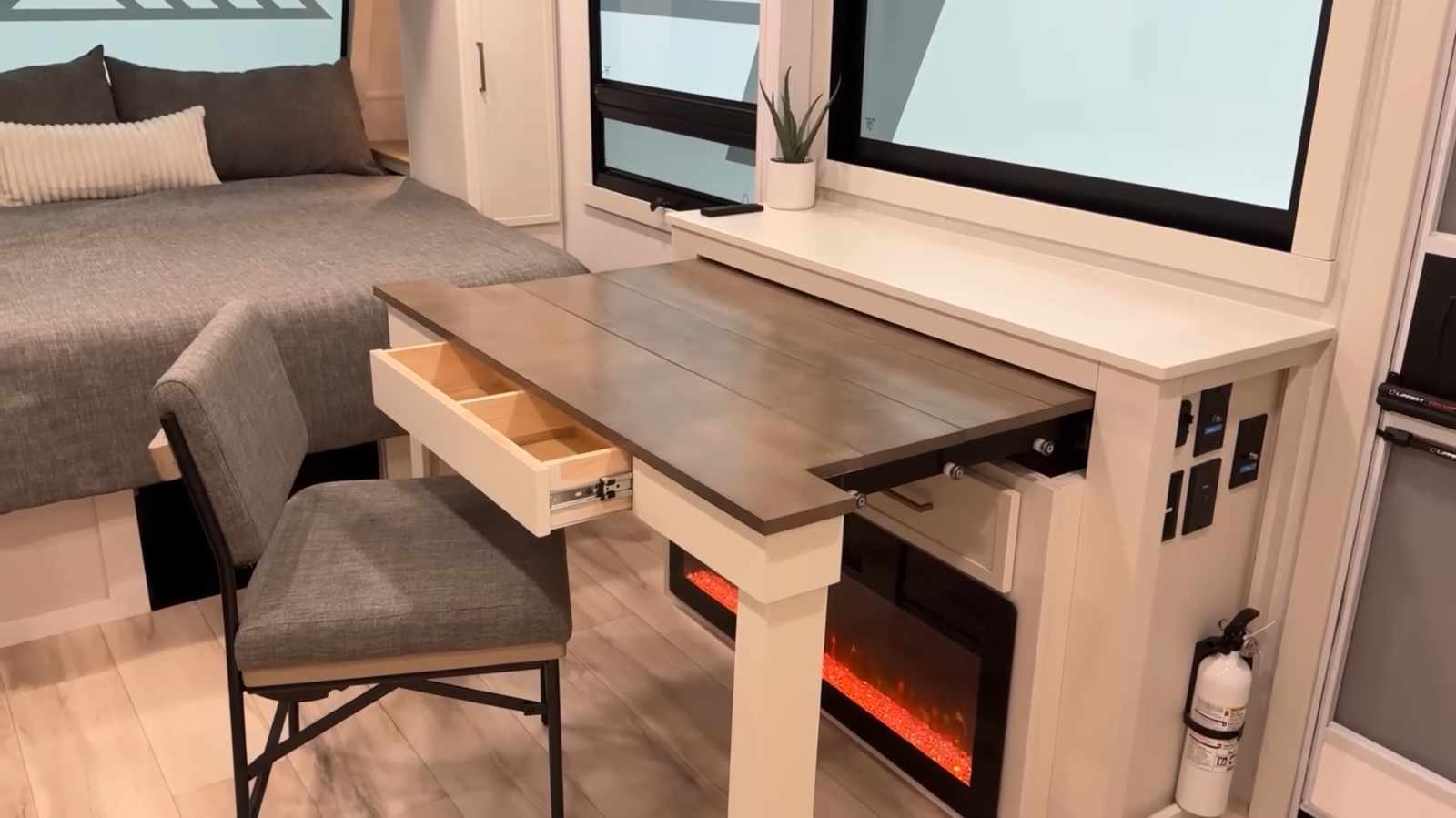
A nifty desk magically pulls out of a cabinet in the Brinkley Model I 235
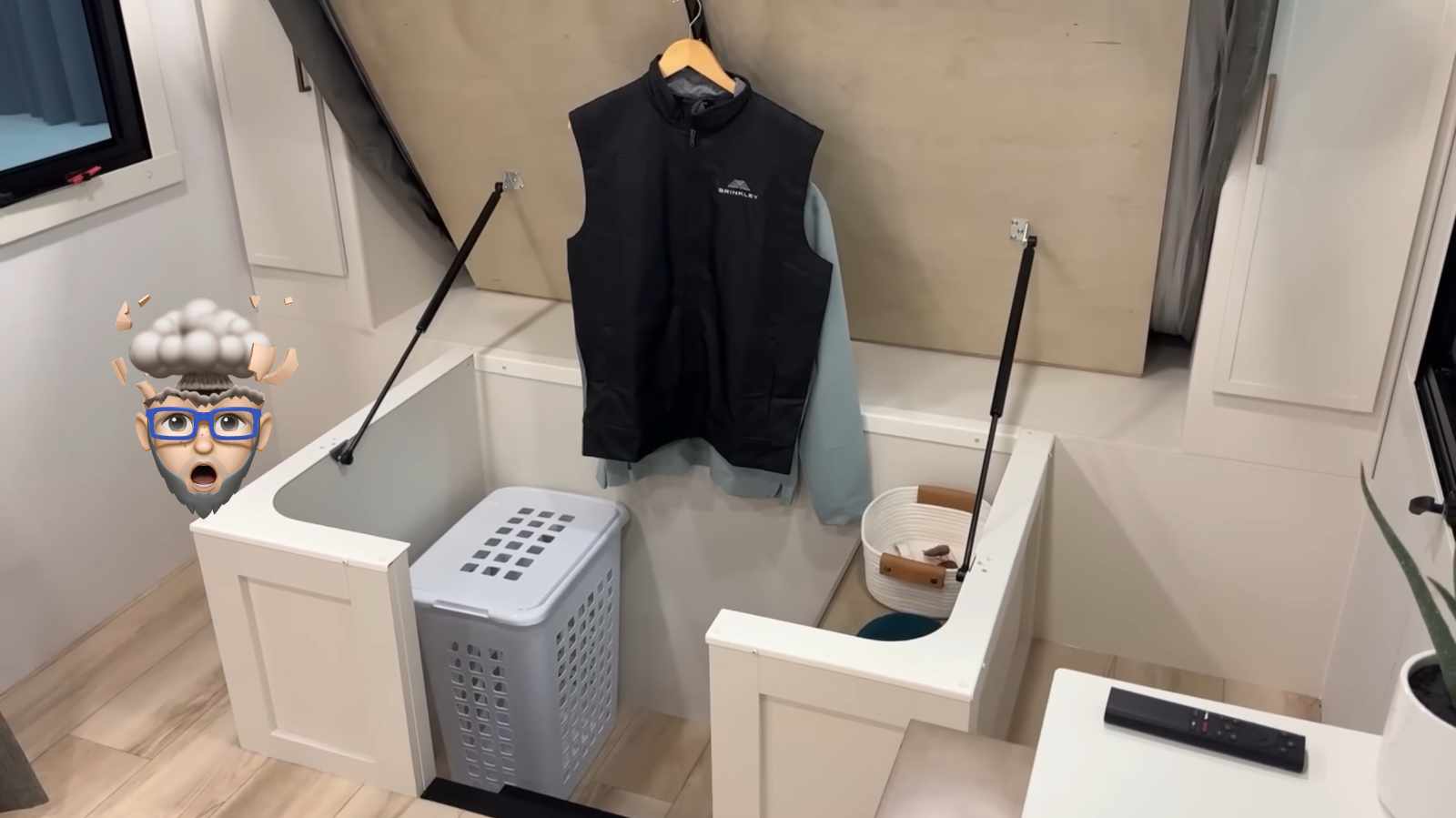
An industry-first step-down storage compartment under the bed
An open space in the Brinkley Model I 235
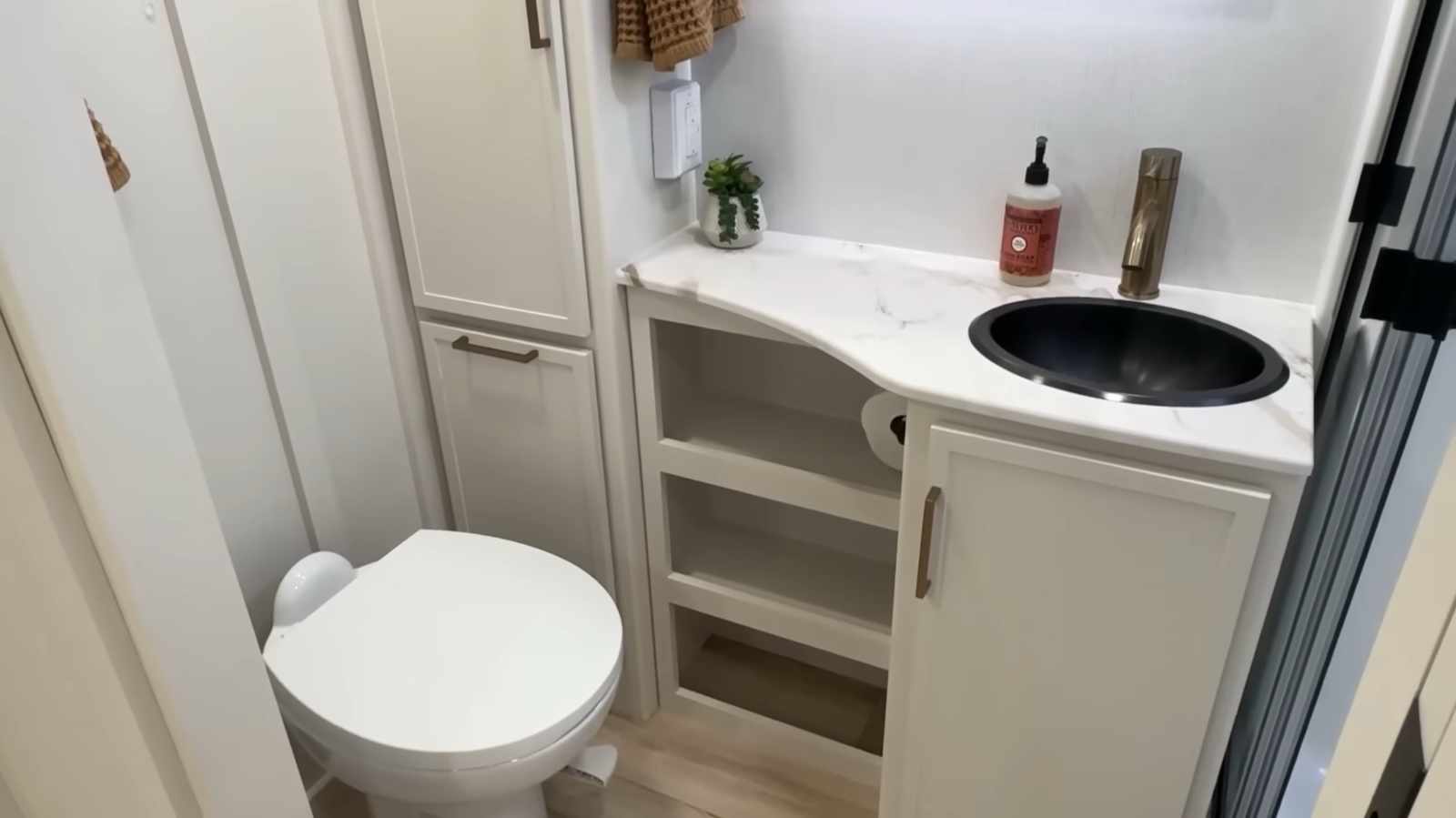
Bathroom in the Brinkley Model I 235
Bedroom in the Brinkley Model I 235
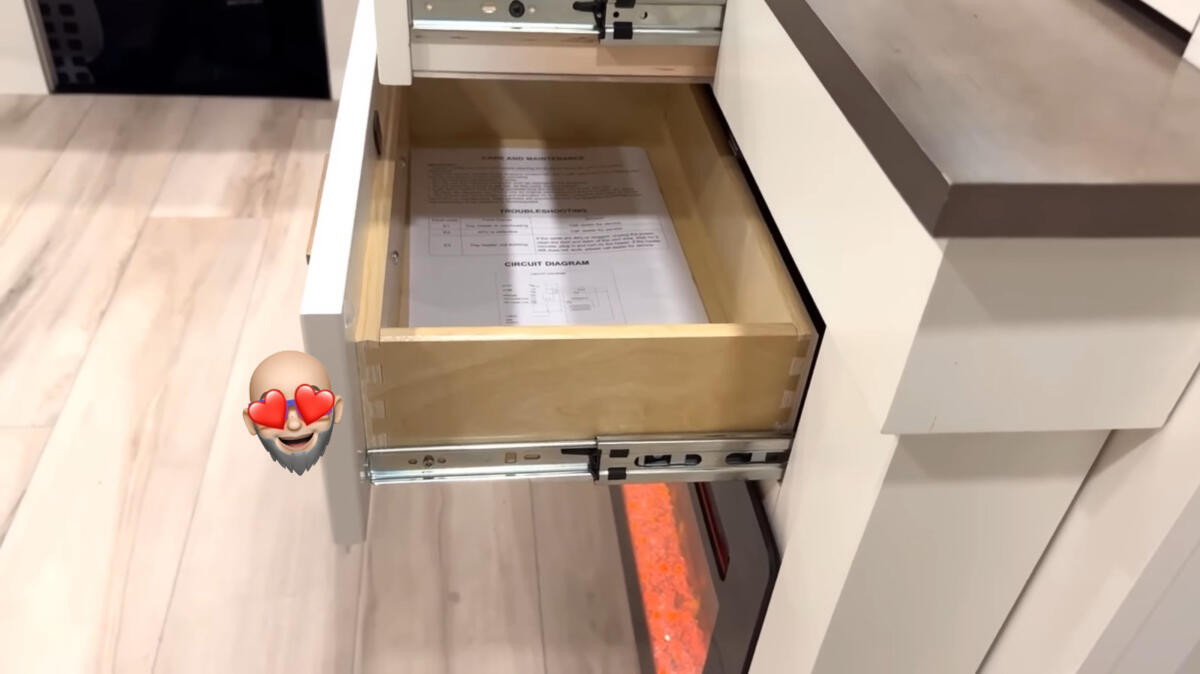
Dove-tail plywood drawer construction is truly top-notch
Interior of the Brinkley Model I 235
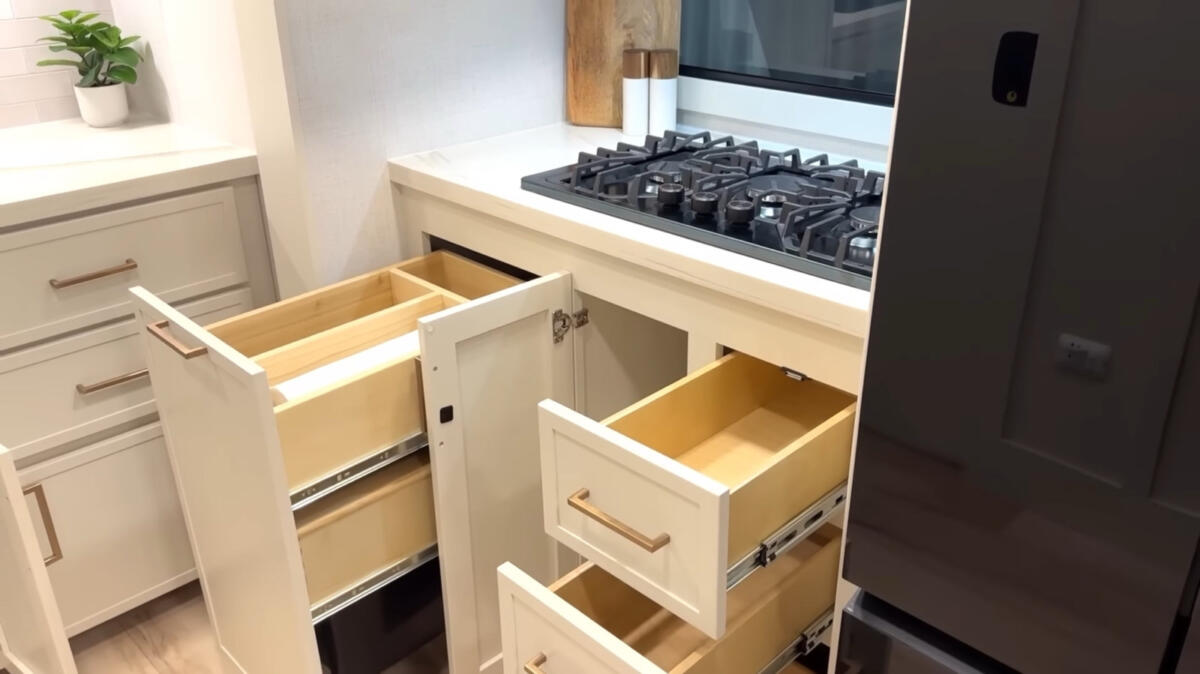
Kitchen cabinets are cleverly designed and use dove-tail drawer builds
Kitchen in the Brinkley Model I 235
Off-camp side of the Brinkley Model I 235
The large window has a pull-down shade that becomes a movie screen
The pull-out desk in the Brinkley Model I 235
What’s inside the Brinkley Model I 235?
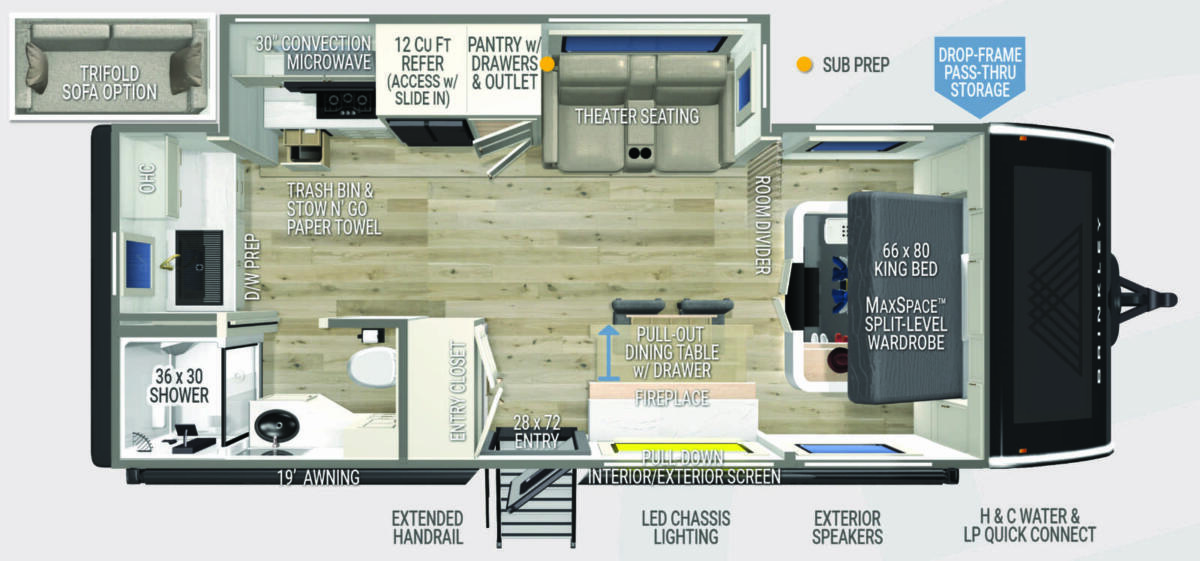
This has the same floor plan as the two very popular trailers I mentioned at the start of this, except Brinkley has done things so differently within that space.
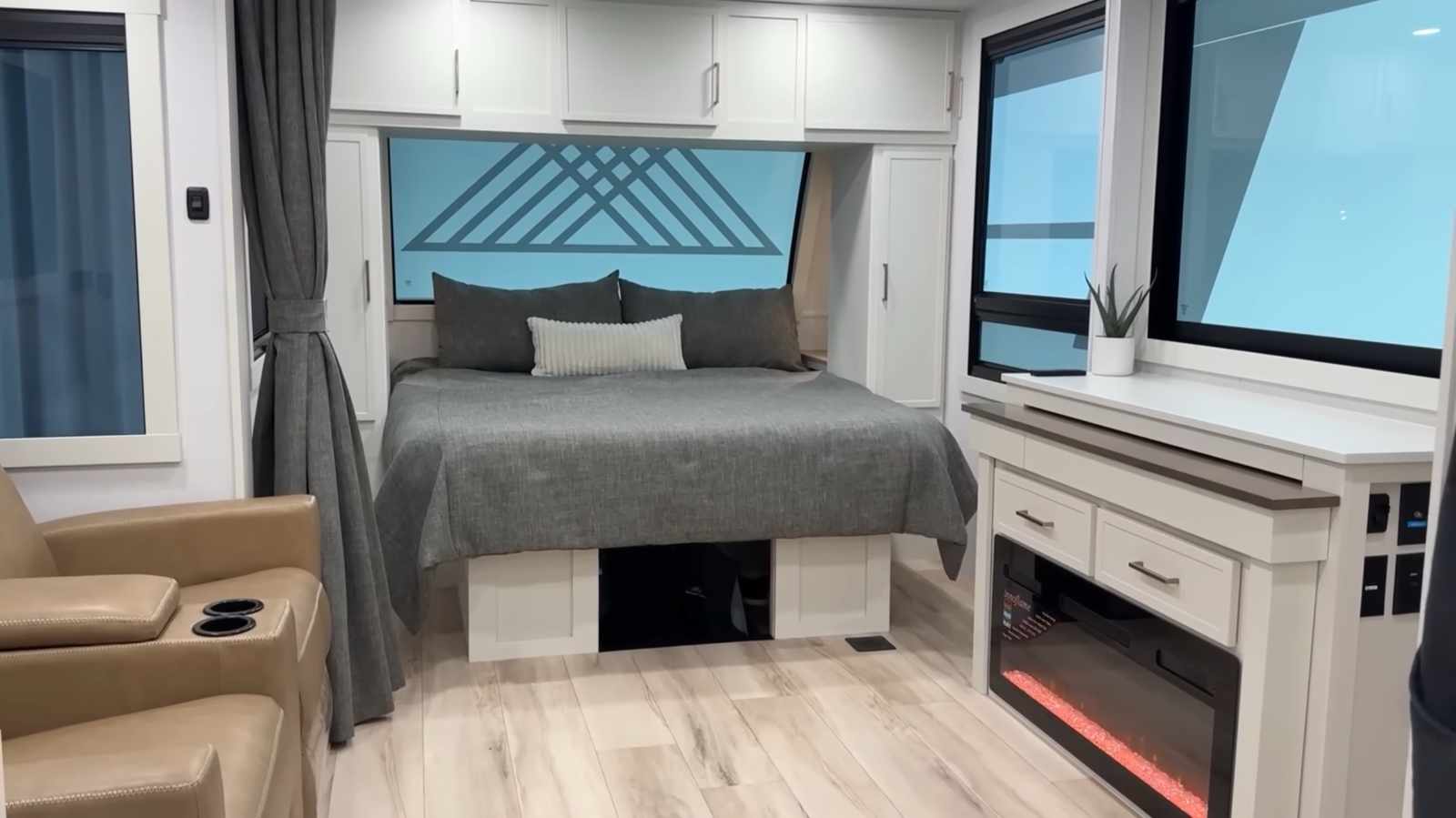
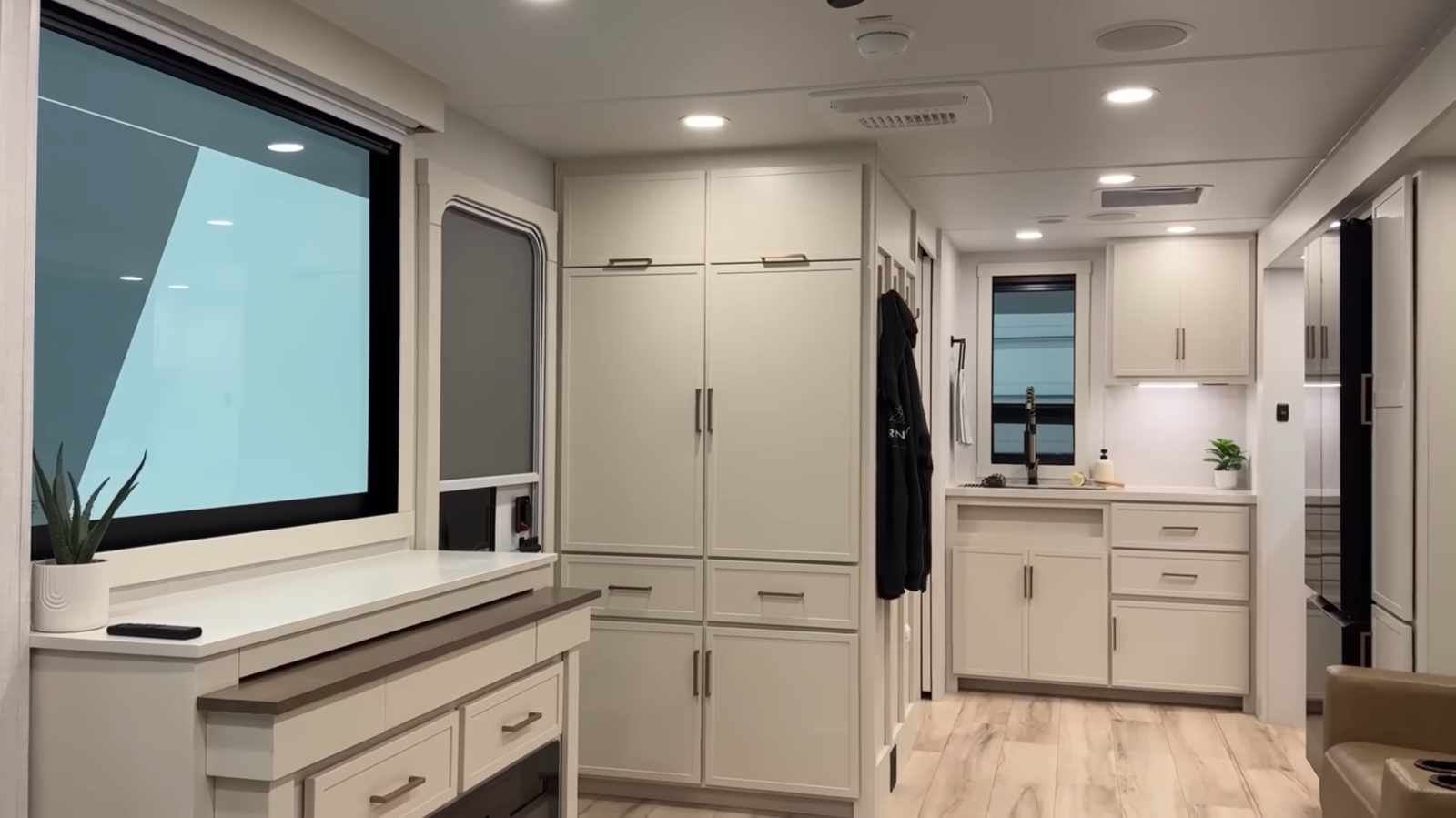
What excites me is a fireplace over on the camp side under a very large window with a shelf and some drawers above it. But in a Houdini-like move, you pull on the top and now you have a desk. And, yes, there are two chairs included.
Draw one of the shades down over that huge window right above the desk, and you have a screen, which makes a smart projector make a lot of sense. But what makes it make even more sense is that you could flip the image and not draw the shade behind the screen and now you have a fairly large screen that you can watch from the outside.
And it’s a smart projector, so, yes, you could also watch content from your laptop or tablet or phone, or the internet.
Keep yankin’ that desk and now you have a dining table. You could arguably seat four around it.
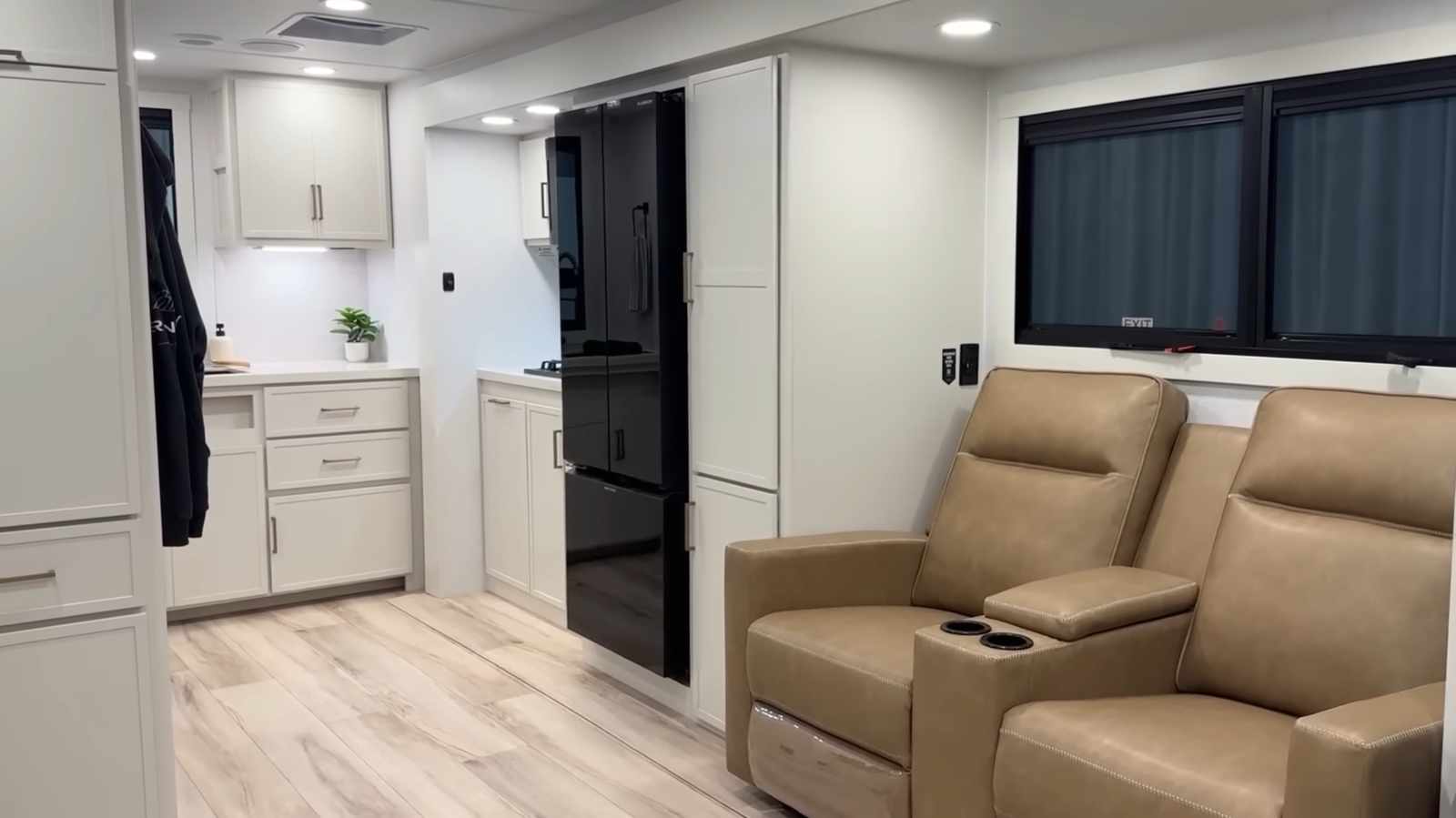
There are also theater seats or a jackknife sofa on the opposite wall in the slide room.
Kitchen in the Brinkley Model I 235
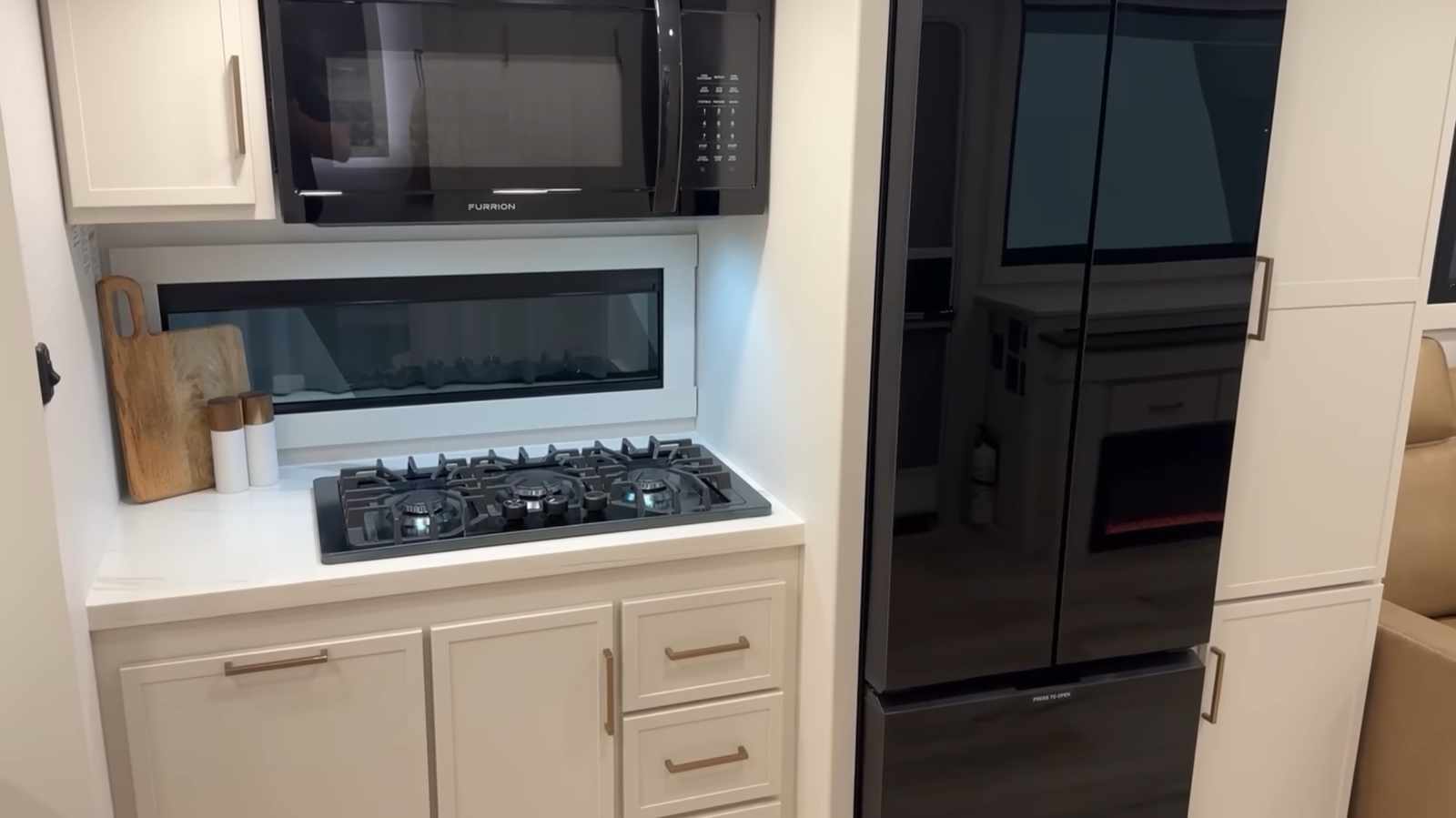
The kitchen in this trailer is in the back road-side corner, and there are a lot of drawers there. A lot. Cooking is done with a three-burner propane stovetop that has a very professional feel to it, as does the convection air frying microwave that is as big as the one I have in my house.
Drawer and pantry space is plentiful, as is fridge space with a 12-cubic-foot French door fridge with a drawer freezer.
Those drawers in the kitchen are actually built of real plywood and have dovetail construction. That’s just not everyday RV stuff, and even many homes’ drawers aren’t built that well. Plus, there are some handy features built into the drawers such as the paper towel holder that can be pulled out and stood up on the counter if you wish.
There’s also a trash can and even a compartment in the trash can drawer for more trash bags.
Oh, something unusual: There is also a space below the sink that is purposely designed to accommodate a dishwasher. Seriously.
Bedroom in the Brinkley Model I 235
No matter what the RV industry calls it, this is a 66” x 80” bed, so it’s sort of an Olympic queen. But that’s okay—it is larger than most.
But it’s almost what’s under the bed that’s mind-boggling—a basement. Well, not a full basement where creepy clowns can hide. But there is a recessed floor that has shelving in it. This takes advantage of space you normally just lose. There’s also a lot of hanging storage there, as well as cabinet storage around the bed.
Boondocking and travel access
Even with the slide in, you can pretty much get to whatever you need to.
This trailer comes with a 3,000-watt inverter and a 30-amp Victron solar controller, along with 200 watts of solar panels.
Up to 600 watts of panels are supported by this system from the factory.
Brinkley Model I 235 specifications
My thoughts on the Brinkley Model I 235
This is such an exceptional travel trailer. But all that exceptional stuff ain’t cheap. The MSRP on this is $74,628. That’s almost $25,000 more than the Grand Design 22MLE and Cougar 22MLS.
So, now you have a choice, of course. Will the buying public think that the better plumbing, safer technology, and so many other detail features in this are worth about half again more than what most companies are charging in this space? Of course, the MSRP doesn’t reflect any dealer discounts, so the actual street price is going to be different.
But if I were shopping for a new RV, I would probably put this at, or near, the top of my list. Just to not have to deal with the stupid plumbing issues that are so common in RVs alone might be worth it, let alone the other things. And I do like that projector a lot.
So, let’s see how the buying public reacts to this because so, so, so many people have kvetched to me about the quality of RVs. So now that there’s one that’s very differently built, will people see the value in that and step up?
What would you do?
My thanks to Josh from Bish’s for the video and photos in this article.
These RV reviews are written based on information provided by the manufacturers along with our writer’s own research. They are based on information from a single unit and may not reflect your actual experience. Shop your RV and dealership carefully before making a buying decision. They are intended only as a brief overview of the vehicle, not a comprehensive critique, which would require a thorough inspection and/or test drive.
Tony comes to RVtravel.com having worked at an RV dealership and been a lifelong RV enthusiast. He also has written the syndicated Curbside column about cars.
You can also check out Tony and Peggy’s RV podcast.
By Cheri Sicard
Are you tired of the same old boring museums? Do you crave something a little more… unusual? Then buckle up, because we’re hitting the road with the team from Scripps News Life to explore five of the strangest, most unique and wacky U.S. museums.
These museums stand out for their cool interactive games, one-of-a-kind exhibits, and fascinating histories. From the savory to the shocking, get ready to add these offbeat attractions to your travel bucket list.
#1. Spam Museum
First stop: Austin, Minnesota, home of the one and only Spam Museum. This isn’t just a museum; it’s a celebration of all things Spam!
For those not in the know, Spam gets its name from a combination of “spice” and “ham.” Here, one can dive into the history of Hormel Foods and discover how Spam became a household name. Even better? Admission is free!
Inside, people can enjoy a variety of attractions, including a theater, historical displays, family activities, and interactive games. Imagine testing your skills on a Spam-themed game or snapping a photo with a giant can of Spam. It’s an experience people won’t soon forget!
#2. Las Vegas Neon Museum
Next, it’s off to the bright lights of Las Vegas, Nevada, to visit the Neon Museum. In a city known for its over-the-top displays, the Neon Museum shines a light on the iconic neon signage that has shaped Las Vegas’ visual identity.
The museum’s “Boneyard” is a nearly 2-acre outdoor campus filled with more than 200 signs. Seven of these signs have been fully restored, offering a glimpse into the city’s dazzling past. For a truly unique experience, visitors can even participate in hot yoga sessions among the neon relics.
Looking for a memorable venue? The former La Concha Motel lobby, now part of the Neon Museum, houses additional rescued signs and is available for weddings and events. It’s a retro-cool space that perfectly captures the spirit of classic Las Vegas.
#3. The National Mustard Museum
Ready for a zesty adventure? Head to Middleton, Wisconsin, and discover the National Mustard Museum. The museum’s founder, Barry Levenson, claims he was inspired to create the museum by a voice from the mustards themselves. That voice told him, “If you collect us, they will come.” And come they did!
Founded in 1986, the National Mustard Museum boasts an impressive collection of more than 5,500 mustards from 80 different countries. Visitors can sample mustards from around the globe.
But don’t expect to find ketchup here. The museum takes a strong stance against ketchup. They even claim it is “now the leading cause of childhood stupidity in America.” Whether people agree with that statement or not, it adds a humorous touch to the museum’s quirky personality.
#4. The International Spy Museum
The next stop is Washington, D.C., home of the International Spy Museum. This is the only public museum in the United States dedicated to the world of espionage, offering a fascinating look into the secret lives of spies and the tools they use.
At the International Spy Museum, visitors can step into the shoes of a secret agent. They can run missions, climb through air ducts, and unscramble decrypted messages. It’s an immersive experience that will test people’s skills and knowledge.
#5. The Museum of Bad Art (MOBA)
The final stop is just outside Boston, Massachusetts, at the Museum of Bad Art (MOBA). This museum has a unique mission: to collect, exhibit, and celebrate “art too bad to be ignored.”
But what exactly is bad art? According to MOBA, it’s art that is sincere, original, and has something go wrong in an interesting way. The museum’s collection comes from a variety of sources, including yard sales, flea markets, and donations from around the world.
MOBA reminds everyone that art doesn’t have to be perfect to be appreciated. It is about creativity, expression, and finding beauty in the unexpected. Visit the Museum of Bad Art website to see some of its collections.
These five museums offer a unique and entertaining look at American culture. They prove that museums don’t have to be stuffy or boring. Instead, they can be fun, engaging, and full of surprises.
So, next time you’re looking for an adventure, skip the usual tourist traps and explore these offbeat attractions. Who knows what strange and wonderful things you might discover?
If you’re an RVer who wants to inspire an adventuring spirit in your kids or grandkids, this article and these RV, camping and travel books are for you!
If you enjoy RVing with your kids and/or grandkids or simply want to give them a glimpse into your RV lifestyle, check out these Amazon book finds.
RV, camping and travel books for everyone
Did you know Amazon carries many books related to our national parks, traveling, and camping, too? Here is a short list of my favorites. Note that you can download some selections to your grandkid’s Kindle. Search the Amazon website for additional suggestions.
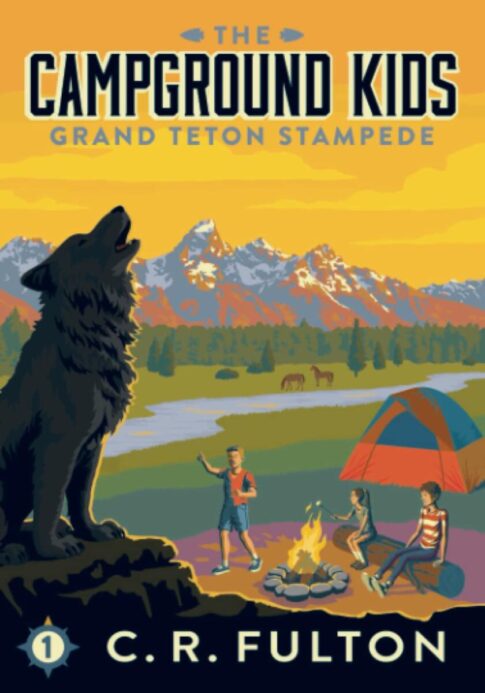
This book series by C. R. Fulton takes readers into a select national park where they’ll find adventure and surprises. No questionable topics or problematic themes in this series that targets readers aged 8-12. This highly regarded series builds character and encourages readers to explore the great outdoors.
This book will generate great conversations along with hearty laughter. Each scenario presented in the book offer kids of all ages a chance to decide and defend impossible scenarios.
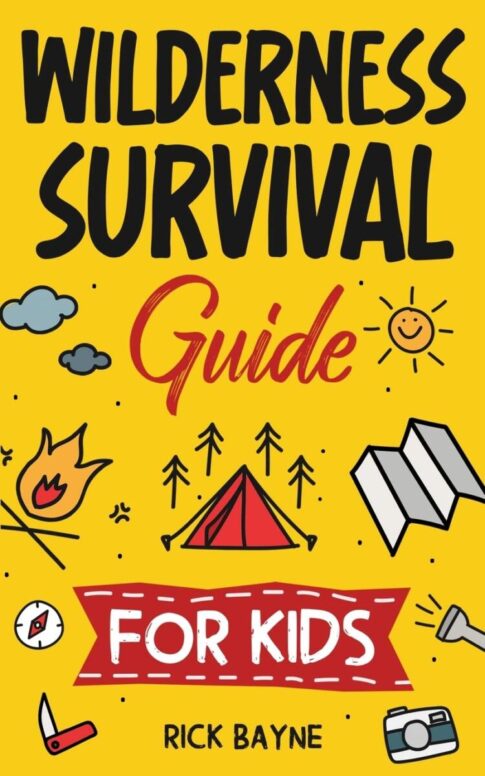
From this book, kids can learn how to build a fire and perform basic first aid, along with many other adventuring skills. It’s a great resource to help teach your grandchildren important life-saving skills. (Note: Adults can learn basic skills from this book, as well!)
Adults and grandkids of all ages will enjoy coloring in this book. It illustrates all forms of camping in delightful “retro-themed” pictures. It’s perfect for those rainy days that nix outdoor activities. There are many other camping coloring books here, too.
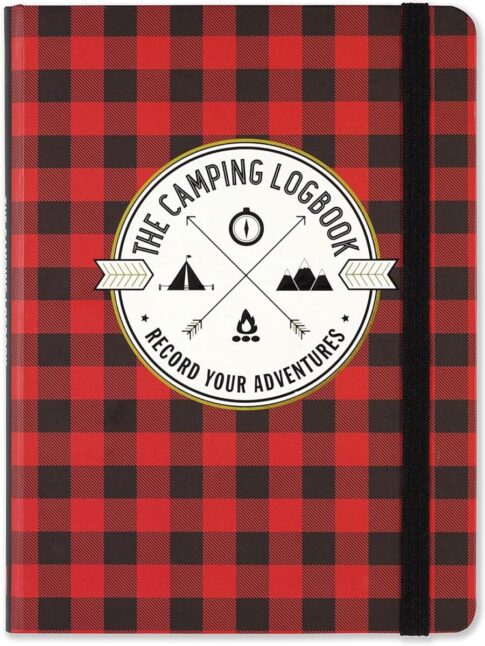
Guided prompts help teens (and all ages) enter pertinent information and memorable incidents for every RV trip. There are also pages for photos and mementos. Buy one for your grandkid or for yourself!
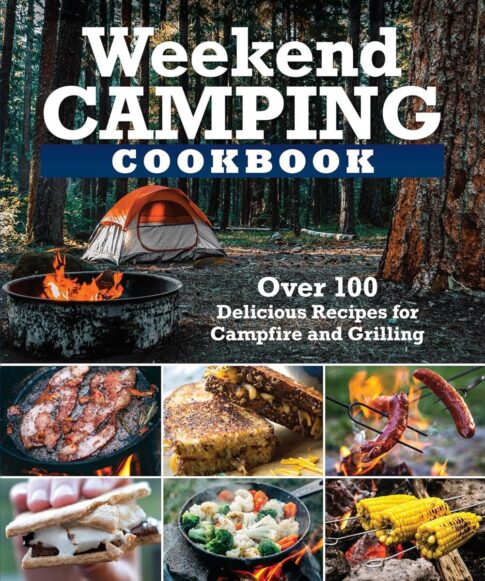
Let your little chef help cook up some great-tasting grub for your next RVing adventure. This cookbook has more than 100 recipes for breakfasts, lunches, dinners, and even snacks. Yum!
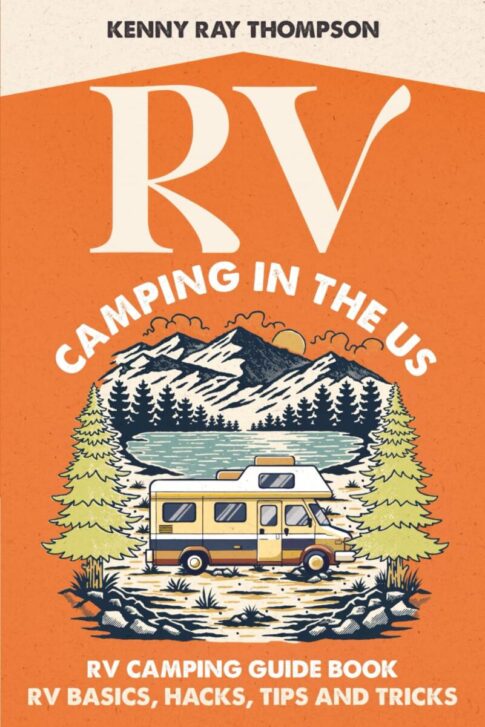
Teens as well as adults will benefit from reading this book. Get the most out of your RVing experience as you employ the tricks and tips shared in this paperback or Kindle downloadable book.
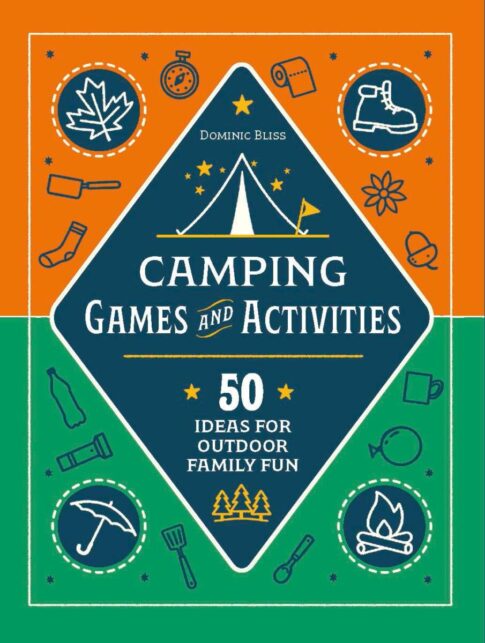
This book and cards combo will keep all ages of campers engaged. It contains 50 challenges that include active, creative, and many other kinds of activities guaranteed to make everybody a happy camper.
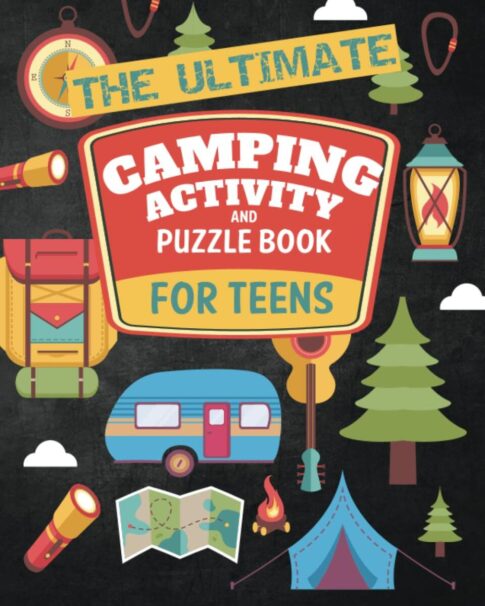
This book includes mazes, cryptograms, trivia questions, and so much more! With so many different kinds of puzzles and brain teasers, your entire RVing family will enjoy this book.
There you have it! My RV booklist for kids and grandkids is sure to include something you and your children and/or grandchildren will enjoy. Happy travels!
Are you up for a trip through time? What if someone asked you that? You’d have a choice, return to 200 years ago, so that would be 1825, or zoom forward to 200 years in the future — 2225? Which would it be?
Remember, this would be a month-long trip. Then you could return to the present time.
Returning to 200 years ago would put you into the early years of the United States, almost four decades before the Civil War, and John Quincy Adams was the sixth president. Abe Lincoln had just turned 16.
What a time that would be! And just think, no telephones. No electricity. No cars. No internet!
Or maybe you’d rather leap ahead 200 years. See if gas and diesel engines really did go away, replaced with electric models. You could see how far we’d gone in space. Maybe hop a cheap flight to the moon. But then, maybe 200 years from now we humans had truly messed up our planet and a trip into the future would be more primitive than a trip to the past.
So what would it be for for you — go back, go ahead … or stay right where you are? We can’t wait to hear your thoughts.
Growing up in Iowa’s farm country, I often heard stories about hobos. My elderly relatives reminisced about handing out food to these traveling wanderers in exchange for a day’s work, and these stories sparked my interest in the history of hobos.
Traveling from place to place was their way of life. These original road warriors intrigued me, so I decided to learn more about the history of hobos.
Hobo?
The term “hobo” first appeared in American English around 1890, though no one seems to know its exact origin. Some folks suggest it may have come from expressions like “hoe-boy” (farmhand) or from the greeting “Ho, beau!” used by railroad workers. Others believe it’s a contraction of “homeward bound.” Learning about this and more enriches our understanding of the history of hobos.
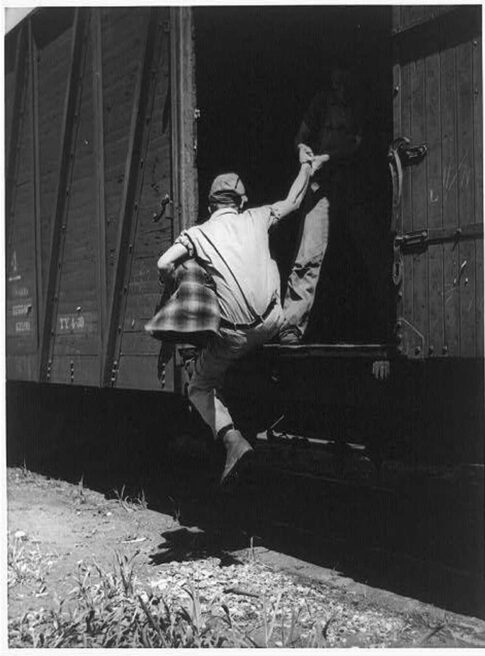
What is clear is that hobos were willing to travel far and wide to find seasonal or short-term employment. They often rode boxcars and freight trains to reach farms, construction sites, and factories across the United States.
Hobo history
After the Civil War, many discharged soldiers looked to railroads to get home or find work on the frontier. By the turn of the 20th century, Chicago and other major railroad hubs bustled with itinerant workers hopping trains in search of daily labor. The rise and fall of these workers is a significant part of the American history of hobos.
During the Great Depression, when unemployment soared, the number of hobos peaked. It’s estimated that as many as 1.5 million people were riding the rails at the height of the crisis, desperate for work and willing to endure dangerous conditions to find it.
By the end of World War II, the population of hobos declined. Factors such as stricter railroad security and the shift from steam to diesel locomotives, along with the rise of automobile ownership and postwar prosperity, led to a decline in the hobo population.
Just like RVers embrace freedom and flexibility, hobos championed a culture rooted in independence and resourcefulness, leaving an indelible mark on American folklore. Looking back at their journeys, we dive into the rich history of hobos.
Freighthopping: The hobo’s highway
Photo: Library of Congress
Freighthopping—clinging to boxcars or slipping into refrigerated cars (often termed “reefer cars”)—was the primary mode of long-distance travel for hobos. Trains offered a “free” (although illegal and dangerous) way to cover hundreds of miles without spending money on fares.
Some common terms in hobo lingo reflect this lifestyle:
“Flip”: To board a moving train, often by leaping onto a railcar’s ladder.
“On the fly”: Successfully jumping onto a moving train without tangle or mishap.
“Possum belly”: Riding on the roof of a train’s passenger car—especially dangerous during inclement weather or when passing through tunnels.
“Cannonball” or “hot shot”: High-priority freight trains that stopped rarely and traveled at high speeds. Hopping on these was exceptionally risky.
Walking and hitchhiking
Not all hobos rode the rails. Many combined walking long stretches (often called “padding the hoof”) with occasional bus rides or even hitchhiking to stretch their scant resources. Their ultimate goal was to find seasonal work—in orchards, with road construction crews, or in farm labor—before moving on when jobs vanished. The hobo’s lifestyle differed from tramps, who might avoid work altogether, and bums, who stayed put and begged.
Hobo communication: The secret code
Since hobos frequently passed through towns for just a night or two, knowing where to find hospitality—or where to avoid hostility—was critical. To convey this information, they devised a system of cryptic symbols known as the Hobo Code.
Hobos would chalk, carve, or draw symbols on fences, gateposts, sidewalks, or buildings to warn fellow travelers. Rather than leave word-of-mouth messages, these symbols needed to be quick to paint or scratch. The secret signs had to be intuitive enough for other hobos but cryptic enough to elude authorities or unfriendly locals.
Here are a few classic examples:
A triangle with hands meant a homeowner carried a gun, so avoid staying in that house.
A horizontal zigzag indicated a barking dog in the area—another signal to move on quickly.
A circle with two parallel arrows warned “Get out fast—hobos not welcome.”
A simple cat drawing signified “Kind lady lives here—ask for food or lodging.”
Over time, researchers documented around 50 distinct symbols, each conveying vital intel: where to find work, where to avoid railroad police, and which farms offered free meals in exchange for a little cleanup help.
National convention
In 1900, the town of Britt, Iowa, decided to host an event celebrating these wandering laborers. Local community leaders had attended Chicago’s Hobo Convention. They believed Britt, with its easy railroad access, could stage an even better festival.
After a brief hiatus, Britt resumed the tradition in 1934. Since then, the National Hobo Convention (Britt Hobo Days) has been held every second weekend of August—making it one of America’s longest-running annual gatherings of hobos, rail-riders, and tramps.
You should go!
If your RV travels take you near Britt (northeast Iowa) this summer, you should plan a visit to the Hobo Convention. There, you’ll discover handmade crafts and artwork; witness the crowning of the Hobo King and Queen; see a classic car show; and visit the Hobo Museum (a small but fascinating collection of all things “hobo”).
Beyond the scheduled activities, perhaps you’ll talk to modern-day hobos. Together, you can share travel stories and a common love of wandering.
By Dustin Simpson
In the past, Dave Solberg and I met on Wednesdays for a livestream called Talkin’ RV Tech. We not only answered technical questions, but we also shared what we like to call “cool tools.” These are tools and gadgets that we actually use! We believe they will be helpful to you.
Dustin owns and operates California RV Specialists, an independent RV repair shop located in Lodi, CA. He thrives on sharing his knowledge and enthusiasm of RV repair and maintenance with his team, customers, and virtual friends.
Be sure to check out his YouTube channel where he shares what’s going on in the shop and the product offerings in the store. Dustin is also very active on Facebook. Join his group, RV Repairs and Tips – What’s in the shop!
Dustin proudly operates the business alongside his wife, Ashley; but the true pair that run the show are their Boston Terriers, Arvie and Hitch.
Planning is the cornerstone of any successful RV adventure. Smartphone apps and GPS devices have become commonplace for navigation. However, they’re only as reliable as your signal strength. That’s where a trusted, up-to-date truckers’ atlas comes in.
A truckers’ atlas offers detailed, state-by-state road information, specialized route data, and essential safety details. This can make the difference between smooth sailing and unexpected detours.
Let’s explore why every RVer needs a truckers’ atlas and discover tips for using them.
Key features of truck atlases that benefit RVers
You may be wondering how truckers’ maps differ from regular maps. There are several added benefits with the truckers’ edition. Here are a few:
• Unlike apps that drop off-grid when your cellular connection falters, a paperback truckers’ atlas delivers comprehensive maps of every state. The best part? You don’t need a cell signal!
• Truckers’ atlases offer large-scale maps for each state. They are often printed on sturdy paper that’s resistant to tears and smudges.
• Designated truck routes are noted. These routes are optimal for larger vehicles, like RVs and semi-trucks, and trailers.
• The secondary highways are noted to help you avoid major interstates, if you choose to do so.
Weigh station and rest stop locators
Many truckers’ atlases include icons and mileage indicators to show the location of weigh stations, rest areas, and roadside facilities. RVers are helped by these indicators because they provide:
• Early warning. You can plan your travel breaks well ahead of time. No more hunting down last-minute rest stops.
• Easy fueling. Fuel stops in the truckers’ atlas pinpoint truck-friendly fuel stations with higher-canopy pumps. These stations often accommodate RV rigs better than standard travel centers.
Low clearance and bridge height alerts
Underpasses with low clearances or bridges with height/weight restrictions are clearly marked on trucking maps. This information is crucial for RVers who need to know about:
• Low overpass height. Some truckers’ atlases list exact clearance measurements to prevent RV roof damage.
• Bridge weight limits. Especially if you are traveling with towed vehicles or trailers, knowing bridge weight limits can prevent fines and safety hazards.
Use these special features to steer clear of potential trouble spots on your RV journeys.
Bypass route info
Truckers’ atlases flag tunnels and road restrictions. Understanding bypass options can also be helpful when:
• You want to avoid congestion. Bypass routes often skirt around urban bottlenecks. This can save precious travel time during peak travel seasons.
• RVers need to navigate sensitive areas. National parks, military bases, or wildlife refuges sometimes have vehicle restrictions. A truckers’ atlas can show you acceptable detours.
Mileage directories and city listings
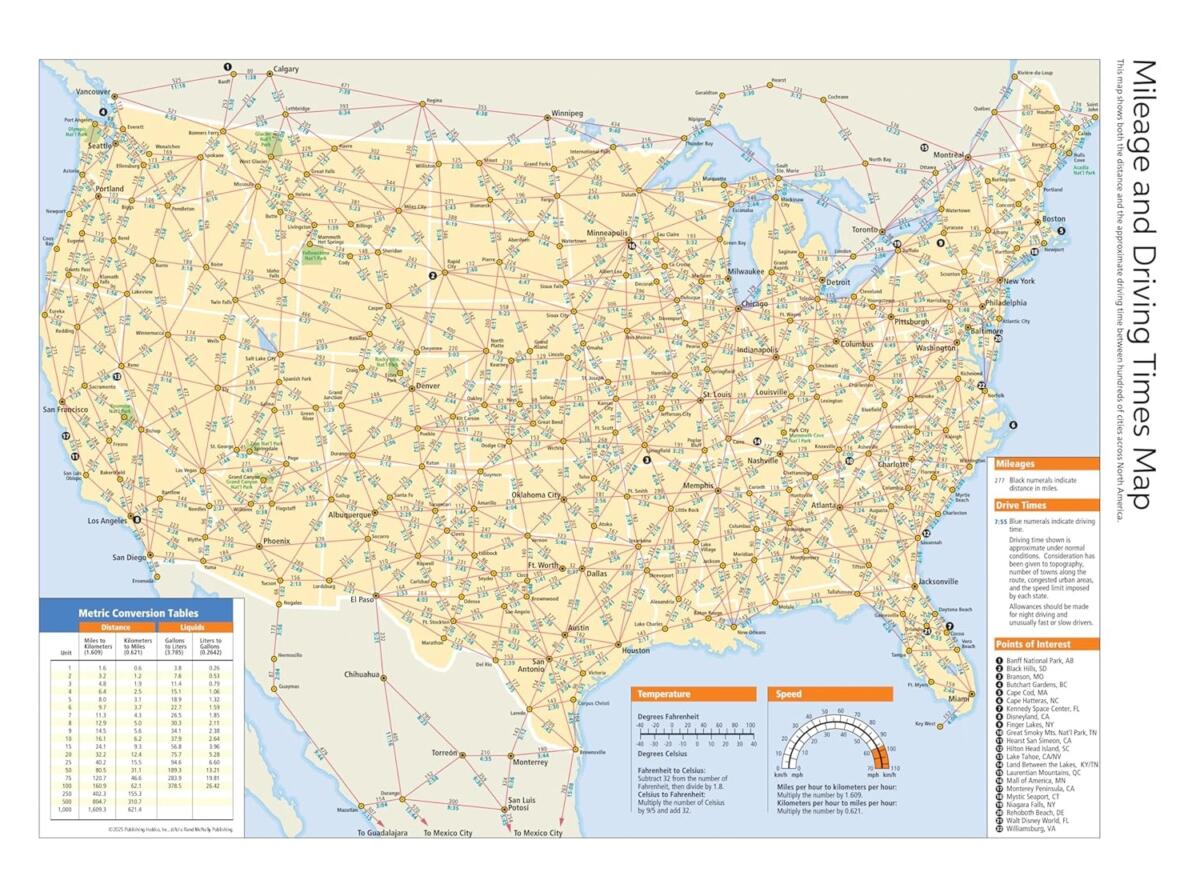
Beyond just maps, many truckers’ atlases include a “Mileage Directory.” This is a tabular list showing distances between major cities via truck-approved routes. This helps an RVer:
• Estimate travel time. You can calculate accurate driving durations. This is critical, especially for those RVers who stick to the 3-3-3 rule. (Travel no more than 300 miles; arrive at your overnight destination no later than 3 p.m.; stay a minimum of three days to allow for sightseeing and rest.)
• Plan overnight stops. RVers can easily identify intermediate cities for overnight camping or boondocking.
Updated road construction and condition hotlines
No RVer enjoys unexpected road closures. A quick glance at a trucking atlas can alert you to:
• Pre-planned road construction work that may slow traffic or impose detours.
• Seasonal closures are noted for mountain passes or northern roads that may close during winter months.
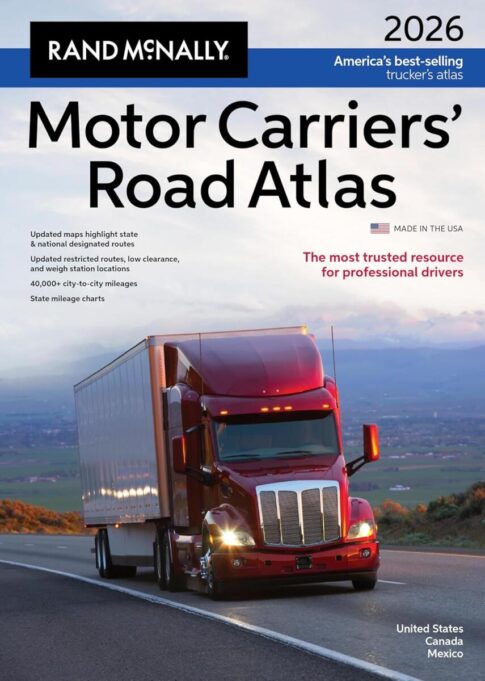
This is the top pick for truckers. Every mile, in every cab, American truckers rely on Rand McNally’s Motor Carriers’ Road Atlas for the most comprehensive highway and trucking information on the market. America’s #1-selling trucking atlas is designed to meet the unique needs of professional drivers, helping you save time, save money, and stay compliant.
Additional features:
• Detailed coverage of state and national designated routes.
• Updated restricted routes, low clearance, and weigh station locations.
• 22-page mileage directory including more than 40,000 truck-route-specific, city-to-city mileages.
• Road construction and conditions hotlines.
• Updated coverage of hazardous materials regulations.
• Easy-to-use chart of state and provincial permit agency phone numbers and websites.
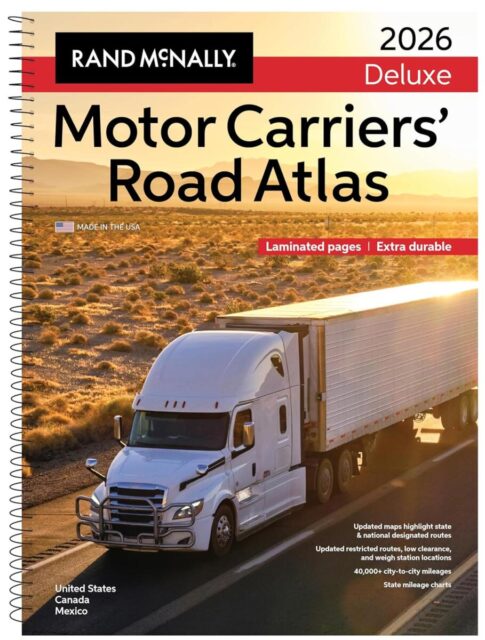
Want even more? With its laminated pages and spiral binding, Rand McNally’s Deluxe Motor Carriers’ Road Atlas can stand up to all of the wear and tear from the road. Save time and money with this easy-to-use atlas. This edition is also available June 16th.
Additional features
• Durable, laminated pages stand up to stains and liquids, and won’t show signs of normal wear-and-tear.
• Tough spiral binding allows the book to lay open easily.
• Detailed coverage of state and national designated routes.
• Updated restricted routes, low clearance, and weigh station locations.
• 22-page mileage directory including more than 40,000 truck-route-specific, city-to-city mileages.
• Road construction and conditions hotlines.
• Updated coverage of hazardous materials regulations.
• Easy-to-use chart of state and provincial permit agency phone numbers and websites.
Tips for using your truckers’ atlas
• Mark your planned route: Highlight the primary roads you’ll use and circle critical weigh stations or rest stops.
• Use sticky notes or tabs: Mark reserved campgrounds, fuel stops, or sights you don’t want to miss.
• Cross-reference with digital tools: If you’re using an RV GPS or mapping app (like Rand McNally’s GPS), verify that the offline atlas and digital maps agree. Note that routes can change faster than print cycles.
Do you use a truckers’ atlas when RVing? Tell us about it in the comments section below.
We use cookies to ensure that we give you the best experience on our website. By continuing to use our site, you consent to accepting cookies. We NEVER have or will sell reader's data. For more info, please see our privacy policy page.