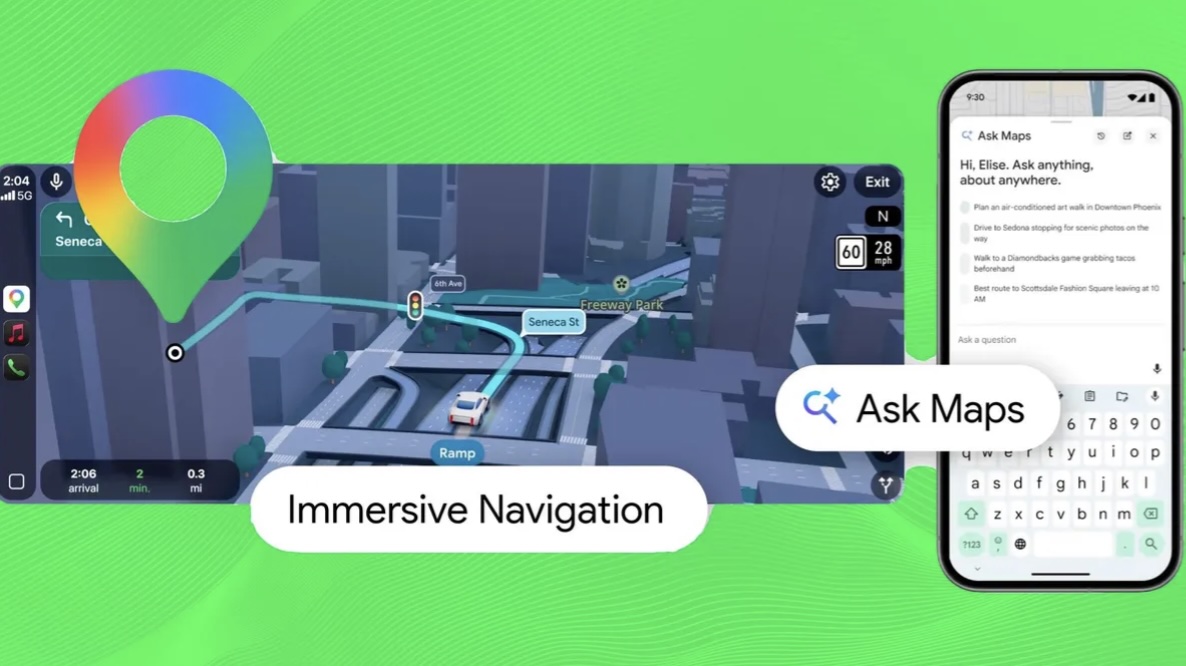
Google is making a major push into AI-powered travel and navigation, announcing what it calls the biggest upgrade to Google Maps in more than a decade. The update brings two major features that could significantly change how RVers and road trippers plan and navigate their trips: a new conversational tool called “Ask Maps” and a redesigned driving experience known as Immersive Navigation.
Ask Maps lets you plan trips just by asking
At the center of the update is Ask Maps, a new feature powered by Gemini that lets users ask complex, real-world questions directly inside Google Maps. Instead of digging through reviews or running multiple searches, users can simply ask for what they need—like where to charge a phone without long lines, or finding a public tennis court with lights available that night—and get conversational answers paired with a customized map.
The feature pulls from information on more than 300 million places and insights from over 500 million contributors, offering directions, ETAs, and insider tips. Results are also personalized based on your past activity in Maps, helping filter out irrelevant suggestions. Once you find a place, you can easily take action—book reservations, save locations, or share them with friends.
Ask Maps is rolling out now on Android and iOS in the U.S. and India, with desktop support coming soon.
Immersive Navigation brings a 3D driving experience
Google is also overhauling the driving experience with Immersive Navigation, a feature designed to make navigating feel more intuitive and less stressful, especially on unfamiliar roads.
The update introduces a vivid 3D view of the world around your route, showing buildings, overpasses, and terrain while highlighting critical driving details like lanes, crosswalks, traffic lights, and stop signs. Buildings appear transparent when necessary so they don’t block your view of the road ahead.
The system, powered by Gemini, uses Street View and aerial imagery to create a more accurate, real-world representation of your route. It also adds smart zooming and a broader route view to help drivers prepare for tricky turns or lane changes well in advance.
Smarter directions and better route choices
Navigation guidance is getting a refresh as well. Voice directions will sound more natural—more like a person riding along with you—while visual cues clearly highlight upcoming moves.
Google Maps will also now explain the tradeoffs of alternate routes, such as whether a longer drive might save time by avoiding traffic, or if a faster route includes tolls. In addition, the app will provide real-time alerts for disruptions like crashes or construction.
Better arrival guidance and parking help
The improvements don’t stop once you reach your destination. Before you arrive, Maps can show you the exact building entrance, nearby parking options, and even which side of the street you’ll need to be on—helping you go from the last turn to the front door with confidence.
Rolling out now across the U.S.
Immersive Navigation is beginning to roll out now across the U.S. on iOS, Android, CarPlay, Android Auto, and vehicles with Google built-in, with broader availability expected in the coming months.
For RVers, these changes could make trip planning faster, more intuitive and help take some of the stress out of navigating unfamiliar routes.
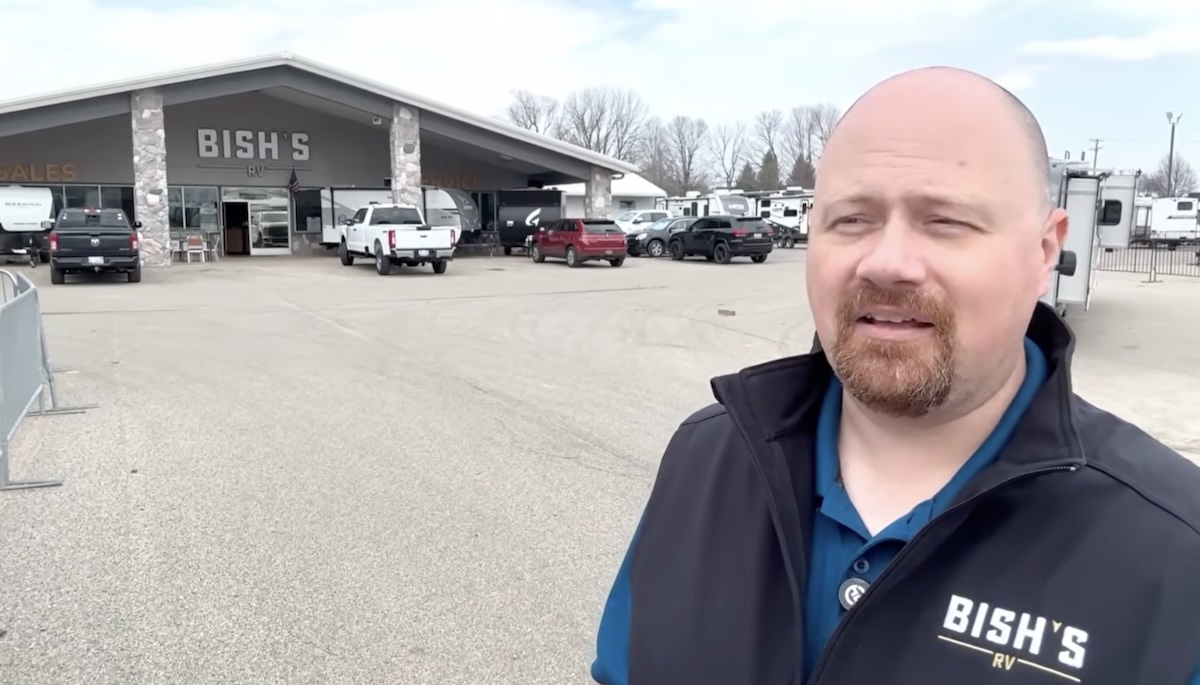
Here’s an excellent look at the current state of the RV industry from Josh Winters of Bish’s RV. In our minds, Josh is the most honest voice in the industry who can explain what is going on, and how it affects RVers and RV buyers.
We do not always believe the sugar-coated reports issued by the RV Industry Association, which are generally mumbo-jumbo to promote sales. We do believe Josh.
We used artificial intelligence to transcribe and sum up Josh’s comments from the video at the end of this post. We recommend, however, that you watch the video. Josh is a likable guy and very entertaining.
And so… according to Josh
The April 2026 RV picture looks cautious from almost every angle. Shipments are still slipping, retail sales are down, and higher fuel costs are adding pressure as camping season starts to ramp up.
Still, the news is not all bad. The market looks more stable than it did a year or two ago, and a few changes could matter a lot for shoppers, owners, and campgrounds this summer.
Shipments are still sliding, and dealers are reacting
Early 2026 has brought more of the same—shipments keep sliding year over year. A few small segments, like truck campers and some Class B and Class C units, have ticked up a bit. However, those gains come after long declines, so they do not change the bigger picture.
That is why many dealers are expected to stock a greatest-hits lineup this season. Popular models should be easy to find, while oddball or rare floor plans may be scarce or custom-order only. Some stores may not want to special-order at all, which leaves shoppers sorting through what is already on the ground.
The RV Industry Association (RVIA) sounds hopeful, but the pressure points remain
RVIA is still projecting a slight shipment increase for the year, but Josh has doubts. The tone here is more cautious. Gas prices jumped fast, and the Federal Reserve has said it is not lowering interest rates anytime soon, even if it is also not raising them right now.
For buyers, that means affordability has not improved the way many expected. For dealers, it means a careful inventory plan still makes the most sense.
Retail sales are down, but the market looks steadier
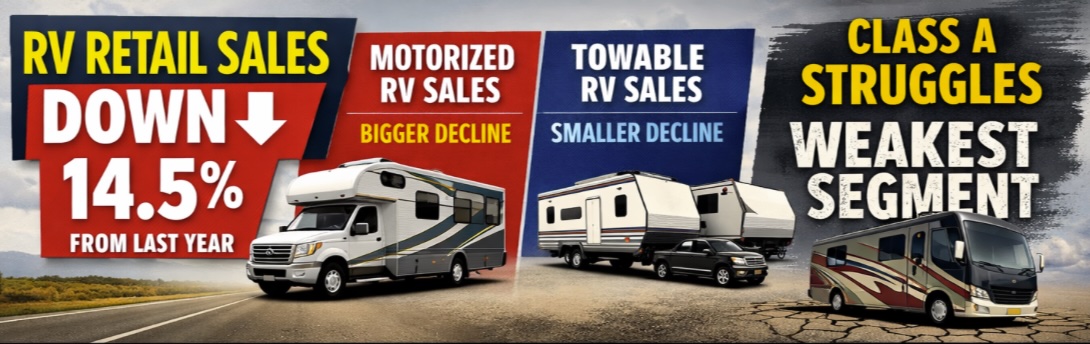
Retail sales, meaning RVs sold to actual customers, are down about 14.5% from last year. Motorized units have taken a bigger hit than towables, and the Class A segment remains the weakest part of the market.
Consolidation keeps reshaping familiar brands
That calmer market has not stopped consolidation. One of the clearest examples is Heartland being folded under the Jayco umbrella, alongside Highland Ridge and Starcraft. Those brands were once far more distinct. Now, the pressure to simplify production is making more models look like close sisters.
Heartland now means two different things
For shoppers, that creates one useful rule: Ask when the RV was built and who built it. There are now two generations of Heartland products in the market: the older Thor-era Heartland units and the newer Jayco-managed versions carrying familiar names like Prowler, North Trail, Sundance, and Bighorn.
The good news is that warranty coverage did not disappear in the transition because Thor still stands behind those earlier units. That also means dealers may be eager to move remaining older stock.
Fuel prices could raise costs far beyond the pump
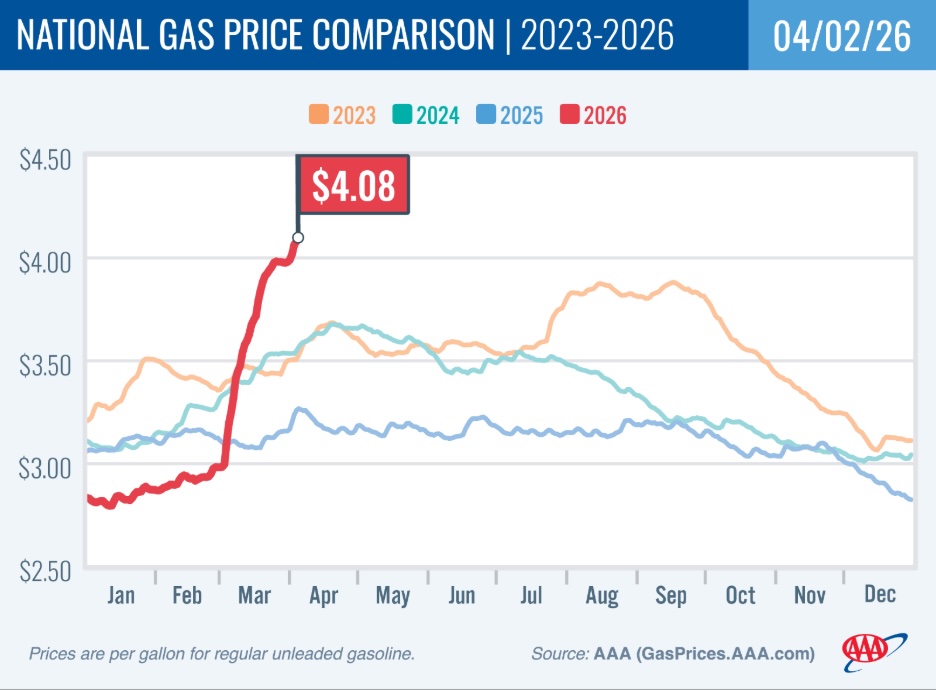
Fuel prices jumped about a dollar in roughly a month and are pushing toward a $4 national average. In some places, especially California, prices are much higher. That hurts RV travel, but it also raises the cost of nearly everything else because so many goods move by truck.
Watch for fuel surcharges on new deliveries
One issue to watch is the return of the so-called temporary fuel surcharge on RV deliveries. Those fees tend to flow from transport companies to manufacturers, then to dealers, and finally to the buyer.
There is one important catch. If an RV is already in stock, it was shipped before any new surcharge took effect. The DOT sticker on the front driver-side corner can help confirm the build date, so owners and shoppers have a way to push back if a dealer tries to reprice old inventory.
Elsewhere, Forest River is seeing a quiet changing of the guard as several senior leaders retire or move on. That may not bring fast changes, but newer leadership could shape products and strategy over the next few years.
Campgrounds are also recovering from the reservation mess of the pandemic years. The share of campers using all the days they book has climbed past 70%, up from roughly half in 2022 and 2023. That suggests fewer no-shows and a better shot at finding open sites that are truly open.
New equipment and housing pressure are colliding
ASA Electronics is updating its Advent Air systems with refreshed 13.5K and 15.5K BTU units, Bluetooth controls, and backward compatibility with many existing setups. The standout detail is the reported 0.7% warranty rate, which is the kind of number owners notice when summer heat hits.
At the same time, housing pressure is pushing more people toward RV living. Nevada County, California, has proposed rules that would allow RV residence on private property. That may spread, but the warning stays the same, RVs are not houses. Many “full-time” claims are more marketing than construction reality, so long-term living still demands constant maintenance and realistic expectations.
Tariff refunds could be huge, and a few bright spots stood out
A recent U.S. Court of International Trade ruling could lead to refunds for tariffs found unconstitutional, with estimates landing between $130 billion and $175 billion. Since the RV industry depends heavily on imported parts, that could matter. Still, appeals seem likely, and there is little reason to expect that money to land in consumer pockets.
The strongest takeaway from April is not growth. It is restraint. Dealers are buying carefully, shoppers are watching costs closely, and the whole RV business is moving with more caution than confidence.
And now, here’s Josh, who explains more than the highlights we have noted above.
America’s Original RV Newsletter. Since 2001
Issue 2882 • New issue every weekday If you find this newsletter helpful, please consider supporting our work with a donation of your choice. Thank you!
Today’s thought
“No one cares how much you know, until they know how much you care.” ―Theodore Roosevelt
Need an excuse to celebrate? Today is National Look Up At The Sky Day!
On this day in history:1912 – The British passenger liner RMS Titanic hits an iceberg in the North Atlantic and begins to sink.
Tip of the day Why vinegar should be in your cleaning arsenal for RV maintenance
If you’re a clean-freak RVer, you want your rig to shine. Back in the sticks-n-bricks, you may have a lotion, notion, or potion for every conceivable cleaning need. The trouble is, having all those cleaning supplies takes up a lot of room—room your rig probably doesn’t have.
And the more stuff you carry, the more you push your net cargo capacity. So many cleaning supplies are a spendy proposition. Enter your pucker-up, space-and-money-saving friend, that humble jug of vinegar. Clean with vinegar!
The RVtravel.com newsletter is an “original,” says Google! What is the longest continuously published newsletter about RV travel in the United States? Here’s what Google says: “The RV Travel Newsletter has been in continuous publication online since 2001… It is widely recognized as ‘America’s longest continuously published RVing newsletter’.” BE HISTORIC!SIGN UP!
Article and video 5 signs of a lemon RV
By Cheri Sicard
Are you shopping for a used RV? Watch the video below first. In it, Jacob Rigor, of Rigor RV Repair, shows five signs that an RV might be a lemon RV. Jacob emphasizes the utmost importance of getting a third-party RV inspection before you sign on the dotted line. But what if you could avoid paying for an inspection on an RV that’s clearly not worth it? That’s where this guide comes in. Jacob shares five easy-to-spot problems that can help you determine if an RV is even worth the cost of a full inspection.
Featured article Feeling a little… grumpy… in the RV park showers
Cheri Sicard collected your stories, recalling the weirdest RVing encounter you’ve ever had. Frequent contributor Rod Andrew wrote in and sent us his own tale. It’s very weird all right… and a little grumpy… Read about Rod’s strangely “grumpy” encounter here.
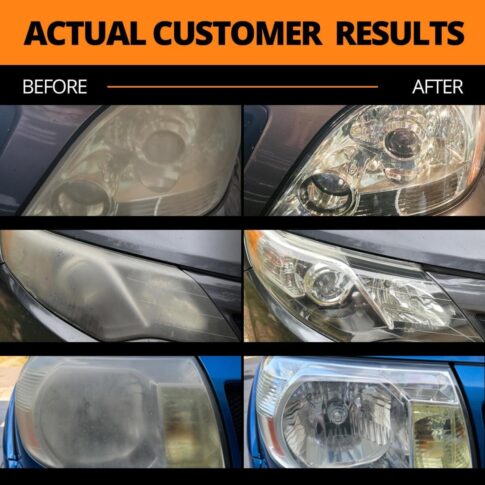
Clean those dirty, cloudy, dim headlights!
Cloudy headlights make night driving harder. This easy, three-step headlight restoration kit clears away oxidation and restores headlights to like-new clarity in about 30 minutes, with no power tools required. A ceramic coating bonds to your headlights and protects them from UV damage for the long haul. A simple, satisfying fix for drivers who want safer, brighter nights on the road.
There’s a direct relationship between ambient air temperature and the pressure inside your tires. Here’s the rule-of-thumb: For every increase or decrease of air temperature by 10 degrees, there will be a corresponding increase or decrease of tire pressure by about 1 pound. If there’s a drastic change of temperature, check your tires when “cold” (not run in several hours, preferably in the morning), and adjust them to the recommended pressure. DON’T try to adjust tire pressure when they are hot.
? MYSTERY PRODUCT OF THE DAY ? Remember yesterday when you said you had that thing to do today… Yeah, what was it? What about that thing that’s going on tomorrow? Oh, dear. This will help. (And make you laugh.)
And the survey says…
We’ve polled RVtravel.com readers more than 5,000 times in recent years. Here are a few things we’ve learned about them:
• 13 percent say they chose their current RV to accommodate their pet.
• 92 percent say they do not like staying in RV parks with lots of planned activities.
• 68 percent take a daily multi-vitamin.
WORTH A STOP: A half-hour southwest of Austin, Texas, the quaint town of Kyle has earned the nickname the “Pie Capital of Texas” for its popular restaurant, the Texas Pie Company. The owner’s popular family recipes range from savory pot pies and chicken tetrazzini casserole to sweets like peanut butter mousse, lemon chess, chocolate fudge, coconut cream, Almond Joy, and pecan pie bars.
Trivia
Rubber modified asphalt (RMA) is a mixture of recycled ground tire rubber and asphalt. RMA is a promising end-of-life market for the 270 million recycled tires generated annually in the U.S., as each lane mile paved with RMA uses up to 2,000 recycled tires.
Readers’ pet of the day
“Dolly (age 10) came to us from the SPCA when she was about 2. Once we moved into our RV (about 4-1/2 years ago), she blossomed! She loves the fact that she has so many windows to look out of every day. We can tell if she is following something as she jumps from window to window.” —Barbara Wyatt
Send us a photo of your pet with a short description. We publish one each weekday in RV Daily Tips and in our Sunday RV Travel newsletter. No blurry photos and please do not submit your pet more than once. Thanks!
HAVE A CAT LIKE DOLLY WHO LIKES TO WINDOW-WATCH?They need this! It’s the best!
FREE IS GOOD! Free from Proven Winners™, the 2026 Gardener’s Idea Book—everything to know about every type of gardening. By mail or online.
Leave here with a laugh
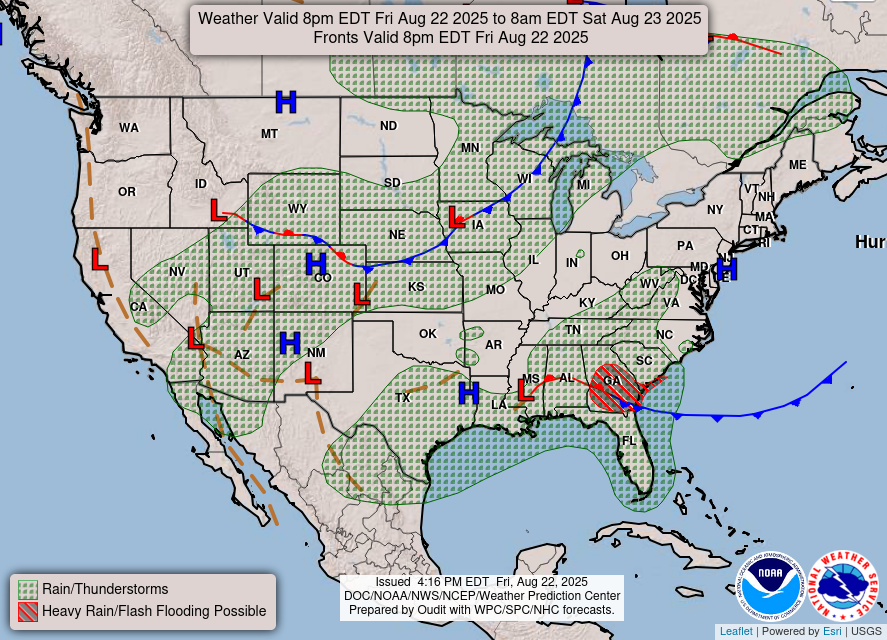
Today’s weather forecast across the nation THIS MAP UPDATES TWICE A DAY
Dear Dave,
How safe are ladders and how many pounds can they hold? I don’t think they’re very safe. How are they tested? —Ruben, 2017 Thor 26 Class C, Ford E-450
Dear Ruben, Several companies have manufactured aluminum ladders for RVs, and some RV manufacturers even produced their own at one time. For example, Winnebago had an aluminum extrusion division called Creative Aluminum Products Company (CAPCO) that made various aluminum components, including ladders. These ladders were rated to support up to 250 lbs. While I’m not certain of their exact testing methods, they did have a comprehensive facility capable of both computerized and physical component testing.
Most RV manufacturers purchase ladders from OEMs
Today, most RV manufacturers purchase ladders from original equipment manufacturers (OEMs), rather than producing them in-house. Based on online listings for your 2017 Thor Class C, your rear ladder appears to be the common design that mounts to the lower back wall, extends upward with two more anchor points, and curves in a “U” shape to attach to the roof.
Jayco ladder
My wholesale parts supplier, Northern Wholesale Supply, lists Stromberg Carlson, and Surco as the main OEM’s that RV manufacturers use. Some aftermarket options are etrailer and RecPro. All four companies list weight ratings of 250 lbs., though they do not specify testing methods. RecPro offers a universal ladder rated at 250 lbs. and states it has been tested to three times that capacity.
Each fixed ladder: At least two loads of 250 pounds (114 kg) each, concentrated between any two consecutive attachments (the number and position of additional concentrated loads of 250 pounds (114 kg) each, determined from anticipated usage of the ladder, shall also be included), plus anticipated loads caused by ice buildup, winds, rigging, and impact loads resulting from the use of ladder safety devices. Each step or rung shall be capable of supporting a single concentrated load of at least 250 pounds (114 kg) applied in the middle of the step or rung. Ladders built in conformance with the applicable provisions of appendix A will be deemed to meet this requirement.
The weakest point is not the ladder
While the ladders previously listed are generally rated for at least 250 lbs., the ladder itself is usually not the primary concern when it comes to an RV installation. The more important factor is how—and what—it is attached to. Your ladder’s design, which extends above the back wall and attaches to the roof, provides a solid upper mounting point and helps transfer weight effectively with side rails to transition to the roof.
In my opinion, the weakest point is typically the lower attachments. The bottom mounting point is mounted to the back wall, which is a layered structure consisting of fiberglass, lauan plywood or Azdel, block foam, and interior paneling. Fasteners are typically screws, often with little or no metal backing for reinforcement. This design falls short of any weight rating of the ladder and can loosen or weaken and not support much weight.
How to reinforce ladder lower mounting area
For that reason, I recommend visually inspecting the lower mounting area each time before using the ladder. If in doubt, install a metal plate inside the rig if you have access. Drill holes in the plate matching the holes of the ladder mounting plate and use bolts with nuts to “sandwich” the outer mounting rings to the metal plate inside. You may also need to add an exterior plate between the back wall and the mounting plates if the back wall material has already started to deteriorate. This will help distribute the weight across a longer plane.
By Russ and Tiña De Maris
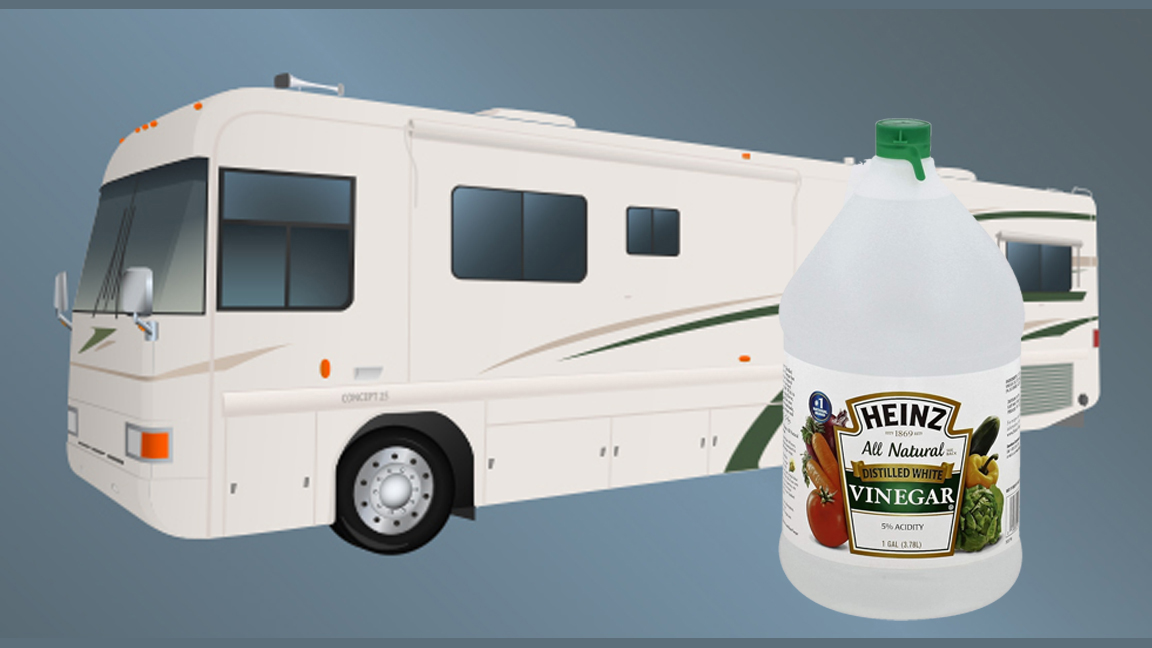
If you’re a clean-freak RVer, you want your rig to shine. Back in the sticks-n-bricks, you may have a lotion, notion, or potion for every conceivable cleaning need. The trouble is, having all those cleaning supplies takes up a lot of room—room your rig probably doesn’t have.
And the more stuff you carry, the more you push your net cargo capacity. So many cleaning supplies are a spendy proposition. Enter your pucker-up, space-and-money-saving friend, that humble jug of vinegar. Clean with vinegar!
You may already have a bottle of vinegar on board your rig. You may know its usefulness in the galley for cooking, but what about its cleaning properties? We’ll cover a list of things this powerful acid can help you with on the road. And for good measure, we’ll also tell you about what you should NOT try cleaning with vinegar.
Vinegar is acidic, which helps remove mineral deposits, grease, and grime. This makes it great for cleaning surfaces like sinks, windows, and MOST countertops—read on for a warning about these galley surfaces. But on with the details.
Clean with vinegar—Start in the galley
To clean a microwave with vinegar, says cleaning expert ovenclean.com, mix 1 cup of water with 1-2 tablespoons of vinegar in a microwave-safe bowl, heat it on high for 2-3 minutes, let it sit for 5 minutes, then wipe down the interior.
Eating healthy means lots of fresh fruits and vegetables. But eating healthy also means not taking in germs or chemicals from those fresh foods. To rinse vegetables with vinegar water, mix 1 part white vinegar to 3 parts water, soak the produce for 5-10 minutes, then rinse thoroughly with clean water and pat dry. Here’s Uncle Sam’s take on the issue (pdf).
Let the light shine—Clean your windows
To clean windows with vinegar, mix equal parts white vinegar and water in a spray bottle, spray the solution onto the glass, let it sit for a few minutes, and then wipe clean with a microfiber cloth. You can add a few drops of dish soap to power up the mixture.
Best time to clean? On an overcast but not rainy day. That way, your cleaning solution won’t dry out too quickly.
Carpet or furniture got a spot? Vinegar it out!
Stephani Spitzer on flickr.com
You can use vinegar for spot cleaning carpets or furniture. Its acidity helps break down stains and odors, making it an effective, natural cleaner. Here’s advice from Prolux Cleaning. Mix one part each hot or lukewarm water and vinegar in a spray bottle. Apply it over the stained area, then begin blotting with a white cloth or paper towel, from edges to the center. This spot cleaning technique is great at stain removal, and a great alternative to professional carpet cleaning services.
Laundry time? Take along the vinegar
Vinegar offers several benefits in laundry, including acting as a natural fabric softener, stain remover, and odor eliminator—and it can even brighten clothes.
When it comes to stains, get them out this way: Mix 1 tablespoon of vinegar with 1 tablespoon of liquid laundry detergent, apply liberally to the stain, let it sit for at least an hour, and then wash as usual. Clothes have odors? Add 1/2 to 1 cup of vinegar to the wash cycle to neutralize odors from smoke, pets, and sweat. Need some brightening? Add 1 cup of vinegar to the wash cycle to brighten clothes and act as a bleach alternative.
However, “Never mix vinegar with bleach or chlorine bleach, as the combination is highly toxic.” And not every fabric is suited to a vinegar rinse. “Elastic or exercise clothing can be worn down over time since the acid can break down the elastics,” advises marthastewart.com. The site adds, “If you need it in a pinch for deodorizing and brightening, be sure to dilute the vinegar and only use vinegar on these types of clothing if totally necessary.”
That same site suggests not overdoing it. “Limit using vinegar in laundry to every other week. Washing your clothes with vinegar isn’t something you should do for every load and should be used on an as-needed basis.”
Pet problems? Zap them with vinegar
Vinegar can be an effective and natural solution for neutralizing pet odors, especially urine, by combining it with baking soda or using a diluted solution in a spray bottle.
For urine odors, start with diluted vinegar. Mix equal parts white vinegar and water in a spray bottle. Spray the diluted solution onto the affected area, allowing it to soak in for a few minutes. Blot the area with a clean cloth or towel to absorb the solution.
For stubborn odors, you may need to repeat the process. And you might try giving it the baking soda boost: After cleaning with vinegar, sprinkle baking soda on the area and let it sit overnight to further absorb odors, then vacuum.
Slow drain?
Vinegar in drain–your foaming weapon at work. R & T De Maris
Some “RV sites” suggest using stuff like Liquid Plumber to speed up slow drains. Come on! We’ve dealt with a slow shower drain, and those caustic solutions are best left right on the store shelf. To tackle a slow drain with baking soda and vinegar, pour about 1/2 cup of baking soda down the drain. Follow up with about 1/2 cup of vinegar, cover the drain, let it fizz for 30 minutes to an hour, and then flush with hot water.
We found that hair in the shower drain can be a real drag. Consider adding a catch screen atop the drain to keep hair out of your drain to start with.
Vinegar and oil—It’s not just for salads!
To clean wood cabinets with a homemade solution of vinegar and olive oil, mix equal parts of white vinegar and olive oil in a spray bottle, shake well, and then apply to a soft cloth before wiping down the cabinets, buffing with a dry cloth to remove excess moisture.
Be sure to use white vinegar for general cleaning, as apple cider vinegar can potentially cause staining on some furniture and cabinets. Olive oil is a good choice for wood surfaces as it helps protect and nourish the wood.
A soft, microfiber cloth is ideal. DON’T put the oil directly on the wood—put it on the cloth, then use the cloth to wipe the wood. Work in the direction of the wood’s grain. Buff out the wood with a dry cloth. You’re wise to test the stuff on a hidden spot to make sure it works without undesirable results. And if you’re into them, essential oils for scent, such as lemon or orange, can round out the job as an option.
Stainless steel—Cleanup with vinegar is a steel
To clean stainless steel with vinegar, mix equal parts white vinegar and water, spray the solution on the surface, wipe clean with a soft cloth, and then polish with a touch of olive oil. Just a touch, we said—not too much. It can attract dust, get on your clothes, and do other nasty stuff.
Walking on air?
To clean floors with vinegar, mix a solution of 1/2 cup of white vinegar with 1 gallon of warm water. Use a damp mop, wringing it out well to avoid oversaturating the floor. For a stronger cleaning power, you can add a few drops of essential oils for scent or a tablespoon of dish soap.
For laminate floors, be sure to dry the floor immediately after mopping. Vinyl flooring is perfectly happy to be air-dried. We DON’T recommend using this solution on hardwood floors (if you even had such a thing in your rig) as it may damage the finish.
And here are some things you SHOULD NOT use vinegar to clean
• Some countertops: Marble, granite, and limestone shouldn’t be vinegar-cleaned. You could dull the stone sealant and finish.
• Electronic screens: TVs, laptops, and tablets can be damaged by vinegar.
• Cast iron and aluminum pans: Cast iron has a protective coating that finds vinegar acts like a piranha—it can be eaten up by the acid. Similarly, aluminum cookware should stay shy of vinegar. Stick to soap and water.
Save money? Save space? Hold down your rig’s weight? Vinegar is your cleaning pal.
By Cheri Sicard
Are you shopping for a used RV? Watch the video below first. In it, Jacob Rigor, of Rigor RV Repair, shows five signs that an RV might be a lemon RV.
Jacob emphasizes the utmost importance of getting a third-party RV inspection before you sign on the dotted line. But what if you could avoid paying for an inspection on an RV that’s clearly not worth it? That’s where this guide comes in. Jacob shares five easy-to-spot problems that can help you determine if an RV is even worth the cost of a full inspection. These checks can save you time, money, and a whole lot of headaches.
Honorable mention: Furniture condition
Before the top five, Jacob starts with an honorable mention: the condition of the furniture. Why isn’t this in the top five? Because beat-up furniture doesn’t automatically make an RV a lemon. However, it’s still something to consider, as replacing RV furniture can be surprisingly expensive and difficult.
For instance, replacing a sectional couch can easily cost $1,000 to $2,000. Plus, RVs aren’t always designed with easy furniture replacement in mind. Sometimes, the furniture won’t fit through the door, and you might have to remove a window just to get it in or out! So, if you care about the furniture’s condition, be aware that it’s not always a cheap or easy fix.
The top 5 signs of a lemon RV
#1: Slide-out wood rot
Slide-out wood rot is a major concern. It’s a common problem that can happen quickly. Jacob once worked on a 3-year-old RV where the bedroom slide was 80% mush!
With all the slides extended, go outside and look underneath at the bottom of the slide.
• Look for any staining or discoloration from water.
• If there’s a plastic film covering the bottom, press upwards to check for movement. A good slide-out should feel firm. If you can move that plastic surface up and down, it can indicate wood rot behind the plastic. What you want to feel is a nice firm surface that, when you knock on it or thump it with your fist, doesn’t have any movement to it.
Can this kind of damage be repaired? Yes, but it’s labor-intensive. Due to the construction of some slide-outs, you may have to remove the entire slide from the RV. This can easily be a $5,000 to $10,000 job.
#2: Salvaged titles
It’s important to check for salvaged titles. While it’s often a sign of bigger problems, it’s not always an issue.
For example, Jacob looked at a motorhome that was priced about $30,000 less than the typical value. The reason? It had been in a storm where a tree branch damaged the side. The body shop’s quote for restoring it to its original condition was greater than the value of the RV. So, it had been salvaged.
But, for people who don’t care about that kind of cosmetic defect, this is an RV that would actually serve them really well and save them a lot of money.
However, why an RV has been salvaged matters tremendously. A flooded RV is an automatic pass. Even if it’s been dried out and looks okay, there are going to be ghost issues with that RV for years to come, not to mention a very real possibility of health hazards due to mold infestations.
Mattress mold
Speaking of mold, let’s address a topic that’s actually a big issue for many RVs: mattress mold. If you’re shopping for RVs, do yourself a favor and lift up the mattress and look underneath for signs of mold.
Most bed frames in your house will have slats underneath the mattress to allow it to breathe, but with RVs, they typically put a perfectly flat sheet of wood down. Humidity stays trapped underneath there because it can’t ventilate, often causing mold.
The reason this can happen with RVs in particular is that the walls are much thinner and more prone to sweating or having condensate. If you’re camping in cold environments, depending on the floor plan of the RV, water may run down the walls and get trapped under the mattress, which promotes mold growth. No RV is necessarily immune to this, so always check under the bed.
#3: Frame damage (travel trailers and fifth wheels)
Frame damage is a serious safety concern that typically applies to travel trailers and fifth wheels. If an RV frame has obvious cracks around the axle attachment points, it means a couple of things. First, it wasn’t very well designed from the factory. Second, it probably has a lot of miles on it.
You can always have a welder reinforce the frame and fix these issues, but keep in mind it’s going to be costly, and it’s not really going to be safe to travel with if you have cracks that are actively growing.
Never ignore frame damage! It’s a major safety hazard.
#4: Internal water damage
Spotting signs of water damage inside the RV is crucial, as it can lead to thousands of dollars in repairs.
Key areas to inspect:
• Corners of skylights and vents
• Areas at window corners and underneath windows
Signs to look for:
• Vinyl wrap on the paneling coming loose and waving
• Tiny bumps popping up under the vinyl film (mold growth)
• Soft spots in the floor
• Cabinet face frames that are swollen or splitting vinyl wrap
Replacing paneling can cost thousands and thousands of dollars.
#5: Body separation
Body separation, where the RV body detaches from the frame, is a major structural concern. While this can happen to any RV, some brands have a greater history of it than others, like Airstream, for example.
On Airstreams, if the metal body starts to pull away from the frame at the bottom, you’ll see the rounded wrapper starting to tear loose. But this can also happen on other types of RVs, such as Class A motorhomes.
Jacob had a client who purchased a motorhome and noticed the whole front end shaking up and down while driving. It wasn’t structurally attached to the frame anymore. On this particular motorhome, this was only visible during a test drive.
With Class C motorhomes, check the connection between the chassis cab and the RV body to make sure that it isn’t pulling away and showing signs of water coming in.
Why aren’t appliances on the list?
You might be wondering why appliances aren’t included in this list. Jacob doesn’t think that a non-working appliance, or even several, should be a deal-breaker. Instead, they should be used as negotiating power.
For example, a friend of Jacob’s bought an RV and quickly found out that the refrigerator wasn’t working. If he had known this before purchasing the RV, it would have given him negotiating power. As it was, it was just a slightly expensive headache after the fact.
This list isn’t comprehensive, but it’s a good starting point. If you spot any of these problems, it might be best to move on to another RV rather than paying for an inspection that will only confirm your suspicions.
By keeping an eye out for these five signs, you can significantly increase your chances of finding a reliable RV and hitting the road with confidence. Have fun RV shopping!
Guide and other travel books can come in very handy when trip-planning, wouldn’t you agree? The internet is great, but it can be exhausting having to look through website after website for information on things to see and places to go. Exhausting and overwhelming!
One of the best things about travel books is that they’re curated—someone has already done the hard work of narrowing down the best attractions, restaurants, and hidden gems. You can flip through a few pages and get inspired without feeling bombarded by pop-ups or conflicting reviews. Plus, a good guidebook often includes helpful extras like local customs, walking tours, or historical background that adds a deeper layer to your trip.
And, let’s be honest—there’s something comforting about physically flipping through a book, dog-earing pages, and sticking Post-it notes on the places that really catch your eye. Some travelers even mark their books with notes or memories to look back on later. It’s a more personal and tactile experience than scrolling through your phone and, for many, that makes all the difference.
There are so many great travel guidebooks out there. You probably know our favorites because we’re telling you about them all the time, but perhaps you have some favorites, too, that become more like a bible to you on your journeys. Tell us about your favorite(s) in the comments below the poll, please.
That cheap Starlink hybrid plan RVers were just starting to get excited about? It turns out there’s a clock on it—and the real Starlink hybrid plan cost for RVers may be higher than it first appears.
In our earlier coverage of the new bundle from US Mobile and Starlink, where we looked at when RVers might actually be able to use it on the road, we noted that timing was the big question. Now we have another piece of the puzzle, and it answers a different one: what it really costs.
The headline-grabbing “under $50 a month” price is real, but only for a limited time. After about six months, that promotional rate expires, and the monthly cost steps up by roughly $20, depending on the plan tier. That doesn’t make it a bad deal, but it does change how RVers should think about it.
The price that got attention doesn’t last
Intro pricing is nothing new, but this one matters because of how it was positioned. For many RVers, especially those watching monthly expenses, a sub-$50 plan sounded like a possible replacement for stacking multiple services together.
Stretch that out over a year, though, and the math looks different.
Time period
Monthly cost
Running total
Months 1–6
~$47
~$282
Months 7–12
~$67
~$402
Year total
—
~$684
That “under $50” plan averages out closer to about $57 a month over the first year, giving a more realistic picture of the Starlink hybrid plan cost for RVers over time.
How it compares to what many RVers pay now
To put that in context, here’s how the hybrid plan stacks up against what many RVers are already paying to stay connected:
Setup
Monthly cost
Yearly cost
Hybrid plan (year 1 average)
~$57
~$684
Typical RVer setup (cell + Starlink)
~$120–$265
~$1,440–$3,180
At first glance, that’s a big difference. The hybrid plan could cost hundreds, even thousands less over a year.
But there’s a catch, and it’s the same one we’ve been circling. That lower price only works if the hybrid plan can truly replace both your cellular and your Starlink setup. Right now, it doesn’t clearly do that, especially for RVers who rely on roaming and flexibility. Many travelers would still need to keep at least one existing plan in place, which quickly narrows those savings.
That “under $50” plan doesn’t stay under $50 for long—and that’s before any extra fees kick in.
Still not built for full-time travel
The other takeaway hasn’t changed much from our first look. This bundle still appears tied to residential-style Starlink service, which is designed for a fixed location rather than constant movement.
That means the same questions remain. Will it work as you move from place to place? Will speeds or priority change outside a home area? And will additional fees show up once you start traveling regularly?
So far, there’s no clear indication that this replaces Starlink’s roaming plans for full-time RVers. Instead, it looks more like a home-based system with travel options layered on top.
There is a workaround—but it’s not seamless
There is a partial answer for travelers. Users can pair the bundle with portable Starlink hardware and activate a roaming plan when they hit the road, sometimes at a discounted rate.
That helps, but it also undercuts the idea of a true all-in-one solution. You’re still switching modes, still deciding when to activate service, and still managing more than one type of connection. For RVers hoping this would simplify everything, that’s an important distinction.
The hardware comes with strings
Another detail worth noting is how the equipment is handled. The dish included with the plan isn’t simply yours to keep. It’s provided under terms that may require it to be returned or paid for if you cancel service.
That may not matter for a home user, but RVers tend to mount, move, and store their gear. That makes temporary equipment a little less convenient than it first sounds.
Availability may vary where RVers travel
Like other Starlink offerings, availability can depend on location. High-demand areas may see limits or additional charges, which could affect some of the very places RVers like to go.
In some cases, that includes one-time congestion or capacity fees just to activate service in busier regions. Those charges aren’t part of the advertised monthly price, but they can show up when you least expect them, especially in popular RV destinations. Based on how Starlink has handled similar situations, those fees have often landed in the $100 to $250 range, depending on demand—enough to take a noticeable bite out of those early savings.
If you’re thinking about going this route, it’s worth doing a little homework first. Before signing up, check availability for the areas you expect to use it most. That typically means plugging a service address into the provider’s coverage or signup page and watching for any capacity or demand-related notices before you commit. It’s not always front-and-center, but it’s there if you look for it.
That’s not unusual for satellite service, but it reinforces the idea that this isn’t yet a one-size-fits-all solution for life on the road.
What this means for RVers
Taken together, the new details don’t undo the promise of a hybrid approach, but they do bring it back down to earth. The idea of blending cellular and satellite into a single plan still points toward a simpler future for RV connectivity.
For now, though, the reality looks more like a stepping stone than a finished product. The pricing isn’t as low as it first appeared over the long haul, and the travel side still requires workarounds rather than offering a seamless experience.
The bottom line
This is still one to watch, not one to rush into. The concept has real potential, and if pricing stabilizes and mobility becomes more flexible, it could eventually simplify how RVers stay connected.
But for now, a Starlink hybrid plan RVers can rely on full-time still feels a step away, and the full Starlink hybrid plan cost for RVers remains higher than the headline price suggests.
The idea of bear poop beer sounds like a bad campfire joke that went a little too far. Turns out, it didn’t just go far—it went commercial.
A limited-run craft brew tied to an outdoor marketing campaign is making headlines for one simple reason: it involves bear scat. Before you set your mug down and walk away, there’s a twist here that makes this less about what you’re drinking, and more about how far companies will go to get your attention.
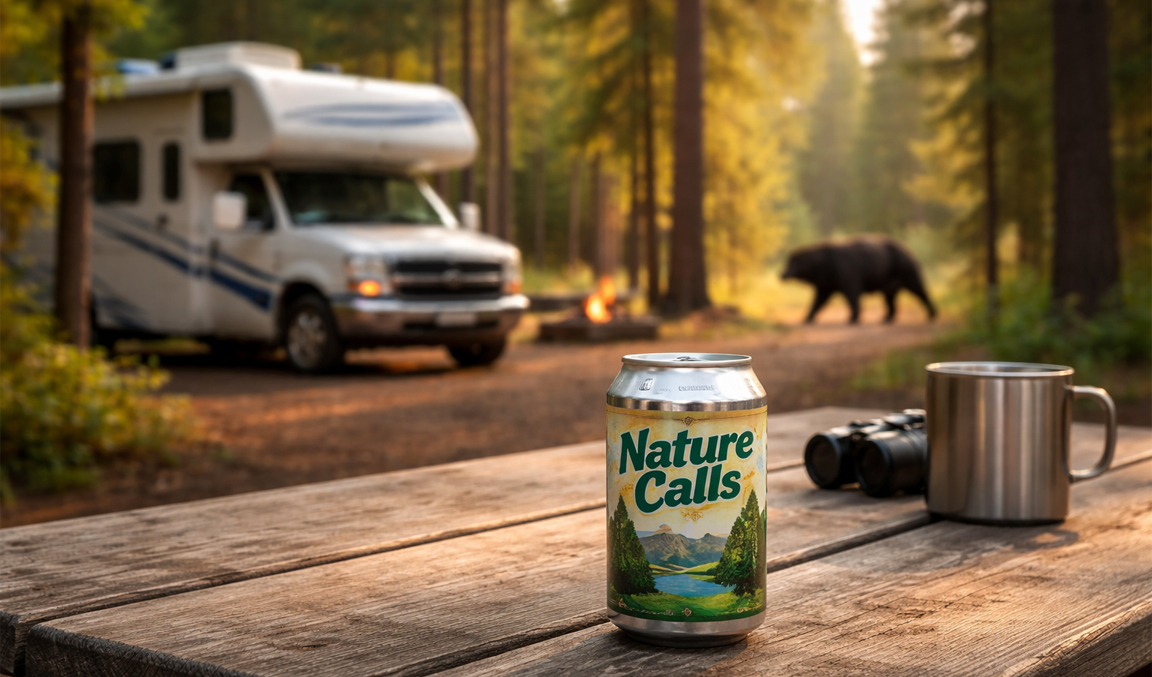
“Nature Calls,” indeed—this tongue-in-cheek brew leans hard into the joke, but what’s actually in the beer is far less wild than the setting suggests. Company promo image.
But, no, you are not drinking chunks of anything.
Instead, the brewing process uses water that was initially exposed to bear scat. That water is then filtered and treated until it meets normal drinking standards before it ever gets near the brewing tank. What ends up in the final product is, by all accounts, clean, safe beer.
In other words, it’s not so much being “poop in a pint glass” as it is more “water that had a very questionable life experience.”
Why would anyone do this?
Short answer: Because you’re reading this.
Outdoor brands live and die on attention, and in a crowded market, weird sells. This one leans hard into the oldest joke in the woods and turns it into a product you can actually hold in your hand.
The campaign pitch is simple enough: Gear built for the outdoors should handle anything nature throws at it. This just takes that idea a step further than most folks expected.
For RVers, it hits a little closer to home. Spend enough time boondocking or tucked into a forest site, and you already know the answer to that age-old question. You just probably didn’t expect it to show up in your cooler.
What does it taste like?
Surprisingly normal.
Reports describe it as a light lager with hints of huckleberry and honey; flavors that nod to what bears actually eat. There’s no “off” taste, no wild aftershock, nothing that would tip you off if you didn’t already know the backstory.
This isn’t a nationwide rollout. The beer showed up as a limited release, mainly tied to brewery locations and special events. That tells you something important—It’s less about building a new product line and more about creating a moment people talk about.
Mission accomplished.
Would you try it?
Well, would you?
Some folks will laugh and pass. Others will try it once just for the story. And a few will probably decide it’s no stranger than anything else that comes out of a craft brewery these days.
Either way, it’s a reminder that the outdoor world isn’t just about gear and campgrounds anymore. It’s also about who can come up with the idea nobody saw coming—and get people talking about it around the next campfire.
You can filter it, brand it, and package it however you like, but at the end of the day, it still answers that old question in a whole new way.
America’s Original RV Newsletter. Since 2001
Issue 2881 • New issue every weekday If you find this newsletter helpful, please consider supporting our work with a donation of your choice. Thank you!
“Try it. You’ll like it!”
Today’s thought
“We wander for distraction, but we travel for fulfillment.” —Hilaire Belloc
Need an excuse to celebrate? Today is National Scrabble Day! Did you know this version of Scrabble exists? It’s our favorite!
On this day in history: 1960 – The United States launches Transit 1-B, the world’s first satellite navigation system.
Tip of the day An RV campfire horror story: Why you should never burn fresh wood
When you’re out on the road and enjoying a cozy campfire, safety sometimes means more than just keeping a bucket of water nearby. A recent incident at a campground serves as an important reminder: Burning fresh-cut wood can have unexpected—and dangerous—consequences. Here’s why.
RV review
2026 Grand Design Lineage LVP2—”budget-friendly,” but polished
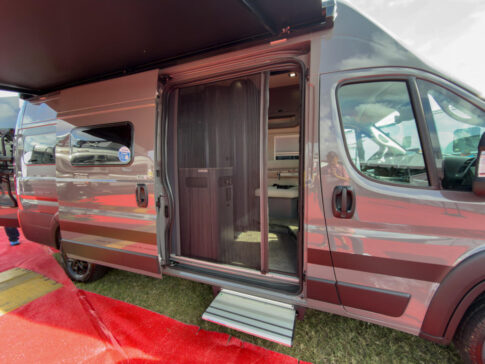
Grand Design’s move into compact motorhomes gets more interesting with the 2026 Lineage LVP2. This Ram ProMaster-based camper van keeps the footprint small, but it packs in the kind of lounge, storage, and sleeping flexibility that usually shows up in pricier vans. This model looks more polished than “budget-friendly” suggests, and it fixes a few common van pain points, including the bathroom setup, screen door, and black tank design. See what you think.
🔥 Reader favorite New and improved Dump Buddy is a must-have gadget for RV dumping
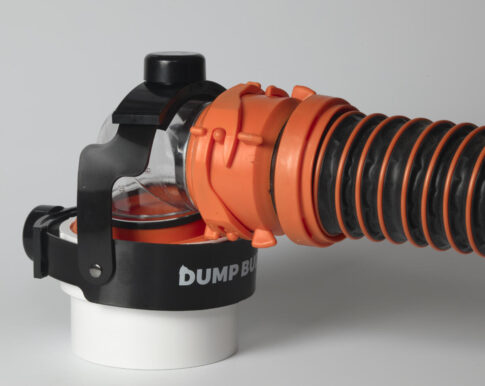
Don’t miss Tony Barthel’s updated review of the new and improved Dump Buddy, a plastic collar that goes around a sewer pipe in the ground and then one that goes around your sewer hose elbow. It’s easy to use. Read Tony’s review here or order on Amazon.
In the RV shop with Dustin Mastering RV maintenance with the perfect caulking gun
Article and video Dirty secrets of RV inspections you need to know
Here, certified RV tech Jacob Rigor of Rigor RV Repair pulls back the curtain on RV inspection dirty secrets that every RVer should know about before contracting for an RV inspection. Are all RV inspections created equal? Unfortunately, no. There are some “dirty secrets” in the RV inspection business that could leave you with a lemon and a whole lot of regret.
Featured article RVers discuss propane safety tips and tricks
By Gail Marsh It was chilly around a recent campfire, but the conversation heated up rather quickly as folks shared their thoughts about propane safety. Chet began. “I just got a dressing down,” he said. “I took my 30 pound propane tank to fill it up and was told I needed to transport my filled tank upright. That’s impossible in my small vehicle. I put it in the backseat and as you can see—I survived.” Continue reading all about propane safety here.
FUNNY MUG OF THE DAY: Attention readers of advanced age: Drink your coffee with this and proudly tell the world “No, I am not old!”
Ask Dave Is it legal to drive through a yellow/orange light?
Quick tip Do you really know your fire safety equipment?
Every RV is equipped with at least one fire extinguisher, and experts recommend several. But a sad experience from North Dakota highlights that having a fire fighting tool isn’t enough. Regarding an RV fire in a rural area, the local Fire Chief had this comment about the RV owner: “She had trouble getting the fire extinguisher off the wall bracket, which could have otherwise possibly mitigated damage.” Mitigated damage? In this instance, the owner was able to get out of the rig—but that was it. Unable to get the extinguisher loose from the mounting bracket, she was unable to put out what had started as a small fire in the kitchen.
What about you—and your traveling companions? Does everyone who travels in your RV know how to get the fire extinguishers loose from their mounting brackets, and then how to use them? It could make a huge difference in whether a small fire is a nasty weekend-ender, or a total loss claim. —Russ and Tiña De Maris
Website of the day
RV Resorts With 9- and 18-Hole Golf Courses
Like to golf? Looking for a new favorite RV resort? We think this list will have you covered! These RV resorts have their own golf courses. Have fun!
Monday Motivation
“Too many of us are hung up on what we don’t have, can’t have, or won’t ever have. We spend too much energy being down, when we could use that same energy – if not less of it – doing, or at least trying to do, some of the things we really want to do.” ―Terry McMillan
? MYSTERY PRODUCT OF THE DAY ? There’s no dis-a-brie-ing, we NEED these! Oh, how fun! If you’re a, let’s say, delicious-food lover (or a mouse), you’ll need these too!
Trivia
7-Eleven operates, franchises and/or licenses more than 13,000 convenience stores in the United States and Canada. It sells the most coffee from its stores on Long Island, NY.
YOUR GRANDKIDS WILL LOVE YOU!Set this up at your campsite and your young grandchildren will know for sure you are the best Grandma and Grandpa in the world!
Readers’ pets of the day
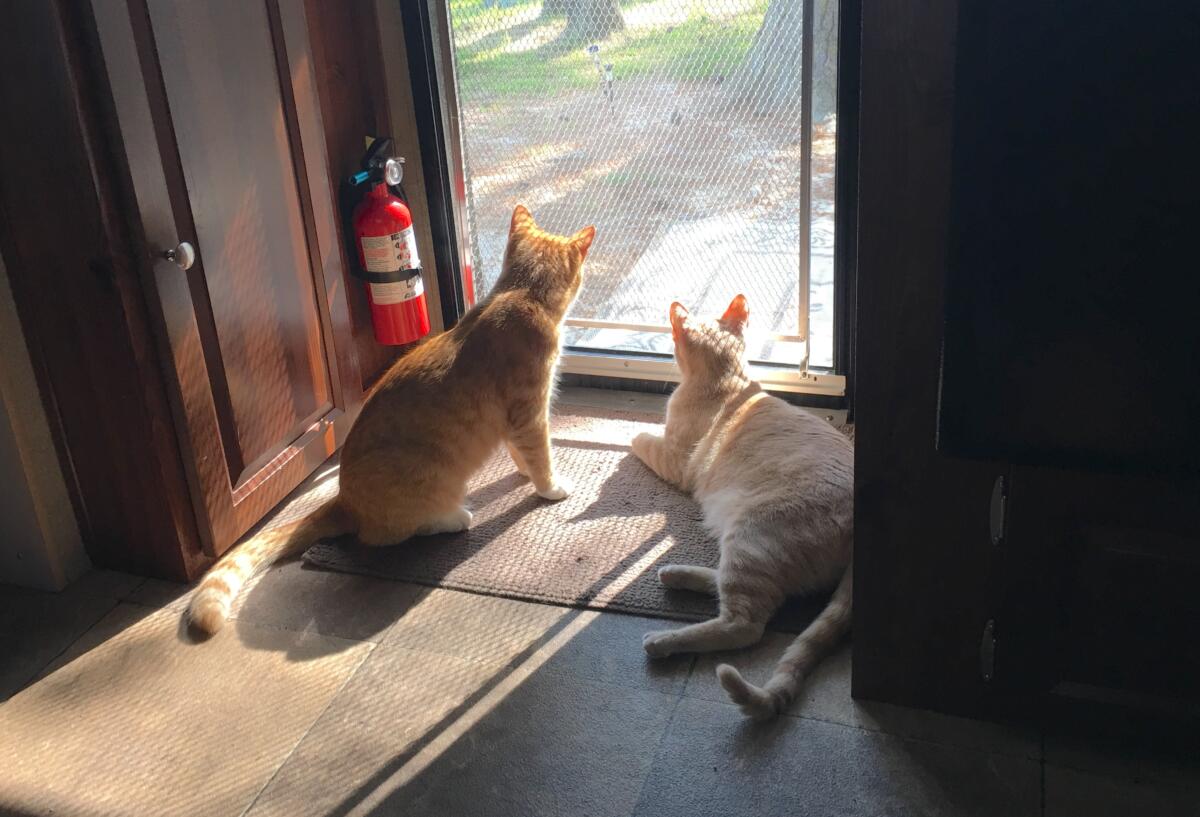
“Here are our two beautiful babies, Tony and Catniss, chilling in the MiniLite while watching everything that’s going on outside.” —Bob Wood
Send us a photo of your pet with a short description. No blurry photos and please do not submit your photo more than once. Thanks!
Leave here with a laugh
Tiny, portable air purifier is RV-sized
If your RV ever smells too much like last night’s dinner, this compact USB-powered air purifier is a quiet hero. It uses a true HEPA filter to trap dust, pollen, smoke, pet dander and odors, and runs whisper-quiet in sleep mode. Keep the air fresh wherever you are. Check it out.
Today’s weather forecast across the nation THIS MAP UPDATES TWICE A DAY
If you shop at Amazon.com we’d appreciate you using this link. We get an itty bitty commission if you buy something, but they add up and help us pay our bills (most importantly our hard-working writers!).
Dear Dave,
Can you get a ticket for running a yellow light that turns red? —Robert
Dear Robert, Should you speed up or stop at a yellow light? It depends.
We all have opinions about what to do when approaching a yellow traffic light. When the light turns yellow, it signals that the green (go) phase has ended and the red (stop) light is about to follow. Some drivers see this as a cue to speed up and make it through the intersection before the light changes. Others recognize it as a warning and choose to stop, avoiding the risk of entering the intersection as the light turns red.
In reality, the yellow light is meant to give drivers enough time to make a safe decision—either continue through the intersection or come to a controlled stop. Its purpose is to reduce sudden braking and help prevent rear-end collisions.
When is it legal to proceed through a yellow light?
Traffic laws generally state that drivers should stop at a yellow light if they can do so safely, without causing abrupt braking or creating a hazard for vehicles behind them. Several factors come into play, including posted speed limits, road conditions, traffic flow, and your distance from the intersection. If a citation is issued, these same factors are typically considered by both the officer and the court.
It is usually considered acceptable to proceed through a yellow light if stopping safely is not possible or if you have already entered the intersection when the light changes.
Why do some yellow lights seem longer than others?
According to the Federal Highway Administration, national yellow light timing mandates are mostly nonexistent, However, they have developed a Manual on Uniform Traffic Control Devices that provides guidance for state Department of Transportation (DOT) engineers, which is from 3-6 seconds.
These include the speed limit (higher speeds require longer stopping distances), the width of the intersection, and overall traffic conditions. Busier intersections may have slightly longer yellow lights to account for increased activity and potential distractions.
According to the manual, the following yellow light intervals are recommended.
Each state sets standards for signal timing, and local officials generally cannot arbitrarily shorten or extend yellow light durations. Despite common belief, yellow lights are not shortened to increase ticket revenue.
It is widely accepted that entering an intersection on a yellow light is not a violation. The violation occurs when a driver enters or remains in the intersection after the light has turned red.
However, this is at the interpretation of an officer and you could receive a citation. This could be contested in court if you feel it is unjust. However, my experience has shown it is difficult to prove that and I have paperwork to show for that.
What about red light cameras?
Many cities are installing red light cameras, which are designed to reduce the attempts to run a red light. However, most drivers believe they are designed to issue more citations. Legally you can drive through a yellow light but a red light camera will start to record when it senses a higher speed through an intersection when the yellow light is on and will capture the car, license plate, and light condition when it turns red. No fighting that one.
By Gail Marsh
When you’re out on the road and enjoying a cozy campfire, safety sometimes means more than just keeping a bucket of water nearby.
A recent incident at a campground serves as an important reminder: Burning fresh-cut wood can have unexpected—and dangerous—consequences.
A cautionary (and true) tale
Recently, a group of RVers settled in for an evening campfire. Adjacent to their campground, workers were busy clearing trees from the property line. The workers generously offered campers some freshly cut wood. The wood looked perfect for a fire, and the campfire turned out beautifully.
However, the next morning, a 10-year-old camper awoke with red blotches across her face, swollen eyes, and puffy cheeks. What initially seemed like an allergic reaction turned out to be a severe case of contact dermatitis.
After the family consulted with a pediatrician, photos of the rash led to a critical question: Had anyone burned fresh-cut wood?
The doctor explained that the wood likely carried remnants of poison ivy or poison oak—plants known to harbor urushiol, the toxic oil responsible for severe allergic reactions. In some cases, anaphylaxis can result. A round of steroids helped reduce the swelling, but the horrible incident was a stark warning about the hidden dangers of burning fresh wood.
Hidden dangers
Freshly cut wood, especially when sourced from areas with overgrown vegetation, can harbor poison ivy, poison oak, or even poison sumac.
When burned, the heat releases urushiol into the smoke—a process that can turn a simple campfire into a dangerous health hazard. Even if you’re not directly allergic to these plants, inhaling the toxic smoke can lead to respiratory issues and, in some cases, trigger widespread skin reactions or worse.
Poison Ivy
Choosing the right wood
For RVers who love the traditional charm of a campfire, the type of wood you burn matters. It really matters!
• Use seasoned hardwood: Opt for dry, well-seasoned hardwoods such as oak, maple, hickory, or cherry. These woods not only burn more efficiently but are less likely to carry contaminants that could harm your health. Freshly cut wood tends to have high moisture content and may not have been exposed to the elements long enough to let off any potentially harmful substances.
• Avoid fresh-cut wood: As tempting as it might be to use wood that’s readily available nearby, freshly cut wood might be contaminated with toxic plants like poison ivy or poison oak. Even if the wood seems clean, it could still harbor urushiol, which becomes airborne when burned.
• Inspect the wood: If you’re gathering wood on your own, carefully inspect it for any signs of unwanted vegetation. When in doubt, it’s best to err on the side of caution. Reputable camping and outdoor safety guides consistently recommend using dry, seasoned wood to ensure both a cleaner burn and a safer campfire experience.
Propane alternatives
For those who want the ambiance of a campfire without the potential risks of burning wood, propane alternatives are an excellent option.
Propane fire pits offer a controlled flame, reduce smoke production, and eliminate the risk of toxic plant residues in the fuel source. These devices provide an easy-to-use, cleaner-burning alternative that can be especially appealing in RV settings where convenience and safety are top priorities.
Final thoughts
Campfires are a beloved part of the RV lifestyle, but safety should always come first. Avoid burning any kind of fresh-cut wood, especially if there’s any chance it might contain poison ivy, poison oak, or similar plants.
By choosing seasoned hardwood or even considering propane alternatives, you can enjoy your campfire with peace of mind, knowing you’re not risking a serious allergic reaction or dangerous respiratory issues.
Keep these tips in mind the next time you plan a campfire. A little extra caution can ensure that your RV adventures remain enjoyable and safe for everyone around you.
We use cookies to ensure that we give you the best experience on our website. By continuing to use our site, you consent to accepting cookies. We NEVER have or will sell reader's data. For more info, please see our privacy policy page.









 To clean windows with vinegar, mix equal parts white vinegar and water in a spray bottle, spray the solution onto the glass, let it sit for a few minutes, and then wipe clean with a microfiber cloth. You can add a few drops of dish soap to power up the mixture.