Home Blog Page 84

2026 Forest River Georgetown 5 Series 34M5 Class A—nice and spacious

2

I’ve been eager to see Forest River’s Georgetown 5 Series 34M5. This RV boasts an open floor plan and space to easily accommodate solo or couple RVers, with room for overnight guests.

I had to see this for myself. Join me as I check out this Forest River motorhome.

Behind the walls

Construction follows the Georgetown 5 Series’ approach. It features a crowned roof, vacuum-bonded, gel-coated sidewalls with a 2″ aluminum frame. This motorhome’s high-density block foam insulation helps to keep the interior warm/cool in varying seasons.

The 34M5 chassis is Ford-based with the popular 7.3L V8 engine on many builds. The 34M5 has three slides that open up the living and bedroom areas for a residential-like feel.

Key specs

• Exterior length: 37’11”
• Wheelbase: 242″
• GVWR: 22,000 lb.
• Fuel capacity: 80 gal.
• Engine: 7.3L V8 (Ford F-series chassis)
• Fresh water capacity: 80 gal.
• Grey/black tanks: 52 gal./52 gal.
• Refrigerator: 18 cu. ft. residential-style
• Generator: 6,000W Yamaha (available/standard depending on build)
• Standard electrical: 50 amp service, solar prep, two house batteries
• Price: low-to-mid $230k range/discounted prices vary

Interior and living space

A generous, light space welcomes you upon entering the Georgetown 5 Series 34M5. The living room/dinette slide opens up across from the galley, and the sightline to the rear bedroom makes the coach feel much larger than its 38-foot footprint.

This motorhome features solid-surface countertops, a residential fridge, and vinyl plank flooring. The theater seating and dinette are positioned for conversation and TV viewing, and the modern-neutral décor makes the space feel calm and inviting.

2026 Forest River Georgetown 34M5 image: FR website

Kitchen

2026 Forest River Georgetown 34M5 image: FR website

The kitchen has a three-burner cooktop, oven, double-bowl sink, and an 18-cubic-foot residential refrigerator that gives you a true household feel. Solid-surface counters and overhead cabinets add storage for dishes and small appliances, as does a generous pantry.

2026 Forest River Georgetown 34M5 image: FR website

There is plenty of prep space, especially with the flip-up counter and integrated cutting board. The Georgetown 5 Series 34M5 layout keeps everything within reach while still allowing space for easy walk-around comfort.

2026 Forest River Georgetown 34M5 image: FR website

Living/dining

2026 Forest River Georgetown 34M5 image: FR website

The main living area features Thomas Payne theater seating with multiple comfort settings (e.g., recline, heat). The dinette has a wall-mounted table that will prevent knee-knocking with your dining partner.

2026 Forest River Georgetown 34M5 image: FR website

The entertainment center offers comfortable television viewing with a fireplace standard on many builds.

The opposing slide(s) create a comfortable communal area without feeling cramped. Window placements and day/night shades protect privacy while allowing good natural light. If you like watching movies at camp, the combination of a fireplace, a 40″ TV, and reclining seats makes it a cozy evening setup.

Bath

2026 Forest River Georgetown 34M5 image: FR website

The 34M5 places the split bathroom design toward the back half of the rig, near the bedroom. The separate shower and sink/stool arrangement allows for a roomy shower on one side of the coach with ample room around the sink and commode on the opposing side. The positioning means guests can use the facilities without crossing private bedroom space. The laminate surfaces and practical fixtures allow for easy cleaning on the road.

Bedroom

2026 Forest River Georgetown 34M5 image: FR website

The rear bedroom is nice with a slide-out king (72″ x 80″) and opposing storage. You’ll discover a roomy sleeping suite with a dresser, wardrobes, and TV mounting. There’s a dedicated desk area for remote workers, or I suppose this could also function as a vanity if necessary.

2026 Forest River Georgetown 34M5 image: FR website

With washer/dryer prep in many builds, the 34M5 would make it easy for long-term travelers who don’t want laundromat runs every few days. The separation from the main living area helps keep the sleeping space quiet while others watch TV or visit up front.

Loft/power bunk features

2026 Forest River Georgetown 34M5 image: FR website

The 34M5 typically includes a power bunk-over-cab that adds a flexible sleeping spot for occasional guests without sacrificing floor space. When it’s not needed, the bunk powers back up to the ceiling and out of the way—easy!

Overall take

2026 Forest River Georgetown 34M5 image: FR website

The Georgetown 5 Series 34M5 offers solo and couple travelers a carefully thought-out design with comfortable flow. This motorhome is roomy where it counts: the living area and rear bedroom. The residential-sized fridge, solid surfacing, and washer/dryer prep make it attractive for long-haul travel, as well. Could it be right for you? Tell us in the comments below.

You can watch a video walkthrough below.

RELATED

RVT1250b

Beyond the headlines with Tony Barthel: How homeless RVers are shaping public perception of RVing, plus THOR’s reorganization

16

This past week, RV Lifestyle took a really good look at the perception of RVs and RVing by many local officials, and it really hit home with me. I’ve been following this for some time, and Mike’s take couldn’t be more aligned with what I’ve seen. And we have a chance to make things better. 

What’s happening is that, with the growing number of homeless people living in what’s left of RVs, they become a visual focal point but also a brand for the RV life in general. If you’re driving down the street and see these RVs surrounded by trash, your immediate reaction is not a positive one. 

If you happen to be a legislator who knows that a clean-looking community means greater tax revenue, you’re going to sway toward limiting the chance of derelict RVs taking over your city in any way possible. These trashy RVs may be the only exposure you have to the RV lifestyle.

Difficulty getting permits for new campgrounds

So, when someone wants to build a new campground in a community, many of these legislators harken back to those RVs they saw on the streets and do a lot to prevent new RV parks from being built. Many of these people only associate RVing with these trashy rigs and work against prospective new campgrounds. 

Further, many local jurisdictions just don’t have legislation on the books to even accommodate a campground. We have spoken to a few people facing this kind of legislative barrier when working to open a campground, and it can mean that new campgrounds are few and far between. Just getting permits to open a campground sometimes is a huge challenge, as there is no provision for a campground on a community’s books. 

Further, by making new campgrounds more difficult to permit, people will buy the old ones and seek to increase revenue to make them worth buying, so all our camping costs go up. Another way this is affecting us all is that campground prices are rising, as Russ and Tiña detail here. 

Work with legislators regarding RV lifestyle

The point in all this is that, if you know of someone who is working to build a new campground or even upgrade one, perhaps be part of the solution and work with your local legislators to let them know that the majority of us RVers aren’t living in squalor. It’s a beautiful way to see this incredible country. 

More and more jurisdictions are cracking down with limits on overnight parking, restrictions on parking for more than one night, limitations on the size of vehicles that can be parked on the street, and more.

Unfortunately, this will spill over and also begin making it more difficult for services like Harvest Hosts, Cracker Barrel, and Walmart to enable overnight parking. So, my advice is to keep an ear to the ground in your community and show how awesome the RV lifestyle truly is. 

What does the THOR reorganization mean to you?

Thor is cell dividing

The world’s largest RV company, THOR, announced that it is reorganizing into two larger groups as well as a couple of smaller groups. This is a significant departure from how they have operated in the past. 

Basically, THOR has been more like a holding company where each individual brand is almost completely autonomous, so it has been able to manage its business like a smaller company. Things like floor plans, design, components chosen, processes, and so much more can be wildly different from one THOR division to the next. Incidentally, Forest River works the same way. 

Consider that THOR owns companies like KZ RV, Airstream, Keystone, and Jayco. This decentralized structure has worked pretty well, allowing the individual brands to compete with one another and capture a market segment to the best of their abilities. 

Basically, THOR is going to reorganize into two big companies and two little ones. Sorta.  We reported on that here. There was also more information about the restructuring of THOR in RV Business.

Change in sales landscape at THOR

Essentially, THOR said a change in the sales landscape was part of the decision. Yeah, they’re not kidding. 

Smaller dealerships are going away, and there are more big chains—most notably Camping World, but don’t discount Blue Compass, Camper’s Inn, and Bish’s. As small dealers disappear, there isn’t the need to have so doggone many sticker variations on the same product. 

Now, an RV manufacturer will guarantee a certain geographic territory to a dealership. This is why you have RV twins where the exact same RV is built with two different names. You may have a local dealership with a guaranteed territory under one brand name, but another dealership can essentially sell the same product with different stickers within your territory. 

But with these big chains swallowing the little dealerships, you don’t need this kind of nonsense. So THOR can consolidate brands, reduce staff, and basically simplify production. It makes sense. 

The announcement included the fact that Airstream and KZ RV were going to remain independent, which just boggled my mind. Yeah, I get Airstream. But who the heck is buying KZ RV products?

Sooo many brands of RVs 

Let’s face it: There are so, so, so many brands of RVs that it would make sense to just eliminate the similar names and then automate some of the production of the more popular brands.

As someone who grew up around manufacturing, sort of, watching RVs being built was a shock to me. Even in the 1970s and ‘80s, the company my dad worked for had a good degree of automation, and the floors of the plant were clean. 

Last week, we covered the fact that Leigh Tiffin left the business with his family name on the door, and more details have come out about that. But seeing how the management of this new THOR is working, I think he made a good decision. 

Actually, a consolidation and simplification could be a good thing. It remains to be seen, but it’s certainly a reflection of how RVs are being sold nowadays. 

Imagine each of these smaller brands has a design team, a warranty team, warehousing, marketing, and on and on. By consolidating things, you can simplify a lot of processes, which means costs go down. But you could also see things improving. 

Warranties

For example, what if they choose to consolidate warranty claims and use a more automated process to handle warranties? Theoretically, this could mean better/faster warranty claims service for you. 

When I was handling warranties, we had both THOR and Forest River brands. Keystone, in particular, had a streamlined and well-designed system for handling warranties. But that was unique. I’m eager to see how this reorganization plays out, and I’ll keep my ear to the ground. As always, I appreciate your input. 

There is a lot of speculation about what the THOR brand means, but here’s the real deal. THOR Industries, Inc. was founded on August 29, 1980, when Wade Thompson and Peter Busch Orthwein acquired Airstream from Beatrice Foods. The name “THOR” combined the first two letters of each entrepreneur’s name—THompson and ORthwein.

Airstream had not fared well during the economic downturn of the late 1970s, losing $12 million the year before it was acquired. Thompson and Orthwein had also previously acquired the Hi-Lo Trailer Company.

Oh, one more thing. That photo I used as the featured image for this article of the vintage Aristocrat—that was actually a trailer I owned and was hoping to fully restore. It currently is restored and lives to camp again, but I didn’t finish the process—a good friend did. Scroll back up and take a look. 

Read all recent RV and RV-related news here

RVT1250b

Ford recalls millions of pickup trucks for trailer towing danger

Ford Motor Company is recalling certain 2021-2026 F-150, 2022-2026 F-250 SD, F-350 SD, F-450 SD, F-550 SD, Maverick, 2024-2026 Ranger, 2023-2026 F-600 SD, 2022-2027 Lincoln Navigator, Expedition, and 2026 E-Transit vehicles.

When towing a trailer, the integrated trailer module (ITRM) may lose communication with the vehicle, possibly causing a loss of brake and turn signal lights, or a loss of brake function.

As such, these vehicles fail to comply with the requirements of Federal Motor Vehicle Safety Standard number 108, “Lamps, Reflective Devices, and Associated Equipment.”

Trailer lights or brakes that do not function can reduce the driver’s ability to control the trailer and decrease the trailer’s visibility to other road users, increasing the risk of a crash and injury.

As many 4,381,878 vehicles may be affected by the recall.

Identification of any warning that can occur

Customers will see a pop-up message on the instrument panel cluster (IPC), indicating a “Trailer brake module fault,” and the turn signal telltale will fast flash. Additionally, a “Blind Spot Assist System fault” message may appear on the IPC.

Remedy

The integrated trailer module software will be updated by a dealer, or through an over-the-air (OTA) update, free of charge. Owner notification letters are expected to be mailed March 17, 2026. Owners may contact Ford customer service at 1-866-436-7332.

Ford’s number for this recall is 26C10. Vehicle Identification Numbers (VINs) involved in this recall will be searchable on NHTSA.gov beginning March 17, 2026.

***
SOMETHING WRONG WITH YOUR RV?
Good news! We have more than 3,500 articles in our “RV Maintenance and Repair” category, so we’re confident we can help you solve the problem. In addition, did you know you can search our website using the search bar at the top of every page for keywords or topics that interest you or that you need help with? Yep, we’ve got you covered!

RELATED

RVT1250b

RV Daily Tips. Friday, February 27, 2026

America’s Original RV Newsletter. Since 2001
Issue 2850 • New issue every weekday


Today’s thought

“And that’s the thing about people who mean everything they say. They think everyone else does too.” ―Khaled Hosseini


Need an excuse to celebrate? Today is National Polar Bear Day!

On this day in history: 1964 – The government of Italy asks for help to keep the Leaning Tower of Pisa from toppling over. (Guess it worked!)


Tip of the day
Flexible holding tank repair material easy to apply—and it works!

By Russ and Tiña De Maris
Like many RVers, we suffered through holding tank leaks on a variety of RVs. One memorable occasion, when parked on a slanted post office parking lot, we found the top of our holding tank leaked. Our BLACK water holding tank. Embarrassing, to say the least; difficult to fix, an understatement.

We’ve tried all sorts of tank repair nostrums, to a variety of results, usually disappointing. Those that have worked (for our black tank disaster) were complicated and posed major safety issues. Others often just peeled off or didn’t hold. We’ve now tried a new flexible holding tank repair, and we’re really jazzed about it.


Screenshot
Photo credit: Mike Thompson’s RV Super Stores

RV review
New-for-2026 Brinkley Model I 280: Compact luxury—yup

By Gail Marsh
Compact and luxurious? Seems like an oxymoron to me. However, if you’re looking for a new travel trailer, the brand-new 2026 Model I 280 from Brinkley RV deserves consideration. This Brinkley is best suited for couples who want residential comfort on the road and a roomy living area. This RV offers residential comforts (king bed, large pantry, theater seating) and has full-time-friendly features. Check it out. What do you think? 


MagneticlightThe magnetic flashlight that finds what your fingers and eyes can’t
Drop a screw or another small metal item in the gravel at your campsite? This extendable magnetic flashlight has your back. With bright LEDs, a flexible neck, and a telescoping magnet that reaches into tight spots, it grabs lost bolts, washers, and tools without crawling under the rig. Tough, compact, and perfect for RV repairs, roadside fixes, and late-night campground tinkering—you’ll be glad you packed it. Learn more or order.


In the RV shop with Dustin
How an RV furnace works and what we look at to diagnose issues

When you bring your RV into our repair shop, or any repair shop, here’s an example of things we are testing during a bench test and some of the components we’re looking at for RV furnace issues: checking current, voltage, resistance, DC and AC power, circuit board, relay, blower motor, sail switch, high limit switch, gas valve, igniter, flame sensor. Continue reading.


Article and video
Why RV water pressure regulators are essential

Here, the team from Sharing the Journey discusses an important topic that many newbie RVers (and some experienced ones, too) might be unaware of: the importance of RV water pressure regulators. Are RV water pressure regulators necessary? As one of the commenters on this video says, you won’t know until it’s too late. They are good, cheap insurance to have. Learn more here (and make sure you have one!).


Bumper snicker

Possum
Funny! Want one for yourself? Click here.

Featured article
You’ve got to see this vintage trailer-turned-houseboat

By Paul Lacitinola
Bill and Laura McKee have always been drawn to the excitement of water skiing and boating, spending countless hours on the lakes of Northern California and Oregon. Their love for adventure took a unique turn in 2016 when they embarked on a journey to build a houseboat. However, they added a twist… 


Ask Dave
RV’s propane supply lines have air. Is there a leak?

Read Dave’s troubleshooting tips.


PocketmicroscopePocket microscope fun to see every tiny detail
This pocket microscope turns any RV stop into a mini science adventure. With 60x–120x magnification and built-in LED light, you can examine leaves, rocks, bugs, fabrics—anything you’re curious about—right at the picnic table. Small enough to toss in a drawer and fun for kids and curious adults alike, it’s an easy way to explore the little wonders hiding in plain sight.


You may have missed these recent popular stories…


Reader poll

Sorry, folks, we’re having issues with our polling software right now. We’re working on it! 


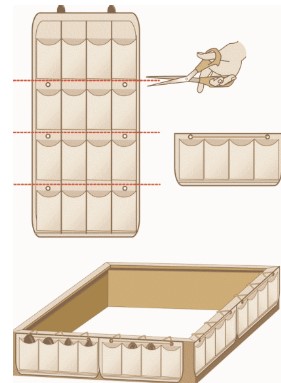
Shoe rack storage by John Bohn

Quick tip
Shoe rack storage hack

Take a hanging closet shoe rack (similar to the one shown), cut it along each row, wire it with a heavy cord (thick string, bungee, you name it), and hang it around the bottom perimeter of your bed frame. This will work for other clothing organization, art supplies, toiletries, etc., too.


CAN YOU HELP SUPPORT OUR NATIONAL PARKS? Thanks to Forbright® Bank, all donations to the National Park Foundation will be matched up to $100,000 to have 3X the impact on our national parks! The match offer is good until midnight on February 27 (tonight!).


On this day last year…


Website of the day

Martha Stewart: Rescue & Revamp
This section of the Martha Stewart website is so much fun. It gives you tons (and tons and tons!) of ideas to revamp and revive everyday items. If you like to DIY, you’ll love this!


? MYSTERY PRODUCT OF THE DAY ?
Use this on your next walk around the campground and watch everyone fly out of their RVs! You could scare a lot of people with this. It’d surely make you howl and snort with laughter! Oh, this is really fun…


Trivia

Oklahoma City has been hit by a staggering 100 tornadoes; the earliest recorded tornado there was in 1893. The most-hit city count can change based on how city limits are defined, but when considering a 20-mile radius around a city of 100,000 or more, Oklahoma City is in the lead, followed by Huntsville, Ala.


Readers’ pet of the day

Reggie 29932973ede326bbd0c5b721775ffc20“Reggie (Border Terrier/Pug mix, age 13) has been to 49 states and 7 Canadian provinces. He likes to keep track of where we’re going!” —Julie Custer

HELP! WE’RE RUNNING LOW ON PET PHOTOS! Please send us a photo of your pet with a short description. No blurry photos and please do not submit your pet more than once. Thanks!

RVing with Dogs group on Facebook. You’ll love it.


BEFORE YOU LEAVE… Make sure you read yesterday’s brand-new Great RV Accessories newsletter. It’s loaded with gadgets we think you’ll love.


Leave here with a laugh


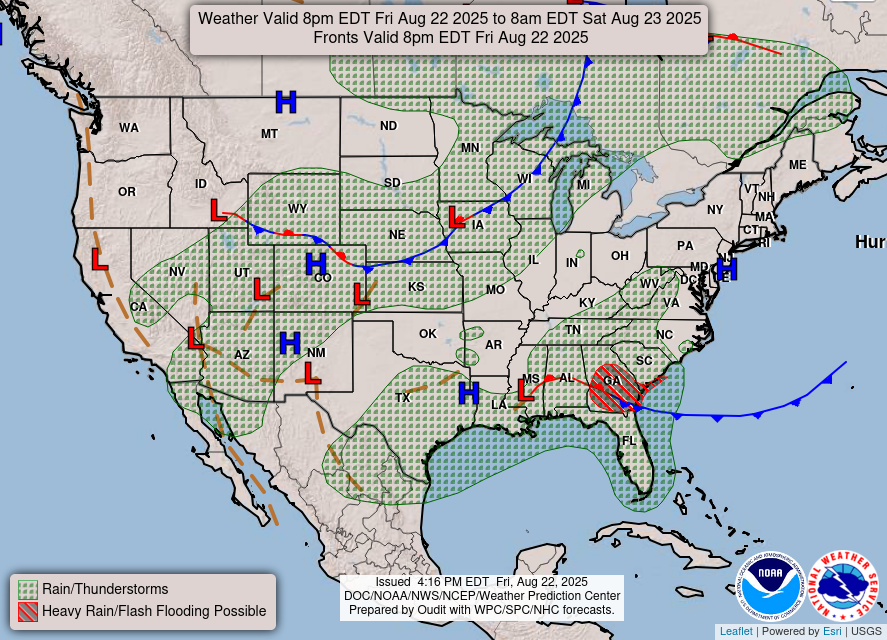
Today’s weather forecast across the nation
THIS MAP UPDATES TWICE A DAY

Visit Current National Radar Weather Map


Did you miss the latest RV Travel Newsletter? If so, read it here.
Oh, and if you missed the Latest News for RVers, make sure to catch up here.


If you shop at Amazon.com we’d appreciate you using this link. We get an itty bitty commission if you buy something, but they add up and help us pay our bills (most importantly our hard-working writers!). 


RVtravel.com All-Star Team

Click here for information about our staff and how to contact us.

WHY WE ASK FOR DONATIONS INSTEAD OF SELLING SUBSCRIPTIONS.

Our policy on using artificial intelligence.

RV’s propane supply lines have air. Is there a leak?

Dear Dave,
After using the propane, I turn it off at the bottle valve. When I get to my next stop, I turn it back on. The lines are no longer pressurized and it takes a while for the propane to reach the stove and light. If there are no leaks in the system, shouldn’t it come in immediately? Does this mean that I have a propane leak somewhere? Thanks. —Matt, 2019 Rockwood Mini Lite 2205S

Dear Matt,
The only reliable way to verify a propane leak is to have a certified technician perform a water column pressure test on the LP system. This can be done at a supply line, such as the refrigerator if you have an absorption model that operates on LP.

Another method is installing a pressure gauge (manometer) somewhere in the gas line on the coach.

Years ago, Winnebago Industries installed a manometer in the refrigerator supply line. It used a dial gauge that would show a pressure drop if there was a leak in the system.

GasStop valve

Another option is installing a GasStop® valve at the propane tank. This device not only provides added protection by automatically shutting off flow if a leak is detected, but it can also indicate a pressure loss while the coach is in storage. You can get one on Amazon here.

Gas Stop

However, before assuming you have a leak, consider a very common issue involving how the DOT cylinders are turned on.

Excess flow valve

Your LP system includes an excess flow valve inside the cylinder connection. This valve contains a spring-loaded needle and seat designed to shut off propane flow if it senses a sudden surge—something that would normally indicate a major leak.

Excess Flow Valve
Excess flow valve

If you open the cylinder valve too quickly, it creates a rapid rush of propane and pressure. The excess flow valve can interpret this as a leak and immediately restrict or shut down flow.

When this happens, it can take several minutes for pressure to equalize and for the spring to reset. The reset time varies depending on the size of the coach, the number of LP appliances, and the length of the supply lines.

Before scheduling a leak test, try this:

Turn the cylinder valve on very slowly to prevent a sudden surge in pressure. If the problem persists after doing this, then have the LP system professionally tested.

DOT Cylinder
DOT cylinder

 You might also enjoy these posts from Dave 

DAVE HAS ANSWERED MORE THAN 1,000 readers’ maintenance and repair questions. Read a directory here. There is so much to learn!


Dave Solberg is a leading expert in the RV industry and the author of the “RV Handbook.”

HAVE A QUESTION FOR DAVE?

Send your inquiries to him using the form below.

Name
Drag & Drop Files, Choose Files to Upload

RVDT2850

Flexible holding tank repair material easy to apply—and it works!

By Russ and Tiña De Maris
Like many RVers, we suffered through holding tank leaks on a variety of RVs. One memorable occasion, when parked on a slanted post office parking lot, we found the top of our holding tank leaked. Our BLACK water holding tank. Embarrassing, to say the least; difficult to fix, an understatement.

We’ve tried all sorts of tank repair nostrums, to a variety of results, usually disappointing. Those that have worked (for our black tank disaster) were complicated and posed major safety issues. Others often just peeled off or didn’t hold. We’ve now tried a new flexible holding tank repair, and we’re really jazzed.

Dreary dribble issue

flexible holding tank repair material
Minute but prolific. The tiny crack is at arrow point. Pre-prep photo by R&T De Maris

Our current dreary dribble issue made itself known when we were preparing to dump tanks. Under the trailer, a stream about the size of a pencil point was splooshing down on the gravel parking pad.

Thank heavens this wasn’t a manifestation of horrifying black water, just the ghastly gray water. Just where the stream started wasn’t clear, as it trailed across the rig’s underbelly.

We ended up cutting a large area of the coroplast to find the source. Right there, in a corner, right down at the bottom of the tank, was a minute but prolific crack.

Being “on the road,” there’s never a “good time” for something like this to happen. We were parked at a fairly forgiving relative’s place, so we had some breathing room to get the situation fixed. By dumping the tank, we were able to slow the flow, but the issue was how to fix it?

Some other stuff works—but a lot doesn’t

The last tank repair we undertook was a major issue. A crack along the top of a different rig’s black tank stretched nearly 40” and allowed the flat, thinnish top of the tank to separate from the tank walls. If we overfilled the tank or, in our point of discovery, got off-level, then the contents would spill right out and into the fiberglass insulation-stuffed belly space.

For that repair, we worked with a product called Plasti-Mend. That stuff is a resin substance that melts into the existing plastic and effects a new repair. It worked great! Trouble is, the stuff emits highly toxic fumes and requires the user to wear a NIOSH (National Institute for Occupational Safety and Health) approved respirator when anywhere near the stuff. We didn’t have that kind of equipment with us, and visions of trying to apply the stuff overhead just didn’t work.

We’d faced similar “small cracks” in other holding tanks. That was a few years back, and then we’d tried commercially available “holding tank repair kits” that promised stellar results.

Their definition of stellar and ours were light-years apart. We needed something that really worked, didn’t require special safety equipment and would be quickly available.

We ran into some flexible holding tank repair material we’d never heard of: West System® G/flex epoxy. Initially designed for marine use, we found good things reported about it.

“Resist a peel or delamination”

G/flex is a 2-part epoxy

What sets G/flex apart from other repair potions is its ability to stick to just about any sort of plastic (more on that in a second) and its elasticity after the repair is cured.

When your RV is rattling down those bumpy roads, if the repair material doesn’t “give,” then something’s gonna give—typically the repair itself.

G/flex, says the manufacturer, is formulated to elongate up to 30%. When the repair twists, expands, contracts, or vibrates, G/flex hangs on tenaciously. “This helps it,” says West Systems, “resist a peel or delamination from starting.”

Well, believe us, we’ve been down the road of peel and delaminations with other tank repair compounds.

G/flex is also suitable for tanks other than ABS, commonly found as black and gray water reservoirs. G/flex will also stick to polyethylene plastic—think fresh water holding tanks. These guys can be a bearcat to repair, but G/flex will work on both LDPE and HDPE materials.

Oh, did you say you poked a hole in your fiberglass canoe, your plastic roof carrier, etc.? Look to G/flex.

How we stifled our drizzle—prep work…

Here’s the lowdown on how we used this flexible holding tank repair material to stifle the gray water drizzle in our lives.

After we tracked down the actual source of the leak (that little bitty crack in the corner), we cleaned up the mess. We rubbed and scrubbed the holding tank with a cloth and cleaner to expunge the ick that’s associated with gray water. With the tank empty (and drains blocked inside to prevent accidental water intrusion), we prepped the repair site.

West Systems suggests that when working with ABS or PVC, prep work includes using an “appropriate solvent.” They don’t specify what solvent, but we used alcohol. Don’t use a laundered rag; better to use white paper towels.

Why the difference? Rags may leave traces of fabric softener on the repair area, which could create adhesion issues.

Follow up by making a better grip surface by sanding with 80-grit sandpaper. Dust off and ensure the area is dry.

While you can purchase large quantities of G/flex, we found that a little more than one “set” of G/flex 655 syringes worked well. Yes, the stuff is an epoxy, and the double one-ounce syringes spit out equal portions of the two-goop poop.

A small paper plate with a plastic utensil worked well for the mixing surface. Two minutes of mixing made the G/flex ready to apply. With a pot life of more than an hour, you don’t have to be in a big hurry to do the fixing.

… and application

flexible holding tank repair material
We added fiberglass window screen for additional strength. R&T De Maris photo

After we applied a layer of the mixed epoxy onto the repair area, we added a layer of plastic window screen, just for good measure. Working with rubber gloves helps you keep your paddies out of the mess.

With the fiberglass in place, we molded a bit more G/flex over the fiberglass.

The cure time is about 7 hours. Sad to say, before our “cure” could be effected, we goofed. A small amount of water ran down the drain. The next day, when we put a big amount of water in the tank, we found a tiny drip of water from the repair area. Rats!

So we drained the tank, dried everything out, and between what was left of our first ounce of unused G/flex and a bit from a second syringe, we recoated the repair area in earnest. An overnight cure proved all that was required. A refilled tank leaked nary a drop.

2,000-mile test coming up

How will the G/flex repair hold up to the rigors of the road? We’ll be putting it to the test shortly. We have close to 2,000 miles to cover before we return to home base. Will this flexible holding tank repair material prove to be truly flexible and watertight? We’ll report back with our findings.

West System G/flex 655 is sold on Amazon.

RELATED

RVDT2850

Why RV water pressure regulators are essential

4

By Cheri Sicard
In the video below, the team from Sharing the Journey discusses an important topic that many newbie RVers (and some experienced ones, too) might be unaware of: the importance of RV water pressure regulators.

Are RV water pressure regulators necessary? As one of the commenters on this video says, you won’t know until it’s too late. They are good, cheap insurance to have.

Our hosts manage a South Carolina campground known to have very high water pressure.  Therefore, they ALWAYS encourage their guests to use water pressure regulators when connecting their hoses to the park’s water supply.

As there isn’t a campground store, the managers keep some water pressure regulators on hand to lend to guests in need. They are always amazed at the volume of RVers they encounter who are oblivious to the need for RV water pressure regulators. But what you don’t know can hurt you in the form of potentially extensive and expensive damage to your RV’s plumbing system.

Most RV plumbing systems are designed to handle water pressure between 40 and 60 PSI.  In the park our hosts manage, it can sometimes exceed 100 PSI, presenting a graphic example of how essential it is to use a water pressure regulator, unless you are in a place where you confidently KNOW the PSI.

Watch the video to learn details of the potential water damage not having a regulator can cause. He also shows a great example of an adjustable water pressure regulator and how to connect regulators.

Beyond preventing damage, water pressure regulators help maintain a steady water flow in your RV without sudden surges or lapses.

They may not be necessary in every instance, but water pressure regulators are cheap, and the potential consequences of not using them are not.

Bottom line: Always use a water pressure regulator!

Shop for RV water pressure regulators at Amazon.

RELATED

RVDT2850

How many days a week do you read this newsletter, RV Daily Tips?

18

Monday-Friday mornings, coffee in hand, inbox open… Do you find yourself clicking into our RV Daily Tips newsletter most days—or just once in a while when something catches your attention?

For today’s poll, we’re curious: How many days a week do you read this newsletter?

For some of you, it’s part of your daily rhythm (and you’re our favorite!). You read it every morning, scroll through the tips, maybe click a few stories, and feel a little more connected to the RV world before the day really gets going. Thank you!!

Others of you pop in a few times a week. Maybe certain topics catch your eye, or you read when you have a little extra time. Life gets busy, travel happens, inboxes fill up—but you still like staying in the loop when you can. We’re glad you’re here. 🙂

And then there are those of you who read more casually. Once a week. Here and there. Maybe someone forwarded it to you, or you catch up on several editions at once.

So what about you? How many days a week do you read the RV Daily Tips newsletter? Go ahead and vote in today’s poll. And truly—whether it’s every day or just occasionally—thanks for being part of our community. If you weren’t here, we wouldn’t be here either!

THE BEST WAY TO SUPPORT US?
Tell other RVers about us! If you love us and our newsletters, chances are other RVers will too! You could tell your campsite neighbors how great we are, you could post a newsletter or story you enjoyed on your Facebook, you could write us a love letter on the campground bulletin board… You get the picture. Spread the word—help us out! THANK YOU! (We’d never say no to a donation either…)

RVDT2850

How an RV furnace works and what we look at to diagnose issues

1

By Dustin Simpson
When you bring your RV into our repair shop, or any repair shop, here’s an example of things we are testing during a bench test and some of the components we’re looking at for RV furnace issues: checking current, voltage, resistance, DC and AC power, circuit board, relay, blower motor, sail switch, high limit switch, gas valve, igniter, flame sensor.

Safety disclaimer: It’s important to note that your RV furnace operates using propane and electricity, two potentially dangerous sources.

If you are not confident in working with either, allow a professional technician to take care of the repairs.

How does an RV furnace work?

Here is the basic sequence of operations:

1. The thermostat sends an electrical signal to the furnace circuit board.

2. The signal passes through a relay and the blower motor starts.

3. At full speed, it activates the sail switch, confirming there is adequate airflow to exhaust fumes from the furnace.

4. The signal continues to the high-level switch, which indicates the temperature of the furnace is below a safe level to start.

5. With the two previous safety switches activated, the gas valve opens, allowing propane into the combustion chamber.

6. The igniter in the combustion chamber receives current from the ignition module on the circuit board. As a result, the current produces a spark between the ignitor tips. This lights the fuel and produces the flame, resulting in the heat flowing through the heating ducts throughout your RV.

RVer furnace issue problem

Complaint: Furnace not operating properly.

Cause: Was an intermittent condition from the PC board.

Cure: Along with servicing the unit, the PC board was replaced. This unit was actually installed twice and didn’t end up failing during the testing process.

Customers came in to pick up, and during testing with owners, the unit failed to operate during cycles.

Removed the unit for the second time and, after testing and monitoring, found the PC board was the issue.

If you’ve determined the circuit board is the cause of your furnace problem, it’s a relatively easy part to replace. The circuit board is usually located in the furnace’s blower chamber near the bottom of the unit.

The hard part is removing the furnace to access it for testing and bench testing.

Luckily, everything was repaired and reinstalled and then tested properly.

More from Dustin

Read more of Dustin’s articles here.

RELATED

RVDT2850

New-for-2026 Brinkley Model I 280: Compact luxury—yup

0

Compact and luxurious? Seems like an oxymoron to me. However, if you’re looking for a new travel trailer, the brand-new 2026 Model I 280 from Brinkley RV deserves consideration.

This Brinkley is best suited for couples who want residential comfort on the road and a roomy living area. This RV offers residential comforts (king bed, large pantry, theater seating) and has full-time-friendly features.

Behind the walls

Brinkley built the Model I 280 around a drop-frame chassis with a seamless laminated aluminum exterior and a fiberglass front cap. The coach includes high R-value insulation (R40 floors/ceiling, R9 walls), heated and enclosed underbelly with circulated forced air, brass plumbing fittings, and automotive-grade sealant touches meant to limit future issues. The floor plan uses two opposing slide-outs to open the living/kitchen footprint.

Key specs

• UVW (dry weight): 8,411 lbs.
• GVWR: 10,495 lbs.
• Hitch weight: 798 lbs.
• Exterior length: 32’10”
• Overall height w/ AC: 11’4″
• Width: 96″ (8′)
• Interior height: 81″
• Slide height: 72.5″
• Fresh water: 55 gal.; gray: 75 gal.; black: 40 gal.
• Tanks/HVAC highlights: tankless on-demand water heater, 18k main A/C + 8k bedroom A/C
• Tires/wheels: 15″ E-rated Hankook 10-ply; tandem axles (5,100 lb. each).
• Power: 50-amp service, 200W solar/30A Victron MPPT (600W and lithium ready) + 3000W inverter prep.
• Price: MSRP $88,086

Interior and living space

ScreenshotI was impressed walking into the Model I 280. Opposing slides and large frameless windows immediately provide a bright, airy feel. The living area centers around an L-sofa with four recliners across from a 50″ smart TV and an electric fireplace.

Materials and fit look upscale with dovetail drawer joints, premium residential cabinets, and the flush-floor slide that gives a near-continuous living surface.

Kitchen

Brinkley I 280 travel trailer Brinkley website

The rear kitchen is thoughtfully arranged for real cooking. It features a large pantry with pull-out drawers and an appliance outlet. There’s also dishwasher prep, a 12 cu. ft. refrigerator, a 30″ convection microwave, plenty of counter prep space, plus a flip-up counter extension for even more room for prep.

Brinkley I 280 travel trailer Brinkley website

The dining area’s table is uniquely designed to accommodate eating, crafting, or remote working. I like the versatility.

Living room

Brinkley I 280 travel trailer Brinkley website

The living room is designed with an L-sofa and four recliners that face the entertainment center and fireplace. Big panoramic windows and integrated blackout shades keep the room bright by day and private at night.

The stepless slide floor keeps the living area easy to navigate, and the picture window up front adds a surprising amount of light and view.

Bath

Brinkley fitted the I 280 with a one-piece 42″ x 30″ fiberglass shower that includes a generous built-in seat. The RV also features tankless on-demand water heating, which is great for endless hot showers.

Bedroom

Brinkley I 280 travel trailer autoevolution image

Up front, the bedroom hosts a 66″ x 80″ king mattress. This is not your typical RV mattress. Brinkley’s I 280 has a 7″ memory foam bamboo mattress for comfort, and dual bedside nightstands with outlets and USB/USB-C ports (CPAP-ready).

Brinkley’s MaxSpace Split-Level Wardrobe™ was a new concept for me. It has a hanging closet, shelves, and a hamper, which are handy. But lifting the bed to access the space seems awkward to me.

Brinkley I 280 travel trailer Brinkley website

Thankfully, there seem to be plenty of storage options located in more easily accessible cabinets in the bedroom. I do like how the layout gives true bedroom separation from the living space and includes its own 8k A/C.

Overall take

The 2026 Model I 280 is built for RVers who want a near-residential feel without moving into a much larger coach. Brinkley loaded the trailer with practical, long-haul features (e.g., robust insulation, tankless water heater, heated underbelly, and 50-amp service with solar prep) in a size that’s manageable to tow and park.

What do you think about the Brinkley Model I 280? Share your thoughts using the comments below.

MORE BRINKLEY RV REVIEWS:

RVDT2850

Love’s makes its rewards program friendlier for RVers

5

If Love’s is already one of your go-to fuel-and-food stops, this update is worth knowing about.

Love’s Travel Stops has rolled out a revamped Love’s Rewards program. It makes it easier for RVers and other casual drivers to earn—and actually use—points on both fuel and in-store purchases. You no longer have to feel like the loyalty program was built only for truckers.

The updated program is now fully managed through the Love’s App. It applies across Love’s nationwide network of travel stops and country stores. Points can be redeemed like cash on future purchases, whether that’s fuel, snacks, drinks, or a quick meal before getting back on the road.

To kick things off, Love’s is offering 100 bonus points to every rewards member—new or existing—after their first in-store scan using the Love’s App. The promotion runs from March 1 through September 30, 2026.

What this means for RVers and casual drivers

For RVers, the biggest change is simple: more everyday value at stops you’re already making.

Fuel discounts remain in place—typically 10 cents off per gallon of gasoline and up to 25 cents off per gallon of auto diesel. And Love’s drink club comes along, where every fifth fountain drink or coffee is free.

The updated program also adds new ways to rack up points:

  • 1 point per gallon on gasoline and auto diesel
  • 2 points per dollar spent on in-store merchandise
  • Extra points on Love’s-branded products, freshly made meals and snacks, and bulk Diesel Exhaust Fluid (DEF)

For RVers covering long distances, those points can quietly stack up over a season.

Why trucker-side changes still matter to RVers

Love’s is also adjusting how rewards work for professional drivers, including higher points earnings on merchandise and a shift away from unlimited drink refills later this year.

Starting October 1, complimentary drink refills for professional drivers will move to a monthly credit-based model. Love’s says the change gives drivers more flexibility in how they use rewards, whether on beverages or other purchases.

For RVers, the takeaway is that Love’s is streamlining its rewards system across the board. The result is a program that works the same way whether you’re driving a semi, a motorhome, or a pickup towing a travel trailer.

The RVer takeaway

If Love’s is already part of your travel rhythm, the updated Love’s Rewards program makes those routine stops pay back a little more. It won’t change where you camp, but it may influence where you stop for fuel, coffee, and groceries along the way.

RELATED

RVT1250b

Starlink plans satellite internet for smartphones; no more cell towers

3

Starlink says it wants future satellites to deliver internet speeds up to 150 Mbps directly to smartphones, according to a new report from PCMag.

It’s a bold target that hints at a world where phones connect to space without cell towers or rooftop dishes. For RVers who routinely travel beyond reliable cellular coverage, that promise raises an obvious question: Could satellite-to-phone internet eventually simplify life on the road?

The short answer is eventually, maybe—but not yet. Today’s satellite-to-phone connections are limited and designed as coverage backstops, not true broadband.

Still, the long-term direction outlined by Starlink’s parent company, SpaceX, points to a future that could meaningfully change how RVers stay connected—especially in remote areas where cell towers never quite reach.

What Starlink is aiming for

Starlink’s current “direct-to-cell” service is built to connect ordinary smartphones to satellites using cellular spectrum, without any special hardware. In its earliest form, the service focuses on basic connectivity—text messaging first, with limited data capability planned later.

The 150 Mbps figure represents a future target, not current performance. Hitting those speeds would require newer satellites, more spectrum capacity, and widespread carrier partnerships.

It would also require careful traffic management, since satellites must serve many users across wide geographic areas.

In other words, this is a roadmap item, not a switch that’s about to flip.

Why RVers are paying attention

For RVers, the appeal is obvious. A phone that works nearly anywhere—without boosters, external antennas, or campground Wi-Fi—would remove a major layer of complexity from mobile life.

Over time, a mature satellite-to-phone network could:

  • Reduce cellular dead zones in national forests, deserts, and remote highways
  • Provide a built-in connectivity fallback when towers disappear
  • Simplify travel by relying less on multi-carrier plans or signal-hunting strategies

For light internet use—email, messaging, navigation, weather, and basic browsing—this kind of coverage could eventually be enough for many travelers.

What this does not mean today

Despite the eye-catching speed target, this does not replace current RV internet solutions.

Right now:

  • Satellite-to-phone service is limited in speed and capacity.
  • It is not designed to support multiple devices.
  • It is not optimized for video calls, streaming, or remote work.

For RVers who rely on consistent bandwidth for work or entertainment, Starlink’s traditional satellite internet service—using a dish and router—remains the more capable option. That includes Starlink Roam and other mobile Starlink plans, which already deliver broadband-class speeds in many locations.

Think of satellite-to-phone service as a coverage extender, not a broadband replacement.

How this fits with existing RV setups

If Starlink’s phone ambitions pan out over the next several years, the most likely outcome is layering, not replacement.

RVers may eventually use:

  • Satellite-to-phone service for baseline connectivity almost everywhere
  • Traditional Starlink for high-bandwidth needs
  • Cellular networks where coverage is strong and inexpensive

That mix could make RV connectivity more resilient and less frustrating, even if no single system does everything.

The long view

Starlink’s 150 Mbps goal signals where the industry wants to go, not where it is today. For RVers, it’s a reminder that satellite connectivity is evolving quickly—and that future rigs may rely far less on towers than they do now.

For the moment, though, this is a promise on the horizon, not a reason to change your setup. RVers should watch the space closely, but keep their dishes, data plans, and expectations firmly grounded in the present.

RELATED

RVT1250b