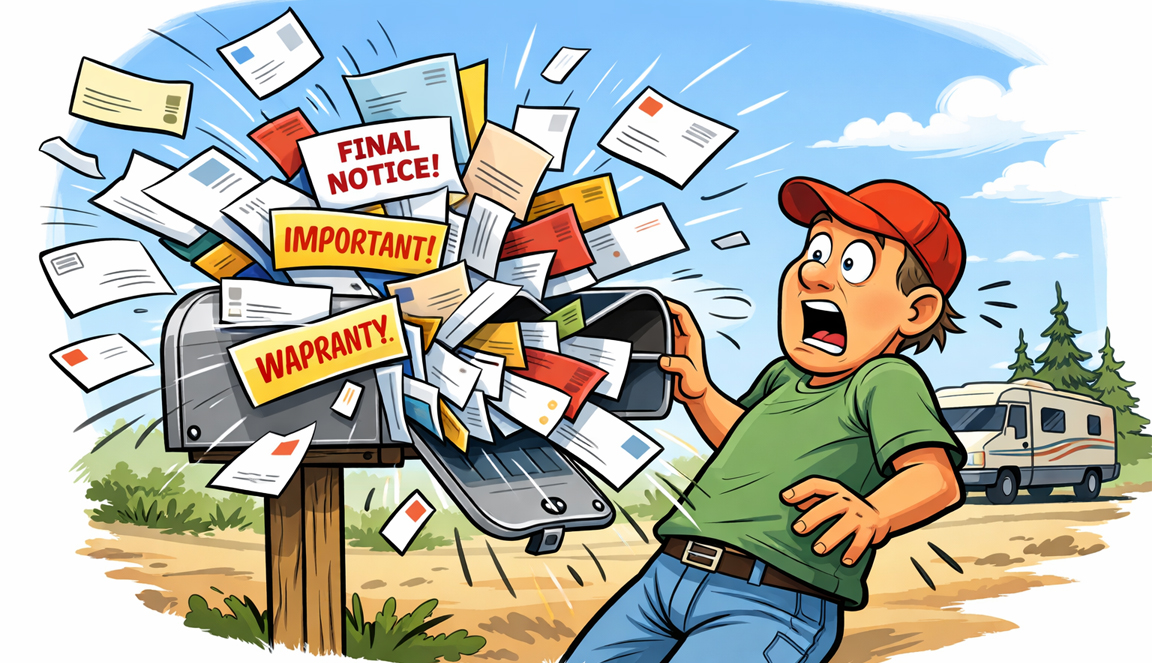
If you own an RV, chances are your mailbox already tells the story.
Extended warranty offers. Roadside assistance pitches. “Final notice” postcards that aren’t final at all. Even RVers who swear they never signed up for anything often find themselves buried under a steady stream of mail that seems impossible to stop.
Now there’s a new reason that problem may get worse.
Earlier this month, Sprint Data Solutions, a Florida-based data broker, announced what it calls the nation’s largest “verified RV owner” database. According to a press release distributed through media outlets, the company says its database allows marketers to precisely target RV owners using “verified” ownership data compiled from multiple sources.
For RVers already frustrated by overflowing mailboxes, the announcement confirms a suspicion many have had for years: Owning an RV increasingly puts you on a permanent marketing list—whether you asked for it or not.
RV ownership as a data point
Sprint Data Solutions is not an RV company. It doesn’t sell campers, motorhomes, or campground memberships. Its business is selling consumer data—names, addresses, phone numbers, and demographic details—organized into specialized lists that advertisers can buy.
In this case, RV ownership is the hook.
The company says its RV owner database is designed for businesses that want to reach recreational vehicle owners directly, including those marketing insurance, warranties, accessories, storage, travel services, and campground-related products.
For RV owners, the key word is “verified”
That doesn’t mean someone knocked on your door to confirm what’s parked in your driveway. In the data-broker world, “verified” typically means ownership has been inferred or confirmed through overlapping records. Those include registrations, warranty data, service histories, financing records, subscriptions, prior mailing lists, or public and commercial data sources.
The result is a profile that can follow an RVer for years.
Why junk mail is so hard to stop
Many RVers assume their mail flood started with a single decision: joining a club, buying from a big dealer, or signing up for a campground discount program. In reality, that first interaction is often just the beginning.
Once RV ownership becomes part of a commercial database, that information can be sold, licensed, and resold to multiple marketers. Opting out of one sender doesn’t remove your name from the underlying list. It just stops that particular company—while the next buyer of the data keeps mailing.
That’s why RVers often report the same experience: unsubscribing, calling, or writing “remove me” on envelopes, only to see the volume barely change.
It also explains why mail can keep coming even after an RV is sold. Data brokers don’t always receive—or act on—real-time updates when ownership changes. From a marketing perspective, a former RV owner may still look like a good prospect.
Why RVers are especially attractive targets
RV owners occupy a sweet spot for marketers.
They tend to own high-value assets, spend money on maintenance and upgrades, travel frequently, and skew older than the general population. That makes them attractive to advertisers selling everything from warranties and insurance to solar systems and storage facilities.
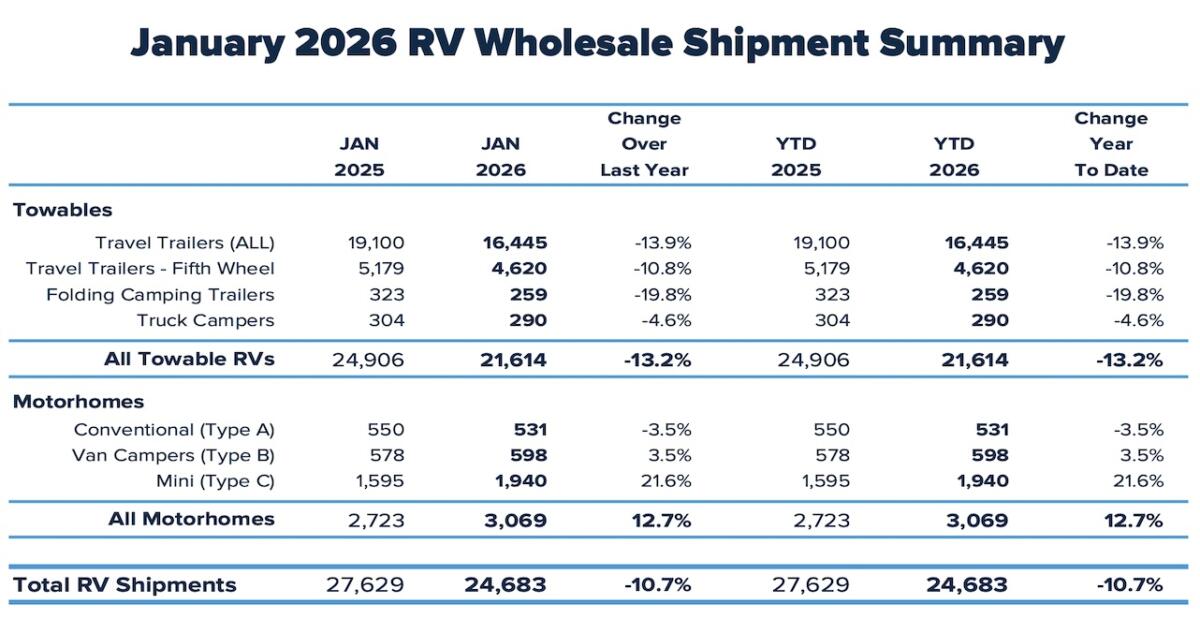
As RV sales slow from pandemic-era highs, marketing pressure tends to increase. Companies look harder for qualified leads, and targeted databases become more valuable.
That’s where products like Sprint Data Solutions’ RV owner database come in.
For marketers, it’s efficiency. For RVers, it’s more stinking mail.
What this doesn’t mean—and what it does
The existence of an RV owner database doesn’t mean the government is tracking RVers or that sensitive financial data is being shared. These lists are marketing tools, not surveillance systems.
But they do normalize something many RVers find unsettling: the idea that simply owning an RV automatically makes you marketable inventory.
For readers already fed up with what they jokingly call the “Good Spam Club,” the announcement confirms that the junk-mail problem isn’t just bad luck—or one company behaving badly. It’s structural.
Can RVers escape it?
There’s no single opt-out switch.
RVers can reduce some mail by opting out with individual senders, registering with do-not-mail and do-not-call services, and being cautious about what information they provide when buying, registering, servicing, or insuring an RV.
In states with stronger privacy laws, residents may have limited rights to request data access or deletion from certain data brokers.
But none of those steps fully remove RV ownership from the marketing ecosystem.
As long as RVs remain high-value products—and RVers remain desirable customers—the data will keep circulating.
The difference now is that the industry is saying it out loud.
INFORMATION ON BUYING AN RV
- RV buying advice: How to spot quality RVs
- Reader warns of easy-to-fall-for Craigslist RV scam. Beware!
- New scam targets private RV sellers
- RV inspector reveals the top 5 RV buying mistakes
- Use these six words when buying an RV
RVT1250b