By Dustin Simpson
Join me as I share what we like to call “Cool RV Tools.” These are tools and gadgets that we actually use in the RV industry! We also believe they will be helpful to you when you need to make repairs while out on the road.
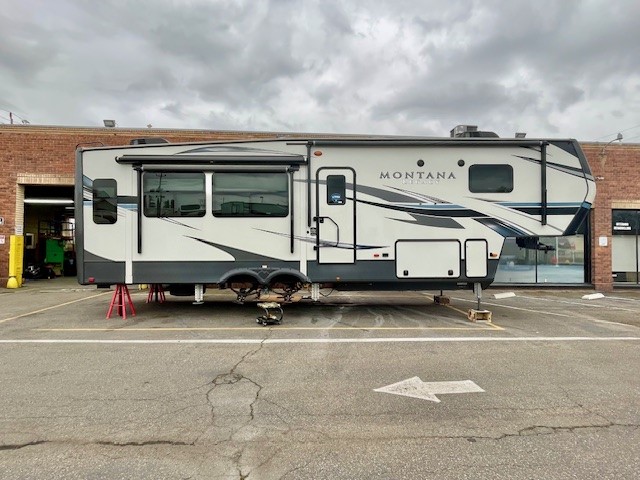
Picture by California RV Specialists during wheel bearing pack service.
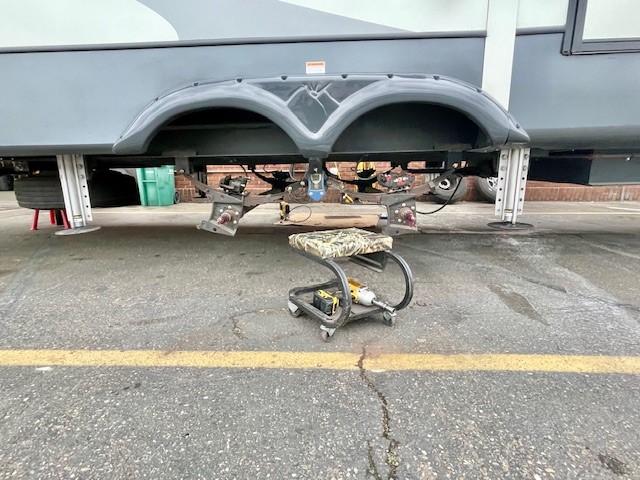
Picture by California RV Specialists of DeWalt impact wrench underneath RV tech stool.
Our team relies on this cordless impact wrench day in and day out, especially during critical tasks like removing tires during wheel bearing packs, conducting suspension repairs, and installing hitches or pin boxes.
Picture by California RV Specialists close up of DeWalt Impact Wrench used by RV techs.
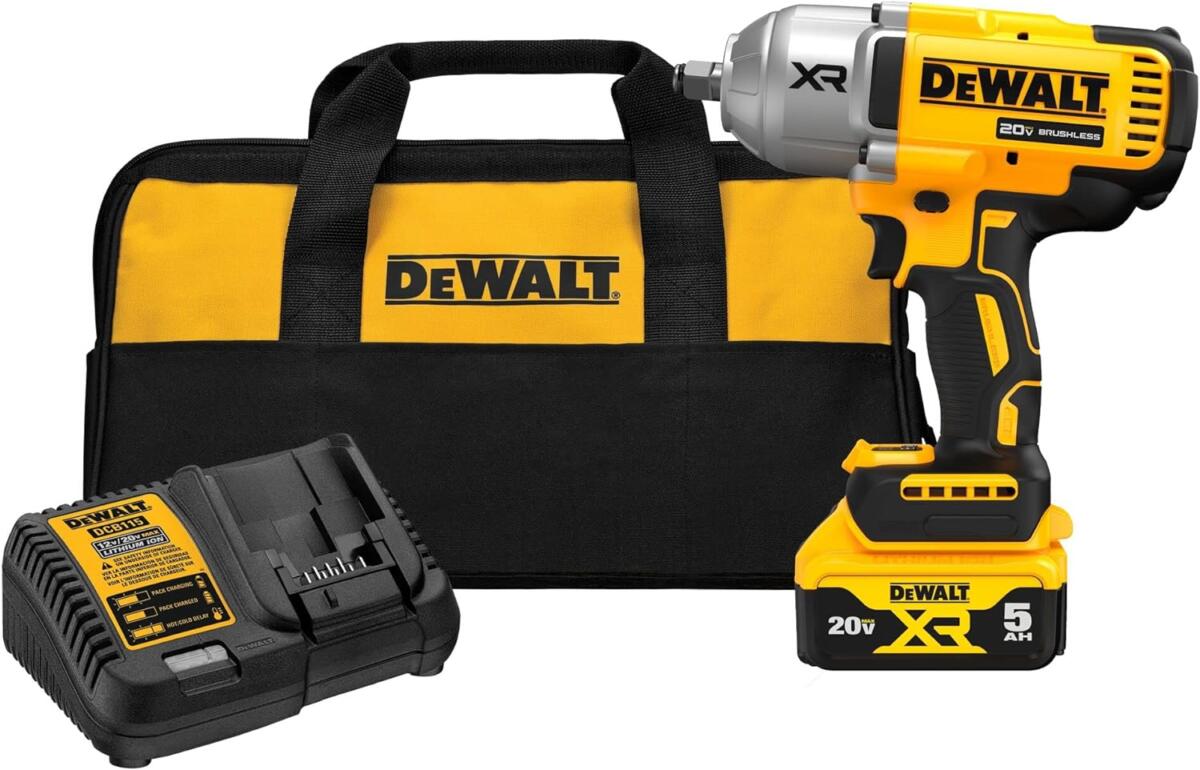
DeWalt Impact Wrench built to tackle toughest jobs
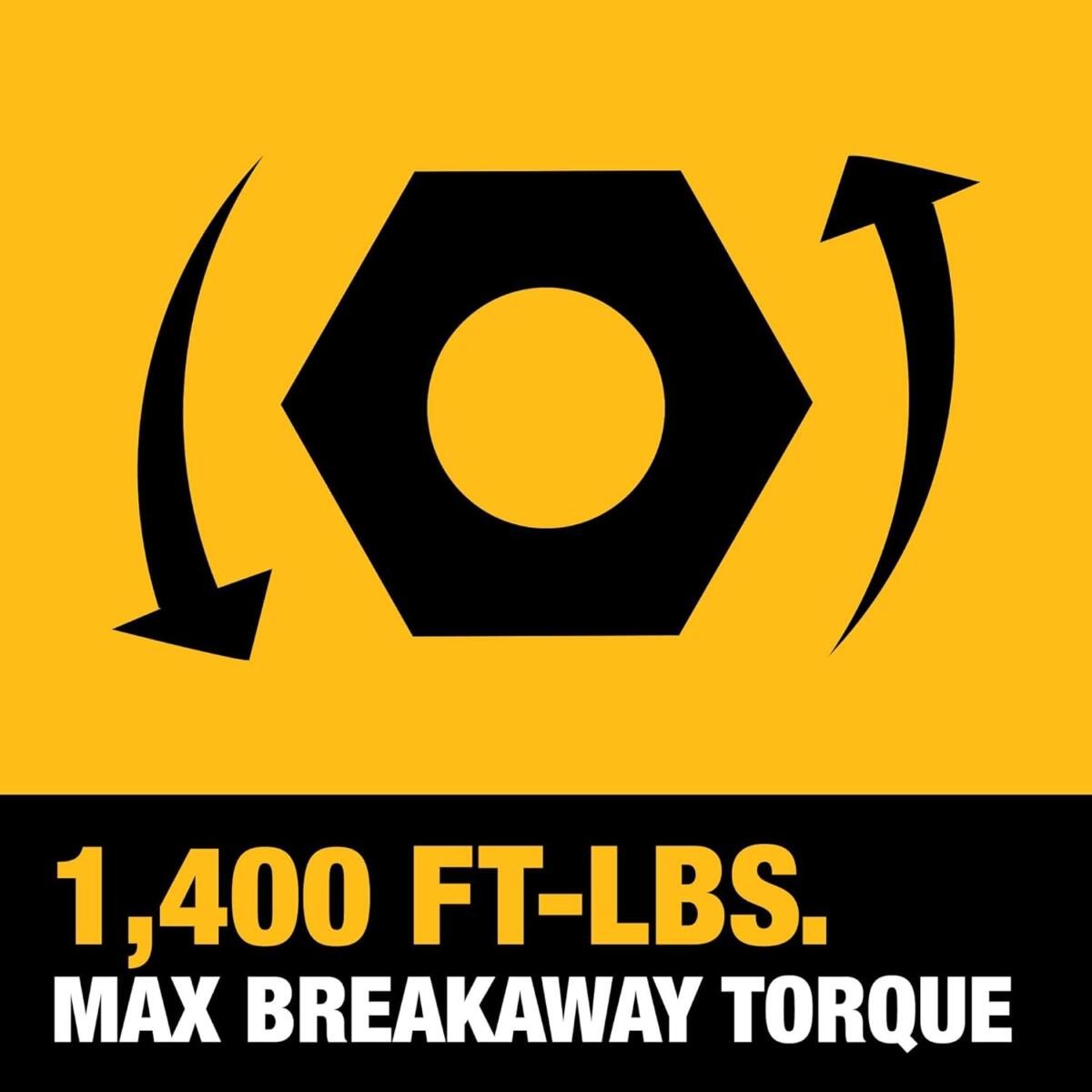
With an impressive 1030 ft-lbs. of max fastening torque and 1400 ft-lbs. of max breakaway torque, this impact wrench is built to tackle even the toughest jobs. From large-sized pipe flanges to wheel lugs, concrete anchor bolt setting, and more heavy-duty applications, this tool delivers unmatched power and performance.
Featuring PRECISION WRENCH™ mode, it helps prevent overtightening in forward and run-off in reverse, providing you with additional control over your work. The updated 4-mode push button switch allows for easy transition between speeds, ensuring efficiency and precision in every task.
Say goodbye to struggling with hard-stuck nuts and bolts. The DeWalt High Torque Impact Wrench makes quick work of even the most stubborn fasteners.
Picture provided by Amazon.
Whether you’re a DIY enthusiast or a professional in an RV repair shop, this tool is a must-have for your toolkit. Experience the convenience, power, and reliability of the DeWalt Impact Wrench for all your RV maintenance needs.
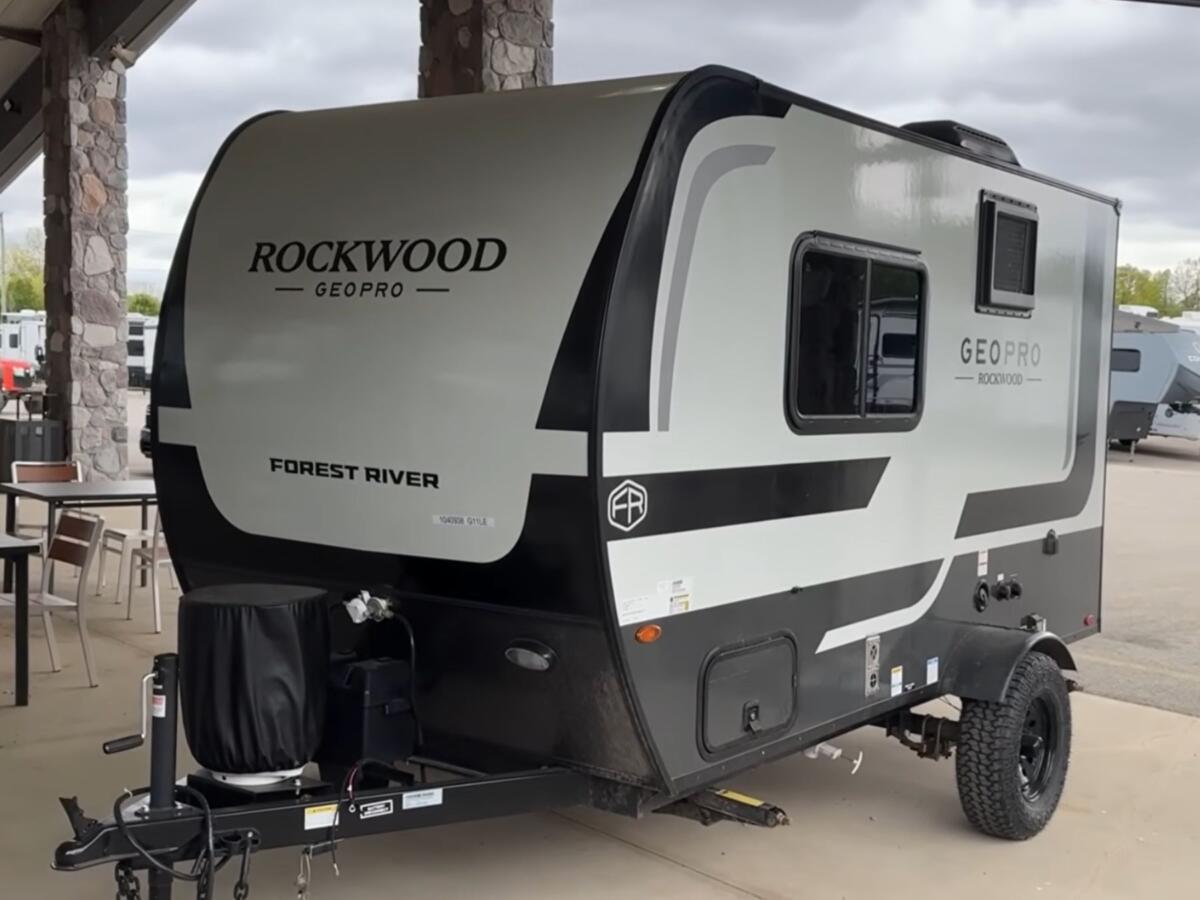
The 2026 Forest River Rockwood Geo Pro G11LE is one of those campers that makes more sense after a closer look. It is a tiny, light trailer that keeps Rockwood’s better build methods while cutting the floorplan down to the basics. That makes it a fit for solo campers, couples, and maybe a small family that wants easy weekend trips, not full-time living. The layout is odd, yet it squeezes in more use than the size suggests.
The G11LE spins off the older Geo Pro 12-series idea of a “bed in a box” camper. It still feels simple, but the taller body changes a lot.
There is enough interior height for a lounge feel, even if taller adults still need to duck a bit. That extra wall height also allows for a real 9-foot awning.
Rockwood did not cut out its normal build basics. The sidewalls use Azdel, the frame is welded aluminum, and the floor is non-laminated to avoid soft spots.
Josh points out a quick clue for shoppers: When the black door trim sticks out past the wall, it usually means a 1.5-inch laminated wall.
The small interior is more flexible than expected
Inside, the main seating area is a big lounge dinette that drops into a large lower bed. Two small bunks ride above the sidewalls, and the rear bunk carries a 300-pound rating. The space under the bunks is plain plywood, but it can still hold duffel bags or simple DIY storage accessories.
The sleeper setup uses separate bed boards, not the tabletop. The boards fold out over the dinette base, then the cushions fill in the center. It is a quirky system, but it creates one big bed while keeping the side bunks open.
Ceiling height looks close to 6 feet, the standard LE vent fan is small, and the wall-mounted A/C is a stronger 8,000 BTU unit.
Exterior features add some real camping value
Outside, the G11LE keeps a few surprises. There is a front pass-through compartment, front stabilizer jacks, slam-latch baggage doors, a full fiberglass roof, side solar prep for a suitcase panel, and backup camera prep.
The rear camp kitchenette houses the trailer’s sink, a 12-volt fridge, storage below, and a gas grill quick-connect nearby. That fridge is a better fit than the 110-only units seen on some small campers.
On the downside, there is no indoor kitchen and no bathroom. This is also a fair-weather trailer because it has no enclosed belly and no tank heaters.
Specs
Hitch weight: 210 lb.
Empty weight: 1,728 lb.
GVWR: 2,695 lb.
Cargo capacity: 967 lb.
Length: 14’11”
Height: 8’7″
Width: 7’4″
Fresh water: 18 gal.
Gray water: 6 gal.
Black tank: None
Price ranges from approx. $13,000 to approx. $20,000
That low weight opens the door for many SUVs and midsize trucks, though tow ratings still matter.
Final thoughts
The Geo Pro G11LE is a goofy little camper, but it gives campers a basic, light trailer with better construction, useful sleeping options, and a few rare extras for the size.
Its limits are clear, but for fair-weather trips, it makes far more sense than its odd little shape suggests.
America’s Original RV Newsletter. Since 2001 Issue 1265
Today’s thought
“I always wonder why birds choose to stay in the same place when they can fly anywhere on the earth, then I ask myself the same question.” ―Harun Yahya
Need an excuse to celebrate? Today is National Strawberry Shortcake Day!
On this day in history: 1959 – Disneyland Monorail System, the first daily operating monorail system in the Western Hemisphere, opens to the public in Anaheim, California.
Why many RVers use free RV camping instead of paying for every night
Talk to RVers who have spent years on the road and you’ll notice something: Many use free RV camping options instead of paying for every overnight stay. That doesn’t mean they’re sneaking into campgrounds or ignoring the rules. Instead, they’re mixing paid campground nights with public-land camping, overnight travel stops and other legal, free options. A recent camping survey suggests they’re far from alone. Continue reading.
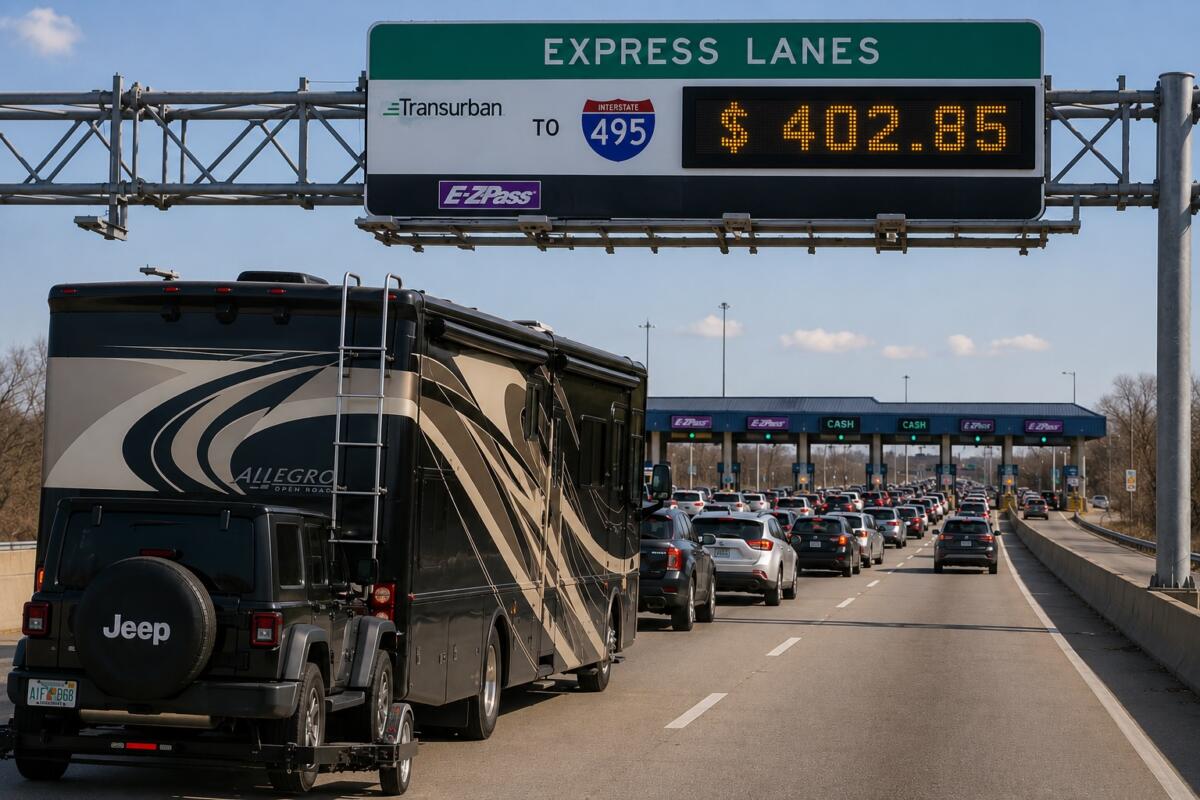
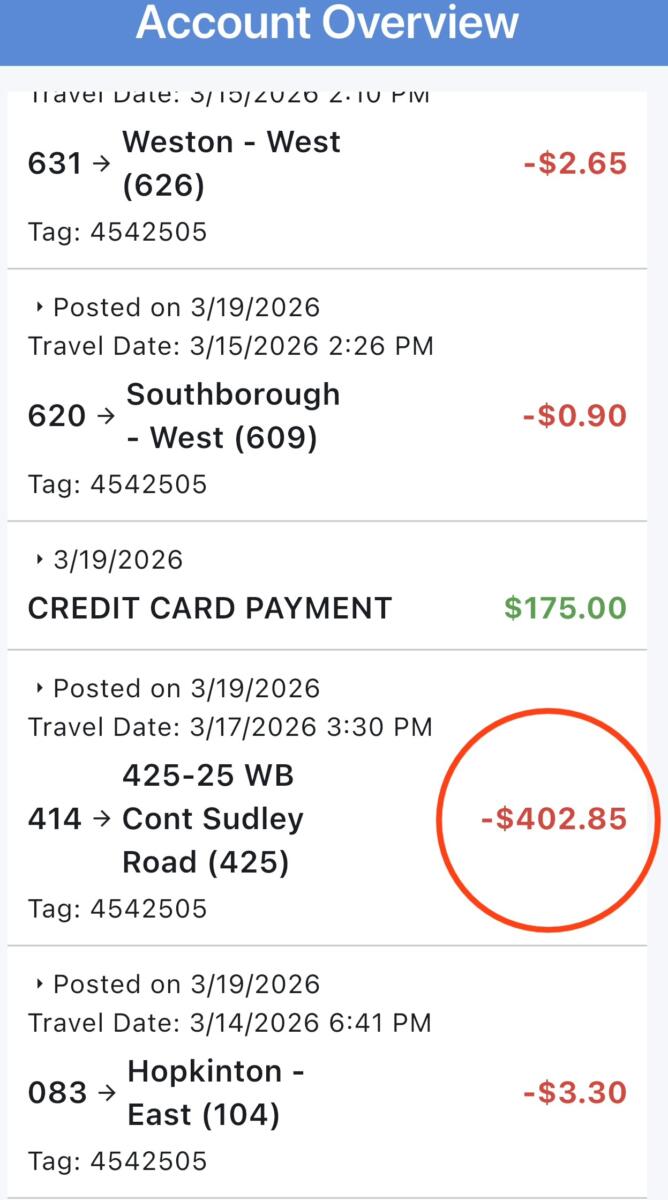
Ouch! Reader charged more than $400 on Virginia Express Lanes
Reader Nicole Jones recently learned an expensive lesson the hard way. After taking Virginia’s Express Lanes during rush hour, she was stunned to receive a toll bill for $402.85. As it turns out, Virginia’s Express Lanes can be especially costly for RVers, but it’s just one of many expensive toll systems with dynamic pricing. Read Nicole’s note and see her photo, and learn more about toll pricing across the U.S.
Would you pay $70 for a familiar RV site—or try a $27 alternative?
By Nanci Dixon
We are on the road again! Settling down after day one of travel, with the RV parked, hooked up, and just relaxing. No ongoing fixer-upper house chores to do, just figure out the route and where to stay. It has been about nine months since we have traveled, and I was in for a rude awakening when calling a KOA Journey RV park to check availability. Continue reading, then please leave your thoughts.
How RV dealers make money
We all know that an RV dealership has to make a profit, but do we really know how? Todd Nuttall, president of Bish’s RV, laid out the process in plain language here, with our friend, Josh the RV Nerd at Bish’s RV. Once we understand the moving parts, RV buying gets much easier to judge.
Tanner Toons With Tanner Woods
You may share this Tanner Toon, unaltered, on your website, blog or social media with our compliments. The musings from Tanner Woods’ creative mind appear in this newsletter every Saturday and Sunday and in many RV Daily Tips newsletters through the week. Sign up for our RV Daily Tips Newsletter so you don’t miss them.
Keep your Blackstone/griddle good-as-new
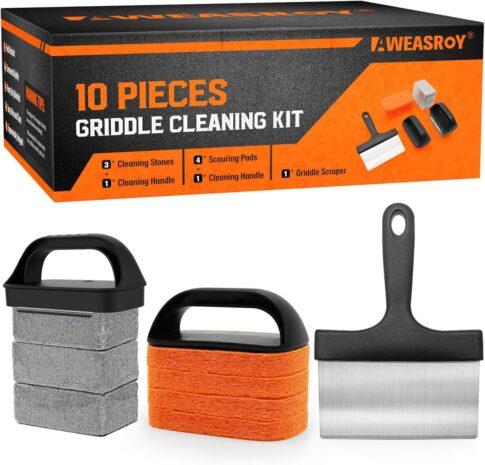
This griddle cleaning kit helps RVers keep their flat-top grills in great shape trip after trip. With scrapers, scouring pads, and a pumice grill stone, it quickly removes grease, burnt bits, and buildup without scratching the surface. Clean before and after cooking, and your griddle will last longer. Learn more about cleaning your Blackstone in Gail’s article here, or buy this griddle kit here.
Today’s RV review is of the 2027 Outdoors RV Backcountry Series MTN TRX 20MKS travel trailer. Outdoors RV is unusual in that it is located in La Grange, Oregon, and specializes in travel trailers and fifth wheels that are truly ready for more extreme climate conditions. The company also builds its own chassis and states that they are off-road ready. See what you think.
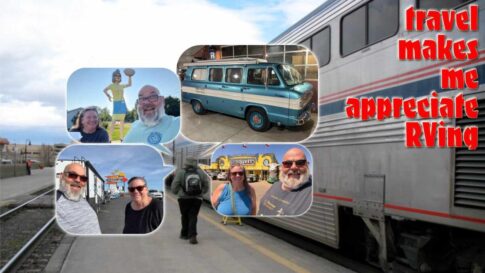
Tony’s tips RVing still wins when it comes to travel—My Amtrak adventure to Indiana
Traveling stinks. Well, sort of. I had honestly forgotten how lousy traveling can be when you’re not traveling in your RV. What am I talking about? How good we have it as RVers. My favorite way to navigate any journey is simply to hop in the ol’ truck and just go. But that’s not what I’m going to do this time around. Continue reading.
What about you?
What did your father teach you?
Father’s Day is just a week away, and it got us thinking about the lessons that stay with us long after childhood. Some fathers taught us practical skills—how to change a tire, cast a fishing line, balance a checkbook, or work with our hands. Others taught us something less tangible but just as important: patience, kindness, perseverance, or how to treat people with respect. What did your father teach you? Please tell us here, and we’ll publish some of your responses in next Sunday’s edition.
IN CASE OF EMERGENCY…If you’re concerned about being involved in an emergency situation while away from your rig, you could do what reader Pat Mitchell does: “I usually just pick up a park brochure from the campground office to leave in our truck. It’s always handy and if we are in an accident, the location of our camper and other details are right there with us.”
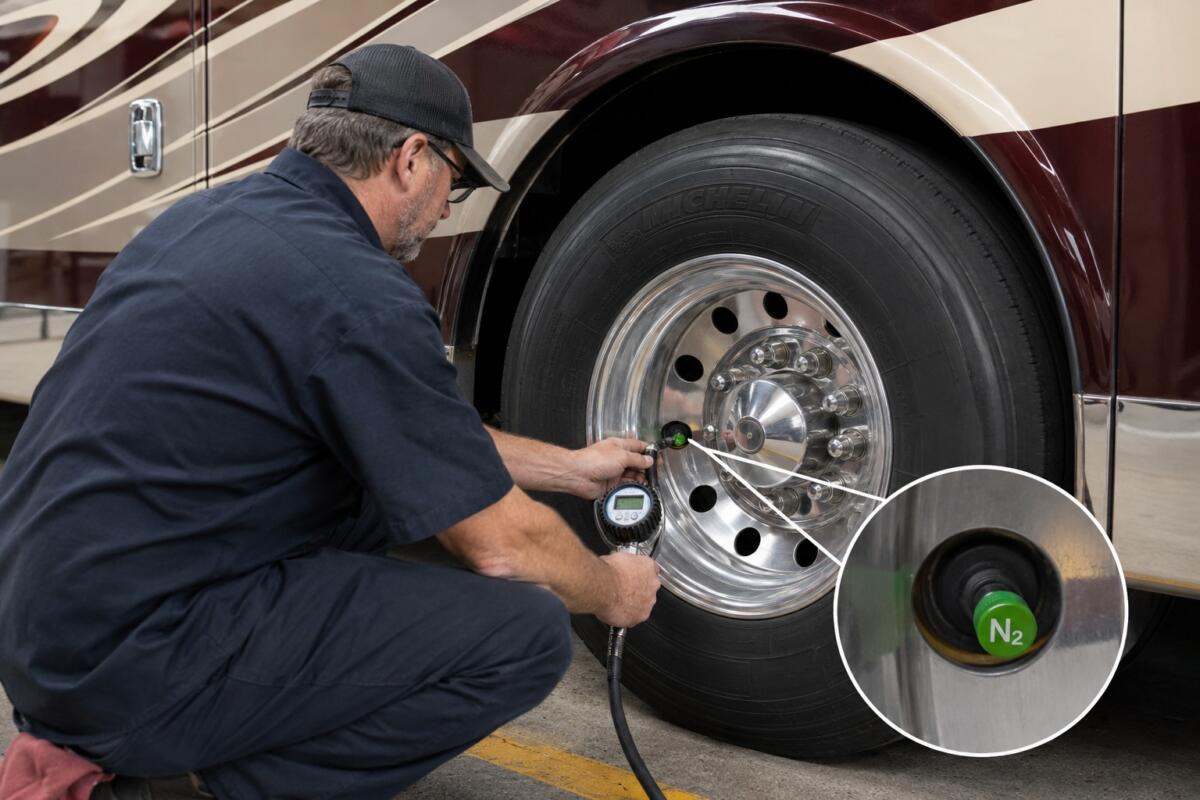
RV mods: Nitrogen for your tires? Good or bad?
If you remember high school chemistry, you may remember our friend nitrogen, the gas that makes up about 78 percent of Earth’s atmosphere. While ordinary compressed air has been used for decades to inflate tires, the trend in recent years has been to use nitrogen in applications where tires experience high stress—think race cars, commercial trucks, aircraft, and even some RVs. Why nitrogen? And what about using it for RV tires?
5 cringe-worthy things you never want to experience in your RV
By Sandi Sturm
While I was looking for images of Wacky RVs, I saw these RV accidents, and they made me cringe! These are just five things of many that you never want to happen to your RV. They are listed in order of how loud I said “Oh, no!” when I saw the images. My heart goes out to anyone who has experienced these or other mishaps while traveling or parking your RV.
The slow down and move over law—Are you doing it right or breaking the law?
When you see a vehicle stopped on the shoulder with lights flashing, what do you do? A recent AAA Foundation study found lots of drivers know the phrase “slow down and move over” but are unsure what it actually requires. This helps explain why roadside workers and stranded motorists remain at risk. Every state has some form of the slow down, move over law.
New musical roads added to Route 66: Hear the Mother Road sing
To mark Route 66’s centennial, new musical roads have been added along the historic route. Each stretch will play music inspired by the local culture and surroundings. When drivers keep to the posted speed, the road plays a melody, creating a fun, shareable way to celebrate Route 66 while encouraging safe, attentive driving. We love these!
Another quirky micronation stop for RVers
By Gail Marsh
Recently, I wrote about Slowjamastan, believing it to be the only micronation within the U.S. Turns out, I was wrong! Reader James Starling commented that another (older) spot also claimed to be its own micronation. It’s located near Dayton, Nevada. I just had to find out more.
Missed Connections
Did you find Sadie?
“July 2024. Ute Campground, near Pagosa Springs, Colorado. You were driving a Jeep Wrangler. Me, campground host. You were looking for Jeff and his dog, Sadie, from Lower Pierdra Campground. You were going to write a story about Sadie, the ghost dog. You were living in Lubbock, TX. I gave you my email, but neglected to get your phone number.”
Last week we asked you to submit your very own “Missed Connection”. Learn more here.
The best patriotic gear, gadgets and accessories for RVers
RVers, it’s almost time to celebrate our beloved United States of America on our favorite summer holiday, the 4th of July. What better way to show your patriotism than with the best gear, gadgets, and accessories? Here’s all our favorite patriotic gear for RVers—from shirts to flags to propane covers to picnic table covers to lighting to cooking gear and more!
Want to run your RV air conditioner with a small generator like a Honda 2200? SoftStartRV™ cuts startup power demand by up to 70%, making it easier to stay cool almost anywhere you camp. It can even help many RVers run two A/C units on 30-amp service. See why our publisher is a big fan of SoftStartRV.
Highlights from this week’s RV Daily Tips Newsletter
Non-skid pads have their place, but not on refrigerator shelves. These can block air circulation and make it hard to cool food. Reserve their use in the fridge for door shelves only. To keep things from falling out of the fridge and onto your toe when you open the door after driving on bumpy roads, use some expandable refrigerator bars, available on Amazon.
NOW THAT’S COOL!Coolibar is the first clothing brand to receive the Skin Cancer Foundation’s Seal of Recommendation for its entire line, which means its UPF 50+ shirts, hats, and cover-ups are not just stylish summer travel staples but the kind your dermatologist would approve.
? MYSTERY PRODUCT OF THE DAY ? Well, you’d surely get the attention of the campground if you walked around using this. Or the grocery store, or the park, and especially if you used it at a bowling alley. How do they think of these things?
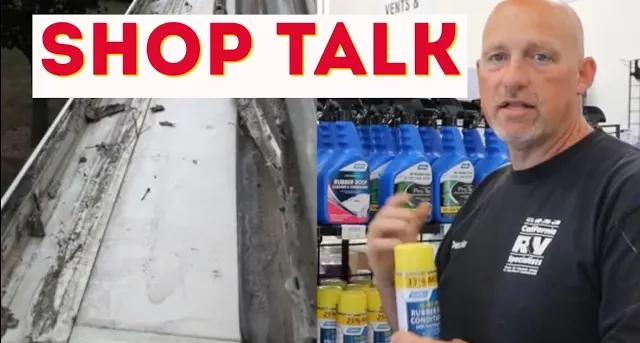
In the RV shop with Dustin Save thousands on RV slide-out maintenance with this
Did you know that proper slide-out maintenance can save you thousands of dollars in costly repairs? In this article and video, we’ll explain how the Camco RV rubber seal conditioner protects your RV slide-outs and keeps them in top working condition.
RV tire safety Why do tires fail at 0 mph?
By Roger Marble Sometimes people apparently think tires “fail” because of “magic.” Or, at least “magic” seems to be the only explanation if you do not understand tire design, materials and engineering. Roger explains one of the major causes of tire failure.
FREE IS GOOD! Join Papa Johns Rewards program and get a free dessert during your birthday month, plus more benefits.
RV gadgets and gizmos Use self-fusing silicone tape for weatherproof connections
Standard vinyl electrical tape has been around for a long time—too long, some would say. The problem with this commonly used product is its adhesive. It doesn’t really stick very well and after awhile it starts to peel loose, leaving a gooey mess behind. But now there’s a self-fusing silicone rubber tape for weatherproof connections which works great.
Live cam
Downtown Telluride, CO
The best product for holding tank sensor maintenance
Dustin Simpson writes, “I’m sure at some point you’ve emptied your tanks only to find that your sensors are reading full. Over time, holding tank sensor probes build up with sludge/scum and this is what causes incorrect readings. Thetford’s Level Gauge Cleaner is specially formulated to dissolve tissue, waste, sludge and soap scum buildup and works with both black and gray water tanks on all RVs. Read more.
Readers’ pets of the day
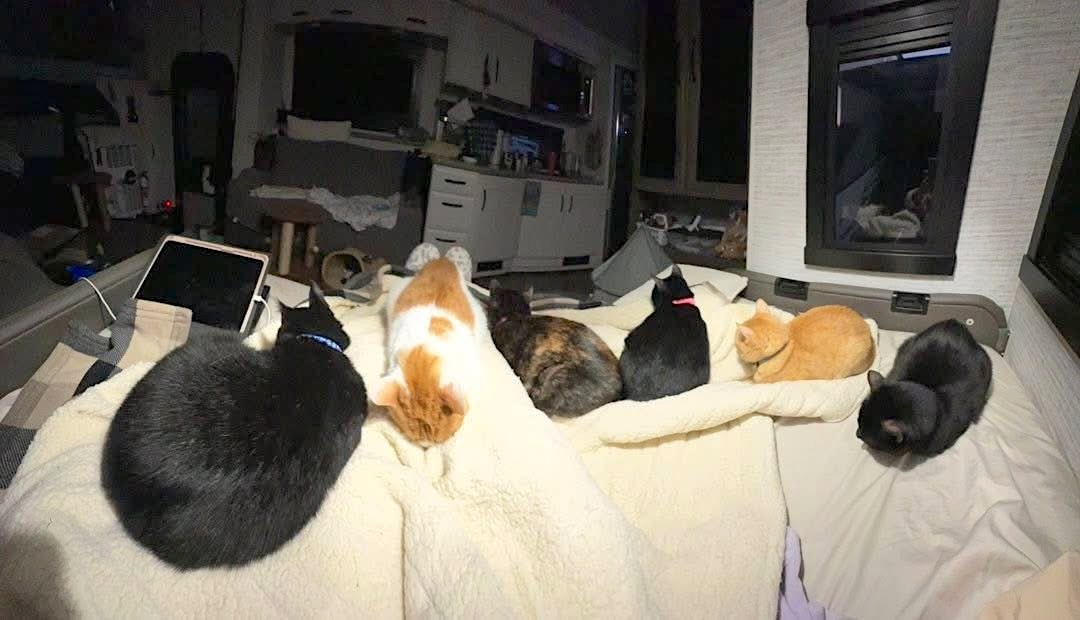
“We are in a 40 ft. Super C with a total of 11 cats. These furry friends have been from Maine to Texas to South Dakota. We reside in South Florida and they make every trip in adventure. Also, they are YouTube stars @livingthedream2020! Keep up the great work with the newsletter.” —Jim/Margie Bottillo
Want to see your pet in this newsletter? Please send us a photo of your pet with a short description. No blurry photos and please do not submit your photo more than once.
Trivia
The United States has the largest railroad system in the world, featuring more than 136,000 miles (220,000 kilometers) of track. While primarily dedicated to freight transport, it dwarfs all other nations in sheer size. (China is next, with 102,500 miles of track.)
Reader Nicole Jones recently learned an expensive lesson the hard way. After taking Virginia’s Express Lanes during rush hour, she was stunned to receive a toll bill for $402.85.
We received this photo and note from Nicole:
“My goodness, someone needs to know that they should NOT pull their RV on the Express Lanes in VIRGINIA during rush hour. Apparently they charge 5x the rate depending on the size, length, height, and axles. Ouch!!!”
Virginia’s Express Lanes
As it turns out, Virginia’s Express Lanes can be especially costly for RVers. The lanes use dynamic pricing, meaning tolls rise as traffic gets heavier. What many RV owners don’t realize is that larger vehicles pay significantly more. Vehicles taller than 7 feet or longer than 23 feet are charged three times the posted toll, and vehicles that are both taller than 7 feet and longer than 23 feet pay five times the posted toll. During peak rush-hour congestion, those multipliers can turn an already-high toll into a jaw-dropping bill.
More expensive toll roads in the U.S.
Virginia isn’t the only place where RVers need to watch their wallets. The Pennsylvania Turnpike remains one of the most expensive toll roads in America and is frequently ranked as the nation’s costliest major toll highway. Tolls increase with vehicle size and axle count, meaning large motorhomes and truck-trailer combinations can pay far more than passenger vehicles. Pennsylvania also raised toll rates again in 2026.
Other toll hotspots for RVers include the New York Thruway, New Jersey Turnpike, Port Authority bridges and tunnels around New York City, and several toll roads in Florida. In many cases, the difference between a two-axle car and a multi-axle RV combination can be dramatic.
Avoid expensive tolls
How can you avoid a surprise like Nicole’s? Before traveling, check your route for toll roads and express lanes. Most GPS apps allow you to avoid tolls altogether. If you do use toll roads, carry an E-ZPass® or compatible transponder whenever possible, since toll-by-plate rates are often much higher. And if you’re driving a large motorhome or towing a trailer, think twice before entering dynamically priced express lanes during rush hour—those “fast lanes” can become very expensive in a hurry.
What about you?
What’s the most expensive toll you’ve ever paid? Please leave a comment and share the price and your experiences.
We are on the road again! Settling down after day one of travel, with the RV parked, hooked up, and just relaxing. No ongoing fixer-upper house chores to do—just figure out the route and where to stay.
It did take three full days of getting the RV ready and hauling way too much stuff out to it, though. There was a moment I wished for two suitcases, a small cooler, and a hotel instead of cleaning and packing up the RV.
It has been about nine months since we have traveled, and I was in for my second rude awakening when calling a KOA Journey RV park to check availability. The first rude awakening was filling our motorhome with diesel at more than $5.79 a gallon.
We have stayed at this particular KOA several times before, so I knew what to expect. They determined that they had a pull-through site for one night and it was “only” $70! $70 for a cramped, tight, dusty gravel site in the middle of the desert next to the interstate and train tracks!
I thought I had heard wrong and had to ask, “Did you say seven zero?” “Yup”, she said. I replied, “Thank you. I am going to call around a little more.” She said she understood.
Muuuuuch better!
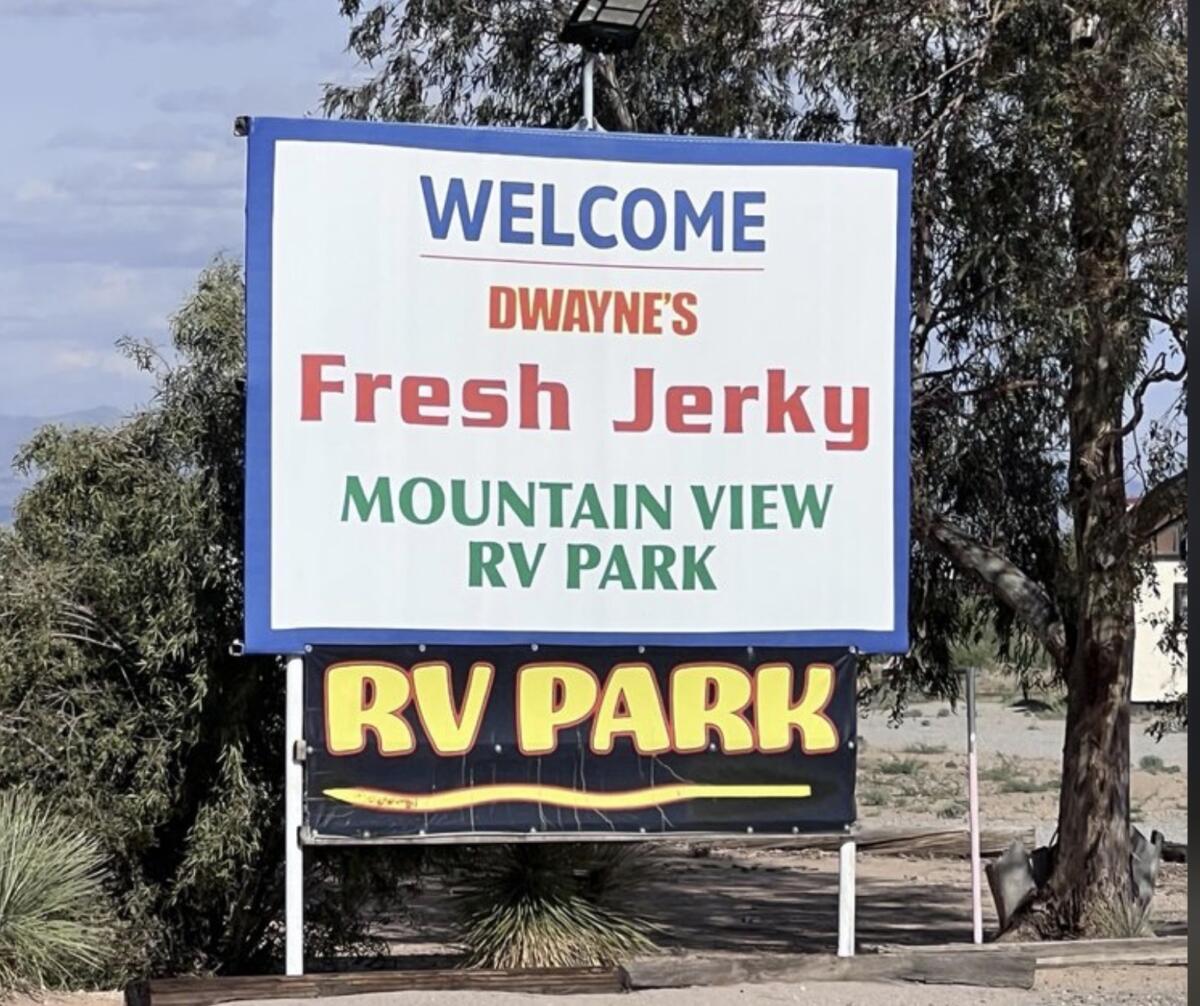
Next call was to an RV park about 20-some miles up the road. Plenty of room, full-hookups, pull-through, and when I asked the price? $27. No name brand, no guarantees on what $27 would actually be like, but mostly okay reviews and $43 less. And they sold beef jerky. Dozens of signs mentioned that on the way.
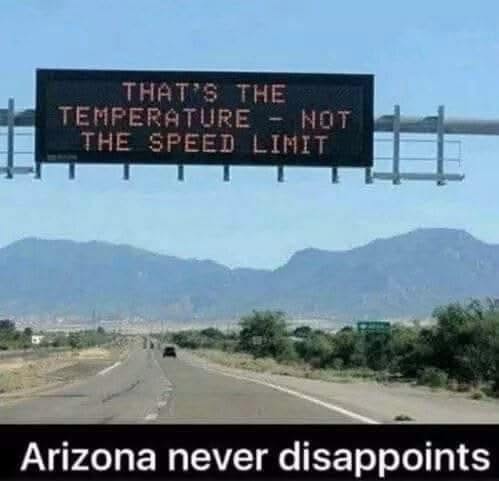
They said to stop at the store when we arrived, and they’d have one of their 34 pull-through, FHU sites for us. Granted, no big yellow signs or yellow A-frame office, but a gas station, a little store, and lots of empty pull-through sites. It is miserably hot in Arizona right now, so that explains the open sites.
Not only did Dwayne’s Mountain View RV Park sell beef jerky, but they also had alligator, camel, shark, and buffalo jerky! Bowie, AZ, is located in pecan and pistachio country, so there was a multitude of different pistachio flavors to choose from and taste. Lots of raw, shelled, and in-the-shell pecans, too. And, yes, my purchases did raise the daily rate a bit.
Best of all, according to my husband, was that they had Penny’s homemade pecan pie. I am a pecan pie critic and had never tasted any to rival mine. I will have to admit, though, I think Penny’s may have been even a little better
Sometimes stepping out of the tried, true, and comfortable can be a really good thing.
Contact info
Dwayne’s Mountain View RV Park. 1120 West Business Loop 10, Bowie, AZ 85605—Mountain Time Zone. RV park website and beef jerky website.
What about you?
What would you have done? Would you have paid a little more to stay in a familiar place where you knew what to expect? Or would you wander a little farther down the road to a more affordable option, trusting that the online reviews were recent and accurate?
By Russ and Tiña De Maris If you remember high school chemistry, you may remember our friend nitrogen, the gas that makes up about 78 percent of Earth’s atmosphere. While ordinary compressed air has been used for decades to inflate tires, the trend in recent years has been to use nitrogen in applications where tires experience high stress—think race cars, commercial trucks, aircraft, and even some RVs.
Why nitrogen? While the size difference between nitrogen and oxygen molecules is actually quite small, nitrogen does tend to migrate through tire rubber more slowly than the mix of gases found in regular air. Nitrogen-filled tires also contain very little moisture, which can help maintain more consistent tire pressures as temperatures fluctuate. In theory, that means tires may lose pressure more slowly and run slightly cooler over time.
Sounds like nitrogen inflation is a no-brainer? Maybe not. One concern is that RV owners might develop a false sense of security and become less diligent about checking tire pressures and inspecting their tires. Regardless of what fills the tire, regular pressure checks and visual inspections remain among the most important tire maintenance tasks.
Causes of tire pressure loss
Tire permeation isn’t the only cause of pressure loss. Tire maker Michelin notes that leaks can also occur at the tire-to-wheel interface, valve stem, valve core, or wheel itself. As Michelin explains, these other potential leak points prevent any guarantee of significantly better pressure retention simply by switching to nitrogen. For that reason, Michelin does not specifically recommend nitrogen inflation for most consumer vehicles, although it acknowledges benefits in specialized applications where minimizing heat buildup is critical.
Advantages of nitrogen are modest
For RVers, the real-world advantages of nitrogen are often modest. If you’re already checking your tire pressures before travel days and monitoring them with a tire pressure monitoring system (TPMS), you’ll likely see little practical difference compared to properly inflated air-filled tires. Proper inflation, avoiding overloading, and replacing aging tires on schedule have a far greater impact on tire safety and longevity than the choice between nitrogen and air.
Economics also come into play. A nitrogen tire fill can cost anywhere from a few dollars to more than $10 per tire, depending on the provider. If you’re traveling and find yourself with a low tire where nitrogen isn’t available, don’t hesitate to add ordinary compressed air. Most tire manufacturers agree that maintaining proper inflation is far more important than preserving a pure nitrogen fill. In fact, many RV tire experts recommend simply topping off as needed and continuing to monitor tire pressures normally.
The air we breathe is almost 80 percent nitrogen
One final point worth remembering: The air we breathe is already nearly 80 percent nitrogen. So even tires filled with ordinary compressed air contain mostly nitrogen to begin with. Whether you choose nitrogen or regular air, keeping your RV tires properly inflated and regularly inspected remains the key to safe travels.
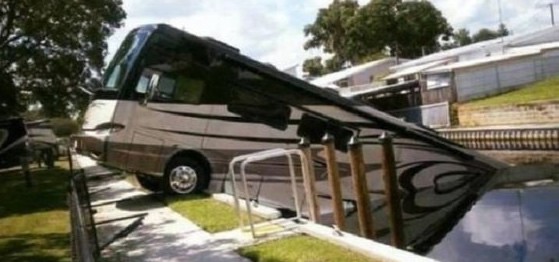
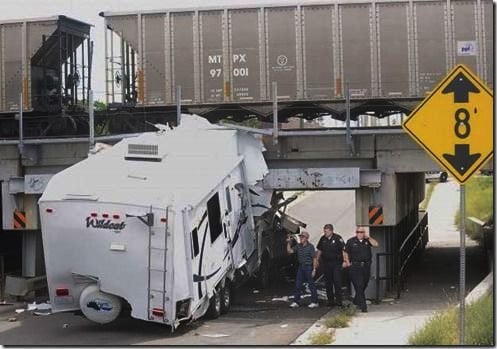
While I was looking for images of Wacky RVs, I saw these RV accidents, and they made me cringe! These are just five things of many that you never want to happen to your RV. They are listed in order of how loud I said “Oh, no!” when I saw the images.
My heart goes out to anyone who has experienced these or other RV accidents while traveling or parking.
And, no, these images are not AI!
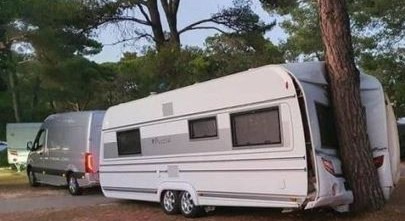
Backing-up boo-boo
While I have not witnessed something like this, we did have a close call one time in North Carolina. We were assigned a camp spot that was just impossible to back into with the trailer, so we moved. That night, a tree fell right where our heads would have been. And it hit a fence that was three feet from the heads of people sleeping in a tent. That still haunts me after all these years. Someone was watching out for us all!
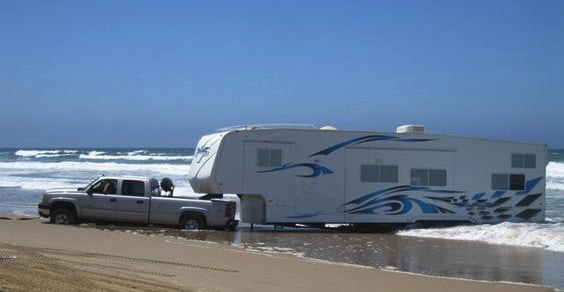
U-turn… more like U-don’t-turn!
Someone needs to get a tide table! Can you hear the screaming? Don’t know the back story, but it doesn’t look like they were camped there, just turning around. Tough lesson to learn. We don’t even like to park near the beach because of salt damage to the vehicles.
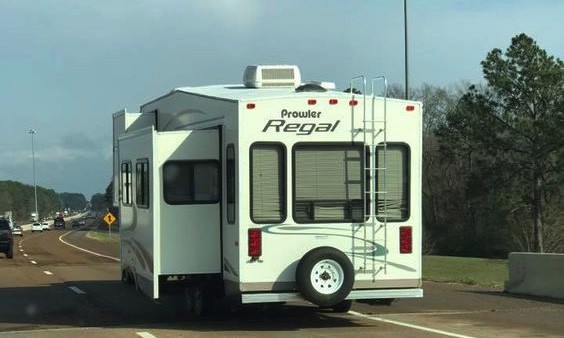
A very dangerous lane hog!
I always wondered what you would do if the slider would not go in. But both of them? “It’s okay, Honey. We only live two hours away. We can make it!”
It’s a hot day – take a dip?
Nothing quite like taking a dip! This one must have really given the neighbors something to talk about…
An eight-foot ouch
Saved the biggest “Oh, no!” for last. The driver here was okay, but the fifth wheel is history. Looks like this section of road needs a drawbridge, or at least a bigger sign. I’ve never seen a bridge that low, but we have driven through some passages that were just a little wider than our rig.
By Cheri Sicard
Jack and Darlene of Jack and Darlene Living an Amazing Life are American friends of mine currently on an extended European RV trip with their five (count them) dogs. Yes, the entire clan, human and canine, flew to Europe for this grand adventure. Be sure to subscribe to their channel to follow along on their travels. To give you a taste, the video at the end of this post describes a day visiting Gibraltar and staying overnight in sight of the famous rock!
Walking from Spain to Gibraltar
Crossing a border on foot is one thing. Doing it after parking an RV beside a marina, with the Rock of Gibraltar ahead, feels even better.
Jack and Darlene left Benalmadena, drove south to La Linea de la Concepcion, and turned one day into two distinct travel moods. On one side, they found Spanish markets and marina cafes. On the other, they stepped into Gibraltar, a British Overseas Territory with fish and chips waiting at the end of a long walk.
Their base was Parking Continental Cadiz Alcaidesa Marina in La Linea de la Concepcion. The park-up (campground) cost about 15 euros for 24 hours and had what most RV travelers need: water fill, gray-water dump, and black-water dump. They stayed for 48 hours and felt safe the whole time.
The setting made the stop memorable. Yachts lined the marina, mountains sat in the background, and the Rock of Gibraltar dominated the view. They also noticed colorful houseboats with little rooftop terraces, which gave the waterfront a fun, lived-in feel.
Markets, cafe stops, and leaving the dogs behind
Before crossing the border, they spent time on the Spanish side. The town felt lively, with fish stalls, food stands, outdoor tapas spots, and plenty of street noise. More than anything, the place felt friendly. People smiled, chatted, and made the walk feel easy.
The couple paused at a cafe near the marina for a tinto de verano (“red wine of summer”) and a small beer while the dogs cooled off with water. Later, they made a smart call and left their five dogs in the RV before entering Gibraltar. That avoided the hassle of pet paperwork and made the crossing simpler.
The long walk into Gibraltar
After the checkpoint, the walk to the center took longer than expected. They followed the route past beach views and along the side of the massive rock, with old fortifications visible above them.
The strangest part was the tunnel under the airport runway. It turned a basic border walk into something far more unusual. They also hoped to see the Moorish Castle, but it was closed that day, so they kept moving toward the center instead.
Fish and chips on the British side
Once they reached town, the mood changed fast. Gibraltar felt more British, but also more touristy, with Starbucks, Burger King, Taco Bell, and other familiar names in the mix.
Even so, they went with the classic choice, fish and chips. Their meal came with cod, chips, and white wine, and after all that walking, it was a perfect stop. Later, they wandered the center a bit more before heading back to their mini motorhome.
Ending the day back at the marina
By 9:00 p.m., the sun was still bright enough for an evening walk with the dogs. Back at the marina, their small RV sat among oversized yachts, with calm water on one side and the Rock on the other.
That was the best part of this stop. In a single day, Jack and Darlene moved between Spanish market streets and British-style lunch, then returned to a peaceful park-up that felt like home.
Traveling stinks. Well, sort of. I had honestly forgotten how lousy traveling can be when you’re not traveling in your RV. What am I talking about? How good we have it as RVers.
You see, I get to go back to Indiana so I can check out 2027 model RVs for two whole weeks. Yup, I’ll be seeing the latest and greatest from a number of RV companies over the next two weeks, beginning on Tuesday and spending 14 days just looking at various RVs.
The way this usually works is that I hop in my trusty ol’ Ram and yank my trailer from New Mexico to Elkhart, where I know which campgrounds I like, the restaurants I like, and even the stops along the way.
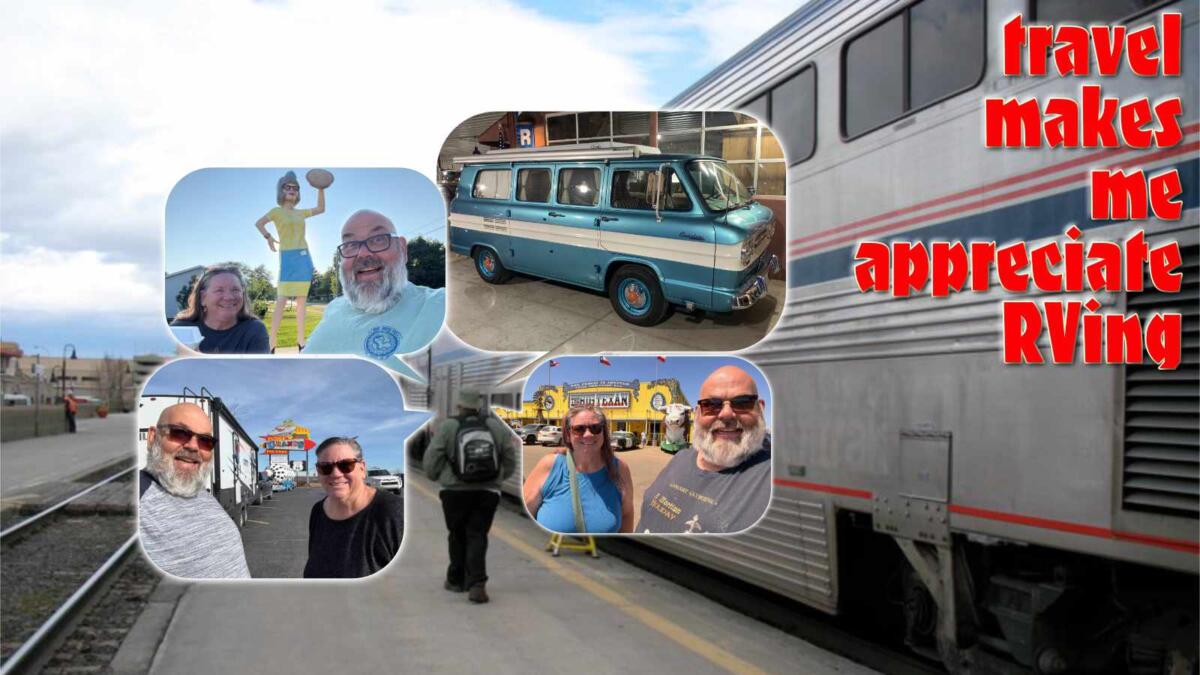
I can tell you about the Corvair Museum, Uranus Fudge Factory, Atlanta, Illinois, where the Muffler Man Museum is, The Big Texan Steak House, and plenty of other fun tourist traps. I love them all. And now they’re landmarks on my way to a known destination.
My favorite way to navigate any journey is simply to hop in the ol’ truck and just go. While it might be great to have stops planned, I’d rather not. And that’s why the whole roof of my travel trailer is filled with solar panels; I have a larger lithium battery in our pass-through and can charge the trailer with the alternator on my truck.
But that’s not what I’m going to do this time around.
Travel makes me appreciate RVing
Headed on board Amtrak
The 1,400-or-so mile journey from New Mexico to Indiana takes me about five days to complete and, I’ve found, those long travel days are starting to take me ever longer to recover from. Must be all the exciting scenery, right? That’s what’s causing it. Sure.
So I thought, instead, I’d get on board the Southwestern Chief, an Amtrak train, and go from Albuquerque to Chicago, then rent a car to finish the journey. Not bad, and Amtrak claims it’s a 24-hour train ride, plus I got one of those sleeperettes, so I should be just fine in there.
I also know that Amtrak tends to be extraordinarily optimistic in their travel times.
That part of the journey should be a lot of fun and something I like about the train, over flying, is that you can bring your luggage without fighting a bunch of lines. Plus, you don’t have to go through the third degree just because you’re going somewhere.
I absolutely abhor the joke that is airport security and their invasive delays. But it has the illusion of safety, so we tolerate it. Well, I don’t. I’m riding the train.
Then you get into a flying germ tube where you have to coordinate your breathing if you are anyone other than a tween because just an inch less leg room—nobody will notice. Sure.
So I am looking forward to the train portion of the adventure.
Rental car and hotel
But then comes the rental car and the hotel.
The hotel was also not very complicated. I have stayed at the place I’m staying before partially because it offers kitchenettes so I can be more diligent about what I eat rather than enjoy dining out.
Of course, if I had my trailer I’d have a full and proper kitchen.
But the rental car—holy mother of pearl! Who suddenly changed the rules such that you almost have to buy the darned car? And, knowing how Amtrak is always late, the likelihood that I’ll arrive in Chicago after the rental agencies are closed is almost a surety.
Coordinating details of arriving, renting the car, making sure I get to the hotel, wrangling luggage and all the other annoyances of just going somewhere makes me truly appreciate my RV, which is the whole point of this.
Figuring out the timing of arriving, getting to the car rental, shuttling myself to Indiana, getting to a hotel, juggling baggage and all of that on someone else’s time is bothersome. And maybe it’s the “someone else’s time” factor that has me most aggravated.
With the RV I could bring whatever I want (okay, I would have to leave my service rhino behind but he’s used to that) and not have to make any real reservations.
Originally, I thought this would be a cheaper way to go than buying the gasoline for my pickup. But looking at that, I’d be in for about $1,500 round trip in fuel alone, and that’s about what the Amtrak ticket cost. Almost.
Then there’s buying the rental car, the hotel and all of that. Frankly, I should have taken the RV. But, for anyone who’s known me for a while, you know that this is spurring another nutty idea.
Buy a van?
I’m considering buying a van. Not just any van, mind you.
My idea is that I have a van that can adequately tow my 6,000-pound travel trailer with about a 1,000-pound tongue weight. So that means most of the modern vans are out of the question.
But the Chevrolet Express or GMC Savana are available with up to 10,000 pounds of pulling capacity and well over a ton of cargo-carrying capacity, if you get the big momma with the V8.
Further, I have so much camping gear that I’ve reviewed for here and other places I could outfit a van with everything I need, and I do mean everything. Cooler, toilet, cooktop, cots, portable power station, all sorts of camping gear. Oh, and I could bring my bicycle, too.
And, lately, the amount of stuff I have to bring to make even a short journey has been annoying me with the trailer. While I’d have to load and unload actually more stuff in the van, somehow the idea of all these portable gadgets appeals to me.
The sheer simplicity of a gadget that, if it fails, I simply toss out and replace has a lot of stress-relieving factors.
No plumbing or leveling or other issues to worry about
No thinking about plumbing concerns or leveling or slide room operation or leaks or any of the things that have never happened to me in an RV but still are things I think about constantly.
In fact, a while back Peggy and I went tent camping, and it was super relaxing for just this reason. If something went awry, it would be no concern of mine. I wouldn’t have to fix it. And it wouldn’t really alter my course.
Also, with the van I could travel farther and faster than I do when I’m towing a trailer. While I wouldn’t give up the trailer, it’s great for a lot of things. Having a camper that’s fast and nimble (as much as a three-ton van is fast and nimble) really, really has a lot of appeal to me.
Having an adventure vehicle sounds appealing
So, my point in all this is that as traveling by “common carrier” has become ever-more annoying, to me, and there are also more details that have to be handled when I’m traveling in the RV, the simplicity of having an adventure vehicle is really starting to appeal to me.
Perhaps I’ve been to one too many Overland Expo events or something. Or, perhaps I’m just crazy.
In fact, my wife might be coaxed into signing an affidavit to that effect.
But having an RV really makes travel a lot easier and more fun. I know my dear wifey loves to have reservations and make plans, but I like to sit around looking at Roadside America and then travel to see the next goofy destination.
But taking all the comforts of home with you and seeing the incredible adventures as the road unfolds, plus knowing that you can choose your type of destination and form of travel—from elaborate to off-grid—really makes me appreciate what we all have as RVers. This truly is the best way to get around and see this wonderful country.
We all know that an RV dealership has to make a profit, but do we really know how? Todd Nuttall, president of Bish’s RV, laid out the process in plain language in the video at the end of this post from our friend, Josh the RV Nerd at Bish’s RV. Once we understand the moving parts, RV buying gets much easier to judge.
The first profit center is the RV itself
The most direct profit is the gap between the sale price and the dealer’s cost. That cost is not only the invoice. It can also include holding costs, marketing, employee pay, and service-related overhead tied to the unit.
So, when a buyer sees a sale price, that number sits on top of more than a factory bill. The final margin is whatever remains after those costs are covered.
Trade-ins can change the deal more than buyers expect
A trade-in has two numbers. The first is the trade allowance, which shows up on the worksheet or purchase agreement. The second is ACV, or actual cash value, which is what the dealer believes the unit is worth in a cash purchase.
That gap matters. If a dealer shows a higher allowance than the ACV, the buyer may feel better about the trade, but the dealer may simply be moving money from the sale price to the trade line. A $20,000 RV with a $15,000 trade allowance can be the same deal as a $15,000 RV with a $10,000 trade allowance.
A buyer can get ahead of this by checking NADA Guides, RV Trader, and Facebook Marketplace, then calling dealers to ask what they would pay outright for the RV. That “know before you go” step gives a rough cash benchmark before negotiations start.
Financing is not only about the monthly payment
Nuttall says that about 70 percent of new RVs registered in the United States last year had a lien on them. That means financing is normal, and lenders often pay dealerships a commission for sending business their way.
Still, a commission alone does not make the offer bad. The smart comparison is the loan term, interest rate, and any prepayment penalty. RV loans often run much longer than auto loans, with common terms around 144 months (12 Years) and some larger fifth wheels or motorhomes stretching to 240 months (20 years). A low monthly payment can simply mean a long loan.
Because of that, buyers should compare the dealership offer with a local bank or credit union and pick the terms that fit best.
Add-on products and upgrades are two more profit centers
After the sale terms are set, a finance manager may offer optional products such as an extended service contract, gap waiver protection, tire and wheel coverage, roof protection, or battery replacement coverage. These products can have value, but they also carry markup.
The easiest way to misread them is by focusing only on payment. If a product adds $7 a month on an 180-month loan, that is $1,260 total. If a package adds $32 a month, that becomes $5,760 over the full term.
The same basic math applies to installed upgrades. Solar, generators, lithium batteries, parts, accessories, and labor all include markup, and that is another way a dealership earns income.
The clearest RV deal is the one a buyer can explain back
Dealer profit is not the problem. Hidden math is the problem. When buyers understand margin, trade value, financing, and add-ons, they can judge a deal with a lot more confidence.
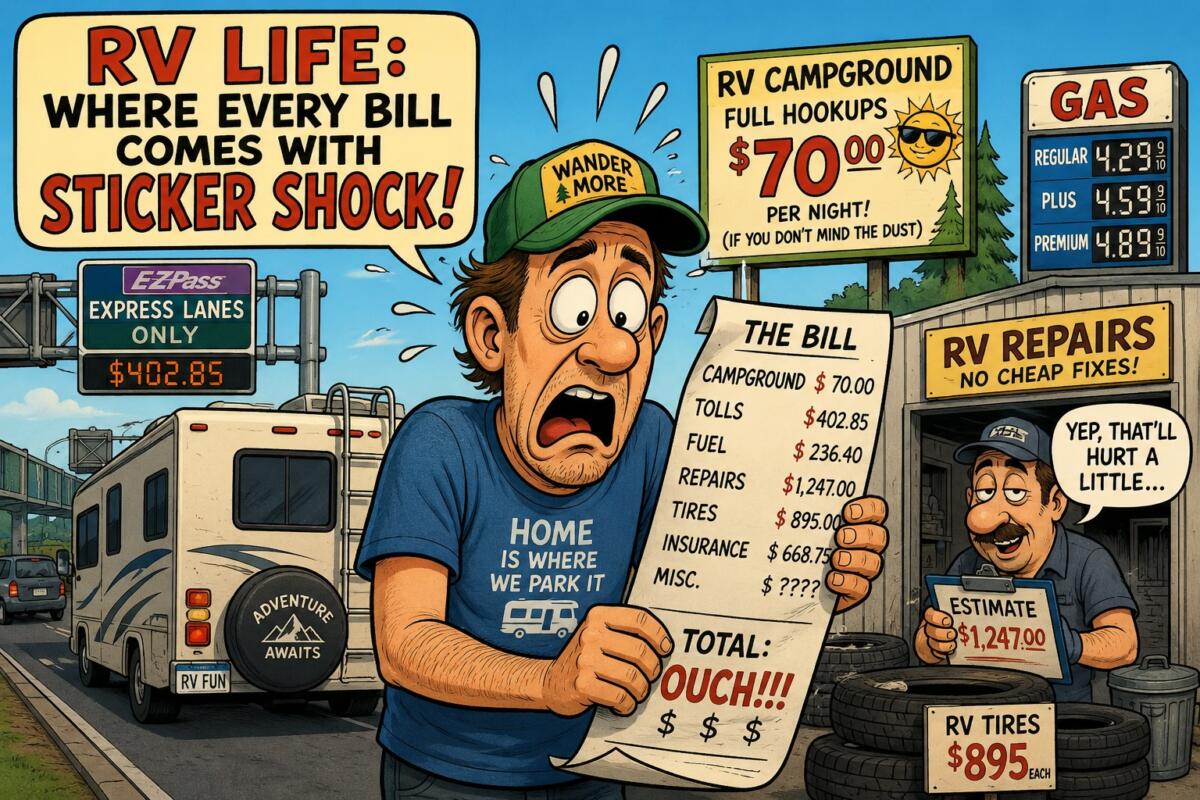
Not too many years ago, one of the biggest selling points of RV travel was affordability. Sure, there were fuel costs and campground fees, but many RVers felt they could travel comfortably without breaking the bank. These days, however, it seems like nearly everything associated with RVing costs more than it used to. And it is certainly not the cheapest way to travel anymore!
Of course, tolls and campground fees aren’t the only expenses causing sticker shock. Fuel prices continue to fluctuate. RV repairs can quickly climb into the thousands. Insurance premiums have risen for many owners. Even routine maintenance items like tires, batteries, and roof repairs seem to cost more every year.
Yet, despite the rising costs, most RVers keep rolling down the road. For many, the freedom, flexibility, and memories created while traveling are still worth the expense.
The question is: Which cost makes you shake your head the most when you see the bill?
So, we’re curious. In today’s RV world, what causes the biggest sticker shock for you? Is it campground fees? Fuel prices? Tolls? RV repairs? Or perhaps something else entirely?
Vote in our poll below. And if your answer isn’t listed, leave a comment and tell us what’s hitting your wallet the hardest these days. Thank you!
Did you know that proper slide-out maintenance can save you thousands of dollars in costly repairs? In this article and video, we’ll explain how the Camco RV rubber seal conditioner protects your RV slide-outs and keeps them in top working condition.
Regular maintenance of these seals prevents damage and extends the lifespan of your slide-out mechanism.
Why RV slide-out seals are important
The rubber bulb seals around your RV slide-out are essential components that help prevent water, dirt, and air from entering your RV. They create a seal when the slide-out is retracted, protecting your RV from environmental elements. Over time, these seals can become brittle, cracked, or damaged, which can lead to leaks, drafts, or even mold inside the RV.
How Camco RV rubber seal conditioner helps
Camco RV rubber seal conditioner is designed to protect and maintain the rubber seals around your RV slide-out. Here’s how it can help:
Prevents cracking and dry rot
Exposure to UV rays, weather, and temperature changes can cause the rubber seals to dry out and crack, leading to compromised sealing performance. The Camco treatment restores moisture to the rubber, keeping it flexible and preventing cracks.
Extends seal lifespan
Regular use of this treatment extends the lifespan of your slide-out seals. By keeping them conditioned and in good condition, you’ll delay the need for expensive seal replacement.
Reduces friction and wear
The treatment provides a slippery coating that reduces friction when the slide-out moves. This can help prevent unnecessary wear and tear on both the seals and the slide-out mechanism.
Improves water resistance
Applying the seal treatment helps to enhance the waterproofing properties of the rubber seals, ensuring they effectively protect your RV from leaks and moisture.
Enhances overall slide-out performance
A well-maintained seal ensures your slide-out functions smoothly and efficiently. The treatment helps maintain a good seal, reducing air and water infiltration that can lead to mold, mildew, and other costly damage.
How to use Camco RV rubber seal conditioner
Clean the slide-out seals
Before applying the treatment, it’s essential to clean the rubber seals thoroughly. Use a mild soap or RV-safe cleaner to remove dirt, grime, and any old residue. Let the seals dry completely.
Apply the treatment
Shake the Camco treatment bottle well before use. Apply a generous amount to the rubber seals using a clean cloth or sponge. Ensure the entire seal is covered, paying special attention to areas that may show signs of wear.
Wipe off excess
After applying, use a dry cloth to wipe off any excess product. Be sure the seals are evenly coated but not overly saturated, as excess product can attract dirt.
Inspect the seals
While applying the treatment, take the time to inspect the seals for any damage, cracks, or signs of deterioration. If the seals are compromised, it might be time to replace them.
Allow to dry and set
Allow the treatment to fully dry and set before operating the slide-out. This ensures that the seal is in optimal condition for protection.
Prevent costly damage with regular maintenance
Inspect seals
Regularly check the condition of your slide-out seals for signs of wear, cracking, or dry rot. Make it a part of your routine RV maintenance to ensure your seals are always in top condition.
Apply treatment seasonally
For maximum protection, apply the Camco treatment at the start of each season. This will keep the seals conditioned and ready to withstand the elements throughout the year.
Clean seals after use
After traveling or extended use, clean the seals to remove any dirt, dust, or debris that could wear them down. Keeping them clean helps maintain their sealing power.
Conclusion
Taking care of your RV slide-out seals is a simple and cost-effective way to protect your investment and prevent major repairs. With Camco RV rubber seal conditioner, you can keep your seals in excellent condition, preventing water damage, air leaks, and costly repairs. Regular maintenance will help your RV slide-out function smoothly and ensure your RV stays in top shape.
For more expert RV maintenance tips and to keep your RV in perfect condition, don’t forget to subscribe to our channel. With the right care, your RV will stay protected and ready for your next adventure!
The Camco RV rubber seal conditioner is available here on Amazon.
We use cookies to ensure that we give you the best experience on our website. By continuing to use our site, you consent to accepting cookies. We NEVER have or will sell reader's data. For more info, please see our privacy policy page.