Home Blog Page 80

Beyond the headlines with Tony Barthel: RV sales stall, new RV parts site, state park reservation chaos

17

RV sales have stalled

RV sales have mostly stayed flat, according to industry watcher Statistical Surveys, part of Trader Interactive. According to a report in RV Business, essentially, things remained flat, showing an overall increase of just 1 percent. Not much. 

So what does this mean to you? There’s a lot of buzz in the industry that sales still aren’t where dealers and manufacturers would like to see them, and that may mean the opportunity to make a good deal.

This is especially true if a unit has been on the dealer’s lot for a while. You can see when an RV was manufactured on the data sticker—typically near the front of a travel trailer or fifth wheel and near the driver’s seat on a motorized rig. 

The longer it’s been since it was built, the better the deal you might be able to work, as dealers generally pay to finance, or floor, their inventory and don’t like things sitting on the showroom floor for extended periods of time. 
(Click to enlarge.)

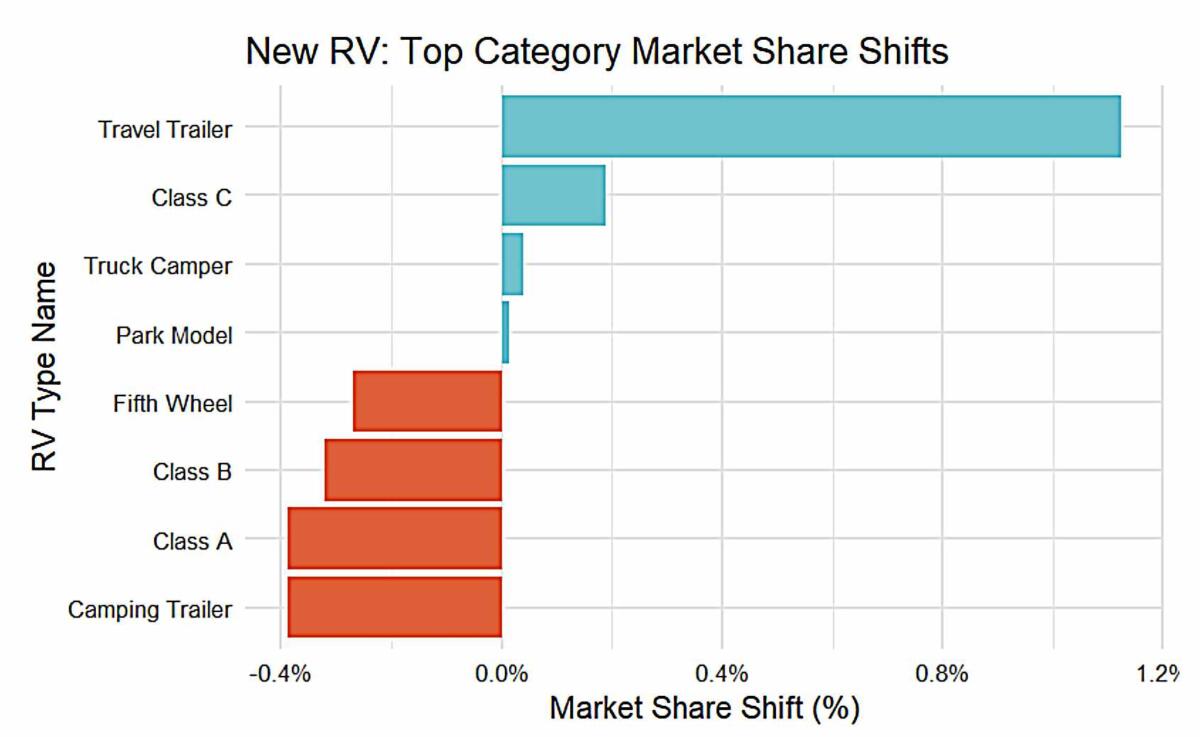
The trends were really interesting, at least to a nerd like me. Essentially, more affordable RVs, things like entry-level travel trailers, saw increases while mid-priced units weren’t quite as popular.

At the other end of the price spectrum, premium RVs (typically motorized) also saw a tiny bump in numbers. 
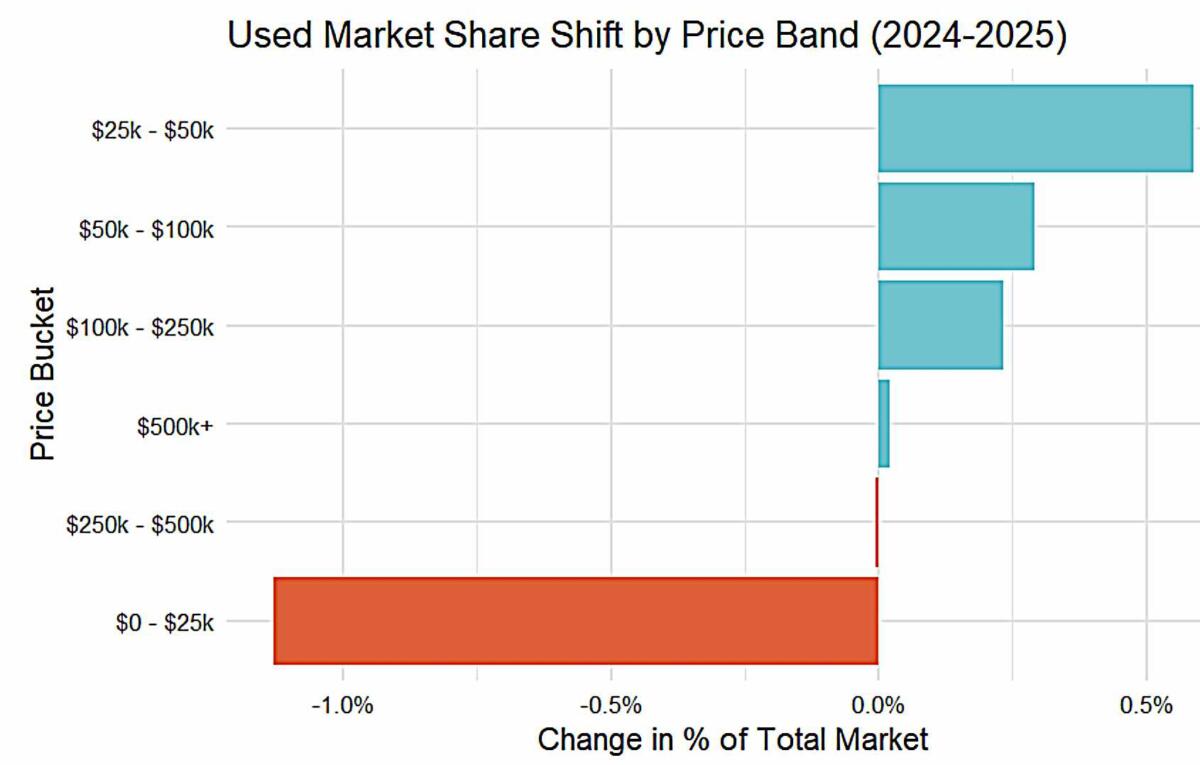
(Click to enlarge.)

Class B RVs, fifth wheels, and Class A RVs all saw modest reductions in sales. Travel trailers saw a 2 percent increase in registrations within the sub-$25,000 category, with one very notable exception: Those aged 18-24 actually were less prevalent. Hmm… Could the continued negative sentiment on social media be affecting sales? 

How do you find RV parts?

One of the issues facing the RV industry, and keeping us from camping, is the difficulty for even dealerships to find RV parts. An article in RV Business held out hope through a company called RV Partfinder, where a dealership, or even one of us normal campers, would be able to put in the serial number of our RV and find parts we need. 

I hope you didn’t just pass out. 

We all know if we have a regular ol’ American pickup, because we’re red-blooded Americans who might need to haul a refrigerator once every 10 years, that if we need a part for said truck, we can put the serial number in and, blammo, we find that part. But RVs are different. 

Minutes after the last iteration of whatever you have rolls off the line, you have a snowball’s chance on a Key West summer day of easily finding that part. 

In fact, recently, a tree limb brushed off the vent cap on my sewer vent stack on my 2025 trailer. Just figuring out which of the hundreds of similar products out there that I should replace it with was an exercise in frustration. Fortunately, my rig was new enough that the folks at Forest River were very helpful in working with me to order a replacement. 

In the article, it details how the business had been bought up by Airxcel, which is part of the THOR family. I hope that integration helps move this along more quickly. 

The company has actually been around since 2000, and the THOR acquisition happened in 2024. The story indicates that, already, 1,200 RV dealerships are using the service. 

Hey, Oregon, I have an idea 

It seems things ain’t pretty in Oregon. Oh, the parks certainly are; but the system that oversees them isn’t. What’s at stake here is that the cost of running Oregon’s state parks is exceeding what they’re bringing in under the system they have now. 

So RV Travel has already shared that Oregon State Parks are going to start charging a dump fee, even if you’re already camped there. There is also a proposal to raise some full-hook-up campsites to up to $80 per night. 

Oregon isn’t alone in price hikes, of course, with other states also reporting increases. 

But since this column is about how I look at things and, hopefully, provides insight into the news, let’s be blunt here. I looked at Oregon’s website to book a campground—I honestly did. After various clicks and responses, I had seven browser tabs open and still hadn’t really been able to make a reservation. 

While a good website won’t solve the world’s problems, Oregon might want to take a look at KOA’s reservations system. In fact, every lousy reservations system should have a standard to judge its own web reservations system by KOA’s. 

Create a user profile once for the type of rig you have (even if that’s a tent) and then use that profile to find a place. I shouldn’t have seven browser tabs open and still not have a reservation. Imagine the finagling behind the scenes and the stupidity going on.

Oh, and it’s not just Oregon. We recently stayed at Homolovi State Park in Arizona. Whoever designed the system they use should be left in the desert for a month in August. While the park itself was one of the nicest state parks I have ever been to and was just a great experience, that website was bleh. 

Also, a friend who traveled with us said the local parks in his state, New York, still hadn’t gotten their reservations system up and running. 

Seriously. What is going on here? Perhaps streamlining this kind of stuff might at least help some of these state parks with their budgetary issues. 

Read all recent RV and RV-related news here

RVT1251b

RV Daily Tips. Friday, March 6, 2026

America’s Original RV Newsletter. Since 2001
Issue 2855 • New issue every weekday


Today’s thought

“Your past experiences will flavour your future ones, that is human nature.” ―Deborah Cater


Need an excuse to celebrate? Today is National Oreo Day! (We bet you didn’t know all these Oreo flavors existed! Like maple creme or apple pie à la mode! Say whaaaaat?)

On this day in history: 1899 – Bayer registers “Aspirin” as a trademark.


Tip of the day
Genius charging cord trick that makes RV life easier

By Dave Helgeson
If you are like me, you have many electronics that require a charging cord in your RV. Cell phone, jet packs, satellite messenger, tablets, heated garments—just to name a few. Of course, none of them use the same USB connection, nor are they compatible with one another. There are so many options: Type A, Type C, Mini B, Micro B—Ugh! I can’t remember which cord fits which item!

When I do find the correct cord, I want to keep track of it and have the “working end” of the cord readily available when I want to charge something. What to do? Here’s my answer.


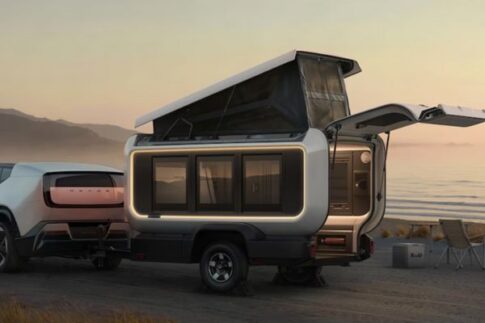
Prototype Honda Base Station camperRV review
First look at the Honda Base Station trailer prototype—It’s neat, but…

A major car maker building a small camper trailer changes the conversation fast. On the Playing with Sticks channel, Drew finally saw the Honda Base Station prototype in person after hearing about it for years, and it didn’t look like a typical RV at all. Honda calls it an “industry disruptor,” mostly because it’s compact on the road, garage-friendly at home, and designed to open up at camp for real standing room and a wider living space. Check it out.


In the RV shop with Dustin
Repairing a frame flex issue uncovered after RV dropped off for other service

In the world of RVs, unforeseen challenges can emerge. My team at California RV Specialists recently encountered a concerning issue while maneuvering a Forest River Wildcat around our service yard. The owner of the unit had been unaware of the potential danger lurking beneath the surface—pin box frame flex. Continue reading.


FrozenfruitsoftserveHealthy “ice cream” in your RV without the guilt (or price tag)
Craving something sweet but trying to eat healthier? This frozen fruit soft-serve maker turns any frozen fruit into creamy, ice-cream-style treats in minutes—no added sugar, dairy, or mystery ingredients. Gadgets like this are usually pricey, but this one keeps it simple and affordable, making it a fun splurge that won’t wreck your grocery budget. Easy to clean and perfect for small RV kitchens, it’s a smarter way to satisfy dessert cravings.


REMEMBER: You don’t need to receive an email alert from us to read our newsletters. Just click any time of day directly to our website, www.RVtravel.com, and all the latest newsletter issues and recently published articles will be right there for you.


Article and video
Avoiding the dreaded RV poop pyramid

It finally happened to the Two Traveling Teachers: the dreaded RV poop pyramid. Have you ever experienced this RV black tank problem? If you have, you know. If you haven’t, then you want to avoid it. A poop pyramid happens when solids build up in your RV’s black tank, essentially creating a pyramid of waste. Here’s how to avoid this unpleasant condition.


Featured article
10 ideas for smart, out-of-the-way RV shoe storage

By Gail Marsh
Athletic shoes, hiking boots, dress flats, casual shoes, steel-toed work boots, slippers, water shoes, flip-flops—so many shoes! We need to figure out shoe storage in our RV! Our rule has always been to take shoes off at the RV entry, which keeps dirt and debris out. But now, where do we put the shoes once they’re off? Here are 10 smart RV shoe storage ideas I like.


Ask Dave
Ford to discontinue F53 gas chassis. Are larger Class A motorhomes doomed?

Read Dave’s thoughts on this topic.


You may have missed these recent popular stories…


Version 1.0.0Fresh, flavorful diabetic diet meals for RVers over 60
Eating well on the road doesn’t have to be complicated or bland. This diabetic cookbook for people over 60 is packed with quick, practical recipes designed to support steady blood sugar and boost daily energy, all with simple ingredients. With clear nutrition info and a built-in 4-week meal plan, it takes the guesswork out of healthy cooking so you can focus on feeling good and enjoying the journey. Learn more or order.


Reader poll
How much water do you drink in one day?

Respond here.


DID YOU KNOW?
We publish 7-8 newsletters each week (not to mention the 50+ articles we write, proof, and schedule each week, too!). We’re just a team of a few people who work really, really hard for this to reach your inbox every day. If you appreciate what we do, would you consider a donation of your choice to help support our work? We would really appreciate it. Thank you very much!


Quick tip
Self-stick hat hooks keep kitchenware in place—brilliant!

We received this email and these photos from reader Kevin S. He wrote, “I was looking for an alternative to the expensive, heavy, and space-consuming Rev-A-Shelf drawer peg system for stopping dishes from sliding around while underway.

“I found these self-stick hat hooks on Amazon. They work fantastically and cost a fraction of the Rev-A-Shelf product. Using these, you also don’t lose any drawer depth because of a 3/4” plywood base.” Continue reading and see what Kevin did.


Website of the day

Drive Weather App
From reader Jim J.: “Drive Weather is my new cross-country pal. Put in start location, end location and dial-in start time. A route will be shown (so far, close to my intended route) with temp, wind and precipitation forecast along the route for the time you are likely to reach that point. You can do the same thing with many weather apps’ daily/hourly settings and picking multiple cities along your route, but this is MUCH faster.” Thanks, Jim!


? MYSTERY PRODUCT OF THE DAY ?
Does your partner have a hard time hearing when you ask them to complete a chore? Do you know someone who has “selective hearing”? Do your grandkids sometimes not listen to your rules? Well, this will solve all those problems! And you’ll laugh like heck about it!


Trivia

Bald eagles have approximately 7,000 waterproof feathers which “zip” together to keep them warm and dry in cold, wet weather. Those iconic white head and tail feathers don’t appear until a bald eagle is about 4 to 5 years old. Juveniles are mostly mottled brown until they reach full maturity.


Readers’ pet of the day

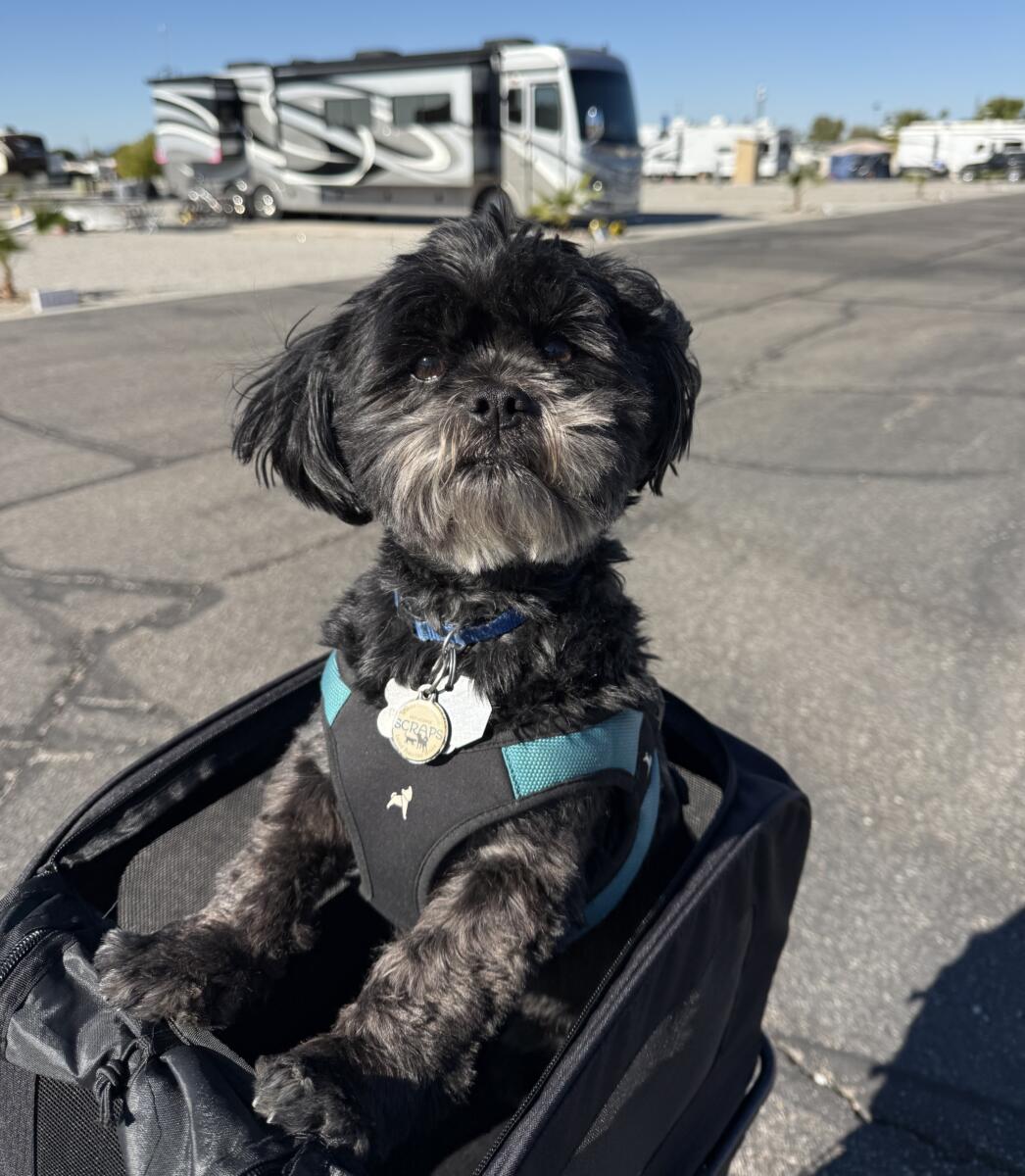
Img 2298 Bb0683ec42673e84ea6319c061a6a272“Our 9 yr. old boy Chewie (Shorkie—Shih Tzu/Yorkie) is a bundle of energy in a 13 lb. body!!! He loves ‘his’ RV and graciously allows us to use it. He loves going to the dog park to hang with his buddies to bark at the big dogs as they walk by. (They’re brave when there’s a big fence in between them!) We found a perfect basket for him to ride in that fits on the back of either my hubby’s or my Lectric e-bike, so Chewie has his own personal chariot! Guess who gets to be the horse for His Royal Fuzziness??” —Cindy Anderson

Send us a photo of your pet with a short description. No blurry photos and please do not submit your photo more than once. Thanks!


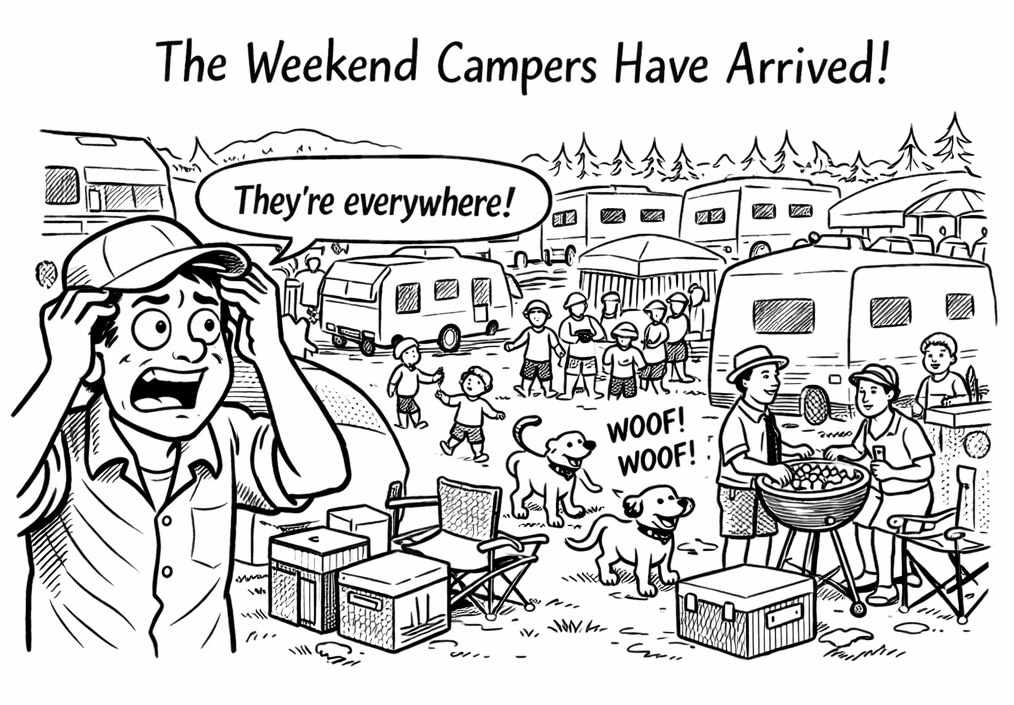
Leave here with a laugh

Funny mug
(Click image to enlarge or order)

HAPPENING RIGHT NOW: Somewhere right at this very moment, someone just said, “We’ll beat the traffic.”


Weekendcampers2


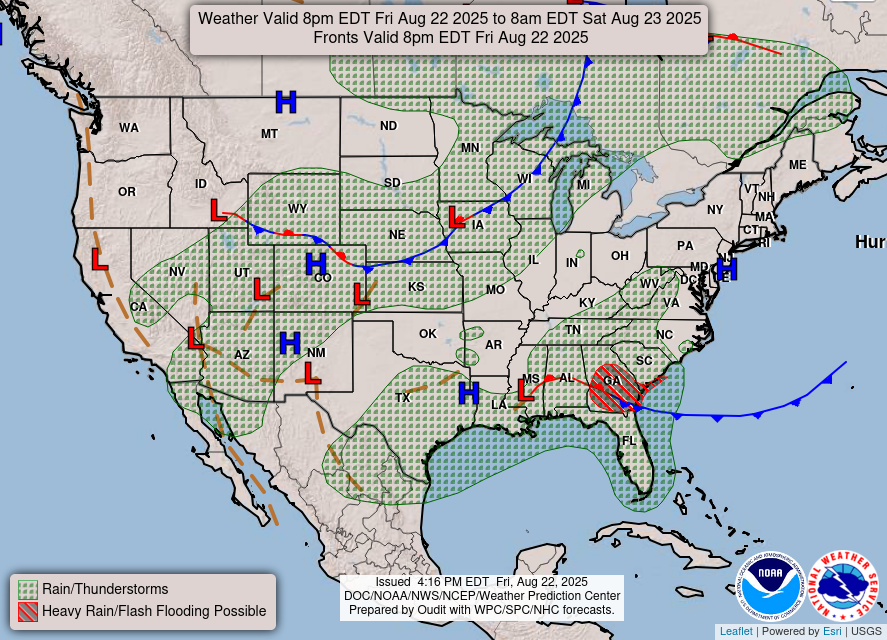
Today’s weather forecast across the nation
THIS MAP UPDATES TWICE A DAY

Visit Current National Radar Weather Map


Did you miss the latest RV Travel Newsletter? If so, read it here.
Oh, and if you missed the Latest News for RVers, make sure to catch up here.


RVtravel.com All-Star Team

Click here for information about our staff and how to contact us.

WHY WE ASK FOR DONATIONS INSTEAD OF SELLING SUBSCRIPTIONS.

Our policy on using artificial intelligence.

Ford to discontinue F53 gas chassis. Are large Class A motorhomes doomed?

In a recent article, I addressed the rumor that Winnebago Industries was going out of business. Part of the “fuel” behind that rumor was the fact that the company stopped producing its Class A gas motorhomes. However, while researching the topic and discussing it with several trusted contacts within the RV industry, another issue surfaced.

Several indications suggest that Ford Motor Company will discontinue the Class A gas motorhome chassis known as the Ford F53 at the end of this model year. Current information suggests that Ford has enough pre-orders to complete production for the remainder of the year and possibly supply some chassis into the first quarter of next year—if those units can be built within this production cycle.

Ford has remained very tight-lipped regarding any long-term plans. Currently, the only Class A gas motorhome chassis with a gross vehicle weight rating (GVWR) above 14,500 pounds is the Ford F53.

Ford F53
Ford F53

History of the Class A gas chassis

In the early 1970s, many RV manufacturers built Class A motorhomes on a Dodge chassis. While functional, it was limited in both weight-carrying capacity and engine power.

Somewhere around 1974, General Motors introduced the Chevrolet P30 chassis, which was widely viewed as a more “luxury-oriented” platform. At that time, Winnebago Industries launched the Itasca line on the P30 chassis.

The Dodge chassis disappeared in the mid-1980s, when the government bailout of Chrysler required the company to focus its efforts on the automotive and military sectors. For several years afterward, the P30 chassis was essentially the only option available, and changes or improvements were limited.

At one point, John Deere briefly entered the RV chassis market with its own platform powered by a Ford gas engine. However, the venture was short-lived. Thankfully, the tractor market picked up and Deere & Company got out of the RV chassis business.

I personally drove a 40-foot Winnebago Superchief equipped with a John Deere chassis during a training trip to California. I’m honestly surprised I’m not still trying to get back home!

More improvements

Ford entered the market in the late 1980s and introduced several improvements, including true fuel injection, tilt steering, and an overdrive transmission. Over the years, RVers benefited from the competition as manufacturers continued to improve horsepower, reliability, and overall drivability.

Eventually, Workhorse Custom Chassis acquired the P30 platform and produced the W-Series chassis until 2010. When new emission regulations took effect, production ceased, leaving the Ford F53 as the only widely available Class A gas motorhome chassis.

Some manufacturers experimented with alternatives. For example, Winnebago Industries offered the Winnebago Reyo built on the Mercedes-Benz Sprinter-based P50 chassis until 2015.

More recently, several companies have introduced smaller Class A motorhomes built on the Ford E‑350 and Ford E‑450 stripped chassis. These platforms have a maximum GVWR of 14,500 pounds and typically limit the coach length to about 30 feet or less.

Ford E-450

What will happen to the larger Class A gas motorhome?

According to RVIA stats for January 2026, only 531 total Class A units were sold, down 3.5% from last year. This is all Class A units including diesel pushers, gas on the F53, and both E-350 and E-450 chassis.

With the Class A gas market being soft to almost-non-existent, will anyone step up and provide a chassis with the wheelbase and GVWR that can handle a unit larger than 30 feet? It doesn’t look promising. However, stay tuned…

RELATED

DAVE HAS ANSWERED MORE THAN 1,000 readers’ maintenance and repair questions. Read a directory here. There is so much to learn!


Dave Solberg is a leading expert in the RV industry and the author of the “RV Handbook.”

HAVE A QUESTION FOR DAVE?

Send your inquiries to him using the form below.

Name
Drag & Drop Files, Choose Files to Upload

RVDT2855

Genius charging cord trick that makes RV life easier

4

By Dave Helgeson
If you are like me, you have many electronics that require a charging cord in your RV. Cell phone, jet packs, satellite messenger, tablets, heated garments—just to name a few. Of course, none of them use the same USB connection, nor are they compatible with one another. There are so many options: Type A, Type C, Mini B, Micro B—Ugh! I can’t remember which cord fits which item!

When I do find the correct cord, I want to keep track of it and have the “working end” of the cord readily available when I want to charge something. What to do?

The solution: Trusty binder clips!

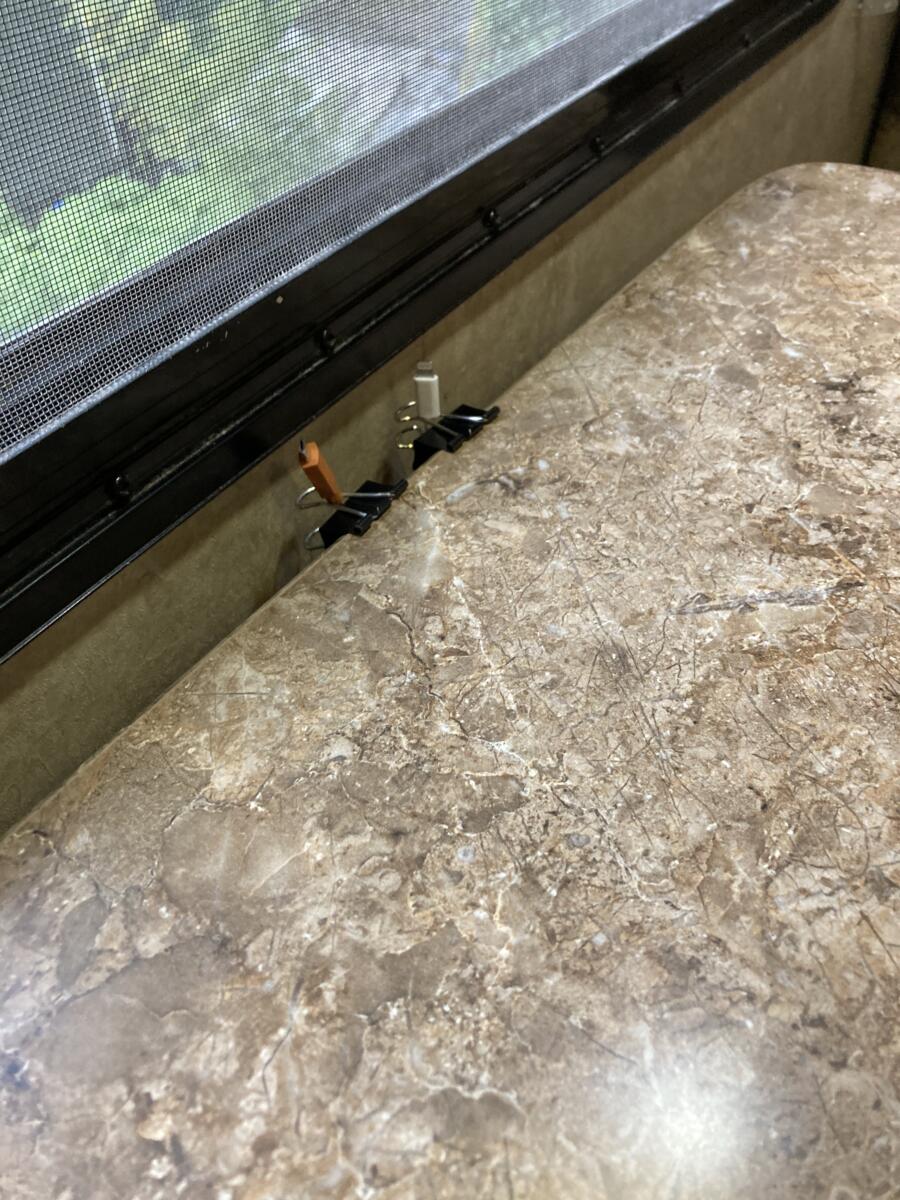
Route the desired end of the charging cord through the handle of a binder clip and then clip it to a convenient location of your choosing.

charging cord
Cords stored at end of dinette table. Dave Helgeson photo

Example: My wife and I typically charge our phones at the RV dinette. We plug the USB charging brick into the wall outlet below the table with our cell phones sitting on the table with the charging cord attached. The problem is that when you unplug the phone, the charging cable falls between the table and the wall, ending up on the floor under the dinette, where it is very inconvenient to recover.

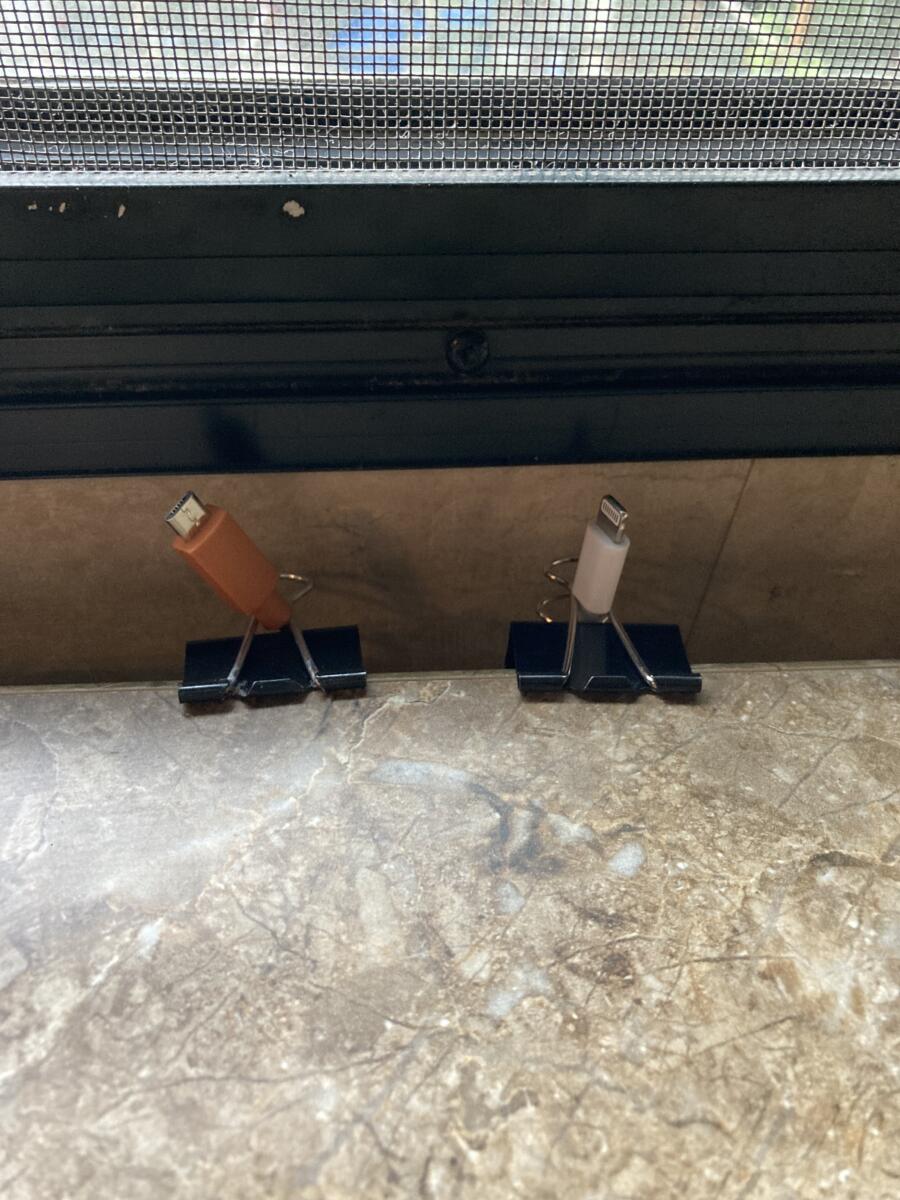
By routing the end of the cord through the handle of a binder clip and clipping it to the wall end of the table, the cord is always readily available. Slide the extra cord through the clip when you need it, and let it slide back through when you don’t. I have since added a second charging cord of a different configuration for other electronics.

charging cords attached to table
Nice and tidy and ready for use.

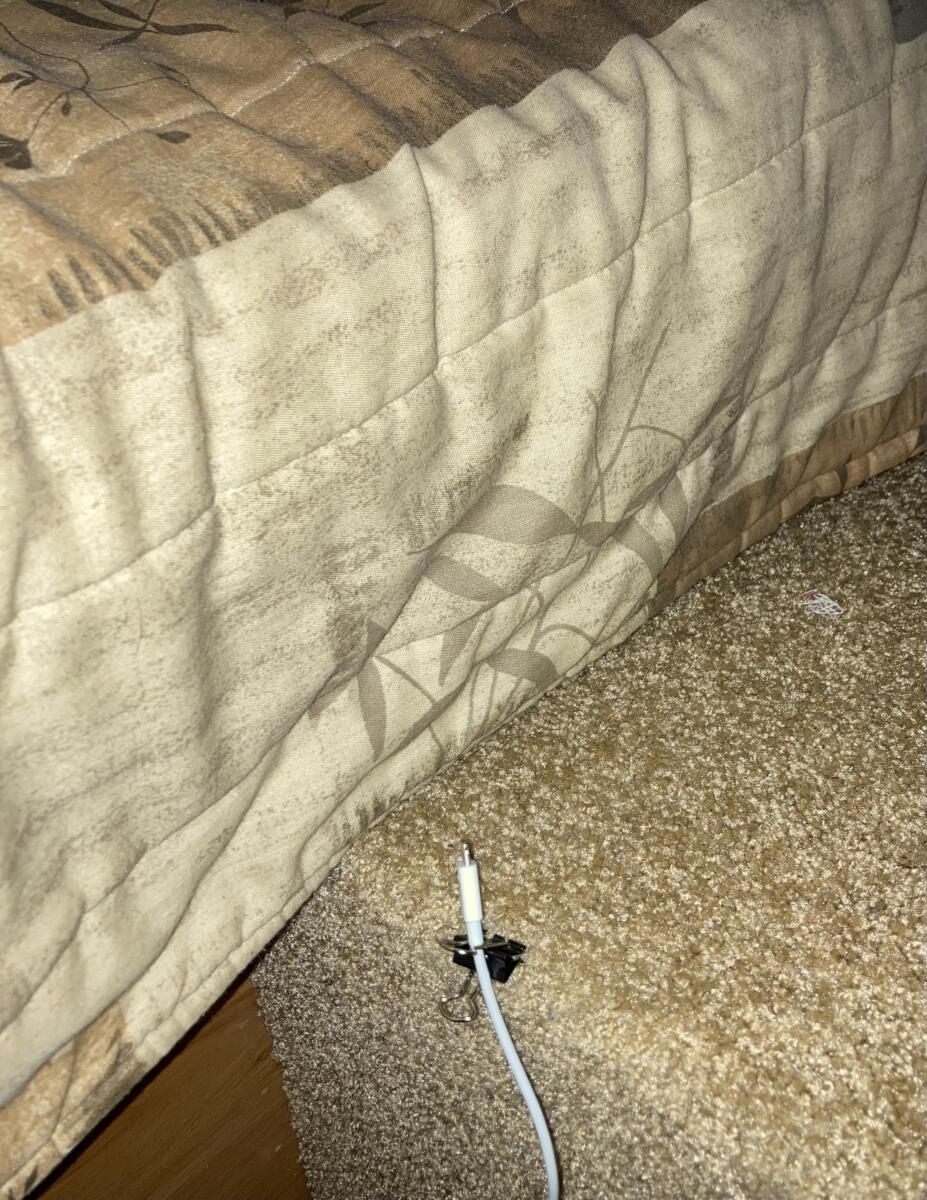
The applications are endless. Like to lie in bed with your tablet? Use a binder clip to attach the charging cord to the bedspread or mattress. Do you keep a rechargeable flashlight on a shelf next to a window? Clip the charging cord to the window valance. I am sure you can think of many more applications that apply to your rig and needs.

Clip by bed
Charging cord readily available at the nightstand. Dave Helgeson photo

Who knew the lowly binder clip could be so useful?

Below is a short video detailing options for routing the charging cord through the binder clip handle, if you are having difficulty envisioning the process.

Need binder clips for your RV and charging cords? Here are plenty of options.

RELATED

RVDT2855

Avoiding the dreaded RV poop pyramid

By Cheri Sicard
It finally happened to the Two Traveling Teachers: the dreaded RV poop pyramid. Have you ever experienced this RV black tank problem? If you have, you know. If you haven’t, then you want to avoid it. In the video below, Tommy and Gina share how.

A poop pyramid happens when solids build up in your RV’s black tank, essentially creating a pyramid of waste. Here’s how to avoid this unpleasant condition.

How to avoid a poop pyramid

#1 Use plenty of water: Lack of liquids is a huge contributor to the poop pyramid problem. Use water, and plenty of it, when you flush.

#2 Use RV toilet treatments: We have discussed these at length in other posts, but essentially, they help break down waste and control odors.

#3 Regular tank flushing: A few extra minutes spent flushing out your tank when you empty it can go a long way toward preventing poop pyramids.

#4 Leave the RV valve tank closed until ready to dump: This one is important, folks, yet I am constantly amazed at the number of RVers I see making this rookie mistake. If the valve is open and you are continually draining away all the liquids, guess what? You will have a massive poop pyramid problem. You can keep your sewer hose connected if you like, but only open the valve when it is time to dump.

What should you do if you ever have to deal with a poop pyramid? Tommy talks about solutions, starting at point 3:10 in the video.

RELATED

RVDT2855

How much water do you drink in one day?

17

How much water do you typically drink in a day? A single cup? A few cups? Maybe a whole water bottle? Or do you stick to coffee and other drinks instead?

When you’re RVing, do you find yourself drinking more water than you do at home, or less? Some RVers say they drink more because they’re outside, active, and exploring new places.

Others mention that they actually drink less, either because they’re trying to conserve their water supply or they don’t think about it as much when they’re on the road.

It’s also worth considering your routine when you’re on the road. Do you find it harder to stay hydrated when you’re busy with travel, setting up camp, or sightseeing?

Staying on top of water intake can be tricky when you’re on the move, especially if your focus is more on the adventure and less on hydration.

Another factor that comes into play is the water itself. Do you always trust the water at campgrounds, or do you bring your own supply? If you’re more cautious about where your water comes from while traveling, that could affect how much you drink.

Then there’s the weather. Hot summer days hiking in the desert call for more hydration, but in cooler climates, you might not reach for your water bottle as often. Plus, if you’re boondocking and stretching your fresh water tank supply as long as possible, you might be more mindful of every sip.

After you vote, please leave a comment and share your experience. Do you drink more or less water on the road? What factors influence your hydration habits while RVing? Thanks!

And if you’re trying to drink more water, this might help.

RELATED

##RVDT2855

Self-stick hat hooks keep kitchenware in place—brilliant!

2

We received this email and these photos from reader Kevin S. He wrote, “I was looking for an alternative to the expensive, heavy and space-consuming Rev-A-Shelf drawer peg system for stopping dishes from sliding around while underway.

“I found these self-stick hat hooks on Amazon. They work fantastically and cost a fraction of the Rev-A-Shelf product. Using these you also don’t lose any drawer depth because of a 3/4” plywood base.”

Brilliant idea, Kevin! Thank you for sharing!

These hat hooks come in an 8-pack and will stick to just about any original drawer surface. (They may not stick if you have textured drawer liner in your drawers.) Stick them wherever you need them and create custom “spaces” for each piece of dishware, or appliance… you name it!

See Kevin’s photos below for ways you can use them to organize your drawers and keep everything in place while driving.

Hat hooks for dishes
Photo credit: Kevin S.

Have a tip for us? Submit it here

RELATED

RVDT2855

Repairing a frame flex issue uncovered after RV dropped off for other service

By Dustin Simpson
In the world of RVs, unforeseen challenges can emerge. My team at California RV Specialists recently encountered a concerning issue while maneuvering a Forest River Wildcat around our service yard.

The owner of the unit had been unaware of the potential danger lurking beneath the surface—pin box frame flex.

Join us below on YouTube as we delve into the details of the frame damage discovered and witness the meticulous repairs carried out by my crew.

Picture by California RV Specialists of unit setting on lot before tear down inspection was approved.

The discovery: Signs of frame flex

As the unit was being carefully moved through the yard, we detected subtle signs of pin box frame flex, a concern that could jeopardize the structural integrity of the entire RV. We investigated further.

Front cap removed for inspection of frame.
One of the two locations of frame flex cracks.

We embarked on the task of repairing the frame damage. The repair process is detailed, offering insights into the careful assessment, precision welding, and reinforcement techniques employed to restore the structural integrity of the Forest River Wildcat.

Quality assurance: Ensuring roadworthiness

After the repairs were completed, the unit underwent thorough testing to ensure that the frame damage had been successfully addressed. The video provides a glimpse into the quality assurance measures taken by my team to guarantee that the Forest River Wildcat is not only roadworthy but also meets the highest safety standards.

This video not only serves as a cautionary tale for RV owners but also highlights the importance of regular inspections and prompt action when frame issues are suspected.

More from Dustin

Make sure you check out my website, California RV Specialists, and our YouTube channel for more helpful information, and see our published articles on RVtravel.com and other social media pages.

RELATED

RVDT2855

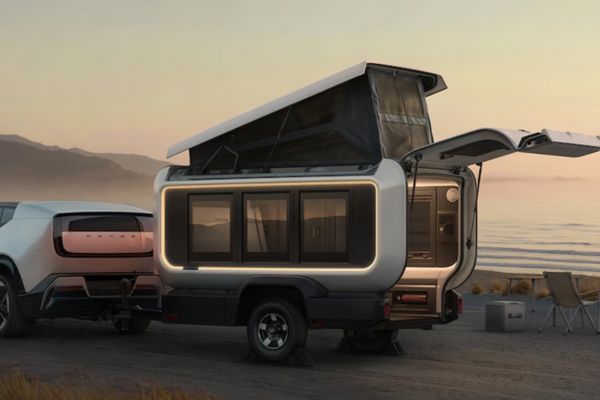
First look at the Honda Base Station trailer prototype—It’s neat, but…

A major car maker building a small camper trailer changes the conversation fast. On the Playing with Sticks channel, Drew finally saw the Honda Base Station prototype in person after hearing about it for years, and it didn’t look like a typical RV at all. He shares his thoughts in the video at the end of this post.

Honda calls it an “industry disruptor,” mostly because it’s compact on the road, garage-friendly at home, and designed to open up at camp with real standing room and a wider living space.

Why the Base Station feels built around real camping

The Base Station’s whole pitch is simple: tow low, live tall. It uses a pop-up style top to get close to full standing height (Drew heard it was around seven feet), while still keeping a low profile for towing and storage.

That idea mirrors what a lot of small trailer owners end up doing with two rigs, a standing-height camper for comfort and a teardrop for ease. Honda is trying to blend both in one.

The trade-off is the tilt-top system. Drew called it the most likely weak point—not as a knock, but because pop-top design is hard to get right. Honda’s mesh approach looks lighter and airier than a solid composite lid, and it keeps the “outside” feeling close.

Exterior storage questions and the rear hatch that changes everything

On the sides, the Base Station looks like it may have long exterior storage compartments running toward the wheel wells. Honda would not confirm details, which left a few open questions:

  • How much usable storage is there, and is it easy to reach?
  • Do the compartments slide out, or is access limited?
  • Are they full-width with doors on both sides for larger gear?

The rear hatch is the visual headline. Closed, the trailer looks like a clean cube. Open, it becomes a huge sheltered space with real height, which Drew loves in a galley hatch. The twist is that this hatch is also the only entrance, while the kitchen is on the side.

That shape also looks ready-made for an annex room like the setups common in Australia and South Africa. A good example of that style is shown in the tour of the AOR Sierra trailer with an annex.

Side kitchen, weather exposure, and Honda’s electric cooking bet

The kitchen slides out on the side with a sink, cutting board, and a dual-burner cooktop that looks like induction. Side kitchens photograph well, but Drew keeps coming back to the same real-world problem: weather.

Rain, wind, and harsh sun can turn outside cooking into a hassle, and big awnings can be frustrating in bad conditions. He called out the Kammok Crosswing awning as a fast-up, fast-down alternative. But the big question is whether Honda built in awning attachment points, or expects a proprietary solution.

The bigger debate is power. Drew likes the push toward EV pairing and renewable systems, but he hasn’t seen many trailers run cooking and daily camping needs on battery alone without weight, cost, and compromise. Solar helps only when there’s sun, and he prefers camping under trees. He expects propane to still matter for most people, especially for heating and cooking.

Composite construction, bird-cage framing, and a few nerdy questions

Honda’s material choices fit the goal of low maintenance. Fiberglass reduces seams, which reduces leak points, and composites avoid wood rot if water ever gets in. An aluminum chassis helps with weight and rust resistance.

Honda also appears to go beyond classic molded fiberglass trailers like Scamp and Casita by adding an internal metal frame, similar to “bird-cage” approaches seen in some aluminum builds.

Interior layout, modular thinking, and what Honda hasn’t shown yet

Inside, the trailer looked clean and minimal. Drew liked how the queen sleeping space converts—not into a table, but into more lounge space. That makes a small cabin feel usable during the day. Honda also described a bunk option spanning between the walls.

Windows are everywhere, which brings views and airflow, but also heat. Honda used dark tint to fight the “greenhouse” effect, although it also made the interior feel darker under the show lights. Drew wanted something like vehicle-style roll-up shades, similar to what Honda already does in models like the Passport.

Storage inside seemed limited, which may be intentional. The vibe felt closer to a modular platform, where owners add what they need over time. Drew later shared a press update claiming the five windows are removable and modular, with renderings showing add-ons like window A/C and a shower. He also learned that the ambient window lighting can light up a campsite after dark.

On the kitchen side, he also liked the vertical storage thinking, using panels and bags to get gear off the counter, similar to items like the Kelty Camp Kitchen Deluxe Bag and the Kelty Chef Roll organizer.

Heating, stealth camping, water, and the bigger Honda opportunity

The Base Station can be slept in with the top down, which opens up stealth camping and helps seal in warmth for shoulder seasons. Drew heard it includes a heater, but questioned how that works off-grid if the answer is always “bring a generator.” Honda pointing to its own generators makes brand sense, but it may not match how many people want to camp.

He also heard there’s an onboard water tank, with unknown capacity and unknown freeze protection. Since tanks add maintenance and winterizing work, he wondered if portable water could be a simple workaround, and whether interior plumbing could support future modular wash or kitchen components.

The most interesting long-term angle is that Honda builds both the tow vehicle and the trailer. If Honda chooses, it could make power sharing, charging, and system monitoring feel more integrated than today’s mix-and-match setups.

The other open question is price, since Honda keeps talking about lowering barriers to entry, and many campers feel the small-trailer market has gotten expensive.

What to watch for next

The Base Station looks like a smart platform, but it still feels prototype-like in key areas: exterior storage access, awning support, off-grid heating strategy, and how deep the modular ecosystem will go. If Honda nails those details, this could be a rare trailer that starts small, then grows with a family’s needs.

The most useful next step would be a true field test with real weather, real off-grid camping, and real-time living in the space.

Learn more about the Honda Base Station camper here.

RELATED

RVDT2855

Gas prices jump nearly 27 cents nationwide, largest weekly jump since 2022

16

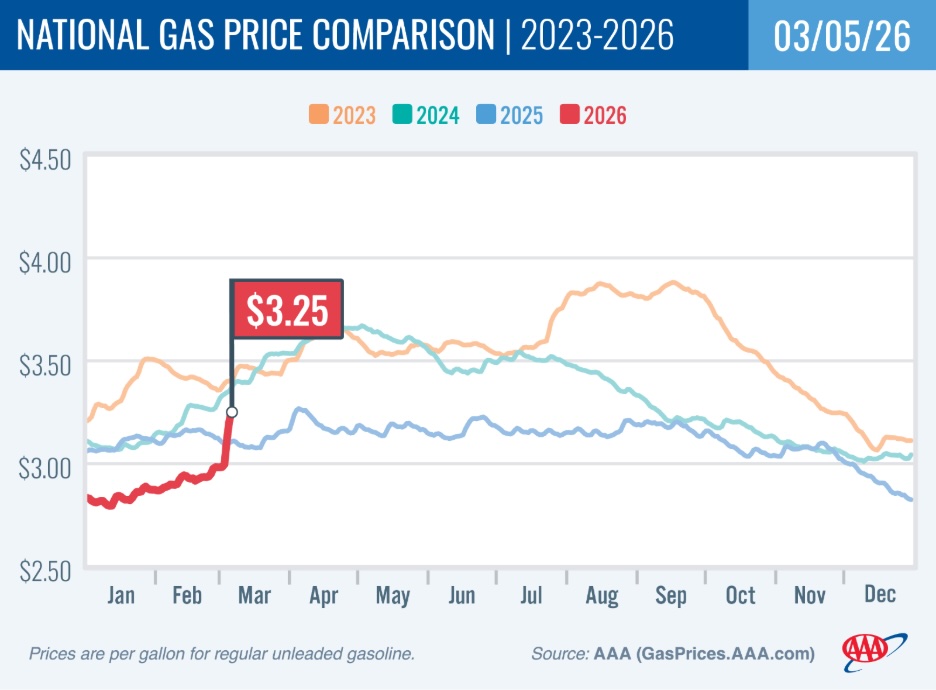
The national average for a gallon of regular gasoline jumped nearly 27 cents since last week to $3.25. The conflict in the Middle East has sent crude oil prices to more than $90/barrel.

The recent increase puts the national average at the same price as it was in early April of 2025.

Springtime typically sees higher gas prices as gasoline demand rises and summer-blend gasoline production begins. The last time the national average made a similar weekly jump was back in March of 2022, during the start of the Russia/Ukraine conflict.

Today’s National Average: $3.251

One Week Ago: $2.983

One Month Ago: $2.891

One Year Ago: $3.107

According to new data from the Energy Information Administration (EIA), gasoline demand decreased last week from 8.73 million b/d to 8.29 million. Total domestic gasoline supply decreased from 254.8 million barrels to 253.1 million. Gasoline production increased last week, averaging 9.3 million barrels per day.

Oil market dynamics

At the close of Wednesday’s formal trading session, WTI rose 10 cents to settle at $74.66 a barrel. The EIA reports crude oil inventories increased by 3.5 million barrels from the previous week. At 439.3 million barrels, U.S. crude oil inventories are about 3% below the five-year average for this time of year.

State stats

Gas

The nation’s top 10 most expensive gasoline markets are California ($4.81), Washington ($4.44), Hawaii ($4.43), Oregon ($4.04), Nevada ($3.87), Alaska ($3.72), Arizona ($3.58), Illinois ($3.36), Pennsylvania ($3.35), and Michigan ($3.27).

The nation’s top 10 least expensive gasoline markets are Oklahoma ($2.79), Mississippi ($2.81), Kansas ($2.83), Tennessee ($2.84), Texas ($2.87), Arkansas ($2.90), Louisiana ($2.90), Wyoming ($2.90), North Dakota ($2.91), and Missouri ($2.92).

EV charging

The national average per kilowatt hour of electricity at a public EV charging station stayed the same, at 39 cents.

Electric

The nation’s top 10 most expensive states for public charging per kilowatt hour are West Virginia (52 cents), Hawaii (50 cents), Alaska (48 cents), Louisiana (47 cents), South Carolina (44 cents), New Hampshire (44 cents), New Jersey (43 cents), California (42 cents), Idaho (42 cents), and Tennessee (41 cents).

The nation’s top 10 least expensive states for public charging per kilowatt hour are Kansas (25 cents), Wyoming (27 cents), Missouri (28 cents), Nebraska (30 cents), Utah (31 cents), Iowa (32 cents), Vermont (32 cents), Maryland (33 cents), New Mexico (33 cents), and Colorado (34 cents).

RELATED

RVT1251b

Oregon state parks to begin charging RVers to dump tanks

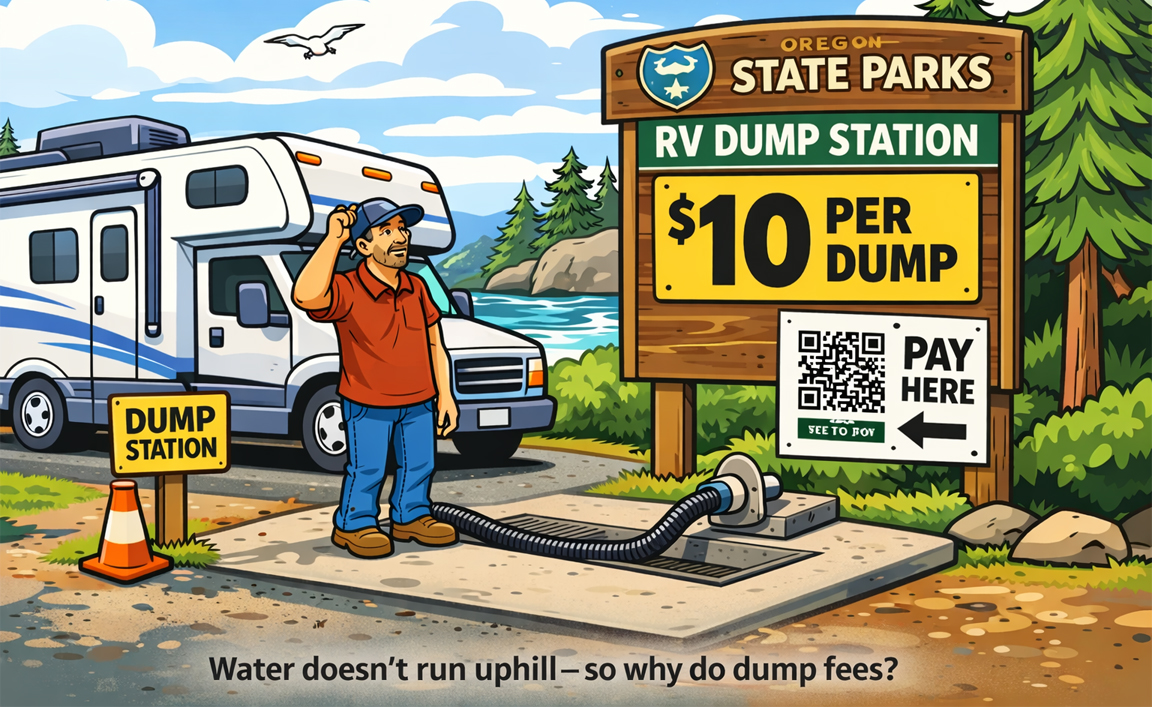
Oregon State Parks says a new $10 fee for RV dump stations will take effect March 30, 2026, marking a shift from the system’s long-standing practice where dumping was often included with camping.

The charge will apply at 19 dump stations across 18 state parks. RVers will pay by scanning a QR code posted at the station or through an online payment system.

Park officials say the change will help cover the cost of maintaining and operating the wastewater facilities.

For RV travelers used to pulling through a dump station on the way out of a campground, the change may come as a surprise.

A small fee that could add up

A single $10 charge may not sound like much. But for RVers traveling through Oregon for a week or two, it could become a regular expense.

Many RVers without sewer hookups dump tanks every three to five days. On a longer trip, that could mean several dump fees.

The change also affects travelers who rely on state parks simply as a place to empty tanks between boondocking stops.

Part of a broader park funding squeeze

Oregon officials say the fee is part of a broader effort to address rising operating costs in the state park system.

Unlike many park systems, Oregon State Parks does not receive general-fund tax support for daily operations. Instead, the system relies largely on:

  • Lottery funds
  • Fees from the state’s RV license plate program
  • Visitor fees such as camping and parking charges

Officials say those sources have not kept pace with maintenance costs and increased visitation.

In recent years, the agency has also expanded day-use parking permits at more parks and tightened reservation cancellation policies.

Where the $10 dump station fee may apply

Oregon State Parks says the new fee will apply to 19 dump stations across 18 parks starting March 30. The agency has not yet published a single systemwide list of locations.

However, park pages and campground information suggest the program will likely include several of the state’s busiest RV parks.

Oregon Coast

These parks handle a large share of Oregon’s RV camping traffic.

  • Fort Stevens State Park — Astoria
  • Nehalem Bay State Park — Nehalem
  • Cape Lookout State Park — near Tillamook
  • Beverly Beach State Park — Newport
  • South Beach State Park — Newport
  • Jessie M. Honeyman Memorial State Park — Florence
  • William M. Tugman State Park — Reedsport area
  • Umpqua Lighthouse State Park — Winchester Bay
  • Bullards Beach State Park — Bandon
  • Cape Blanco State Park — near Port Orford
  • Harris Beach State Recreation Area — Brookings
  • Columbia River Gorge and northwest Oregon
  • Ainsworth State Park — Columbia River Gorge
  • Memaloose State Park — near The Dalles
  • Milo McIver State Park — Estacada

Central and Eastern Oregon

  • LaPine State Park — south of Bend
  • Prineville Reservoir State Park — Prineville
  • The Cove Palisades State Park — Culver
  • Clyde Holliday State Recreation Site — John Day

As for the fee applying to 19 dump stations at 18 parks, that means one park likely has two dump stations included in the program.

Why states are starting to charge dump fees

For years, dump stations at many state parks were treated as a free service, especially for overnight campers. That approach is beginning to change.

Maintaining dump stations is not cheap. Parks must maintain plumbing, pumps, concrete pads, and rinse water systems. They also pay wastewater treatment charges from local sewer districts.

As visitation climbs, those costs climb with it.

Many park systems now treat dump stations as a cost-recovery service rather than a perk bundled into camping fees.

Across the West, the shift is already underway.

California state parks commonly charge about $10 per use at automated dump stations.

Washington state parks typically charge about $5, often waived for registered campers.

Arizona state parks usually include dumping for campers but may charge non-campers.

Oregon’s new $10 fee places it closer to the California model.

For RV travelers, the cost may not break the trip budget. But it is another sign that park systems facing tight budgets are looking for ways to recover the costs of maintaining heavily used facilities.

Water doesn’t run uphill, but sometimes dump fees have to.

RELATED

RVT1251b

RV Daily Tips. Thursday, March 5, 2026

America’s Original RV Newsletter. Since 2001
Issue 2854 • New issue every weekday


Today’s thought

“Do you think that I count the days? There is only one day left, always starting over: it is given to us at dawn and taken away from us at dusk.” ―Jean-Paul Sartre


Need an excuse to celebrate? Today is National Cheese Doodle Day! (Emily says these are the best cheese doodles in the world, by the way.)

On this day in history: 1872 – George Westinghouse patents the air brake.


Tip of the day
Unusual and helpful ways RVers can use old water hoses

By Gail Marsh
I think almost every RVer has at least one old water hose. When we purchased our first (and only) new RV it came with a bucket of free goodies. While several items in the bucket were worthwhile, the water hose was not good. From day one, it kinked, leaked, tangled, and frustrated us every time we RVed. It didn’t take long for us to replace that cheap one, but we were left with a problem: what to do with it. That’s when we came up with these unusual and helpful ways RVers can use old water hoses.


Article and video
Thule Outset foldable hitch tent— a clever rooftop tent alternative

Many camping setups force a trade-off. Bring a trailer and deal with towing, or mount a rooftop tent and give up roof space (and sometimes the ability to quickly drive off). The Thule Outset takes a different route by mounting a foldable tent at the back of the vehicle on a hitch setup, not on the roof, and not as a trailer. That simple change opens up a few practical wins for campground life. This is pretty neat!


RV PHILOSOPHY: Adventure doesn’t have to be dramatic. Sometimes it’s just Tuesday in a new zip code.


Featured article
More power, more problems: Life on the road with just 100 watts

By Jeff Clemishaw
I’ve met a lot of people in my travels with massive solar setups—sometimes more than 2,000 watts. Every time I hear these astounding numbers, I can’t help but wonder if that level of solar power is truly necessary. This is the story of how we made our small, 100-watt suitcase-style solar panel work.


TorchThe coolest flashlight ever!
This might be advertised to kids, but we want one, too! This has to be the coolest flashlight we’ve ever seen, don’t you agree? You would look mighty cool walking around the campground with this at dusk. Plus, it comes with batteries! If you have young kids or grandkids, they’ll especially love this. Learn more or order.


Ask Dave
What is “puffing”? Is it illegal?

Dave tells you what you need to know.


Reader poll
Do you bring a musical instrument with you on your RV trips?

Respond here.


Quick tip
Shopping for a used RV? Keep repair costs in mind

Two things to keep in mind when allocating money for repairs. If the inside of an RV you’re looking at hasn’t been taken care of, it’s a good bet that the engine, brakes, belts, generator, etc., haven’t been taken care of or serviced regularly either. If the RV has been sitting for a while and has not been driven in a year or more, it will probably need some general (and maybe expensive) service. It could need belts, batteries, tires, brakes, etc. Of course, a camper that has been sitting unused will not need as much work as a motorhome, but more than likely, it will still need some work to make it road-worthy. —From Secrets of RVing on Social Security: How to Enjoy the Motorhome and RV Lifestyle While Living on Your Social Security Income Available on Amazon.


TODAY’S DEALS AT AMAZON.COM. Hurry. These deals come and go fast.


On this day last year…


Website of the day

Reddit: RV Living
Have you ever explored Reddit? Well, today might be the day to start! This is the RV Living thread on Reddit, which means all “threads” (essentially mini forums) are RV-related, and we bet you’ll walk away learning something. Reddit is a great place to learn and teach!


? MYSTERY PRODUCT OF THE DAY ?
What if we told you that you’d want to drink out of this toilet bowl? Would you believe us? Heck, we’d drink out of this toilet bowl! See for yourself and you won’t think we’re so crazy!


And the survey says…

We’ve polled RVtravel.com readers close to 5,000 times in recent years. Here are a few things we’ve learned about them:

• 37 percent have a dash cam on their RV or tow vehicle.
• 19 percent buy their clothes based on price, not on quality. Only 10 percent buy their clothes based on quality, not price, and the remaining 71 percent say both are equally important when buying clothes.
• 81 percent enjoy visiting offbeat roadside attractions.

Recent poll: What type of RV do you own?


Trivia

The chocolate chip cookie was invented by Ruth Graves Wakefield. She owned the Toll House Inn in Whitman, Massachusetts, a very popular restaurant that featured home cooking in the 1930s. Her cookbook, Toll House Tried and True Recipes, was first published in 1936 by M. Barrows & Company, New York. The Toll House Inn burned down in 1984, but a sign and plaque mark the site where the inn once stood.


Readers’ pet of the day

Maxie Cb858bbe7df00c432be6134214980fb4“Max (Beagle, age 14) loves to hang out with his pack camping.” —Robyn Rasset

Send us a photo of your pet with a short description. No blurry photos and please do not submit your photo more than once. Thanks!

Pet Food and all pet products at Amazon
RVing with Dogs group on Facebook. You’ll love it.


GOOD DEAL! Seniors 65+ get a 10% discount off a meal at Taco Bell when requested. Check the location to verify it participates in this promotion.


Leave here with a laugh


Weekendcampers1


Today’s weather forecast across the nation
THIS MAP UPDATES TWICE A DAY

Visit Current National Radar Weather Map


Did you miss the latest RV Travel Newsletter? If so, read it here.
Oh, and if you missed the Latest News for RVers, make sure to catch up here.


If you shop at Amazon.com we’d appreciate you using this link. We get an itty bitty commission if you buy something, but they add up and help us pay our bills (most importantly our hard-working writers!). 


RVtravel.com All-Star Team

Click here for information about our staff and how to contact us.

WHY WE ASK FOR DONATIONS INSTEAD OF SELLING SUBSCRIPTIONS.

Our policy on using artificial intelligence.