Think about driving or towing your RV. Cruise control set, hands steady on the wheel… but what number is showing on the speedometer? Are you, whoops, speeding a little too fast? Going a little too slow? (Oh, shoot! There’s a line of cars behind you!) Or do you stick pretty close to the speed limit?
For today’s poll, we’re curious: If the speed limit is 60, how fast will you typically go when driving or towing your RV?
For some of you, you stick right to the posted limit. Safety, fuel economy, tire ratings, and peace of mind all factor in. When you’re hauling your home behind you (or driving it), there’s no rush worth the risk. Arriving safely beats arriving early every time.
Others admit to creeping a little over. Maybe 62… 63… nothing wild, just enough to keep pace with traffic. On busy highways, going exactly the speed limit can sometimes feel like you’re the slowest thing on the road, so you nudge it up slightly to stay comfortable with the flow.
Or, maybe some of you have a lead foot and tend to speed. 70 is the new 60! Ummm… Don’t quote us on that…
Then there are the extra-cautious drivers. Some of you go under the limit—especially in wind, rain, mountains, or heavy traffic. Bigger rigs, heavier loads, or simple driving comfort can make slower speeds feel smarter, even if it means taking a bit longer to get there.
So what about you? When the speed limit says 60, where does your needle usually land? Go ahead and vote in today’s poll, and, as always, feel free to leave a comment. Thank you!
This RV prompted great memories for me. The first vehicle DH and I purchased together was a Ford Econoline van. With no prior experience, we cut and installed windows and a skylight. We put in carpet and wall coverings, added mid-coach seating, and built a full bed in the back.
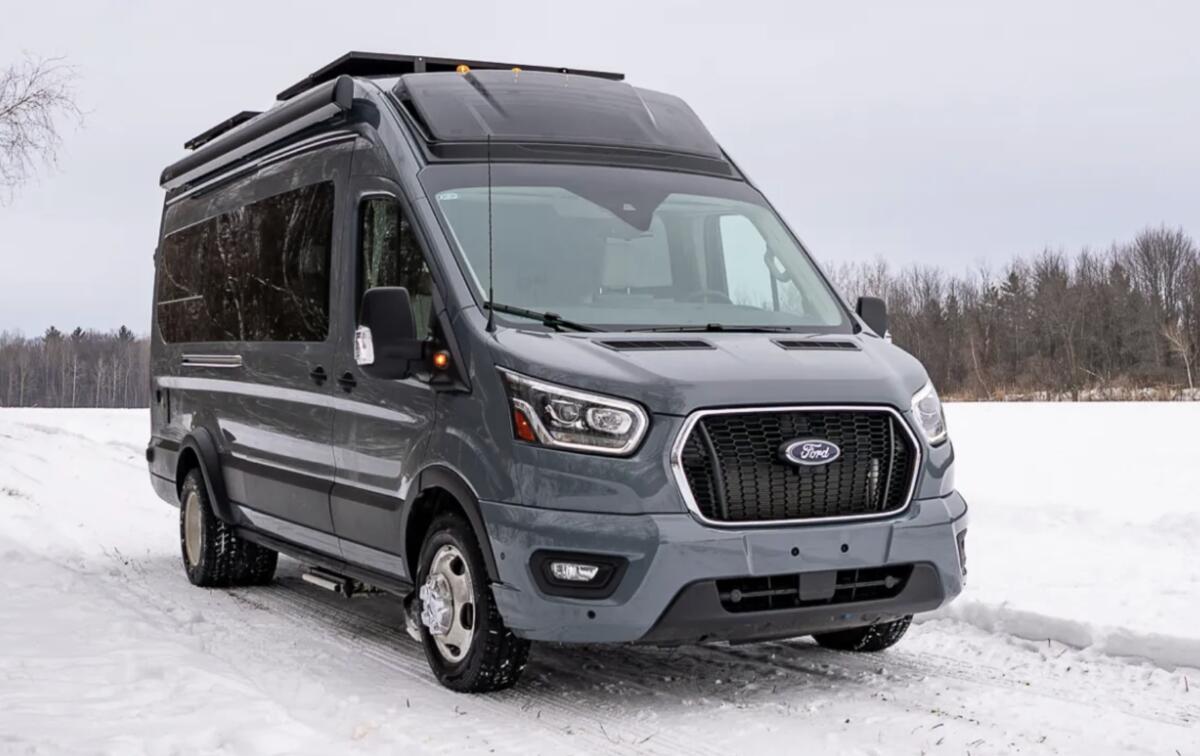
It was wonderful, but notnearly as wonderful as Panoramic RV’s 2026 Perspective Class B. This RV is definitely a step up—way up—from our 1977 Ford van.
The 2026 Perspective Class B might just change how you think about compact campers. This van-style RV is best suited for a single traveler or a couple who love year-round capability without the hassle of a bulky rig. The Perspective is roomy enough to live in for extended trips but still nimble on winding backroads and easy to park in tight spots.
Behind the walls
The Perspective is built on a Ford Transit AWD platform. European-inspired interior and panoramic windows make this van feel more spacious than it looks from the exterior. Insulation surrounds the interior, making the Perspective a legitimate all-season Class B camper.
Key specs
• Length: 22′0″
• Interior height: 6′5″
• Width: 8′1″
• Payload capacity: 1,875 lbs.
• Fresh water capacity: 35 gal.
• Gray water capacity: 28 gal.
• Black water capacity: 16 gal.
• Refrigerator capacity: 5.8 cu. ft.
• Chassis: Ford Transit AWD
• A/C: 13,500 BTU with digital thermostat
• Estimated price range: around $120,000 – $215,000 (depending on features, dealer and market conditions)
Interior and living space
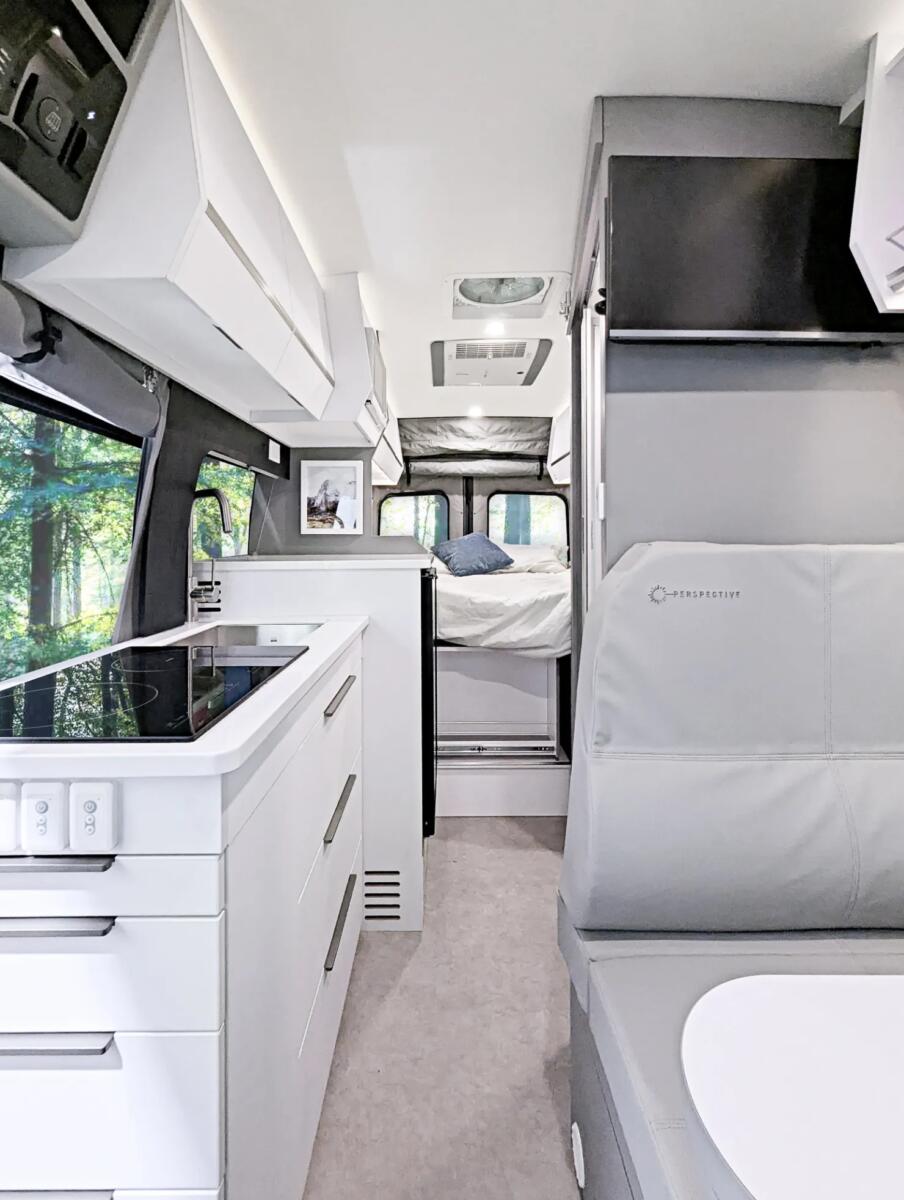
Step inside and you’ll immediately notice a bright, airy feel thanks to large panoramic windows that let in lots of natural light. The 6′5″ interior height means even taller folks can stand comfortably—a big plus in a compact Class B. Clever European-style touches help make every portion of this van feel purposeful and well laid out.
Kitchen
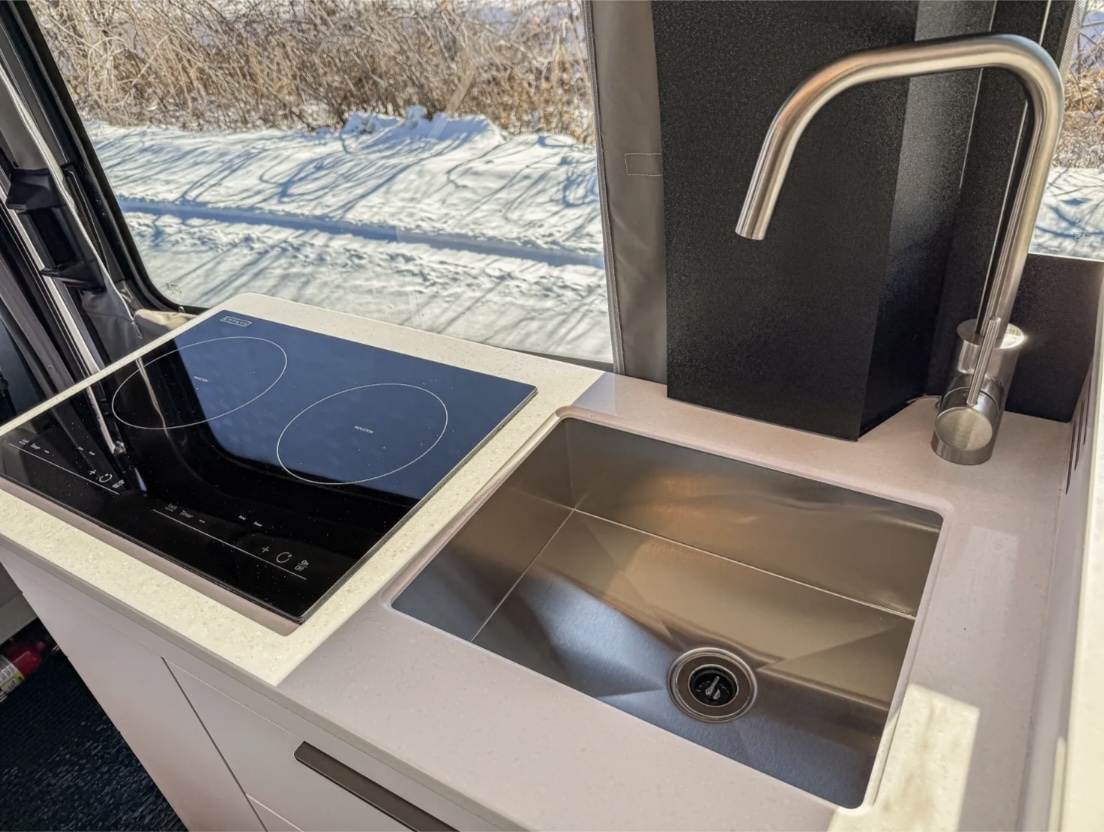
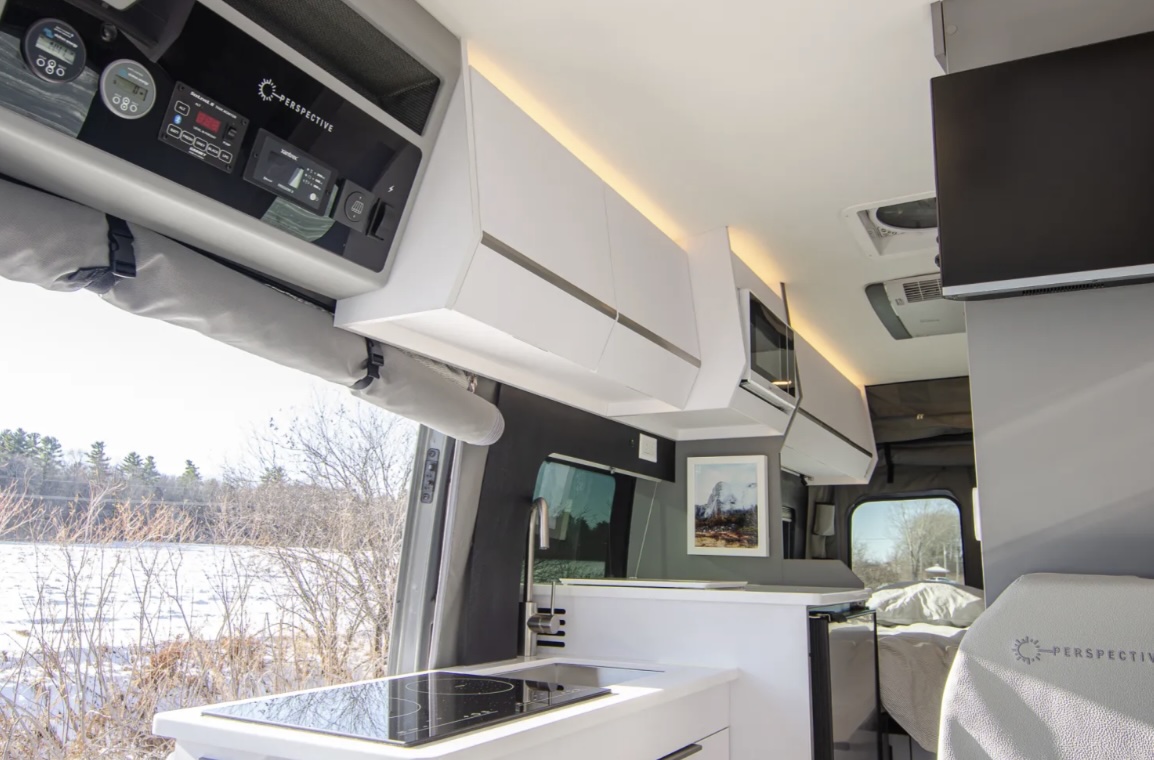
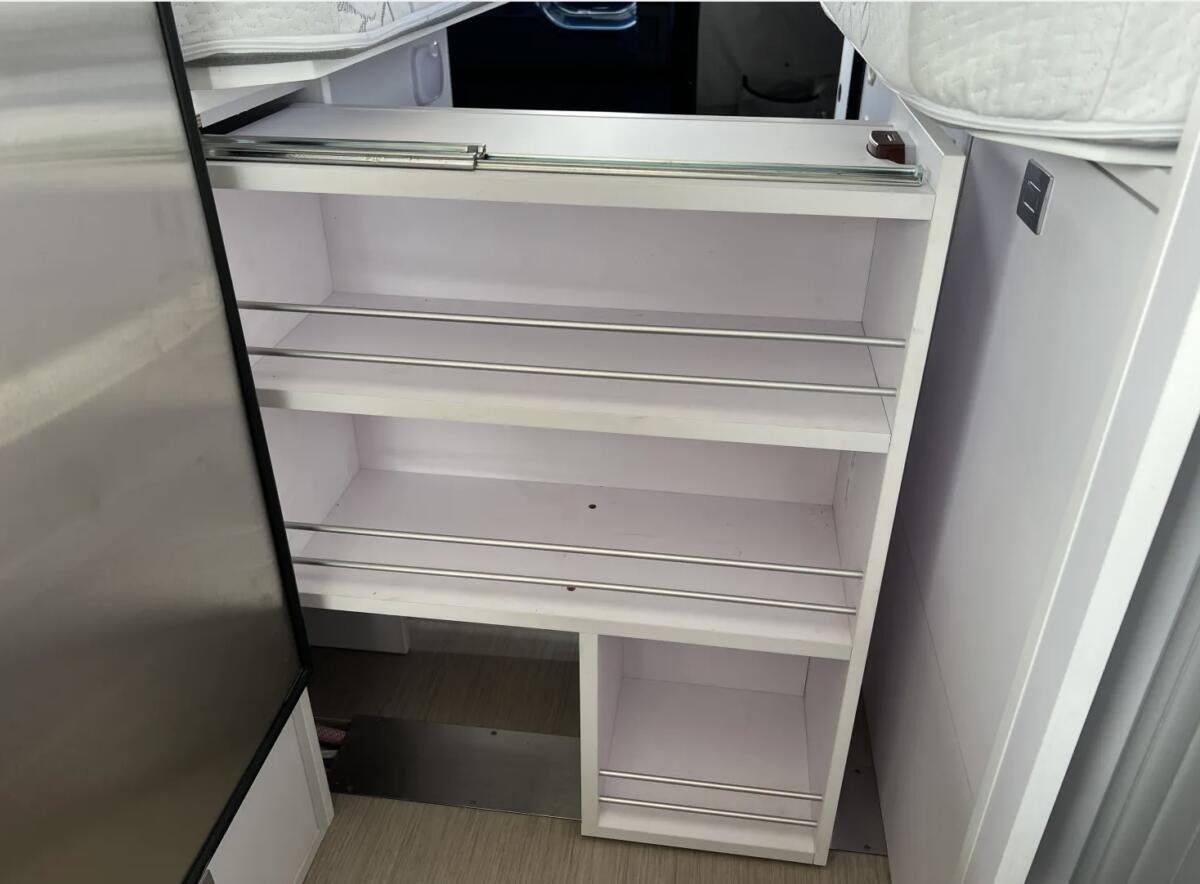
The kitchen features a deep sink, microwave, and induction cooktop. The vertical pantry and cabinets offer more storage than you’d expect in a van this size. There’s also space for a 5.8-cubic-foot compressor fridge to keep food and drinks cold. I really appreciate that the Perspective’s refrigerator is raised a bit off the floor to make access easier.
Above-cabinet lighting brightens the prep area, and you’ll discover several options for additional workspace. Added bonus: All cabinets feature soft-close doors and automatic locking mechanisms.
Living room
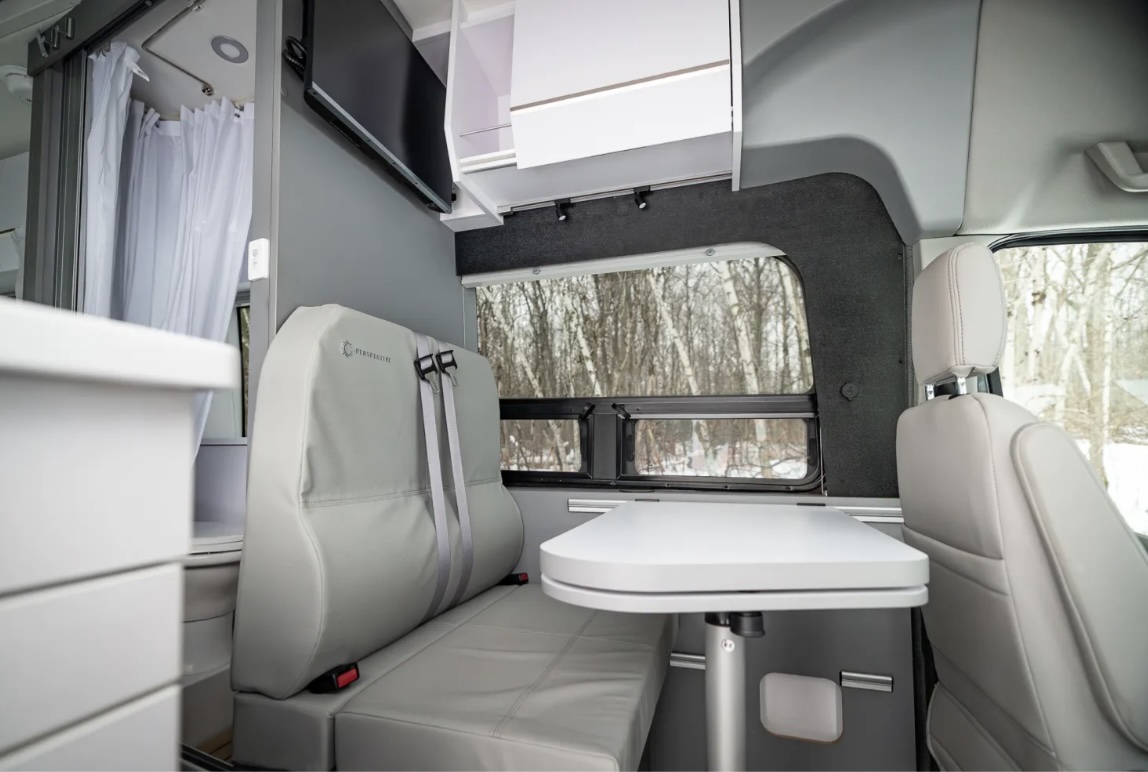
The 2026 Perspective has front seats that swivel to face into the cabin. When paired with the bench seat and a fold-out table, you have a comfortable place to eat, work, or watch TV. The TV is tucked out of sight until you need it. I really like that it pivots to allow television viewing from anywhere in the van.
Bath
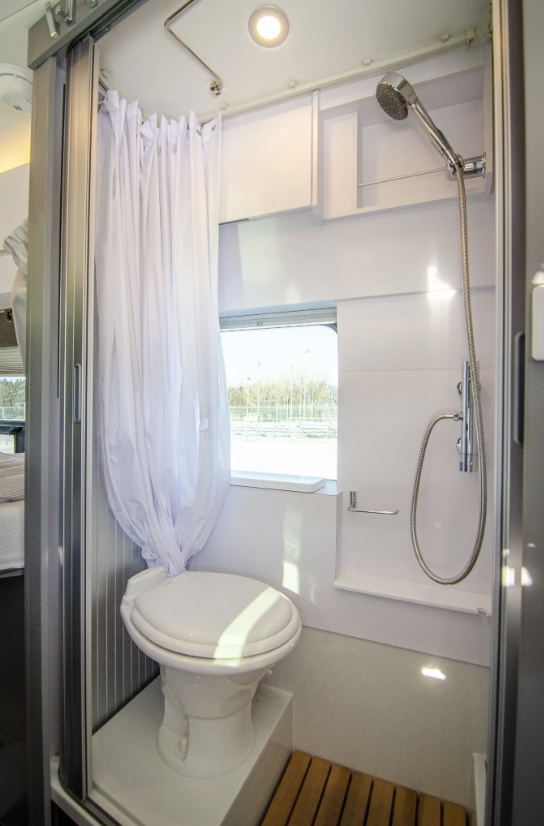
The bathroom is cleverly positioned to save space without sacrificing functionality. It sits opposite the kitchen and features a porcelain toilet and a thermostatic shower faucet.
Storage nooks help keep toiletries and towels organized, and with the wrap-around curtain, you won’t have to wipe everything down after your shower—a huge bonus, in my mind. Roll-out doors ensure that the shower water won’t find its way into the living space.
I appreciate that designers found a way to include a towel rack in this very compact bathroom.
Bedroom
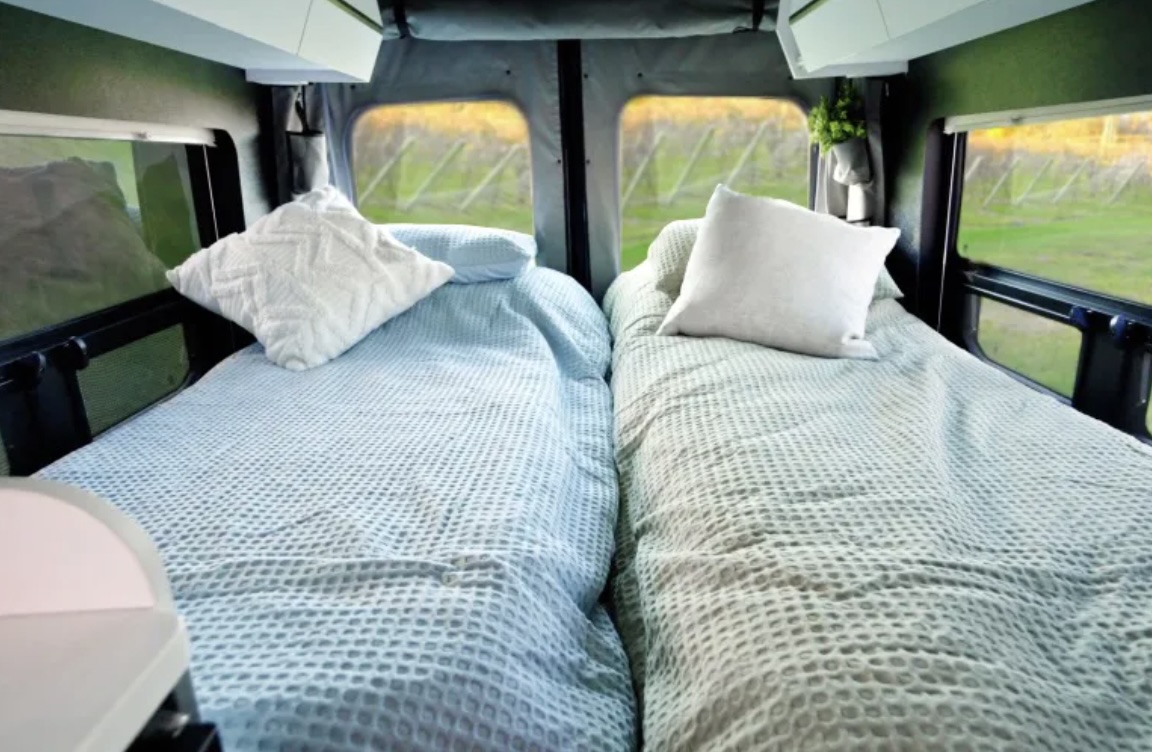
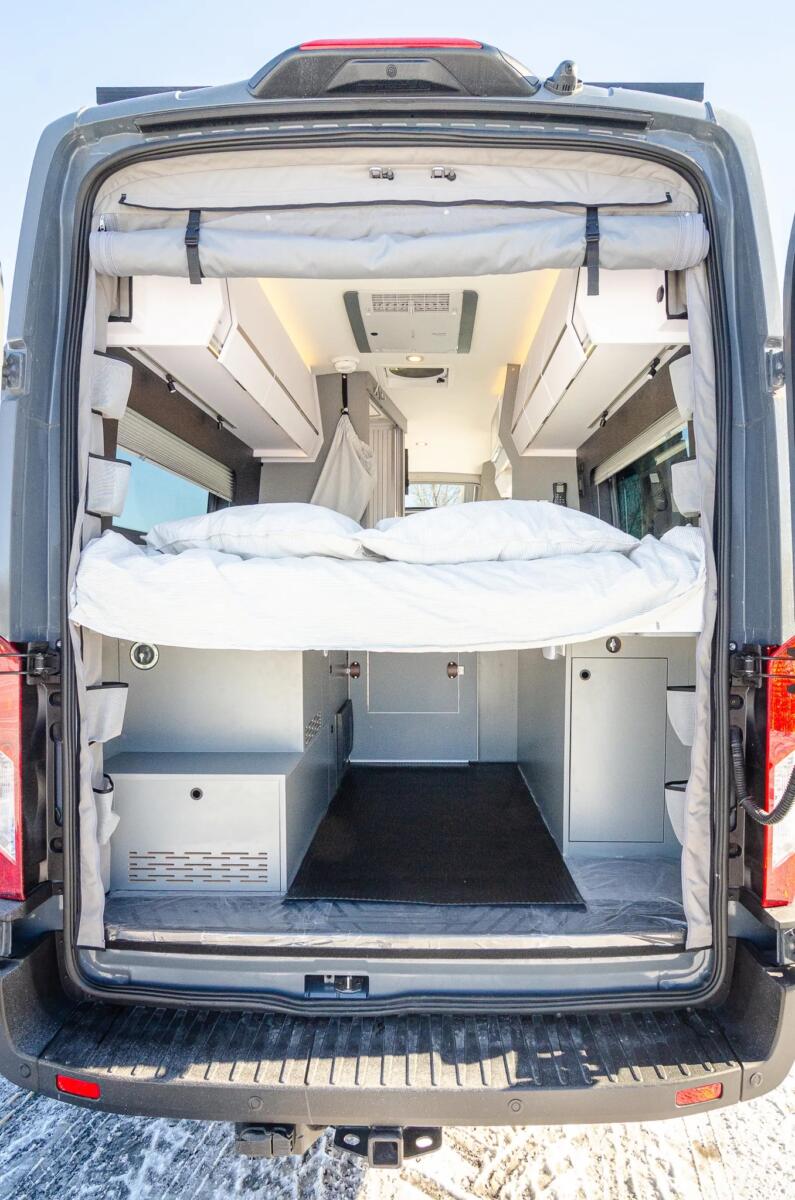
At the rear of the Perspective is your sleeping area. You can choose between two layouts: a large longitudinal bed or separate twin beds. Either way, ingress and egress are simple for both occupants because of the integrated stairs. (They also include storage space.)
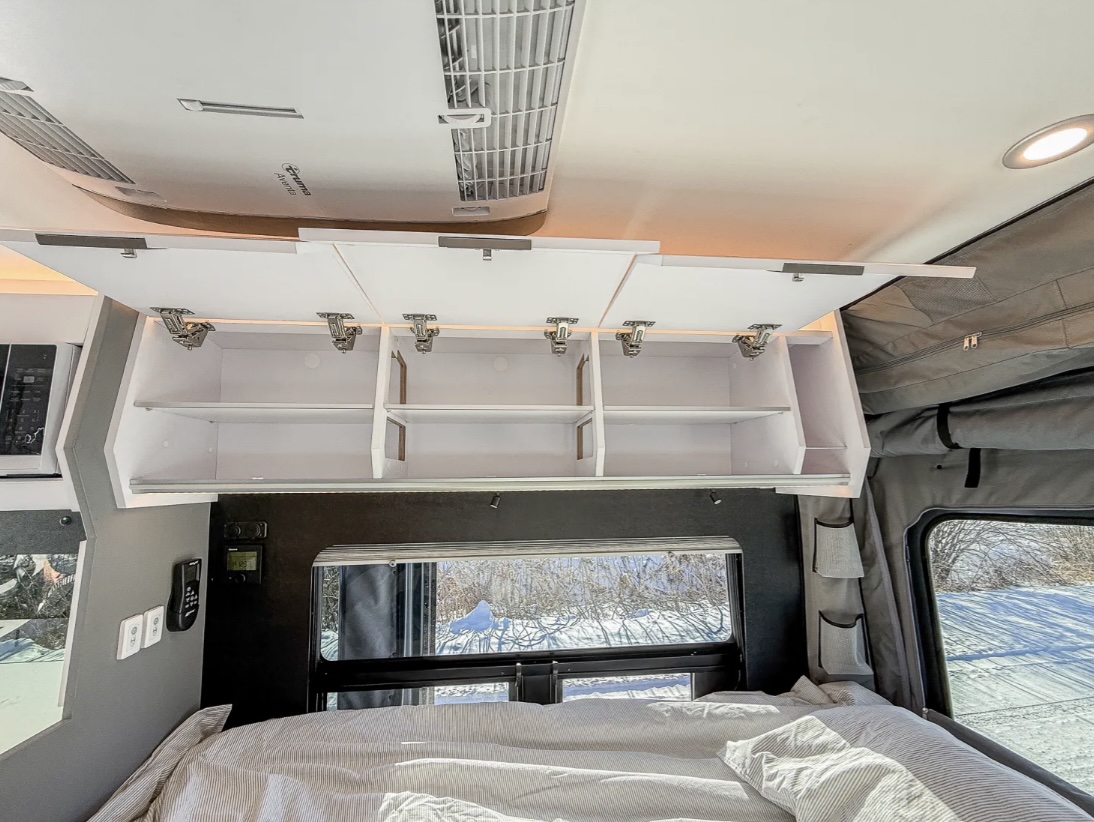
The panoramic bedroom windows keep things bright and open, and I was surprised at the amount of storage both above and below the sleeping platform.
Overall take
The 2026 Perspective Class B is a thoughtful package for solo explorers or couples who want more comfort from a compact RV. Its intelligent use of space, generous windows, year-round climate systems, and off-grid-friendly design make it travel-friendly. If your priority is a blend of everyday drivability with easy livability, this rig deserves a very close look.
You can watch a video walk-through of Panoramic RV’s 2026 Perspective Class B below.
What do you think about the Perspective Class B? Tell us your pros/cons using the comments below.
This is the first of a weekly series where I use my experience in the RV world to help take a slightly deeper dive into some of the news stories around the RV world. I hope I can add a little perspective, and sometimes humor, to the things we’re all reading about in the RV world.
I hope you already have your steaming hot beverage and a comfortable chair, so let’s get into a few of the things I thought we should share.
Oh, and I love reading your comments, good or bad. Do you like this idea? Is there a story we should all revisit together? Do you think I’m just a dork who sits around with nothing better to do? I always encourage your comments and input, and appreciate your readership.
Further, I spoke with Mark Guido in Quartzsite, and he, too, has had issues with the product to the point where it made more sense for him to take his six batteries to a hazardous waste landfill than comply with the company’s warranty process. He details that in this video.
My issue isn’t the batteries themselves—although I’m quite glad I don’t have them in my solar and lithium power system—but the way the company is responding. A lot of you have reached out to me on social media asking what is going on. That means that my social media feed is full of ads from the company talking about how great the product is.
I have looked, and many, many of the comments on the ads aren’t readily available.
My issue is more that the company is just handling this horribly by trying to suppress and hide these comments, just as Grand Design did with their frame flex issues, as I described in my first article. Any business should have a disaster plan because things do go wrong. Getting ahead of the comments and having a solid plan to address this head-on is smart.
Avoiding the problem, suppressing comments, and continuing with the same messaging is not smart. Oh, and here’s Will Prowse’s latest video:
When I worked at the dealership, Costco approached us to be a partner under a similar program, but the funny thing was, we offered bigger discounts already right on the signs we hung in the RVs. There was no additional negotiation by a Costco customer to get a better deal than the Costco one.The pitch also includes that you get a concierge service. This just means some lucky salesperson at Camping World won the lottery and gets assigned to you if you go through this program.
It looks good for Costco and Camping World, but it’s nothing good for you, really. Plus, you have to go to Camping World. While I’ll reserve comment, a search through any place that offers reviews of people’s real-world experience should alert your inner watchdog.
I have always advocated finding a locally-owned small RV dealership as one of the first steps in your buying process. That’s even more true today, although there are fewer and fewer of these.
RV space heaters
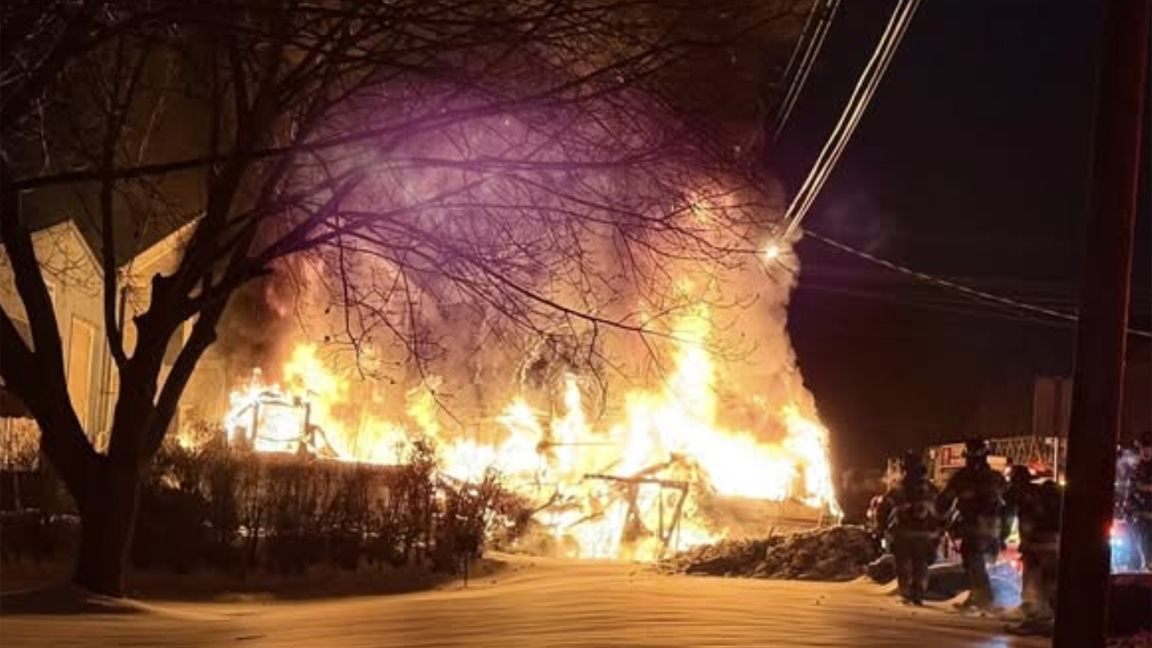
Russ and Tiña had a great recap of RV electrical systems in their article “Woman killed in RV fire linked to space heater.” There isn’t too much more that I can add that wasn’t very well covered in their article. They’re right: RV electrical systems aren’t like home systems, even though they might look the same.
Firefighters responding to an RV fire at night. Franklin Fire Co. photo.
A basic tenet of electricity is that a weak connection effectively creates heat. The worse the connection, the more heat. Heat can turn into fire. At home, when an electrician wires your house, they strip the wires and, typically, screw those bare ends of the wire onto the back of the power outlet, creating a very solid connection. It’s a good thing.
As an RV rolls down the assembly line, typically, there are power outlets with a metal “V” at the back. The worker simply pushes the wire down onto the “V,” which is supposed to strip the wire and make a connection. It’s not nearly as good a connection as you have in your home.
Then add the miles and vibration of your RV being a moving vehicle, and you’ve compounded the issue.
Further adding a heavy, continuous load to the equation is a recipe for disaster. Or, in the case of the victim in the story, death. Space heaters are a mostly very bad idea in RVs. Russ and Tiña were absolutely correct on this point, and I wanted to further illustrate why.
But let’s be honest here. You’re reading this on a tablet or smartphone, so you already have a device that’s constantly monitoring what you’re doing and where you are. If you’re on social media so you can see your grandchildren who have long switched to a different platform anyway, well, that’s another place where you’re constantly being tracked.
And I know you’re buying stuff on Amazon and using Google for search, and on and on.
I would never tell someone not to be as careful as possible with their privacy. But I am far, far more concerned about the guy sharing campground Wi-Fi and hacking my accounts (it’s happened twice—I will never, ever, ever use campground Wi-Fi again) than I am about being part of an aggregate of data for a giant corporation.
This is the fourth Grand Design recall we have reported in the last three weeks. It makes you wonder about quality control in the company. Just sayin’.
In its latest action, issued January 30, Grand Design is recalling certain 2025-2026 Lineage motorhomes. The seat base on the driver and front passenger seat may have been improperly tightened, causing the base to become loose.
A loose seat base increases the risk of injury or worse in the event of a crash. Who needs that? How does this get by the company’s quality control?
As such, these vehicles fail to comply with the requirements of Federal Motor Vehicle Safety Standard (FMVSS) number 207, “Seating Systems.”
Remedy
Dealers will inspect and tighten the seat base, as necessary, free of charge. Owner notification letters are expected to be mailed next month on March 11.
Owners may contact Grand Design customer service at 1-574-825-9679. Grand Design’s number for this recall is M910057.
A brutal polar vortex pushed temperatures well below freezing this past week. Translation? It’s cold! It’s been below freezing for several days in a row!
Plummeting temps caused the mist that rises from Niagara Falls to freeze on contact. The result? Huge ice mounds and otherworldly frosty plumes.
Frozen?
Are the falls frozen? Well, actually, the trick is the mist. When air temperatures plunge for days, and the region gets lots of moisture, spray and surface water freeze into thick ice. This ice forms around the falls’ brink, cliffs, and riverbanks. That creates the iconic “frozen” look—giant ice shelves, icicles, and a still, glittering foreground. Visitors say the falls are quiet. The iconic roar of rushing waters is quietly muffled and eerily hushed.
But don’t be fooled. Underneath, large volumes of water continue to move beneath the surface. Satellite imagery and park photos show the pattern clearly. There is heavy surface ice and frazil ice (slushy ice crystals) in the river, but it’s not an entirely solid, immobile waterfall.
What you’ll see
Visitors can expect spectacular photo ops and big crowds. Local tourism and news outlets reported a spike in visitors hoping to see the ice formations. Niagara Parks has been pointing people toward safe viewing areas like Table Rock and the Journey Behind the Falls viewing platforms.
If you want up-close shots without trekking onto sketchy ice, those managed vantage points are your best bet. They’re open in winter, though specific hours and access can change with conditions.
Watch a video of the spectacular winter falls here.
Safety first
Authorities and park officials repeatedly remind visitors to stay on designated paths and observation decks. Winter access is maintained in some spots, but closures happen when conditions become unsafe.
Best viewing choices and timing
For stable, safe viewing and photos, head to Table Rock, the Table Rock Visitor Centre, and the Journey Behind the Falls platforms. They often remain open in winter and provide managed access and washroom facilities.
Go earlier in the day for fewer crowds and clearer light. Late afternoon can produce dramatic side-lighting on ice, but roads and paths may get icier as temps fall. Keep an eye on Niagara Parks’ hours and notices before you go. Check here.
How about you?
Seeing the winter falls is an entirely different experience than viewing it during other times of the year. Yes, you’ll need to dress for the very cold temps. However, seeing Niagara dressed in ice is a once-in-a-winter spectacle, well, that’s not to be missed.
America’s Original RV Newsletter. Since 2001
Issue 2835 • New issue every weekday If you find this newsletter helpful, please considersupporting our staff’s work producing it 260 days of the year with a donation of your choice.
Remember: You don’t need to receive an email alert from us to read our newsletters. Just click any time of day directly to RVtravel.com. The latest issues will be right there for you.
Today’s thought
“Even after all this time the sun never says to the Earth, ‘You owe me.’ Look what happens with a love like that, it lights the whole sky.” ―Hafiz
Need an excuse to celebrate? Today is National Chopsticks Day! Need a little help using chopsticks? Here, let us lend you a hand…
On this day in history:1919 – The American Legion is founded.
Tip of the day Easy, cheap trick to keep outdoor cords, chargers dry
By Nanci Dixon
It has been raining almost every night here and I need to charge my eBike. The bike is covered, the extension cord plug is well under the motorhome and the charger is tucked under, too. I thought my charger would stay dry…
The next morning, I found my charger wet, covered with mud and sitting in a puddle. Well, that’s not good! I immediately shut the power off at the pedestal and wiped the charger off.
The charger needs to be outside and near the bike, but it couldn’t stay like this if it was going to keep getting wet. I needed a solution…
RV review
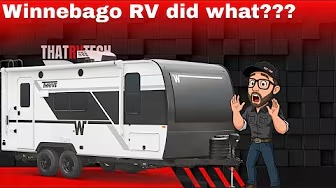
Big changes at Winnebago—for the better
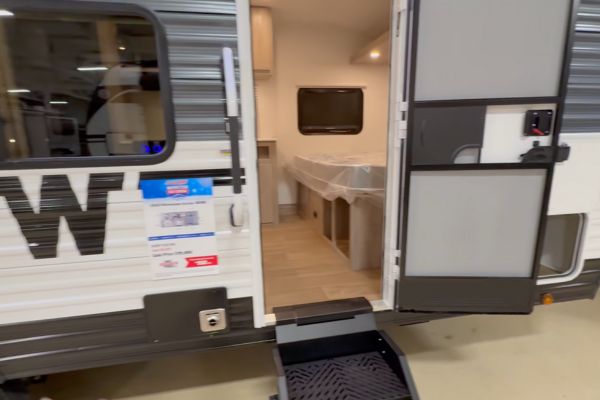
A lot of travel trailers blur together. Same parts, same layouts, and the same little shortcuts that show up once a buyer starts looking closely. On a recent walkthrough at Kier RV, That RV Tech said Winnebago is making a bit of a comeback, at least with its travel trailers. These units still sit in the “basic” price lanes, but the build choices and fit feel a step up from the usual copy-paste crowd. Here’s why.
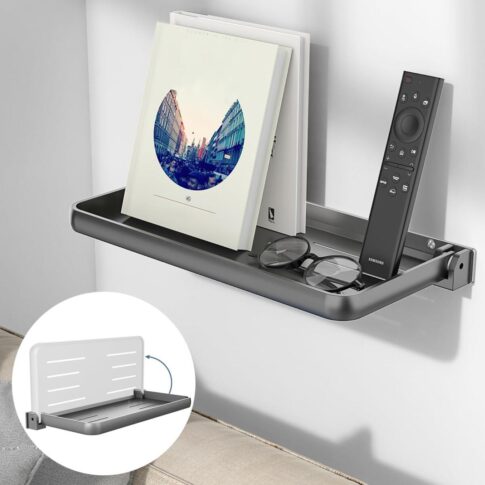
Flip it, use it, fold it away. Voila!
This fold-down wall shelf is a perfect little space-saver for RV life. It gives you instant surface space for drinks, phones, books, or glasses—then folds flat when you don’t need it. Built from durable aluminum and designed to stay secure while traveling, it adds storage without clutter, making it a smart upgrade for small RVs, campers, and trailers where every inch matters. Check it out.
In the RV shop with Dustin Should RVers treat their black tank with anything but “normal” chemicals?
An RV owner in one of our Facebook groups wrote, “We had the unfortunate experience of our black tank being full when we were at a site. Figured we’d just hook up, go dump and resume our stay… Unfortunately, the gremlins blocked up our black tank sensors, and we couldn’t dump, so we figured the weekend was over and took our baby home. Once it’s cleaned out, is there anything I should be treating the tank with besides the normal chemicals?” Find out here.
Article and video Tour some of the best minivan RVs
Here, we join Linda from Serene and Simple Life at the Rubber Tramp Rendezvous in Quartzsite, AZ, for tours of some terrific minivan RVs. This is Bob Wells’ (Cheap RV Living) annual nomad event, and, of course, lots of van lifers were in attendance. Here are just some of the interesting minivan RV features highlighted.
Featured article The dirty secrets of buybacks of defective RVs
Join RV consumer advocate Liz Amazing (her real name) as she sheds light on the frustrating reality of consumers with defective RVs who attempt to secure a buyback from manufacturers who insist they do not do such a thing. (Actually, as Liz explains, they do.) Read more and watch her video.
Don’t put the stuff on your tires that makes them shine. Most of these contain petroleum products and these will cause the tires to dry out. Considering the price of tires, you sure don’t want to do anything that will shorten the life of your tires. Just keep the tires clean with soap and water. —From RVing: Less Hassle—More Joy: Secrets of Having More Fun with Your RV—Even on a Limited Budget
Tire expert Roger Marble recommends against using any product that contains petroleum distillate on tires. Read about it here.
? MYSTERY PRODUCT OF THE DAY ? You know that thing that always gets on your nerves? Or that one person who’s just always driving you nuts? Well, you’ll certainly laugh at this. We guarantee it.
Trivia
The Walt Disney Company is the largest consumer of fireworks in the U.S. If you’ve been to Disneyland or Walt Disney World, you probably guessed this since you’ve probably been to one of their daily fireworks shows. The annual cost of fireworks amounts to about $50 million.
For Lovers Only
TO: Linda FROM: Larry “Thank you to the love of my life for making our adventures so memorable! I love you!”
TO: Julie FROM: Jim “Happy Valentine’s Day! Love you to the moon and back. So looking forward to camping and exploring new places with you in 2026. We have shared many wonderful times, made friends, and memories. I love you, Julie.”
Listen up, romantics. Valentine’s Day is coming up. If you have a special someone you’d like to surprise with a secret message right here on this website (could be your wife, husband, partner, child, neighbor, friend, etc.) submit it to us here. Oh, how fun it will be when they read it! We’ll feature these daily in our upcoming newsletters.
Readers’ pet of the day
“Scooter (Yorkshire Terrier and Chihuahua, aka a ‘YORKA-HUAHUA’, age 2) is always on the go. He loves traveling, walking, and camping. We only have to pick up his leash or say ‘let’s go bye-bye’ and he is at the door. He is super-friendly. Although he doesn’t pose for photographs, he certainly struck a pose for this shot.” —Nollie Jones
Send us a photo of your pet with a short description. No blurry photos and please do not submit your photo more than once. Thanks!
If you shop at Amazon.com we’d appreciate you using this link. We get an itty bitty commission if you buy something, but they add up and help us pay our bills (most importantly our hard-working writers!).
Dear Dave,
We live in Colorado and have winterized our trailer. We are planning to go to Arizona for a couple of weeks. During this trip we will have access to city water so will not need to use our fresh water tank at all. If we do not fill the fresh water tank and do not turn the water pump on during the trip, can we just empty the gray and black waste tanks, blow out the lines, and run new antifreeze into the lines when we return? —Sarah, 2019 Keystone Premier 19′ travel trailer
Dear Sarah, I assume you “winterized” your travel trailer by adding RV antifreeze throughout the system originally, since you indicated you would run new antifreeze in the lines when you return. I also assume you drained the water heater tank and switched the bypass valve.
When you connect a pressurized water system to the city water connection, the water line typically goes to a diverter valve that will direct the flow to either the plumbing system or the fresh water tank to fill that up. You may also have an on-board water filter that it would go through first.
At some point it will go to a manifold or series of “T’s” that have lines going to each faucet, shower head, and toilet.
Suggestions for trip during freezing weather
What I have done for a temporary trip during freezing weather is to leave the winterizing just as it is and carry jugs of water to use for the toilet and sinks. I don’t drink the city water from campgrounds, but rather buy water from local grocery stores in reusable jugs.
If you are staying in a campground, you can use the bathhouse for showers and not have to worry about winterizing the system when you are ready to go.
Winterized pipes
Otherwise, you will need to install the drain plug of the water heater and turn the bypass back to filling it, then run water through all the pipes to get the antifreeze out of the lines to use it for two weeks. Then drain the water heater, turn the bypass and, as you stated, run RV antifreeze back through the system, which you will need to do using the water pump.
I typically don’t blow out the lines and run RV antifreeze—just run the faucets and such until the pink stuff comes out.
You might also enjoy this from Dave
How can I use my winterized RV in January and February?
Hi, Dave,
We live in New England so obviously we need to winterize our RV’s water system at the end of the season—blow it out, antifreeze, etc. This year, however, we will be traveling starting in mid-January, returning late February. Is there any way to perform a “winterization-lite” that will still protect the plumbing without having to go through the full process? If I blow out the lines and put a space heater in the camper, will that do the trick? Thanks so much. —Bruce, 2022 Gulfstream 189DD
By Nanci Dixon
It has been raining almost every night here and I need to charge my eBike. The bike is covered, the extension cord plug is well under the motorhome and the charger is tucked under, too. I thought my charger would stay dry…
The next morning, I found my charger wet, covered with mud and sitting in a puddle. Well, that’s not good! I immediately shut the power off at the pedestal and wiped the charger off.
The charger needs to be outside and near the bike, but it couldn’t stay like this if it was going to keep getting wet. I needed a solution…
Keep your outdoor cords and chargers dry
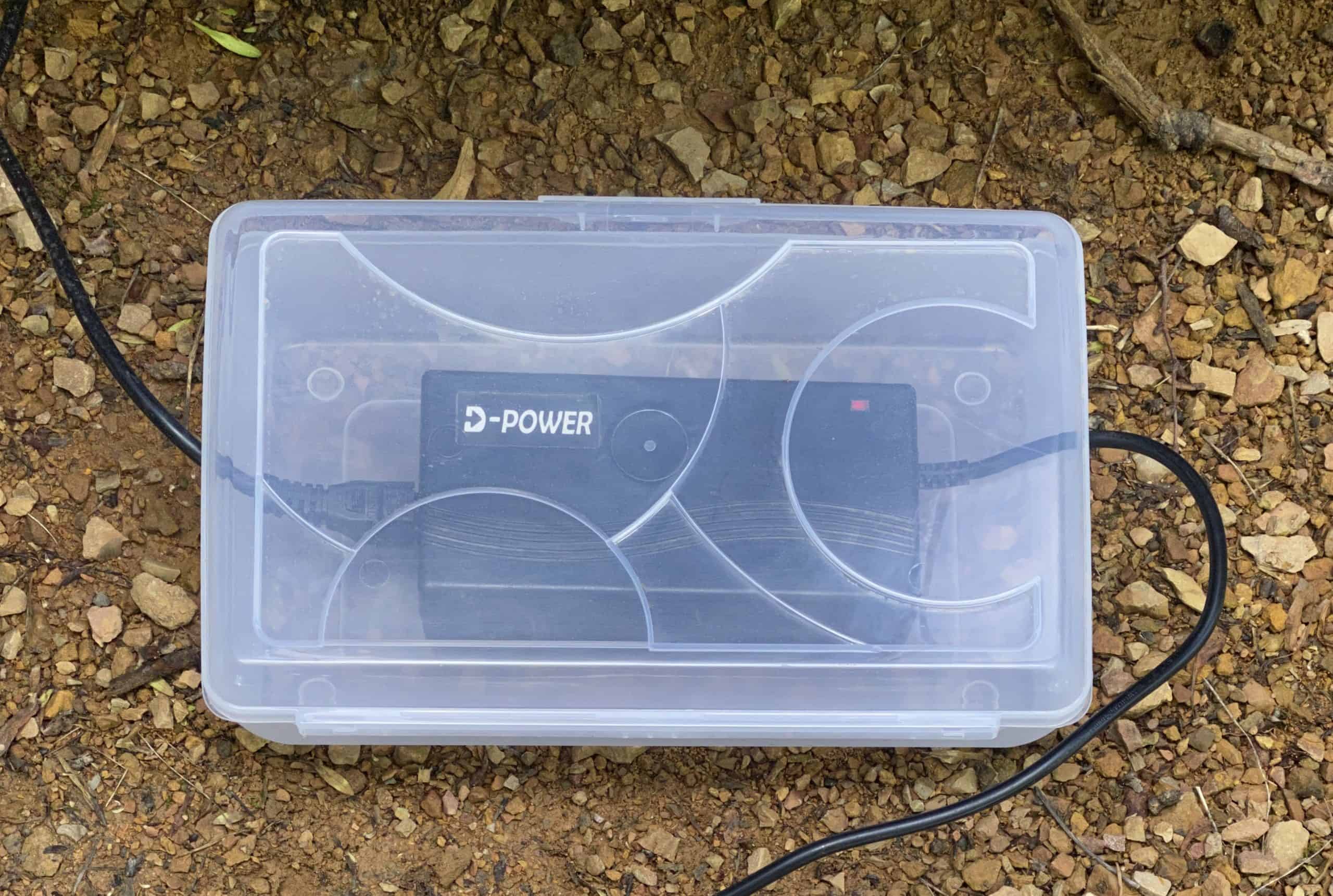
I found a $1.29 plastic pencil case in the school supply department, notched the sides where the cord goes through and placed the charger in. Success! During the next rainstorm, the charger was not in a puddle and wasn’t wet!
I did crack the lid on the case slightly to allow air to circulate and not overheat the charger. (There’s a 3-pack on Amazon that would work too, especially if you want to color-code your cords or chargers.)
Pencil caseNotch in pencil case
If you have any cords or chargers that need to stay outside and dry during a rainstorm or potential rain, this is a great solution and it takes up virtually no room to store. Bonus!
Note: Check and make sure your chargers don’t get too hot. If they do, you may need a bigger container or put more air holes/ventilation in the sides.
By Cheri Sicard
In the video below, we join Linda from Serene and Simple Lifeat the Rubber Tramp Rendezvous (RTR) in Quartzsite, AZ, for tours of some terrific minivan RVs. This is Bob Wells’ (Cheap RV Living) annual nomad event, and, of course, lots of van lifers were in attendance.
RV “open houses” are part of the event. Nomads open up their rolling homes and share the tips and ideas that have worked for them. This video focuses on Minivan Day, and it’s fascinating to see just how livable a minivan can be.
Here are just some of the interesting minivan RV features highlighted. Watch the video to take a look.
• The first idea we see is a clever swiveling folding bamboo table that makes a workspace when needed and then stows away afterward.
• A pegboard wall storage system keeps lots of small items neat and organized.
• A kid’s toy kitchen fits in a minivan and provides a sink, cabinets, and counters.
• Restaurant racks for holding storage bins.
• Lightweight PVC pipe hanging rods.
• A movable table that can be used indoors or out.
I was most surprised by the use of the kids’ kitchen in the minivan RV. What a clever idea!
Say you’re chatting with new neighbors in a campground. They’re newbies, but you’ve been RVing for a while now. They’re considering becoming full-timers someday and wonder if you will, too. What would you tell them?
Would you describe the freedom of the open road, the ability to chase perfect weather, and the joy of waking up to new scenery whenever you please? Or would you share the challenges—downsizing, managing mail, dealing with breakdowns, and finding reliable healthcare on the road?
Full-time RVing is a dream for many, but it’s not for everyone. Some love the idea of adventure without the burden of a fixed home, while others prefer the balance of part-time RVing with a home base to return to.
Maybe you’ve considered full-timing, but there’s something holding you back. It could be family ties, the need for a steady routine, or simply the comfort of having a permanent home. On the other hand, perhaps you’re already living the full-time lifestyle and wouldn’t have it any other way. Either way, your experiences—whether as a weekend warrior, a snowbird, or a full-timer—can help others decide what’s right for them.
Is your plan to become a full-time RVer? Do you think it’s something you’ll consider in the future? Is it something you’ll never consider?
After you vote, please leave a comment and tell us why you would or wouldn’t consider becoming a full-time RVer. Thanks!
By Dustin Simpson
An RV owner in one of our Facebook groups wrote, “We had the unfortunate experience of our black tank being full when we were at a site. Figured we’d just hook up, go dump and resume our stay… Unfortunately, the gremlins blocked up our black tank sensors, and we couldn’t dump, so we figured the weekend was over and took our baby home. Once it’s cleaned out, is there anything I should be treating the tank with besides the normal chemicals?”
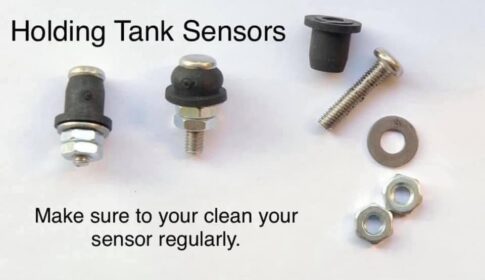
I replied, “So, basically your black holding tank sensors are not reading correctly?” The owners replied, “Yes.” So I explained that I have been using Thetford’s RV Level Gauge Cleaner for years. It is specially formulated to dissolve tissue, waste, sludge and soap scum buildup. It is a 100% biodegradable liquid that works with both black and gray water tanks. The level gauge cleaner prevents buildups and restores level sensor operation quickly.
Here are examples of the sensors that are commonly used:
I recommend that you use this once every 4-6 months, depending on your use.
Join me in this video to learn more about this product. This is what I have always used and what I sell in the store to my customers.
Thetford RV Level Gauge Cleaner for black tank sensors
Our Facebook groups
These Facebook groups were created to help educate owners about parts, problems, repairs, fixes, and upgrades on RV units. We will be sharing videos that include WHAT’S IN THE SHOP? and SHOP TALK episodes with information on accessories and products that we use and install on the units from the shop.
We try and help as time allows to answer questions and problems. We encourage others to share their experience so we can build a resource page to help everyone.
A lot of travel trailers blur together. Same parts, same layouts, and the same little shortcuts that show up once a buyer starts looking closely.
On a recent walkthrough at Kier RV, That RV Tech said Winnebago is making a bit of a comeback, at least with its travel trailers. These units still sit in the “basic” price lanes, but the build choices and fit feel a step up from the usual copy-paste crowd.
In the video at the end of this post, he explains why.
That RV Tech tends to group mass-produced travel trailers into “good, better, best,” based on how they’re built. Most brands in the budget and mid-range space often feel interchangeable, including many Forest River and Keystone products, plus East to West lines. In that sea of lookalikes, Winnebago travel trailers have not always been the first name people mention.
What changed in this walk-through was the pattern of small details. The kind of stuff shoppers may not notice at first glance, but techs do:
Cleaner sealant works on tricky surfaces
Less “thrown together” wiring under the trailer
Better-looking assembly in visible spots, which often hints at care in hidden spots, too
The point was not that Winnebago suddenly became a luxury brand. It was that the basics looked handled with more care than expected.
Winnebago Access 18DBH: A budget trailer that doesn’t look careless
The first unit was a 2026 Winnebago Access 18DBH at Kier RV, listed at $19,995. It’s clearly a budget trailer, with tin sidewalls, a single axle, and simple features. But walking the exterior, the sealant work looked more consistent than what’s common on tin-sided trailers, including around the furnace access area.
Underneath, the frame looked clean, with less surface rust showing. This Access rides on a BAL frame (not Lippert). That isn’t a brand war, but it was a noticeable change from the usual “same frame everywhere” feeling.
Wiring underneath was also more orderly, with wires secured and corrosion protection present on circuit protection parts. A fitted wheel well also stood out, since many trailers rely on more basic fender skirt setups.
Inside, the Access layout stayed simple: dinette, small kitchen, bathroom, and an east-west bed, plus bunks in the back. Appliances included a GE Profile on-demand water heater, a 12V Furrion refrigerator, and a Greystone two-burner cooktop.
The biggest surprise was how little there was to complain about. The main flaw spotted was a small trim gap and a slightly crooked mount, which is about as mild as it gets in this price tier.
Winnebago Thrive: Where the “better” category shows up
Next up was a Winnebago Thrive, listed at $33,995. This one moves up in price and features, with tandem axles, BAL axle mounts, powered stabilizers, and a BAL frame. Exterior styling also stepped up with a lighted trim insert on the front cap.
A couple of practical touches stood out underneath. There was a fresh tank dump handle, so owners don’t have to crawl under the trailer to drain it. Ground connections to the frame also used better connectors and were sprayed for corrosion resistance, a small choice that can help prevent electrical issues later.
On the living side, the Thrive had JBL exterior speakers and soft-glow LED lighting, which avoids the harsh dotted look seen on many strips. It also used Suburban steps, which are quieter than metal steps and have slats that let dirt fall through.
Inside, the Thrive had a slide room in the main living area, a three-burner stove with an oven, and a one-piece solid surface counter where the sink is part of the countertop. That construction helps avoid the common “sink falling out” problem.
The main complaints were familiar RV stuff: cheap curtain tracks in the bedroom area, a basic mattress, and one small finish gap that stood out mostly because the rest looked so clean.
Side-by-side: What looked different compared to the usual competition
Detail
Winnebago Access and Thrive
Many similar competitors
Exterior sealant
More consistent and intentional
Often messy on visible edges
Under-trailer wiring
More secure, some corrosion protection
More loose runs, less protection
Frame look
Cleaner presentation, BAL frame shown
More “same everywhere” feel
Feature focus
Fewer gimmicks, more basics done right
More tech, not always better assembly
Closing thoughts: A simple reason to put Winnebago back on the list
That RV Tech’s takeaway was straightforward: These Winnebago travel trailers looked like someone cared during assembly, and that can matter as much as any brochure feature. They aren’t priced like Brinkley or Alliance, and they aren’t trying to be. They’re competing in the same lanes as other popular brands, but with cleaner execution.
If a shopper (you?) has been walking past Winnebago on the travel trailer side, this is a good year to stop and take a closer look.
We use cookies to ensure that we give you the best experience on our website. By continuing to use our site, you consent to accepting cookies. We NEVER have or will sell reader's data. For more info, please see our privacy policy page.