A few weeks ago, we had a lively discussion about mice and rats getting into your RV. On that same topic, a few of you mentioned you’ve had issues with ants. Yep. RVers are familiar with those issues, too, but we don’t talk about those tiny pests as often.
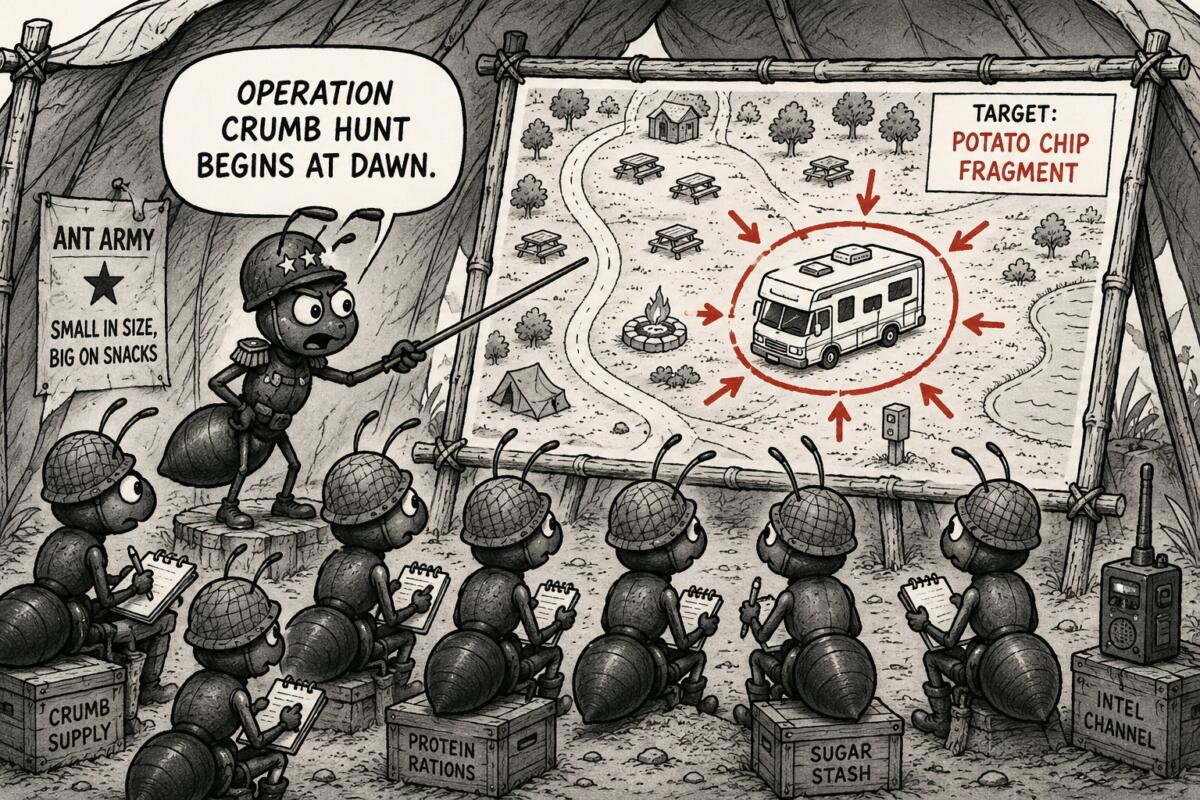
Ants may be tiny, but they can become one of the biggest annoyances an RVer faces. It often starts with just a few scouts on the counter. A day later, there’s an ant highway leading to a single forgotten crumb behind the coffee maker. Sound familiar?
Ants are most common during warm weather, especially in spring and summer. Campgrounds with lots of trees, grass, and irrigation systems are prime ant habitat. They’re also more likely to show up after rain, when colonies are disturbed, and ants go searching for food and dry shelter.
How to prevent ants from entering your RV
The best way to deal with ants is to prevent them from getting inside in the first place. Keep food sealed in airtight containers, wipe down counters regularly, and sweep up crumbs before heading to bed. Don’t forget pet food, which can be a major ant magnet. Even a few pieces of kibble left in a bowl overnight can attract scouting ants looking for an easy meal.
Many RVers are surprised by how little food it takes to start an invasion. A sticky soda spill, a few crumbs under the dinette, or a trash can that hasn’t been emptied can be enough to attract an entire colony. The cleaner your RV stays, the less likely ants are to stick around once they find their way inside.
It’s also worth checking where utilities enter your RV. Ants can use power cords, water hoses, sewer hoses, stabilizer jacks, and even tire treads as bridges into your rig. If you’re parked directly over or near an ant colony, they may discover these pathways within hours.
Some RVers place ant barriers around jack pads or use food-grade Diatomaceous Earth around common entry points. Others spray the ground around utility connections or place bait stations outside the RV to intercept ants before they reach the door. Whatever method you choose, it’s a good idea to inspect hoses, cords, and jacks periodically, especially if you’re staying in one location for several days or longer.
If you frequently camp in the South, Southwest, or other warm climates where ants are active year-round, a quick exterior inspection when setting up camp can save a lot of frustration later. Avoid parking directly next to visible ant hills, and take a moment to look around picnic tables, utility pedestals, and landscaped areas where colonies often hide.
What to do if you find ants inside
One of the biggest mistakes people make is immediately reaching for an insecticide spray bottle. While sprays may kill dozens of ants on contact, they often do nothing to address the thousands more hidden in the colony. In some cases, spraying can even cause the colony to split and relocate, making the problem worse. Baits work more slowly, but they are designed to attack the colony itself.
Instead, find the trail and use ant bait stations (these are the best). Worker ants carry the bait back to the colony, helping eliminate the source of the problem rather than just killing the ants you can see.
As tempting as it may be, don’t wipe away every ant as soon as you see them. If you’ve placed bait, allow the ants to continue following their trail for a day or two so they can carry the bait back to the nest. You may actually see more ants at first, which is often a sign that the bait is working.
Before leaving a campsite, take a quick walk around your RV. Ant colonies are often hidden beneath picnic tables, landscaping timbers, rocks, tree roots, utility boxes, and electrical pedestals. It’s also worth checking your power cord, water hose, and storage compartments before packing up, especially after an extended stay. Spotting a nearby nest—or a few hitchhiking ants—can help prevent you from bringing unwanted guests to your next campground.
A few ants may seem harmless, but if they’re ignored, they can quickly turn a relaxing camping trip into a frustrating battle. The good news is that ants are usually easier to prevent than they are to eliminate. Keeping food sealed, cleaning up crumbs promptly, watching for entry points, and using bait stations when needed can go a long way toward keeping your RV ant-free.
RELATED
- An electric mousetrap that works
- An easy, cheap DIY fix for RV mouse infestation
- How, and why, to install insect screens on your RV vents
- Protect your RV appliances with RV vent screens
- Prevent pests from getting inside your RV’s furnace
RVT1264