Home Blog Page 22

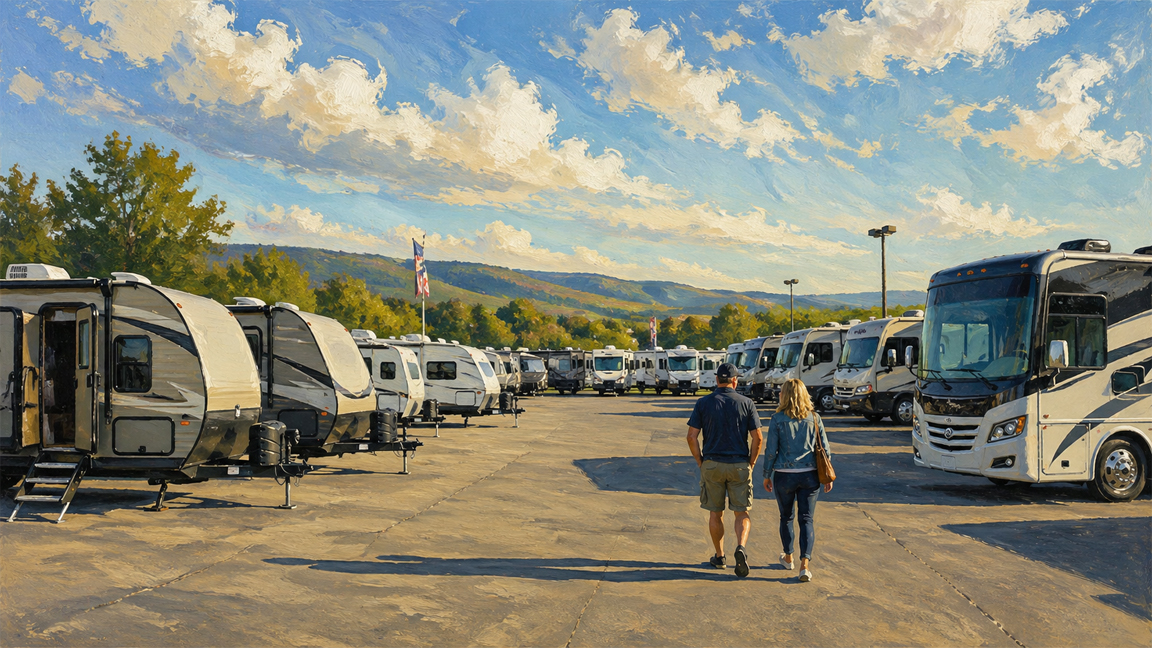
Will your next RV trip in the USA be to a destination east or west of the Mississippi River?

25

Where are you headed next with your RV? Maybe “Down Maine” for some lobster or to the South for some fresh catfish? Or maybe you’re headed out West to explore Utah’s gorgeous Red Rock Country or search for a wild jackalope in Wyoming.

Or are you headed up to the Northwest, to visit North Cascades National Park, maybe hike up the side of magnificent Mount Rainier, or visit the country’s only temperate rain forest in Olympic National Park (it gets 144 inches of rain a year on average)? You have never seen moss like you’ll see there!

Or are you simply driving up the highway a bit to your favorite forest service or state park campground?

So, the question is: When you head out on your next RV trip, where will you likely go?

Curious minds want to know. Remember, the poll could take a few moments to load if you’re on a slow internet connection. So stand by there, partner!

Oh, and if you want to tell us where you’re going on your next RV trip, we’d love to hear!

LIKE TAKING POLLS? So do we! Did you know we’ve run more than 5,000 polls on our website over the years? Check ’em out! Have fun!

RVDT2914

Spring encounters turn dangerous as wildlife moms protect young

2

Spring is a beautiful time to RV, hike, and wander. However, it’s also birthing season for big game animals. So, watch out, RVers!

Elk

The National Park Service says cow elk are especially protective when their calves are young. These protective mommas can run people down, kick, or violently trample folks who venture too close.

In Yellowstone, the Park Service says cow elk are just as dangerous as bulls when guarding calves. It warns visitors to stay back and turn around if an elk comes too close. Rocky Mountain National Park also notes that elk calves are born in late May or early June, and cows are extremely protective at that time.

Deer

Deer deserve the same caution. The Park Service explains that female deer often leave fawns hidden in grass or underbrush, which helps keep the young out of sight. That means a baby deer beside a trail is not usually abandoned, even if no mother is visible. NPS guidance also says deer mothers may become aggressive or stay away longer if people crowd the area, which can put the fawn at risk.

My husband and I recently stumbled upon a mule deer in a local park, and she was NOT happy to see us!

Pay attention!

For RVers, the safest plan is simple. Learn and follow these safety rules:

Read and follow the signs. Many parks post warning signs to remind hikers about potential dangers during spring birthing times. Some park trails may even close in order to protect animals and hikers. Do not attempt to circumvent closed trails. Obey all signs and postings.

Stay alert on designated trails. Spring is an especially dangerous time for RVers who enjoy hiking. It’s too easy to round a bend and unexpectedly come face to face with a protective cow or bull elk. (Been there. Done that. Lived to tell the tale. It was a very scary experience!)

Give wildlife space. The Park Service says to avoid approaching any wild animal. Rocky Mountain National Park advises that elk should be kept at least 75 feet away. Yellowstone also uses a 25-yard distance for elk and says to back away if an animal changes its behavior because of your presence. The common-sense takeaway is that if an animal notices you, you are probably already too close.

Learn from others’ mistakes

Colorado Parks and Wildlife reported several elk incidents in early June 2024. This prompted closing the playground indefinitely. Parts of the Lake Estes Loop trail were also closed, with warning signs posted in the area. News reports at the time described multiple people, including children, being injured by cow elk during calving season.

Don’t be the next headline!

If you are hiking near an RV park, trailhead, town path, or campground in elk or deer country, keep your head up and your pace calm. Watch for hidden calves in tall grass, and slow down near corners and brushy areas. Keep pets close and never try to get a better photo by moving in on a mother animal.

The Park Service reminds all of us that wildlife is unpredictable. This includes elk, moose, and mule deer that may defend their young without warning. A few extra seconds of caution is a small price to pay for a safe trip and a peaceful encounter with the wild.

Have you ever encountered a protective deer or elk during birthing season? Tell us about it in the comments below.

RELATED

RVT1263b

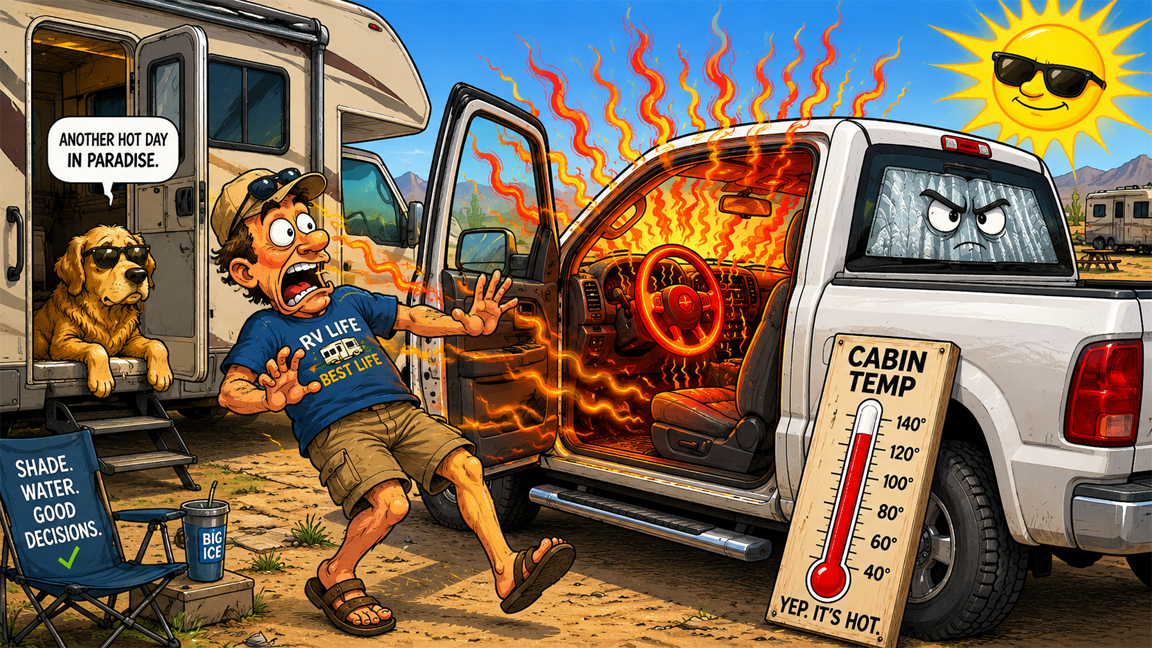
Your tow vehicle may be hotter than your RV. Here’s how to cool it faster

Sometimes the hottest part of an RV trip isn’t the RV at all. RVers looking for ways to cool a tow vehicle faster during summer travel know how quickly a truck cab can turn into an oven. The same can be said for that toad car.

A recent article from Southern Living looked at ways drivers can cool down a scorching-hot vehicle faster in summer. While the piece focused mostly on everyday cars, RVers may understand the problem better than just about anybody.

Fuel stop. Grocery run. Campground office. Scenic overlook. Every stop during summer travel can mean climbing back into a vehicle that’s been sitting in the sun slowly turning into an oven.

And in places like Arizona, Nevada, west Texas and parts of inland California, it doesn’t take long.

Anyone who’s grabbed a super-heated steering wheel or accidentally brushed a bare leg against a sunbaked seat already knows how miserable that can get. Large windshields on heavy-duty pickups and motorhomes only add to the greenhouse effect.

A lot of us jump in, slam the doors, crank the A/C to Max and hope for the best. Problem is, all that trapped oven-hot air is still sitting inside the cab.

The Southern Living article points to something many longtime desert travelers already practice: Get the hottest air out first.

That can mean opening doors for a few seconds before getting in, rolling the windows down briefly once you start moving, or running outside-air mode at first before eventually switching over to recirculate.

The idea is simple. If the inside air already feels like a blast furnace, the A/C system has to fight all that trapped heat before things start getting comfortable again.

Why RVers notice this more

RVers may deal with this problem more often than most travelers simply because they stop more often.

Tow vehicles sit in direct sunlight during campground check-ins, fuel stops, restaurant breaks and sightseeing detours. Then everybody piles back in and expects instant relief.

For folks towing travel trailers or fifth wheels, the truck cab may stay occupied for hours at a stretch during summer travel days. If the cooling system takes forever to catch up after every stop, driver fatigue can creep in pretty quickly.

Motorhome owners get their own version of the problem. Big Class A windshields can turn the cockpit into a solar collector while parked. And older dash air systems sometimes struggle to cool all that glass and interior space after sitting in full sun.

That’s one reason experienced RVers often become almost religious about windshield shades.

Little things that can help

Nobody’s claiming a few tricks will magically turn a truck cab into a meat locker during a 108-degree afternoon in Quartzsite or Needles. But small habits really can make a difference over a long summer travel day.

Among the ideas RVers commonly swear by:

  • Put up reflective windshield shades whenever possible.
  • Crack windows slightly where safe and practical.
  • Vent the hottest air out before switching to recirculate mode.
  • Toss a towel over the steering wheel when parked.
  • Cover leather or vinyl seats sitting in direct sun.
  • Drive briefly with windows partly down before sealing the cab up tight.
  • Keep electronics, medications and heat-sensitive gear out of the vehicle whenever possible.

And, of course, never leave pets inside a parked vehicle during hot weather, even for a short stop.

The funny part is that many RVers spend a lot of time worrying about keeping the RV cool, while the real blast furnace is often parked right outside the door.

RELATED

RVT1263b

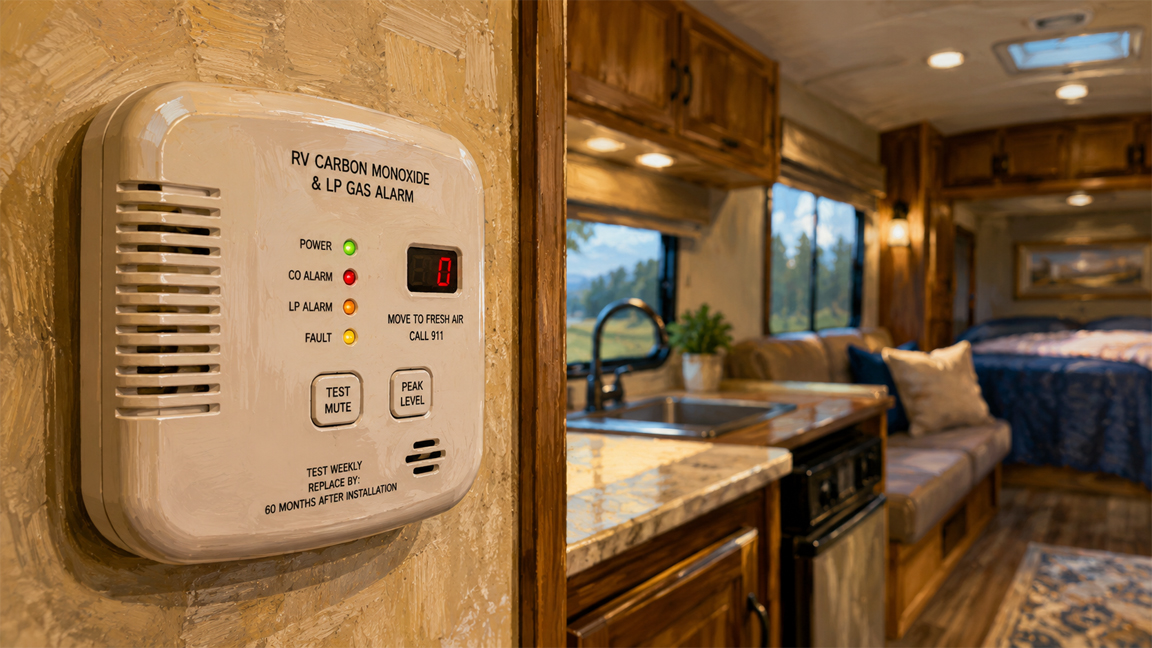
RV carbon monoxide alarms are changing. Here’s what RVers should check

A new line of RV carbon monoxide and propane alarms announced this week may sound like just another product rollout. But behind it is a bigger story that could matter to a lot of RV owners—especially those with older rigs.

Recreation Safety Products recently introduced new RV safety alarms built to updated UL standards, according to a report from RVBusiness. And one of the more important changes involves something many RVers probably never think about until there is a problem: What happens to the detector if the RV loses power?

A surprising number of RV carbon monoxide alarms depend entirely on the RV’s 12-volt system. Turn off the battery disconnect, blow a fuse, run the batteries down too far or lose wiring power, and the detector itself may stop working.

A lot of RVers assume those alarms are always on. It ain’t necessarily so.

The newer standards are designed to address that problem by requiring backup power capability so the alarm can keep working if the main RV power system goes down.

That may not sound dramatic, but carbon monoxide is one of those dangers RVers cannot see or smell. When there is a problem, the detector is often the only warning you get.

A hidden weak spot in some RV alarm systems

While serious carbon monoxide incidents are relatively uncommon, the situations that can create them are not. Portable generators, a blocked exhaust pipe, running an onboard generator for air conditioning, or even a neighboring RV generator in a crowded campground can potentially create dangerous conditions.

The timing of these new standards also shines a light on another issue many RV owners overlook: RV safety detectors don’t last forever.

In fact, many carbon monoxide and propane alarms are designed with an expected life of around five years. After that, the sensors themselves can become less reliable, even if the unit still lights up and appears to work normally.

That means the original detector in a 2019 or 2020 RV may already be nearing the end of its intended life.

And because these things usually just sit quietly on the wall for years, it’s easy to forget they even exist.

Many RV detectors quietly age out

Unlike residential detectors, RV units also deal with vibration, dust, heat, cold, humidity and constantly changing electrical conditions. RV-specific detectors are designed for that environment, which is one reason RV replacement units are often different from the plug-in alarms people buy for a house.

A few things worth checking before your next trip

For RVers wondering whether it might be time to inspect or replace a detector, there are a few simple things worth checking.

Start with the date on the alarm itself. Many detectors have either a manufacture date or replacement date printed somewhere on the unit.

Next, test it. If the detector chirps randomly, refuses to test properly or just acts odd, it may be trying to tell you something.

It’s also worth checking what happens when the RV battery disconnect is turned off. In some rigs, that may disable the detector completely.

You should also confirm whether they have a combination propane/carbon monoxide alarm or separate units. Older RVs sometimes had propane-only detectors, while others used two separate alarms.

Placement matters, too. Most manufacturers recommend installing carbon monoxide alarms near sleeping areas where they are most likely to wake occupants if something goes wrong overnight.

None of this means every RVer needs to rush out and buy a new detector tomorrow morning. But these updated standards are a good reminder that safety equipment quietly ages in the background.

A carbon monoxide detector is easy to ignore because most of the time it just sits there silently on the wall.

But when you actually need it, you really need it.

RELATED

RVT1263b

RV Daily Tips. Wednesday, May 27, 2026

America’s Original RV Newsletter. Since 2001
Issue 2913 • New issue every weekday


Today’s thought

“I’ve begun to realize that you can listen to silence and learn from it. It has a quality and a dimension all its own.” —Chaim Potok


Need an excuse to celebrate? Today is National Senior Health And Fitness Day! Here’s everything you need for that!

On this day in history: 1927 – The Ford Motor Company ceases manufacture of the Ford Model T and begins to retool plants to make the Ford Model A.


Tip of the day
These emergency tips could save your RV, your wallet… or your life

By Gail Marsh
Who’s the most prepared person on earth? Justin Case. This old joke gives RVers the reason why being prepared is so important. We never know when or how an emergency may affect our RV travels. That’s why we all need RV emergency tips—just in case.

Even the best-planned RV trip can go sideways. Out of nowhere, we may face flat tires, mechanical failures, sudden storms, or medical issues (like when my husband had a heart attack at a Love’s truck stop!). By preparing in advance, you’ll reduce stress, stay safer, and genuinely enjoy the freedom of RV life. Continue reading.

MDC XT12 OGE travel trailerRV review
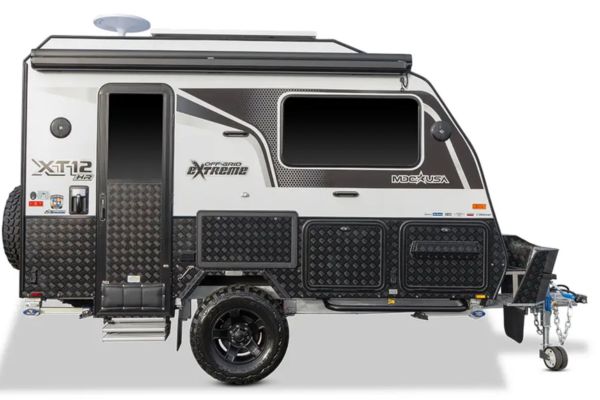
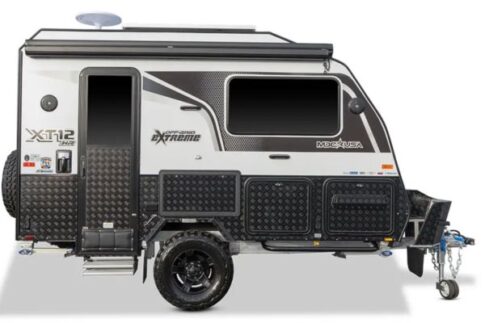
The MDC XT12HR OGE is a compact travel trailer to take off-road

The MDC XT12HR OGE gets attention because it packs a queen bed, a bathroom, an indoor kitchen, and real off-road hardware into a small off-grid and off-road-friendly travel trailer. For solo travelers and couples, that mix is hard to find. Many compact campers give up standing room, hard walls, or shower access. This one keeps all three, which is why it keeps coming up in conversations about off-grid camping. Check it out.


LanternsThe cutest camping lanterns
These rechargeable vintage-style lanterns feature a realistic flickering flame effect, multiple lighting modes, remote control operation, and up to 10 hours of runtime on a single charge. They’re perfect for RV patios, picnic tables, power outages, or adding a cozy glow to your outdoor setup. We love these!


Article and video
RVing with cats: What finally worked

Kim Hanna of RV Life with Kim Hanna and her partner, Pete, used to leave their cats at home with a neighbor. Then their RV trips got longer, and that stopped feeling right. The cats are family, so they figured out how to bring them along. Years later, the routine looks calm because a lot of trial and error happened first. A few changes made the biggest difference.


WEDNESDAY WISDOM: A good campsite and a good friend have something in common: Neither needs to be fancy to be memorable.


Featured article
Campers share their biggest pet peeves. We bet you’ll agree

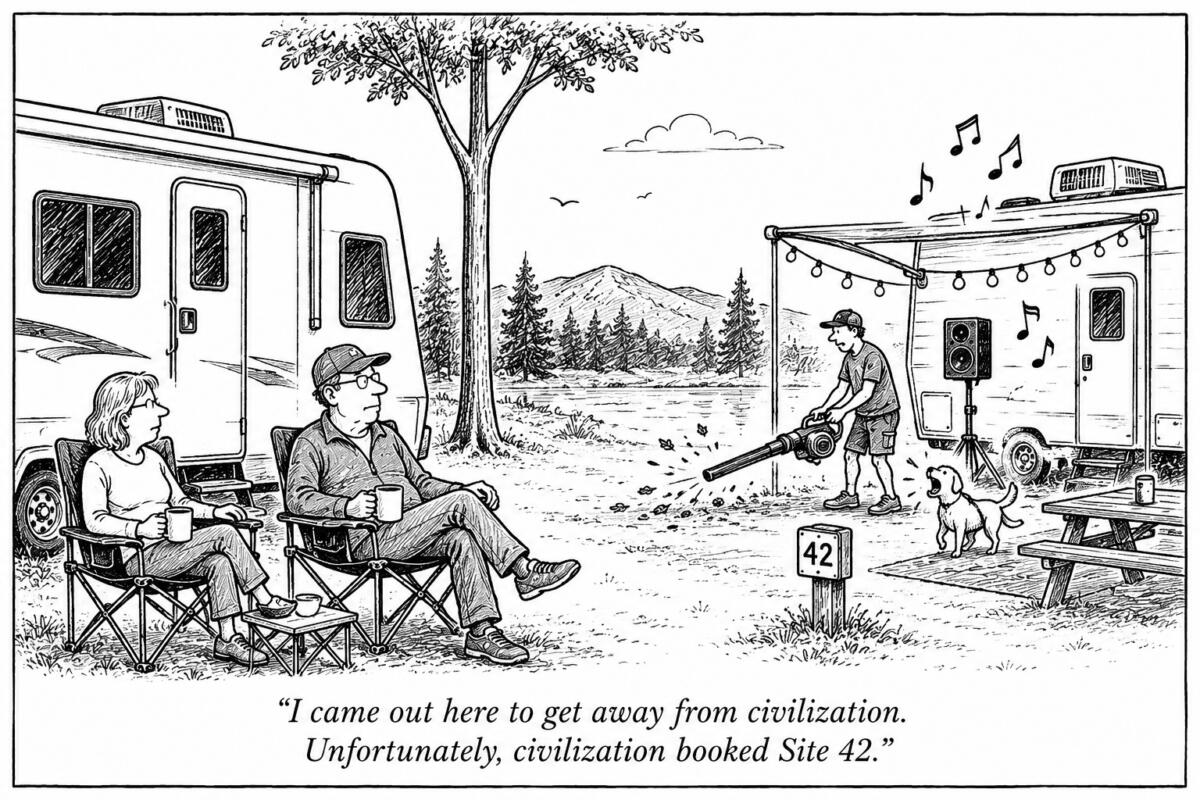
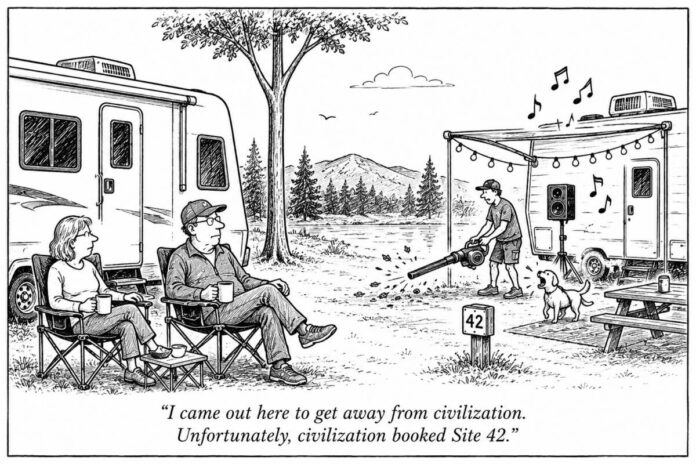
Camping pet peeves: What are yours? Many have written about campground etiquette in the hopes of educating new RVers. [Dave Helgeson] recently saw a Facebook post asking the question, “What’s something you see while camping that makes you cringe?” Many of the nearly thousand answers went beyond standard campground etiquette, stating valid concerns worth sharing. Read some of them here and see if these are the things that bother you most, too.

Site42


Ask Dave
RVIA code requires certified charge controller on units with solar prep

Learn about it here.


Like playing games? Enjoy doing puzzles? We’ve compiled a list of our favorites!


Reader poll
Have you measured to learn the exact height of your RV?

Respond here.

LIKE TAKING POLLS? So do we! Did you know we’ve run more than 5,000 polls on our website over the years? Check ’em out! Have fun!


Quick tip
Noisy bathroom fan?

Bathroom fan so noisy it drives you nuts? Look for a replacement fan with a 12-volt high-capacity computer cooling fan. You may need to modify the mounting a bit to make it stay in the same place, but a little creativity can bring a “silent night.”


On this day last year…


Website of the day

Get scammed? Report it!
This is the official government website to report scams, identity theft and more. You can also read about the latest scams so you know what to avoid and how to stay safe!


? MYSTERY PRODUCT OF THE DAY ?
Ladies, you are going to love this! And for those with wives or girlfriends, this would make a perfect gift…nudge nudge. Seriously, you’ll love this! Unless, maybe, if you’re Canadian…


Trivia

Rats can climb walls. Their strong claws and flexible bodies allow them to grip rough surfaces like brick, wood, and textured siding. They can also climb pipes, vines, and wires, making it easy for them to reach attics or upper floors. Smooth surfaces, such as metal or glass, are almost impossible for them to scale.


Readers’ pets of the day
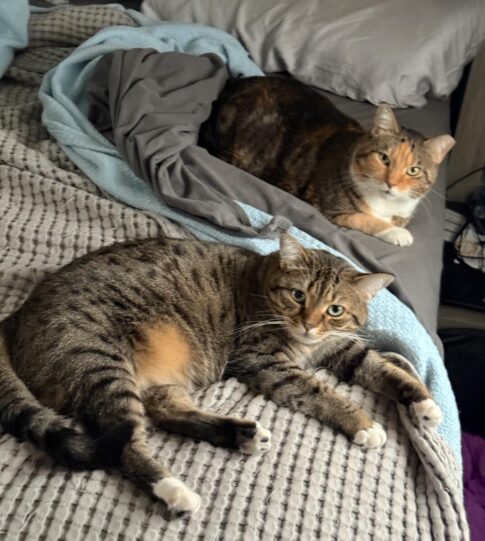
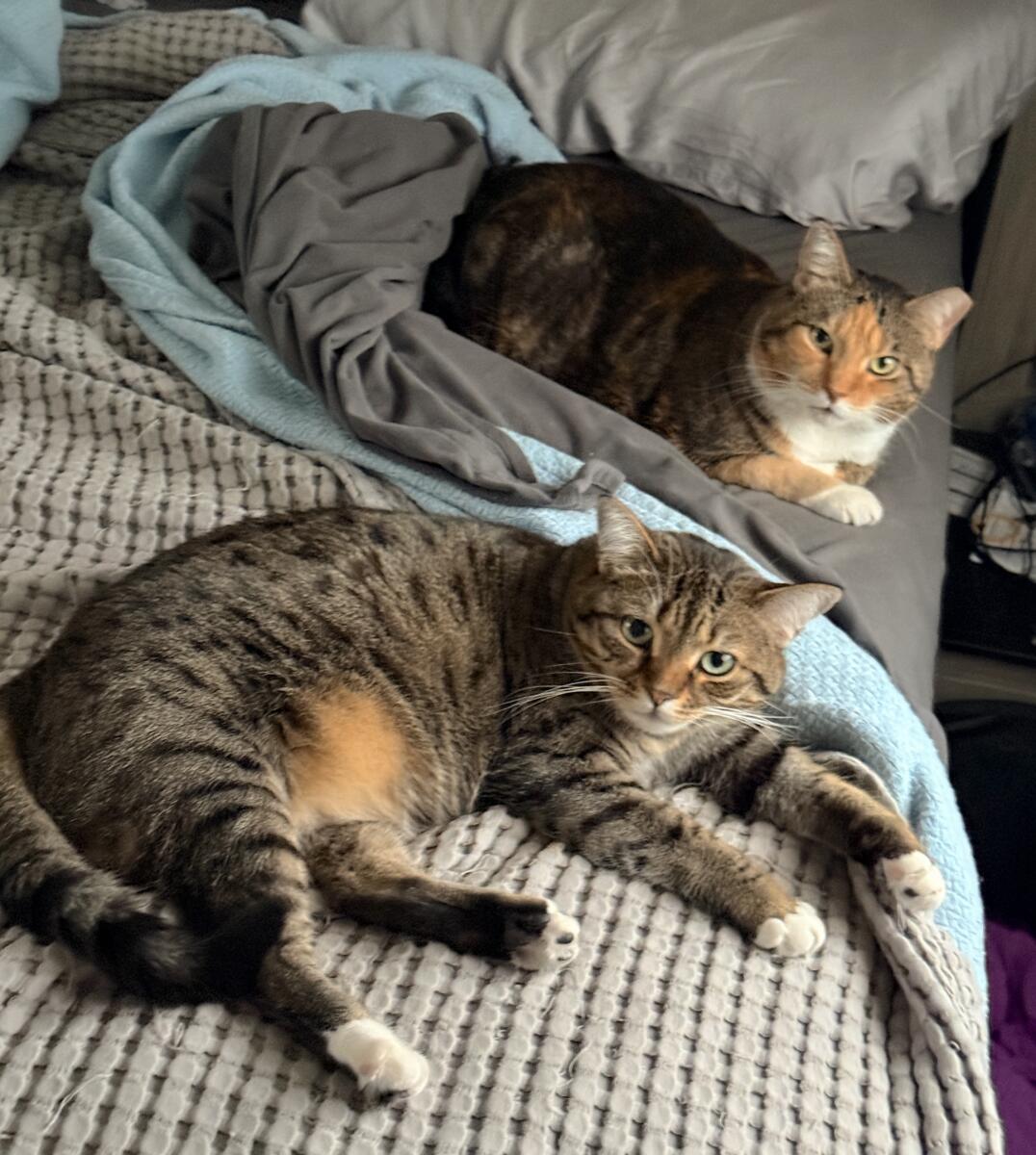
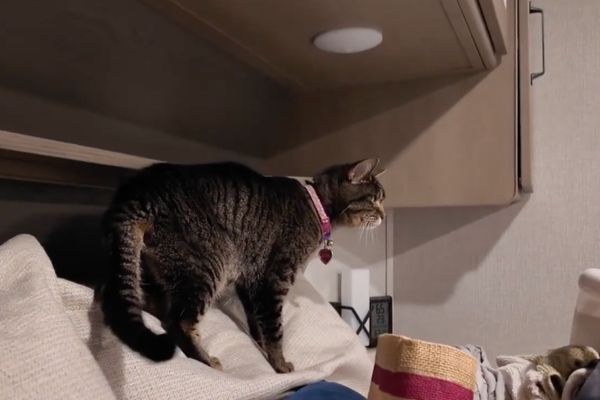
Img 2481 De3e090737924785458ccb768bc22a0e“Every night, our two seasoned travel partners, Kali (Calico, 6) and Chloe (mix, 2), race us to the finish line… otherwise known as the bed. They’ve crossed state lines, slept in more campgrounds than most humans, and still insist the best place in the world is whatever blanket we were about to use. By the time we’re ready to turn in, they’ve already claimed the prime real estate, curled up like they paid the mortgage. What cats don’t? In their minds, we’re just lucky they let us squeeze in.” —Tom McGorty

Send us a photo of your pet with a short description. No blurry photos and please do not submit your photo more than once. Thanks!


Leave here with a laugh


Today’s weather forecast across the nation
THIS MAP UPDATES TWICE A DAY
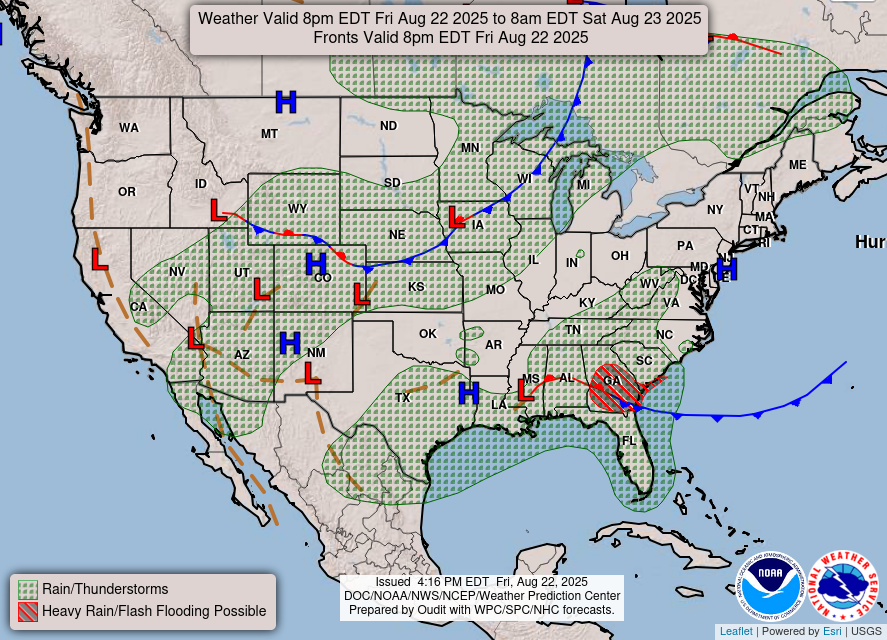
Visit Current National Radar Weather Map


Did you miss the latest RV Travel Newsletter? If so, read it here.
Oh, and if you missed the Latest News for RVers, make sure to catch up here.


REMEMBER: You do not need to receive an email alert from us to read our newsletters. Just visit our homepage, www.rvtravel.com, at any time of day, and the latest issues and articles will be there.


RVtravel.com All-Star Staff

Click here for information about our staff and how to contact us.

WHY WE ASK FOR DONATIONS INSTEAD OF SELLING SUBSCRIPTIONS.

RVIA code requires certified charge controller on units with solar prep

Here’s some information for RVers regarding new solar regulations coming soon in the RV industry.

As reported by Go Power! | Dometic, starting September 1, 2026, RVs that ship with solar already installed must include a listed solar charge controller.

The RV Industry Association (RVIA) is adopting the 2026 edition of NFPA 1192 (Standard on Recreational Vehicles), along with the 2025 ANSI/RVIA DC Standard for DC Voltage Systems in RVs, with an effective date of June 1, 2026, and mandatory enforcement beginning September 1.

What Section 2-7 of the 2025 ANSI/RVIA DC Voltage Systems Standard requires

The new regulation sets four requirements for solar installations on RVs. As of June 1, solar charge controllers must:

  • Be listed by a nationally recognized testing laboratory (NRTL), such as UL;
  • Be rated for input voltage no less than the maximum array open-circuit voltage, corrected for the lowest expected ambient temperature using the module’s published temperature coefficients;
  • Be rated for input power no less than 125% of the maximum array power; and
  • Be installed according to the manufacturer’s listing and installation instructions

What this means

Solar power is becoming a standard expectation across motorhomes, travel trailers and fifth wheels. What hasn’t kept pace is the safety certification of the components being specified.

Section 2-7 closes that gap. The RVIA’s listing requirement isn’t new; electrical components in RVs, like inverters, converters and other power equipment, have long carried similar requirements. This addition means solar charge controllers are now included in that framework.

For OEM purchasing and engineering teams, the practical implication is straightforward: If a solar charge controller doesn’t carry a UL listing (or equivalent NRTL certification), that vehicle will not pass an RVIA inspection after September 1.

Controllers that meet the standard

Go Power! | Dometic PWM solar charge controllers, including the GP-SB-PWM-30-BT, carry a UL 1741 listing (and CSA C22.2) which is the standard for power conversion equipment in land vehicles. These controllers are designed to operate within the voltage and power sizing requirements specified in Section 2-7, and they are installed in accordance with the manufacturer’s documentation that satisfies the listing compliance requirements.

“This standard shows a real commitment to deliver safer, higher-quality power systems,” said Drew Vergonet, sales account manager, RV, for Go Power! | Dometic.

“We have been preparing for this. We have certified charge controllers and are continuing our investment in UL-listed and CSA-approved product lines. Go Power! is well stocked and ready to help with this transition for any manufacturer using unlisted controllers.”

What RV manufacturers must do before September 1

The RVIA conducts more than 2,000 unannounced annual inspections of member manufacturing facilities. Non-compliant components will fail those inspections.

The June-to-September window is a transition period. The RVIA indicates it will conduct in-field training on the new requirements during this time, but enforcement is mandatory by September 1.

Manufacturers should:

  • Audit their current solar controller specifications against the Section 2-7 requirements,
  • Verify UL or equivalent NRTL listing status for every controller model in use, and
  • Confirm that installation documentation aligns with the controller’s listing instructions.

 You might also enjoy these posts from Dave 

DAVE HAS ANSWERED MORE THAN 1,000 readers’ maintenance and repair questions. Read a directory here. There is so much to learn!


Dave Solberg is a leading expert in the RV industry and the author of the “RV Handbook.”

HAVE A QUESTION FOR DAVE?

Send your inquiries to him using the form below.

Name
Drag & Drop Files, Choose Files to Upload

RVDT2913

These emergency tips could save your RV, your wallet… or your life

7

By Gail Marsh
Who’s the most prepared person on earth? Justin Case. This old joke gives RVers the reason why being prepared is so important.

We never know when or how an emergency may affect our RV travels. That’s why we all need RV emergency tips—just in case.

Out of nowhere

Even the best-planned RV trip can go sideways. Out of nowhere, we may face flat tires, mechanical failures, sudden storms, or medical issues (like when my husband had a heart attack at a Love’s truck stop!). By preparing in advance, you’ll reduce stress, stay safer, and genuinely enjoy the freedom of RV life.

RV repair fund

Unexpected repairs can be expensive and stressful without a financial cushion. Financial experts suggest maintaining a dedicated RV repair fund for unexpected costs. Start small if needed. A $500 “starter” fund can prevent costly debt cycles when faced with a sudden repair bill.

Fix that flat

A flat tire can sideline your adventure anywhere from a remote boondock site to a crowded rest area. Carry a properly sized spare and know how to change it—if you are physically able. In addition to the spare, include:

  • Jack or tire ramp rated for your RV’s weight
  • Tire pressure gauge (and consider a TPMS [tire pressure monitoring system] for real-time monitoring)
  • Tire plug kit for quick puncture fixes

Comprehensive emergency plan

Proactive planning helps you act calmly under pressure. Map out responses for key scenarios:

Evacuation planning. Keep your essentials—documents, medications, cash, and a minimal change-of-clothing kit—in a single “go bag” for quick exit. Identify nearby evacuation routes and alternate destinations ahead of time (campgrounds, friend’s RV park, even state fairgrounds).

Flash flood preparedness. If you camp near rivers or in washes, understand flash flood warning levels. The National Weather Service reminds us that a flash flood warning means “flash flooding is imminent or has already been reported—move to higher ground immediately.” Always check local flood alerts, and plan high-ground escape routes.

Medical emergencies. In areas with no cell coverage, having a first-aid kit plus a pocket guide is vital. The American Red Cross’s auto kit includes bandages, antiseptics, and a clear guide to administer aid safely. For serious incidents, consider a satellite phone—devices like the Iridium GO! let you trigger SOS signals and send texts when cellular towers are out of range.

Local evacuation routes. Beyond natural disasters, some areas may require lockdowns (e.g., firefighting operations). Check with campground hosts for designated shelters or alternative exits and keep a printed map in case GPS fails.

RV emergency kit

Instead of ad-hoc packing, assemble a dedicated kit stored in one accessible compartment. Your kit should include:

First-aid supplies

• Comprehensive first-aid kit (bandages, antiseptic, trauma shears)

Pocket first-aid guide for quick reference

• Personal medications and copies of prescriptions

Roadside safety tools

• Warning triangles or LED flares for nighttime visibility

• Tow straps and traction mats for getting unstuck

• Portable air compressor, hose, and nozzle for tire inflation

Communication and navigation devices

• Cellular booster or Wi-Fi hotspot for weak-signal areas

• Satellite communicator (e.g., Garmin inReach® or Iridium GO!®)

• NOAA Weather Radio or hand-crank emergency radio

Essential survival gear

• Non-perishable food and water sufficient for 72 hours

• Multi-tool, flashlight, fire starter, and survival whistle

• Blanket and emergency poncho for weather extremes

Training, maintenance, and drills

• Regularly inspect tools, batteries, and supplies—replace expired items annually.

• If you are physically able, practice changing tires, using a jack, and deploying warning triangles before you need them.

• Role-play emergency scenarios with your travel companions to ensure everyone knows their role and the location of essentials.

Have you ever experienced an emergency while RVing? Tell us about it in the comments below.

RELATED

RVDT2913

RVing with cats: What finally worked

By Cheri Sicard
Kim Hanna of RV Life with Kim Hanna and her partner, Pete, used to leave their cats, Max and Izzy, at home with a neighbor. Then their RV trips got longer, and that stopped feeling right. The cats are family, so they figured out how to bring them along, even when the first trips were messy and stressful.

Years later, the routine looks calm because a lot of trial and error happened first. A few changes made the biggest difference. Kim shares her thoughts and tips about the journey of RVing with cats in the video at the end of this post.

The carrier setup made travel easier

Hard-sided carriers were their starting point, but soft-sided carriers fit RV travel better. These worked because they open in more than one way, fold flat for storage, and have a firm bottom that stays in place. Kim also swaps the padded insert for small towels, since towels take up less space and are easier to wash if Izzy gets sick.

Before they leave, both cats eat and drink at home. Travel days usually stay under four hours, so the cats can sleep through much of the ride.

The road routine that changed everything

Medication was one of the first things they tried, and it was not the answer. Max got more agitated, and giving Izzy medicine was a fight.

ThunderCoats worked better, but only for Izzy. She calms down when she feels snug, while Max hates the tight fit.

Their loading routine stays the same each time:

1. Both cats start in zipped carriers.
2. Max rides on the folded center console and looks out through the front.
3. Izzy stays in her carrier until the road feels steady.
4. On rough stretches, she rides on Kim’s lap so her head and neck stay supported.

That support matters on bumpy boondocking roads. Kim also keeps paper towels nearby, uses a Feliway collar and spray for Izzy, and talks to both cats in a calm voice. If the meowing builds, soft music helps. They also learned to keep loading day calm, because chaos in the house makes both cats more anxious.

Safety rules matter most

The biggest rule is simple: The cats do not roam during setup. They stay zipped in their carriers while slides move, doors open, and the truck gets positioned. Kim has heard too many stories of pets getting crushed by a slide while hiding. That risk is not worth it.

They also learned that cracked windows are not safe enough. Izzy once slipped out of the truck through a small opening while they were checking a campsite. Now, the transfer into the trailer happens one cat at a time, with the door closed behind them. Inside, the goal is to make the RV feel like home. They use the same litter box, the same food, familiar beds, and covered furniture. Some first-day hissing still happens, but it fades once the cats settle in.

Trips to places like Kofa National Wildlife Refuge still come with dirt roads and the occasional upset stomach. However, the drive no longer feels overwhelming.

What changed most was the routine.

After years of practice, Max and Izzy now know what to expect, and that makes RV life much easier for everyone. So, if you are trying to RV with your cat, keep at it, establish some routines, and know that it does get better.

RELATED

RVDT2913

Have you measured to learn the exact height of your RV?

13

Do you know the height of your RV? Well, what the owner’s manual and dealer told you is one thing, but do you really know its height? Have you actually measured it yourself to know its exact height?

Knowing your RV’s true height isn’t just a nice-to-know spec—it can be critical. Every year, RVers report incidents involving low-clearance bridges, overhangs, and even fast-food drive-thrus that didn’t go as planned. Sometimes the difference between making it safely under and causing major damage comes down to just an inch or two.

And, oh, boy, have we seen disasters…

Keep in mind that aftermarket additions like rooftop air conditioners, satellite dishes, solar panels, or even new tires can change your RV’s total height. A sticker inside the cab may list one number, but if you’ve made modifications or are driving a different model than last year, it’s worth confirming. A quick measurement with a tape measure (and maybe a second set of eyes) can give you peace of mind.

So, we’re curious: Have you ever double-checked your RV’s height yourself? Maybe you measured it just once, or maybe it’s part of your regular prep. Let us know by voting—and if you’ve got a good story about a close call or a surprising measurement, feel free to share it in the comments!

As always, thanks for voting.

MORE POLLS YOU MIGHT ENJOY:

RVDT2913

The MDC XT12HR OGE is a compact travel trailer to take off-road

The MDC XT12HR OGE gets attention because it packs a queen bed, a bathroom, an indoor kitchen, and real off-road hardware into a small off-grid and off-road-friendly travel trailer.

For solo travelers and couples, that mix is hard to find. Many compact campers give up standing room, hard walls, or shower access. This one keeps all three, which is why it keeps coming up in conversations about off-grid camping. We get a tour in the video at the end of this post from ROA Off Road.

A compact trailer that doesn’t feel stripped down

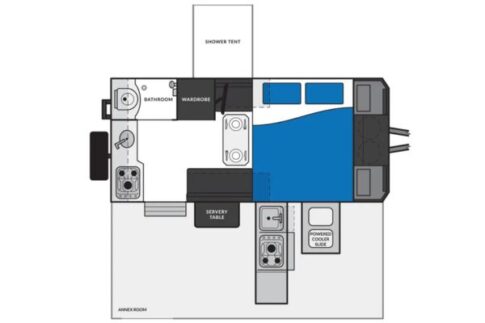
MDC XT12 OGE floorplanAt about 18 feet long, 7.5 feet wide, and roughly 4,400 pounds, the MDC XT12HRHR OGE (Off-Grid Extreme) stays manageable for many tow rigs while still giving adults room to stand inside. It is fully hard-sided, so it skips the crawl-in feel of a teardrop and the setup work that comes with canvas hybrids.



Inside, the layout stays simple in a good way. A queen bed fills the front, and the mattress can be swapped for something more personal. Around it, MDC adds a few smart comfort details:

• Polycarbonate windows that handle branch strikes better than glass
• Bug screens and blackout shades for airflow and privacy
• Sirocco 12-volt fans, reading lights, and a booth with a removable Lagun table

Storage is better than expected, too. There are overhead cabinets, a hanging closet, under-seat storage, and ROA’s fridge option for buyers who want indoor cold storage.

Power, bathroom, and two real kitchens

The Renogy control panel keeps the basics in one place, including battery shutoff, water pump, tank heaters, and water heater controls. The key number is 400Ah of lithium power, which ROA says is about eight times what many standard trailers offer with a 100Ah AGM battery.

That extra capacity supports the Truma A/C, Truma VarioHeat furnace, lights, fans, speakers, and 120-volt outlets through the inverter. In plain terms, it cuts down on the battery stress that follows smaller rigs.

The bathroom matters, too. The XT12HR OGE has a shower, instant hot water from the Truma AquaGo, and a cassette toilet that can be emptied without moving the trailer. That setup helps campers keep a good site instead of towing out to dump.

Cooking also gets more thought than expected in a trailer this size. Inside, there is a three-burner Thetford stove, hood vent, sink, outlets, and deep storage. Outside, another three-burner stove slides out in a stainless steel kitchen with hot and cold water, a drying rack, and a nearby fridge bay.

The off-road hardware is the point

The MDC XT12HR OGE earns the Off-Grid Extreme name underneath. It rides on a hot-dip galvanized steel frame with a lifetime warranty, plus MDC’s Extract suspension with coils and gas shocks for washboard roads and rocky tracks.

Up front, the DO35 hitch gives full articulation off-road, while the RK750 jack, heavy chains, handbrake, and Tuson sway control add confidence on pavement. ROA also highlights its Anderson plug and DC-to-DC charging upgrade, which can send up to 30 amps back to the trailer batteries while driving.

The rest of the build follows the same logic. There are jerry can holders, a wet bay with outdoor shower access, bash bars, leveling jacks, a ladder, a matching spare tire, and front and rear spotlights.

Final thoughts

The MDC XT12HR OGE stands out because it keeps the important parts of off-grid travel in mind: comfort, power, water, and durability. It doesn’t feel overloaded with fluff, yet it still gives campers a real bed, a real bathroom, and serious trail-ready hardware in a compact shell.

Learn more about the MDC XT12HR OGE here. MSRP ranges from $59,995 to $72,990, depending on the dealership and specific options.

MORE RVS LIKE THIS:

RVDT2913

Starlink Mini may be getting a built-in battery. Why RVers would care

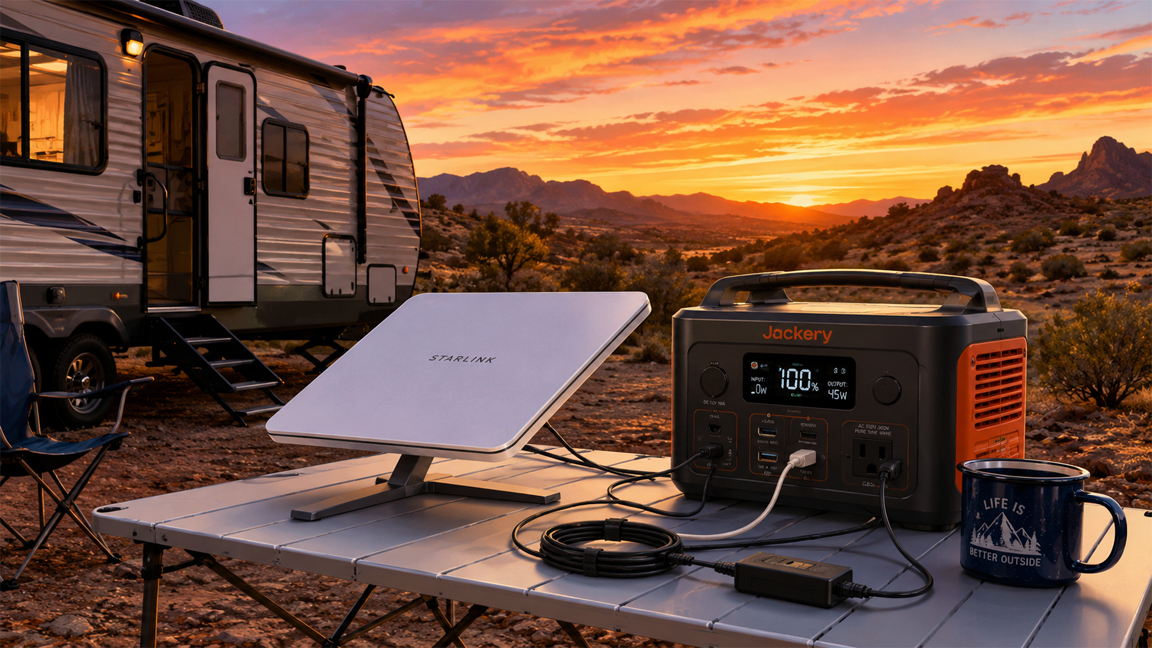
The Starlink Mini has become a popular piece of gear among RVers who need internet where cell coverage is spotty or nonexistent. It’s small, relatively easy on power and easy to tuck away when it’s time to move on.

But there’s still one thing most users have to bring along: a battery.

Now there’s a hint that SpaceX may be working on a way around that. According to a report by The Verge, references discovered in Starlink software appear to point to a version of the Starlink Mini with an integrated battery. SpaceX hasn’t announced such a product, and there’s no indication when—or even if—it might reach the market. Still, the possibility has plenty of RVers paying attention.

So why would RVers care?

One less thing to pack

One of the Mini’s biggest selling points is portability. Compared with the larger Starlink dishes, it’s easy to carry, quick to set up and doesn’t demand much power.

The catch is that “portable” usually still means carrying a power bank, charging cable and assorted accessories.

That’s not a huge burden, but it’s another collection of gadgets to keep charged, organized and ready to go.

A built-in battery could make the whole setup simpler. Instead of grabbing the dish and a separate power source, you would simply grab the dish.

For RVers who move often, that may sound like a small change. In practice, small conveniences are often the ones you appreciate most after a few hundred campsite setups.

Think beyond the campsite

A battery-powered Mini wouldn’t just be useful around camp.

It would be good for picture-stopping at a scenic overlook and wanting to upload photos before moving on. Or pulling into a rest area and needing a reliable connection to check email, pay bills, or join a video meeting. Maybe you’re spending the afternoon at a picnic area where there isn’t an electrical outlet within sight.

Today, that usually means carrying along some type of external battery solution. A self-powered Mini could turn those situations into a simple matter of setting the dish outside and connecting.

The same idea could appeal to RVers who keep Starlink available for emergencies. During a power outage, having both internet service and a built-in power source in one package could eliminate a few extra steps when communications matter most.

The details are still a mystery

Of course, nobody outside SpaceX knows exactly what such a product would look like.

Battery size may be the biggest question. A small battery would keep weight down but might only provide a few hours of operation. A larger battery could extend runtime but would make the unit heavier and more expensive.

Charging options will matter, too. RVers often recharge electronics from solar panels, portable power stations, vehicle outlets or campground hookups. Any built-in battery would need to fit smoothly into those existing routines.

Then there’s the price tag

Adding a battery almost certainly wouldn’t make the Mini cheaper. Some RVers may decide they’re perfectly happy with the battery packs they already own and see little reason to pay extra for an integrated solution.

What about current Mini owners?

That’s another unanswered question.

The software references don’t reveal whether SpaceX is developing an entirely new Mini or perhaps some type of battery accessory for existing units.

If the battery ends up built into the hardware itself, current owners would likely need to buy new equipment to get the feature. If SpaceX takes a more modular approach, an upgrade path might be possible.

At this point, nobody knows.

For now, it’s still just a rumor… that’s worth emphasizing.

SpaceX has not announced a battery-powered Starlink Mini. The speculation comes entirely from software references discovered by researchers examining Starlink firmware.

Still, the idea isn’t hard to believe. The Mini was designed around portability from the beginning, and removing the need for a separate battery seems like a logical next step.

RVers shouldn’t start shopping for a replacement dish just yet. But if SpaceX really is working on a battery-powered Mini, it would address one of the few remaining annoyances of an otherwise remarkably portable internet system.

And for RVers, one less gadget to carry is usually a welcome upgrade.

RELATED

RVT1263b

The RV market just sent a mixed signal: Towables down, motorhomes up

If you’ve been hoping RV prices might soften a bit—or wondering whether the RV market is finally cooling off—the latest shipment numbers may be worth watching.

According to new figures from the RV Industry Association, manufacturers shipped 29,209 RVs to dealers in April 2026. That’s down 17.4% from the 35,375 units shipped during April of last year. Through the first four months of 2026, shipments totaled 115,260 units, down 13.5% from the same period in 2025.

But before anyone concludes RV sales have suddenly fallen off a cliff, there’s an important detail buried in the numbers: Not every segment of the market is moving in the same direction.

Travel trailers and fifth wheels took the hit

Towable RVs accounted for most of April’s decline.

Manufacturers shipped 25,376 towables during the month, down 20.7% from April 2025. Since towables make up the largest share of the RV market, a drop that large tends to pull overall shipment numbers down with it.

That doesn’t necessarily mean dealers aren’t selling RVs. Shipment reports measure what factories send to dealers, not what customers are buying and taking home. If you’re unfamiliar with how shipment reports work, see our companion article explaining RV shipment numbers without the industry jargon.

Still, when factories start shipping fewer travel trailers and fifth wheels, it’s usually a sign that somebody in the supply chain is tapping the brakes, at least a little.

Motorhomes bucked the trend

Here’s the part that makes the report interesting.

While towables were down sharply, motorhome shipments actually rose.

Manufacturers shipped 3,833 motorhomes during April, up 13.0% compared with the same month a year ago.

Motorhomes remain a much smaller slice of the overall RV market than towables, so the increase wasn’t enough to offset the decline in travel trailers and fifth wheels. But it does suggest the market isn’t weakening across the board.

In other words, RV buyers may be getting more selective, but they haven’t disappeared.

Why are shipments falling?

The RV Industry Association’s report doesn’t offer explanations, so we can only look at the broader picture.

Financing costs remain higher than many buyers would like. Household budgets continue to feel pressure from inflation. Fuel prices have also become a growing concern for some travelers, especially with renewed uncertainty in global oil markets.

Dealers may also be managing inventory carefully. If lots are already well stocked, dealers can slow new orders from manufacturers until more units are sold.

Whatever the reason, April’s numbers represent a noticeable change from the optimism that many in the industry were expressing earlier this year.

Park models had a strong month

One smaller segment posted impressive growth.

Park Model RV shipments reached 539 units, up 29.9% from the same month last year.

Park models represent only a small portion of overall RV shipments, but the category has shown surprising resilience compared with some traditional RV segments.

What this means for RVers

For current RV owners, this probably doesn’t mean much—at least not yet.

For prospective buyers, however, the numbers are worth watching.

If shipment declines continue for several months, dealers may face increased pressure to move inventory. That can eventually translate into discounts, incentives or more willingness to negotiate.

On the other hand, one month does not make a trend. The RV industry has always been cyclical, and shipment totals can swing significantly from month to month.

The biggest takeaway from April’s report isn’t simply that shipments fell. It’s that different parts of the RV market are telling different stories.

Travel trailers and fifth wheels had a rough month. Motorhomes didn’t.

Whether that’s the start of a larger shift or simply a temporary detour won’t become clear until a few more months of reports are in the books.

RELATED

RVT1263b