By Gail Marsh
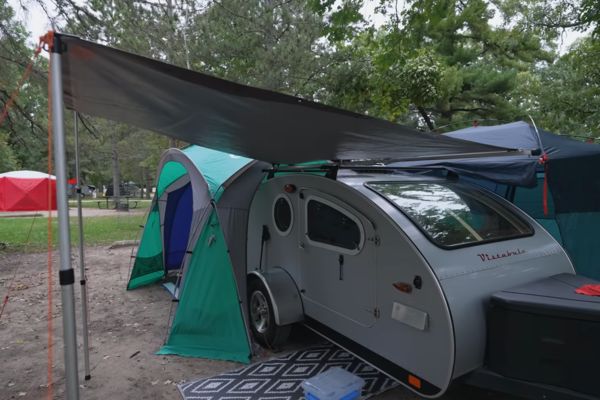
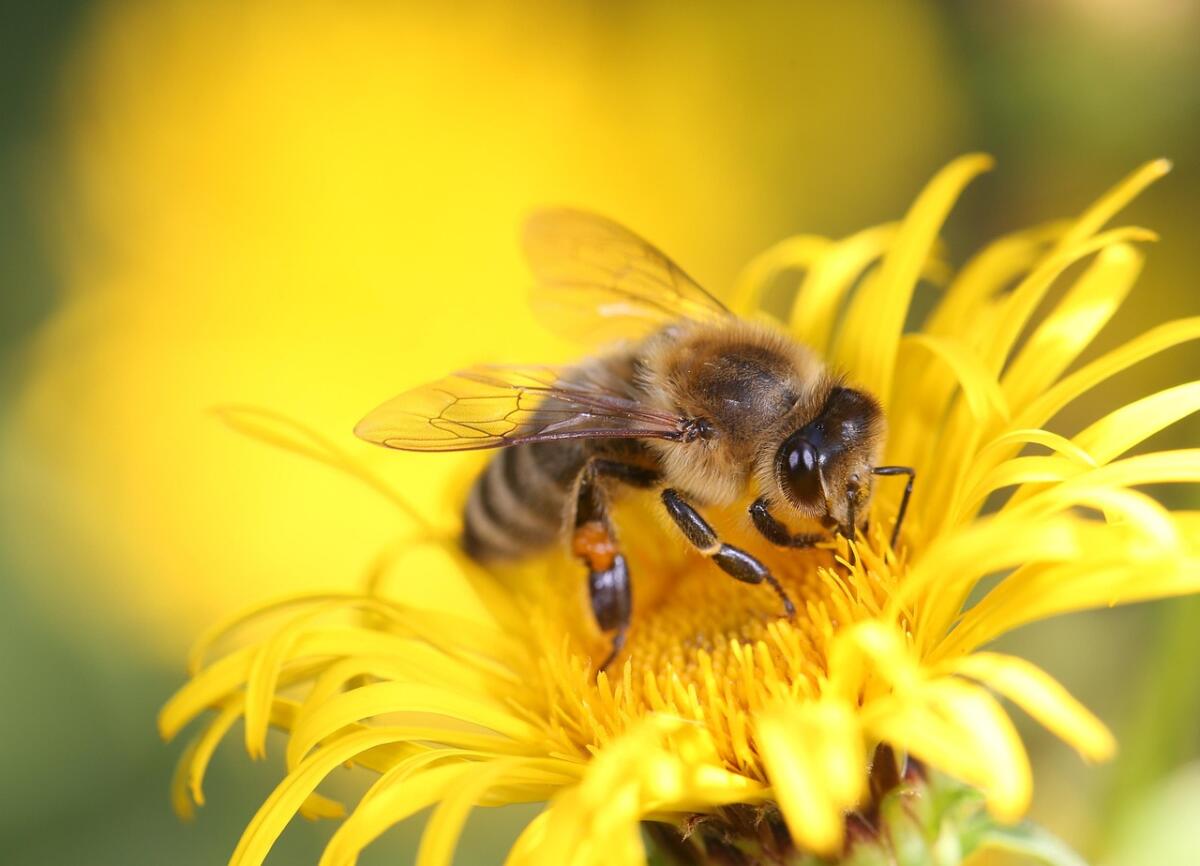
Nothing ruins a picnic faster for me than bees. During a recent RV trip, bees and wasps seemed to be everywhere in the campground, but especially around our campsite. We had to do something to get those bees to buzz off!
What’s the buzz?
Bees and wasps are naturally drawn to sweet foods, sugary drinks, and even the scents of lotions or perfumes. Bees are usually busy pollinating and are non-aggressive unless provoked. However, wasps (including yellow jackets) can become more bothersome when buzzing around your campsite.
Important note: If you or any of your travel buddies are allergic to bee stings, it’s vitally important to pack along an EpiPen. If this applies to you, add it to your RV packing list now!
Safety measures
Check the campsite
• Upon arrival, thoroughly check your assigned campsite. Look for existing nests—inside the electrical box, in and under permanently installed grills, and even holes in the ground where insects like carpenter bees make their nests. (We failed to do a complete check and eventually discovered a wasp nest under our picnic table! We told the campground manager, and he removed it.)
• Look for overgrown grasses or flowers that may attract bees or wasps. Remove any leftover food scraps—especially in the fire pit or grilling area.
Food and trash management
• Always store food in airtight containers and cover your dishes to avoid tempting smells.
• Dispose of trash promptly and keep your outdoor cooking area clean.
Be smart
• Wear light-colored, non-floral clothing—muted colors are best. Bright colors and strong scents can attract bees and wasps.
• Consider using unscented personal care products during your trip.
Natural and DIY remedies
If bees, wasps, or hornets frequently visit your campsite, consider the following ideas to encourage the bees to buzz off:
Essential oils and home sprays
• Sprays made from peppermint, eucalyptus, or citronella oils mixed with water and a drop of dish soap can serve as a natural repellent around your outdoor seating or cooking areas. Check out a few recipes here.
• Vinegar (both white and apple cider) is another natural deterrent—spray it lightly around your RV exterior to discourage these insects.
RV modifications
• Install mesh covers on vents and openings to prevent insects from sneaking into your living space.
• Seal gaps and cracks around doors, windows, and other entry points to keep unwanted critters out.
Paper bag trick
One of the simplest—and surprisingly effective—hacks is the paper bag trick. Here’s how it works:
- Prepare the bag: Take a plain, brown paper bag (like a grocery bag) and fill it loosely with old newspapers, plastic bags, or similar lightweight materials.
- Secure it: Twist the top of the bag closed and tie it securely with twine or rope.
- Hang it: Suspend the bag from your RV awning or a nearby tree branch.
The idea behind this trick is that the bag, once filled and properly shaped, mimics the look of a hornet or wasp nest. Many insects, particularly bees and wasps, tend to avoid areas that already appear to have a nest nearby.
If you don’t want to make your own, of course, Amazon sells fake wasp nests, too.
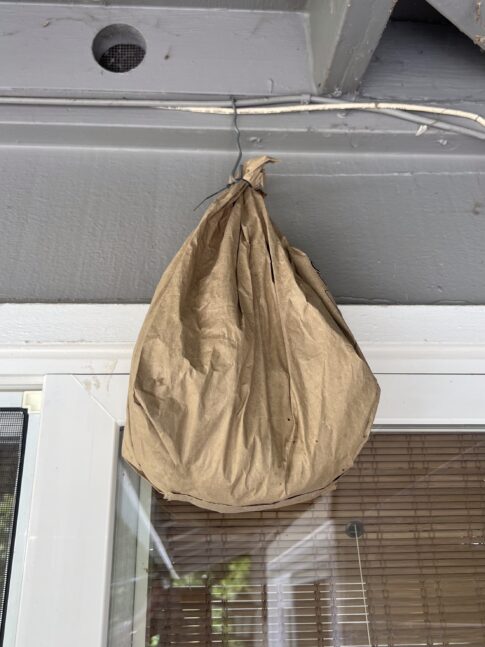
Editor’s note: Emily here! The above photo is my paper bag “wasp nest” that I hung up on my deck two summers ago. I haven’t seen a bee or wasp since. It works!
Additional RV-specific tips
• Vents and seals: Check and reinforce vent screens and seal any gaps around your RV’s exterior. Some RVers use flea collars in tight spots (like near water heaters, fridge vents, or propane tanks) as an added deterrent.
• Wasp traps: For persistent wasp issues, consider using wasp traps placed a few yards away from your eating area. These traps lure the insects away, reducing their numbers around your RV.
• Regular maintenance: Keep your RV exterior clean and inspect for any openings or damage (think damaged window or door screens—fix those with this screen repair tape) where insects might gain entry.
I appreciate the pollinators, I really do! We need these little buzzers for our food production. However, when RVing, I like to keep our site as bee-free as possible.
Have you found a good way to deter bees and wasps from your RV campsite? Tell us about it in the comment section below.
RELATED
- Study shows drinking beer attracts mosquitoes
- RV pests: How to keep them out of your RV
- RV fires can start with bees and pests—be aware!
- RV pest control: Rodents and bugs and spiders, OH MY!
RVDT2915