Home Blog Page 30

RV Daily Tips. Wednesday, May 13, 2026

America’s Original RV Newsletter. Since 2001
Issue 2903 • New issue every weekday
This free edition is made possible by 6% of our readers who support RV Travel with a voluntary subscription. Advertising helps, but that alone is not sufficient.


Today’s thought

“Others have seen what is and asked why. I have seen what could be and asked why not. ” ―Pablo Picasso


Need an excuse to celebrate? Today is National Frog Jumping Day! (It’s also our publisher Chuck Woodbury’s birthday! Happy Birthday, Chuck!)

On this day in history: 1958 – Ben Carlin becomes the first (and only) person to circumnavigate the world by amphibious vehicle, having traveled more than 17,000 kilometers (11,000 miles) by sea and 62,000 kilometers (39,000 miles) by land during a ten-year journey.


Tip of the day
You’re using laundry detergent all wrong!

By Gail Marsh
“You’re doing it wrong!” I bristled at the words. After six decades of doing laundry, I know how to wash our clothes correctly!

Turns out, I was wrong. You’ve probably heard the saying “Too much of a good thing”? Well, that apparently applies to laundry detergent!

I mistakenly thought that if I used more detergent in the washer, my clothes would be cleaner (no spots or stains) and smell better (no leftover smoke smell from the campfire). My fellow RVer, who also happened to be a chemist before retiring, patiently set me straight.

RV review
Winnebago’s new ARKA overland RV looks ready for the wilderness—but how many owners will use it that way?

Winnebago Industries has unveiled the new ARKA adventure truck. The rugged-looking rig comes loaded with off-grid and off-road hardware, which can support up to two weeks away from hookups, with features including a large lithium battery system, hydronic heating, insulated tanks, aggressive tires, substantial ground clearance, and heavy-duty suspension components. The company is leaning hard into the booming “overland” lifestyle image that has become increasingly popular. What do you think? 


Boondockers love SoftStartRV™ because it helps many RV air conditioners run on smaller generators. That means quieter campsites, lower fuel costs, and more freedom to camp off-grid while staying cool. Read more.


In the RV shop with Dustin
How to keep hydraulic leveling jacks and slide-outs working

If you have hydraulic leveling jacks or a slide-out system, you want to periodically check the hydraulic fluid level in your reservoir. If everything is functioning properly, the fluid levels should stay consistent. However, if the fluid levels look low in the reservoir, this could indicate a potential issue or leak somewhere in the system.


Article and video
14 RV air fryer hacks and recipes

Do you carry an air fryer in your RV? Many of our readers do. When we did a survey a while back, we learned that many RVers use their air fryer for almost all their cooking needs. It is, indeed, a versatile kitchen tool. Here, the team from Making My Abode On the Road has compiled their favorite RV air fryer hacks. If you have an air fryer, you are bound to find something useful here.


BEAR-Y GOOD TO KNOW: One of the most searched campground questions every summer: “Can bears smell canned food?” (Short answer: Yes. Very much yes.)


Featured article
RV appliances: Readers share their “must-have” small RV appliances

By Cheri Sicard
Last week [when this was first published] we asked you about your favorite RV kitchen gadgets, and boy, did we get a TON of responses! We know that cooking in small spaces can present challenges. So we wanted to know what makes RV cooking easier for you and what is the one RV kitchen gadget or RV kitchen accessory you just cannot live without. Read what your favorite small RV appliances are here.


Campingshirt
The answer is always camping! Get this shirt for yourself (all sizes and genders) here.

Ask Dave
Dealer told me RV’s solar panels could run almost everything. Is that true?

Read Dave’s answer.


Reader poll
Do you wear socks in bed at night?

Respond here.


Quick tip
“Reusing” a bumper sticker

Want to remove a bumper sticker and then use it again later? Use a heat gun to gently heat up the sticker, pull it loose, and “stick it” on a piece of wax paper. When you’re ready to reuse it, pull it off the paper and slap it back on the bumper.


Website of the day

EmergencyRV
“EmergencyRV provides fully equipped RVs to veterans, first responders, and families displaced by natural disasters, offering immediate shelter and stability while they rebuild their lives.”


? MYSTERY PRODUCT OF THE DAY ?
You probably think you know your family, friends or partner well, but… do you? Put it to the test and find out!


Trivia

The longest road tunnel in the world that you can drive through is the Lærdal Tunnel (Lærdalstunnelen) in Norway. Stretching 24.51 kilometers (15.23 miles), it connects the towns of Lærdal and Aurland, providing a vital ferry-free route between Oslo and Bergen. The tunnel takes roughly 20–25 minutes to drive.


Readers’ pet of the day
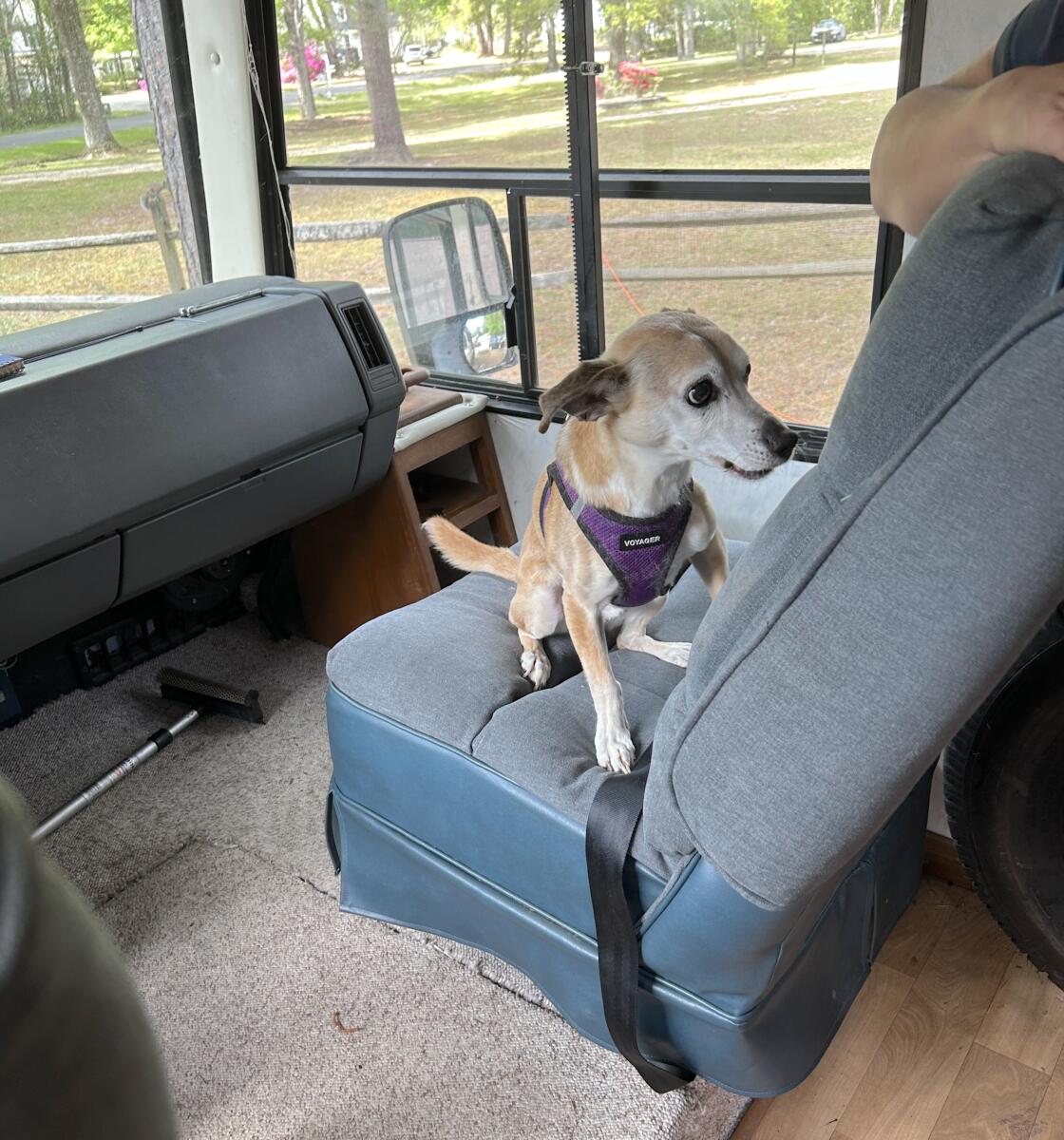
Img 7440 18323d2910d3a896b73662d0f92e3bf2“Petey (Chihuahua/Dachshund mix, age 11) is the best traveler! As long as he’s with me/us, he’s happy. It doesn’t matter where. This year we’re doing our first RV trip. Last year, we went across the country in our minivan and stayed at hotels and campgrounds.” —Kathy Mandell

Send us a photo of your pet with a short description. No blurry photos and please do not submit your photo more than once. Thanks!

AMAZON PET DAYS ARE ON! From May 11-15, expect big sales and deals on pet products. See what’s on sale here.


Leave here with a laugh

Photo credit: Ryan Smith, Flickr

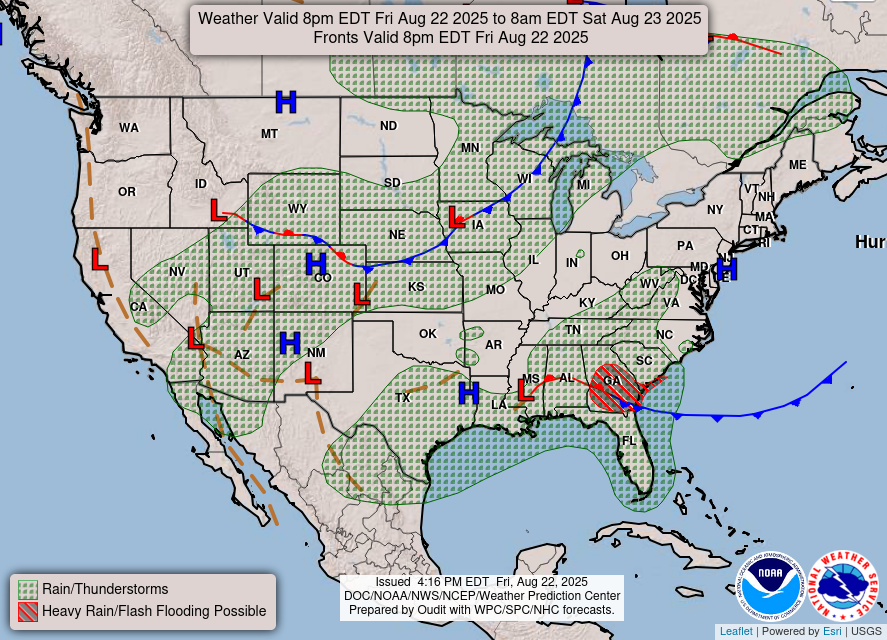
Today’s weather forecast across the nation
THIS MAP UPDATES TWICE A DAY

Visit Current National Radar Weather Map


Did you miss the latest RV Travel Newsletter? If so, read it here.
Oh, and if you missed the Latest News for RVers, make sure to catch up here.


If you shop at Amazon.com we’d appreciate you using this link. We get an itty bitty commission if you buy something, but they add up and help us pay our bills (most importantly our hard-working writers!). 


RVtravel.com All-Star Staff

Click here for information about our staff and how to contact us.

WHY WE ASK FOR DONATIONS INSTEAD OF SELLING SUBSCRIPTIONS.

Our policy on using artificial intelligence.

Dealer told me RV’s solar panels could run almost everything. Is that true?

By Dave Solberg
Dear Dave,
I do not understand how to manage the solar system on my new 5th wheel. When I purchased this unit the dealer told me the solar system would operate the entire coach except some A/C for a day. I don’t believe this, but more importantly I don’t understand how to operate the system. There are two fairly large solar panels on the roof. They look like about 2′ x 4′ but I cannot get on the roof to measure them. Since none of my previous RV’s had solar systems, I don’t know what I should do to make sure the system is working correctly—how to check it, what to check, etc. Thank you. —Ray, 2024 Durango Gold 391RK

Dear Ray,
Your dealer did a poor job (I’m being kind) with the orientation of your solar panel charging system with the general statement, “the solar system would operate the entire coach except some A/C for a day.” I hear this description or, better yet, question often from both dealers and potential owners asking what the solar system will run.

How a solar charging system works

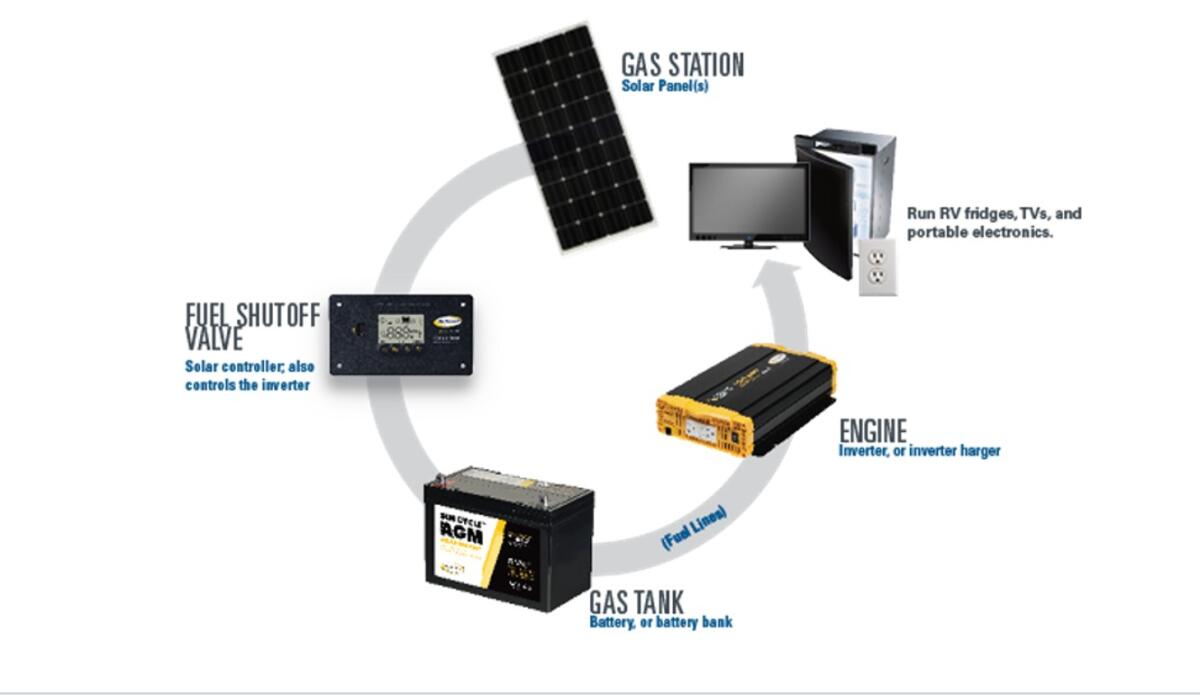
Technically, the solar panels don’t actually “run” anything, they merely capture energy for the house batteries to store and provide 12-volt power. The size doesn’t matter as they are rated in watts and new technology has provided smaller panels with higher watt capacity for more charging power.

Go Power! has a great library of how a solar charging system works on their site here.

Solar Diagram
Solar diagram

The solar panels on top of your rig are made of crystals that convert the energy of the sun to 12-volt power used to charge your house battery or batteries. In this analogy they are referred to as the gas station that provides fuel.

Solar charge controller

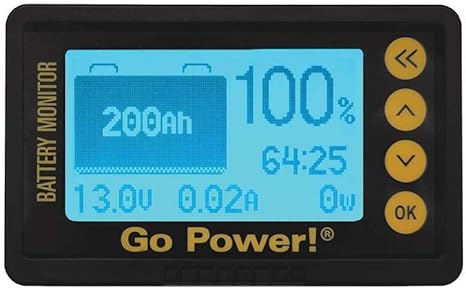
Typically a solar charging system will have a solar charge controller that regulates the charge depending on the State of Charge (SOC) of the battery bank. This prevents overcharging and the display will indicate battery voltage, charging current, and battery SOC. This is where you will be able to tell what is happening with your solar charging system and battery bank.

If your system does not have a complete display of these features, I would recommend getting this one from Go Power! on Amazon here.

GP Battery Monitor
Go Power! Battery Monitor

The battery bank is the “fuel tank” in the system and designed to simply store 12-volt power. 12-volt components include interior lights, roof vents, the water pump, and any appliance that runs on LP, especially the furnace.

Calculate energy needs

It is important to calculate your energy needs. That can be difficult as it is hard to determine how long the lights will be on, how often the furnace turns on and off, as well as the refrigerator. Go Power! has a very detailed chart called the Solar Calculator that at least gets you thinking about energy management. You can download a copy of the Solar Sizing Chart in their RV Solar Resource Guide here.

Solar Size Chart
Solar Sizing Worksheet (click/tap to enlarge)

Another variable to the usage is what 120-volt components are powered by an inverter. This takes 12-volt power from the battery bank and provides 120-volt power to outlets for components such as a TV and in some cases residential refrigerators.

What is powered by inverter

It is important to verify what components are powered by the inverter for proper energy management. A simple way to test this is to make sure the rig is unplugged from any shoreline power and no generator is providing power, then test which components are working. Your refrigerator could be a 12-volt compressor-driven one. It could be working either directly on 12-volt power or being supplied with 120-volt power through the inverter. Shutting off the inverter will verify which power mode it is running on.

Then there are the roof air conditioners, which run on 120-volt power and generally draw too much power to run through an inverter. However, as I often state, I never say never when it comes to RVs!

Keystone has a system called SolarFlex™ which starts with a very large battery bank, large inverter and roof air conditioners with a start-up thermistor installed similar to SoftStartRV™, which we have featured on RVtravel.com before and which is highly recommended by Chuck Woodbury. This system can run the roof air conditioners for about 2 hours. But, as I stated, most other brands do not have this feature.

It is important to understand how the system works and what your energy needs are. Another good exercise is to do a dry run in your driveway or somewhere close to your home so you can monitor the charge you are getting, SOC of the batteries, and how long you can dry camp on the battery bank that you have.


 You might also enjoy these from Dave 


Dave Solberg is a leading expert in the RV industry and the author of the “RV Handbook.”

Read more from Dave here

HAVE A QUESTION FOR DAVE?

Send your inquiries to him using the form below.

Name
Drag & Drop Files, Choose Files to Upload

RVDT2903

You’re using laundry detergent all wrong!

4

By Gail Marsh
“You’re doing it wrong!” I bristled at the words. After six decades of doing laundry, I know how to wash our clothes correctly!

Turns out, I was wrong. You’ve probably heard the saying “Too much of a good thing”? Well, that apparently applies to laundry detergent!

Less is best

I mistakenly thought that if I used more detergent in the washer, my clothes would be cleaner (no spots or stains) and smell better (no leftover smoke smell from the campfire). My fellow RVer, who also happened to be a chemist before retiring, patiently set me straight.

What he taught me resulted in brighter and softer clothes. In addition, I ended up using much less detergent and saving money!

What’s in laundry detergent?

Laundry detergent formulas combine surface‑active agents, biological catalysts, and assorted performance boosters. (Who knew?)

Surface-active agents lower the water’s surface tension, so it wets the clothing fibers more thoroughly. This helps loosen and suspend any dirt to be removed.

At the same time, certain enzymes target specific stain types (e.g., blood or grass), while other performance boosters break down starches into smaller fragments to be rinsed away.

Exceeding the recommended detergent dosage can lead to excess suds, poor rinsing, and buildup—undermining both fabric care and machine performance.

What happens when using too much?

RV laundry setups—whether compact, high-efficiency (HE) onboard RV units or smaller campground machines—are more sensitive to suds and residue than full-size washers. If you use too much laundry detergent, you can expect the following results:

Residue buildup on fabrics. Excess soap doesn’t rinse out completely. This leaves sticky films that trap dirt and grime. Over time, stains can set, fabrics feel stiff, and colors look dingy.

Skin irritation. Leftover detergent can irritate sensitive skin—especially on workout clothes or towels—leading to itching or rashes.

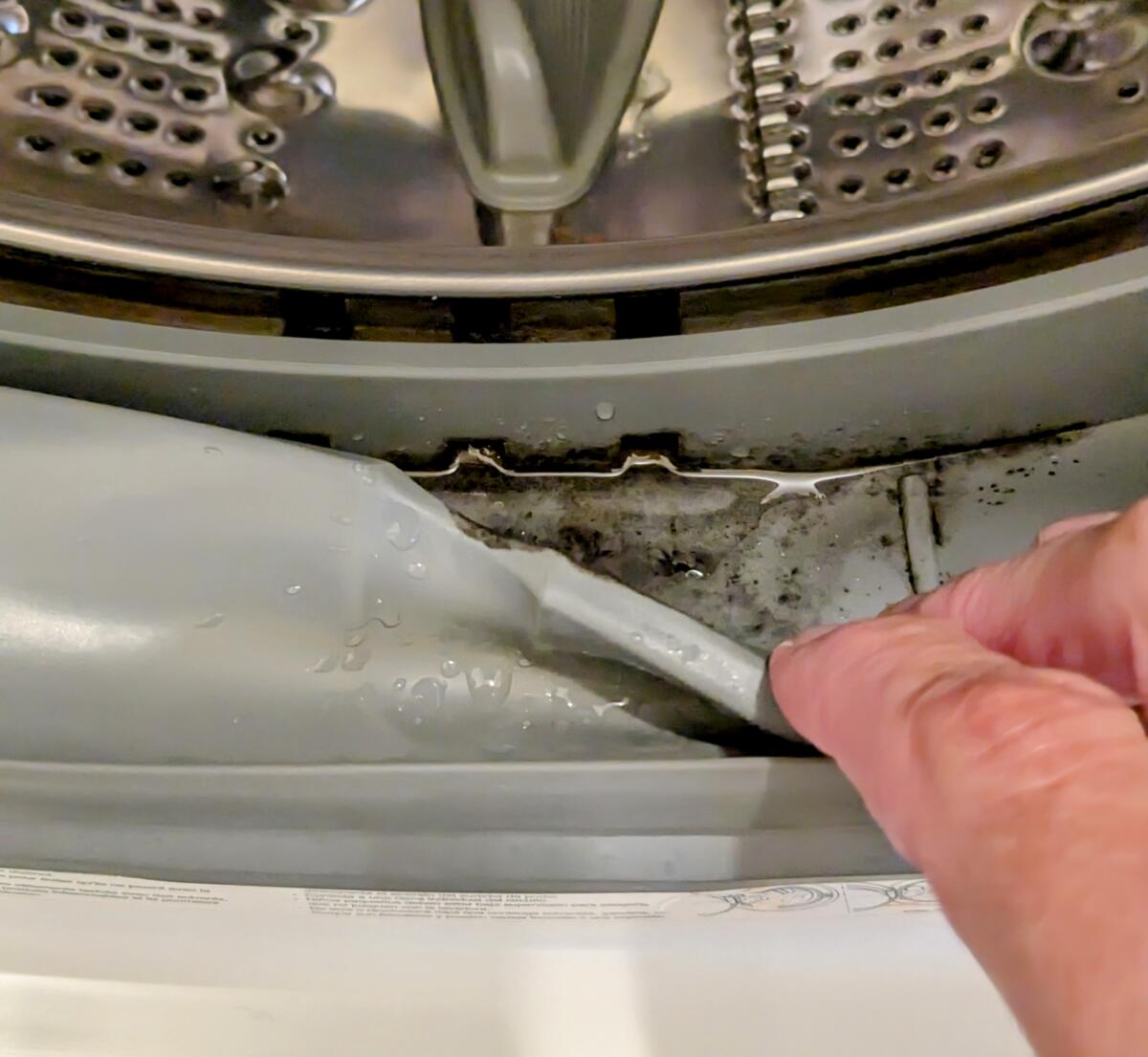
Mold from using too much laundry detergent in campground washer Image: Gail Marsh (no need for attribution)

Machine performance issues. High-sudsing loads can overwhelm small RV pumps and hoses, causing clogs or leaks. Campground machines suffer similar woes: Trapped soap leads to poor drainage, strange noises, and even breakdowns. The soap residue in the campground washer shown here demonstrates the effects of using too much detergent. The suds clogged the drain and, eventually, mold developed!

Increased water and energy use. More suds means more rinse cycles, which translates to extra water and electricity—critical resources at campgrounds.

Measuring the right amount of laundry detergent

Every brand and machine is different. Here’s how to get it right:

Capacity

Know your machine’s capacity. Onboard RV washers often hold just 1–2 lb. of laundry. That’s only a few T-shirts and underwear.

Campground machines. These may be full-size, or HE front-loaders. Check the placard or control panel for capacity. Do not overload!

Check the detergent label. HE detergents have lower-sudsing formulas and require about half the amount of regular detergent.

• For very small loads, underfill the measuring cap.

Soil level

Lightly soiled (daywear, delicates): Use the “low” line on the scoop.

Moderately soiled (everyday clothes): Fill to the “medium” mark.

Heavily soiled (greasy, muddy, sweaty gear): Fill up to the “high” line—but avoid overfilling.

Measure

Eyeballing the correct detergent amount invites error. Always use the detergent cap or a dosing ball.

What now?

If you’ve been doing it wrong (like me), don’t panic. Your clothes aren’t ruined. Try these fixes for clothing and your RV onboard machine:

Add a rinse cycle. Run a cold-water rinse (no soap) to flush out suds and residue.

Use white vinegar. Add ½ cup of distilled white vinegar in place of softener during a rinse cycle. (Vinegar helps break down leftover detergent.)

Soak stubborn loads. For plush towels or heavy fabrics, soak in cool water with a splash of vinegar for 15–30 minutes before rinsing again.

Manual “swish”. In an onboard tub or sink, agitate with clean water to loosen excess foam, then drain and repeat until clear.

Going forward

Keep a measuring tool. Store a small measuring cup or dosing ball in your laundry basket for no more guessing.

Mark your detergent bottle. Draw “L,” “M,” and “H” lines on the cap with a permanent marker for quick reference. This is especially helpful in low-light laundromats.

Choose an HE detergent. Even in non-HE washers, HE formulas cut suds and reduce residue risk.

Opt for liquid over pods. Pods can’t be split for small RV loads, often leading to overdosing.

Count items. Before loading, count or weigh (approximate) items so you know whether it’s a small or full load.

These laundry tips for RVers will help extend the life of your clothes, save on electricity, and keep your washing machine happy! Here’s to cleaning smarter, not sudsier!

Can you add more laundry tips for RVers? Use the comments to do so.

RELATED

RVDT2903

14 RV air fryer hacks and recipes

By Cheri Sicard
Do you carry an air fryer in your RV? Many of our readers do. When we did a survey a while back, we learned that many RVers use their air fryer for almost all their cooking needs. It is, indeed, a versatile kitchen tool.

In the video below, the team from Making My Abode On The Road has compiled their favorite RV air fryer hacks. If you have an air fryer, you are bound to find something useful here. Don’t have one? This is the one they use and recommend.

Our hostess says an air fryer might just be the ultimate RV cooking appliance. Why? Because it can do so much! It saves space by replacing multiple gadgets. Air fryers cook food faster and use less energy, which is a big deal when you’re boondocking or have limited power. Plus, it doesn’t heat up the RV as much as an oven. And let’s not forget the easy cleanup!

RV air fryer hacks

Toast like a pro: Did you know you can make perfect toast in your air fryer? Here’s how to do it: Set your air fryer to 400 degrees for 2-4 minutes. No preheating needed! Keep in mind that power source affects cooking time. On 50-amp service, it might only take 2 minutes. With 30-amp or solar, it could take longer. Just keep an eye on it. The process should take between two and four minutes.

Reheating food to perfection: Say goodbye to soggy leftovers! The air fryer makes everything crispy, not mushy like the microwave. Pizza and french fries taste like they’re fresh out of the restaurant.

Cleaning hack: An easy way to clean a greasy air fryer is to boil some water. While the air fryer is still warm (not hot), pour the boiling water inside. Let it steam. This will loosen all the grease. Then, it will be easy to wipe clean.

Easy air fryer recipes for the road

Ready to get cooking? Watch the video below for some simple and tasty air fryer recipes perfect for RV life, including:

Air fryer buffalo chicken wings: Who doesn’t love crispy chicken wings? The air fryer makes them perfectly without all the oil of frying.

Jalapeño poppers: For a spicy snack, try air fryer jalapeño poppers.

Fried pickles: Want a tangy, crunchy treat? Give air fryer fried pickles a try.

Granola in a flash: Making granola in the oven takes forever. The air fryer is so much faster!

Mexican pinwheels: These are so easy and tasty, and air frying makes them healthier than deep frying.

Air fryer magic for all kinds of foods

• Cooking frozen foods: The air fryer is a champion when it comes to frozen foods. Egg rolls, hash browns, chicken tenders, taquitos all come out perfectly crispy. A general rule is to cook frozen foods at 400 degrees for 8-10 minutes. Remember to check and flip or shake them halfway through.

• Cooking meat: The air fryer isn’t just for snacks and sides. It’s also great for cooking meat.

  • Bratwurst: Bratwurst come out perfectly browned and juicy in the air fryer. No more uneven cooking!
  • Hot dogs: For a super quick meal, try air frying hot dogs. They only take a few minutes.
  • Chicken: Chicken wings (as we covered above) are fantastic in the air fryer. But you can also cook chicken legs, breasts, and thighs. The air fryer makes the skin nice and golden brown.
  • Steak: Okay, steak in the air fryer might sound a little strange. Some people swear by it, and some recipes make air fryer steaks look amazing!
  • Roasting vegetables: Roasting vegetables in the air fryer is quick and easy. Just toss them with a little olive oil, salt, and pepper. Then, air fry at 400 degrees for about 10 minutes, turning halfway.
  • Potatoes: The air fryer is a potato’s best friend. Not only for fries, it also makes perfect baked potatoes. For extra crispy fries, soak them in hot water for about 10 minutes before cooking. This removes starch and makes them extra crispy. Toss your potatoes with olive oil and your favorite seasonings. Air fry at 400° for 11 minutes, then shake and cook for another 11 minutes, or until golden and crispy.

The air fryer can be a game-changer for RV cooking. It saves space, time, and energy. Plus, it makes delicious food! From crispy chicken wings to perfectly roasted vegetables, the possibilities are endless. So, ditch the cooking stress and embrace the air fryer life on the road.

Again, here is the air fryer they use and recommend.

Do you have other RV air fryer tips or recipes? Be sure to share in the comments below.

YOU MIGHT ALSO LIKE:

RVDT2903

Do you wear socks in bed at night?

6

We know this is a silly question, but we also know that everyone has a strong opinion about this! Some people cannot fall asleep unless they’re wearing socks, while others could never fall asleep if they were wearing socks! What about you?

There’s actually some science behind the sock debate. Wearing socks to bed can help regulate body temperature and even help you fall asleep faster by improving blood circulation. On the other hand, some people find the sensation uncomfortable or too warm, especially in hot weather or if the socks are too tight.

Then there’s the travel factor. Many RVers say they sleep differently while on the road than they do at home—and their sock habits change, too. Cooler nights in the mountains might call for thick fuzzy socks, while desert boondocking means bare feet and open windows. Sometimes it just comes down to whatever helps you feel cozy in that moment.

You might even have a favorite “sleep sock” that never leaves the RV drawer.

And yes, we gave you a “yes, but only on cold nights” answer if you sometimes wear them—like maybe in the winter or when you’re feeling chilly.

So tell us about your nighttime sock-wearing!

MORE INTERESTING POLLS:

RVDT2902

How to keep hydraulic leveling jacks and slide-outs working

By Dustin Simpson, California RV Specialists
Here is general information about why it’s important to maintain your hydraulic leveling jacks.

If you have hydraulic leveling jacks or a slide-out system, you want to periodically check the hydraulic fluid level in your reservoir.

If everything is functioning properly, the fluid levels should stay consistent. However, if the fluid levels look low in the reservoir, this could indicate a potential issue or leak somewhere in the system.

You will want to have the hydraulic leveling jacks and slide-out mechanisms inspected regularly and repaired, if necessary. Being aware of what is going on with your leveling jacks and slide-out system by keeping an eye on their condition and functionality is key to ensuring avoidance of serious issues.

Another thing we always recommend is to operate the systems monthly. Let’s not forget to open and close the rooms and operate the hydraulic leveling jacks. If you are full-timers and leave the jacks down or the rooms open for longer periods of time, this is your reminder to check run those systems. The same reminder goes for those of you who have your unit in storage.

Not properly using or maintaining your system can cause you unwanted stress and leave your unit stranded on the road, in a campground or at the storage yard. Worst case, it could make the unit unmovable in case of an emergency.

Make sure to read your owner’s manual for maintenance recommendations. Each manufacturer’s recommendations are different.

Hope this information helps you to prevent damage and protect your investment.

More from Dustin.

RELATED

RVDT2903

Winnebago’s new ARKA overland RV looks ready for the wilderness—but how many owners will use it that way?

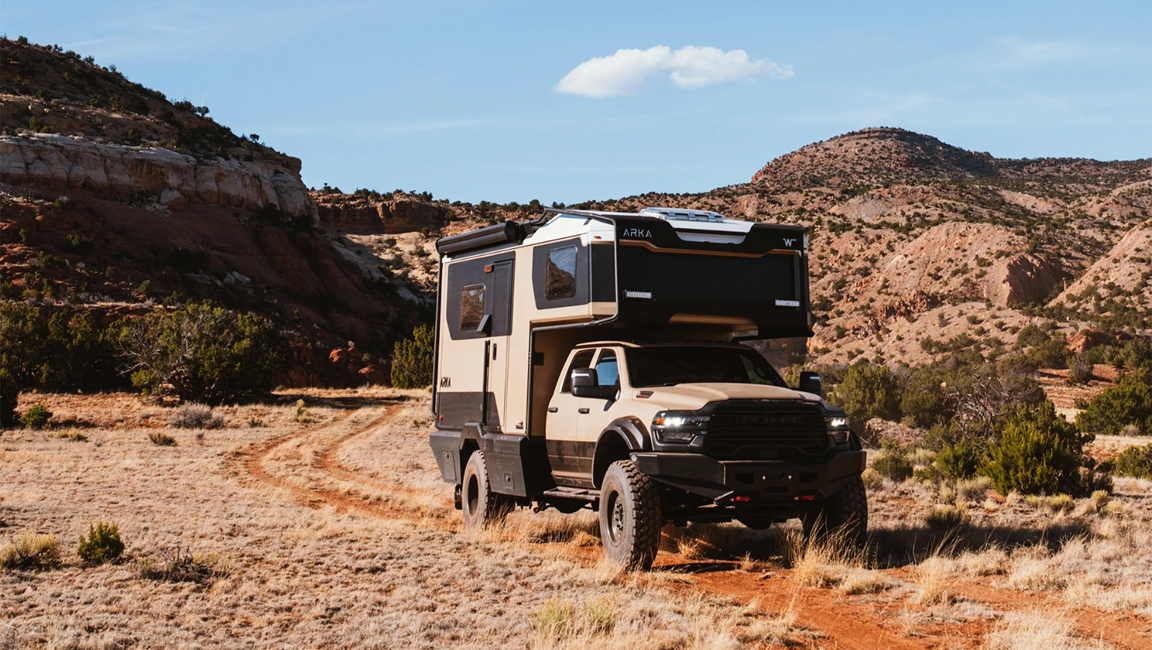
Winnebago Industries has unveiled the new ARKA adventure truck, and, at first glance, it looks less like a traditional RV and more like something designed for an expedition across Alaska or deep into the Mojave Desert.

The rugged-looking rig comes loaded with off-grid and off-road hardware. Winnebago says the ARKA can support up to two weeks away from hookups, with features including a large lithium battery system, hydronic heating, insulated tanks, aggressive tires, substantial ground clearance, and heavy-duty suspension components. The company is clearly leaning hard into the booming “overland” lifestyle image that has become increasingly popular across the RV and truck world.

But beyond the dramatic photos and marketing language, the new Winnebago ARKA overland RV also raises a practical question many experienced RVers may quietly ask: How many owners will actually use a rig like this anywhere close to its advertised limits?

That’s not necessarily criticism. It’s simply the reality of many adventure-focused RVers.

The overland fantasy versus RV reality

Scroll through social media, and overlanding can look like a nonstop series of dramatic mountain overlooks, remote deserts, river crossings, and isolated campsites accessible only by heavily modified vehicles.

In reality, many expensive off-road-capable RVs spend most of their lives on pavement, in established campgrounds, or on relatively tame forest roads that many ordinary pickups or SUVs could already handle.

That disconnect is not unique to Winnebago. It exists throughout the outdoor recreation industry. Lifted Jeeps often never leave suburban streets. Side-by-sides frequently stay on groomed trails. Heavy-duty diesel pickups capable of towing massive loads may never pull more than a utility trailer.

The ARKA simply takes that same dynamic into the luxury overland RV space.

And there’s a reason manufacturers keep building these rigs. Buyers are not always purchasing only capability. Often, they’re buying the feeling of capability.

 “For many buyers, the dream of remote freedom may matter just as much or more as the destination itself.”

The idea of freedom matters

For many RVers, the appeal is not necessarily climbing boulder-strewn trails or navigating deep backcountry terrain.

Instead, it’s the comfort of knowing they could.

That sense of independence has become a powerful marketing tool in recent years, especially after the pandemic-era RV boom pushed many travelers toward remote camping and self-contained travel.

The ARKA appears designed around that mindset. Winnebago highlights extended off-grid capability, cold-weather protection, rugged construction, and the ability to reach remote destinations while carrying substantial gear and supplies.

To some buyers, that combination may feel reassuring even if the rig rarely leaves improved roads.

And, honestly, many RVers already understand this concept. Plenty of four-wheel-drive trucks spend most of their lives towing on highways, yet owners still value the security of extra traction during storms, muddy campsites, or rough secondary roads.

Complexity can become part of the story

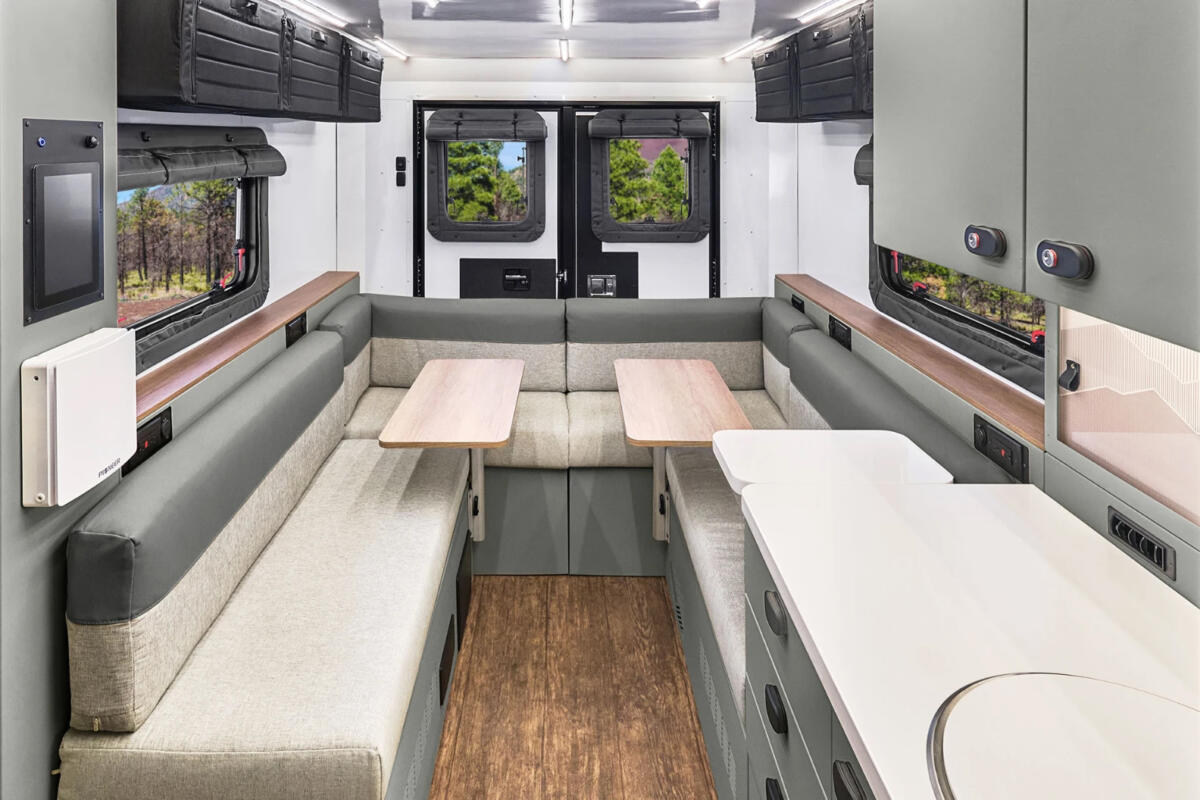
Inside, the Winnebago ARKA blends rugged expedition styling with a surprisingly clean, modern living space designed for extended off-grid travel. Photo courtesy of Winnebago Industries.

At the same time, rigs like the ARKA also introduce a level of complexity that can make some traditional RV owners uneasy.

The more advanced these overland RVs become, the more they rely on sophisticated electronics, large battery systems, specialized climate controls, integrated power management, and proprietary components.

That creates an interesting contradiction. Vehicles marketed for remote wilderness travel may also become highly dependent on systems that can be difficult or expensive to repair if something fails far from a service center.

Experienced RVers often understand this tradeoff well. Simpler systems are sometimes easier to troubleshoot in remote areas. More capability can also mean more maintenance, more weight, and potentially higher repair costs.

That doesn’t mean the ARKA is flawed. It simply means buyers may need to think carefully about how they truly plan to travel.

Not every campground is built for this

There’s also the practical reality of where a large expedition-style RV actually fits.

Many public campgrounds were not designed with oversized overland rigs in mind. Tight loops, low branches, narrow access roads, and older campsite layouts can quickly become stressful in larger specialty vehicles.

And while overlanding imagery often focuses on remote public land camping, access to dispersed camping areas has become more complicated in some regions due to crowding, seasonal closures, fire restrictions, and land-management concerns.

Ironically, the market for extreme off-road RVs is growing at the same time access to some remote public lands is becoming more limited.

The ARKA may say as much about the RV industry as it does about buyers

The bigger picture here may be what rigs like the ARKA reveal about the direction of the RV industry itself.

As traditional RV sales have cooled from pandemic highs, manufacturers increasingly appear to be chasing niche buyers willing to spend heavily on premium adventure-focused products.

That has led to a wave of ruggedized Class B vans, luxury Super C motorhomes, off-grid power systems, overland trailers, and high-end “expedition” builds.

The Winnebago ARKA overland RV fits squarely into that trend.

Whether most owners ever take one deep into the wilderness may almost be beside the point. For many buyers, the dream of remote freedom may matter just or more as much as the destination itself.

Sources:
Winnebago ARKA official page
RVBusiness coverage of the ARKA launch

RELATED

RVDT2902

Arizona RV park fire destroyed multiple homes in minutes. Here’s why snowbirds are especially vulnerable

A fast-moving brush fire near Wickenburg, Arizona, destroyed multiple RVs and forced evacuations Monday, leaving some residents with little more than the clothes they were wearing.

For many RVers across the Southwest snowbird corridor, the scene hit uncomfortably close to home.

The so-called Jones Fire burned near U.S. 60 northwest of Phoenix and spread quickly through dry brush with windy conditions. Fire crews eventually stopped the fire’s forward progress, but not before flames reached the Arrowhead RV Park near Wickenburg. Local television reports said at least eight RVs were destroyed, while some reports suggested the number could be higher. Residents described losing nearly everything they owned.

That is part of what makes RV park fires different from many other wildfire stories.

For a large share of snowbirds, the RV is not just a recreational vehicle sitting in storage between vacations. It is their home. When a rig burns, owners may lose their housing, medications, financial paperwork, computers, tools, family keepsakes, and transportation all at once.

And unlike a traditional neighborhood evacuation, many RV owners face additional challenges when trying to leave quickly.

Flames can spread fast in RV parks

Wildfire experts often focus on vegetation, wind, and terrain. But RV parks can introduce another problem: density.

A burned RV sits damaged inside the Arrowhead RV Park near Wickenburg, Arizona, after the fast-moving Jones Fire swept through the area. Multiple RV homes were destroyed as residents evacuated the park. azfamily.com image.

Many parks place rigs relatively close together. Once one RV ignites, heat can quickly spread to neighboring units, especially when awnings, skirting, storage sheds, propane cylinders, vehicles, and dry landscaping are nearby.

Modern RVs also contain large amounts of combustible material, including fiberglass, foam insulation, plastics, fabrics, and lightweight composite construction. Fire officials have long noted that RV fires can intensify rapidly once flames enter the interior.

Television footage from the Wickenburg fire showed burned RV shells and heavy damage inside the park after flames moved through the area.

For many residents, the RV was the home

The emotional toll may be especially severe in snowbird communities because many residents spend months living in their rigs full-time.

Some own little or no conventional real estate elsewhere. Others carry important records, medications, work equipment, or irreplaceable possessions inside the RV because the rig effectively serves as both house and vehicle.

That reality appeared throughout coverage of the Wickenburg fire, where residents described losing nearly everything.

One television report quoted a resident who said the family escaped with only moments to spare before the fire overtook the area.

Evacuating an RV is not always simple

Many non-RVers assume evacuation simply means starting the engine and driving away.

In reality, leaving quickly can be far more complicated.

Some RV owners may have mobility limitations. Others may be disconnected from tow vehicles, have dead starting batteries, mechanical issues, slideout problems, or partially dismantled seasonal setups with patios, skirting, storage structures, or utility hookups.

In some parks, roads can also become congested quickly during a sudden evacuation order.

That combination can leave residents with very little time to react when fast-moving brush fires approach.

Insurance questions may follow

The Wickenburg fire may also leave some RV owners reexamining insurance coverage.

Not all policies cover personal contents the same way. Emergency lodging coverage, replacement value terms, detached structures, and full-timer liability protections can vary widely between policies.

Owners who primarily use their RV as a residence may face very different insurance needs than occasional vacation travelers.

And after major fire losses, replacing an RV can be difficult and expensive, especially if owners suddenly need both temporary housing and transportation at the same time.

Why this story resonates across Arizona’s snowbird belt

Wickenburg sits within a region heavily traveled by seasonal RV residents moving between Phoenix-area communities, Quartzsite, Yuma, Lake Havasu City, and other winter destinations.

That helps explain why this fire may feel personal to many RVers far beyond the immediate burn area.

The images coming out of the park were not just of damaged recreational vehicles. For many readers, they looked like homes destroyed in a matter of minutes.

Sources:
Arizona’s Family coverage of the Jones Fire

Arizona’s Family video report on destroyed RVs
12News report from the RV park fire scene

RELATED

RVT1261b

RVers hear ‘technician shortage,’ but RV repair company says the problem runs deeper

RV repair delays have become so common that many owners almost expect them now.

The rig goes into the shop for what sounds like a simple repair. A refrigerator issue. Slide problem. Air conditioner failure. Maybe an electrical gremlin nobody can quite pin down.

Then the waiting starts.

A week becomes three weeks. Three weeks become two months. The RV sits in the same spot behind the service fence every time you drive by. Phone calls start sounding familiar. “Waiting on approval.” “Waiting on parts.” “Waiting to hear back from the manufacturer.”

And somewhere in the conversation comes the explanation most RV owners have heard by now: There are not enough technicians.

That may be true. But one mobile RV repair company says the industry’s service headaches go a lot deeper than simply not having enough people turning wrenches.

In a recent guest piece published by RVBusiness, an independent mobile RV technician argued that many RV repair delays actually begin long before a technician ever starts the repair itself. The bigger problem, she says, often involves warranty approvals, manufacturer paperwork, parts bottlenecks, incomplete documentation, and a repair system that has become increasingly tangled as RVs grow more complicated.

And, honestly, a lot of RV owners will probably read that and think: “Yeah. That makes sense.”

Why modern RV repairs can bog down so easily

Anybody who has owned a newer RV for very long already understands how many companies are packed into one coach.

The RV manufacturer may have built the unit itself, but the refrigerator came from one supplier. The leveling system came from another. The air conditioner from somebody else. Add in solar gear, inverters, electronics, slide systems, tank sensors, multiplex controls, lithium battery systems, water heaters, and smart app connectivity, and suddenly, troubleshooting one failure can involve a small army of vendors.

That is part of what makes modern RV repair feel so different from a few years ago.

The actual hands-on repair might only take a few hours once somebody finally gets authorization, finds the part, confirms who is paying for what, and tracks down the documentation needed to diagnose the problem in the first place.

“Sometimes the actual repair only takes a few hours. The waiting is what eats up the calendar.”

Meanwhile, owners mostly just see the calendar pages turning.

Why “technician shortage” may not tell the whole story

That disconnect may explain why so many RVers get frustrated hearing the phrase “technician shortage” repeated over and over.

Because from the customer side, it often does not look like anybody is actually working on the RV at all.

And, to be fair, dealerships really are struggling to hire and retain qualified technicians. That part is real. RV systems have become far more complex than they used to be, and finding people who can troubleshoot electrical systems, solar charging, inverters, smart controls, and appliance integration isn’t easy.

But the piece argues that the industry may be oversimplifying the problem when nearly every repair delay gets blamed on staffing shortages alone.

A lot of the slowdown, the tech says, happens in the background. Warranty claims. Photos. Emails. Approvals. Questions bouncing between manufacturers and suppliers. Waiting for parts. Waiting for responses. Waiting for somebody to decide who covers the bill.

RVers have seen enough of it by now that many have simply adjusted their expectations downward.

Why mobile RV repair keeps growing

That may also help explain why mobile RV repair has exploded in popularity.

A growing number of owners would rather pay somebody to come out to the campsite than leave the RV sitting at a dealership for weeks waiting to move three spaces forward in line.

Not every repair can happen that way, obviously. Some larger warranty jobs still require dealer involvement. But many RV owners have discovered that smaller independent repair operations and mobile techs can sometimes move faster simply because they are working through fewer layers of scheduling and authorization.

And increasingly, owners are learning to do at least some troubleshooting themselves. Not necessarily because they want to become part-time RV technicians, but more because they are tired of losing the camping season while waiting for an appointment.

That is probably one reason RV repair YouTube channels, owner forums, and Facebook troubleshooting groups (like RVtravel.com’s, with more than 100,000 members) have become so popular. Many RVers no longer assume the dealership will always be the fastest—or even the best—source of answers.

Why RV owners increasingly feel they are on their own

None of this means the RV industry is uniquely bad. Modern vehicles, boats, farm equipment, and even home HVAC systems have all become more electronic, more specialized, and more dependent on supply chains and manufacturer support.

But RVs may be especially vulnerable because they combine so many different systems from so many different suppliers into one rolling package that also bounces down the highway like during an earthquake every time it moves.

That reality may be why the “technician shortage” explanation no longer fully satisfies many RV owners.

From their perspective, the real problem often feels bigger, messier, and far more complicated than simply not having enough mechanics in the shop.

Source:
RVBusiness guest commentary

RELATED

RVT1261b

RV Daily Tips. Tuesday, May 12, 2026

America’s Original RV Newsletter. Since 2001
Issue 2902 • New issue every weekday

REMEMBER: You do not need to receive an email alert from us to read our newsletters. Just visit our homepage, www.rvtravel.com, at any time of day, and the latest issues and articles will be there.


Today’s thought

“One of the most beautiful qualities of true friendship is to understand and to be understood.” —Lucius Annaeus Seneca


Need an excuse to celebrate? Today is National Odometer Day! How exciting! 🙄

On this day in history: 1941 – Konrad Zuse presents the Z3, the world’s first working programmable, fully automatic computer, in Berlin.


Tip of the day
Get the most from your RV’s exhaust fan

By Gail Marsh
Many RVs feature roof vents with a built-in ceiling exhaust fan. Our current RV has two exhaust fans—one in the galley area ceiling and one in the bathroom ceiling. An RV exhaust fan can help make your interior living space much more enjoyable and perhaps even healthier! Here are some tips to help you get the most from your RV’s exhaust fan.


WOW! Most items $5 or less at Amazon. Many below $2. Have fun scrolling through!


Article and video
Three of the best, most versatile RV care products and how to use them

Want to keep your RV looking its best for years to come? It’s possible without spending a fortune on dozens of different products. After 18 years of RV ownership, Brian Pursel, from RV with Tito DIY, has learned what works and what doesn’t. (Many of our writers have recommended these items, too.) Here, he shares the top three essential RV care products that have stood the test of time.


SPEND YOUR ETERNITY IN QUARTZSITE! Not only can you enjoy Quartzsite, AZ, as an RV snowbird, but you can spend your ever after there in the town’s cemetery. Here’s the scoop.


Featured article
Half of RVers feel lonely. Here’s what to do about it

By Gail Marsh
Many people go RVing to get away from the stress of everyday life. They long for solitude and quiet. They revel in the open expanse that Mother Nature provides in her isolated, off-the-beaten-path spaces. And then, there’s Lindsey. Lindsey recently lost her husband to cancer. They’d been married for less than four years. No children. Just Lindsey. Continue reading for great tips to fight loneliness anytime, anywhere.


Lodge cast iron scrapers: Small gadget, big results
Sometimes the smallest tools make the biggest difference—like these Lodge Cast Iron Scrapers. This plastic scraper lifted off stuck-on food with ease, no scratching or buildup. Now I (Cheri) use them all the time. The two-pack includes a pan scraper and a grill scraper made of durable, dishwasher-safe polycarbonate with edges that fit different pan shapes. Learn more or order.


Ask Dave
Is there a difference between RV and residential CO detectors?

Find out here.


Livingbestlifedump


Reader poll
If you suddenly became filthy rich, would you buy a new high-end RV?

Respond here.


Quick tip
Climb into a warm and cozy bed

Cold and damp out? If you’re in an RV park, use an electric heated mattress pad to pre-warm your bed. You’ll save LP from not having to crank up the heat. Inverter users beware: Not all mattress pads and electric blankets can “digest” inverter power!


Website of the day

Certified Dark-Sky Parks
This list of certified dark-sky parks is brought to you by the National Parks Conservation Association. (Lots of other great stuff on this site, too!) Happy stargazing!


? MYSTERY PRODUCT OF THE DAY ?
Oh, come on! It’s ONLY six pounds… That won’t put your rig overweight, will it? And, hey, if it does and you get stranded, well, you definitely won’t go hungry!!


And the survey says…

We’ve polled RVtravel.com readers more than 5,000 times in recent years. Here are a few things we’ve learned about them:

• 8 percent have been reading the RVtravel.com newsletter(s) since we began back in 2001. Additionally, 23 percent have been reading for 10 years or longer. Thank you!
• 77 percent say they wish Facebook would go away and never come back!
• 57 percent of men say they never wear cologne or aftershave.

Recent poll: What month were you born?


Trivia

Newfoundland icebergThe folks way up northeast in Newfoundland enjoy watching icebergs float past their coastal communities. Karen Smith took this photo on May 6th near the small town of Cupids and posted it to Iceberg Finder, where iceberg sightings are celebrated by the locals. Newfoundland, by the way, is a great place to travel with an RV.


Readers’ pets of the day

Img 8828 F73b5591fb74cbe26b840843bd8ee2bc“Thelma and Louise (mixed breeds, age 4) are rescue sisters from the same litter. They don’t love the ‘getting there’ part, but love exploring new places.” —Carolyn Howell

Send us a photo of your pet with a short description. We publish one each weekday in RV Daily Tips and in our Sunday RV Travel newsletter. No blurry photos, please! Please do not submit your photo more than once. Thanks!

AMAZON PET DAYS ARE ON! From May 11-15, expect big sales and deals on pet products. See what’s on sale here.


FREE IS GOOD! Heading to Vermont? Find everything you need to plan your visit to the Green Mountain State here.


Leave here with a laugh


Today’s weather forecast across the nation
THIS MAP UPDATES TWICE A DAY
Visit Current National Radar Weather Map


Did you miss the latest RV Travel Newsletter? If so, read it here.
Oh, and if you missed the Latest News for RVers, make sure to catch up here.


RVtravel.com All-Star Staff

Click here for information about our staff and how to contact us.

WHY WE ASK FOR DONATIONS INSTEAD OF SELLING SUBSCRIPTIONS.

Our policy on using artificial intelligence.

Is there a difference between RV and residential CO detectors?

I received a few comments from RVtravel.com readers on the recent post on CO detectors that I wanted to share.

Question

Dave, have you ever researched the difference between CO detectors rated for home use and those rated for RV use? Be curious as to what is actually different. —Dave

My response

Most home CO detectors operate on 120-volt power with a battery backup. CO detectors used in RVs are wired to the 12-volt house batteries, as many RVers boondock or dry camp without being plugged in. Some models like the First Alert and Kidde brands are powered by a replaceable 9-volt battery.

Also, according to my “Go To” source at Thor, they must pass UL 2034 and have “For RV Use” stamped on the detector. This code has testing for the following conditions which an RV would be subject to:

Alarms must pass tests for performance in extreme heat, cold, and high humidity, as well as resisting false alarms from low-level, temporary CO exposure.

CO Detector Back
CO detector back (click to enlarge)

This is the back label of the RV Safe model showing the red positive 12-volt wire and small print in the lower right indicating it is for RV use.

Question

Where should carbon monoxide and LP detectors be installed? In our 2017 and in most RVs the CO detector is installed near the floor. Wouldn’t you agree?

Excerpts from AI:

Yes, a CO detector mounted near the floor is generally effective because carbon monoxide (CO) has nearly the same density as air and distributes evenly throughout a room.

Plug-in Units: Plug-in CO detectors near the floor are effective and often include, or can be, combo propane/natural gas detectors. Propane is heavier than air and must be detected low.

I don’t recall if ours detects LP, but if LP was detected at 5′ you’d really be in trouble, in my opinion. —Jeff

My response

According to what I found on the NFPA (National Fire Protection Association) and several of the CO detector manufacturers’ sites, they should be mounted at 5′ or higher.

However, most of these codes or recommendations pertain to a residential setting with cold air returns, ceiling fans, and other methods of having a good airflow in the house.

In an RV, it’s a very confined space with typically only one cold air return and several areas that I call HVAC “pockets”, where air is not circulated and just sits. Since most RV heaters have the vents on the floor, it seems wise to have the CO detector mounted lower, in my opinion.

Even with some of the LP-burning appliances such as a stovetop or oven that might emit CO, those are typically only used for a short period of time, unlike a furnace/heater. They should never be used during the night for a heat source. In my opinion, it would be good to install a second one near a sleeping area.

Question

When in your RV, especially with the slide in, be careful walking past your gas stove. You can brush against the gas turn-on knobs and turn the gas on without lighting the stove. Luckily, I caught it twice when the gas alarm went off. —mrpavet

My response

I have witnessed this at shows, as well! Someone leans back and pushes the stovetop knob in and all of a sudden there is a horrible smell of propane. That is even though there is not supposed to be any propane in a tank or cylinder inside a show!

Most fire marshals don’t allow the DOT cylinders on the tongue of travel trailers, so I typically have only seen it on a few motorhomes. The tanks are supposed to be empty. However, removing one wire makes the monitor panel not light up so they think it is empty.


 You might also enjoy these posts from Dave 

DAVE HAS ANSWERED MORE THAN 1,000 readers’ maintenance and repair questions. Read a directory here. There is so much to learn!


Dave Solberg is a leading expert in the RV industry and the author of the “RV Handbook.”

HAVE A QUESTION FOR DAVE?

Send your inquiries to him using the form below.

Name
Drag & Drop Files, Choose Files to Upload

RVDT2902

Get the most from your RV’s exhaust fan

By Gail Marsh
Many RVs feature roof vents with a built-in ceiling exhaust fan. Our current RV has two exhaust fans—one in the galley area ceiling and one in the bathroom ceiling. An RV exhaust fan can help make your interior living space much more enjoyable and perhaps even healthier! Here are some tips to help you get the most from your RV’s exhaust fan.

Freshen the air

It’s best to use the exhaust fan in conjunction with an open window, door, or vent. This will allow the fan to draw outside air into your RV. We usually open a window farthest from the fan when wanting to draw in fresh air. The fan pulls the outside air into our rig and causes stagnant interior air to be expelled out of the RV via the exhaust vent. The resulting ventilation helps keep our RV’s interior air fresh.

Remove humidity

Your exhaust fan is particularly useful when cooking or showering. Cooking can produce odors and, just like showering, can add excess moisture to the air inside your RV. By turning on the exhaust fan during these activities, you can prevent mold and mildew, and also keep your RV’s interior smelling fresh and clean. Hint: If you battle allergies, you’ll want to be especially vigilant about removing excess humidity inside your RV.

If you have two separate ceiling exhaust fans, as we do, use the fan that’s closest to the humidity source, e.g., kitchen exhaust fan for cooking humidity and the bath fan for shower humidity. Also, open the nearest window to the source of moisture. That way it isn’t drawn throughout the RV. Instead, the humidity is more directly pulled up and out of your rig.

Regulate temperature

Your exhaust fan can also help regulate the temperature inside your RV. We turn on our fans in the early morning to draw in cooler temperatures through several open windows. Before the outside air warms up, we turn off the fans.

Later in the evening, we activate the fans once more. We open one bedroom window just a little bit and a great cross breeze results. The fans pull in the cooler nighttime air, exhausts warm interior air, and we can usually sleep without using the air conditioner.

Vent only

In nice weather, we keep the exhaust vent open, without using the fan. This helps promote natural air circulation throughout the RV.

Fan adjustments

Experiment with your exhaust fan. Try different speed settings (if available) to find the optimal setting for your varying needs. Also, try opening different windows or doors to see which combination produces the best results.

Cleaning

Like everything else in your RV, the exhaust fan requires cleaning. I use a microfiber cloth to remove dust from the exhaust screen, or sometimes I’ll remove the screen and use dish soap to clean. After a thorough rinse, the screen can be patted dry with a towel or set outdoors to air dry.

To clean the blades, you’ll need to remove the screen. On our fan, the screen simply pulls off. Check to find the best way to access the fan blades on your fan, as it may be different. I use a dry microfiber cloth to wipe each blade, turning to a clean part of the cloth as I go.

To clean the top “window” on the fan you’ll most likely need to get up on the RV’s roof. I use a window cleaner to remove dirt from the plastic cover. Keeping the exhaust fan free of dust, rust, or debris will help the fan function at its best and extend the life of the fan, as well. Cleaning may also help with allergies.

Follow these tips and you’ll get maximum benefit from your exhaust fan. Your RV’s interior air will be comfortable, fresh, and well-ventilated, too!

RELATED

RVDT2902