Okay, let’s say you played a ticket on the lottery. Instead of blowing a dollar like usually happens, this time you win a few million dollars! Wow, lucky you!
So what will you do with all that money? There will be a lot of options, including giving some of it to people who are your new best friends, and maybe a relative who suddenly likes you again. (Interesting how money can have such an effect.)
But let’s say that no matter what happens, you end up with a giant wad of cash to spend any way you want.
Would you use it to buy a really fancy RV, one that was previously way out of your price range? Just think about the luxury! Maybe get one with two bathrooms and heated floors and a wine cooler, not to mention a giant residential fridge, washer-dryer and maybe even a spare bedroom for the kids or grandkids. Wow!
Is that what you would do? Or would you be happy with your present rig?
Remember, it can sometimes take a few moments for the poll to load, so stand by. The wait will be worth it!
A wild burro rescued from a septic tank at an Arizona RV park may sound like one of those strange “only in the desert” stories. But wildlife officials say the incident points to a growing reality across parts of the Southwest: More wild burros are wandering into RV parks, neighborhoods, and developed snowbird areas as human activity spreads deeper into desert habitat.
The latest rescue happened near Kingman, Arizona, where a burro became trapped inside a septic tank at an RV park in the Golden Valley area. Crews from the Bureau of Land Management, local responders, and neighbors worked together to pull the animal safely out. According to officials, the burro was exhausted but survived the ordeal.
The story quickly drew attention because of the unusual setting. But for many Arizona RVers and snowbirds, wild burros in RV parks are no longer especially rare.
Why burros are showing up in RV parks
Wild burros naturally roam large areas of desert land across Western Arizona and nearby states. But as more RV parks, housing developments, and seasonal communities expand into those areas, encounters between humans and burros are becoming more common.
And RV parks can unintentionally attract them.
Water sources, landscaping, pet dishes, trash, shade structures, and even damp utility areas can draw animals into developed spaces—especially during hot, dry stretches. Once burros become accustomed to easy access to food or water, they often return repeatedly.
Officials with the Bureau of Land Management have warned in recent years that habituated burros are increasingly wandering into residential areas, campgrounds, and roadways throughout parts of Arizona and Nevada.
That creates problems not only for the animals, but for RVers and other folks as well.
A safety issue for RVers and snowbirds
Most wild burros appear calm around people, especially in tourist-heavy areas where they have frequent human contact. But wildlife experts warn they are still large, unpredictable animals capable of biting, kicking, or charging when stressed or cornered. A friend of ours, an older and very petite woman, was nearly knocked down in her garage when a carrot-hungry burro wandered in. It could have been a serious health issue had she not escaped into the house.
The bigger risk for many RVers may actually happen on the road.
Burros are especially active during cooler morning and evening hours, which overlaps with the times many RV travelers like to drive. In parts of Western Arizona, drivers occasionally encounter burros standing directly on highways or crossing roads with little warning.
That can become particularly dangerous for larger RVs towing vehicles or travel trailers, where sudden swerving may create rollover risks.
“They look gentle and almost domesticated—but a full-grown burro can weigh hundreds of pounds and appear on a dark highway with almost no warning.”
Simple steps RVers can take
Wildlife officials generally recommend that RVers avoid feeding burros, even casually. Animals that associate campgrounds with food often lose their natural caution around people.
There are also a few practical steps RV park owners and RVers can take to reduce problems:
Keep trash secured.
Avoid leaving pet food or water outside overnight.
Inspect septic and utility covers regularly.
Use caution driving at dawn and dusk in burro country.
Never attempt to approach or handle wild burros.
That septic tank detail may sound unusual, but uncovered or weakened utility areas can become hazards for both wildlife and pets in desert parks. This may mostly apply to folks owning septic tanks in burro country, but if you notice an issue in an RV park, be sure to let management know.
From stinky to satisfied: After pulled out of the tank, the critter was given a hose down and a lunch of alfalfa. BLM photo.
The rescue near Kingman ended well. But officials say it serves as another reminder that desert wildlife and human development are increasingly colliding across popular snowbird regions.
And for RVers who spend winters in Arizona’s open desert country, those encounters may only become more common.
Chrysler is recalling certain 2023-2026 Ram 2500 pickup trucks.
A software error in the powertrain control module may improperly allow the vehicle speed to exceed the tire speed rating. That can reduce tire integrity, which can result in compromised vehicle control and result in a crash.
As many as 12,736 trucks may be affected by the recall, which was issued May 7.
Remedy
Dealers will update the powertrain control module software, free of charge. Owner notification letters are expected to be mailed June 4.
Owners may contact FCA customer service at 1-800-853-1403. FCA’s number for this recall is 43D. Vehicle Identification Numbers (VINs) involved in this recall will become searchable on NHTSA.gov beginning May 14.
America’s Original RV Newsletter. Since 2001
Issue 2901 • New issue every weekday
Today’s thought
“May your trails be crooked, winding, lonesome, dangerous, leading to the most amazing view.” ―Edward Abbey
Need an excuse to celebrate? Today is National Eat What You Want Day! Say no more!
On this day in history: 868 – A copy of the Diamond Sūtra is published, the earliest dated and printed book known.
Tip of the day Cleaning RV air vents: A simple, important task to breathe easy
By Gail Marsh
I don’t know about you, but I rarely look up when I’m inside our RV. That changed a few days ago. I happened to be contemplating very deep thoughts (read: relaxing) on the sofa when I noticed the intake air vent above me. Hmm… it looked dusty. Really dusty! “Is there a way to clean that?” I wondered. Because the vent was too high to reach, I went back to the bathroom where I could easily reach the vent. Wow! This one was dusty, too! Continue reading. (And then clean your vents!)
THE MORE YOU KNOW… Saturday is the peak day for banana sales in grocery stores, with about 150% more bananas purchased on this day compared to typical weekdays.
RV review
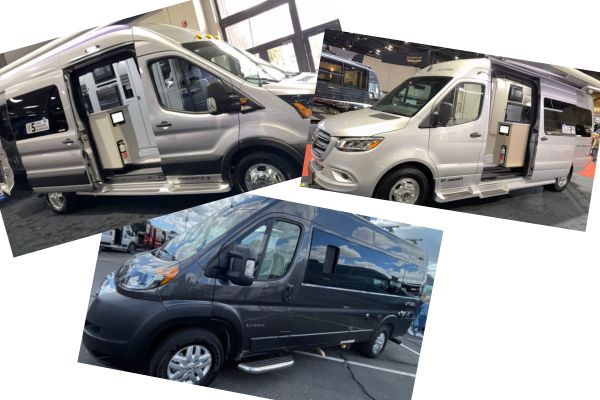
Sprinter vs. Transit Van vs. Promaster: Which van is best for RVing?
More RV shoppers are moving away from big motorhomes and toward Class B, B+, and smaller Class C models. That shift brings one big choice with it, because many of these RVs are built on a Mercedes Sprinter, Ford Transit, or Ram ProMaster. Each van has a clear personality. One leans premium, one balances cost and support, and one keeps the price down better than the others. Continue reading and see which one is best for which use.
A happy camper for Happy Campers black tank treatment
We have battled black tank odor off and on in our RV. We’ve tried just about everything! Not to mention, I can’t even count the number of different brands of black tank deodorant and tissue digester we’ve tried. Nothing seemed to work! Until now… Continue reading Nanci’s review.
In the RV shop with Dustin Ways you can prevent RV fender skirt cracks
Prevent RV fender skirt cracks! Join Terry and me [Dustin] in the video below as we replace the fender skirts on this 2020 Grand Design Reflection. I’ll show you and explain why fender skirt cracking is so prevalent. The video shows you how we install fender skirts to prevent cracking.
A Permanent Address for RV Freedom — Full-time RVers trust America’s Mailbox for mail forwarding, residency help, and reliable support from the road.
Article and video Genius RV storage hacks and tips
By Cheri Sicard
Keeping an RV organized can feel like a never-ending battle. Space is limited, and clutter seems to multiply overnight. Here, Ben and Charity from the Grateful Glamper share smart RV storage hacks that can transform your rig from chaotic to livable. I list their hacks in my article, too.
Tired of your RV air conditioner tripping breakers or overwhelming your generator? SoftStartRV™ reduces the startup surge, helping many RVers run their A/C on smaller generators or limited campground power. Stay cooler with fewer hassles and see why RVtravel.com publisher Chuck Woodbury recommends this very affordable upgrade.
Featured article Should you carry LP cylinders lying down?
By Russ and Tiña De Maris
The propane attendant readied to sling our seven-gallon cylinder in the back of the car. “Would you mind setting it upright, please?” we asked. He shrugged his shoulders, and said, “You know, it really doesn’t matter. It’s safe whether it’s standing up or lying down.” But he put it upright, as we asked. It begs the question: Is it safe to carry LP cylinders lying down? For that matter, is it legal? Find out here.
Ask Dave What appliances should not be plugged into a GFCI outlet?
From Roger Marble: “After a long trip from Ohio to Wyoming and back, I had a bunch of ‘dead bug guts’ plastered to my mirrors and front facing surfaces. A regular car wash did not remove all of them. Since Dawn is good at removing stuck-on food, and since bug bodies are dried protein, I decided to give Dawn HD Powerwash a try. Spray it on, give it a few minutes to dissolve the bug stuff, then spray off—almost no scrubbing required.” Thanks, Roger!
Report Fraud
If you’ve been scammed, or know someone who has, use this website from the Federal Trade Commission as a resource and report it! Tell them what happened and help stop it from happening to someone else.
? MYSTERY PRODUCT OF THE DAY ? Wow, baby! This is diva-tastic! It might blind you when the sun hits it. (Seriously, is this safe??) But, hey. You’d be glamorous, that’s for sure!
Monday Motivation
“I have learned over the years that the higher the level of emotion, the lower the level of reasoning. For example, if your emotions are at the highest level of 10, your ability to reason is at a 0. If it’s a 9, then your reasoning is a 1. I am not suggesting that emotions don’t have their place, but taking actions based purely on emotions is dangerous and could cost you everything.” ―Eric Thomas, The Secret to Success
Trivia
Louisa May Alcott, the author of “Little Women,” was ambidextrous. When she tired of writing with one hand, she would switch to the other.
Readers’ pet of the day
“Marley (Boykin Spaniel, age 6) loves people, loves to travel, and play with his ball. He has been camping with us every trip we make. He walks me about five miles a day while camping. As long as he is with his humans, he is happy. Most loving dog we have ever had.” —Gary Garland
Send us a photo of your pet with a short description. No blurry photos and please do not submit your photo more than once. Thanks!
Leave here with a laugh
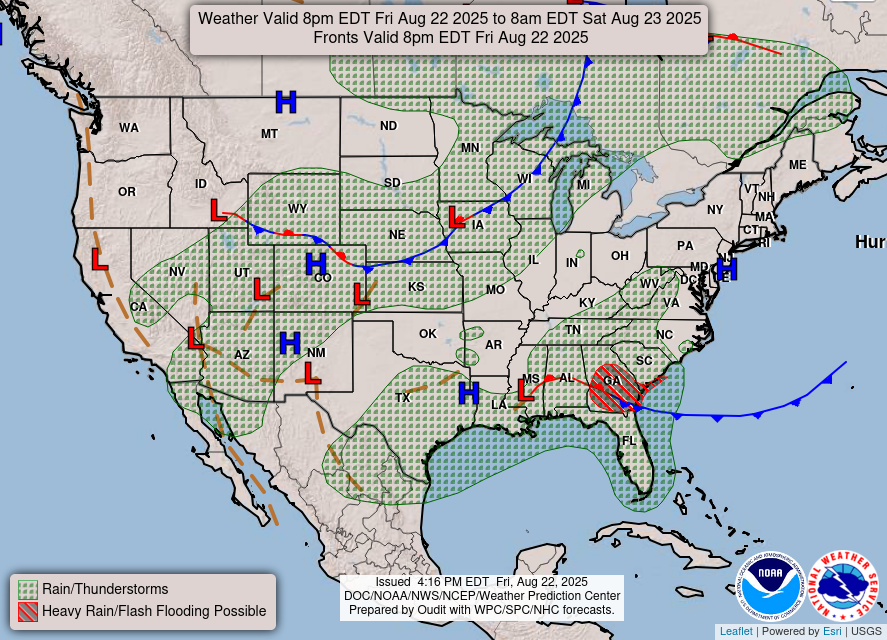
Today’s weather forecast across the nation THIS MAP UPDATES TWICE A DAY
According to the Consumer Protection Safety Commission (CPSC), a ground fault circuit interrupter (GFCI) outlet constantly monitors current flowing through a circuit. If the current flowing into the circuit differs by a very small amount (as little as 0.006 amperes) from the returning current, the GFCI interrupts power faster than a blink of an eye to prevent a lethal dose of electricity. GFCls are designed to operate before the electricity can affect your heartbeat. A GFCI works even on two-slot receptacles.
Per the CPSC, the National Electrical Code (NEC) requires GFCI-protected outlets for any outdoor use, bathrooms, and kitchens.
GFCI not intended for storage facilities
GFCI protection can also be at the circuit breaker. That created an issue in a storage facility at our office. The local building inspector now requires a GFCI circuit breaker be installed in any new or remodeled storage facility. This created an issue when a 2014 Winnebago View with a 30-amp service was plugged into a dedicated 50-amp plug for storage. Read the article here.
I contacted Mike Sokol, as he is “THE” expert on everything electrical. He stated that he helps develop the code. He explained it is not intended for storage facilities, and especially ones that have vehicles with multiple appliances. That is because there are voltage “leaks” that are acceptable but will trip a GFCI. As with many enforcement issues, it’s left to the interpretation of the local enforcement agency.
Code sometimes vague regarding GFCI outlet locations
I had a similar issue in my home with a kitchen outlet tripping randomly at the circuit breaker. I called my local electrician that had installed the panel during construction. He stated that they had this issue quite often and recommended replacing the GFCI circuit breaker with a standard one. “Is that legal?” I asked. “Or, better yet, is it safe?”
He told me that the code is a little too vague as it lists kitchen in general or anything within 6’ of a water source. The outlets on my kitchen countertop are used for a coffee pot, air fryer, and occasionally a toaster, but never at the same time. He also indicated there were a few appliances that should not be plugged into a GFCI outlet.
Microwave oven
The component that generates microwave energy is called a Magnetron. The initial surge at startup or cycle modes during defrost are very high and can trip the GFCI, as it senses a leak in voltage. Most microwave ovens in residential applications are direct wired to the circuit breaker. However, I have found many RV units that have a “ganged” outlet, with one being the main GFCI. The microwave oven in your RV should at least be a dedicated circuit.
Another issue is when RVers purchase a countertop microwave and plug it into the GFCI outlet on the back wall. This is called a “nuisance tripping.” The appliance is operating in a safe manner, but the GFCI is too sensitive for the surges and motor outputs and requires constant resetting.
Refrigerators
With the shift away from absorption refrigerators to residential or 12-volt models, the same issue occurs with power surges, especially with a residential model. Not only do these “cycle” during the day, causing compressor inrush, some also feature a defrost mode that comes on with a high power demand and ultimately a voltage leak.
Medical equipment/CPAP machine
More RVers are using medical devices for sleeping and even normal breathing such as CPAP machines and oxygen concentrations. Once again, these devices cycle during the day and night and create slight electrical surges. A GFCI cannot determine if it is actual normal operation or a dangerous leakage. These machines should be on a dedicated, non-GFCI outlet or circuit, and never used near a water source.
What should you do
Take a moment to identify what type of outlet these devices are plugged into. Keep in mind that not all GFCI-protected outlets have the test and reset button. Most manufacturers have one outlet with the test and reset button and others are just ganged with what we called “dummy plugs”. They had a GFCI sticker on the face when new, but that never seems to stay on.
And if you are getting a nuisance tripping from your air pot, or coffee maker, it might not be the appliance, but rather a very sensitive GFCI outlet.
By Gail Marsh
I don’t know about you, but I rarely look up when I’m inside our RV. That changed a few days ago. I happened to be contemplating very deep thoughts (read: relaxing) on the sofa when I noticed the intake air vent above me. Hmm… it looked dusty. Really dusty! “Is there a way to clean that?” I wondered. Because the vent was too high to reach, I went back to the bathroom where I could easily reach the vent. Wow! This one was dusty, too!
Taking apart the air vent
Not wanting to break anything, I gingerly fingered all around the air vent. Giving a gentle pull, the vent assembly easily came down. It looked like this:
I suppose I could have washed the entire vent cover assembly, but I wanted to make sure that the foam filter got clean.
I removed the bracket that holds the filter. The bracket is held in place by tension. I gently pushed the side brackets back as I pulled up on the top brackets and – voila! – the foam filter was free. Not only did the filter hold a lot of dust particles, but it also had a fair amount of sawdust!
I proceeded to wash the filter in warm water and Dawn dish soap. A swish-swish was all it took, and the filter was clean! (How did I know? I could see through it!) I blotted the foam between towels to dry. Then I quickly washed the plastic vent cover, too. I reassembled the unit and gently pushed it back into place.
After cleaning all of the intake air vents, I felt much better. The air conditioner seemed to breathe a happy sigh of relief, as well. That’s a very deep thought. I should probably contemplate that…
By Cheri Sicard
Keeping an RV organized can feel like a never-ending battle. Space is limited, and clutter seems to multiply overnight. In the video below, Ben and Charity from the Grateful Glamper share smart RV storage hacks that can transform your rig from chaotic to livable.
The great RV purge: Keep, donate, or trash?
Why is decluttering so important? A tidy RV isn’t just about appearances. It’s about having more space, carrying less weight, and creating a relaxing environment. So, how do you start? The Grateful Glampers have a simple system. It involves creating three piles: keep, donate, and trash.
• Keep: These are the items you use all the time. The essentials for RV living.
• Donate: Got items in good shape that you no longer need? Someone else could put them to good use.
• Trash: Broken items, things that can’t be used, and anything without a purpose need to go.
Analysis paralysis can kick in during this process. Should you keep something “just in case”? The key is to be decisive. Put it in a pile and move on. Once everything is sorted, revisit the “keep” pile. Are those items really essential? It’s easy to get attached to things, but remember, less is more.
Ever find hidden treasures or, in this case, hidden clutter? The Grateful Glampers found three extension cords scattered in different compartments. How does that even happen? This is a perfect example of how clutter builds up without you even realizing it. By consolidating items and eliminating duplicates, you can free up precious space.
Clever RV organization systems to maximize every inch
• Utilizing vertical space with stacking storage: RV storage compartments are often tall, but the space isn’t always used well. The Grateful Glampers suggest stacking storage bins to take advantage of all that vertical space.
• From boxes to bags: Bulky packaging can take up valuable space. The Grateful Glampers recommend decanting items into Sunee Zipper Pouches to reduce volume. These pouches are great for storing board games, electronics, and other loose items. They’re also more durable than standard Ziploc bags. Don’t forget to label the bags. It will make it much easier to find what you’re looking for later.
Reorganized RV basement
This part of the video looks inside the reorganized RV basement. In the first compartment, you’ll find stacked bins containing frequently used items. An indoor/outdoor rug is easily accessible for setting up an outdoor space. A telescoping ladder is stored underneath, since it’s not needed as often. There’s also a quick-connect propane line for a Blackstone grill, plus a collapsible bucket and other useful items, including the “outdoor living room” setup.
The second compartment holds the Starlink cable, items for the tow vehicle, and tie-down straps. A tire minder and tire inflator also live here.
It’s crucial to keep sewer-related items separate from everything else. The Glampers use the third compartment to contain the sewer hose and accessories, as well as items related to the gray tank.
Compartment four contains fresh water and seasonal gear as, just as with the sewer items, freshwater-related items should be kept separate. Inside are the freshwater hoses and accessories along with items used less frequently such as paddle boards, kids’ scooters, life jackets, and snorkeling gear.
The tie-down strap dilemma: Tangles and frustration
Tie-down straps. Every RVer has them, and they always seem to end up in a tangled mess. Untangling them is a frustrating waste of time.
Ben has a simple technique for keeping tie-down straps organized:
1. Bring the strap up through and back all the way through, leaving a little slack.
2. Close the strap up.
3. Grab the end, make sure it’s flat, and bring it up to the half mark.
4. Mark the half mark with a marker.
5. Start rolling the strap tightly.
6. Roll the end up on top of the strap.
7. Bring the end over and hook it onto the strap.
This method keeps the straps neat and ready to use.
How many tie-down straps does one really need? Opinions vary widely. Ben believes you can never have enough, while others might think 10-15 is plenty. What do you think?
Bonus tip: cord organization
Tangled cords are a common annoyance. Using Velcro cord ties is an easy way to keep cords neat and organized. Simply wrap the tie around the cord to prevent tangling.
The importance of prioritizing space
Think about how often you use an item when deciding where to store it. Items used daily or weekly should be placed in easily accessible locations. Items used less frequently can be stored in harder-to-reach spots. This principle applies to all areas of the RV, not just the storage compartments.
Keeping an RV organized requires regular effort and smart storage solutions. By decluttering, using stacking bins and zipper pouches, and prioritizing space, you can transform the RV into a comfortable and functional living space.
How many tie-down straps do you think is enough? What are some of your favorite RV storage tips or hacks? Be sure to leave your thoughts in the comments below.
RVers, you know the American highway system (well, if you’re American) probably better than anybody else… except maybe truckers.
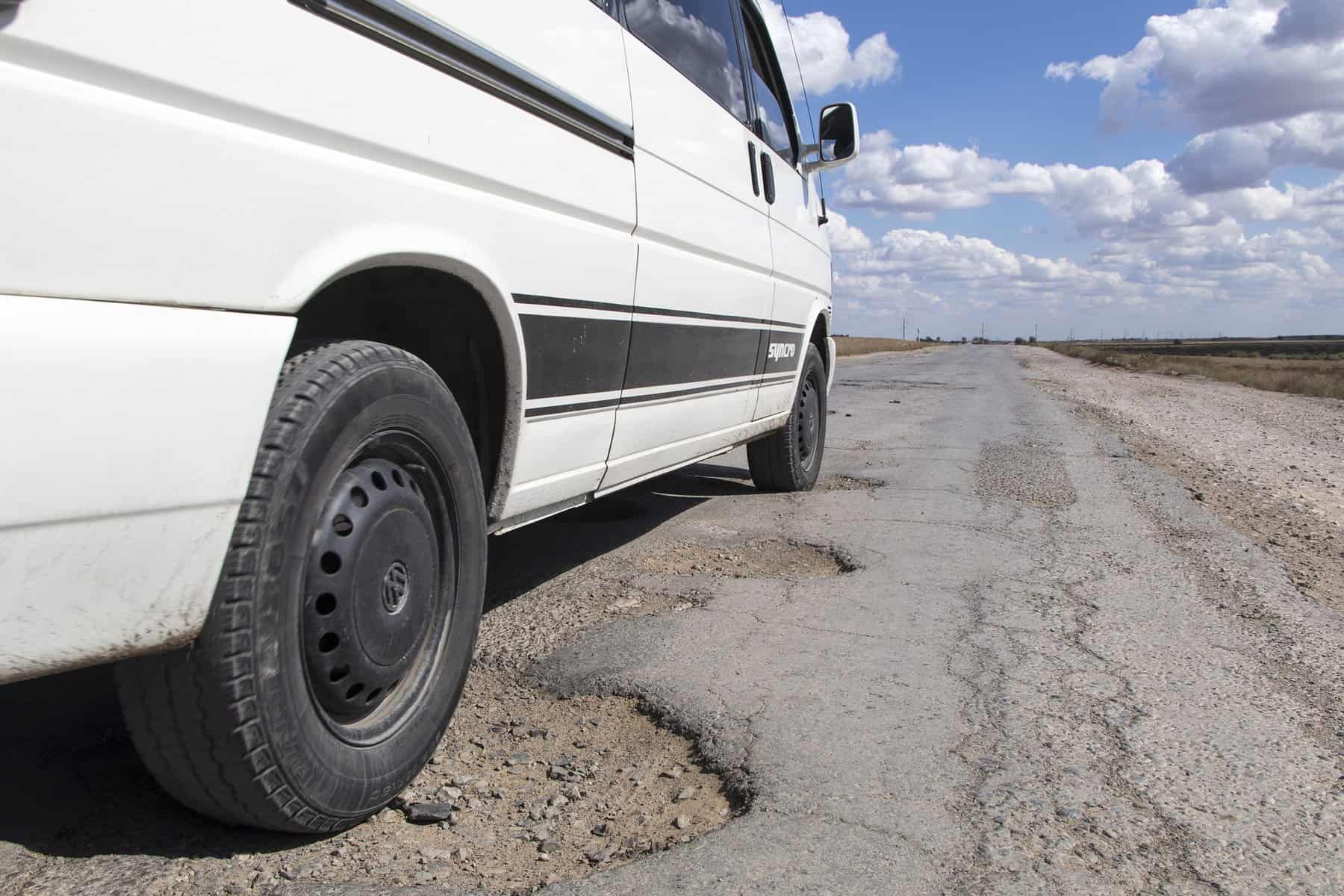
So tell us: How would you describe the condition of our interstate highway system? Excellent? Good? Poor? Awful?
You’ve logged thousands of miles, crisscrossed the country, and likely encountered just about every kind of road condition imaginable—from freshly paved stretches that make you feel like you’re gliding, to pothole-riddled sections that make you worry something important might rattle loose. Maybe you’ve noticed that some states seem to take better care of their roads than others. Or maybe you’ve been stuck in enough construction zones to wonder if some roads will ever be finished.
We hear a lot about infrastructure spending, but what’s it actually like out there in the driver’s seat? Are rest areas well-maintained? Are bridges in good shape? And are the lanes wide enough and shoulders solid enough for those of us hauling big rigs or towing a trailer? Some RVers say the interstate system is the safest and most efficient way to travel. Others avoid it when they can, choosing slower but more scenic backroads instead.
This isn’t just about convenience; it’s about safety, wear and tear on your rig, and even how enjoyable the ride is. If you’ve been RVing for years, have you noticed things getting better, worse, or staying about the same? We’d love to hear specific examples of stretches of highway you think are great—or ones that make you cringe every time you approach them.
After you vote in today’s poll, please leave a comment and explain why you answered the way you did and answer any or all of the questions above. Thanks!
By Dustin Simpson
Prevent RV fender skirt cracks! Join Terry and me in the video below as we replace the fender skirts on this 2020 Grand Design Reflection.
I’ll show you and explain why fender skirt cracking is so prevalent. The video shows you how we install fender skirts to prevent cracking.
This applies to every fender skirt, no matter the brand, model or year of RV you own.
Even if yours is not cracked at this time, I would recommend that you remove it and install something as we have done in the video.
More RV shoppers are moving away from big motorhomes and toward Class B, B+, and smaller Class C models. That shift brings one big choice with it, because many of these RVs are built on a Mercedes Sprinter, Ford Transit, or Ram ProMaster. Each van has a clear personality. One leans premium, one balances cost and support, and one keeps the price down better than the others.
In the video at the end of this post, our favorite certified RV inspector, Duane from the RV Inspection And Care channel, does a comparison of the three choices.
What separates these three vans
The short version is simple. The Sprinter is the most popular and the most polished, the Transit gives buyers a strong middle ground, and the ProMaster is the budget pick. That does not mean one is best for everyone. The right fit depends on whether the RV will spend more time off-grid, on highways, or around town.
Mercedes Sprinter: The premium favorite
The Mercedes Sprinter is the most popular platform in the Class B space, and it has clear reasons for that. Its diesel engine is a major draw, because many buyers like the longer life, stronger torque, and solid fuel economy that often come with diesel power. It also offers all-wheel drive, which makes it appealing for boondockers and off-road use.
Beyond that, the Sprinter has a refined driving feel, lots of aftermarket upgrades, and stronger resale value than the other two.
The tradeoff is cost. It is the most expensive to buy, it usually costs more to maintain and repair, parts can be harder to get, and qualified service centers are far less common.
Ford Transit: The balanced option
The Ford Transit costs less up front than a Sprinter-based RV, and it usually costs less to maintain, as well. Parts are easier to find, service access is much broader, and it also offers all-wheel drive. For taller buyers, the Transit stands out because it has the tallest interior of the three.
Another plus is the available EcoBoost gas engine, which brings plenty of power and torque. Its downsides are milder. The drive is not as polished as the Sprinter, aftermarket support is not as deep, and resale is usually a bit lower.
Ram ProMaster: The low-cost choice
The Ram ProMaster is the most affordable platform of the three, so it often gets attention from buyers on a tighter budget. It also keeps repair and maintenance costs lower, parts are easy to source, and service locations are common. On top of that, it has a tight turning radius and the widest body, which can make it feel more nimble and give it a bit more walking room inside.
Its biggest drawback is hard to ignore, because there is no all-wheel drive option at all. The interior is also shorter in length, so builders have less room for added features, and aftermarket support is lighter than the other two.
Service access changes the ownership experience
Dealer reach is one of the biggest practical differences.
Van approximate dealer count in the U.S.:
Mercedes Sprinter: About 380 dealers
Ford Transit: More than 2,800
Ram ProMaster: More than 2,400
A wide service network can make ownership simpler, especially for travelers who spend a lot of time on the road.
Final thoughts
Each platform has a clear lane. The Sprinter leans premium, the Transit leans practical, and the ProMaster leans affordable.
That is why this comparison is less about a universal winner and more about matching the van to the way the RV will actually be used.
America’s Original RV Newsletter. Since 2001 Issue 1260 REMEMBER:You do not need to receive an email alert from us to read our newsletters. Just visit our homepage, www.rvtravel.com, at any time of day, and the latest issues and articles will be there.
Today’s thought
“All that I am, or hope to be, I owe to my angel mother.” —Abraham Lincoln
Need an excuse to celebrate? Today is Mother’s Day, of course! And it’s also National Shrimp Day, so maybe cook some shrimp for Mom?
On this day in history: 1908 – Mother’s Day is observed for the first time in the United States, in Grafton, West Virginia.
On a roll: RV tires can do more than you think!
We rely on them. RV tires. Without tires, RVers wouldn’t get out of the driveway, much less travel throughout this wonderful country. But did you ever consider that RV tires can do more than simply take us from here to waaay over there? It’s true. Read on to see for yourself.
Carbon monoxide testers are in every RV, but are they adequate?
By Dave Solberg
As we have discussed a few times, the RV Industry Association relies on codes and standards set by the National Fire Prevention Association, the American National Standards Institute, and the National Electrical Code. In an earlier post, we discussed the smoke alarm codes and the types used, and from that, I got an interesting question from a reader regarding the carbon monoxide detectors used in RVs.
Why would A/C drip water into my RV?
It’s a bit disconcerting: You have the RV out for a trip, and you notice water dripping. Dripping down the side of the rig. There’s not a cloud in the sky, but water is flowing away merrily. Or it could even be worse. You flip on the air conditioner for a hot day, and after a short while, what happens? A nasty drip, drip, drip of water falls from your air conditioning unit. It drips—onto the floor—INSIDE your RV! Not good!
A Permanent Address for RV Freedom — Full-time RVers trust America’s Mailbox for mail forwarding, residency help, and reliable support from the road.
Tony’s tips I left Starlink behind—Now what?
I went to share my latest and greatest with all of you, and I discovered I had left my Starlink dish sitting on my back porch. Ooops. So that brings up how I get the internet and why I like redundancy. Because of that, I have several redundant sources of internet, so while I’m really sad that Elon’s brainchild is sitting on my back porch, we have options.
Why we recommend the SoftStartRV™ If you camp in hot weather, this is one upgrade you’ll wish you had sooner. The SoftStartRV lets you run your A/C on limited power—like a small generator or even household current—without tripping breakers or stressing your system. It’s simple to install, built by people we trust, and it works. If you’ve ever struggled to keep cool at a campground, this is worth a closer look. Plus, special discounts for RVtravel.com readers!
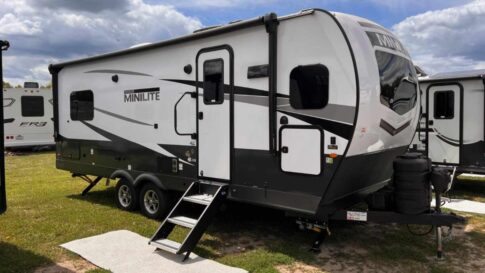
Today’s RV review… Flagstaff Micro Lite 25FBT—no slide, full function
Today’s RV review is of the Flagstaff Micro Lite 25FBT, the sister to the Rockwood Mini Lite 2524FBT. For all those people holding out hope for a mid-sized travel trailer with good usability, premium build features, but no slide, your ship has come in. Well, really, it’s your RV. Check it out.
Tanner Toons with Tanner Woods
You may share this Tanner Toon, unaltered, on your website, blog or social media with our compliments. The musings from Tanner Woods’ creative mind appear in this newsletter every Saturday and Sunday and in many RV Daily Tips newsletters through the week. Sign up for our RV Daily Tips Newsletter so you don’t miss a single Tanner Toon.
FACTOID: The Panama Canal isn’t the only body of water that connects the Atlantic Ocean to the Pacific. At Parting of the Waters, deep in the Wyoming Teton wilderness, you’ll find a stream that splits in two and does, indeed, connect the Atlantic to the Pacific. Read more about it here.
5 annual RV maintenance projects you should do once a year
By Cheri Sicard
Here, we join Chris from Why Wait for a look at five important annual RV maintenance projects that you SHOULD do every year. I say “should” because these things are easy to put off and procrastinate on. We all do it. But we shouldn’t. Ignoring these essential annual RV maintenance tasks can end up costing you far more than had you just paid attention to them before they became problems.
How to balance routine and spontaneity while RVing
By Gail Marsh
Okay, I’ll admit it. I’m the routinized person in our marriage. My husband is most definitely the spontaneous one. Our different approaches to life seem magnified when we’re RVing. You might think that our differences complicate things. They do. Sometimes. But some helpful tips have kept us together and happily RVing.
Navigating diverging diamond interchanges in your RV
Driving your RV down the road demands your full attention. This is especially true when you come upon an unfamiliar road configuration like a roundabout or a diverging diamond interchange (DDI). Like most everything else with RVing, it’s a good idea to learn as much as you can ahead of time. So here are some tips for navigating diverging diamond interchanges in your RV.
No more stretching to reach your RV roof vent
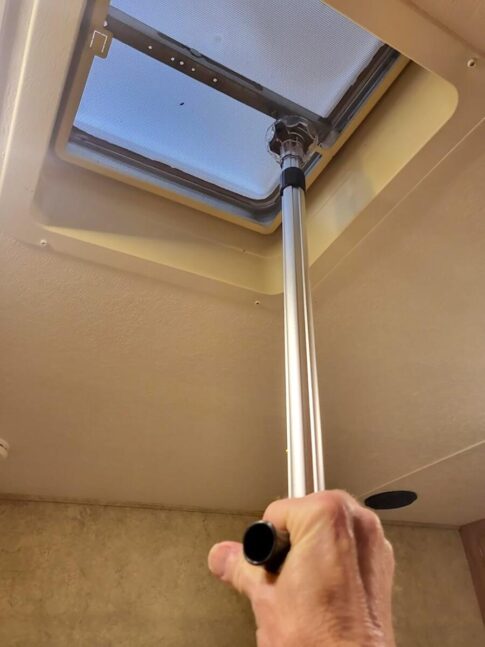
This adjustable vent opener pole makes cranking open hard-to-reach roof vents simple—no climbing, straining, or wobbling on tiptoes. With an extendable handle and interchangeable heads that fit most RV vent knobs, it’s a handy tool without the hassle. Learn more or order.
Reader poll Have you ever forgotten something important at home after leaving on an RV trip?
By Chuck Woodbury
I lost my mother almost 18 years ago, on July 5, 2008. It seems like yesterday. I think of her nearly every day. I miss her terribly. She was a happy, happy person. That was her nature. She reminded me of a college girl—so youthful in spirit. I tell the story sometimes about driving her from Northern California after my father died to live with me… Continue reading.
Why Mother’s Day founder later regretted doing it
It’s a day dedicated to moms everywhere. Cards. Flowers. Candy. Family time. What’s not to like? Why did Anna Jarvis, the founder of modern-day Mother’s Day, grow to despise the holiday that she helped create? It certainly didn’t start out that way.
REMEMBER THIS, MOMS: Anything you buy yourself today or this week can be considered a Mother’s Day present.
VIEW CAMPSITES just like you were driving through the campground using Google Street View. See one you like? Learn instantly if it’s available and reserve it on the spot at Campground Views.
IT’S ON SALE!That thing you really need? Yep, it’s on sale! The thing you want? Yep, that too! See everything on sale here and don’t wait—it won’t be marked down for long!
RV gadgets and gizmos The best kind of wedgie: Andersen RV levelers
By Tony Barthel
Automatic leveling systems have come a long way, and some travel trailers have seven-point automatic leveling systems. However, you can save many thousands of dollars and simplify your RV experience with a set of leveling wedges instead. I like to write about products I’ve found that I use regularly on the road, and these Andersen levelers are one of those products.
LIKE GADGETS? Did you know that we have a whole newsletter dedicated to RVing gadgets? Read the latest issue here.
Travel destinations
Wupatki National Monument: Arizona’s ‘Machu Picchu’
Wupatki National Monument is one of those places that surprises people who expect northern Arizona to be all pine forest and mountain views. The monument sits between the Painted Desert and the ponderosa highlands. Its ancient pueblo ruins rise out of a wide, open, high-desert landscape that feels far bigger and wilder than you might expect. It’s amazing!
Illinois Route 66 Centennial celebrations
By Gail Marsh
As much as I’d like to travel the entire Route 66 in its Centennial year, it’s just not possible. I know that I’m not alone in my FOMO (fear of missing out), so I’ve decided to do a bit of research. Route 66, also known as the Mother Road, passes through eight states. Each state will commemorate the Route 66 Centennial in its own unique way. Here’s how Illinois is celebrating.
This free edition is made possible by 6% of our readers who support RV Travel with a voluntary subscription. Advertising helps, but that alone is not sufficient. Thank you, special donors!
Highlights from this week’s RV Daily Tips Newsletter
Yes, that’s right! We have other newsletters! And did you know that our RV Daily Tips newsletter is our readers’ favorite? It’s true! Make sure you’re subscribed.
In the RV shop with Dustin The benefits of RV roof vent covers
In this article and video, we’ll dive into the hidden benefits of RV roof vent covers and explain why they’re an essential part of your RV maintenance routine. Join me as I share expert insights on how these simple covers can protect your vent lids and plate covers, keep your RV cool, and ensure a safe, comfortable journey on the road.
? MYSTERY PRODUCT OF THE DAY ? You know who always has this? Cracker Barrel. And, no, we’re not talking about their hashbrown casserole. Think! What does Cracker Barrel always have to entertain you? This is it!
RV tire safety All about tire loads and inflation—A ‘heavy’ topic
By Roger Marble OK, so maybe the title is a bit too cute. But it was suggested I try to balance my focus on highly technical stuff with a little bit of lighter stuff. Well, air is light, isn’t it? Continue reading.
BUMPER SNICKER: “Born to Roam, Forced to Dump Tanks”
Live cam
Abbey Road, London
It is so funny to watch everyone try to take a picture!
Readers’ pet of the day
“Oliver (Chihuahua) was born in August 2021. We retired in December of 2021, and our first RV trip was the entire Baja. Oliver is a great traveler and is super friendly. He has traveled with us around 15,000 miles.” —Hector Vijarro
Want to see your pet in this newsletter? Please send us a photo of your pet with a short description. No blurry photos and please do not submit your photo more than once.
PHOTO OF THE DAY
A baby (“kit”) fox at California’s Kern County Onyx Ranch State Vehicular Recreation Area sits outside its den. Foxes are primarily nocturnal and typically avoid daytime activity to escape the desert heat. Fun fact: Their large ears help dissipate heat to regulate their body temperature. Photo by Ku Xiong, Great Basin District
Trivia
The famous “Welcome to Fabulous Las Vegas Nevada” sign isn’t actually in Las Vegas. It’s in neighboring Paradise. The sign was placed in 1959 and was designed by Betty Willis. Betty was one of the only women at the time working with neon lights. Since Betty gave her design to the city of Las Vegas, the sign was never copyrighted, which is why you can find the artwork on keychains, magnets, bumper stickers and more.
By Gail Marsh
It’s a day dedicated to moms everywhere. Cards. Flowers. Candy. Family time. What’s not to like? Why did Anna Jarvis, the founder of modern-day Mother’s Day, grow to despise the holiday that she helped create? It certainly didn’t start out that way.
Early Mother’s Day celebrations
Ms. Jarvis originally set out to draw attention to the important work of mothers. But she wasn’t the first. As far back as ancient Greece and Rome, festivals were celebrated in honor of motherhood. The early church celebrated “Mothering Sunday.” This was the day people returned to their “mother church” (the church they attended as children).
Over time the tradition changed. It became a more secular celebration. Children presented flowers and small, handmade items to their moms. These celebrations were in no way organized like our modern-day celebrations.
Women’s work
Before the Civil War, Anna Jarvis set about teaching women in West Virginia how to properly care for their children. These “Mothers’ Day Work Clubs” continued in popularity after the war ended. They are even credited with helping with reconciliation. How? Jarvis organized “Mothers’ Friendship Day”—for mothers of former Union and Confederate soldiers. These “Friendship Days” brought moms together in the interest of promoting peace.
A national Mother’s Day
In the early 1900s, Ms. Jarvis set her sights on an even bigger goal. She wanted Mother’s Day to become a national holiday. A department store owner, John Wanamaker, backed Jarvis’ idea. He enabled Jarvis to organize the first Mother’s Day celebration in West Virginia.
The celebration enjoyed a remarkably positive response. Jarvis began a letter-writing campaign to politicians and newspapers. She urged Congress to establish the day as an annual holiday. In 1914, President Woodrow Wilson did just that. The second Sunday in May was officially declared “Mother’s Day.”
Gone wrong
Once Mother’s Day became a national holiday, it didn’t take long for merchants to notice its popularity and potential. Card companies, florists, and candy makers soon profited from the annual celebration.
And that’s when Anna Jarvis began to despise the day she worked so hard to establish. Jarvis intended Mother’s Day to be a personal family celebration. She felt it disgraceful to commercialize mothers and the day set aside to honor them.
Before she died, Jarvis actively campaigned against Mother’s Day. She lobbied the government to have the holiday removed from the national calendar.
I understand Jarvis’ disappointment over the commercialism of Mother’s Day. But I’m happy she didn’t succeed in removing Mother’s Day from our calendar. I believe it’s still a good thing to remember and acknowledge your mom, or the women who stepped up to be “moms” in your life.
Share your favorite Mother’s Day memories in the comments below.
We use cookies to ensure that we give you the best experience on our website. By continuing to use our site, you consent to accepting cookies. We NEVER have or will sell reader's data. For more info, please see our privacy policy page.