Home Blog Page 59

4 unique U.S. waterfalls RVers should visit

3

The U.S. has many, many waterfalls—too many to count! However, there are a few unique waterfalls that deserve a spot on your RV itinerary.

If you think you know just about everything about waterfalls, you may be surprised. Read on to see what I mean.

Eternal Flame Falls, Orchard Park, NY

Tucked inside Chestnut Ridge’s Shale Creek Preserve just outside Orchard Park is New York’s Eternal Flame Falls. This waterfall is a small, easy-to-reach cascade with an unforgettable surprise. Behind the water, there’s a small grotto where natural gas creates a steady, “eternal” flame.

Eternal Flame Falls NY Image: wikipedia
Mpmajewski, Wikimedia Commons

The trail to the falls is short and fairly easy. It stretches about a half mile from the main trailhead, so it’s a great stop for RVers who want a quick walk.

For the best photos and to actually see the flame clearly, visit on a dry day. Time your visit for late afternoon to evening light. That helps the flame stand out in pictures, and the grotto is easier to see.

Weekends can mean bigger crowds. Visiting midweek or during shoulder seasons will give you a quieter experience.

Nearby RV-friendly campgrounds

Sprague Brook Park is a county park campground about 10–20 minutes from Chestnut Ridge. It features drive-in sites, flush toilets, and showers in season. RVers appreciate the affordable sites, and it’s usually less crowded outside of the summer months.

Niagara Falls/Grand Island KOA Holiday is a full-service KOA. It’s an easy basecamp if you want hookups, laundry, and a friendly campground scene. There are many attractions to explore around Buffalo. However, it is a longer day trip to Eternal Flame.

Devil’s Kettle Falls, Hovland, MN

Devil’s Kettle mystified visitors for decades. Here’s why: Minnesota’s Brule River splits at the falls. While one part of the falls can be easily observed, the other channel plunges into a pothole (the “kettle”) with no obvious outflow. So, where does the water go?

Devil's Kettle Falls image: Flickr by amy meredith
Photo credit: Amy Meredith, Flickr

Modern measurements show the river’s volume downstream stays essentially the same as at points above the falls. This means the “disappearing” water likely rejoins the river nearby. People are drawn to the mysterious sight.

The trail to the Kettle is rated moderate. Plan on a roughly 1.9–2.5-mile round trip that includes steps and uneven trail sections. You’ll need good walking shoes and to take your time.

For the best views, climb the stairs to the viewpoints both above and below the falls. You’ll get different perspectives and better photo angles. The best times to visit are early mornings and weekdays, for a calmer atmosphere. Exercise caution near edges and don’t try to descend into restricted areas as the current is powerful.

Nearby RV-friendly campgrounds

Judge C.R. Magney State Park Campground offers campsites (some accommodating RVs), so you can stay right where the trails begin. The amenities here are rustic, but you’ll be steps away from the waterfall and trails. Check the Minnesota DNR page for current campground details and access rules.

Grand Marais Recreation Area Campground is a larger, full-service harbor campground in Grand Marais. It has many RV hookups, bathhouses, and easy access to services in town. This campground is a comfortable choice if you prefer full hookups and nearby restaurants after a day on the trails.

McWay Falls, Big Sur, CA

Few waterfalls in the United States look quite like McWay Falls in Big Sur, California. McWay Falls is more accurately called a “tidefall.” Instead of plunging into a river or canyon, this 80-foot waterfall drops from coastal cliffs directly onto a secluded beach in McWay Cove. At high tide, the water flows straight into the Pacific Ocean. McWay Falls is one of only 31 “tidefalls” in the world, making it a must-see for RVers.

Screenshot
Photo credit: Mike Coe, Google Photos

The falls are located inside Julia Pfeiffer Burns State Park along scenic Highway 1. The hike to the main viewpoint is short and easy, making this one of the most accessible iconic waterfalls in the country. The Waterfall Overlook Trail is roughly 0.4 to 0.6 miles round trip with minimal elevation gain and usually takes about 15 to 30 minutes to walk. The trail passes under Highway 1 and leads to a cliffside viewpoint overlooking the turquoise cove and sandy beach below. Visitors should note that the beach itself is closed to protect the fragile environment and steep cliffs.

Because Big Sur is one of California’s most scenic coastal drives, the overlook can get crowded during summer afternoons. RV travelers who visit early in the morning or during the off-season often find fewer people and calmer conditions for photography. Even if you’re simply driving Highway 1, this stop is absolutely worth pulling over for.

Nearby RV campgrounds

Pfeiffer Big Sur State Park Campground. This beautiful state park is located about 11 miles north of the falls. It sits among towering redwoods along the Big Sur River. RV sites are available along with restrooms, hot showers, picnic tables, fire rings, and a dump station. The park also offers access to several hiking trails and wildlife viewing opportunities.

Big Sur Campground and Cabins is a popular privately owned campground along the Big Sur River that accommodates RVs and trailers. Amenities include electrical hookups, hot showers, laundry facilities, a camp store, and river access for swimming or relaxing. The property also offers tent sites and rustic cabins.

Turner Falls, Arbuckle Mountains, OK

Hidden in the rolling Arbuckle Mountains of southern Oklahoma, Turner Falls is the tallest waterfall in the state. It’s also one of the most unusual waterfalls in the U.S. from a geological standpoint.
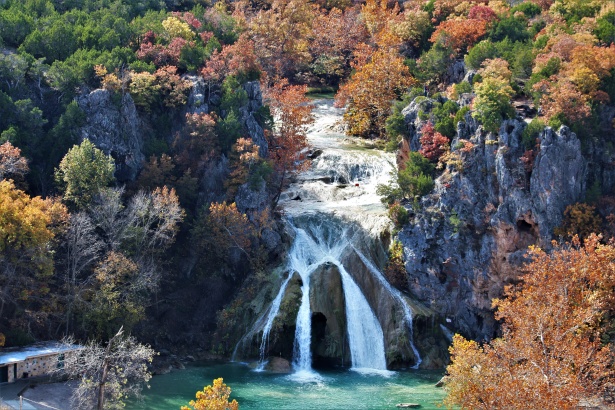
OK Turner Falls public domain image

While the waterfall itself is beautiful, what makes Turner Falls especially interesting is how it formed. Most waterfalls gradually wear away the rock beneath them over time through erosion. Turner Falls behaves in a uniquely different way.

As water flows through limestone upstream, it dissolves minerals along the way. When that mineral-rich water tumbles over the edge of the falls, the dissolved limestone comes out of solution. It slowly hardens into a rock called travertine. Instead of gradually destroying the cliff, the waterfall is actually helping build it up layer by layer.

The short walk to the main viewpoint is relatively easy, and visitors can view the waterfall from paved paths near the park’s main area. Several hiking trails extend farther into the Arbuckle Mountains for those who want more adventure.

Summers bring heavy crowds because the pool beneath the falls is a popular swimming spot. However, RVers who travel in spring or fall often enjoy a quieter experience while still enjoying the waterfall’s natural beauty.

Nearby RV campgrounds

Turner Falls Park RV Campground is the closest place to stay inside the park itself. Just think, campers can wake up within walking distance of the waterfall and hiking trails. The campground offers about 20 RV sites with water, electric hookups, and 50-amp service. A dump station is available within the park, and restrooms and showers are provided for campers.

Staying here makes it easy to enjoy the falls early in the morning or later in the evening when day visitors leave. Visitors should note that park admission fees apply in addition to campsite fees. Check-in for RV sites begins in the late afternoon.

The Falls RV Park is an RV park located just a few minutes from Turner Falls. Situated near Interstate 35, this privately operated RV park offers a comfortable base for exploring the Arbuckle Mountains and nearby attractions. The park features roughly 50 full-hookup RV sites with water, sewer, and both 30-amp and 50-amp electric service. The campground is pet-friendly and also offers cabins for travelers who may be meeting friends without RVs. Its location close to the falls, Lake Arbuckle, and local hiking areas makes it a convenient overnight stop for RV travelers moving through southern Oklahoma.

Have you visited any of these unique waterfalls? Do you have a favorite waterfall that you’ve visited on your RV travels? Tell us in the comments below.

RELATED

RVT1255
Stop comparing yourself to other RVers

15

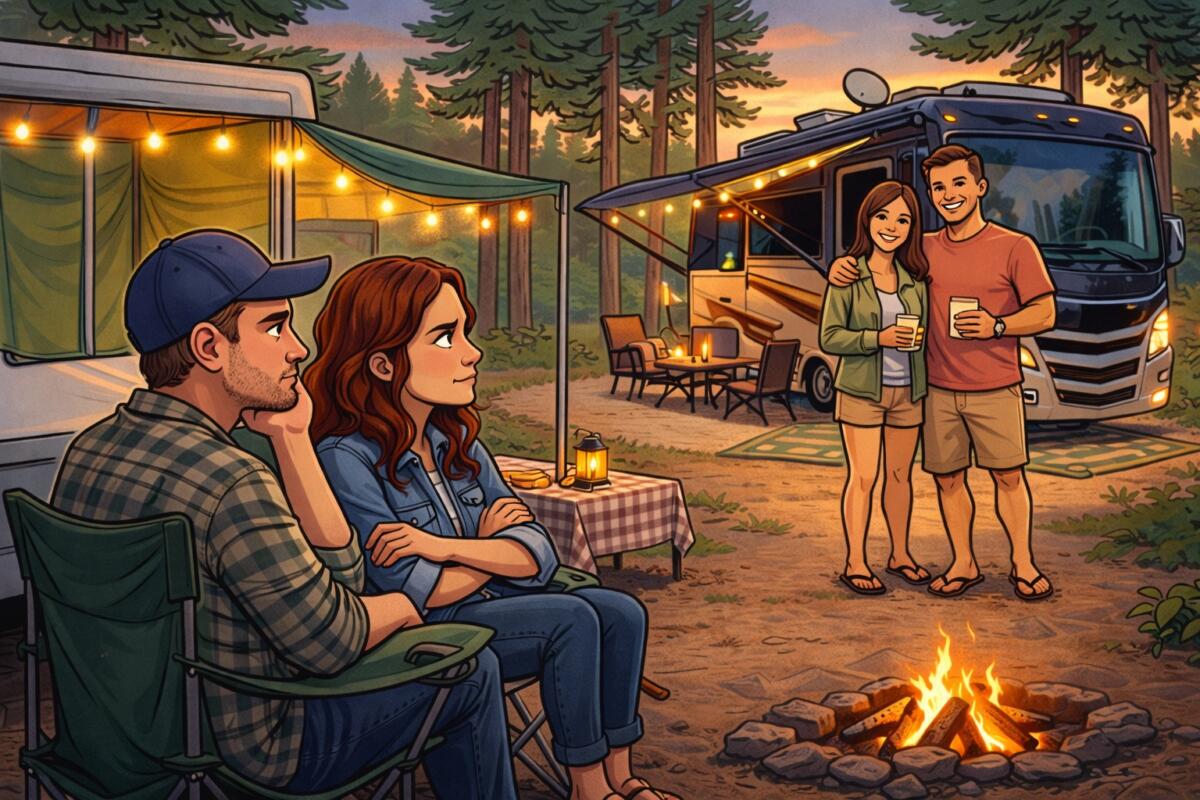
There’s nothing like rolling into a new campground, unfurling the awning, and feeling the whole world slow down. But… then you scroll your social media feed or walk past a neighbor’s larger, newer rig and suddenly feel deflated.

Comparing yourself to other RVers is normal, I suppose. However, when it becomes habitual, it can steal the simple joys that made you hit the road in the first place.

New RVers

I recently met new RVers. They seemed “stuck” in the comparison rut. In conversation after conversation, they made apologies for not having a newer RV, bemoaned the fact that they didn’t have Starlink and, well, you name it.

Talking together became an uncomfortable challenge for me. Perhaps because at my age, I finally stopped comparing myself and my life to others—most of the time anyway. I felt genuinely sorry for these folks.

Why comparison sneaks in

Social comparison is built into how humans judge status and progress. Modern life, with social media and carefully staged campground photos, hands comparison a virtual megaphone.

Casual campground walk-throughs often highlight only the shiny parts of others’ journeys. What you don’t see is the behind-the-scenes work, tradeoffs, or struggles.

Comparing steals RVing joy

When you use someone else’s lifestyle as the standard, your own wins shrink. You might stop celebrating small conveniences, like a quiet, peaceful morning. Why? Because it doesn’t seem as glamorous as your campground neighbors’ plan to follow a private guide through the nearby national park.

Social media posts may convince you that only the most expensive RV resorts are “stay-worthy.” RV ads try to show you how much better RVing could be “if only.” If only your RV were bigger, it’d be so much better. If only your rig featured all the bells and whistles a certain brand touts… well, you get the point.

Such comparisons can make travel more anxious, because the trip becomes a contest instead of a chance to relax.

The health toll

Persistent comparison raises stress and eats away at self-esteem. Even when it seems “just” mental, the body responds: higher baseline anxiety, more restless nights, and a greater likelihood of skipping good habits because you’re preoccupied with keeping up appearances.

Treat the mental drain as real physical wear and tear. Your health matters on and off the road.

How to unhook from comparison

Start by changing what you measure. Swap outward signs for internal ones. Think: fancier RV versus the restful feeling after a great night’s sleep.

Curiosity is more valuable than envy. If you find yourself admiring someone’s setup, inquire about the challenges they addressed and the compromises involved. This approach changes comparison into an opportunity for learning.

Limit social feeds or mute accounts that trigger envy or feeling bad. They’re not worth your time.

Notice the story your mind tells when you compare (“I’m behind,” “They’re better”) and name it. Naming reduces its power. (For example: Am I jealous? I’m better than that!)

Be gentle with yourself. Habits didn’t form overnight and won’t vanish instantly.

Campground-level tactics

Create a “celebrate” ritual: When you pull into a site, list three things you like about the spot or the day.

Trade setup envy for a quick brainstorm: What’s one small change that would truly improve your comfort (not impress others)?

Share real, messy moments with fellow RVers. Honest stories build connection and show that everyone has tradeoffs.

If you love inspiration, follow social accounts that emphasize learning, budgeting, or simple joys.

These tiny shifts nudge your attention back to what you control and what brings real contentment.

How about you?

Do you sometimes fall back into comparison-camping? Tell us about your experience using the comments below.

RELATED

RVT1255

The reality of visiting Yosemite National Park with a dog

0

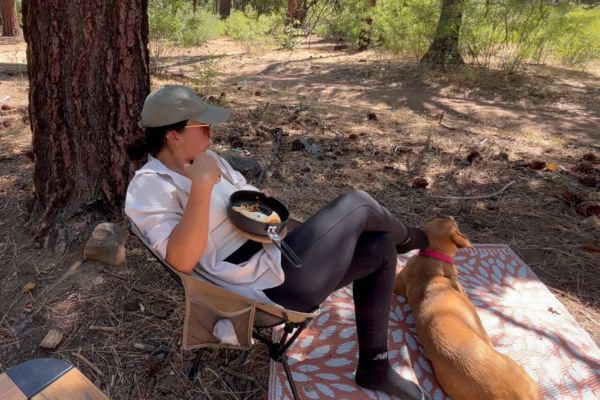
Yosemite can feel huge, busy, and a little intimidating with a dog. Jess, of Exploring Gems, expected the usual national park limits, campgrounds, parking lots, and not much else that would allow her dog, Gem, but was surprised by how much of the park Gem could enjoy with her. She was also not expecting how calm the valley floor felt. Once the pace slowed down, Yosemite turned into something far more dog-friendly than anticipated.

After a flash flood warning and water already pooling nearby, Jess pulled out around five in the morning and made it safely to the main road. By the time she reached the Mariposa Visitor Center outside Yosemite, there were no other rigs around, which made the start feel oddly peaceful.

The drive in brought one more surprise, an unexpected tunnel with a creepy, haunted feel. Then came the Wawona Hotel, a place with deep Yosemite history. Galen Clark, a former gold prospector, established it in 1856, and it later became one of California’s oldest mountain resorts. It once offered a nine-hole golf course, a pool, and a riding stable, and even hosted Theodore Roosevelt. Since December 2, 2024, it has been closed after roof work led to more investigation into the building’s condition.

Why Yosemite felt different with a dog

Out of 15 national parks Jess had visited since starting van life, Yosemite stood out as her favorite. The scale felt unreal in person. That makes sense, because the valley was carved by glaciers, Half Dome was shaped by glacial erosion, and the park has carried a sense of awe since long before it was officially established in 1890, with John Muir helping push its protection forward.

Like most parks, Yosemite limits dogs. They can’t go into the backcountry or onto dirt wilderness trails. Still, Yosemite gives dog owners something better than expected: about 12 miles of paved paths.

On leash, Gem could walk the bike paths from Curry Village to Yosemite Village and even near Lower Yosemite Falls. With Half Dome and El Capitan in view, plus giant sequoias in nearby groves, the whole walk felt open, safe, and respectful of wildlife.

The walk from Curry Village to Yosemite Village took about 25 minutes, which gave both of them time to stretch and settle in. Later, Jess grabbed pizza from the deck, cheese with mushrooms, and gave it an honest Jersey verdict: okay.

There were also practical wins, like free potable water and a free dump station.

Meanwhile, Yosemite had its odd little quirks, too. Some roads felt backward, the trees looked like they were growing straight out of granite, and the squirrels were pretty enough to distract Gem from her food.

A peaceful trip that meant more than expected

Gem wasn’t only a travel buddy. She was family, and the steady part of a life that keeps changing. Seeing her run, sniff, and zoom around told Jess everything she needed to know about how happy she felt at the park.

By the end, Yosemite had quieted something deeper. The world had felt loud, but the valley floor gave back a rare kind of stillness. For Jess, the answer was clear: Bringing Gem to Yosemite was absolutely worth it, not because they did everything, but because they got to share the moment they had.

Unfortunately, Jess has limited other websites from embedding her videos, so you must click here to watch it on YouTube (free, of course).

RELATED

RVT1255
RV tire covers: Pros and cons— Do you use them?

20

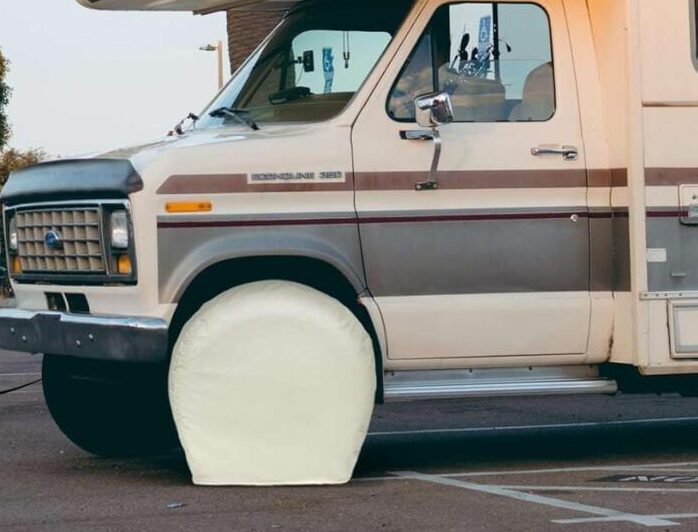
My husband and I do not agree when it comes to RV tire covers. I think they should be covered at all times. My husband contends that our slide-outs shade the tires, so no tire covers are needed.

What’s your take? Do you cover your tires every time you camp in your RV?

Cover up

I believe that tire covers slow weathering. While the covers won’t make your RV tires invincible, I think they will extend the life of the tires.

The National Highway Traffic Safety Administration (NHTSA) says tire aging happens through service, storage, and environmental conditions. It specifically notes that sunlight, warmer climates, poor storage, and poor maintenance all contribute to aging.

No cover

The case for skipping tire covers is strongest when the RV is not sitting in harsh conditions for long. Michelin advises that tires should be stored in a cool, dry, dark place away from sunlight and ozone. Wouldn’t it make sense to keep them shielded from these elements when camping, too? NHTSA emphasizes monthly tire-pressure checks, tread checks, and regular maintenance for tire longevity.

Some RVers decide that shelter, use, inflation, and inspections matter more than a separate tire cover. This especially holds true if the rig is parked indoors, under a roof, or moved often enough that the tires are not baking in the sun for months at a time.

Which is better?

The case for covering tires is strongest when an RV lives outdoors. Goodyear says direct sunlight and UV can speed aging. It specifically says covering the vehicle and tires can help protect against UV rays.

Goodyear adds that outdoor covers should allow moisture to escape so the tires do not sit in a damp, sealed environment. For RVers in open storage lots, driveways, or full-sun campsites, that extra shield can be worthwhile.

Middle-ground approach

A good middle-ground approach is to match the solution to the conditions. If your RV sits outside in strong sun, a cover makes sense. If it lives under shelter and you are already checking pressure, tread, and visible damage, covers may be optional rather than essential.

NHTSA notes that RVs and other low-mileage vehicles can be more at risk for tire aging, so the key is not just whether you cover the tires, but whether you also keep up with tire care.

Vote

Vote in our poll and leave a comment to back up your choice.

RELATED

RVT1255

Why Tractor Supply Company is an RVer’s best friend

13

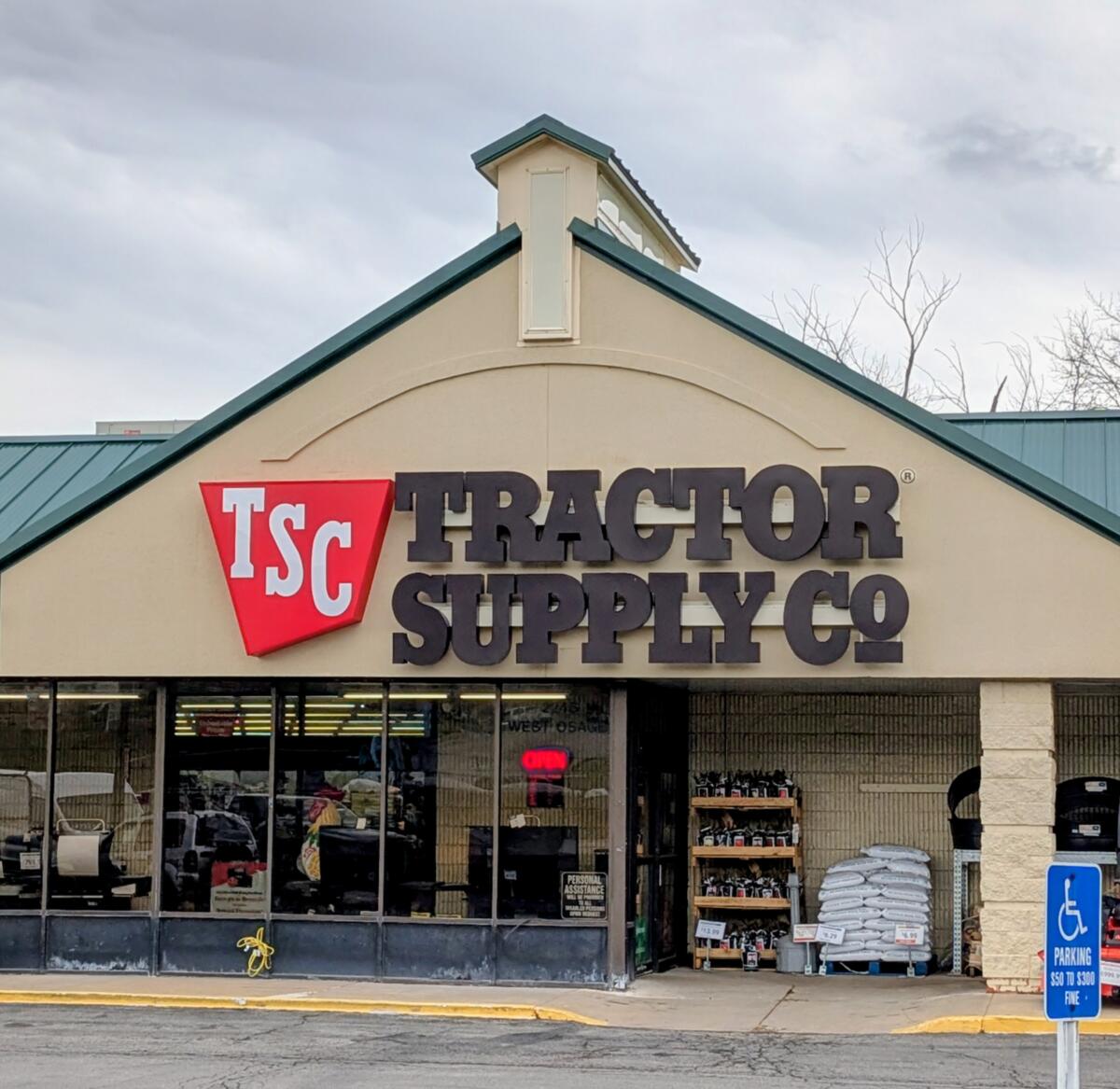
If you spend any time traveling by RV, you quickly learn that not all stores are created equal. Some are great for groceries, others for gear, and a select few become go-to stops for just about everything. Tractor Supply Company falls firmly into that last category.

Whether you’re parked at a campground or boondocking off a back road, this retailer is one you’ll want on your radar.

The backstory

A quick look at the roots of Tractor Supply explains why it fits so well into the RV lifestyle. The company started back in 1938 as a small mail-order tractor parts business run from a kitchen table. It didn’t take long for it to grow into a retail operation. Today, it has expanded into thousands of stores across nearly every U.S. state. Over the decades, it evolved beyond farming equipment into a full-service destination for homeowners, pet owners, and anyone living a hands-on, outdoor lifestyle.

That evolution is exactly why RVers benefit. Tractor Supply isn’t just for farmers anymore. It’s built around what the company calls “Life Out Here.” That includes everything from pet care to tools, outdoor gear, and seasonal supplies.

Tractor Supply operates just over 2,400 stores across the United States as of 2026, having reached its 2,400th location early in the year. The chain has been steadily expanding, adding roughly 100 new stores annually, and now has a presence in 48 states, with only Alaska and Hawaii currently without locations. There’s a good chance you drive by a Tractor Supply often.

Check out Tractor Supply’s website here.

Propane

One of the biggest TSC draws for RV travelers is propane. Running low on propane can derail a trip fast, especially if you rely on it for cooking, heating, or refrigeration.

Many Tractor Supply locations offer propane refill services that are both convenient and budget-friendly. That makes them an easy stop when you’re passing through unfamiliar territory. Unlike some big-box stores, these refills are often quick and straightforward. That matters when you’re trying to stay on schedule.

Note: Always check before you go! Not all TSC stores offer everything I’ll discuss in this article. My smaller, local store, for instance, does not refill propane tanks. (You can purchase new propane tanks here, to fill elsewhere.) It pays to call ahead to see if the TSC in your current travel location offers the service(s) you need.

RV supplies

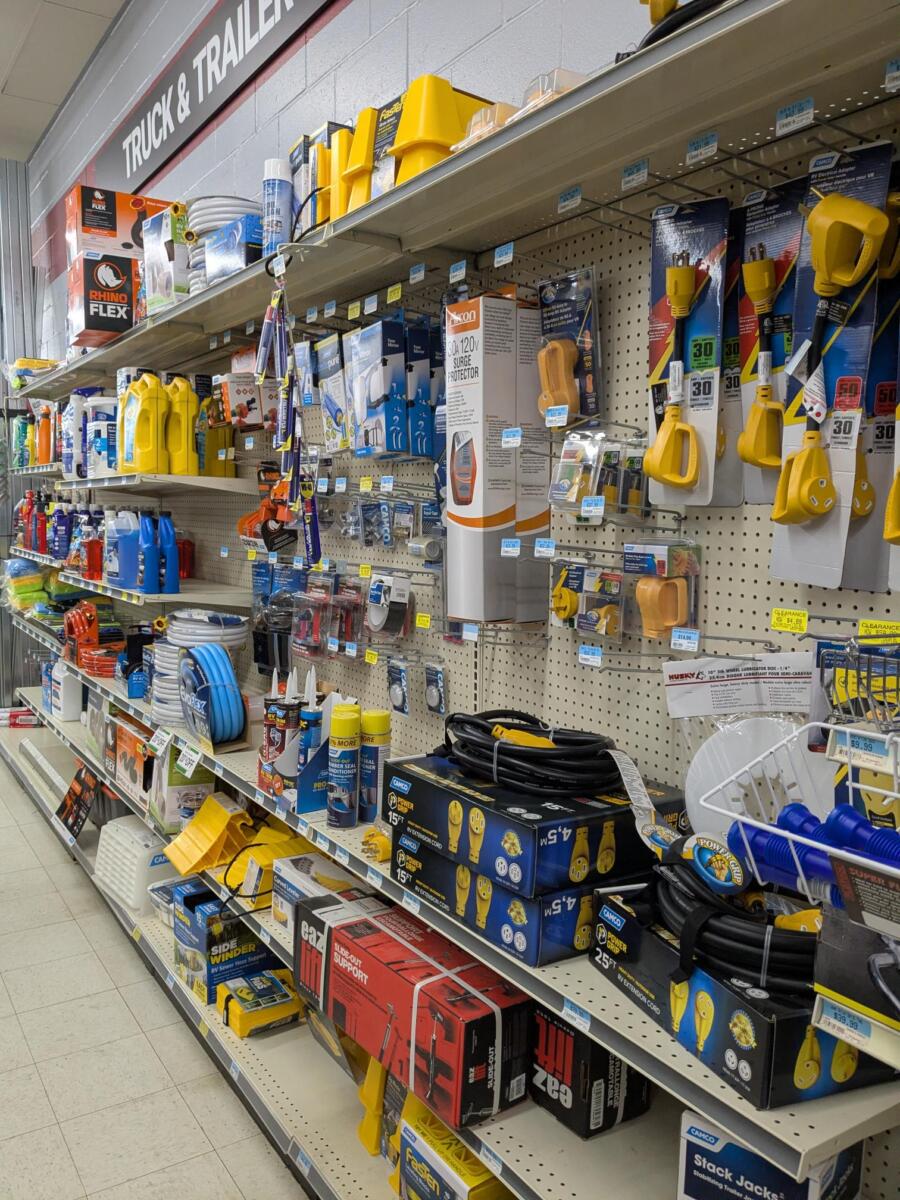
Tractor Supply aisle of RV products Image: GM not necessary to attribute

My local TSC store carries many RVing necessities. You can see some of the products in the photo above. TSC has electrical surge protectors/adaptors, rig levelers, hoses, sewer connections, and tank treatments.

Product brands in the RV section included Camco, EvoFlex, Rhino, and more. You likely won’t find knock-off brands here.

Pet perks

Another standout feature for RVers traveling with pets is TSC’s dog wash station. Select locations offer self-service pet wash areas with professional-grade equipment, typically at a low cost. Anyone who has tried bathing a muddy dog inside an RV knows how valuable this can be. It’s a simple, mess-free solution that saves your limited water supply and keeps your rig (and pup) clean.

Tractor Supply also sells pet food and treats for your furry travel friend. You can also order pet prescriptions online from TSC. The company recently added compounded medications, which can be ordered ahead of time and will be waiting for you at your next travel stop. Other pet perks are available, too.

Beyond the RV aisle

Beyond RV and pet services, Tractor Supply is a surprisingly useful place to restock everyday essentials. I didn’t realize that TSC sold tires, antifreeze, and windshield wipers. I also noticed gear tie downs, ratchet straps, and tarps. In addition, I discovered flashlights, lanterns, and specialty lights. Batteries, too! An entire aisle featured “shop by the pound” nuts, bolts, and other fasteners an RVer may need. Cool!

And more!

My local Tractor Supply store had outdoor area rugs on sale, along with comfy outdoor chairs for relaxation. Several different sizes of Yeti coolers and traveler mugs are also available. TSC also sells Blackstone products. You can find practically any grill accessory you could want, along with the actual Blackstone griddles and grills, too.

They also offer discounts and special deals for military service members and veterans.

Interior surprises

TSC surprised me by its interior choices, with candles, faux flower arrangements, indoor/outdoor pillows, and more. I found nice journals to help you remember your trips, too.

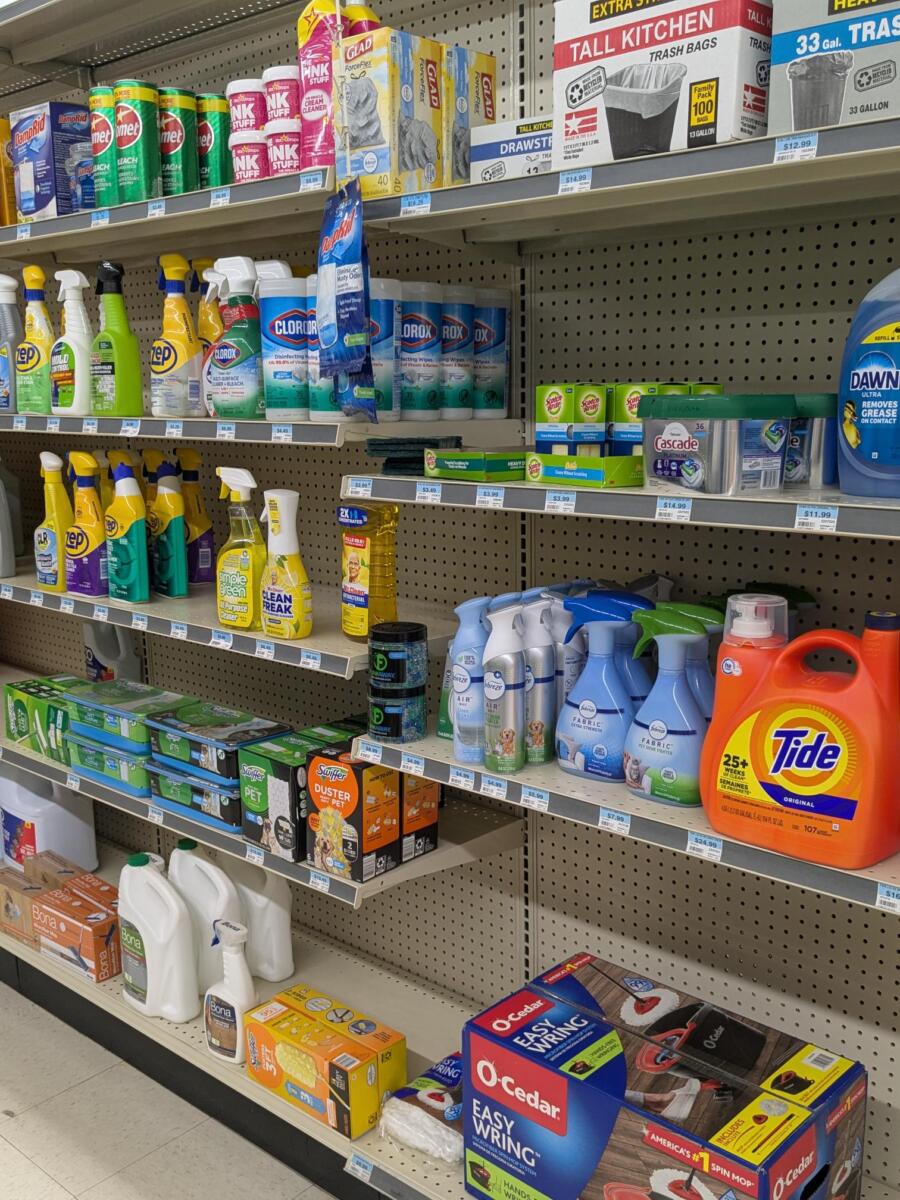
cleaning supplies TSC GM image attribution not necessary

My store carries storage boxes, boot trays, brooms, and also has an aisle dedicated to cleaning supplies.

Clothing and shoes

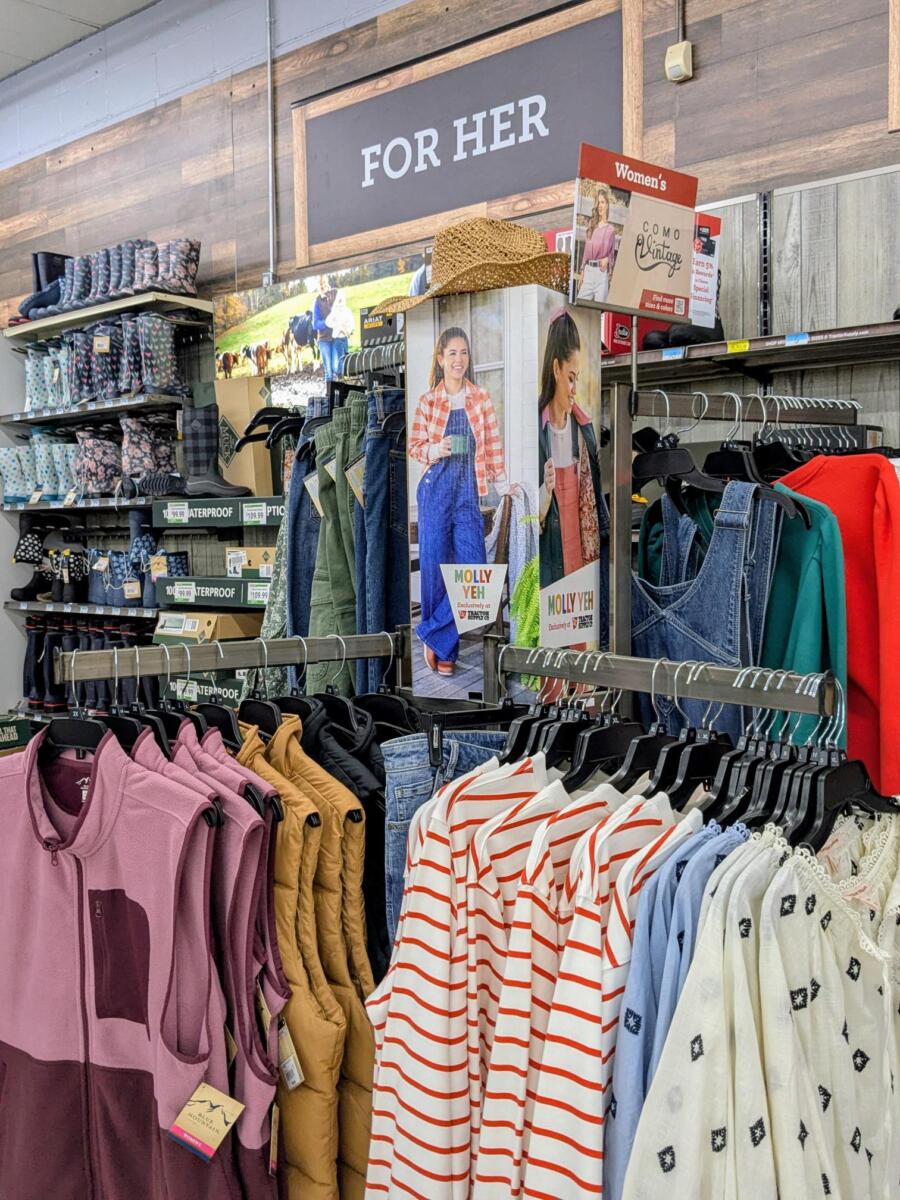
Gloves, hats, sweatshirts, socks, jackets, and boots are all available at Tractor Supply Co. You may also find cowboy hats, rain ponchos, and sandals. Don’t let the name Tractor Supply Company fool you. Gals can find clothing here, too!

TSC women's clothing GM image-no attribution needed

Food

Travel snacks, nuts, and candy are available at TSC. They also have a variety of jerky and even fish breading to help grill your day’s catch.

Free perks

There’s a free practical advantage that seasoned RVers appreciate. It’s store locations. Tractor Supply stores are often situated in smaller towns or on the outskirts of cities. This generally means parking is easier and navigating is less stressful.

Another free perk that flies under the radar is the sense of community. Many stores serve as local hubs where people swap advice. For RVers, that can translate into helpful conversations, local tips, or even recommendations for nearby campgrounds and services.

I think Tractor Supply stands out because it blends practicality with convenience. It’s not flashy, but it delivers exactly what RVers often need: reliable supplies, useful services, and easy access on the road. Once you start incorporating it into your travel routine, it may quickly become one of those dependable stops you look for in every new town.

And chicks!

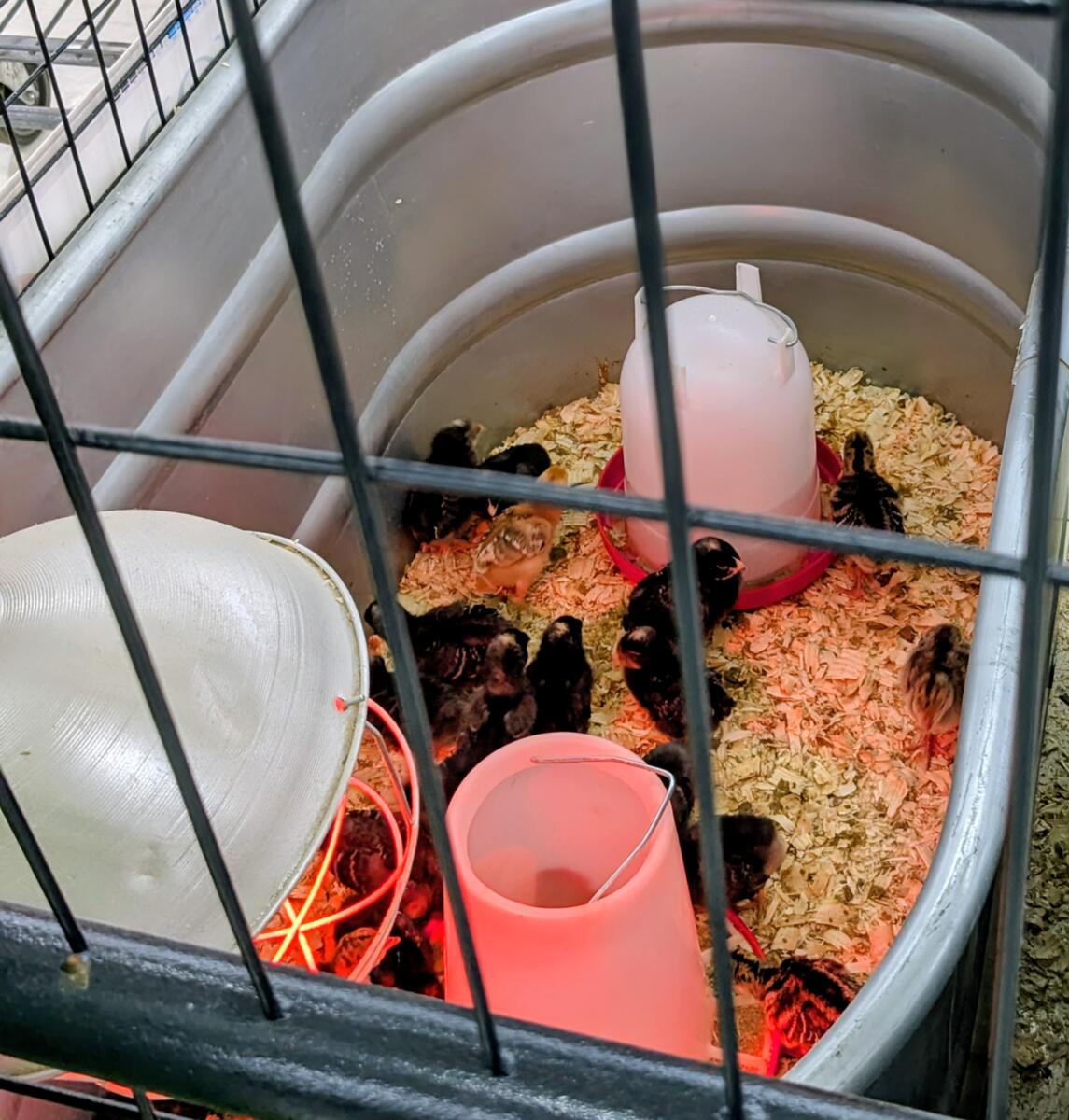
Confession time. I rarely visit my Tractor Supply store. Even though it’s just five short minutes away, I trek to the store only once a year. Spring! Why? That’s when the chicks come in! I love just watching them, as I remember growing up on a farm.

TSC spring chicks GM image, no attribution necessary
They are so cute!

But now? Now that I know everything Tractor Supply offers, especially when it comes to RVing, I’ll make that short trip much more often.

You should go!

If you’re dealing with a quick repair, need durable clothing, or want to grab supplies for your campsite setup, chances are you’ll find what you need at Tractor Supply.

RELATED

RVT1255

The 2-in-1 RV tank cleaner for all RV water tanks

0

By Dustin Simpson
Join me in the video below as we say goodbye to stubborn tank deposits and hello to hassle-free cleaning with the revolutionary Thetford 2-in-1 tank cleaner!

Specially formulated for black, gray, and portable tanks, this cleaner offers a comprehensive solution to keep your tanks in top condition.

Simply add the cleaner, let it work overnight, and then just dump and go. No scrubbing required!

The Micro-Foam™ action enhances surface contact with vertical tank walls, ensuring thorough cleaning, even against tough deposits.

Thetford tank cleaner’s powerful enzymatic blend blasts through crud, attacking tissue, waste, and grease for a deep clean.

Special additives effectively tackle hard water deposits on sensors, ensuring accurate readings and optimal performance.

This combination ensures that your tanks are not only clean but also free from residue and buildup.

Formulated to be safe for RV and marine tanks, plumbing, seals, and surfaces, giving you peace of mind with every use.

Suitable for black, gray, and portable tanks, making it a versatile addition to your RV/marine maintenance routine.

Get it on Amazon for a great price here.

More from Dustin

Make sure you check out my website, California RV Specialists, and our YouTube channel for more helpful information, and see our published articles on RVtravel.com and other social media pages.

RELATED

RVT1255

The sweet history of Easter’s favorite candy. Do you like Peeps?

By Gail Marsh
It’s time to celebrate Easter! To me, Easter means church, family gatherings and, of course, Peeps!

These iconic marshmallow treats have been an Easter staple for my entire life. Have you ever wondered how Peeps came to be? Me, too!

A brief history

Peeps marshmallow candies have a rich history that dates back to the early 1950s. Here’s a quick timeline:

1950s: The Rodda Candy Company was known for its handcrafted marshmallow chicks. Creating just one chick took approximately 27 hours to make! Why? First, the marshmallow mixture had to cook, then cool. Then each Peep was meticulously shaped by hand using pastry tubes.

1953: A family-owned confectionery company based in Bethlehem, Pennsylvania, acquired the chick-making company. The acquiring company’s name: Just Born, derived from the last name of the founding immigrant, Sam Born.

1954: Bob Born, son of Just Born’s founder, engineered a machine that automated the production of the marshmallow chicks. This innovation reduced the production time to just six minutes per chick and revolutionized the candy’s manufacturing process.

Bob marketed the candy as Peeps. The clever word play on the candy company’s name, Just Born, was a hit. Folks loved it: Just Born Peeps! (Even though any respectable farmer knows that chicks hatch. They are not born.)

1960s: Originally, Peeps were available only in yellow chick form. However, the new decade saw the introduction of new shapes and colors, including pink and white varieties.

1990s: More diversification included adding purple and blue Peeps in new shapes.

Today: Peeps are produced in various shapes and flavors to correspond with different holidays. For Easter, they come in nine colors and 14 seasonal flavors, which include sour watermelon and cookies and cream.

Beyond Easter, Peeps have expanded to other holidays like Halloween, Christmas, and Valentine’s Day, featuring themed shapes and flavors.

Peeps and Easter: A sweet tradition

Peeps pancakes Image: Peepsbrand.com

Peeps have become synonymous with Easter celebrations in the United States. Their bright colors and playful shapes make them a favorite for filling Easter baskets and decorating holiday desserts. The association with chicks and bunnies aligns perfectly with Easter themes of resurrection and springtime.

The popularity of Peeps during Easter is evident in their production numbers. Just Born manufactures approximately 5.5 million Peeps daily. That’s a total of a whopping 2 billion+ annually, which averages to about six Peeps per American each year.

Peeps in popular culture

Peeps are no longer just a simple candy. They have become a cultural phenomenon. Peeps have inspired various recipes, including Peeps s’mores (substitute a Peep for the roasted marshmallow), pancakes, and even “Peepshi,” a creative take on sushi using Peeps and Rice Krispies treats. See how to make them here.

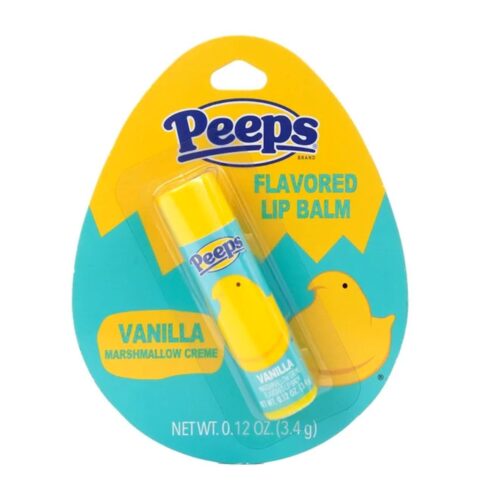
The brand has also ventured into collaborations, such as the limited-edition Peeps-flavored Icee, combining the classic marshmallow taste with a frozen treat. What’s more, Peeps-themed merchandise, including lip balm, plush toys, and apparel, has further cemented their place in pop culture today. [Peep pop culture?]

Now you know

Now that you know a little about Peeps, tell us: Do you like to eat them? Vote and tell us in the comments below.

RELATED

RVT1255

RV review: 2026 Winnebago Micro Minnie 2000-Series—Nice changes

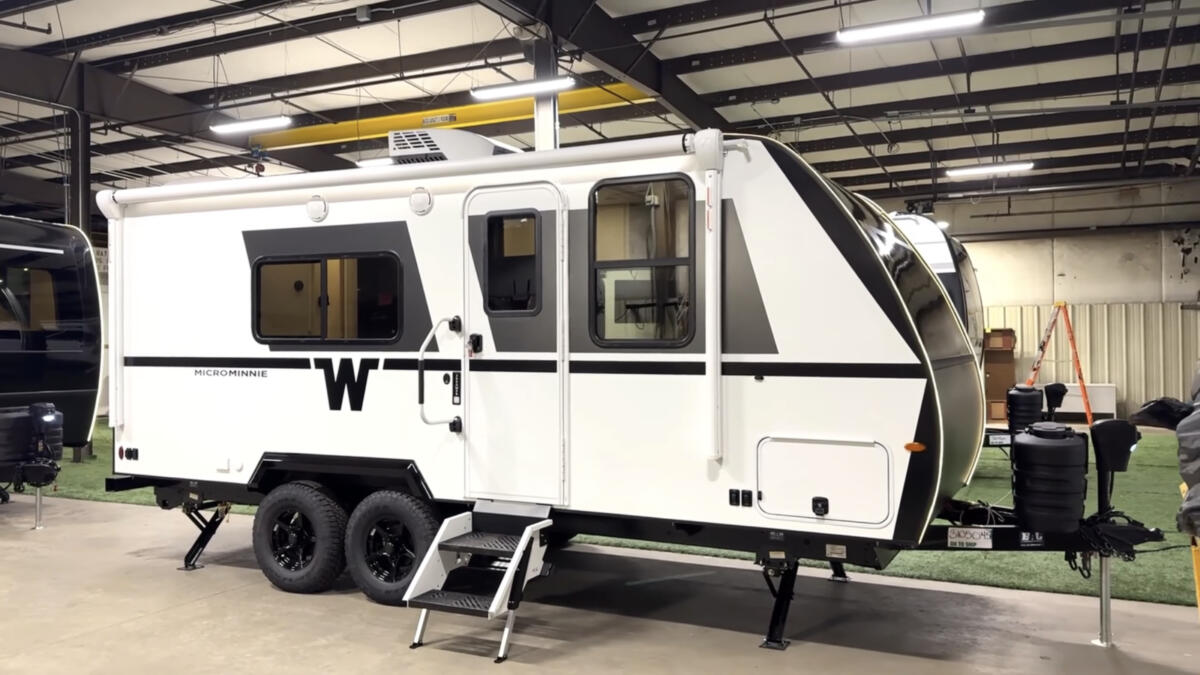
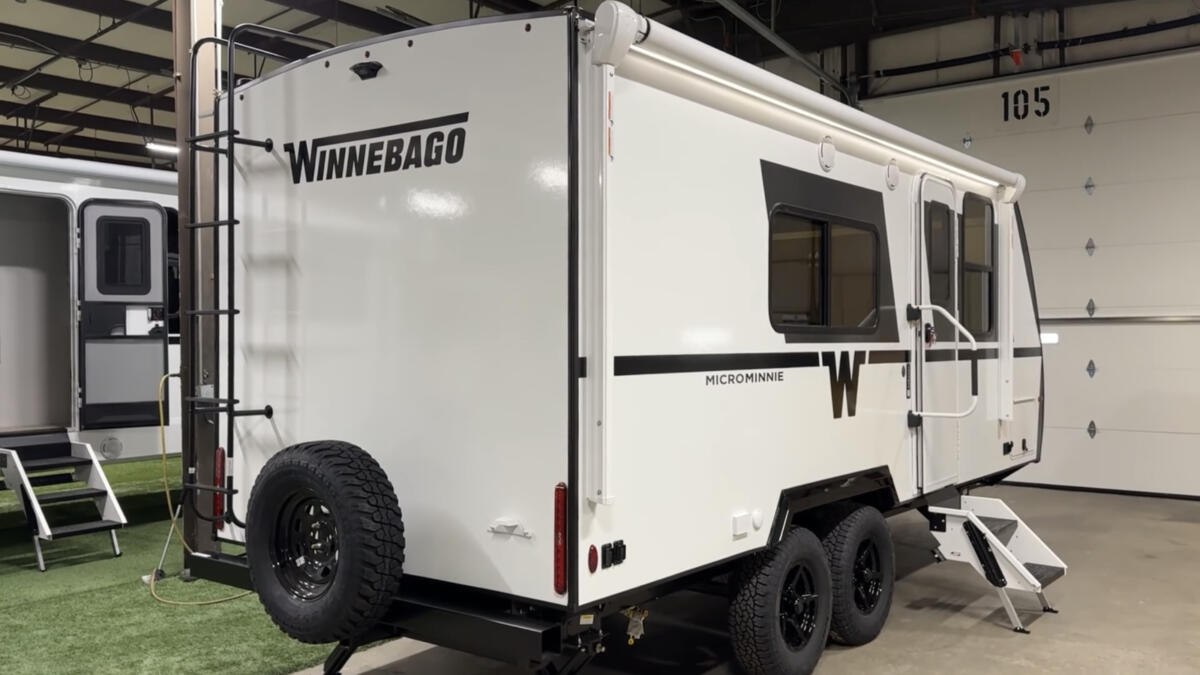
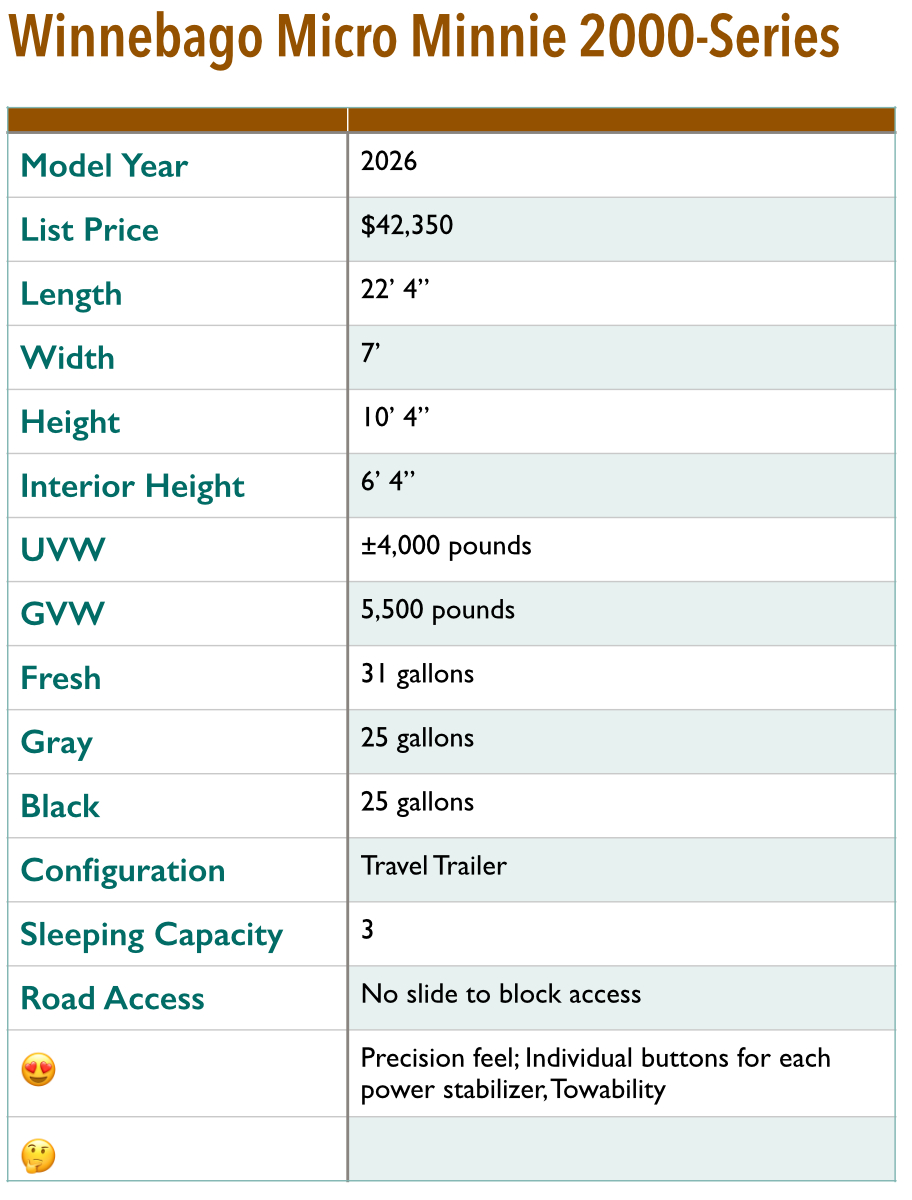
Today’s RV review is of the 2026 Winnebago Micro Minnie 2000-Series travel trailers. This is a narrow-body, no-slide, twin axle trailer. It represents one of two lines from Winnebago that show that the company has taken a serious look at their towable offerings and made some nice changes. 

Winnebago has several lines of towable RVs, but the Thrive and Micro Minnie seem to be getting the most attention. I wrote a synopsis of the changes to the Thrive line in this article after getting a sneak peek last year. At the same time, I got to see a few Micro Minnie offerings. 

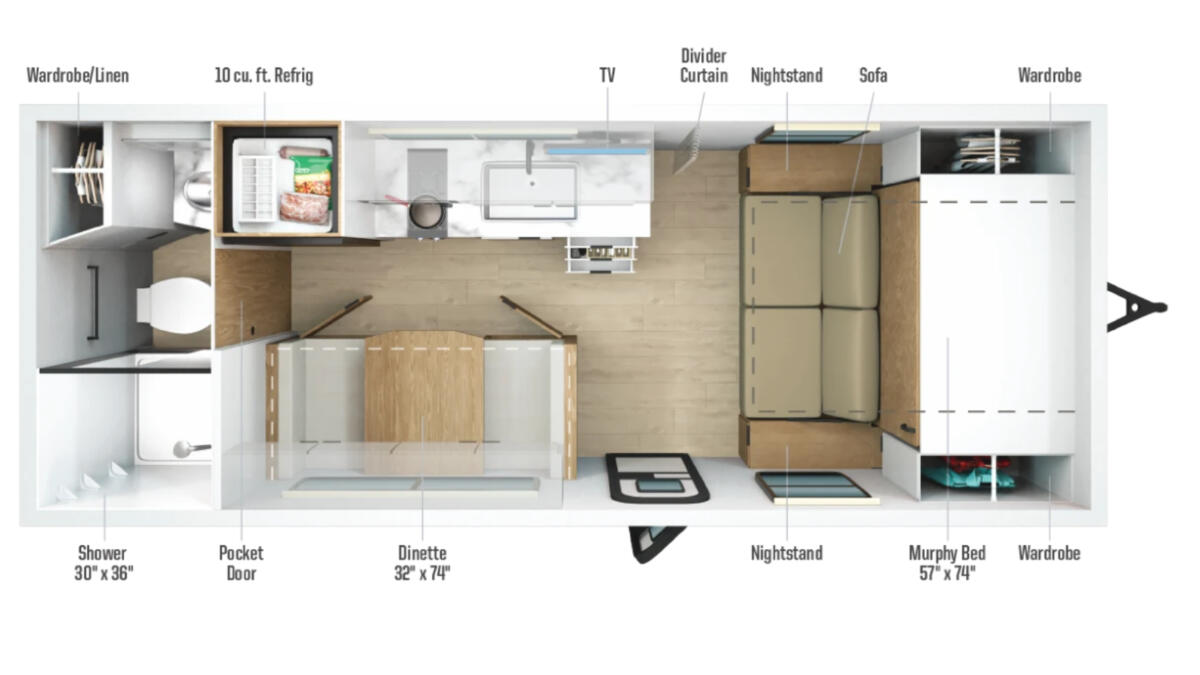
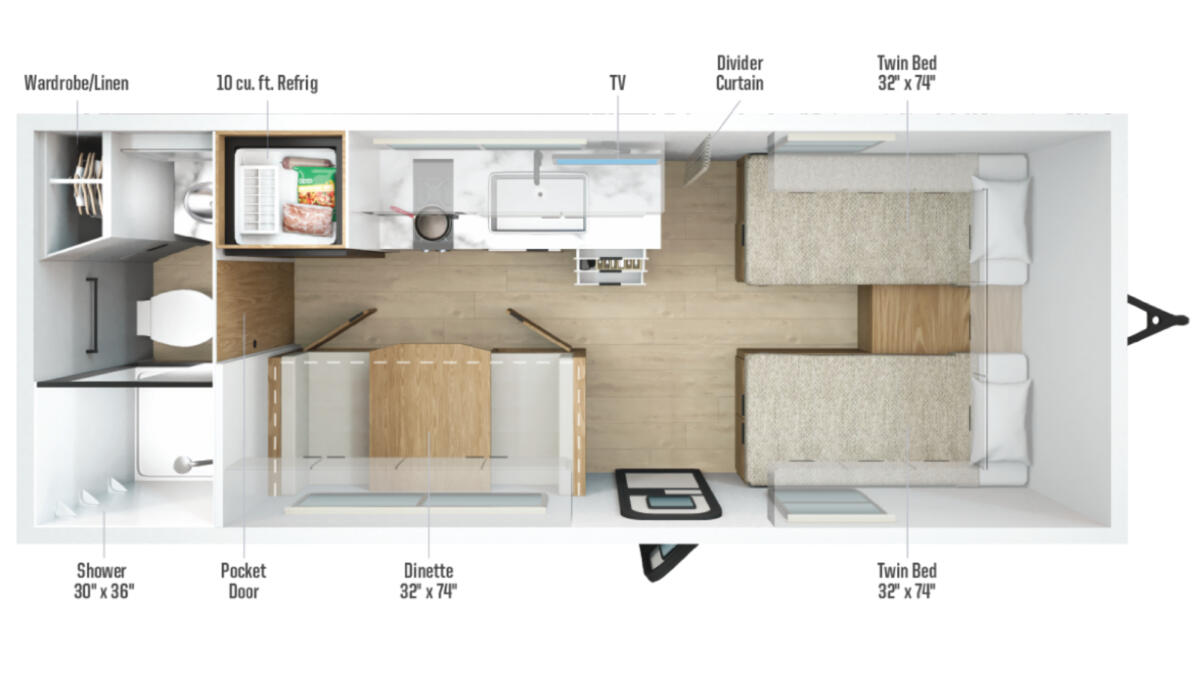
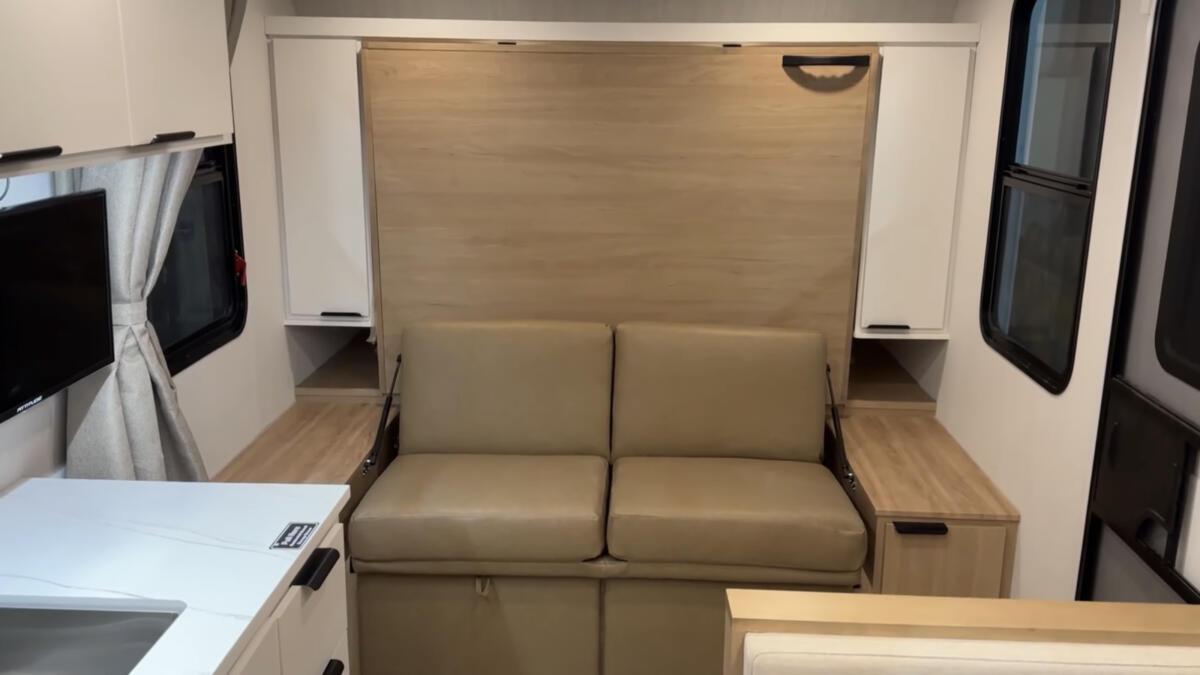
There are three main variants in Winnebago’s 2000-Series lineup, with the primary differences centered around the bed configuration. The 2000MRB features a Murphy bed with a sofa, the 2000FRB offers a permanent queen-size bed, and the 2000TRB comes with twin beds up front.

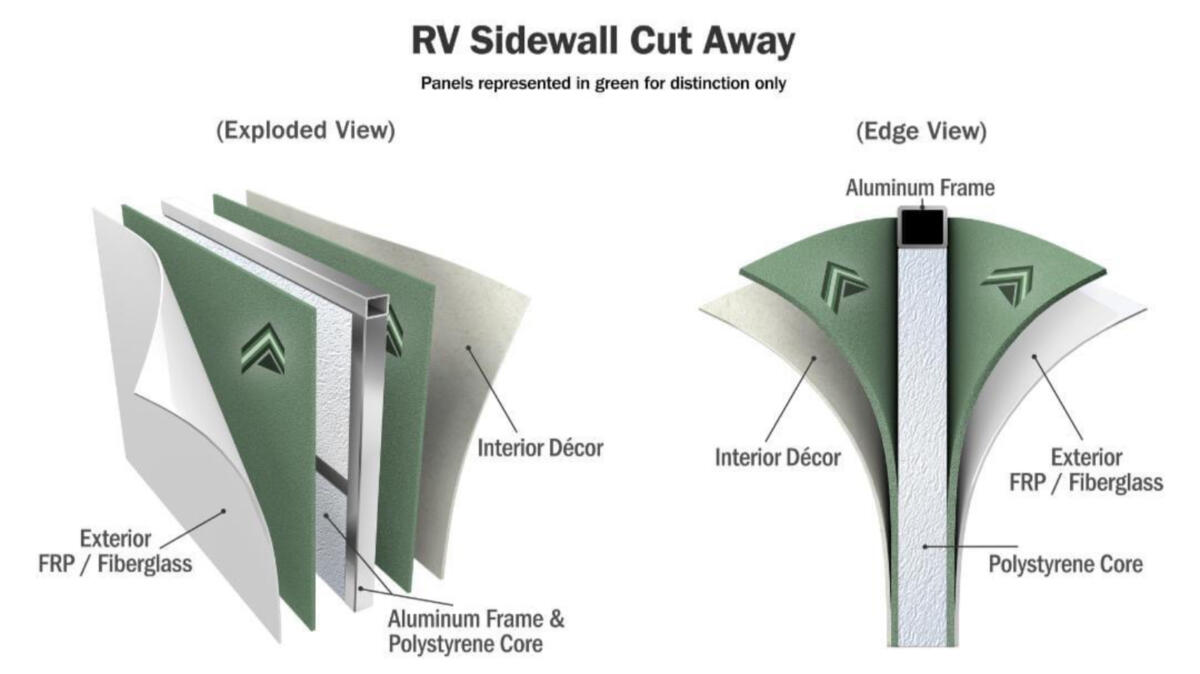
A hole lot better

Something that was immediately apparent to me in both the Thrive and the Micro Minnie, especially since both of these were preproduction samples, was how very precise they felt. After mentioning this to the folks at Winnebago, they explained why. Let’s start with the walls. 

In almost all cases, particularly with laminated trailers like the Micro Minnie, the entire sidewall is laminated in one big piece. The bits inside are a combination of aluminum studs and foam insulation. There’s an outer layer of some substrate, and then the fiberglass you see and touch. The interior wall features another layer of substrate and an interior decor layer. 

Like with so many things, there are various grades of components here, including those two substrate layers. Traditionally, they’ve been lauan. However, a man-made material, Azdel, has become popular, especially since it can’t be affected by water intrusion. Now, other companies have stepped on the bandwagon with similar substrates that exhibit the same properties. 

The point of all that is to explain that once the walls are laminated, then holes have to be cut for windows and baggage doors and water fills and power outlets and all of that. In most RV factories, the way these are cut is with a worker with a router who hand-routes those holes. 

These people do this job over and over and are pretty good at it, but mistakes are made. If you ever look at some of the holes made without the windows or other pieces in place, you wonder if the person making the hole might have been afflicted by the same vision challenges as Stevie Wonder or Helen Keller. 

Holes cut by CNC machine

The way Winnebago is doing it is with a giant CNC machine. This is a computer-controlled router that precisely cuts each opening. The difference in how the holes look and how finished the entire process looks is quite remarkable. 

I could immediately tell that things were done differently when I saw these in person, and figured it was just really good attention to detail on preproduction models. Instead, it was a really good process employed by Winnebago. 

That is also true inside, where cabinets are all cut by the same type of machine. That includes things like holes for vents, power outlets, and light switches. Rather than oodles of filler material to compensate for holes not well cut, everything fit well, and it really gave the interior a clean, quality feel. 

More things I liked

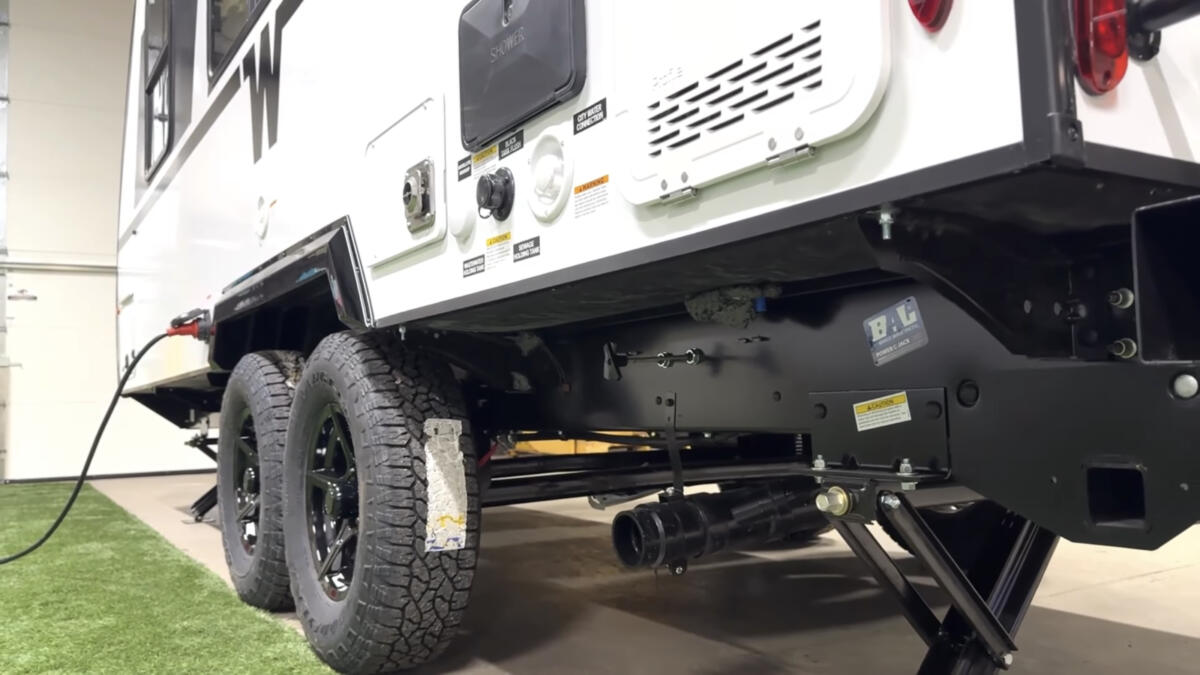
This model includes power-operated stabilizer jacks—a nice bonus—but Winnebago has wisely added individual switches for each side. That makes it easier to handle uneven ground. With a single switch controlling both sides, like on my setup, you can get unpleasant grinding if the surface isn’t leveled with blocks. Separate controls are a smarter design.

Winnebago has partnered with Norco BAL® on the chassis build for this model. The frames are all bolted together with what are called huck bolts, which BAL says results in a stronger chassis than a welded unit.

I really like that this uses a torsion axle suspension system. It provides a smoother ride and reduces stress on the trailer’s structure when traveling over rough roads.

Interestingly, this uses Goodyear Wrangler tires, which aren’t really intended for towables, but here they are. Trailer, or ST, tires have reinforced sidewalls to accommodate “scrubbing”, which is what happens to these tires in tight turns. I’m sure Winnebago has done its due diligence on this configuration. But, in the past, I have recommended against truck tires on trailers for just this reason.

Something that really made me happy was the steps in this trailer, which were folding steps instead of the solid steps. However, the model I saw in the attached video had solid steps. So things may have changed since I visited Winnebago. 

What’s inside the Winnebago Micro Minnie 2000-Series

These are all relatively compact trailers with a seven-foot exterior width and no slide. They are also a bit lower in height than many trailers at 10’4”. This smaller front surface, brought about by a lower height and narrower body, will translate into a much easier towing trailer. But, obviously, it also means less space inside. 

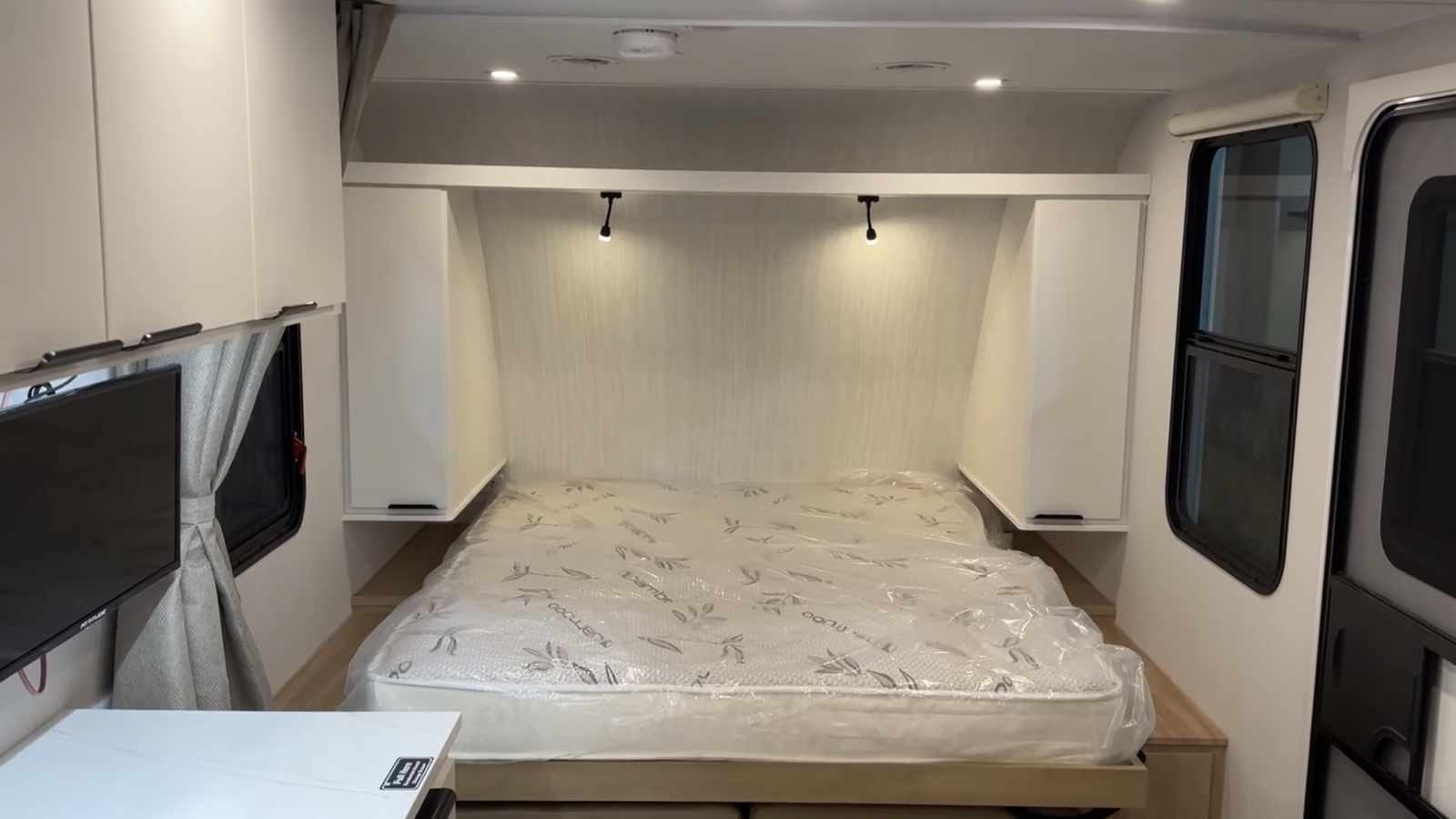
As mentioned, there are three variants on the 2000-Series and, for those who want the Murphy bed, that also affords a couch when the bed is not deployed. The bed itself is a folding mattress, but it appears to be a mattress of higher quality than most RV mattresses in travel trailers. 

I have seen an increasing number of twin bed offerings in RVs in general, and you can get that configuration in the 2000TRB. Then there’s the 20000FRB, which features a single 60 x 74 walk-around bed.

More interior details in the Winnebago Micro Mini 2000-Series

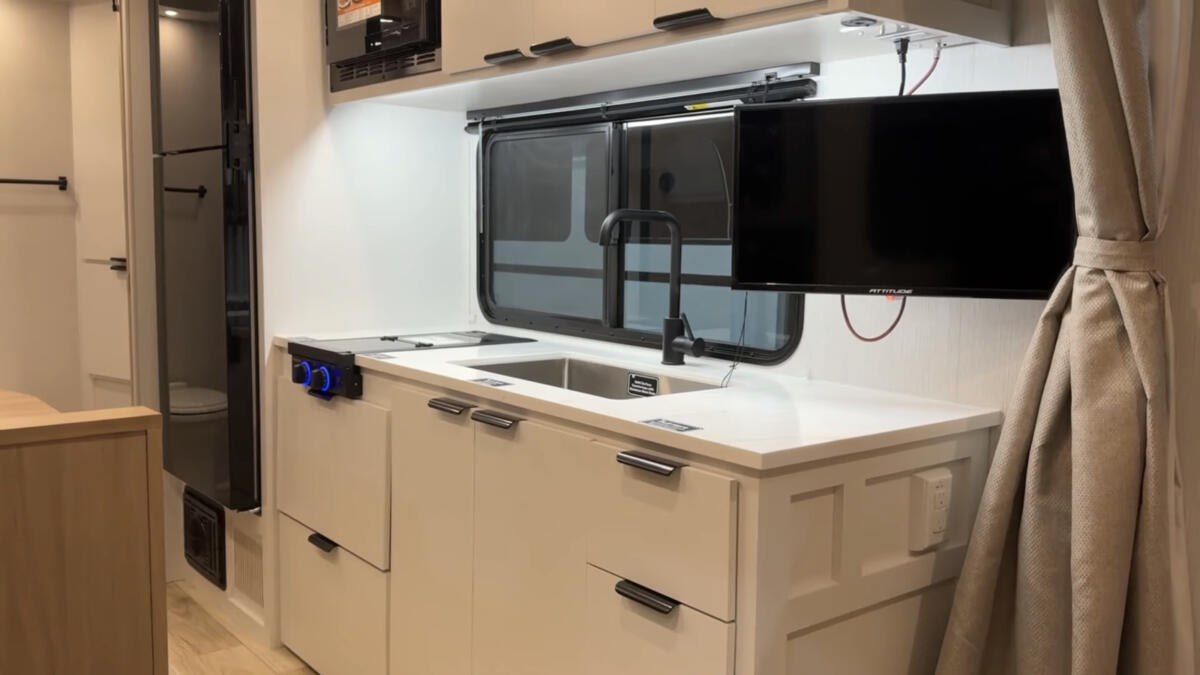
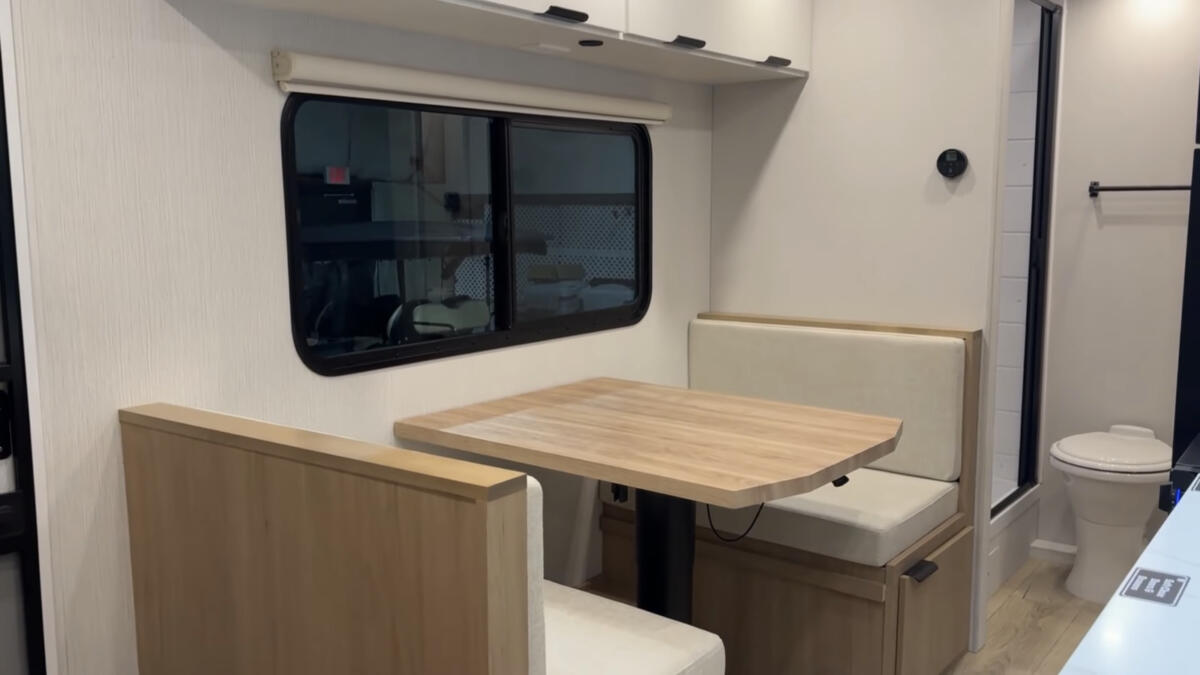
Something I liked about these was the kitchen, which uses a two-burner propane cooktop and a convection air fryer microwave. I’m seeing this more and more. It makes so much sense in a smaller RV. 

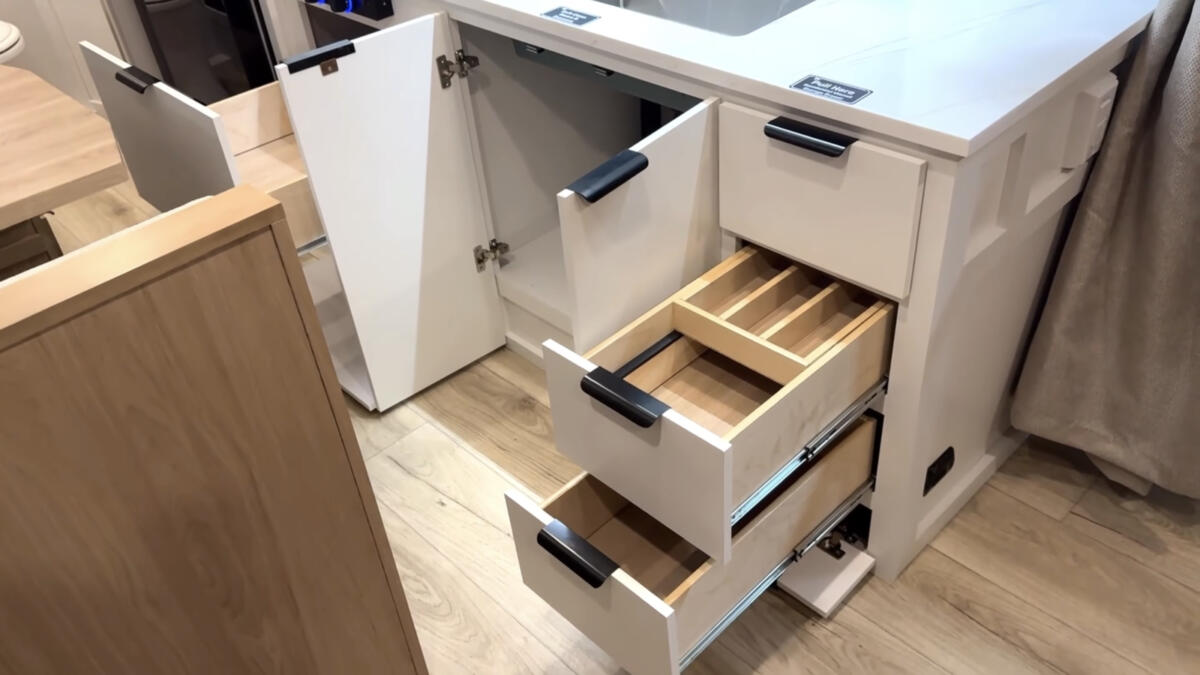
The drawers and cabinets in this trailer also felt really nicely finished. I really liked the silverware insert in one of the drawers. It can be removed, which means you could take it outside to a picnic table. Interior storage is actually a strong suit in this rig. 

There’s also a small two-person dinette with a table on a hydraulic base. This can become a smaller bed if you have, perhaps, a junior traveler along for the adventure. 

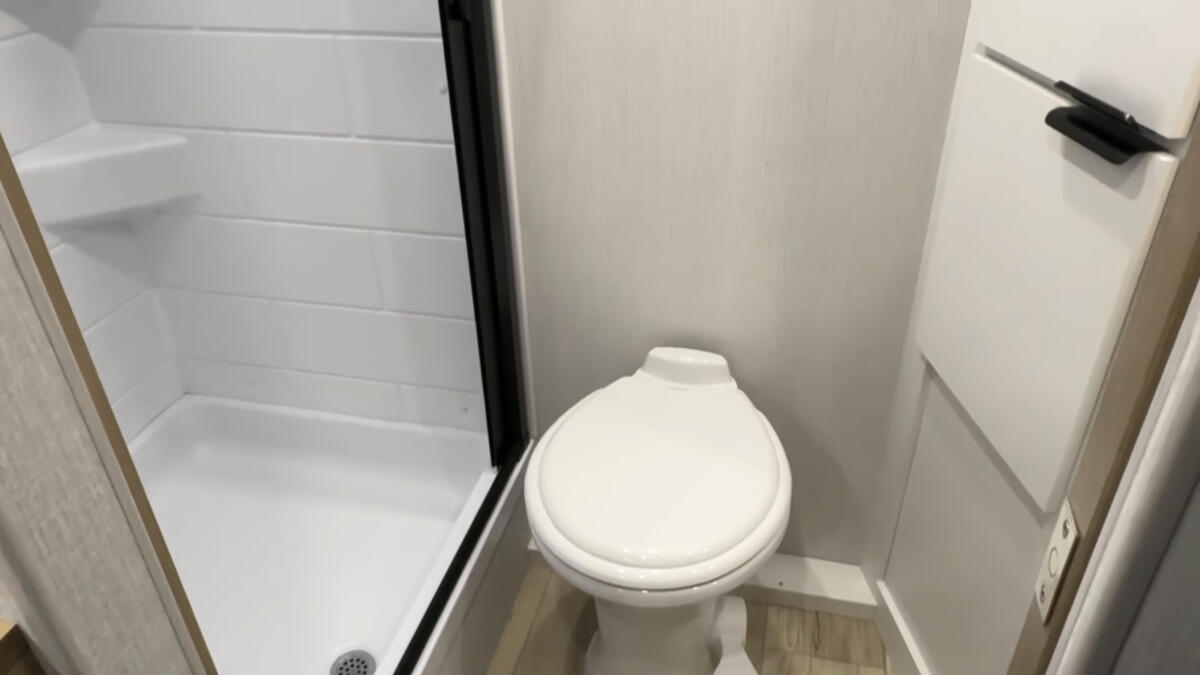
Bathroom in the Winnebago Micro Minnie 2000-Series

The bathroom in this spans the width of the back of the trailer, so there’s a good amount of personal space. There’s also a good amount of storage in here.

The counter is solid surface, which is a better type of material than you’d expect in the bathroom of a smaller trailer. However, it exemplifies that Winnebago seems to be offering higher-end components in even these smaller trailers. Nice. 

Boondocking and travel access

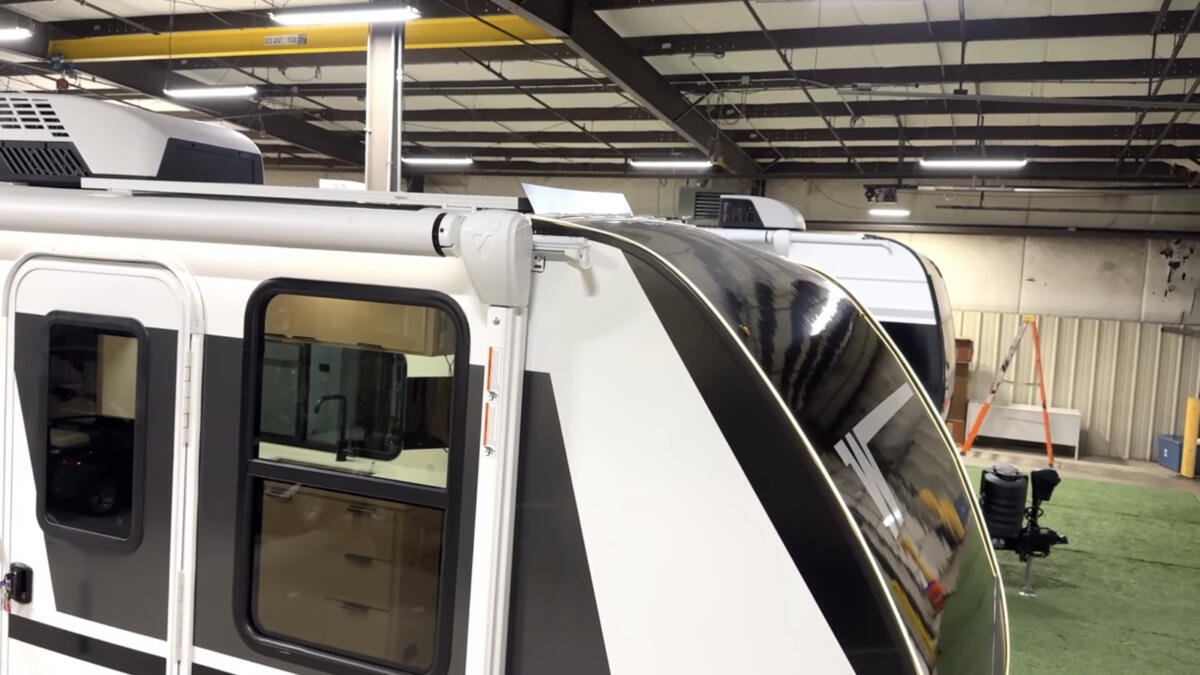
As mentioned, this unit comes with a single 200-watt solar panel. It also includes a 30-amp charge controller, allowing you to add a second panel, if needed.

Of course, with no slide room, this trailer is fully accessible all the time.

Something I caught was that Winnebago is putting a flare up at the front of the trailer to help deflect wind from getting under the solar panel. This might seem like a minor detail, but I think it shows the attention to detail in this camper.

There are other things, like slam latches on the baggage doors with magnetic hold-backs. A lot of little things that won’t be frustrating down the road.

Final thoughts on the Winnebago Micro Minnie 2000-Series

Overall, I really liked what I saw here. The build quality and materials were much better than average. While these aren’t the cheapest small trailers on the market, it has been proven that there are a good number of people who don’t necessarily want cheaper; they just want something more compact. 

There’s not a whole lot I would change on this trailer, although I’d like to see more solar for those who want it. But that’s certainly possible in the aftermarket. 

Overall, this is a little trailer that’s big on attention to detail. Nice!

My thanks to Josh from Bish’s RV for the video.

More about these RV reviews

These RV reviews are written based on information provided by the manufacturers along with our writer’s own research. They are based on information from a single unit and may not reflect your actual experience. Shop your RV and dealership carefully before making a buying decision. They are intended only as a brief overview of the vehicle, not a comprehensive critique, which would require a thorough inspection and/or test drive.

Tony comes to RVtravel.com having worked at an RV dealership and been a lifelong RV enthusiast. He also has written the syndicated Curbside column about cars. 

You can also check out Tony and Peggy’s RV podcast.

RELATED

RVT1255

Five iconic movie locations for RVers to explore, and where to camp

1

I love movies! I love visiting actual movie locations, too!

Here are five great movie sites to visit. You’ll also discover nearby activities and attractions that will make your RV “movie trip” well worth your time. Ready? Action!

Chippewa Square, Savannah, GA

Chippewa Square GA Forrest Gump movie image: savannah.com
Photo credit: https://www.savannah.com/

The bench-in-the-park scene from Forrest Gump (1994) was filmed in Chippewa Square, Savannah, GA. Movie fans still stroll the square remembering Tom Hanks’ box of chocolates.

The actual movie bench was a prop (and later moved to a museum), but the atmosphere of the live oaks and historic homes is the same as on the movie screen.

Other Savannah sights

Near Chippewa Square, you can wander over to Forsyth Park for the fountain and beautiful, expansive lawn views. Or stroll the cobblestones along River Street for shops and river views.

While in the area, don’t miss the Prohibition Museum and the Georgia State Railroad Museum.

RV parks to consider

For RVers, Skidaway Island State Park and private spots like Red Gate Farms RV Resort make convenient bases just a short drive from downtown.

Oak Alley Plantation/River Road (near New Orleans)

Oak Alley Plantation Pixabay image

If you want the antebellum Southern mansion look made famous by the movies, head to Oak Alley Plantation. There, you’ll find its famous lineup of live oak trees along with the “big house.” Both were used for scenes in Interview with the Vampire and show up on several additional Louisiana film lists.

Other New Orleans attractions

If you’re based in the Crescent City, add a walk through the famous Jackson Square and pop into the nearby Gallier House. You may recognize it as it’s sometimes used as a backdrop for film or TV use.

Don’t miss the National World War II Museum and the New Orleans Museum of Art while you’re visiting. If there’s time, treat yourself to a cruise on the Steamboat Natchez.

Here’s my full guide on what RVers should do in New Orleans.

RV campgrounds to consider

RVers can find urban RV parks and KOAs close enough for a short drive into the French Quarter or choose state parks for a quieter night and easy hookups.

Chicago, IL

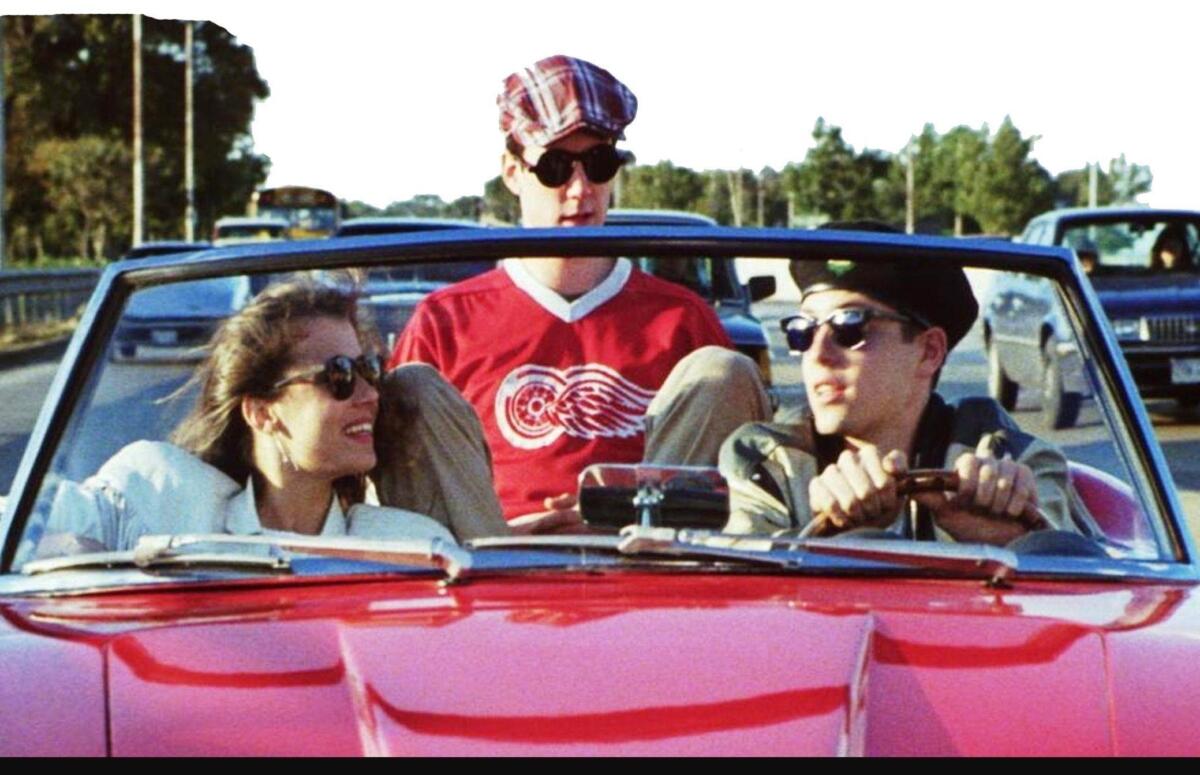
Ferris Bueller's Day Off Image: wallpaperaccess

Chicago has starred in everything from the carefree Ferris Bueller’s Day Off (1986) to Christopher Nolan’s urban Gotham in The Dark Knight (2008).

Follow Ferris’ steps at the Art Institute of Chicago and snap a photo outside Wrigley Field (where Ferris and friends watch a Cubs game). For Batman fans, a drive around Lower Wacker Drive and LaSalle Street shows off the city’s cinematic side.

Additional Chicago attractions

For film buffs, take the Chicago Movie Tours, where you’ll see additional movie locations. Or take a River Boat Architecture Tour. There’s also the Lincoln Park Conservatory, Frank Lloyd Wright Homes, Shedd Aquarium, and so much more!

RV parks to consider

Fox Bluff Cottages & RV and Kankakee South KOA Holiday are good choices to investigate, but keep in mind the places you intend to visit when you make your campground choice.

Monument Valley Navajo Tribal Park, AZ/UT line

Monument Valley Pixabay

For the cinematic West, few places are more iconic than Monument Valley Navajo Tribal Park. Directors like John Ford used the valley’s massive buttes and open desert to stage classics such as Stagecoach and The Searchers. Fans still recognize John Ford Point and the vistas used across generations of Westerns.

Nearby attractions

Take a Sandstone Tour with a knowledgeable Navajo guide, or choose one of the many valley tours available.

Monument Valley pairs well with drives to nearby Canyonlands, Lake Powell, or the North Rim of the Grand Canyon.

RV parks to consider

Goulding’s Lodge offers a real slice of movie-history hospitality and an RV-friendly campground, and Tseyi’ Dine’ Heritage Area’s Cottonwood Campground is a boondocking spot.

The Gamble House, CA

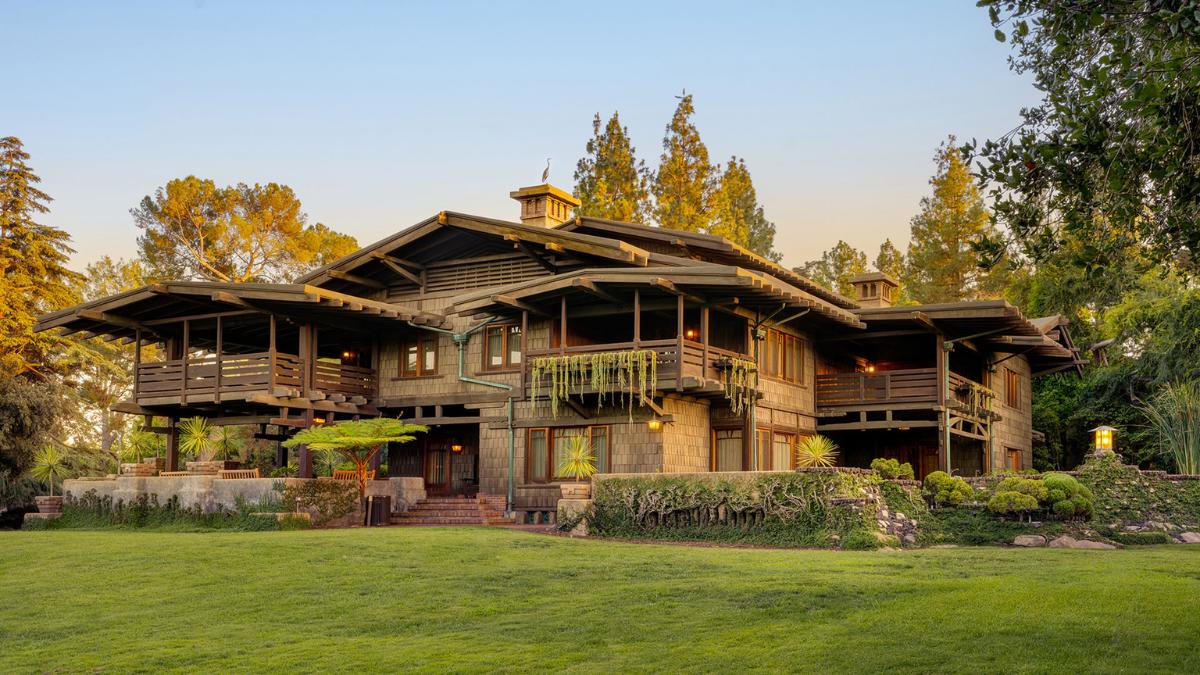
Gamble House Image: Gamble House website
Photo credit: The Gamble House

Architecture lovers and movie fans alike may recognize The Gamble House in Pasadena, California, even if they don’t immediately realize why it looks familiar. This beautifully preserved Craftsman-style home served as the exterior of Doc Brown’s house in the classic 1985 film Back to the Future.

Built in 1908 for the Gamble family of Procter & Gamble fame, the home is widely considered one of the finest examples of American Arts and Crafts architecture. Its intricate woodwork, stained glass details, and handcrafted furniture make it a standout stop. The home is so architecturally significant that it has been designated a National Historic Landmark.

Fans of Back to the Future may recognize the leafy Pasadena neighborhood where Doc Brown supposedly lived before Marty McFly arrived with a time-traveling DeLorean DMC‑12. Guided tours of the house allow visitors to step inside the remarkable interior, which still contains many original furnishings and design features.

Nearby sights to explore

RVers visiting the area will find plenty to explore nearby. Just a short drive away is Old Pasadena. This is a lively district filled with historic buildings, restaurants, and boutique shops.

Science fans might enjoy the Jet Propulsion Laboratory visitor center exhibits. Outdoor enthusiasts can take a scenic walk through the nearby Arroyo Seco area. A few miles away, the world-famous Rose Bowl Stadium hosts events throughout the year.

RV campground choices

Parks along the foothills of the San Gabriel Mountains or in neighboring communities provide easier access while still keeping you within a short drive of the filming location.

Quick RV-friendly planning tips

  • Pick your RV base before you arrive in busy towns. Historic districts often have strict parking rules and tight streets.
  • Bring cash or card for entry fees. (Monument Valley and some plantations have per-person or per-vehicle fees.)
  • Check seasonal hours for historic homes and museum displays.
  • Arrive early for the best photos (and fewer crowds).
  • Be mindful and respectful. Many film sites are working historic properties or protected tribal lands. Follow signs, stay on marked routes, and support local guides and artisans whenever possible.

Have you ever visited the location where a famous movie was filmed? Tell us about it in the comments below.

YOU MIGHT ALSO LIKE:

RVT1255

When changing tire size, don’t forget this critical information

I saw a question about tire size on one of the RV forums I monitor. About a dozen people replied. ALL of them ignored the importance of including both the “type” tire and the tire “load range.”

The initial question involved changing a “225/75R15” size tire. The poster didn’t provide information on what type tire (passenger [P], special trailer [ST] or light truck [LT]) he was talking about.

He and those providing answers also failed to provide what load range tire they were discussing (standard load [SL], extra load [XL], load range C or load range D).

I offered the following safety-related information.

  • A 225/75R15ST is rated for 2,150# @ 50 psi if it is LR-C, and 2,540# @ 65 psi if it is LR-D.
  • A P225/75R15 is rated 1,874# @ 35 psi for standard load, or 2,028# at 41 psi if the tire was rated “extra load”
  • An LT225/75R15 LR-C is rated for 1,875# @ 50 psi, and 2,205# @ 65 psi if LR-D.

Whenever talking about tire size and load capacity, it is important to include the information on type tire and load range. Otherwise, you could end up with tire failures due to overload and/or under-inflation. You can see the range of possible inflation and load capacities above.

If you ever get involved in a discussion on tires, please be sure to include the CRITICAL information of type tire and load range

Roger Marble

MORE POSTS FROM ROGER ON TIRE SIZE

*****

If you have tire questions, check out Roger’s posts on RVtravel.com. There are hundreds of posts covering everything to do with tires.

If you still have a question for Roger after searching the above posts, send your inquiries to him using the form below.

Name
Drag & Drop Files, Choose Files to Upload

RVT1255

Your RV is a rolling earthquake—These gadgets protect what’s inside

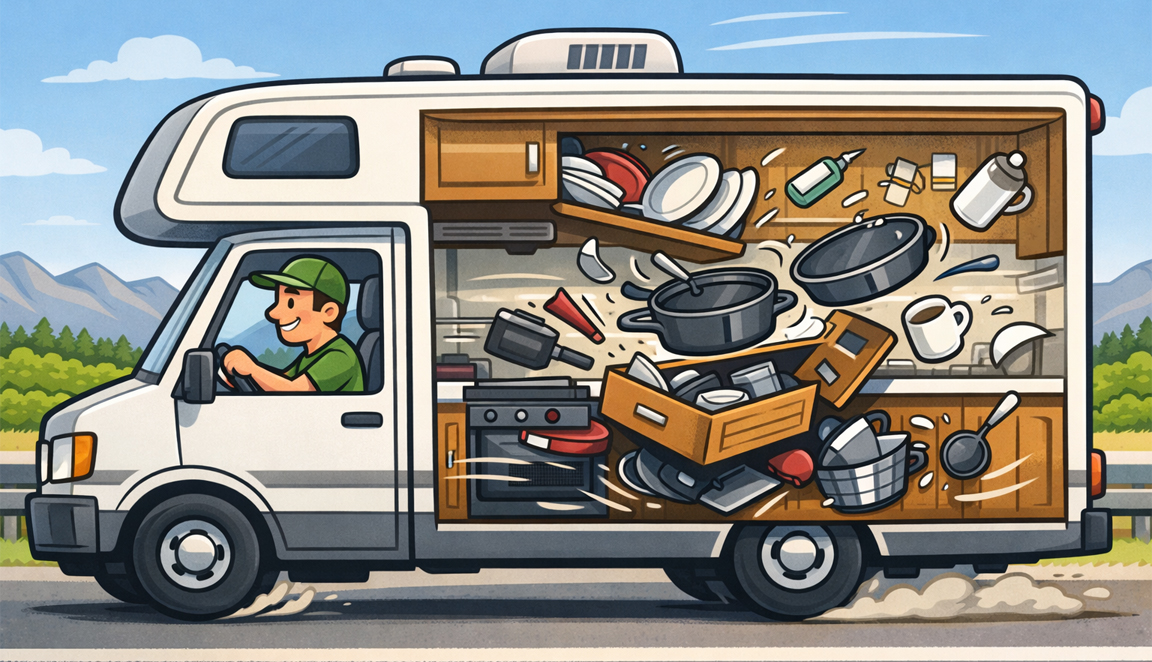
Every time you pull your RV onto the road, you’re putting everything inside through a rolling earthquake for hours at a time. Protecting cookware in an RV isn’t just about stopping rattles, it’s about preventing the steady wear that ruins pans, chips dishes, and loosens what you carry. Constant rattling can increase wear that shortens the life of what you carry—your pans, your glassware, even the drawers themselves.

It’s not the bumps—It’s the hours

If you hear it rattling going down the road, something inside is paying the price.

Most RVers assume damage comes from a hard stop or a pothole. Those don’t help, but they’re not the main culprit.

It’s the steady vibration. The slight shifting. Metal touching metal. Glass tapping glass. Hour after hour.

That’s what:

  • Wears down nonstick coatings
  • Chips plates and cups
  • Loosens drawer slides and hardware

By the time you notice, the damage is already done.

What RVers are doing differently now

RVers have always used towels and shelf liner—and those still work. But newer setups make it easier to stop movement before it starts.

Some are using thin silicone pads made to sit between stacked pans. They don’t take up much room, and they keep coatings from rubbing together. Here are some that would work well.

Others are adding adjustable dividers inside drawers. Instead of one big space where everything can slide, each item gets its own spot. When nothing can move far, nothing can build up speed. Above is one offering from Amazon—they have lots more.

And here’s one we have personal experience with. Not only does this rack idea keep pans from getting too close, but it also helped us free up drawer space. We tucked one of these in a cabinet and kept the pan chorus quiet—and taking up less space.

And a trick that’s catching on: bundling cookware so it moves as one piece. A simple strap around a stack of pans and lids can keep the whole set from shifting and clanging its way down the highway.

The simple fixes still work

You don’t need to spend a dime to make a big difference.

That no-slip shelf liner many RVers already use? It’s still one of the best tools out there. It cushions, grips, and separates at the same time.

Dish towels work the same way. They’re easy to tuck between items and pull double duty when you’re parked.

And sometimes the best solutions are just a little creative. One RVer learned the hard way after wearing off the coating on an electric skillet by storing the lid upside down inside it. Now they drop a rubber muffin pan into the skillet first, then set the lid on top. No more abrasion, and the drawer still closes.

A few things to stop doing

Some habits almost guarantee damage over time:

  • Stacking nonstick pans directly on each other
  • Letting glass or ceramic touch during travel
  • Overloading drawers so everything presses and shifts

If it can move, it will. And if it can rub, it will wear.

A quick “before you roll” check

Before you pull out of camp, take a second:

  • Are heavy items low and snug?
  • Is anything metal-on-metal?
  • Are lids separated or cushioned?
  • Is glass isolated?

If you hear it rattling, something isn’t secured.

The quiet test

Here’s the simplest way to know if you’ve got it right.

Drive a few miles. Listen.

A quiet drawer is a protected drawer. A noisy one is telling you something inside is taking a beating.

Fix the noise, and you’ll fix the damage before it costs you.

RELATED

RVT1255