By Gail Marsh
With St. Patrick’s Day upon us, luck is in the air—or, at least we hope it is. Life on the road can be unpredictable. One day, you’re basking in a scenic, quiet campsite with a perfect sunset view; the next, you’re parked next to a generator that sounds like a jet engine. But sometimes, RVers just get lucky. And no, we’re not talking about that kind of luck (though, hey, good for you if it happens).
Here are some of the best ways RVers can get lucky on the road—no four-leaf clovers required.
1. Scoring the last spot at a popular campground
You didn’t book six months in advance. You didn’t even book six days in advance. But somehow, you roll up, and the campground host says, “We just had a cancellation. You’re in luck!” Few things feel better than snagging a prime camping spot when you were prepared to spend the night in a Walmart parking lot.
2. Avoiding bad weather by sheer coincidence
You leave a campground a day early, and the next morning, you see reports of a massive storm or hail the size of golf balls right where you were parked. Meanwhile, you’re sipping coffee in sunshine, feeling like a meteorological mastermind.
3. Finding cheap gas right before you need it
The gas light comes on, and you brace yourself for highway robbery at the next station—only to stumble upon a place selling gas for 50 cents less per gallon than anywhere else. You roll in feeling like you’ve won the RV jackpot.
4. Landing the perfect boondocking spot
You venture down a questionable dirt road, fully expecting to find either nothing or a “No Camping” sign. Instead, you discover a pristine, secluded spot with breathtaking views, zero crowds, and just enough cell service to stream your favorite show.
5. Backing into a campsite on the first try
Nothing tests a relationship—or your ego—like backing into a tight campsite while an audience of fellow campers watches. When you nail it on the first go, you suddenly feel like a professional truck driver and expect a round of applause.
6. Hitting every green light in a strange town
Towing an RV through an unfamiliar city can be a nightmare, but every once in a while, the travel gods smile upon you. You hit every green light, dodge traffic, and cruise through town like you own the place.
7. Discovering free dump stations when you desperately need one
Your tanks are full, your options are limited, and every dump station you’ve seen so far charges a fee. Then, like a beacon of hope, you find a free one—saving you a few bucks and possibly a lot of regret.
8. Finding an empty laundry room right when you need it
You head to the campground laundry room expecting a battle for the last available washer, only to find an entire row of empty machines. Fresh, clean clothes without a waiting game? That’s pure RVing luck.
9. Getting an upgrade without asking
You book a basic RV site, but when you check in, the host winks and says, “We had a premium site open up, no extra charge.” You don’t question it. You just accept your good fortune and enjoy those full hookups.
10. Making new friends over a campfire
You arrive at a new campground, not knowing a soul, and by the end of the night, you’re swapping stories with new friends over a crackling fire. Sometimes, the best kind of luck is finding great people along the journey.
What about your lucky experiences?
Can you think of a time you had a lucky experience while on the road? Leave a comment and tell me about it.
By Cheri Sicard
Sleeping in a van or RV can feel like trying to nap in a streetlamp. Even when it’s cloudy, light still sneaks in, and temperature swings can make nights rough. On Outdoor Gear 411, Robbie and Adrienne tested VannCamp™ insulated blackout window covers to see how fast they install and how dark it really gets with them.
VannCamp unboxing: carry case, snaps, and an all-season build
The VannCamp (aka VANNCAMP and Van N Camp) window covers arrived in a dedicated carry case, which makes them easy to store between trips. Robbie and Adrienne tested the “AllSeasonGuard Pro” style covers that use 3M Thinsulate, with the goal of improving sleep and comfort year-round.
A few things stood out right away:
They’re built for blackout privacy, so they feel less exposed at campgrounds and parking lots.
They’re meant to help with warmth in winter and cooler temps in summer.
The set uses simple snaps and magnets to keep panels closed and positioned.
In-hand, the covers looked surprisingly light. They also felt easy to handle, which matters when it’s raining and the doors are open.
Back window install
They chose to install the back window covers first so they could get a quick win and see immediate results, even with the gloomy weather. Installation was straightforward: Unsnap the cover, check the “up interior” label, then let the magnets do the work.
The magnet closure made the first install feel almost instant. As soon as it lined up, it closed on its own and held steady without a struggle.
If the “up interior” side faces inside, the cover lines up fast, and the magnets help it seat cleanly.
Windshield cover install
The windshield piece installs a little differently because the windshield area is plastic and doesn’t grab magnets the same way. The black interior side needs to align around the rearview mirror area.
They installed it in this order:
Identify the interior side (the black portion) and orient it around the mirror area.
Fit the cover into position across the windshield.
Smooth and adjust the edges until the fit looks even.
Door window covers: same style, quick placement
Next came the door windows, using the same snap-and-position approach. Adrienne called out how easy the driver’s side was, mostly because those magnets grabbed quickly. They also moved a bit faster here since they were trying not to get soaked in the rain.
The dark test results
Before installing everything, they filmed inside and pointed out that even on a cloudy day there is still noticeable light coming through the glass. That set up the main question of the test: How much darker will it get once every window is covered?
Once every cover was up, they climbed inside and did a countdown (three, two, one). The interior got very dark, with only a tiny bit of light slipping around a few edges. They noted that small adjustments could close those gaps.
Final thoughts
Robbie and Adrienne walked away excited and a little surprised by how well the system worked right out of the bag. The combination of blackout coverage and insulation is the main win for van life, especially for people who camp in both hot and cold seasons.
In the end, this test showed what matters most: fast install, real privacy, and a darker place to sleep. If a van’s bedtime has been feeling too bright or too exposed, insulated blackout window covers can change the whole mood inside.
If you didn’t get the memo, today is St. Patrick’s Day! That means everyone who is even .001 percent Irish celebrates and calls themselves Irish! It also means you should be eating corned beef and drinking a Guinness!
Will you do something today to celebrate St. Patrick’s Day? Go out to eat? Go to an Irish pub? An event or festival? Will you just stay in but cook something Irish?
Maybe you’ll keep things simple. A plate of corned beef and cabbage, some Irish soda bread, or even just something green on your plate counts. Sometimes the best celebrations are the low-key ones at home.
Or maybe today is your excuse to get out and about. Many towns host St. Patrick’s Day parades, festivals, and pub gatherings. Even if you’re not Irish, it’s hard not to get caught up in the fun when everyone around you is wearing green and raising a glass.
And of course, if you’re on the road in your RV, the celebration might look a little different. Maybe it’s a campground potluck, a green dessert someone brings over, or simply a cheerful “Happy St. Patrick’s Day!” from a neighbor walking their dog.
After you vote, please leave a comment and tell us how you plan to celebrate. Sláinte! 🍀
LIKE TAKING POLLS? So do we! Did you know we’ve run more than 5,000 polls on our website over the years? Check ’em out! Have fun!
America’s Original RV Newsletter. Since 2001
Issue 2861 • New issue every weekday
Today’s thought
“My favorite weather is bird-chirping weather.” —Terri Guillemets
Need an excuse to celebrate? Today is National Panda Day! Watch the panda live cam here—it’s adorable! [If there aren’t pandas in the picture, scroll back until you see some.]
On this day in history: 1802 – The Army Corps of Engineers is established to found and operate the United States Military Academy at West Point.
Tip of the day Your RV’s R-value. Don’t believe it hook, line and sinker
By Andrew Herrick
The R-value of your RV is kind of a joke. Oh, I know it sounds impressive. I know the 4-season “Arctic Package” is boasting sky-high numbers.
But what you need to know about RV R-value is that it’s not measured. It’s not tested. There’s no certification standard. It’s a loosely calculated number based on inaccurate assumptions. It’s not an outright lie—just an incomplete truth. I’ll tell you the rest of the story.
RV review
2026 Keystone Springdale Mini 1200BT—Tiny, but workable… for some…
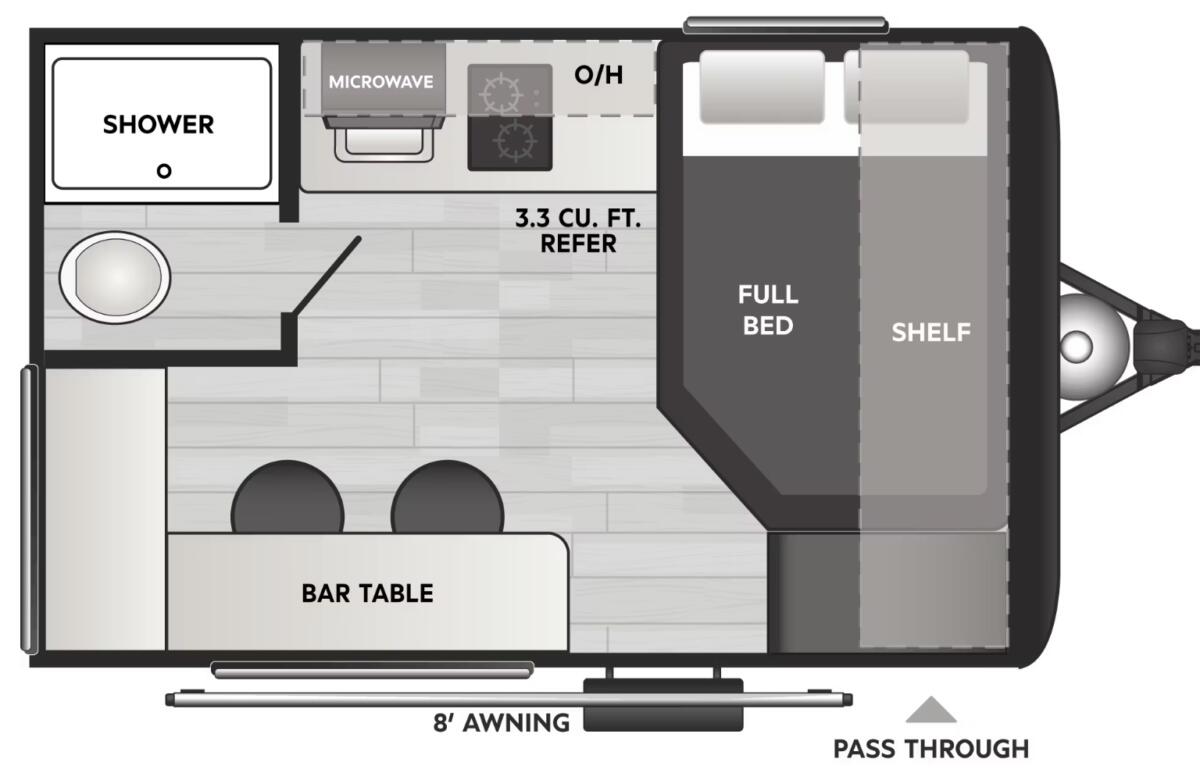
The 2026 Keystone Springdale Mini 1200BT is a no-frills travel trailer that works well for a solo traveler or a couple. The floorplan is compact but focused on essentials. You’ll find a full-size bed, a small galley, a bar-style table, and an exterior power awning for extra living space outside. It does exactly what it sets out to do: give two people a lightweight, towable, and affordable travel trailer with a private bathroom and basic living comforts. Check it out and see what you think.
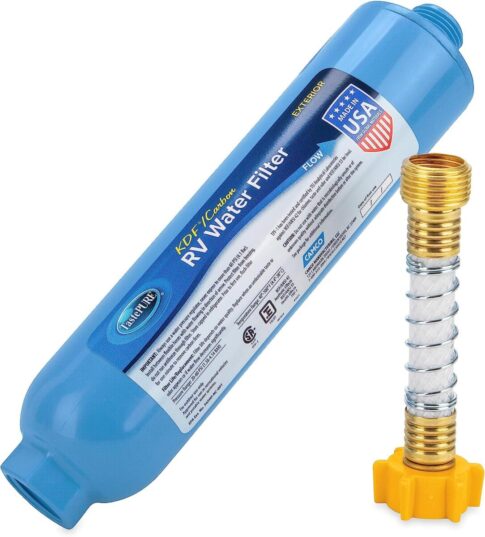
It’s almost spring: Time to change your water filter! Camco’s TastePURE Water Filter with Flexible Hose Protector reduces bad taste, odor, chlorine, and sediment in drinking water with a 20-micron fiber filter. Its durable in-line, exterior mount filter has a wider body to increase flow. Use it at your campsite to keep sediment out of your RV water tank and improve the taste and smell of your drinking water for a whole season. This is essential equipment.Learn more or order.
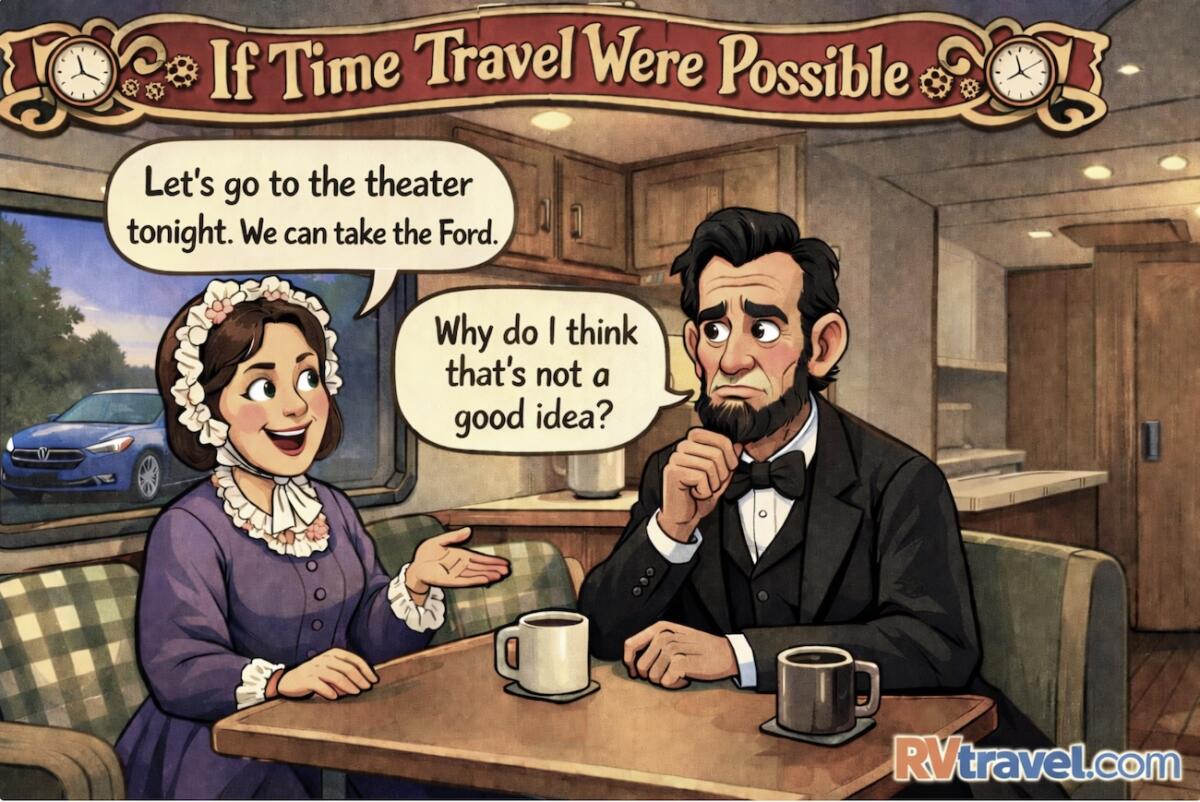
You may share this Tanner Toon, unaltered, on your website, blog or social media with our compliments. The musings from Tanner Woods’ creative mind appear in this newsletter every Saturday and Sunday and in many RV Daily Tips newsletters through the week.
In the RV shop with Dustin Sawdust and metal shavings in your RV can pose health risks
Join Dustin Simpson and his techs as they discuss a recently received inquiry regarding a consumer finding wood and metal shavings throughout his brand-new RV. Shavings in new RVs are inevitable when there is a lack of care or concern during the manufacturing process, and they can become a potential health problem. Learn more.
DARN IT! That’s what you’ll say if you miss a super great bargain today only on something you really want! CHECK HERE!
Article and video Hidden RV outlet flaw can lead to melted wiring, tech warns
According to Nick Buchanan, aka That RV Tech, most RVs, even the big fancy ones, leave the factory with press-fit (Wirecon) outlets. They look like a normal receptacle from the front, but they don’t connect wires the same way a home outlet does. Over time, that difference can turn into heat, melted plastic, and burnt wiring. Swapping those outlets for standard residential receptacles is one of the simplest upgrades for long-term reliability and safety.
HA… HA… I told my suitcase that there will be no travel this week. Now I’m dealing with emotional baggage.
DO YOU SOMETIMES WISH YOU HAD A KEYBOARD for your tablet? Here’s how to do it — easy and inexpensive!
Featured article Around the Campfire: RVers share their “RV envy.” Is bigger more desirable?
By Gail Marsh
What a discussion around the campfire a few nights ago! A gal with a small RV admitted she sometimes experiences “RV envy.” From there, the discussion exploded. Read more, then share your thoughts in the comments.
The best socket set for RVs—ALWAYS carry one in truck or trailer!
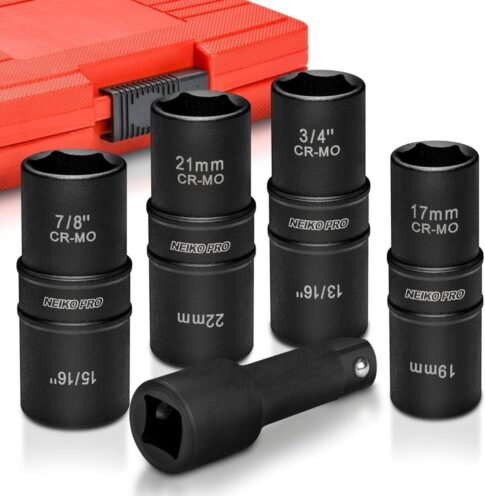
Tackle nearly any RV, truck, or trailer job with the NEIKO 02282B 1/2-Inch-Drive Impact Socket Set. JD from Big Truck Big RV calls it one of his most-used tools of all time. These thin-walled, impact-rated sockets fit tight spaces that others can’t, making tire changes, stabilizer jack adjustments, and other RV tasks fast and easy. Durable, compact, and designed for heavy-duty use. Watch JD’s video or learn more and order.
Ask Dave Squirrels are eating my RV! What can I do?
RV coach batteries “tucked away underneath” and hard to check fluid level? Use a hand mirror to hold over the top of the battery and angle the view back to you. Shine a flashlight onto the mirror to shine light down into those dark cells.
Website of the day
Bureau of Land Management
Sure, we all know what the Bureau of Land Management (BLM) does and we know we can camp on BLM land, but have you ever really explored the agency’s website? If you haven’t, check it out for tons of great information.
Monday Motivation
“Vulnerability is hard and it’s scary and it feels dangerous. But it’s not as hard, or scary or dangerous as getting to the end of our lives and having to ask ourselves: What if I would’ve shown up? What if I would’ve said ‘I love you?’ What if I would’ve come off the blocks? Show up, be seen, answer the call to courage and come off the blocks. Because you’re worth it—you’re worth being brave.” —Brené Brown
? MYSTERY PRODUCT OF THE DAY ? This is a whole page, not just one product, but once you see it you’ll understand why we couldn’t pick just one! Scroll down.
Trivia
The potato chip was invented by accident, but it was so well-loved that the famous chef opened his own restaurant where he served a basket of chips at each table. Here’s the full story.
Readers’ pets of the day
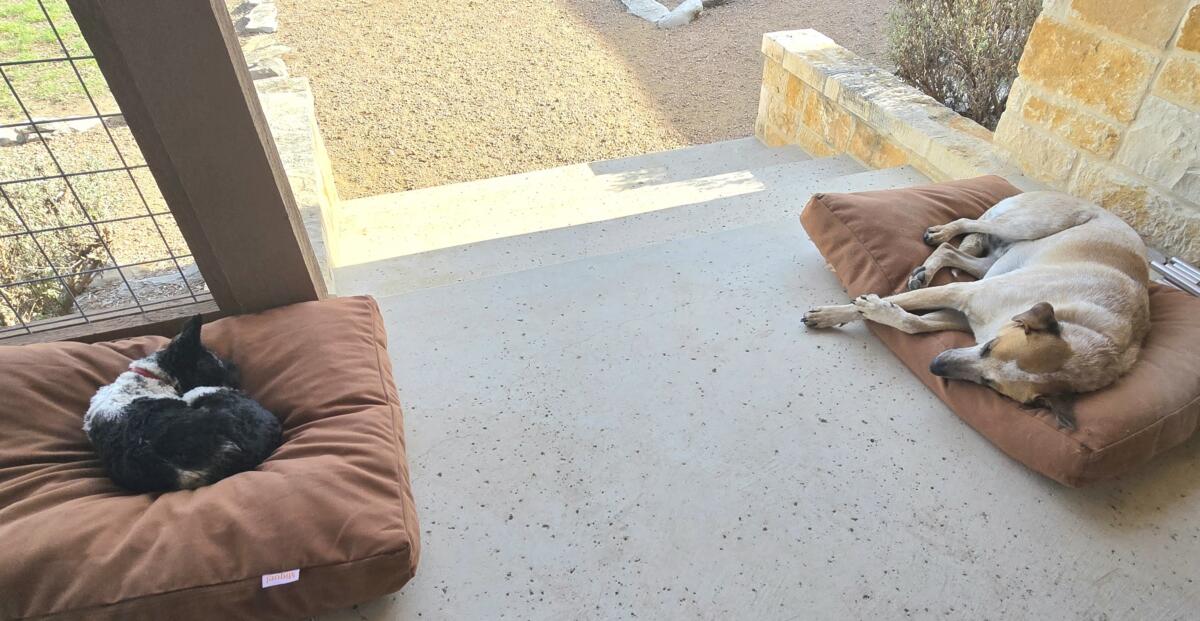
“Tillie June and Teddy Roosevelt (Mini Schnauzer and Australian Cattle Dog, both 1.5 years old). Our happy campers after their first motorhome weekend camping trip. They did great and were worn out when we got home.” —Deborah Raeburn
Send us a photo of your pet with a short description. No blurry photos and please do not submit your photo more than once. Thanks!
At a couple’s counseling session, the therapist told them that couples these days are so disconnected that 85 percent of all husbands don’t know what their wife’s favorite flower is. The husband turned to his wife and whispered, “It’s self-rising, isn’t it?”
If you shop at Amazon.com we’d appreciate you using this link. We get an itty bitty commission if you buy something, but they add up and help us pay our bills (most importantly our hard-working writers!).
Dear Dave,
My rig is outside all of the time. I have major problems with a gray squirrel. It has chewed 12v wires, and the worst was when it chewed the fuel line to the Onan generator. Do you have any ideas or know of a wrap product to protect them? —Donald, 2019 Winnebago Travato
Dear Donald, Rodents of all kinds have always been an issue when it comes to RVs, especially wiring. I don’t know if anyone really knows what attracts them to chew up an RV. Some say they chew materials such as insulation and other soft materials in the winter to build a blanket or nest.
Other sources have stated that the coating on some wiring is actually made of a food grade material and is a source of food for them. And I have even read that rodents chew on materials to keep their teeth sharp!
We have fought rodents for years, with mice being the most annoying that I have found. We’ve tried just about everything—from moth balls to electronic devices—and have found that Mouse Free is the best. However, it is expensive and messy as it is sprayed on the bottom of the rig and has a greasy base substance.
Sometimes even an RV cover isn’t enough
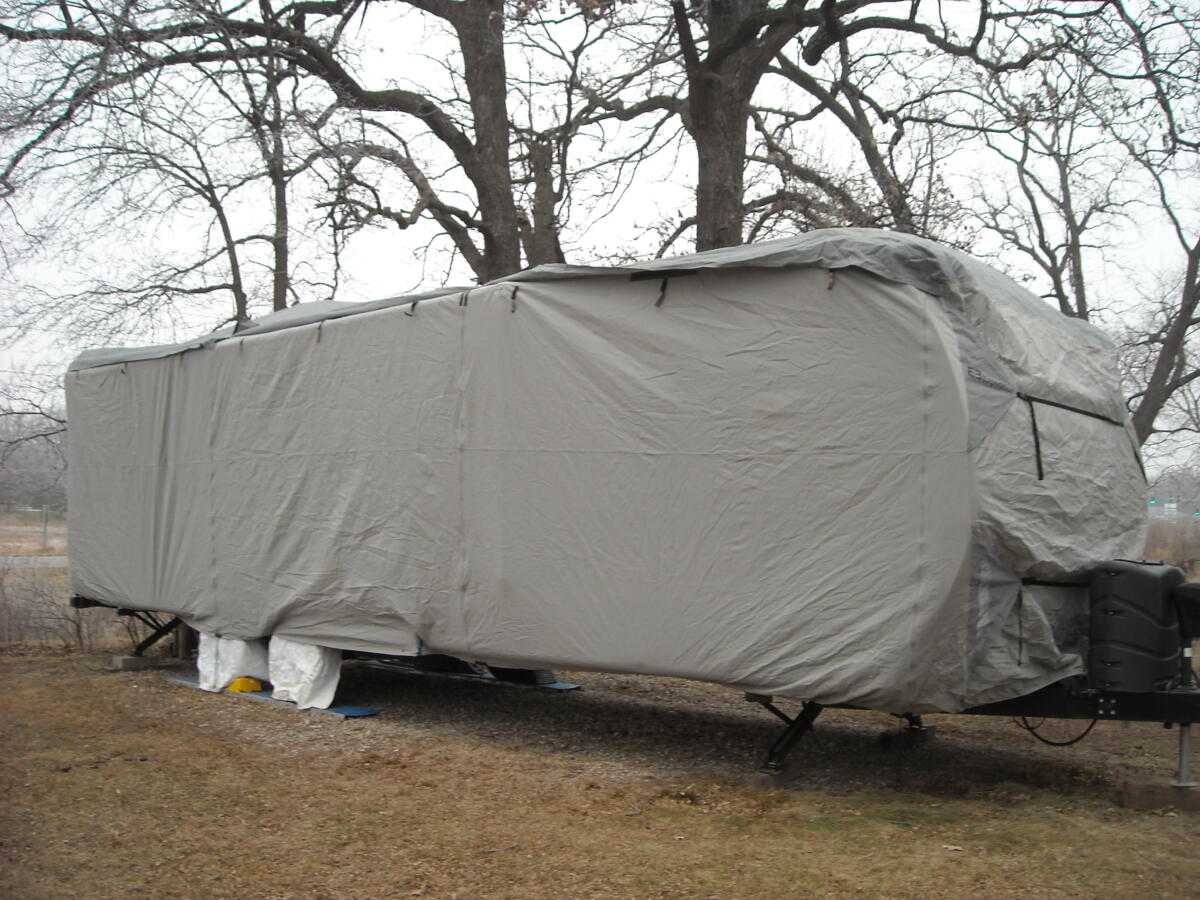
Locally, we had an RV owner that had his trailer stored for the winter with a very good cover that seemed like it would keep just about anything out.
In the spring, he removed the cover and dewinterized. Once he started up the air conditioner, it began to snow inside the rig. A squirrel had burrowed inside the block foam insulation surrounding the fan and evaporator and created a nice little winter Airbnb.
I have not battled squirrels in my RV; however, I did have a few bouts with them in an attached garage. Once they get in and establish themselves, it’s almost impossible to keep them from coming back in—if you can get them out in the first place. I ended up catching them with a live trap and peanut butter and had the local Department of Natural Resources (DNR) take them to another county. Not sure what they did with them—but the peanut butter was really good… just hard to get myself out of the trap!
The owner of the above trailer did the same thing, then the next year used mothballs all around the outside and Grandpa Gus pouches inside. He did not want the smell of the mothballs inside and did not have any issues for the next two years. Notice the trees all around the rig? I told him it might be wise to find a spot with less rodent traffic!
Squirrel deterrent products
There are several squirrel deterrent products on the market. However, the first thing you need to do is conduct a thorough inspection of the rig and seal up any potential entry points. What I found works the best is to put some bright lights inside the rig at night and look for light leaks underneath and outside.
I have talked with people that have used cayenne pepper, cinnamon oil, and several types of mint. The issue with most of these is they dissipate quickly and are not effective after a couple of weeks. I have heard good things about Fresh Cab and Grandpa Gus. However, sometimes it’s hard to tell if the product really works or the rodents have just moved to a different vacation spot.
I’m interested to hear what others have used.
You might also enjoy this from Dave
Do ultrasonic mice deterrents work?
Dear Dave,
I saw your response about keeping mice out by sealing up access points and using scent deterrents. I was wondering if you or any of your readers had experience with those ultrasonic devices that can go under the hood that are supposed to keep rodents and other critters away? Are they just a scam? Do they work in specific but limited instances? We haven’t had a problem yet but want to keep it that way. (We’ve only been full-time RVing for a year.) Thanks in advance! —Tim, 2024 Leisure Travel Vans Unity RL
By Andrew Herrick The R-value of your RV is kind of a joke.
Oh, I know it sounds impressive. I know the 4-season “Arctic Package” is boasting sky-high numbers.
But what you need to know about RV R-value is that it’s not measured. It’s not tested. There’s no certification standard. It’s a loosely calculated number based on inaccurate assumptions. It’s not an outright lie—just an incomplete truth. I’ll tell you the rest of the story.
Let’s get through the bad news first
Too often, the conversation around R-value and 4-season RVs and cold-weather camping centers around the materials rather than the design.
Someone dutifully calculates the R-value of all the materials that make up your structure. Then they crunch the numbers, perform some mental gymnastics, and calculate an “R-value” that gets printed on brochures but is often wholly divorced from reality.
We’ve missed the forest for the trees.
It’s a little depressing, I know. I hate to be the bearer of bad news. But I’d rather you hear it from me than discover it for yourself $40,000 later. Most RVs just aren’t designed for year-round living. And manufacturers that do produce genuine 4-season RVs don’t rely on inflated R-values.
R-value for dummies
R-value measures insulation, or how well something prevents conductive heat transfer.
Higher R-value means a better insulator (think down comforter). A lower R-value means a worse insulator (think cotton sheet).
R-values for materials are usually given per inch. Here are some examples:
Concrete: 0.2
Glass pane: 0.9
Plywood: 1.1
Loose-fill fiberglass: 3.1
Polystyrene foam board: 5.0
Silica aerogel: 10.3*
Vacuum panel: 30.0
(*Note that silica aerogel is one of the world’s best insulators and still only has about R-10 per inch. So if an RV manufacturer is claiming R-50 on a 3-inch roof, you know something is suspicious!)
R-values are usually cumulative. So, if you combine two inches of polystyrene foam together, you get 5.0 + 5.0 = 10.0 R-value.
The most common insulators in an RV are foam board (R-value of 5/inch), fiberglass (R-value of 3/inch), Azdel (R-value of 2.2/inch), and radiant foil (R-value of 40).*
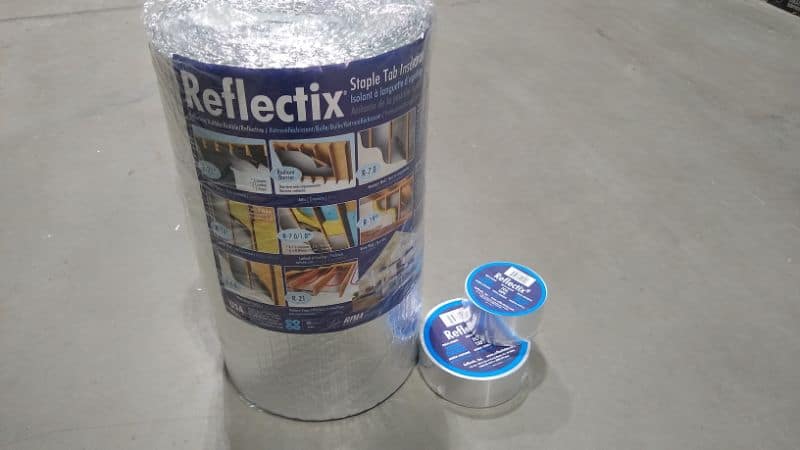
Reflective insulation is often sold as aluminum foil laminated onto bubble wrap. Or just the dimpled aluminum foil itself. Reflective insulation rarely achieves the freakishly high R-values you see advertised. That’s because reflective insulation is a radiant heat barrier that requires a still-air gap (the larger the better), and its performance is highly dependent on surface conditions and heat transfer direction.
So that “R-52” roof on your travel-trailer-to-be? It’s almost certainly aggrandized. There just isn’t enough airspace to make it physically possible.
Be skeptical of any R-value greater than 10. Compare the installation procedure to the manufacturer’s requirements, such as these expected R-values from Reflectix.
And another fun fact: The R-value of many materials—and especially radiant foil—isn’t the same from winter to summer! In fact, radiant foil is usually much better at keeping heat out (summer) than trapping heat in (winter). So when you need it most, radiant foil is at its worst!
P.S. Note that if bubble wrap radiant foil is installed without an air gap, the actual R-value is no better than 1!
Thermal bridging ruins R-value, anyway
You wouldn’t say a bathtub with a crack was waterproof, would you? Well, neither would you say that an “insulated” wall with a giant drafty single-pane window was actually insulated!
You might not—but your RV manufacturer might!
I want to introduce to you a concept called whole-wall R-value. What you see on the sales brochures are not usually empirical measurements. They are based on the laboratory ratings of individual materials, not on the wall as a real-life assembly! They are based on ideal cross-sections, not the entire area.
But if we start considering an RV wall, roof or floor, what do we find?
We find materials that allow heat to stealthily wick through. We engineers call this “thermal bridging.”
For instance, a laminated sidewall probably has a lot of aluminum tubing inside the beadboard foam. This metal tubing has a very, very poor R-value, and it literally acts like a highway overpass, allowing heat to sneak around the foam board!
Or what about the windows, doors, fridge vents, speakers, range hoods, and the other components that carve up your walls and roof like a Jack-O-Lantern? Because when it comes to cold-weather insulation, a window is basically a hole in your wall.
But stated R-values don’t account for windows or other “holes.” They’re calculated based on the “perfect” cross-section of the wall assembly.
So, by the time we account for all the thermal bridging, our real-life R-value is … well, it’s awful.
I don’t have concrete numbers for you, because I don’t know any manufacturers who have willingly shot themselves in the foot by actually testing it. I suspect it’s something like 50%–80% less than the “sales” value.
So that “R-9” laminated sidewall could have a real-life R-value of about … R-3. Yuck. That’s no better than the typical double-pane window in your house.
Insulation ignores air drafts
By their nature, RVs don’t hold heat well. This is because they have little thermal mass and lots of air exchange.
Let’s compare an RV to a house.
In a house, there’s lots of stuff inside to absorb the heat. It’s like a backpack for your extra heat.
You heat the house through the winter so it never gets really, really cold.
The bottom of the house is insulated by the ground.
And if you open a door, relatively little air escapes.
None of that is true when it comes to RV R-value.
There’s little “stuff” inside to retain the heat.
You don’t heat the RV while it’s in storage. Unless you’re rich.
Cold air constantly passes around, above, and below the RV (unless you have skirting).
And if you open a door, half the air in the RV gets sucked outside!
You see what I’m saying? The physics are not on your side!
If we inspect an RV wall or roof, we will find drafts and air leaks—everywhere! Drafty doors. Single-pane windows. Broken seals. Air leaking out of siding panel seams, fender wells, slide-out seals, entry doors, sliding window panes, outside lights, shower fans, ad nauseum.
You can see evidence of these drafts through a SealTech test, which many RV manufacturers and RV service centers use to diagnose a water leak. Check out the video below for an example of how the SealTech test works (begin at 1:12).
What’s a cold, shivering RV owner to do?
So, my advice to you is to either take all R-values with a grain of salt or ignore them completely.
Instead, look for:
Thick sidewalls, subfloors and roof assemblies (the thicker, the better!)
Limited slide-outs (the fewer, the better)
Double-pane insulated windows
Enclosed underbellies
Heated tanks and knife valves
And when courtier Jack Frost does announce the arrival of Father Winter, do the following:
Insulate your windows, skylights and roof fans.
Heat your tanks, wrap your pipes, and warm up your batteries.
Install windproof skirting.
Let the sunlight in whenever possible.
Buy a down comforter and some fuzzy socks.
Thank the Good Lord that propane is relatively inexpensive.
By Cheri Sicard
According to Nick Buchanan, aka That RV Tech, most RVs, even the big fancy ones, leave the factory with press-fit (Wirecon) outlets. They look like a normal receptacle from the front, but they don’t connect wires the same way a home outlet does. Over time, that difference can turn into heat, melted plastic, and burnt wiring.
The usual “space heater killed my outlet” story often misses the real weak spot. The appliance draws power, but the loose, high-resistance connection inside a press-fit outlet can be what starts the damage.
Swapping those outlets for standard residential receptacles is one of the simplest upgrades for long-term reliability, as long as the work is done safely and correctly.
In the video at the end of this post, Nick covers what this RV electrical upgrade entails.
Why factory RV outlets cause trouble
RV makers use press-fit outlets because they install fast. That’s the whole reason. The receptacles are cheap (often under a dollar), and they don’t need an electrical box in the wall. Installers use a special pressing tool to seat the wires, and that tool can cost around $700.
The problem is the connection style. Many of these outlets grab the conductor by cutting into the insulation and “pinching” the wire. That can work at first, but RVs bounce down the road, heat cycles stress the parts, and time does the rest.
When a connection loosens, resistance goes up. When resistance goes up, heat follows, and plastic starts to soften.
Common triggers include:
Road vibration and movement over time
Long run times on heat-making appliances (space heaters, coffee pots, Instant Pot [Instapot], air fryers)
Higher draw devices like portable A/C units, where motors and compressors can pull more current
Safety comes first (because power can still be live)
This job involves 120V wiring. If someone doesn’t have electrical experience, a qualified pro should handle it.
Even if the RV gets unplugged, power can still show up. An AGS (automatic generator start) system could auto-start a generator, or an inverter could be supplying the circuits. The process starts the same every time: Shut off the breaker, then verify with a multimeter set to AC volts (or a non-contact voltage tester) before touching anything.
Two box options that work in thin RV walls
The usual objection is that RV walls are too thin for a “real” outlet and box. Sometimes that’s true with a standard-depth box, but there are two practical fixes.
A shallow mount “old workbox” can fit where depth is limited, although tight stud spacing or obstructions can make it frustrating.
A surface-mount box avoids the wall cavity problem completely. It screws to the wall surface, so the box depth doesn’t compete with insulation or framing. The tradeoff is clearance. A typical surface box sticks out about 1.5 inches, so it can interfere with slide rooms, cabinet doors, or trim.
Tools and parts; then the basic install steps
This upgrade can be cheap in parts: about a $4 box and a $0.80 residential outlet. The tools are simple too: wire strippers and cutters, a screwdriver (hand tools give better control than an impact), and a meter or tester to confirm the circuit is dead.
Once power is confirmed off, the old outlet cover pops off, then the two mounting screws loosen to fold the retaining “wings” inward. Next, the outlet casing opens at the side tabs to expose the conductors. Because the press-fit connection can nick insulation, the wires get trimmed back to clean copper, without cutting so far that there isn’t enough length to work.
After mounting the chosen box, the wires get stripped to the outlet’s strip gauge (often around 1/2 inch). The conductors get looped clockwise, so tightening the screw pulls the loop in, not out. Standard color hookups apply: black to the gold screw (hot), white to the silver screw (neutral), bare copper to the green screw (ground). If the outlet is part of a daisy chain, one cable lands on the top screws, and the downstream cable lands on the bottom screws.
Which outlets matter most, and the daisy chain catch
High-draw spots should be first in line for an upgrade, usually the kitchen and anywhere a heater or portable A/C plugs in. Still, RV outlets often feed each other in a chain, so one strong outlet can’t fully fix a weak connection upstream. Replacing the first outlet in the run, or replacing everything ahead of the heavy-use outlet, matters.
Ah, dumping. No RVer’s favorite chore (by far!). It’s not that it’s necessarily a gross task, it can just be a real pain sometimes. Just when you’re ready to hit the road you have to stop, get back out of the rig, and dump. Bleh.
And then there’s the waiting. Sometimes you roll up to the dump station, and it’s wide open—lucky day! Other times, you find yourself stuck behind a long line of RVs, each taking their turn. Maybe someone’s struggling with a stubborn valve, or perhaps a first-timer is moving extra cautiously. And then there’s always that one person who seems to be doing a deep clean of their entire system while everyone else waits.
Then there are the unexpected delays. Ever had someone pull up to the dump station, then disappear inside their rig for what feels like forever? Or worse, found a station out of order just when you needed it most? Few things are as frustrating as having a full tank and nowhere to empty it.
Some RVers try to time their dumping strategically—early morning, late evening, or midweek—to avoid the worst of the crowds. Others opt for alternatives, like portable waste totes or paying for a full hookup site just to dump at their own pace. Whatever your approach, every RVer has a dump station story to tell.
Think back on all those times at dump stations. Can you remember the longest you’ve ever had to wait? Under 20 minutes? About an hour? More than an hour? More than two hours? YIKES!
After you vote in the poll, please leave a comment and tell us about the longest you’ve ever had to wait. And why did you have to wait that long?
By Dustin Simpson
Join my techs and me in the video below as we discuss a recently received inquiry regarding a consumer finding wood and metal shavings throughout his brand-new RV. Shavings in new RVs are inevitable when there is a lack of care or concern during the manufacturing process.
However, wood dust becomes a potential health problem when wood particles from processes such as sanding and cutting become airborne. Breathing these particles may cause allergic respiratory symptoms, mucosal and non-allergic respiratory symptoms, and cancer.
This was an afterthought, but during our discussion in the video and while getting ready to write this article, I started looking up information about sawdust. As you can see, this is something that we need to address in our industry.
Sawdust and metal shavings in your RV
At some point, most of us have probably cleaned up sawdust in our RV after arriving at the campground.
Sawdust (or wood dust) is a byproduct or waste product of woodworking operations such as sawing, sanding, milling, planing, and routing.
Rough roads cause the slide-out to flex and allow dirt or road dust to blow in. You might see sawdust, debris, screws, and miscellaneous items left during manufacturing that weren’t cleaned out.
My concern is that pets or small children could inhale or ingest the sawdust or metal shavings, which could cause health risks to their well-being. I’m not trying to freak everyone out, but I do think this is something that should be addressed.
Dangers for pets and kids. Please make sure to clean out everything in and behind cabinets.
Please make sure to clean up any sawdust and write your manufacturer to express that they take action to clean, vacuum, and blow out units during production.
We, as consumers and shop owners, need to express these concerns and help protect our loved ones. Thank you for following me as a concerned RV repair shop owner!
The floorplan is compact but focused on essentials. You’ll find a full-size bed, a small galley, a bar-style table, and an exterior power awning for extra living space outside.
Behind the walls
The Springdale Mini uses conventional, proven RV construction. This includes an aluminum exterior skin, DynaSpan 5/8″ seamless floor decking, and an AlphaPly TPO roof membrane with walkable decking.
The 1200BT is a single-axle trailer and does not include any slide-outs. Its compact footprint is what many RVers are looking for as it offers easy towing, parkability in parks, and a reasonable price point.
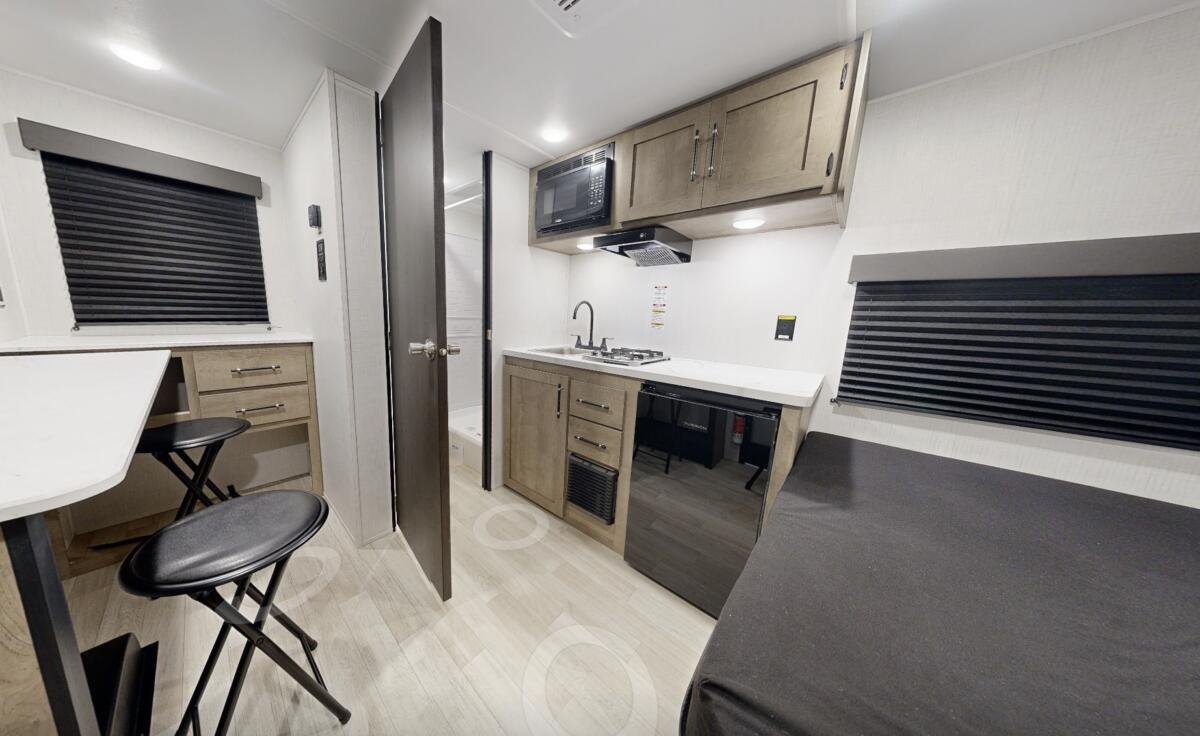
The layout is surprisingly open for the RV’s size. The galley and bar table are immediately accessible, and the full-size bed is located at the front. Natural light from the large, tinted windows keeps the compact space feeling less cramped than its footprint suggests.
Storage is modest, though accessible. The cubbies and overhead shelves could easily hold T-shirts and shorts, or a stash of food. The comfortable single or two-person living space extends into the outdoors, where the 8′ power awning provides shade for outdoor living.
Kitchen
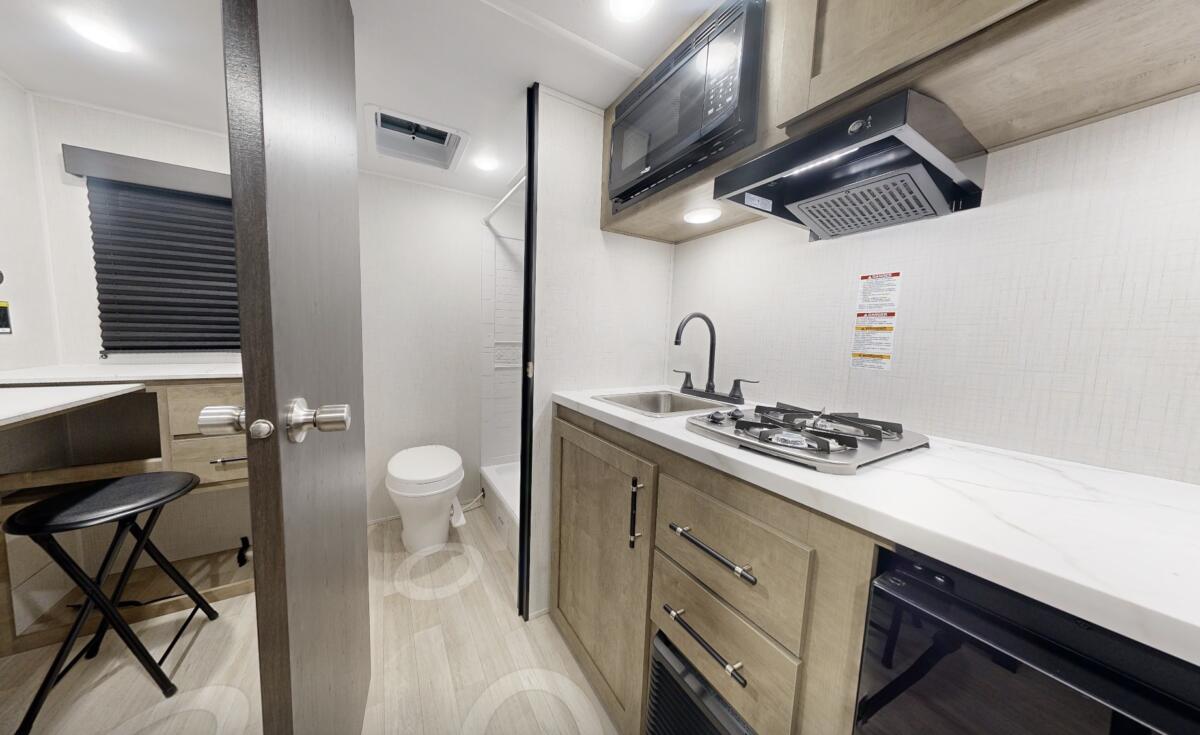
The 1200BT’s kitchen is tiny but usable. It includes a two-burner cooktop, a 0.9 cu. ft. microwave, and a 3.3 cu. ft. 12V refrigerator. The countertop can handle basic meal prep, though you may find it easier to prep outside. The Springdale Mini’s full-extension kitchen drawer glides enable convenient access to utensils and food, which is nice.
Living space
The Mini’s bar table includes two stools and doubles as the dining and lounging area. While quite small, I think the space offers enough room to eat and work without crowding. I wish this RV came with better seating. The stools would not be comfortable for long, because they lack a backrest. Instead, padded chairs would be much better, in my opinion.
As mentioned before, the large exterior awning effectively extends the living space outdoors on good-weather days. I really appreciate that!
Bathroom
This model includes a private bathroom with a shower and commode—something you don’t often see in a sub-16-foot trailer. Access to the toilet is adequate, but a shower skylight would be a definite necessity for comfort. It would also add much-needed natural light to this small area.
The 42K BTU tankless water heater and a 20K BTU furnace mean showering and staying warm are managed better than you might expect in a budget-friendly trailer.
Bedroom
The full-size bed up front has an overhead shelf and nearby outlets/USB for convenience. Storage under-bed or in small closets varies by unit. Big and tall campers will find the layout snug, as it requires one person to crawl over the other to exit the bed—not my favorite.
Overall take
The 2026 Keystone Springdale Mini 1200BT does exactly what it sets out to do: gives two people a lightweight, towable, and affordable travel trailer with a private bathroom and basic living comforts.
I think this could be a good option as a weekend getaway trailer for a couple who values ease of towing, low cost, and a small, efficient footprint.
See a video walkthrough here. [The image below at the beginning of Keystone’s Springdale 1200BT video does not look like that model. However, the walkthrough is of the 1200BT.]
America’s Original RV Newsletter. Since 2001 Issue 1252 Please note: At RVtravel.com we do not hound you to buy trip planning apps, expensive instructional courses, “insider” reports or videos. Some of our hard-working editors work full-time. Advertising pays many of our bills but, thankfully, some readers understand that’s not enough to keep us going, so they donate to help. We would appreciate your support.
Today’s thought
“There really is a kind of insane beauty around us all the time. It’s just a question of learning to slow down, take a deep breath and meet the moment.” —Graham Nash
Need an excuse to celebrate? Today is National Kansas Day!
On this day in history: 1919 – The American Legion is founded.
RVtravel.com publisher named “Original RV Influencer” by popular podcast
Although our founder and publisher Chuck Woodbury doesn’t like to admit it, the title of “First RV Influencer” may well be accurate. In this podcast directly below from Mike and Jennifer Wendland of RV Lifestyle, Chuck discusses his 50 years as an RVer, most of it as a roving reporter discovering and writing about the people and places of rural and small-town America.
RVers say these are the two biggest factors when choosing a campsite
When you pull into a campground, you want that site to feel right. Maybe it’s the view of a lake through the trees, a quiet corner away from the crowd, or simply a spot that doesn’t require stacking a mountain of leveling blocks. Yep… last week, we asked RVtravel.com readers: What are your top two main considerations when choosing a campsite? Is it privacy? Cost? Amenities? Scenery? Here’s the most important factor, according to nearly 1,500 of you.
Unwritten rules for RVers at truck stops
You might occasionally find yourself at a truck stop, whether it’s for fueling up or getting some rest. Truck stops can be super convenient, but it’s important to remember that these places are designed primarily for truckers who are on tight schedules and operating large rigs. By following a few unwritten rules of etiquette, you’ll ensure smooth stops for everyone—truckers and fellow RVers alike.
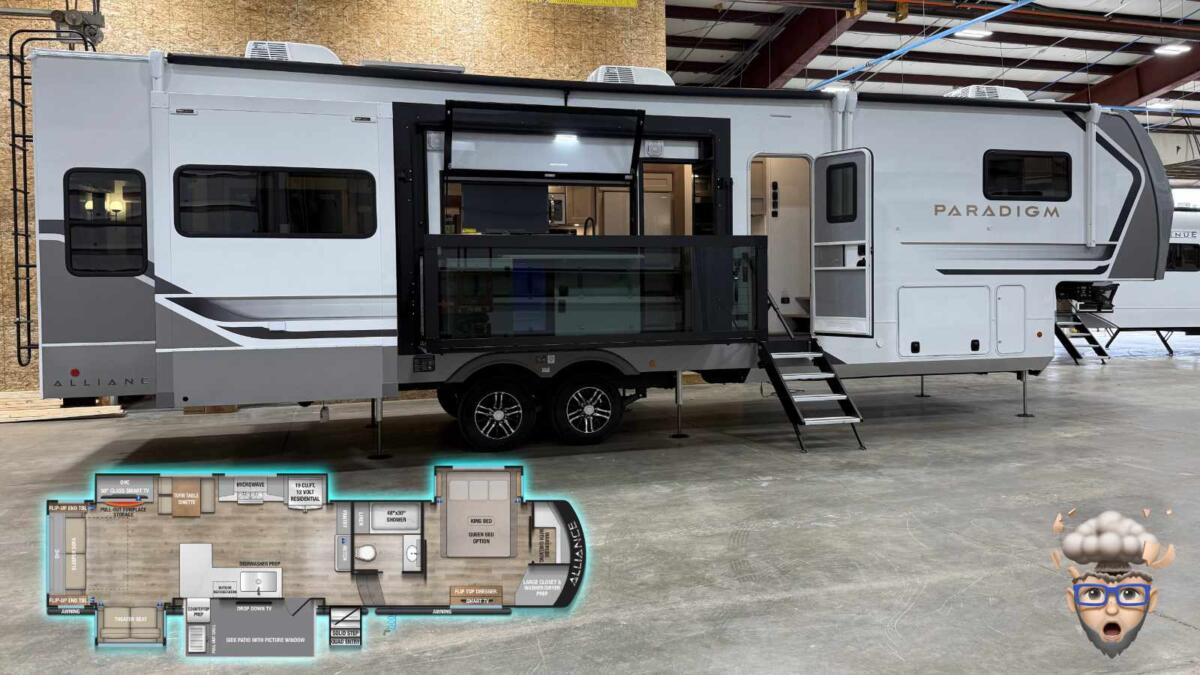
Today’s RV review… Alliance Paradigm 388SP—They did this one right
By Tony Barthel
Today’s RV review is of the 2026 Alliance Paradigm 388SP fifth wheel. This is a very large fifth wheel that I got to see a prototype of (now they’re in regular production) that is very polarizing—you’re either going to like it or not. But so many of the core structural and design features in this show what Alliance is up to, and I would suggest reading on, even if the floor plan doesn’t strike your fancy.
EVERYTHING IS ON SALE! Well, okay, not everything, but thousands and thousands of items for RVers like you! Check out everything on sale before it goes back up in price.
Tony’s tips Why it’s important that you take photos of your RV’s serial number stickers
I used to work at a small, locally-owned RV dealership where I was able to do both sales and oversee some of the warranty claims. Something I learned early on is that the stickers with serial numbers on many RV components tend to fade and wear out quickly—sometimes even before the warranty expires. While you may know about the general warranty on your RV, did you know there may be many warranties that cover components in your RV? Continue reading.
Tanner Toons with Tanner Woods
You may share this Tanner Toon, unaltered, on your website, blog or social media with our compliments. The musings from Tanner Woods’ creative mind appear in this newsletter every Saturday and Sunday and in many RV Daily Tips newsletters through the week.
TAKE A GUESS: Which U.S. national park campground sits at the highest elevation?
A) North Rim Campground, Grand Canyon; B) Tuolumne Meadows, Yosemite; C) Moraine Park, Rocky Mountain, D) Sunset Campground, Bryce Canyon. (Answer below)
RV humor: 9 signs you are in a bad RV park
There’s a moment at every campground when the weekend’s mood shows up early. The rig hasn’t even parked, and nobody’s checked in, but the brain starts doing math. While rolling past the entrance at about 5 mph, little details start to clash with those sunny online photos. At that point, turning around would mean admitting the booking was judged wrong, so most people keep going and learn the truth in real time. Continue reading.
How far do you travel in a day? One RVer’s perspective
By Gary Jefferson
I have three modes when it comes to traveling in our Sprinter. When we traveled in our SUV, I didn’t do it like I do today in the van. In our SUV, the location of a good motel usually determined how far we were going that day. In the Sprinter, we don’t think about motels anymore. We already have one with us. So, when we are in travel mode, I’m moseying down the highway… Continue reading.
Are ye ol’ eyes giving you problems? Is the small type getting too small to read? (It happens to the best of us.) This will save your day.
How to turn on emergency response settings on your cell phone
By Gail Marsh
When you RV, learning tips that actually work can mean the difference between a smooth excursion and a devastating experience. Read on to discover the advice one RVer recently shared with me. He and his wife were involved in an accident while RVing. Learn how one simple tip, put into practice, made all the difference.
🔧 Dave Solberg’s toolbox pick The one tool every RVer should carry for troubleshooting
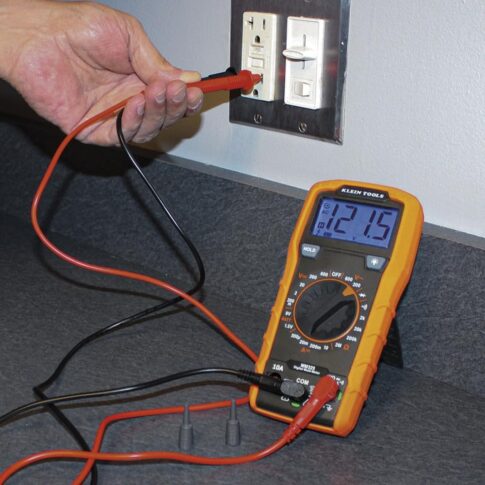
When something in your RV stops working, guessing won’t fix it—you need real numbers. A good multimeter lets you quickly check campground power, test batteries, confirm 12-volt and 120-volt voltage, and diagnose wiring or fuse issues. Accurate and easy to use, it’s one of those tools you may not use every day—but when you need it, you’ll be glad it’s in your toolbox. Learn more about it in Dave’s article here.
Reader poll Has a sewer valve or hose ever broken or malfunctioned while you were dumping?
TAKE A GUESS: What would RVtravel.com readers fear stumbling upon most in the wild—a bear, rattlesnake, or alligator? Take a guess and see if you’re right.
RVtravel.com readers reveal the special times in their lives
By Chuck Woodbury Recently I asked you to write to me about special life moments or accomplishments of your lives which few if anyone else were aware. Here are some of many responses from our readers plus those from last week. Their accomplishments may not be the fodder of headlines, but they are special to those persons who lived them. And we are happy to share their stories with you.
Travel destinations
Small towns go big for St. Patrick’s Day celebrations
If you love a lively St. Patrick’s Day but don’t want the chaos of a huge city, the U.S. has several smaller places that pack big personality into one day or weekend event. Here are just a few small places throughout the U.S. that go big on St. Patrick’s Day. Why not break out your RV for a wee bit o’ Irish celebration?
Planning a Pacific Coast RV trip? These beach campgrounds belong on the list
Dreaming about camping where you can hear the surf from your RV? A recent article from the travel site Islands rounded up several West Coast beach camping spots. Nice list—but a few places RVers swear by didn’t make the cut. See if your favorite places did, and if so, start planning before they fill up!
? MYSTERY PRODUCT OF THE DAY ? This has us cracking up. Even if you’re not into the subject of this, you’ll still laugh. Oh, brother…
Highlights from this week’s RV Daily Tips Newsletter
NOT SIGNED UP FOR OUR RV DAILY TIPS NEWSLETTER?
It’s our readers’ favorite newsletter for a reason! You’ll learn so much every day, and we try to entertain you along the way, too. Sign up here.
In the RV shop with Dustin Your RV warranty is about to run out: What to do next?
If your RV is experiencing issues and your warranty is about to expire, it’s crucial to act quickly to ensure your RV is covered for any necessary repairs. Here’s a guide to help you navigate this critical period and take advantage of any remaining warranty coverage.
RV tire safety The DOT requires info be posted on your RV. Do you know what it says?
By Roger Marble It is a FACT that, by federal law, all new RVs sold must have a “Certification Label”. The law specifies the information that must be on the label. … Another fact is that almost every week, I read a post or receive a question asking whether a certain size, type, or load range tire can be used on a specific RV. The above suggests that RV owners were never told about the important SAFETY information on the Certificate, or that they chose to ignore this information. Here is a poll to see how many readers of RVtravel.com know or have ever even read this safety information.
THE MORE YOU KNOW… Which contains more Vitamin C: orange juice or a fresh orange? Yep, a fresh orange. A whole naval orange contains about 82.7 milligrams of Vitamin C, while a glass of OJ contains about 71.2 milligrams. This is because of the way the OJ is processed, pasteurized, and stored.
RV gadgets and gizmos These collapsible water bottles are an awesome camping accessory
By Cheri Sicard
I was recently gifted a set of these collapsible water bottles, and after using them for the last month, I am sorry I had not discovered them sooner. Water bottles can take up a lot of prime real estate in small RV or camper cabinets (or small homes, for that matter). Yet if you do any kind of hiking or even sightseeing away from your RV, you need them.
LIKE GADGETS? Want to learn about more gadgets for RVers? Great! Click here.
Live cam
Las Vegas Harry Reid International Airport
ANSWER: Tuolumne Meadows Campground, Yosemite National Park, about 8,600 feet.
Readers’ pet of the day
“We brought our boy, Colt (Miniature Golden Doodle), home at 8 weeks and had him on the road two weeks later. He is a great traveler and adapted to our RV quickly. He’s a fun travel companion!” —Jim & Bonnie Northrup
Want to see your pet in this newsletter?Please send us a photo with a short description. No blurry photos and please only submit your photo once.
What animal has the best sense of taste? Is it a dog, human or maybe a cat? Well, if you guessed cat you’d be half correct. Surprisingly, the animal with the best sense of taste is a catfish. Not only do catfish have taste receptors in their mouth, but their entire body is covered in them. A typical catfish has upwards of 100,000 taste receptors on its body. For reference, we humans only have about 9,000. Maybe this is why catfish taste so good… mmmmm…
Sunday funny
Mildred, a full-time RVer, was lonely after losing her husband a couple of years and many miles ago, so she posted an ad on a popular website. The ad said: “Husband wanted.” She was surprised the next morning to find she had more than a hundred replies in her inbox. Unfortunately, they all said the same thing: “You can have mine.”
By Gail Marsh
If you’re an RVer, you might occasionally find yourself at a truck stop, whether it’s for fueling up or getting some rest. Truck stops can be super convenient, but it’s important to remember that these places are designed primarily for truckers who are on tight schedules and operating large rigs. By following a few unwritten rules of etiquette, you’ll ensure smooth stops for everyone—truckers and fellow RVers alike.
Wait your turn at the fuel pumps
If you’re using the truckers’ fuel pumps, patience is key. Do not attempt to maneuver your RV in front of a professional trucker or jump ahead in line. These drivers are often on strict schedules and rely on quick fueling stops. Be courteous, wait your turn, and give the truckers the space they need to operate their larger rigs.
Know your fuel card or discount ahead of time
If you’re planning to use a fuel card or discount code, have that information ready before you start fueling. You don’t want to be fumbling with apps or trying to remember which discount to use while occupying a lane. This keeps the line moving and helps everyone get back on the road faster.
Check your lane number
When you’re ready to pay, take note of the lane number where your RV is parked. This ensures that you can quickly and efficiently handle your payment inside without confusion, which helps avoid holding up the line.
Pull forward before heading inside
Once you’ve finished fueling, don’t leave your RV at the pump while you go inside to pay. Always pull forward to the designated line, allowing the next vehicle to start fueling. This is one of the biggest courtesies you can extend to truckers who are often under pressure to meet deadlines.
Be visible
When walking around truck stops, especially near fueling lanes, always walk in front of other trucks. Truckers may have blind spots or limited visibility in their rigs, so walking in front ensures they see you and helps prevent any accidents or misunderstandings.
Move it
If you plan to do more than just fuel up—like grab a bite to eat—make sure to move your RV well away from the fueling lanes. Truckers need those lanes clear, and leaving your rig at the pump for extended periods can create bottlenecks.
Don’t sit on the scales
If you’re weighing your rig, don’t stay parked on the scales longer than necessary. Weigh your RV, then pull off and park in a safe spot before heading inside to get your paperwork. This allows other drivers to use the scales without delay.
Truckers are on a clock
Trucker vehicles are tracked for how long they’ve been driving and when they need to stop for mandated breaks. If you see a trucker parked at a rest area, or in a parking area of the truck stop, they may be required to remain there for a specific amount of time to comply with regulations. Be patient and understand their situation.
Parking overnight at truck stops
Truck stops can be a convenient spot to rest overnight in your RV, but keep a few considerations in mind, especially since truck parking is in such high demand:
Park on the car side when possible. If you’re stopping at a rest area for the night, try to park on the car side of the lot. Even if this means taking up multiple spaces, it’s better than occupying a spot meant for a trucker who may have no other options.
Avoid truck spots east of the Mississippi. In areas where truck parking is limited, especially east of the Mississippi River, try to leave truck spots open for truckers who need them. If the truck side of the stop is filling up, consider moving to another location or parking elsewhere.
Be respectful of space. When parking overnight, avoid extending your slides—unless you are staying at the truck stop’s overnight RV site. In that case, know the rules for overnight parking. If you don’t know the rules, ask! Blocking lanes or taking up more room than you need can cause frustration for both truckers and other RVers.
By following these unwritten rules, you’ll help maintain a smooth flow at truck stops and rest areas, ensuring everyone gets the break they need. Whether you’re stopping for a quick refuel or staying overnight, a little courtesy goes a long way in making life on the road easier for everyone. Safe travels!
We use cookies to ensure that we give you the best experience on our website. By continuing to use our site, you consent to accepting cookies. We NEVER have or will sell reader's data. For more info, please see our privacy policy page.