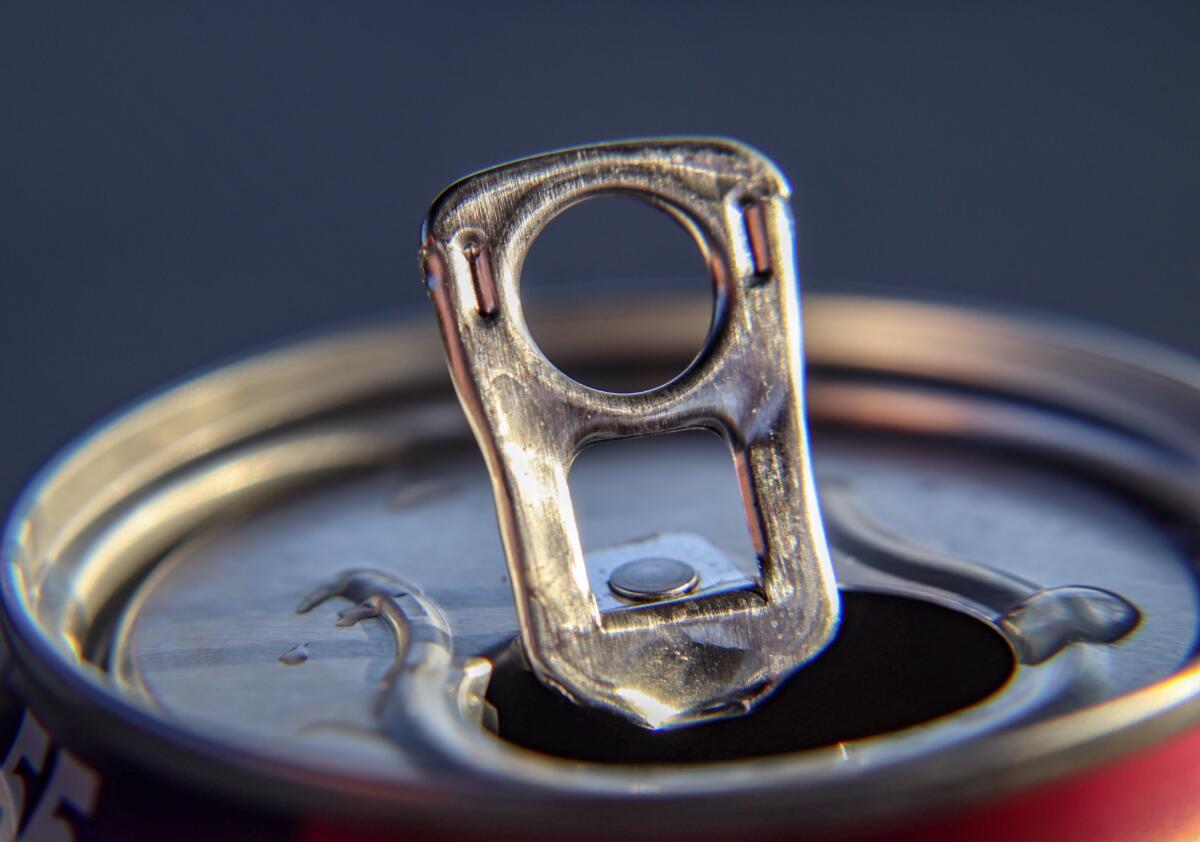
Think about the last time you cracked open a cold soda—an actual soda, we’re not asking about things like sparkling water or seltzer. Was it today? Yesterday? Or has it been a while? For today’s poll, we want to know how often you drink soda (or “pop”).
For some of you, it’s a regular treat. Maybe it’s part of lunch, something you enjoy on the road, or a simple pleasure after a long day. There’s something nostalgic about it, too—road trips, gas station stops, ice clinking in a cup holder. Ah…
Others have cut back or quit altogether. Over the years, many people have become more mindful about sugar, caffeine, and overall health. Soda might now be an occasional indulgence rather than a daily habit or something you’ve replaced entirely with water, coffee, or iced tea.
Soda is still incredibly popular in the U.S., though. Regular Coca-Cola remains the top-selling soft drink, followed by Diet Coke and Pepsi. Americans drink an average of around 38–40 gallons of soda per person each year, though that number has slowly declined from its peak in the early 2000s. Even so, that’s still a lot of cans and bottles being opened every day!
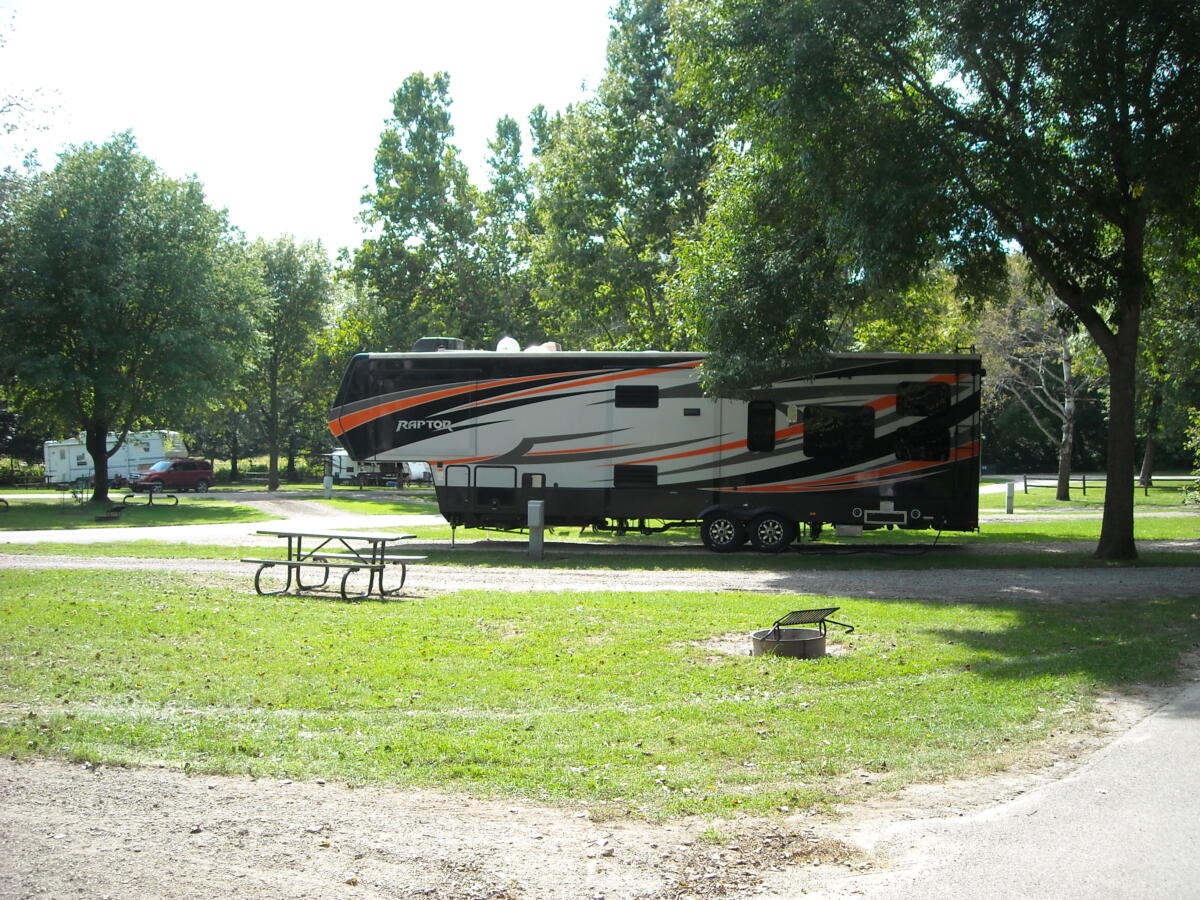
And while preferences vary, soda has long been tied to travel—especially road trips. For many RVers, a cold drink from the fridge or a quick stop for a fountain soda is part of the experience, whether it’s a daily habit or an occasional treat.
So what about you? How often do you drink soda? Go ahead and vote in today’s poll and if you have a favorite (or one you’ve sworn off), feel free to share in the comments below. Thanks!
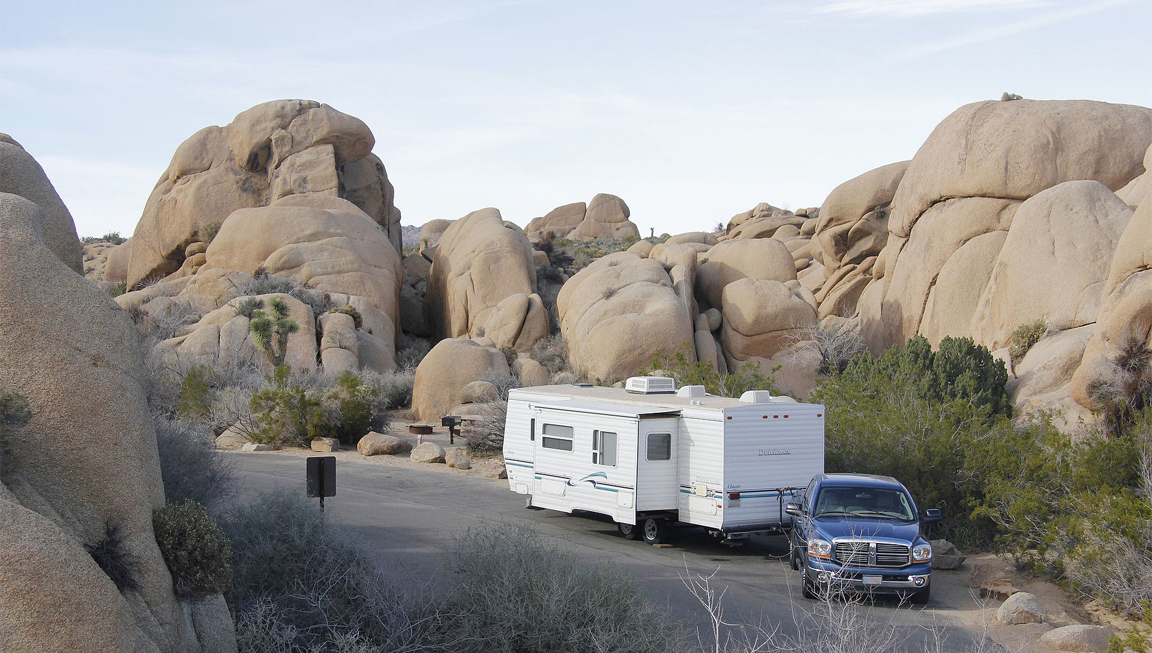
The headlines are hard to ignore, especially as national park safety concerns start creeping into the conversation. Last week, one ran this way: “National Park Service Job Cuts Blamed For Murders Around Utah National Park: ‘Should’ve Been A Safe Place’”.
A violent crime tied—at least loosely—to national parks. Warnings about staffing cuts. Suggestions that national park safety concerns may be growing.
It’s enough to make any RVer pause. But step back for a moment, and a different picture comes into focus. The real concern isn’t what those headlines suggest.
Violent crime in parks is still rare
Let’s start with what matters most.
National parks are not becoming hotbeds of violent crime. They see hundreds of millions of visits each year, and the overwhelming majority pass without incident. When trouble does happen, it’s far more likely to involve a fall, a medical emergency, bad weather, or a vehicle accident than anything criminal.
A high-profile case grabs attention. That’s human nature. But it doesn’t signal a trend—and it shouldn’t reshape how we think about park safety.
Here’s what the numbers actually show:
By the numbers: National park safety in context
300+ million visits a year
National parks consistently draw well over 300 million recreational visits annually.
Homicide risk is extraordinarily low
Over a multi-year period, national parks averaged fewer than 1 homicide per 10 million visits—a rate far below that of the U.S. overall.
Most incidents aren’t crimes at all
The most common problems in parks involve:
Medical emergencies
Falls and injuries
Vehicle crashes
Environmental exposure (heat, cold, dehydration)
Search and rescue far outweighs crime response
Rangers respond far more often to lost hikers, stranded motorists, and medical calls than to violent crime.
Staffing cuts: about 1,000 National Park Service positions affected (2025)
Reductions have raised concerns about maintenance, access, and response capability, not a documented surge in violent crime.
So what’s really changing?
The concern about staffing cuts is real. Fewer workers can mean fewer rangers on patrol, shorter visitor center hours, and reduced maintenance across campgrounds and facilities. In some cases, it may also mean fewer people available when something goes wrong.
That’s where the real shift is happening.
The real risk: slower help when you need it
If there’s a safety angle here, this is it.
Not a surge in crime, but a thinner safety net.
With fewer boots on the ground, response times can stretch. Patrols may be less frequent, especially in remote areas. Hazards on roads or trails may take longer to get cleared. And when something does go wrong, there may simply be fewer people available to respond quickly.
For RVers—especially those who prefer quieter, less-developed areas—that’s worth factoring in.
What RVers should do differently
There’s no reason to cancel a trip. But this is a good time to lean a little more into self-reliance.
Plan ahead and don’t assume every service will be open or staffed. Carry extra water, food, medications, and basic repair gear. Know your route, and be realistic about your limits, especially on remote roads.
And if you’re heading into areas with spotty coverage, consider a satellite communicator. When help may take longer, having a way to reach it matters.
Keep the headlines in perspective
It’s easy to connect two alarming ideas—violent crime and fewer park staff—and assume the worst.
But that leap doesn’t really hold up.
The real story is quieter and more useful. National parks remain among the safest places you can travel. What’s changing is how much support you can expect once you’re there.
For RVers, that’s the detail worth paying attention to.
Camping World lawsuit headlines are suddenly everywhere. If you’ve seen them, you might be wondering what just broke and whether it affects RV buyers.
Short answer: Nothing suddenly “broke.” But something has been shifting.
Why these headlines suddenly appeared
After Camping World’s stock took a couple of sharp hits following recent earnings reports, a familiar chain reaction kicked in. Investors who lost money began filing claims, and law firms quickly followed.
Now multiple firms are issuing near-identical announcements, each urging investors to join a class action lawsuit or step forward as a “lead plaintiff.” That’s why the headlines feel like they’re everywhere all at once: They are, but they’re mostly the same story repeated.
What the lawsuit actually claims
At its core, the case argues that Camping World painted too optimistic a picture of its business. Investors say the company suggested it could better control inventory, manage pricing pressure, and navigate shifting demand.
Then came the reality check: Demand cooled, inventory built up, margins tightened, and the stock price dropped. Investors claim they paid inflated prices based on those expectations—and took losses when conditions changed.
Why so many law firms are involved
There isn’t just one lawsuit; there are multiple filings that will likely be combined into a single case.
Law firms compete to control that case. They recruit investors, try to become lead counsel, and aim to represent the shareholder with the largest losses. That competition is what’s driving the flood of press releases dressed up as news.
What this means for RVers
For most readers, the practical question is: Does this affect me if I’m buying, selling, or servicing an RV?
Not directly. This is about investors and stock prices, not customer transactions.
But there is a bigger takeaway. The lawsuit is rooted in something RVers have already been seeing—softer demand than the boom years, dealers carrying more inventory, and pricing pressure in parts of the market. In other words, the legal action is trailing the real story, not leading it.
The real story behind the lawsuit
Strip away the legal noise, and this comes down to a “post-boom adjustment.”
During the pandemic, RV sales surged, inventory moved quickly, and prices climbed. Now the market is normalizing, and that shift can be messy—for dealers, manufacturers, and investors alike. Camping World just happens to be one of the most visible companies feeling that transition.
What happens next
Cases like this tend to follow a predictable path. A deadline is set for investors to join, a lead plaintiff is chosen, the lawsuits are combined, and the company moves to dismiss the case.
From there, it can take years. Some cases are dismissed outright, while others settle without any admission of wrongdoing.
Bottom line
The headlines may look dramatic, but they’re less about a sudden crisis and more about the aftershocks of a changing RV market.
America’s Original RV Newsletter. Since 2001
Issue 2863 • New issue every weekday If you find this newsletter helpful, please considersupporting our staff’s work producing it 260 days of the year with a donation of your choice.
Remember: You don’t need to receive an email alert from us to read our newsletters. Just click any time of day directly to RVtravel.com. The latest issues will be right there for you.
Today’s thought
“A journey is a person in itself; no two are alike. And all plans, safeguards, policing, and coercion are fruitless. We find after years of struggle that we do not take a trip; a trip takes us”. —John Steinbeck, “Travels with Charley” (It’s one of our favorite books.)
Need an excuse to celebrate? Today is National Sloppy Joe Day!
On this day in history:1990 – In the largest art theft in U.S. history, 12 paintings, collectively worth around $500 million, are stolen from the Isabella Stewart Gardner Museum in Boston. (If you want to learn more about this, we recommend this book!)
Tip of the day How to fix stripped-out screw holes in your RV: 3 simple methods
By Cheri Sicard
It doesn’t matter whether you are a seasoned handyperson or just a beginner; this invaluable article and video will show you three practical methods for how to fix stripped-out screw holes in your RV when you DON’T have access to the back of the hole.
For beginners like me, these how-tos are beneficial because they give me the confidence to attempt simple repairs I previously had no idea how to do. Of course, the DIY methods for fixing stripped-out screws will also work in your sticks-and-bricks home. Click here to read and watch.
RV review
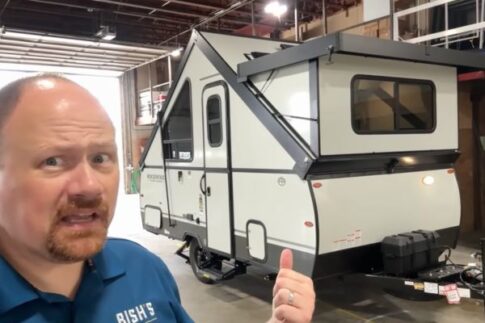
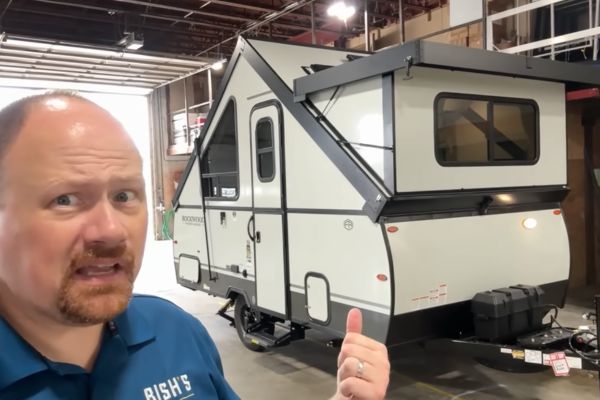
The versatile 2026 Rockwood A123RG A-frame pop-up—Nice!
A small camper usually means at least a few sacrifices. The 2026 Rockwood A123RG (also sold as Flagstaff, depending on the badge) tries a different approach: it packs in a bathroom, real kitchen functionality, and a rear space that can quickly change roles. Here, Josh the RV Nerd at Bish’s RV sums it up as a flex-function convertible camper that can feel like several layouts in one. Check it out.
YIKES: The average price of a gallon of diesel fuel yesterday afternoon in San Francisco was $6.913, less than a dime shy of $7 — about $1.70 more than a year ago. So reports AAA.
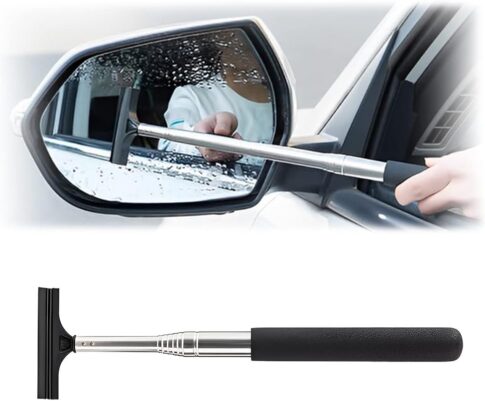
Clear your mirrors in seconds with this simple gadget
Keep your view clear, no matter what the road or weather. This retractable rearview mirror wiper wipes away rain, mud or road spray with a simple slide. Don’t wait for the mirror defrost to kick in—this is faster! Easy to use and built for travel. Check it out.
In the RV shop with Dustin Your RV takes on water damage through more than rain. Protect those sealants!
In this video, I walk you around several RVs currently parked on my RV repair lot. You’ll see just how much morning condensation drips off the RVs, even during moderate conditions. This video proves why keeping up on your RV roof and body sealants is so important—your RV is taking on water for potential damage even when it’s NOT raining!
Article and video How to stay safe while boondocking without firearms
A strange sound outside an RV at night can hit like a punch. When someone is off grid, alone, and out of cell range, fear gets louder fast, mostly because there’s no plan to lean on. In this video, John of Gone With Johnshares a simple three-layer RV security setup that stays legal across state lines and avoids firearms. It’s built to help RVers stop feeling like an easy target and start feeling steady.
Tanner Toons with Tanner Woods
You may share this Tanner Toon, unaltered, on your website, blog or social media with our compliments.
Featured article In defense of the good ol’ American V8 pickup. It’s still the best for RVing
By Tony Barthel
The best kind of vehicle for RVing is the simple American V8 pickup truck. Period. And I also realize those are fighting words with some people. Further, my defense is of the gasoline V8 pickup. Why do I feel this way? Find out here.
“OH, I REALLY BLEW IT!” That’s what you’ll say if you miss a super-great bargain today only on something you really want! CHECK HERE!
Ask Dave RVing with pets: 10 campground hazards to be aware of
The Surprising Origins of 15 Pasta Shapes
Now, this is fun! Have you ever wondered how your favorite pasta shapes came to be? This article tells all, and it’s fascinating!
? MYSTERY PRODUCT OF THE DAY ? Go ahead, put those magnifiers on—ready… aim… fire! Well, not really, but sort of! Let us know how this goes. We’re curious.
Trivia
Sherlock Holmes, the beloved character created by Sir Arthur Conan Doyle, never spoke the phrase, “Elementary, my dear Watson.” In the adventure “The Crooked Man,” the famous detective makes several deductions about his assistant Dr. Watson based on Watson’s appearance. Watson exclaims, “Excellent,” whereupon Holmes replies, “Elementary.”
Readers’ pets of the day
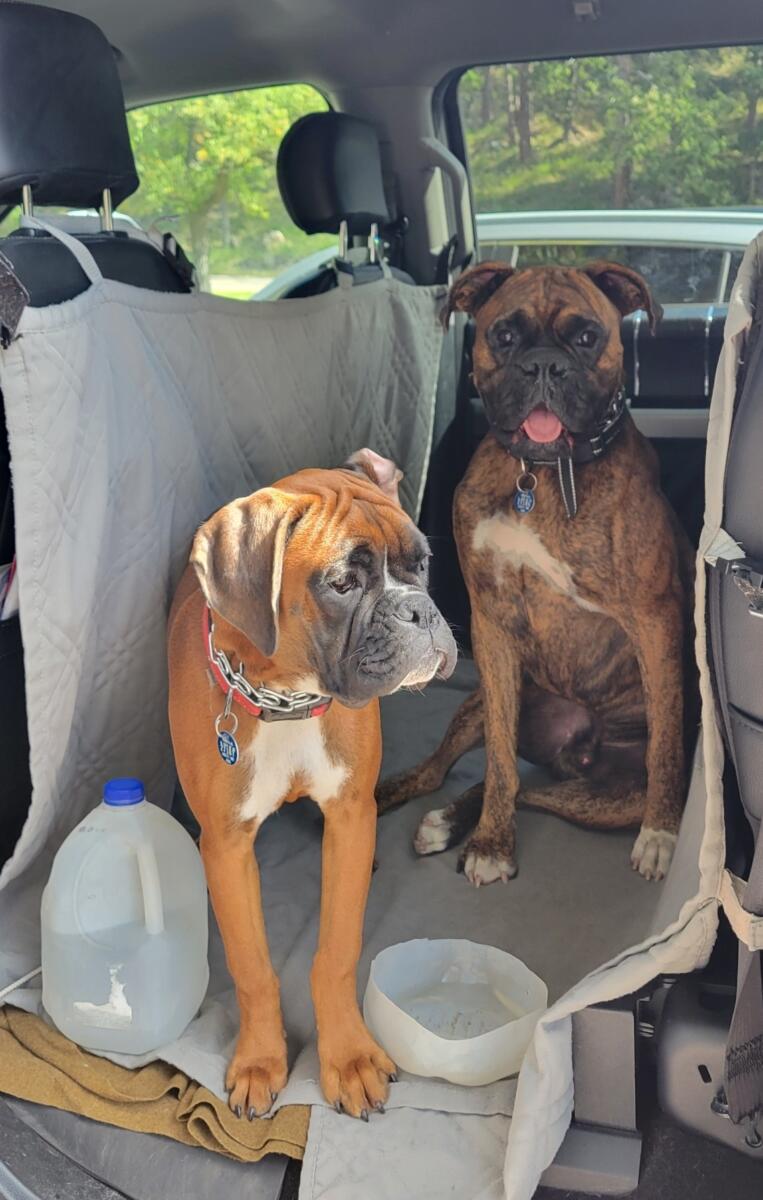
“Our Boxers, Brutus (2 years) and Kieva (1 year). This is how we travel with them in our F-350 when pulling the 5th wheel.” —Joseph Shryock
Send us a photo of your pet with a short description. No blurry photos and please do not submit your photo more than once. Thanks!
If you shop at Amazon.com we’d appreciate you using this link. We get an itty bitty commission if you buy something, but they add up and help us pay our bills (most importantly our hard-working writers!).
According to the latest RV Industry Association (RVIA) study, more than 50% of RVers travel with pets. After conducting RVing with Pets seminars at RV shows across the country, I suspect the number may actually be even higher.
In many cases, pets are the very reason some people purchase an RV in the first place. Traveling by RV eliminates airline restrictions, hotel limitations, and the worry of leaving pets behind at home.
However, there is one thing many RVers overlook when they bring their pets along on the road.
At home, we spend years establishing routines for our pets—when and where they eat, when they go outside for potty breaks, and when they get their daily exercise. We also spend considerable time making our homes pet-friendly, both indoors and outdoors.
Then we suddenly place our pets in an RV, move them to unfamiliar campgrounds, and expect them to adjust quickly to a new environment, new surroundings, and a completely different routine.
Campgrounds can present hazards that many pet owners might not immediately recognize. Taking a few minutes to inspect your campsite when you arrive can prevent potential problems. Here are ten things every RVer traveling with pets should watch for.
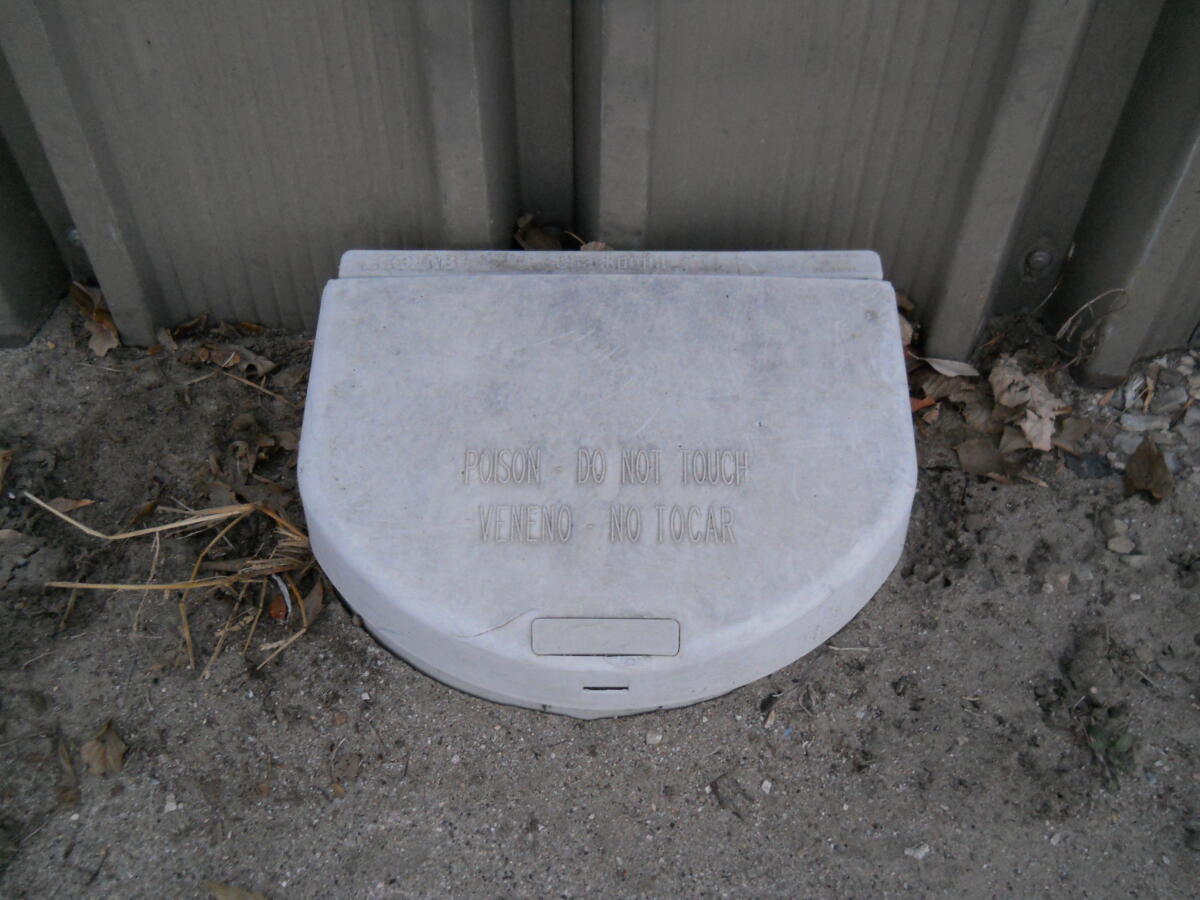
Rodent bait, poison, or traps
Many campgrounds contract pest-control companies to manage rodent populations. These companies often place traps around buildings such as offices, shower houses, and storage facilities. However, open bait blocks or poison may also be placed near dumpsters, dump stations, or maintenance areas.
Ask campground staff where pest-control products are located and keep your pets away from these areas.
Rodent trap
Wildlife threats
Most campers think about large predators like bears or mountain lions, but smaller wildlife can also pose risks, particularly in areas where rabies has been reported. In addition, birds of prey such as eagles or large hawks may attempt to grab very small pets if they are left unattended.
Keeping pets supervised and on a leash can help prevent unexpected encounters.
Noisy or disruptive campsites
When checking in, I often ask the campground office or host if there are any particularly noisy areas or “party sites” in the campground. While you may not always have a choice, finding a quieter location can make a big difference.
Excessive noise, unfamiliar pets, and constant activity can increase anxiety for animals that are already adjusting to a new environment.
Poisonous or irritating plants
Plants such as poison ivy, poison oak, and poison sumac grow in many regions of the country. It’s a good idea to take a walk around your campsite and look for plants that could be irritating or harmful to pets.
Also watch for thistles, milkweed, cockleburs, and other plants that pets should avoid.
Engine fluids on the campsite pad
Campsite pads sometimes contain residue from previous RVs. Antifreeze, transmission fluid, brake fluid, or other automotive fluids can be extremely dangerous if ingested by pets.
A quick visual inspection of the campsite pad and surrounding area can help you spot any suspicious stains or puddles.
Check water quality and sanitize the water supply and dump station area
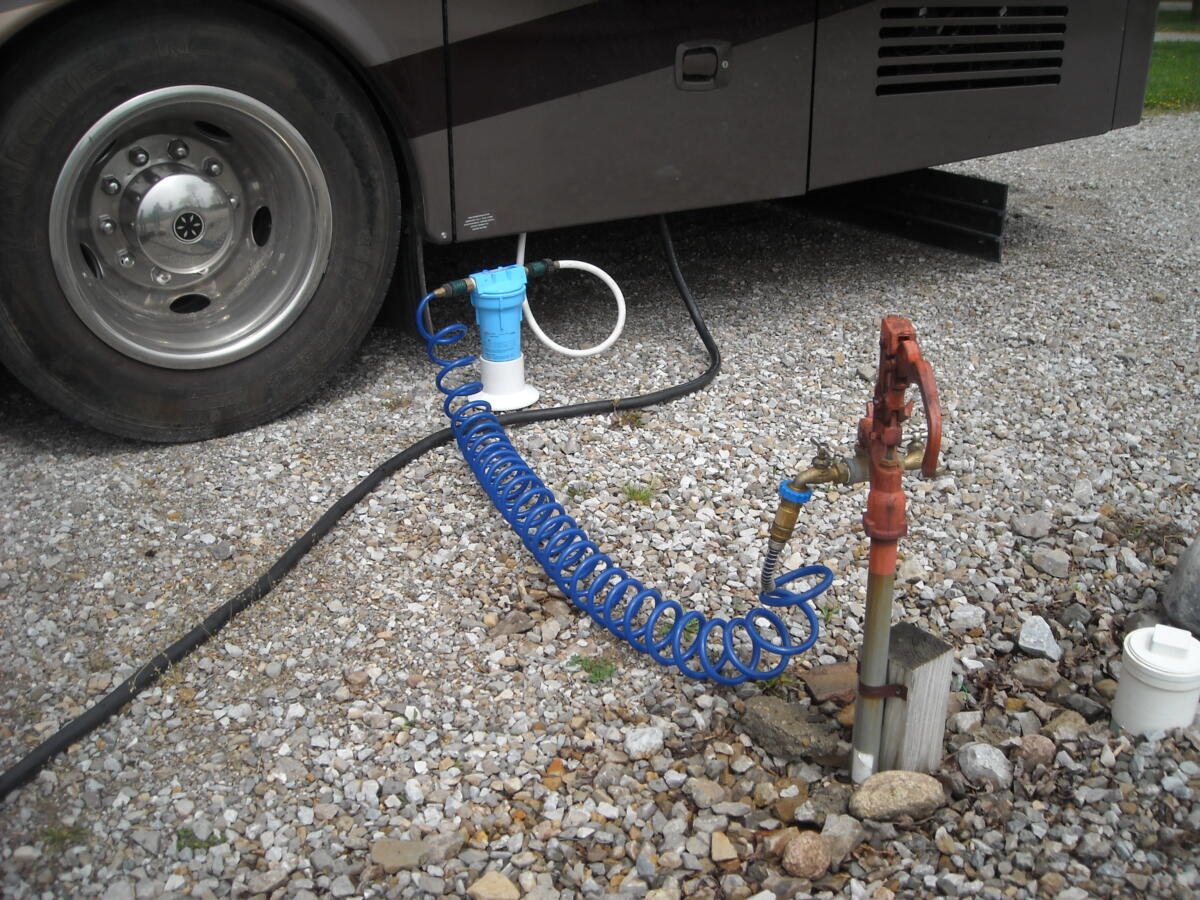
The water supplied by the campground source typically is untreated well water. This can contain calcium, lime, rust, and other minerals. It is a good idea to use a quality filter or bring enough bottled drinking water for you and your pets.
Campground water
Campground water faucets are used frequently and rarely sanitized. Bacteria such as E. coli and other pathogens can accumulate on the faucet handle or hose connection.
Some campgrounds also have individual dump stations at each site that may not be regularly cleaned.
A simple solution is to mix 1/4 cup of bleach with one gallon of water and use a spray bottle to sanitize the faucet and surrounding area. As an added bonus, most pets dislike the smell of bleach, which discourages them from getting too close.
Ant hills and ground insects
Depending on the region, campgrounds may have red ant hills, scorpions, or other ground-dwelling insects that can harm pets.
Taking a few minutes to walk around your campsite allows you to identify these hazards before your pet finds them.
Snakes
In the upper Midwest, snakes are usually limited to garter snakes, which are more of a nuisance than a serious threat. However, other parts of the country may have venomous species.
Before traveling, consult your veterinarian about the areas you plan to visit and ask about potential snake risks and treatment options. Campground hosts can also provide helpful local information.
Campground
Lawn treatments
Many homeowners treat their lawns with fertilization and weed-control programs and place warning flags advising pet owners to stay off the grass temporarily.
Campgrounds sometimes apply similar treatments but may not post warning signs. Even products labeled as non-toxic can irritate a pet’s paws or skin, so it’s worth asking campground staff if the grass has been treated recently.
Generators and exhaust
If the RV parked next to you has an onboard generator, pay attention to where the exhaust exits. It may not face their patio—it could be directed toward yours.
If the generator runs for extended periods during hot weather to power air conditioners, exhaust fumes and carbon monoxide could drift toward your outdoor sitting area or a pet enclosure.
Fire pits
Campground fire pits often collect debris left by previous campers. I’ve personally found broken glass, spoiled food, and even batteries thrown into fire pits.
Campsites are not always thoroughly inspected between guests, so take a moment to check the fire pit and surrounding area before allowing pets near it.
Final thoughts
One of the greatest advantages of RV travel is the ability to bring our pets along for the adventure. They become part of the journey rather than something we leave behind.
However, pets rely on us to recognize dangers they may not understand. A quick walk around your campsite when you arrive—looking for potential hazards before your pet explores—can make all the difference.
A few minutes of awareness can prevent injuries, illness, or worse, ensuring that both you and your traveling companions enjoy a safe and relaxing stay at the campground.
By Cheri Sicard
It doesn’t matter whether you are a seasoned handyperson or just a beginner; this invaluable video will show you three practical methods for how to fix stripped-out screw holes in your RV when you DON’T have access to the back of the hole.
For beginners like me, these videos are beneficial because they give me the confidence to attempt simple repairs I previously had no idea how to do. Of course, the DIY methods for fixing stripped-out screws will also work in your sticks-and-bricks home.
Three methods to fix stripped-out screw holes in your RV
One of these three methods should get the job done, depending on what you’re fixing. Ross, from RV Tips & Travels, discusses the pros and cons of each method so you can choose which will work best for you and the stripped-out screw holes you are trying to repair.
Toothpick method
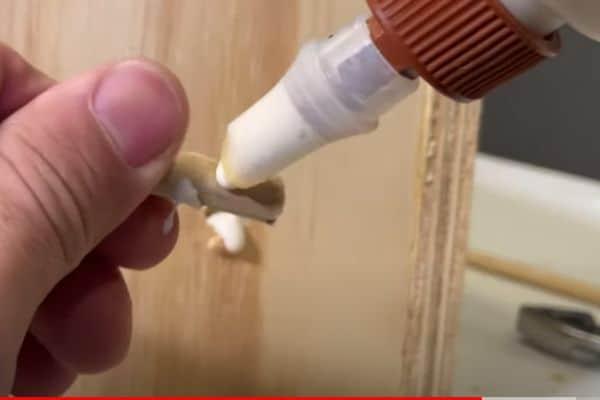
This simple method allows you to use a wooden toothpick or matchstick to fill part of the hole, thereby giving the screws something to hang onto. This is a quick and easy fix, especially when you are on the road without many other tools. This method works well as long as the screws have something to press against, but won’t work well against thin surfaces like sheet metal.
Expanding anchor method
Expanding anchors come in many different sizes and can be made of metal or plastic. This is a quick, strong, and permanent solution. These will work on thinner surfaces and do not require surface pressure. You will need an open area on the back of the surface for the anchor to sit.
Wooden dowel method
This method takes more work but is the strongest and most permanent solution as it fixes the hole. You will need a wooden dowel and drill bit of the same size, some wood glue, and about 24 hours for the wood glue to properly dry. This method works best on surfaces with a little bit of depth.
None of these methods, even the allegedly most difficult one, are all that difficult. They should have you covered, no matter which screws in your RV are coming loose (unless, of course, they are of the human variety). So give the video a watch and start reinforcing those RV stripped-out screw holes.
By Cheri Sicard
A strange sound outside an RV at night can hit like a punch. When someone is off grid, alone, and out of cell range, fear gets louder fast, mostly because there’s no plan to lean on.
In the video at the end of this post, John of Gone With John shares a simple three-layer RV security setup that stays legal across state lines and avoids firearms. It’s built to help RVers stop feeling like an easy target and start feeling steady.
The moment that changed everything
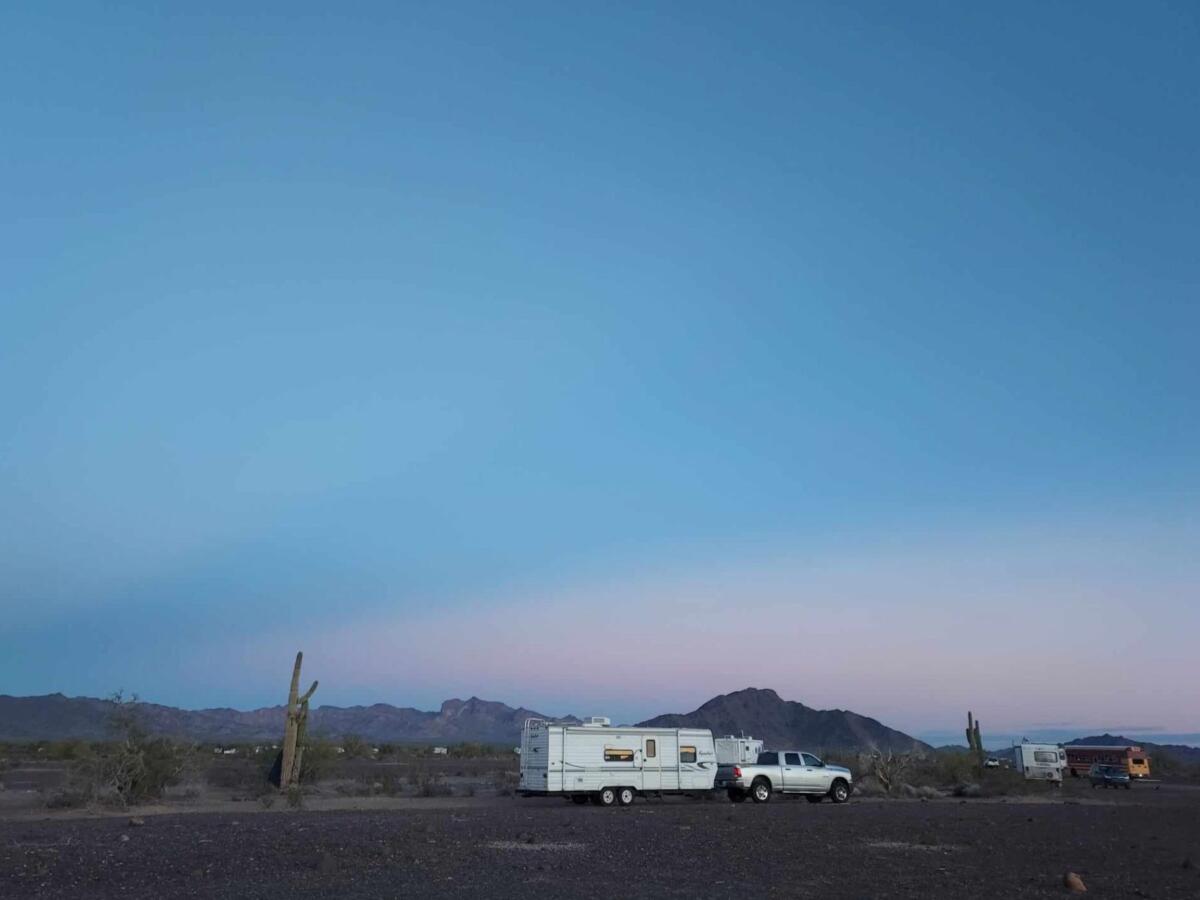
In 2021, during COVID, John was camping solo in the California desert when a vehicle pulled right up next to the rig at 2 a.m. No headlights came on. The engine just idled. With no cell service, the only barrier was a basic door lock and hope.
Nothing happened, and the vehicle eventually drove off. Still, it exposed a big problem. If something had gone wrong, the choices felt like doing nothing or jumping to lethal force, and neither option felt right to John.
That night made one question unavoidable: If a vehicle pulls up next to the rig, are the next steps already decided, or would they be made up in real time?
Why John skips firearms for RV safety
John sees a gun in an RV as a liability. Laws change when crossing state lines, some campgrounds don’t allow them, and Mexico travel can become a mess. On top of that, safe storage inside a small rolling space adds risk.
Instead of one extreme option, John wanted a toolkit that felt like control without legal headaches or moral weight.
John’s three-layer approach: deterrence, alerts, then response
• Layer 1: Deterrence (make the RV a pain to mess with): Deterrence starts by taking away darkness. John uses magnetic RV solar motion lights for exterior lighting so the area lights up when something moves nearby. The goal is simple: Make the RV look like too much trouble.
• Layer 2: Alerting (know what’s outside before opening anything): Next comes early warning. With a WYZE Cam v4 indoor/outdoor security camera, a noise doesn’t have to turn into guesswork. He checks the phone, gets eyes on the situation, then decides what to do.
• Layer 3: Response tools (ready if the first two layers fail): John’s primary tool is the Byrna SD kinetic launcher Ultimate Bundle, a CO2-powered, less-lethal launcher that fires pepper spray and tear gas rounds and can stop a threat from about 60 feet. He likes that it has no recoil and no deafening bang.
He also keeps bear spray as a backup (he notes it can’t fly). For truly remote areas, his lifeline is the Garmin inReach Mini 2 satellite communicator, so an SOS message can still go out without cell service.
More boondocking safety tips
• Safety habits that start before bedtime: When John arrives at a boondocking campsite, he doesn’t instantly commit. He stops short and stays mobile. If towing, he keeps the wheels straight and stays hitched. Before settling in, he checks an exit path for low branches, tight poles, soft shoulders, dips, and blind turns. Cell signal matters too. He looks for at least two bars for voice calls and runs a quick hotspot test. If either fails, he moves while it’s still easy.
• A simple night routine, plus a hard rule at the door: Once parked, he turns on exterior motion lights, closes shades, hides valuables, and locks doors and windows. By the exit, he stages the same four items every night: flashlight, light jacket, keys, and meds. He also texts a trusted person with the city, site number, and “All good,” and he avoids posting real-time locations online.
If someone shows up anyway, his rule is clear: Don’t open the door. He locks up, turns on exterior lights, speaks through the door, and calls the office or 911 on speaker so the person outside can hear it. Security comes first, then verification, then any decision to help or leave.
Finally, he keeps smoke and CO alarms working and carries multiple fire extinguishers (kitchen, bedroom, and cab), because one extinguisher in one spot isn’t a plan.
Final thoughts
That desert night didn’t ruin RV life for John; it replaced fear with a repeatable plan. With deterrence, alerts, response tools, and smart routines, boondocking feels less like hoping for the best and more like being ready.
What’s the one habit that helps you sleep better off-grid? Leave a comment below.
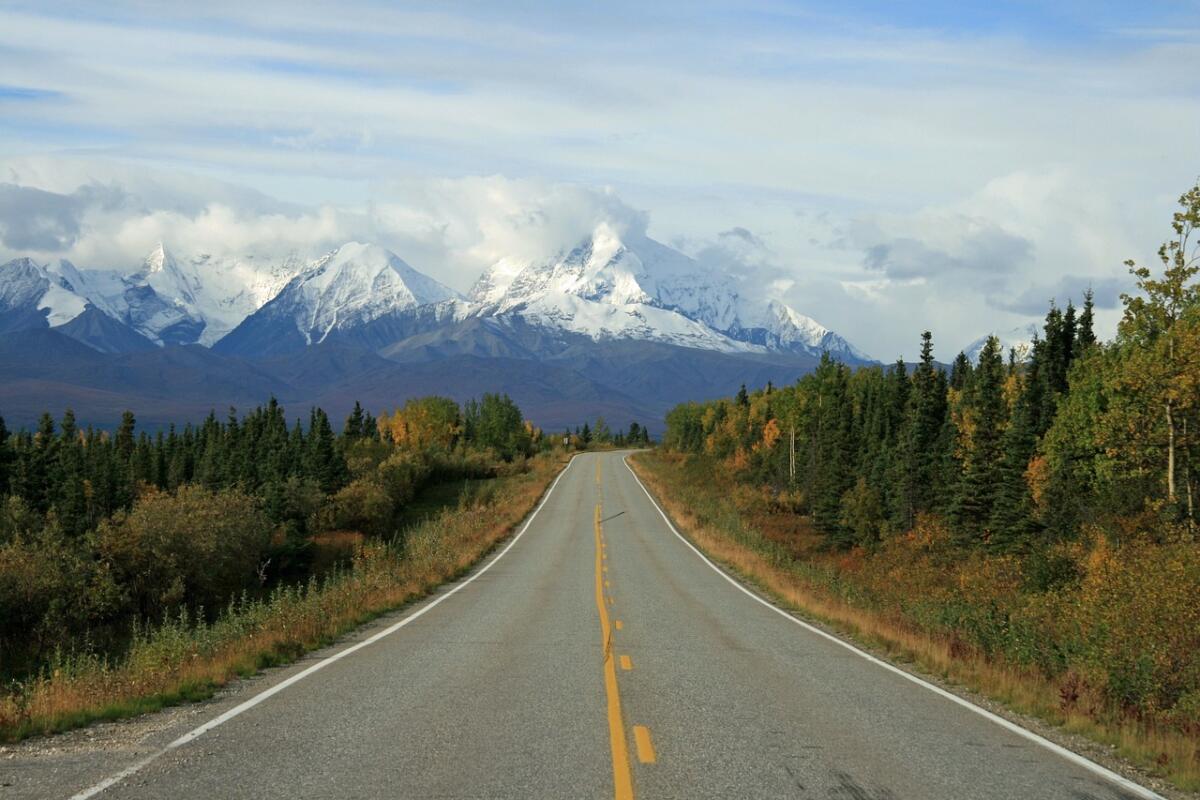
Think about one of the ultimate RV adventures: the long, beautiful drive to Alaska. For many RVers, it sits high on their bucket list—miles of open road, towering mountains, wildlife sightings, and some of the most dramatic scenery in North America.
For today’s poll, we want to know if you have ever driven to Alaska with your RV or, if not, do you plan to?
For some of you, it’s a trip you’ve already checked off. The Alaska Highway, often called the Alcan, has been drawing adventurous travelers since it opened in 1942. Today it stretches about 1,400 miles from Dawson Creek, British Columbia, to Delta Junction, Alaska, winding through forests, mountains, and wide-open wilderness. The journey itself is just as memorable as the destination.
Others have the trip firmly planted in their future plans. It takes time, preparation, and a sense of adventure. The distances are long, the fuel stops can be far apart, and road conditions can change quickly. But ask anyone who has made the trip, and they’ll usually tell you the same thing: It’s worth it.
And then there are those of you who admire the idea—but from a distance. The logistics, cost, border crossings, and sheer miles involved can make Alaska feel like a bigger undertaking than most RV trips. For some travelers, flying or cruising there might sound a lot more appealing.
So what about you? Have you already driven your RV to Alaska? Is it on your future travel list, or is it a trip you’d rather skip? Go ahead and vote in today’s poll—and if you’ve made the drive, feel free to share a story or two from the road.
By Dustin Simpson
In this video, I walk you around several RVs currently parked on my RV repair lot. You’ll see just how much morning condensation drips off the RVs, even during moderate conditions.
This video proves why keeping up on your RV roof and body sealants is so important—your RV is taking on water for potential damage even when it’s NOT raining!
Any leaks on your RV can cause major damage
Unfortunately, it’s not always that simple. When a leak develops on your RV roof and body, the water may travel unnoticed in the area between the roof seams, body seams, and behind screw covers, dripping down into the walls and running down to the floor. It can be causing damage that may not be detected until you have a very expensive problem on your hands.
Did you know that most manufacturers don’t take the time to completely seal all the moldings, seams, unfinished areas, cracks, separation, and missing or loose screws? Missed items can cause costly or irreparable damage.
All manufacturers recommend that you inspect the full exterior every 90 days and some as frequently as every 30 days. Many things are missed by the untrained eye! I hope this information helps as a reminder to protect your unit.
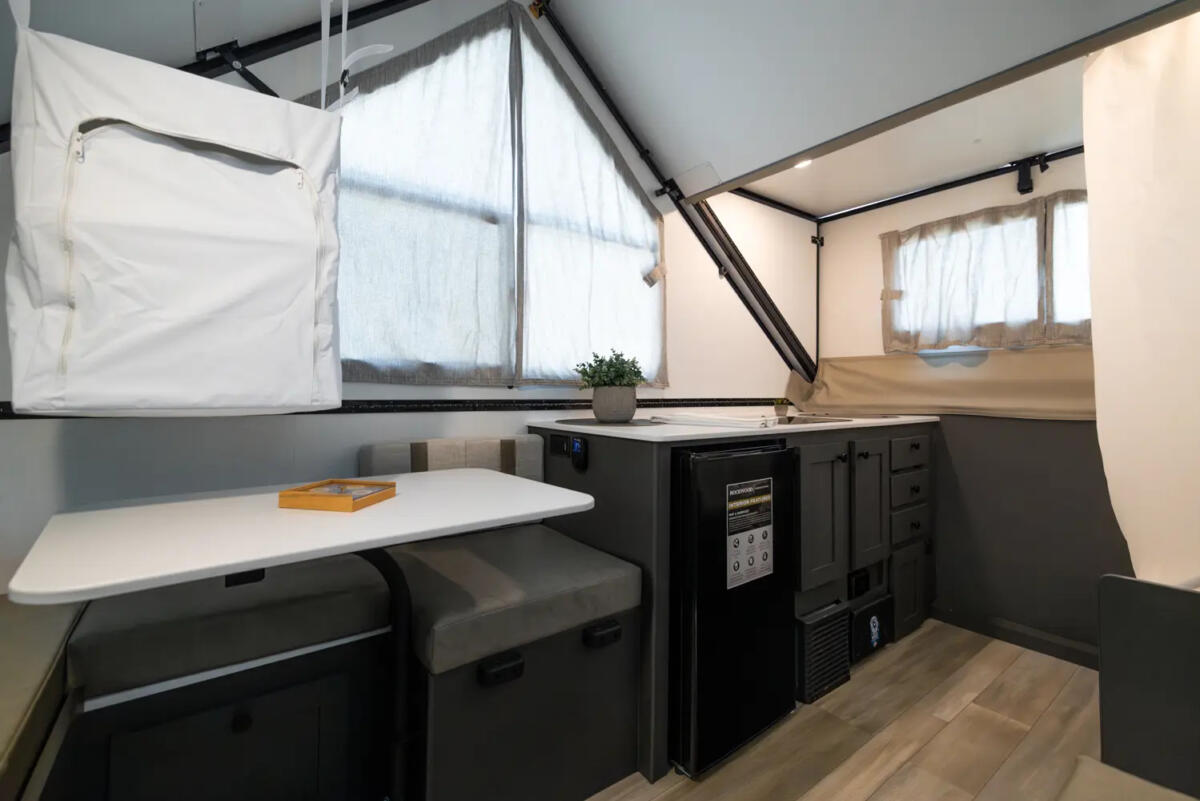
A small camper usually means at least a few sacrifices. The 2026 Rockwood A123RG (also sold as Flagstaff, depending on the badge) tries a different approach: It packs in a bathroom, real kitchen functionality, and a rear space that can quickly change roles.
In the video at the end of this post, Josh the RV Nerd at Bish’s RV sums it up as a flex-function convertible camper that can feel like several layouts in one.
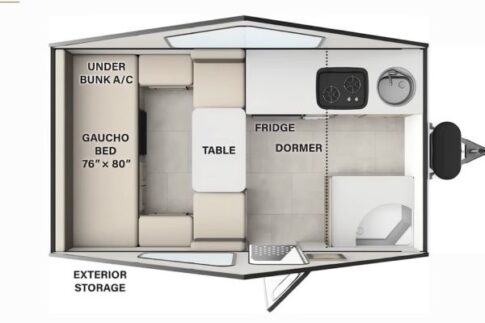
For shoppers who need a garage-friendly RV, or anyone dealing with HOA rules, the fold-down A-frame shape is the main draw. It stores low, tows with less wind resistance than a tall travel trailer, and still opens up to feel bigger than it looks. It’s 84 inches wide, and the body is easier to tuck behind a house or into many garages. Because it doesn’t tow like a tall wall pushing air, it also avoids that “wind sail” feeling some campers get on the highway.
Interior
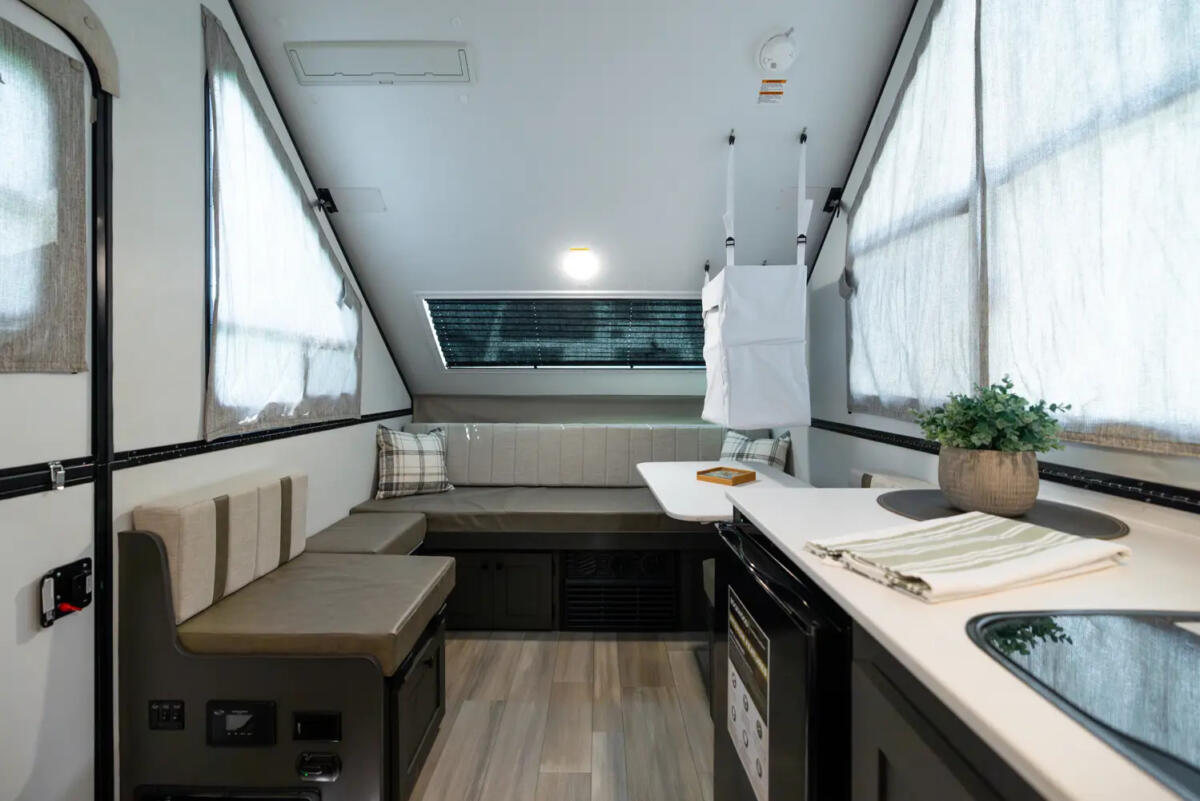
Once set up, the window coverage stands out. These A-frames can feel almost 360-degree open, which makes campsites more enjoyable even in a smaller footprint.
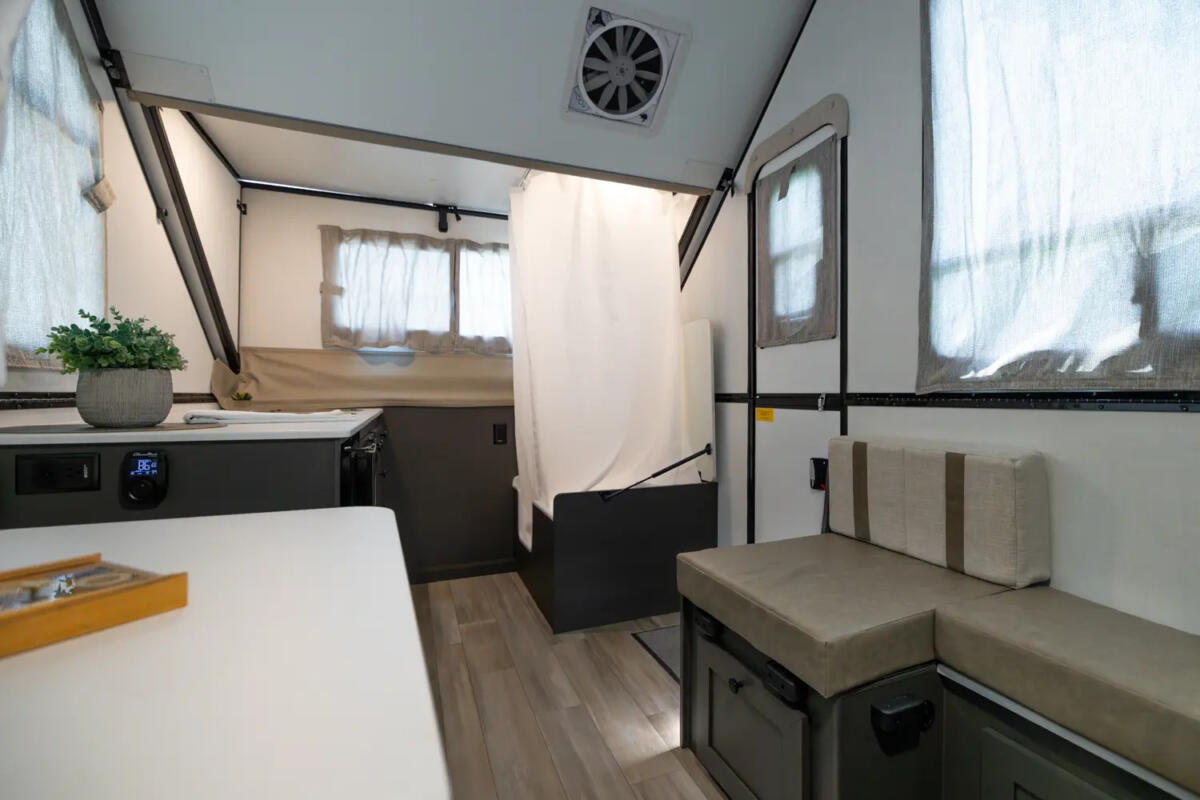
A couple of small items matter more than they sound. There’s an Maxxair roof vent fan for airflow, plus a simple plastic hanger bracket near the entry, handy because there’s no big wardrobe cabinet. The front dormer (the flip-up section) adds headroom and space where the kitchen and bath live, but it also means this style relies on many seams and foam seals. It’s built to overlap and seal, not to feel like a one-piece shell.
The A123RG includes a cassette toilet, and the same area becomes the shower. A curtain system clips in quickly with tabs and stores back in the compartment for travel. If the toilet setup isn’t a priority, the bathroom zone still works as an extra counter and staging space.
The kitchen makes smart use of the limited size. Storage under the cooktop is deeper than expected, although sink plumbing reduces it to two main drawers plus a small utility drawer. The sink faucet folds down, which helps prevent damage when the roof comes down.
Heating and cooling come from two sources: a propane furnace and a bidirectional electric heat pump that can run as an air conditioner or heater in milder conditions.
Note: The condensation drain hose for the heat pump needs to hang out as designed. Tucking it in can send water onto the floor.
The rear area is the “everything space.” A swing-arm style table can move into position for a face-to-face dinette, rotate for a solo workspace, or get out of the way for an open lounge.
Sleeping setups stack up in the same footprint. The rear bench slides to form a queen-sized sleeping area, and the tabletop can bridge the gap for a larger, king-like platform. Depending on how it’s arranged, it can also mimic twin-style sides.
Even taller campers tend to be surprised by the interior height once the roof is up, and owners should expect curious neighbors. These A-frames attract lookers.
Folding down to road mode: Order matters
The fold-down process is straightforward, but it rewards a routine. The curtain comes down first, then the door-side panels fold in, then the wall latches release in an order that keeps everything reachable (starting at the rear of the door side and moving around). Josh notes Rockwood improved the power lifter system, and the roof sections now lower more smoothly than earlier versions.
Don’t fold this style down in high winds, and latch the roof as soon as it’s seated. Also, unlatch the door before closing.
A practical storage tip also came up: Park with the nose slightly up so water runs off the stepped roofline and doesn’t pool near seals, especially in freeze-thaw climates.
Specs and exterior features
Here are the key numbers shared for this model:
Spec
Measurement
Hitch weight
310 lb.
Max weight
3,310 lb.
Empty weight
2,193 lb.
Cargo capacity
1,117 lb.
Box size
12 ft.
Overall length
16 ft. 5 in.
Closed height
5 ft. 7 in.
Width
84 in.
It also includes a 200-watt solar package on the roof, plus a dual-battery-ready box. (Batteries typically come from the dealer or owner, not the factory.) Placement matters because the roof pitch can limit solar gain if the camper is parked facing the wrong direction.
Outside, it adds hot and cold exterior shower hookups, a propane-capable water heater, stabilizers front and rear, a grill quick-connect, and a small rear receiver suited for bikes.
Who this A-frame fits best
The 2026 Rockwood A123RG makes sense for campers who want a low-storage, easier-towing RV but still want a bathroom, solid airflow, and real layout flexibility. It’s part pop-up, part hard-side, and part multi-room illusion, all in one fold-down package. For shoppers who need one camper to cover lots of trip styles, this design earns a serious look.
America’s Original RV Newsletter. Since 2001
Issue 2862 • New issue every weekday
Today’s thought
“Wishing you a pot o’ gold and all the joy your heart can hold.” —Irish blessing
Need an excuse to celebrate? Today is St. Patrick’s Day, which means it’s also National Corned Beef and Cabbage Day!
On this day in history: 1958 – The United States launches the first solar-powered satellite, which is also the first satellite to achieve a long-term orbit.
Tip of the day Ways RVers can get lucky on the road
By Gail Marsh
With St. Patrick’s Day upon us, luck is in the air—or at least, we hope it is. Life on the road can be unpredictable. One day, you’re basking in a scenic, quiet campsite with a perfect sunset view; the next, you’re parked next to a generator that sounds like a jet engine. But sometimes, RVers just get lucky. And no, we’re not talking about that kind of luck (though, hey, good for you if it happens).
Article and video VannCamp insulated blackout window covers for vans
Sleeping in a van or RV can feel like trying to nap in a streetlamp. Even when it’s cloudy, light still sneaks in, and temperature swings can make nights rough. On Outdoor Gear 411, Robbie and Adrian tested VannCamp™ insulated blackout window covers to see how fast they install and how dark it really gets with them. Check ’em out.
Turn your favorite jacket into a rain-ready one
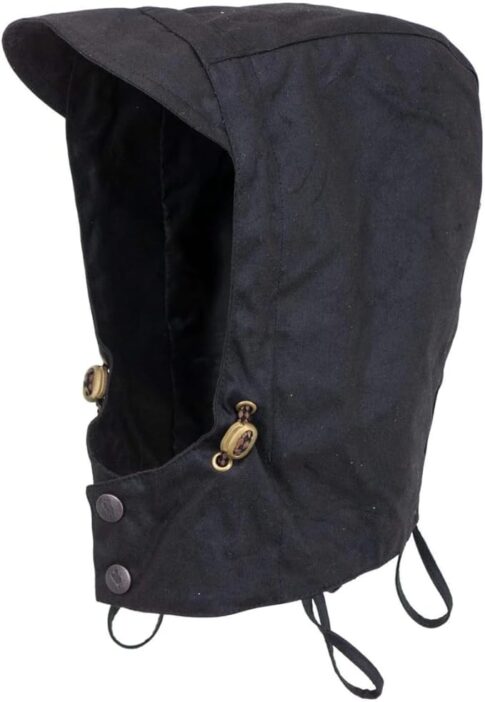
Does your favorite jacket not have a hood? With rainy spring weather on the way, this removable waterproof hood is an easy fix. Made from durable oilskin with a breathable lining, it snaps onto compatible jackets and adjusts for a snug fit, helping keep wind and rain off your head during campsite chores, walks, or hikes. A simple upgrade for RVers who want to stay dry without replacing the jacket they already love. Check it out.
Featured article The reasons why RVing keeps you young
By Gail Marsh
Sixteenth-century Ponce de Leon searched for the Fountain of Youth. If only RVs had been invented back then! Why? Because I believe RVing can help keep you young! Read on to discover my reasoning.
THE MORE YOU KNOW… Corned beef and cabbage actually traces back to Irish immigrants in 18th-century America. The word “corned” refers to the large, corn-like grains of salt once used to cure and preserve the meat. In Ireland, beef was considered a luxury, so people more often ate bacon. But after arriving in America, immigrants discovered beef was cheaper and more available—so the tradition shifted to corned beef.
Small towns go big for St. Patrick’s Day celebrations
If you love a lively St. Patrick’s Day but don’t want the chaos of a huge city, the U.S. has several smaller places that pack big personality into one day or weekend event. Here are just a few small places throughout the U.S. that go big on St. Patrick’s Day. Why not break out your RV for a wee bit o’ Irish celebration done in big-time fashion?
Ask Dave Is electrical wiring in an RV the same as a residential home?
I believe it’s best when planning to transition from your home to your RV, you develop a calendar which lists your steps during the transition. You can start by setting a take-off date. While this might seem a bit far in the future, having a departure date will help set the pace and keep you on track during your planning phase. Along with a calendar, you can also create a checklist of things you need to do before you hit the road. You will want to write down everything you can think of, from finding a realtor to sell your house to researching RVs and campsites to canceling utilities. —From “RV Living for Senior Citizens: How to Start and Manage Full Time RV Living as a Retiree Over the age of 60.” Available on Amazon.
Turn your RV toaster into a mini grill These reusable toaster bags make quick RV meals easier and a lot less messy. Grill sandwiches, reheat pizza, warm leftovers, or toast snacks without drips falling into the toaster. Nonstick, easy to clean, and safe for toaster, oven, or microwave use, they’re a simple galley upgrade for RVers who want fast meals without extra cleanup. Gail Marsh recommends them here.
We’ve polled RVtravel.com readers close to 5,000 times in recent years. Here are a few things we’ve learned about them:
• 9 percent work full-time year-round to pay their bills each month
• 63 percent of people do not have a favorite day of the week, but the highest percentage of those who do, 10 percent, say Sunday is their favorite.
• When on an airplane, 52 percent prefer the window seat.
FUN FACT: When Lucky Charms debuted in 1964, it became the first cereal with marshmallows. The idea came from a General Mills employee who mixed Cheerios with chopped-up Circus Peanuts candy.
Trivia
St. Patrick, Ireland’s Patron Saint, was actually British. It’s believed he was born in either Wales or Scotland. He was abducted at age 16 and brought to Northern Ireland as a slave. There, he was forced to tend sheep for 6 years. One surprising St. Patrick’s Day fact is about St. Patrick’s name. His real name was ‘Maewyn Succat’. He picked up Patrick along the way.
? MYSTERY PRODUCT OF THE DAY ? We’ve always enjoyed the other ones of these, and this one is no different. The best part? It’s aimed right at us RVers! *Adds to cart*
Readers’ pet of the day
“Lily Mae (Shih Tzu, age 7) enjoys camping because she gets lots of attention in our motorhome.” —Linda Rogers
Send us a photo of your pet with a short description. We publish one each weekday in RV Daily Tips and in our Sunday RV Travel newsletter. No blurry photos, please! Please do not submit your photo more than once. Thanks!
If you shop at Amazon.com we’d appreciate you using this link. We get an itty bitty commission if you buy something, but they add up and help us pay our bills (most importantly our hard-working writers!).
Dear Dave,
Is the wiring for my electrical outlets and other appliances in my RV the same as the type used in my residential home? —Kent, 2025 Forest River FR3
Dear Kent, There are two different electrical systems used in your RV: 120-volt AC (Alternating Current) and 12-volt DC (Direct Current). It is important to understand which components operate on each power source.
In a typical residential home, most appliances and components operate on 120-volt AC power. However, some low-voltage lighting—such as under-cabinet lighting or makeup lights—may use a transformer to step the voltage down to a lower level. In this article, we will focus on the 120-volt AC wiring, commonly referred to as Romex.
What Is Romex wiring?
Romex is the white or yellow electrical cable commonly seen running to and from the RV’s distribution center and various components. “Romex” is actually a brand name produced by Southwire. Other manufacturers produce similar wiring under different brand names, including Vevor, Cerrowire®, and others.
This type of wiring comes in several sizes that are measured by gauge according to the American Wire Gauge (AWG) index. It carries an NM-B classification, which stands for non-metallic, sheathed electrical cable with B-rated insulation rated to 90°C.
Common wire sizes include:
14 AWG – rated for 15 amps
12 AWG – rated for 20 amps
10 AWG – rated for 30 amps
These cables typically contain solid copper conductors. The hot and neutral wires are insulated, while the ground wire is bare and usually wrapped with paper inside the outer sheath.
NM-B wiring is available in two-, three-, or four-conductor cables, plus the ground wire. The cable is labeled according to its gauge and the number of conductors, such as 14/2. Even though the label reads 14/2, the cable actually contains three wires: hot, neutral, and ground.
What is NM-B wire used for?
NM-B wire is used exclusively for indoor applications in dry locations. It cannot be used outdoors or for underground installations. It is commonly installed in concealed areas such as inside walls, floors, and ceilings, and its use is governed by the National Electrical Code (NEC).
Inside the RV’s distribution center you will typically find both white and yellow NM-B wiring in a variety of sizes.
For example:
• 14-2 (white) wiring commonly runs from a circuit breaker to the electrical outlets throughout the RV. These outlets are typically “ganged,” meaning they are connected together in a series run.
• 12-2 (yellow) wiring is usually used for higher-load circuits, such as those serving kitchen and bathroom outlets.
These outlets are often protected by Ground Fault Circuit Interrupter (GFCI) outlets and are located near potential water sources such as the kitchen, bathroom, and exterior outlets.
According to wiring diagrams for Winnebago models, 12-2 NM-B wire is also commonly used for roof air conditioners, since they are higher-load components.
Cable colors not required by the NEC
The white and yellow cable colors are not required by the NEC, but manufacturers have largely standardized these colors to help identify wire sizes.
According to Winnebago electrical drawings, 6-3 wire is used from the power cord to the Automatic Transfer Switch (ATS) and then to the distribution center on 50-amp models, while 10-2 wiring is typically used on 30-amp models.
We use cookies to ensure that we give you the best experience on our website. By continuing to use our site, you consent to accepting cookies. We NEVER have or will sell reader's data. For more info, please see our privacy policy page.