In today’s day and age, especially with social media, you most likely know where your friends, family, and acquaintances stand with their political views and beliefs. It’s easy to make it known.
Politics has always been a touchy subject, but in recent years, it has become even more divisive. Social media feeds are filled with political debates, opinion pieces, and heated arguments.
Sometimes, it’s not just strangers clashing in the comments—it’s people you’ve known for years, even family members. What once might have been a civil disagreement over dinner can now escalate into full-blown fallouts that stretch across Facebook posts, group texts, and even in-person gatherings.
For some, political differences are just that—differences. They can set them aside and continue their relationships as usual. But for others, those differences run too deep. Maybe it’s not just about a candidate or a policy but about fundamental values. And when those values feel too far apart, the relationship can start to feel strained, uncomfortable, or even impossible to maintain.
Today’s poll asks you if you’ve recently quit associating with someone because of differing political beliefs. And, if so, was it one person or multiple people?
No comments today, folks. We’re busy, and we don’t have time for what we expect to happen… (We apologize to those who would have “behaved”.)
If you spend enough time around national parks, sooner or later you’ll hear a story that sounds made up. A coyote swimming to an island prison. Tropical parrots turning up in the desert. Wolves strolling past stopped traffic as if the road were theirs. These moments are rare, unpredictable—and part of what makes America’s parks endlessly fascinating for travelers who slow down long enough to notice.
For visitors who return to the same parks year after year—or linger long enough to explore beyond the highlights—these oddball wildlife moments are part of the reward. National parks aren’t static exhibits; they’re living places where animals wander, adapt, and occasionally do something no one saw coming. The more time you spend in them, the better the chance you’ll come home with a story that doesn’t sound quite believable.
A coyote where no one expected one
Lone Alcatraz coyote. Photo: Alcatraz City Cruises via sfgate.com
That sense of surprise was on full display recently when a lone coyote was spotted on Alcatraz Island—after apparently swimming there from the mainland. The crossing is more than a mile of cold, fast-moving water, a journey few would expect a land-based predator to attempt.
The sighting turned an already iconic site into the center of a new kind of national park puzzle. Alcatraz is home to sensitive seabird nesting areas, and park managers had to weigh the coyote’s welfare against the potential impact on wildlife that had been there first. It was a reminder that even carefully managed places can still deliver the unexpected.
When the desert gets a splash of the tropics
Macaws at Big Bend National Park. Kym Morse via chron.com
Hundreds of miles south and east, another surprise unfolded when brightly colored macaws—birds more often associated with Central America—were spotted inside Texas’ Big Bend National Park. Against a backdrop of rugged mountains and scrub desert, the tropical birds looked wildly out of place.
For birders, it was a once-in-a-lifetime sighting. For everyone else, it was a vivid example of how animals don’t always follow the maps in field guides. Whether driven by storms, habitat pressures, or sheer chance, wildlife occasionally turns up far from where anyone expects it to be.
The animals that stop traffic without trying
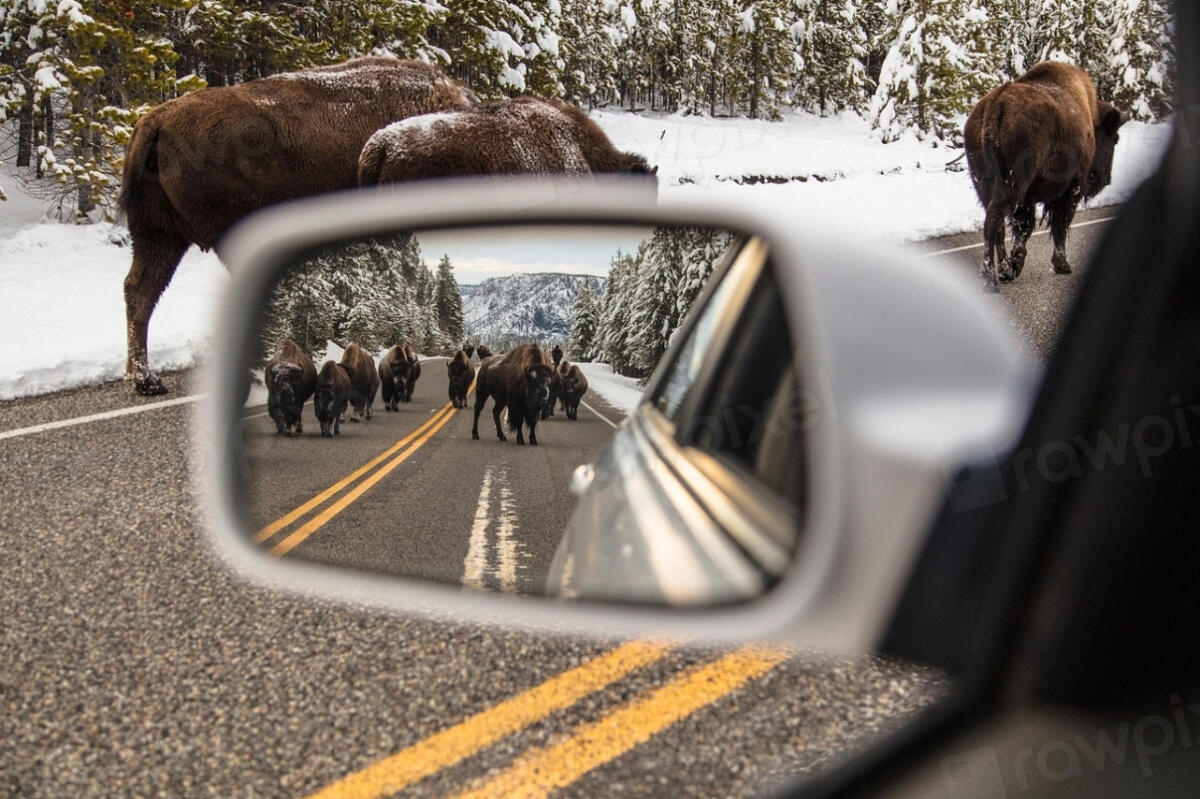
Yellowstone bison take over the roadway.
Some of the most memorable wildlife encounters happen not on a trail, but from the driver’s seat. In places like Yellowstone National Park, wolves, bison, and elk routinely bring traffic to a standstill—not because they’re putting on a show, but because they’re simply going about their day.
For visitors, those moments can feel spontaneous and intimate. For park staff, they’re part of an ongoing balancing act between access, safety, and respect for animals that have no interest in human schedules.
Rare creatures, right place, right time
Sierra Nevada red fox captured by Yellowstone trail cam. NPS image.
Other surprises come quietly, captured on trail cameras or spotted by a single lucky hiker. In recent years, elusive species like the Sierra Nevada red fox have been documented inside Yellowstone National Park, while unusually colored elk have drawn attention near Rocky Mountain National Park.
These sightings don’t make headlines every day, but they reinforce the same idea: National parks remain places where nature still operates on its own terms.
Why the surprises keep coming
With millions of acres under protection, national parks serve as refuges, corridors, and crossroads for wildlife. As animals adapt to changing climates and landscapes, their movements don’t always match our expectations. That unpredictability is part of the bargain.
For visitors, it means every trip carries a small element of mystery. You might arrive with a checklist, but the moment you remember years later could be something no one planned—a shape crossing the road, a flash of color in the sky, or a story that begins with, “You’re not going to believe this…”
A recent RV fire in Pennsylvania turned deadly after investigators linked the blaze to a portable space heater. According to authorities, the fire spread quickly inside the RV, and despite a desperate rescue attempt, a woman lost her life.
It underscores a hard truth about cold-weather camping: Space heaters can be far more dangerous in RVs than many people realize.
Portable electric heaters are common in RVs, especially when hookups are available and propane use is something owners try to limit. They feel familiar, inexpensive, and safe. After all, many of us use similar heaters at home. But an RV is not a house, and the differences matter.
Why space heaters are riskier inside RVs
RV electrical systems are lighter-duty than residential wiring. Most portable space heaters draw close to 1,500 watts and often run for long, uninterrupted stretches. That sustained load can overheat outlets, wiring, or breakers that were never designed for it.
The reality is that many RV outlets are built for speed and cost, not heavy continuous loads. They simply don’t have the same backbone as typical residential outlets—and they aren’t meant to handle hours of sustained draw from a space heater.
Space also works against you. RV interiors pack furniture, curtains, bedding, clothing, and pet gear into close quarters. Keeping recommended clearances around a heater is harder than it sounds, and heat builds faster when airflow is limited.
Movement adds another layer of risk. Even when parked, RVs experience vibration and shifting over time. That can loosen plug connections, increasing resistance and heat right where electricity enters the heater. Fires don’t always start with sparks—sometimes they smolder quietly inside a wall or outlet.
And then there’s human nature. Heaters get left on overnight. They run while someone steps outside “just for a minute.” In an RV, those habits leave very little margin for error.
If you feel you must use a space heater
The safest choice is always your RV’s built-in heating system, which is designed for the space, wiring, and ventilation. But if you decide to use a portable electric heater, a few guardrails matter.
Use only heaters with tip-over protection and automatic overheat shutoff.
Plug the heater directly into a wall outlet—never into a power strip or extension cord.
Keep clear space around it, especially from bedding, curtains, and clothing.
Limit use to one heater per circuit, and stop immediately if an outlet feels warm to the touch.
Turn heaters off before sleeping or leaving the RV, even briefly.
Make sure smoke alarms work and a fire extinguisher is easy to reach—not buried in storage.
If breakers trip repeatedly, or a plug or outlet shows discoloration or heat damage, stop using the heater. Those aren’t annoyances; they’re warnings.
Safer ways to stay warm
Often, reducing heat loss is safer than adding more heat. Window insulation, vent pillows, skirting, and sealing drafts can make a noticeable difference without stressing electrical systems. When temperatures drop sharply or hookups are limited, the RV furnace—despite its propane appetite—remains the safest primary heat source.
Tragic fires like this one are rare, but they are not flukes. They happen when everyday devices are used in spaces they were never designed for. In an RV, staying warm should never come at the cost of safety—and a little extra caution on cold nights can make all the difference.
By Chuck Woodbury
Are you as sick of hearing about A.I. as we are? If yes, we apologize for yet another story (we can’t resist). It’s about a new product developed using artificial intelligence, but in this case, in a way that seems too bizarre to be true.
We learned about it from our sometimes-contributor James Raia, who found it displayed at this year’s CES (Consumer Electronics Show) in Las Vegas.
Throne One is a smart toilet. No, it will not talk with you while you do your business. But what it will do is look at what you deposit into the toilet bowl and let you know via your smartphone how healthy (or unhealthy) you are, depending on what it observes.
If you find sitting on a toilet boring, then this might liven up the experience. As you sit on the pot, keep an eye on your smartphone for Throne One’s analysis of what’s happening. We’re not sure that’s exactly when the analysis is displayed, but it seems reasonable.
The camera automatically tracks your digestive patterns and your hydration levels. Drink more water!
How it works
The device clips onto the side of a standard toilet bowl and uses a camera and sensors to analyze bowel movements and pee, too. We suspect it will work on at least some RV toilets, but it might take some modification.
The Throne One company points out that the device’s camera points downward only, so no butt shots or start-to-finish slow-mo instant replays. Oh, and yes, it records audio, too.
“Unbox, pair your phone to the contraption attached to the side of the toilet, and go. Throne does the rest, tracking habits, hands-free,” the company says. (We like the “hands-free” part.)
And the really good news is that Throne One can be programmed to analyze the bathroom habits of up to six persons, which could make it perfect for families interested in healthy living. Discussion of results may not be appropriate for dinner table discussions.
America’s Original RV Newsletter. Since 2001
Issue 2833 • New issue every weekday If you find this newsletter helpful, please considersupporting our staff’s work producing it with a donation of your choice.
Remember: You don’t need to receive an email alert from us to read our newsletters. Just click any time of day directly to RVtravel.com. The latest issues will be right there for you.
Today’s thought
“If we had not winter, the spring would not be so pleasant; if we did not sometimes taste of adversity, prosperity would not be so welcome.” —Anne Bradstreet
Need an excuse to celebrate? Today is National Homemade Soup Day! (More on that below.)
On this day in history: 1789 – George Washington is unanimously elected as the first President of the United States by the U.S. Electoral College.
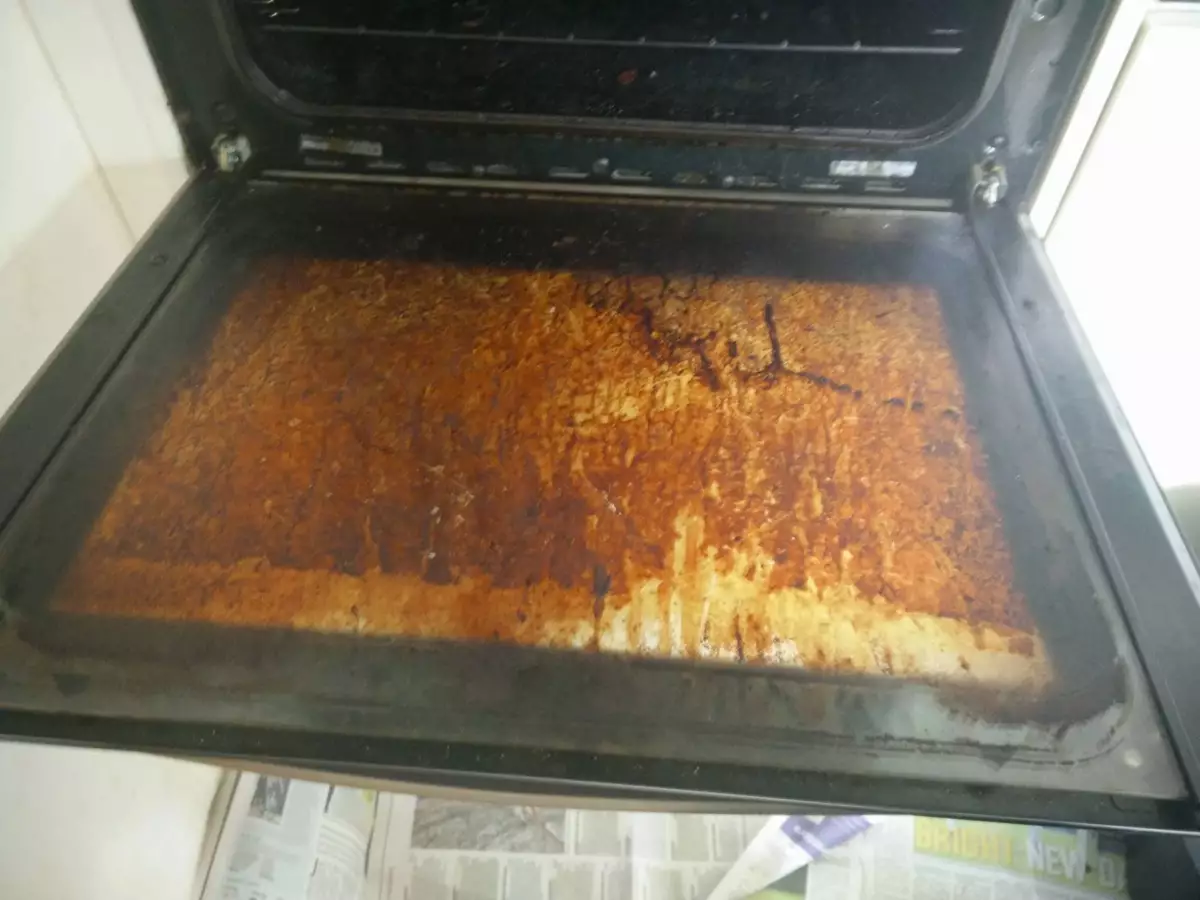
Tip of the day Tips for cleaning your RV’s oven door
By Gail Marsh
I’m old enough to remember when ovens first featured glass windows in their doors. My sisters and I watched Mom’s cake rise and brown. It was mesmerizing—almost as good as TV!
Today, most ovens have a glass see-through window on the door. It’s great for peeking at dinner as it cooks. However, that glass gets dirty faster than a dog spotting your dropped hot dog. A smudgy oven door makes the whole RV kitchen look grubby and makes it harder to see how your roast is doing, too.
RV review
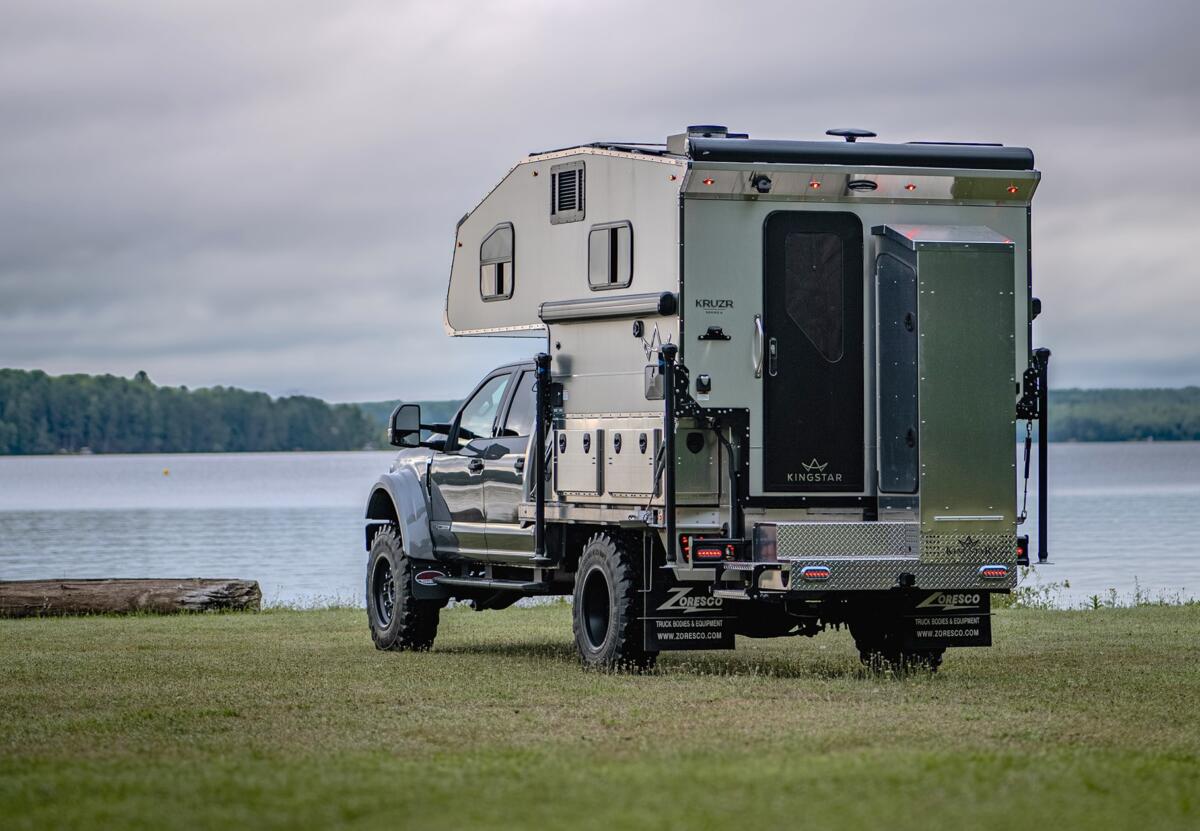
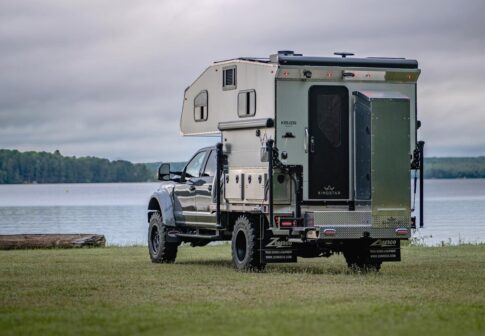
Kingstar KRUZR truck campers: Where luxury meets utility
Most truck campers get pitched by square footage. At Overland Expo East, Patrick Botticelli from New Jersey Outdoor Adventures found one brand that works differently. Kingstar builds around cubic inches, squeezing real storage and function out of every gap while still keeping the finish work clean and upscale. Considering a truck camper? Check it out.
A 10-second spray that protects your RV’s most important electrical connection
Corroded plugs cause big problems and this simple electrical cleaner helps stop them before they start. A quick spray on your 7-pin connector clears moisture, grime, and buildup, helping keep your lights, brakes, and charging systems working as they should. It dries fast, leaves no residue, and takes about 10 seconds to use—making it one of the easiest “preventive maintenance” habits an RVer can add before hitting the road. Read Dave’s recommendation here, or learn more or order on Amazon.
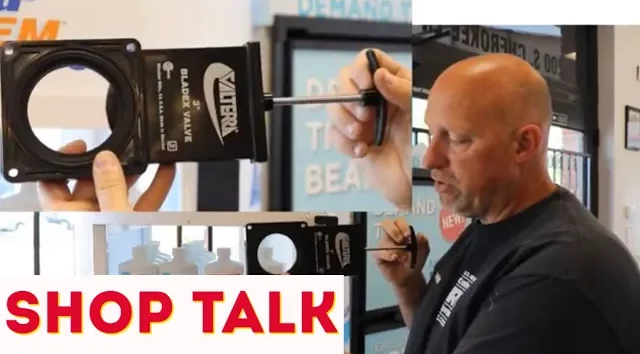
In the RV shop with Dustin The ultimate guide to RV dump valve lubricant
Maintaining your RV’s dump valves is crucial for ensuring a hassle-free and sanitary waste management system. In this guide, we’ll discuss the importance of using the right dump valve lubricant to keep your valves in top condition. Proper lubrication prevents sticking, reduces wear, and extends the lifespan of your dump valves. Continue reading to learn more.
RANDOM RV THOUGHT: The road teaches patience. The campsite teaches gratitude.
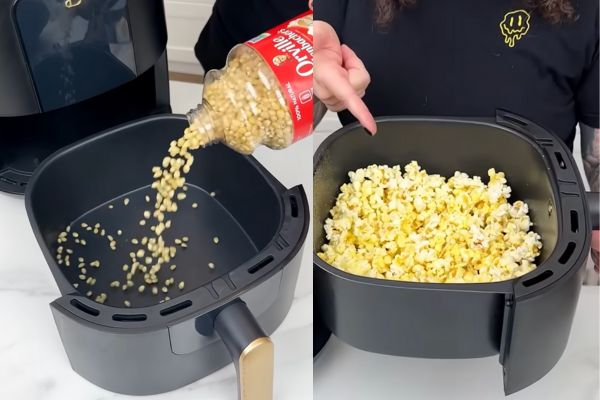
Article and video How to make easy and delicious air fryer popcorn
Since a survey of our readers indicated that many of you travel with air fryers, I [Cheri] thought this air fryer popcorn tutorial might come in handy. In this short video, Jen from Jen L Kitchen shows a simple air fryer method that turns plain popcorn kernels into hot, buttery popcorn with very little effort. Looks good!
Featured article Are RV AirSkirts worth it? Temperature test plus installation
There’s no doubt that RV skirting can help keep your RV warm in cold temperatures as well as cooler in warmer temperatures. There are many types of commercial and DIY RV skirting available, but RV AirSkirts have to be the easiest to install. So let’s put them to the test.
Ask Dave Warning: Some RV emergency exit windows may be one use only!
This article was originally published in early 2025, but we are bringing it to your attention again because it is very important. Click here to read (and potentially save money).
DO YOU HAVE A PORTABLE JUMP STARTER FOR YOUR CAR AND RV?
You need one! It’s a must-have item and could save you big bucks and money! Here’s the best one.
Washington State Route 6 is a lonely road to and from the coast. The tiny town of Pe Ell, population 670, is the “big city” along the way. It might be most famous for providing a rare opportunity to belly up to a bar for a favorite brew. The pub is easy to find; just look for the “city tank” across the street.
National Park Foundation
The National Park Foundation does so much for our beautiful national parks. Learn about their work, how to support them or ways to get involved on their website. They also have tons of NPS news and information.
? MYSTERY PRODUCT OF THE DAY ? Not only does this sound REALLY good, but we also love the art and design of it! All campers will!
Trivia
Agatha Christie didn’t just write about adventure—she lived it. In 1922, two years after her first novel, Christie and her husband tried surfing in South Africa, where she may have become the first Western woman to stand on a surfboard. The pair later surfed in Australia, New Zealand and Hawaii. Christie even worked surfing into her novel “The Man in the Brown Suit”.
For Lovers Only
TO: Angela FROM: Denny “Happy Valentine’s Day. Thanks for picking me. I love you.”
TO: Tishy FROM: Big Boy “Can’t wait to get back on the road with you. I love our days of travel. My favorite destination will always be you! Happy Valentine’s Day.”
Listen up, romantics. Valentine’s Day is coming up. If you have a special someone you’d like to surprise with a secret message right here on this website (could be your wife, husband, partner, child, neighbor, friend, etc.) submit it to us here. Oh, how fun it will be when they read it! We’ll feature these daily in our upcoming newsletters.
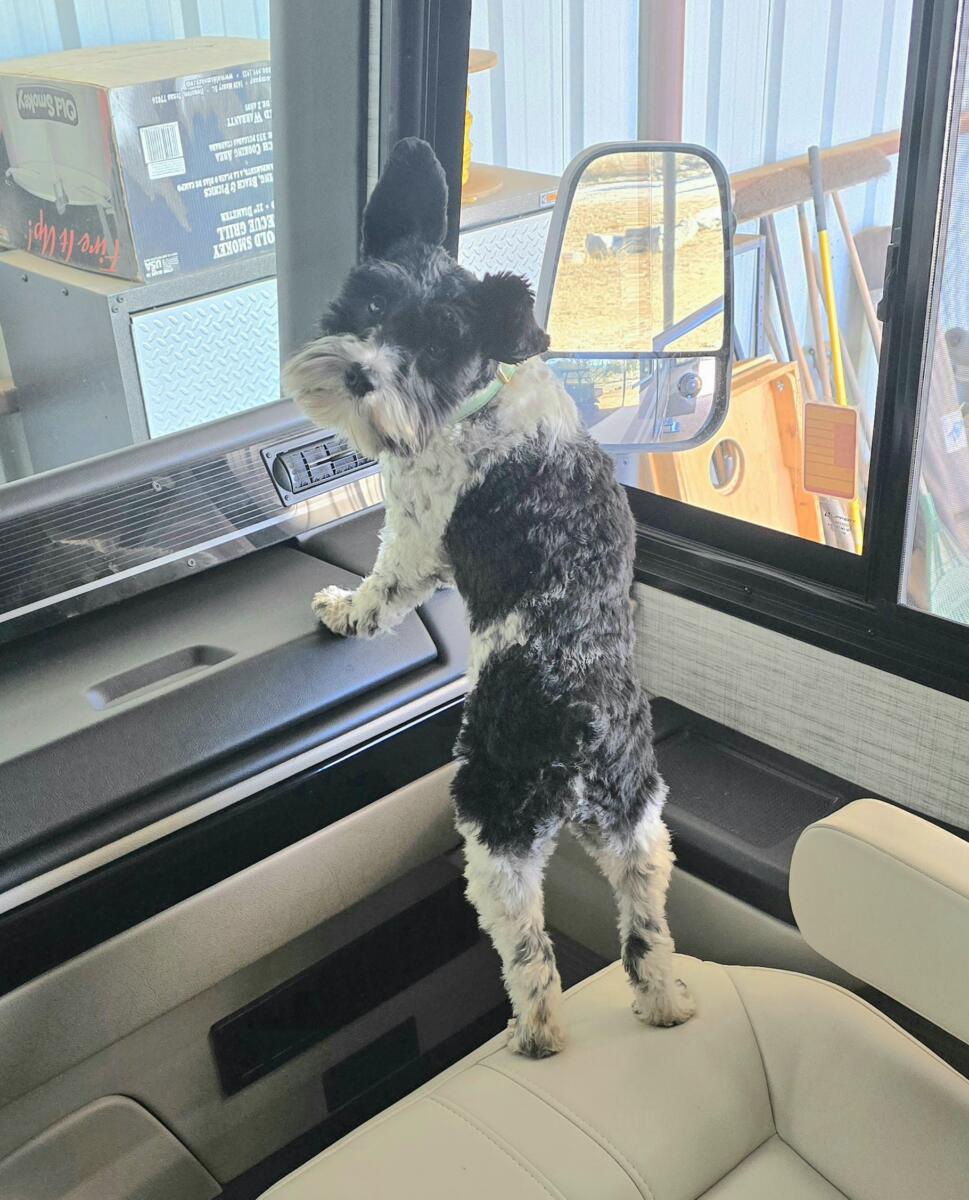
“We recently bought a new Class A Motorhome and are taking it on its maiden voyage in a week. Tillie June (Mini Schnauzer, age 1) is full of non-stop energy and loves to go places. She says she’s ready to go camping! Let’s go!” —Deborah Raeburn
Have so much fun, Deborah, Tillie June, and crew!
Send us a photo of your pet with a short description. No blurry photos and please do not submit your photo more than once. Thanks!
If you shop at Amazon.com we’d appreciate you using this link. We get an itty bitty commission if you buy something, but they add up and help us pay our bills (most importantly our hard-working writers!).
This article was originally published in early 2025, but we are bringing it to your attention again because it is very important.
Dear Dave, If you own a Coachmen Pursuit Class A motorhome RV or similar camper and are thinking about conducting a fire drill for your personal safety to ensure you know how to exit your Coach in case of a fire… Please don’t. Here is our story.
With all the recent wildfires in California, we thought it might be a prudent exercise to try and escape our RV bedroom in case of a fire. Our search on YouTube just encouraged our decision.
We opened the rear window emergency escape mechanism to see how difficult it would be for us to get out in a hurry, and when the window opened to about 30° to 45° it just fell out of the track.
Our good neighbor (Bernie) saw our struggle attempting to reinsert the window, and called out the posse to help.
All the king’s horses and all the king’s men could not reinstall the window.
Thanks to all the responders (at Orchid Lake RV Resort) who answered the call, and tried to help us. Duct tape provided a temporary solution.
Communication with Coachmen RV, a subsidiary of Forest River, provided this response…
“These egress windows are designed to fall from the unit once opened and unfortunately the top track that hold the window in will be deformed preventing the window from being repaired. The complete window will need to be replaced.”
Coachmen part# C01263049 (WINDOW, 42-5/8W X 27-1/2H FRAMELESS PICTURE “EGRESS’ SINGLE PANE 1-3/8″WALL)
We are trying to locate a new window.
Unfortunately, our desire to insure our safety is going to cost us a lot of money.
Public Service Announcement
This is a public service announcement (PSA) provided by Joe and Judy.
Please spread the word to all owners of an RV that uses a Lippert HEHR egress window, especially Coachmen Pursuit owners.
I wish someone would have posted a message like this last week. It would have saved us a lot of grief.
I suggested there should be a warning label on the window informing owners “Single use only.”
I will place a label on our new window and the egress window in the front of the coach:
CAUTION
Once deployed, this window
Cannot be replaced
—Joe, 2019 Coachmen Pursuit
Escape window
Fire safety
Dear Joe, Several years ago, I helped develop the RV Safety & Education Foundation (RVSEF) comprehensive safety training program, which included Fire Safety as one of the topics. We researched the various codes, developed the training manual, and also shot video content. I worked with John Anderson and the late Mac “The Fire Guy” McCoy. We shot several videos of Mac demonstrating how to use a fire extinguisher and egress windows.
Emergency Exit or Egress windows are part of the National Fire Protection Association (NFPA) code. It does not specify the type of window that must be used or the location, as every floorplan is different. However, I do believe it does specify a minimum size and that it must have a handle or means of opening by hand and not require a tool.
Over the years, I have seen a wide variety of windows used, mostly in the bedroom or back of the rig opposite an entry door. They have come in all sizes and styles. Many RV manufacturers use a “one-off” window that has a red seal zipped around the window and frame. When that is pulled off, the entire window gets removed—which requires a new window.
I have also found models that had a very small window on the back wall, and the back ladder ran up the wall to the roof, covering the window and blocking egress! Unfortunately, common sense is not a requirement by code!
Mac McCoy had some great information in his seminars and presentations, such as throwing a bedspread over the lower frame of the window to soften the sharp edge while exiting. He also recommended pulling a picnic table or some type of higher platform under the exit window so the drop was not so far down.
Have an exit plan
Another recommendation was to have an exit plan in case of emergency and understand where the exit windows and other options, such as entrance or driver’s doors, are located and how to use them. He also recommended practicing opening the emergency exit window as the glass can stick to the rubber seal.
At the “Life On Wheels” conference, we shot footage of Mac demonstrating how to use a fire extinguisher and attempting to open an exit window in one of the attendees’ 5th wheel—it was stuck shut! Of course, Mac went into a panic demonstration, as this was his preferred method of getting his point across. However, it did show the importance of being prepared.
Hehr window usage guide
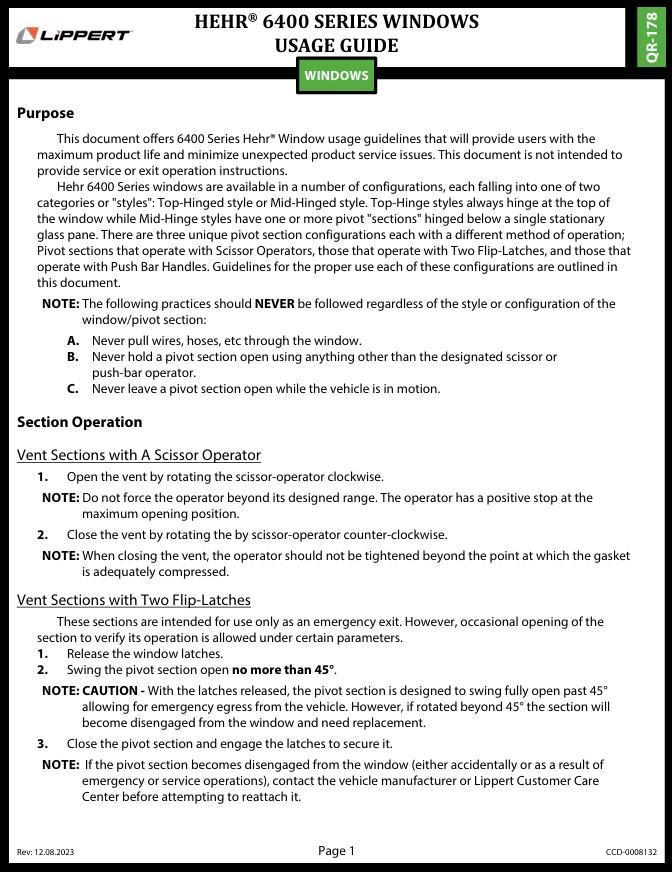
I do not recommend practicing on a window that is a “one-off”. However, sometimes it is hard to tell. I contacted Lippert and got a copy of their Hehr window usage guide:
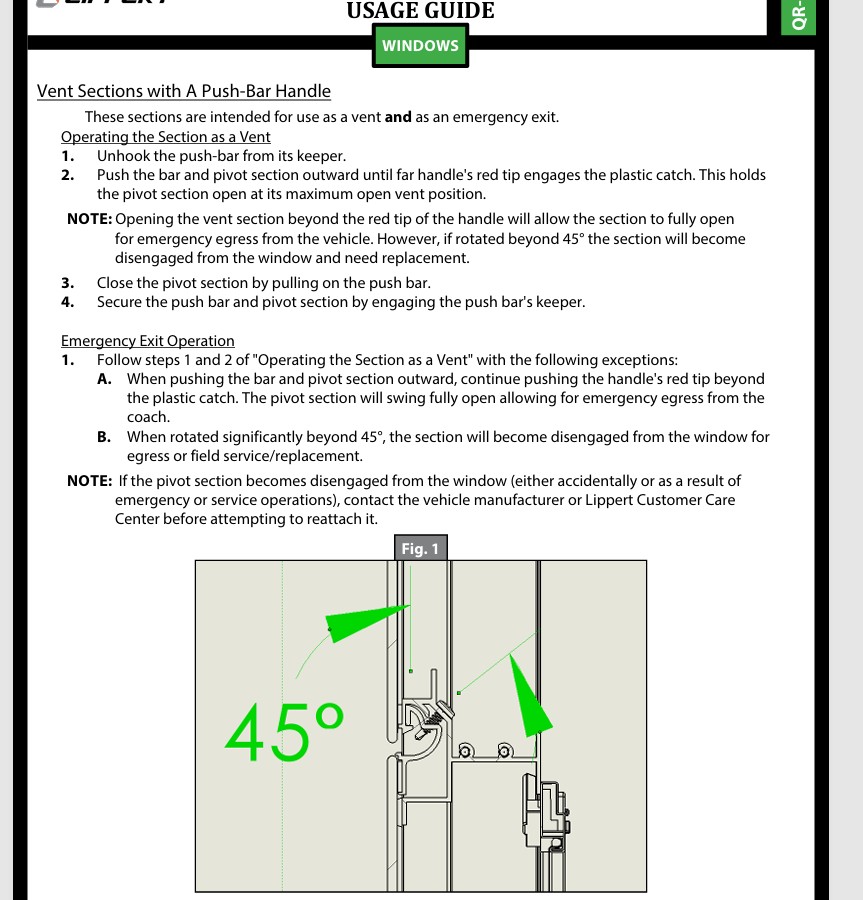
Lippert Emergency Window instructions. (Click to enlarge.)LCI emergency exit window instructions. (Click to enlarge.)
In the Emergency Exit Operation section, it states:
Note: Opening the vent section beyond the red tip of the handle will allow the section to fully open for emergency egress from the vehicle. However, if rotated beyond 45 degrees, the section will come disengaged from the window and need replacement.
Warning label needed
I agree with you. There should be a label stating this so that owners can practice opening the window but not go to the point it disengages. This way, they would know the window is not stuck to the frame and are prepared in case of an emergency.
Thank you for the post and information. You have probably saved some of our readers a lot of money by sharing your expensive lesson.
How can I get my RV’s frameless windows to open more?
Dear Dave,
Our TT has frameless windows that only open a few inches for air flow. Is there a way to modify the opening mechanism so that we can open and extend the windows farther and get more air? —Robyn, 2021 Coachmen Apex
I’m old enough to remember when ovens first featured glass windows in their doors. My sisters and I watched Mom’s cake rise and brown. It was mesmerizing—almost as good as TV!
Today, most ovens have a glass see-through window on the door. It’s great for peeking at dinner as it cooks. However, that glass gets dirty faster than a dog spotting your dropped hot dog. A smudgy oven door makes the whole RV kitchen look grubby and makes it harder to see how your roast is doing, too.
If your RV oven needs a cleanup, you’ve come to the right place. This guide walks you through cleaning the outside, the inside, and even the tricky space between the panes of glass.
What you’ll need
Gather the following items:
microfiber cloths
rubber gloves
a bowl
baking soda
mild dish soap (like Dawn)
distilled white vinegar in a spray bottle
a plastic scraper or an old credit card
a razor blade (only if the glass is completely cool and you’re comfortable using it)
Safety first
Always make sure the oven is off and cool before you start. If your RV oven runs on propane, switch the stovetop/burner and oven controls off and make sure any pilot or ignition systems are deactivated per the owner’s manual.
Strong commercial oven cleaners can damage seals, control panels, and enamel surfaces. They can produce noxious fumes, so reserve those options for only when the manufacturer explicitly allows them. When in doubt, consult the manual or the maker’s guidance for safe cleaning practices.
Cleaning the outside glass and frame
Spritz the outside glass lightly with a 50/50 vinegar and water solution. Then wipe with a microfiber cloth in one direction to avoid streaks.
Pay attention to the seams where glass meets metal. That’s where crumbs and grease tend to collect.
For stainless or painted frames, apply a small amount of stainless cleaner or Bar Keepers Friend on a soft cloth. Rub with the grain, then buff dry using a clean microfiber cloth.
Keep products off rubber gaskets and control panels.
Cleaning the inside glass
Fully open the oven and support it, if necessary. Make a paste of baking soda and water until it’s spreadable.
Spread the mixture on the inside glass and let it sit long enough to soften baked-on grease. This can take 15–30 minutes, depending on how grimy it is.
Wipe the paste away with a damp microfiber cloth. Use a plastic scraper for stubborn spots, then mist with vinegar to lift residue.
Dry with a clean cloth.
When and how to clean between the glass panes
If residue sits between the panes, many oven doors are designed so you can remove the door or separate its inner panel to access that cavity. Manufacturers often show this in product help videos or the owner’s manual. If your oven’s manual describes door removal, follow those steps exactly (support the door, disconnect any locks, and keep hinge pins safe).
Once open, use a soft cloth with mild dish soap and water to wipe the interior glass and channels. Allow full drying before reassembly.
If the manual does not show a safe removal procedure, do not force the door apart. Contact the manufacturer or an authorized service tech.
Using a razor or chemical cleaner
For flat, cooled glass, you can carefully scrape stubborn, carbonized spots with a single-edge razor. Hold the razor at a low angle, but never use it on curved or tempered surfaces unless the maker specifically says it’s safe.
Avoid aggressive chemical oven cleaners unless your oven manufacturer recommends it. The chemicals can etch surfaces and produce nasty fumes—especially in a small, enclosed area, like your RV.
Small RV oven tips
In an RV, the stakes are a little higher because space is tight and ventilation is limited.
Clean spills as soon as the oven cools so food doesn’t carbonize.
Place a drip tray under casseroles when possible.
Use steam-softening as a light maintenance trick: A shallow, oven-safe dish of hot water heated briefly can loosen soft residue before you wipe.
Save heavy-duty methods for major buildup. Use manual, mild cleaning as described.
Troubleshooting
If you remove the RV oven door and notice the gasket is torn or a hinge is bent, don’t force the door back for normal use. Replace the gasket or hinge per the manufacturer.
If streaks remain after cleaning, buff with a dry microfiber in a single direction. If haze persists, a small amount of specialized glass polish recommended for appliances can help without scratching.
Finally
Clean glass makes cooking easier, keeps your RV smelling better, and helps you spot dinner’s doneness at a glance. A little routine care goes a long way.
Have you ever cleaned your RV’s oven door glass? Tell us about your experience using the comments below.
By Cheri Sicard
Since a survey of our readers indicated that many of you travel with air fryers, I thought this air fryer popcorn tutorial might come in handy.
In the short video at the end of this post, Jen from Jen L Kitchen shows a simple air fryer method that turns plain popcorn kernels into hot, buttery popcorn with very little effort. It’s the kind of snack that feels almost too easy, as long as the air fryer stays closed while the kernels get going.
This approach is all about low effort and a quick cleanup. The kernels go straight into the air fryer, butter goes in with them, and the machine does the rest. It’s a nice option for anyone who wants popcorn without standing over the stove and shaking a pan.
A few perks stand out:
No stovetop popping and no pot to scrub
Butter and salt can cook right along with the kernels
Easy to switch flavors after it’s done
Ingredients and directions
Jen keeps the ingredient list short, which is part of the appeal. Nothing fancy is needed to get a classic popcorn taste.
Popcorn kernels (a small handful works as a starting point)
Half a stick of butter
Sea salt
The method starts with “some popcorn kernels,” which leaves room for personal preference. Plain kernels are the best fit here since they pop cleanly and work with any topping, sweet or salty.
The setup is quick. The key is adding everything, then leaving the air fryer closed until the popping starts and then slows down.
Add popcorn kernels into the air fryer basket.
Add half a stick of butter.
Sprinkle sea salt over the top, then close the air fryer.
Jen’s approach is simple: Everything goes right into the air fryer. It helps to spread the kernels out so they sit in a more even layer. Butter can be added as-is; as it heats, it melts and coats the kernels while they pop.
Jen sets the air fryer for about 20 minutes. That doesn’t mean it will take the full time every time, but it gives enough room for the popping cycle to finish without rushing.
The first check
Check the air fryer at about 5 to 6 minutes. That early check is more of a quick glance at progress, not a signal to start opening the basket over and over.
Don’t open it too early
The main rule is simple: Don’t open the air fryer until the popping starts, then wait until the popping slows down. Opening too soon can interrupt the heat and slow the process.
Listen for the popping, then listen again
Sound does the real timing here. Once the popping begins, it becomes the guide. When the pops start spacing out and the noise dies down, it’s close to done. That’s the moment to stop before the popcorn goes too far.
Flavor ideas after it’s done
This popcorn can stay classic, or it can turn into a sweet snack fast.
Classic butter and salt: Butter is already part of the cooking, and sea salt finishes it off. After it comes out, the popcorn can be tossed so the butter and salt spread more evenly.
Cinnamon sugar option: Jen also mentions cinnamon sugar. Adding it while the popcorn is still hot helps it stick better. It turns a simple batch into something closer to a fair-style snack.
This air fryer popcorn is meant to be eaten fresh, right after the popping slows. It’s quick, flexible, and easy to repeat with different seasonings. Next time a snack craving hits, this method makes popcorn feel as simple as pushing a button.
By Dustin Simpson
Maintaining your RV’s dump valves is crucial for ensuring a hassle-free and sanitary waste management system. In this guide, we’ll discuss the importance of using the right dump valve lubricant to keep your valves in top condition. Proper lubrication prevents sticking, reduces wear, and extends the lifespan of your dump valves.
Why dump valve maintenance is important
Your RV’s dump valves play a critical role in managing the waste from your gray and black water tanks. These valves need to operate smoothly to ensure proper drainage and prevent leaks or clogs. Over time, the seals and moving parts within the dump valves can dry out, leading to stiffness, leaks, or complete failure. Regular lubrication is essential to keep them functioning efficiently.
Benefits of using dump valve lubricant
Prevents sticking and seizing
Lubricating your dump valves ensures that they open and close smoothly, preventing them from sticking or seizing up. This is especially important after periods of non-use, when valves can become stiff.
Reduces wear and tear
Regular lubrication reduces friction between the moving parts, minimizing wear and tear. This helps extend the lifespan of your dump valves and prevents costly repairs or replacements.
Improves seal longevity
Keeping the seals lubricated prevents them from drying out and cracking, ensuring a tight seal when the valves are closed. This helps prevent leaks and unwanted odors from escaping.
Enhances overall system efficiency
Well-maintained dump valves contribute to a more efficient waste management system, reducing the risk of clogs and ensuring smooth operation when draining your tanks.
Choosing the right dump valve lubricant
When selecting a lubricant for your RV dump valves, it’s important to choose a product specifically designed for this purpose. Look for lubricants that are:
Non-toxic: Safe for use in waste management systems.
Water-resistant: Able to withstand exposure to water and waste without washing away.
Silicone-based: Silicone lubricants are ideal as they provide long-lasting lubrication without damaging rubber or plastic components.
Start by ensuring your gray and black water tanks are empty. This makes it easier to access the dump valves and apply the lubricant effectively.
Clean the valves
Before applying lubricant, clean the dump valves to remove any debris, waste, or residue. Use a mild detergent and rinse thoroughly.
Apply the lubricant
Apply the lubricant directly to the valve handle and the seals. Be generous but avoid over-applying, as excess lubricant can attract dirt and grime.
Work the valve
Open and close the valve several times to distribute the lubricant evenly across all moving parts. This helps ensure that the lubricant penetrates the seals and provides full coverage.
Inspect for leaks
After applying the lubricant, check for any signs of leaks. If the valve is still stiff or leaking, you may need to repeat the lubrication process or inspect for damage.
Tips for maintaining your dump valves
Regular lubrication
Make a habit of lubricating your dump valves regularly, especially before and after long trips or extended periods of non-use. This helps keep them in optimal condition.
Use the valves periodically
Even when not on a trip, operate your dump valves periodically to keep them moving freely and prevent them from seizing up.
Inspect for damage
During routine maintenance, inspect the dump valves for any signs of damage or wear. Replace any components that appear cracked, worn, or damaged.
Keep valves clean
Regularly clean your dump valves to prevent buildup of waste and debris. This ensures smooth operation and reduces the risk of blockages.
Proper maintenance of your RV dump valves is essential for a reliable and efficient waste management system. By using the right dump valve lubricant and following regular maintenance practices, you can ensure that your valves operate smoothly, preventing leaks and extending their lifespan.
For more expert RV maintenance tips and advice, subscribe to our channel. Keep your RV in top condition and enjoy worry-free travels!
Most truck campers get pitched by square footage. At Overland Expo East, Patrick Botticelli from New Jersey Outdoor Adventures found one brand that works differently. Kingstar builds around cubic inches, squeezing real storage and function out of every gap while still keeping the finish work clean and upscale.
Patrick gives us a tour in the video at the end of this post.
Marcus from Kingstar (based in Northern Michigan and the Western UP) described a build process that’s more like problem-solving than decorating. Kingstar manufactures truck campers and horse trailers, and it also makes a proprietary aluminum trailer frame that can turn the camper into a travel trailer (the K Series).
A few ideas guide the builds:
Each camper gets pressurized before exterior caulking goes on, and sealing happens from the back side rather than relying on caulk.
TIG welding and even the upholstery work get done in-house.
Space gets treated like a limited resource, with storage designed into odd corners on purpose.
Kingstar 6, 8, and 10 Series sizes
Kingstar offers three camper series: 6, 8, and 10.
6 Series: for 6.5-foot beds, offered in standard or widebody, with a flatback option that can keep the tailgate usable.
8 Series: for 8-foot beds.
10 Series: the largest, also for 8-foot beds, with the tailgate dropped so it doesn’t need removal.
The featured camper was the KRUZR 10 Series flatback, with a 10-foot 2-inch floor length, about 18.5 feet overall length, and 8 feet wide.
Exterior
Construction starts with a wood frame and closed-cell spray foam insulation (around R13 to R14). Exterior skin choices include matte black, brushed aluminum, matte white, and matte tan. Thermal pane windows come standard.
The roof system stands out. Roof panels and trim are stainless steel, with rolled edges designed to avoid exposed seams. Marcus pointed out that the build process aims to keep water out by design, not by relying on surface sealant.
Instead of a rooftop air conditioner, this camper uses a side-mount wall unit (10,000 BTU) on the display truck. That helped keep overall height down to about 10 feet 6 inches, and it preserved interior headroom (6 feet 8 inches). Marcus also noted that replacement is simple and relatively inexpensive compared to many RV roof units.
Awnings can be added on the sides and rear, and Kingstar mounts them lower so they actually cast shade where people stand.
This build supports serious water capacity: up to 75 gallons with auxiliary tank options. For heat and hot water, it uses a Truma Combi on LP, with diesel options available (including diesel Truma setups, and diesel cooking options such as induction and an available diesel oven).
On the rear, Kingstar’s rack rail system works like a modular accessory mount. Options shown included:
A storage bay for hoses and cords, plus a BBQ grill slot
A stair system
A bike carrier option
A Honda 2200 generator position (capable of running the AC and charging batteries)
Flatback vs. Fastback roof style
Feature
Flatback
Fastback
Rear shape
Straight rear wall
Slanted rear wall inspired by a 1960s Mustang fastback
Practical changes
Raised roof and door, a four-season gray tank sits under the shower area
Different rear profile and look
Interior
The KRUZR interiors come with walnut finishes, including a 1.25-inch walnut butcher block counter and walnut veneer laminated onto 13-ply birch. The kitchen includes a stainless sink and backsplash, plus a standard three-burner LP cooktop with oven (or an oven-delete, at no cost, to gain storage). A custom kitty litter drawer option is available for cat owners.
In the 8 and 10 Series, Kingstar offers four layouts in the mid-cabin area, including the Command Center shown in the video. It’s built for work and meals, with an 800-watt inverter dedicated to that station. Storage runs overhead and under seats, with soft-close hardware and marine-grade locking latches.
Standard power is listed as 460Ah of lithium and 660W of solar, with build potential up to 1,380Ah of lithium and more than 300W of solar mentioned in the walkthrough. This unit also included a 3,000-watt inverter, a DC fridge (5.3 cubic feet), and a GX system monitor.
The enclosed wet bath uses a cassette toilet, with other toilet options discussed. It includes a privacy wall with a mirror on the opposite side, storage hooks, and a Maxxair fan (7500 model) designed for use in rain.
Truck fit and payload reality
This camper was shown on a Ford F-550 (84-inch cab-to-axle). The 10 Series was described at about 4,900 pounds in a standard build (with water and propane), and the weight climbs with added batteries, solar, extra water, and gear. Marcus said Kingstar is realistically a dual-rear-wheel F-350 and up experience, especially for buyers who want the full accessory and storage setup.
Kingstar sells factory-direct, not through dealers, because of the number of layouts, finishes, and add-ons. Pricing mentioned in the video description starts at $74,960.
If you’ve been keeping an eye on the used RV market and wondering whether things are finally calming down, the short answer is yes. Not crashing. Not rebounding wildly. Just… settling.
After years of sharp swings—first the buying frenzy, then the pullback—the used RV market has slowed into a steadier rhythm that gives shoppers more time, more choice, and more leverage than they’ve had in a while.
Plenty of rigs, fewer rush decisions
The biggest reason the market feels different right now is supply. There are still plenty of used RVs out there, and buyers know it.
That alone changes behavior. When shoppers aren’t worried about missing out, they take their time. They compare. They walk away from rigs that don’t quite feel right. And that’s made it harder for overpriced units to sell, even if they look good at first glance.
Buyers are still shopping—just more carefully
This slowdown doesn’t mean interest has dried up. It just means buyers are being choosier.
As the season moves along, activity has picked up a bit—but decisions are more measured. Affordability matters. So does condition. Shoppers are looking past shiny photos and asking practical questions about maintenance, wear, and what ownership will really cost once the deal is done.
A quieter market can be a healthier one
For RVers, this calmer pace may actually be a good thing. The used market isn’t racing ahead, but it’s no longer sliding backward, either.
Instead, it feels closer to normal. Supply and demand are more balanced. Prices are steadier. And buyers have more room to think things through before committing.
What this means if you’re shopping for a used RV
The biggest advantage right now is time. With inventory still fairly deep, there’s less pressure to jump on the first rig that looks decent. Waiting for a better fit—or a better price—doesn’t carry the same risk it did a couple of years ago.
Pricing has also become more honest. Well-cared-for rigs that are priced realistically tend to move. Units that are priced with yesterday’s market in mind often sit, giving buyers more leverage at the negotiating table.
Condition matters more than ever. In a crowded field, maintenance records and overall care help a rig stand out. Sellers who can’t show that tend to struggle, even if the asking price looks tempting.
For first-time buyers, that can mean a chance to enter RVing without the pressure and inflated pricing of recent years. Longtime RVers looking to upgrade—or downsize—may find more flexibility than they’ve seen in a while.
The bottom line is this: The used RV market hasn’t stalled out. It’s just slowed enough to give buyers some breathing room. And for RVers who prefer to shop carefully rather than rush, that’s a welcome change.
If you’ve pulled into a rest area late in the day and found trucks lined up nose-to-tail, blocking lanes or spilling into odd corners, you already know the feeling. You’re tired. You need a break. And suddenly the simple act of stopping feels like threading a needle.
A new proposal floating around Washington, D.C., could change that. And if it does, RVers may notice the difference almost immediately.
The idea: Dramatically expand dedicated truck parking nationwide, adding hundreds of new facilities over just a few years. It’s aimed squarely at a problem truck drivers have been complaining about for decades: There simply aren’t enough safe, legal places for them to stop. But because trucks and RVs share much of the same roadside infrastructure, any real fix has ripple effects for the rest of us.
Why rest areas feel so crowded now
Most rest areas weren’t designed for today’s traffic, or today’s rigs. They date back to an era when trucks were shorter, RVs were smaller, and traffic volumes were far lighter. Fast forward to now, and the math no longer works.
When truck parking fills up—and it often does by late afternoon—drivers still have to stop. Federal hours-of-service rules aren’t optional. So they do what they can: Squeeze into rest areas, park along ramps, or line up where space technically isn’t meant for overnight parking.
That’s where RVers get caught in the middle. The problem usually isn’t attitude—It’s scarcity.
How more truck parking could help RVers
If large numbers of new truck parking spaces actually come online, here’s what RVers might see:
Less overflow into rest areas. With dedicated truck facilities available, fewer big rigs would need to use general rest area space as a last resort.
Clearer access to restrooms and pull-throughs.
Fewer blocked lanes and fewer trucks wedged into car or RV-sized spots.
More predictable overnight stops. RVers who rely on rest areas for short stays may find them calmer and easier to use.
Reduced tension. When everyone isn’t competing for the same handful of spaces, the temperature drops fast.
It’s not about pushing trucks out. It’s about giving them somewhere else to go.
The big “if” in the plan
Here’s the catch: Details matter.
Some of the proposed truck parking would be built through public-private partnerships, and that raises the question of paid parking. Many truck drivers are wary of paying out-of-pocket to park. That’s especially so when free options—however inadequate—still exist.
If paid facilities go unused, trucks will keep crowding rest areas, and RVers won’t see much relief. The benefit only materializes if the new parking is affordable, well-located, and actually used.
Oversight would likely involve agencies like the U.S. Department of Transportation, but timelines, funding, and locations are still very much in flux.
RVers and truckers want the same thing
It’s easy to frame this as an RV-versus-truck issue. In reality, both groups want the same basic thing: a safe, legal place to stop when the day’s driving is done.
Truck drivers don’t park in rest areas to inconvenience RVers. RVers don’t stop there to get in truckers’ way. The friction comes from an infrastructure system that hasn’t kept up.
If the truck parking shortage is finally taken seriously—and fixed—it could quietly make rest area stops feel a lot more like they used to: straightforward, low-stress, and exactly what they’re supposed to be.
For RVers, that would be a welcome change the next time the rest area sign appears and the blinker goes on.
We use cookies to ensure that we give you the best experience on our website. By continuing to use our site, you consent to accepting cookies. We NEVER have or will sell reader's data. For more info, please see our privacy policy page.









 A 10-second spray that protects your RV’s most important electrical connection