Home Blog Page 57

5 signs of a lemon RV

By Cheri Sicard
Are you shopping for a used RV? Watch the video below first. In it, Jacob Rigor, of Rigor RV Repair, shows five signs that an RV might be a lemon RV.

Jacob emphasizes the utmost importance of getting a third-party RV inspection before you sign on the dotted line. But what if you could avoid paying for an inspection on an RV that’s clearly not worth it? That’s where this guide comes in. Jacob shares five easy-to-spot problems that can help you determine if an RV is even worth the cost of a full inspection. These checks can save you time, money, and a whole lot of headaches.

Honorable mention: Furniture condition

Before the top five, Jacob starts with an honorable mention: the condition of the furniture. Why isn’t this in the top five? Because beat-up furniture doesn’t automatically make an RV a lemon. However, it’s still something to consider, as replacing RV furniture can be surprisingly expensive and difficult.

For instance, replacing a sectional couch can easily cost $1,000 to $2,000. Plus, RVs aren’t always designed with easy furniture replacement in mind. Sometimes, the furniture won’t fit through the door, and you might have to remove a window just to get it in or out! So, if you care about the furniture’s condition, be aware that it’s not always a cheap or easy fix.

The top 5 signs of a lemon RV

#1: Slide-out wood rot

Slide-out wood rot is a major concern. It’s a common problem that can happen quickly. Jacob once worked on a 3-year-old RV where the bedroom slide was 80% mush!

With all the slides extended, go outside and look underneath at the bottom of the slide.

• Look for any staining or discoloration from water.

• If there’s a plastic film covering the bottom, press upwards to check for movement. A good slide-out should feel firm. If you can move that plastic surface up and down, it can indicate wood rot behind the plastic. What you want to feel is a nice firm surface that, when you knock on it or thump it with your fist, doesn’t have any movement to it.

Can this kind of damage be repaired? Yes, but it’s labor-intensive. Due to the construction of some slide-outs, you may have to remove the entire slide from the RV. This can easily be a $5,000 to $10,000 job.

#2: Salvaged titles

It’s important to check for salvaged titles. While it’s often a sign of bigger problems, it’s not always an issue.

For example, Jacob looked at a motorhome that was priced about $30,000 less than the typical value. The reason? It had been in a storm where a tree branch damaged the side. The body shop’s quote for restoring it to its original condition was greater than the value of the RV. So, it had been salvaged.

But, for people who don’t care about that kind of cosmetic defect, this is an RV that would actually serve them really well and save them a lot of money.

However, why an RV has been salvaged matters tremendously. A flooded RV is an automatic pass. Even if it’s been dried out and looks okay, there are going to be ghost issues with that RV for years to come, not to mention a very real possibility of health hazards due to mold infestations.

Mattress mold

Speaking of mold, let’s address a topic that’s actually a big issue for many RVs: mattress mold. If you’re shopping for RVs, do yourself a favor and lift up the mattress and look underneath for signs of mold.

Most bed frames in your house will have slats underneath the mattress to allow it to breathe, but with RVs, they typically put a perfectly flat sheet of wood down. Humidity stays trapped underneath there because it can’t ventilate, often causing mold.

The reason this can happen with RVs in particular is that the walls are much thinner and more prone to sweating or having condensate. If you’re camping in cold environments, depending on the floor plan of the RV, water may run down the walls and get trapped under the mattress, which promotes mold growth. No RV is necessarily immune to this, so always check under the bed.

#3: Frame damage (travel trailers and fifth wheels)

Frame damage is a serious safety concern that typically applies to travel trailers and fifth wheels. If an RV frame has obvious cracks around the axle attachment points, it means a couple of things. First, it wasn’t very well designed from the factory. Second, it probably has a lot of miles on it.

You can always have a welder reinforce the frame and fix these issues, but keep in mind it’s going to be costly, and it’s not really going to be safe to travel with if you have cracks that are actively growing.

Never ignore frame damage! It’s a major safety hazard.

#4: Internal water damage

Spotting signs of water damage inside the RV is crucial, as it can lead to thousands of dollars in repairs.

Key areas to inspect:

• Corners of skylights and vents

• Areas at window corners and underneath windows

Signs to look for:

• Vinyl wrap on the paneling coming loose and waving

• Tiny bumps popping up under the vinyl film (mold growth)

• Soft spots in the floor

• Cabinet face frames that are swollen or splitting vinyl wrap

Replacing paneling can cost thousands and thousands of dollars.

#5: Body separation

Body separation, where the RV body detaches from the frame, is a major structural concern. While this can happen to any RV, some brands have a greater history of it than others, like Airstream, for example.

On Airstreams, if the metal body starts to pull away from the frame at the bottom, you’ll see the rounded wrapper starting to tear loose. But this can also happen on other types of RVs, such as Class A motorhomes.

Jacob had a client who purchased a motorhome and noticed the whole front end shaking up and down while driving. It wasn’t structurally attached to the frame anymore. On this particular motorhome, this was only visible during a test drive.

With Class C motorhomes, check the connection between the chassis cab and the RV body to make sure that it isn’t pulling away and showing signs of water coming in.

Why aren’t appliances on the list?

You might be wondering why appliances aren’t included in this list. Jacob doesn’t think that a non-working appliance, or even several, should be a deal-breaker. Instead, they should be used as negotiating power.

For example, a friend of Jacob’s bought an RV and quickly found out that the refrigerator wasn’t working. If he had known this before purchasing the RV, it would have given him negotiating power. As it was, it was just a slightly expensive headache after the fact.

This list isn’t comprehensive, but it’s a good starting point. If you spot any of these problems, it might be best to move on to another RV rather than paying for an inspection that will only confirm your suspicions.

By keeping an eye out for these five signs, you can significantly increase your chances of finding a reliable RV and hitting the road with confidence. Have fun RV shopping!

RELATED

RVDT2882
How often do you use physical guide/travel books to plan your trips?

12

Guide and other travel books can come in very handy when trip-planning, wouldn’t you agree? The internet is great, but it can be exhausting having to look through website after website for information on things to see and places to go. Exhausting and overwhelming!

One of the best things about travel books is that they’re curated—someone has already done the hard work of narrowing down the best attractions, restaurants, and hidden gems. You can flip through a few pages and get inspired without feeling bombarded by pop-ups or conflicting reviews. Plus, a good guidebook often includes helpful extras like local customs, walking tours, or historical background that adds a deeper layer to your trip.

And, let’s be honest—there’s something comforting about physically flipping through a book, dog-earing pages, and sticking Post-it notes on the places that really catch your eye. Some travelers even mark their books with notes or memories to look back on later. It’s a more personal and tactile experience than scrolling through your phone and, for many, that makes all the difference.

There are so many great travel guidebooks out there. You probably know our favorites because we’re telling you about them all the time, but perhaps you have some favorites, too, that become more like a bible to you on your journeys. Tell us about your favorite(s) in the comments below the poll, please.

Oh, and here are our favorite guide and travel books for RVers.

We’re curious: How often do you use physical books to fully plan or partially plan your trips? As always, thanks for voting.

To be clear: We’re NOT talking about atlases here.

MORE POLLS THAT MIGHT INTEREST YOU:

RVDT2882

New Starlink hybrid plan not as cheap as it looks

That cheap Starlink hybrid plan RVers were just starting to get excited about? It turns out there’s a clock on it—and the real Starlink hybrid plan cost for RVers may be higher than it first appears.

In our earlier coverage of the new bundle from US Mobile and Starlink, where we looked at when RVers might actually be able to use it on the road, we noted that timing was the big question. Now we have another piece of the puzzle, and it answers a different one: what it really costs.

The headline-grabbing “under $50 a month” price is real, but only for a limited time. After about six months, that promotional rate expires, and the monthly cost steps up by roughly $20, depending on the plan tier. That doesn’t make it a bad deal, but it does change how RVers should think about it.

The price that got attention doesn’t last

Intro pricing is nothing new, but this one matters because of how it was positioned. For many RVers, especially those watching monthly expenses, a sub-$50 plan sounded like a possible replacement for stacking multiple services together.

Stretch that out over a year, though, and the math looks different.

Time period Monthly cost Running total
Months 1–6 ~$47 ~$282
Months 7–12 ~$67 ~$402
Year total ~$684


That “under $50” plan averages out closer to about $57 a month over the first year, giving a more realistic picture of the Starlink hybrid plan cost for RVers over time.

How it compares to what many RVers pay now

To put that in context, here’s how the hybrid plan stacks up against what many RVers are already paying to stay connected:

Setup Monthly cost Yearly cost
Hybrid plan (year 1 average) ~$57 ~$684
Typical RVer setup (cell + Starlink) ~$120–$265 ~$1,440–$3,180


At first glance, that’s a big difference. The hybrid plan could cost hundreds, even thousands less over a year.

But there’s a catch, and it’s the same one we’ve been circling. That lower price only works if the hybrid plan can truly replace both your cellular and your Starlink setup. Right now, it doesn’t clearly do that, especially for RVers who rely on roaming and flexibility. Many travelers would still need to keep at least one existing plan in place, which quickly narrows those savings.

That “under $50” plan doesn’t stay under $50 for long—and that’s before any extra fees kick in.

Still not built for full-time travel

The other takeaway hasn’t changed much from our first look. This bundle still appears tied to residential-style Starlink service, which is designed for a fixed location rather than constant movement.

That means the same questions remain. Will it work as you move from place to place? Will speeds or priority change outside a home area? And will additional fees show up once you start traveling regularly?

So far, there’s no clear indication that this replaces Starlink’s roaming plans for full-time RVers. Instead, it looks more like a home-based system with travel options layered on top.

There is a workaround—but it’s not seamless

There is a partial answer for travelers. Users can pair the bundle with portable Starlink hardware and activate a roaming plan when they hit the road, sometimes at a discounted rate.

That helps, but it also undercuts the idea of a true all-in-one solution. You’re still switching modes, still deciding when to activate service, and still managing more than one type of connection. For RVers hoping this would simplify everything, that’s an important distinction.

The hardware comes with strings

Another detail worth noting is how the equipment is handled. The dish included with the plan isn’t simply yours to keep. It’s provided under terms that may require it to be returned or paid for if you cancel service.

That may not matter for a home user, but RVers tend to mount, move, and store their gear. That makes temporary equipment a little less convenient than it first sounds.

Availability may vary where RVers travel

Like other Starlink offerings, availability can depend on location. High-demand areas may see limits or additional charges, which could affect some of the very places RVers like to go.

In some cases, that includes one-time congestion or capacity fees just to activate service in busier regions. Those charges aren’t part of the advertised monthly price, but they can show up when you least expect them, especially in popular RV destinations. Based on how Starlink has handled similar situations, those fees have often landed in the $100 to $250 range, depending on demand—enough to take a noticeable bite out of those early savings.

If you’re thinking about going this route, it’s worth doing a little homework first. Before signing up, check availability for the areas you expect to use it most. That typically means plugging a service address into the provider’s coverage or signup page and watching for any capacity or demand-related notices before you commit. It’s not always front-and-center, but it’s there if you look for it.

That’s not unusual for satellite service, but it reinforces the idea that this isn’t yet a one-size-fits-all solution for life on the road.

What this means for RVers

Taken together, the new details don’t undo the promise of a hybrid approach, but they do bring it back down to earth. The idea of blending cellular and satellite into a single plan still points toward a simpler future for RV connectivity.

For now, though, the reality looks more like a stepping stone than a finished product. The pricing isn’t as low as it first appeared over the long haul, and the travel side still requires workarounds rather than offering a seamless experience.

The bottom line

This is still one to watch, not one to rush into. The concept has real potential, and if pricing stabilizes and mobility becomes more flexible, it could eventually simplify how RVers stay connected.

But for now, a Starlink hybrid plan RVers can rely on full-time still feels a step away, and the full Starlink hybrid plan cost for RVers remains higher than the headline price suggests.

RELATED

RVT1257b


Columbia Sportswear promotes beer made with bear poop

The idea of bear poop beer sounds like a bad campfire joke that went a little too far. Turns out, it didn’t just go far—it went commercial.

A limited-run craft brew tied to an outdoor marketing campaign is making headlines for one simple reason: it involves bear scat. Before you set your mug down and walk away, there’s a twist here that makes this less about what you’re drinking, and more about how far companies will go to get your attention.

So what is “bear poop beer,” really?

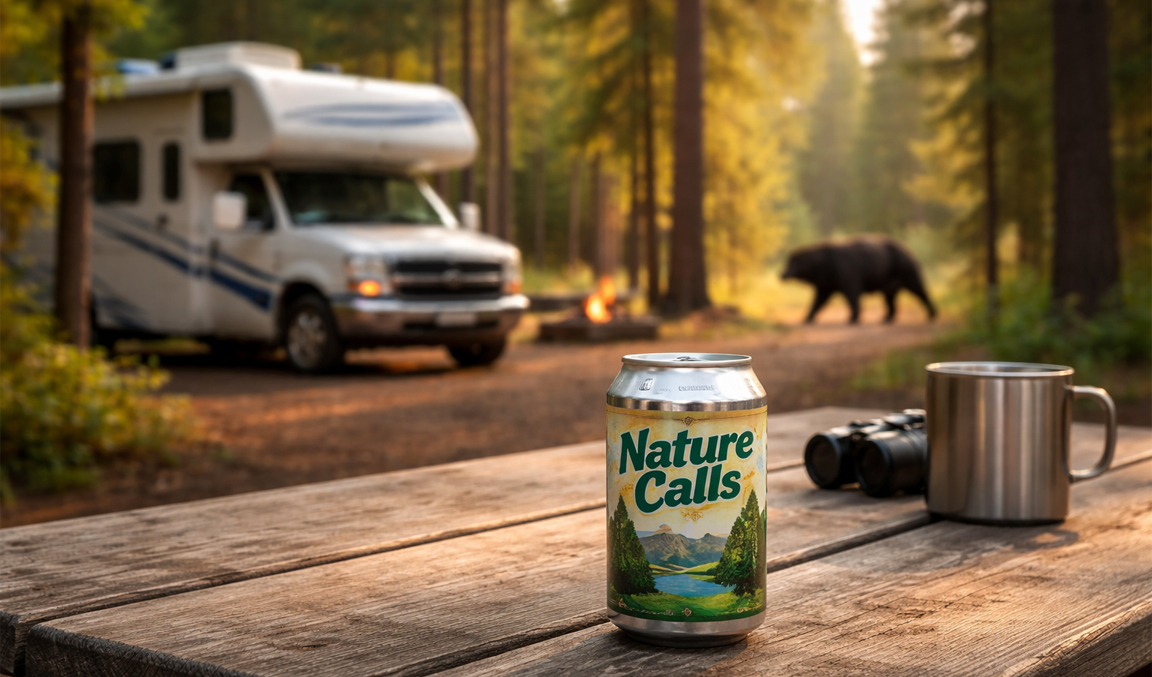
The beer in question comes from a collaboration between Columbia Sportswear and Portland, Oregon’s Breakside Brewery. It’s called “Nature Calls,” and, yes, the name tells you exactly what they’re aiming for. Its tagline is: “A real taste of nature”.

bear poop beer
“Nature Calls,” indeed—this tongue-in-cheek brew leans hard into the joke, but what’s actually in the beer is far less wild than the setting suggests. Company promo image.

But, no, you are not drinking chunks of anything.

Instead, the brewing process uses water that was initially exposed to bear scat. That water is then filtered and treated until it meets normal drinking standards before it ever gets near the brewing tank. What ends up in the final product is, by all accounts, clean, safe beer.

In other words, it’s not so much being “poop in a pint glass” as it is more “water that had a very questionable life experience.”

Why would anyone do this?

Short answer: Because you’re reading this.

Outdoor brands live and die on attention, and in a crowded market, weird sells. This one leans hard into the oldest joke in the woods and turns it into a product you can actually hold in your hand.

The campaign pitch is simple enough: Gear built for the outdoors should handle anything nature throws at it. This just takes that idea a step further than most folks expected.

For RVers, it hits a little closer to home. Spend enough time boondocking or tucked into a forest site, and you already know the answer to that age-old question. You just probably didn’t expect it to show up in your cooler.

What does it taste like?

Surprisingly normal.

Reports describe it as a light lager with hints of huckleberry and honey; flavors that nod to what bears actually eat. There’s no “off” taste, no wild aftershock, nothing that would tip you off if you didn’t already know the backstory.

Which may be the strangest part of all.

Can you actually buy it?

Only if you’re in the right place at the right time. The beer is only available at all Breakside Brewery locations.

This isn’t a nationwide rollout. The beer showed up as a limited release, mainly tied to brewery locations and special events. That tells you something important—It’s less about building a new product line and more about creating a moment people talk about.

Mission accomplished.

Would you try it?

Well, would you?

Some folks will laugh and pass. Others will try it once just for the story. And a few will probably decide it’s no stranger than anything else that comes out of a craft brewery these days.

Either way, it’s a reminder that the outdoor world isn’t just about gear and campgrounds anymore. It’s also about who can come up with the idea nobody saw coming—and get people talking about it around the next campfire.

You can filter it, brand it, and package it however you like, but at the end of the day, it still answers that old question in a whole new way.

RELATED

RVT1257b

RV Daily Tips. Monday, April 13, 2026

America’s Original RV Newsletter. Since 2001
Issue 2881 • New issue every weekday
If you find this newsletter helpful, please consider supporting our work with a donation of your choice. Thank you!

Turn Horizontally
“Try it. You’ll like it!”

Today’s thought

“We wander for distraction, but we travel for fulfillment.” —Hilaire Belloc


Need an excuse to celebrate? Today is National Scrabble Day! Did you know this version of Scrabble exists? It’s our favorite! 

On this day in history: 1960 – The United States launches Transit 1-B, the world’s first satellite navigation system.


Tip of the day
An RV campfire horror story: Why you should never burn fresh wood

When you’re out on the road and enjoying a cozy campfire, safety sometimes means more than just keeping a bucket of water nearby. A recent incident at a campground serves as an important reminder: Burning fresh-cut wood can have unexpected—and dangerous—consequences. Here’s why.


More tips from this weekend:


Lvp2 Pull Screen DoorRV review
2026 Grand Design Lineage LVP2—”budget-friendly,” but polished

Grand Design’s move into compact motorhomes gets more interesting with the 2026 Lineage LVP2. This Ram ProMaster-based camper van keeps the footprint small, but it packs in the kind of lounge, storage, and sleeping flexibility that usually shows up in pricier vans. This model looks more polished than “budget-friendly” suggests, and it fixes a few common van pain points, including the bathroom setup, screen door, and black tank design. See what you think.


🔥 Reader favorite
New and improved Dump Buddy is a must-have gadget for RV dumping

Don’t miss Tony Barthel’s updated review of the new and improved Dump Buddy, a plastic collar that goes around a sewer pipe in the ground and then one that goes around your sewer hose elbow. It’s easy to use. Read Tony’s review here or order on Amazon.


In the RV shop with Dustin
Mastering RV maintenance with the perfect caulking gun

Learn all about mastering RV maintenance with the perfect caulking gun in this informative article and video from a skilled RV repair shop owner—Dustin! Discover the benefits of a dripless caulking gun and how to use it effectively.


Article and video
Dirty secrets of RV inspections you need to know

Here, certified RV tech Jacob Rigor of Rigor RV Repair pulls back the curtain on RV inspection dirty secrets that every RVer should know about before contracting for an RV inspection. Are all RV inspections created equal? Unfortunately, no. There are some “dirty secrets” in the RV inspection business that could leave you with a lemon and a whole lot of regret.


BUMPER SNICKER: “I fix things… eventually.”


The latest news for RVers

To read more recent news, click here.


Featured article
RVers discuss propane safety tips and tricks

By Gail Marsh
It was chilly around a recent campfire, but the conversation heated up rather quickly as folks shared their thoughts about propane safety. Chet began. “I just got a dressing down,” he said. “I took my 30 pound propane tank to fill it up and was told I needed to transport my filled tank upright. That’s impossible in my small vehicle. I put it in the backseat and as you can see—I survived.” Continue reading all about propane safety here.


FUNNY MUG OF THE DAY: Attention readers of advanced age: Drink your coffee with this and proudly tell the world “No, I am not old!”


Ask Dave
Is it legal to drive through a yellow/orange light?

Find out here.


Reader poll
Military veterans: Did you ever physically serve in combat?

Respond here.

IT’S AMAZING AND TRUE! Read more than 2,000 of our previous polls!


Quick tip
Do you really know your fire safety equipment?

Every RV is equipped with at least one fire extinguisher, and experts recommend several. But a sad experience from North Dakota highlights that having a fire fighting tool isn’t enough. Regarding an RV fire in a rural area, the local Fire Chief had this comment about the RV owner: “She had trouble getting the fire extinguisher off the wall bracket, which could have otherwise possibly mitigated damage.” Mitigated damage? In this instance, the owner was able to get out of the rig—but that was it. Unable to get the extinguisher loose from the mounting bracket, she was unable to put out what had started as a small fire in the kitchen.

What about you—and your traveling companions? Does everyone who travels in your RV know how to get the fire extinguishers loose from their mounting brackets, and then how to use them? It could make a huge difference in whether a small fire is a nasty weekend-ender, or a total loss claim. —Russ and Tiña De Maris


Website of the day

RV Resorts With 9- and 18-Hole Golf Courses
Like to golf? Looking for a new favorite RV resort? We think this list will have you covered! These RV resorts have their own golf courses. Have fun!


Monday Motivation

“Too many of us are hung up on what we don’t have, can’t have, or won’t ever have. We spend too much energy being down, when we could use that same energy – if not less of it – doing, or at least trying to do, some of the things we really want to do.” ―Terry McMillan


? MYSTERY PRODUCT OF THE DAY ?
There’s no dis-a-brie-ing, we NEED these! Oh, how fun! If you’re a, let’s say, delicious-food lover (or a mouse), you’ll need these too!


Trivia

7-Eleven operates, franchises and/or licenses more than 13,000 convenience stores in the United States and Canada. It sells the most coffee from its stores on Long Island, NY.


YOUR GRANDKIDS WILL LOVE YOU! Set this up at your campsite and your young grandchildren will know for sure you are the best Grandma and Grandpa in the world!


Readers’ pets of the day

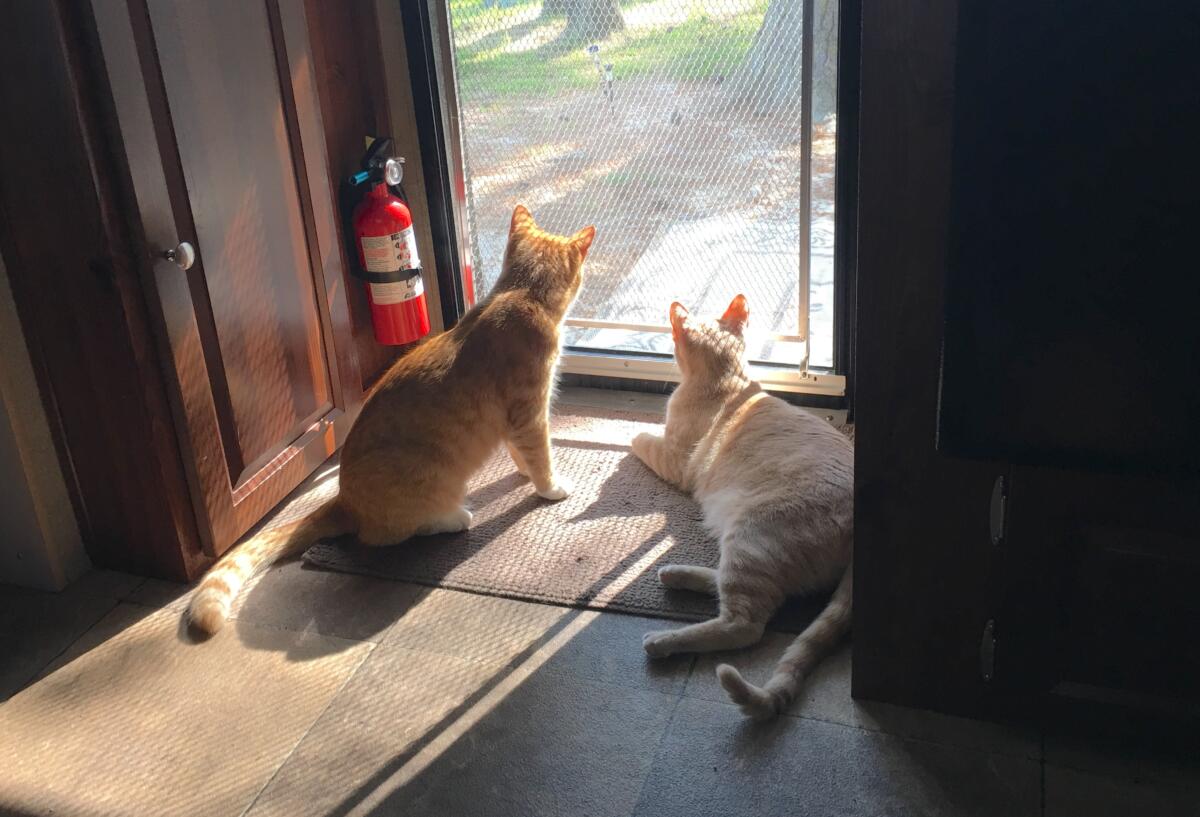
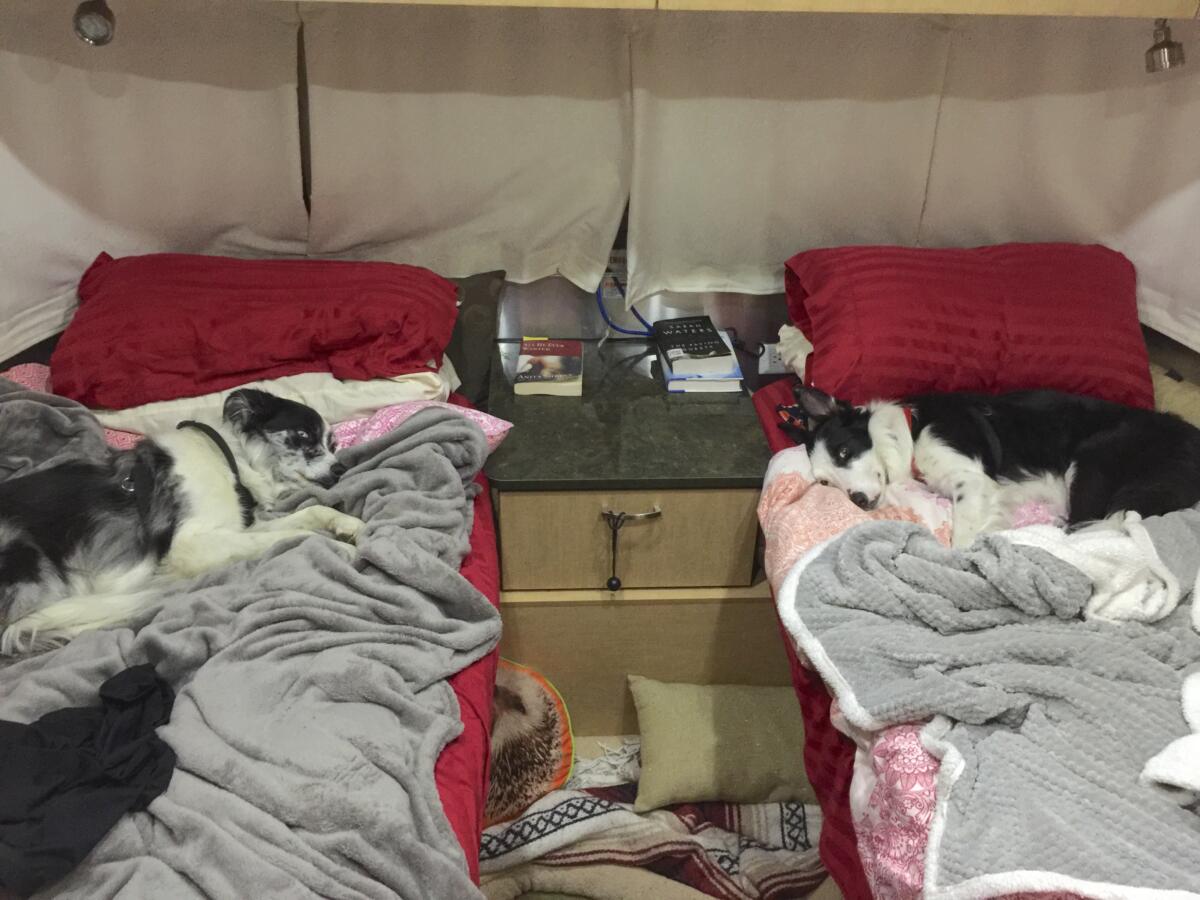
4b8d1d33 F817 489e A713 818dafd39e35 275977977c2be30967c41634d48d5586“Here are our two beautiful babies, Tony and Catniss, chilling in the MiniLite while watching everything that’s going on outside.” —Bob Wood

Send us a photo of your pet with a short description. No blurry photos and please do not submit your photo more than once. Thanks!


Leave here with a laugh


AirfilterTiny, portable air purifier is RV-sized
If your RV ever smells too much like last night’s dinner, this compact USB-powered air purifier is a quiet hero. It uses a true HEPA filter to trap dust, pollen, smoke, pet dander and odors, and runs whisper-quiet in sleep mode. Keep the air fresh wherever you are. Check it out.


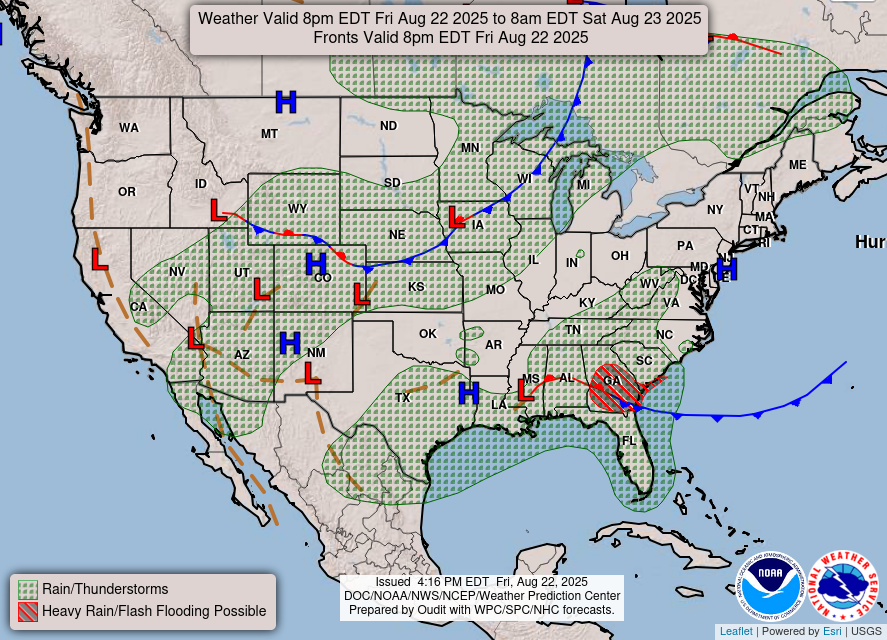
Today’s weather forecast across the nation
THIS MAP UPDATES TWICE A DAY

Visit Current National Radar Weather Map


Did you miss the latest RV Travel Newsletter? If so, read it here.
Oh, and if you missed the Latest News for RVers, make sure to catch up here.


If you shop at Amazon.com we’d appreciate you using this link. We get an itty bitty commission if you buy something, but they add up and help us pay our bills (most importantly our hard-working writers!). 


RVtravel.com All-Star Team

Click here for information about our staff and how to contact us.

WHY WE ASK FOR DONATIONS INSTEAD OF SELLING SUBSCRIPTIONS.

Our policy on using artificial intelligence.

Is it legal to drive through a yellow/orange light?

Dear Dave,
Can you get a ticket for running a yellow light that turns red? —Robert

Dear Robert,
Should you speed up or stop at a yellow light? It depends.

We all have opinions about what to do when approaching a yellow traffic light. When the light turns yellow, it signals that the green (go) phase has ended and the red (stop) light is about to follow. Some drivers see this as a cue to speed up and make it through the intersection before the light changes. Others recognize it as a warning and choose to stop, avoiding the risk of entering the intersection as the light turns red.

Yellow Light

In reality, the yellow light is meant to give drivers enough time to make a safe decision—either continue through the intersection or come to a controlled stop. Its purpose is to reduce sudden braking and help prevent rear-end collisions.

When is it legal to proceed through a yellow light?

Traffic laws generally state that drivers should stop at a yellow light if they can do so safely, without causing abrupt braking or creating a hazard for vehicles behind them. Several factors come into play, including posted speed limits, road conditions, traffic flow, and your distance from the intersection. If a citation is issued, these same factors are typically considered by both the officer and the court.

It is usually considered acceptable to proceed through a yellow light if stopping safely is not possible or if you have already entered the intersection when the light changes.

Yellow Intersection

Why do some yellow lights seem longer than others?

According to the Federal Highway Administration, national yellow light timing mandates are mostly nonexistent, However, they have developed a Manual on Uniform Traffic Control Devices that provides guidance for state Department of Transportation (DOT) engineers, which is from 3-6 seconds.

These include the speed limit (higher speeds require longer stopping distances), the width of the intersection, and overall traffic conditions. Busier intersections may have slightly longer yellow lights to account for increased activity and potential distractions.

According to the manual, the following yellow light intervals are recommended.

25 mph — 3.0 seconds
30 mph — 3.5 seconds
35 mph — 4.0 seconds
40 mph — 4.5 seconds
45 mph — 5.0 seconds
50 mph — 5.5 seconds
55 mph — 6.0 seconds

Each state sets standards for signal timing, and local officials generally cannot arbitrarily shorten or extend yellow light durations. Despite common belief, yellow lights are not shortened to increase ticket revenue.

It is widely accepted that entering an intersection on a yellow light is not a violation. The violation occurs when a driver enters or remains in the intersection after the light has turned red.

However, this is at the interpretation of an officer and you could receive a citation. This could be contested in court if you feel it is unjust. However, my experience has shown it is difficult to prove that and I have paperwork to show for that.

What about red light cameras?

Many cities are installing red light cameras, which are designed to reduce the attempts to run a red light. However, most drivers believe they are designed to issue more citations. Legally you can drive through a yellow light but a red light camera will start to record when it senses a higher speed through an intersection when the yellow light is on and will capture the car, license plate, and light condition when it turns red. No fighting that one.


 You might also enjoy these posts from Dave 

DAVE HAS ANSWERED MORE THAN 1,000 readers’ maintenance and repair questions. Read a directory here. There is so much to learn!


Dave Solberg is a leading expert in the RV industry and the author of the “RV Handbook.”

HAVE A QUESTION FOR DAVE?

Send your inquiries to him using the form below.

Name
Drag & Drop Files, Choose Files to Upload

RVDT2881

An RV campfire horror story: Why you should never burn fresh wood

10

By Gail Marsh
When you’re out on the road and enjoying a cozy campfire, safety sometimes means more than just keeping a bucket of water nearby.

A recent incident at a campground serves as an important reminder: Burning fresh-cut wood can have unexpected—and dangerous—consequences.

A cautionary (and true) tale

Recently, a group of RVers settled in for an evening campfire. Adjacent to their campground, workers were busy clearing trees from the property line. The workers generously offered campers some freshly cut wood. The wood looked perfect for a fire, and the campfire turned out beautifully.

However, the next morning, a 10-year-old camper awoke with red blotches across her face, swollen eyes, and puffy cheeks. What initially seemed like an allergic reaction turned out to be a severe case of contact dermatitis.

After the family consulted with a pediatrician, photos of the rash led to a critical question: Had anyone burned fresh-cut wood?

The doctor explained that the wood likely carried remnants of poison ivy or poison oak—plants known to harbor urushiol, the toxic oil responsible for severe allergic reactions. In some cases, anaphylaxis can result. A round of steroids helped reduce the swelling, but the horrible incident was a stark warning about the hidden dangers of burning fresh wood.

Hidden dangers

Freshly cut wood, especially when sourced from areas with overgrown vegetation, can harbor poison ivy, poison oak, or even poison sumac.

When burned, the heat releases urushiol into the smoke—a process that can turn a simple campfire into a dangerous health hazard. Even if you’re not directly allergic to these plants, inhaling the toxic smoke can lead to respiratory issues and, in some cases, trigger widespread skin reactions or worse.

Poison Ivy

Choosing the right wood

For RVers who love the traditional charm of a campfire, the type of wood you burn matters. It really matters! 

Use seasoned hardwood: Opt for dry, well-seasoned hardwoods such as oak, maple, hickory, or cherry. These woods not only burn more efficiently but are less likely to carry contaminants that could harm your health. Freshly cut wood tends to have high moisture content and may not have been exposed to the elements long enough to let off any potentially harmful substances.

Avoid fresh-cut wood: As tempting as it might be to use wood that’s readily available nearby, freshly cut wood might be contaminated with toxic plants like poison ivy or poison oak. Even if the wood seems clean, it could still harbor urushiol, which becomes airborne when burned.

Inspect the wood: If you’re gathering wood on your own, carefully inspect it for any signs of unwanted vegetation. When in doubt, it’s best to err on the side of caution. Reputable camping and outdoor safety guides consistently recommend using dry, seasoned wood to ensure both a cleaner burn and a safer campfire experience.

Propane alternatives

For those who want the ambiance of a campfire without the potential risks of burning wood, propane alternatives are an excellent option.

Propane fire pits offer a controlled flame, reduce smoke production, and eliminate the risk of toxic plant residues in the fuel source. These devices provide an easy-to-use, cleaner-burning alternative that can be especially appealing in RV settings where convenience and safety are top priorities.

Final thoughts

Campfires are a beloved part of the RV lifestyle, but safety should always come first. Avoid burning any kind of fresh-cut wood, especially if there’s any chance it might contain poison ivy, poison oak, or similar plants.

By choosing seasoned hardwood or even considering propane alternatives, you can enjoy your campfire with peace of mind, knowing you’re not risking a serious allergic reaction or dangerous respiratory issues.

Keep these tips in mind the next time you plan a campfire. A little extra caution can ensure that your RV adventures remain enjoyable and safe for everyone around you.

RELATED

RVDT2881

Dirty secrets of RV inspections you need to know

By Cheri Sicard
In the video below, certified RV tech Jacob Rigor of Rigor RV Repair pulls back the curtain on RV inspection dirty secrets that every RVer should know about before contracting for an RV inspection.

Are all RV inspections created equal? Unfortunately, no. There are some “dirty secrets” in the RV inspection business that could leave you with a lemon and a whole lot of regret.

Now, it might sound like Jacob is against RV inspections, but that’s not the case. In fact, as an RV inspector, he strongly encourages them. He says that the RV manufacturing industry has some serious quality control issues, and many new RVs have significant manufacturing defects. Plus, the industry is almost unregulated. That means minimal protection if you buy a dud.

Dealerships often do a “pre-delivery inspection” (PDI), but it’s typically assigned to the least experienced technician. They’re often incentivized to rush, leading to a superficial check. It’s like having the seller’s employee inspect your house before you buy it. Would you trust that? RVs can cost a lot, so a qualified, third-party inspector is a must.

The “dirty secrets” of RV inspections

So, what are these “dirty secrets” that you need to know? Here’s a breakdown:

# 1 Useless information overload

Some RV inspection reports are full of unnecessary information. The model and serial numbers for all the appliances don’t matter. A technician can find that if they need it. Why is this information included? Even professional inspectors admit they aren’t sure.

#2 Focusing on what the RV is, not what’s wrong

Inspections sometimes focus on documenting the RV’s features rather than assessing its condition. For example, the report might state the refrigerator is a Furrion 12V. It might also include the type of tires, engine, etc. This is information the buyer should already know.

Before hiring an inspector, buyers should know what features they want. They shouldn’t pay an inspector to document what’s already there. It’s like hiring an inspector to tell you a Chevy truck has four wheels. This wastes time and money. The dealer isn’t going to give a discount because the RV has GE air conditioners instead of Dometic. Documenting all these things takes time, making the inspection more expensive and bloated.

# 3 Skipping important tests

Despite long reports, important safety tests are often skipped. Carbon monoxide testing for the furnace may be missed. A rain test that simulates rain on the RV’s exterior to check for waterproofing defects is also often skipped.

#4 Errors and omissions

Many RV inspection reports contain errors, both big and small. In one case, a photo showed a good roof vent. However, the inspector missed significant roof bubbles in the roof membrane. Roof bubbles on membrane roofs are a serious issue. The inspector should have noted this in the report. In this case, the client knew about the issue before the inspector!

Why are these problems happening?

The problems come from the lack of regulation in the RV inspection industry. Other trades have mentorship programs. These programs include apprentice, journeyman, and master levels. The RV industry is missing this. This leads to unqualified and inexperienced inspectors.

To combat these issues, Jacob is starting an RV Inspection Network to help vet the inspectors and standardize the process. He talks more about this in the video.

What has been your experience with RV inspections? Be sure to leave a comment below!

RELATED

RVDT2881

Military veterans: Did you ever physically serve in combat?

14

Today’s poll isn’t quite about RVing, but we know, from past polls, that many of you are veterans. So today we want to know: Did you ever physically serve in combat?

While RVing and military service may seem like two very different chapters in life, they often share common threads—discipline, adaptability, and a deep appreciation for the freedoms we enjoy.

Many veterans find RV travel to be a natural continuation of the self-reliance and camaraderie they experienced during their time in the service. Hitting the open road brings a special kind of peace, and for some, it’s a way to reconnect with the country they once served in uniform.

We’ve heard from readers who have parked their rigs at military campgrounds or simply shared stories around a campfire with fellow vets. And while this poll is just a yes-or-no question, we recognize that behind each answer lies a lifetime of memories—some painful, some proud, and many complex.

This community has always been supportive and appreciative of our veterans. If you’re comfortable, we encourage you to share what your experience was like, or simply let others know you served. You never know who else in the RV park or on our website might quietly relate. Sometimes a single comment sparks a powerful connection.

And, most importantly, we thank you for your service!

MORE LIKE THIS:

RVDT2881

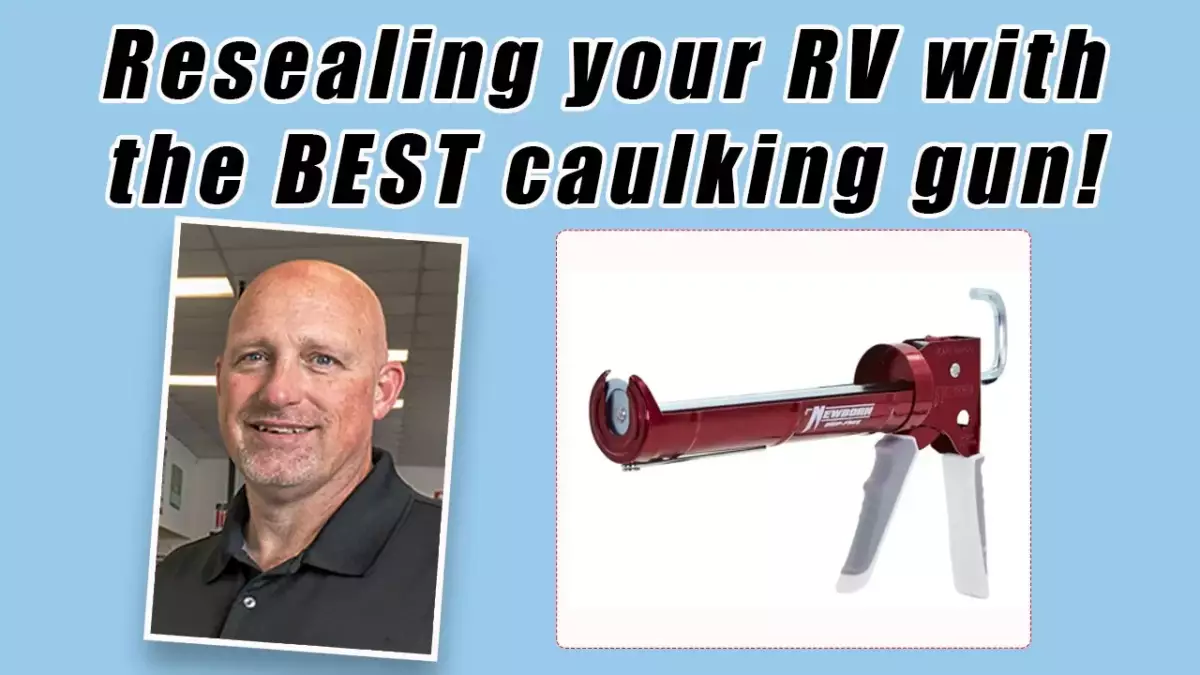
Mastering RV maintenance with the perfect caulking gun

By Dustin Simpson
Learn all about mastering RV maintenance with the perfect caulking gun in this informative video from a skilled RV repair shop owner—me! Discover the benefits of a dripless caulking gun and how to use it effectively.

Why caulking is essential for RV maintenance

  • Seals joints and seams to prevent water leaks.
  • Protects against weather damage and pests.
  • Maintains the structural integrity of your RV.

The advantages of a dripless caulking gun

1. Precision

• Provides better control for accurate application.

2. Cleanliness

• Reduces mess by preventing excess caulk from dripping.

3. Efficiency

• Makes the caulking process faster and smoother.

Features of a dripless caulking gun

1. Design

• Trigger mechanism
Ergonomic handle for comfortable use.
Smooth trigger action for easy dispensing.

• Anti-drip mechanism
Automatically retracts the plunger to stop caulk flow when the trigger is released.

2. Construction

• Durable materials
Made from high-quality metal or plastic for longevity.

• Lightweight
Easy to handle and maneuver.

How to use a dripless caulking gun effectively

1. Preparation

Step 1: Select the right caulk

Choose a caulk suitable for RV use, such as silicone or polyurethane.

Step 2: Cut the nozzle

Cut the nozzle at a 45-degree angle to control the flow.

Step 3: Puncture the seal

Use a nail or the built-in puncture tool to break the seal inside the nozzle.

2. Application

Step 1: Load the caulk tube

Place the tube in the caulking gun and secure it.

Step 2: Apply even pressure

Squeeze the trigger and apply a consistent bead of caulk along the seam or joint.

Step 3: Smooth the caulk

Use a caulk smoothing tool or your finger to smooth the bead for a neat finish.

3. Clean up

Step 1: Release pressure

Engage the anti-drip mechanism to stop the flow of caulk.

Step 2: Clean tools

Wipe the nozzle and any tools used with a damp cloth.

Step 3: Store properly

Store the caulking gun and remaining caulk in a cool, dry place.

Expert tips for using a caulking gun

1. Practice makes perfect

Practice on a scrap piece of material to get a feel for the trigger pressure and flow rate.

2. Keep a steady hand

Maintain a steady hand and consistent speed to apply an even bead of caulk.

3. Use painter’s tape

Apply painter’s tape on either side of the joint for clean, straight lines and remove it immediately after caulking.

4. Check weather conditions

Apply caulk in dry conditions to ensure proper adhesion and curing.

Mastering the use of a dripless caulking gun is a valuable skill for any RV owner. With the right tools and techniques, you can effectively maintain and protect your RV.

This is the caulking gun I use and recommend.

Subscribe to our channel for more expert tips and tricks on keeping your RV in top shape!

More from Dustin

Make sure you check out my website, California RV Specialists, and our YouTube channel for more helpful information, and see our published articles on RVtravel.com and other social media pages.

RELATED

RVDT2881

2026 Grand Design Lineage LVP2— ‘budget-friendly,’ but polished

Grand Design’s move into compact motorhomes gets more interesting with the 2026 Lineage LVP2. This Ram ProMaster-based camper van keeps the footprint small, but it packs in the kind of lounge, storage, and sleeping flexibility that usually shows up in pricier vans. This model looks more polished than “budget-friendly” suggests, and it fixes a few common van pain points, including the bathroom setup, screen door, and black tank design.

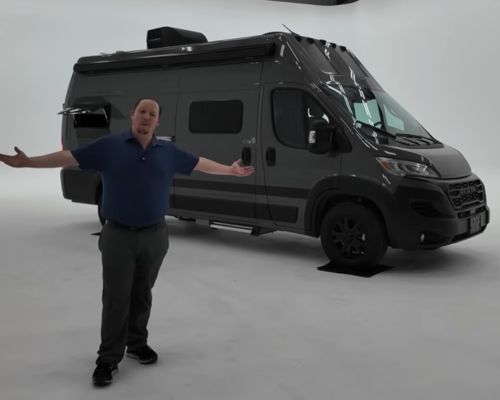
In the video at the end of this post, Matt, of Matt’s RV Reviews, gives us a tour and shares his thoughts about this rig.

What the Grand Design Lineage LVP2 is working with

The LVP2 rides on a Ram ProMaster 3500 Super High Roof EXT chassis with a 3.6L V6, 276 horsepower, 250 lb-ft of torque, and a 9-speed automatic transmission. At 20’11” long and 10’2″ inches tall, it stays compact enough for easier travel while still giving taller campers usable standing room.

This is also an all-electric setup, with no propane and no generator. The video description lists 180W of solar, a Lithionics 12V 310Ah battery, 30-amp shore power, and a 5,000-pound hitch.

The basic specs:

Tank Capacity
Fuel 24 gal.
Fresh water 31.5 gal.
Gray water 26 gal.
Black water 12 gal.

Exterior updates make a difference

The outside keeps the same dark, clean look seen on other Lineage models, but this version adds small decals and a few practical upgrades. The power awning includes LED lighting, and an optional solar awning is available. Nexen Roadian 225/75 R16C tires with blacked-out wheels help the van look sharper than expected.

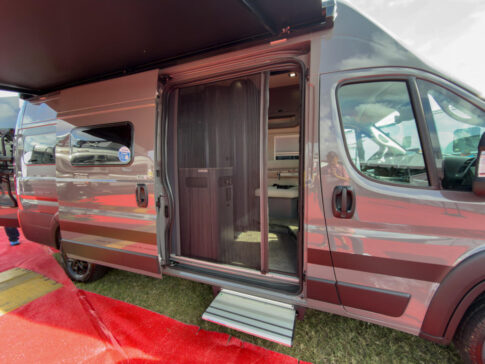
The most welcome exterior touch may be the powered entry step and the added screen door. The acrylic windows also open with more flexibility than the earlier click-stop style. Around back, the van includes rear power ports, privacy blinds, roof access prep, a Maxxair fan, Furrion A/C, available Starlink, and side utility hookups with an outdoor shower.

Interior

ScreenshotInside, the front cab looks modern, not stripped down. The driver area gets a large touchscreen, digital dash, wireless charging pad, cup holders, 110V and 12V power, and swivel seats.

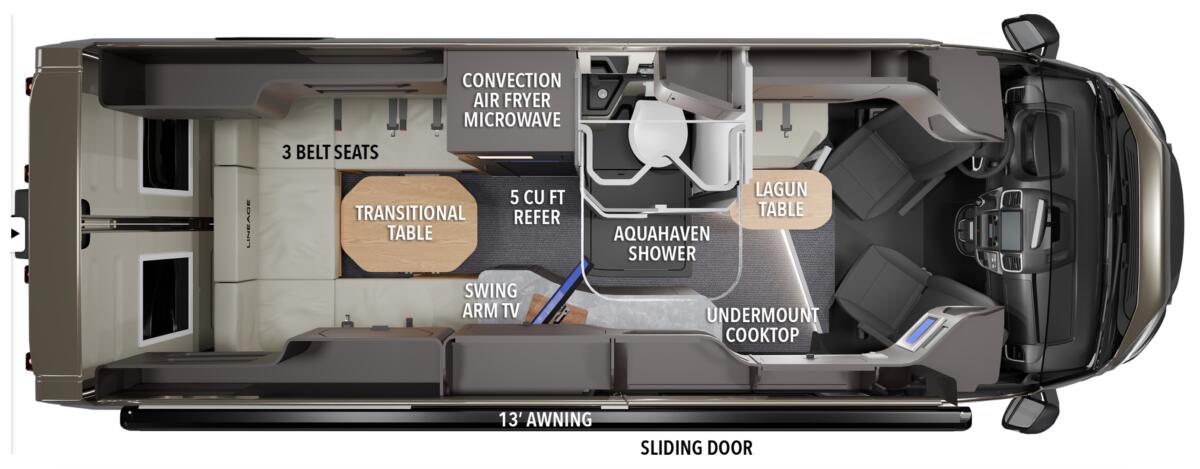
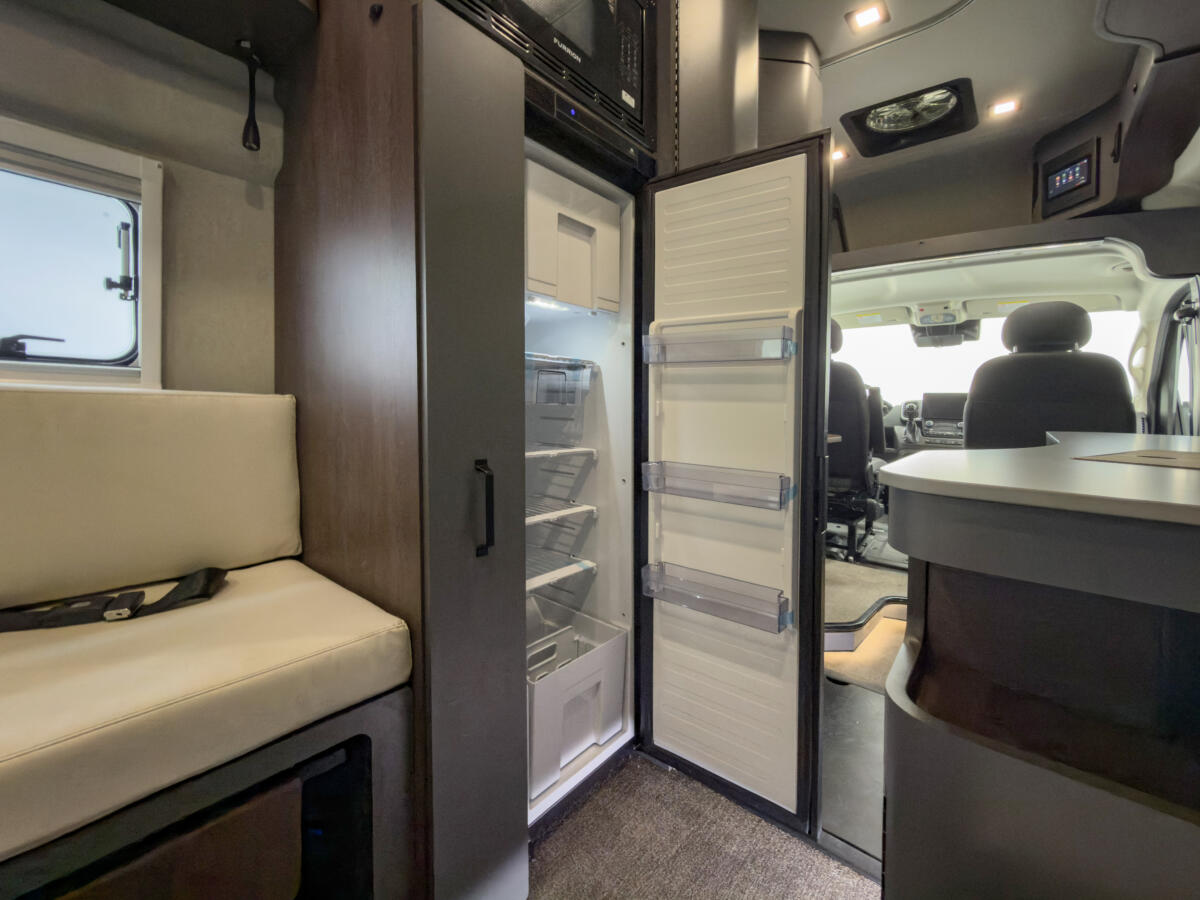
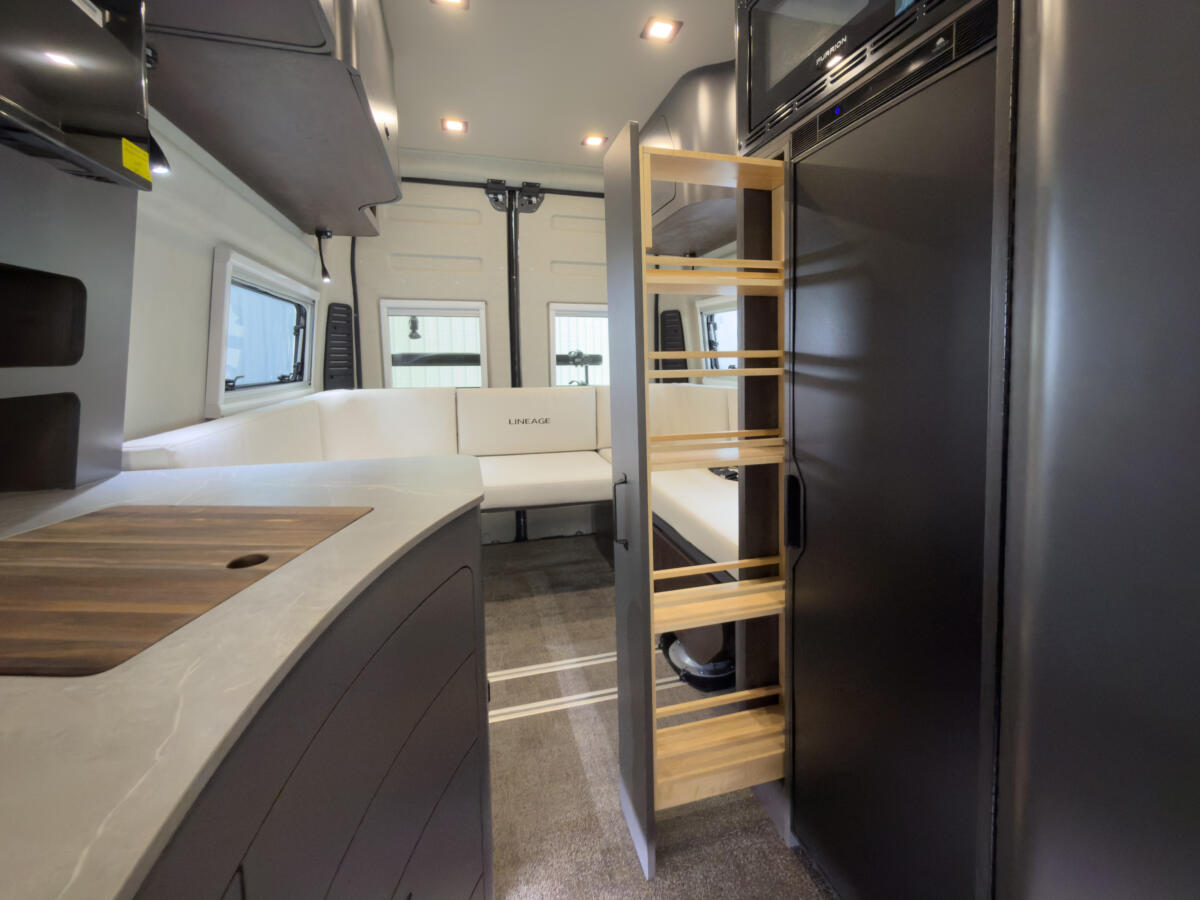
The kitchen is one of the best parts. It uses an Invisacook single-burner induction system hidden in the counter, so prep space stays usable when cooking is done. There’s also a pull-up sink, soap dispenser, cutting board insert, soft-close drawers, pantry space, a 5.3-cubic-foot Norcold fridge, and a Furrion convection microwave with air fryer function.

A lot of the visual appeal comes from the curved Amish-built cabinetry, offered in light gray or sandstone.

Lvp2 Large Fridge Web Lvp2 Pull Out Pantry Web

The rear lounge is the main event

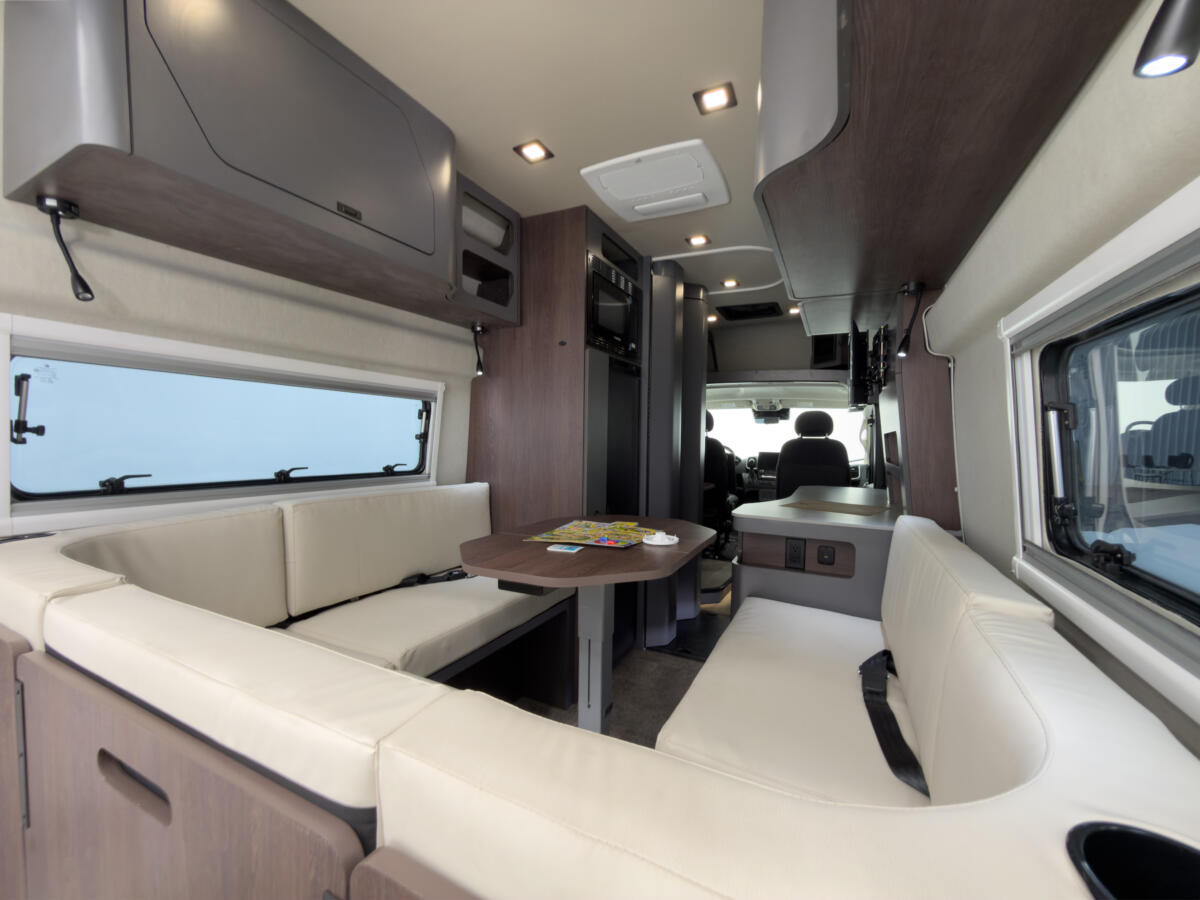
The back of the van is where the LVP2 separates itself. A large U-shaped dinette slides side to side, opens up the aisle, and converts into a bed. Above it, the power bed lift lowers from the ceiling, then adds side extensions to use more of the van’s width.

That setup gives the van a lounge-first feel during the day and more sleeping flexibility at night.

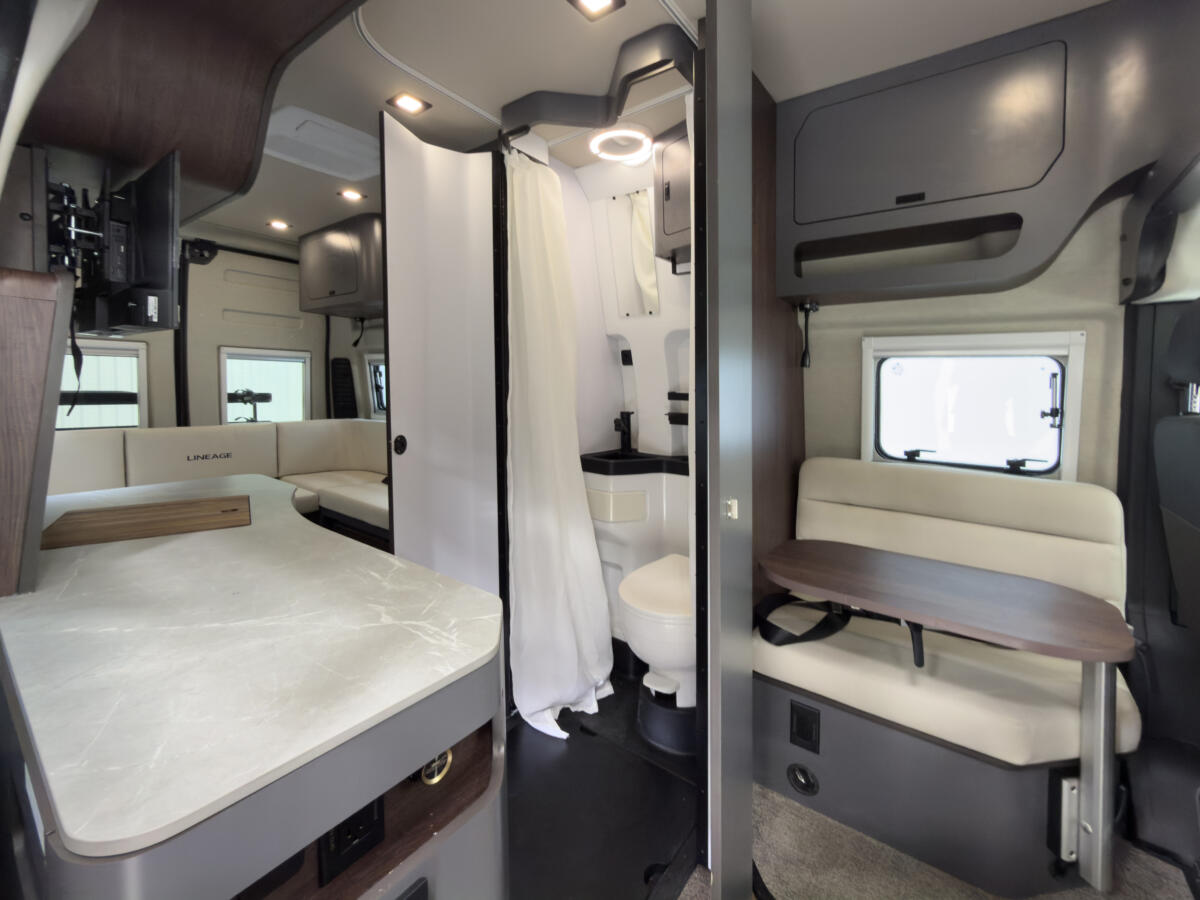
The bathroom also changes the formula from the Transit-based Lineage. Instead of track walls, it uses fold-out doors and a pull-out shower pan. The sink sprayer doubles as the shower head, which saves water, but it was also one of the few weak points called out in the review.

Lvp2 B2f Web Lvp2 Aquahaven Rainshower 3 Web

Final thoughts

MSRP lands at $160,291, with dealer pricing available at shows and retailers.

The strongest praise went to the rear lounge, the drop-down bunk design, and the curved cabinetry. The main complaints were the basic shower setup, the need to store removable dinette pieces, and the small step near the front seat.

However, what stands out most is how much Grand Design seems to have learned from early feedback. The LVP2 doesn’t try to be huge. It tries to be useful, and in this size, that matters more.

 Learn more about the Grand Design Lineage LVP2 here.

MORE CLASS B REVIEWS:

RVDT2881