By Dustin Simpson
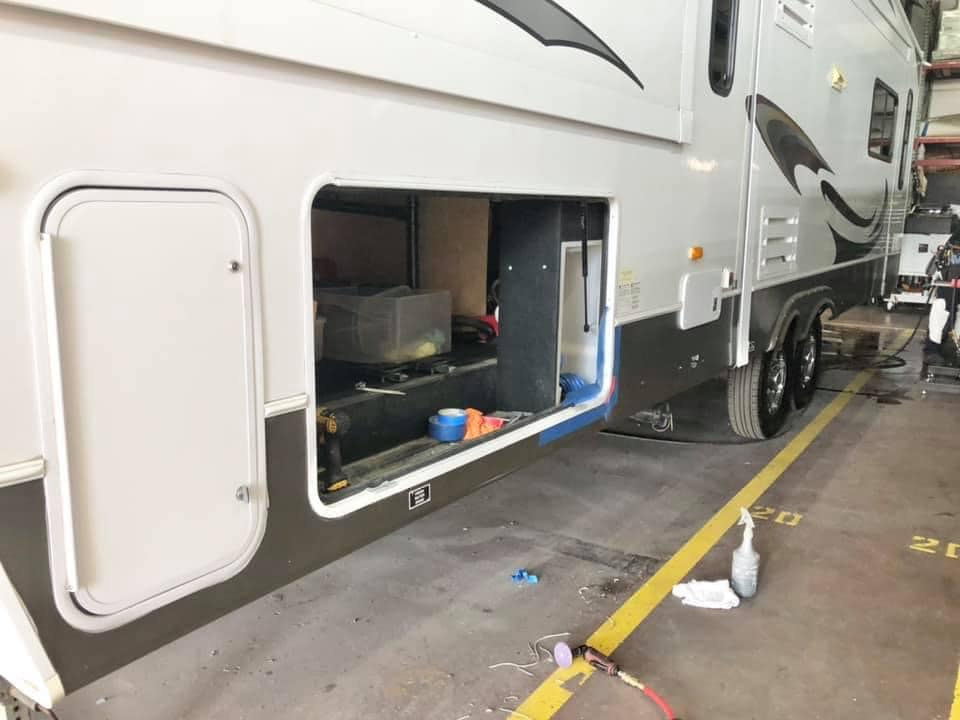
Join me “In The RV Shop” as I talk about RV compartment doors opening while traveling. It’s crucial to address the problem promptly to ensure safety on the road as well as prevent damage to your belongings. Here are some warnings and considerations.
Warning signs
Increased wind resistance
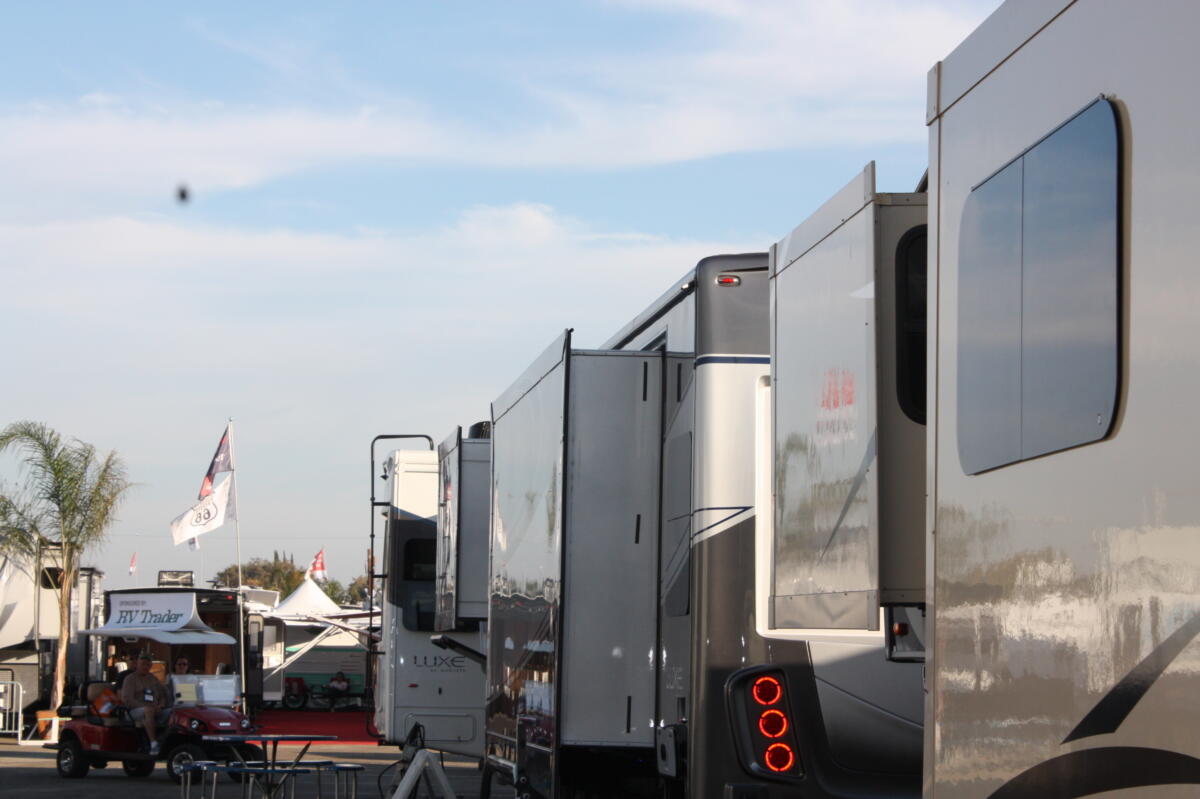
If you notice increased wind resistance or noise while driving, it could indicate that one or more compartment doors are not securely closed on a motorhome. However, if you’re in a towable unit, this will go unnoticed. We keep seeing several outside kitchen doors coming open and getting damaged.
Rattling or unusual sounds
Unusual sounds, such as rattling or banging, may indicate that compartment doors are moving during travel on a motorized unit.
Visible gaps or movement
Check for visible gaps around compartment doors or observe any movement while driving. This can be an indication that latches or locks are not holding securely.
Missing items
If you find items missing from the compartments upon arrival at your destination, it’s a clear sign that doors have opened during travel.
Considerations and solutions
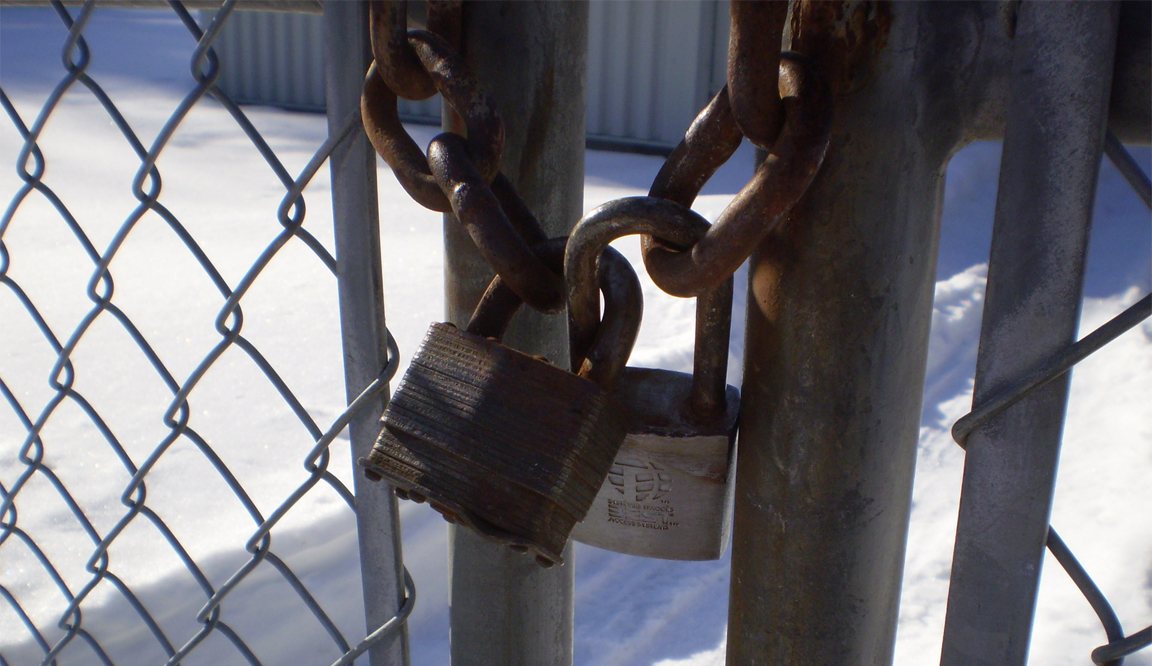
Inspect latches and locks
Regularly inspect the latches and locks on each compartment door. Ensure that they are in good condition, free from rust or corrosion, and functioning properly.
Double-check closure
Before hitting the road, double-check that all compartment doors are securely closed. Pay extra attention to doors and seals that may be more prone to opening, such as those exposed to wind or positioned on the side facing the wind.
Install aftermarket latches
Some RV owners opt to install aftermarket latches or locks like these for added security. Check with your local RV dealership or repair shop to ensure compatibility and proper installation.
Adjustment and maintenance
Periodically inspect and adjust hinges, catches, and any other components that may affect the secure closure of compartment doors. Regular maintenance can prevent issues from arising. You should also be applying a rubber treatment to all compartment door seals to help ensure the seals stay in good condition.
Weight distribution
Ensure that the weight inside the compartments is evenly distributed to prevent imbalance and reduce the likelihood of doors opening due to movement.
Consult an RV repair shop
If the issue persists or if you’re unsure about the proper functioning of compartment doors, consult with a qualified RV service center. They can provide guidance and may identify any underlying issues. In some cases, it’s a design issue and additional measures can be added to protect your unit from opening in travel.
Secure valuables
Store valuable or fragile items in a secure location within the RV, such as in the living area, to minimize the risk of damage or loss in the event of a compartment door opening.
Important reminder
Remember, safety should be a top priority when addressing any issues related to RV travel. Regular maintenance, inspections, and proactive measures can significantly reduce the risk of compartment doors opening unexpectedly while on the road. As a reminder, please remember those behind you when towing. The last thing you want is to cause an accident or injury due to something flying out of or off the coach in travel.
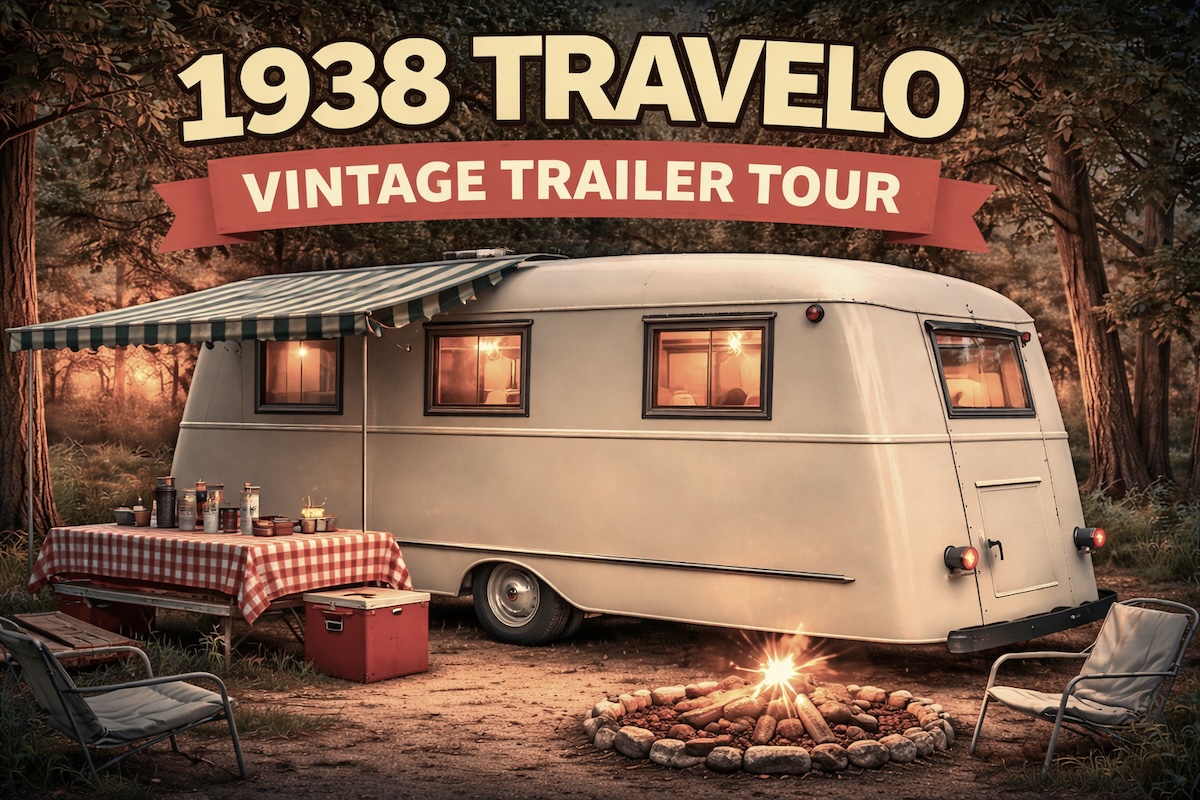
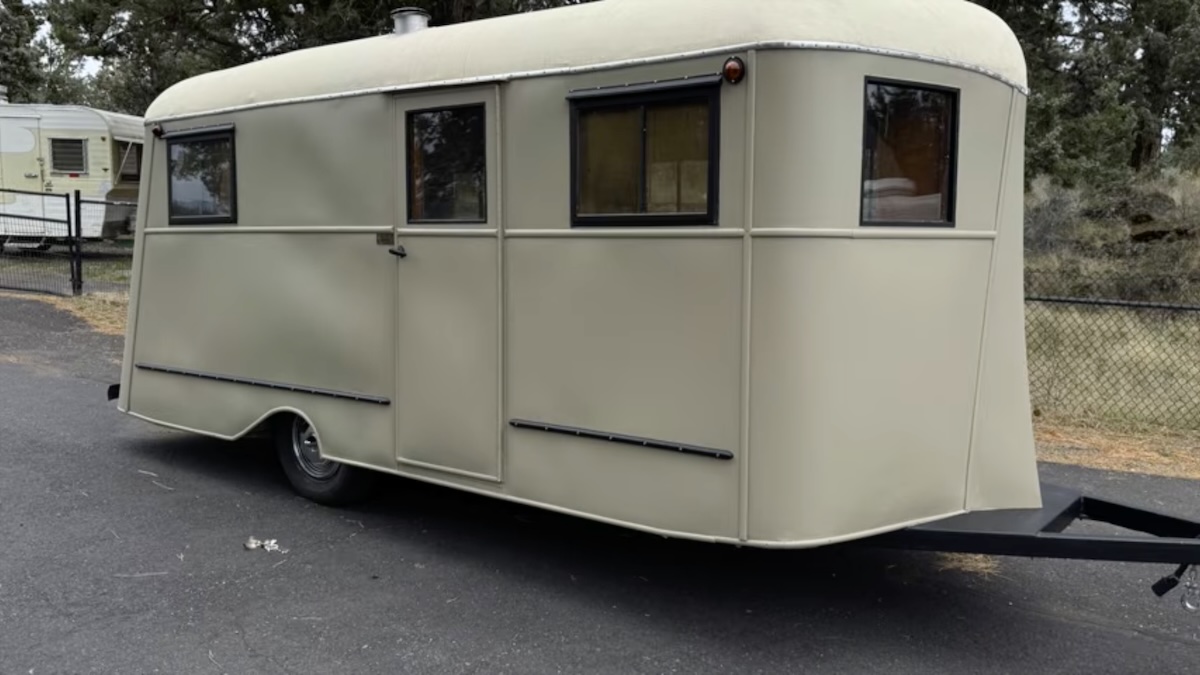
This 1938 travel trailer is older than all but a few RVtravel.com readers, and probably in better condition. It’s a real beauty that will likely attract a lot of attention wherever it appears. It’s so well preserved that you might think it was parked in a garage through the years—some travel stickers in a front window suggest otherwise.
The video tour near the bottom of this article is by the folks at Flyte Camp, a vintage trailer restoration company. It offers a fascinating look at one of the earliest examples of travel trailers. Keep in mind that this RV has been around for nearly nine decades.
The video begins by introducing the trailer as a rare survivor from the late 1930s. At that time, travel trailers were still a novelty, used primarily by adventurous travelers rather than the mainstream RV crowd we see today. What immediately stands out is how compact the unit is compared to modern RVs, yet how efficiently the space is used.
The exterior of the vintage travel trailer reflects the styling of the era, with a simple, streamlined shape and durable metal construction. Unlike today’s flashy graphics and slide-outs, this trailer emphasizes practicality. The host points out that despite its age, the structure remains solid, which speaks to the craftsmanship of the time.
Inside the 1938 Travelo
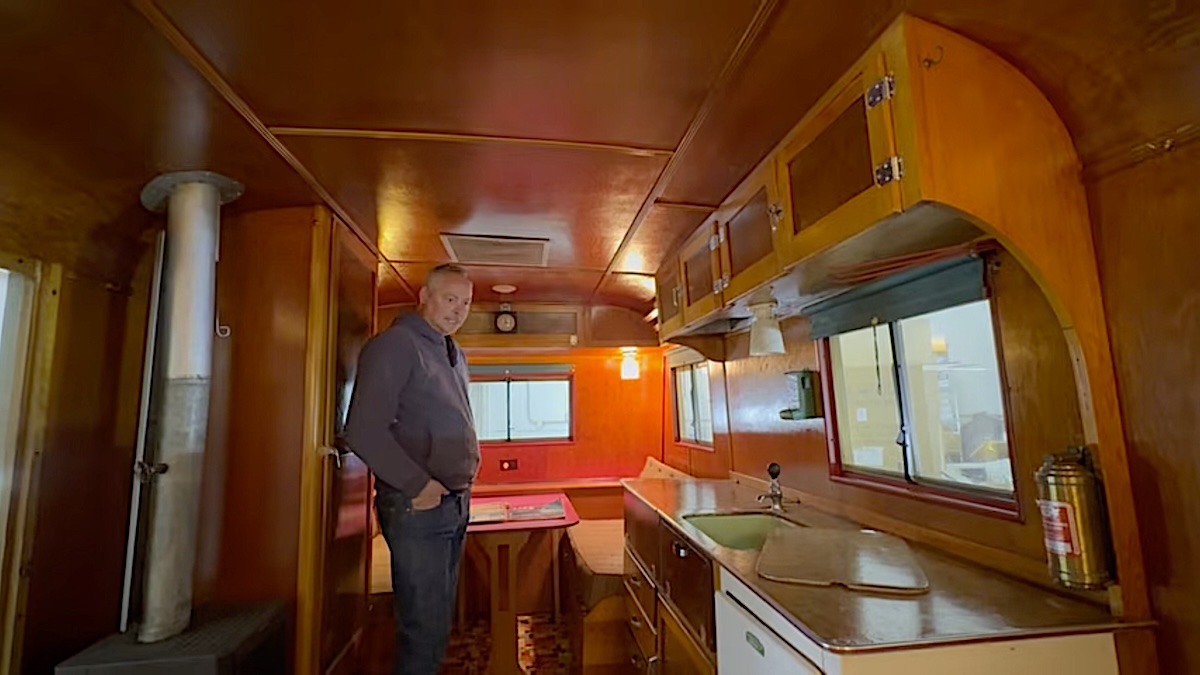
Inside, the tour reveals a surprisingly livable layout, not a whole lot different than present trailers. It includes a small dinette area that converts into a sleeping space, an idea still common today. This dual-purpose furniture shows that even in 1938, designers were thinking about maximizing limited space. The cabinetry is made of Douglas fir, giving the interior a warm, classic feel that contrasts with the lighter, synthetic materials of today.
The classic RV is heated with a woodburning stove—an idea long gone which is good considering how the smoke would clog up today’s often-crowded RV parks. The stove can do double duty as a strovetop.
Kitchen includes the basics
One of the most interesting aspects of the trailer is its kitchen. Though basic by today’s standards, it includes essential features such as a compact stove and storage for cooking supplies. The host notes how everything is arranged efficiently, allowing travelers to prepare simple meals on the road. There is no modern plumbing system or 12-volt electrical system.
Storage throughout the trailer is another highlight. Small compartments and cabinets are tucked into nearly every available space.
Convertible sleeping space
The sleeping area, created from the converted dinette, is functional. The host emphasizes that while comfort standards have evolved, the basic concept of a convertible sleeping space has remained largely unchanged for decades. It’s a reminder that many “modern” RV features actually have deep roots in early designs like this one.
Throughout the video, the host expresses admiration for how well-preserved the trailer is. Much of it (but not all) appears to be original, including fixtures and finishes. This preservation allows viewers to see what RV travel looked like nearly 90 years ago.
The video also touches on how travel itself was different in the 1930s. Roads were less developed, and long-distance travel required more planning and self-reliance. Owning a trailer like this represented freedom and adventure, much as RVing does today but with fewer conveniences and more challenges.
In the end, the tour serves as both a history lesson and a reminder of how RV design has evolved. It shows that many core ideas including efficient use of space, multifunctional furniture, and the desire for mobility have remained consistent. The 1938 Travelo may be basic, but, when you think about it, it’s not as dramatically different from today as most products, automotive or otherwise, from its time.
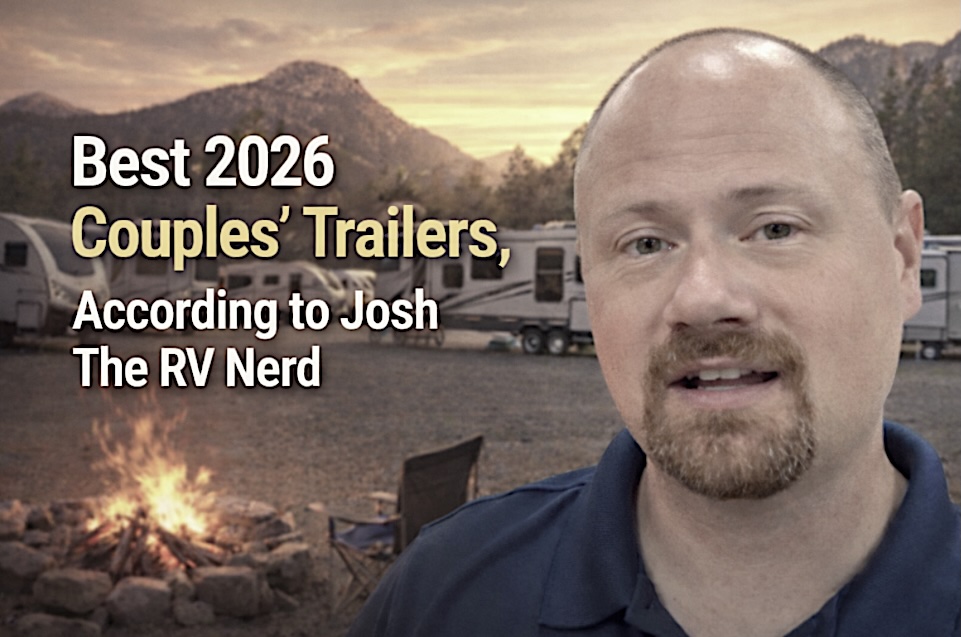
Josh the RV Nerd of Bish’s RV, has put together a list of his favorite 2026 couple’s travel trailers along with video highlights of each. We’ve summed up Josh’s comments in this article and provided a link to his full-length video review of each model.
The video at the bottom of this article contains clips from each video along with Josh’s comments. That may be enough to give you an idea of what interests you.
So, here we go…
Picking a couple’s camper gets messy fast, says Josh. Floor plans blur together, specs pile up, and the best option often depends on how a couple actually camps. Josh cuts through that by focusing on a personal list for couples camping, not a claim that these are the only trailers worth buying.
This is what he’d pick for himself and his wife, and another shopper’s list could look completely different.
Josh’s “Nerd Preferred” picks share a pattern. They aren’t random. They tend to favor layouts that feel open, tow with less drama, and stay useful once the camping trip moves from brochure dreams to rainy mornings and real storage needs.
A few traits show up again and again:
Private queen or king bedroom setups, because couples usually want separation.
Better counter space, because tiny kitchens get old fast.
Camp-side windows, because the awning side should feel like the good side.
Stronger running gear, including better suspension and Goodyear tires.
Heated underbellies, solar packages, and second A/C options, where size demands it.
Honest towing boundaries, with some trailers fitting half-ton use and others making more sense behind a 3/4-ton truck.
That last point matters. Several of these rigs are technically towable by the right half-ton on paper, but Josh repeatedly leans toward realistic towing comfort, not brochure bravado. That practical lens is a big reason this list feels useful.
The first standouts, from luxury feel to smart no-slide design
Brinkley Model I 280
The Brinkley Model I 280 stands out because it borrows a luxury kitchen and living room idea from Brinkley’s bigger Model G toy hauler line and fits it into a travel trailer. The new front design adds drop-frame storage and a more upscale nose cap with windshield treatment.
Inside, the opposing-slide layout gives couples a wraparound quad recliner, a multi-use dinette that works as a bar, desk, or table, and “obscene” solid-surface counter space. A pop-up extension and built-in safety sensor show how much thought went into the details.
The Cougar 26LBW may be the trailer that best matches Josh’s current sweet spot. It’s about 30 feet long, yet it packs in a private front king bed option, direct-facing entertainment, a large rear bath, and striking window coverage on both sides of the trailer.
It also brings stackable washer and dryer prep, a big drop-frame front compartment, a 0- to 110-degree weather package, and solar options from 220 to 660 watts. Add the move to a rack-and-pinion slide, and it looks like one of the strongest all-around couple’s models on the market.
Cougar 25FKD
In the Cougar 25FKD, the big story is how much floor plan value Cougar squeezes into a front-kitchen super-slide design without wrecking the bathroom. The walk-through bath won’t be for everyone, but it solves travel access and makes room for a larger rectangular shower with better headroom.
Cougar also improved the pantry and counter space, kept the Goodyear tires and anti-lock braking system, and added Road Armor suspension hardware. Bed choices matter here, too, since shoppers can choose a true queen or a 70-by-80 RV king.
The Alliance Delta 274RKW feels like a dressed-up take on the popular rear-kitchen couple’s trailer. It adds solid-surface counters in both the kitchen and bathroom, a 6’9″ interior height, and a bedroom with far more storage than most travel trailers in this size range.
There’s also a slim fireplace built into the bedroom wardrobe slide, a heated belly, 400 watts of standard solar, and a big front storage area that even includes a picnic table. Josh’s one caution is towing, since this one leans past casual half-ton comfort.
The Ember 2300MLL is built around mobility. That matters for campers who tow often, not just a few weekends a year. The updated touring coil spring suspension system, paired with Goodyear Endurance tires, aims to reduce shock, rattle, and wear over time.
The layout helps, too. A private queen bedroom, a campsite serving window, second A/C prep, and an available 1,200-watt solar package make it one of Josh’s favorite no-slide couple’s campers. For buyers who value ride quality, this one earns its place.
The Freedom Express 249SE brings back a more old-school camping feel, but with current features. It’s a no-slide, half-ton-friendly couple’s trailer with a private rear true queen bedroom, tall ceiling, and broad front window coverage that keeps the living area from feeling boxed in.
The floating table and bench add flexibility, so the main room can shift from a dining setup to an open lounge space. Add double-Azdel construction, an enclosed heated belly, tire pressure monitoring, tandem axles, and 200 watts of solar, and this becomes a smart, simple choice.
Five more couple’s trailers that deserve a hard look
Jay Flight 265MWS
The Jayco Jay Flight 265MWS caught Josh’s eye because Jayco finally gave this class more camp-side glass. The windows across from the sofa and sink sit under the awning, which is exactly where many couples want the view. It stays under 30 feet and still delivers a private queen bedroom, super slide, tall ceiling, and a large rear bath.
Rockwood 2523MBR
The Rockwood 2523MBRmay be the surprise star of the year. In roughly 26 feet, it offers big, solid-surface prep space, a theater seat or hide-a-bed choice, a dining bar instead of a full dinette, and a true queen bed slide. It also packs in combo washer and dryer prep, dual-composite walls, a 1,800-watt inverter, holding tank heat pads, and dual A/C capability.
The Surveyor 252RBLE remains one of Josh’s favorite straight-ahead couple’s layouts. A private queen bedroom, theater seating aimed at the entertainment center, an added fireplace, no carpet, and a good rear bath make it easy to understand. What lifts it higher is value, since the equipment feels practical instead of flashy, and trade-in feedback appears unusually strong.
Winnebago Thrive 24RKS
The Winnebago Thrive 24RKSuses a familiar floor plan but changes the execution. Instead of a walk-through bath, it creates a huge bonus bedroom closet with combo or stackable washer-and-dryer prep. Molded one-piece-style kitchen and bath counters, Azdel use in the walls, 50-amp service, heated underbelly, and second A/C capability give it a different edge.
The Forest River Un•Mapped 24RK takes one of Josh’s favorite mid-size couple’s layouts and adds more counter space than expected in a sub-30-foot trailer. The wraparound kitchen stays deep on the camp side, and the three-in-one bar, desk, and table setup makes the whole trailer feel more flexible. An Olympic queen bed, Trail Gate outdoor bar, 400 watts of solar, Goodyear tires, and TPMS strengthen the value case.
The honorable mentions and the best way to compare them
The Cougar 22MLS still gets a nod because it has been one of Josh’s personal favorites for years. It remains close to the top, even if the 26LBW may have finally passed it on his own list. Here’s our review of it.
The Coachmen RV Freedom Express 18SE also deserves mention. It doesn’t chase a wild layout. Instead, it brings smart laminated construction and useful space close to stick-built price territory, while staying light enough to appeal to more tow vehicles.
One of the most helpful parts of Josh’s full walkarounds is the built-in cross-shopping. He often points out which brands build similar layouts, which makes side-by-side comparison far easier.
The best couple’s trailer is the one that fits the trip
Josh’s list works because it stays honest. These aren’t “best for everyone” trailers. They’re the models that best match how one couple would camp, tow, cook, relax, and store gear.
An RV goes on consignment with a dealer. It sells. Then the money doesn’t show up. Meanwhile, the buyer can’t register the rig. It’s a textbook example of RV consignment risk—now under investigation in Lockeford, California.
What’s unfolding in California
Authorities say a now-closed dealership may have sold dozens of consigned RVs without properly paying owners or completing the paperwork buyers need. The sheriff’s office called the situation “brutal,” and that word fits.
Some sellers report their RVs are gone but payment never arrived. Buyers, on the other hand, say they’re stuck with units they can’t legally register. In a few cases, loans may still be tied to RVs that have already changed hands.
That’s about as bad as it gets—on both sides of the deal.
Why this hits RVers where it hurts
Most of us think of consignment as the easy button. Drop off the rig, let the dealer handle the shoppers and paperwork, then pick up a check when it sells.
And most of the time, that’s exactly how it works.
But there’s a window in every consignment deal where the dealer controls everything. The RV is on their lot. The buyer’s money goes through them. The title process runs through them, too.
If something breaks in that chain, you may not know it until the RV is gone and the paperwork—or the payment—doesn’t follow.
How it’s supposed to work—and where it can break
On paper, the process is simple. You leave your RV with the dealer. They sell it. The buyer pays the dealer. The dealer pays you and handles the title transfer.
The trouble comes when timing slips or something in that sequence stalls. A delay in payment can turn into a bigger issue. Paperwork that sits too long can create title problems. If there’s a loan involved, things get even more complicated. And if a dealership shuts down mid-transaction, everything can freeze in place.
That’s when a routine sale turns into a tangle.
That’s also where the first warning signs tend to show up. A delayed call back. A vague answer about paperwork. A deal that’s “almost done” for longer than it should be. None of those mean trouble by themselves—but they’re the kind of small signals that are easy to overlook until they aren’t.
The buyer’s side: You paid—but can’t use it
For buyers, the shock comes fast. You think you’ve bought an RV and are ready to hit the road. Then the DMV says the paperwork isn’t in order.
Without a clean title transfer, you can’t register the unit. That means no plates, no proper insurance, and no legal way to use what you just paid for. Untangling that can take time, and sometimes legal help.
The seller’s side: Your RV is gone—and so is the money
For sellers, the risk cuts even deeper. The RV leaves the lot, but the check never shows up.
If there’s still a loan attached, the payments don’t stop just because the RV is gone. That leaves the owner on the hook financially, with little leverage and a lot of questions.
What RVers should take from this
Most dealers handle consignments the right way. This kind of situation is the exception, not the rule.
Still, if you’re handing over your RV, it pays to stay a little closer to the process than many folks do.
Before your rig ever leaves your driveway, make sure you know exactly where the title stands. If there’s a loan on it, ask—specifically—how that gets paid off and when. Don’t settle for “we handle that.” Ask what that actually looks like.
Once the RV is on the lot, don’t go quiet. Check in. If it sells, you should hear about it right away—not weeks later. Ask how you’ll be notified and who’s responsible for calling you.
Paperwork is where these deals often go sideways, so this is one place to stay a little persistent. When the RV sells, ask when the title transfer is being submitted and how you’ll know it’s done. If the answer is vague, press a little.
Same goes for payment. You want a clear expectation before the sale happens, not after. When do you get paid—days, not “whenever the deal closes out.”
And if anything starts to feel slow, unclear, or just a little off, don’t ignore that instinct. In a lot of cases like this, the warning signs show up early—they’re just easy to brush aside at the time.
The bottom line
Consignment can be a convenient way to sell an RV. For many owners, it works just fine.
But it isn’t risk-free.
When a dealer is holding your RV, your title, and the buyer’s money all at once, a lot depends on that system working exactly as it should.
And when it doesn’t, the fallout can land on everyone else.
America’s Original RV Newsletter. Since 2001
Issue 2874 • New issue every weekday If you find this newsletter helpful, please consider supporting our work with a donation of your choice. Thank you!
Today’s thought
“I have not failed. I’ve just found 10,000 ways that won’t work.” ―Thomas Edison
Need an excuse to celebrate? Today is National DIY Day! (More on that below…)
On this day in history:1902 – “Electric Theatre”, the first full-time movie theater in the United States, opens in Los Angeles.
Tip of the day Some of our most popular DIY articles for the DIY RVer
Since it’s National DIY (do-it-yourself) Day, we thought we’d share some of our most popular DIY articles. If you’re up for an RV project or craft (some big, some small), these are for you:
Article and video Boondocking myths exposed—The truth about off-grid RVing
Boondocking, RVing off the grid without power, water, or sewer hookups, can be great and economical, but it is important to be prepared. The video below from the team at Like There’s No Tomorrow highlights some popular boondocking myths. Give it a watch before you attempt off-grid camping and be better prepared.
IT’S TRUE: Your brain uses about 20% of your body’s energy—so, yes, deciding where to camp really is exhausting!
Featured article Opinion: Living in your RV on private property is not the government’s business
By Jeff Clemishaw
Full disclosure—I come from a pretty government-wary household, so my opinion here may be a little bit biased. I grew up on 36 secluded acres in a small rural town that had around 1,000 residents. In towns like this, most people simply mind their own business. There are no nosy neighbors preoccupied with what you’re doing on your private property, and local zoning is lax, to say the least. Continue reading.
No more stretching to reach your RV roof vent
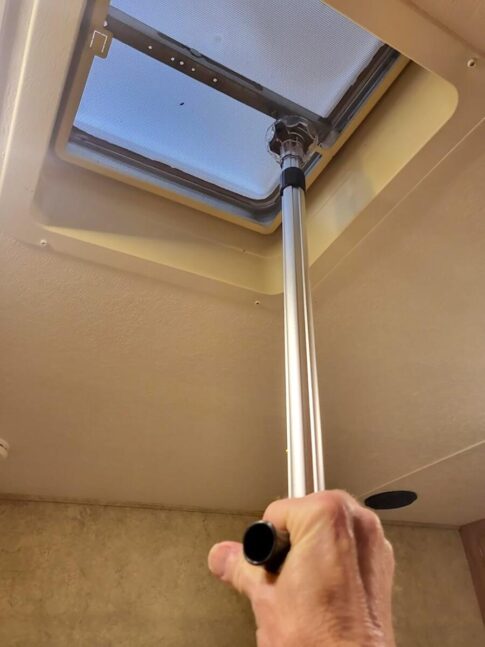
This adjustable vent opener pole makes cranking open hard-to-reach roof vents simple—no climbing, straining, or wobbling on tiptoes. With an extendable handle and interchangeable heads that fit most RV vent knobs, it’s a handy tool for quick airflow adjustments without the hassle. Learn more or order.
Ask Dave How can I get rid of foul smell coming from my RV’s sink?
After you have tire work done, within 10 miles, check that the lug nuts are tight. Then retorque the lug nuts after 100 miles. If you have hubcaps on your wheels, put the hubcaps in your vehicle when the tire work is being performed. You’ll notice the hubcaps are missing every time you approach your vehicle and this will act as a reminder to do the retorquing. If you don’t have hubcaps, a note on your dash will act as a reminder. —Thanks to George B.
Website of the day
The Most Serene Mountain Lake Towns in the U.S.
Who doesn’t love a mountain town? But what’s even better than that? A mountain town with a beautiful lake! These places are mighty beautiful.
? MYSTERY PRODUCT OF THE DAY ? Gents, put this on and we guarantee everyone at the RV park will notice you. And we mean EVERYONE! Heck, even the local squirrels will notice you! No way you wouldn’t turn every head in town.
And the survey says…
We’ve polled RVtravel.com readers more than 5,000 times in recent years. Here are a few things we’ve learned about them:
• 51 percent of men say they usually or always wear a hat, and 9 percent of women say they usually or always wear a hat.
• 20 percent say if they had the opportunity to go into outer space they’d go with no questions asked! An additional 17 percent said they’d go, but only if they knew they’d come back.
• 11 percent had an imaginary friend as a child.
Tater Tots were created in 1953 by Ore-Ida founders who repurposed leftover potato slivers by mixing them with flour and seasoning. The product was first sold in 1956 and quickly gained popularity. The name “Tater Tot” was trademarked by Ore-Ida and has since become a common term for the dish. Americans now consume approximately 70 million pounds of Tater Tots per year.
RANDOM RV THOUGHT: The average person walks the equivalent of five times around the Earth in their lifetime—RVers might hit that just walking around campgrounds. What do you think?
Readers’ pets of the day
“Kobie & Pepper (Shih Tzus) met at a campground in Essex, Ontario. To find out, they were brothers. Kobie is a snowbird and goes to Palm Springs every year, and Pepper goes to Orlando for six months. When they get back, they are inseparable and love to wrestle. Both have passed to the rainbow bridge at age 15. A lot of miles on these two pups.” —Earl Deslippe
Send us a photo of your pet with a short description. No blurry photos, and please do not submit your photo more than once. Thanks!
FREE IS GOOD! Starting at 10:00 a.m. on Saturday, April 4, 2026, the first 150 MyLowe’s Rewards™ members can drop by their local Lowe’s for a free Lowe’s puppy planter and puppy keychain. (Plant not included.)
LIVE: Mission to the Moon
As bandwidth allows, this stream will feature live views from Artemis II’s Orion spacecraft, without commentary, as it makes its journey around the Moon. You will see a blue screen if there is a loss of signal, or if the bandwidth is needed for mission activities. You may see what appears to be a black screen when the vehicle is in darkness.
Leave here with a laugh
EVERYTHING IS ON SALE!Well, okay, not everything, but a lot of things… maybe even the thing in your shopping cart right now! See if it’s true.
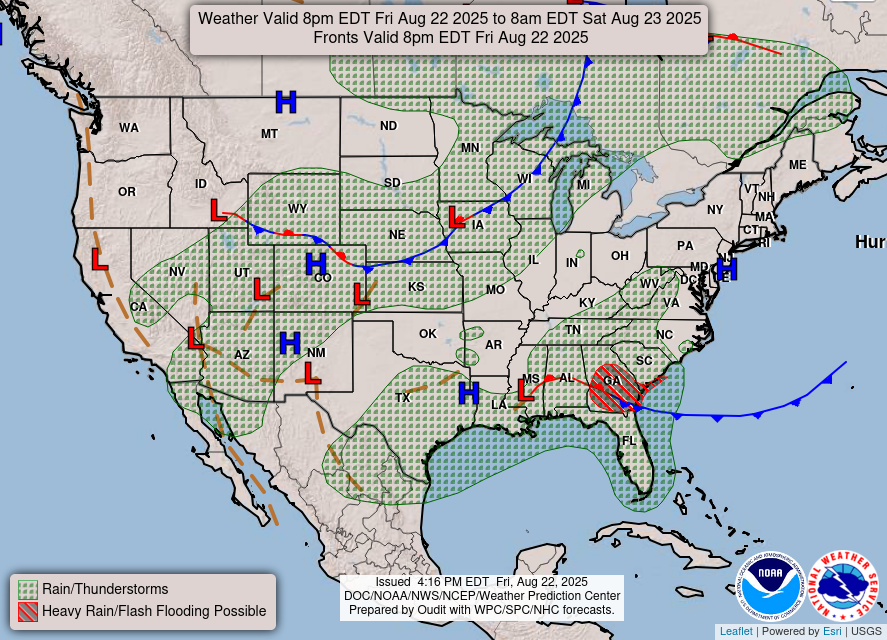
Today’s weather forecast across the nation THIS MAP UPDATES TWICE A DAY
If you shop at Amazon.com we’d appreciate you using this link. We get an itty bitty commission if you buy something, but they add up and help us pay our bills (most importantly our hard-working writers!).
Dear Dave,
I have a reoccurring odor which I think is coming from the sink or gray water tank. What is the best way to clean and sanitize it? —Warren, 2010 Coachmen
Dear Warren,
There are two types of holding tanks in an RV: the black water tank holds sewage from the toilet, and the gray water tank holds water from the shower. The sinks inside an RV do not always go to the gray water tank. Rather, they go to the closest holding tank so the plumbing is easily routed to that tank.
What to do first
The first step would be to identify which tank your sink is routed to. It might be the black water holding tank and the smell is coming from that. If it is the black water tank, I would make sure to use the proper treatment, which is anaerobic with enzymes and reduces the sulfur or rotten egg smell.
Also make sure there is water in the “P” trap, as it can get sloshed around during travel and drain into the tank. Water in the “P” trap will create a barrier to keep smells from coming up to the sink.
Another source of bad smells can be from bacteria on the pipes and sink drain from rotten food. Bacteria breaks down food particles and will have an unpleasant odor, as well.
How to clean and sanitize tanks
You can clean and sanitize with bleach and water. A more environmentally friendly option is to use hydrogen peroxide, Dawn dish soap, and hot water.
Pour one cup of hydrogen peroxide down the drain and let it sit for a minute. This will release oxygen that will help break down the bacteria and other components.
Pour two teaspoons of Dawn dish soap down the drain and let it sit for several minutes—up to 10 minutes for really stinky smells. I typically use the scientific method of two “glug glugs” for measuring! 😉
Flush the drain with hot water from the faucet for one minute.
Most kitchen drain assemblies have the main basket with strainer installed from the top through the sink hole with a flange that is sealed with plumber’s putty. Some smaller sinks use a bathroom sink-type drain assembly like the one shown in the above photo. Both have a flange seated to the sink and will have a crease or gap between that flange and the sink material. Make sure you clean this out, as well, using a small brush or toothbrush to get rid of any food particles and bacteria.
By Cheri Sicard
Boondocking, RVing off the grid without power, water, or sewer hookups, can be great and economical, but it is important to be prepared. The video below from the team at Like There’s No Tomorrow highlights some popular boondocking myths.
Give it a watch before you attempt off-grid camping and be better prepared.
Ever dream of escaping crowded campgrounds? Imagine trading noisy neighbors for peaceful solitude and ditching those campsite fees for good. Boondocking, or dry camping, might be the answer.
Many people wonder if the extra effort of boondocking is worthwhile. Boondocking might not be ideal for those who can’t handle minor inconveniences, but for many, the benefits outweigh the challenges. Here’s why:
Quiet: No noisy neighbors disrupting the peace.
Cost: No campground fees. Free camping means more money in your pocket.
Space: More room to spread out and enjoy nature.
Boondocking myths
Myth #1: Not enough water
Tank management is often the biggest concern, especially for the uninitiated. Folks often worry about water conservation and waste disposal. With a few tricks, it’s not as hard as it seems.
Conserving water is key when boondocking. Here are a few things to make it easier:
Take shorter showers.
Install a shower head with a shut-off valve. Turn off the water while you lather up, and only turn it back on to rinse.
Be mindful when doing dishes. Don’t let the water run continuously.
Use a water bladder to bring water back to the rig for refilling the fresh tank.
Myth #2: Not enough propane
Propane usage is generally manageable unless you’re camping in extremely cold weather. Filling up propane tanks is easy at places like Ace Hardware. I have to say that I am continually astounded at how efficient my RV’s propane system is. If I am not using the heater, a tank can last me a month or more when running the fridge and stove.
Myth #3: Too much waste
Emptying black and gray tanks doesn’t have to be a huge hassle. Portable waste tanks, also known as totes, make it easier. After about a week, use a pump to transfer waste to the tote. Then, haul the tote to a dump station. This can extend a boondocking stay without having to move your rig.
That said, if you are careful, your tanks can last a long time. As a single person, I can go almost a month without having to dump my tanks or refill the water.
Trash disposal is simple, too. You can use public trash cans at grocery stores or city parks. Just toss a bag in when walking by. The key is to be a little resourceful.
Myth #4: You can only boondock with small rigs
Think you can’t boondock with a large RV? Think again. It’s definitely possible.
Even with a 42-foot rig, amazing boondocking spots can be found. A little research goes a long way. Scout out roads and campsites in advance. E-bikes are great for this. Pre-scouting from a campground can help determine the best options.
Researching BLM areas and reading reviews is crucial. This helps to find secluded spots. Campsites can be close together or far apart. It just depends on what you are looking for.
Myth #5: Entry cost is too high
Many people think boondocking requires a huge investment. It’s true that some setups can be pricey, but it’s possible to get started without breaking the bank.
For 800 amp hours, Redodo batteries cost around $1,500. Battle Born batteries for the same capacity cost around $7,500. Ultimately, the choice is up to the individual, but it is worth considering all the options.
A generator can be used instead of solar panels. Portable generators and onboard generators are options. Solar panels reduce the need for a generator on sunny days.
Air conditioners consume a lot of power. Try to boondock in locations where A/C isn’t needed. The low humidity in the West makes the heat more bearable. Camping at higher elevations provides cooler temperatures.
Myth #6: Boondocking is lonely
Boondocking can be a solitary experience, but it can also be a chance to connect with others. It’s possible to meet like-minded people and form a community, and the video highlights some folks who have done just that.
Myth #7: You can boondock anywhere
Knowing where you can boondock is important. The East Coast has fewer BLM and Forest Service areas than the West Coast. Popular boondocking states include Nevada, New Mexico, Utah, Arizona, and California. Resources for finding spots include Facebook groups, Campendium, and iOverlander.
Myth #8: There is no connectivity
Don’t let the fear of being disconnected stop you. It’s a myth that you can’t get a cell or internet connection while boondocking. Research is key. Check reviews on websites and Facebook groups for connectivity. Cell boosters are an option, and Starlink offers reliable communication from any place where you can see the sky.
Myth #9: Boondocking is dangerous
Boondocking can be safer than city environments or RV parks. Crimes are more likely to be opportunistic. Security measures are still good to have. A dog can be a great deterrent.
Be aware of changing weather conditions. Flash floods in desert areas can be dangerous. Avoid camping in flood zones.
Store food properly and keep a clean campsite. This avoids attracting wildlife. Burn paper products to reduce trash.
Take the plunge
Try boondocking for a weekend. It doesn’t require expensive equipment. Start simple and see if you like it. It’s okay if you don’t like it. Boondocking isn’t for everyone.
Do you like to dance? Do you find dance events across the country to attend? Maybe you go to the local bar to swing dance? Were you once a ballerina?
Dancing and RVing might not seem like an obvious pair, but for many travelers, the open road leads straight to the dance floor. From country-western two-stepping in Texas honky-tonks to contra dancing in New England, there’s no shortage of opportunities to kick up your heels. Some RVers even plan their travels around dance festivals, following the rhythm of their favorite styles wherever the music takes them.
Ballroom dancing, swing, and even line dancing can be found in RV parks and campgrounds across the country. Many parks host their own events, offering lessons and social dances for those eager to learn or practice. Others are near community centers or dance halls where locals and visitors alike gather for a night of fun.
And let’s not forget the spontaneous dance parties—sometimes all it takes is a good playlist and a willing group of friends at a campsite.
Of course, not all RVers are looking for an organized event. Some just enjoy dancing in their own space, whether it’s swaying under the awning to a favorite song or letting loose inside on a rainy day. For solo travelers, dance can be a great way to meet new people and connect with local communities, turning a stop along the way into a lasting memory.
After you vote, feel free to leave a comment and tell us about your answer. Thanks!
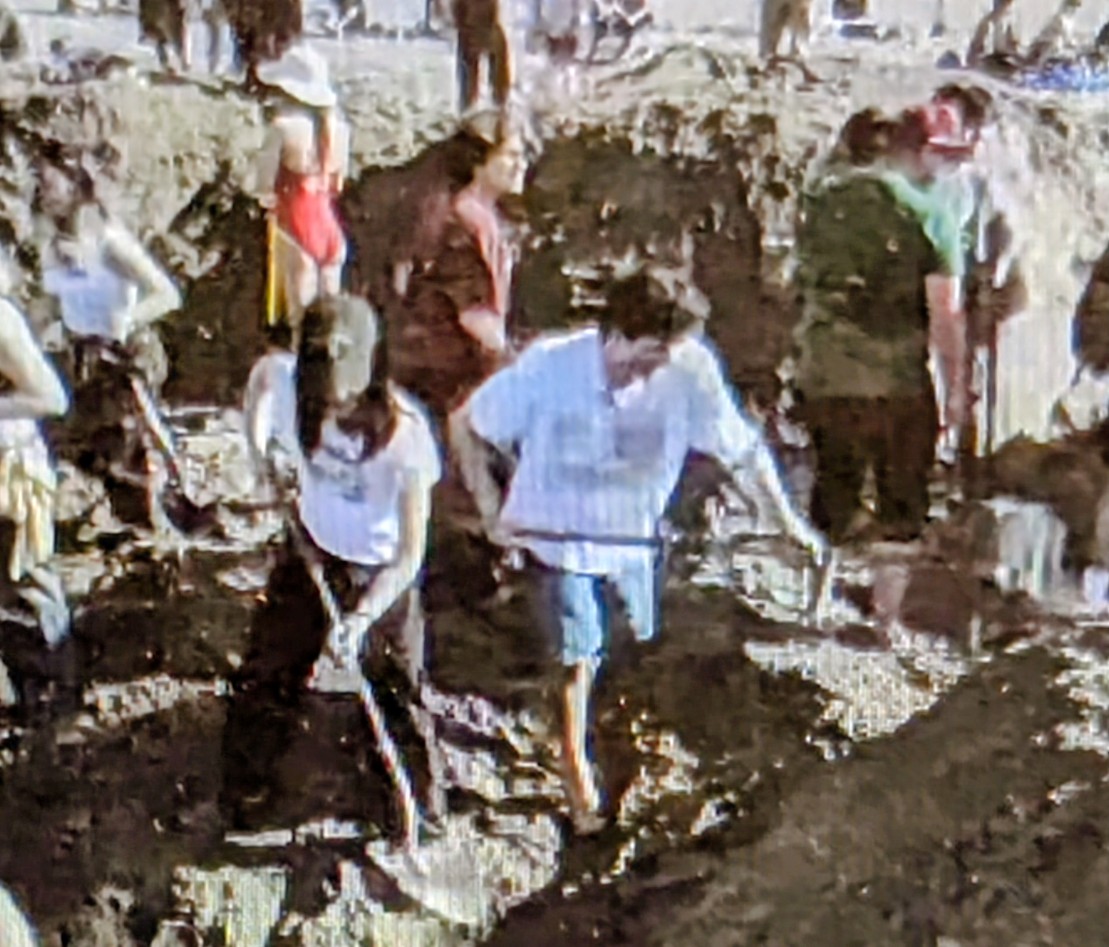
San Francisco’s latest Hole Party took place earlier this week. SFGATE reported that roughly 250 people turned out at Ocean Beach to dig an enormous hole.
They worked for hours, digging an irregularly shaped sand pit, intermittently chanting, “Hole! Hole! Hole!” The digging resulted in several holes more than six feet deep, with trenches that meandered in between. Later, as the Hole Party wound down, participants helped fill the holes back in.
Who dug?
The crowd of diggers were young, mostly in their 20s and early 30s. Reporters on the scene identified students, blue-collar workers, a music teacher, and a gardener who digs for a living—among many others.
Hole Party history
This Hole Party event was organized by Anna Magruder, 29, who works in forestry. She started Hole Parties in 2022 as a private activity with a handful of friends. Later, she opened up the gathering to the public.
SFGATE said Magruder has already hosted a dozen previous Hole Parties before this latest one, which makes the Ocean Beach version the 13th in the series. Videos of the event were quickly posted online.
Pointless?
My first reaction to the unusual beach event was an eye roll! Why spend effort and time digging an irregular hole and then filling it in? This had to be an early April Fool’s prank, perhaps carried out by folks searching for 15 minutes of fame.
Then, I took a closer look. Hole participants didn’t seem to be closely associated. Many passersby saw the hole and simply joined in. The event seemed spontaneous, focused, and even (I hesitate to admit) fun!?
Camaraderie
After mulling the Hole Party event over for a couple of days, I began to wonder. Is a hole party that much different from a campfire? (Stop eye-rolling and hear me out.)
Often, a campfire brings a variety of RVers together. We come from very different backgrounds and life experiences. RVers will pitch in to help get a fire going, hurry back to their camper for S’more ingredients, invite other RVers to join in, and then share stories and advice about traveling.
We put time and energy into this experience, knowing that ultimately the fire will be doused with water, stirred, and doused again. Is a campfire pointless? Not at all. The fire draws us together. It gives us something to do. It provides an opportunity to share, learn, and feel camaraderie with other RVers.
Hole Party diggers shared an experience. They worked together on a joint project. The hole wasn’t the point. What mattered was the experience.
Campfire gatherings, “beer thirty” get-togethers, and impromptu RV problem-solving conversations aren’t all that different. People need other people. We’ll always find a reason to gather together—even if onlookers see and roll their eyes.
Caution: It should be noted that digging holes in the sand can be dangerous. The sand can collapse into the hole, causing injury and even death.
America’s Original RV Newsletter. Since 2001
Issue 2873 • New issue every weekday If you find this newsletter helpful, please consider supporting our work with a donation of your choice. Thank you!
Today’s thought
“You only live once, but if you do it right, once is enough.” ―Mae West
Need an excuse to celebrate? Today is National I Love RVtravel.com Day! April Fools! (But you do, right?)
On this day in history: 1976 – Steve Jobs and Steve Wozniak found Apple Computer, Inc.
Tip of the day How safe is the RV park water you are using? You sure it’s safe?
Recently, Robin Barrett of Creativity RV noticed the water in the RV park where she was staying tasted a little funky. So, she decided to test the RV park water, and what she discovered was shocking, including disturbing levels of sulfate and bacteria, including E. coli. WOW!
In this video (and article), Robin talks about the four potential sources of RV water and the tests she did to determine her RV water safety. She also talked about what she learned about water regulation and safety, a lot of which surprised her. This is important!
RV review
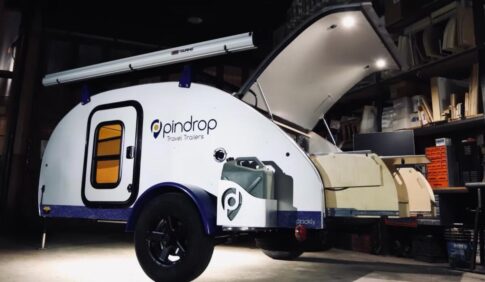
This PinDrop teardrop trailer fixes small camper frustrations
Most teardrop trailers ask campers to accept trade-offs. They save space, but they often shrink the kitchen, water supply, and storage right along with it. The PinDrop teardrop trailer, on the other hand, takes a different path. They kept the simple teardrop shape, then rebuilt the parts that usually annoy people at camp. The result feels less like a tiny trailer with compromises, and more like a small rig shaped by someone who cooks, camps, and pays attention. Check it out.
FACTOID: How many peanuts does it take to make a 12-ounce jar of peanut butter? About 540 peanuts.
In the RV shop with Dustin Look out for sagging slide-out roofs!
Be on the lookout for sagging slide-out roofs! Here is some basic information and reminders. If your slide-out roof is pooling water, make sure to check it as soon as possible. The last thing you want is structural damage to the middle of the slide-out. Sagging can cause additional water to collect and cause damage. Continue reading.
Article and video How to roll a hose properly—easy method to end kinks and knots
Are you tired of struggling with your RV’s hoses? Do they kink or knot? Is there anything more frustrating than wrestling with a tangled, kinked hose? No more. In the video below, Jason Samkowiak of Samko Trad Bow shows us how to roll a hose the proper way. Yes, the proper way!
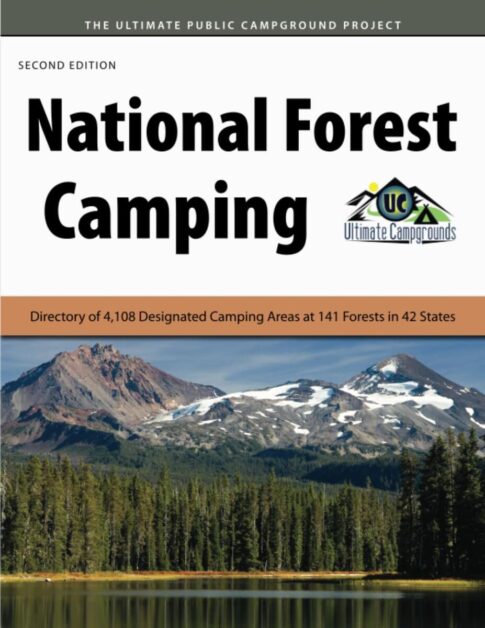
The best book for National Forest Camping
The U.S. Forest Service manages nearly 193 million acres of public land in 154 national forests and 20 national grasslands. These areas provide many opportunities for outdoor recreation. Forest Service areas offer some of the best camping experiences in the United States. In this directory, you’ll discover 4,108 select camping areas at 141 forests in 42 states. Learn more or order.
Featured article Death Valley isn’t dead: The magic of the life inside our great national park
By Chris Epting
I think that it’s time to rename Death Valley. Yes, I know the moniker has all that great foreboding mystique. Yes, the name itself is probably what draws many of the visitors in the first place. After all, when you tell people you’re going to “Death Valley” it’s a statement—a marker that says you’re interested in exploring the edge. … Death Valley teems with life of all sorts. Much of it is stealthy and subtle, but it is there, impressive, and often surreal and unforgettable. Read more.
Tanner Toons with Tanner Woods
You may share this Tanner Toon, unaltered, on your website, blog or social media with our compliments. The musings from Tanner Woods’ creative mind appear in this newsletter every Saturday and Sunday and in many RV Daily Tips newsletters through the week.
Ask Dave Do RV dealers “exercise” the slides and maintain the roofs on lot inventory?
HA… HA… The world’s largest RV was built in Australia in 2013. The RV contained seven bedrooms, three bathrooms (including two jacuzzi tubs), a rooftop pool, which converted into a helipad, a pop-up outdoor pig enclosure for the family’s five potbelly pigs, and a 124-gallon aquarium, which they would use as their fresh water tank when they boondocked. The name on the license plate? JUSTKDN. April Fools!!!!
Reader poll What do you do most nights after dinner?
FUNNY MUG OF THE DAY:You came, you saw, you read this, you laughed… Click here.
Quick tip Why you should carry an extra LP detector
“As we have learned the hard way, RV gas detectors tend to start malfunctioning after only a year or two of use. These ‘fun’ devices let you know they are malfunctioning by setting off a loud, non-stop alarm. To add to the fun, both times we experienced this were in the middle of the night. The gas detectors are simple to replace, so always having one on hand means you never have to travel without feeling completely safe.” Thanks to Christina Pate for the reminder. She has more tips on her blog, Travels With Ted. Here’s an LP detector from Amazon.
Website of the day
20 Epic Day Hikes in the National Parks (USA)
It’s April—Go outside! All of these hikes can be done in a day (although some are much more strenuous than others), so tie up your hiking boots and get out there!
Trivia
Betelgeuse, one of the brightest stars in our night sky, is about 764 times the size of our Sun, and 400-600 light-years away. [According to NASA, a light-year is the distance light travels in one year. Light zips through interstellar space at 186,000 miles (300,000 kilometers) per second and 5.88 trillion miles (9.46 trillion kilometers) per year. Wow!]
? MYSTERY PRODUCT OF THE DAY ? You know about this, right? NO? If you don’t, well, get on it! It’s one of the best for a reason!
Readers’ pet of the day
“Abby (mix) is our shelter rescue we acquired when she was about 1-2 years of age. She loves to travel, but does not like other animals near our camper. She is now about 12 years old.” —Eric Podehl
Send us a photo of your pet with a short description. No blurry photos and please do not submit your photo more than once. Thanks!
If you shop at Amazon.com we’d appreciate you using this link. We get an itty bitty commission if you buy something, but they add up and help us pay our bills (most importantly our hard-working writers!).
Dear Dave,
My wife and I are considering purchasing a new RV. Do you know if a dealer “exercises” the slideouts every now and then? Also, if a trailer is on their lot for a while, does the dealer inspect and maintain the roof seals and other seals? Thank you. —Bob
Dear Bob, I can’t speak for all dealers across the country as they all have different opinions of what components on an RV should be “exercised” and maintained.
Plus, there are some dealers such as our local Upper Midwest dealers that have seasonal sales. Basically, everything gets winterized and nothing moves for more than six months. On the other hand, dealers in Southern climates have activity all year round.
Slideouts
There are no slide exercise recommendations that I have come across from the major mechanism manufacturers. I believe that leaving the slide in a retracted state for a long period of time would not be a cause of concern or create any damage.
Dealer inventory
Also, I have talked with several owners that are full-timing in a permanent location and have the slide room extended all year long with no issues. I do think a periodic application of 303 Protectant on the exposed seal would be a good idea, however.
Typically a dealer will have enough sales traffic that they would demonstrate how the slide room works, so you might get some that “inadvertently” exercise the slide for demonstration purposes.
Roof maintenance
As for inspection and maintenance of the roof, that would be a good question to ask the dealership and get verification as it is an important step in keeping moisture from penetrating the seams.
Walker RV
As I stated earlier, every dealer has its own opinion of what “should” be done for maintaining its lot inventory. When the rigs are sitting on the lot, the different roof materials will expand and contract with temperature changes. The sealant will need to expand and contract, as well, which can cause it to pull away from the seam.
Exposure to the sun will also dry out the sealant and cause it to crack. So, it is recommended to visually inspect the seams periodically and repair anything that looks like it might be compromised.
By Cheri Sicard
Recently, Robin Barrett of Creativity RV noticed the water in the RV park where she was staying tasted a little funky. So, she decided to test the RV park water and what she discovered was shocking, including disturbing levels of sulfate and bacteria, including E. coli. WOW!
In this video (and article), Robin talks about the four potential sources of RV water and the tests she did to determine her RV water safety. She also talked about what she learned about water regulation and safety, a lot of which surprised her.
Robin started her explorations because there was an intermittent gaseous smell coming from her water taps. At first, she thought it was from her RV, but then the park started doing renovations and shutting the water off.
One day, while in the campground office, Robin noticed a public notice of water violations from 2020. What was on the paper was scary, so she got online to look up what was really going on.
The park had dozens of violations over a 10-year period. Some included failure to disinfect and elevated levels of lead, chlorine, and more.
In order to make the tests as accurate as possible, Robin tested the water from three different sources:
Her RV’s kitchen sink
The faucet in the RV park bathhouse
From the spigot at the next-door empty RV space
She ran the water through the 19-test panel as well as tested for bacteria and E. coli.
Overall, the water was decent, EXCEPT in three categories:
The pH level was way off.
The water had sulfur levels that were off the charts.
Bacteria and E. coli showed up in the empty space spigot test.
The sulfur levels would explain the nasty smell. And while sulfate levels in water are not regulated, high levels can be dangerous to certain people, especially infants, the elderly, and people who need a low-sodium diet. High levels can also act as a laxative and give you diarrhea.
When it came to bacteria and E. coli, the water in Robin’s kitchen sink was fine, but the water from the empty space next door tested positive. Robin suspects that previous occupants probably used the water spout to directly rinse out their black water hose. Ewwww!
Sources for RV park water
Robin incorrectly thought that water from the campground must be regulated. She discovered that RV park water can come from one of four sources:
From the city if the park is close enough to city lines, which is normally tested
A rural pump where the county pumps city water to county properties. This system will have redundancies in quality control, so there usually is no problem with this water.
From a well
Water delivered via truck
Robin found that a majority of parks she has stayed at get water via a well or delivery. Safety regulations vary state by state but can often leave the consumer anything but safe.
For instance, the campground where Robin tested the water was in Colorado, which requires them to test the water and report any problems. As she saw on the violation notices, this had not been done.
As their well was not large enough to service the park, they supplemented their water intake with trucked-in water that they brought in themselves, meaning no regulation. In theory, a water vendor would have had more oversight.
If you are concerned about the RV park water quality where you are staying, know that you can look up the results of their water quality online with the city or state.
Beyond that, Robin recommends a Berkey water filter. She repeated her water tests with the filter, and the test results came out much better.
We use cookies to ensure that we give you the best experience on our website. By continuing to use our site, you consent to accepting cookies. We NEVER have or will sell reader's data. For more info, please see our privacy policy page.