By Cheri Sicard
Our favorite campfire cooking expert, Cowboy Kent Rollins, produced the video below to teach the world how to make cowboy coffee.
Besides simply showing us how to make cowboy coffee, Kent goes into all his tips and tricks to make what he says is “the smoothest cup of coffee around.”
Kent says this coffee has health benefits, especially for those who say coffee exacerbates their acid reflux disorder and causes stomach issues. Kent says if you cook this coffee right, it’s low acid and smoooooth!
He also busts some often-repeated myths about cowboy coffee, such as it’s too dark, too stout, or too burnt. Kent says cowboy coffee is NONE of those things, providing you make it correctly.
You will need a well-seasoned coffee pot, and Kent has a separate videoabout how to season your coffee pot for great flavor.
More details Kent covers in the video:
• Cooking times for different grinds
• Cowboy coffee amounts and ratios
• Tips for buying vintage coffee pots
• How long to boil the coffee
• How long to steep the coffee after boiling
• How to strain and serve the coffee
• How to keep your campfire coffee pot clean
• What to do with leftover brewed coffee
• Tips for making cowboy coffee at home
I have long since lost count of the campers and RVers I have met who lovingly rhapsodize over their fond memories of cowboy coffee. I am not sure why these folks act like campfire coffee is a fond memory that has to stay lost to the mists of time. You can still make this great coffee today. Watch the video, and Cowboy Kent will show you how.
Oh, wouldn’t it be nice to not have to share a bathroom with your partner or travel companion? We can dream of a whole bathroom to ourselves! No knocking, no extra hair that’s not ours, no mystery products crowding the counter, no waiting your turn when you just want to brush your teeth and be done with it.
Think about what your dream RV would look like. Would it have one bathroom or more than one? Would it not have a bathroom at all? It’s not uncommon anymore for an RV to have more than one bathroom. So, hey, maybe your dream will come true with your next RV!
For some of you, one bathroom is perfectly fine. You’ve made it work for years, and it’s just part of the rhythm of RV life. A little coordination, a little patience, and maybe a “heads up” before someone jumps in the shower—and everything runs smoothly.
Others, though, have started to see the appeal of a second bathroom. Larger fifth wheels and motorhomes now offer half-baths, rear baths, or even dual full bathrooms in some models. That extra bathroom comes in handy for bigger families or when you host guests.
And then there are the trade-offs. More bathroom space usually means less room somewhere else—storage, living area, or kitchen space. RV design is always about balance, and what feels like a must-have to one person might feel unnecessary to another.
Of course, some of you may not care about the RV bathroom much at all. If you tend to stay in campgrounds with clean facilities, you might prefer using those instead, saving your onboard bathroom for quick stops or nighttime use only.
So what about you? In your ideal RV setup, would you want one bathroom, two, or none at all? Go ahead and weigh in—and feel free to describe your dream layout. Thanks!
LIKE TAKING POLLS? So do we! Did you know we’ve run more than 5,000 polls on our website over the years? Check ’em out! Have fun!
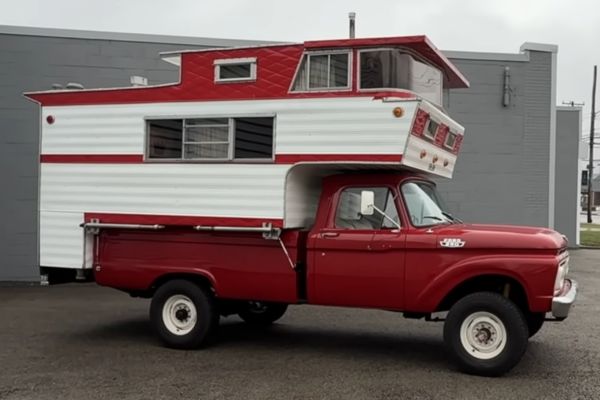
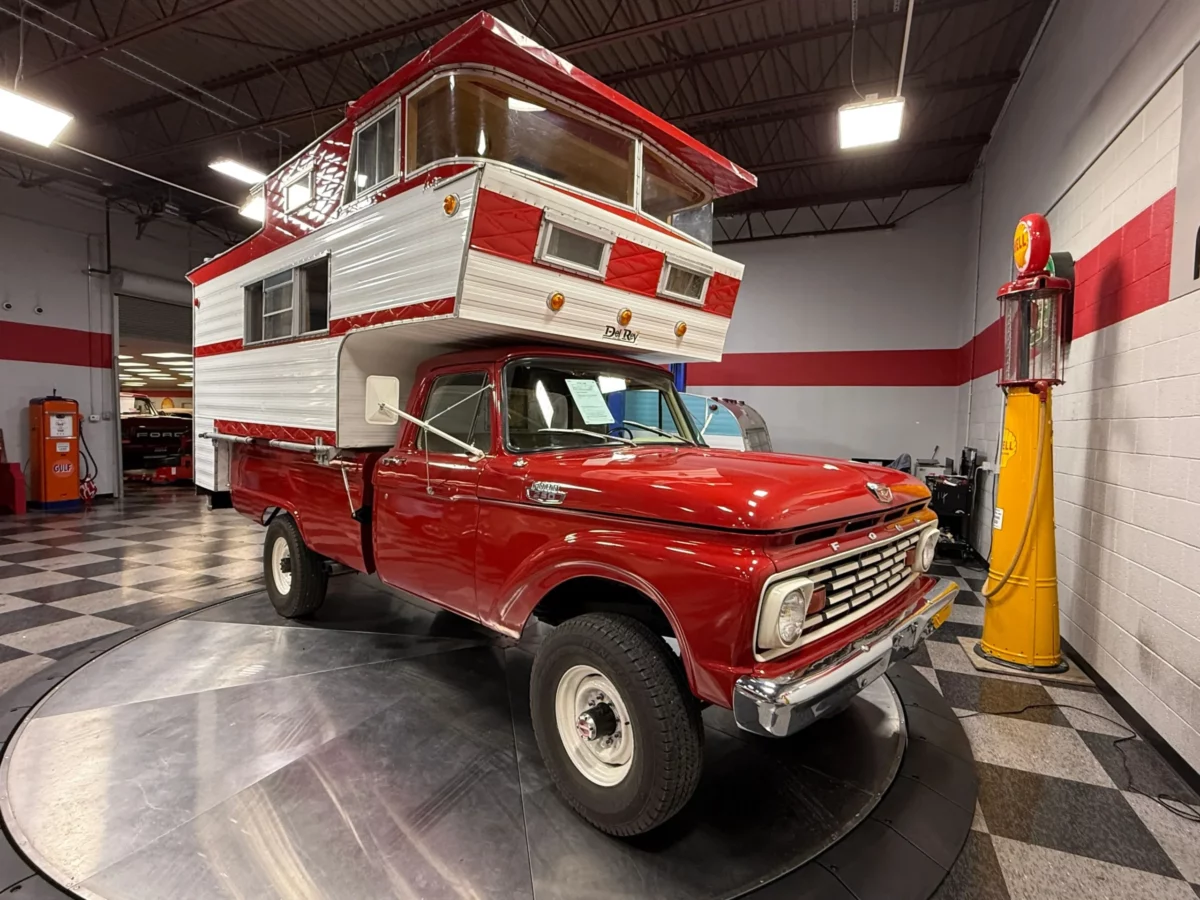
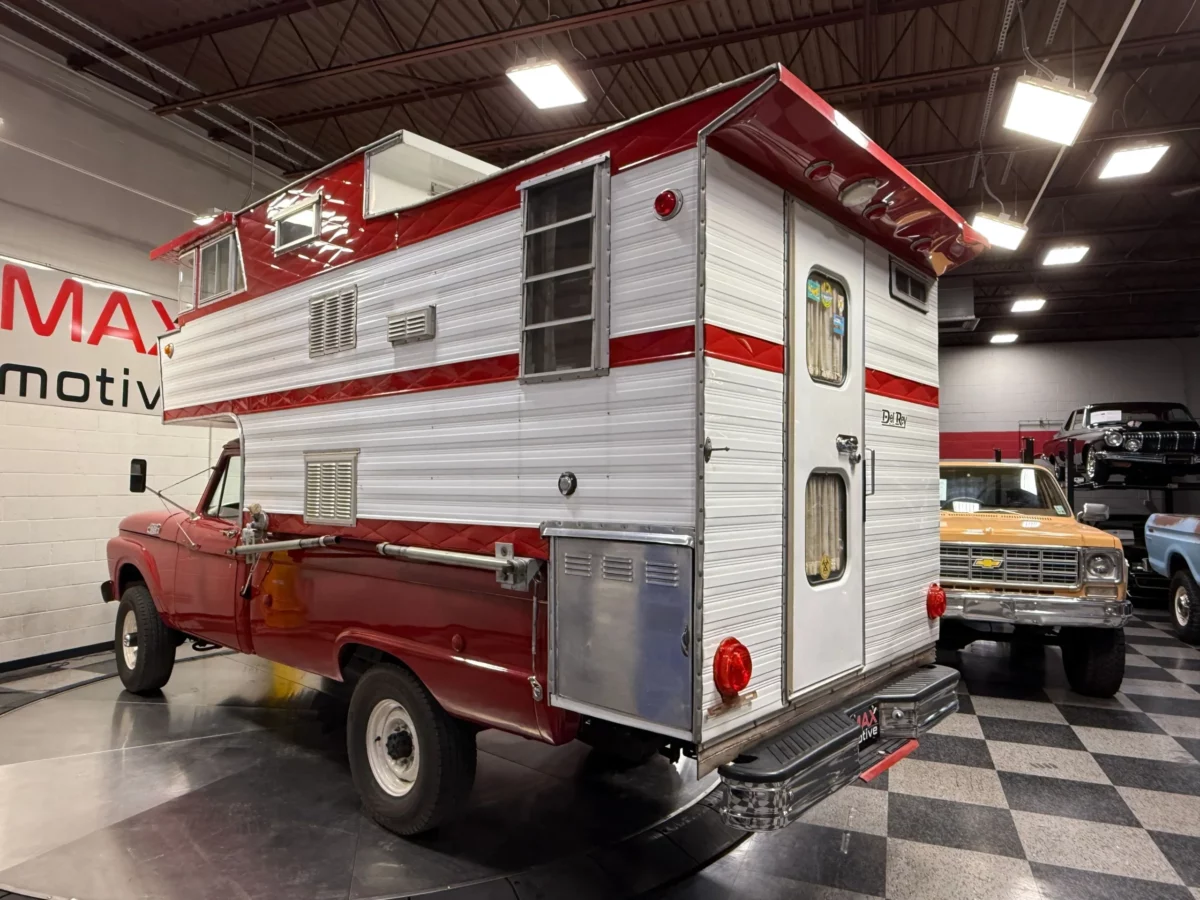
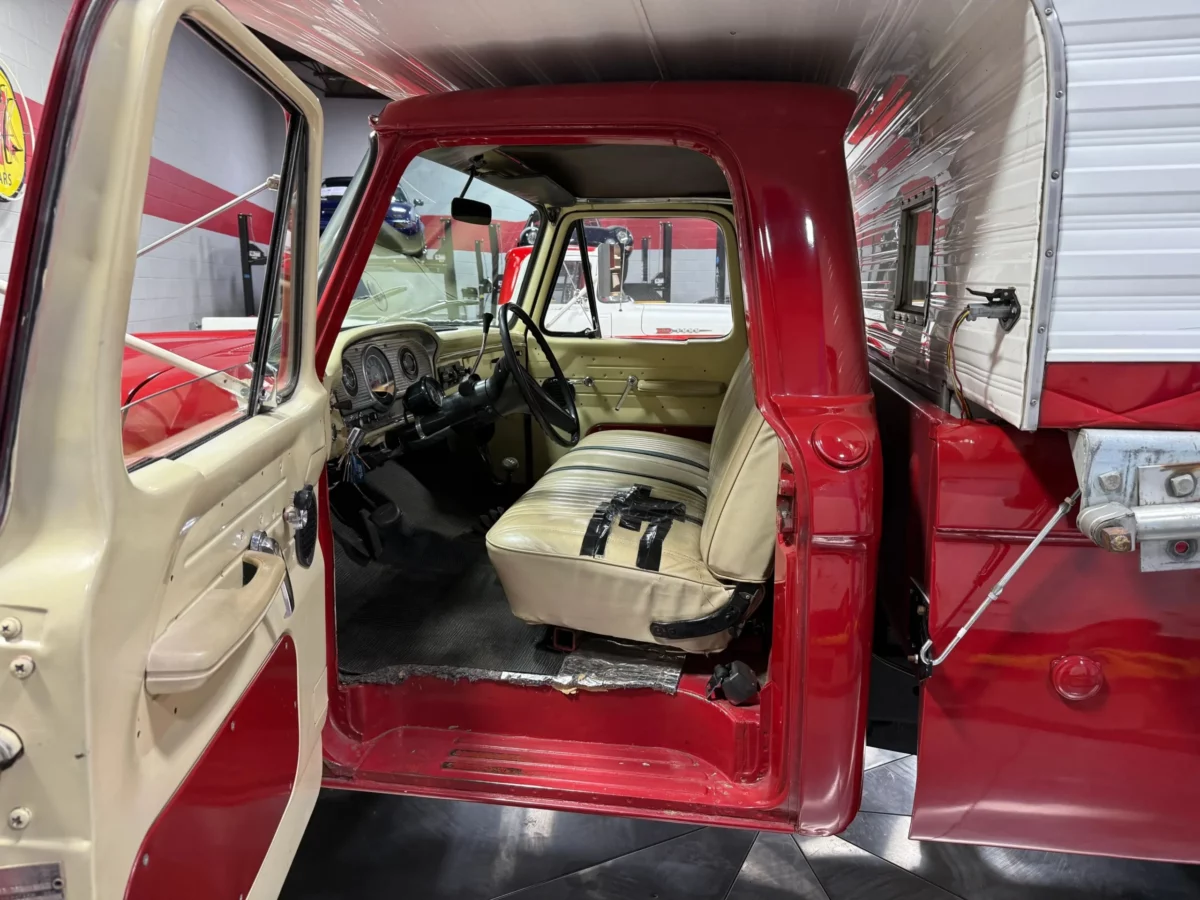
This 1963 Ford F250 with a Del Rey Sky Lounge camper feels like a full-on time capsule from early 1960s camping. In the video at the end of this post, Doug from MaxMotivegives us a tour of a truck camper that’s hard to find today, and he points out how well it presents from top to bottom.
For anyone who likes vintage trucks, classic RV details, or both, this rig stands out for its condition, its clever layout, and the unusual Sky Lounge perch above the cab. The full details and extra photos are posted on the 1963 Ford F250 Pickup Camper listing at MAXmotive. Yep, that’s right. This unique rig is for sale.
The truck wears a bright red exterior, and the camper sits neatly in the bed as a matched setup. Doug notes a small dent on the camper’s top right corner. But aside from that, it presents as a clean, well-kept vintage unit.
One big change helps explain why the truck can handle the camper confidently. The 1963 body sits on a 1977 Ford F250 frame, added for extra support and strength for hauling. It’s the kind of update that stays mostly invisible until the truck is used the way it was meant to be used.
This F250 rides on 16-inch wheels and runs lock-in/lock-out hubs up front. It’s wrapped in Grabber tires, and Doug calls out the tread as having plenty of life left.
The Del Rey camper mounts in the bed and attaches to the truck. It’s not presented as a permanent fixture, either. Doug explains that the parts are included to set the camper down, which makes storage simpler and turns the truck back into a pickup when needed.
Inside the cab: broken-in, functional, and honest
Inside, the cab has a weather-worn look that fits the truck’s age. It keeps a bench seat in a cream color, and Doug notes the stereo works. A four-wheel-drive shifter sits on the floor, and there are extra gauges, including a Sunpro RPM gauge, plus oil temp and battery gauges.
Doug also points out that the dash metal looks great, with no scratches or dents, and the body appears solid with no rust being hidden. Mileage sits at just over 90,500 miles, and he describes it as still ticking like a clock.
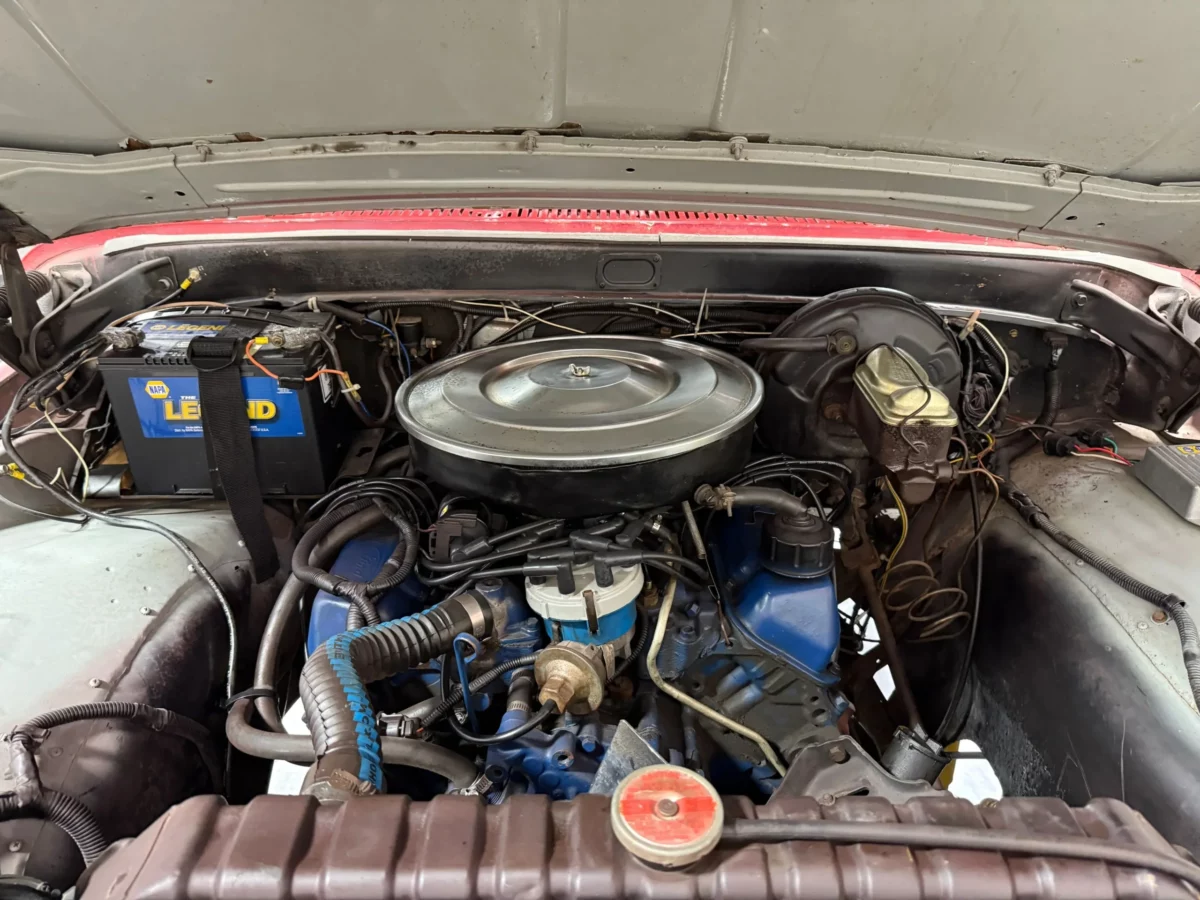
Under the hood sits a 460 cubic inch V8 engine. Doug frames it as reliable power that can handle hauling the camper or hauling other loads once the camper is set down.
When he starts it, it fires up without drama, and he notes it didn’t need gas pedal pumping to catch. Another thoughtful touch is the exhaust, which exits in front of the rear wheel. That keeps exhaust from drifting toward the camper door area.
Inside the Del Rey Sky Lounge: real wood and real camping features
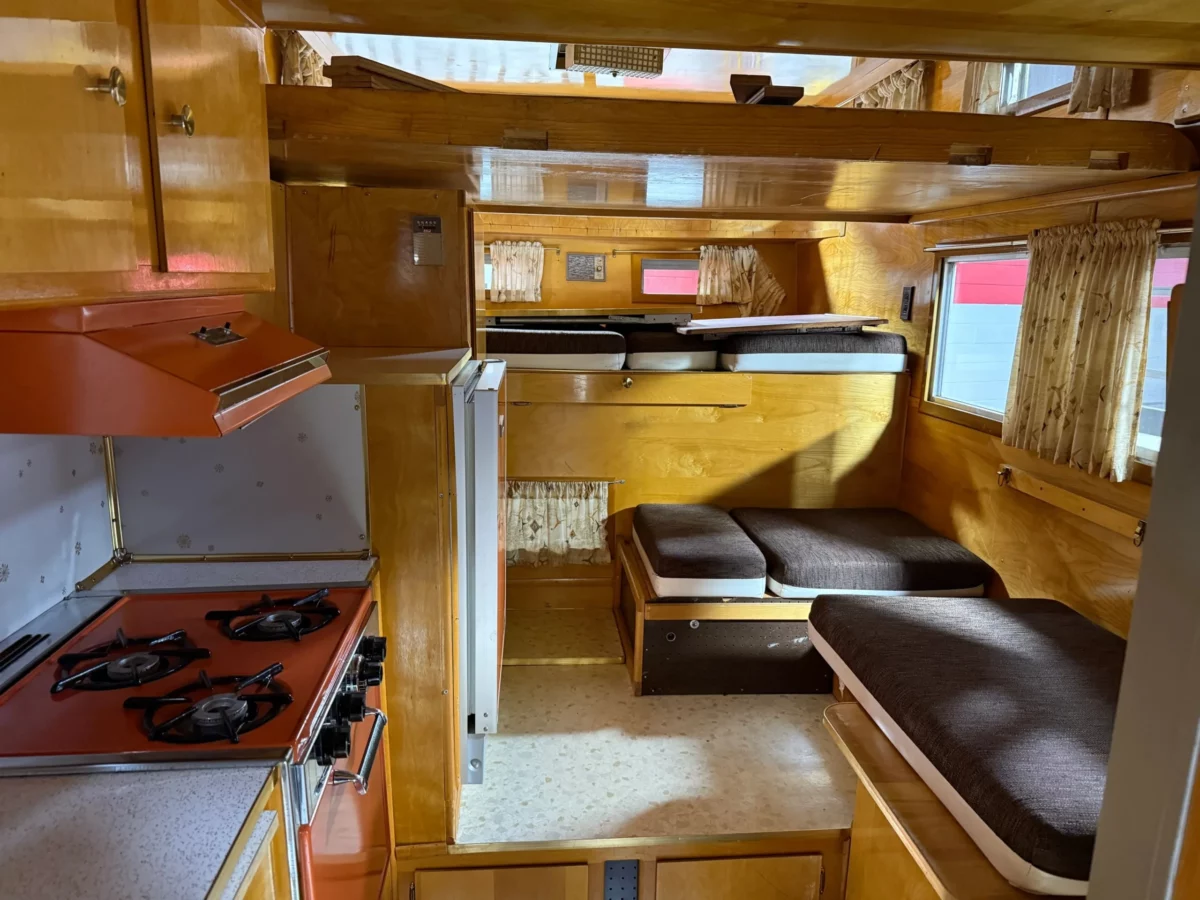
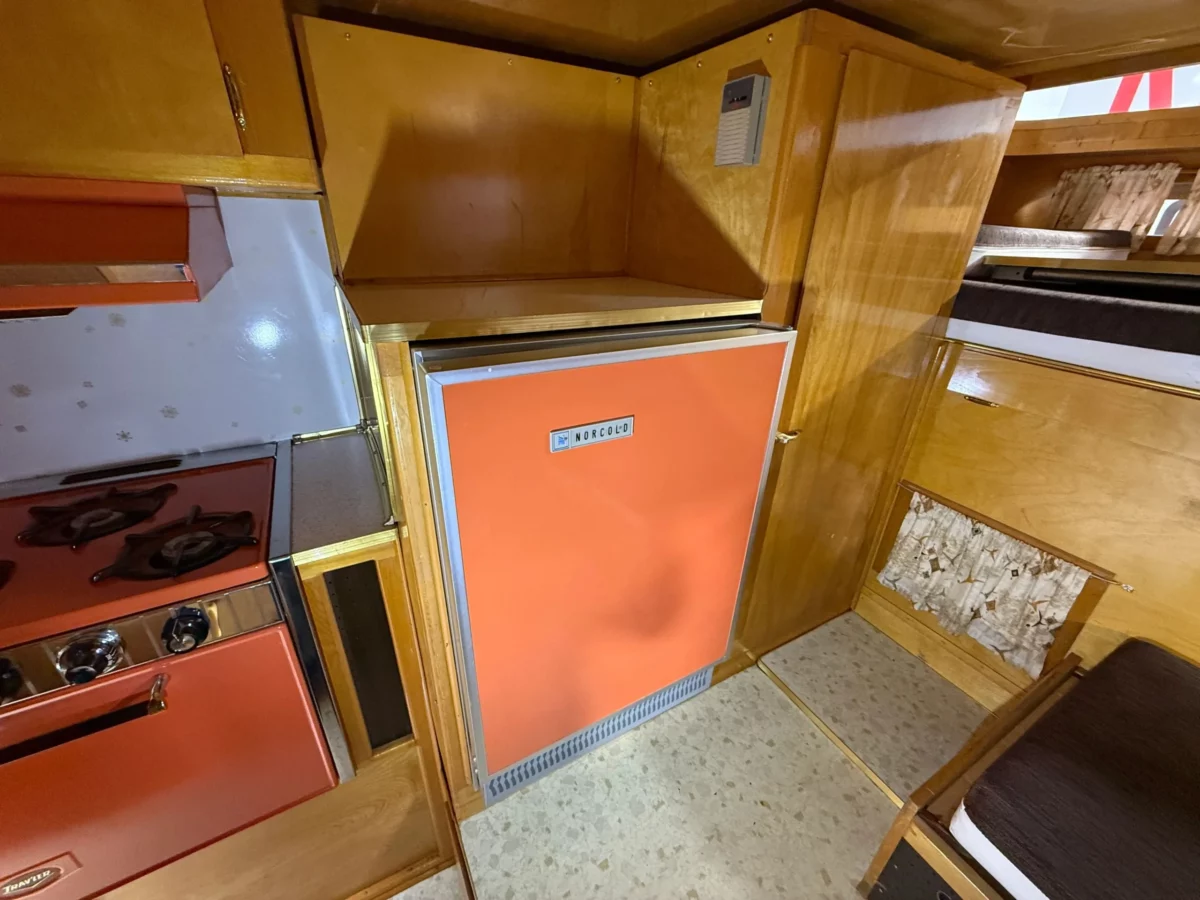
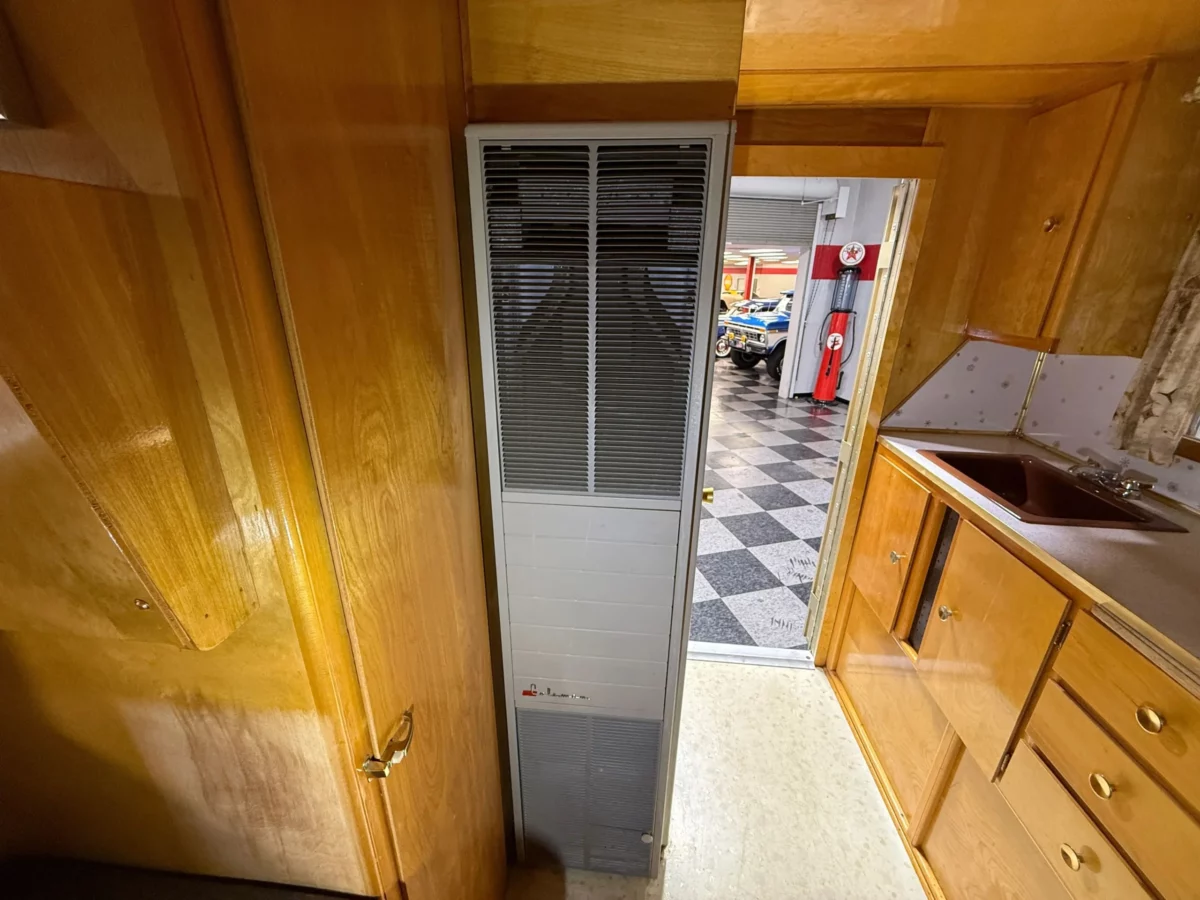
Doug calls this camper the top of the Del Rey lineup from the early 1960s, and the equipment list backs that up. The kitchen includes a sink, lots of cabinet space, a three-burner stove, an oven, and a refrigerator for keeping food cold on overnight trips.
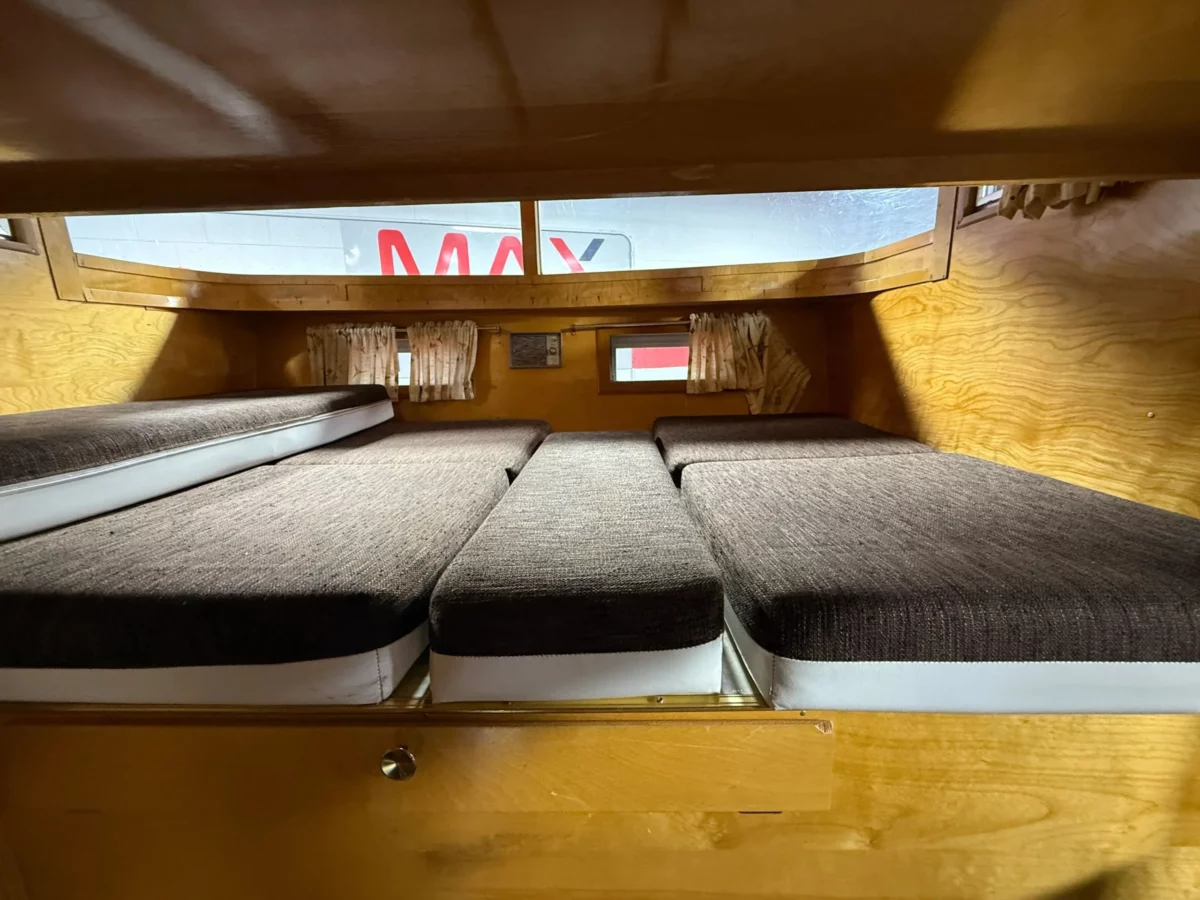
There’s also a compact all-in-one bathroom with a toilet and shower space, plus a rod for a curtain. An HVAC system is mentioned as part of the setup. Down below, the dinette table stores up high, then attaches to the wall for meals, and the area converts into a bed. Another sleeping area sits nearby.
The signature feature is the Sky Lounge itself, a raised sleeping and viewing space with a panoramic feel.
Doug highlights the real wood paneling throughout and notes it’s in impressive shape for its age. Two extra tables are included, and one has three legs so it can be used outside.
This 1963 Ford F250 and Del Rey Sky Lounge camper combo stands out because it’s complete, thoughtfully set up, and still presents well decades later. It mixes old-school materials, like real wood paneling, with practical details, like a removable camper and forward-exit exhaust.
For anyone hunting something genuinely different in the truck camper world, Doug encourages reaching out to a MaxMotive sales representative.
If you think the National Park Service (NPS) is only about the big-name national parks, think again. The NPS manages hundreds of different places. Yes, hundreds! [The System is the places; the Service is the people/agency.]
In fact, the National Park System is an all-you-can-see buffet of experiences. RVers can swap one mega-park day for a handful of diverse NPS stops. Enjoy a morning paddle, an afternoon at a battlefield museum, and a sunset at a lakeshore, all without long lines or delays. There’s everything from seaside coastlines to battlefields, historic homes, scenic parkways, long-distance trails, and even urban cultural sites.
The National Park Service lists 433 official units and notes that those units span more than 85 million acres across all 50 states, Washington, D.C., and U.S. territories. Wow!
“Official unit”
An official unit is any site that the NPS is charged with managing or partnering to protect and interpret. We commonly call them parks, but “park” is only one of many naming types.
Units vary in size, access, fees, and what you can do there. Some are huge wild landscapes with long, rough roads. Others are small downtown museums with great exhibits and convenient parking for a short stop.
The variety means you can fit visits to NPS sites into every kind of RV trip, whether it’s a long backcountry loop, a weekend of historic sites, or a slow coastal drive with overnight stops.
Different kinds of NPS places
433 official units are a lot of places! You may be familiar with some, but this list might surprise you.
National parks
These are the headline-grabbers that offer RVers big landscapes, iconic hikes, and often popular campgrounds.
National monuments
Monuments can be natural wonders, cultural, or archaeologically protected places. Often, National Monuments are less crowded and more RV-accessible than a park.
NPS photo
National historic parks and national historic sites
History buffs love the battlefields, home sites, and industrial heritage areas that tell the stories that helped shape our nation.
National seashores and national lakeshores
Here you’ll discover coastlines and shorelines with beach access, fishing, boating, and nearby campgrounds to enjoy.
Rivers, recreation areas, and scenic trails
Paddlers, anglers, long-distance hikers, or RVers who want scenic drives and places to launch boats will love these National Park Service areas.
NPS photo
Parkways and scenic roads
These offer long, beautiful drives (many of them managed by NPS) that are perfect for RV touring, even if you don’t stop and camp.
National memorials and battlefields
You can schedule short stops at many of these spots to enjoy a more intensive historical experience.
There are other specialized designations, too. The NPS uses many names to reflect how a place is protected and used. If one type doesn’t fit your travel style, another probably will.
RV trip ideas
• If you’re into birding, search for seashores, lakeshores, and river units that host migratory stopovers and marshes.
• If you fish or boat, look for recreation areas and lakeshores that list boat launches, fishable waters, or river access.
• If you’re a history buff, put together a route of national historic parks, historic sites, and battlefields to create thematic drives with short interpretive stops.
• If you love long hikes and backcountry, look beyond the famous parks to national preserves, trails, and larger historical parks that offer less-crowded trailheads.
• If you like scenic drives and photography, plan days around parkways and scenic roads managed by the NPS. They’re built for views and pullouts.
Each unit type hints at the on-the-ground experience. Reading a site’s official page will tell you about RV parking, road restrictions, campground size limits, and whether large rigs are practical.
Planning tools
For a searchable, planning-friendly roster, use NPS’s Find a Park tool. You can filter by state, activity, or feature to build your RV-friendly route. In addition, you can check site pages for camping, road, and permit details. That official NPS directory is the single best place to get accurate, up-to-date info.
For a quick, readable summary of naming types and the full roster of official units, Wikipedia compiles the NPS units and their designations. Use it as a cross-check, then follow through to the NPS site pages.
A few practical tips
• Check the individual site page for vehicle limits, reservation rules, and campground size constraints. Some historic sites and urban units have small lots or no overnight parking.
• Drive slowly on parkways and narrow park roads. Pullouts can be limited, and large rigs can be a challenge.
• If you’re after a quiet experience, consider lesser-known unit types. National historic parks, monuments, and recreation areas often see fewer crowds than the headline national parks.
• Use the NPS app or the Find a Park pages to confirm seasonal road closures, fees, or special permits before you arrive.
Which of the “non-parks” have you enjoyed the most while RVing? Tell us in the comments below.
Living the RV life should feel like freedom, but lately it’s been a bit of a struggle.
My husband awaits knee replacement surgery, and I’ve been on the hunt for tips, tricks, and gadgets that can help restore his joy of RVing and also keep us comfortable (and safe) as we RV.
Take a look to see what I’ve found so far; these gadgets will be especially helpful for RVing seniors.
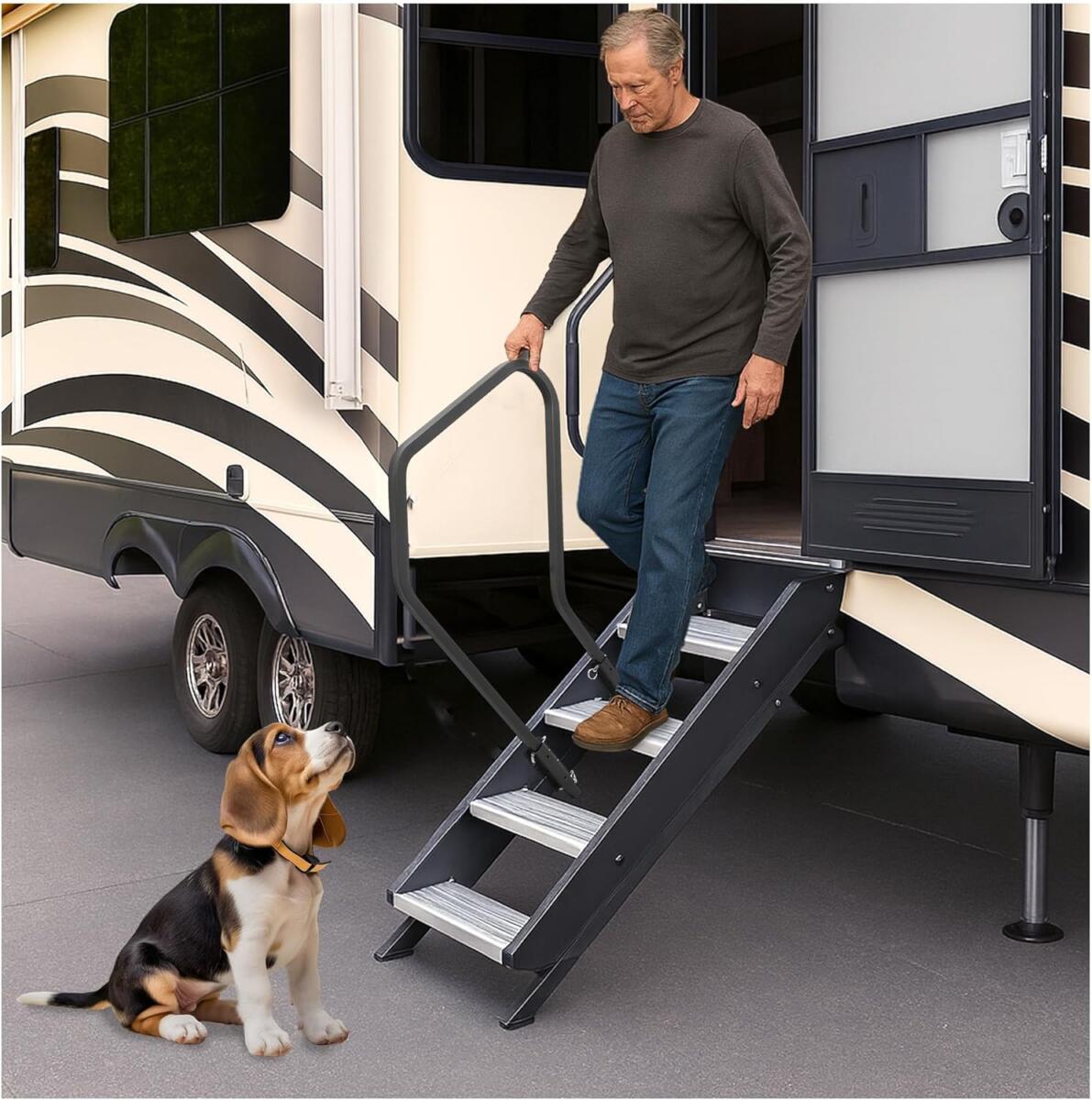
Step handrail
Extended RV entry handrail. Amazon image
A telescoping or clamp-on handrail gives extra grip for entering and exiting the RV with confidence. These rails vary in style, with some that attach securely to your existing RV steps. Others are not permanent and fold up for travel.
If you’re in great health and actively RVing but want a little extra peace of mind, the Apple Watch SE fits naturally into life on the road. It tracks heart rate and sleep patterns, and it can send alerts if something seems off. This is especially reassuring when you’re far from your regular doctor.
Apple Watch. Best Buy image
Built-in safety tools like fall detection, crash detection, and Emergency SOS mean help can be contacted quickly if something goes wrong. No matter where you explore—on the trails, inside museums, or even driving—the Apple Watch is a good companion to have.
With GPS and Wi-Fi connectivity, the watch lets you send texts or make calls without digging for your phone. It makes it easier to stay connected no matter where you roam. Add in activity tracking, plus the ability to customize bands and faces, and it becomes a practical, everyday companion that supports both independence and safety while RVing.
I think my husband will need one of these.
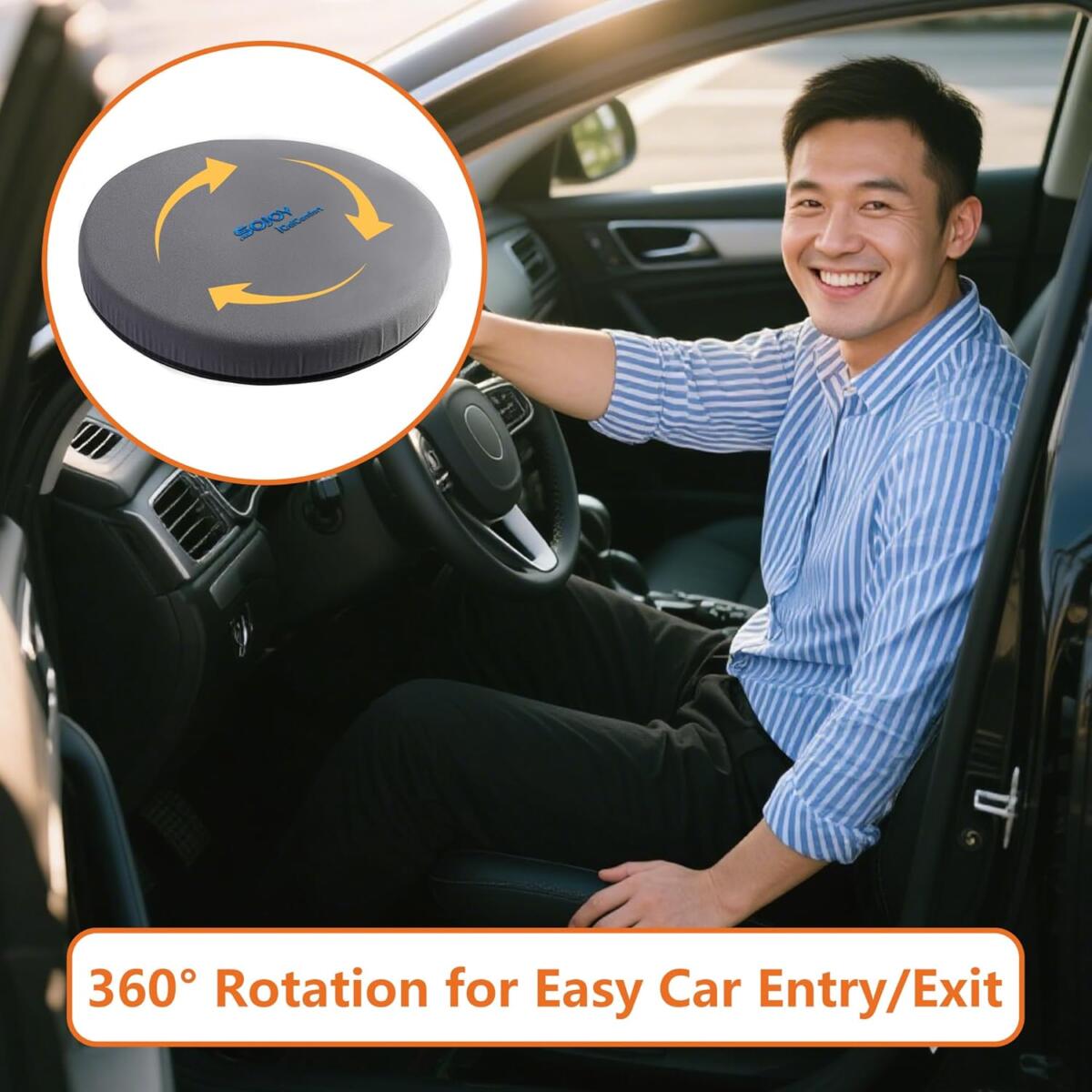
Swivel seat cushion
A simple swivel seat is a great addition in an RV’s tight spaces. A cushion that rotates 360° lets you turn toward a table or easily exit your driver’s seat without twisting joints or pulling muscles. Search for “360° swivel seat cushion” to find models that fit RV chairs or driver seats.
Keeping floors clean in an RV can seem impossible. A robot vacuum like the iRobot Roomba, or others like it, takes that chore off your plate by handling daily messes on its own.
iRobot vacuum. Amazon image
Automatic vacuums are designed to pick up everything from fine dust to pet hair. It moves smoothly between hard flooring and the low-pile carpet on RV slides. Using a simple phone app, you can start a cleaning session or set a routine that runs while you’re out hiking or sightseeing.
Built-in sensors guide it around furniture, walls, and steps, so it doesn’t tumble off the stairs to the bedroom or get stuck in corners. When the battery runs low, it automatically heads back to its charging base.
Finally, a robot vacuum takes on the big job of keeping your RV floors clean, and its small size requires very little storage space compared to a full-size vacuum.
Imagine never having to vacuum again? How nice!
Vehicle support handle
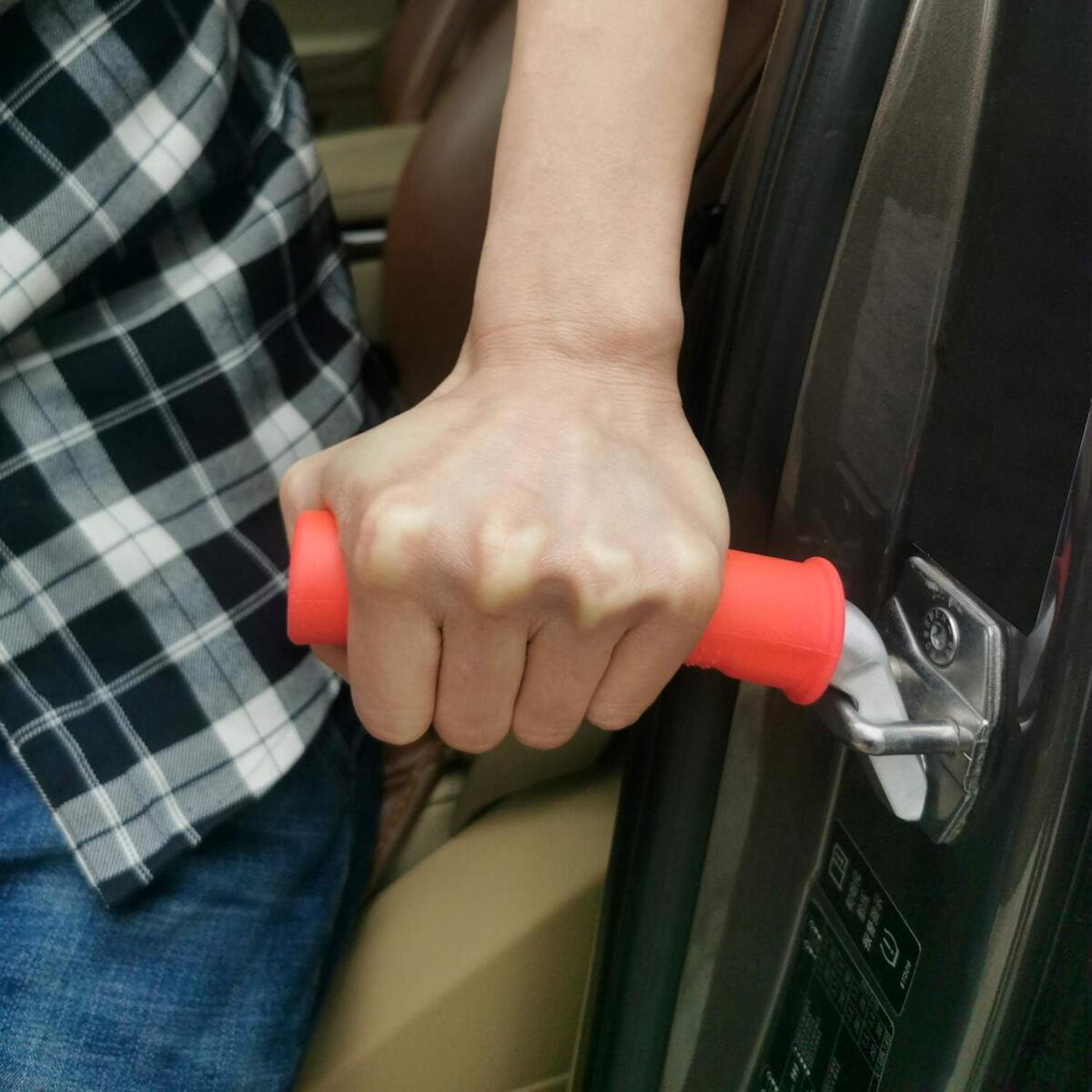
The Valorcielo Auto Cane Portable Vehicle Support Handle can make a big difference for RVers who need extra stability when getting in and out of a vehicle. Designed to slide directly into the U-shaped door latch found on most cars, trucks, and RVs, it creates a solid handhold right where you need it. There’s no installation, no tools, and no learning curve, which is ideal for travelers who want simple, reliable gear.
Vehicle support handle. Amazon image
The handle is made from anodized aluminum with a rubberized, non-slip grip. The sturdy, textured grip helps prevent slipping in wet or cold conditions. With a weight capacity of up to 300 pounds, it provides dependable support for those recovering from injuries/surgery or anyone dealing with balance or joint issues.
I especially like the fact that the handle is lightweight and easy to store. It’s a small, affordable accessory that can add confidence, safety, and independence on the road. We will definitely be installing these.
How about you?
Have you discovered additional gadgets that make RVing easier and safer? Please share them using the comments below.
If you’ve ever had to wait weeks—or even months—for RV repairs, you’ve already felt the impact of one of the biggest problems in the RV industry: There are simply not enough qualified RV technicians.
At California RV Specialists, we see this every day. The demand for RV service continues to grow, but the number of trained technicians has not kept up.
The reality behind the RV technician shortage
The RV industry has grown significantly over the past decade, with millions of RVs on the road today. But the number of technicians available to service them has not kept pace.
• There are only about 17,000 RV service technicians in the U.S.
• The industry estimates it needs at least 20% more technicians just to meet current demand.
At the same time:
• Many experienced technicians are aging out of the workforce.
• Fewer people are entering skilled trades like RV repair.
• RV systems are becoming more complex and harder to diagnose.
The result? Long wait times, delayed repairs, and frustrated RV owners.
Why it is getting worse
This shortage didn’t happen overnight, and it’s not slowing down.
More RVs on the road
With millions of RVs in use and continued strong sales over the years, the number of units needing service keeps growing.
Skilled trades gap
Like many industries, fewer people are entering hands-on trades. Many are pushed toward traditional college paths instead of technical careers.
Complex systems
Today’s RVs include:
• Electrical systems
• Plumbing
• HVAC
• Slide-out mechanisms
• Electronics and smart systems
Technicians need to understand multiple trades in one role, which makes training more difficult.
Dealership overload
Dealerships are often overwhelmed with:
• Warranty work
• Customer-pay repairs
• Pre-delivery inspections
• These create long service backlogs.
How this impacts RV owners
This shortage directly affects RV owners in several ways:
• Long wait times for service appointments
• Delays in warranty repairs
• Limited access to experienced technicians
• Increased repair costs in some areas
Why independent RV shops are more important than ever
Because of the technician shortage, independent repair facilities are playing a bigger role in the industry.
At California RV Specialists, we are part of that solution. We are not a dealership—we are a dedicated repair and service facility focused on helping RV owners maintain and repair what they already own.
How California RV Specialists is making a difference
We’re not just talking about the problem—we’re actively working to be part of the solution.
Training and development
We invest in:
• Training technicians
• Mentoring apprentices
• Building real-world experience in the shop
• Creating career opportunities
We are actively hiring and developing roles such as:
• RV technicians
• Technician apprentices
• Hitch and towing technicians
• Service advisors
• General shop support staff
We believe the RV industry needs long-term career paths.
Real-world experience over theory
RV repair is not something you learn overnight. Our team works hands-on daily with:
• Slide-outs
• Roof systems
• Suspension
• Electrical and plumbing systems
This real-world experience helps build true technicians—not just parts replacers.
As I was looking at my calendar, I realized how many RV shows there are. In fact, our local community near Albuquerque is having a show that I plan to attend this weekend at the local shopping mall. This made me realize that a lot of people, including those who read RVtravel.com, are going to be shopping for RVs.
And, like with so many shiny objects, some people are going to surprise themselves by coming home with a contract for a new rig. Perhaps you already did—congratulations… I hope?
I was sitting here thinking about the weekend’s RV show and wondering what it would be like to be a normal person attending one. What can I arm myself with to make a better decision?
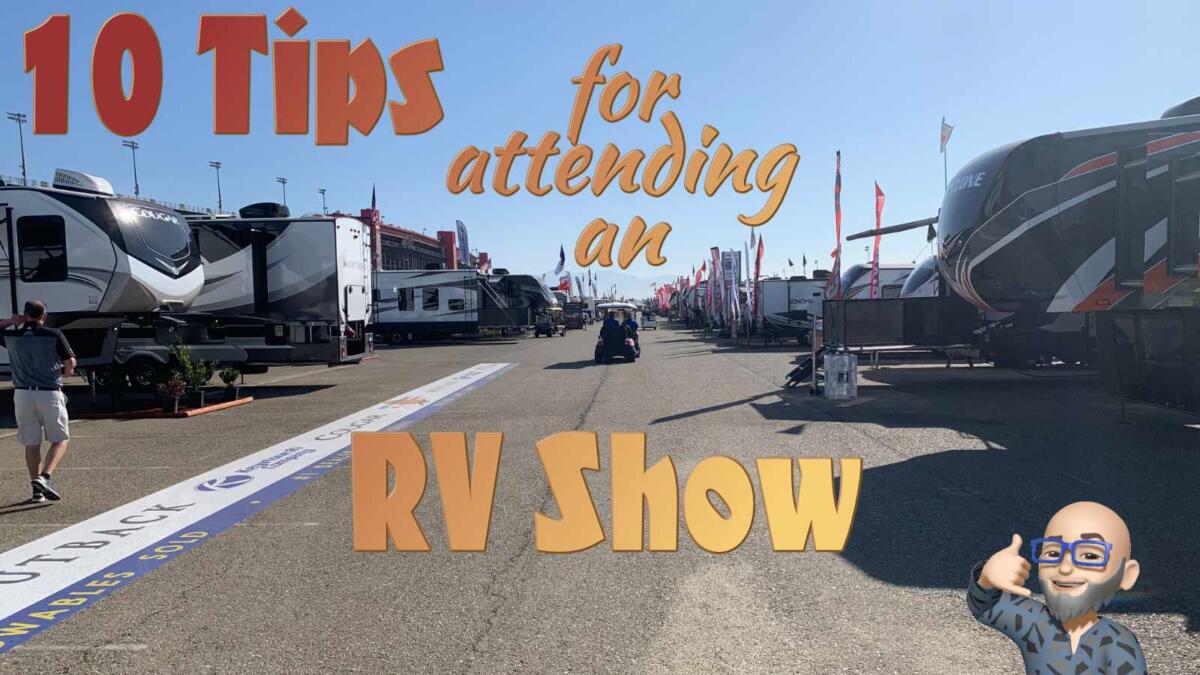
So that gave me the inspiration to write this: 10 things you need to know before attending an RV show.
Oh, and something else to be aware of: If you find a floor plan that you really, really like, know that any popular floor plan is going to be duplicated by other RV builders. The nuances between one and the next can make a difference in your overall experience. A bigger cabinet here or more space there can affect your long-term happiness with a floor plan, so look at the competition before you make a final decision.
What you’ll want to have with you
One of the most obvious things you’ll want to have with you is a way to take notes and jog your memory. Since we’re all different, I won’t tell you how to do this, but have a way of capturing features, floor plans, or brands that you like.
What works for me is if I find a floor plan I really like, the first photo I take is of the floor plan illustration or maybe the model number on the outside. Then all the subsequent photos are going to be of that floor plan. Don’t forget the data plate, especially if you’re towing. That way, you’ll know if your Ford Maverick can actually tow that fifth wheel (it can’t).
Shop your dealership first
One of the most important things that I try to share with people is that your RV dealership is going to make a huge difference in your overall RV experience. Almost invariably, you will need service over time, including the likelihood that you’ll need warranty service.
A question I would ask of someone is how many service bays the dealership has versus how many RVs they sell in a month. There’s not a hard and fast number, but if your BS detector goes off when you hear the answer, perhaps it’s time to move to the next display.
One of the hard factors that you can ask someone trying to sell you an RV is what their Repair Event Cycle Time (RECT) is. This is a well-known industry reference and essentially describes how long they average between someone bringing in their RV and then when they get that RV back.
How well is the RV prepped?
Also, ask to see what their pre-delivery process is for an RV. Many of them will have a checklist or worksheet that they go by, and that’s what I’d look at. Then, also ask if they have a fee for the pre-delivery inspection and how much that is, or if it’s included in the price. I’ve heard some larger chains charge more than $1,000 for this, and some up to $3,000. That’s nuts, to me.
Ask what their fees and charges are. I’ve talked about delivery of RVs in the past, and it’s a legitimate cost that RV dealers actually pay, but that doesn’t mean they’re not padding it.
Let’s be honest. Many of the RVs at RV shows will have some loose or damaged items because some attendees are not nice. But if you see clear signs that nobody was paying attention before that RV got put on display, this is a bad sign to me. This should be the dealership putting its best foot forward.
Start at the road and work your way up
What comes with the purchase?
I have already talked fees, but what are you getting with the RV? If it’s a towable (travel trailer, fifth wheel), the dealership is likely going to include a battery. But, typically, these are the lousiest lead-acid batteries they can get.
Also, are you getting hoses or anything else with the purchase? Will the dealership help match your hitch to your trailer if it’s a towable?
Of course, some RVs, particularly motorized rigs, come with batteries from the factories. However, almost no towables do, except those that are equipped with better power packages. But if you’re getting a modern towable RV, make sure the dealership is installing a lithium battery already. Those lead acid anchors that they’re still using are mostly worthless, especially with a modern 12-volt fridge.
Yes, I do think it’s fair that they charge an upcharge for a lithium battery as long as it’s a reasonable upcharge. You can now get decent lithium RV batteries for under $300, unless you’re buying a brand like Battle Born. But I think they’ve sabotaged their reputation at this point, and I don’t see the point of buying that brand any longer.
Know what you can tow
Don’t believe anything that almost any dealership employee will tell you about towing. They usually don’t know, and there’s really no industry source to learn this information. Some friends and I put together a really good towing calculator and towing resource, so any trailer you buy should go through that first.
Heck, there are fifth wheels that are called “Half Ton” and “HT,” and you couldn’t pay me to tow a fifth wheel with a half ton truck (except the Casita). So, even the RV industry doesn’t really know what they’re talking about.
How much do you love your money?
There is so much more I could share with you all, including knowing your credit score and, potentially, already having a great relationship with a local credit union that does RV loans. The dealership may have a great financing program, but it’s good to know where you stand before the signatures start flying. In fact, I have an interview with an RV finance specialist that is worth a listen.
Don’t go inside before you know the numbers
Start underneath (You knew I’d write this!)
If you’ve read any of the RV reviews I’ve written here, at StressLess Camping, on RV Trader, or in Girl Camper Magazine, you probably know that I’m going to advocate starting at the road and working your way up.
Check out the brand of tire the rig has, what kind of suspension there is (most towables use cheap leaf springs), whether there is a tire pressure monitoring system, how many dump connections there are, and whether you can get to them with relative ease.
If you camp in colder climates, is the underbelly heated or just enclosed? Are there heating pads on the tanks?
Honestly, I would spend time shopping underneath the rigs before I ever went inside because we all can be swayed by beautiful-looking interiors.
Where is the RV going to live?
If you don’t already have an RV, do you know where this new one is going to reside when you’re not using it? I know more than a few people are surprised when their HOA tells them they can’t park their RV at their house, and they now have to budget in a bunch of additional monthly money for a storage facility. So, this is something I’d be aware of before going in.
Who’s camping with you?
One of the things I heard a lot when I was selling RVs was people wanting a bunk house because their children or grandchildren were going to go camping with them. I would ask how old the children were and if they had been camping before.
Oftentimes, these offspring might go once, but that’s about all they could tolerate. While I’d give anything to spend more time with my grandparents or parents today, when I was a tween and teen, they were the last people I’d want to be with. That’s just evolution.
So, be very honest when considering who’s going camping with you.
This is one of the reasons I love Ember’s flexible bunk system. You don’t have to trade the whole RV in if you realize that the bunks don’t work in your situation after all.
Pretend you’re camping
But, also, would you be happy just spending time around a campfire, and do you like playing games? Think about what you like to do and who you like to share that with when considering a floor plan.
Also, if you like to cook, will this kitchen work for you? If you don’t like to cook, is there too much priority given to the kitchen?
If you have hair (mine departed decades ago), can you wash your hair in the shower? Is there enough space to accomplish whatever tasks you have intended while visiting the bathroom, including the paperwork?
Final thoughts
The more you know and the more you’ve read here on RVtravel.com, the better situation you will likely be in. I would recommend going with your fellow decision maker only and leaving the people behind who aren’t going to be making the payments with you, at least at first.
Perhaps if you’ve narrowed down your search, you can go back later that day or the next day and revisit those choices.
As for whether you’re going to get a better deal at a show, that’s a big maybe. Sometimes RV companies will help subsidize some of the costs associated with the shows and may even have incentives they bring to help sweeten the deal, but this isn’t always the case. So some of the deals that are “show only” may, indeed, be show only, and some are just pressure tactics.
Overall, don your comfortable shoes, make sure your camera/phone is charged, and be prepared for battle. I love going to RV shows and wish there were more of them. But if you’re going to go to one, share your experience in the comments below. And happy shopping!
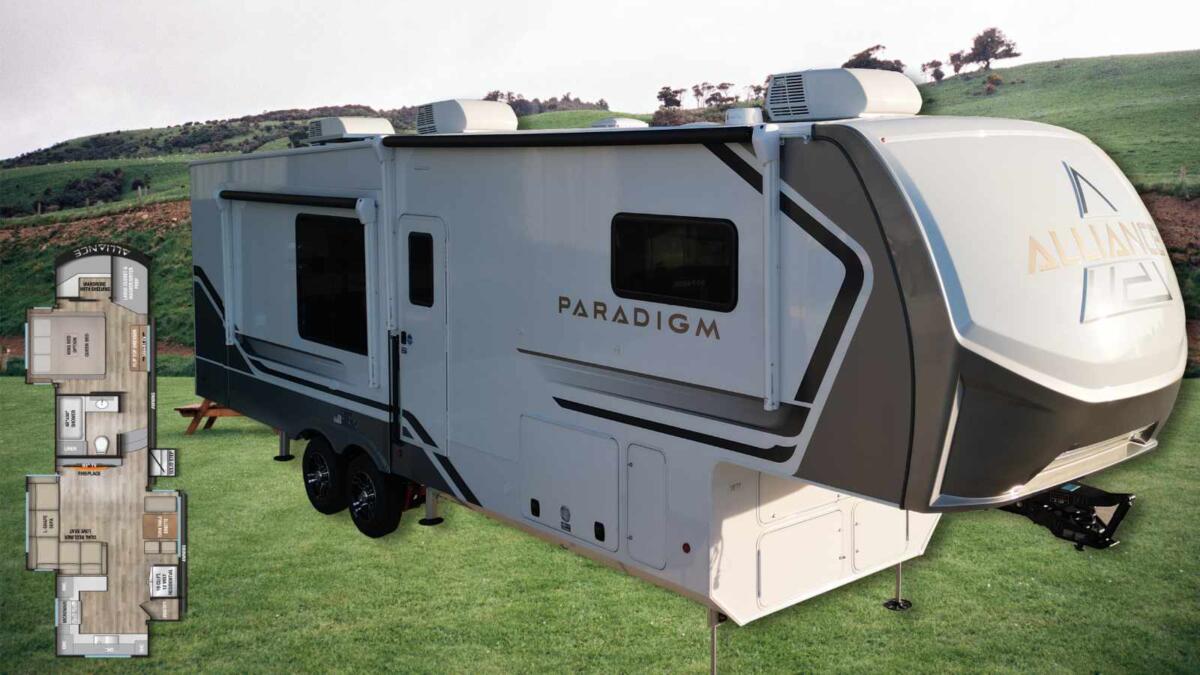
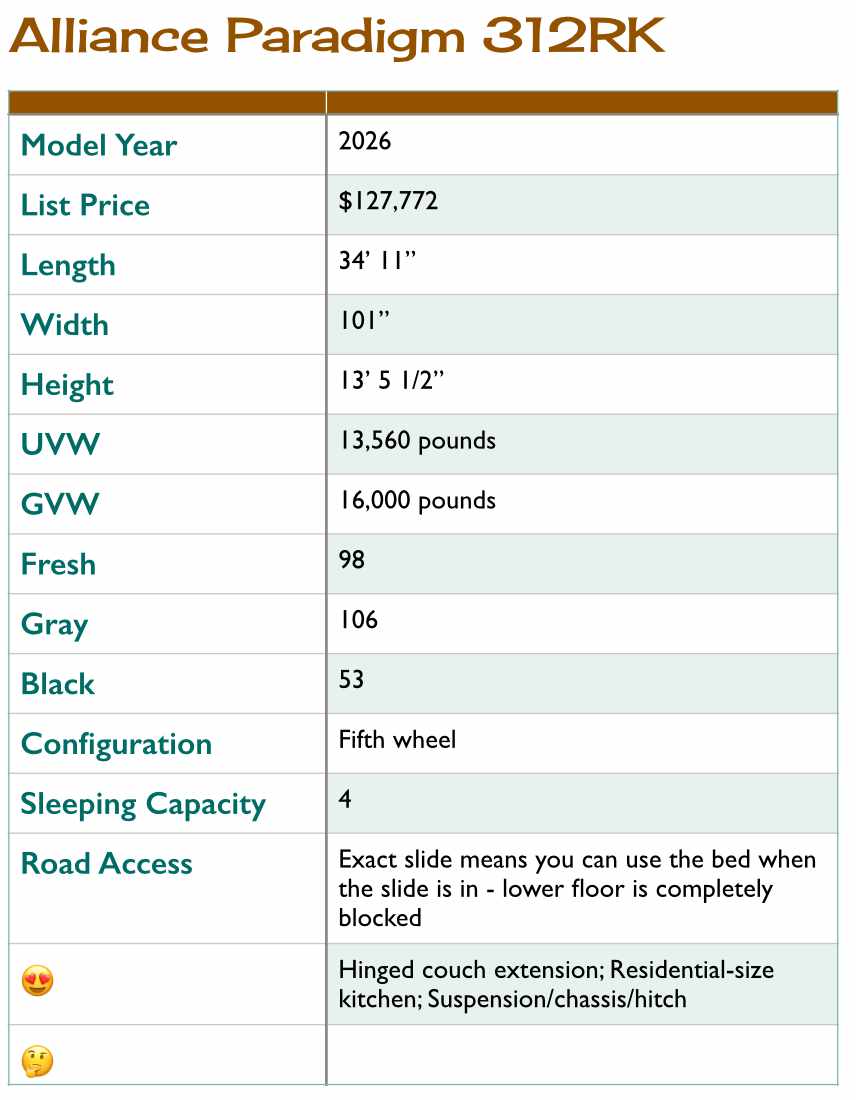
For today’s RV review, we’re going to dip back into the Alliance well with the 2026 Alliance Paradigm 312RK fifth wheel. I know that some of you dear readers are looking out your windows and wondering when camping season is going to start, but, honestly, we’ve been camping since the beginning of the year. Part of this adventure has been RVing Route 66 for its 100th Anniversary with a group of fellow RVers.
That has been a fun adventure, but all the people I tend to spend time with on the road typically have smaller travel trailers. In fact, my own Rockwood Mini Lite 2506FK is the largest of the group.
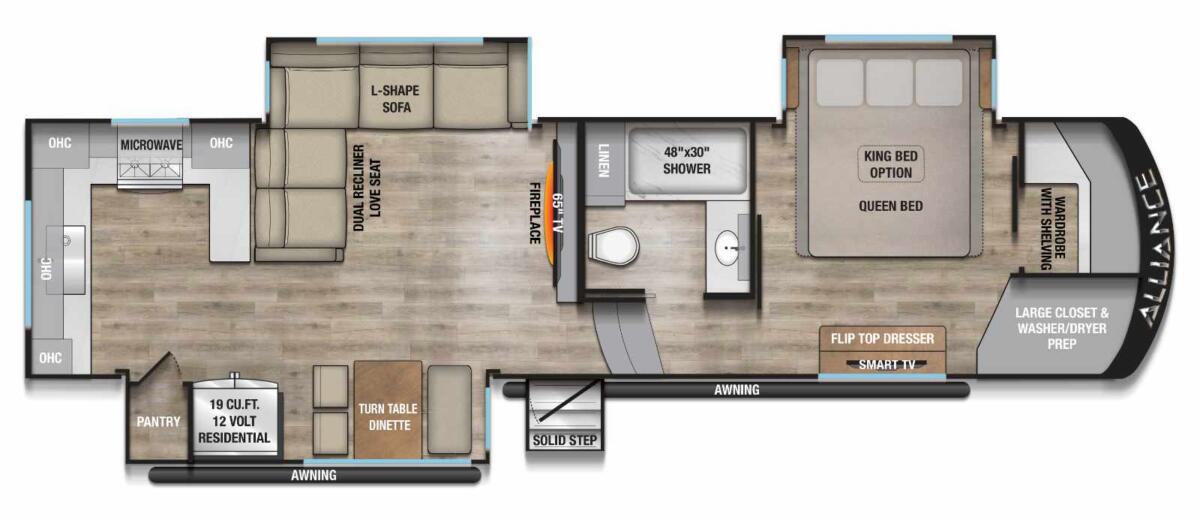
Sometimes I wish that someone would join the caravan with a larger RV. I started looking at what I wish one of our friends would buy, and came across this Alliance. This one is well set up for groups with a large L-shaped sofa and a dinette that can either be a table or a desk.
While the days have been pretty great on this Route 66 adventure (we’ve only gotten as far east as Albuquerque), the nights have been cold, so it would be nice to have a place to gather indoors. I think this might be a good solution.
But before I encourage any of my friends, or any of the people reading this, to buy any RV, you know the first place I’m going to direct you to is the underside of the RV.
In fact, we also got to tour another manufacturer’s facilities, and it was so clear how differently the two companies thought about things. I don’t mean to disparage that other brand, but leaf spring suspensions, PEX clamps on flex hoses for plumbing, no Azdel in the wall build, and small ovens… It was as if they weren’t even trying. Again, I’m not going to mention any names here, but their designs weren’t very grand at all. Ahem.
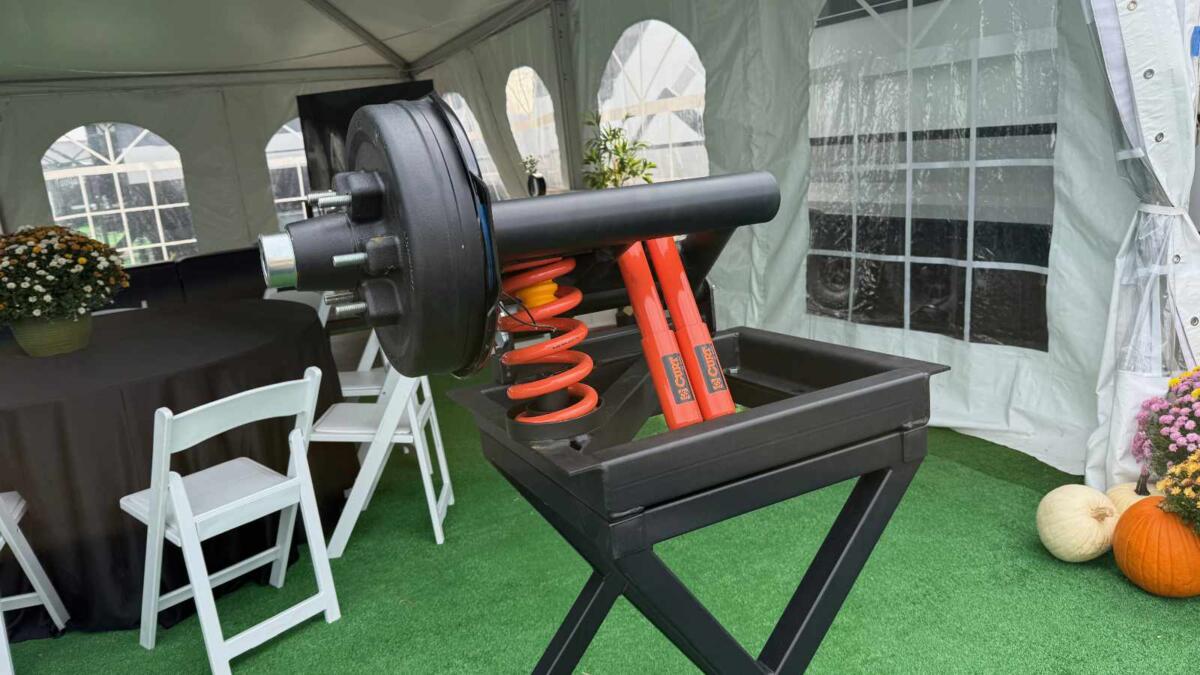
This Paradigm incorporates coil springs and shock absorbers as a real suspension should. They also reduce vibration and harshness entering the body of the fifth wheel itself. Add to that the Helux pin box, which also incorporates a coil spring and shock absorber, and you have a great combination.
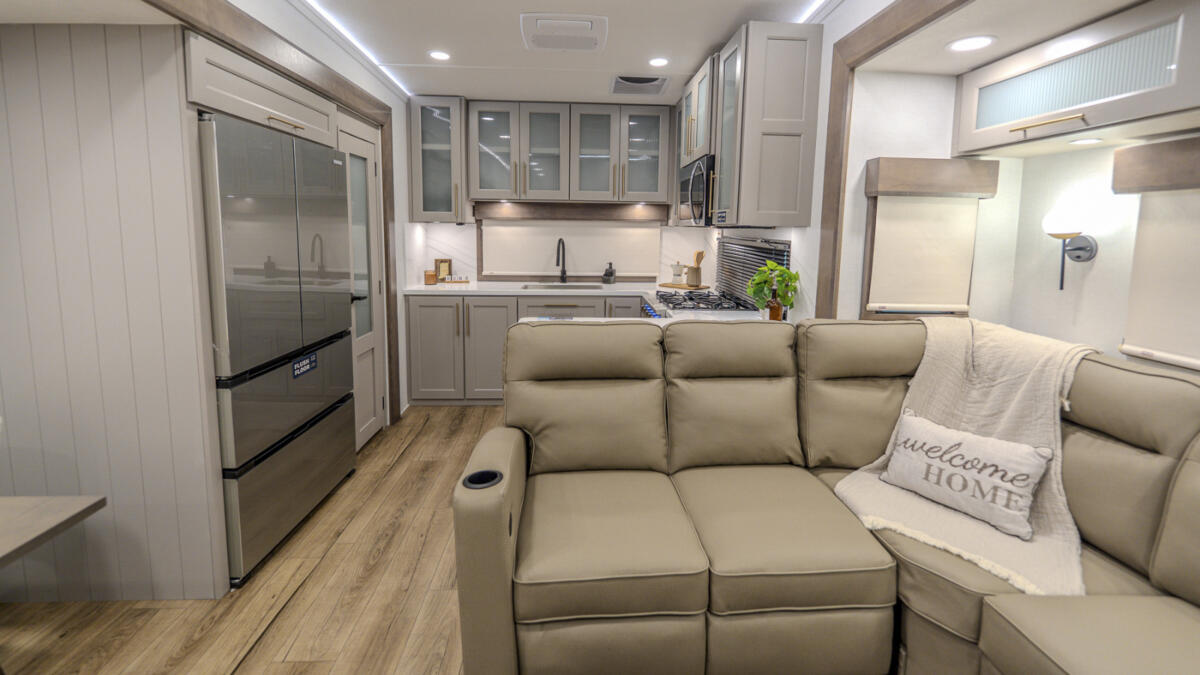
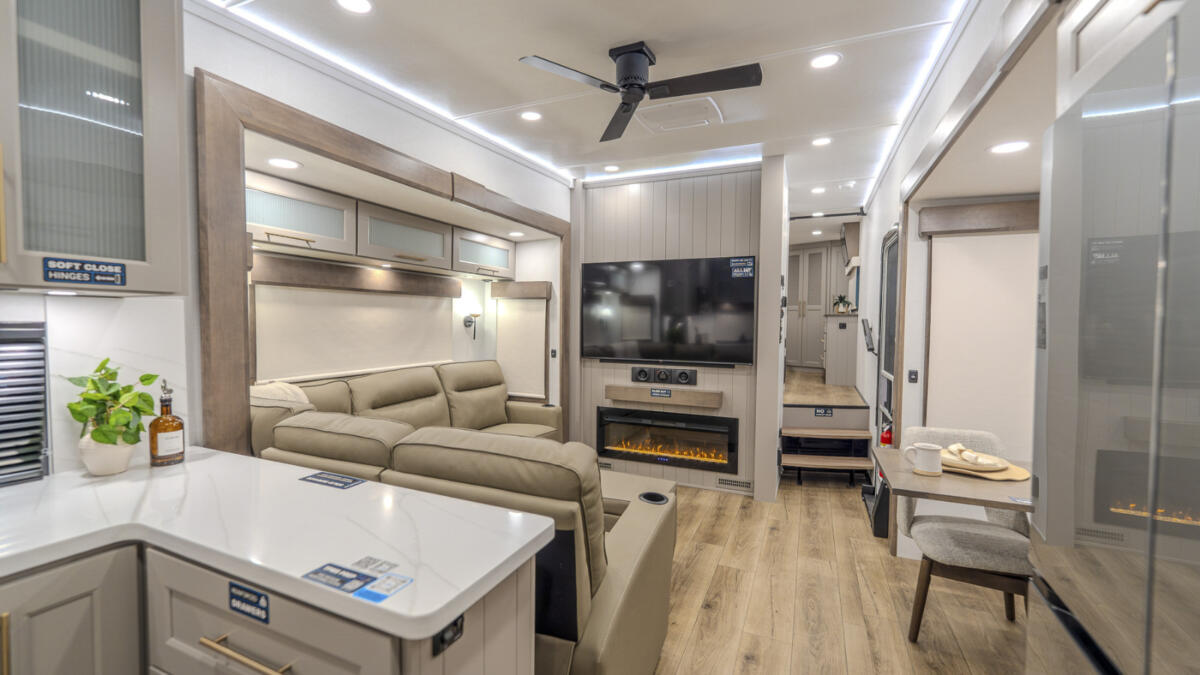
A kitchen nicer than the one in some homes with residential-size appliances and a dishwasher
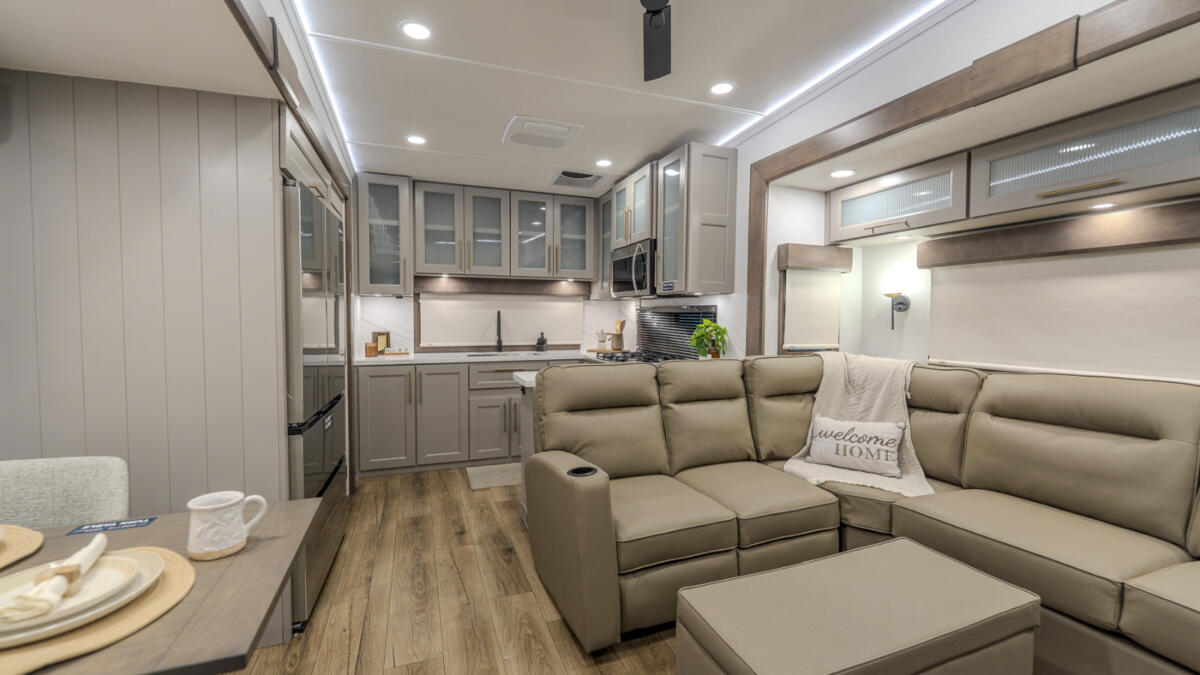
A spacious living room makes for great entertainment space
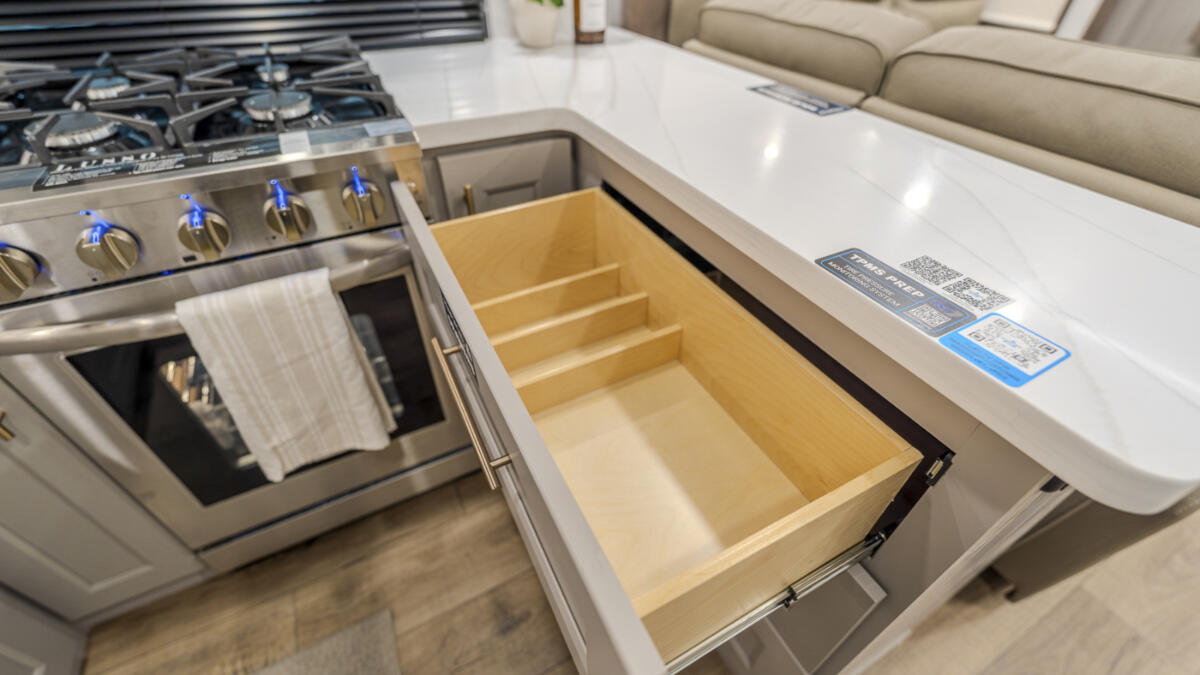
A clever drawer insert and nicely finished drawers in the Alliance Paradigm 312RK
A great fifth wheel for those who like to entertain in the Alliance Paradigm 312RK
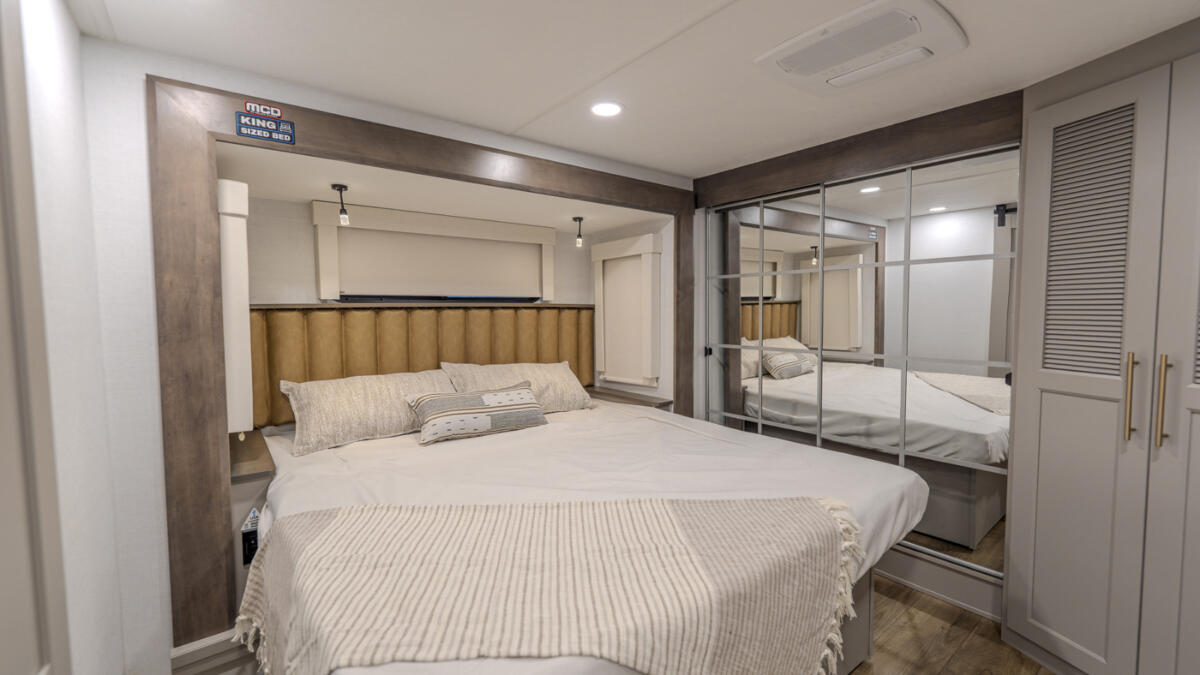
A king or queen bed are choices in the Alliance Paradigm 312RK
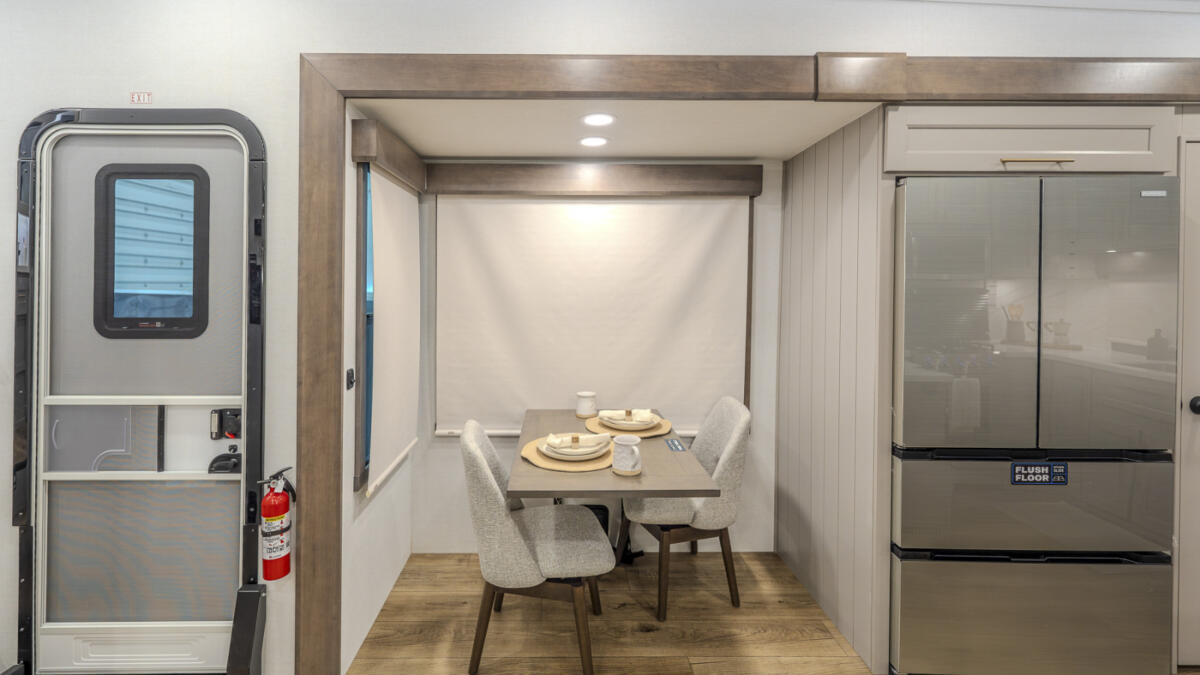
A usable dining nook with a table that can serve multiple purposes
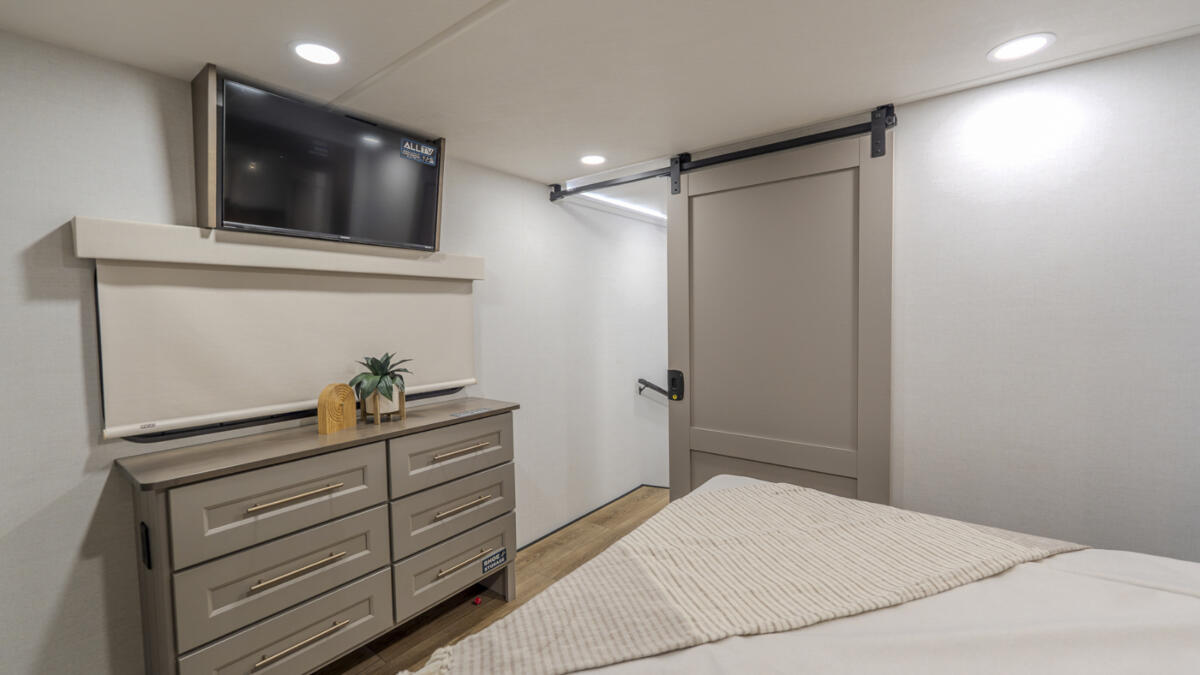
Alliance Paradigm 312RK bedroom entry
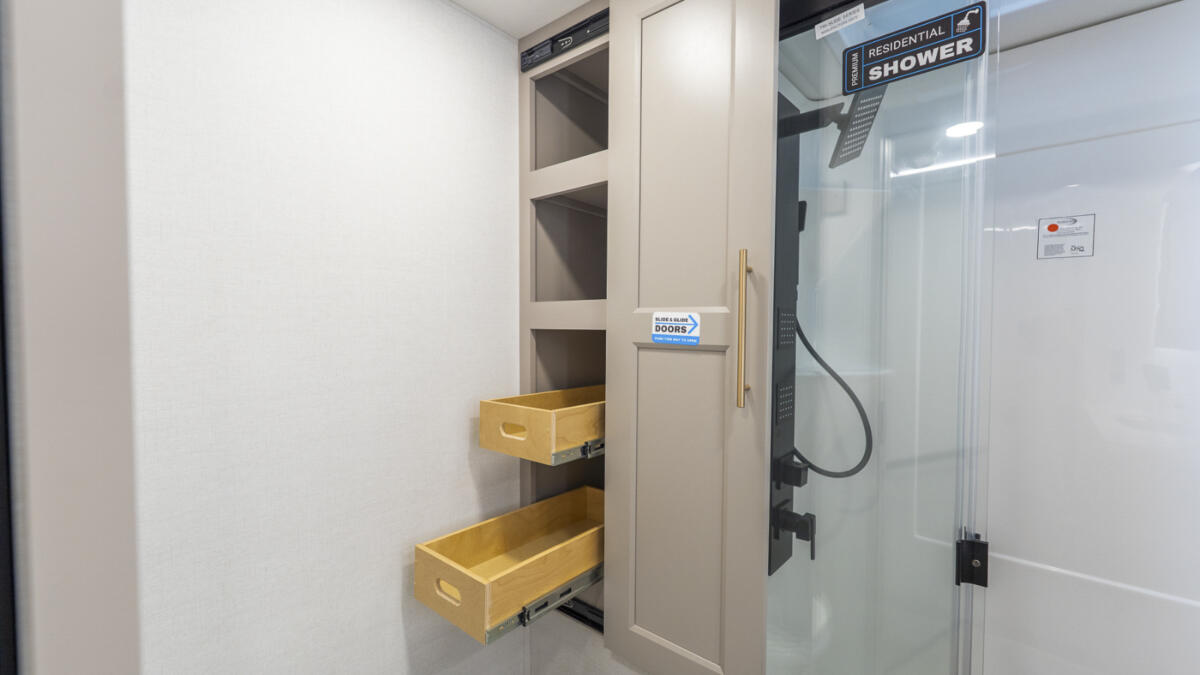
Clever storage in the bathroom of the Alliance Paradigm 312RK
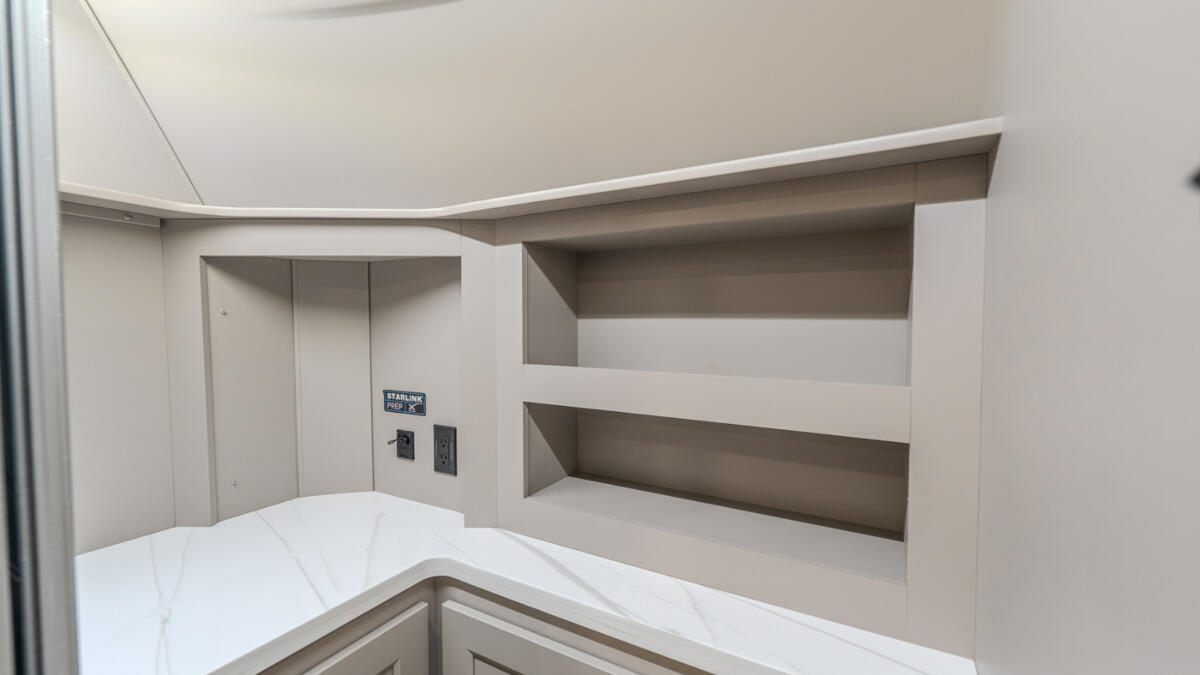
Solid surface counter tops and easy Starlink installation are highlights of the front closet in the Alliance Paradigm 312RK
The dining table can be turned to face camp-side windows or optimized to seat four
Add to that anti-lock brakes, a tire pressure monitoring system, and balancing beads inside the tires, and you have the ideal chassis for a fifth wheel. The anti-lock braking system also incorporates a degree of sway control and has a provision to track mileage for maintenance. Also, the tires are Cooper H-rated.
Water system
Moving up a bit, Alliance has switched to a manifold water system inside the trailer, where every fixture features a home run to this manifold. If there is ever a leak at one fixture, you can simply and easily disable that fixture and keep on camping on.
Speaking of plumbing, this features a 12-gallon water heater that’s gas and electric. With all the RVs moving to the lousy gas-fired tankless water heaters, I like that Alliance has remained with this type of system—it’s better for boondocking and better for park camping.
Another thing I absolutely love is that the gate valves in this fifth wheel are power-operated rather than being cable-operated, which has been a source of poorly timed misfortune in so many fifth wheels. Something I’ve noticed is that Alliance labels things so clearly that even a blind old bat like me doesn’t need glasses to see what a switch does.
Oh, and speaking of switches, there are switches in the baggage compartment to operate the slides and awnings. You won’t have to download an app to enable any of the functions in an Alliance; they have clear, well-labeled, and often redundant physical switches to make stuff do its thing.
Living in the Alliance Paradigm 312RK
There is a clear emotional divide between the main living room and the kitchen of this RV, although, of course, it’s essentially the same space.
But this RV features a large L-shaped sofa, which also incorporates a hide-a-bed function in it (you don’t have to tell anyone that that’s there). I’ve seen more and more RVs with these very large sofas, and that would be great on my adventures with friends.
Something that’s almost universal about these sofas, however, is that you have to do some serious finagling to get them to accommodate the slides coming in. Oftentimes I’ve seen how the extended portion of the couch has to be lifted or locked into place, and that alone would have me considering leaving it at home.
This one has a simple hinge with wheels on the bottom, which makes the difference between questioning my lifetime of laziness and just enjoying using the RV. Honestly, what good is a feature that encourages laziness and requires fitness when you have a simple hinge to do what you need to?
Another thing we’d all appreciate is the electric fireplace for those cooler nights.
Dinette
I also like the dinette in this, which can swivel so that it’s more of a desk facing the camp-side window or function as a four-person dinette. There’s an ottoman that forms two of the seating positions, and then two chairs that remind me of the seats in a 1980 Lamborghini, quite frankly.
Interestingly, Alliance is using three air conditioners in this rig instead of having two that utilize ducts to move air around. The two A/C units in the living room are “direct dump” type units, and then using a method to allow all three units to operate on a 50-amp service. This is actually more effective than ducting air in a hot roof chamber. Even better, these are Furrion Chill Cubedirect dump units, which are very quiet and very efficient. I think someone’s paying attention over at Alliance.
Kitchen in the Alliance Paradigm 312RK
As much as I like the main living space, I also love the kitchen in this rig. This is a large U-shaped kitchen with residential-sized appliances and plenty of counter space. There’s also a surprise in here: The dishwasher is included, and it’s decently large.
Drawers and cabinets are plentiful and well-finished, and there’s also a large pantry. The fridge is a 20-cubic-foot 12-volt model (as mentioned, the appliances truly are residential-size).
Bedroom in the Alliance Paradigm 312RK
The standard bed in this bedroom is queen-sized, but you can also opt for king-sized. That bed is in a slide on the road side. The slide mechanism is the BAL® EXACT-SLIDE®, which is unique in that the company certifies it for use with the slide in. This is unusual in the towing world.
That means that if you did stop for a night and weren’t able to open the slide, you could still use the bed. However, if your nighttime activities include making more humans, perhaps you will want to extend the slide. I don’t know how much jostling and jiggling the slide is meant to accommodate when it’s retracted.
Something interesting: Alliance has added a port that lets users mount a Starlink dish without drilling holes in the rig’s roof. Just listening to owners, obviously.
Final thoughts on the Alliance Paradigm 312RK
While this isn’t the largest fifth wheel, it’s not the smallest either. With a gross weight of eight tons, I wonder how many will tow this around frequently versus use it as a seasonal rig. I’d love to hear what your thoughts are on moving this around. The length isn’t bad, but it’s heavy. However, that also means it’s probably less likely to jiggle itself apart on the things we’re referring to as roads.
As mentioned, I spent a month in Indiana right before winter arrived and got to see a bunch of Alliance fifth wheels as well as a few other brands. While no RV is perfect, of course, looking at these fifth wheels compared to those from some of the other brands, it’s absolutely clear how differently Alliance is thinking about things and how many things this company is doing to make the ownership experience better.
As always, I really appreciate your feedback on this review and also your readership. What’s your opinion of this trailer and the features I shared?
These RV reviews are written based on information provided by the manufacturers along with our writer’s own research. They are based on information from a single unit and may not reflect your actual experience. Shop your RV and dealership carefully before making a buying decision. They are intended only as a brief overview of the vehicle, not a comprehensive critique, which would require a thorough inspection and/or test drive.
Tony comes to RVtravel.com having worked at an RV dealership and been a lifelong RV enthusiast. He also has written the syndicated Curbside column about cars.
You can also check out Tony and Peggy’s RV podcast.
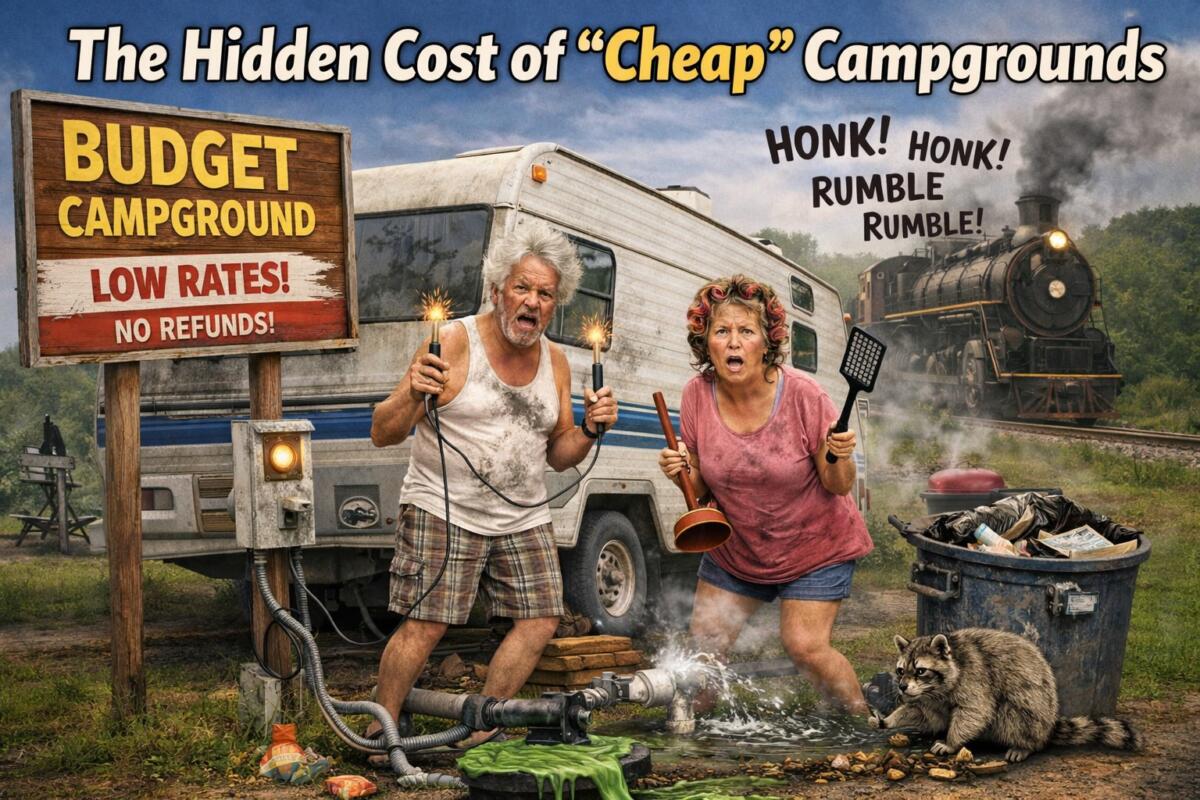
At first glance, finding a “cheap” campsite feels like a win. You find a campground for $25, maybe $30 a night—far less than the $60, $80, even $100 rates that seem to be popping up everywhere lately—and you book it, feeling like you just beat the system.
But then… you arrive. And that’s when the real cost starts to show up. And I don’t mean in just dollars, I mean your time, frustrations, and your all-around mental health.
The “cheap” site that costs you comfort
You’ve probably been there before. The site technically fits your rig… but just barely.
It’s uneven. Or muddy. Or sloped juuust enough that your stabilizers are working overtime. Maybe you’re stacking blocks higher than you’d like, or skipping leveling altogether because it’s just not worth the hassle for one night.
Then there’s the space—or rather the lack of it. Your slides feel tight. The picnic table is awkwardly placed. Your neighbor’s sewer hose is much closer than you’d prefer.
And yep, none of this shows up in the nightly rate. But suddenly, the “cheap” cost is making more sense.
Hookups that aren’t quite what they seem
“Full hookups” can mean very different things depending on where you are. Low-cost campgrounds are more likely to have:
• Low or inconsistent water pressure
• Electrical pedestals that feel… questionable (not good)
• Sewer connections that are poorly positioned or hard to access
You might find yourself relying more on your onboard systems, using your surge protector more cautiously, or just feeling a little less confident plugging in.
Again, these things aren’t a line item on your receipt, but it’s a cost in peace of mind.
Noise, lights, and the things you can’t control
One of the biggest trade-offs tends to be the environment. Lower-cost campgrounds are often:
• Closer to highways or busy roads
• Near industrial areas or train tracks
• Packed tighter with less thought to spacing
And then there’s lighting. Bright floodlights. Neighboring rigs with generators running longer than expected. Late arrivals, early departures. And, yes, all this matters even more when you’re packed into the park like sardines.
For many RVers, this is where the “cheap” stay starts to feel expensive—because you’re not getting what you came for: rest, relaxation, peace and quiet, working amenities…
And then there’s your time…
You saved money, but you lost time. This one sneaks up on you. You spend extra time:
• Adjusting and readjusting your rig to get level
• Walking the site to figure out how everything fits
• Dealing with hookups that don’t line up quite right
• Troubleshooting small issues that wouldn’t happen elsewhere
It might only be 20–30 extra minutes here and there. But over the course of a trip, it adds up.
And if you’ve been RVing for years, we bet you might value ease just as much as savings.
Wear and tear adds up, too
Rough roads getting into a campground. Tight turns. Uneven sites. Older infrastructure.
Individually, these aren’t deal-breakers. But, over time, they contribute to wear on your RV—your suspension, your jacks, your patience.
It’s one of those hidden “costs” that doesn’t show up until later.
When “cheap” makes sense and when it doesn’t
None of this means budget campgrounds are bad. In fact, they can be perfect when:
• You just need a quick overnight stop
• You’re passing through and don’t plan to spend much time outside
• The location is exactly where you need to be
But when you’re planning to stay a few days—or you’re really looking forward to relaxing—that lower nightly rate can come with trade-offs you feel every hour you’re there.
What experienced RVers already know
After a few years on the road, many RVers shift how they think about campground pricing.
It’s less about the cheapest option… and more about value.
A slightly higher nightly rate might mean:
• A level, well-designed site
• Reliable hookups
• Quiet surroundings
• Less setup stress
• More actual enjoyment
And for many, that’s worth far more than the difference in price.
The bottom line
A cheap campground might save you money upfront, but depending on the situation, it might cost you in comfort, time, and overall experience. And maybe even your sanity…
And if you’ve been RVing long enough, you’ve probably learned this already: Sometimes the best deal… is the one that lets you truly relax once you arrive.
What do you think? When you’re booking a campsite, are you chasing the lowest price—or the best experience? Vote in the poll and tell us in the comments. We’d love to hear your opinions and stories. Thanks!
I saw this question on one of the RV forums I watch: “Hey, folks. Another newbie question. Does everyone run a TPMS on their travel trailers? Are they necessary if you’re running your tires at the correct pressure?”
While this sounds like a reasonable question, I wonder what people think of it?
“My car/truck has a number of warning lights for Low Oil Pressure, or High Water temperature. I am wondering if it would be OK to disconnect the power to all those warning lights? I do check oil and water level every week, so I see no reason for all those distracting lights.”
How many of you would tell others that it is just fine to disconnect all those bothersome and distracting warning lights? While you are at it, why not disconnect the “open door” light or the “seat belt not connected light”?
A driver can easily just look and confirm the doors are closed and that all the children have seat belts latched. No one would ever forget to check those safety devices, and I am sure you could always talk your way out of a ticket if a police officer ever stopped you.
Yeah, my question is a bit over the top, but the reality is that the data indicates that the majority of RVs have one or more tires underinflated for the load placed on them.
U.S. Department of Transportation data indicates that properly inflating your tires can save you as much as 11 cents per gallon on fuel. Yet only 19 percent of consumers properly inflate their tires. That means four out of five consumers are wasting money because of underinflated tires!
Also, in 2023, a total of 646 people died on the road in tire-related crashes. One-in-four cars have at least one tire that is significantly under–inflated. A 2007 study found these tires to have pressures at least 8 psi (or 26%) below the manufacturer’s recommendation.
SO MY ANSWER IS....
No, TPMS are not necessary… IF you check your tire inflation every 15 to 20 minutes, as even a small puncture can result in a loss of air sufficient to result in a tire “blow out.”
THIS postshows a tire that had been checked only 50 miles earlier.
Those viral RV crash test images circling the internet right now are hard to look at—and they raise real questions about RV crash safety.
Cabinets burst open. People get tossed around. The whole rig seems to come apart in ways that don’t look anything like a car crash.
Those RV crash test safety scenes grab your gut—and they should. But before you start second-guessing RV travel, it’s worth stepping back and looking at what you’re really seeing, and what it means for you on the road.
What’s really happening in those crash tests
Most of these tests run at speeds of around 30 to 35 mph. That doesn’t sound fast… until you see the aftermath.
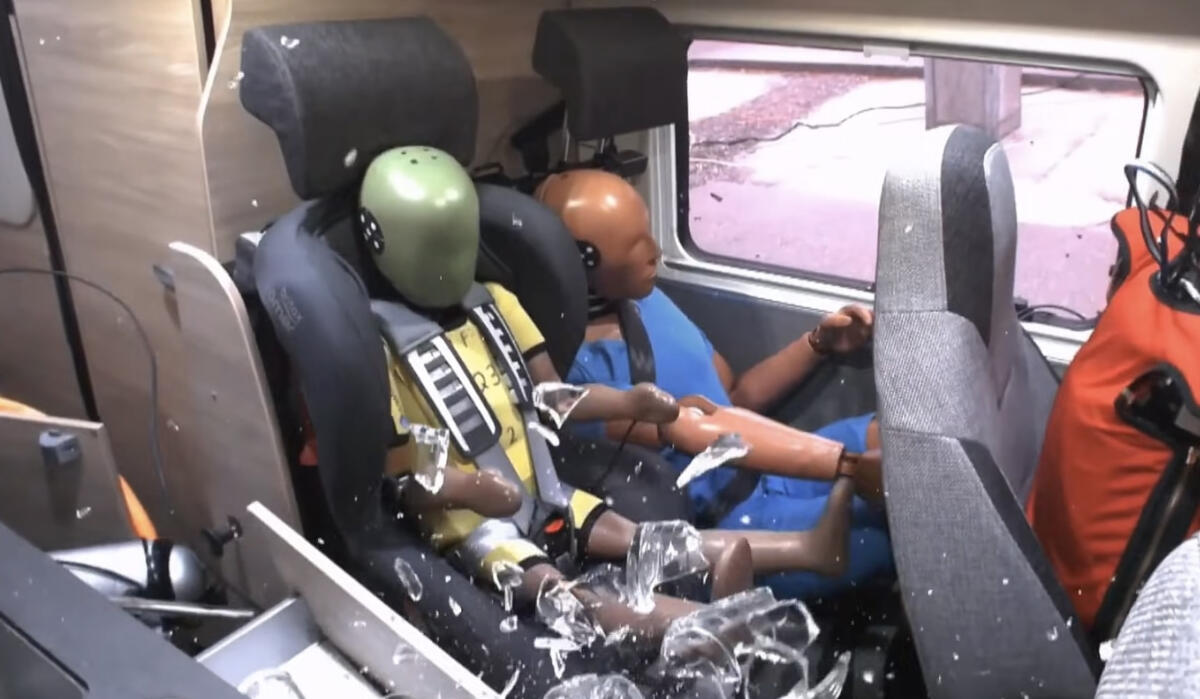
The living portion of a motorhome can shift or even separate from the chassis. Dinette passengers get thrown around, even with seatbelts. Anything not secured turns airborne almost instantly.
It looks extreme. It is. But it also reflects how these rigs are built.
Why RVs don’t behave like cars
Here’s the key: An RV doesn’t follow the same safety blueprint as a passenger vehicle.
The cab up front meets automotive crash standards. The living area behind it does not. Builders add that portion onto the chassis, more like a small house than a car body.
And houses don’t handle crashes.
Manufacturers build for weight, livability, and cost. They don’t design the living space to perform like a car in a collision. That’s why the cab often holds together while the rest turns chaotic.
Where you’re safest and where you’re not
These tests make one thing clear: Seat choice matters.
Up front, you get the best protection the rig offers—seatbelts, airbags, and a structure built for impact.
Move back, and protection drops off.
Forward-facing seats near the cab offer some protection, but they don’t match a car. Dinette seats and side-facing benches can turn risky in a crash, even with belts.
The danger most people don’t think about
Rear-seat crash test dummies highlight a key risk in RVs—less protection and more flying debris during a sudden impact.. Photo: Baloise Assurances.
Look past the structure, and another hazard jumps out: everything inside.
Coffee makers, dishes, tools, canned goods—they all become projectiles. Cabinet doors pop open. Drawers dump their contents.
In a sudden stop, your belongings won’t stay put.
That’s one area where RVers can make a real difference.
If you tow, there’s another layer.
Towables bring their own risks.
In a crash—or even a hard evasive move—a trailer can sway, push the tow vehicle, or break loose. Once things start moving the wrong way, they escalate fast.
Set up properly and drive conservatively, and towing works well. But these tests show how thin the margin can get.
So, how worried should you be?
It’s easy to let these images rattle you.
They do show real weaknesses. But they also highlight worst-case scenarios. That’s why they spread so fast.
What they don’t show is the biggest safety factor: You.
Speed, following distance, road conditions, and attention matter far more than the type of RV you drive or tow.
What you can do starting today
You don’t need a major overhaul. Just tighten things up.
Keep passengers in forward-facing, belted seats. Store heavy items low and secure them. Clear counters before travel. Fix weak cabinet latches. In our rig, where we can, we secure cabinets so they can’t easily open.
And slow down. RVs don’t reward speed.
The bottom line
Those crash test images hit hard because they reveal something many RVers overlook.
RVs are built differently. In a crash, they behave differently, and that means you travel with your eyes open.
The safest RV isn’t about brand or floorplan. It’s about how you load it, where you sit, and how you drive.
America’s Original RV Newsletter. Since 2001 Issue 1253 If you find this newsletter helpful, please consider supporting our work with a donation of your choice. Thank you!
Today’s thought
“Live your life by a compass, not a clock.” —Stephen Covey
Need an excuse to celebrate? Today is National Corn Dog Day!
On this day in history: 1928 – Charles Lindbergh is presented with the Medal of Honor for the first solo trans-Atlantic flight.
Featured news
The headlines are starting to sound familiar. Fuel prices are climbing, oil markets are jittery, and some analysts are warning that high gas prices could put a dent in RV travel this year. Today marks the official start of spring, and prices at the pump have continued to climb, by 28 cents since last week.
A new RV dump station locator is getting attention after a recent industry news release touted a cleaner interface, broader coverage, and tools to help RVers quickly find places to empty their tanks. On the surface, it sounds just like what RVers need, but when we checked it against real-world locations we already know, the results didn’t always line up.
Chiricahua National Monument in Arizona feels like one of those places you hesitate to talk about. The roads are quiet, and campsites can still be found. You feel like you have the place to yourself. But that may not last. A bill to redesignate Chiricahua as a national park has already passed the U.S. House, pushing the idea further than it’s gone in years. If it clears the Senate, this could become Arizona’s fourth national park.
The headlines are hard to ignore, especially as national park safety concerns start creeping into the conversation. Last week, one ran this way: “National Park Service Job Cuts Blamed For Murders Around Utah National Park: ‘Should’ve Been A Safe Place’”. A violent crime tied—at least loosely—to national parks. It’s enough to make any RVer pause. But step back for a moment, and a different picture comes into focus. The real concern isn’t what those headlines suggest. Here’s why.
A 23% increase from last spring, more than 34 million Americans plan to take an RV trip, according to the newly released Spring Travel Intention Survey from the RV Industry Association. As travelers prioritize affordability and flexibility, RVing offers the freedom to explore on their own terms. Here’s what spring RVers are prioritizing this year.
If Big Bend National Park has been on your radar, the chance to experience the Chisos Basin as it is now is running out. Beginning May 1, 2026, the National Park Service will close the entire Chisos Basin area for about two years to carry out major construction. Learn more.
Speaking of Texas… For the first time in more than 25 years, the Texas Parks and Wildlife Department is opening the gates to a state park in North Texas. Palo Pinto Mountains State Park, located between Abilene and the Dallas-Fort Worth Metroplex, offers Texans 4,871 acres of former ranch land to hike, bike, fish, and explore. Check it out.
To continue to meet the needs of its visitors, Washington State Parks is increasing some fees in 2026 and early 2027. The fee increases include the Senior Off-Season Pass, non-resident reservation fee, and roofed accommodation fees. Here are the price increases.
Camping World lawsuit headlines are suddenly everywhere. If you’ve seen them, you might be wondering what just broke and whether it affects RV buyers. Short answer: Nothing suddenly “broke.” But something has been shifting. After Camping World’s stock took a couple of sharp hits following recent earnings reports, a familiar chain reaction kicked in. Investors who lost money began filing claims, and law firms quickly followed. Continue reading.
A Texas RV fire involving fireworks presented a safety lesson in dramatic fashion this week. In northwest Harris County, what began as a fire involving an RV didn’t stay contained for long. The fire spread to a nearby shipping container full of fireworks, and suddenly, explosions were popping off across the scene. This is nuts (and scary!).
RVers have been living with small-scale solar for years. Now, a similar idea is starting to move into the residential world. Plug-in solar, a simplified way to generate a bit of your own power at home, is gaining traction in Western states and beyond. But it’s more complicated than just setting a panel on the porch and plugging it in.
BIG NEWS!Well, sort of… Soooo many items are on sale right now. In fact, the thing you’ve been wanting might be on sale right now! But not for long! Click here to see.
Beyond the headlines with Tony Barthel
RVs are getting cooler, RVing is less cool, and some cool RVs
RV A/C tech is finally getting an upgrade—but that’s just one part of a bigger story. This week’s headlines dive into new cooling systems shaking up the industry, growing frustrations among RVers, a surprising new law on fifth wheel length, and what the future of RV design could look like. Click here to read Tony’s weekly news analysis.
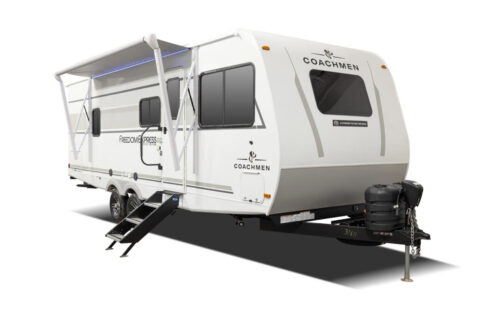
RV review 2026 Coachmen RV Freedom Express Select 249SE— “One of the best no-slide campers ever”
After more than 17 years around RVs, Josh the RV Nerd at Bish’s RV calls the 2026 Coachmen RV Freedom Express Select 249SE one of the best no-slide couple’s campers he’s ever seen. This trailer leans into classic camping roots, but it still brings modern essentials: a private rear true-queen bedroom, a tall 6’9″ ceiling, and a front lounge that feels wide-open, thanks to full front window coverage. Check it out.
News briefs
The National Park Service recorded 323,014,305 recreation visits in 2025, including 13,016,577 overnight stays and more than 1.38 billion visitor hours. Despite a 43-day partial government shutdown, parks remained largely accessible—and 26 parks set new visitation records.
Did you know? The average national park visitor spends 4–6 hours inside a park.
More than half of campers (52.2%) took at least one RV or trailer trip in 2025, according to The Dyrt’s 2026 Camping Report. Campgrounds are responding to demand, with 51.6% of expanding properties adding more RV sites, compared to 27.4% adding tent sites and 21% adding glamping options.
A new Washington law signed March 16 will standardize how fifth-wheel trailers are measured, ensuring they comply with the state’s 46-foot limit. Backed by RV dealers and the RV Industry Association, the change aims to provide clarity and certainty for manufacturers, sellers, and buyers.
Authorities in California’s San Joaquin County are investigating the abrupt closure of Carson Pass RV in Lockeford after multiple customers reported financial losses and missing RVs. At least one couple says they are out $10,000 after leaving their trailer with the dealership to sell, only to find the business closed and their RV gone.
In case you missed it… What if RV influencing didn’t start with Instagram or YouTube—but 50 years ago? In Episode 590 of the RV Podcast, Mike and Jennifer Wendland share the story of a true road-life pioneer and sit down with RVtravel.com founder Chuck Woodbury for his candid take on how it all began and where it’s headed today.
Washington’s National Park Fund has awarded a record $2.28 million in grants to support Mount Rainier, North Cascades, and Olympic national parks. The funding will back more than 40 projects, including conservation, research, volunteer programs, and visitor improvements, as donors step up amid rising visitation and limited federal resources.
Oregon State Parks will host Spring Whale Watch Week March 21–29, with volunteers and rangers stationed at 15 coastal sites to help visitors spot migrating gray whales. About 13,000 whales are expected to pass by this season.
Mississippi’s Clarkco State Park reopened Thursday after a two-year renovation with upgraded amenities and modernized facilities. The 815-acre park near the Alabama line now features 43 full-hookup RV sites, renovated cabins, a lodge and bathhouse.
New Mexico’s Bandelier National Monument has begun seasonal free shuttle service to Frijoles Canyon. Service begins daily at 10:30 a.m. at the Frey Trail parking lot.
National Park Service rangers and Carlisle, Pennsylvania, police have arrested a 36-year-old man on two felony counts of allegedly carving his initials into two monuments in Gettysburg National Military Park. He faces up to 10 years in prison and a $250,000 fine per count, plus more than $11,000 in restitution.
The National Park Service is warning visitors around Lake Powell in the Glen Canyon area to watch for quicksand, an alert that covers more than 1 million acres across Arizona and Utah. The conditions come as water levels at Lake Powell continue to drop. Visitors in the area are advised to stay close to canyon walls and hike with a buddy.
Escape Trailer is recalling some 2025 E17, E19, E21, E5.0 travel trailers. The spare tire carrier may detach from the trailer during transit. Info: 604-703-1650.
A sticky situation… A California highway was closed for nearly nine hours after a truck overturned and spilled hundreds of gallons of maple syrup onto the 10 Freeway in Fontana on March 16. Crews had to hose down the sticky mess before reopening the road Monday evening.
The National Mall cherry blossoms are expected to be at their peak bloom March 29-April 1 this year. Plan your visit, and quickly!
Officials say avian flu (H5N1) has killed at least 16 elephant seals, along with a sea lion and an otter, at Año Nuevo State Park in California. The outbreak—marking the first detection of H5N1 in marine mammals in the state—has prompted closures of seal viewing areas as experts warn more cases are likely.
DON’T WAIT FOR THE NEWS: Did you know you can receive a daily roundup of the latest news for RVers? Delivered to your inbox Monday-Friday, we’ll send you the biggest headlines. Stay up to date, learn about important closures, recalls, and much more. Click here and subscribe to “Breaking RV News.”
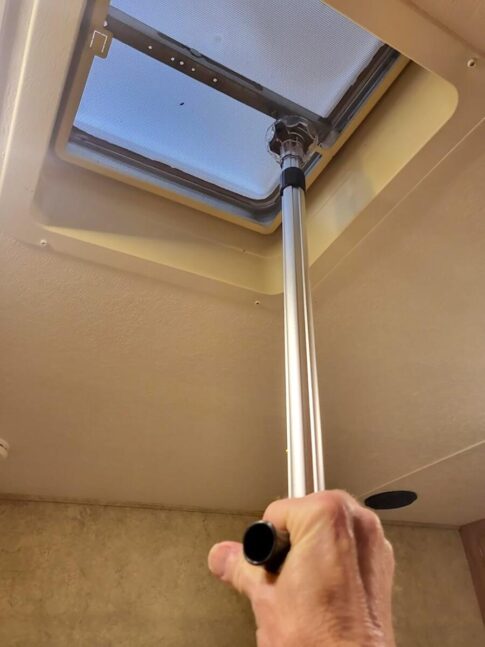
No more stretching to reach your RV roof vent
This adjustable vent opener pole makes cranking open hard-to-reach roof vents simple—no climbing, straining, or wobbling on tiptoes. With an extendable handle and interchangeable heads that fit most RV vent knobs, it’s a handy tool for quick airflow adjustments without the hassle. Learn more or order.
Tanner Toons with Tanner Woods
You may share this Tanner Toon, unaltered, on your website, blog or social media with our compliments. The musings from Tanner Woods’ creative mind appear in this newsletter every Saturday and Sunday and in many RV Daily Tips newsletters through the week.
**If you’re near Pomona, CA, be sure to see Dave Solberg at the very popular Ford Towing Bootcamp at the California RV Super Show today and tomorrow, March 21 and 22.
Trivia
The letter “a” doesn’t appear in any written number until you reach “one thousand.”
? MYSTERY PRODUCT OF THE DAY ? You DEFINITELY do this. There’s no denying the fact that this is DEFINITELY something you do! We’re laughing…
Laugh of the week
Top scams RVers should watch for right now
Scammers are getting more convincing—and travelers are easy targets. Here are the three biggest scams happening right now:
• AI “family emergency” calls: A call from a loved one in trouble—but it’s actually AI voice cloning. They’ll urgently ask for money.
• Fake campground or RV rental listings: Too-good-to-be-true deals that require quick deposits through apps like Venmo or Zelle.
• Government impersonation scams: Calls or texts claiming you owe money or face arrest. Real agencies won’t demand immediate payment—especially not with gift cards or crypto.
THANK YOU! Wherever you are today—drive safe, enjoy the first days of spring, and thanks for being part of the RVtravel.com community.
Today in history
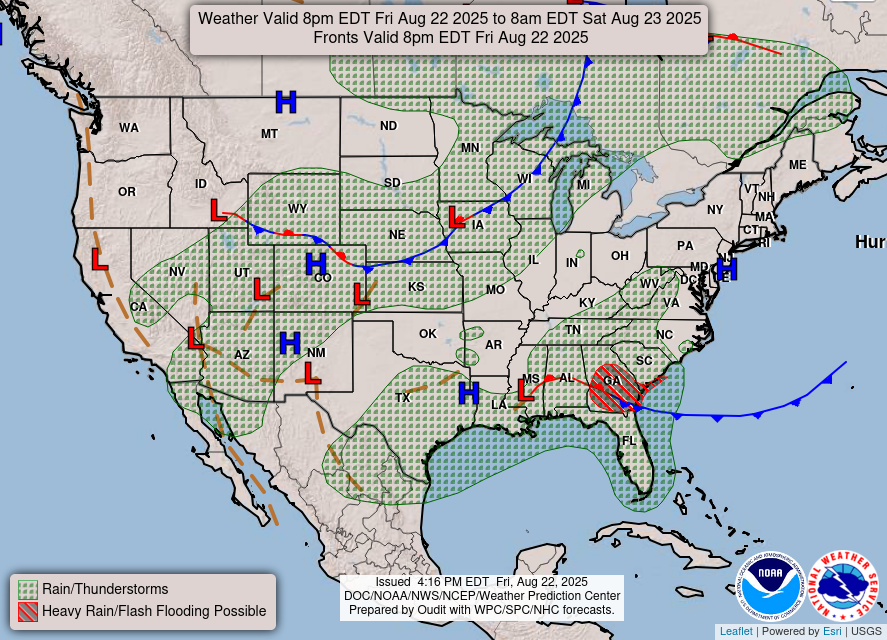
Today’s weather forecast across the nation THIS MAP UPDATES TWICE A DAY
We use cookies to ensure that we give you the best experience on our website. By continuing to use our site, you consent to accepting cookies. We NEVER have or will sell reader's data. For more info, please see our privacy policy page.