By Cheri Sicard
Two straight weeks off-grid boondocking in the Mojave Desert can turn simple chores into a grind. Dust ends up on everything, water starts running low, and even a basic refill can feel like more work than it should.
That’s why this no-move refill method matters; it helps an RVer pull into a California state park, grab water fast, and avoid the messy mistake that turns a quick stop into a problem later.
In the video at the end of this post, John, of Gone With John, explains all.
To my mind, this tip is rarely needed in practice, but there have been a few times when it would have come in handy. You probably already carry the necessary gear, for the most part. So, it’s good to know and keep in your RV trick bag.
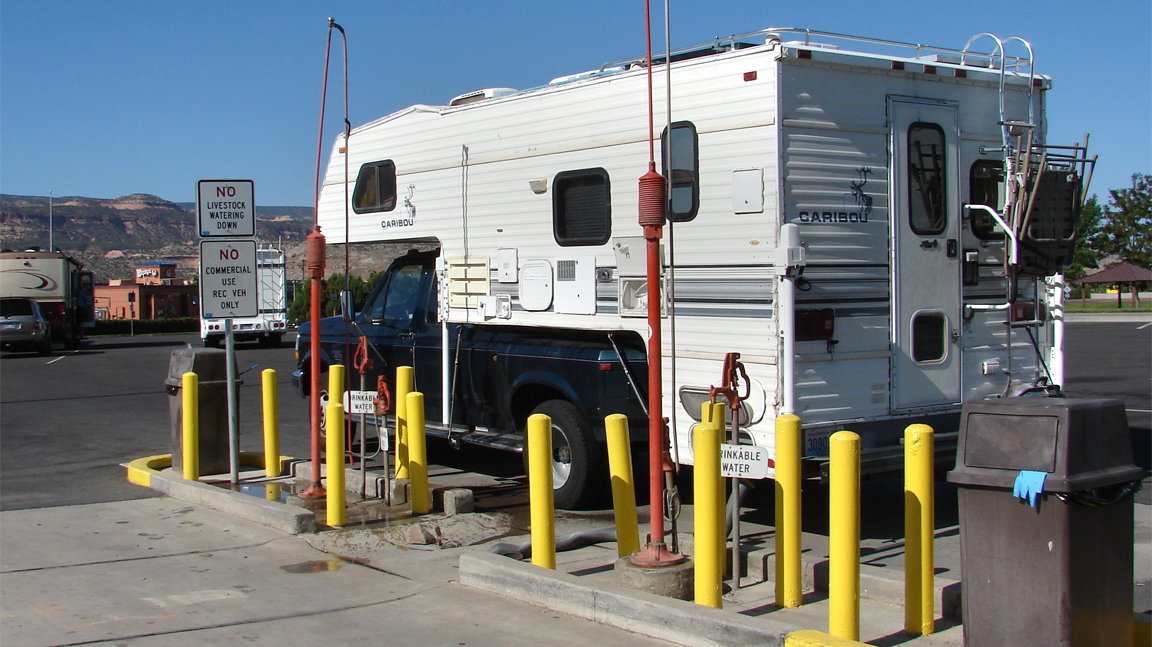
Start by finding the correct potable water spigot
Before anyone touches a faucet, it pays to slow down for ten seconds. Some parks have multiple spigots, and not all of them are meant for filling an RV’s freshwater tank. Grabbing the wrong one can get a camper shut down quickly, especially if staff sees someone filling from a non-potable source or from a faucet meant for cleaning.
If the signage isn’t obvious, the easiest move is to ask the kiosk where the potable fill point is. It saves time, and it skips the awkward moment of being told to stop mid-refill. Once the right spigot is confirmed, the rest becomes a simple routine instead of a whole parking project.
The simple gear that makes refilling painless
This setup is built around a few dependable items:
- Three 5-gallon buckets
- A submersible pump
- A drinking-water-safe hose
The big win is flexibility. With buckets, the RV doesn’t have to be parked perfectly next to the spigot. That helps a lot when the fill station area is tight, busy, or just not laid out for an easy pull-through.
For the pump style shown in the video, the Aquastrong Submersible Water Sump Pump provides drop-in pumping power that moves water quickly without back-breaking lifting.
How the bucket-and-pump refill works (without moving the rig)
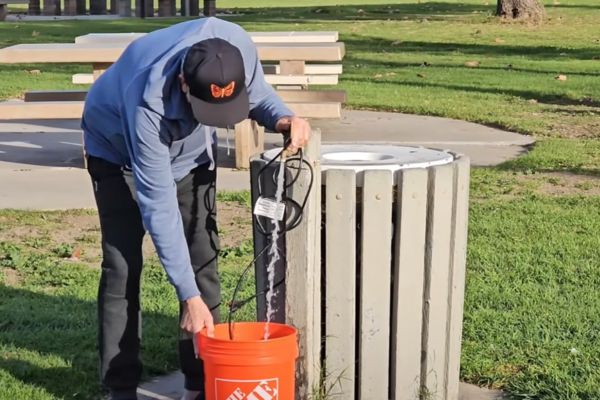
The flow is straightforward. One bucket gets filled at the spigot, the hose connects to the pump outlet, and the pump drops into the bucket. Then the other end of the hose goes straight into the RV’s fresh tank fill.
No one has to balance a hose in mid-air or hold it up while water blasts through. In the setup shown, the pump pushes hard enough that 5 gallons can disappear in about a minute. That speed matters because it keeps the spigot area clear and helps avoid “hogging” a shared resource.
The bucket rotation rhythm that keeps things moving fast
To avoid clunky starts and stops, the method uses a simple rotation:
- Fill all three 5-gallon buckets.
- Start pumping from one bucket into the fresh tank.
- When the pump bucket gets low, pour from the next bucket into the pump bucket.
That swap keeps the pump running without drama. If more than 15 gallons are needed, the routine repeats: shut the pump off when the last bucket runs low, refill the buckets, then start again. In the video, this rhythm moved about 35 gallons in under 5 minutes.
Two common mistakes that can ruin an easy no-move RV water fill
Keep the hose end clean. If it touches dirty ground, rinse it before it goes anywhere near the fresh tank. That one slip can turn into a “What is that smell?” problem later.
The second mistake is letting the pump run dry. Pumps can burn up that way, and it can also pull up whatever junk is sitting at the bottom of the bucket.
RELATED
- Unusual and helpful ways RVers can use old water hoses
- Why you should carry an extra hose in your RV
- YUCK! There was green algae growing in the water hose we drink from!
- Why RV water pressure regulators are essential
RVDT2865