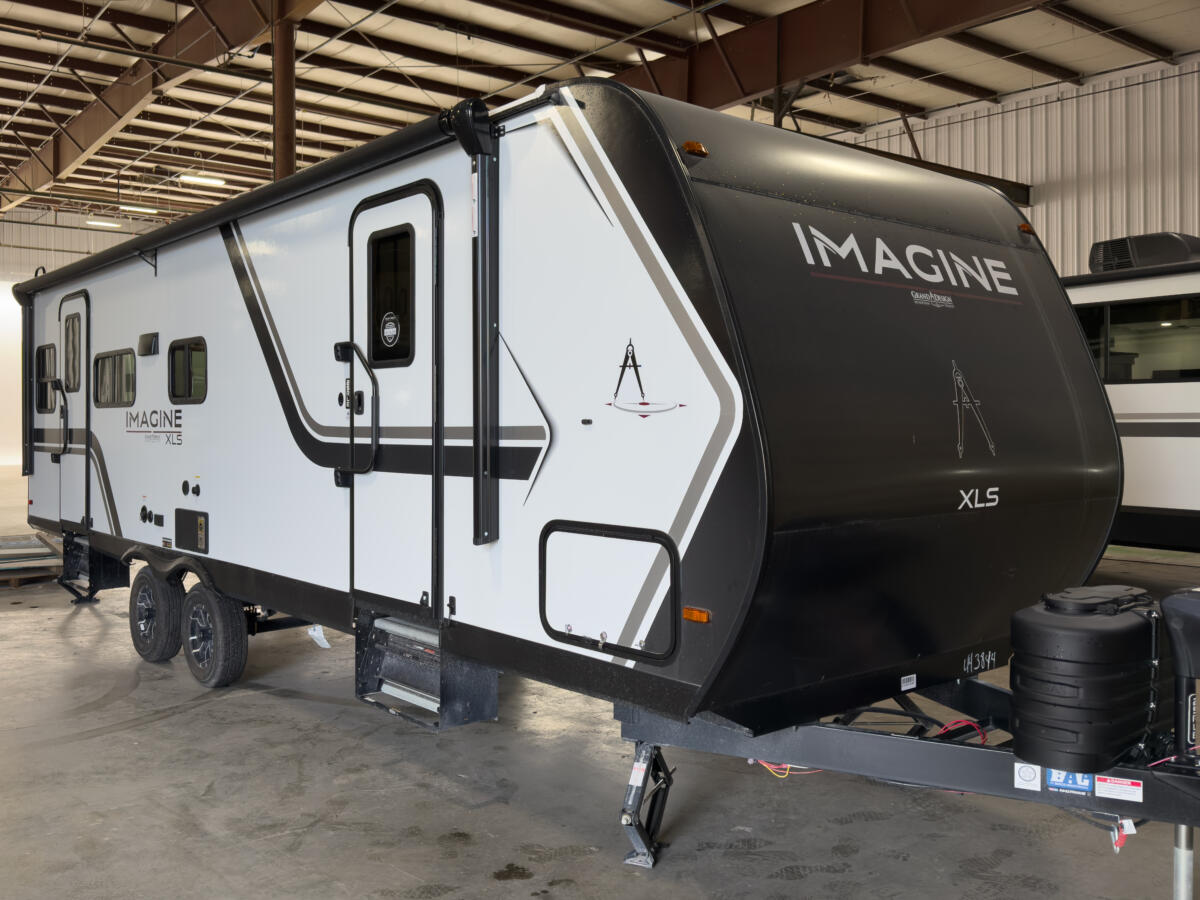
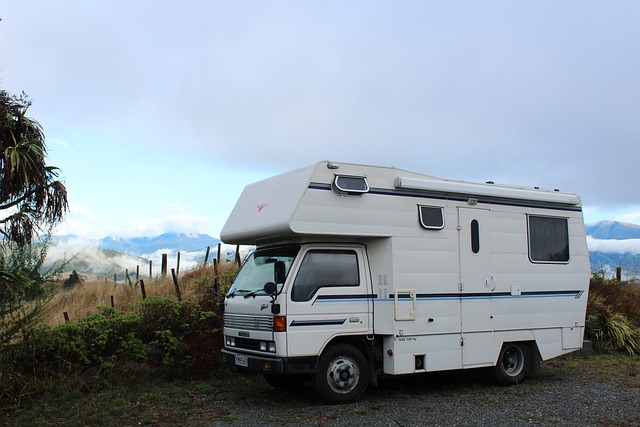
This travel trailer is compact enough for weekend runs and long road trips without sacrificing the basics. It features a single slide that opens the interior for a very comfortable feel.
Watch a video walkthrough below.
Behind the walls
Grand Design builds the Imagine XLS line with laminated sidewalls and rigid foam insulation. The XE/Imagine XLS platform emphasizes weight savings while keeping structural features like an aluminum structure, gel-coated fiberglass exterior, a walk-on roof deck, and a heated, enclosed underbelly. These construction choices are designed to balance durability, insulation, and tow-friendly weight.
Key specs
Unloaded vehicle weight (UVW): 6,186 lbs.
Dry hitch weight: 636 lbs.
Gross vehicle weight rating (GVWR): 7,995 lbs.
Exterior length: 29’9″
Exterior height: 10’10”
Fresh water capacity: 37 gal.
Gray water capacity: 45 gal.
Black water capacity: 37 gal.
Slide outs: 1
Typical MSRP: around $51,833 (local dealer pricing and incentives vary)
Exterior highlights
For its size, the Grand Design Imagine XLS 25RLE offers a generous pass-through basement storage area. The control panel is located there and includes wiring to add a TPMS for your convenience.
The power tongue jack makes setup/take down easy, and there are two entry doors (kitchen and bedroom) for coming and going. (You can access the bathroom and the bedroom while the slide is retracted, which is nice.)
I really like that Grand Design ran the awning almost the entire length of the RV. That will provide generous shade throughout the camper.
Interior and living space
Walking in, the Imagine XLS 25RLE feels intentionally compact but uncluttered. Designers thoughtfully positioned drop zones on either side of this entry door, which is something you don’t always see. The motion sensor light is another welcomed feature.
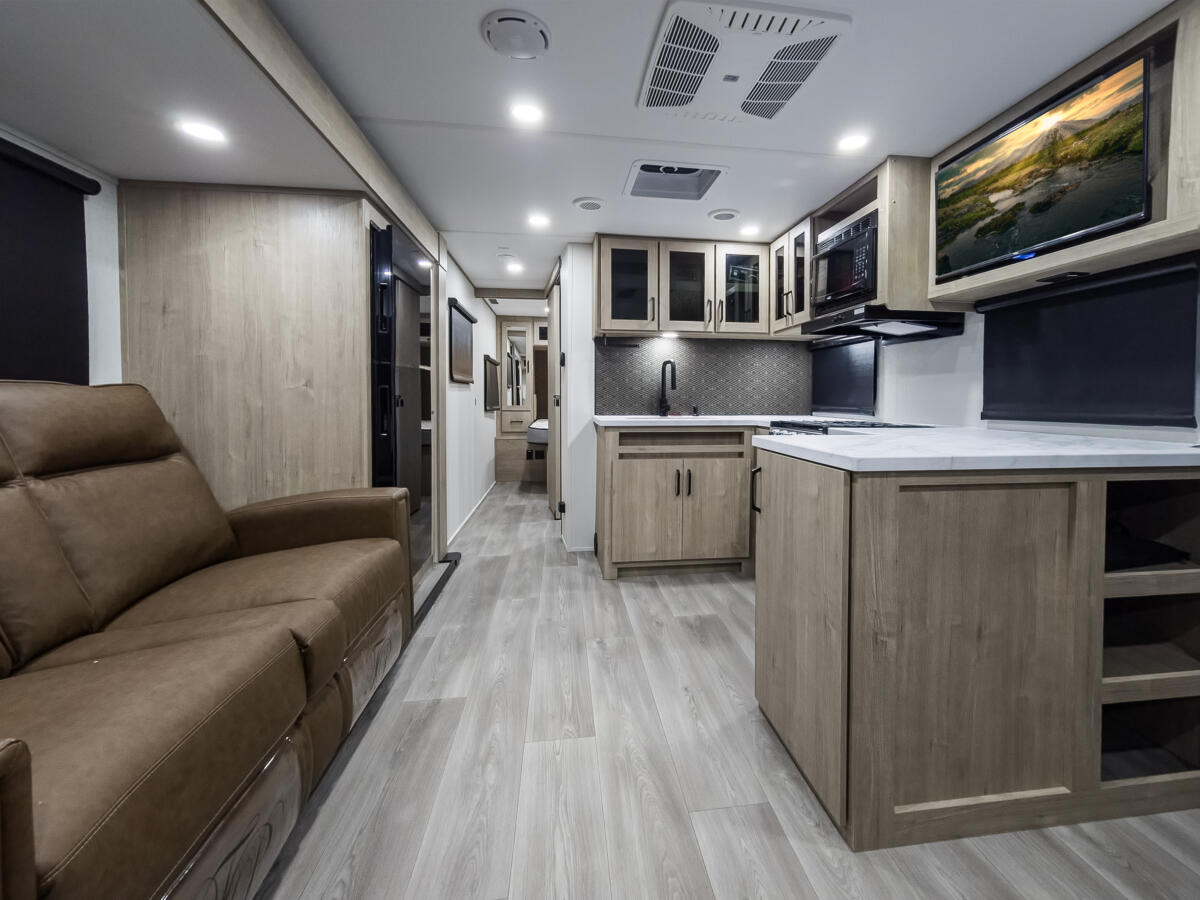
The single slide opens up the main area, so you don’t feel boxed in. The layout prioritizes a natural flow, and you’ll immediately notice that the sightline stretches from one end of the RV to the other, which I really appreciate. Light tone finishes on the floor, upholstery, and cabinets help keep the interior bright, and there are plenty of windows to let natural light (and breezes) into the camper.
Kitchen
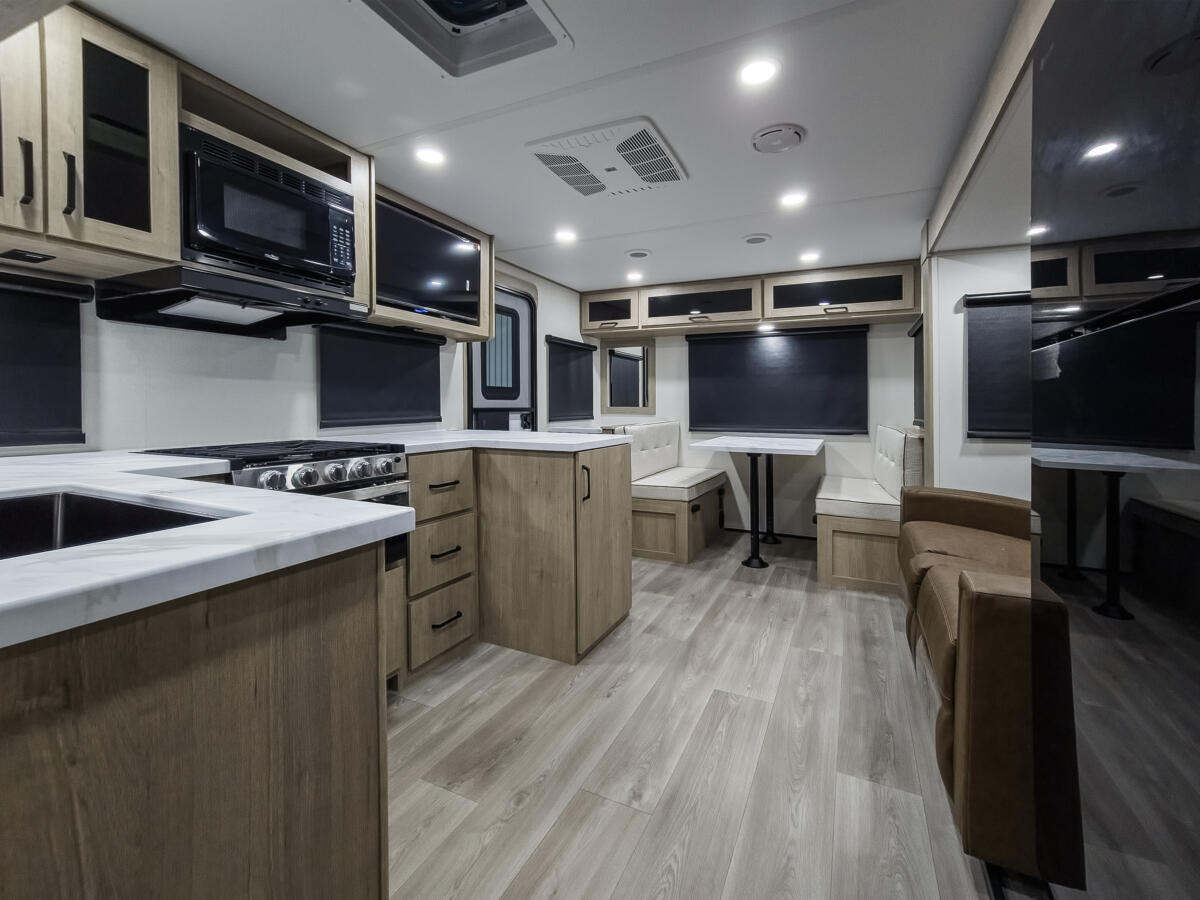
The mid-kitchen layout gives a practical work triangle. It includes a 3-burner cooktop with oven, microwave, and a deep stainless sink with a pull-down sprayer.
Countertop space is perfect for meal prep and serving. A 12V 10 cu. ft. refrigerator is standard on the XLS line, which makes running off solar easier than a conventional AC-only fridge.
The kitchen offers plenty of storage options with drawers as well as cabinets for your cooking and eating essentials. I was pleasantly surprised to find soft-close doors—another thoughtful touch.
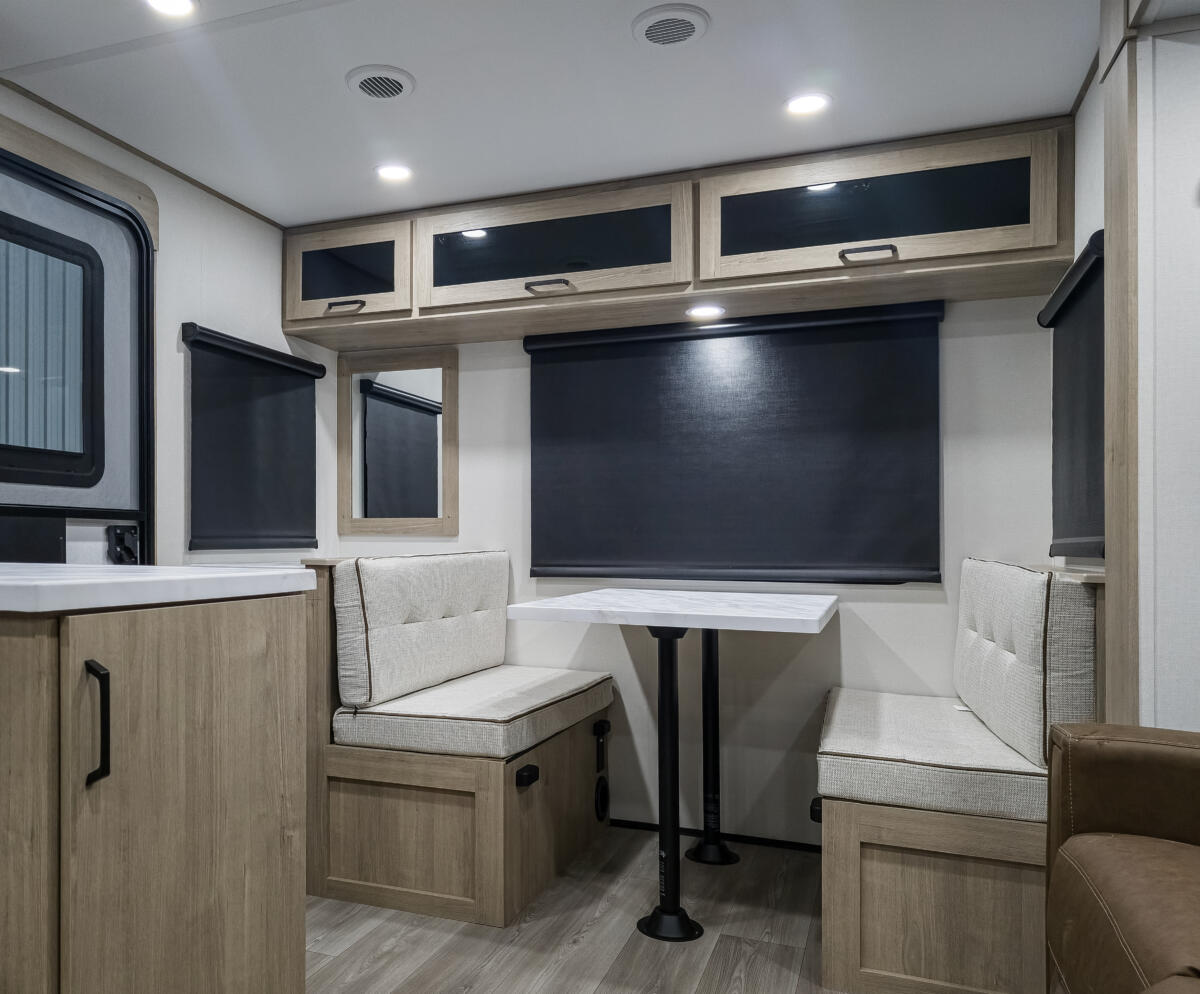
The dinette features facing booths. I prefer the table to be wall-mounted, but this one isn’t. (Plan to knock knees with your dinner date with this table configuration.) The dinette is surrounded by windows, which allows both of you to take in the view—a definite plus!
Living area
The living area has theater seating, and I like the fact that the center console flips up and out of the way, too. The TV is located directly across from the theater seating and features a JBL sound system. LED interior lighting and minimal window treatments keep the space bright during the day and cozy at night.
Bath
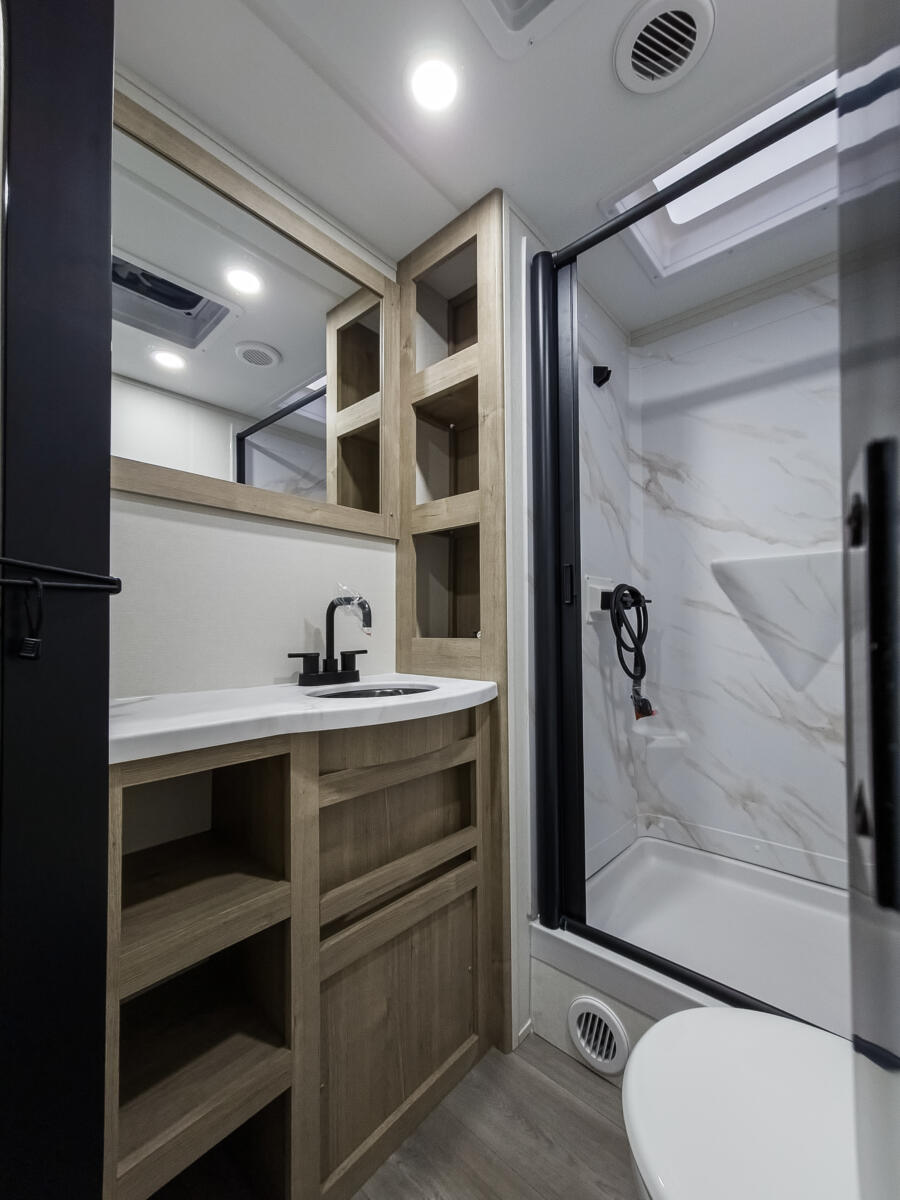
The 25RLE’s bath is generous for the trailer’s footprint. (I wonder if a woman designed it?) There is plenty of storage for towels, and the sink cabinet has great countertop space, as well.
The walk-in shower has a skylight, there’s a power bath vent, and the mirrored medicine cabinet is also a great feature.
The walk-in shower size and storage arrangement make day-to-day use easy, and I really like the on-demand tankless water heater.
Bedroom
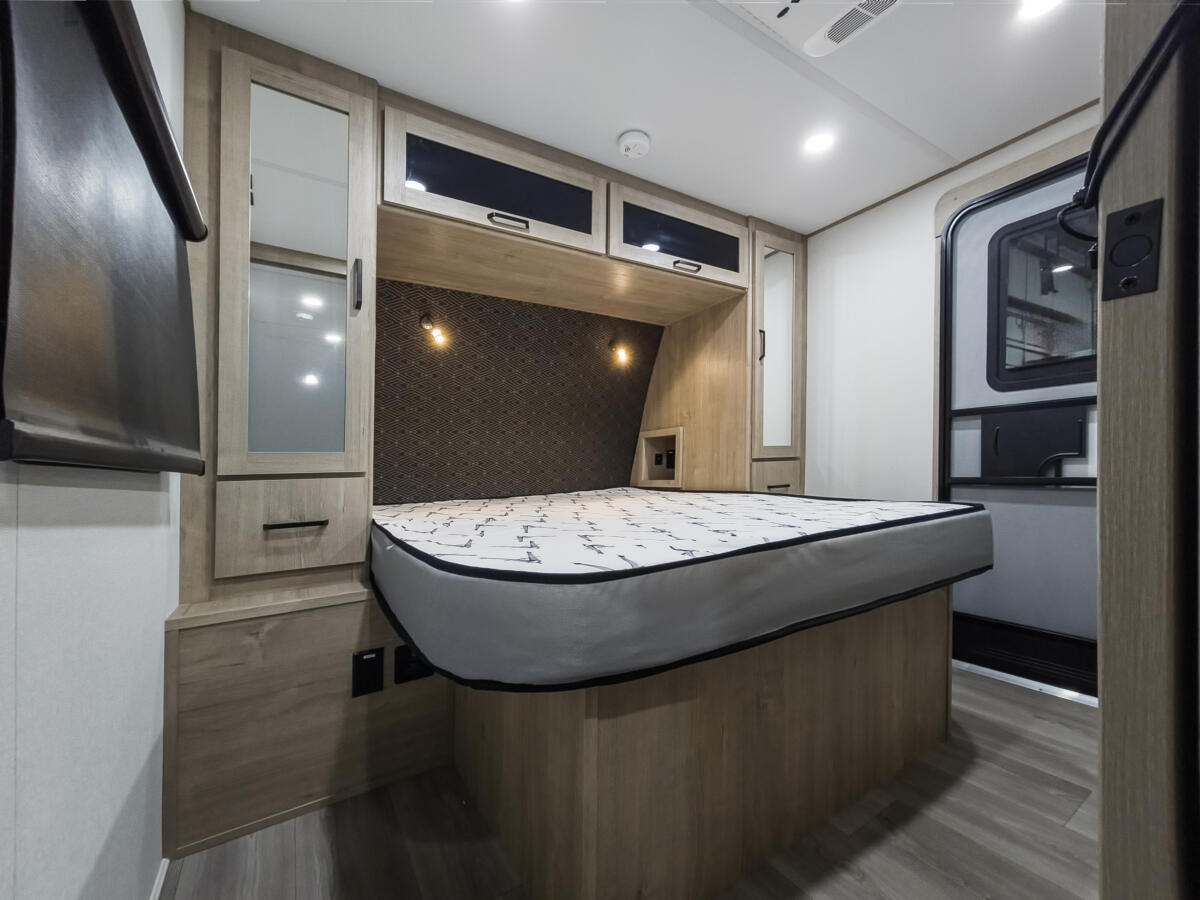
The sleeping area keeps things simple and quite serviceable. There is overbed storage, USB/110V outlets, two mirrored wardrobes, and easy access to both sides of the queen bed. Opposite the bed, you’ll find additional clothes storage—a plus!
The layout is aimed at couples who want a dedicated bed space without wasting square footage.
Overall take
The 2026 Imagine XLS 25RLE is a good choice for couples (or a single RVer) who want a lightweight, well-insulated trailer with thoughtful interior features within a small footprint. This one is worth a close look.
Watch the walkthrough, then share your thoughts about this RV using the comments below.
America’s Original RV Newsletter. Since 2001 Issue 1249 Please help support our hard work with a donation of your choice and receive our ad-free edition as a thank you.
Today’s thought
“If my mind can conceive it, and my heart can believe it — then I can achieve it.” —Rev. Jesse Jackson
Need an excuse to celebrate? Today is National Margarita Day! (If you enjoy margaritas, you need this—it’s made for camping!)
On this day in history: 1879 – In Utica, New York, Frank Woolworth opens the first of many five-and-dime Woolworth stores. (The final U.S. Woolworth store closed in 1997.)
RV damaged during service, dealer won’t pay. What if this happened to you?
By Gail Marsh
This article details a recent Liz Amazing video that documents an issue for more than a few RV owners. Jayco damaged a motorhome while it was being serviced. Now the dealership refuses to pay to fix the damage. Who wants to pay for something the RV technicians damaged or broke? Not me! Here’s what happened and how you can work to prevent the same thing from happening to you.
Battle Born Battery failures leave RVer facing huge warranty issues
Six pricey Battle Born lithium iron phosphate batteries were supposed to power Mark Guido’s fifth wheel trailer. Instead, they ended up on his truck tailgate, on their way to hazardous waste disposal. The surprise wasn’t just the failures. It was how the warranty process played out once four out of six batteries stopped performing. Oh, boy…
A reminder to perform these basic RV maintenances often overlooked
We have no problem remembering the “big things” in RV maintenance. Examine and clean roof? Check! Care for slide outs? Check! Inspect tires and wheels? Check! Inspect and apply conditioner on rubber seals? Check! The basic RV maintenance chores we overlook are the ones that remain largely out of sight. If this describes you, perhaps these reminders will help.
Two-story RVs? A reminder of an earlier time
By J.R. Montigel
If you attend an RV show, chances are excellent you will find RVs with lofts and even a second floor on some very large models. Of course, roof decks can qualify as a second story. As I walked through a recent RV show and came upon a fifth wheel with a second floor (little kids could stand up, not adults), I thought of something I had learned years ago that fascinated me…
REMEMBER: You don’t need to receive an email alert from us to read our newsletters. Just visit our home page, www.RVtravel.com, at any time of day, and the latest newsletter issues and articles will be right there for you. Enjoy!
Today’s RV review… 2026 Cedar Creek Experience 29RL—nice hidden gem 5er
By Tony Barthel
Today’s RV review is of the Forest River Cedar Creek Experience 29RL. This is one of those fifth wheel floor plans that everybody and their brother makes. It’s one I would use as the basis of my shopping for any fifth wheel. But what kind of fixtures, appliances, and build quality do they put into this that others may or may not? Find out here and see what makes this one stand out.
You may share this Tanner Toon, uncropped, on your website, blog or social media with our compliments. The musings from Tanner Woods’ creative mind appear in this newsletter every Saturday and Sunday and in many RV Daily Tips newsletters through the week.
NEVER PAY FOR GROCERIES AGAIN!
That’s silly, of course. Any grocery store that didn’t charge would go broke. Yet, look at RVtravel.com! Our staff works hard to bring you hundreds of newsletters a year. Some readers thank us with a voluntary subscription. But while most others will pay for a haircut, a movie ticket or a campsite, they won’t pay us for all we do! Aren’t we worth something to you? Advertising pays many bills, but far from all. Won’t you please consider chipping in?
Would you buy an RV that is “Tony Certified”? We would!
Tony’s tips
The RV industry needs a “Tony Certified” standard
Dear RV industry,
You need to hire an old fat guy like me, Tony Barthel. No, I’m not kidding. Let’s talk about this. Hire someone who’s actually dumped tanks, chased leaks, and fought hidden fuses! What would make an RV “Tony Certified”? Read my specific must-fix list. Think we could actually make this happen? Let’s do it!
The two types of RVing boondockers: those who like solitude and those who don’t
You’re boondocking on thousands of open acres, and another RV pulls in right next to you. They introduce the whole family, flip on bright outdoor lights, and run the generator all night. Do you stay quiet or pack up and move? A Reddit thread lit up with strong opinions from both sides. Some RVers admit they park close for safety. Others say they boondock to avoid people altogether. Which side are you on? Click to read and weigh in.
Do this when you discover an RV rain leak
By Dave Helgeson
Detecting and correcting RV rain leaks is a must for preserving the life of your RV. Water intrusion can result in extensive damage to an RV if left unchecked. As someone who has been around RVs all his life and worked in and owned RV dealerships, checking RVs for rain leaks was one of my top priorities. One thing I learned over all those years is that rainwater will always follow the path of least resistance. Continue reading.
Why mile markers still matter on today’s highways
Mile markers started as simple reference points. So, why do we still see them on our highways today? Hasn’t GPS overshadowed these simplistic markers? Nope! Read on to find out why.
Clear your mirrors in seconds with this simple gadget
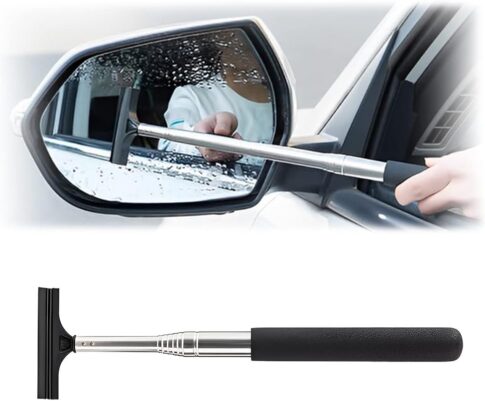
Keep your view clear, no matter what the road or weather. This retractable rearview mirror wiper wipes away rain, mud or road spray with a simple slide. Don’t wait for the mirror defrost to kick in—this is faster! Easy to use and built for travel. Check it out.
Reader poll When you’re RVing/camping, do you think you’re “roughing it”?
How to win We’ll select a winner at random out of all entries we receive today by 7 p.m. Pacific time. You can only enter once and after we notify you by email that you won, you have 24 hours to respond. Click here to enter or see last week’s winner.
Remember this?
From the archives: 20 bar soap hacks to make RV life easier
By Gail Marsh
In my local store, the bar soaps have been demoted to the lowest shelf. Liquid soaps, in all of their various scents and colors, have all but eliminated bar soap from the “personal cleansing” aisle. Well, wait just a minute! There are many uses for that bar soap. In fact, you can use bar soap hacks to make your RV life easier than ever! Just read on for my 20 smart ideas…
Upcoming events
Everything to know about the National Route 66 Centennial Kickoff Celebration
Springfield, Missouri, has been chosen to host the National Kickoff for the Route 66 Centennial. If you love cars, music, history, and big small-town energy, this is one you’ll want to attend. Springfield will run Centennial Kickoff activities from April 30 to May 3, 2026. Here are all the details.
RVers’ guide to Death Valley’s 2026 rare superbloom
By Gail Marsh
Superblooms in Death Valley? That seems like an oxymoron to me. However, early signs indicate a rare superbloom for the area this year, 2026. The National Park Service says sprouting is already visible in places. If conditions continue to cooperate, Death Valley could experience peak displays between late February and early April. Learn more.
DID YOU ENJOY THIS ISSUE?If you enjoyed it, learned something from it, or it gave you a new idea or perspective… please help us continue to bring you quality, unbiased coverage of RVing with a voluntary pledge. Thank you!
? MYSTERY PRODUCT OF THE DAY ? What if we told you there was a gadget out there that could prevent your rig from being overweight? Well, this will certainly help.
Highlights from this week’s RV Daily Tips Newsletter
In the RV shop with Dustin Why RV manufacturers issue recalls (and why it’s not always a bad thing)
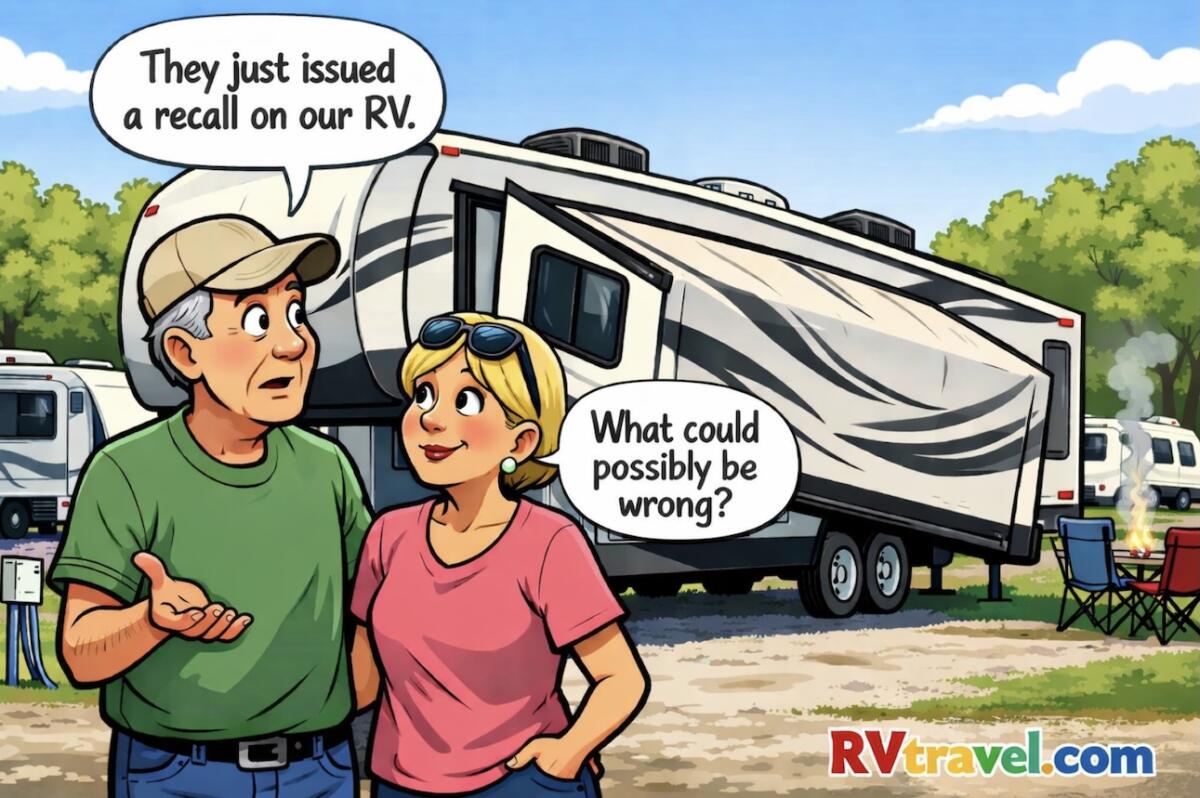
Hearing the word “recall” can make any RV owner’s stomach drop. It’s easy to assume a recall means your RV is unsafe or poorly built. But, in reality, recalls are often a sign that a manufacturer is doing the right thing—taking responsibility, being transparent, and proactively protecting owners. Continue reading.
RV tire safety Does ChatGPT give the correct answer on tire inflation? Sometimes…
By Roger Marble
Can ChatGPT give the correct answer? Well, sort of. I asked it about proper tire inflation. Here is what I got when I asked: “How much air should I put in my tires?”
**Last day: If you’re near Providence, RI, be sure to see Dave at his always educational and entertaining seminars at the Rhode Island RV Show today. **Last day: And if you’re closer to Bedford, NH, learn all about RVing at seminars presented by longtime RVer and RVtravel.com reader/frequent commenter Neal Davis. He’ll be at the New Hampshire RV Show today.
Take an extra 10% off a GhostBed luxury RV mattress!
The GhostBed RV mattress is 10” deep, crafted with gel memory foam for coolness, has 3 layers of luxurious comfort and is perfectly sized for your RV! Ahhhh… Wake up relaxed and rejuvenated. RVtravel.com readers now get an EXTRA 10% OFF a GhostBed Luxury RV Mattress! CLICK HERE and use code RVTRAVEL10. Watch RVtravel.com’s Tony Barthel’s RV mattress review here.
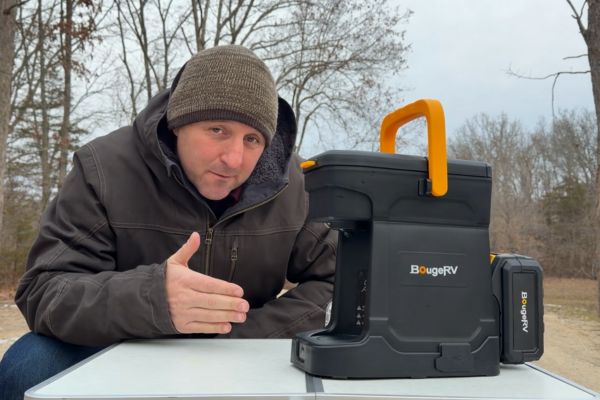
RV gadgets and gizmos BougeRV 18V portable coffee maker—breakthrough or gimmick?
Camp coffee usually comes with a catch. A fast countertop pod machine needs a wall outlet. A propane stove boils water quickly, but then it turns into the whole pour-over routine. Here, the team from Adventure Gear TV set out to see if the BougeRV 18V Portable Coffee Maker offers a real third option: a cordless, off-grid single-serve brewer that avoids big power stations and propane tanks. So, is it worth it?
GOOD DEAL! All day today, National Margarita Day, enjoy Classic Margaritas for $2.22 at Bahama Breeze Island Grille restaurants around the country.
RVer health
Why people continue weight loss drugs even if they get sick
Many people including RVers who take the weight loss drug semaglutide—sold under brand names like Ozempic®—continue to use it despite unpleasant side effects because they believe it works. Researchers found that perceived effectiveness, such as weight loss or reduced appetite, is the strongest predictor of satisfaction and willingness to stay on the medication. Continue reading.
Live cam
Shenshuping Gengda Panda Center in China’s Wolong Valley
They are so cute! (If you don’t see the pandas, just back up the video until you do.)
“Rosie (Yorkie/Poodle, age 6) stays familiar with certain campgrounds we visit, like this one in Michigan’s Upper Peninsula, where she has visited annually since she was only 8 weeks old.” —Steve Comstock
Want to see your pet in this newsletter? Please send us a photo of your pet with a short description. No blurry photos and please do not submit your photo more than once.
IS YOUR DOG SHEDDING? It’s shedding season, and the dogs are goin’ crazy! Maybe this will help?
Trivia
The modern hamburger was invented in Hamburg, Germany. Today, the average calories in a fast-food burger is around 520 (a McDonald’s Big Mac has 560 calories). A plain McDonald’s burger (no toppings) has 240 calories, while a Burger King hamburger with ketchup, mustard, and pickles has 241 calories. White Castle, founded in 1921 in Wichita, Kan., is the world’s oldest chain of hamburger restaurants.
FINISHED READING THIS NEWSLETTER? Great job! Keep reading! Here’s a list of every article and newsletter recently published on RVtravel.com. We don’t know what bored is around here—we never stop working! You’ll have fun looking through all these articles, and we bet you’ll learn something, too.
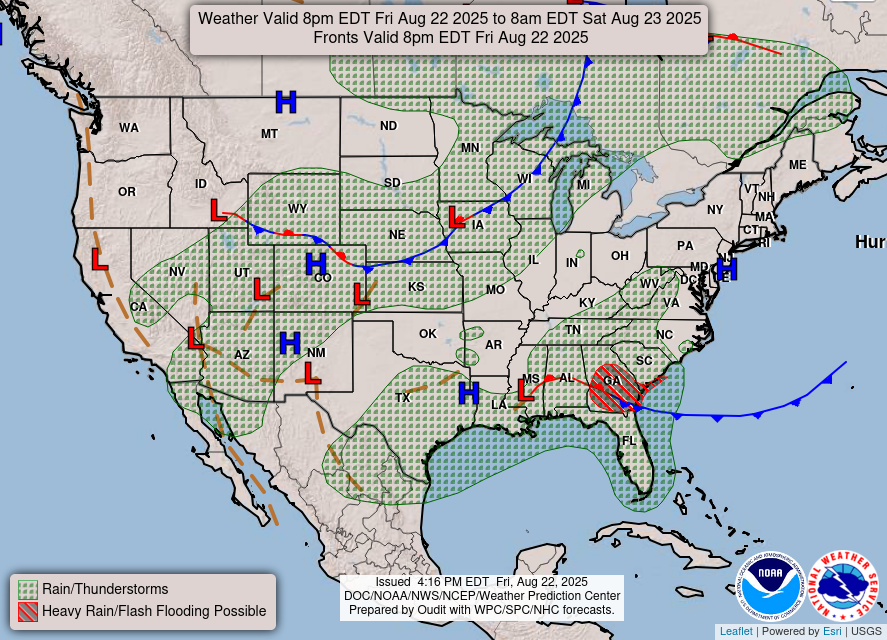
Today’s weather forecast across the nation THIS MAP UPDATES TWICE A DAY
Detecting and correcting RV rain leaks is a must for preserving the life of your RV. Water intrusion can result in extensive damage to an RV if left unchecked. As someone who has been around RVs all his life and worked in and owned RV dealerships, checking RVs for rain leaks was one of my top priorities when the rainy season arrived—which, in Western Washington, is most of the year.
One thing I learned over all those years of finding and fixing RV rain leaks is that rainwater will always follow the path of least resistance.
I also learned to put that knowledge to work when I discovered one of the stock inventory units with an RV rain leak and no immediate way to get it under cover or into one of the service bays for repair.
By raising or lowering the nose of travel trailers or fifth wheels as far as possible, I could alter the path of the rainwater. By doing so, the path of least resistance for the rainwater began running off the RV roof onto the ground, rather than through the roof at the leak point into the interior of the RV.
While this didn’t work 100% of the time, it did work enough of the time to avoid rearranging the sales lot to get access to the one leaking unit. It also gave the sales staff a heads up if they spotted a unit with the nose all the way up or down: It had an RV rain leak and it was probably best to avoid showing it to a customer.
This tip may also work with motorhomes
This method could also be applied to motorhomes with leveling systems or enough room to drive up on ramps. In the case of units with leveling systems, you would want to raise the front up as high as possible, as it is never safe to raise the rear wheels off the ground.
Note: Always lift evenly, as twisting the chassis can cause doors or slide-outs to bind, Class A windshields to pop out, or worse.
Remember, check your RV frequently for RV rain leaks in the rainy season. If you discover a leak and are unable to immediately get it under cover or into a service bay at your local RV dealership, raise or lower the nose of the RV as much as possible to hopefully encourage the rainwater to run somewhere other than the interior of your RV.
By Gail Marsh
What would you do? A conversation erupted in a Reddit group recently. An RV boondocker posted this:
“Thousands of acres to camp in. Why do they have to camp right next to us? They came over and introduced the whole family. It was hard to be rude and ask them to move … They had a bunch of outdoor lights on … They ran the generator all night. It’s still on this morning … We are packing up and moving.”
Boondocking opposites
Reddit members quickly chimed in. Sentiments from fellow boondockers were split. Some respondents admitted to doing the same thing as the offending camper. “I’m a ‘fraidy cat. I want to know that someone is nearby if we need help,” a newbie boondocker confessed.
Other RVers clearly opposed such behavior. One RVer freely acknowledged, “I boondock because I want to be away from other campers; I don’t want to hear their noise, see their RV, or befriend them. I crave peace and solitude. I want to enjoy nature without human interaction.”
Comparisons
Many folks who joined Reddit’s discussion compared the “intruding boondocker” to the following situations.
• “It’s like sitting in an almost-empty movie theater and someone decides to sit directly in front of you—or right beside you. Ugh!”
• “This incident is exactly like church. Many seats are available, yet they choose the seat right next to you.”
Why it happens
A few Reddit users opined that some people are just hardwired to interact with others—no matter the circumstances. They are social butterflies who crave human interaction.
Others, like many boondockers, simply enjoy solitude. One Reddit commenter said, “There is something magical about solitude. We spend most of our lives in a hive-like existence… The presence of another human being may feel very reassuring to you, but it can feel very disruptive to somebody trying to find that emotional silence.”
Put yourself in the original boondocker’s place. Would you try to explain your need for solitude and encourage the other RVers to move along? Perhaps you’d try to school them on proper camping behavior (no lights or generator at night)? Or would you just pack up and leave?
What would you advise the original boondocker to do? Tell us and explain your reasoning in the comments that follow.
Camp coffee usually comes with a catch. A fast countertop pod machine needs a wall outlet. A propane stove boils water quickly, but then it turns into the whole pour-over routine.
In the video at the end of this post, the team from Adventure Gear TV set out to see if the BougeRV 18V Portable Coffee Maker offers a real third option: a cordless, off-grid single-serve brewer that avoids big power stations and propane tanks.
The “third path” idea: less gear, fewer compromises
The pitch is simple. Instead of bringing a 120V brewer and a heavy battery, or packing a stove and doing manual coffee steps, this unit tries to land in the middle. It runs on a dedicated 18V battery system and keeps the process to one button.
For people building a lean camp kit, the weight is part of the story. The setup comes in around 6 pounds total (about 3.6 pounds for the machine, plus 2.38 pounds for the battery). The trade is clear: It’s built for single servings, topping out around 8 ounces per brew. That is a sweet spot for someone who wants a simple morning cup and doesn’t want bulky gear.
This brewer is portable, but it is not a sealed travel bottle. With water in the reservoir, tipping it can spill water from multiple directions. The battery sits right next to that reservoir, so it rewards careful handling and upright storage.
It supports two basic brewing styles:
Using a K-cup coffee pod
Using a reusable basket for grounds (a bring-your-own coffee setup)
There is also a little learning curve with the cup adapter. The insert has to line up with the needle, and the tabs only allow it to seat one way. There’s also a small guide where the flip-up portion rests, so it takes a second to orient it correctly.
Power, charging, and what “off-grid” really looks like
With the battery installed, it’s ready to run. Press the power button, and it starts brewing. BougeRV claims about five to seven brews per full charge, which should cover a normal weekend unless someone is burning through cups all day.
It can also run plugged into a wall outlet like a normal machine, and it does not draw a huge amount of power. One key catch: When it’s plugged in with the battery attached, it does not recharge that battery. Charging requires removing the battery and plugging it into USB-C.
Brew speed, mug fit, and power draw numbers
On battery power, the brew is slow compared to a wall-outlet brewer, and slower than boiling water on propane. The video makes a point about why: Heating water takes similar energy either way; this unit just feeds that energy in more slowly.
Mug fit can also be a deal-breaker. Clearance under the brew head is about 5.12 inches, so taller travel mugs may not fit. The machine itself is about 10 inches tall, 5 inches wide, and 8 inches deep.
When run from an AC power station, the unit jumped to around 600 watts while brewing, and it seemed to brew faster. From a roughly 950-watt-hour power station, one brew used about 3 percent (around 30 watt-hours). The math lined up with the battery claim too: A roughly 144-watt-hour battery at five to seven brews lands around 20 to 30 watt-hours per cup.
Conclusion: Who it’s for, and who will hate it
This coffee maker makes the most sense for someone who wants simple, single-serve coffee at camp, a tailgate, or a kids’ soccer game, without packing a stove or dragging a big battery.
The downsides are real, though: It’s expensive for a coffee maker, it’s limited to about 8 ounces, it’s slow when on battery, and many favorite mugs (including taller porcelain-lined options) will not fit.
For the right person, the convenience is the point; for everyone else, the old methods will probably still win.
By Cheri Sicard
In the video below, Joe and Kait, the team from We’re the Russos, evaluate the question of Ford Transit® vs. Ram ProMaster®: Which one makes a better camper van? In the course of their extensive RV adventures (Joe Russo has already written two books about them), the Russos have experience with both the Ford Transit and the Ram ProMaster, so they have firsthand perspectives to share.
Which models are we looking at?
While the video is labeled Ford Transit vs. Ram ProMaster, they aren’t exactly comparing two equal-sized vans. Nonetheless, we can still learn from the Russos’ experience with them both.
In the video, Joe looks at the Ford Transit with all-wheel drive, a 3.5-liter eco-boost engine and a 148-inch wheelbase. Storyteller Overland did the build on it.
Joe also considers the Ram ProMaster extended-length van with a 3.6 liter naturally aspirated engine and a 159-inch wheelbase. The ProMaster build is, in fact, the Winnebago Travato, so it was built by Winnebago.
Differences
Differences begin with the power train. The ProMaster only comes in a front-wheel drive version. The Transit, on the other hand, comes in rear-wheel drive or all-wheel drive. According to Joe, the all-wheel drive on their Transit van works well and he likes having the option of different driving modes for different weather conditions.
Their Transit van came lifted an additional 2 inches. With the ProMaster, this would be an after-market modification.
The Transit houses a 3.5-liter eco-boost engine that’s a V-6 with twin turbochargers that put out 310 horsepower and 400 pound-feet of torque. Joe calls it “a little rocket ship” that has no trouble taking on hills, even when towing.
Ford also offers the Transit with a 3.5-liter non-turbo engine that has 275 horsepower and 260 pound-feet of torque.
The ProMaster’s 3.6-liter naturally aspirated engine offers 276 horsepower and 250 pound-feet of torque.
Joe says that when they owned their ProMaster it had no problem on level surfaces. However, on steep climbs, especially if they had to slow down for any reason, the engine would start to feel strained.
When it comes to power, the Ford Transit van is the clear winner; however, more power equals less gas mileage. Joe says they average about 13 mpg in the Transit van versus about 16 mpg in the ProMaster.
Ford Transit vs. Ram ProMaster sizes
Both Ford and Dodge produce these vans in three sizes:
The short versions are about 18’ long.
The mid-length versions are about 19.5′ long.
The extended versions are about 21’ long in the ProMaster, 22’ in the Transit van.
More differences between the Ford Transit and Ram ProMaster
The height of the side sliding door in the Ford Transit is much shorter than the taller door in the Ram ProMaster, which makes it easier to go in and out.
However, once you get inside, the ProMaster is significantly shorter than the Ford Transit. To remedy this, Ram recently introduced a new high-roof version of the ProMaster that adds an additional 10 inches of headroom.
The width of the Transit before the installation of the camper build is 69 inches side to side versus 73 inches in the ProMaster. Those four extra inches make it a lot easier to fit everything into your camper van.
Another advantage to van builders is the ProMaster’s more or less square body. The Transit has many more corners and angles that a van builder would need to contend with.
Joe says that when it comes to comfort, the seats and driving position win a point for the ProMaster.
When it comes to service, Ford has about 3,000 dealers nationwide, while Ram has about 2,500. Point Ford.
The Ram ProMaster is less expensive than the Ford Transit and, therefore, its van buildouts tend to be a little less expensive, too. Of course, the price will also depend on options and amenities.
When it came to the final analysis of Ford Transit vs. Ram ProMaster, the Russos had good experiences with both. However, they did end up trading in their Ram ProMaster for the Ford Transit because of where the latter’s lifted body and all-wheel drive could take them.
Your reasons for choosing one over the other may lead you to a different conclusion. If you have clear thoughts on either of these vans, please drop them in the comments below.
Think about your current setup. You (most likely) have a comfy mattress, the A/C or heat turned on, a stocked fridge, and your favorite chair positioned just right under the awning. So… are you “roughing it”?
For some people outside the RV world, anything short of a hotel counts as roughing it. No room service? Must be camping. Some people won’t even glamp in those fancy glamping tents. Nature? No thanks!
But if you’re traveling in a well-equipped motorhome or fifth wheel, complete with solid-surface countertops and a bathroom nicer than the one you had in your first apartment, that label might feel a little dramatic.
Still, “roughing it” is relative. Maybe you’re used to a sticks-and-bricks home with more space, a king-sized bed, and unlimited hot water. Downsizing to tanks, hookups, and campground laundry might feel rustic by comparison—even if your rig is anything but primitive.
And then there are moments that genuinely feel a bit rugged. Dump stations in the rain. Leveling on uneven ground. Fixing something yourself because there’s no service center nearby. Building a campfire or cooking on your camp stove set up on the picnic table… Even in a high-end RV, nature and unpredictability have a way of humbling you.
So what about you? When you’re out there in your RV, do you feel like you’re “roughing it” or just living comfortably in a smaller, movable version of home? Go ahead and vote in today’s poll, and feel free to explain where you draw the line between “camping” and “roughing it.” Thanks!
Dear RV industry,
You need to hire an old fat guy like me, Tony Barthel. No, I’m not kidding. Let’s talk about this.
When I go to Indiana, which I do with some regularity, I notice something every time. All the people around me are young, fit folks with fancy shoes. I don’t know what it is about the shoes on the dudes in Indiana, but it’s something I notice right away. Fancy, shiny shoes.
And the dudes are fit. It’s as if most of the business is done in the gyms in Indiana. Well, and the tanning salons. I mean, honestly, nobody living there is spending that much time at the beach since there aren’t any.
Then there’s the sore-thumb-looking guy. Me. Old. Fat. Lazy. Loud. While those RV dudes wear their button-up shirts, my shirts are advertisements for places I’ve loved. Buck Atom’s Cosmic Curio shop, Uranus Fudge Factory in Missouri, Route 66—and I even have a collection of shirts with my own company’s branding on them.
But all those schnickelfritz dudes have something in common: They’ve likely never, ever, not ever emptied a black tank. Nor tried to find out what was leaking in a campground while also making up new and even more offensive foul words. Nor contemplated how to get to that fuse that’s behind the fridge while the beer just gets warmer.
But while I stick out in Indiana at the RV factories, I look like all the other people at things like FRVA (formerly FMCA) rallies, as well as the people whom I spend time with in Quartzsite.
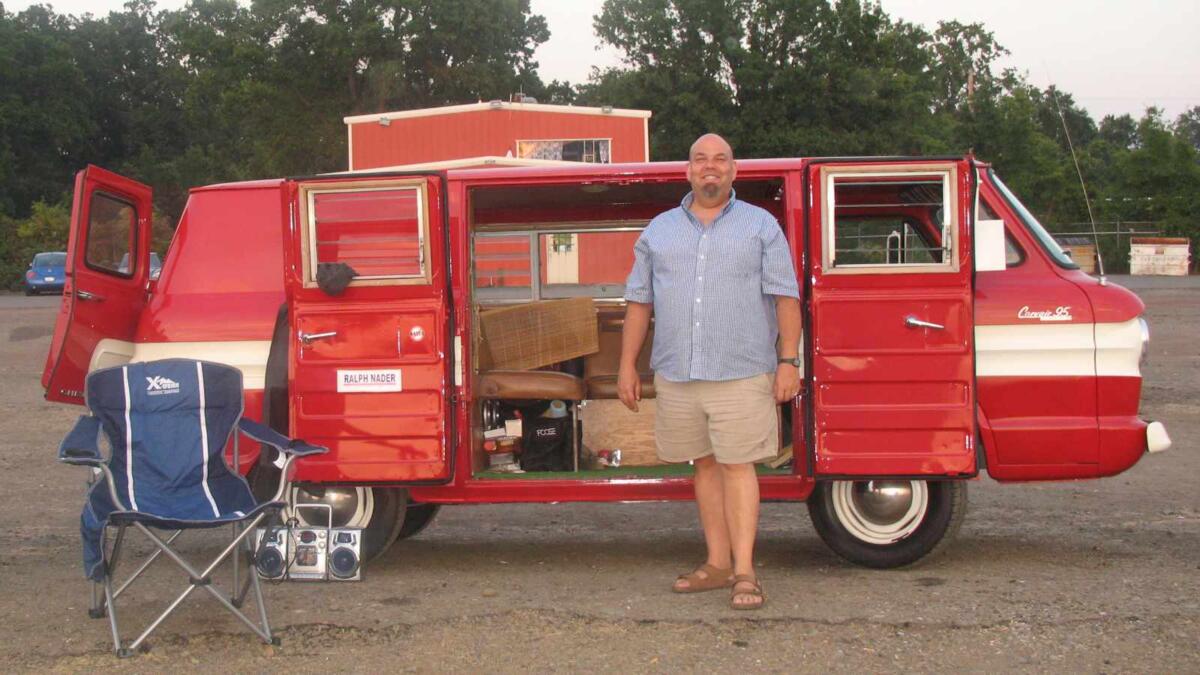
And I look like the people I see in RV parks. I have admitted on many occasions here that I do displace a lot of water in the pool, and my doctor, who looks like a kid to me, isn’t happy about this. But if I were a car, I’d be a classic at the car show. Kind of like the ’64 Corvair Corvan I used to have.
My 1964 Chevrolet Corvair 95 Camper. Cool, but definitely had some demons under the hood. Which was in the back.
Not some pristine beauty like a ’63 split window Corvette. More like that Corvan. But it was a camper, so I thought it was super cool. But it was also unusual. Again. Similarities.
And it also had a temper. Say the wrong thing, and you’re stalled at an intersection. But go to a car show, and she ran like a top. Also, that van was absolutely haunted.
Okay, so a lot of the folks at RV gatherings are not as out of shape as I might be, but we all share common ground in the era of time that we were born in. Okay, boomers.
Of course, the RV industry is jumping all over the fact that many RV buyers today are much younger than I am and the rest of the people I see, and that’s true, of course. What young family wouldn’t crave the adventure of seeing this beautiful land and, with the advancements in connectivity, it’s quite possible to work from the road and be a productive human.
Heck, that’s me, too. I’m writing this from blow-your-toupee-off Arizona at the moment. In fact, we’ve had to put the truck in park and extend our stay at this RV park because the wind has decided it likes it here as much as we do, so it’s here for a day or two more, as are we.
When it comes to advice, I’m full of it
Okay, so let’s assume some unsuspecting RV manufacturers read this, stop laughing for a moment and think to themselves, “Selves, this seems like a good idea.” What kind of suggestions would I make?
First of all, make all the things that are inevitably going to break easily accessible. Or even the things you’re just going to have to fiddle with over time, be within easy fiddling.
For example, if there are valves you have to turn to set your water heater into winter mode, how about not having to remove panels to get to them? Or, if there is an access door, make it so that I can stick my hand in there with a light and see and reach what I have to see and reach.
Speaking of reaching, if you would buy a power-operated gate valve for your RV rather than having to crawl under a slide room that’s extended to get to the black tank gate valve, would you? I know I can add one in the aftermarket, but I want one as an option right from the factory.
Or, here’s a better idea: How about not putting the gate valve and black tank connection under the slide room in the first place?
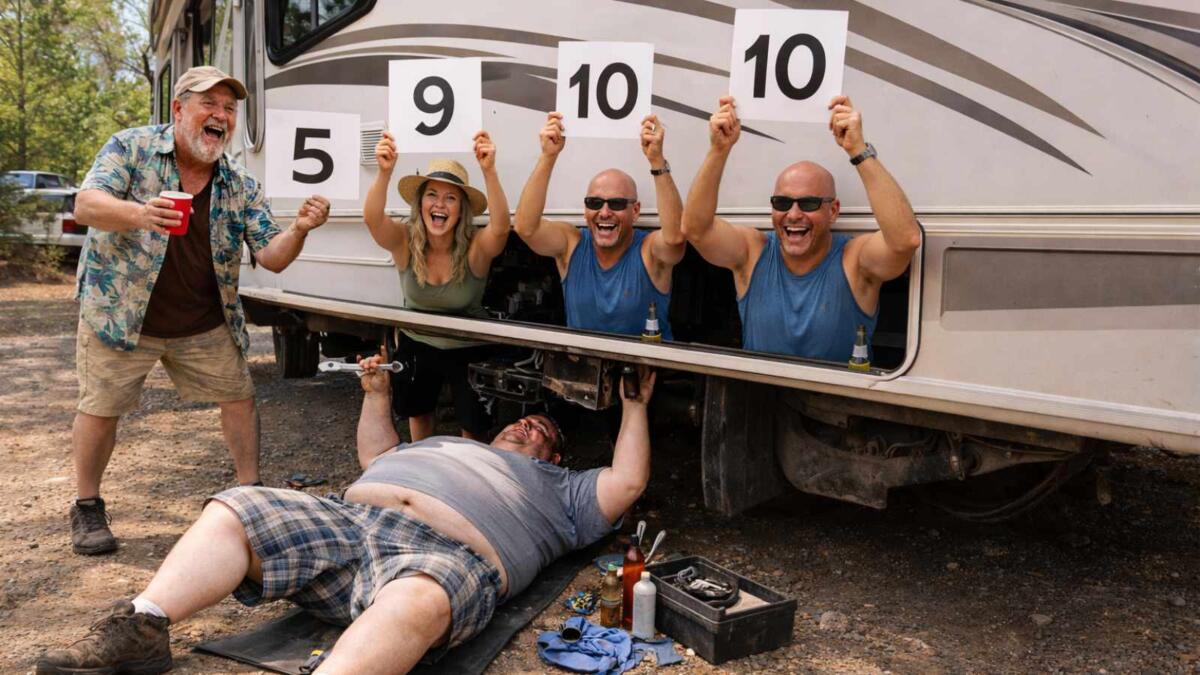
Last time I dumped my tanks, several other campers gathered around with those big number cards you used to see at the Olympics and rated my ability to contort my chunky self into a place where I can get to the gate valve. BTW, the image I created for this using ChatGPT is frighteningly accurate, other than people coming out of the side of a storage bay…
Rating my ability to dump tanks at awkward angles, (You don’t want to click to enlarge.😉)
I would also like to see an RV company—and I know Winnebago does this—provide a schedule of cleaners, lubricants, and sealants they use on my rig. I see so many people asking how to lube their slide rooms or what protectant to use on their slide seals.
There are videos that Lippert puts out on how to maintain their slide mechanisms and what they recommend using to keep those systems running properly. But the questions persist, as does a lot of misinformation.
So, so many of us also put stuff on the roofs of our RVs that requires some sort of connection or access to the inside. For example, who among us hasn’t wired solar into our rigs? Or, perhaps, a Starlink dish? Did you put a satellite TV antenna up there?
I want a simple port in the roof of RVs that’s large enough to string those cables down into. Starlink cables, solar wires. All of those things. And who knows what’s coming next? A simple hole that I can fish wires into the pass-through would really be incredible. Then I wouldn’t have to stand up there with a drill and a hole saw and hope that whatever I was going to come into contact with isn’t critical.
Speaking of wires, how about a wiring diagram so it’s easier to diagnose issues when they do come up? Oh, and how about also putting all the fuses in the fuse box?
No, I don’t want the awning motor’s fuse behind the microwave or the fuse for the 12-volt refrigerator behind the refrigerator, so that I have to take it out if it blows. That’s just bad. And, yes, those two fuse placements are pretty common. And really annoying.
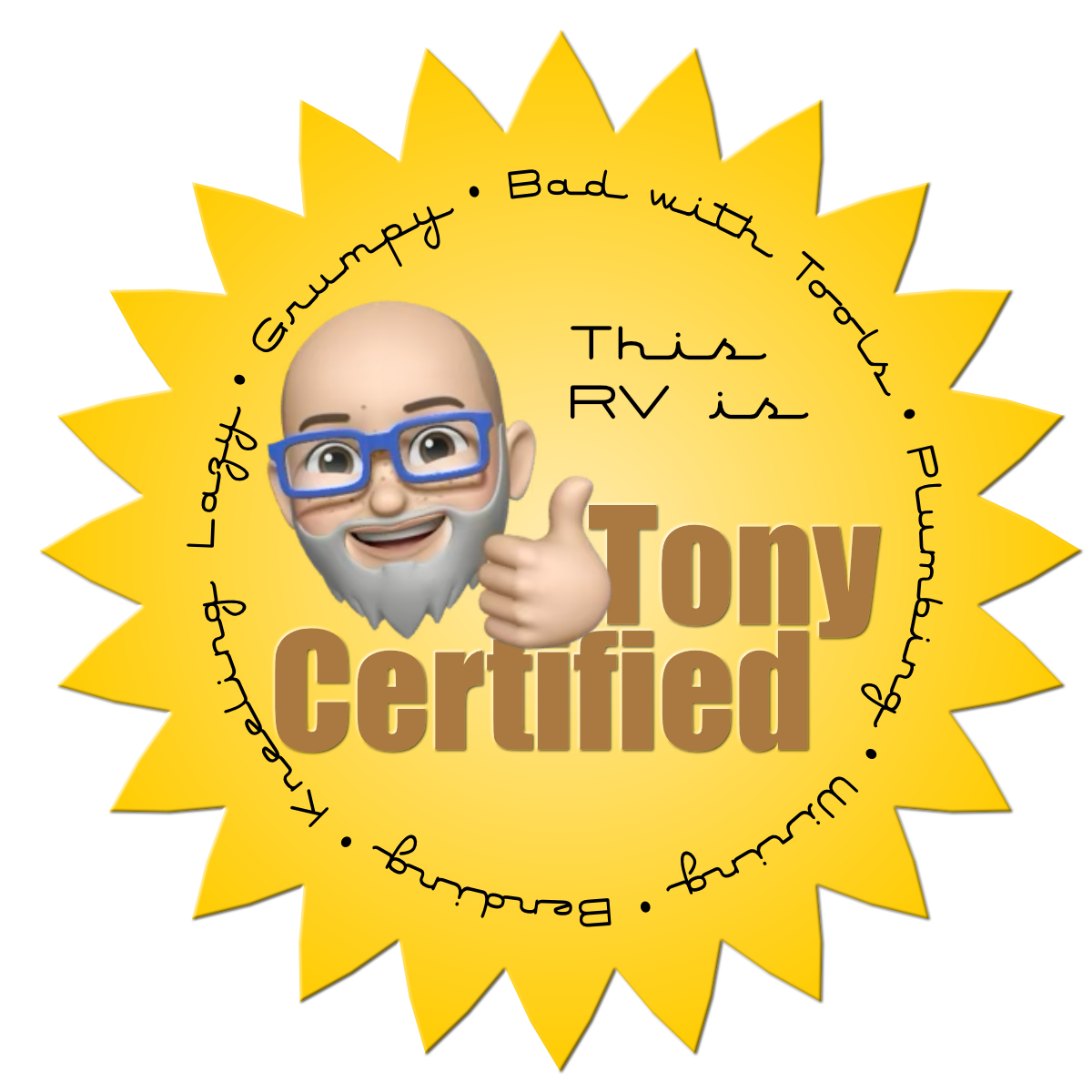
There are so many more things I’d have to say but, to make this worth an RV company’s while, I could create some sort of certification sticker, like the one above. And then market that.
“This RV is Tony Certified.” Or whatever. I’ve dropped an idea for the award here.
So the next time you’re shopping for an RV, look for the Tony Certified label and see what the dealership says. You know. Once they stop laughing.
Mile markers started as simple reference points. So, why do we still see them on our highways today? Hasn’t GPS overshadowed these simplistic markers?
Read on to find out.
A bit of history
Mile markers began as humble little posts or stones placed along roadways. They told travelers how far they were from a fixed starting point.
The practice of using mile markers goes way back. The Romans carved milestones to mark distances along their roads. The idea stuck.
In the U.S., modern mileposts became standardized with the development of the numbered highway and interstate systems. Mileposts on interstates begin at the route’s most southerly or westerly point and increase as you travel north or east. That’s why exit numbers often match mile numbers.
Old-school and outdated?
Today, GPS units and smartphone maps show your exact coordinates and ETA, so why do we need the old-school, green mile sign? Few drivers today express their location using mile markers. Instead, they read their navigation app’s blue dot.
In busy metro corridors, mileposts are less visible or even omitted. Some state and county marker systems vary. This confuses travelers and seems unnecessary, as well.
Do RVers still need mile markers?
But wait! Even if you barely glance at them, mile markers perform several practical jobs that matter to RVers.
• Accurate location for emergencies and help. If your rig breaks down, referencing a precise milepost to give to highway patrol, tow services, or 911 dispatchers speeds response. This, in turn, reduces the time you (and your pets) are exposed on the road’s shoulder.
• Exit planning and mileage math. Unlike some route names or exit lists, mile markers let you quickly calculate remaining distance between services: “rest area at mile 185, fuel at 203” becomes easy arithmetic on the highway. That helps when you’re towing, assessing safe pull-over distances, or planning fuel stops for rigs with limited range.
• Maintenance, construction, and reporting. When you call to report a road hazard (e.g., accident, downed tree, debris on the road), transportation agencies log incidents by milepost number. Contractors working on a job are handed milepost ranges for where work must be done. For RVers following detour instructions or official bulletins, a mile-based description is precise and universal.
• Legal cases. Interstate mileposts are the backbone of many legal references, as well. Crash reports, maintenance records, and right-of-way descriptions often use mile markers. That makes them useful for anyone needing documentation after an incident.
“Rule breakers”
California stands apart from other states because it does not follow the traditional mile marker system. Instead, it uses what’s known as a postmile system. These markers track how far a highway runs within each individual county rather than measuring mileage across the entire state.
A few other states (Nevada, Ohio, and Tennessee) also use county-based reference markers on certain non-interstate roads. However, when it comes to interstate highways, they follow the standard statewide milepost numbering system.
Why the system still works
States have modernized how they place markers. Some add fractional reference markers between whole-mile posts. Others tie markers to county boundaries, and a few use supplemental reference plaques for ramps or specific points.
The mile marker system’s flexibility has kept it relevant. It integrates with digital mapping, informs exit numbering, and provides an official “common language” across agencies.
Practical tips while RVing
Keep an eye out for the next marker when you pass services and note the mile before you pull off. It will make calling for help or finding your campsite easier.
When you cross state lines, remember that the mile marker numbers reset or shift depending on state rules. Double-check if you’re relying on mile points for trip planning.
If you’re in an area where mile markers are sparse, note nearby exit numbers, bridges, or mile-fraction markers.
Springfield will run Centennial Kickoff activities from April 30 to May 3, 2026. Included in the celebration will be a mix of public dedications, a major concert, a classic car parade and show, arts events, and ticketed gala events.
Key public elements include the Birthplace Plaza dedication, a downtown parade and First Friday Artwalk, a classic car show, and Artsfest over the weekend. The national Centennial Commission and the host-city programming are coordinating the schedule and partner events.
Event details
April 30, 2026
Morning: NBC TODAY Show (third hour) live from Springfield (coverage begins around 8 a.m.). (springfieldmo.org)
4:00 p.m.: Birthplace Plaza dedication in downtown Springfield. (springfieldmo.org)
Evening: National kickoff concert at Great Southern Bank Arena. Doors typically open in mid-afternoon for the concert. Ticket sales and official times are published by the arena. Expect headline acts and a multi-hour show featuring major country and Americana artists.
May 1, 2026
11:00 a.m.: Queen’s Gate 66 dedication.
Late afternoon/evening: First Friday Artwalk (4:30 p.m. – 10 p.m.) and the National Route 66 Centennial Parade (6 p.m.) through historic districts.
May 2–3, 2026
May 2: Classic Car Show on Historic C-Street (9 a.m. – 4 p.m.) and Jefferson Avenue footbridge dedication at 4 p.m.
Evening: the Telegraph Ball(ticketed gala) takes place at the historic Abou Ben Adhem Shrine Mosque.
May 2–3 also hosts Artsfest (10 a.m. – 5 p.m.). Some dedications and arts events are free; concert and gala events require tickets.
Headliners
The kickoff concert lineup includes headline talent from top country and Americana acts. Organizers have announced artists such as Little Big Town, Chris Janson, and other guest performers. Check the arena’s event page for final set times and ticket links.
Logistics and tips
Expect big crowds downtown during parade and concert days. If you’ll be camping somewhere outside the city, plan to arrive early each day.
Reserve a campground with easy shuttle or short-drive access to downtown.
Downtown parking will be limited during major events.
If you plan to tailgate near festival locations, confirm local rules (and remember quiet hours).
Bring extra water, well-charged power banks, and earplugs. (Concerts and classic car festivities can be loud.)
For real-time updates and any last-minute schedule changes, follow the official Centennial media pages and Visit Springfield’s event listings.
Campgrounds near Springfield
Springfield/Route 66 KOA Holiday is a big-rig-friendly KOA with pull-through sites, 30/50 amp service, free Wi-Fi, a seasonal swimming pool, a camp store with on-site food options, playgrounds, and a KampK9 dog area. It’s an easy drive to downtown and major event venues, and it’s set up for folks who want on-site activities after a busy festival day. Reserve early. KOA is listed as a recommended local campground for the centennial. Phone: 1-417-831-3645.
Cook’s RV Motor Park is a locally owned park inside Springfield offering a quieter, shady setting with full hookups, restrooms, laundry, and friendly local service. This is a good choice if you prefer a smaller park with a neighborhood feel and short drives into downtown. Phone/text: 417-833-1252.
Rustic Meadows RV Park is just east of Springfield in Strafford. It features full 30/50 amp hook-ups, a seasonal pool, well-kept restrooms/showers, laundry, and a family-friendly recreation barn. It’s especially handy if you want quick access to both Springfield’s Route 66 attractions and nearby Branson-area day trips. Phone: 417-468-3644.
Tickets, parking, and more
Concert tickets and special-ticketed events (Telegraph Ball, some Artsfest components) sell separately; the concert venue lists ticket on-sale dates and parking fees.
If you’re traveling in a big rig, call the campground before you reserve to confirm site length and any special arrival instructions. Plan to reserve your campsite and event tickets as soon as possible. The centennial kickoff is a national event with limited nearby RV campgrounds.
Local must-dos while you’re in town
Walk the Birthplace Plaza and the new signage downtown that commemorates the telegram that started Route 66.
Time a photo stop at classic diners and neon signs along the original Mother Road in Springfield.
If you’re planning a longer Route 66 run, use Springfield as your launch pad. The city has Route 66 maps and self-guided itineraries from the visitor center.
Suggested packing checklist
Comfortable folding chairs and a compact shade canopy for daytime street events
Ear protection for evening concerts and parades. It can get loud!
Power strips, water jugs, and extra connectors for shore power
Printed copies of camp/reservation confirmations and event tickets
Masks and hand sanitizer
A tank of propane, a spare tire and a basic tool kit (busy weekends mean fewer same-day services)
Do you plan to attend the National Kickoff for the Route 66 Centennial? Tell us in the comments below.
Hearing the word “recall” can make any RV owner’s stomach drop. It’s easy to assume a recall means your RV is unsafe or poorly built. But, in reality, recalls are often a sign that a manufacturer is doing the right thing—taking responsibility, being transparent, and proactively protecting owners.
Recalls happen across every industry—automotive, aviation, appliances, and, yes, RVs. With thousands of components coming from multiple suppliers, even well-built RVs can experience issues over time. What matters most is how the manufacturer responds when a problem is discovered.
Recalls are about safety, not shame
A recall does not automatically mean an RV brand makes “bad products.” It usually means:
A potential safety issue was identified.
The manufacturer investigated the concern.
A fix was developed (or is being developed).
Owners are notified so the issue can be corrected.
This process exists to protect RV owners, passengers, and others on the road. In many cases, recalls are issued before an incident even occurs based on testing data, supplier findings, warranty trends, or real-world feedback from customers and service centers.
How manufacturers like Grand Design handle recalls
RV manufacturers, such as Grand Design, work with multiple parties when a potential issue is identified, including:
Independent repair facilities and authorized service centers
This collaborative process helps determine:
The root cause of the issue
Which RVs are affected
The safest and most effective repair
How to notify owners and get repairs completed
When Grand Design issues a recall, it’s a sign that they are owning the problem, communicating with customers, and funding the repair to help ensure RV owners stay safe.
How recalls protect RV owners
Recalls are designed to:
Address safety risks early
Prevent breakdowns or accidents
Ensure repairs are completed at no cost to the owner
Maintain long-term reliability of the RV
Rather than ignoring an issue or quietly letting it slide, a recall puts the problem front and center—so it can be corrected properly.
The role of independent repair facilities
Manufacturers don’t handle recalls alone. They rely on qualified repair partners across the country to perform recall and warranty work. This is where independent facilities like us at California RV Specialists come in.
We work directly with manufacturers like Grand Design RV to:
Perform recall repairs and warranty service
Follow manufacturer repair procedures
Coordinate approvals and documentation
Help RV owners navigate the process
As an independent repair facility, our goal is to advocate for RV owners while ensuring repairs are completed correctly and safely. This partnership allows RV owners to get professional service locally, without having to travel back to a factory or dealership.
What RV owners should take away
If your RV is affected by a recall:
It does not mean you bought a “bad RV.”
It means the manufacturer is actively monitoring quality and safety.
The repair is typically covered at no cost to you.
Addressing recalls promptly helps protect your RV’s value and your safety.
Staying informed and taking care of recall repairs is part of responsible RV ownership—just like routine maintenance and inspections.
We’re here to help
California RV Specialists is proud to support RV owners by performing manufacturer warranty work and factory recalls, including for Grand Design RV. Our team works directly with manufacturers to help take care of RV owners and keep rigs safe on the road.
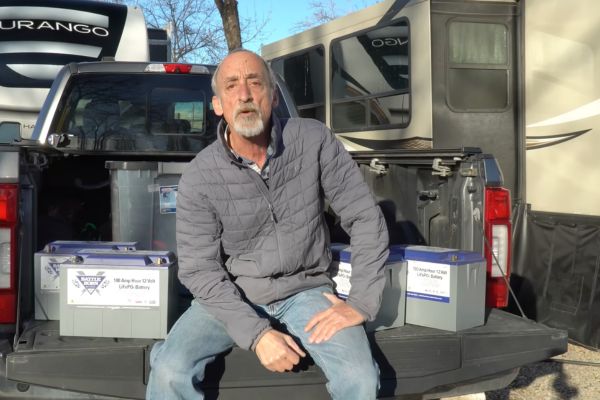
Six pricey Battle Born lithium iron phosphate batteries were supposed to power Mark Guido’s fifth wheel trailer. Instead, they ended up on his truck tailgate, on their way to hazardous waste disposal. The surprise wasn’t just the failures. It was how the warranty process played out once four out of six batteries stopped performing.
I have to confess, I was especially interested in this video because these same Battle Born batteries’ failure and warranty issues have come up a number of times in my own small boondocking camping group in Quartzsite, too, with two fellow campers expressing the same frustration laid out in the video at the end of this post from Grand Adventure.
Unfortunately, their experiences with the company did not match the hype, and dealing with warranty issues proved even more problematic, just as in the video, where they cover the RV battery setup, the testing Battle Born required, the results, and why the defective batteries never went back under the 10-year warranty.
The 600Ah RV battery bank that started quitting early
Mark’s battery bank used six 100Ah Battle Born LiFePO4 batteries wired in parallel (600Ah total). He bought them across 2021 and 2022, paying about $800 each, roughly $4,800 total, because Battle Born had a premium reputation and a long warranty.
That setup made sense for boondocking. Compared to lead acid, LiFePO4 batteries can offer steady voltage, deeper usable capacity, and less hassle with maintenance. On paper, 600Ah should support long stays off-grid without babysitting the power system.
During the summer 2025 travel season, though, the bank started dying after less than 200Ah of use. That gap between expected capacity and real-world performance made the system hard to trust day to day.
Battle Born’s testing protocol, step by step
After returning to the states, Mark stayed on hookups for about 10 days, then called Battle Born. They gave him a test process to run on each battery, one at a time.
Disconnect one battery from the bank and let it rest for about 30 minutes, then measure resting voltage with a multimeter.
Apply a load using a small ceramic desk heater plugged into a 750W inverter, discharging the battery down to about 12.4V (when possible).
Let it rest another 30 minutes, then recharge with a LiFePO4 charger delivering about 17.5A until it shuts off as full.
Disconnect the charger, rest 30 minutes again, then measure the final resting voltage.
Test results: Only 2 of 6 batteries still worked
Here’s the outcome of the battery-by-battery testing.
Battery
Resting voltage (start)
What happened under load
Status
1
13.47V
Dropped and fluctuated at 8 to 9V
Failed
2
13.47V
Recharged and rested at 14.2V
Good
3
13.51V
Immediate low-voltage shutdown, jump start didn’t fix it
Failed
4
0V
Wouldn’t wake up after jump-start attempts
Failed
5
13.29V
Recharged and rested at 13.58V
Good
6
14.01V
Dropped to 4 to 5V
Failed
With two working batteries left, the earlier symptom made sense. A “600Ah” bank doesn’t act like 600Ah when most of it collapses under load.
A high resting voltage didn’t mean a battery could deliver power. Several looked fine until a load was applied.
The warranty numbers that changed the decision
After the testing, Battle Born approved a Return Merchandise Authorization (RMA). The return process still put real money at risk:
$235 return shipping had to be paid up front, refunded only if Battle Born decided it was warranty covered
A $300 labor fee could be charged if they decided it wasn’t covered
A 3 to 4-week wait for the call
Mark compared that to buying replacements that could arrive in four days.
Terminal concerns, a hazmat run, and a new battery plan
Without opening the cases, he couldn’t confirm the cause, but his batteries showed discoloration of the bright red material around the positive terminals, which may suggest heat.
In the end, he gave away the two working Battle Born batteries. The four failed batteries went to hazardous waste disposal. In their place, he installed 560Ah of new LiFePO4 batteries with Bluetooth monitoring down to the cell level, listed in the video description as Eco-Worthy 280Ah LiFePO4 batteries. Assuming they perform well during time in Quartzsite, he plans to add another 280Ah before leaving in the spring.
Bottom line for RV owners watching battery warranties
A premium price only feels premium when the support matches it. For Mark, the failure rate and the warranty process didn’t square with what he expected after investing about $4,800. Readers with Battle Born batteries, or anyone shopping for LiFePO4, can treat this as a reminder to read the warranty process as closely as the specs.
We use cookies to ensure that we give you the best experience on our website. By continuing to use our site, you consent to accepting cookies. We NEVER have or will sell reader's data. For more info, please see our privacy policy page.