Home Blog Page 90

RV Daily Tips. Friday, February 20, 2026

America’s Original RV Newsletter. Since 2001
Issue 284 • New issue every weekday
If you find this newsletter helpful, please consider supporting our staff’s work producing it 260 days of the year with a donation of your choice.


Today’s thought

“Time is like a river. You cannot touch the same water twice because the flow that has passed will never pass again. Enjoy every moment of your life.” —Harsh Goenka


Need an excuse to celebrate? Today is National Love Your Pet Day! And if you don’t have a pet, maybe you can celebrate National Cherry Pie Day instead!

On this day in history: 1792 – The Postal Service Act, establishing the United States Post Office Department, is signed by United States President George Washington.


Tip of the day
Tips to clean a gunky gray water tank. Yes, yours is gunky, too

By Nanci Dixon
This all started when our suction cup soap holder in the shower fell off the wall. No big deal —it falls off every couple of months when jostled too much, or the suction cup dries up. I decided to clean the soap residue from the soap holder and, while at it, I cleaned another soap container. The soap didn’t just rinse off, and both items needed a good soak.

The bucket I was soaking them in ended up full of soap scum, and I realized that the residue in the bucket was a microcosm of what must be in our gray water holding tank. It was time to clean.

2026 Heritage Glen FKRB Image RVUSARV review
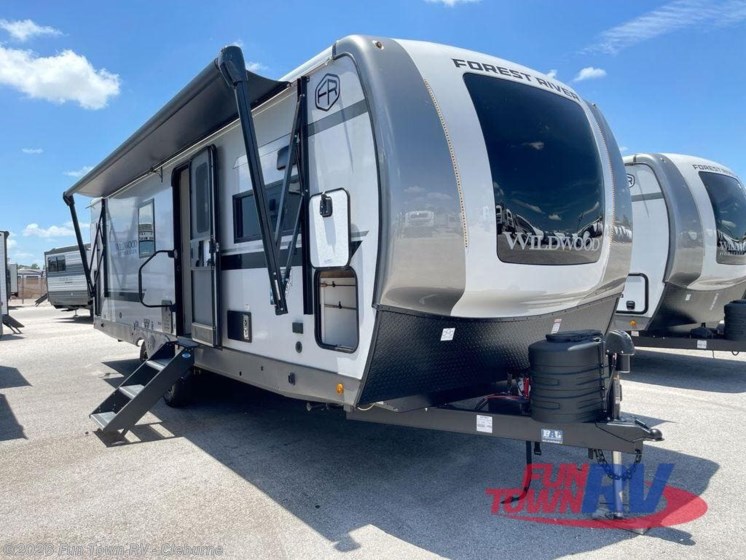
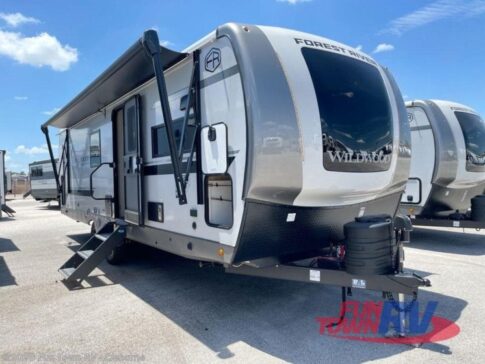
2026 Forest River Wildwood Heritage Glen 261FKRB—close to “perfect”?

By Gail Marsh
It’s not the perfect RV but, in my mind, it’s close! The 2026 Forest River Heritage Glen 261FKRB feels modern and thoughtfully laid out without being enormous. This model pairs a front kitchen with a center living area and a private bedroom. If you’re looking for a couple’s RV with comfortable living space and residential-style finishes, this could be the RV for you.


A “cool tool” indeed: The Magnetizer/Demagnetizer
This gadget instantly magnetizes or demagnetizes steel tools and other small parts. Convert any tool blade to a magnetic retriever of things like screws, nuts, and metallic particles. No batteries or electricity required. Read more about it or buy one for yourself here.


In the RV shop with Dustin
Using proper heavy-duty jack stands for heavy vehicles

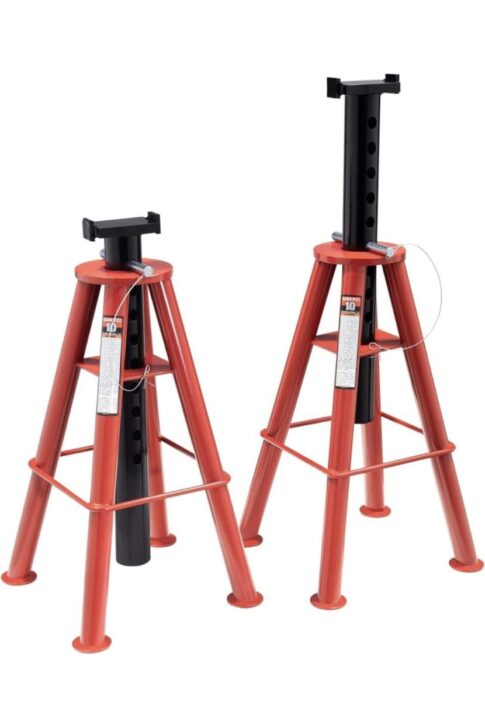
Today, I’d like to stress the importance of using proper heavy-duty jack stands when lifting a heavy RV off the ground for suspension repairs and maintenance. Using the right equipment is crucial for the safety of both the vehicle and the person working on it. Here’s why.


FACTOID: Getting an RV serviced is not an overnight job. In fact, according to RVBusiness, an average RV industry work order is open for 34 days. Warranty work orders are open for an average of 50 days, and work orders for parts not in stock for 73 days.


Article and video
Simple RV gadgets that solve annoying camping problems

Most camping frustration doesn’t come from one big disaster. It comes from tiny, annoying stuff that keeps popping up, like wind blowing out a stove, or gear sliding around in transit. The team from Playing with Sticks asked fellow campers to share small DIY fixes that quietly remove those stress points. In the video at the end of this post, they share the results. (Plus, as always, Cheri breaks down the list in the article, too, if you don’t want to watch the video.)


Featured article
Transforming a 28-foot Boles Aero Estrellita into an ideal 20-foot trailer

By Paul Lacitinola
Scott Burud, based in Bakersfield, CA, initially resisted buying a 1953 Boles Aero Estrellita trailer. The first time he checked it out, he expected to see a 20-foot-long trailer. After a three-and-a-half-hour drive, he arrived and quickly realized the trailer was much larger than he anticipated—28 feet, to be exact. The size was a dealbreaker for Scott… until it wasn’t. 


Ask Dave
Is it OK to walk on an RV’s slideout roof?

Read Dave’s response.

**If you’re near Providence, RI, be sure to see Dave at his always educational and entertaining seminars at the Rhode Island RV Show today through Sunday.
**And if you’re closer to Bedford, NH, learn all about RVing to Alaska, RVing with pets, RV essentials, RV buying tips, and RV bloopers at seminars presented by longtime RVer and RVtravel.com reader/frequent commenter Neal Davis. He’ll be at the New Hampshire RV Show today through Sunday.


New and improved Dump Buddy is a must-have gadget for RV dumping
Don’t miss Tony Barthel’s updated review of the new and improved Dump Buddy. What’s a Dump Buddy? It’s essentially a plastic collar that goes around a sewer pipe in the ground and then another one that goes around your sewer hose elbow. You simply use the knob to tighten the collar around the sewer pipe and then flip up the second collar and tighten that around the sewer hose. Read Tony’s review here or order on Amazon.


You may have missed these recent popular stories…


Reader poll
Should campgrounds/RV parks have a “lights-out” rule?

Respond here.


Quick tip
Roof ladder storage

amazon.com

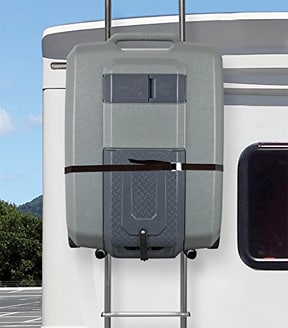
If your RV is equipped with a roof access ladder it’s always a temptation to use it to store extra stuff on. Not a bad idea, but just make sure that whatever you hang on the ladder doesn’t obstruct your taillights. Drivers behind you can unwittingly get a bit too close if they don’t see your intentions clearly signaled. And make sure that the items are well secured. A step ladder bouncing down the freeway can create a whole lot of trouble.


Website of the day

The Best Free BLM Camping in the American West
Pack up the RV and get her ready! After you see all these incredible and FREE places to camp, you’re going to want to hit the road. Please note this page was last updated in 2020 and some things have changed since then. 


? MYSTERY PRODUCT OF THE DAY ?
Thou shalt not laugh… Just kidding, thou can laugh. And laugh ye will!

B6afd87f Cf81 4229 80df 4a2510e80662
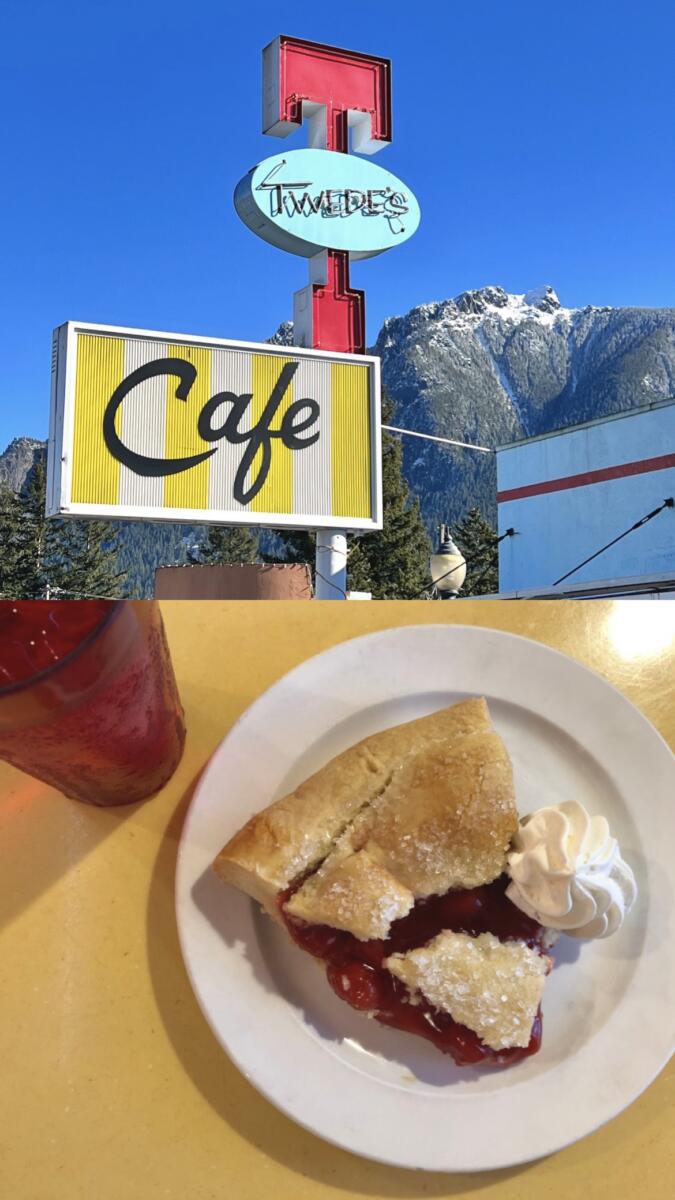
Photo credit: Emily Woodbury. Yes, it is the best cherry pie in Washington state! I can attest!

Trivia

Since it’s National Cherry Pie Day… The cherry pie at Twede’s Cafe in North Bend, Washington, became world-famous thanks to the TV show “Twin Peaks,” where Agent Dale Cooper famously declared the café’s cherry pie “damn fine.” The pie was so closely tied to the show that fans still travel from around the world to try a slice at the exact filming location (known in the series as the Double R Diner).


Readers’ pet of the day
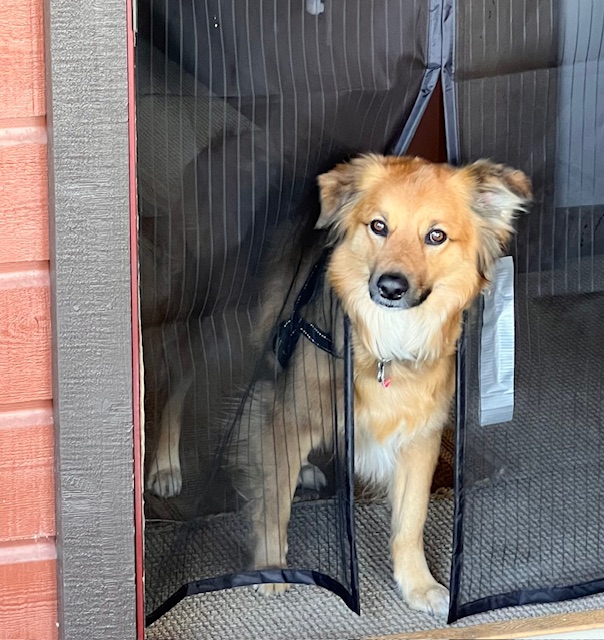
Sammie 0f642e854091095dd47e48fe55bfb165“Sammie (mixed Australian Cattle Dog plus six other breeds, age 7) was rescued from our local shelter here in Payson, Arizona, when she was less than a year old. Her favorite things are her daily trips to the dog park and watching television at night with her parents.” —Larry Sugarman

Send us a photo of your pet with a short description. No blurry photos and please do not submit your photo more than once. Thanks!

Curious what breed(s) your dog is? Doggie DNA tests work great
RVing with Dogs group on Facebook. You’ll love it.


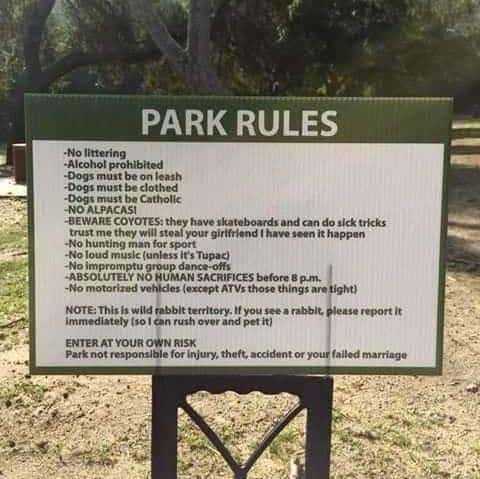
Leave here with a laugh
Click to enlarge.

Today’s weather forecast across the nation
THIS MAP UPDATES TWICE A DAY
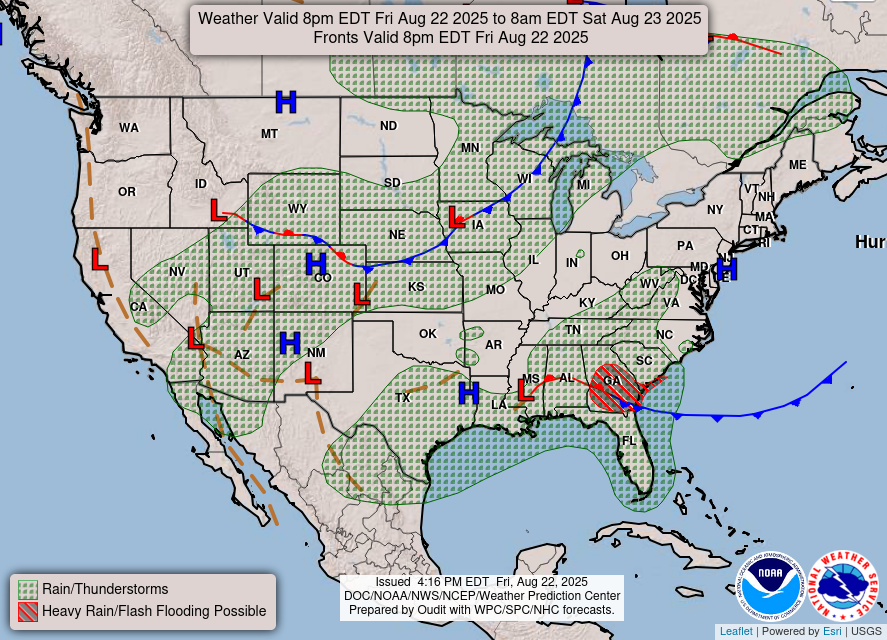
Visit Current National Radar Weather Map


Did you miss the latest RV Travel Newsletter? If so, read it here.
Oh, and if you missed the Latest News for RVers, make sure to catch up here.


If you shop at Amazon.com we’d appreciate you using this link. We get an itty bitty commission if you buy something, but they add up and help us pay our bills (most importantly our hard-working writers!). 


RVtravel.com All-Star Team

Click here for information about our staff and how to contact us.

WHY WE ASK FOR DONATIONS INSTEAD OF SELLING SUBSCRIPTIONS.

Our policy on using artificial intelligence.

Is it OK to walk on an RV’s slideout roof?

Dear Dave,
Is my slideout roof rated for walking on like the RV roof is? Obviously, the slideout would be fully extended. —Doug, 2013 Jayco Flight Swift 267BHS

Dear Doug,
From what I can find on used units on the internet, your 2013 Jayco Flight Swift has a driver side couch and dinette slide room, which looks to be approximately ten feet wide or more. The construction of the main shell looks to be what we call “stick-and-tin,” which is wood framework, loose fill insulation, and aluminum-ribbed outer skin called “mesa”.

Here is a similar unit at one of the RV shows where I recently did seminars.Mesa Travel Trailer

Stick N Tin Illustration

How the slide room is built

The room looks to have a one-piece roof and sidewall; however, the outer skin is the mesa material. Most manufacturers purchase components from specialized vendors and assemble them.

I have not specifically witnessed the construction of the slide room of your type of Jayco product. However, I am fairly confident that they purchase it from an OEM and assemble it.

Most of these rooms have very little framework other than an exterior perimeter aluminum or wood frame, if anything. Some are simply a sheet of 1/2” plywood, or thinner, to save cost and weight. They are not designed to support any additional weight, especially someone standing or walking on it.

Slide Roof
Slide roof

Even with the slide room fully extended and the flange resting against the sidewall, I doubt there is enough structure in the center other than the plywood.

In addition, the weight applied to the top would pull at the upper part of the interior flange and add stress to the sidewall. That could create a bow or uneven plane since there is limited structure in the sidewall of a stick-and-tin unit.

Even some of the roofs on these units have strict weight limitations. Some recommend no additional weight on the roof without extra support, such as a 2″x10″x8’ board spanning the weight across a longer portion of the roof.


 You might also enjoy this from Dave 

How do I clean my RV’s slideout top without getting on the roof?

Dear Dave,
How do I clean the top of the slideout without getting on the roof? —Deborah, 2022 Sunseeker

Read Dave’s answer.

MORE POSTS ON RV SLIDE ROOMS


Dave Solberg is a leading expert in the RV industry and the author of the “RV Handbook.”

Read more from Dave here

HAVE A QUESTION FOR DAVE?

Send your inquiries to him using the form below.

Name
Drag & Drop Files, Choose Files to Upload

RVDT2845

Tips to clean a gunky gray water tank. Yes, yours is gunky, too

2

By Nanci Dixon
This all started when our suction cup soap holder in the shower fell off the wall. No big deal —it falls off every couple of months when jostled too much, or the suction cup dries up. I decided to clean the soap residue from the soap holder and, while at it, I cleaned another soap container. The soap didn’t just rinse off, and both items needed a good soak.

The bucket I was soaking them in ended up full of soap scum, and I realized that the residue in the bucket was a microcosm of what must be in our gray water holding tank. It was time to clean.

Prevent “stuff” from getting into the tank

First, prevent the stuff that sticks, clogs, and stinks from getting into the gray water tank. Start at the source.

  • Use a kitchen sink strainer and a hair strainer in the shower. We use this one in the shower after getting a long hair clog (mine)—it works great! Sizes vary, so double-check the drain size if ordering.
  • Scrape and wipe off dishes well before washing.
  • If using an RV dishwasher, be aware it is not connected to a garbage disposal like home dishwashers. The dishes need to be scraped and food particles wiped off, too.
  • Clean your sink strainer by lifting and wiping down periodically. Pick out any scraps that have made their way into the drain.

Add cleaner to the gray tank

Add cleaning agent to the tank. Do NOT use bleach. Bleach is hard on rubber and can damage valves and seals. There are a number of recommended cleaners. While any of these will work, Dawn dish detergent is the most popular, both because of its grease-cutting ability and being readily available.

Recommended cleaning agents

Choose one (only one!) of the suggestions below.

  • 1/2 – 1 cup Dawn dish detergent—this is one of the most popular
  • 1/2 cup Calgon water softener and 1/2 cup dishwashing detergent
  • 1 cup dishwasher gel
  • 1 cup baking soda
  • 1 cup laundry detergent

Fill the gray tank with water and drive around

Fill the gray tank with water. Drive your RV around and let the cleaner slosh around and break down the gunk. Let the cleaner stay in the tank for a day or two, if possible. This is a good thing to do when traveling and stopping at another full-hookup site.

Dump tank and rinse

It is good to rinse the tank at this point if you have a tank rinser or sewer hose rinse adapter. You can get the adapter here. This is a 45-degree one, but there is also a straight flush attachment available.

Add treatment

You can add 1/2 cup to 1 cup of dish detergent or any enzyme-based gray water treatment to help keep the tank clean after dumping.

Some people add a treatment every time after dumping, and others only the second or third dump cycle.

RELATED

RVDT2845

Simple RV gadgets that solve annoying camping problems

1

By Cheri Sicard
Most camping frustration doesn’t come from one big disaster. It comes from tiny, annoying stuff that keeps popping up, like wind blowing out a stove, or gear sliding around in transit.

The team from Playing with Sticks asked fellow campers to share small DIY fixes that quietly remove those stress points. In the video at the end of this post, they share the results.

Simple surfaces and safer storage in a small camper

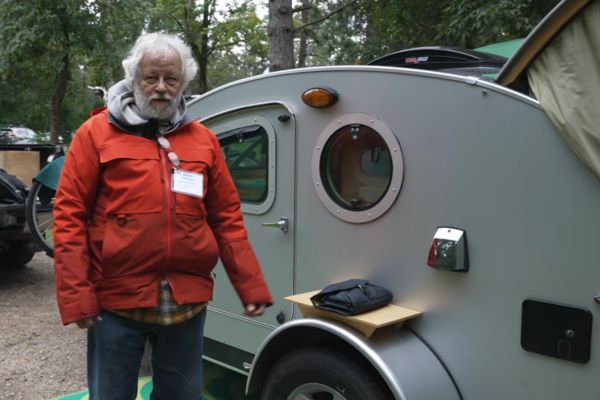
• Dean’s flip-out fender shelf solves a problem most people ignore: There’s rarely a spot to set something down when hands are full. He uses it for a morning toothbrush kit, but it works for anything from a phone to a first aid pouch. He found the fender angle through trial and error, then used a CNC router for clean legs and joinery. Without a CNC, the same idea still works with simpler cuts and fasteners.

• He also built a trailer-matching knife holder, using the same birch-style look as the interior. The point is simple: Knives stop bouncing around in drawers, stay sharp longer, and sit in one visible place while cooking.

• Organization shows up again in the “activity bin” idea. Instead of digging through mixed storage, one box holds charcoal tools together, including a chimney starter and homemade fire starters made from wax plus sawdust or wood chips. (Some campers use dryer lint and wax.) A foldable chimney starter fits the same role without taking up much space.

Wind, rain, and weak spots that ruin a trip

• Wind protection doesn’t need to be fancy. One camper made a simple stove collar from aluminum flashing, with a cutout for the handle, held together with pop rivets. It blocks shifting gusts so the trailer doesn’t need to be re-parked every time the wind changes. A basic pop rivet kit makes this kind of fix quick.

• Another small win is the galley hatch pull-down. A bungee strap wrapped around the hatch handle becomes a built-in grab loop, and it hangs there even when the hatch is closed. A purpose-built option like The Perfect Bungee works the same way.

• Side-entry shelters can tear at stress points in hard wind, so some campers add corner protectors made from a pool noodle section, cut and bent to 90 degrees, then taped. A basic pool noodle is cheap padding where fabric usually loses.

• For clam-style shelters, a painter’s pole can brace the roof by pushing its tip into the hub. With that support in place, wind and heavy rain are less likely to force the hub to fold. A simple painter’s pole is all it takes.

Comfort, pests, and the small gear that earns its space

• Airflow fixes show up in two ways. A fan vent cover bought for Alaska’s constant daylight now does double-duty in cold weather by redirecting air away from sleepers’ faces while still letting the fan run for condensation control. A fan vent blackout cover handles both jobs.

• For cooking, a rechargeable 24-volt Kobalt fan hangs from the galley door, pushes air into the workspace, and helps keep flies off food. Since it shares batteries with other tools, it’s easier to justify bringing along.

• Rodents get handled with layers, especially in early spring when mice look for nesting spots. The approach: Seal gaps, run an LED rope light around the camper perimeter, keep food out, then add an ultrasonic deterrent inside as a last line.

• On the convenience side, one Vistabule owner built a shoe box at sitting height so shoes slide in and out without bending over. It also works as a small table. Another easy add is a trash setup using a suction cup meant for auto glass, which holds almost any bag. A similar heavy-duty suction cup handle matches that idea.

• Inside the galley, vertical space matters. A hinged silverware shelf got replaced with a real drawer so items can sit on a permanent shelf without being cleared every time. A small spin-out drawer picked up the overflow, keeping extra tools close to the stove.

Hard ground tent stakes that don’t bend

• Standard stakes fail fast in gravel or packed dirt, so one camper switched to lag bolts driven with an electric drill. The setup used 5/16- by 6-inch lag bolts, washers, and modified S-hooks, with a short piece of fuel line to keep parts in place. The S-hook makes guyline attachment easier, and reversing the drill backs the stake out clean. Parts like 6-inch lag bolts with washers make the idea easy to copy.

Conclusion

None of these mods are flashy, but they change how a trip feels and functions. A place to set things down, a way to stop wind from ruining coffee, and storage that matches real habits all add up fast. The best part is how personal the fixes are, because most trailers start out 80 to 90 percent right, then owners close the gap. Small tweaks beat small frustrations, and camping gets simpler because of it.

MORE RECENT GADGET ARTICLES YOU MAY ENJOY:

RVDT2845

Should campgrounds/RV parks have a ‘lights-out’ rule?

45

By Gail Marsh
Every time we run a poll like this, at least half of the respondents say it would bother them a lot! So much so that some even said they’d complain to management or ask the RVer to move.

An incident in an RV campground my husband and I visited prompted this poll question. I’m curious if RVers think there should be a rule about lights in campgrounds at night.

It was well past 10 p.m. and I was happy to open the windows for the night. After an unusually hot day, the late evening temperatures had cooled considerably. In fact, a very pleasant breeze greeted me as I opened our RV’s windows. After being closed up with the air conditioner running for several days straight, I was eager to enjoy the cool, fresh air.

When I turned out the lights, I realized that our campground neighbors had every one of their outdoor lights blazing! That’s right—the porch light, the awning lights, the under-the-RV lights, and the front cap side lights were all shining brightly in the moonless, dark night.

I reluctantly closed the windows, turned on the air conditioner, and pulled down the room’s darkening window shades. I mentally wrote “eye mask” on tomorrow’s shopping list, pounded my pillow into shape, and turned out the lights.

This experience brings me to today’s poll. You know and I know to extinguish all outdoor RV lights when retiring for the night. Some campers don’t know this, however. So, should the campground include a rule about “lights out”?

Let us know what you think and then please leave a comment about what you think this rule should look like. Thank you!

RELATED

RVDT2845

Using proper heavy-duty jack stands for heavy vehicles

2

By Dustin Simpson
Today, I’d like to stress the importance of using proper heavy-duty jack stands when lifting a heavy RV off the ground for suspension repairs and maintenance. Using the right equipment is crucial for the safety of both the vehicle and the person working on it.

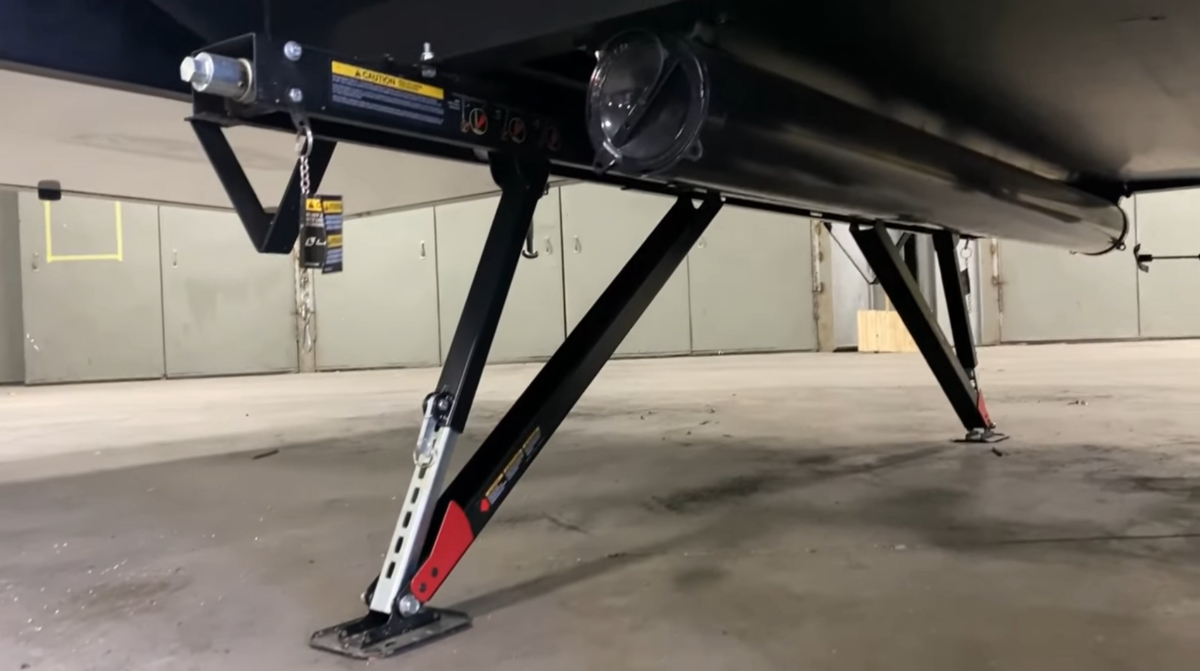
10,000 lbs. jack stands
10,000 lbs jack stands.
Picture taken of a unit in the RV shop that has its axles removed.
Jack stands used underneath the frame.

Use heavy-duty jack stands and help maintain our RVs

1. Safety: Heavy-duty jack stands are designed to support the weight of heavy vehicles, providing a stable and secure base for lifting and working on them. This reduces the risk of accidents and injuries during suspension repairs and maintenance.

2. Stability: The robust construction of heavy-duty jack stands ensures stability and support while the RV is raised off the ground. This stability is essential for working underneath the vehicle and ensures the safety of the mechanic or technician performing the repairs.

3. Height and weight capacity: Heavy-duty jack stands are designed to handle the weight of larger vehicles and provide a sufficient height for accessing suspension components and performing maintenance tasks.

4. Durability: Heavy-duty jack stands are built to withstand the weight and pressure of heavy vehicles, making them ideal for long-term use in a workshop or garage setting.

5. Versatility: Heavy-duty jack stands can be adjusted to different heights and are suitable for a wide range of vehicles, making them a versatile tool for suspension repairs and maintenance on various models and sizes of vehicles.

My techs really like using these stands in our RV shop, so I wanted to share them with you.

Find them for sale on Amazon here.

More from Dustin

Make sure you check out my website, California RV Specialists, and our YouTube channel for more helpful information, and see our published articles on RVtravel.com and other social media pages.

RELATED

RVDT2845

2026 Forest River Wildwood Heritage Glen 261FKRB—close to ‘perfect’?

2

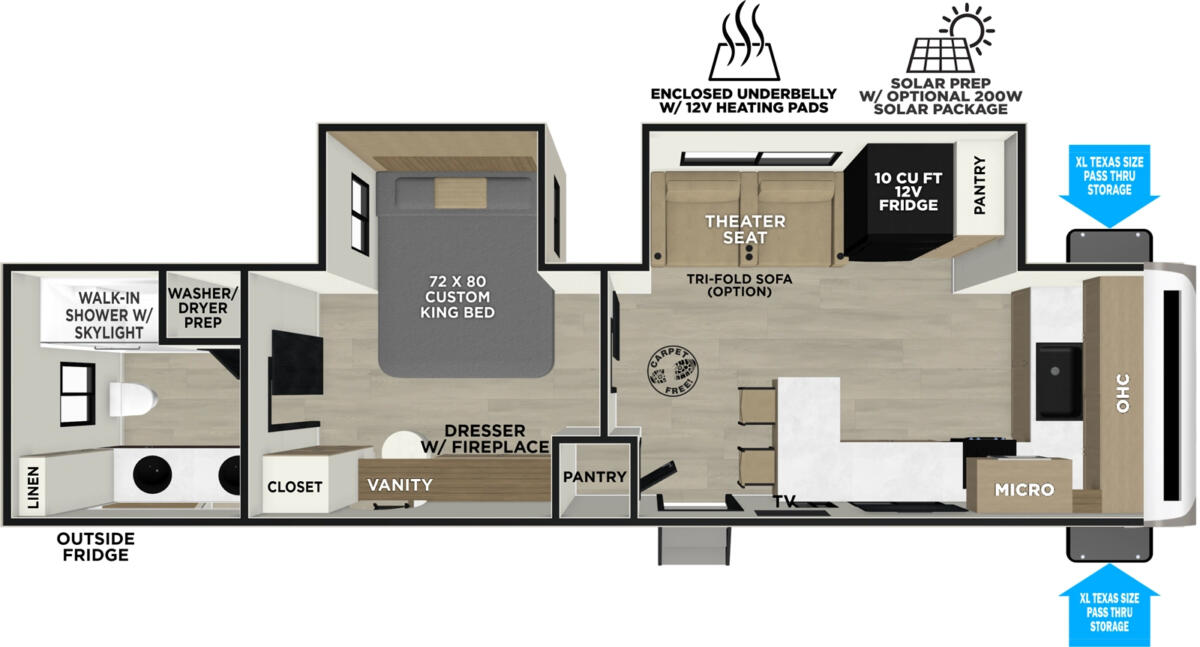
It’s not the perfect RV but, in my mind, it’s close! The 2026 Forest River Heritage Glen 261FKRB feels modern and thoughtfully laid out without being enormous.

This model pairs a front kitchen with a center living area and a private bedroom. If you’re looking for a couple’s RV with comfortable living space and residential-style finishes, this could be the RV for you.

2026 Wildwood Heritage Glen 261FKRB Image: FR

Behind the walls

The 261FKRB uses laminated “Aluma Frame” sidewalls and a laminated floor with block-foam insulation. There’s also a WeatherShield one-piece fiberglass roof and an enclosed underbelly with tank heat. These materials aim for quieter walls and better temperature control. The layout includes two slide-outs that really open up floor space in the living area.

Key specs

• Price: $39K – $45K (depending on dealer and options)
• Hitch Weight: 1,035 lb.
• UVW (Unloaded Vehicle Weight): 7,553 lb.
• CCC (Cargo Carrying Capacity): 2,282 lb.
• Exterior Length: 31’5″
• Exterior Height: 11’2″
• Exterior Width: 96″
• Fresh Water Capacity: 49 gal.
• Gray Water Capacity: 60 gal.
• Black Water Capacity: 30 gal.
• Awning Size: 22′

Interior and living space

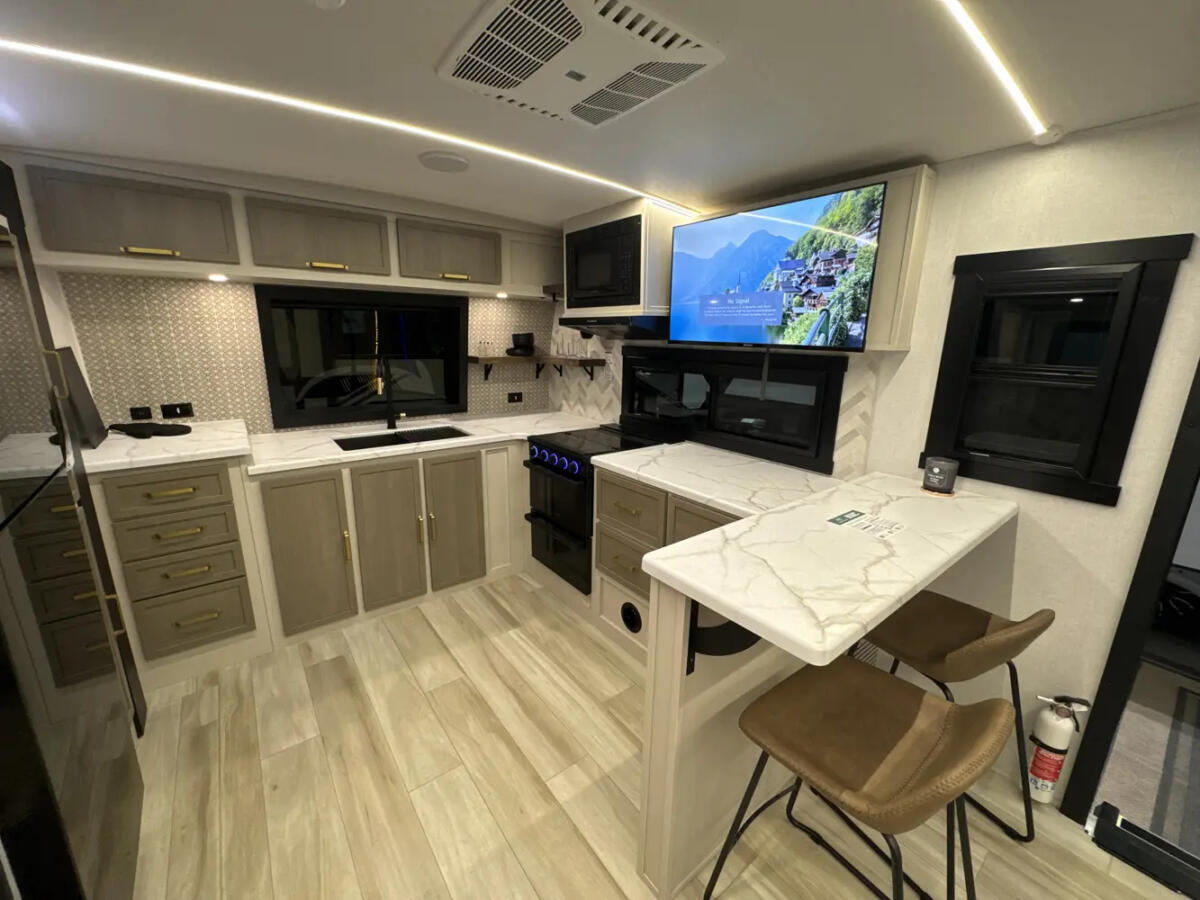
Step inside and the first thing you notice is an open, airy feel thanks to full-width windows and light, neutral finishes. The floorplan places the kitchen at the front with a central living area. This provides a natural flow that feels comfortable rather than cramped.

2026 Wildwood Heritage Glen 261FKRB Image: FR

The Wildwood Heritage Glen 261FKRB floors are easy-care vinyl throughout for a continuous look. The ceiling treatment and LED lighting strips create a bright, relaxed feeling. The entire design, along with plenty of windows and interior lighting, help make the space feel larger than you might expect.

Kitchen

2026 Wildwood Heritage Glen 261FKRB Image: FR

The front kitchen is designed to allow optimum flow for prep. You’ll find solid surface countertops, an undermount residential-style sink, and a 10 cu. ft. 12V refrigerator.

There’s a convenient peninsula/breakfast bar with seating, which I really appreciate. The bar doubles as extra prep space for cooks who like elbow room.

Pantry storage is located in two separate spaces (a bit strange to me). One pantry is next to the refrigerator, while the other seems to share space with jackets. It’s positioned right inside the entry door. I’d use the kitchen pantry and reserve the entry closet as just that—a coat closet.

Living room

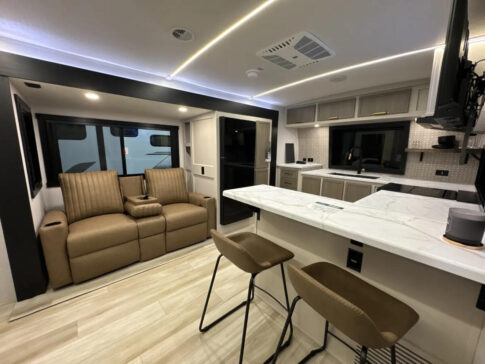
The living area expands because of the slide-out and is set up for a theater-style sofa or tri-fold sleeper sofa, depending on your preference. The living room seating seems a bit offset from the TV’s position, but not enough to cause neck strain.

Bedroom

2026 Wildwood Heritage Glen 261FKRB Image: FR

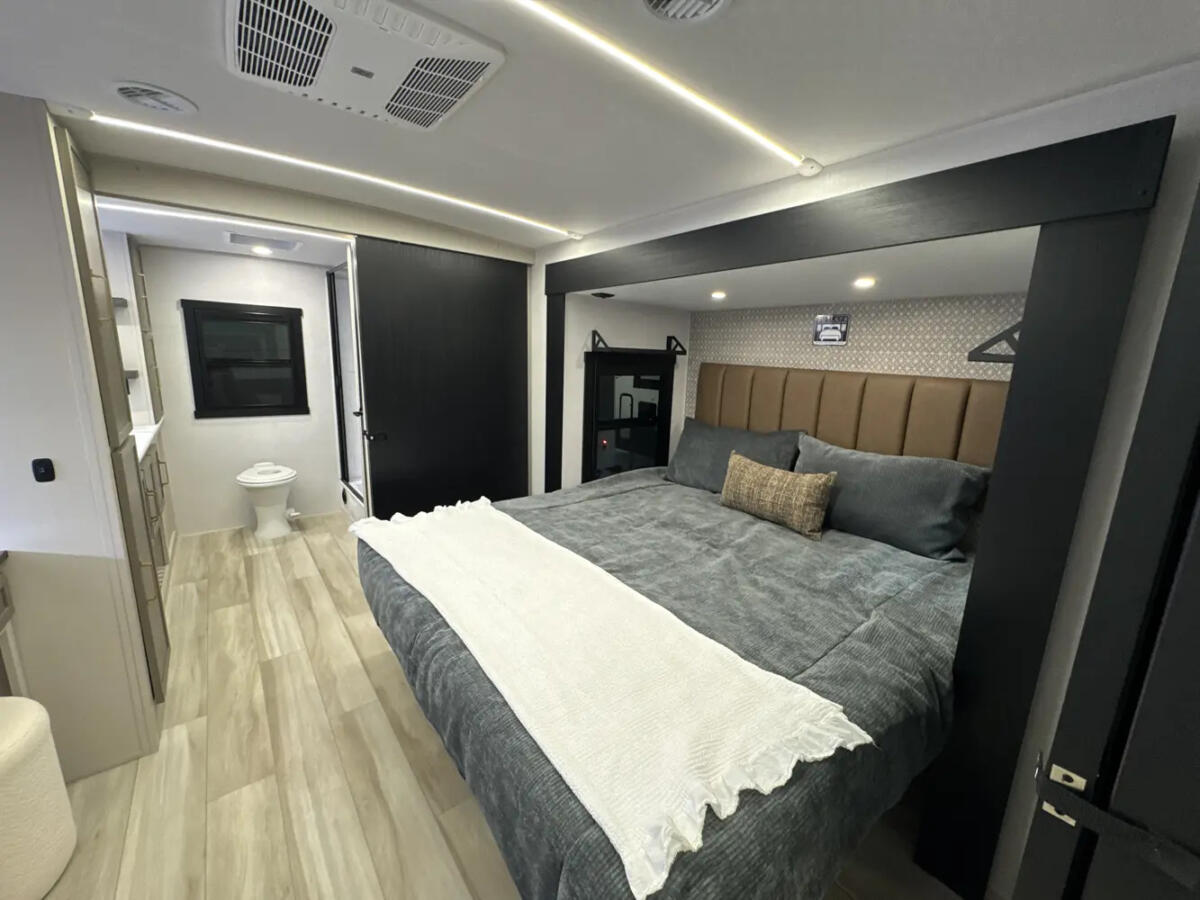
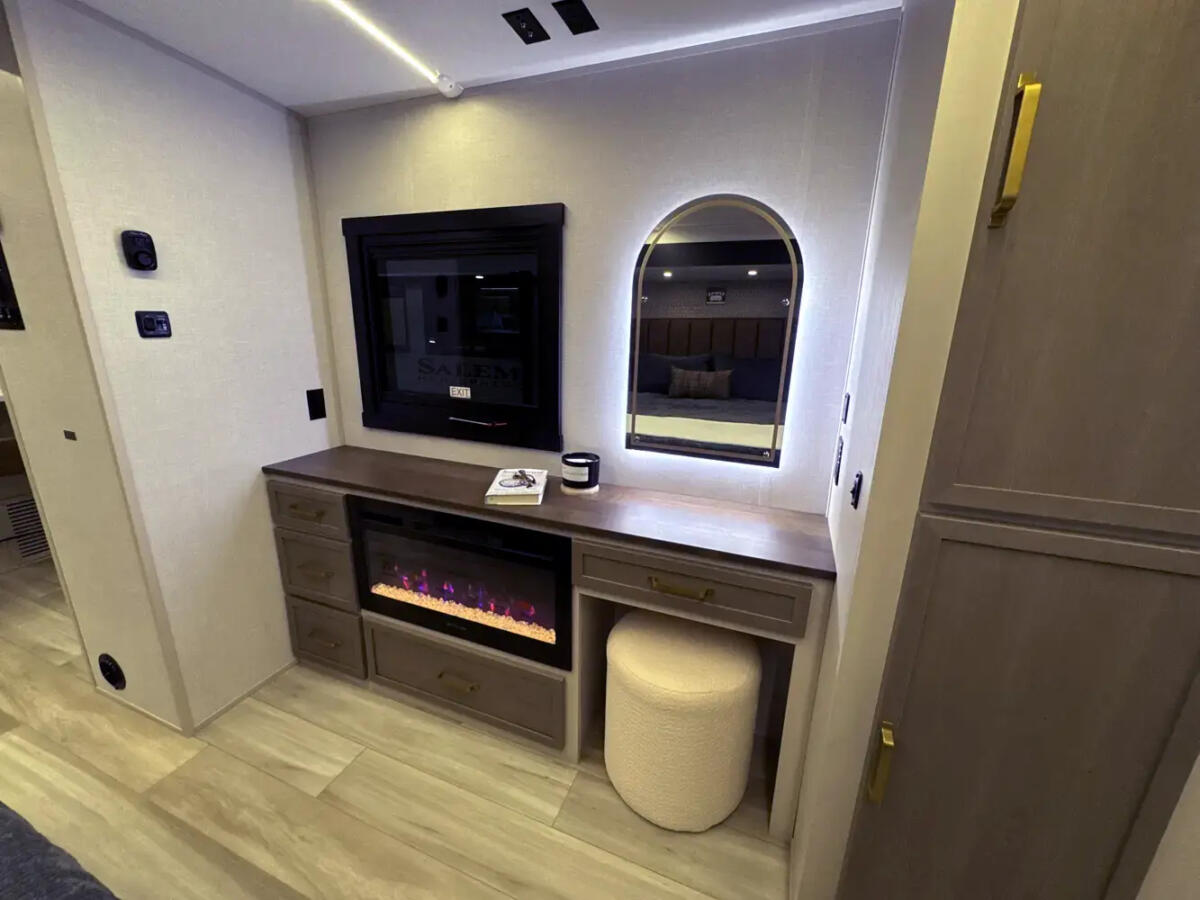
There’s a lot to like about the Heritage Glen 261FKRB bedroom. You’ll discover a queen-size bed (60″ x 80″) or custom king, depending on options, with both drawers and dresser storage for clothing. The fireplace will help remove morning chill from the room and adds a nice ambience. I think some folks may prefer storage instead.

I like that there is walk-around access to both sides of the bed, and the slide-out really helps make the room feel spacious. Opposing windows on either side of the bed ensure a good cross breeze as you sleep.

2026 Wildwood Heritage Glen 261FKRB Image: FR

The bedroom in this unit also has a few features that I dislike. I don’t know of anyone who might use the “vanity” space. I’d much prefer a bank of drawers or a cabinet for more clothes storage. I also think the designer missed the mark by not adding some kind of bedside table or shelf.

Bath

2026 Wildwood Heritage Glen 261FKRB Image: FR

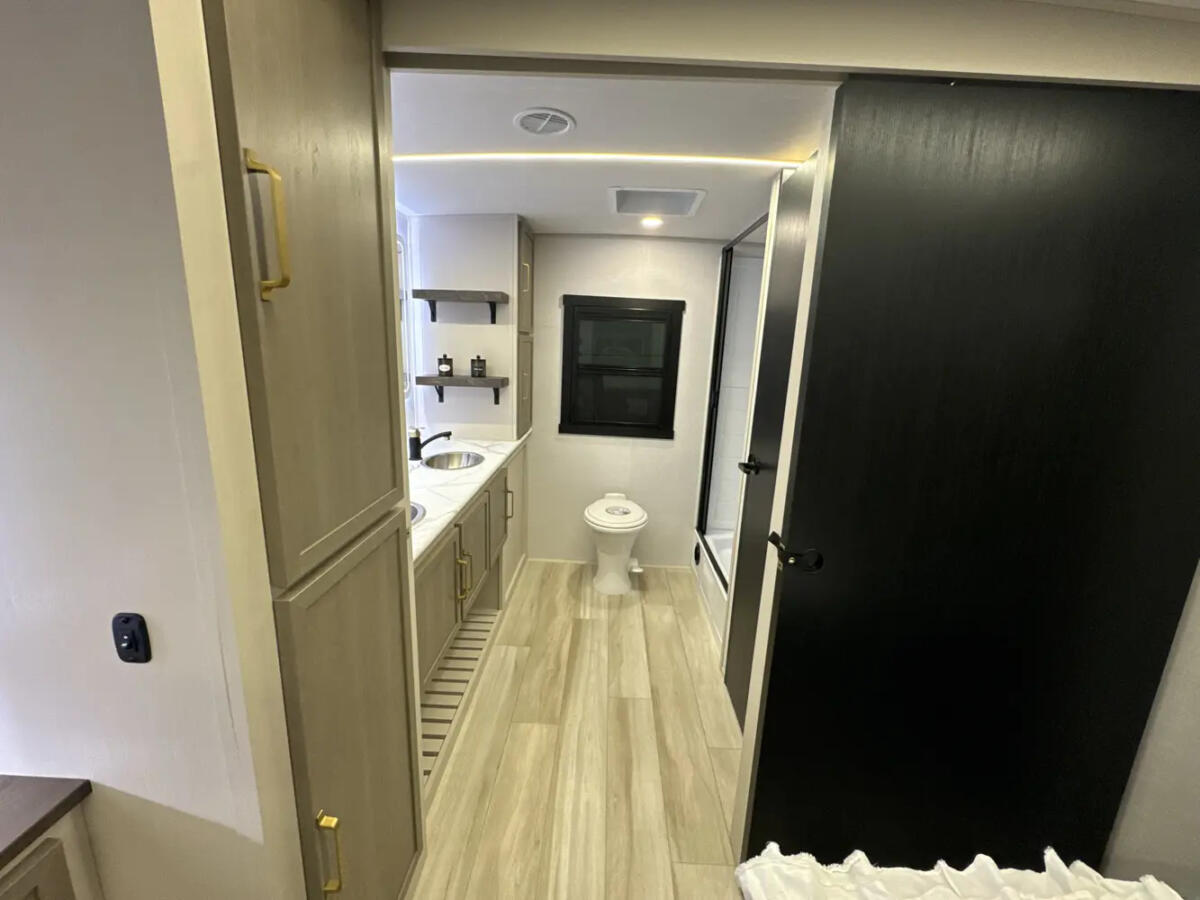
The bath layout seems upscale for a trailer of this size. There’s a skylit shower, a porcelain toilet, and an LED-backlit mirror. The 261FKRB features a double-sink vanity, which makes prep easier for two people sharing the space, but diminishes the usable counterspace.

I appreciate the window in the bathroom and the more-than-adequate space around the commode. There’s also plenty of linen storage and convenient washer/dryer hookups in the bathroom, too.

Overall take

The 2026 Wildwood Heritage Glen 261FKRB is a thoughtfully designed, couple-oriented travel trailer with residential touches. This travel trailer feels open thanks to large windows, careful arrangement of cabinets and furniture, and slide-outs. If you’re a couple who wants a comfortable basecamp with modern finishes and good storage, this model might suit you well.

You can take a virtual walkthrough here. Or watch a video below.

What do you think about this travel trailer? Likes/dislikes? Tell us in the comments.

RELATED RV REVIEWS:

RVDT2845

View, Navion motorhomes recalled. Roof cap may detach

6

Winnebago Industries, Inc. (Winnebago) is recalling certain 2020-2023 View and Navion motorhomes. The rear roof cap aerofence trim may become loose and detach during transit.

A detached roof cap can become a road hazard for other vehicles or people who are in the wrong place at the wrong time by increasing the risk of a crash or worse. The recall may involve as many as 4,024 RVs. It was issued February 17.

Remedy

The remedy for this recall is under development. So good luck until it is. Owner notification letters are expected to be mailed April 17.

If you’re not keen on the roof cap blowing off your RV, contact Winnebago customer service at 1-641-585-6939 or 1-800-537-1885. Winnebago’s number for this recall is 202.

* * *

DID YOU KNOW that RVtravel.com includes more than 700 articles about RV electricity? Wow! Check out the long list of topics.

WOULD YOU PRETTY-PLEASE DO US A KINDNESS?
Would you mind forwarding this newsletter or article to another RVer? If you enjoy it (and if you learn from it), chances are they will too! Thanks so much. We really appreciate it!

The RVtravel.com newsletter is an “original,” says Google!
What is the longest continuously published newsletter about RV travel in the United States? Here’s what Google says: “The RV Travel Newsletter has been in continuous publication online since 2001… It is widely recognized as ‘America’s longest continuously published RVing newsletter’.” BE HISTORIC! SIGN UP (if you aren’t already).

MORE WINNEBAGO RECALLS

Winnebago recalls trailers: Cooktop flame may invert

• Tire size mistake triggers recall of popular Winnebago travel trailers

• Winnebago recalls trailers. Shelf above bed can fail

• Winnebago recalls trailers for stovetop fire danger

• Winnebago recalls motorhomes: Propane tanks may fall off

• Winnebago recall prompted by workers’ failure to follow procedures

• Winnebago recall: Is your RV’s door glass about to fall off while you drive?

RVT1249b

RV Daily Tips. Thursday, February 19, 2026

America’s Original RV Newsletter. Since 2001
Issue 2844 • New issue every weekday
If you find this newsletter helpful, please consider supporting our staff’s work producing it 260 days of the year with a donation of your choice.


Today’s thought

“Ninety-nine percent of failures come from people who make excuses.” ―George Washington


Need a reason to celebrate? Today is National Chocolate Mint Day!

On this day in history: 2002 – NASA’s Mars Odyssey space probe begins to map the surface of Mars using its thermal emission imaging system.


Tip of the day
Know Your RV: Take care of your stabilizer jacks

RVs, being built light for easy (and economical) travel, are not “rock solid” in camp. The longer they are, the more they tend to rock and shake as folks move about inside. To that end, most travel trailers and fifth wheels are equipped with stabilizer jacks. How do you “care and feed” them?

On a fifth wheel, the “landing gear” acts as a stabilizer up front, but additional stabilizers are typically found at the rear. Travel trailer fans, if you unhitch from your tow vehicle and rest the trailer on the tongue jack foot, you’ll certainly know the lack of stability. Many travel trailers have at least four stabilizer jacks, some have more.

How can you safely and effectively use your stabilizer jacks? First… Continue reading.


Article and video
How to make RV corner shower shelves useful

Corner RV shower shelves! Uggghhh. Is there any more useless feature in an RV than corner shower shelves? They are too small, and you certainly cannot move your RV with anything on them. Heck, sometimes you cannot even move in your stationary RV with anything on them. What are RV manufacturers thinking? Well, here’s a solution.


Featured article
Visit the national parks that no longer exist

By Gail Marsh
Where did they go? How can some national parks no longer exist? You may be surprised to know that not all national parks have stood the test of time. Over the years, several parks and monuments have been abolished, reclassified, or transferred to other forms of management. These forgotten parks are an interesting part of America’s conservation history. Plan a visit to one today.


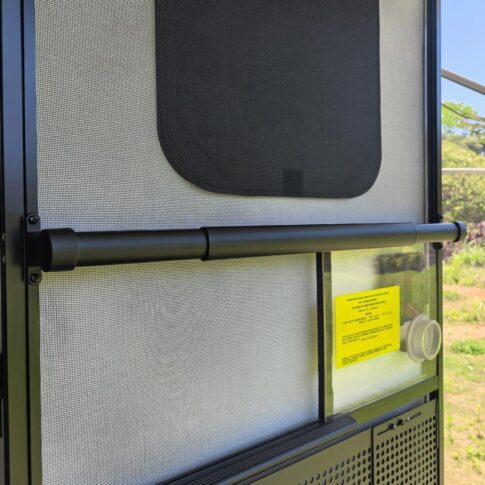
ScreendoorbarReinforce your RV’s screen door in seconds
Give your RV screen door a little extra love. This lightweight aluminum grab bar reinforces and protects your door, helps prevent everyday damage, and adds a comfortable, secure grip. Fully pre-assembled and adjustable to fit most RVs, it installs fast and makes every in-and-out smoother and safer. Learn more or order.


Ask Dave
Is it necessary to apply sealant to the RV roof periodically even if it’s not leaking?

Read Dave’s answer.

**If you’re near Providence, RI, be sure to see Dave at his always educational and entertaining seminars at the Rhode Island RV Show, Feb. 20-22.
**And if you’re closer to Bedford, NH, learn all about RVing to Alaska, RVing with pets, RV essentials, RV buying tips, and RV bloopers at seminars presented by longtime RVer and RVtravel.com reader/frequent commenter Neal Davis. He’ll be at the New Hampshire RV Show, Feb. 20-22.


Reader poll
For readers aged 70+: Do you feel you are mentally declining?

Respond here.


Quick tip
Know your RV height

Post a note on your dashboard showing the height of your rig in both feet and inches. When out of the country, post it in meters. Be careful at older service stations: Clearance signs may not have kept up with repaving jobs that raise the height of the drive. In the USA, most bridges in the West are high enough for an RV to pass under. But be careful east of the Mississippi, where many old bridges will rip your RV’s roof right off if you try to pass beneath them.


Website of the day

The Coziest Restaurant in Every State
It’s February, and that means having dinner in a rustic lodge or a saloon by a fireplace sounds pretty nice, right? Well, this list from Food & Wine has you covered. (This article was originally published in 2017. We know most of these restaurants are still open, but make sure you check before going, anyway.)


? MYSTERY PRODUCT OF THE DAY ?
This isn’t just a mystery product. This is an absolutely-must-have product. We’re being serious. You MUST have this in your car or RV at all times.


And the survey says…

We’ve polled RVtravel.com readers close to 5,000 times in recent years. Here are a few things we’ve learned about them:

• 54 percent of our readers would say Camping World’s service and repair department “flunks.”
• 17 percent have experienced an early check-in fee at a campground or RV park.
• 94 percent have a primary care doctor.

Recent poll: Do you think popular campgrounds should limit stay length?


Trivia

Ever wonder why Lyme disease is called Lyme? Well, when the disease was first diagnosed in 1975, it was done so in Old Lyme, Connecticut.


Readers’ pet of the day

20240913 121159 0d9b26484731d4ac172101ad0e8491d3“Luna (Italian Greyhound, age 1) is very disciplined but lets us know when it is time to eat. Very outspoken when it is dinner time. She travels very well tethered to seatbelts in a software basket.” —Steven Chasse

Send us a photo of your pet with a short description. No blurry photos and please do not submit your pet more than once. Thanks!

RVing with Dogs group on Facebook. You’ll love it.


FREE IS GOOD! Everything to see and do in New Mexico. Read about them online or order info by mail. Click on the button for help planning your trip for the Route 66 Centennial. 


Leave here with a laugh

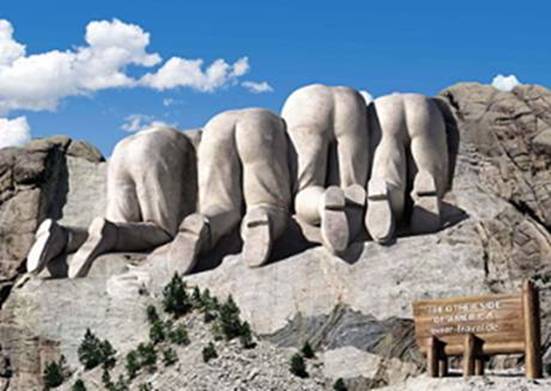
Mount Rushmore from the… behind!

Bored? Not for long! Here’s a list of every article and newsletter recently published on RVtravel.com. We don’t know what bored is around here—we never stop working! You’ll have fun looking through all these articles, and we bet you’ll learn something, too.


Today’s weather forecast across the nation
THIS MAP UPDATES TWICE A DAY

Visit Current National Radar Weather Map


Did you miss the latest RV Travel Newsletter? If so, read it here.
Oh, and if you missed the Latest News for RVers, make sure to catch up here.


If you shop at Amazon.com we’d appreciate you using this link. We get an itty bitty commission if you buy something, but they add up and help us pay our bills (most importantly our hard-working writers!). 


RVtravel.com All-Star Team

Click here for information about our staff and how to contact us.
WHY WE ASK FOR DONATIONS INSTEAD OF SELLING SUBSCRIPTIONS.

Our policy on using artificial intelligence.

Is it necessary to apply sealant to the RV roof periodically even if it’s not leaking?

Dear Dave, 
I’m wondering if I need to apply sealant to the top of my RV. I haven’t had any leaking on the top but I was told I need to reapply sealant. I’m aware of the seams needing it, but is it something that needs to be done yearly? —Catherine, 2018 Forest River Rainier

Dear Catherine,
There are several different materials used for RV roofs today, and there are even more opinions on how they should be cleaned and maintained.

Just because something has been done a certain way for years does not necessarily mean it is the best approach. Several factors play a role, including how much sun exposure the roof receives, environmental conditions, and whether the RV is stored indoors for part of the year.

Aluminum roofs

For many years, RV manufacturers used aluminum sheets to cover roofs. Over time, aluminum would oxidize and create black streaks that ran down the sides of the RV.

In the late 1980s, aluminum prices increased significantly, prompting some manufacturers to switch to ethylene propylene diene monomer (EPDM) rubber roofing. EPDM was easier to install and came in wide sheets that allowed for a mostly seamless membrane. However, some lower-priced units used smaller sections that were vulcanized or seamed together.

EPDM starts as black rubber, and the white color is added to the exterior surface. It expands and contracts with temperature changes and can deteriorate over time with prolonged sun exposure.

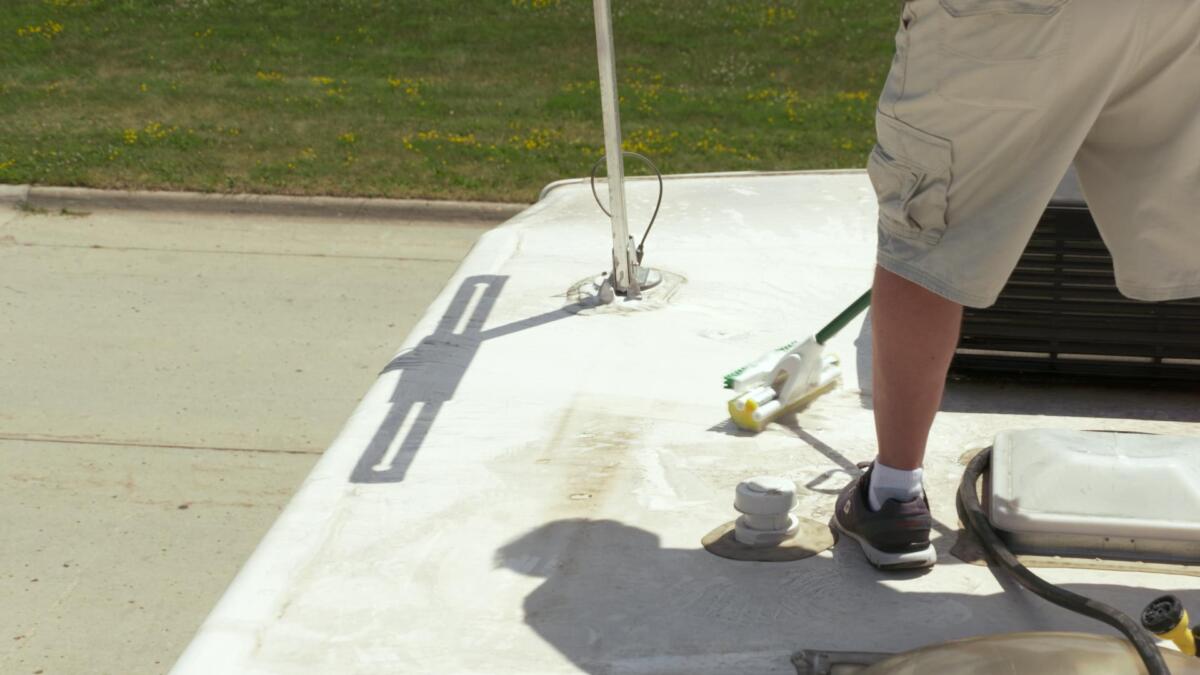
Most EPDM manufacturers recommend cleaning the roof at least once a year, or more often if needed. Mold and mildew spores can embed in the textured surface of EPDM, which not only looks unsightly but can also contribute to deterioration.

Roof Cleaning
RV roof cleaning

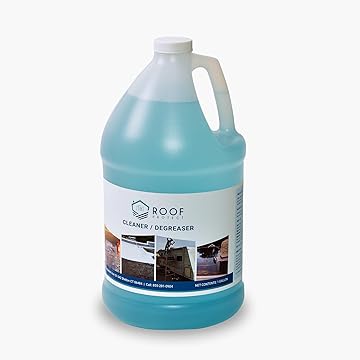
For years, I used Dawn dish soap. However, I found that Dawn can strip ceramic coatings, high-gloss finishes, and wax. Because of that, I switched to RV Roof Magic. I recommend using RV Roof Magic Cleaner because it also acts as a fungicide, addressing mold and mildew concerns. (It is available on Amazon.)

RV Roof Magic Cleaner

Should you condition EPDM?

This is where debate begins. I have spoken with several EPDM manufacturers, and most recommend using some type of protectant or conditioner. Many lean toward 303 Protectant. There are numerous products available, including versions from Dicor, but I have personally used 303 Protectant for more than 30 years and believe it is one of the best options available. I know several local RV owners who have used it for more than 20 years, and their roofs still look like new.

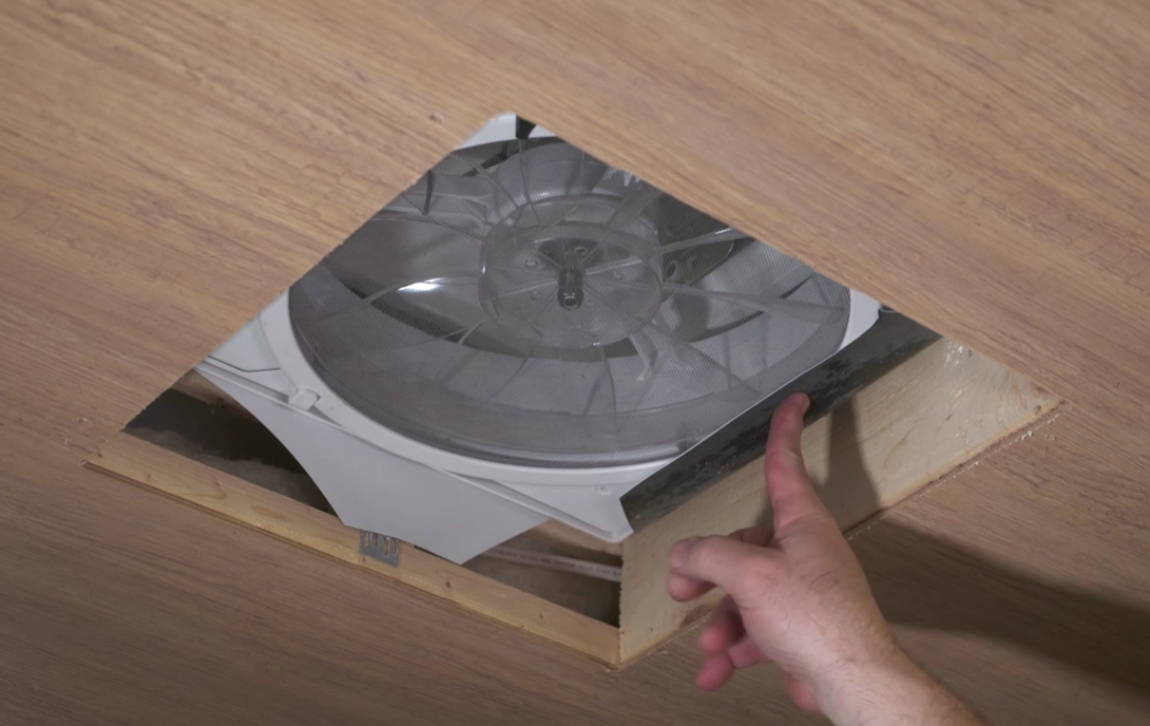
If you are unsure whether your roof is EPDM, remove the interior roof vent shroud and look at the underside of the roofing material tucked into the opening. If it is black underneath, it is EPDM.

EPDM
EPDM

TPO roofing

As rubber roofs began receiving negative attention, manufacturers introduced a newer material called thermoplastic polyolefin (TPO).

Unlike EPDM, TPO has consistent color throughout the material, meaning it looks the same on both the top and bottom surfaces.

TPO roofs should be cleaned in a similar manner to EPDM roofs. RV Roof Magic Cleaner is appropriate for this material as well.

However, conditioning TPO is more controversial. Recommendations vary depending on the roofing material manufacturer, the RV manufacturer, and even advice found on social media.

For example, Alpha Systems, a popular TPO manufacturer, recommends cleaning with Murphy Oil Soap and states that their TPO material does not require conditioning.

Most TPO manufacturers recommend:

  • Thorough cleaning at least once per year.
  • Careful visual inspection of the roof membrane.
  • Inspection of all sealants.
  • Resealing versus inspecting.

This is where some confusion occurs. Many people refer to “resealing the roof,” but what they often mean is inspecting and maintaining the sealant.

The sealant covers:

  • Roof-to-sidewall seams
  • Front and rear caps
  • Roof vents
  • Plumbing vent pipes
  • Antennas and other roof-mounted accessories

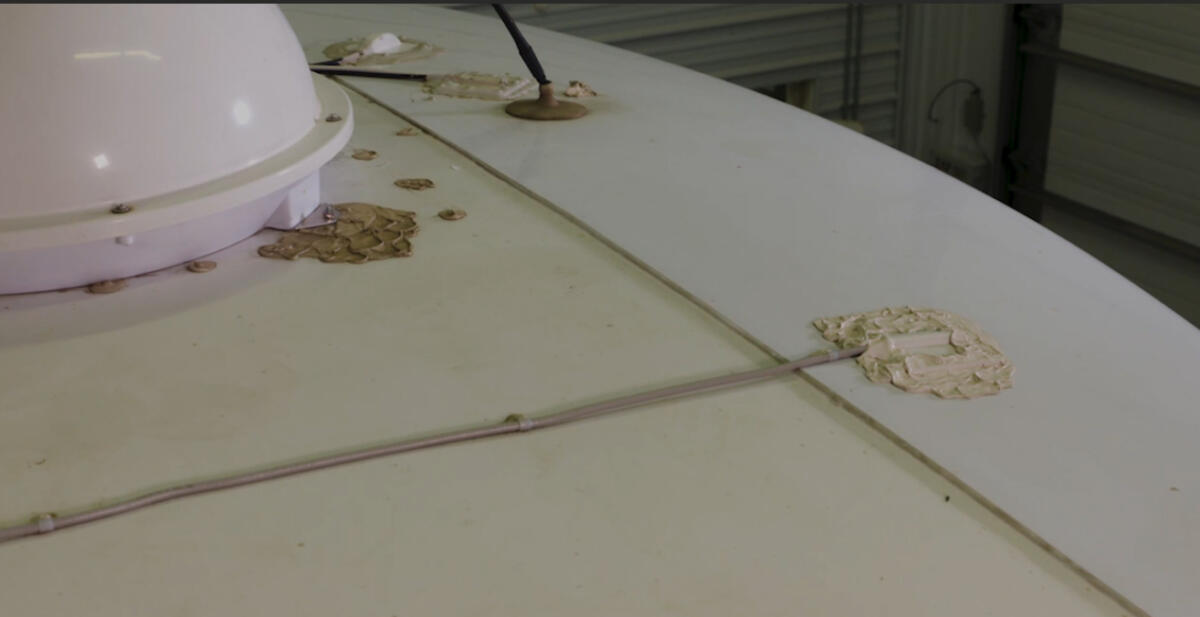
If you notice sealant cracking, separating, or deteriorating, it is important to remove the old sealant and apply a new self-leveling sealant designed specifically for your roof material.

Roof Cap
Roof cap

For example, you may see excessive or deteriorated sealant around a satellite dish coax cable, radio antenna, or other roof penetrations. Old, dirty, or improperly applied sealant should be removed and replaced with a compatible self-leveling sealant appropriate for the roof surface (such as fiberglass or TPO).

Final thoughts

Regardless of the roofing material, the key points remain the same:

  • Clean the roof regularly.
  • Inspect it at least annually.
  • Maintain sealants around all penetrations.
  • Follow the recommendations of your specific roof manufacturer.
  • Patch any holes, gouges, or scratches in the material with an appropriate patch and seal kit.

Proper maintenance not only improves appearance but also extends the life of your RV roof and helps prevent costly water damage.


 You might also enjoy these posts from Dave 

DAVE HAS ANSWERED MORE THAN 1,000 readers’ maintenance and repair questions. Read a directory here. There is so much to learn!


Dave Solberg is a leading expert in the RV industry and the author of the “RV Handbook.”

HAVE A QUESTION FOR DAVE?

Send your inquiries to him using the form below.

Name
Drag & Drop Files, Choose Files to Upload

RVDT2844

Know Your RV: Take care of your stabilizer jacks

5

By Russ and Tiña De Maris
RVs, being built light for easy (and economical) travel, are not “rock solid” in camp. The longer they are, the more they tend to rock and shake as folks move about inside. To that end, most travel trailers and fifth wheels are equipped with stabilizer jacks. How do you “care and feed” them?

Park on the level—where you can

stabilizer jacks
R&T De Maris photo

On a fifth wheel, the “landing gear” acts as a stabilizer up front, but additional stabilizers are typically found at the rear. Travel trailer fans, if you unhitch from your tow vehicle and rest the trailer on the tongue jack foot, you’ll certainly know the lack of stability. Many travel trailers have at least four stabilizer jacks, some have more.

How can you safely and effectively use your stabilizer jacks? First, try to park on level ground as much as possible. That saves you from having to do a lot of wheel blocking. Prior to unhitching either a 5er or travel trailer, chock your wheels to prevent any rolling.

For stability—not for lift!

Stabilizer jacks are just that: They’re for stability, and many jack manufacturers warn that their product isn’t intended for leveling. You’ll need to handle that leveling process before deploying the stabilizers. Hopefully, you’ll have the jack manufacturer’s instruction manual available to you. If not, we provide some general guidelines.

It’s not a bad idea to slip a piece of wood between the bottom of the jack and the ground. You can find commercially produced “jack pads,” often made from plastic. Jack pads can protect asphalt from damage, and on mooshy ground, prevent the jack from digging into the terra-not-so-firma. HOWEVER, there is a danger of using too much blocking. What’s that?

We repent!

stabilizer jacks
Too high! R & T De Maris photo

Here’s a position we’ve had to repent on: Scissor style stabilizer jacks have their rated strength ONLY after being extended out so far. Here’s a quote from one jack manual: “This jack’s weight capacity is 5,000 lb. only between 13-3/4” and 23-1/2”; the weight capacity drastically reduces as the height drops below this level. Do not apply a load to this jack below 13-3/4” in height.”

We know in the past we’ve used “high level” blocks under our jacks, in part because there was less work involved—don’t have to run the jack out so far. But with this information in hand, we now use much less in the way of blocking. Yes, scissor jacks can get “wobbly” if extended w-a-y out. Therefore, a higher stack of blocking might be in order if you have a long way to crank out the jack.

So crank out the scissor jack until you hit resistance. Then turn the crank another rotation or so and call it good. Don’t try to crank the trailer up, and NEVER use a stabilizer jack to raise your trailer for tire changing. If it “lets go” at the wrong time, serious damage to the jack (not to mention the jack’s owner) can occur.

Another possible “keep on hand”

stabilizer jacks
Stackable jacks store neatly. amazon.com photo

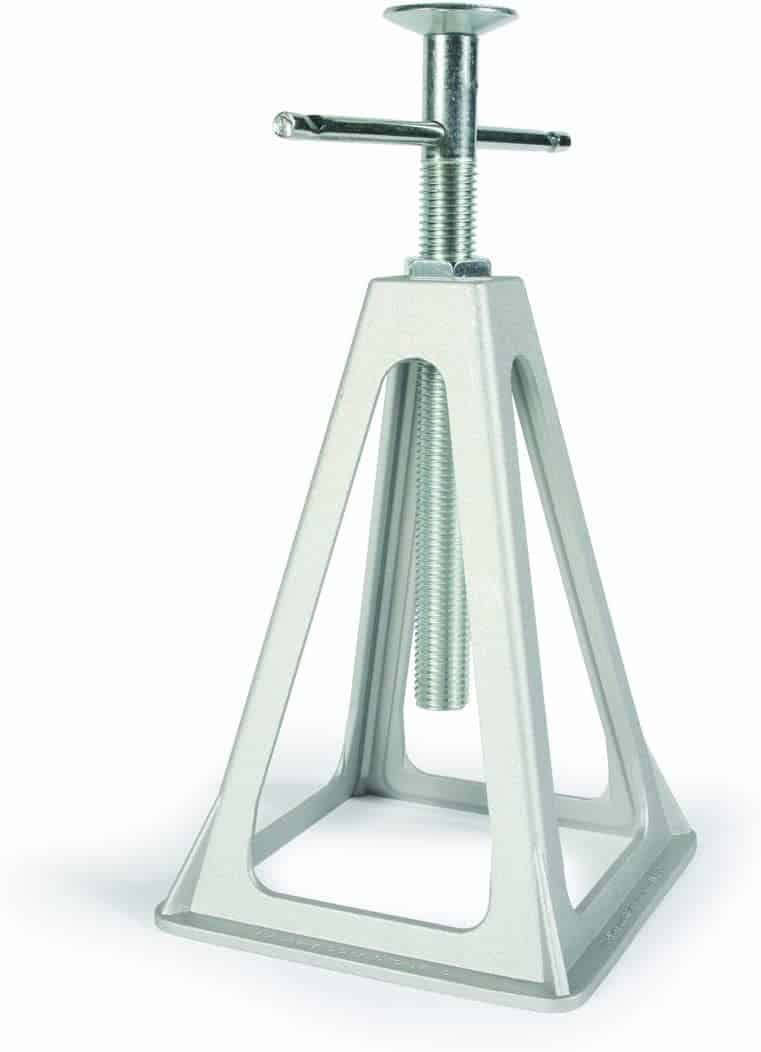
We also have a few “stacker” jacks that we stash away in our storage area. Sometimes called “pyramid jacks,” they stack together to take less space. These critters are portable units that use a screw-type device for assisting with stabilizing. Here, place the head of the jack directly under the trailer frame, NOT under an axle. Crank the jack to the resistance point, and then add another turn or two. You can find them at most RV supply stores or on Amazon.

Keeping them happy

Running stabilizer jacks up and down is a chore. Some RVers equip a portable drill with the appropriate size fitting to mate with their jacks. That’s OK, provided you DON’T OVER-TIGHTEN the jack when running it out for stabilizing. As we said earlier, the point is only to stabilize, not lift, the rig. Run it too tight and you can damage the jack.

If you use the old “arm-strong method” to run your jacks up and down, you’ll appreciate it if the threads on the jack run smoothly. Yes, lubrication is a plus. But don’t use just any old thing you have on hand. WD-40 is NOT the choice here. What the stabilizer jack doctor orders is a DRY LUBE. Yes, silicone spray will work. Other RVers tell us they find dry lube sold at a tractor or farm supply is great. Others swear by motorcycle chain lube. In any event, a dry lube won’t attract dirt.

Why is that important? A “new to us” travel trailer came equipped with stabilizer jacks that had been lubed—probably with WD-40. The first road trip with the “new” rig proved a major back pain as piles of dirt had to be worked off the threads. It took a long time to get those jacks freed up, and it reminded us why the older we get, the less our “bend-over” wants to work.

So shoot the entire length of thread on the jack with dry lube, and run the jack up and down a couple of times to clean out the crud and distribute the lube.

RELATED

RVDT2844

How to make RV corner shower shelves useful

2

By Cheri Sicard
Corner RV shower shelves! Uggghhh. Is there any more useless feature in an RV than corner shower shelves? They are too small, and you certainly cannot move your RV with anything on them. Heck, sometimes you cannot even move in your stationary RV with anything on them. What are RV manufacturers thinking?

Well, in the video below, Two Traveling Teachers came up with a solution on how to make this otherwise wasted space useful.

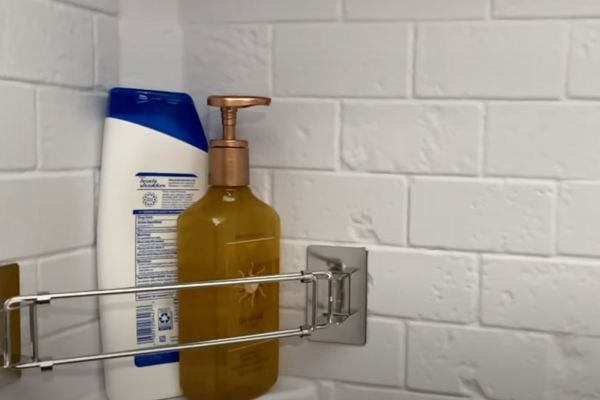
The fix was easy and came in the form of a gadget: the Safoner RV shower corner storage bar.

Simply install this little gadget, and you will suddenly have extra RV storage space in your RV’s bathroom. The bar is adjustable from 7 to 13 inches, is made from rust-resistant stainless steel, and comes with a strong adhesive for mounting. The mounts swivel to allow you to mount them anywhere, easily and with no drilling.

How smart is this?! I can finally use my previously useless RV shower shelves!

Order a one- or two-pack from Amazon here.

RELATED

RVDT2844