Home Blog Page 21

Beyond the headlines with Tony Barthel: New RV safety standards are a good thing

6

One of the more constant things in life is change, and there are a bunch of new changes rolling out as new standards in the RV industry. To my eyes, they’re all a really good thing.

Like the auto industry of the past, RV companies will generally build a product with as few safety systems as they can get away with. That makes sense because buyers have historically shown a preference for cheaper products rather than safer ones.

Do you remember how some car dealers would cut the seat belts out of cars in the late 1960s, or tell buyers they could just stuff them under the seats? While we tend not to want to pay for new safety technologies when they first appear, we often come to demand them once we’ve seen their benefits.

Typically, though, few companies want to be the first to add something because of the added cost or resistance from some buyers. Going back to seat belts, I remember people saying they’d rather be thrown clear in an accident than be trapped inside a car.

The RV industry is, for the most part, self-regulated. While the book of regulations for the auto industry is like the New York phone book (are there any more phone books?), the RV industry is more self-regulated, and most of that is through the RV Industry Association (RVIA). This was brought up at the most recent RV Industry Power Breakfast, where several dealership principals were on stage discussing the state of the industry and customer dissatisfaction.

“If we don’t take care of things ourselves, then the regulators are going to come on us…”, said Ben Hirsch, COO of Campers Inn RV. “It is the wild west and the customers are screaming for this. This is one of the things we’re going to have to get ahead of as an industry otherwise we’re going to be regulated upon.” 

A number of new things are coming within the next model year or two, and I think every one of them is a good thing. 
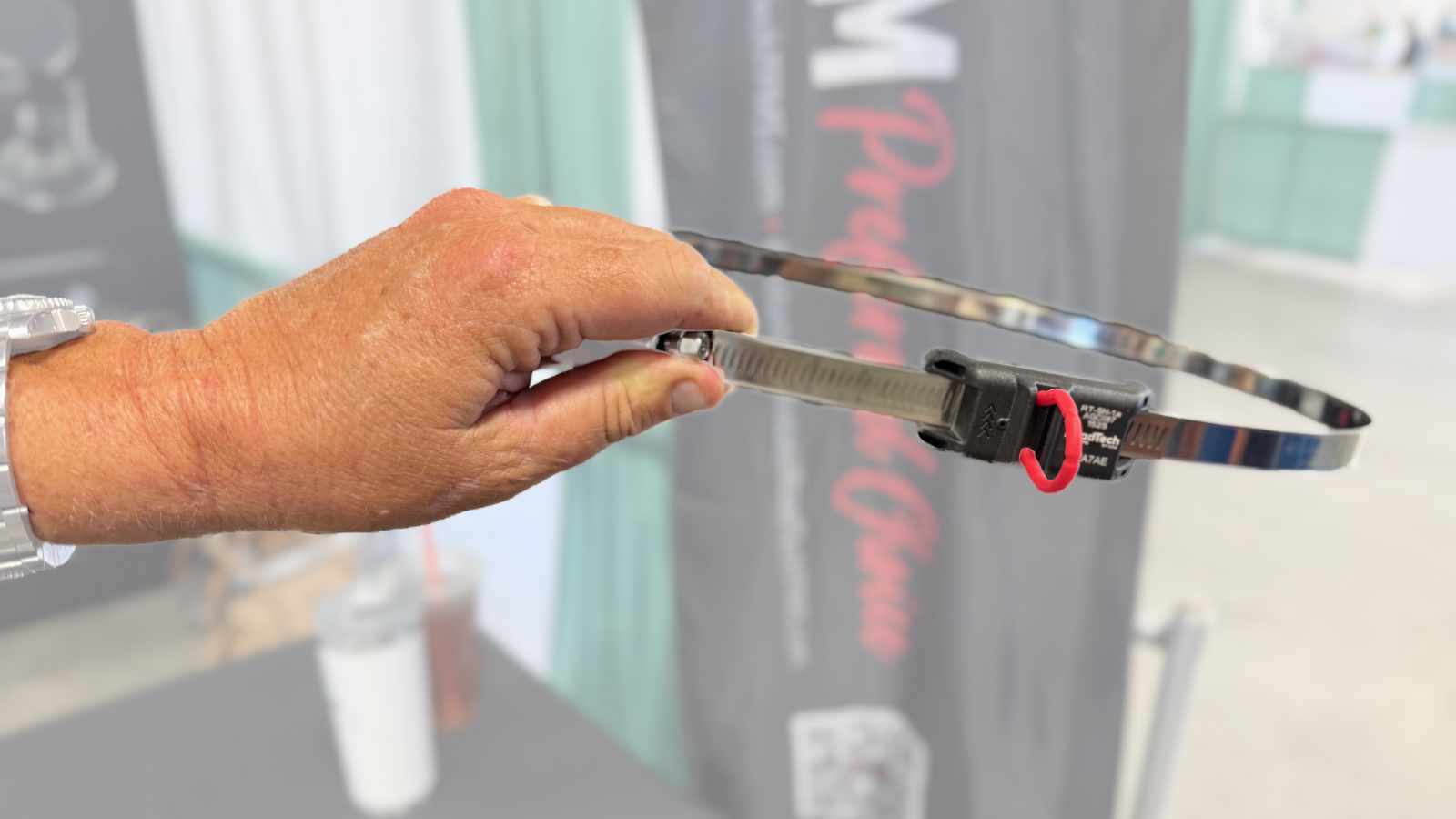
Banded tire pressure monitor

Tire pressure monitoring

I can’t imagine ever buying a towable RV without a tire pressure monitoring system (TPMS). This type of tech has saved me from a potential disaster several times. I am so happy that the RV industry has made tire pressure monitoring technology a standard for all towables beginning with the 2028 model year. 

Of course, several RV companies have offered this as standard equipment for years now, and this has been a factor in why I bought what I bought. IYKYK. [If you know, you know,]

If your RV maker doesn’t care enough about you to install this type of technology now, you can always add it after the fact. I strongly suggest that you do. 

The interesting thing about this standard is that it doesn’t specify what type of system must be used. As a result, some trailers could have band-mounted systems, where the tire pressure monitor is attached to the inside of the wheel, much like on most passenger cars. Others could use valve stem-mounted systems. Or they could use something I haven’t even considered.

Your RV and how it talks to itself

The details of this are still being worked out. At present, there really isn’t a lot of control over how systems inside an RV work. For example, if you buy one brand of air conditioner, it doesn’t necessarily work with other brands of thermostats. When I upgraded my RV’s A/C to the Furrion Chill Cube, it was a big deal to figure out how the thermostat interacted with the A/C unit. 

Being the nerd that I am, I recently changed A/C units again to try another new product (I keep hinting at this). Once again, we had to figure out the wiring for the thermostat. 

With this kind of thing in mind, the RVIA is working on a series of standards for how things inside the RV communicate with one another. 

This is referred to as RV-C: The Open Communications Recommended Practice for RVs.

RV-C was created by the RV Industry Association to provide a standardized, open communication protocol for recreational vehicles, built on the proven CAN (controller area network) bus framework. Its purpose is to enable seamless interoperability among multi-vendor RV components—such as lighting, HVAC, power, and chassis systems—while simplifying wiring, diagnostics, and control.

By replacing proprietary and incompatible systems, RV-C reduces manufacturing complexity, lowers costs, and allows for easier integration and maintenance across diverse RV platforms. This industry-wide recommended practice ensures that modern RVs can operate more efficiently, reliably, and intelligently through a unified data and control network.

This would be a great change and, of course, we’ll keep you in the loop as it progresses. 

GMI is another good thing

Another good thing coming our way is something called Grounding Monitor Interrupters, or GMI. 

Essentially, this is a protection technology that will be installed on all RVs beginning in the 2028 model year. What this does is measure the ground at the pedestal and, if the ground is no good, it shuts the power off. 

At present, the technology is still being developed, but know that the GMI device will be installed in the RV and will shut the power off if it detects an issue with the ground. This is a big safety plus, and while I know it will cause a lot of confusion at first, it’s a good thing. 

Unfortunately, there has been a tremendous amount of misinformation surrounding this technology, thanks to a press release written by AI. But it’s also important to know that, at present, there isn’t a great way for RV parks to test their pedestals except to make sure they’re correctly wired. 

Talking to Mike Sokol, the RV electricity expert, about his involvement in this technology and some of the takeaways includes the fact that there really won’t be an aftermarket system initially, just because demand for new RVs will likely consume much of the supply. But who knows? 

Anti-lock braking

In 2011, equipping your new vehicle with anti-lock braking (ABS) became the law of the land, and we’re so much better for it. Semi trucks and trailers, too, have been required to have ABS since 1997! In fact, there’s even a light on semi-trailers that indicates if a fault is detected, and you know law enforcement is keeping an eye out for those lights. 

But travel trailers and fifth wheels are not required to have ABS. In fact, it wasn’t until recently that it became readily available for towables. 

What ABS can do is shorten stopping distances by quickly pulsing the brake system if it detects that a loss of traction is occurring. It also helps with keeping control of the vehicle, since it helps to maintain traction on the road. 

Once again, this is one of those things where I encourage you to shop from the road up for your next RV. I urge you to look for anti-lock brakes because a few manufacturers are incorporating this as a standard feature on their new RVs.

You can also have an ABS system installed if you don’t have it already. Lippert and Dexter both make really good systems. 

New propane monitors

As usual, Russ and Tiña De Maris have a great, detailed article about the new standards for propane and carbon monoxide detectors. But there is a new, more common-sense technology coming out in the propane and carbon monoxide detector world that just makes a lot of sense. 

Other than being very much in favor of these new monitors, I don’t have anything to add to the article on this, so I suggest you go check it out. 
Safety First – RVIA standards making RVs better

Safety first

I’m all for logical improvements to the systems that keep us safe. I know there’s always pushback on these for a variety of reasons, including the cost, /but I’d rather be alive and have spent some money than not be alive and realize that I can’t take it with me. 

I applaud the changes coming to the 2028 RVs. 

Incidentally, the photo that I used as the hero (featured) image for this came from my visit last year to the Nevada Northern Railway. This tourist train is one of many that I’ve visited. Its slogan, “Safety First”, is on everything. The photo I chose is of their extensive shops. 

I have details of my visit to the Nevada Northern Railway here. I’m a huge fan of anything related to trains and hope to spend my summers volunteering at tourist trains at some point. 

Catch up on all the latest news for RVers here

RVT1263b

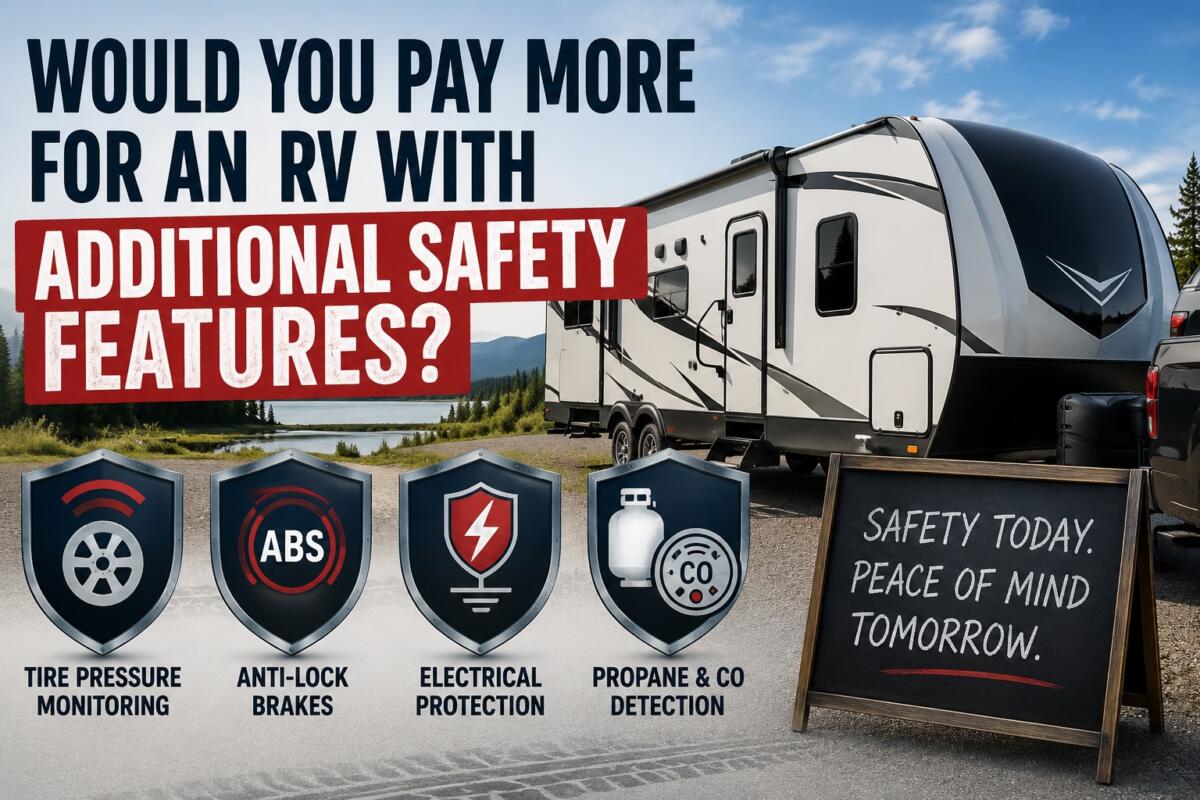
Would you pay more for an RV with additional safety features?

10

If you’ve shopped for an RV recently, you’ve probably noticed that manufacturers love to advertise features that make camping more comfortable. Bigger TVs, larger refrigerators, theater seating, outdoor kitchens, and giant battery banks often get top billing.

Safety features? Not so much.

In his latest column, Tony Barthel discusses several new safety technologies that are gradually making their way into RVs, including tire pressure monitoring systems (TPMS), anti-lock brakes, improved electrical protection, and upgraded propane and carbon monoxide detectors. Some of these features won’t become standard until the 2028 model year, but many are already available on certain RVs.

That raises an interesting question: How much do RV buyers really value safety?

Historically, consumers haven’t always rushed to pay extra for new safety technology. Seat belts, airbags, anti-lock brakes, and backup cameras all faced resistance when they first appeared. Today, most of us wouldn’t want to own a vehicle without them.

RVs may be heading down a similar path. While additional safety systems can add cost, they may also help prevent accidents, reduce damage, and provide greater peace of mind while traveling.

When you shop for an RV, do you actively look for safety features? Would a built-in tire pressure monitoring system or anti-lock brakes influence your buying decision? Or would you rather keep the purchase price lower and add only the features you feel are necessary?

We’re curious where you stand on the balance between cost and safety.

Please vote in the poll below, and if you’d like, leave a comment explaining which safety features you think every RV should have. Thank you!

MORE POLLS YOU MIGHT ENJOY:

RVT1263b

USA debut: Skydream is a trailer George Jetson would love

A lot of RVs promise smart features. The 2026 Skydream Space Camping Travel Trailer is built around them. This 28-foot travel trailer mixes sci-fi styling with self-parking, huge battery capacity, and a cabin full of motors, screens, and hidden storage. The result feels less like a normal camper and more like a rolling tech lounge.

Now available in the U.S., we get a tour of this unique RV in the video at the end of this post from the team at Beer Run Bus.

A fiberglass camper with self-parking built in

At 28 feet long and up to 8,980 pounds, the Skydream has no slide-outs and uses a full fiberglass body. It can hitch or unhitch with a button, then park itself, so tight campsites look a lot less stressful. Sensors circle the trailer, and a 360-degree camera system works on the road and as security when parked.

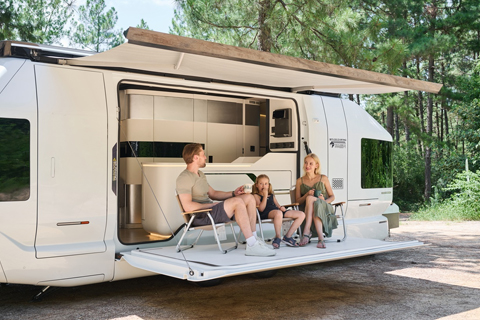
Usable space is simple but smart. The front pass-through is the main storage bay, while a powered rear deck drops down and an exterior table rises out. The awning deploys by button and closes in high wind. The door pops out its handle, lowers a step, and includes small hooks for keys or a bag.

Screenshot

Inside, the cabin leans hard into automation

SkyDream Space Camper interiorSkydream1

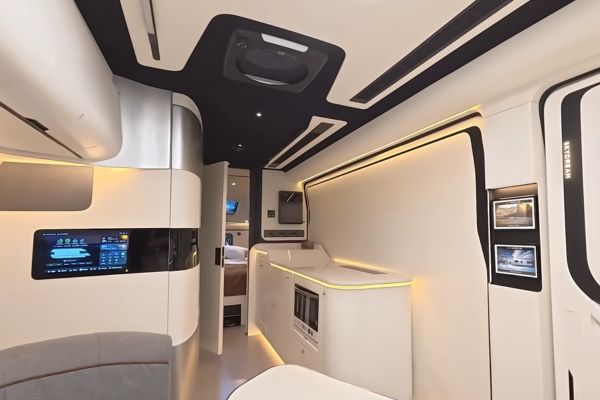
Inside, the cabin feels clean and bright, almost like a showroom. The L-shaped sofa converts to a bed, the main table moves up and down on command, and a large screen handles lights, tanks, battery status, weather, and voice control. A removable tablet repeats those controls outside, so the trailer, deck, and lighting can all be managed from outdoors.

Entertainment is heavy for a compact camper. The lounge gets a projector and ceiling screen, plus a second TV across from it. Automatic acrylic windows, powered shades and screens, airline-style overhead bins, star-like ceiling lights, and a roof fan with its own shade finish the space.

Living

The layout makes a small trailer feel loaded

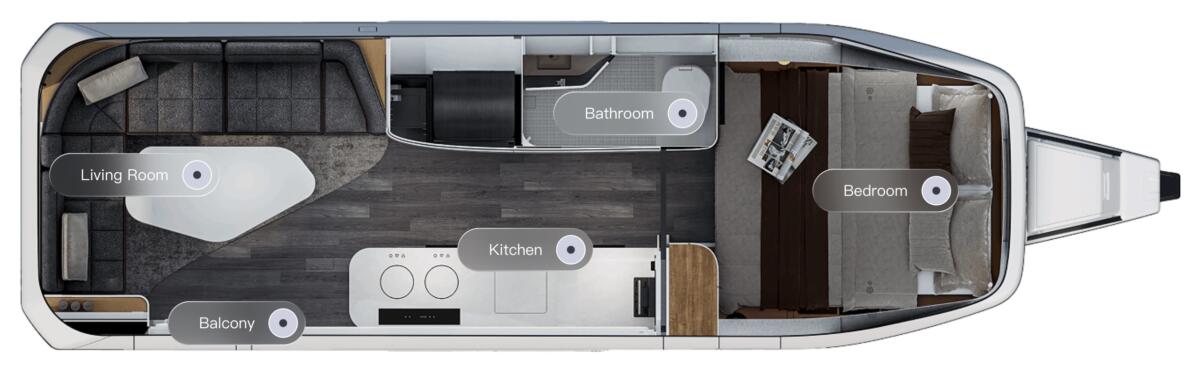
The kitchen packs in solid-surface counters, a two-burner induction cooktop, a pop-up vent, a microwave, filtered water, and smart storage. Cabinets lock shut, utensil dividers lift out for cleaning, plate shelves adjust, and the fridge/freezer hides behind sleek panels. There’s even a compact washer-dryer combo and a tall slide-out pantry with pegboard storage and a full mirror.

The split bath can work as a wet bath or open to a separate toilet area. It includes a retractable shower head, a lit mirror, storage, a compost toilet, a window, and an exhaust fan.

Skydreambath

Up front, the bedroom fits a king bed, suede walls, a skylight with shades, lots of windows, charging ports, HDMI, cup holders, a TV, a projector screen, and pocket doors. The trailer even comes with a built-in robot mop!

Bed


ENJOY RV REVIEWS? Make sure you’re signed up for our newsletters to see when they’re published!


Big battery specs push it past normal RV territory

The power setup is the headline. Skydream says the trailer can carry up to 2,000 watts of solar and up to 85 kWh of lithium batteries on a 48-volt system. Charge time from 30 percent to 80 percent is 2.5 hours, and the trailer can also back up a house during an outage or charge an EV.

It also looks ready for cold weather. A 15,000 BTU air conditioner and heat pump sit under the trailer; the underbelly is enclosed and heated, and the batteries can self-heat. Interior height is 6 feet 7 inches.

Final thoughts

This prototype is expected in the U.S. in Q3 2026, at a rumored $150,000. Some production details may change before launch, but the idea is already clear: The Skydream Space Camping Caravan is a rare RV that feels built around automation first, then camping second, and that’s why it stands out.

This trailer is definitely not for everyone. But if you are a tech-savvy, gotta-have-the-latest-in- innovation-type of person, here’s your next big purchase!

Learn more about the Skydream Space Camping travel trailer here.

RELATED

RVT1263b

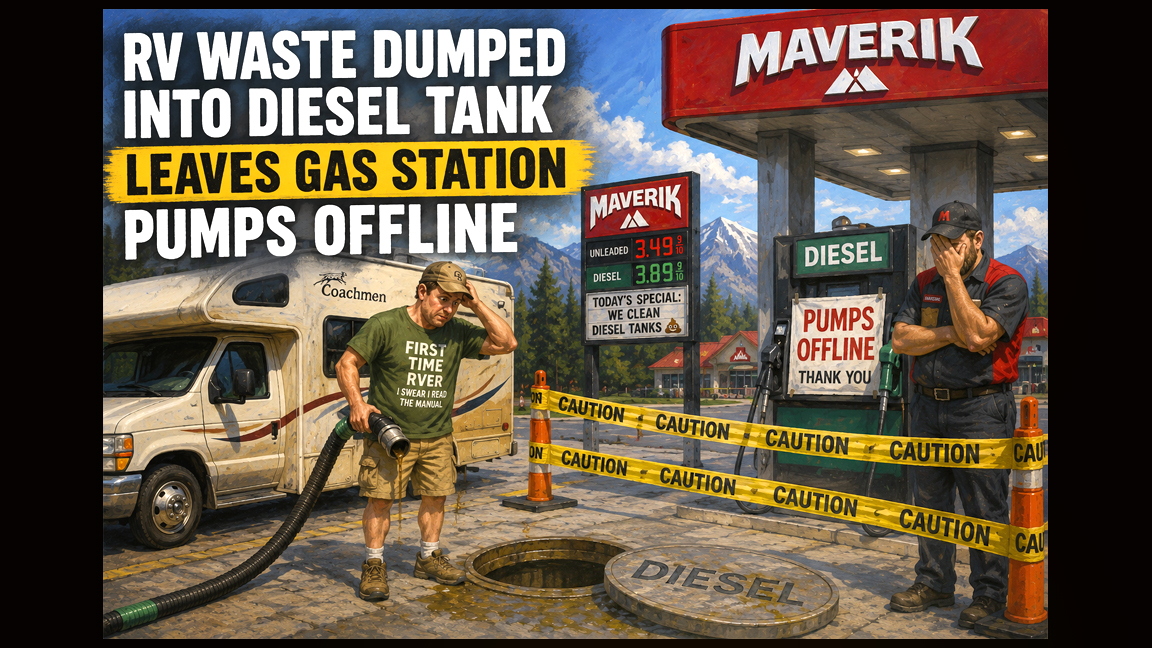
RVer dumps sewer tank into gas station’s diesel tank. Big time bad news!

Most RVers worry about putting gasoline into a diesel truck. One Colorado RV driver apparently managed something far worse.

A bizarre mishap at a Maverik gas station near Colorado Springs left diesel pumps shut down after an RV driver reportedly emptied black tank waste into an underground diesel storage tank instead of a proper dump station. Cleanup crews had to respond while station employees blocked access to the affected pumps.

A lot of experienced RVers probably winced reading that.

Among RV owners, dumping mistakes are the sort of thing people joke about around a campfire. That’s usually right after sharing stories about sewer hoses coming loose, forgotten tank valves, or the occasional black‑tank geyser.

But this situation moved far beyond embarrassing campground stories. Once waste enters a fuel storage system, cleanup gets complicated and expensive fast. And, yes, somewhere out there, a diesel engine technician is having a very, very bad week.

Why this became a serious problem

Modern gas stations store fuel underground in large tanks connected directly to the pumps. If contamination gets in, station operators often have no choice but to shut pumps down until inspectors and cleanup crews determine what’s affected.

That means fuel deliveries may stop, tanks might need inspection, contaminated fuel could require disposal, pumps can remain offline for days, and cleanup costs climb fast.

For RVers towing large fifth wheels or motorhomes, losing diesel pumps at a busy station can turn a simple pit stop into a minor nightmare—especially during peak travel season.

Experienced RVers are baffled—but not entirely shocked

Longtime RVers will probably wonder how somebody could confuse a dump station with a diesel fill port. Most dump stations are clearly marked, with concrete pads, rinse water hookups, and sewer connections built specifically for RV waste. Fuel tank access ports, meanwhile, are typically heavy metal covers in the pavement near pump islands. In other words, they generally do not look remotely alike.

Still, campground operators and rental companies say confusion among first-time RV users is more common than many seasoned RVers realize. Rental RVs have brought thousands of newcomers into RVing. Many arrive with little understanding of black tanks, gray tanks, or dump valves.

One operator summed it up plainly: “The dump stations are very obvious.”

The mistake every experienced RVer avoids

“The dump stations are very obvious.”

Veteran RVers develop habits that become almost automatic. They slow down before dumping tanks. Double-check labels. They confirm sewer hookups before pulling valves. They keep disposable gloves nearby.

Sometimes those stories involve shoes.
Sometimes they involve hoses.
And apparently, once in a great while, they involve a diesel storage tank.

Many experienced RVers also say they never dump tanks at night unless the area is brightly lit. Others avoid distractions during setup and teardown because mistakes tend to happen when people are tired, hurried, or embarrassed to ask questions. And, yes—there are times when you feel like the universe is personally testing your ability to read a sign. Or, in this case, laughing behind someone’s back.

Why renters especially need walkthroughs

This incident also highlights something RV dealers and rental companies already know: New RV owners often get information overload on delivery day. Water heater bypass valves, electrical hookups, slideouts, leveling systems, propane operation, battery disconnects, and holding tanks all get explained at once. A first-time owner may nod through the orientation while retaining only half of it—if that much.

That becomes a problem when they pull into a crowded fuel station after a long day and suddenly realize the black tank needs attention. Experienced RVers recommend newcomers practice dumping at a campground before traveling, watch walkthrough videos, keep printed instructions in the RV, ask questions instead of guessing—and never assume a random ground opening is a sewer connection. Seriously, don’t do that.

The bigger takeaway for RVers

Stories like this spread fast because they combine shock value with something every RVer understands: Waste systems can go wrong in spectacular ways. But underneath the humor is a practical reminder. RV systems are different from home plumbing and fuel systems, and mistakes involving fuel, electricity, or waste disposal can become expensive very quickly.

For experienced RVers, this Colorado incident may become another legendary campfire story. For newcomers, it’s a reminder to slow down, double-check signs, and maybe avoid making national news during your dump-station learning curve.

RELATED

RVT1263b

Penalty for feeding bears in Colorado just got stiffer

4

Better not feed any bears in Colorado. Of course, you shouldn’t feed them anywhere. But, in Colorado, the penalty for feeding Yogi or Boo Boo just got stiffer.

On Wednesday, Governor Jared Polis signed House Bill 26-1342, strengthening penalties to those found knowingly feeding bears.

HB26-1342 amended Colorado Revised Statutes Section 33-6-131. It removed the requirement to prove that an individual “intentionally” lured bears through mismanagement of food or edible waste and reduced the burden of proof to “knowingly.”

The bill also removed a previous requirement that first-time offenders receive a warning, enhancing enforceability. Colorado Parks and Wildlife (CPW), along with all peace officers, now have the discretion to either provide a warning or to immediately issue a violation to individuals whose knowing actions have caused some form of human-bear interaction or conflict.

“It is not always what is in the picnic basket that lures a bear,” the Governor said. “It can also be the common food waste we dispose of. Reducing human-animal conflicts starts by doing our part to properly store our trash, and  lock away food waste so we can safely share our communities with our furry friends coming out of hibernation.”

“Human-bear conflicts continue to be a major safety issue for both the public and our wildlife,” said CPW Director Laura Clellan.

“This bill strengthens our ability to address these conflicts by updating the culpable mental state tied to this offense and increasing enforcement measures for individuals who knowingly leave out attractants and trash, ultimately helping us keep both communities and bears safe.”

Under current law, a person who knowingly places food or edible waste in the open in circumstances where there is a reasonable probability of luring a wild bear to the food or edible waste commits a misdemeanor offense.

HB26-1342 raised the penalty for third or subsequent offenses of luring bears from $2,000 to $5,000.

RELATED

RVT1263b

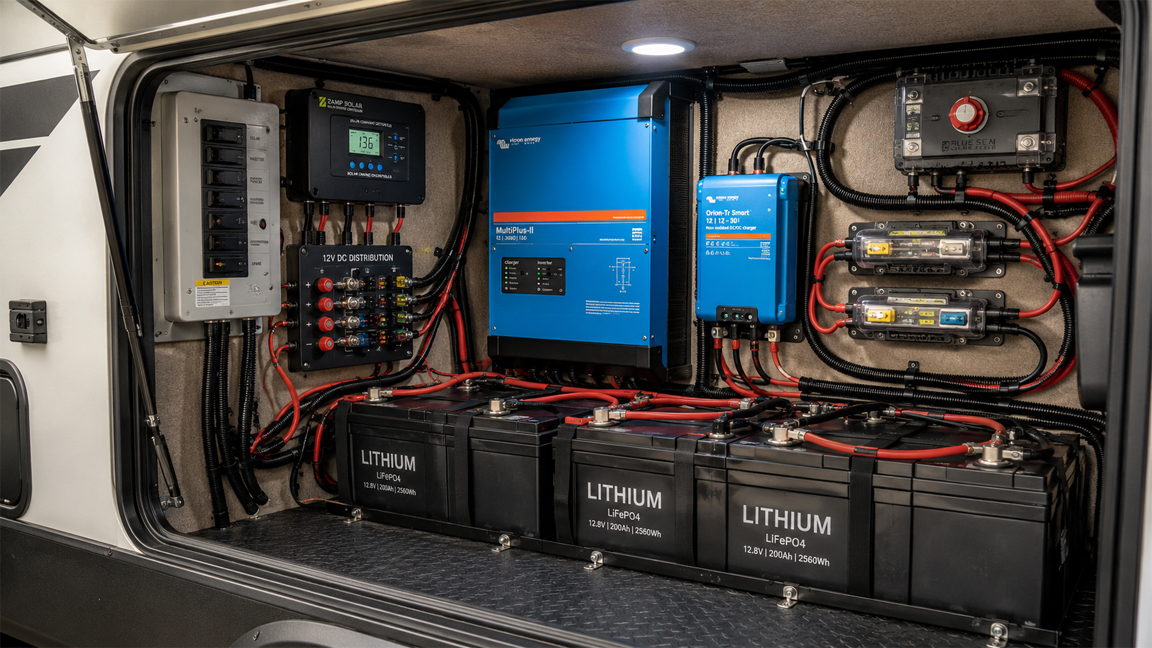
Your next RV may have a much more complicated electrical system than your old one

If you’ve walked through newer RVs lately, you’ve probably noticed something: big lithium battery banks, giant inverters, factory solar, residential refrigerators, and touchscreen energy monitors. Some rigs can even run an air conditioner off batteries for short periods.

And behind the scenes, the RV industry is trying to keep the safety rules caught up.

Safety rules are trying to catch up

Last week in Elkhart, Indiana, RV manufacturers and engineers gathered for a seminar on updated RV construction and electrical standards. The event covered changes to RV electrical system standards, updates to the National Electrical Code, and revisions to the main safety standards used throughout the RV industry.

That may sound like inside baseball. But it matters more than many RVers realize.

Twenty years ago, most RV electrical systems were pretty simple. A converter. A battery. A few 12-volt lights. Maybe a small inverter if somebody added one later.

Today, some RVs carry enough battery power to rival a small off-grid cabin.

Electrical systems have become far more complicated

“Some newer RVs carry enough battery power to rival a small off-grid cabin.”

As RVs add larger lithium battery banks, stronger inverters, solar systems, and higher-powered appliances, manufacturers have to think differently about wiring, battery protection, ventilation, and heat management.

That’s one reason the industry keeps updating these standards.

And, frankly, RVers have already started noticing the growing pains.

Spend enough time in owner forums and you’ll eventually see stories about overheated wiring, battery problems, tripping breakers, failing converters, or electrical systems that simply don’t behave the way owners expected. Most rigs work fine. But the systems behind the walls are far more complex than they used to be.

The RV Industry Association said the seminar included significant updates involving RV DC electrical systems. Additional materials and follow-up webinars are expected later.

What this means for RV shoppers

If you’re shopping for a newer RV, especially one with factory lithium batteries or large inverter systems, it may be worth paying a little more attention to the electrical equipment hiding behind basement panels and under beds.

Questions worth asking include:

  • Does the RV include proper battery management protection?
  • Is the inverter sized correctly for the appliances installed?
  • How well is the wiring supported and protected?
  • Was the solar system designed at the factory or added later?

Most shoppers naturally focus on floorplans, décor, and storage space. But the safest RV features today may be the ones you never see at all.

MORE ON RV ELECTRICITY

RVT1263b

RV Daily Tips. Friday, May 29, 2026

America’s Original RV Newsletter. Since 2001
Issue 2915 • New issue every weekday
FREE EDITION


Today’s thought

“The secret of getting ahead is getting started.” —Mark Twain


Need an excuse to celebrate? Today is National Paperclip Day! Think a paperclip is just a paperclip? You are so wrong!

On this day in history: 1790 – Rhode Island becomes the last of North America’s original Thirteen Colonies to ratify the Constitution and become one of the United States.


Tip of the day
How to keep bees away from your RV and campsite

By Gail Marsh
Nothing ruins a picnic faster for me than bees. During a recent RV trip, bees and wasps seemed to be everywhere in the campground, but especially around our campsite. We had to do something to get those bees to buzz off!

Bees and wasps are naturally drawn to sweet foods, sugary drinks, and even the scents of lotions or perfumes. Bees are usually busy pollinating and are non-aggressive unless provoked. However, wasps (including yellow jackets) can become more bothersome when buzzing around your campsite. Continue reading.


KzridgewayRV review
2026 KZ Ridgeway 32ML fifth wheel: A couples-friendly layout

Home vibes. That’s what immediately came to my mind upon entering the 2026 KZ RV Ridgeway 32ML fifth wheel RV. This RV has plenty of space for couples and offers down-home comfort at every turn. KZ RV builds the Ridgeway on a steel powder-coated I-beam chassis. It features 5-sided aluminum framing, laminated Azdel, and composite sidewalls. You’ll also find a heated and enclosed insulated underbelly, and Dicor Tufflex™ PVC roofing. Continue reading and see what you think.


50states500campgrounds500 campgrounds worth the drive
In this comprehensive sequel to National Geographic’s best-selling 50 States, 5,000 Ideas, you’ll discover the 500 best camping destinations across the United States and Canada. You’ll find 10 featured campgrounds in every state, plus tips on what to do, where to eat, and must-see attractions nearby—from national parks to local gems. Learn more or order.


In the RV shop with Dustin
Wiring tester can reassure driver that trailer lights work

Part of towing your RV responsibly is making sure your trailer lights are working properly. “Why are my running lights or brake lights not working on my travel trailer or fifth wheel?” We have all been there and asked that question one time or another, which is why you should have a tow vehicle wiring tester with you when traveling.


Article and video
Are these five new RV gadgets genius or gimmicks?

Since every RV turns into a custom setup, every gadget has to earn its space. In the test in the video at the end of this post, Jared Gillis from All About RVs ran five new RV gadgets through one filter: Are they useful enough to stay in the rig? You’ll just have to find out here.


Featured article
How to ask tire questions to get the answer the first time

Tire expert Roger Marble offers some general comments and requests to those posing questions about tires and specifically about how to set the inflation. As reported in more than one thread on the topic of inflation, the answers and information can be confusing to many. … It will also help when you post or email your initial question if you provide the following facts. This will save everyone time and confusion. Read more.


Ask Dave
The aluminum outer skin of my 2011 Jayco is pitting. Why? How can I fix it?

Read Dave’s answer.


Bed sheet suspenders keep your sheets in place! 
We have to admit, we just recently discovered these and wondered how we didn’t know about them sooner – they’re amazing! If you have bed sheets that don’t stay in place, these easy-to-use bed sheet fasteners or “suspenders” keep them in place – no more corners that won’t stay down! Learn more or order for a great price.


FACTOID: A new study suggests older adults handle regret better than younger people. While both groups report similar numbers of regrets, older adults tend to feel less emotional distress over past mistakes and missed opportunities. Researchers said aging may help people put disappointments in perspective and focus more on acceptance and moving forward.


You may have missed these recent popular stories…


Reader poll
Do you wear your regular, outside shoes inside your RV?

Respond here.


Quick tip
Best way to park safely during strong winds

During a strong storm with high winds, try to camp with your RV pointing toward or away from the wind. The RV will be more stable than if the wind were hitting it sideways. And beware of nearby trees. If they don’t look strong and healthy, camp a distance away… just in case!


? MYSTERY PRODUCT OF THE DAY ?
This is one of those things that falls under the “most random things we could ever show you.” You’re either going to laugh, groan, or buy it for yourself. Which is it?


On this day last year…


Website of the day

The 50 Best U.S. Cities to Visit That Look Just Like Europe
If you want to feel like you’ve gone to Europe without all the hassle of flying there, these 50 towns right here in the States will do the trick!


Trivia

The longest continuous road in the United States is U.S. Route 20, stretching from Boston, Massachusetts, to Newport, Oregon. It covers a whopping 3,365 miles, passing through major cities, scenic landscapes, and diverse regions. Dream road trip, anyone?


Readers’ pet of the day

Img 1467 26840b8fd74c3f7b12e27623ccd6a5d6“Lucy (Collie mix, age 6) is enjoying her first trip to St. Augustine.” —Emily Hulsey

Send us a photo of your pet with a short description. No blurry photos and please do not submit your photo more than once. Thanks!

Pet Food and all pet products at Amazon
RVing with Dogs group on Facebook. You’ll love it.


ROAD REALITY: Half of RVing is seeing America. The other half is figuring out where you put the thing you had in your hand five minutes ago.


Leave here with a laugh


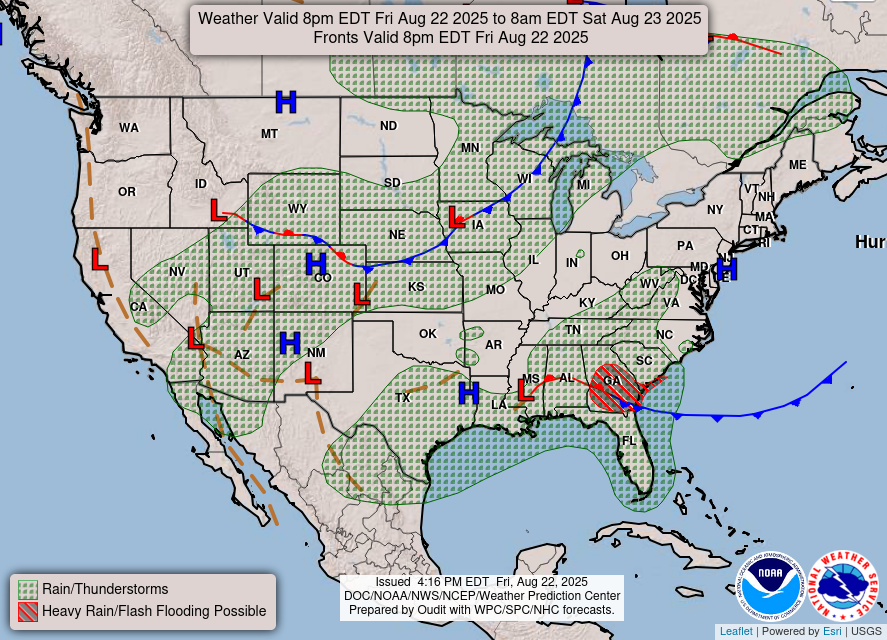
Today’s weather forecast across the nation
THIS MAP UPDATES TWICE A DAY

Visit Current National Radar Weather Map


Did you miss the latest RV Travel Newsletter? If so, read it here.
Oh, and if you missed the Latest News for RVers, make sure to catch up here.


If you shop at Amazon.com we’d appreciate you using this link. We get an itty bitty commission if you buy something, but they add up and help us pay our bills (most importantly our hard-working writers!). 


RVtravel.com All-Star Staff

Click here for information about our staff and how to contact us.

WHY WE ASK FOR DONATIONS INSTEAD OF SELLING SUBSCRIPTIONS.

Our policy on using artificial intelligence.

The aluminum outer skin of my 2011 Jayco is pitting. Why? How can I fix it?

Dear Dave,
My RV’s aluminum siding is pitted, especially at the front top and around the outline of the decals. What can I do to stop that from getting worse? Is there some kind of sealer I can apply? Thanks. —Dee, 2011 Jayco Jay Flight 28BHS

Dear Dee,
This brings back memories of when I first started working at Winnebago and worked in the Owner Relations Department. We had several calls from owners that were experiencing the pitting in the aluminum sidewall. We called it electrolysis; however, I don’t think that is the correct term.

When moisture gets inside the sidewall sandwich of aluminum and luan paneling or block foam insulation, it chemically reacts with the aluminum and deteriorates. It seemed to be enhanced by salt in the air in areas around the oceans.

There is a good explanation and example of pitting on the CHAL Aluminum Corporation site here.

Aluminum Pits
Aluminum pits

How to stop the pitting

The only way to stop the pitting is to stop the moisture penetration, which most likely is coming from the roof to sidewall seam or a window. Visually inspect all seam material.

I would suggest doing a complete reseal, as the rig is now 16 years old. You can use a heat gun on a low setting and a plastic putty knife to remove most of the sealant. Then apply a quality sealant such as the Dicor brand. I have also had many owners apply a layer of RV Roof Magic over the seam and along the side by a few inches, just to make sure.

The pits should also be sealed with some type of silicone that is designed for aluminum. You should be able to find that at a home improvement store. If you don’t seal the holes of the pits, additional moisture will get in and make them worse.

I don’t see how there would be any correlation between the pitting and the decals, other than moisture coming down the sidewall and resting there. If the aluminum is corrugated, which is called Mesa siding, there will be gaps that allow moisture to migrate down the sidewall. It is evidently resting where the decals are located.


 You might also enjoy these posts from Dave 

DAVE HAS ANSWERED MORE THAN 1,000 readers’ maintenance and repair questions. Read a directory here. There is so much to learn!


Dave Solberg is a leading expert in the RV industry and the author of the “RV Handbook.”

HAVE A QUESTION FOR DAVE?

Send your inquiries to him using the form below.

Name
Drag & Drop Files, Choose Files to Upload

RVDT2915

How to keep bees away from your RV and campsite

5

By Gail Marsh
Nothing ruins a picnic faster for me than bees. During a recent RV trip, bees and wasps seemed to be everywhere in the campground, but especially around our campsite. We had to do something to get those bees to buzz off!

What’s the buzz?

Bees and wasps are naturally drawn to sweet foods, sugary drinks, and even the scents of lotions or perfumes. Bees are usually busy pollinating and are non-aggressive unless provoked. However, wasps (including yellow jackets) can become more bothersome when buzzing around your campsite.

Important note: If you or any of your travel buddies are allergic to bee stings, it’s vitally important to pack along an EpiPen. If this applies to you, add it to your RV packing list now!

Safety measures

Check the campsite

• Upon arrival, thoroughly check your assigned campsite. Look for existing nests—inside the electrical box, in and under permanently installed grills, and even holes in the ground where insects like carpenter bees make their nests. (We failed to do a complete check and eventually discovered a wasp nest under our picnic table! We told the campground manager, and he removed it.)

• Look for overgrown grasses or flowers that may attract bees or wasps. Remove any leftover food scraps—especially in the fire pit or grilling area.

Food and trash management

• Always store food in airtight containers and cover your dishes to avoid tempting smells.

• Dispose of trash promptly and keep your outdoor cooking area clean.

Be smart

• Wear light-colored, non-floral clothing—muted colors are best. Bright colors and strong scents can attract bees and wasps.

• Consider using unscented personal care products during your trip.

Natural and DIY remedies

If bees, wasps, or hornets frequently visit your campsite, consider the following ideas to encourage the bees to buzz off:

Essential oils and home sprays

• Sprays made from peppermint, eucalyptus, or citronella oils mixed with water and a drop of dish soap can serve as a natural repellent around your outdoor seating or cooking areas. Check out a few recipes here.

• Vinegar (both white and apple cider) is another natural deterrent—spray it lightly around your RV exterior to discourage these insects.

RV modifications

• Install mesh covers on vents and openings to prevent insects from sneaking into your living space.

• Seal gaps and cracks around doors, windows, and other entry points to keep unwanted critters out.

Paper bag trick

One of the simplest—and surprisingly effective—hacks is the paper bag trick. Here’s how it works:

  1. Prepare the bag: Take a plain, brown paper bag (like a grocery bag) and fill it loosely with old newspapers, plastic bags, or similar lightweight materials.
  2. Secure it: Twist the top of the bag closed and tie it securely with twine or rope.
  3. Hang it: Suspend the bag from your RV awning or a nearby tree branch.

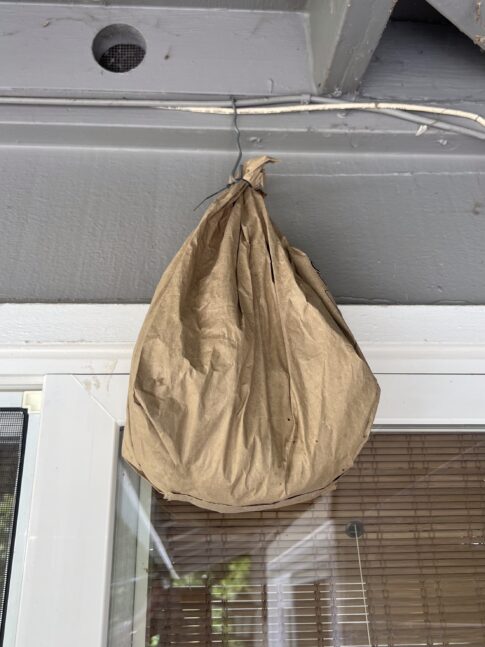
The idea behind this trick is that the bag, once filled and properly shaped, mimics the look of a hornet or wasp nest. Many insects, particularly bees and wasps, tend to avoid areas that already appear to have a nest nearby.

If you don’t want to make your own, of course, Amazon sells fake wasp nests, too.

Editor’s note: Emily here! The above photo is my paper bag “wasp nest” that I hung up on my deck two summers ago. I haven’t seen a bee or wasp since. It works!

Additional RV-specific tips

Vents and seals: Check and reinforce vent screens and seal any gaps around your RV’s exterior. Some RVers use flea collars in tight spots (like near water heaters, fridge vents, or propane tanks) as an added deterrent.

Wasp traps: For persistent wasp issues, consider using wasp traps placed a few yards away from your eating area. These traps lure the insects away, reducing their numbers around your RV.

Regular maintenance: Keep your RV exterior clean and inspect for any openings or damage (think damaged window or door screens—fix those with this screen repair tape) where insects might gain entry.

I appreciate the pollinators, I really do! We need these little buzzers for our food production. However, when RVing, I like to keep our site as bee-free as possible.

Have you found a good way to deter bees and wasps from your RV campsite? Tell us about it in the comment section below.

RELATED

RVDT2915

Are these five new RV gadgets genius or gimmicks?

By Cheri Sicard
Since every RV turns into a custom setup, every gadget has to earn its space. In the test in the video at the end of this post, Jared Gillis from All About RVs ran five new RV gadgets through one filter: Are they useful enough to stay in the rig?

Floor plans matter, but daily use matters more. Storage is tight, roadside repairs are messy, and a clever tool becomes clutter if it never leaves the compartment.

This quick scorecard sums up the first pass of gadgets:

  • Creeper mat 8/10—Better than a blanket and tarp
  • Sewer hose wrench 2/10—Didn’t solve the main problem
  • Rope roller tensioner 5/10—Promising, but still unproven
  • Waltech control hub—No score yet, needs more time and updates
  • Hammock with net 8/10—Much better after real use

Creeper mat

Screenshot

This creeper mat beat the old moving blanket and tarp setup. It added cushion on gravel, kept rocks off skin and clothes, and didn’t soak up water. It also folded small, so grabbing it during a roadside stop felt easy.

Changing direction underneath the RV was awkward because the mat wanted to roll in one path. Even with that limit, it earned an 8 out of 10.

Sewer wrench, rope tensioner, and Waltech

The sewer wrenches looked useful for tight caps and hose fittings. However, they didn’t help with a twist-on valve, didn’t work well as opposing wrenches, and didn’t nest together for storage. That dropped them to 2 out of 10.

The Roperoller tensioner started rough because it shipped with a cord that wasn’t paracord. Still, it worked better with standard paracord from the RV and may replace a few loose elastic tie-downs. It sits at 5 out of 10, while these retractable ratchet straps stayed the favorite for truck tie-downs.

The Waltech thermostat and control hub combines smart climate control, pet monitoring, Wi-Fi or cellular support, and room for extra sensors. A score stayed on hold because software issues showed up and an update was expected.

The hammock became the surprise winner

At first, the hammock with mosquito netting looked like a budget item with one clear flaw: The netting could fall in on the person using it. A ridgeline would have helped keep that mesh off the face.

Then campground use changed the score. After several days in shady spots with a breeze and plenty of bugs, the hammock went from a 4 to an 8. For less than $25, it turned into one of the most-used items in the test.

Final thoughts

RV gear earns a spot when it removes hassle and gets used without much thought.

In this batch, the creeper mat and hammock proved their value fast. The sewer wrench did not, and the Waltech hub still needs more time before it belongs on the keep list.

YOU MIGHT ALSO LIKE:

RVDT2915

Do you wear your regular, outside shoes inside your RV?

18

Many people and families have a rule: “No shoes inside the house (or RV)!” And, if you’re not that person or family, you certainly know someone who is.

Do you wear your regular, outside shoes in your RV? Or do you take them off as soon as you get to the door? Maybe you have “inside” shoes or slippers that you wear inside (never outside)?

Do you only take your outside shoes off if you’ve been in especially dirty, muddy areas?

You know the drill: After you vote, feel free to leave a comment. Thanks!

Psst: Like the doormat in the photo above? You can find that doormat and several others here

MORE POLLS YOU MIGHT LIKE:

RVDT2915

Wiring tester can reassure driver that trailer lights work

By Dustin Simpson
Part of towing your RV responsibly is making sure your trailer lights are working properly. “Why are my running lights or brake lights not working on my travel trailer or fifth wheel?”

We have all been there and asked that question one time or another, which is why you should have a tow vehicle wiring tester with you when traveling. This tester may not solve all of your issues, but it can definitely help you pinpoint some of the basic problems you may encounter while towing.

The tow vehicle wiring tester allows you to quickly and confidently confirm the functionality of your vehicle’s trailer wiring harness. This tester is used for testing your taillights, brake lights, reverse lights, turn signals, electric trailer brakes and auxiliary power. Just plug the wiring tester into your vehicle’s 7-way socket and have a helper check the LED signals as you activate them from the driver’s seat.

A tow vehicle wiring tester

This will help you easily pinpoint if it’s something simple, like a blown fuse on the vehicle, to get you back traveling safely on the road.

Click to enlarge.

This is the one I use and recommend.

More from Dustin

Dustin owns and operates California RV Specialists, an independent RV repair shop located in Lodi, CA. He thrives on sharing his knowledge and enthusiasm of RV repair and maintenance with his team, customers, and virtual friends.

Be sure to check out his YouTube channel where he shares what’s going on in the shop and the product offerings in the store. Dustin is also very active on Facebook. Join his group, RV Repairs and Tips – What’s in the shop!

YOU MIGHT ALSO LIKE:

RVDT2915