Did you know that your RV can talk? No, seriously. And what it’s saying is how to speak to your RV repair technician to help you save money—sometimes a lot of money.
One of the ways you can avoid a rip-off, or maybe help your RV technician, is to familiarize yourself with the sounds various RV systems make when they’re working properly. When mechanical systems are working properly, they make certain noises that are considered “normal” sounds.
Example of RV “talking”
For example, when the heater in our travel trailer is about to turn on, we hear a distinct “click.” The next sound is the fan blowing, and then we hear that “tick, tick, tick” as the furnace attempts to ignite the propane. The last sound is the propane igniting (whoosh!), and the heat comes out of the ducts moments later.
By familiarizing myself with the sounds and sequence of this mechanical system, I am also able to determine which step is skipped if the thing stops working, which it has. Being able to tell the technician the specific sounds that it made or didn’t make can help them to diagnose the problem more specifically and could save me a great deal of money. It also helps to know the make of the item, such as a Dometic refrigerator or Coleman air conditioner. Don’t worry, it says right on the unit who made it.
If you only tell the technician “the furnace stopped working,” they’re going to be spending their time—and your money—trying to figure out what caused the issue. But if you tell them something like, “I heard the fan start, and it attempted to light (tick tick tick), but that’s when it stopped,” that could help them narrow down the potential problem.
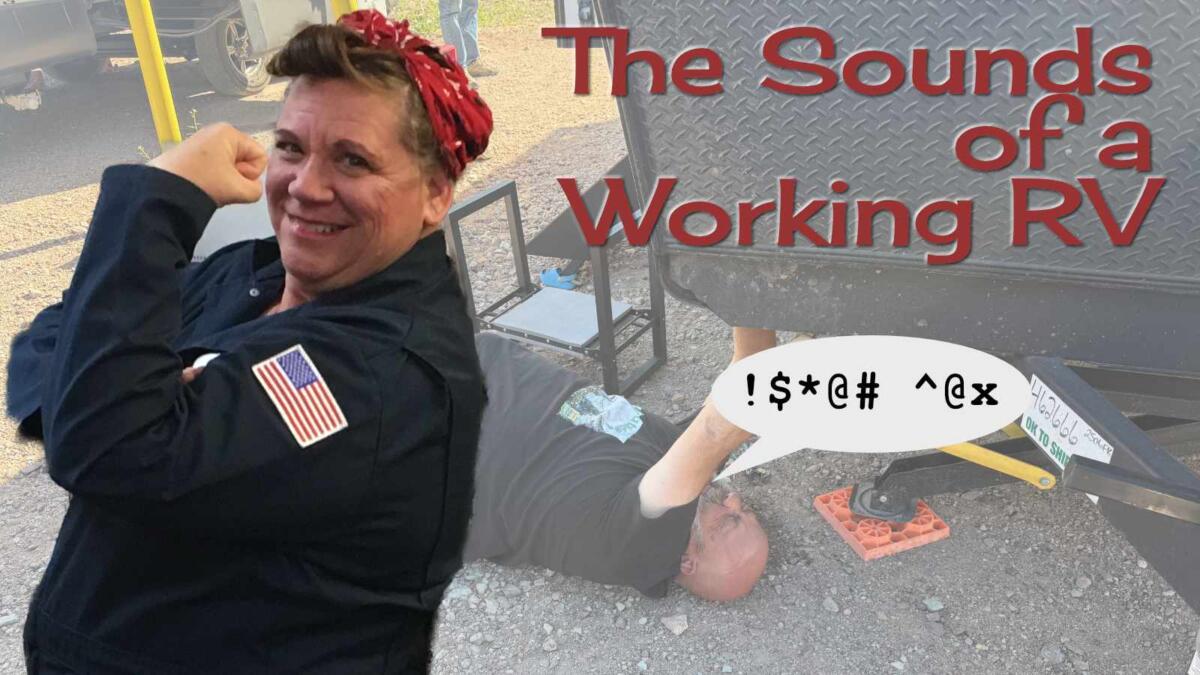
The more you know, the more you’ll save
Remember, you’re paying a technician at least $150/hour, and the less time they spend trying to figure out what’s wrong, the less you’re going to have to spend at their shop. So, the more you know about the normal operation of things and what led up to a problem or failure, the better.
There is a relay inside the furnace that kicks on the fan—that’s the click at the beginning. That’s the switch that effectively turns on the whole system. The fan is the furnace fan, of course, but what’s also happening is there is what’s called a “sail switch” that makes sure the fan is blowing, as the system doesn’t want to allow ignition without the fan running. The ticking is, of course, the ignition lighting the propane, and the whoosh is the propane igniting.
I am not likely to be the person to diagnose the heater, but if I’m familiar with the sound it normally makes, perhaps I can help figure out what’s wrong when it breaks. Not if… When.
So, that did happen, and it got to the point where the ignition was “tick, tick, ticking” but nothing happened after that. Now, if I were unfamiliar with the normal sounds, I would simply say “the heater’s broken.” That would be a trip to the RV repair place, which charges us $175/hour and hours of our time hooking up the trailer and taking it in to the technician.
What happened is that there was simply an air bubble in the line, and it was easily fixed by lighting the stove, thereby pulling propane through the line and eliminating the air bubble. That was free.
Be aware and be more safe
Being cognizant of the normal behavior of the systems in your rig can really save you a lot of money and may even help you avoid dangerous situations. How?
We check the air pressure in our travel trailer tires regularly, so we know that they used to lose about 10 lbs./month just sitting still. Recently, we went on a trip. After the trailer sat around for about a month, it was time for our Quartzsite trip. But we noticed that the tire on the passenger side of the trailer was down by more than 20 lbs. in under a month. This is abnormal.
Being cognizant of the normal behavior of things, it alerted us that something was wrong. Good thing, too, as the tire completely failed and could barely hold air as we drove to the tire shop. Knowing that we had an issue meant we took side streets and had our tire appointment made. Imagine if that tire had blown at 55 miles per hour or in the middle of the desert?
Making ourselves aware of the sounds and conditions of things when they’re normal can go a long way to helping eliminate repairs, or at least save significant time in diagnosis. Or possibly even saving our lives—popped tires at high speed can lead to loss of life.
Know what your RV is
Another thing to know is the make, model, and year of your camper. A lot of the people who would call me with questions when I worked at the dealership had absolutely no idea what kind of RV they even had. In fact, there were even people who called in who couldn’t tell the service team what kind of RV they had—fifth wheel, travel trailer, etc. Again, the more detailed you can be with the information you provide, the less digging your service techs have to do.
We can do a lot to take back control of our experience from technicians and others. And the RV techs tend to be happier when a customer can describe the problem they’re having in a relatable fashion. Oftentimes, they will just do a simple fix or repair right on the spot rather than have a customer’s trailer sitting in storage at the dealership.
In fact, we were able to make many very quick repairs at no cost whatsoever to the customer simply because they didn’t spend hours diagnosing the repair—the customer was able to relate what was happening so clearly that they had done the diagnostic work in advance, saving themselves hundreds of dollars and ensuring that they got the right repair the first time.
While many of us have zero interest in the systems that make our RVs work, spending time familiarizing ourselves with them and the sounds they make can go a long way toward making each camping adventure a StressLess one. Heh.
RELATED
- Research mobile techs carefully. We didn’t, and we paid the price
- RVers share: How to locate good service centers and mobile techs
- More from Tony here
RVT1259