Home Blog Page 34

Improve the grip of your RV front door assist handle

By Russ and Tiña De Maris
Right up in the neatest things category, for our family at least, are big assist handles at the entrance door of the RV. At the end of a long road day, or a long trail, being able to grab that handle and stabilize yourself heading up the steps is a big help.

Grips be gone!

Trouble is, the grips sold as standard on many of these units don’t hold up too long. Maybe it’s UV light, maybe it’s the wind blowing over the handle as you blast down the highway. Sooner or later, the foam grip on the bar just gives up the ghost. This leaves you with an unsightly mess, and a more difficult situation.

If your assist handle is wet, and you have no grip, you’re far more apt to slip off. On the other hand, if you grab hold of that handle on a HOT day, you can practically hear the palm flesh sizzle like a steak on a grill. Cold out? Maybe you’ll stick like a tongue on a frozen flagpole.

We’ve looked into the “standard” answer that one of those assist handle manufacturers offer. A piece of “replacement” rubber wrap that you wind around the bar. That’s great, until you consider the price of the wrap, enough to cover 12″ of the bar, carries a list price of close to $20, and add shipping on top. If you want to cover the entire bar, you’ll need at least two packages—pretty close to the price of a whole bar. It’s a bit of a head-scratcher.

Alternatives that don’t work

A couple of years ago when our original wrap wore out, we tried an alternative. We removed the old, worn-out wrap, and in its place glued on a chunk of foam-rubber pipe insulation. It was inexpensive, gave a good grip, and promptly deteriorated in the weather within a few months.

Next, we tried using a small foam rubber “swim noodle,” in which we cut a lengthwise slit to put it over the rail, and adhered it with glue. Aside from it looking pretty strange—a brilliant, neon blue against our white rig—it had a lifespan similar to the pipe insulation.

And one that does work

Finally, it dawned. Forget foam rubber. This time, at a quick stop in a big box department store sporting goods section, we found “road handlebar tape”. It’s designed for making the grip on a bicycle’s handlebars far more comfortable. For about $8 and no shipping charges, we had enough “soft and durable, antishock” tape to wrap around the entire RV assist bar.

We’d already done a little research on handlebar tape. There’s a huge variety of the stuff. What we were concerned about is that whatever bar tape we used, it had to have an adhesive strip on the back to help hold it in place. What we bought, Bell Hand Roll 300, didn’t have a description on the box, so (a pardon to our pals at Walmart) we brazenly opened the package and unrolled a couple of inches of the tape to ensure the adhesive was present. It was.

Our “putting it on” experience

Since we’d previously used glue to hold on the “alternative treatments,” we did have a bit of a mess. The glue didn’t respond well to mineral spirits, so what was left on the assist handle we carefully sanded off, working hard not to chew up the paint. With the old glue knocked off, we were ready for the install.

The handlebar tape we bought came in two rolls—one for each side of the bicycle handlebars. Since we were heading for a single installation, we started the wrapping at the middle of the assist bar and worked down.

First, we carefully peeled the adhesive backing paper off the strip on the back of the handlebar tape. Then we laid down and smoothed out the bar tape, slowly unraveling the new tape from the roll. We stretched the bar tape as we went. The trick is to overwrap the tape already on the handrail so that about two-thirds of the tape was exposed. That leaves the last third covered with new tape. By stretching and holding the roll firmly as we “placed” the new tape on the bar, we reached the bottom of the bar easily.

If you were wrapping your bike handlebars, you’d simply push the remaining end of the tape into the hollow handlebar. To keep it tight, you’d stuff a provided chrome trim plug into the end of the handlebar. This would hold the tape in place, and make the whole installation look sharp.

However, there’s no place to “stuff” the end of the tape on an RV assist handle. Instead, we tightened the tape down at the end of the run, and then ran a few twists of the appropriate colored electrical tape around the handlebar tape to hold it in place. Since we picked black handlebar tape, we had plenty of black electrical tape to do the job.

Halfway there!

Next, we took the second roll of handlebar tape and proceeded to start placement at the middle of the grab handle. This time we wrapped the handle from the middle up to the top. We started the run on top of the already-placed handlebar tape that we’d put on for the “middle-going-down” run. It was a simple matter to repeat how we’d done that first run.

Again, we finished off the top run with more wraps of electrical tape. If there’s any concern about the middle points staying in place, you could similarly wrap this junction with tape. In our case, it wasn’t necessary—everything stayed put without it.

We recognized that electrical tape isn’t the greatest weather resister. After a few months, we’d probably have to go back and redo the spots with new tape. Actually, the electrical tape lasted more than a year before starting to come loose. A quick revamp and we’re good to go for another year. Way better than fussing with loose foam or spending far too much money for the “official” replacement grip.

Since we did the original install, market conditions have changed. Amazon has a “similar” product called Alien Pros Bike Handlebar Tape. It comes in multiple solid colors, and in some wild patterns. Trying to work the patterned stuff at the center junction of an assist bar might be a major challenge. But whatever you buy, in 2026 prices, it’s $12.49 for two rolls. And, yep, it’s an adhesive-back product like the Bell we used.

Photos, R & T De Maris

RELATED

RVDT2897

These items might be illegal when crossing state lines

By Cheri Sicard
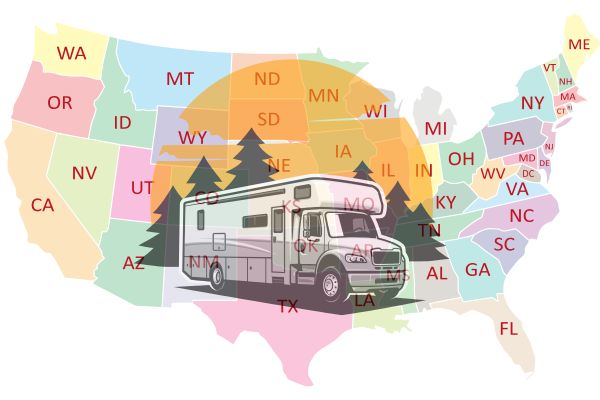
Hitting the open road in an RV is an awesome way to see the country, but with each state having its own laws, it can sometimes feel like navigating a legal maze. You might be accidentally breaking the law just by crossing into another state!

To help keep your RV adventures fun and free of legal trouble, the team from The Camping Loop compiled a list of seven things you should never take across state lines without knowing the law first. Paying attention to these could save you from a costly ticket or worse.

RVing across state lines can be an amazing experience. But, it’s important to do your research and understand the laws in each state you plan to visit, especially in regard to the items on this list:

#1 Firearms and weapons

Gun laws in the U.S. can be as clear as a foggy windshield! It’s vital to check the specific laws of each state you’ll be driving through or staying in.

Generally, RVs are treated like other vehicles when it comes to firearms. Many states require firearms to be locked, unloaded, and stored away from ammunition. The Firearm Owner Protection Act does allow legal gun owners to transport firearms between states where it’s permitted. However, local and state laws vary widely, so doing your homework is essential.

Some states honor concealed carry permits from other states, while others don’t. Some might require a license just to have a gun in your vehicle. If you own a firearm, consider keeping a resource like this one that outlines gun laws in all 50 states. This is crucial for those unexpected detours.

# 2 Fireworks

Transporting fireworks across state lines is generally illegal, even if they were legal where you bought them. You could face criminal charges or a ticket.

For example, in some areas, you can buy certain types of fireworks, but just a short drive south, you can find a much wider variety. However, even smoke bombs and sparklers can be illegal in some state parks.

#3 Firewood

It might sound strange that some states let people buy flamethrowers but restrict firewood. Bugs and invasive species can devastate forests. The emerald ash borer, for example, has destroyed a huge percentage of ash trees, costing billions of dollars in damages. Some states prohibit importing firewood. Others restrict traveling with it over a certain distance unless it’s been heat-treated to kill the bugs.

It’s tempting to bring that old tree along for firewood, but it’s best to buy local.

#4 Marijuana

Even if you’re in a state where it’s legal, like Colorado or New York, can you pack some for your trip? Once you cross that state line, you’re potentially breaking federal law. While many states have legalized marijuana in some form, it remains illegal on a federal level. This means crossing state lines with it, even between two legal states, is still technically a crime.

#5 Alcohol

Transporting alcohol across state lines might not seem like a big deal, but different states have different rules. Some states allow open containers as long as they’re stored away in the RV. Others treat RVs the same as any other vehicle, requiring all containers to be unopened. Some states limit the amount of alcohol you can transport, while others prohibit it altogether. Also, remember that dry counties still exist. These areas don’t allow the sale or consumption of alcohol. If you’re crossing international borders, it’s best to declare any alcohol you have, even if it’s already opened. Failure to do so could result in delays and fines.

#6 Driver’s license requirements

This one might not apply to everyone, but depending on the size and weight of your RV, you might need a special license. Some states require a Commercial Driver’s License (CDL) or a special non-commercial license for RVs over a certain length or weight. You might also need a CDL if you’re towing a trailer that weighs more than 10,000 pounds.

It’s a good idea to make sure drivers can handle these large vehicles safely. For new RV owners or renters, it can be confusing. Learn more in this post.

#7 Driving laws

Driving laws vary from state to state. This includes speed limits, seat belt requirements, and rules about driving on certain roads. Some states require headlights on in the rain or in work zones. Others allow people to ride in a fifth wheel while it’s being towed, while others would send you to jail for it. Be sure to do some research for the state(s) you plan to visit.

RELATED

RVDT2897

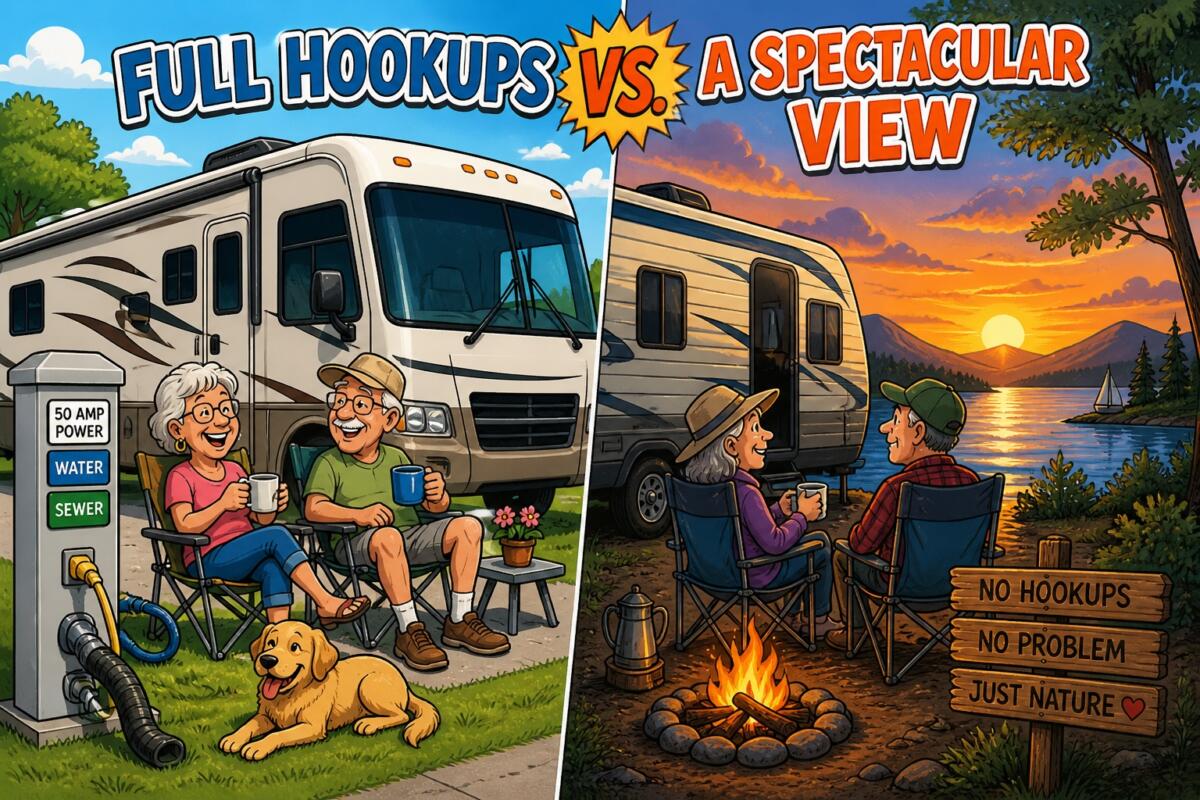
Would you rather have full hookups or a spectacular view?

You pull into your campsite after a long day on the road. Maybe you’re a little tired, maybe a little hungry… and then you look around.

If you’re lucky, you’re staring out at something incredible—a lake shimmering in the evening light, mountains in the distance, or maybe a wide-open desert sky that seems to go on forever. Ah… perfection.

But, then again… maybe this site has something else going for it. Full hookups.

No worrying about tank levels. No conserving water. You can run the A/C, take a long shower, do the dishes without thinking twice, and just settle in comfortably. Everything works the way it does at home, and that feels pretty nice.

So what really matters more to you?

Some of you will take the view every time. You’ll boondock, dry camp, or give up a few comforts if it means waking up to something unforgettable. For you, that’s the whole point of being out here in the first place.

Others of you feel the opposite. A beautiful view is great… but not if you’re dealing with full tanks, limited power, or sweating through a hot night without hookups. Comfort, convenience, and peace of mind win out, especially on longer stays.

And then there are those of you who try to strike a balance. Maybe you’ll rough it for a night or two if the setting is worth it, but after that, you’re ready to plug in and relax.

So let’s hear it… If you had to choose, would you rather have full hookups or a spectacular view? Please leave a comment after you vote. Thank you!

MORE POLLS YOU MIGHT LIKE:

RVDT2897

Fatal New Jersey crash reveals little-known danger behind RVs

A deadly crash on the New Jersey Turnpike has drawn attention to a risk many RVers rarely think about—until something goes terribly wrong. The incident itself was straightforward: A car struck the rear of a fifth wheel RV being towed down the highway. But what happened next is what makes this kind of crash so dangerous.

The car didn’t just hit the RV. It went underneath it.

When a crash becomes something far worse

This type of collision is known as an underride crash, and while it doesn’t happen often, it carries a much higher risk of severe injury or death than a typical rear-end accident. Many Americans first became aware of underride crashes after the 1967 Jane Mansfield accident, but the underlying risk hasn’t disappeared.

Here’s why: The rear of many trailers—including RVs—sits significantly higher than the front end of a passenger car. In a hard impact, especially at highway speed, the car’s hood can dip under the trailer instead of absorbing the force. That allows the trailer to intrude into the passenger compartment, where the consequences can be catastrophic.

It’s not a failure of seat belts or airbags. It’s physics—and geometry.

Why RVs can be part of the problem

Scenes like this are rare—but they highlight how the design of RV trailers can affect the outcome of a crash. Photo: meelthegoatt on tiktok.

RVers don’t usually think of themselves as part of a safety equation like this, but trailer design plays a role.

Fifth wheels and travel trailers are built for clearance: They need to handle uneven terrain, campground entrances, and steep driveways. That higher ride height is part of what makes them practical for travel.

But it also creates a mismatch with passenger vehicles:

  • Many cars sit low, especially sedans and sports cars.
  • The gap between the road and the trailer’s rear structure can be large.
  • In a crash, there may be nothing substantial at bumper height to stop a vehicle.

Commercial semi-trailers are required to have rear underride guards (nicknamed “Mansfield Bars”) designed to prevent this kind of intrusion. RV trailers, in many cases, are not built to the same standard.

That doesn’t mean RVers are doing anything wrong, but it does mean the risk exists.

The part RVers can control

While the trailing driver typically bears responsibility in rear-end crashes, this kind of accident is a reminder that RV travel involves shared risk on the road.

RVers can’t control how closely someone follows them. But they can reduce the chances of a bad situation turning worse.

Maintaining steady speeds, avoiding sudden braking when possible, and keeping lighting and reflectors in top condition all help give drivers behind more time to react. Even small things—like making sure brake lights are bright and clearly visible—can matter more than we might think.

There’s also a broader awareness piece. Many drivers simply don’t realize how different it is to follow a tall trailer compared to another car.

A rare event—but not an unheard-of one

Underride crashes don’t dominate headlines, and most RV trips happen without incident. But when they do occur, they tend to be severe.

That’s what makes this New Jersey crash so sobering. Not because it’s common—but because it exposes a vulnerability that’s easy to overlook.

For RVers, it’s one more reminder that sharing the road means thinking not just about how we drive—but how our rigs interact with everything around them.

And sometimes, the risks you don’t see are the ones worth understanding the most.

RELATED

RVT1260b

Proposed RV supplier mega-merger collapses, eases pressure on RV prices

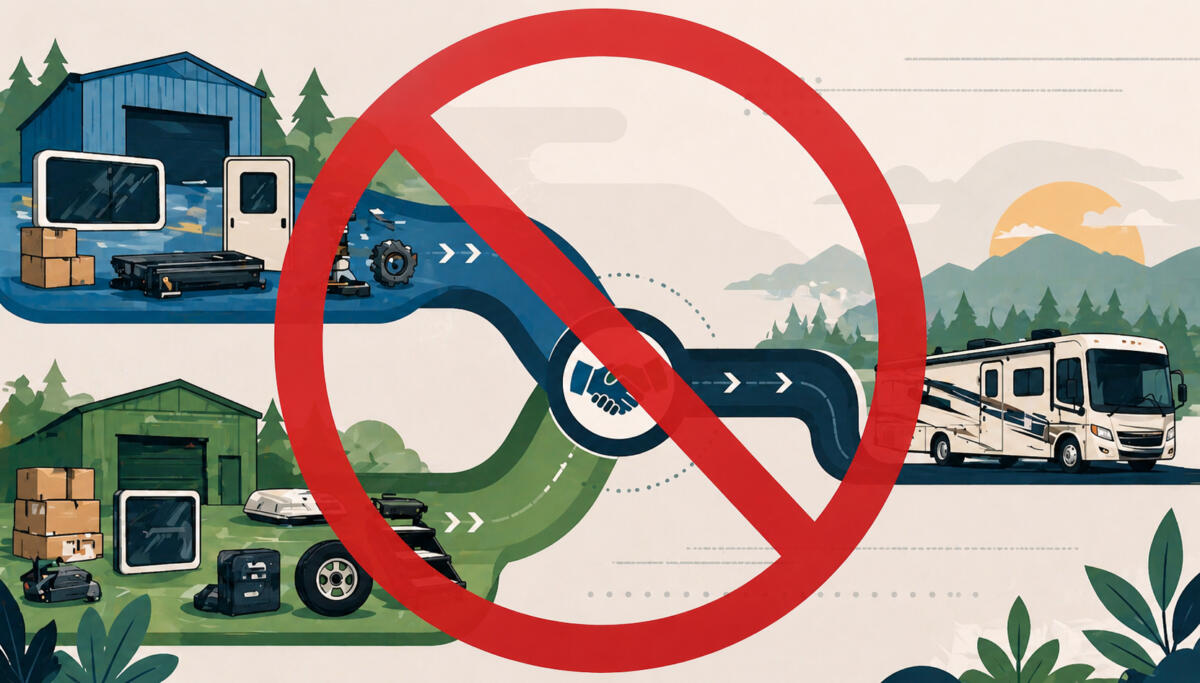
The proposed RV supplier merger that had the potential to quietly reshape what you pay for your next rig has now collapsed. For a few weeks, this behind-the-scenes deal carried big implications for RV buyers. Now, just as quickly, it’s over. We wrote about it here.

Component giants LCI Industries (Lippert) and Patrick Industries have officially terminated merger discussions, ending what would have been one of the most significant consolidations in the RV supply chain in years.

On the surface, that sounds like inside-baseball industry news. But if you’re an RVer—or thinking about becoming one—it’s a development worth paying attention to, because this wasn’t just another corporate tie-up.

Why this merger raised eyebrows in the first place

When the talks first surfaced, the concern wasn’t about corporate strategy—it was about what happens downstream.

Between them, LCI (Lippert) and Patrick supply a huge share of the parts that go into modern RVs: frames, slide mechanisms, electronics, furniture, wiring, and more. In many cases, manufacturers rely on both companies to build out their units.

Combine those two, and you’re not just creating a bigger company. You’re potentially reshaping how the entire RV supply chain works.

That raised a simple question: If two of the biggest suppliers become one, who keeps prices in check?

That question didn’t just come from industry watchers. It drew attention in Washington, D.C., where antitrust concerns centered on whether a combined company could gain leverage to raise prices on manufacturers—and ultimately on buyers.

What changed—and why it matters now

The companies say they walked away because they couldn’t reach agreement on key terms. Fair enough—that happens.

But the fact that this deal couldn’t get across the finish line matters in its own right.

It means, at least for now, that:

  • Competition between two of the RV industry’s largest suppliers remains intact.
  • Manufacturers still have multiple sourcing options when building rigs.
  • And one potential source of upward pressure on RV pricing—however indirect—has been put on hold.

That last point is the one most RVers will feel, even if they never hear either company’s name again. Because when component costs rise, those increases rarely stay hidden. They tend to work their way into sticker prices, sometimes subtly, sometimes not.

Why RVers should care about “invisible” costs

One of the challenges in following RV pricing is that not all increases are obvious.

You can see the MSRP on a travel trailer or motorhome. You can compare dealer discounts. But you don’t always see what’s happening farther upstream.

If a supplier raises the cost of a slide system, or a wiring harness, or a furniture package, the manufacturer has to absorb it or pass it along. That’s why competition at the supplier level matters. It helps keep those behind-the-scenes costs from creeping higher, faster than they otherwise would.

And that’s exactly the piece of the puzzle this proposed merger put into question.

So is this good news? For now, yes

In the short term, the collapse of this deal is likely a net positive for RV buyers.

It preserves competition where it already exists. It avoids concentrating too much influence in a single supplier. And it keeps at least one potential pricing pressure from intensifying.

That doesn’t mean RV prices are about to drop. There are plenty of other factors in play. Financing costs, demand, inventory levels, and broader economic trends all have a say.

But it does mean one of the more significant structural changes that could have nudged prices higher is no longer on the immediate horizon.

Don’t assume the consolidation story is over

If there’s a catch, it’s this: The forces that led to the merger talks haven’t gone away. Both companies have made it clear they still plan to grow, including through acquisitions. And the RV industry, like many others, continues to trend toward consolidation over time.

That leaves open a possibility RVers have seen before: Big changes don’t always happen in one headline-grabbing deal. Sometimes they happen gradually, piece by piece, until the landscape looks very different than it once did.

For now, though, the biggest version of that change has been put on pause—and for RV buyers, that’s a development worth noting.

RELATED

RVT1260b

RV Daily Tips. Monday, May 4, 2026

America’s Original RV Newsletter. Since 2001
Issue 2896 • New issue every weekday
This free edition is made possible by 6% of our readers who support RV Travel with a voluntary subscription. Advertising helps, but that alone is not sufficient.


Today’s thought

“Life is short. Smile while you still have teeth.” —Mallory Hopkins


Need an excuse to celebrate? Today is National Orange Juice Day! If you loooooove OJ, as we do, click here

On this day in history: 1959 – The first Grammy Awards takes place. The Chipmunks score three Grammys for their hit “The Chipmunk Song”.


Tip of the day
21 unusual but brilliant uses for Dawn dish soap in your RV

By Gail Marsh
I’ve used it for years. Maybe you have, too. Dawn dish soap (the original blue formula) does a great job cleaning dishes, silverware, and cookware. In addition to cleaning dishes, there are many unusual uses for Dawn detergent while you’re RVing, both inside and outside. This list will certainly amaze you! 


More tips from this weekend (did you miss them?):


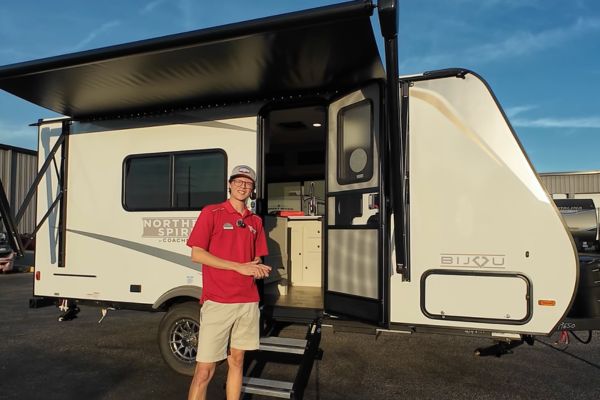
Northern Spirit Bijou travel trailerRV review
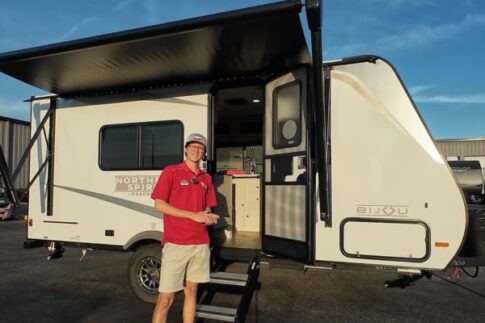
2026 Coachmen Northern Spirit Bijou 18RBB—under 3,000 lbs., no compromises necessary

Small campers usually force a compromise. They save weight, but the bed gets tight, the bath shrinks, or the kitchen feels stripped down. The 2026 Coachmen Northern Spirit Bijou 18RBB goes a different way. At about 20’10” long and roughly 2,990 lbs. dry, it stays easy to tow while still giving buyers a front bed, booth dinette, full kitchen, and a real rear bathroom. It fits the buyer shopping with a midsize SUV or small truck in mind. Check it out.


Solar Power Book
Cover of book may differ

In the RV shop with Dustin
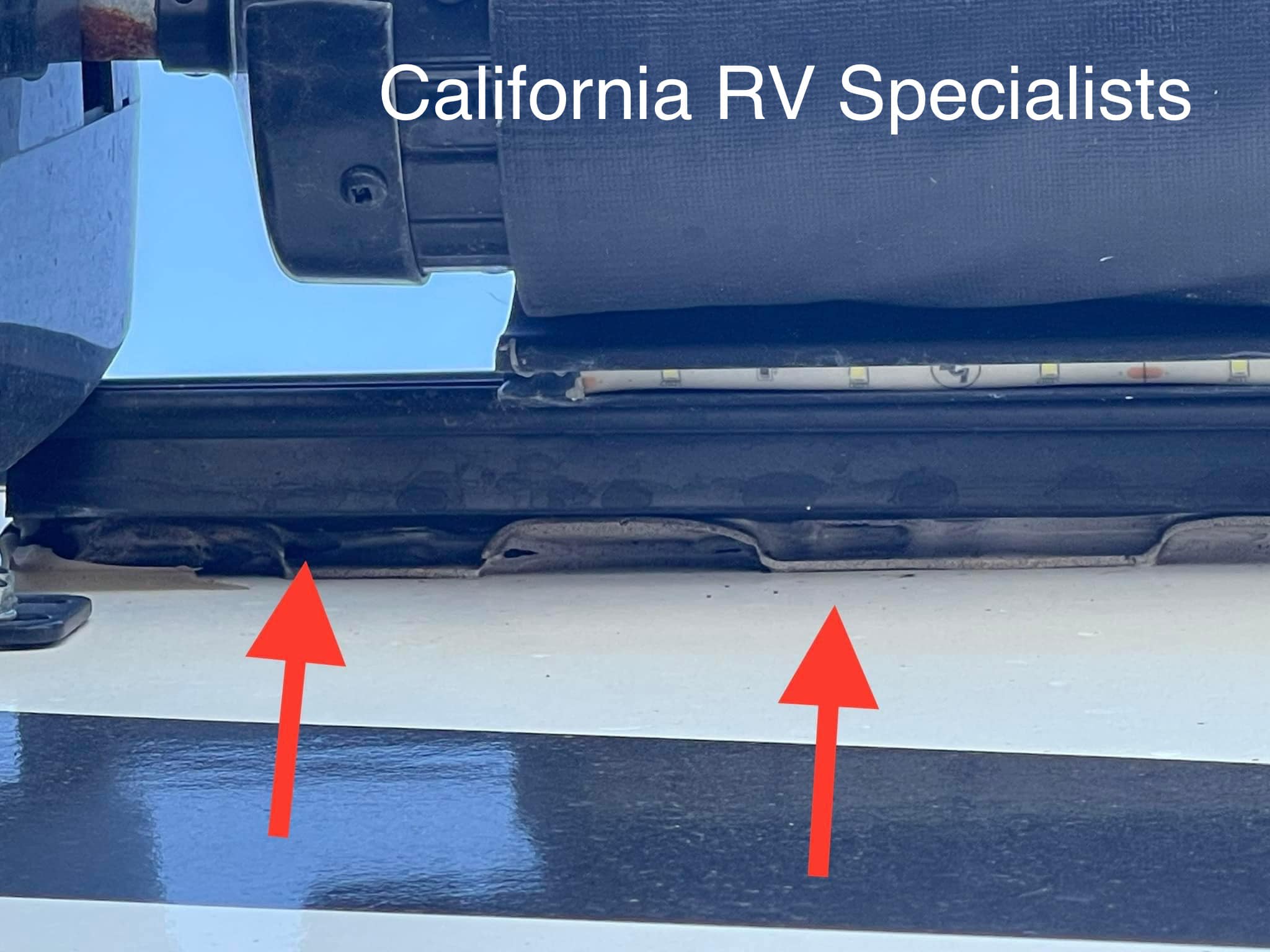
How to secure an RV awning rail and avoid unwanted detachment

Hey, everyone. Here is something that we continue to see weekly in our RV shop. We have been seeing this more and more when the awning rails are pulled loose from the side walls! Depending on travel, vibration, wind, and rain, the awning rails sometimes take a lot of abuse. As part of your regular preventive maintenance, make sure to add this inspection to your list.


Article and video
Creative and innovative gypsy wagon DIY RV build tour

Meet Stefanie Fisher. After finding herself with a lot of time on her hands during the COVID lockdown, she decided to learn some new skills and undertake a new project. The result is her gypsy wagon (also known as a vardo), one of the most creative DIY RV builds we have seen.


BLBS USB rechargeable camping fanCordless camping fan clips or hangs on; works great!
Cheri Sicard loves her USB-rechargeable clip-on or hanging camping fan. She says it’s the best one she’s ever tried. It has three speeds, can run up to 65 hours on a single charge, and it clips on or hangs from just about any surface. The fan also includes an LED lantern, and it has a USB-A port for charging phones, flashlights, and laptops. Learn more.


PRO TIP: Research shows that a quick 20-minute walk outside can improve your memory and focus. So that “short stroll around the campground” is actually brain fuel.


Featured article
Visiting the very cool Airstream City in San Felipe, Baja California, Mexico

By Cheri Sicard
As the gates to Airstream City swung open to allow me to drive in, the dusty San Felipe street behind my truck seemed a world away from the gorgeous oasis that spread out in front of it inside the “city’s” walls. Baja California, Mexico, in general, and the San Felipe area, in particular, have a lot to offer RVers, especially snowbirders and adventurous van lifers. Here, I show you one of the most unique places to stay, especially for Airstream lovers. Check this out!


The latest news for RVers

To read more recent news, click here.


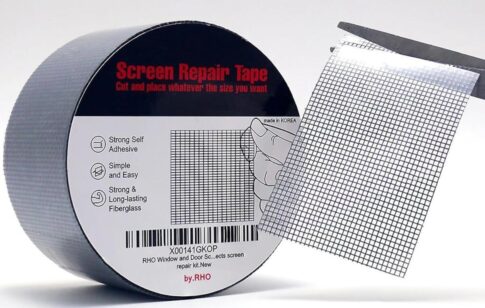
Window or door screens damaged or torn? This helps!
If you have damaged window or door screens in your home or RV, this screen-repair tape will help. No tools or special skills required. Simply cut, peel, and stick for a fast, permanent, and hassle-free solution that anyone can complete in just minutes. You won’t be able to tell there was ever a hole or tear! Don’t let any bugs in your RV this summer! Learn more or order.


Ask Dave
Water in ceiling light from storage rack screws? How to repair

Read Dave’s advice.


Reader poll
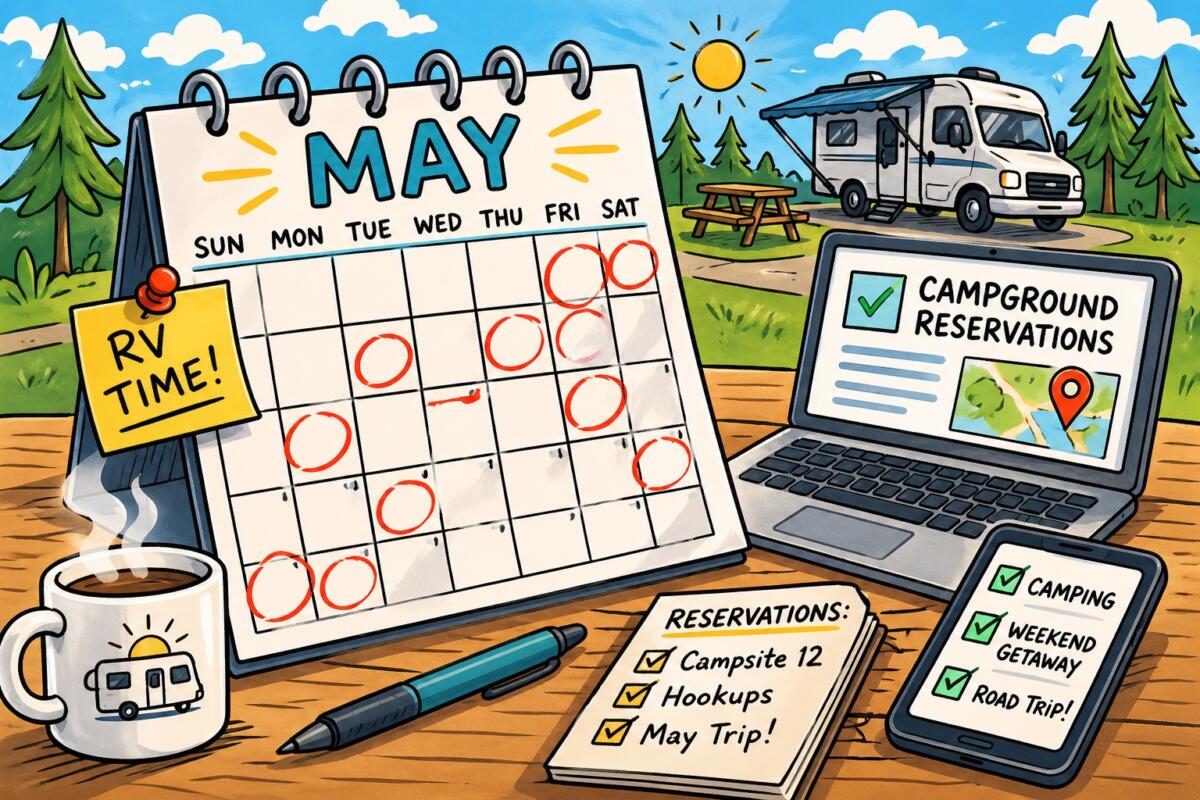
How much time will you spend RVing this month (in May)?

Respond here.


Now, run your RV’s air conditioner when you normally couldn’t before! Learn why our publisher, Chuck Woodbury, raves about this.


Quick tip
Secure the water heater door

“While taking a walk with Josie the Beagle recently, I found a metal water heater door which fell off an RV driving along. I thought about a tip: Take a small, metal key ring loop and thread it through the plastic closure which secures that door in place. This will prevent it from coming off if you hit a bump.” Thanks to Dennis N.!


On this day last year…


Website of the day

A Visitor’s Guide to National Park Reservations
This page from the National Parks Conservation Association has information about national parks that require reservations this year.


? MYSTERY PRODUCT OF THE DAY ?
If someone saw your internet search history, what would they think? Well, maybe because of this the whole world knows about it…


Monday Motivation

“Have you ever thought of something you wanted to do so badly, but you just felt the time wasn’t right? You may be experiencing this right now. You’ve built a logical, practical case in your mind for why this is not the time to move forward on your idea, thought or situation. Well, guess what? Sometimes being logical and practical about your goals is the best way to ensure that they never ignite! Commit to living your life where you are right now with what you have right now! Always be willing to keep pushing forward. Live in the present and make as much impact as you possibly can, while you can.” ―Les Brown, You’ve Got To Be HUNGRY: The GREATNESS Within to Win


Trivia

About twice as many men snore as women—and you can partly blame human evolution for that. When our ancestors developed speech, our voice boxes dropped lower in the throat, creating extra space behind the tongue. That space is actually larger in men, which makes it easier for the tongue to relax and block airflow during sleep… leading to more snoring. Meanwhile, women are more likely to wake up, so they’re often the ones listening to the noise! (Yep!)

QUIZ TIME: What product did Benjamin Franklin invent that will soon be a popular seller at Walmart, Dick’s Sporting Goods and other stores? The answer is in this issue’s trivia


Readers’ pet of the day

549819156 122159579162910908 2946804842362975355 N 1 20a33d46bd29f5591996b35e7a78af50“Nyla (Chesapeake Bay Retriever, age 5) has handled full-time life on the road very well. As long as we stop at Buc-ee’s and get her toys.” —Andrew Johnson

HELP! WE’RE RUNNING LOW ON PET PHOTOS! Please send us a photo of your pet with a short description. No blurry photos and please do not submit your pet more than once. Thanks!


Leave here with a laugh


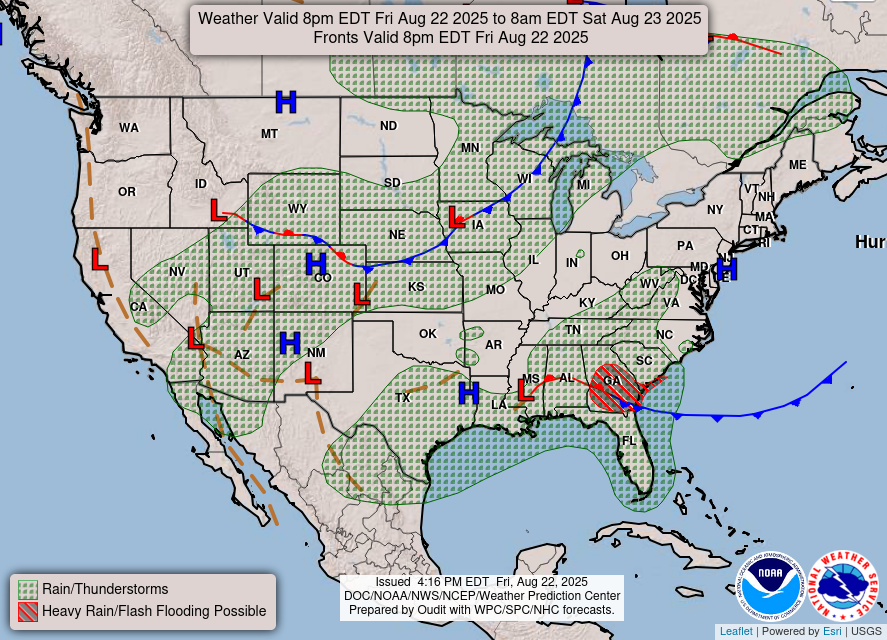
Today’s weather forecast across the nation
THIS MAP UPDATES TWICE A DAY

Visit Current National Radar Weather Map


Did you miss the latest RV Travel Newsletter? If so, read it here.
Oh, and if you missed the Latest News for RVers, make sure to catch up here.


If you shop at Amazon.com we’d appreciate you using this link. We get an itty bitty commission if you buy something, but they add up and help us pay our bills (most importantly our hard-working writers!). 


RVtravel.com All-Star Team

Click here for information about our staff and how to contact us.

WHY WE ASK FOR DONATIONS INSTEAD OF SELLING SUBSCRIPTIONS.

Our policy on using artificial intelligence.

Water in ceiling light from storage rack screws? How to repair

Dear Dave, 
My grandson noticed water coming out of the light over the upper bunk. We drained the water out of the light and used a paper towel to help wick the little bit of water out of the ceiling. I believe the leak may be coming from the screws that hold the storage rack on the roof. I want to remove the storage rack and repair the screw holes in the PVC roof.

What would be the correct materials to use to make this repair? I was thinking of putting the screws back into the hole, put a compatible material like a tape over the screws and a sealant all over the tape or similar material used over the screws. Thanks for any advice. —Reggie, 2023 StarCraft, Super Lite Maxx, 19MBH

Dear Reggie,
From what I can find on your 2023 StarCraft, it did not come with a “storage rack” on the roof of the unit as a standard feature. So, it must have been added as an aftermarket item from the dealership or by you or a previous owner.

Why I advise against storage racks on RV roofs

I am not a fan of any type of storage rack or other framework installed on the roof that would allow owners to add additional weight to the roof. The actual weight might not be the problem. However, strapping down items to the racks will cause stress to the rack and ultimately the mounting points while traveling down the road.

Most of these aftermarket racks and ladders are installed with screws mounted to the roof, as you have stated. However, those screws go through the soft PVC material, through the very thin lauan plywood, and into block foam insulation. This does not provide much structure for the screws. It is fine for mounting roof vent covers and even solar panels, as they are covered with a sealant that helps secure the component which is not subjected to the stress of a storage rack.

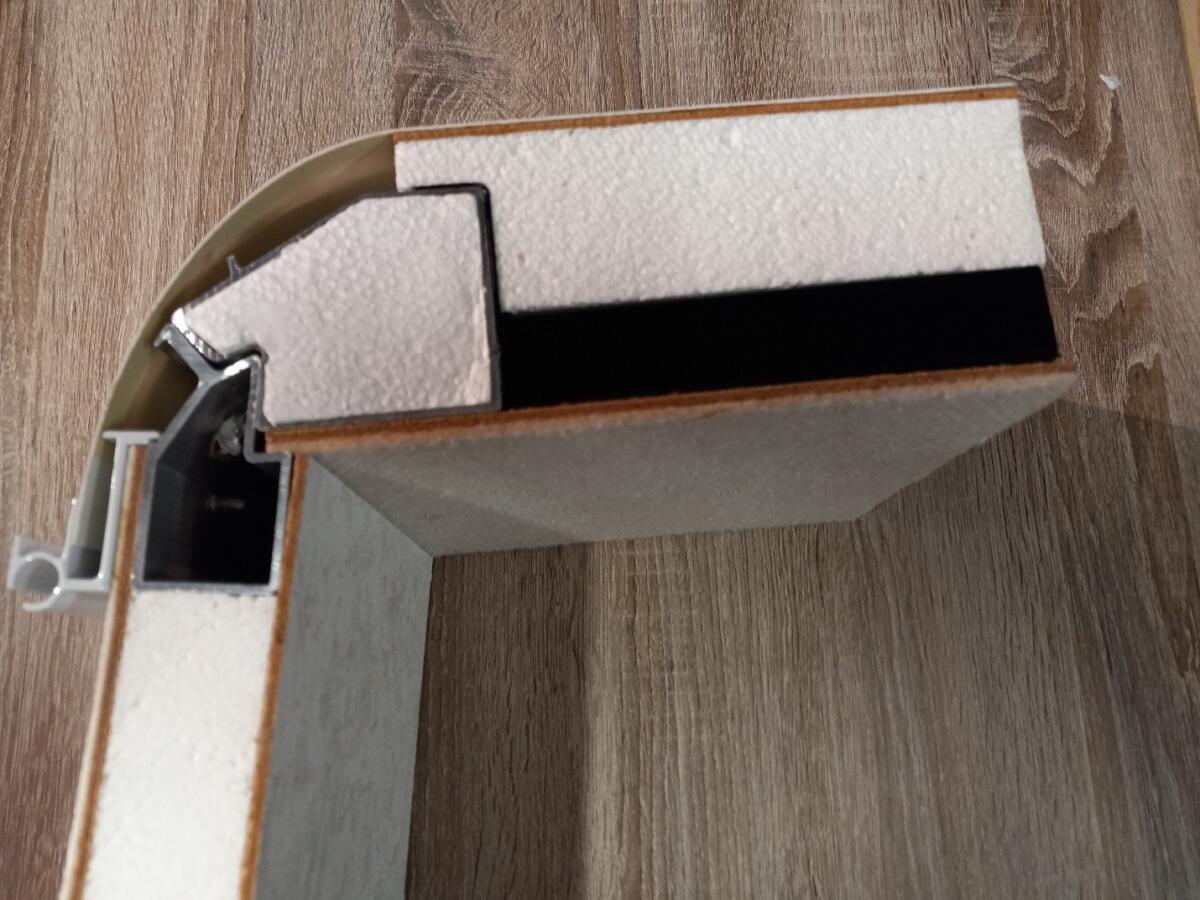
Here is a cutaway view of a Winnebago roof which has a hard fiberglass upper skin that does provide much more fastening structure than your PVC.

Roof Construction
Roof construction

I’m not sure if your rig has a 4” thick construction. Typically, if it has ducted roof air, it will. Otherwise, it’s only 2” thick and you might be chasing a “gremlin” for a long time.

Once you remove the screws and the storage rack, inspect the screw holes. My guess is they will be loose from vibration, especially if you have water penetrating.

Suggestion for repair

Since this is above the bunk bed in the back of the rig, you might be better off using a bolt through the roof and a larger washer with a nut to sandwich the fastening point. Use a flat head bolt with a washer from the inside, and a washer and nut up on the top so it’s not so noticeable inside. I think it would be a good idea to put some butyl tape between the storage rack “feet” or connection point and the roof, as it will help seal the area.

I know some people are big fans of EternaBond tape and then a healthy dose of self-leveling lap sealant. However, I have stopped using EternaBond or any other tape as I have not had much luck with it. Dicor offers a HAPs-Free (hazardous air pollutants) Self-Leveling Sealant that is designed for PVC material. Make sure whatever you use, it is designed for PVC.

Keep in mind that moisture could also be “migrating” from either the side edge or back cap, as well. It would be a good idea to check all the sealant while you are up there.


 You might also enjoy these posts from Dave 

DAVE HAS ANSWERED MORE THAN 1,000 readers’ maintenance and repair questions. Read a directory here. There is so much to learn!


Dave Solberg is a leading expert in the RV industry and the author of the “RV Handbook.”

HAVE A QUESTION FOR DAVE?

Send your inquiries to him using the form below.

Name
Drag & Drop Files, Choose Files to Upload

RVDT2896

21 unusual but brilliant uses for Dawn dish soap in your RV

By Gail Marsh
I’ve used it for years. Maybe you have, too. Dawn dish soap (the original blue formula) does a great job cleaning dishes, silverware, and cookware. In addition to cleaning dishes, there are many unusual uses for Dawn detergent while you’re RVing, too.

Uses for Dawn dish soap inside the RV

Clean greasy cabinets. Our most recent fifth wheel RV was “pre-owned.” It was in great shape—just needed a bit of cleaning. The first job I tackled was cleaning the greasy residue off the kitchen cabinets. (Always check an inconspicuous spot first to make sure there will be no discoloration.) Dampen a soft sponge. Then rub a few drops of Dawn dish detergent onto the sponge until it’s sudsy. Use the prepared sponge to rub down greasy cabinets, being careful to use a clean portion of the sponge for each swipe. When the sponge no longer picks up dirt or grease, thoroughly rinse the cabinets with a clean sponge. Then dry completely with a soft absorbent towel. Follow up with a furniture polish or wood conditioner, if needed.

Clean RV windows. Just one drop of Dawn into a quart of water makes a great glass cleaner. Pour the mixture into a spray bottle and get to work on those windows.

Brighten the stainless steel refrigerator. Use the same method as detailed above to prepare a sponge. Then use it to rub in the direction of the stainless steel grain, wiping away the fingerprints and grime. Then rinse with clear water and dry completely to avoid water spots.

Clean carpet stains. Mix together equal parts Dawn and warm water. Pour the solution into a spray bottle and spray the stain. Use a microfiber cloth to gently clean the stain away. Use another microfiber cloth dipped into clear water to rinse the area. Blot the cleaned and rinsed area with a towel. Allow to air dry.

Make your own ice pack. Partially fill a plastic, zipper-type bag with Dawn dish soap. Squeeze out the air and seal the bag closed. Place the ice pack into the RV freezer. The Dawn will become a gel which will flex to fit the shape of the injury site.

Remove grease stains from clothing. Apply Dawn directly onto greasy stains from that yummy BBQ meal. Rub it in a bit and launder as usual.

Eliminate fruit flies. Pour white vinegar into a small container. Add a drop of Dawn. Fruit flies will be attracted to the vinegar, but cannot escape the Dawn.

Clean hairbrush and comb. Begin by removing hair from the utensils. Then pour a cup of hot water into a shallow bowl. Add one tablespoon borax and one tablespoon Dawn. Gently swirl to mix. Soak the comb and hairbrush in the mixture until you see they are clean. Use an old toothbrush to scrub away any residue. Rinse thoroughly with clear water.

Prevent eyeglass “fog.” Rub a small drop of Dawn on each lens of your eyeglasses, both sides. Then use a microfiber cloth to dry and polish each lens. This is especially helpful when wearing a face mask or when temperature differences cause the lenses to fog, such as transitioning from an air-conditioned car to the steamy, outside summer weather.

Eliminate squeaks. Apply Dawn detergent to a squeaky hinge and the squeak will disappear.

Soothe poison ivy. Gently wash the affected area with Dawn and cool water. (Dawn’s oil-fighting formula will help to eliminate oil from the poison ivy plant.) Follow the first application with a second round of Dawn and warm water, which will help soothe the blisters and itch.

Clean the tub and shower. Fill a plastic spray bottle halfway with white vinegar. Heat the vinegar in the microwave until warm. Then fill the remainder of the spray bottle with Dawn. Put the lid on and shake to mix thoroughly. Spray the mixture all over your shower walls, floor, and that disgusting ring around the tub. Let it sit for ten minutes and then scrub stubborn places clean. Rinse thoroughly.

Uses for Dawn dish soap outside the RV

Clean outdoor furniture. Mix water with Dawn detergent. Using a sponge or brush, dip it into the soapy water and scrub off the furniture. Use your hose to rinse and set furniture in the sun to dry.

Kill weeds around your RV. Mix together 1/2 cup of salt, 1/2 gallon of white vinegar, and two tablespoons of Dawn. Pour the mixture into a spray bottle and spray the resulting solution on weeds growing around your RV. This should take care of them—even poison ivy!

Oil/grease spill on concrete RV parking pad. If you spill grease onto the concrete pad, you can clean it off with Dawn. First, remove as much of the spill as possible by sprinkling kitty litter over it. Use a paper towel to pick up the oil-soaked kitty litter. Then mix a generous squirt of Dawn with warm water. Use a scrub brush or an old towel to apply the treated water to the spill. Scrub to remove the stain.

Stop ants. Put two teaspoons of Dawn into a spray bottle of water. Spray the ant trail or any suspected ant entry point into your RV. (Hint: This recipe also works to kill fleas. Spray the affected area. Let sit for half an hour. Then vacuum up the dead critters.)

Find leaks. Spray Dawn soapy water over the hose (water or gas). If you see bubbles, you have a leak.

Clean your BBQ grill. Put 1/2 cup of Dawn dish soap into a gallon of water. Stir gently to mix. Pour the solution into a large tub or sealable trash bag. Then, put the cooled grill grates into the mixture. Soak the grill grates in the solution overnight. You should be able to easily scrub them clean the next morning.

Scrub tires. Begin by hosing loose dirt and grime off tires. Put Dawn directly onto a rag or heavy-duty sponge and scrub the tires. Rinse thoroughly.

Clean greasy tools. Put one tablespoon of Dawn into a gallon of water. Dip a sponge into the solution and use it to clean greasy tools. Avoid rust by drying the clean tools immediately with old towels.

Remove stickers. Our RV had several stickers and seals on it. I applied Dawn right to the stickers and let it sit for several minutes. Dawn cut through the glue, and the stickers were easily removed. Note: Be sure to rinse thoroughly afterwards.

Do you have other hints or tricks using Dawn dish soap? Please share your thoughts in the comments below.

Enjoyed this article? You might also like:

RVDT2896

Creative and innovative gypsy wagon DIY RV build tour

By Cheri Sicard
Meet Stefanie Fisher. After finding herself with a lot of time on her hands during the COVID lockdown, she decided to learn some new skills and undertake a new project. The result is her gypsy wagon (also known as a vardo), one of the most creative DIY RV builds we have seen.

Stefanie named her DIY RV “Misty.” You can follow their adventures on her website, My Tiny Wagon.

In the video below, we get to go inside Misty while Stefanie talks about what it took to build her.

It cost Stefanie about $15,000 to build this stylish and functional 84-square-foot vardo RV. However, she did put in the disclaimer that she was fortunate to have bought the wood for the project before the prices went up.

Of course, it did take some skills. Stefanie had remodeled a couple of homes in the past and considered herself “handy.” But she says she didn’t have a background in building.

Stefanie had originally planned to put solar panels on the roof and even hired a contractor to help. When he bailed on her, she instead decided to keep it mobile and use a Jackery solar generator for her electricity needs. (I own a Jackery 1500 and I love it!)

The rounded roof of the gypsy wagon makes the interior of the tiny space appear more spacious.

While she chose not to go over the top with color and décor, as would be the case in an authentic vardo, Stefanie did add stylish architectural elements to nonetheless give her RV that gypsy wagon feel. They also work practically, too, as she demonstrates in the video.

Some practical advantages and features of Stefanie’s DIY gypsy wagon RV design

  • It’s lightweight. Using birch plywood kept the weight down but also produced the visual aesthetic Stefanie was going for.
  • It can be towed by a car or a truck.
  • It was possible to do virtually the entire build by herself (with some basic skills, of course). The only things she got help with were the installation of the propane gas lines and the roof.
  • The exterior features a covered fold-down deck that adds about 30 square feet to the overall living space.
  • Using aromatic cedar on the counters keeps the vardo smelling fresh.
  • Practically placed windows provide excellent cross ventilation.
  • A stylish Dutch door provides airflow when half is opened, but security against the dog getting out.
  • A beautiful epoxied pullout table adds workspace or dining space when needed.
  • The kitchen includes a small 3-way refrigerator, a 3-burner stove, and small oven.
  • Water comes via a low-tech water foot pump.
  • It has a flushable porta-potty.
  • It includes a full-size memory foam bed.
  • There’s a pull-out step that makes it easy for the dog (or Stefanie) to hop up into the sleeping area.
  • There is lots of storage throughout both the interior and exterior.
  • It has low-maintenance cedar tongue-and-groove exterior. An annual coat of stain to protect the wood is all that’s necessary to protect the wood and keep it looking great.
  • There is 4 inches of roof insulation, and 2 inches in the walls and the floor.
  • There is stylish space to hide three large propane bottles that fuel both interior and exterior appliances. This includes an outdoor stove and oven and a portable water heater for dishes or showers.

Watch the video for the full tour and commentary.

MORE LIKE THIS:

RVDT2896

How much time will you spend RVing this month (in May)?

May has a way of sneaking up and suddenly—just like that—RV season is on. Woohoo! The weather’s warming up, campgrounds are filling, and those “we should really plan a trip” conversations are starting to turn into actual reservations.

So let’s talk about it… How much time will you spend RVing this month (in May)?

Maybe you’ve already got a full calendar—weekends booked, a longer trip planned, or even a full-on multi-week adventure. For some of you, May is the unofficial kickoff to a busy travel season, and you’re ready to go.

Or maybe it’s a slower start. A quick weekend getaway here or there, just enough to shake the dust off the RV and remember where you put everything. (Why is it always a mystery at the start of the season?)

And of course, some of you might not be heading out at all this month—and that’s okay, too. Life gets busy. The weather doesn’t always cooperate. Or maybe you’re just gearing up for bigger plans later this summer.

So, what about you? Are you all-in this May, or just getting started?

Cast your vote below, and, as always, feel free to leave a comment and tell us what your May RV plans look like. Thanks for voting!

MORE POLLS YOU MIGHT LIKE:

RVDT2896

How to secure an RV awning rail and avoid unwanted detachment

By Dustin Simpson
Hey, everyone. Here is something that we continue to see weekly in our RV shop. We have been seeing this more and more when the awning rails are pulled loose from the side walls!

Depending on travel, vibration, wind, and rain, the awning rails sometimes take a lot of abuse. As part of your regular preventive maintenance, make sure to add this inspection to your list.

If the rail comes loose in travel, it can cause the awning to parachute open in travel. It could come loose and damage your unit and/or those behind you.

If your awning rail has come loose, you’ll need to remove your insert molding in order to check and tighten the screws. If the screw hole is stripped out, then you will need to install a tri-fold rivet.

Example of awning rail with screws.

If needed, you can pre-drill 3/16” additional holes every 3 inches between the screws and add some additional fasteners in place.

We use these 3/16 tri-fold rivets all the time. I would say that 5 out of 10 units that come into the shop have loose awning rail moldings.

Here is an example of a black tri-fold rivet.

By adding rivets you will ensure that your rail will never come loose again.

Here is an example of after the rivets have been installed.

Make sure to triple-check your awnings and help to spread the word, travel safely and thanks for following us on RVtravel.com.

DIY tools and supplies needed

Make sure you check out Dustin’s website, California RV Specialists, and their YouTube channel for more helpful information, and see our published articles on RVtravel.com and other social media pages.

RELATED

RVDT2896

2026 Coachmen Northern Spirit Bijou 18RBB—under 3,000 lbs., no compromises necessary

Small campers usually force a compromise. They save weight, but the bed gets tight, the bath shrinks, or the kitchen feels stripped down. The 2026 Coachmen Northern Spirit Bijou 18RBB goes a different way. At about 20’10” long and roughly 2,990 lbs. dry, it stays easy to tow while still giving buyers a front bed, booth dinette, full kitchen, and a real rear bathroom.

It fits the buyer shopping with a midsize SUV or small truck in mind.

In the video at the end of this post, Hunter Jackson of Real RV Reviews shows how that layout comes together.

Quick specs

This Bijou floor plan is aimed at shoppers who want a lighter trailer without giving up the basics.

• Length: 20 feet 10 inches
• Dry weight: about 2,990 pounds
• GVWR: 4,400 pounds
• Hitch weight: 308 pounds
• Layout: front bed, booth dinette, rear bath
• Tanks: 50 gallons fresh, 35 gray, 35 black
• MSRP: around $26,000

Exterior upgrades make this one stand out

The biggest 2026 change is up front. Coachmen gave the trailer a molded fiberglass front cap, and it looks cleaner than the older rolled front style. The automotive-style front windshield also gives the nose a more finished look.

That front pass-through storage is better than expected for a trailer this size, and the built-in fishing rod holders are a fun touch. A manual tongue jack and single 20-pound LP tank keep the setup simple, while LED accent lights on the sides and under the awning add some evening style.

Along the side, the trailer gets vacuum-bonded, laminated fiberglass walls, aluminum framing, and Azdel layers to help resist moisture damage. It also rides on 15-inch wheels with ST radial tires, has four stabilizer jacks, solid entry steps, a large dinette-side window under the awning, an exterior grill connection, backup camera prep, a full-size spare, and a 4-inch rear bumper for sewer hose storage. One miss is the lack of factory ladder prep.

Inside, the layout stays simple and useful

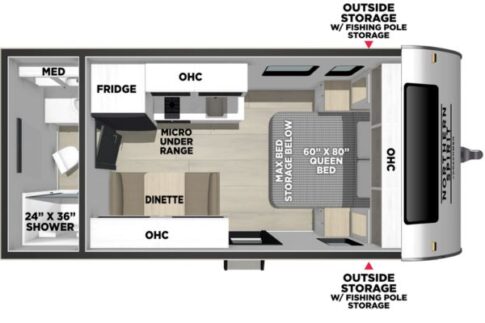
Northern Spirit Bijou 18 RBB floorplan

The entry has two drawers and a spot below for shoes. Up front, Hunter says the fixed bed gives the cabin a more open feel than a fold-up design. We will have to agree to disagree on that point.

There are hanging closets on both sides of the bed, overhead cargo nets, a front windshield shade, side windows for cross-breeze, and large storage under the bed.

The kitchen is compact but complete. It includes a deep stainless sink with spray nozzle and drying rack, two-burner cooktop, microwave, vent fan, furnace, and 8-cubic-foot 12-volt refrigerator.

There are bedside power ports, TV backer, satellite hookup, and a booth dinette that drops into an extra bed. This unit also has a 15,000 BTU air conditioner and available Starlink prep, which is a nice extra in a trailer this small.

The rear bath is the main reason to look at the 18RBB

The rear bathroom is where this floor plan earns its name. It gives buyers a larger 24-inch X 36-inch shower, a decent toilet position, a sink offset to one side for usable counter space, storage below, and a medicine cabinet with an open shelf for daily items.

It also gets the tankless water heater controls in the bathroom, plus a linen spot for supplies.

Final thoughts

The 2026 Coachmen Northern Spirit Bijou 18RBB makes sense because it keeps the weight low without feeling stripped out. The molded front cap, strong storage, solid kitchen, and true rear bath give it more day-to-day comfort than many small trailers.

For shoppers who care most about bathroom space in a sub-3,000-pound camper, this is the floor plan that deserves a closer look.

Learn more about the Northern Spirit Bijou 18RBB travel trailer here.

MORE RV REVIEWS LIKE THIS:

RVDT2896