There’s a particular kind of magic that keeps people turning off the highway and following the old, sun-faded pavement.
That magic has a name: U.S. Route 66. It’s the road Americans call the Mother Road.
You’ve undoubtedly heard of the Mother Road, and the fact that 2026 is its big Centennial Celebration. But did you know the Mother Road actually has a “mother”? Read on to learn all about her.
But first…
The phrase “Mother Road” jumped into the public’s imagination after novelist John Steinbeck used it in his book The Grapes of Wrath. Steinbeck’s book vividly captured the highway’s role as a lifeline for migrating families during the Dust Bowl era.
That image (and name) stuck. For many years, Route 66 symbolized America’s spirit of travel, welcoming small towns and the unique charm found along its roadsides.
Enter “mom”
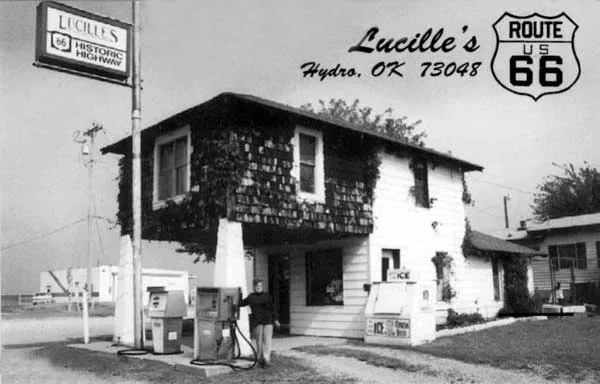
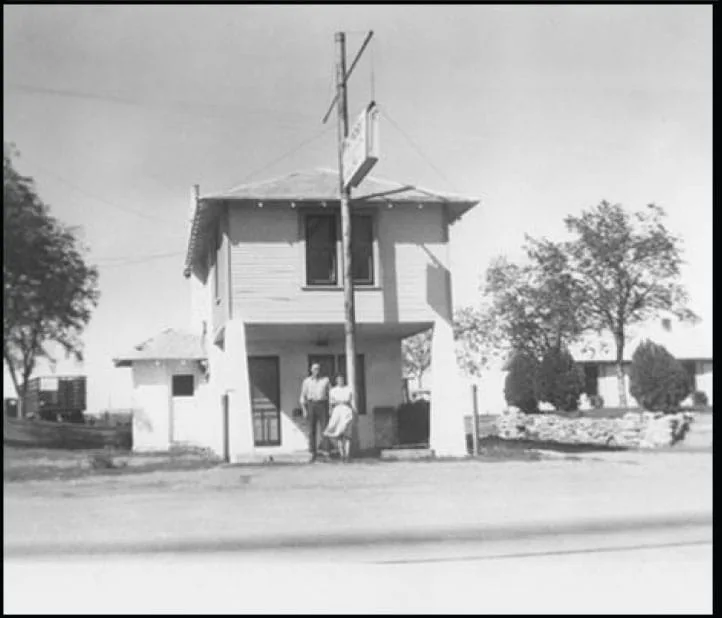
One of the people who helped turn those Americana ideas into real-life legend was Lucille Hamons. For nearly 60 years, she ran a combined service station, diner, and motel out of a two-story station near Hydro, Oklahoma.
Locals and travelers alike loved Lucille. She happily helped stranded drivers, served cold drinks, and kept the place welcoming when traffic and fortunes were low. Ms. Hamons’ warmth earned her a local nickname you’ll still see in many stories about Route 66: “Mother of the Mother Road.”
Provine service station
The building that anchored Lucille’s story is the Provine Service Station. It’s a small, two-story gas station built in 1929 and later run by the Hamons. Although you can no longer pump gas here, the pumps and building remain, a memorable representation of the Craftsman style of architecture prominent at the time.
The Provine Service Station is listed on the National Register of Historic Places and is one of the tangible reminders of our pre-interstate travel culture.
Lucille lived on the upper floor of the station with her husband and three children. Yes, she lived right above the fuel pumps with a clear view of the neon sign that greeted so many cross-country travelers.
Lucille was well known in nearby communities. Her friendly hospitality and willingness to help others made an impression on Highway 66 travelers, as well. They enjoyed stopping by for her ice-cold drinks and great eats, and loved how she treated everyone like family.
Lucille ran her service station, hotel, and diner for more than 59 years! She was inducted into the Oklahoma Route 66 Hall of Fame in 1999. Lucille Hamons died in August 2000.
Rick Koke, a Route 66 enthusiast, restored and maintains the service station today. He also keeps the friendly hospitality of the beloved highway alive as he manages Lucille’s Hotel and Lucille’s Restaurant in Weatherford and Clinton, Oklahoma.
Centennial
Route 66 turns 100 in 2026. Communities along the old road are planning celebrations with festivals, exhibits, and special events.
These celebrations are a perfect excuse to plan an RV stop that’s about more than a photo op. It’s a chance to experience living history, meet local stewards of the road, and support small businesses that keep this slice of Americana alive.
If you’re mapping a Mother Road trip, make room in your itinerary for small towns like Hydro and Weatherford, OK, where history is compact and easy to explore. And do not miss the Provine service station, where the “mother” of the Mother Road delivered service with a smile!
RV campgrounds nearby
Planning a visit to this area? Here are three campgrounds near Lucille Hamons’ service station to consider:
• Atchley’s Route 66 RV Park (Clinton, OK). This small campground offers easy access off I-40, full hookups for RVs, basic laundry and restroom facilities. It’s convenient for a quick overnight stop while touring west Oklahoma Route 66 sights.
• Territory Route 66 RV Park & Campgrounds (Hinton, OK). This campground literally sits on Old Route 66. It features level pull-through sites, both 30- and 50-amp hookups, Wi-Fi, coin showers and laundry, plus a friendly small-park atmosphere that fits the Route 66 vibe.
• Water-Zoo Campground (Clinton, OK). This campground is tied to an indoor waterpark. It offers concrete pull-thru pads, 20/30/50-amp service options, and package deals that include park admission. (It’s great if you’re traveling with kids.)
You should go!
The Provine Service Station and Lucille Hammons’ story make the Mother Road feel human. Stopping during the centennial allows you to be part of the station’s preservation, meet local keepers of the road’s memory, and snap photos that tell real stories about Highway 66.
If you love vintage signage, good pie, and roadside personality, plan to visit this stop along the Mother Road.
Have you explored this section of Route 66? Tell us about it using the comments below.
At 74, John of the Gone with John channel’s biggest fear about RV life isn’t a breakdown, bad weather, or money. It’s the day he might be told he’s done, and has to give up the road for good. That thought sits behind the whole message he shares in the video at the end of this post.
Perhaps you feel the same way. I know these thoughts have crossed my mind from time to time. For John, full-time RV living for seniors isn’t only about travel. It’s about staying part of life for as long as he can.
The fear that matters most: When the body says stop
John says he still feels young and full of energy. Still, he knows there may come a day when his body says no. That’s the part that hits hardest.
A house might be safe. Assisted living might be practical. A nursing home might be the only option at some point. But he can’t ignore how strange that feels to him. He doesn’t want his world to shrink into four walls that don’t feel like home.
For many RVers, the usual fears are clear enough: repairs, storms, fuel costs, and money. John’s fear is different. He worries more about losing the ability to live on his own terms.
Why John wants his last chapter outdoors
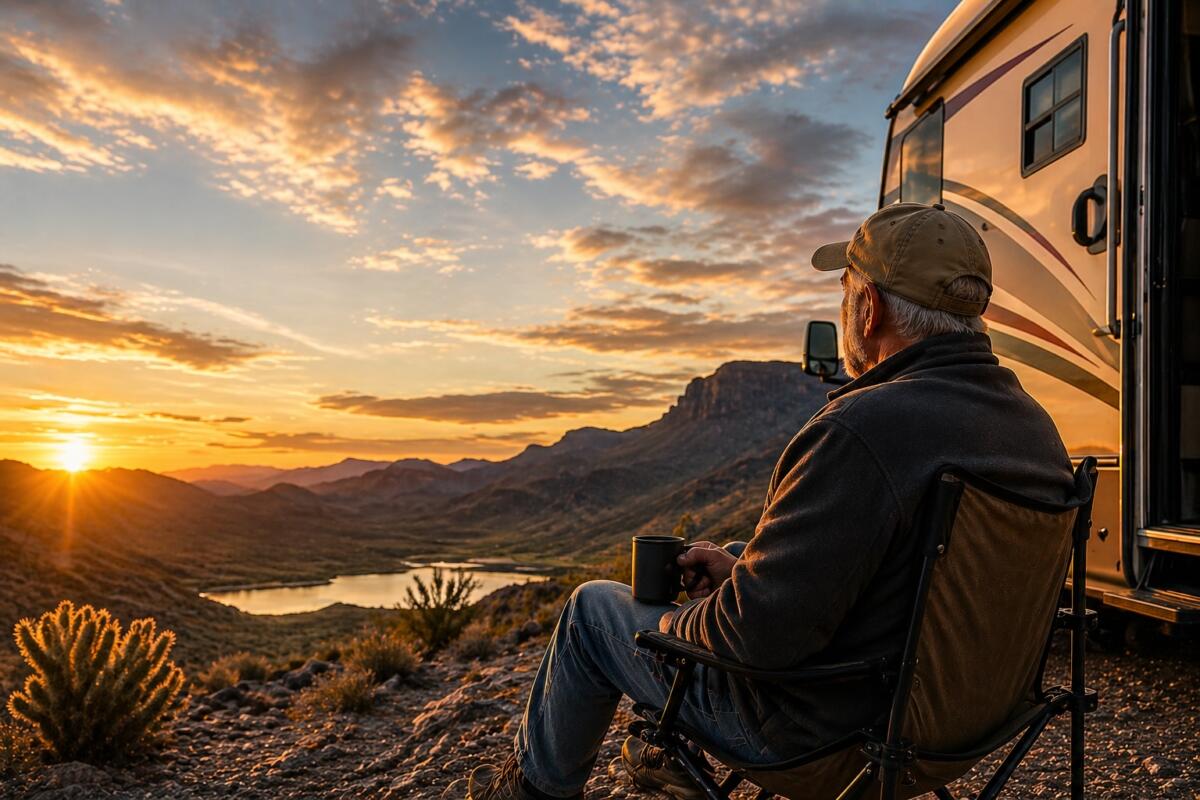
John doesn’t want to fade out of his own life. He wants to stay in it. As long as he can wake up outside and see something real in front of him, he feels there is still life to live. For him, the best parts aren’t postcard moments. They’re simple and physical. The smell of the desert after rain matters. So does the stillness of early morning when the light hits the mountains, and everything goes quiet.
That, to John, is what it means to live all the way to the end.
The lesson he took from assisted living
A few years ago, while visiting a friend in assisted living, John met a man who kept walking every day and swam when he could get a ride to a fitness center. When John asked why, the man said he was getting ready to leave. He meant he wanted to be ready if he ever got the chance to go back out on his own.
That line stayed with him. So did the man’s view of daily life there. Meals came, then a return to the room, then the same routine again. It felt like waiting.
John knew that feeling because he had lived a version of it before. Back when he was in a house, life looked fine on paper. He had food, shelter, and no major stress. Yet the days blurred together, and nothing changed. Over time, that sameness made him feel like he was slipping out of his own life.
Why RV life still works for John
On the road, life keeps asking something of him. Things break, so he fixes them. Weather changes, so he adjusts. Plans fall apart, so he solves the next problem and keeps moving. That constant change keeps his mind active. It also keeps him connected. He doesn’t feel like he’s watching life from the side. He feels like he’s in it.
John knows he won’t do this forever. Still, he won’t let that future decide how he lives now. He plans to keep moving every couple of weeks and take the hassles that come with RV life over sitting still and feeling his world close in.
The hardest part of aging isn’t always pain or cost. Sometimes it’s the risk of falling into a routine that feels like waiting. For now, he has made his choice. He is staying on the road, staying active, and staying present.
If you enjoy winding down at your campsite with a glass of wine, you’re not alone. Many RVers love bringing along a few favorite bottles to share under the stars.
Traveling with wine in an RV isn’t as simple as tossing bottles into a cabinet and hitting the road. Between vibration, temperature swings, and limited storage, there are a few challenges that can affect both the safety of your bottles and the taste of what’s inside.
Cause and effect
One of the biggest issues RVers run into is something wine experts call bottle shock. During travel, constant vibration and motion can temporarily disrupt a wine’s chemical balance. According to sources like Wine Spectator magazine, this motion can dull flavors and aromas, making a wine taste flat or “off” right after a trip. The good news is that it’s not permanent. Letting your wine rest after travel helps it recover. A common rule of thumb is to allow about one week of rest for every day the wine was in transit before opening it.
Where you store wine inside your RV also makes a big difference. Unlike a house, RV interiors can heat up quickly. This is particularly true near exterior walls or in cabinets near a heat source like an RV oven or cooktop. Heat is one of wine’s biggest enemies, accelerating aging and potentially spoiling it. Experts from Wine Enthusiast recommend keeping wine in a cool, stable environment, ideally between 45 and 65 degrees Fahrenheit. In an RV, that usually means interior cabinets away from outer walls, or even better, a temperature-controlled cooler, if you have one.
For many RVers, especially full-timers or those covering long distances, traditional bottles may not always be the best option. Boxed wine has come a long way in quality and offers several advantages. It’s lighter, less fragile, and less affected by oxygen exposure once opened. Another practical solution is shipping wine to your destination instead of hauling it across the country. Many wineries and retailers offer direct shipping, which can save space and reduce the risk of damage.
Safe transport
When it comes to transporting wine and other liquor bottles safely, a little creativity goes a long way. Protective sleeves designed specifically for travel are widely available and help cushion bottles from bumps and vibration. These sleeves often include padded layers and leak-proof linings in case of breakage. Some RVers also swear by simple DIY solutions like wrapping bottles in towels, bubble wrap, or even thick socks for added protection.
Organization plays a big role, too. One clever idea shared online by Isabella Amelia shows how she uses drawer organizers to safely store wine and liquor bottles for travel.
Photo credit: Isabella Amelia
Other RVers use tension rods inside cabinets to create compartments that hold bottles securely in place. Keeping bottles snug and upright helps minimize movement and reduces the chance of breakage.
Campsite solutions
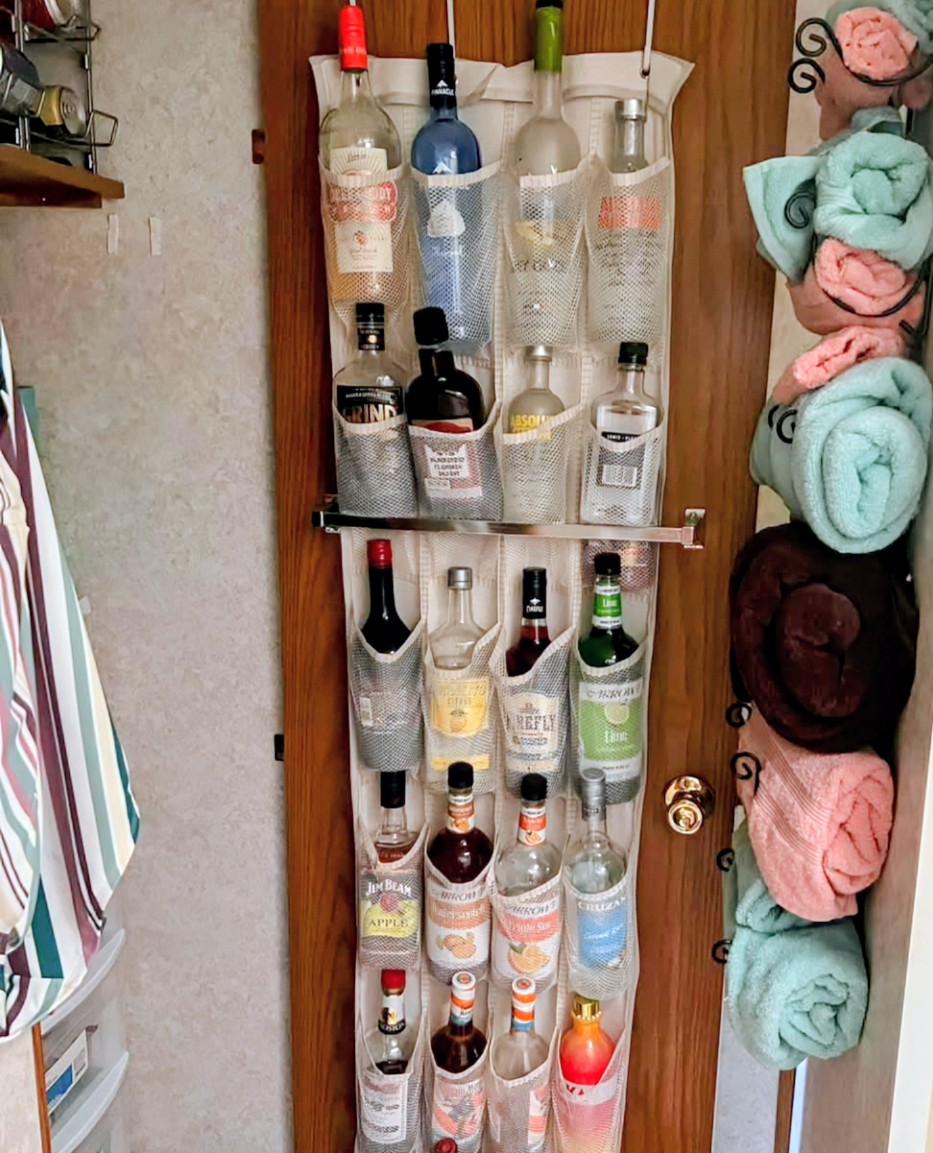
Photo credit: Anyia Archer
Social media groups are full of creative storage hacks that RVers have tested in real-world conditions. Anyia Archer recently posted her idea. She repurposed a hanging shoe organizer to hold wine and liquor bottles, turning unused vertical space into a functional storage solution.
Photo credit: Joshua Hopkins
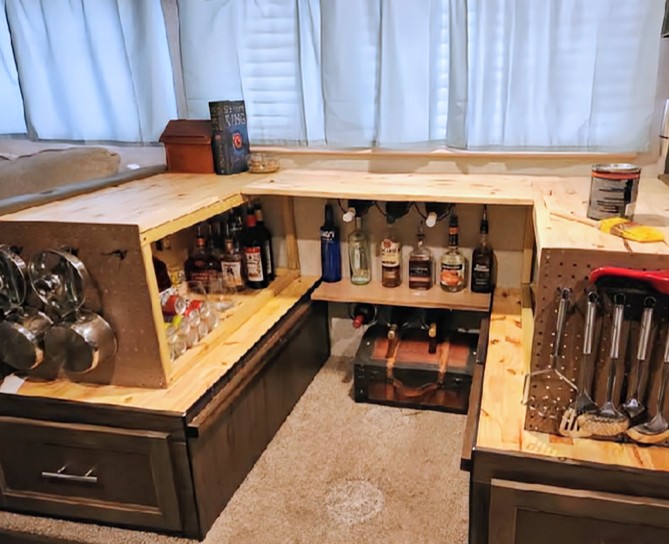
Some RVers go even further by redesigning parts of their rig. Joshua Hopkins built a custom bar where his dinette used to be. Now the area is complete with shelving for bottles, glasses, and accessories.
Photo credit: Phil Cantwell
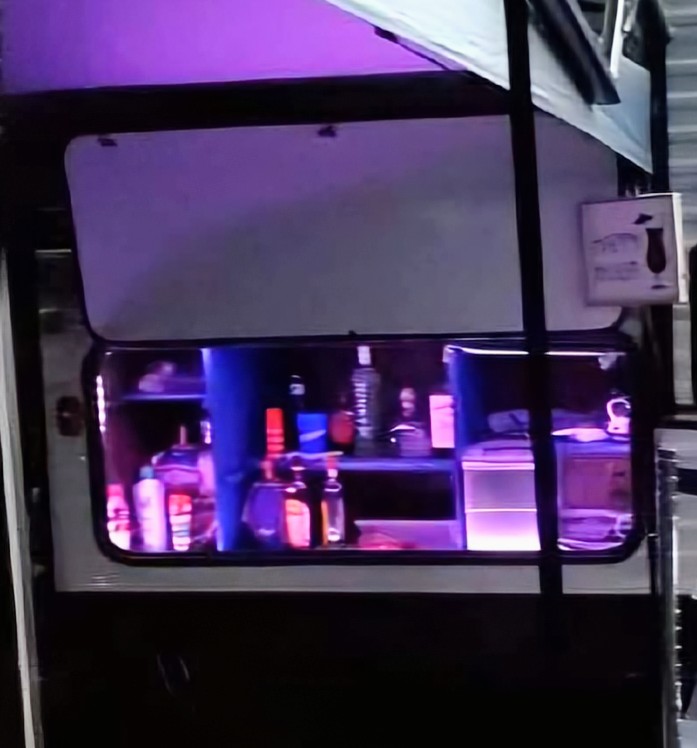
Phil Cantwell transformed an exterior storage compartment into a fully lit outdoor bar, making it perfect for entertaining at the campsite.
Photo credit: Missy Sumski DeMauro
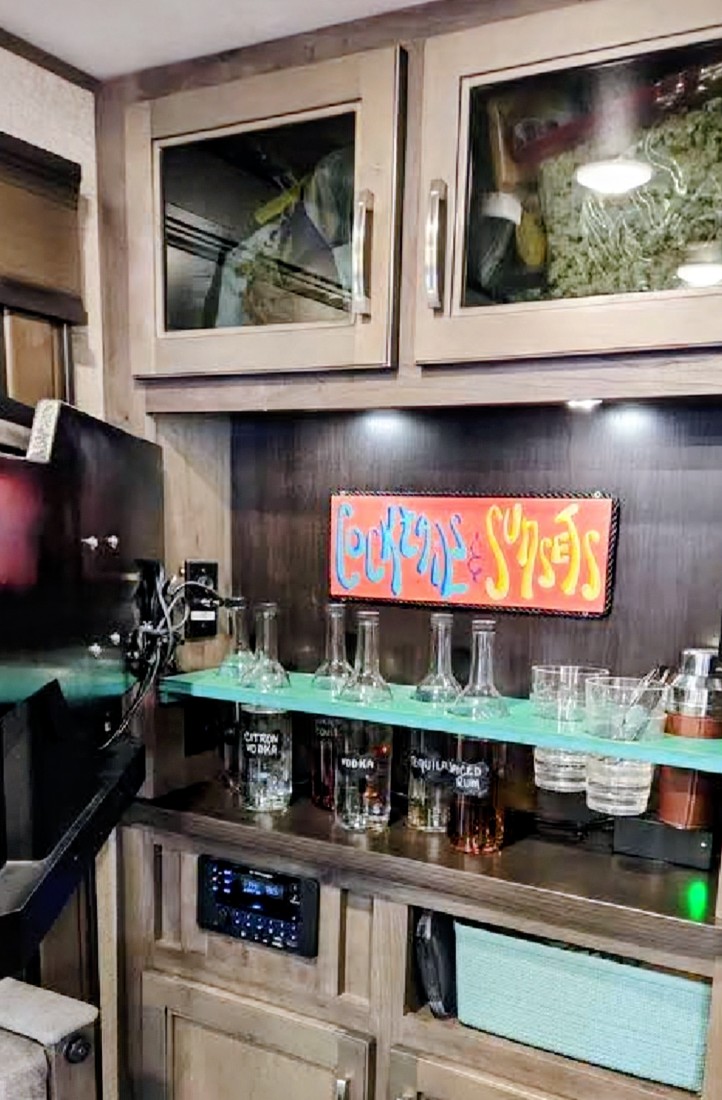
Missy Sumski DeMauro found hidden potential behind her RV’s entertainment center. She converted the concealed storage behind the TV into a discrete wine bar.
How about you?
These creative solutions highlight an important point: Traveling with wine in an RV requires a mix of protection, temperature awareness, and smart storage. With a little planning, you can enjoy your favorite wines on the road without sacrificing quality or risking a mess.
Do you take your favorite wine along on RV trips? Share your tips and tricks in the comments below.
This question about a tire sidewall bump was originally posted by an RV Travel reader:
We had a new-to-us travel trailer. When we stopped for gas, the station attendant had this horrified look on his face and showed us bulges on 3 of the 4 tires. He also showed us a pile of tires out back that he said had all “Blown-Out”. We bought 4 tires with a higher load rating. We took the bad tires with us on our whole vacation.
After we got home, I tried to get a warranty from the RV company, but was told, “We do not do warranties on the tires.” I then contacted the tire manufacturer. The customer service manager stated that the part where the cords overlapped was the strongest part of the tire. I called “BS”. I tried to contact other departments at the tire company, but got no replies. Why are tire companies allowed to sell these defective tires?
I found the RV owner’s comments interesting but rather confusing. One moment, he is talking about depression, the next about bulges.
Tire bulge versus depression
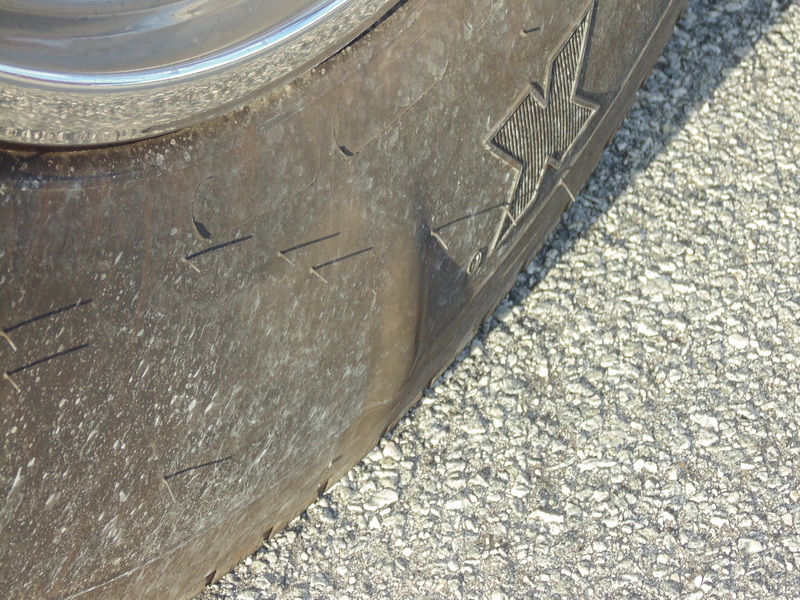
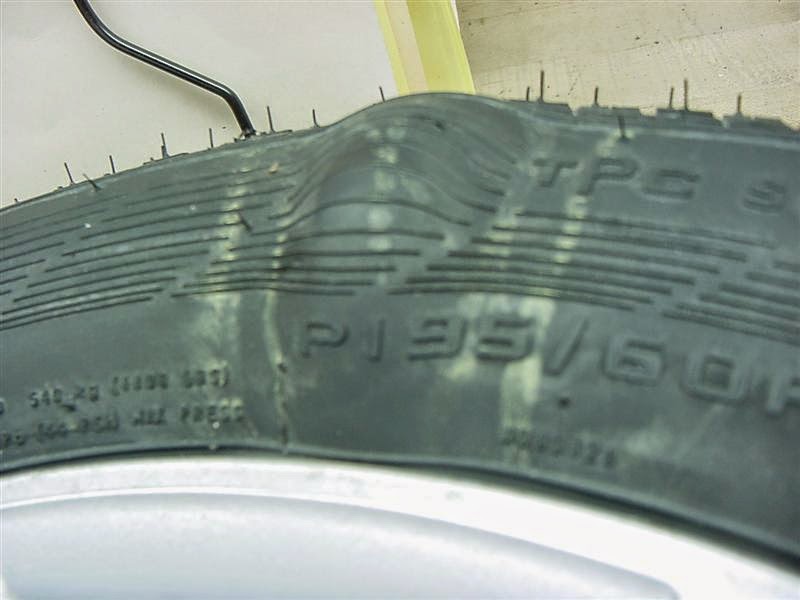
There is a big difference between a “bulge” that sticks outward from the rest of the tire sidewall and a “depression” that goes inward toward the air chamber.
Most radials will have one or more sidewall depressions. These occur due to the small overlap of the body cord ply that occurs when the tire is being “built.” These depressions would actually be locations of more cords in that location that prevent the inflated air from bulging a tire outward when inflated.
A bulge, as seen in the pictures below, would be the result of either an “open body ply splice,” which would be a warranty issue, or the bulge could be the result of an impact where body cords were broken.
In this case, the tire clearly hit something, and the body cords are broken. This condition is not covered by any “warranty” unless a “road hazard” warranty was purchased.
I have covered impact breaks, with pictures, that I discovered on my personal car and on my wife’s car, and posted the results of the forensic tire inspection with pictures on my RV Tire Safety blog.
Understanding the difference between a “bulge” outward and a “depression” inward in a tire sidewall will save you much aggravation. With close inspection in good sunlight, you can look at your tires and find one or more depressions in every one of your tires. Holding a short (approx. 6″) straight edge against the tire sidewall will help you discover the depressions that are in your tires.
If you have tire questions, check out Roger’s Blog as well as his posts on RVtravel.com. There are hundreds of posts covering everything to do with tires.
If you still have a question for Roger after searching the above posts, send your inquiries to him using the form below.
America’s Original RV Newsletter. Since 2001 Issue 1259 This free edition is made possible by 6% of our readers who support RV Travel with a voluntary subscription. Advertising helps, but that alone is not sufficient.
Today’s thought
“You go away for a long time and return a different person—you never come all the way back.” —Paul Theroux
Need an excuse to celebrate? Today is World Naked Gardening Day. If that’s not your thing, then you might want to celebrate National Truffle Day.
On this day in history: In 1924, U.S. President Calvin Coolidge proclaims ancient lava fields in Idaho as Craters of the Moon National Monument to “preserve the unusual and weird volcanic formations.”
Featured news
Gas prices jump nearly 30 cents in a week
The cost of RVing took a big jump last week as the price of fuel rose in dramatic fashion, climbing nearly 30 cents per gallon, according to AAA. Analysts say the increase may not be short-lived. If crude oil prices remain elevated or supply disruptions continue, drivers could see additional increases at the pump in the coming weeks.
Higher gas prices could affect next year’s Social Security COLA
Painful fuel fill-ups can sometimes have an unexpected side effect: They may help push future Social Security cost-of-living adjustments (COLAs) higher. Anyone with an RV knows what a 50-cent jump at the pump can do to a budget. Economists say sharp increases in gasoline prices can ripple through the same inflation measurements used to calculate annual Social Security COLAs. Learn more.
Could AI become the next tool in an RVer’s repair kit?
As RV repair backlogs continue to frustrate owners, some RVers are beginning to experiment with artificial intelligence before making the service call. AI-powered tools are beginning to enter parts of the RV service and support world, particularly as owners and companies look for ways to reduce repair bottlenecks and simplify troubleshooting. Would you trust AI?
Starlink’s growing pains could matter to RVers more than anyone
Starlink has reshaped RV travel, but a growing number of complaints could signal issues ahead. A report from Fast Company cites FCC filings involving SpaceX, with users raising concerns about billing, reliability, and customer service. For RVers who rely on it off-grid, those complaints may hit close to home.
Tanner Toons with Tanner Woods
You may share this Tanner Toon, unaltered, on your website, blog or social media with our compliments. The musings from Tanner Woods’ creative mind appear in this newsletter every Saturday and Sunday and in many RV Daily Tips newsletters through the week. Sign up for our RV Daily Tips Newsletter so you don’t miss a single Tanner Toon.
RVers hoping to “beat the crowds” may be running out of time
For years, experienced RVers have relied on a simple strategy to avoid packed campgrounds and traffic-clogged national parks: Travel earlier in the season. But in 2026, that quieter “shoulder season” may not be feeling quite so quiet anymore. The old strategy of “going a little earlier” no longer guarantees lighter crowds.
Waiting for cheaper used RVs? The market may be turning
After a long stretch of falling prices, the used RV market may be starting to turn. A new report from National Powersport Auctions shows sales activity picking up, especially for towables and lower-priced units. The biggest bargains may not last much longer.
They sold everything to live in an RV at Disney World. Some RVers may understand why
A Florida family skipped the “wait until retirement” plan, sold their home, and moved into an RV full-time at Disney’s Fort Wilderness Resort & Campground. Their lifestyle has drawn attention—and sparked a familiar question for RVers: Are experiences worth more than space and stuff?
RV shipments are improving—but buyers may still have the upper hand in 2026
The RV Industry Association expects RV shipments to grow in 2026, with projections pointing to a modest rebound over last year. But the year has started slowly, and much of that growth is expected to come later.
Why we recommend the SoftStartRV™ If you camp in hot weather, this is one upgrade you’ll wish you had sooner. The SoftStartRV lets you run your A/C on limited power—like a small generator or even household current—without tripping breakers or stressing your system. It’s simple to install, built by people we trust, and it just works. If you’ve ever struggled to keep cool at a campground, this is worth a closer look.
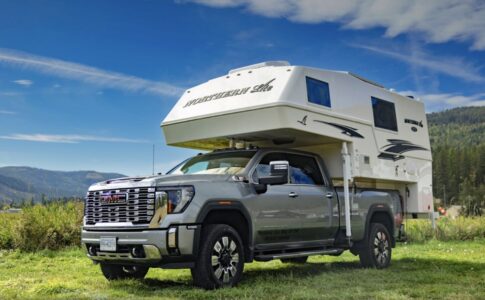
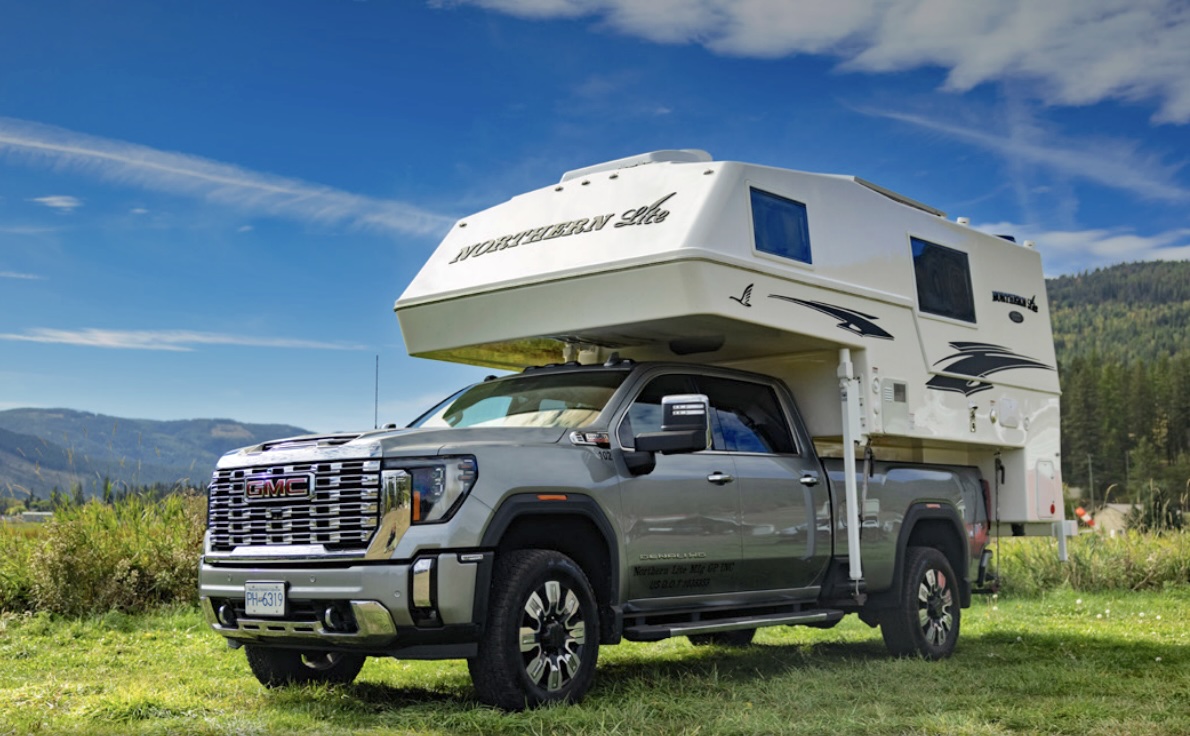
RV review 2026 Northern Lite 10-2EX LE—a ‘right-sized’ option
By Gail Marsh
The 2026 Northern Lite 10-2EX LE is a full-size truck camper. It checks off many of the boxes regarding comfort and utility. For me, at least. “Right-sizing” is the new “downsizing.” At least for me. I believe the 2026 Northern Lite 10-2EX LE is a strong choice for RVers who want to downsize (or right-size) to a premium truck camper. This model is built for year-round weather, smart storage, and cozy comfort. Could it be the right-sized camper for you?
IMPORTANT TO KNOW: Because of warmer weather, tick season is starting earlier in some regions this year, and pet owners are being urged to stay extra vigilant on trails. Make sure you carry tick repellent for yourself and for your furry friends.
Beyond the headlines with Tony Barthel
Gas isn’t all gas, RV sales are down, government takes interest in big industry merger
A proposed merger between Lippert Components and Patrick Industries is now under antitrust scrutiny from Senator Mike Lee, who warns it could raise prices and impact supply. At the same time, new RV Industry Association data shows RV shipments are down this year. Add in new higher-ethanol fuel rules, and RVers may be heading into a more expensive season. Click here to read Tony’s news analysis.
According to the 2026 Camping Report from The Dyrt, 72.2% of campers traveled with a partner in 2025, while 49.7% brought dogs. Another 38% camped with friends, 29.7% with children, and 29.2% reported taking at least one solo trip.
Volunteers removed more than 130 pounds of dog waste from just two trails during two cleanup days, according to a recent report from Colorado’s Summit Daily. Dog poop is not harmless, and this raises serious concerns. (Please clean up after your dogs!!)
To help with crowding, California State Parks will begin a pilot program requiring reservations to visit McArthur-Burney Falls Memorial State Park on Friday-Sunday and holidays during peak visitation season, May 15 through September 27.
Colorado’s State Forest State Park in the high mountains of northern Colorado is known as the moose-viewing capital of the state. First-come, first-served camping is open through May 22 as conditions allow. Beginning May 23, it’s by reservation only.
Love’s Travel Stops has opened a new location with three RV hookup sites and an RV dump station in Delta, Ohio, at exit 39 of I-90.
Water spigots in Mather Campground and Desert View Campground in Grand Canyon National Park have been turned on as the water supply improves. Campfires are only permitted in established South Rim campfire rings.
If your travels include visiting greyhound racing, change is a-comin’. The U.S. House has passed a measure that would effectively end greyhound racing in America if enacted. The bill now heads to the Senate. Greyhound racing was once the sixth most popular sport in the U.S.
ODD NEWS: A new speed limit sign posted outside a recycling center in Wisconsin is drawing attention for its oddly specific number: 17.3 mph. Why? “Because it makes you pause. It makes you look twice. And most importantly, it breaks that ‘autopilot’ feeling we can all fall into when driving familiar routes.”
THE MORE YOU KNOW: Want to boost your chances of living to 100? San Jose, CA, just ranked as the top U.S. city for longevity, based on factors like quality of life, health, environment, and lifestyle habits analyzed by World Depopulation.
Having trouble with your memory?
This may help. With ingredients such as Alpha GPC and Huperzine A, ONNIT Alpha Brain aims at promoting recall, memory and learning retention. Some customers report less forgetfulness and improved focus. Caffeine-free.
RV and RV-related recalls
Winnebago is recalling certain 2022-2027 EKKO motorhomes. The touchscreen display may register unintended or phantom inputs and turn on the generator without the operator’s knowledge. Learn more.
Newmar is recalling certain 2026 Freedom Aire motorhomes. The front chin spoiler may detach during transit, becoming a road hazard. Recall number: 630 RSB. Info: 800-731-8300.
Jayco is recalling certain 2026 Entegra Condor and Jayco Granite Ridge motorhomes. The tempering mixing valve may not have been installed on the water heater, which could allow the water to reach scalding temperatures. Info: 800-283-8267.
Ford is recalling more than 140,000 model year 2024-2026 Ranger trucks. The sun visor or headliner wiring harnesses may be improperly positioned or have excessive tape thickness, which could cause a fire. Recall number: 26S29. Info: 866-436-7332.
Forest River is recalling some 2026 East to West College Avenue and 2026-2027 Entrada RVs. The fender may contact and damage the rear tire. Recall number: 504-2048. Info: 574-264-6664.
Reader poll Would you trust AI to help diagnose or fix an RV problem before calling a professional?
? MYSTERY PRODUCT OF THE DAY ? Please don’t be upset with us for showing you this. It’s a little, um, well, ridiculous. But we laughed out loud when we saw it. And if you have a sense of humor and love gag gifts, you will love this, too. *still giggling…*
Trivia
“Sleep Tight, Don’t Let the Bedbugs Bite!” Where did that saying originate? During the 1800s, strings were strung across a wooden frame to support a mattress. Tighter strings meant a more comfortable bed. Early mattresses were made of straw and feathers where, alas, bugs took up residence. The result? Bug bites and sleepless nights, hence the still-familiar saying.
Laugh of the week
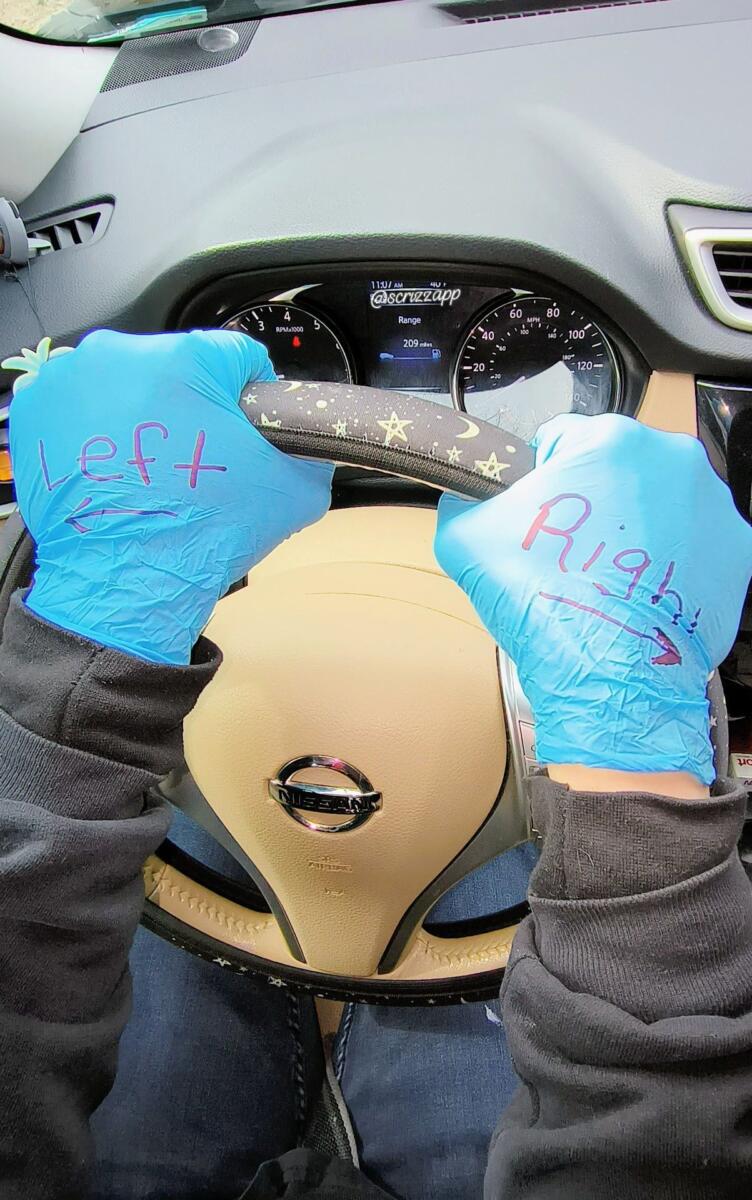
Raise your hand if you still have trouble telling directions! *raises hand*
Top scams RVers should watch for right now
Early summer travel is picking up, and scammers are adjusting right along with it. Here are three scams showing up more often this week:
“Overbooked campground” refund scams: You get a message saying your site was double-booked and you’re owed a refund—just “confirm your card details” to receive it. It’s a phishing attempt.
Fake event and festival ticket links: With summer events ramping up, scammers are posting links to discounted tickets for rallies, festivals, or local attractions near campgrounds. The tickets either don’t exist or are duplicates.
Toll road text scams (“You owe a fee”): Texts claiming you owe unpaid tolls from recent travel, with a link to pay immediately. These are spreading fast and are designed to catch travelers moving between states.
Miss The Perfect Scam podcast? Find the latest episode here.
You’re out on the road, something in your RV stops working, and you’re faced with that familiar question: Do I try to figure this out myself… or make the call and risk having to spend a ton of time and money?
Now there’s a new option creeping into that decision—artificial intelligence. Some RVers are starting to turn to AI tools to help troubleshoot problems, look up error codes, or even walk them through simple fixes before calling a technician. With repair backlogs still an issue in many places, it’s easy to see the appeal. (We wrote about this here.)
But let’s be honest… this is RVing. These rigs are complicated. Electrical systems, plumbing, propane—it’s not exactly something you want to guess your way through. And while AI can pull together a lot of information quickly, it’s not standing there looking at your rig, hearing that strange noise, or smelling something that seems off.
Still, for smaller issues? Loose connections, basic troubleshooting, figuring out what might be wrong before you head into a shop… some RVers are finding it helpful. Others wouldn’t touch it with a ten-foot sewer hose.
So what about you? Would you trust artificial intelligence (AI) to help diagnose or fix an RV problem before calling a professional?
Maybe you’d give it a shot for something minor. Maybe you’d rather skip the guesswork entirely. Or maybe you’re already using it and have thoughts either way.
Cast your vote below—and feel free to leave a comment. We have a feeling this one could get interesting. Thanks!
Last week, we shared that two RV supplier giants had announced that they were in merger talks, and I scoffed at the fact that the government may not really care. Well, it turns out, I was wrong. Mike Lee, Chairman of the Senate Judiciary Committee on Anti-Trust Competition Policy and Human Rights, has sent a letter to the CEOs of both LCI (Lippert’s parent company) and Patrick Industries raising concerns.
In the letter, Lee wrote,
… [A] transaction combining these companies would create a supplier of considerable scale across multiple component categories critical to RV manufacturers, which warrants close scrutiny. Combining two firms that together account for significant shares across multiple RV component categories would increase concentration substantially across those markets.
Section 7 of the Clayton Act prohibits acquisitions where the effect may substantially lessen competition or tend to create a monopoly. Where manufacturers have fewer sourcing alternatives, the merged firm could gain leverage to raise prices or reduce output. These higher prices will ultimately be passed on to consumers in higher RV prices. Reducing rivalry between the two most significant firms in this space may diminish incentives to invest in research and development or to expand product offerings in response to customer demand.
Supply chain resilience in the RV industry depends in part on the availability of independent and competing suppliers.
Consolidation that reduces redundancy in the supplier base may increase vulnerability to disruptions, particularly during periods of economic volatility, demand shocks, or raw materials constraints, conditions the RV industry has experienced acutely in recent years.
A single combined supplier controlling critical component categories across the OEM base represents a serious risk to the supply chain.
What analyses have your companies conducted, independently or jointly, regarding the competitive effects of a merger?
Lee also asked, “Have any RV manufacturer customers raised concerns about the potential competitive effects on a merger?”
As we wrote last week, not a single RV industry decision maker wanted any part of being quoted in an article—the size of the merged company does give them unrivaled power. Lee gave the two companies until May 5 to respond.
RV sales are noticeably down
In other news, RV sales are low. How low? The RV Industry Association’s March 2026 survey of manufacturers found that RV shipments are down by 13.9% this March compared to last March, and overall shipments for the year are down 12.1%.
Interestingly, truck campers seem to have bucked this trend, with an increase of 6.4%, as have Class B RVs. But the big jump is for Class C RVs, with a bump of 21.6%. Even better, park models are up by 23.8%. So where’s the big drop? Right in the heart of the market—towables of all sorts.
Check your gas and the price
The Environmental Protection Agency (EPA) has made a change that allows up to 15% of your gasoline to be ethanol this summer. Fuel is typically blended differently in summer and winter. However, in light of the spike in fuel prices, the agency has allowed this change to help fuel prices.
The problem is that not all vehicles are designed—or even approved—to run on fuel with high ethanol content. On top of that, ethanol delivers less energy (so you may see reduced performance or fuel economy), and it evaporates faster than gasoline.
Ethanol is cheaper, but it’s also less energy-dense, which means poorer performance in some vehicles. So, check the numbers at the pump this summer. Be sure to check if your vehicle is even certified by the manufacturer to operate with this high of an ethanol percentage.
2026-05-01 BTN – RV sales drop – more merger news – gas isn’t all gas
Trivia
Don’t expect a prize or anything, but comment below if you know where the photograph was taken in the hero image for this article. Well, the prize is that you share a piece of knowledge and my undying admiration. How’s that?
The 2026 Northern Lite 10-2EX LE is a full-size truck camper. It checks off many of the boxes regarding comfort and utility. For me, at least.
Come along and see for yourself.
RV times are a-changing
“Right-sizing” is the new “downsizing.” At least for me. When I casually mention the idea of perhaps, maybe, someday, possibly downsizing from our 40-foot fifth wheel, my husband shudders at the notion. So, I’ve decided to use the term “right-sizing” instead.
We’ve loved our fifth wheel RVs. However, things have changed. Our lives have changed. Times have changed. Even RV camping has changed since we first dipped our toes into the wandering lifestyle.
We’re older now. We’ve experienced a few health glitches. That’s to be expected, I guess. Fellow work campers have called it quits, and we’ve cut back on work camping, too. Our grandkids are also older. Their interests have expanded to include much more than camping weekends with grams and gramps. That’s to be expected, as well.
Camping isn’t as simple as it once was, either. I miss the days of driving until three o’clock and only then beginning to hunt for a campsite. Back in the day, booking a site didn’t mean hovering over the laptop, waiting for reservations to open up at midnight for a camping spot six months to a year in advance!
Right-sizing
All of these changes make me think that it’s time for right-sizing our RV choice. Many RVs that used to feel too cramped now surprisingly seem right-sized. Like a truck camper. Forget sprawling floor plans that require extensive maintenance and upkeep. Smaller footprint means less to clean! No slides translate into fewer mechanical issues.
I was first drawn to the 2026 Northern Lite 10-2EX LE (Limited Edition) because I was curious about the company. Turns out, Northern Lite is a Canadian company with more than 35 years of experience in manufacturing RVs. Read on to see what I learned about the Northern Lite 10-2EX LE for 2026.
Behind the walls
This camper uses Northern Lite’s two-piece fiberglass clam-shell construction. The company says this reduces seams and helps keep water out. The floor, walls, and ceiling use block foam insulation, and the jack brackets are under-mounted aluminum. This model carries a six-year structural warranty.
Key specs
Overall length: 218 in.
Overall width: 98 in.
Overall height: 106 in.
Interior headroom: 80 in.
Dry weight: 3,510 lbs.
Fresh water tank: 40 gal.
Gray water tank: 40 gal.
Waste tank: 18 gal.
Hot water tank: 6 gal.
Propane: 40 lbs.
Queen bed: 60 x 80 in.
Dinette bed: 40 x 75 in.
Price: $82,934
Interior and living space
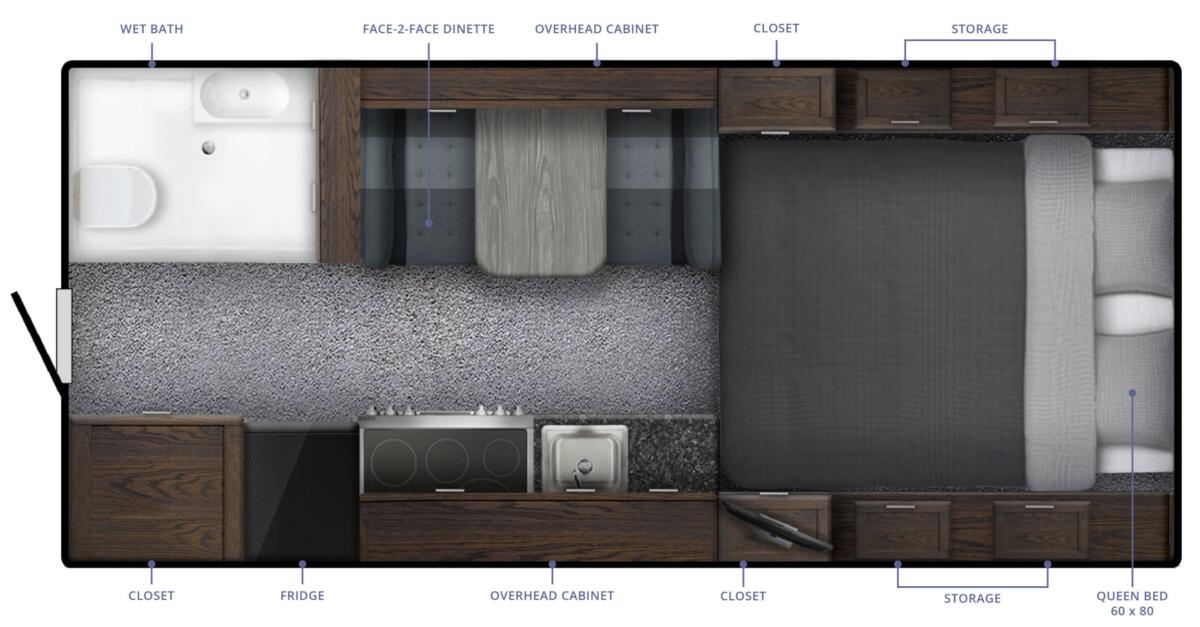
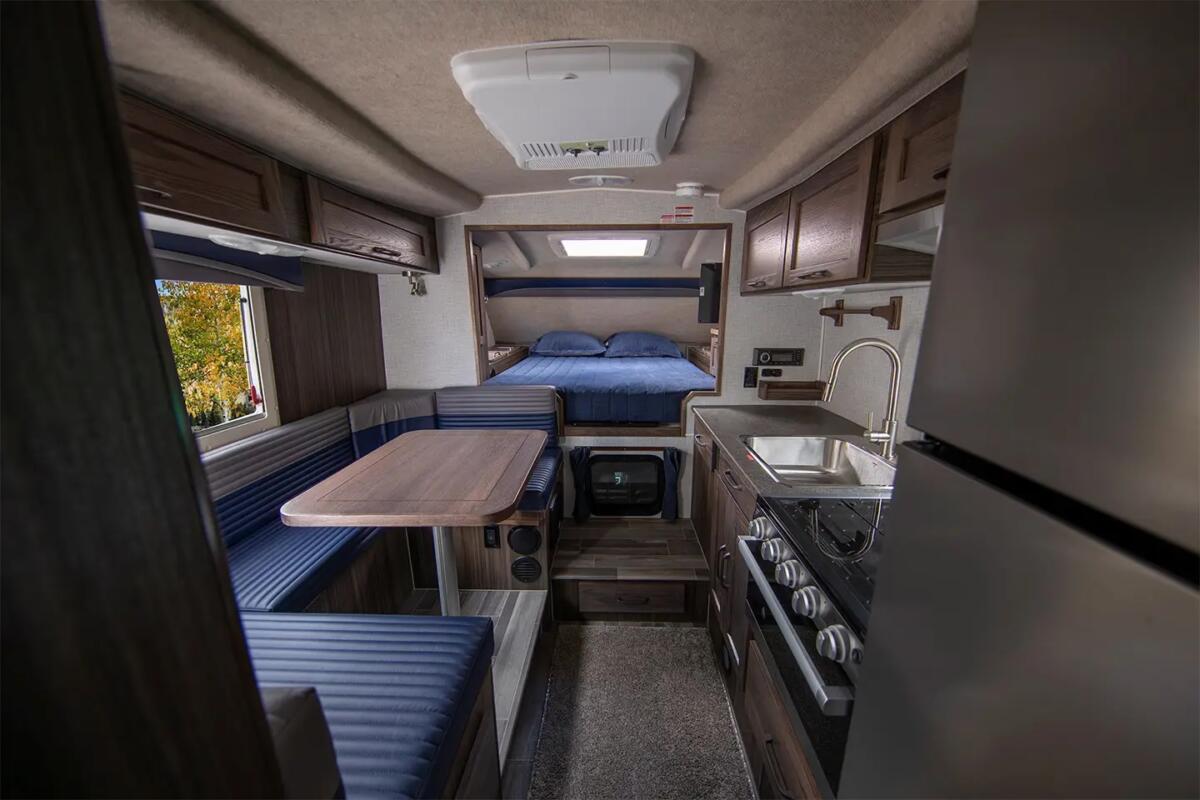
Getting into the 10-2EX LE truck camper is easy because of the unique step system. It would be a bit easier with an integrated handrail, but that’s just me. The high headroom helps visually expand the interior space. The layout is straightforward, and with the cabover queen bed, it doesn’t feel overly cramped.
I appreciate how the designer makes good use of every inch. You’ll find storage solutions in every nook and corner, so no worries about packing food and clothing for a weekend or even a longer stay.
Kitchen
The kitchen is compact, but it has the basics. Northern Lite equips the 10-2EX LE with a deep stainless steel sink, a three-burner stove with oven, and a microwave. There’s also a 6.3-cu. ft., two-way fridge, with an 8-cu. ft. 12V fridge available as an option. Because we tend to prepare most meals outside, the kitchen setup is quite doable for us.
I was pleasantly surprised at the hardwood cabinets and full-extension drawers in this camper. Metal hinges, pulls, and solid construction say “quality” to me.
Living space
The dinette area feels compact, yet purposeful. The solid hardwood table would work well if you needed extra prep space, worked remotely, or enjoyed games with your travel buddy.
Bath
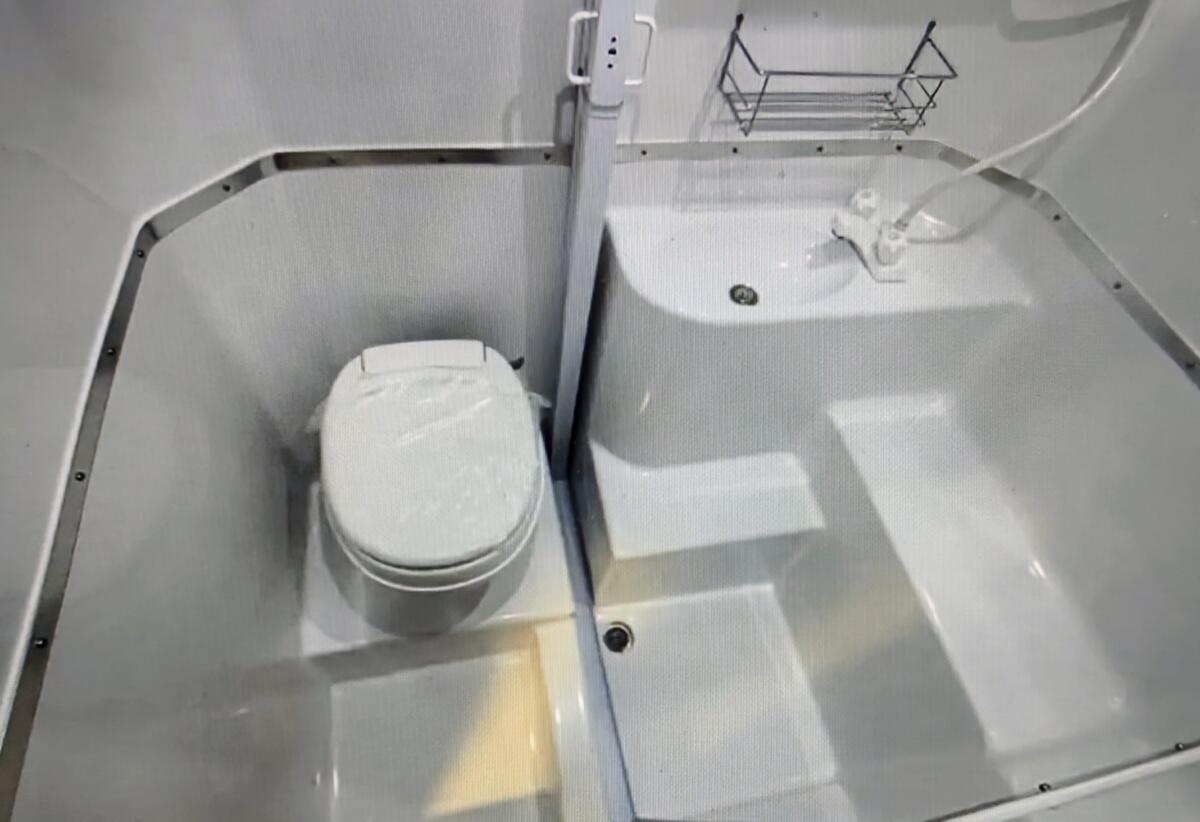
The dry bath is a real highlight for me. Northern Lite redesigned its truck camper bath to separate the toilet from the shower. The shower includes a built-in shower seat and a multi-positional shower rod, which provides more elbow room in the shower. There’s also a medicine cabinet with a mirror and a sink. Yes, the bath is small. However, I am not ready to give up a personal commode and shower as we attempt to “right-size” our RV.
I particularly liked the position of the bath. Its placement near the entry door means easy access without tracking through the entire rig.
Bedroom
The bedroom is a classic cabover setup, but in my mind, it’s executed well. The 60 x 80-in. queen bed gives the camper a more residential feel, and the over-cab arrangement keeps the floor plan efficient. The bed is surrounded by storage compartments, and you’ll find charging ports in this area, as well.
Overall take
I believe the 2026 Northern Lite 10-2EX LE is a strong choice for RVers who want to downsize (or right-size) to a premium truck camper. This model is built for year-round weather, smart storage, and cozy comfort. Could it be the right-sized camper for you? Leave a comment below.
For years, experienced RVers have relied on a simple strategy to avoid packed campgrounds and traffic-clogged national parks: Travel earlier in the season.
But in 2026, that quieter “shoulder season” may not be feeling quite so quiet anymore.
Early visitation signals are already starting to appear
Across parts of the West, signs are emerging that spring visitation is ramping up quickly again this year. Gateway communities, campground reservation systems, and park planners are once again preparing for another busy season at some of the country’s best-known destinations.
For RVers, that may mean the old strategy of “going a little earlier” no longer guarantees lighter crowds.
National Park Service parks, including Yosemite, continue using reservation and timed-entry systems during portions of the travel season, reflecting the ongoing challenge of managing heavy visitation. At the same time, campground demand appears to be arriving earlier in the calendar at many popular destinations.
The shoulder season may not be as quiet anymore
For many longtime RVers, one of the biggest changes of the past decade has been the growing need to plan further ahead for trips that once felt more spontaneous.
Spring and fall travel once offered a fairly dependable way to avoid the worst summer congestion. Retirees, full-timers, and experienced travelers learned to drift into popular regions before schools let out or after families returned home in the fall. It was often easier to grab campsites, enjoy quieter roads, and spend more time actually appreciating the scenery.
But more travelers appear to have adopted the same strategy.
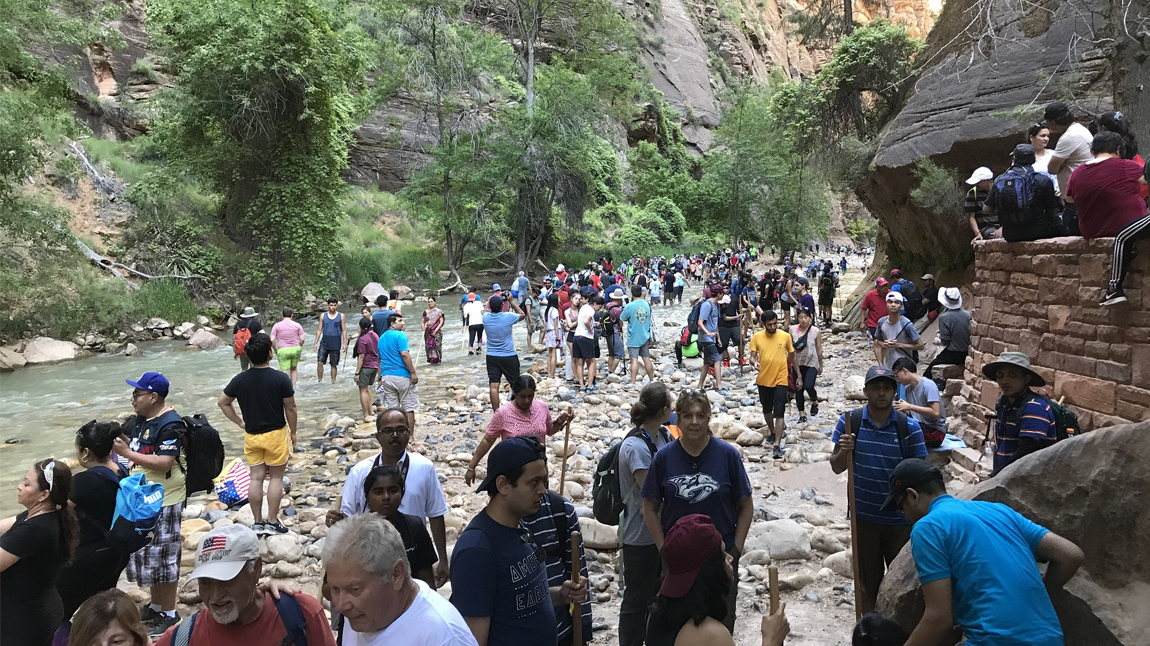
As national parks and outdoor travel grew in popularity over the past several years, shoulder seasons began attracting larger crowds of their own. In some places, RVers who once arrived in April expecting elbow room are now finding campgrounds already filling quickly.
That shift is especially noticeable around marquee destinations, scenic mountain corridors, and parks that regularly dominate travel lists and social media feeds.
RVers may need to adjust their planning habits
None of this necessarily means RV travel is becoming impossible. But it does mean flexibility may matter more than it once did.
Many experienced RVers now reserve sites earlier than they used to, even if they later cancel and adjust plans. Others increasingly travel midweek, look for smaller nearby campgrounds, or build trips around lesser-known destinations instead of the biggest-name parks.
Some RVers are also drifting farther toward public lands, county parks, and smaller state parks where crowds can still feel more manageable. For travelers willing to wander a little farther off the heavily advertised routes, the quieter camping experience many remember may still exist.
Reservation systems continue reshaping the RV experience
Reservation systems themselves remain a source of frustration for some RVers, especially longtime travelers who miss the spontaneity that once defined many road trips.
Instead of simply pulling into an area and finding a campsite, many travelers now feel pressure to monitor reservation windows, compete online for campsites, and lock in plans months ahead of time. For RVers who enjoy flexibility, that shift can feel like a major cultural change in the RV lifestyle itself.
Park officials, meanwhile, argue the systems help reduce traffic backups, overcrowding, and gridlock at heavily visited destinations. And with visitation remaining strong at many national parks, reservation systems are unlikely to disappear anytime soon.
Popular parks are unlikely to get quieter anytime soon
The broader trend may simply reflect the continuing popularity of outdoor travel itself.
Even with concerns about fuel prices, inflation, and RV ownership costs, national parks and scenic outdoor destinations continue attracting strong interest from both RVers and non-RVers alike. Millions of travelers still want the same iconic views, famous hikes, and bucket-list experiences.
That means RVers hoping to “beat the crowds” may increasingly need to rethink what that phrase really means. In many places, avoiding congestion may no longer be about finding the perfect week. It may be about finding different parks, different routes, or different expectations altogether.
America’s Original RV Newsletter. Since 2001
Issue 2895 • New issue every weekday If you find this newsletter helpful, please consider supporting our work with a donation of your choice. Thank you!
Today’s thought
“Reading is a means of thinking with another person’s mind; it forces you to stretch your own.” —Charles Scribner, Jr.
Need an excuse to celebrate? Today is May Day!
On this day in history: 1971 – Amtrak (the National Railroad Passenger Corporation) takes over operation of U.S. passenger rail service.
Tip of the day Deadly “RV hot-skin condition” can spread from your neighbor’s RV
By Mike Sokol Time for a reminder about a miswiring condition I found in campgrounds years ago. It’s a hot-skin voltage that can be “reflected” to multiple RVs in the same area of a campground. And it’s caused by two separate failures at the same time: a lost ground/bond conductor in a campground electrical system and a fault current in an RV. First things first. A hot-skin voltage is when the electrical potential of your RV skin (and chassis) is a significant voltage level above the earth ground around it. Continue reading this very important article.
RV review
First look at the 2026 27North TR27 Trekker on Ram 5500
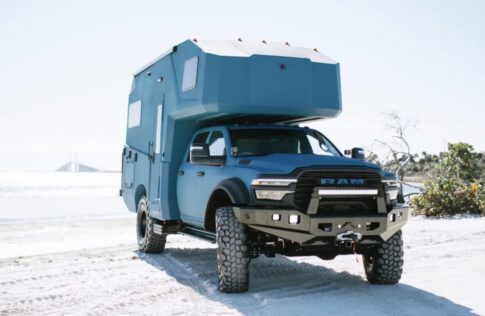
Million-dollar expedition rigs have owned this space for years, so anything new gets judged fast. At the 2026 Florida RV SuperShow, Patrick Botticelli of New Jersey Outdoor Adventures found a truck camper that looks ready for that test, and he gives us a tour in the video at the end of this post. The 27North TR27 Trekker is a Ram 5500 camper conversion with real off-grid hardware, heavy-duty running gear, and a cabin that feels far more custom than basic. Check it out.
THE MORE YOU KNOW… The average person spends about six months of their life waiting for red lights to turn green.
In the RV shop with Dustin When do I release my RV slide-out button?
“Dustin, when extending or retracting slide-outs, when should I release the button? I usually count three seconds after the slides are fully extended or retracted before releasing the button. Am I damaging the hydraulic motor holding for that long?” Click here for Dustin’s answer.
National Geographic Road Atlas 2027: Scenic Drives Edition
National Geographic’s Road Atlas: Scenic Drives Edition, is the ideal travel companion. Includes up-to-date road maps for all 50 U.S. States, plus Canada and Mexico. Cities are shown in detail with inset maps that include popular attractions and points of interest. It includes scenic drives, maps, and guides for 20 national parks. Learn more or order.
Article and video 20 rare vintage RVs most people have never seen
Homes on wheels feel modern, but the idea started more than a century ago. Long before interstates and packed campgrounds, early travelers dealt with dirt roads, scarce fuel, and few places to stay, so some builders turned cars and trucks into tiny rolling homes. That idea grew fast. By the early 1900s, some rigs already had beds, sinks, storage, and even toilets. This article and video highlight 20 rare vintage RVs that most travelers today have never seen.
Featured article 7 advantages of a solar generator over installing solar on your RV
By Cheri Sicard
Did you know there’s more than one way to add solar capabilities to your RV? I am continually amazed at the number of campers and RVers I have encountered who have never heard of a solar generator or know what it can do. I’ve lost count of times neighbors asked “What’s that?” or came over to check out my portable solar panels, not knowing that such a thing was possible. Read all about their advantages here.
Ask Dave Do RV codes require licensed technicians on assembly lines to install electrical and plumbing components?
Keep insects and bird nests out of your RV vents Wasps, mud daubers, birds and rodents pose a serious threat to the furnace on your RV. They can enter through the furnace vents. Their nests can interfere with air flow and cause serious damage. This pack comes with a few different screens so check which one will fit your vent. Here’s more info on these screens, and why they’re important.
Reader poll Have you ever stayed overnight in a Cabela’s parking lot with your RV?
DID YOU ENJOY THIS NEWSLETTER? Our tiny staff works incredibly hard to bring you seven, sometimes eight, newsletters each week! We work around the clock for you! If you are entertained, learn something new, or just enjoy spending time with us, would you consider a donation to say thank you? We would really, really, really appreciate it! Thank you!
Quick tip It wasn’t me; I have proof!
“When arriving at an RV park, you should consider taking a cell phone photo of your site before you pull in. Take another cell phone photo when you leave the site. This will prevent unscrupulous RV park owners and managers from trying to say you damaged something on the site and they want you to pay for it! Believe me, they are out there!” —Thanks for the tip, Jeffrey T.!
Travel British Columbia: Camping
If you’ve been to British Columbia, you know how gorgeous it is. If you’ve never been, well, hop on this website, find a campground, and plan your trip. You certainly won’t regret it!
? MYSTERY PRODUCT OF THE DAY ? If you used this, it would certainly make working on your computer so much more fun! Plus, it’s the truth! Wait… do you even still need one of these?
Trivia
The word “tabloid” when referring to newspaper sizes comes from the style of journalism known as “tabloid journalism,” which compacted stories into short, easy-to-read articles with exaggerated or sensational content. Tabloid journalism itself got its name from the “tabloid pills” marketed in the 1880s, which were the first highly compacted and easy-to-swallow pills commonly available. An example of a tabloid newspaper, in size and content, would be the National Enquirer.
Readers’ pet of the day
“We acquired Weezie as a two-week-old kitten in May 2022. Since she needed to be bottle-fed, we took her camping with us within a week after we got her. She went camping all that summer and fall. Weezie just loved camping, and as she grew, she became more curious about the outdoors. She was very mischievous and adventurous. After many attempted escapes by the time she was five months old, we decided that she should join our other house cats at home. She’s still full of mischief.” —Barbara Stanley
HELP! WE’RE RUNNING LOW ON PET PHOTOS!Send us a photo of your pet with a short description. No blurry photos and please do not submit your pet more than once. Thanks!
Leave here with a laugh
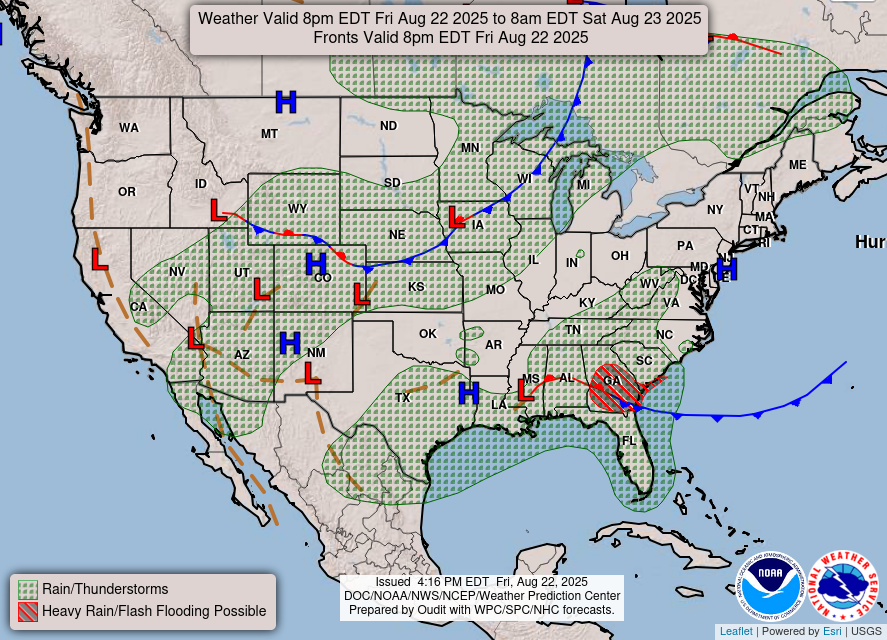
Today’s weather forecast across the nation THIS MAP UPDATES TWICE A DAY
If you shop at Amazon.com we’d appreciate you using this link. We get an itty bitty commission if you buy something, but they add up and help us pay our bills (most importantly our hard-working writers!).
Dear Dave,
Do workers installing electrical, plumbing, and LP components on the line at RV manufacturers need to be certified? If I do a small remodel at home, I need a building permit and can’t do many things myself. —Troy, 2016 Highland Ridge
Dear Troy,
That is a very good question and also a highly debated topic in the RV Industry as it pertains to codes and standards. I have worked on several DIY residential projects as well as helped build four houses for my brothers and one of my own. Although we knew how to do many of the tasks needed, we had to not only get a permit and use a licensed and bonded technician, but also had to have a local inspector sign off on the finished work. In many cases, those technicians also had to be certified by the local city inspector.
There are some things you can do such as swap out a light fixture, install a dimmer switch, change a faucet, or, in some cases, swap out a 120-volt outlet. However, running 120-volt electrical wire, LP or natural gas lines, and major plumbing all require a permit and the work done by someone other than a handyman.
Are workers on RV assembly lines licensed and bonded?
Is every employee on the line installing and wiring the 120-volt electrical system from the distribution center to the appliances licensed and bonded? I doubt it. Is every employee who installs the LP lines from the tank or cylinder to appliances licensed and bonded? I doubt it. Is every employee running plumbing for the freshwater system and holding tanks licensed and bonded. Again, I doubt it.
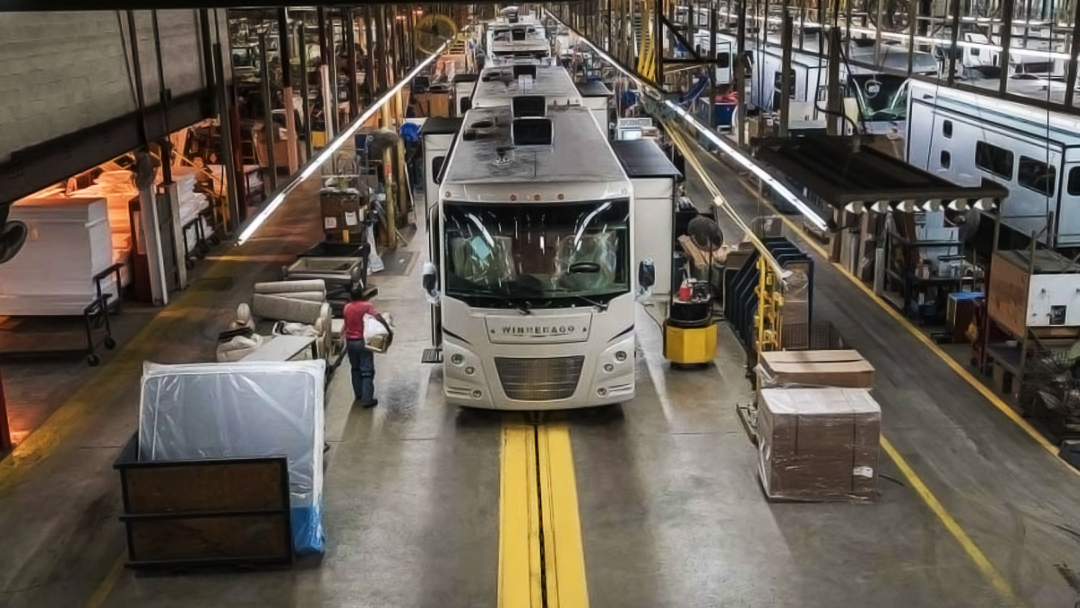
Winnebago factory
Unfortunately, with the mass production of these units, it would be impossible to have every one of the employees working on the critical components that need the certification for residential application be certified to the level of a residential or commercial build.
However, I do believe some manufacturers make an effort to implement procedures that ensure whoever is running 120-volt wiring known as “Romex” and installing LP lines are doing it to at least the highest quality standards that would always meet code no matter how was doing the final install.
For example, Winnebago and Brinkley RV have all wiring pre-prepped in their wiring prep division. It has templates for every floorplan, every appliance, and every option. So, a wiring harness is built to the exact length with the correct wire size and automotive connections. It is then hi-pot (high-potential) tested on the board and delivered to the line for installation. However, this costs money and not everyone does this.
When looking at RVs, this would be something I look at very closely and ask about how the wiring is installed, what connections are used, and how it is tested. I would not want to get a unit with wiring that looked like this.
Wiring mess
Standards used by RVIA
We have also had much discussion about what RVIA uses for codes and how they conduct inspections. Again, it would be impossible for RVIA inspectors to go through every unit built, especially when there were 625,000 units built in one year during COVID, for example. So they set standards using the National Fire Protection Association (NFPA 1192), American National Standards Institute (ANSI), and electrical and safety standards set by the NEC.
Even with all the codes, standards, inspections, and protections in place, it all boils down to the actual installation and what I feel is the mindset of the manufacturer, as RVIA can’t inspect every single RV.
Example of “inspections”
Case in point, I built a 5,000-sf house in 2000 with the help of a very well-known, high-end builder. I was a great DIYer that could do most of the work, but I was not familiar with codes and issues like load bearing walls. Those walls needed to support not only the load above, but they also affected several other components that could eventually settle and create cracks in ceilings and wall years later.
I applied for a permit and we started construction with the footings poured. I went to the local building inspector to get the first step signed off. He looked at me from his desk and said, “Do they look like footings? I can micromanage every project in town and I know who is a good builder. I drive around periodically and look at the projects, so you don’t have to come in here all the time.”
However, I did use a licensed and bonded electrician, plumber, and HVAC company. However, I did not get a single sign-off on any of the permit line items, even though I asked for it several times.
The last step of building a house is getting the final inspection for a Certificate Of Occupancy from the local inspector. None of the 50 homes in this subdivision have one, 25 years later!
Purchasing an RV
One of the most important tasks when looking to purchase a new RV, in my opinion, is to become educated regarding quality materials and proper installation. Too many potential buyers get caught up in the “WOW” factor, as I call it, such as full body paint, 5 TVs, and Bluetooth everything. They don’t look at how the electrical wires are connected, or even notice that the furniture looks like it came out of Walmart or IKEA. Not that it’s bad furniture; it’s just not meant to bounce down the road.
By Mike Sokol Time for a reminder about a miswiring condition I found in campgrounds years ago. It’s a hot-skin voltage that can be “reflected” to multiple RVs in the same area of a campground. And it’s caused by two separate failures at the same time: a lost ground/bond conductor in a campground electrical system and a fault current in an RV.
EDITOR’S NOTE: This article originally appeared in RVtravel.com in November 21, 2021. We are bringing it to your attention again because of its importance.
How does a reflected hot-skin voltage happen?
First things first. A hot-skin voltage is when the electrical potential of your RV skin (and chassis) is a significant voltage level above the earth ground around it. While it’s quite normal for there to be a few volts difference between your RV’s grounding system and earth ground, once you get above 5 volts difference, that’s a hint there may be something wrong with your RV’s grounding system via its shore power connection. If you touch an RV with a significant hot-skin voltage while standing on the ground, you can have a fault current go through your body (and your heart)—which can be very dangerous.
How to measure it…
While plugged into shore power (not powered only from a generator), if you stick a screwdriver into the damp dirt near your RV and measure between the metal shaft of the screwdriver and the metal frame of your RV with an AC multimeter, you should read a maximum of 5 volts AC.
Above is a picture of me measuring 0 volts AC between the trailer’s stabilizing jack and the screwdriver shaft. I have the digital multimeter set to the 600-volt AC scale. Read more about how to measure your RV for ground/bond resistance and hot-skin voltage HERE.
Note that this test could be dangerous to perform if your RV had a significant hot-skin voltage. So only touch the insulated meter probes with your hands, not the RV chassis itself, since it could have up to 120 volts of electrical potential if something is really wrong.
When does this voltage get dangerous?
While a 5-volt shock is likely not dangerous, note that once that hot-skin potential reaches 30- to 40-volts AC, it can become deadly if your hands and feet are wet and you touch the frame of your RV while standing on damp ground or concrete.
Just 10 mA (milliamperes or 0.010 amps) of fault current can be deadly if your heart is already at risk. And just 20 mA is enough current that you can’t let go of an energized object (like a screwdriver shaft or aluminum ladder) that you grabbed with your hand while standing on the wet dirt or concrete.
If you make contact with 30 mA or more of fault current, that just about guarantees your heart will go into fibrillation within seconds of contact. Without immediate medical aid, you can die from electrocution within minutes.
It’s all your fault (current)!
For a hot-skin voltage to occur, you first need some sort of fault current leakage in your RV. That can range from a few mA of low-current fault leakage from your charger or converter’s RF (radio frequency) filter capacitors, or 1 to 2 amps of a medium-current fault from a melted or corroded electric water heater element, up to 20 or 30 amperes of a high-current fault. That can be due to a direct short-circuit between a hot conductor and the chassis by something like a screw or nail driven through a piece of Romex wire or wiring insulation worn through by a piece of metal it’s been in contact with.
A low-current fault of a few mA isn’t enough to be dangerous to your heart and will give you a tingle. But a failed water heater element can easily provide more than the 30 mA of current through you that can put your heart into fibrillation. And the short circuit with 20 or 30 amps of available fault current at 120-volts AC will create a maximum current flow of around 100 to 150 mA through you. That just about guarantees death by electrocution if CPR isn’t immediately started and an AED used within minutes to put your heart back into normal rhythm.
But what about the RV ground?
Glad you asked. If you have a properly bonded ground in your RV’s shore power system, then this fault current can’t turn into a hot-skin voltage. Instead, it will return to the original source of the power company’s transformer.
Note that an 8-foot grounding rod has way too high of an impedance to earth ground to get rid of anything but the lowest current leakages. While code implies that 25 ohms would be an excellent ground, even that much conductivity to earth ground isn’t enough to trip (clear) the circuit breaker in the event of a high-current fault. Nor will it reduce the hot-skin voltage caused by an internally shorted electric water heater element.
Fault current needs a ground/bond connection, not a grounding rod!
To be safe from these fault currents, your RV needs a solid connection from its frame back to the campground (or home) incoming electrical service panel, where it must be “bonded” (connected) to the panel’s neutral-ground bonding point. This is named the “EGC”—for Equipment Grounding Conductor—which is what we call the “ground”.
That green or copper EGC wire is what allows the fault current to return safely to the power company transformer neutral bus. However, if that ground wire is interrupted for any reason, then the fault current can’t find a direct path back to the power company transformer and that’s when a hot-skin voltage occurs.
But what is this “reflected hot-skin voltage” about?
This is a bit tricky to understand, but it happens more than you might think. In a campground, the feeder conductors typically daisy-chain from pedestal to pedestal, fed by a common circuit breaker in the main service panel.
If there’s an interruption in the grounding conductor path for any reason (corroded or loose connection in one of the pedestals, or a broken wire underground, or even a disconnect of the bond to the neutral in the service panel), all RVs that are downstream of the ground break will have their chassis connected together. None of them, however, will be grounded to the main service panel.
All for one, and one for all…
So, in that case, if a single RV has something like a fried electric element in the water heater, that 1 or 2 amps of fault current can easily turn into 80 to 120 volts of hot-skin potential. And that same voltage can be “reflected” to the other 6 or so pedestals on that feeder. So, if one RV has a fault current that turns into a hot-skin voltage, all the other RVs in the area can have the same voltage if there’s no service panel bond/ground.
Is a reflected hot-skin voltage the campground’s fault?
Well, yes, it is. If the campground doesn’t properly maintain and test its pedestals for proper grounding, then ANY RV that’s plugged into a pedestal can cause ALL the RVs on that feeder to develop a reflected hot-skin voltage. So, simply removing the offending RV from the campground does not correct the real problem of a non-existent service panel bond in the campground electrical system.
But without a standardized campground maintenance and test SOP (Standard Operating Procedure), this dangerous condition can be unnoticed until an RV with a large fault current plugs in. And that’s what can endanger all the other campers in that area of the campground connected to that common feeder circuit.
We use cookies to ensure that we give you the best experience on our website. By continuing to use our site, you consent to accepting cookies. We NEVER have or will sell reader's data. For more info, please see our privacy policy page.