By Dustin Simpson
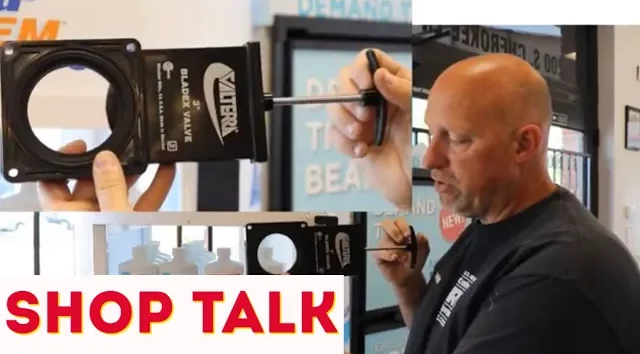
Maintaining your RV’s dump valves is crucial for ensuring a hassle-free and sanitary waste management system. In this guide, we’ll discuss the importance of using the right dump valve lubricant to keep your valves in top condition. Proper lubrication prevents sticking, reduces wear, and extends the lifespan of your dump valves.
Why dump valve maintenance is important
Your RV’s dump valves play a critical role in managing the waste from your gray and black water tanks. These valves need to operate smoothly to ensure proper drainage and prevent leaks or clogs. Over time, the seals and moving parts within the dump valves can dry out, leading to stiffness, leaks, or complete failure. Regular lubrication is essential to keep them functioning efficiently.
Benefits of using dump valve lubricant
Prevents sticking and seizing
Lubricating your dump valves ensures that they open and close smoothly, preventing them from sticking or seizing up. This is especially important after periods of non-use, when valves can become stiff.
Reduces wear and tear
Regular lubrication reduces friction between the moving parts, minimizing wear and tear. This helps extend the lifespan of your dump valves and prevents costly repairs or replacements.
Improves seal longevity
Keeping the seals lubricated prevents them from drying out and cracking, ensuring a tight seal when the valves are closed. This helps prevent leaks and unwanted odors from escaping.
Enhances overall system efficiency
Well-maintained dump valves contribute to a more efficient waste management system, reducing the risk of clogs and ensuring smooth operation when draining your tanks.
Choosing the right dump valve lubricant
When selecting a lubricant for your RV dump valves, it’s important to choose a product specifically designed for this purpose. Look for lubricants that are:
Non-toxic: Safe for use in waste management systems.
Water-resistant: Able to withstand exposure to water and waste without washing away.
Silicone-based: Silicone lubricants are ideal as they provide long-lasting lubrication without damaging rubber or plastic components.
Start by ensuring your gray and black water tanks are empty. This makes it easier to access the dump valves and apply the lubricant effectively.
Clean the valves
Before applying lubricant, clean the dump valves to remove any debris, waste, or residue. Use a mild detergent and rinse thoroughly.
Apply the lubricant
Apply the lubricant directly to the valve handle and the seals. Be generous but avoid over-applying, as excess lubricant can attract dirt and grime.
Work the valve
Open and close the valve several times to distribute the lubricant evenly across all moving parts. This helps ensure that the lubricant penetrates the seals and provides full coverage.
Inspect for leaks
After applying the lubricant, check for any signs of leaks. If the valve is still stiff or leaking, you may need to repeat the lubrication process or inspect for damage.
Tips for maintaining your dump valves
Regular lubrication
Make a habit of lubricating your dump valves regularly, especially before and after long trips or extended periods of non-use. This helps keep them in optimal condition.
Use the valves periodically
Even when not on a trip, operate your dump valves periodically to keep them moving freely and prevent them from seizing up.
Inspect for damage
During routine maintenance, inspect the dump valves for any signs of damage or wear. Replace any components that appear cracked, worn, or damaged.
Keep valves clean
Regularly clean your dump valves to prevent buildup of waste and debris. This ensures smooth operation and reduces the risk of blockages.
Proper maintenance of your RV dump valves is essential for a reliable and efficient waste management system. By using the right dump valve lubricant and following regular maintenance practices, you can ensure that your valves operate smoothly, preventing leaks and extending their lifespan.
For more expert RV maintenance tips and advice, subscribe to our channel. Keep your RV in top condition and enjoy worry-free travels!
Most truck campers get pitched by square footage. At Overland Expo East, Patrick Botticelli from New Jersey Outdoor Adventures found one brand that works differently. Kingstar builds around cubic inches, squeezing real storage and function out of every gap while still keeping the finish work clean and upscale.
Patrick gives us a tour in the video at the end of this post.
Marcus from Kingstar (based in Northern Michigan and the Western UP) described a build process that’s more like problem-solving than decorating. Kingstar manufactures truck campers and horse trailers, and it also makes a proprietary aluminum trailer frame that can turn the camper into a travel trailer (the K Series).
A few ideas guide the builds:
Each camper gets pressurized before exterior caulking goes on, and sealing happens from the back side rather than relying on caulk.
TIG welding and even the upholstery work get done in-house.
Space gets treated like a limited resource, with storage designed into odd corners on purpose.
Kingstar 6, 8, and 10 Series sizes
Kingstar offers three camper series: 6, 8, and 10.
6 Series: for 6.5-foot beds, offered in standard or widebody, with a flatback option that can keep the tailgate usable.
8 Series: for 8-foot beds.
10 Series: the largest, also for 8-foot beds, with the tailgate dropped so it doesn’t need removal.
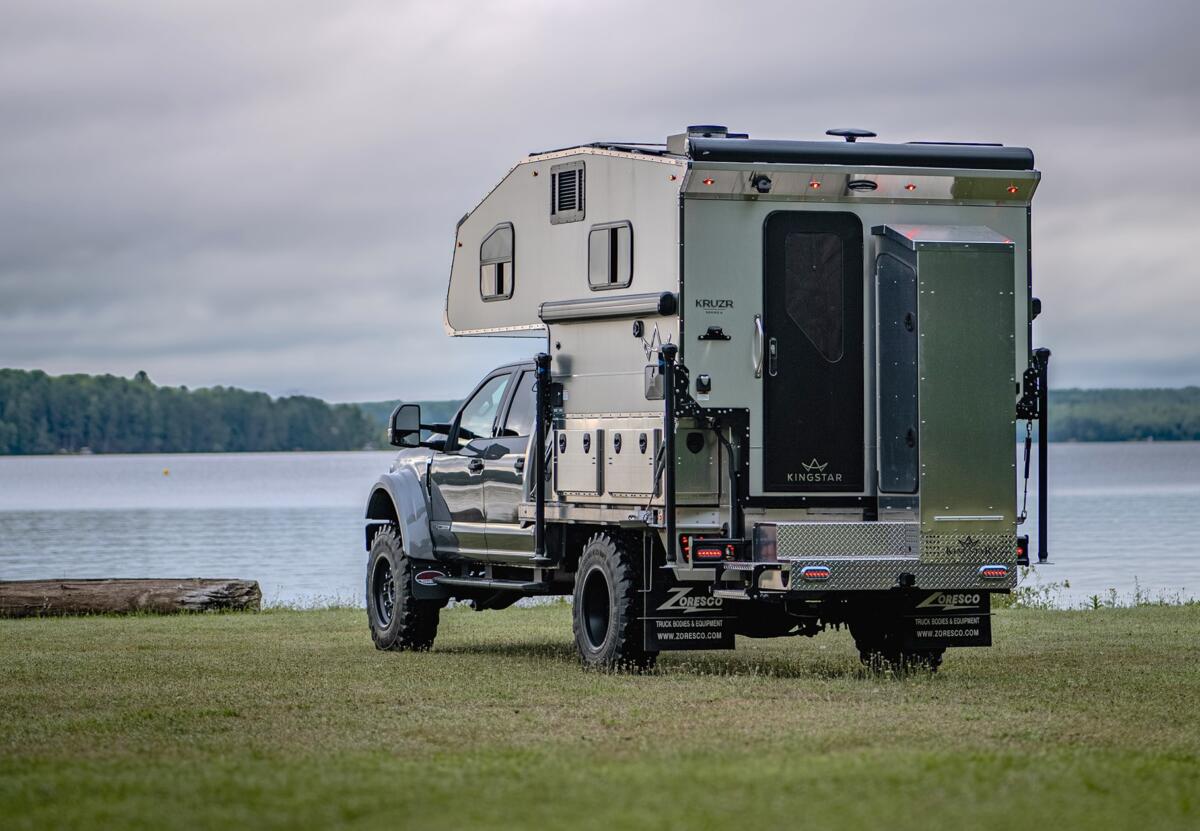
The featured camper was the KRUZR 10 Series flatback, with a 10-foot 2-inch floor length, about 18.5 feet overall length, and 8 feet wide.
Exterior
Construction starts with a wood frame and closed-cell spray foam insulation (around R13 to R14). Exterior skin choices include matte black, brushed aluminum, matte white, and matte tan. Thermal pane windows come standard.
The roof system stands out. Roof panels and trim are stainless steel, with rolled edges designed to avoid exposed seams. Marcus pointed out that the build process aims to keep water out by design, not by relying on surface sealant.
Instead of a rooftop air conditioner, this camper uses a side-mount wall unit (10,000 BTU) on the display truck. That helped keep overall height down to about 10 feet 6 inches, and it preserved interior headroom (6 feet 8 inches). Marcus also noted that replacement is simple and relatively inexpensive compared to many RV roof units.
Awnings can be added on the sides and rear, and Kingstar mounts them lower so they actually cast shade where people stand.
This build supports serious water capacity: up to 75 gallons with auxiliary tank options. For heat and hot water, it uses a Truma Combi on LP, with diesel options available (including diesel Truma setups, and diesel cooking options such as induction and an available diesel oven).
On the rear, Kingstar’s rack rail system works like a modular accessory mount. Options shown included:
A storage bay for hoses and cords, plus a BBQ grill slot
A stair system
A bike carrier option
A Honda 2200 generator position (capable of running the AC and charging batteries)
Flatback vs. Fastback roof style
Feature
Flatback
Fastback
Rear shape
Straight rear wall
Slanted rear wall inspired by a 1960s Mustang fastback
Practical changes
Raised roof and door, a four-season gray tank sits under the shower area
Different rear profile and look
Interior
The KRUZR interiors come with walnut finishes, including a 1.25-inch walnut butcher block counter and walnut veneer laminated onto 13-ply birch. The kitchen includes a stainless sink and backsplash, plus a standard three-burner LP cooktop with oven (or an oven-delete, at no cost, to gain storage). A custom kitty litter drawer option is available for cat owners.
In the 8 and 10 Series, Kingstar offers four layouts in the mid-cabin area, including the Command Center shown in the video. It’s built for work and meals, with an 800-watt inverter dedicated to that station. Storage runs overhead and under seats, with soft-close hardware and marine-grade locking latches.
Standard power is listed as 460Ah of lithium and 660W of solar, with build potential up to 1,380Ah of lithium and more than 300W of solar mentioned in the walkthrough. This unit also included a 3,000-watt inverter, a DC fridge (5.3 cubic feet), and a GX system monitor.
The enclosed wet bath uses a cassette toilet, with other toilet options discussed. It includes a privacy wall with a mirror on the opposite side, storage hooks, and a Maxxair fan (7500 model) designed for use in rain.
Truck fit and payload reality
This camper was shown on a Ford F-550 (84-inch cab-to-axle). The 10 Series was described at about 4,900 pounds in a standard build (with water and propane), and the weight climbs with added batteries, solar, extra water, and gear. Marcus said Kingstar is realistically a dual-rear-wheel F-350 and up experience, especially for buyers who want the full accessory and storage setup.
Kingstar sells factory-direct, not through dealers, because of the number of layouts, finishes, and add-ons. Pricing mentioned in the video description starts at $74,960.
If you’ve been keeping an eye on the used RV market and wondering whether things are finally calming down, the short answer is yes. Not crashing. Not rebounding wildly. Just… settling.
After years of sharp swings—first the buying frenzy, then the pullback—the used RV market has slowed into a steadier rhythm that gives shoppers more time, more choice, and more leverage than they’ve had in a while.
Plenty of rigs, fewer rush decisions
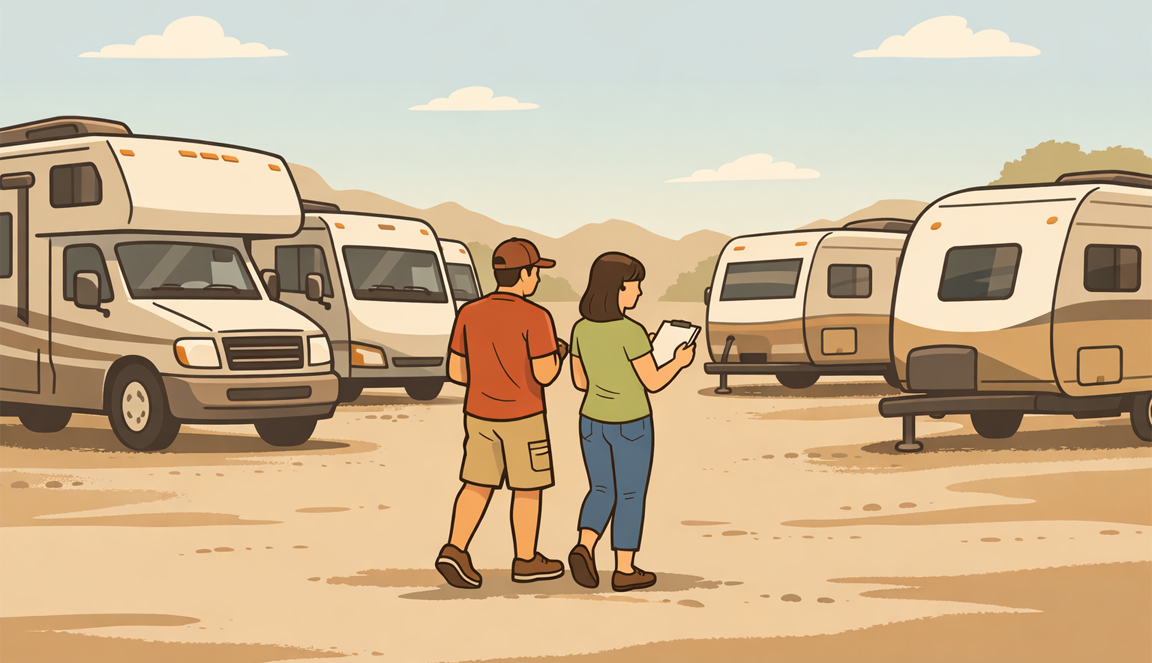
The biggest reason the market feels different right now is supply. There are still plenty of used RVs out there, and buyers know it.
That alone changes behavior. When shoppers aren’t worried about missing out, they take their time. They compare. They walk away from rigs that don’t quite feel right. And that’s made it harder for overpriced units to sell, even if they look good at first glance.
Buyers are still shopping—just more carefully
This slowdown doesn’t mean interest has dried up. It just means buyers are being choosier.
As the season moves along, activity has picked up a bit—but decisions are more measured. Affordability matters. So does condition. Shoppers are looking past shiny photos and asking practical questions about maintenance, wear, and what ownership will really cost once the deal is done.
A quieter market can be a healthier one
For RVers, this calmer pace may actually be a good thing. The used market isn’t racing ahead, but it’s no longer sliding backward, either.
Instead, it feels closer to normal. Supply and demand are more balanced. Prices are steadier. And buyers have more room to think things through before committing.
What this means if you’re shopping for a used RV
The biggest advantage right now is time. With inventory still fairly deep, there’s less pressure to jump on the first rig that looks decent. Waiting for a better fit—or a better price—doesn’t carry the same risk it did a couple of years ago.
Pricing has also become more honest. Well-cared-for rigs that are priced realistically tend to move. Units that are priced with yesterday’s market in mind often sit, giving buyers more leverage at the negotiating table.
Condition matters more than ever. In a crowded field, maintenance records and overall care help a rig stand out. Sellers who can’t show that tend to struggle, even if the asking price looks tempting.
For first-time buyers, that can mean a chance to enter RVing without the pressure and inflated pricing of recent years. Longtime RVers looking to upgrade—or downsize—may find more flexibility than they’ve seen in a while.
The bottom line is this: The used RV market hasn’t stalled out. It’s just slowed enough to give buyers some breathing room. And for RVers who prefer to shop carefully rather than rush, that’s a welcome change.
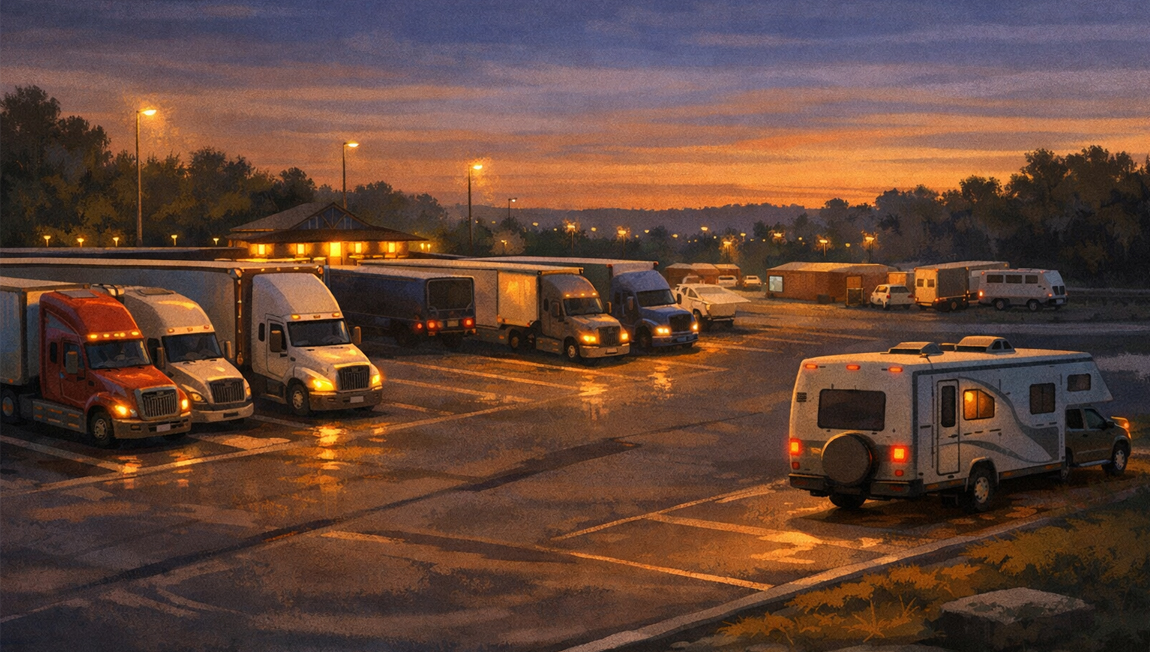
If you’ve pulled into a rest area late in the day and found trucks lined up nose-to-tail, blocking lanes or spilling into odd corners, you already know the feeling. You’re tired. You need a break. And suddenly the simple act of stopping feels like threading a needle.
A new proposal floating around Washington, D.C., could change that. And if it does, RVers may notice the difference almost immediately.
The idea: Dramatically expand dedicated truck parking nationwide, adding hundreds of new facilities over just a few years. It’s aimed squarely at a problem truck drivers have been complaining about for decades: There simply aren’t enough safe, legal places for them to stop. But because trucks and RVs share much of the same roadside infrastructure, any real fix has ripple effects for the rest of us.
Why rest areas feel so crowded now
Most rest areas weren’t designed for today’s traffic, or today’s rigs. They date back to an era when trucks were shorter, RVs were smaller, and traffic volumes were far lighter. Fast forward to now, and the math no longer works.
When truck parking fills up—and it often does by late afternoon—drivers still have to stop. Federal hours-of-service rules aren’t optional. So they do what they can: Squeeze into rest areas, park along ramps, or line up where space technically isn’t meant for overnight parking.
That’s where RVers get caught in the middle. The problem usually isn’t attitude—It’s scarcity.
How more truck parking could help RVers
If large numbers of new truck parking spaces actually come online, here’s what RVers might see:
Less overflow into rest areas. With dedicated truck facilities available, fewer big rigs would need to use general rest area space as a last resort.
Clearer access to restrooms and pull-throughs.
Fewer blocked lanes and fewer trucks wedged into car or RV-sized spots.
More predictable overnight stops. RVers who rely on rest areas for short stays may find them calmer and easier to use.
Reduced tension. When everyone isn’t competing for the same handful of spaces, the temperature drops fast.
It’s not about pushing trucks out. It’s about giving them somewhere else to go.
The big “if” in the plan
Here’s the catch: Details matter.
Some of the proposed truck parking would be built through public-private partnerships, and that raises the question of paid parking. Many truck drivers are wary of paying out-of-pocket to park. That’s especially so when free options—however inadequate—still exist.
If paid facilities go unused, trucks will keep crowding rest areas, and RVers won’t see much relief. The benefit only materializes if the new parking is affordable, well-located, and actually used.
Oversight would likely involve agencies like the U.S. Department of Transportation, but timelines, funding, and locations are still very much in flux.
RVers and truckers want the same thing
It’s easy to frame this as an RV-versus-truck issue. In reality, both groups want the same basic thing: a safe, legal place to stop when the day’s driving is done.
Truck drivers don’t park in rest areas to inconvenience RVers. RVers don’t stop there to get in truckers’ way. The friction comes from an infrastructure system that hasn’t kept up.
If the truck parking shortage is finally taken seriously—and fixed—it could quietly make rest area stops feel a lot more like they used to: straightforward, low-stress, and exactly what they’re supposed to be.
For RVers, that would be a welcome change the next time the rest area sign appears and the blinker goes on.
One in six campers report that federal government actions affected their camping experience in 2025 according to the 2026 Camping Report presented by Toyota Trucks.
The report was compiled from the results of surveys conducted with thousands of members of The Dyrt community and a representative sample of U.S. residents and camping property managers in all 50 states.
Survey respondents were asked about the 43-day government shutdown in 2025, the longest in U.S. history, and staffing cuts at national parks throughout the country.
Campers from historically marginalized groups were disproportionately affected—one in three LGBTQ+ campers and one in five BIPOC campers (black, indigenous, and other people of color) say their 2025 camping experience was disrupted by federal government actions.
Some private campgrounds more likely to be impacted
Private camping property owners and managers were even more likely to be impacted than campers, as nearly one in four (24.8%) reported their business being negatively affected by these occurrences in 2025.
Conversely, 4.1% of owners and managers say the impact was positive, with displaced campers seeking alternatives. The remaining 71.1% claim government actions had no impact on their bottom line.
“Some of the greatest natural spaces in the United States of America are in our amazing national parks,” said Kevin Long, CEO of The Dyrt. “It’s only fitting then that some of our country’s most incredible campgrounds are in these parks as well. Our national parks are intended for everyone to experience and enjoy, and we should all be working toward making the outdoors more accessible.”
The Dyrt campers’ political leaning vs. U.S. population
For the first time, The Dyrt asked its community of campers which way they lean politically. Responses indicated that campers identify as politically independent more than twice the national average.
A recent Gallup poll found that about 11% of the total U.S. adult population are independents who don’t lean toward either the Republican or Democrat sides—that number for campers is 23%.
America’s Original RV Newsletter. Since 2001
Issue 2832 • New issue every weekday If you find this newsletter helpful, please consider supporting our staff’s work producing it with a donation of your choice.
Today’s thought
“Under the giving snow blossoms a daring spring.” ―Terri Guillemets
Need an excuse to celebrate? Today is National Carrot Cake Day!
On this day in history:1959 – Rock and roll musicians Buddy Holly, Ritchie Valens, and J. P. “The Big Bopper” Richardson are killed in a plane crash along with the pilot near Clear Lake, Iowa, an event later known as The Day the Music Died.
Tip of the day Need a free place to stay in your RV? Ask a church
By Gail Marsh
A few summers ago, my husband and I were traveling in our RV, aiming to reach our reserved campground well before nightfall. However, a terrible accident brought Interstate traffic to a standstill. We wondered where we’d ever find sanctuary for the night.
With the Interstate closed, we scoured the internet for nearby campgrounds, local parks, Walmart, and any other potential place that came to mind. Then divine inspiration hit! We discovered a nearby Lutheran church. Continue reading.
Article and video Stealth RV just looks like a work van… until you open the door
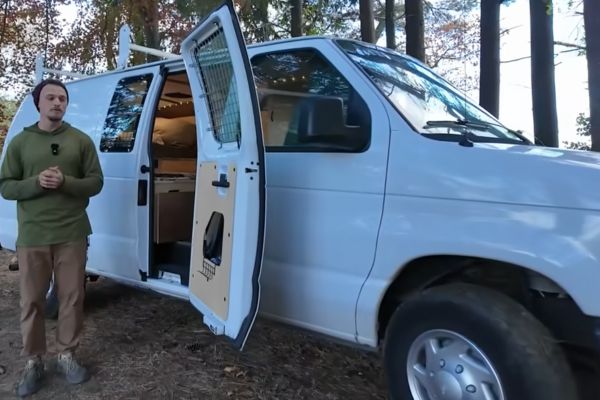
A low-top work van doesn’t look like much from the outside, and that’s the point. On New Jersey Outdoor Adventures, host Patrick Botticelli meets up with Patrick from Patchworks to tour “Acorn,” a custom Ford E250 camper built for a couple but flexible enough for solo travel, weekends, or longer runs. This is a pretty cool stealth camper.
SIIIIGH: Punxsutawney Phil saw his shadow yesterday, which means the little furry meteorologist has predicted six more weeks of winter.
Featured article The most ridiculous RV campsite we’ve seen
By Chuck Woodbury
This is one of the worst-designed RV campsites my staff and I have come across in 25 years of publishing RVtravel.com. I found this photo on social media, and recall that the campsite and its steep approach was on a U.S. military base. You won’t believe this! Could you get your RV in here? We don’t think so!
Light up dark campsites with hitch-mounted reverse lights
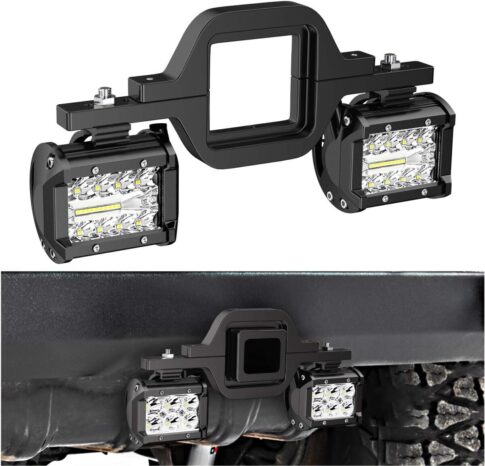
Amp up your RV’s visibility with this hitch-mount bracket and LED pod setup that gives you bright, rugged backup and reverse lighting for dark campsites, rainy nights, or early-morning hookups. The universal tow-hitch mount makes installation simple, and the hardy aluminum LEDs shine wide and far so you can see—and be seen—when pulling in or backing up on gravel roads. Learn more or order.
Ask Dave No hot water pressure in back shower; cold is fine. Water heater too far away?
Shoveling snow is strenuous work that can strain the heart, especially in cold weather, which constricts blood vessels and raises blood pressure, according to the American Heart Association. The risk is highest for older adults and people with heart disease or risk factors such as high blood pressure or high cholesterol, but even those who consider themselves healthy can be vulnerable.
IT’S TRUE: A slow RV driver who holds up traffic is like a man who stops to think in a revolving door.
? MYSTERY PRODUCT OF THE DAY ? We bet almost exactly 50 percent of our readerswill want this! We think it’s true! And for the other 50 percent, you could use it too. Think: tools, screws, gadgets, etc.
And the survey says…
We’ve polled RVtravel.com readers close to 5,000 times in recent years. Here are a few things we’ve learned about them:
• 20 percent often buy souvenir magnets for their fridge on trips.
• 38 percent have encountered a bear at least once while hiking.
• 16 percent consider themselves to be an avid birdwatcher.
There are 151,975 convenience stores operating in the United States, a slight dip from the prior year, according to the most recent 2026 NACS/NIQ TDLinx Convenience Industry Store Count.
The number of convenience stores that sell fuel is 122,620, an increase from the previous year. Convenience stores sell approximately 80% of the fuel purchased in the U.S.
Texas continues to have the most convenience stores (16,504 stores), followed by California, Florida, New York, and Georgia.
For Lovers Only
To: Teresa From: Don “Happy Valentine’s Day to my wife of 52 years.”
To: My Sweety Little Thang From: Your Little Lover Boy (Joe) “Happy Valentine’s Day, my love. Being with you each day is a joy, and I love our life together. Here’s to many more years of love and making each other laugh. LOVE YOU!“
Listen up, romantics. Valentine’s Day is coming up. If you have a special someone you’d like to surprise with a secret message right here on this website (could be your wife, husband, partner, child, neighbor, friend, etc.) submit it to us here. Oh, how fun it will be when they read it! We’ll feature these daily in our upcoming newsletters.
Readers’ pet of the day
“Otis (Miniature Schnauzer, age 5) loves to go camping. He loves all the new smells and many walks where he’s always making new friends.” —Janeen Orlet
Send us a photo of your pet with a short description. We publish one each weekday in RV Daily Tips and in our Sunday RV Travel newsletter. No blurry photos, please! Please do not submit your photo more than once. Thanks!
If you shop at Amazon.com we’d appreciate you using this link. We get an itty bitty commission if you buy something, but they add up and help us pay our bills (most importantly our hard-working writers!).
Dave,
We have a 2022 Grand Design 380FL. It is our home. Taking a shower in the good-sized shower is a real downer. All the rear hot water side spigots have very low flow, especially the elevated shower system. I think it’s because we are pulling hot water off a 12-gallon tank, where we lose a lot of pressure in that system design. From the hot water tank to the shower head is approximately 30 feet, plus another 3-4 feet of head pressure to shower head.
There is also some kind of device under the kitchen in the hot water line that makes a rushing swoosh sound as hot water travels through it. Sounds like a vortex of air and water, but not sure why it makes that noise.
Anyway, is there a device or a way to increase the pressure coming out of the hot water tank alone to the rear portions of trailer? I have a new non-adjusting Valterra stainless steel inline pressure regulator at the spigot that is rated for 50-55psi. Thanks for your time. —Mark, 2022 Grand Design 380FL
More details
From Dave:
I got this question from Mark and asked if he was experiencing this just when using the on-board water pump, or did it happen when connected to city water that should have more pressure. Here is what I got back.
From Mark:
Thank you for following up. The low pressure occurs on both the city water connection and the on-board pump.
I have tried replacing the shower head, but it didn’t make a significant difference. Currently, the city water is only at about 40 psi. Even with a pressure regulator, I can’t get it much higher, and the pressure drops to around 22–25 psi when a faucet is opened.
The cold side functions OK from a pressure perspective. However, because the hot water pressure is so low, we have to use a higher volume of hot water to get a comfortable temperature, which affects the cumulative pressure. The outside shower is closest to the 12-gallon hot water tank and performs the best, but it is still weak.
It may be the check valve?
I suspect the check valve on the hot water tank discharge may be constricted due to scale or age. My plan is to descale the system by running heated vinegar through the hot side and letting it sit for several days. I also expect to clean out each faucet controller. Additionally, I might try removing the external pressure regulator to see if that helps. I regularly change the system filters every three months, so I don’t believe they are the cause of the restriction.
In my opinion, we are losing significant pressure at the hot water tank. It seems the transition from the 1/2” cold line into the tank bottom causes a drop that the system can’t recover from when it pulls from the top. It feels like this setup needs a booster.
From Dave:
Mark,
Since your unit is almost 5 years old, the first thing I would suggest is to clean out the water lines, as you indicated. Water from the campground is almost always untreated hard well water that can contain calcium, lime, rust, and other particles. In fact I have even found sand in water lines and tanks! Hot vinegar is good; however, I would also use CLR, which you can find on Amazon here.
Flush bottom of water heater
You will also want to flush out the bottom of your water heater as the drain plug is not at the lowest point. Rather, it is at least an inch or higher from the bottom, so that hard water sits in the bottom of the tank during storage and just gets worse. A good flush wand is this one from Camco that has a threaded rod rather than the plastic push one that I have found to blow off and go inside the tank! You can find one on Amazon here.
Water heater flush wand
Asked Grand Design rep about this
I was conducting seminars this past weekend at an RV show and a Grand Design rep was there. I asked him if he was familiar with the plumbing system. He suggested having the owner contact customer service with the VIN number—which you already have done, without much help. Luckily, one of the dealers had a few service techs there, so I talked with them about what they may have seen in similar situations.
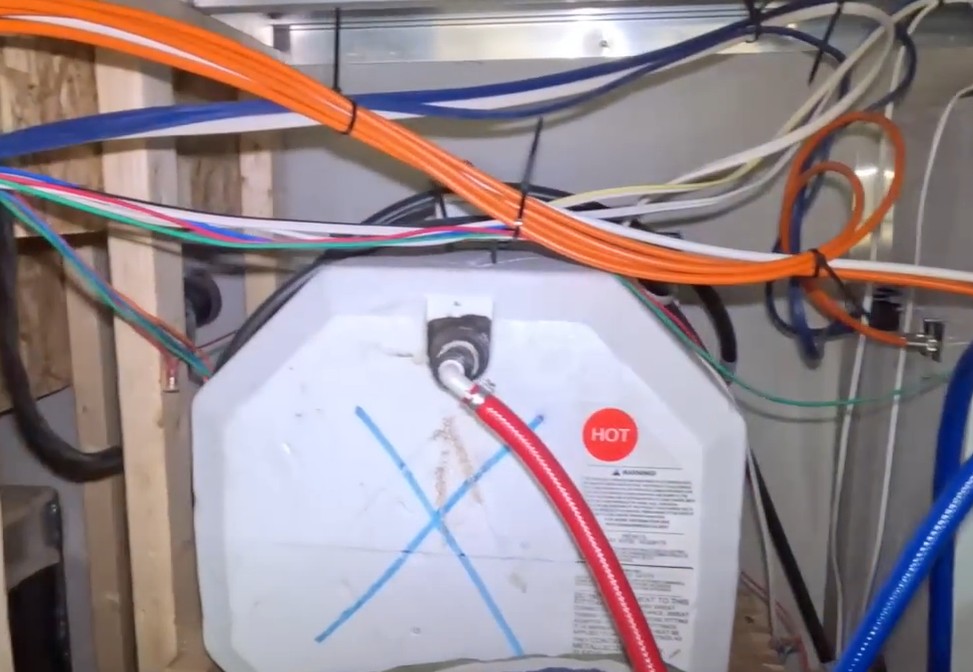
They suggested looking at the check valve on the outgoing port of the water heater. I had looked at several Winnebago 3D and plumbing drawings and did not see that. But when searching videos on line, it seems to be a common issue.
The access to the back of the water heater is through the passenger side compartment and removing a panel covering it. It is a white plastic check valve with a screen to it, which would be easy to get clogged with hard water deposits. If it is clogged, it might allow enough water pressure through to feed the kitchen hot water line, but restrict it going back 30+ feet and up 6 feet to the shower head.
Water heater check valve
I would still like to find out what the hissing is in the underbelly. I believe it to be the vacuum breaker. Hissing means it is getting weak and introducing air, which would also lose pressure.
By Gail Marsh
A few summers ago, my husband and I were traveling in our RV, aiming to reach our reserved campground well before nightfall. However, a terrible accident brought Interstate traffic to a standstill. We wondered where we’d ever find sanctuary for the night.
Searching everywhere
With the Interstate closed, we scoured the internet for nearby campgrounds, local parks, Walmart, and any other potential place that came to mind. Then divine inspiration hit! We discovered a nearby Lutheran church.
Praying for a place to stay
We contacted the church office and reached the pastor just as he was leaving for the day. After explaining our predicament, he graciously invited us to spend the night in the church’s parking lot.
Thankfully relieved for this provision, we carefully exited the highway. We then navigated our RV to the back of the church lot. It was a lovely spot where trees provided shade, and a gentle breeze cooled our frayed nerves. This experience opened our eyes to the possibility of utilizing church parking lots for overnight RV stays.
I don’t recommend asking permission to park your RV at the very last minute like we did—unless you find yourself in a similar situation. (Our 40+ years of teaching in Lutheran schools may have helped our last-minute request.)
Understanding church parking lot etiquette
Seek permission: Always contact the church beforehand to request permission. Churches are private properties, and policies regarding overnight parking vary. A courteous request can go a long way.
Be discreet: Park in a manner that doesn’t obstruct daily or evening church activities. Avoid setting up extensive camp setups; keep a low profile to respect the sanctity of the place.
Limit your stay: It’s advisable to stay only for one night unless explicitly permitted otherwise. Arriving late and departing early can minimize any inconvenience to the church community.
Express gratitude: While many churches don’t expect donations, offering one as a token of appreciation is a kind gesture. Additionally, attending a service or participating in church activities can foster goodwill. (The next day, we were able to join the worship service. We happily donated to the church’s building fund.)
Benefits of overnighting at churches
Safety: Church parking lots are often in safe, quiet neighborhoods, providing a peaceful night’s rest.
Community engagement: Staying at a church offers an opportunity to connect with local communities and share in their fellowship.
Availability: With numerous churches across the country, they can be convenient options when traditional campgrounds are unavailable.
Did you know?
Harvest Hosts recently added churches to their roster of places RVers can stay. If you’re a member of Harvest Hosts, you’ll want to check this out. Follow all of the recommended guidelines mentioned.
Final thoughts
Our unexpected stay at the church parking lot turned a very stressful situation into a memorable experience of hospitality and community.
Have you ever stayed in your RV overnight in a church parking lot? Tell us about it in the comments, if you wish.
By Cheri Sicard
A low-top work van doesn’t look like much from the outside, and that’s the point.
On New Jersey Outdoor Adventures, host Patrick Botticelli meets up with Patrick from Patchworks to tour “Acorn,” a custom Ford E250 camper built for a couple but flexible enough for solo travel, weekends, or longer runs. It’s a 2011 E250 with 150,000 miles, it’s a second-owner van, and it comes with a full stack of maintenance paperwork.
In the video at the end of this post, we get a full tour.
A few exterior details set up the rest of the build:
A flip-up side window that can stay open in the rain, helping airflow in a small space.
A roof rack with extra crossbars, set up so the future owner can choose things like solar panels or a roof deck.
A Maxxair fan up top for steady ventilation.
Bars on a window for extra smash-and-grab resistance.
It stays low and short, which helps with stealth and day-to-day driving.
From the back doors, the storage area is intentionally open and not too deep. The goal is simple: gear stays reachable. There’s room to stash outdoor equipment, with spots for hooks and bungee cords, plus a planned location for an electrical system. For now, there’s temporary lighting from a quick trip need, and the bed platform is visible from the rear, giving the space a clean, practical feel.
The door-mounted kitchen that can cook anywhere
The most unusual move is the kitchen mounted to the side door. In a low-top van, cooking outside often makes more sense, and this setup is made for that.
The whole unit can lift off and get set where it’s useful, on a log, a picnic bench, or even the ground. It locks back in place for rough roads, and a flip-up counter adds workspace.
Instead of swinging open, the kitchen door folds down like a table, with a leg that pops into place. It creates an outdoor prep spot right at camp.
Inside, the kitchen keeps adding options. There are quick one-handed counter extensions, drawers, and a sink cover that turns the sink area into more counter space.
Seating, lighting, airflow, and the small-space details
A rolling stool with storage makes moving around easier, and it tucks up front when not in use. Up front, a swivel seat opens the living area and can slide close enough for face-to-face seating or working. There’s also a dash cam, and the van retains basics like power windows and power mirrors.
On the walls, Patrick uses thin outdoor vinyl instead of thicker wood. It’s light, easy to clean, and less likely to hold moisture. Underneath, the van is spray-foam insulated, and the floor includes about a half-inch of foam board insulation.
Fairy lights run around the interior with a switch placed so it’s reachable from the door, bed, and main seating area. A small reading light adds a focused option at night. The flip-up window and Maxxair fan work together to move air through the living space, even when it’s raining.
Water, toilet space, lounge comfort, and a bed that expands
The sink is intentionally large, since a tiny sink often goes unused. The faucet can pull out and spray outside. For now, the water setup uses a RinseKit system stored under a bench, along with a temporary gray water tank.
A slot is sized to fit a Cuddy composting toilet, if the next owner wants it. If not, it becomes shoe storage or a bulk item cubby.
The main lounge includes a swivel-out table and an ottoman setup, plus a fridge that slides out so nobody has to crawl into the van just to grab something. Under-seat storage can later hold a diesel heater or be converted into more drawers.
The bed stays ready as a single, then slides out to about 54 inches wide and 6 feet long. It’s quick to set up, which matters at the end of a long day.
Why Acorn works for stealth camping and custom upgrades
This E250’s low height and short length make it easier to parallel park and fit into garages than many high-top builds. It’s also sold with a modular approach, so the buyer can choose the “life systems” that match how they travel: solar, power, water tanks, and heat.
A van like this proves something simple: Smart layout beats tall walls. Acorn keeps the footprint small, keeps the space usable, and leaves room for the next owner to finish it their way.
Ladies and gents, a question about your hair: Do you color/dye it?
In recent years, the hair-coloring industry has seen remarkable growth as more people experiment with hues and styles to suit their personalities and lifestyles.
In the United States alone, hair-coloring product sales were around $7.5 billion in 2025, supported by strong demand both in salons and at home. Globally, the hair color market is booming too—valued at roughly $28 billion in 2025 and expected to grow steadily, potentially reaching between $47 billion and $50 billion over the next decade as trends evolve and new formulas hit shelves.
Many people see hair color as a form of self-expression and personal identity, with more emphasis on products that deliver vibrant results while also caring for hair health—including cleaner ingredients, gentler formulas, and nourishing treatments.
When it comes to preferences, classic shades still dominate. Brown and black tones remain among the most popular choices, especially for those who want a natural but rich look, while blonde continues to be a timeless favorite.
Natural-looking colors and low-maintenance styles are especially popular right now, with more people embracing lived-in roots, soft blends, and effortless transitions that grow out gracefully. One standout shade this season is “Teddy Bear Brunette”—a cozy, neutral mid-tone brown that sits somewhere between blonde and brunette.
So, tell us: Do you dye your hair? If so, leave a comment and tell us what color you dye it. We’re betting purple still gets some votes, right? Wink.
If you rely on Starlink to stay connected on the road, a recent Starlink privacy policy AI update deserves more than a quick skim. Starlink now says it may use some customer data to help train artificial intelligence systems. It’s part of a wider shift across the tech world. But for RVers, it naturally raises questions about how much of their digital footprint is still under their control.
This isn’t about Starlink suddenly spying on customers or reading private messages. But the new language does give the company more room to use certain data, unless customers take steps to opt out. For RVers who depend on Starlink for work, banking, navigation, and everyday communication, the change raises practical questions about privacy, transparency, and how much data sharing has quietly become the new normal.
The good: Why Starlink is doing this
First, some perspective. Starlink isn’t suddenly doing something wildly different from the rest of the tech world. Companies everywhere are leaning on AI to spot problems faster, smooth out service, and reduce downtime.
For RVers, that can actually be a plus. A system that learns where congestion tends to happen, or which satellites get overloaded during peak travel seasons, can reduce slowdowns when parks fill up or snowbirds roll south. Used carefully, AI can help Starlink keep service more reliable—especially in the kinds of out-of-the-way places where many RVers camp.
From that angle, using generalized system data to make the network work better isn’t hard to understand.
The bad: The policy says more than it explains
Where things get uncomfortable is in how Starlink describes the change.
The updated privacy policy allows Starlink to use customer data to train AI systems, but it doesn’t spell out—in plain terms—what that does or doesn’t include. Most RVers aren’t worried about Starlink improving satellite performance. They’re concerned about vague language and unanswered questions.
When policies get broader instead of clearer, people naturally start filling in the blanks themselves. That’s when concerns grow, even if a company’s intentions are relatively modest.
The ugly: If you don’t act, you’re in by default
Here’s the part that’s likely to bother some RVers the most: The change is automatic unless you opt out.
If you didn’t read the updated policy closely, nothing stopped you, warned you, or clearly explained what had changed. Responsibility shifts quietly to the customer to notice the update, decide how they feel about it, and dig into account settings if they want to limit data use.
That’s not unique to Starlink—but it does put the burden on people who signed up for internet service, not a crash course in modern data practices.
How RVers can opt out
For RVers who aren’t comfortable with their data being used to train AI systems, Starlink does offer a way to opt out—but it’s not something you’ll stumble across by accident.
Here’s the plain-English version:
Log in to your Starlink account using a web browser.
(Many users report this is easier to find on the website than in the mobile app.)
Go to Account Settings or Profile settings.
Look for a data-sharing or privacy option that refers to using personal data for AI, “trusted partners,” or “service improvement.”
Turn that option off and save your changes.
Starlink hasn’t made a big public show of this setting, and the wording may evolve over time. If you don’t see anything obvious, it’s worth clicking through the privacy or data-use sections carefully.
Opting out shouldn’t affect your service quality, billing, or access to the network—it simply limits how your data can be used beyond delivering internet service.
What this really means for RVers
This update doesn’t mean Starlink is listening in on conversations or tracking every website you visit. It also doesn’t mean RVers need to panic or unplug.
What it does mean is that Starlink, like many companies, is leaving itself more room to use customer data as AI becomes a bigger part of how services operate. Whether that’s acceptable or unsettling depends on where you draw your own privacy lines.
For RVers who value simplicity and control, the takeaway is straightforward: Be aware the rules changed, and know that opting out is an option if you’re not comfortable with the new direction.
As AI keeps creeping into everyday tools, these kinds of choices are becoming part of modern RV life—right alongside deciding which campground has the best signal.
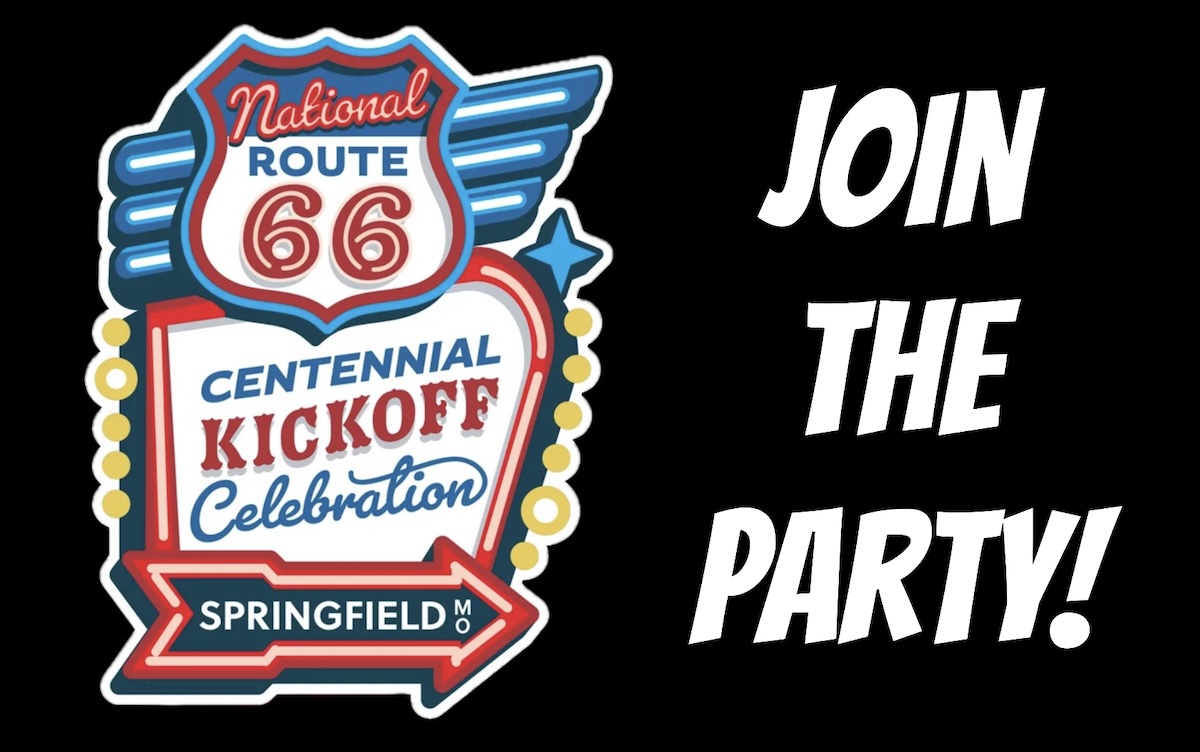
SPRINGFIELD, Mo. — The Missouri Route 66 Centennial Commission, in partnership with The Road Ahead Partnership, has announced the full schedule for the National Route 66 Centennial Kickoff Celebration, presented by Vital Farms. Springfield is internationally recognized as the Birthplace of Route 66 and will host the three-day national event April 30–May 2, 2026.
Created by the Missouri General Assembly, the Missouri Route 66 Centennial Commission leads the state’s planning, coordination, and preservation efforts for the upcoming 100th anniversary of historic U.S. Route 66.
Springfield: The Birthplace of Route 66
Springfield holds the official designation as the Birthplace of Route 66 because it was here—on April 30, 1926—that the telegram proposing the name “U.S. Route 66” was sent to federal highway officials. That single act solidified Springfield’s place in American history and set the stage for a century of travel, commerce, music, pop culture, and storytelling along what would become the world’s most famous highway.
“The centennial is a once-in-a-lifetime opportunity to showcase the power and enduring legacy of Route 66. From Illinois to California, communities are working together to preserve the road and share its stories with future generations,” said Bill Thomas, president/CEO of The Road Ahead Partnership and member of the U.S. Route 66 Centennial Commission.
“Launching the national celebration in Springfield, the Birthplace of Route 66, reflects the road’s origins and its timeless ability to connect people, places and experiences.”
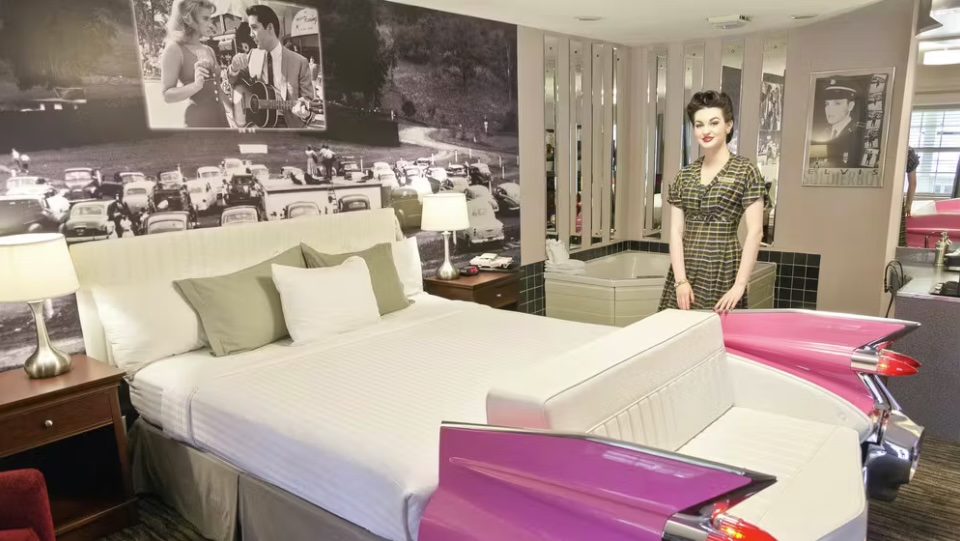
If you don’t bring your RV to the celebration, maybe you can get lucky and reserve the room at the Rail Haven (now Best Western) where Elvis stayed when he performed in Springfield. Chances are it’s already booked, but maybe try for another time.
“This is a fantastic opportunity for us to celebrate Springfield, the community we’ve called home since opening Egg Central Station here,” said Kathryn McKeon, chief marketing officer at Vital Farms. “Route 66 helped shape this city, and Springfield helped shape Vital Farms, so joining in on the Centennial Kickoff just makes sense. And of course, we’re excited to show up with good eggs and give folks a taste of what we’re all about.”
National Route 66 Centennial Kickoff Celebration Schedule
(All times Central Standard Time)
Thursday, April 30, 2026
8 a.m. (CST) — NBC’s live broadcast of The TODAY Show “3rd Hour” NBC’s TODAY Show will originate its nationally televised “3rd Hour” live from Springfield, bringing the Birthplace of Route 66 to millions of viewers across the United States and around the world. Hosts Al Roker, Dylan Dreyer, and Craig Melvin will spotlight Springfield’s role in American transportation history, the cultural legacy of Route 66, and the communities preparing to celebrate the highway’s 100th anniversary.
The broadcast will feature live interviews, historical storytelling, and scenes from the kickoff celebration, officially launching the Route 66 Centennial on a national stage.
4 p.m. — Birthplace Plaza Dedication At exactly 4 p.m., a formal dedication ceremony will take place at Birthplace Plaza at the intersection of Jefferson Avenue and St. Louis Street—marking the precise time and location where, on April 30, 1926, the telegram proposing the name “U.S. Route 66” was sent to federal highway officials. State, national, and international Route 66 leaders will gather to commemorate this defining moment in transportation history.
The ceremony will include remarks from elected officials, preservation advocates, and Route 66 representatives, reaffirming Springfield’s designation as the official Birthplace of Route 66 and honoring the road’s enduring global impact.
5–11 p.m. — National Route 66 Centennial Kickoff Concert
Tickets on sale Jan. 30 at 10 a.m. • greatsouthernbankarena.com
The evening culminates with the National Route 66 Centennial Kickoff Concert at Great Southern Bank Arena on the campus of Missouri State University. This large-scale live music event brings together legendary and contemporary American artists for a multi-hour celebration of the music, stories, and shared experiences inspired by the Mother Road.
Designed as the centerpiece of the national kickoff, the concert will draw attendees from across the United States and abroad, blending entertainment with historic significance as Springfield officially launches the Route 66 Centennial year.
The concert will be hosted by actor John Goodman and Springfield City Councilmember Callie Carroll. Goodman is an acclaimed American actor originally from Affton, Missouri, best known for his Emmy-nominated role as Dan Conner on “Roseanne” and his many film performances in “The Big Lebowski” and “O Brother, Where Art Thou?” He attended Southwest Missouri State University (now Missouri State University) on a football scholarship, but an ACL injury shifted his focus from athletics to drama, launching his lifelong passion for acting.
A proud MSU alumnus (BFA, 1975), Goodman has maintained deep ties to the university: He established the Professional Performance Award scholarship to support top theatre students, has been a longtime donor and advocate for the Department of Theatre and Dance, and served as chair of Missouri State’s major “Onward Upward” fundraising campaign, helping raise hundreds of millions for student programs and facilities.
In recognition of his generosity and impact on the campus community, MSU honored him with an honorary doctorate and named the John Goodman Amphitheatre at the Judith Enyeart Reynolds Arts Park in his honor.
Little Big Town
Little Big Town GRAMMY Award–winning group Little Big Town is one of country music’s most enduring and celebrated groups. Over a 25-year career, the GRAMMY, ACM, CMA, AMA, and Emmy Award-winning band has delivered a string of genre-defining hits including “Boondocks,” “Pontoon,” “Tornado,” “Day Drinking,” and the history-making, best-selling country single of 2015, “Girl Crush.”
Chris Janson Chris Janson is a multi-platinum-selling singer-songwriter and dynamic live performer whose high-energy style blends traditional country, Southern rock, and modern Americana. Known for hits such as “Buy Me a Boat,” “Fix a Drink,” and “Done,” Janson is also a respected Nashville songwriter whose work has been recorded by some of country music’s biggest stars.
Gary LeVox of Rascal Flatts Gary LeVox is the unmistakable lead vocalist of Rascal Flatts, one of the most successful country groups of the past two decades. With more than 23.4 million albums sold and chart-topping songs such as “Bless the Broken Road,” “Life Is a Highway,” and “What Hurts the Most,” LeVox’s powerful voice helped define a generation of country-pop music with global reach.
Gretchen Wilson A trailblazing force in country music, Gretchen Wilson rose to prominence with her Grammy-winning anthem “Redneck Woman.” Known for her unapologetic authenticity and blue-collar storytelling, Wilson has sold millions of records worldwide and remains an enduring symbol of independence and grit—values deeply tied to the spirit of Route 66.
Ozark Mountain Daredevils Formed in Springfield, Missouri, the Ozark Mountain Daredevils is one of the most influential roots-rock bands to emerge from the American Midwest. Best known for their international hit “Jackie Blue,” the band helped pioneer a sound blending country, rock, folk, and blues—music that reflects the landscapes and stories of Route 66 itself.
The Haygoods The Haygoods are a nationally acclaimed, family-based performance group known for their high-energy live shows and innovative instrumentation. Originating in Branson, Missouri, the group combines tight harmonies, genre-spanning music, and inventive staging to create a uniquely American entertainment experience that resonates with audiences of all ages.
Friday, May 1, 2026
11 a.m. — Route 66 Queen’s Gate Sculpture Dedication Community members and visitors are invited to gather at the intersection of St. Louis Street and Glenstone Avenue for the unveiling of the Queen’s Gate Sculpture, a new public art landmark created to honor the cultural, artistic, and historical significance of Route 66. The sculpture serves as a symbolic gateway to Springfield’s Route 66 corridor and reflects the creativity, diversity, and enduring influence of the Mother Road.
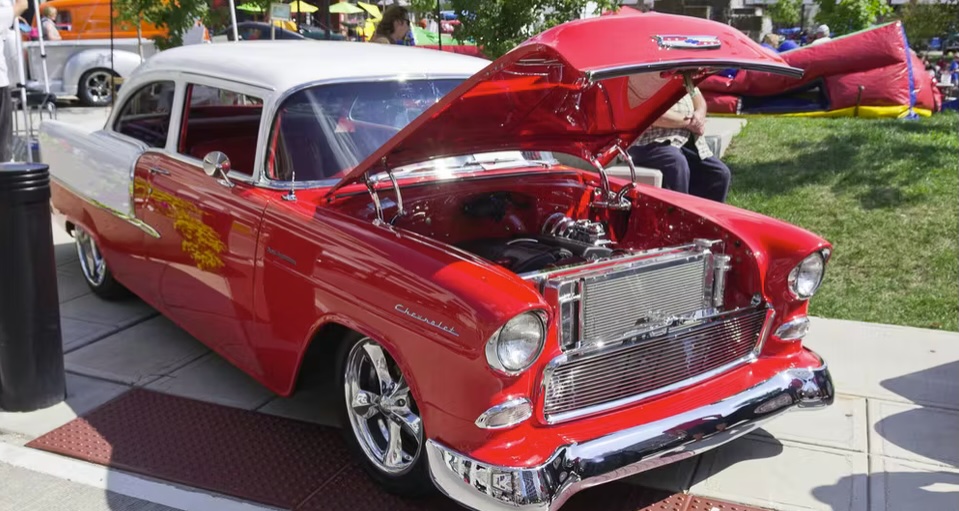
See a whole bunch of classic cars like this ’50s-era Chevy
6 p.m. — Celebrate America on Route 66 Parade The Celebrate America on Route 66 Parade brings the highway’s history to life through motion and spectacle. More than 100 classic, vintage, and iconic automobiles will travel through Springfield’s streets, representing the evolution of American travel and car culture along Route 66. Participating vehicles and delegations from Route 66 communities across the country will highlight Missouri’s legendary stretch of the Mother Road while celebrating the shared heritage of the eight Route 66 states.
6–9 p.m. — Red, White & Bridge Bash at the Jefferson Avenue Footbridge Festivities continue with the Red, White & Bridge Bash, featuring live music and family-friendly entertainment at the historic Jefferson Avenue Footbridge on Springfield’s Commercial Street. Recently restored, the footbridge stands as an iconic symbol of the city’s industrial past and its ongoing revitalization. The event creates a festive gathering space where history, music, and community converge in a uniquely American celebration.
7 p.m. — Stars & Stripes and 66 Reception Held at the elegant Savoy Ballroom, the Stars & Stripes and 66 Reception is a ticketed event to bring together civic leaders, Route 66 advocates, sponsors, and special guests for an evening of recognition and connection.
7:30–8:30 p.m. — Lighting of the Historic Jefferson Avenue Footbridge The evening reaches a dramatic highlight with the official lighting of the Jefferson Avenue Footbridge, accompanied by a choreographed light, sound and drone show over Historic Commercial Street.
Saturday, May 2, 2026
9 a.m.–6 p.m. — Red, White & Bridge Bash on Commercial Street Historic Commercial Street comes alive throughout the day with the continuation of the Red, White & Bridge Bash, featuring live performances, interactive activities, food vendors, and community programming. The event celebrates Route 66’s legacy as a gathering place for travelers and neighbors alike, welcoming visitors of all ages to experience Springfield’s historic corridor.
10 a.m.–6 p.m. — Route 66-themed ArtsFest on Walnut Street Artists, makers, and performers will line Walnut Street for a Route 66–themed ArtsFest celebrating creativity inspired by the Mother Road. Visual art, live demonstrations, music, and hands-on experiences will showcase how Route 66 continues to influence American art, design, and storytelling nearly a century after its creation.
3–5 p.m. — Ozarks Public Television Screening of Route 66 Documentary Ozarks Public Television will present a special free public screening of a Route 66 documentary exploring the road’s historical significance, cultural impact, and enduring appeal.
5–11 p.m. — National Telegraph Ball at the Historic Shrine Mosque The celebration concludes with the National Telegraph Ball, an elegant evening event held at Springfield’s Historic Shrine Mosque. Inspired by the 1926 telegram that named Route 66, the ball combines live entertainment, dining, and period-inspired flair while raising support for Route 66 awareness and preservation initiatives.
To date, the Commission has provided more than $2.5 million in financial support for special events; provided funding for 12 interactive Route 66 signs in the eight Route 66 counties; assisted with funding three tour stops in Greene, Webster and Laclede counties; and provided $160,000 in funding for wayfinding signs along the route. The national kickoff celebration is the signature event, including participation from other key Route 66 cities: Joliet, Illinois; St. Louis, Missouri; Amarillo, Texas; Albuquerque, New Mexico; and Santa Monica, California.
“This kickoff celebration is more than a look back—it’s a launch point for the next century of Route 66,” said Cora Scott, chair of the Missouri Route 66 Centennial Commission and the April 30-May 2 Kickoff Celebration.
Sponsorship, partnership and volunteer opportunities for the celebration are still available. Visit route66kickoff.com for more information.
We use cookies to ensure that we give you the best experience on our website. By continuing to use our site, you consent to accepting cookies. We NEVER have or will sell reader's data. For more info, please see our privacy policy page.