Think about your life right now. Does it excite you? Are you excited about the things to come? Or does it bore you? Do you feel like you’re doing the same thing over and over again? Has the thrill of RVing and traveling to new places dwindled?
Perhaps you’re someone who still feels the thrill of waking up to a new horizon every day, eager to see what the next stop on the map holds. Or maybe, after months or years on the road, the excitement has dulled, and the routines of RV living have started to feel, well, routine.
It’s okay to admit if you’re feeling a little stuck—burnout can happen even when you’re living the dream. For some, it might be a sign that it’s time to mix things up, try a new route, or explore a type of destination you’ve never considered before.
On the other hand, maybe you’re just finding your rhythm, or the simplicity of RV life has brought a calm excitement to your days. A morning coffee under the awning, the hum of the open road, and the freedom to stay or go as you please—these small joys are what keep many RVers going. If that’s you, what’s your secret to keeping the spark alive?
After you vote, no matter what your answer is, please leave a comment and share your thoughts. Other RVers may be able to relate. Is it the places you’ve visited that make this lifestyle worthwhile, or is it the people you’ve met along the way?
Or, if you’re feeling a little uninspired, what changes are you considering? Perhaps a new travel companion, a different type of adventure, or even a break from life on the road could reignite your passion. Thank you for sharing—your insights might just inspire someone else!
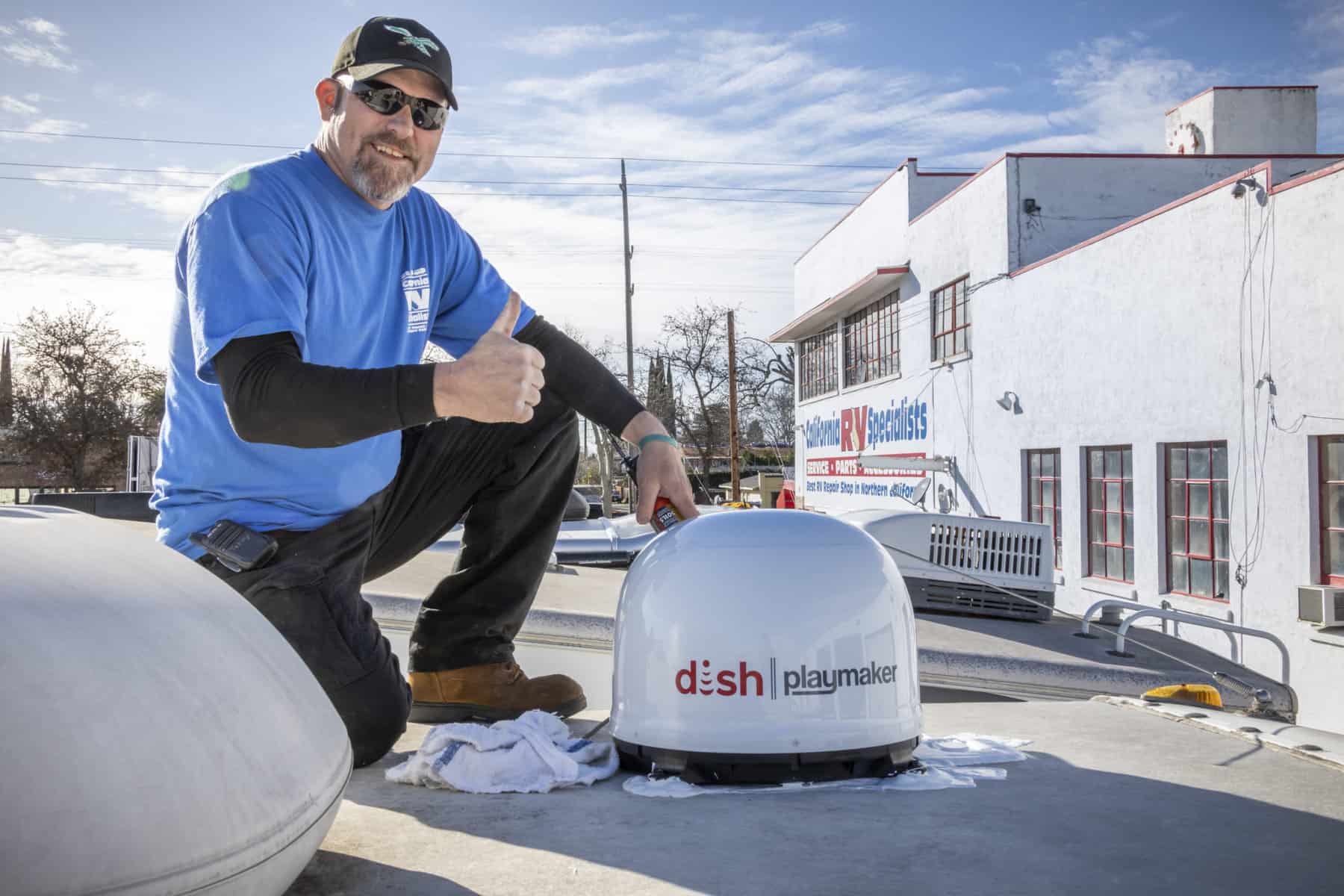
By Dustin Simpson Join me as I share my experience from the repair center’s view. At California RV Specialists, we are fans of extended service contracts. In our experience, these contracts assist in financial burdens as long as the point of failure is covered under your service plan.
However, it’s important to consider a few factors before purchasing an RV extended warranty:
Coverage details: Carefully review what the extended warranty covers and any exclusions or limitations. Some warranties might have specific requirements for maintenance and repairs to remain valid.
Cost versus benefit: Compare the cost of the extended warranty to the potential repair costs you might face without it. Make sure the warranty aligns with your budget and risk tolerance.
Provider reputation: Research the reputation of the extended warranty provider. Look for reviews, ratings, and feedback from other RV owners to ensure the provider is reliable and responsive.
Claim process: Understand the process for making claims under the extended warranty. A straightforward and efficient claims process is essential for getting the assistance you need when you need it.
RV age and condition: Some extended warranties may have restrictions based on the age and condition of the RV. Be sure to check if your RV qualifies for coverage.
Ultimately, the decision to purchase an RV extended warranty depends on your individual circumstances, preferences, and comfort level with potential repair costs. It’s advisable to research and compare different warranty options, ask questions, and read the fine print before making a decision.
CAVEAT: This article is from Dustin Simpson of California RV Specialists. While Wholesale Warranties is an advertiser with us here at RVtravel.com, we are not affiliated with this article.
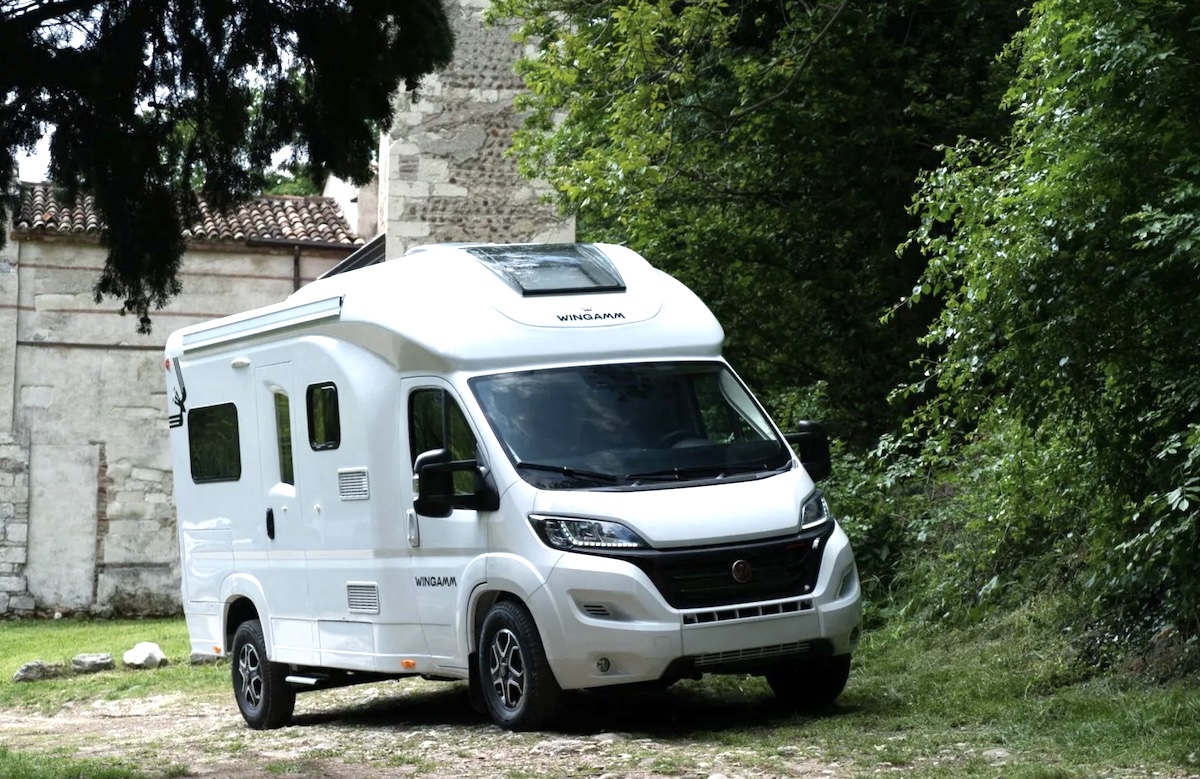
By Chuck Woodbury PUBLISHER The designers of the ultra-compact Wingamm Oasi 610 motorhome must have graduated at the top of their classes. I cannot recall being so impressed with such a small RV; how the manufacturer used the space is brilliant. The RV does not come cheap, with an MSRP of $209,500. But what you get for the money is far more than I have ever seen in such a compact unit.
I learned about this RV from a walk-through video by Joe Russo at We’re the Russos. My excitement over the RV is based on what I observed in Russo’s video, which you can watch at the bottom of this article.
I seldom get too excited anymore about a new RV after decades of watching new RV models, and manufacturers come and go. The major changes each year basically boil down to new gizmos and buttons to push (and later break down) to complicate otherwise simple tasks.
Features not normally found in this size RV
The Italian-built RV, now being distributed in the United States, targets owners who want upscale comfort and storage without the bulk of a larger coach, including a built-in garage compartment and full dry bathroom—features typically reserved for much bigger Class C and Class A rigs.
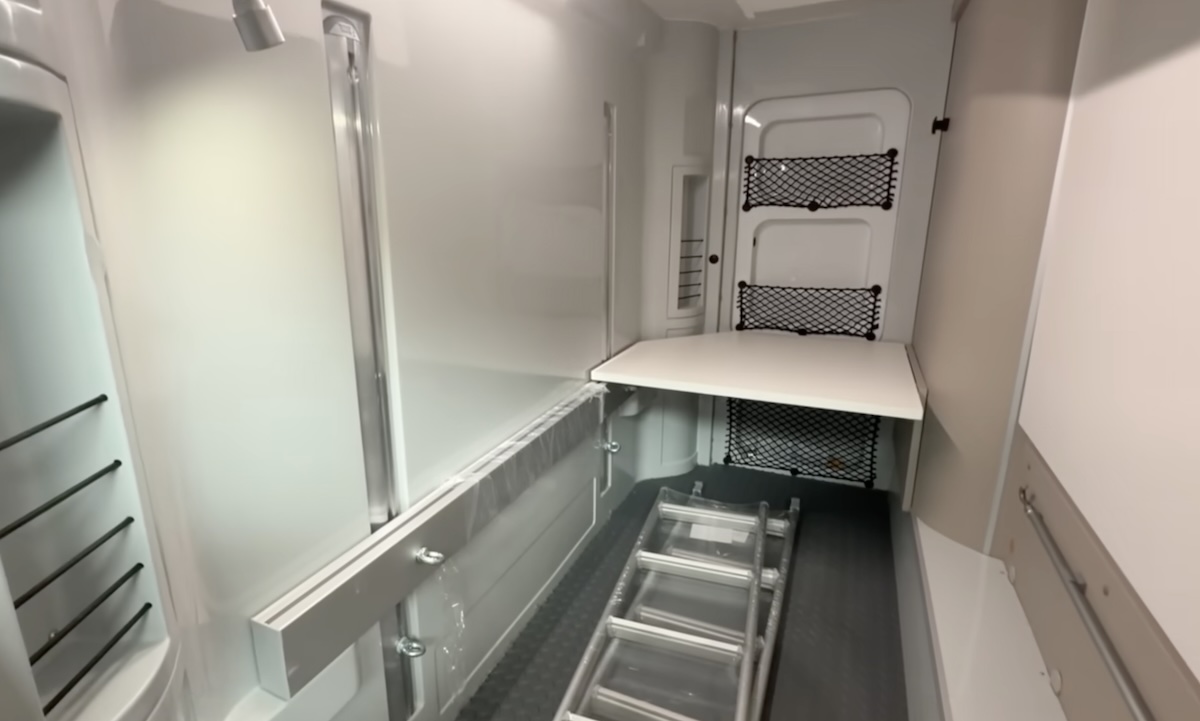
You may wonder how a “garage” can fit into such a small space. I did. Well, it’s not a big garage, but it’s genius how it’s incorporated into the compact rig.
I like to move often when I travel. This RV is small enough that you could use it as you might otherwise use a car you towed along for sightseeing and errands. A lot of pickup trucks are longer than this rig.
Joe Russo’s guided walk-through of the Oasi 610 in the video below focuses on how the Wingamm designers maximized every inch of the compact footprint in ways that you just don’t see in American-made rigs, which, in my view, lack imagination.
At a glance, the Oasi 610’s exterior maintains a sleek, modern profile. As many as four people can sleep comfortably, and nearly every functional element needed for extended travel is present and well-integrated. I’m not crazy about the cassette toilet, but they’re standard equipment in RVs built outside North America.
The main bed (for two) impressed me. It drops from the ceiling near the front of the RV. But unlike American-made versions, the same thing, it’s operated manually, not electronically with the push of a button—making for one less thing to go wrong when you’re in the middle of nowhere. Oh, that’s so analog… but smart!
Compact by design but surprisingly spacious
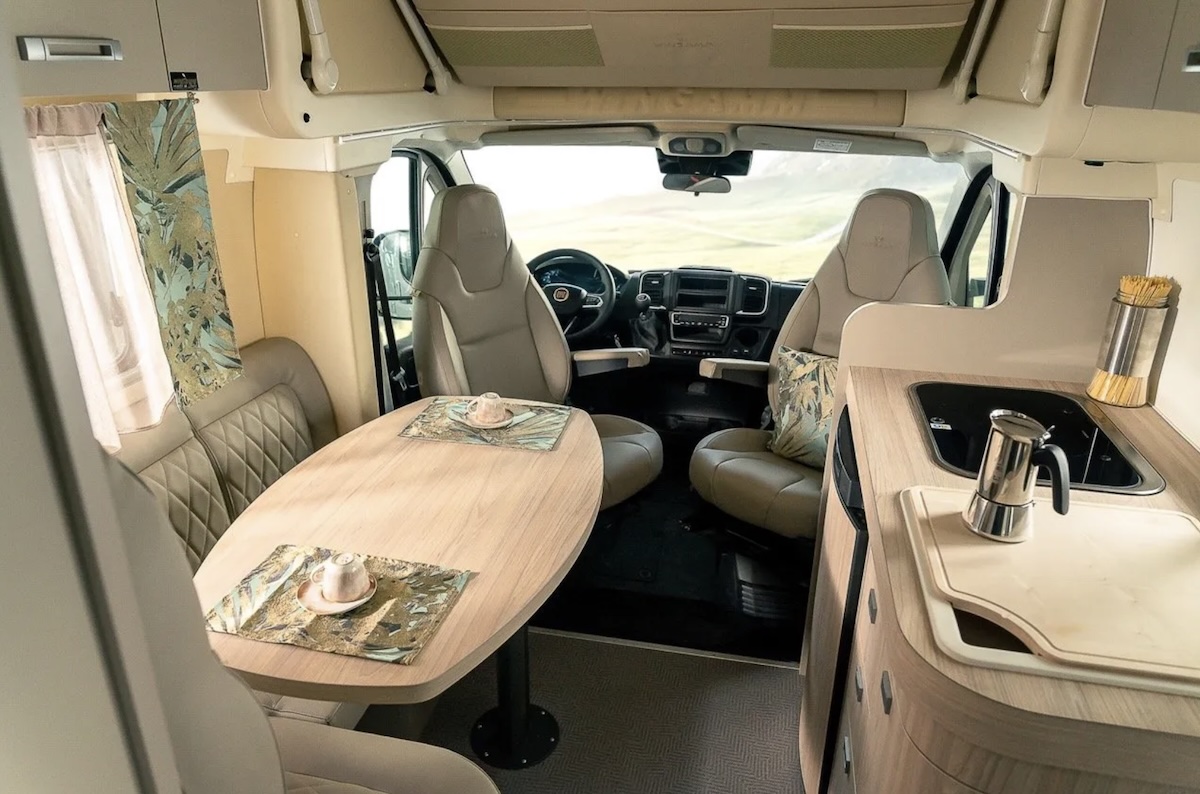
Wingamm’s approach emphasizes intelligent use of space in a vehicle just shy of 20 feet long. Although compact, the Oasi 610’s layout avoids the cramped feel often associated with small motorhomes. Instead, smart engineering makes for a cabin that feels open and is attractive.
One of the RV’s most distinctive features is the garage compartment. Located in the rear, it’s large enough to carry outdoor gear, bicycles, or other bulky items. On some variants, such as the Oasi 610 GL, the lower rear bunk beds can fold away to expand the garage space significantly.
Proof that this tiny RV does, indeed, have a garage
This garage strategy departs from the typical “under-bed storage” solutions in many small RVs, offering cargo space that can be accessed from both inside and outside the coach. The video highlights how this capability enhances the rig’s utility, making it adaptable for long trips, adventure gear transport, or simply keeping clutter out of the living area.
Living comfort in a small footprint
Inside, the Oasi 610’s living area centers on a dinette that also functions as a social and dining space. Cab seats that swivel to face the table expand the usable seating zone, and the overall layout places key amenities within easy reach without feeling tight. A well-designed kitchen area includes a two-burner stove, a small fridge and decent counter space.
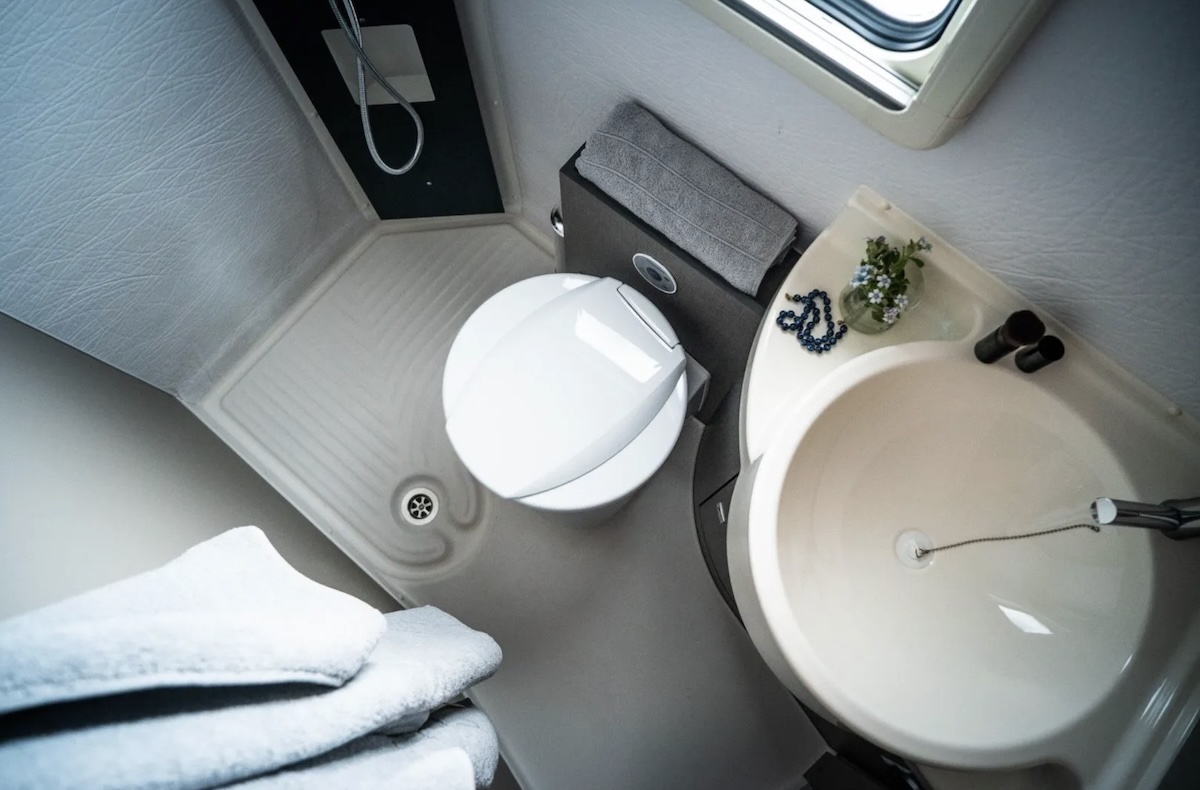
The video further draws attention to the bathroom, which the tour describes as a full dry bath—rare in a motorhome of its size. Unlike smaller wet baths where the entire compartment doubles as a shower, a dry bath separates the facilities, providing a more comfortable and private experience.
Premium feel and practical details
Wingamm’s use of a fiberglass monocoque body contributes to both comfort and durability. This construction method, common in European van conversions and high-end campers, enhances structural rigidity and insulation while reducing the chance of leaks—a bugaboo in many RV builds.
The Oasi’s design also prioritizes thermal and acoustic comfort, with insulation that helps the interior stay cozy in cool weather and quieter on the road. Other practical touches, shown in the video, include ample storage compartments, heated floors (wow!), and well-organized cabinetry. Large windows and thoughtful lighting keep the interior bright and inviting, helping to counter the compact space.
European craftsmanship, U.S. chassis
In the United States, the Oasi 610 is built on a Ram Promaster chassis, a front-wheel-drive platform popular for its maneuverability and ease of use. The combination delivers a vehicle that’s easy to drive and park compared with larger motorhomes, an advantage for weekend travelers navigating tight campgrounds or urban streets. I like that it burns gas, not diesel, so fuel is available in many rural towns with only a single service station.
What this means for RVers
The Oasi 610’s blend of garage space, dry bath, premium interior and compact driving footprint appeals to RVers who value comfort but don’t want to deal with behemoth-sized rigs. As interest in smaller, high-quality motorhomes grows, models like the Wingamm may attract owners seeking alternatives to traditional Class C or larger designs.
America’s Original RV Newsletter. Since 2001 Issue 1246
Today’s thought
“A man who views the world the same at 50 as he did at 20 has wasted 30 years of his life.” —Muhammad Ali
Need an excuse to celebrate? Today is National Dark Chocolate Day!
On this day in history: 1964 – The Beatles score their first number one hit in the United States with “I Want to Hold Your Hand”.
The best (and worst) auto parts stores in America for RVers
When you’re traveling in an RV, the “best” auto parts store isn’t about brand loyalty, at least not when you’re traveling in unfamiliar territory. But it is about who can get you back on the road the fastest. Here’s a practical, road-tested guide to the best and worst places for RVers to stop and shop across the U.S.
5 questions older RVers need to answer before their next adventure
It’s important that older RVers consider and honestly answer specific questions, especially when planning their RV trips. Planning an RV trip as you get older doesn’t mean giving up adventures. It means asking smart questions so you can stay safe, comfortable, and independent on the road. Here are the questions you need to answer.
My observations from the Florida RV SuperShow
By Gail Marsh
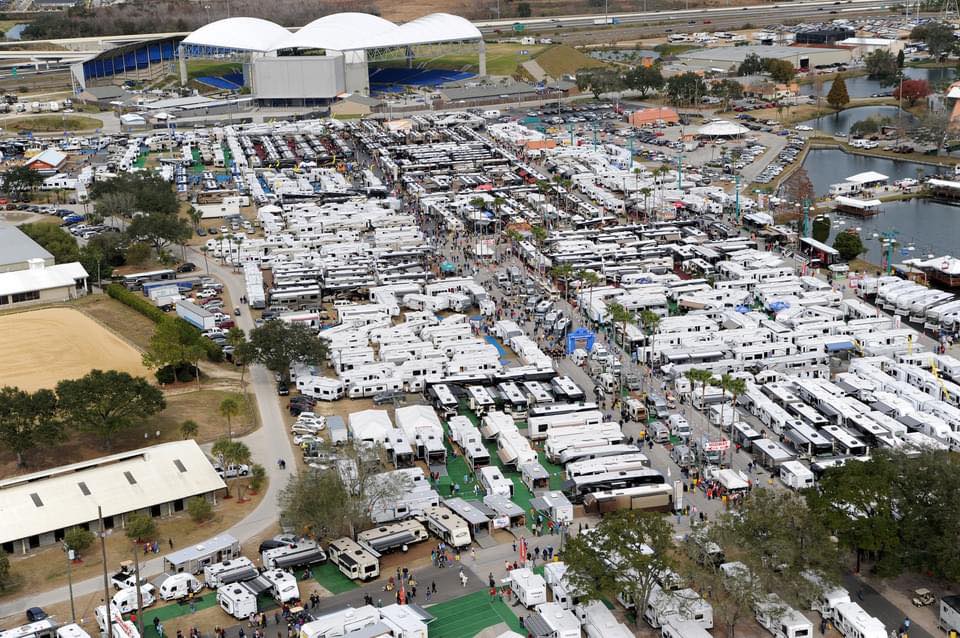
It was a spur-of-the-moment decision. I happened to mention to my DH that the largest RV show in the U.S. was happening in Tampa, FL. It was the Sunday before the show’s Wednesday opening, and DH said those two glorious words beloved by RVers near and far: “Let’s go!” We made the 1,042-mile trip in two days—just in time for the opening of the show. And what an opening it was! So. Many. People. Here are my observations.
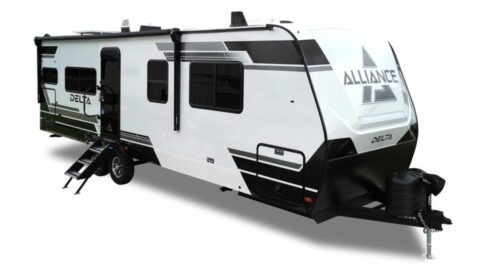
Today’s RV review is of the 2026 Alliance Delta 274RKW travel trailer. What you have here is a couple’s large camper with some nice touches, including the ability to install a washer-dryer. This rear-kitchen model also has lots of counter space and storage, but there’s a big “but” in that kitchen, and long-time readers will probably already know what that is. Continue reading.
CAN YOU DO IT? Say “shoveling snow” five times fast out loud. We bet you’ll laugh!
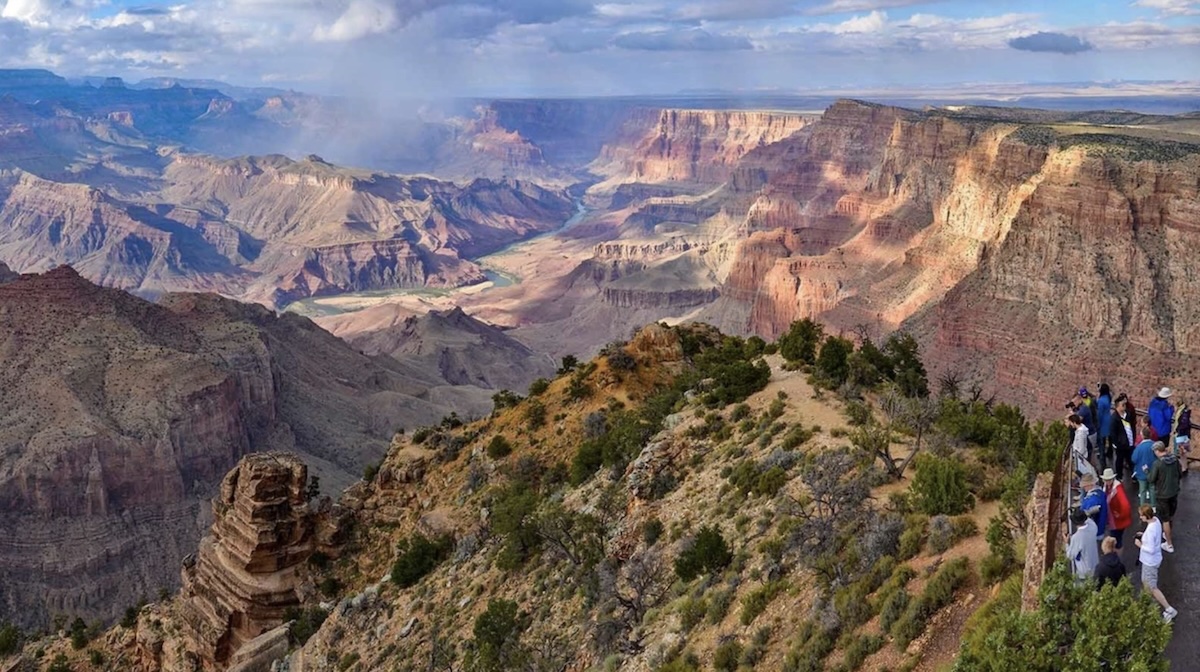
Why do so many people visit Arizona’s Grand Canyon National Park? For views like this. It’s stunning! And to think the river at the bottom of this canyon (the Colorado) is responsible for this grandeur! NPS photo by M. Quinn
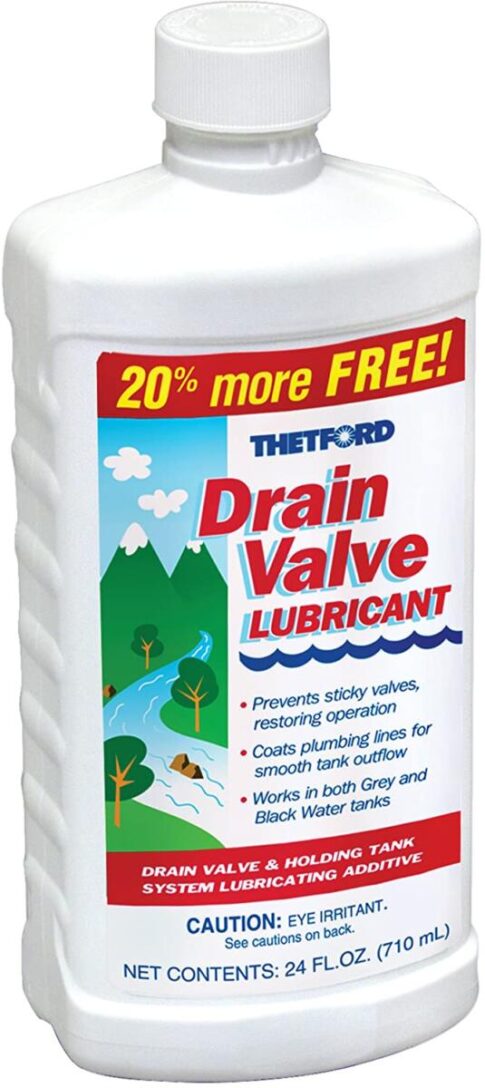
This was our #1 best-selling product in January
Dustin Simpson writes, “Your RV’s dump valves play a critical role in managing the waste from your gray and black water tanks. These valves need to operate smoothly to ensure proper drainage and prevent leaks or clogs. Over time, the seals and moving parts within the dump valves can dry out, leading to stiffness, leaks, or complete failure. Regular lubrication is essential.” Order some here.
Even more money-saving tips for RVers who shop on Amazon
By Gail Marsh
Last week, I wrote about a few ways you could find the lowest prices on Amazon. If you want to stretch a fixed budget without sacrificing quality, or you like the idea of a small luxury splurge now and then, you’ve come to the right place! Amazon actually runs a couple of little-known corners on its site that are tailor-made for both approaches. Continue reading.
RV breakdown? How to speed up road service with these simple tips
By Russ and Tiña De Maris
Got emergency road service? Want a “hack” on how to get faster service next time you’re broken down beside the road? Here’s our “voice of experience” based on too many hours of waiting for the tow truck. Faster RV road service doesn’t have to be just a dream.
Amazing homemade camper shell for a Volkswagen Bug—before and after
This post has two videos: the before and after. In the first video, you will be introduced to one of the most unique homemade RVs ever: a camper shell for a Volkswagen Bug! The video’s producer, Mav of Mav Made It, seems to have a talent for finding weird RVs on the Facebook Marketplace and then transforming them. And transform it he does!
WHAT IS YOUR WISH FOR 2026?“Health and Happiness. Win the Lottery! LOL!” —Ran C.
Tony’s tips You’re not alone on the road: How to find your community
By Tony Barthel
Do you hesitate to embark on a grand life adventure because of a fear of being alone once you’ve hit the road? Don’t be afraid. While it’s easy to be secluded as much as you’d like, it’s possible to find your “tribe” out there on the highway. How? Let’s talk! You absolutely don’t have to be lonely. Something that has really surprised me about traveling is how quickly you find a “tribe” of people who are aligned with your style and ideas—yes, even on the road. Continue reading.
Reader poll Do you have a ‘junk drawer’ in your RV?
TAKE A GUESS: What percentage of RVtravel.com readers have been unable to leave a campground on time due to a mechanical issue: 8 percent, 29 percent, 42 percent, or 61 percent? Find out here.
From the RV Travel staff to you, an important message
We work long and hard to bring you this newsletter and hundreds and hundreds a year more about RVing. There has never been a more challenging time to publish online with artificial intelligence tools so tempting to “content creators,” many of whom don’t know an RV from a Hula Hoop. That’s cheating! We, on the other hand, know a lot because we live and breathe the life! Please consider voluntarily pledging your support one time or monthly to help us continue. That would make our hearts go pitter-patter with happiness.
New! Comments this week from readers
Reading RVtravel.com is a game!
“I check my overnight e-mail while my wife and I are at the breakfast table. When I get to the RV Travel newsletter, we make a game of the ‘Today’s Date in History’ feature. I give her clues, and she tries to guess the answer. Today was National Compliment Day, so I gave her several compliments on her looks, her personality, etc. Her answer, with a smile, was ‘National Sarcasm Day!’ LOLOLOL. In a few weeks, we will celebrate 56 years married; 58 if you count high school.” —Rich (in the special subscribers’ edition of last weekend’s issue)
“Our RV days are behind us as my husband deals with health issues. Once this bad weather breaks, a very sweet outdoorsy couple will take ownership of our beloved Pleasure Way. They are close to our hearts, and we’re happy to know our RV will continue to bring pleasure and adventures to them. RVtravel.com has been shared with this fine couple.” —Mac
“We always wave and say hello as we walk past a neighbor’s campsite. That opens the opportunity for future interaction. Sometimes that happens, sometimes not. But at least you demonstrate that you are a friendly neighbor. Doesn’t cost a thing to be nice.” —Fishing Dave
“I walk around our rig and tell my wife everything is good to go. Then she walks around and ALWAYS finds something I missed.” —David S.
Spray protects your RV’s most important electrical connection
Corroded plugs cause big problems. This electrical cleaner helps stop them before they start. A quick spray on your 7-pin connector clears moisture, grime, and buildup, helping keep your lights, brakes, and charging systems working as they should. It dries fast and leaves no residue. It’s one of the easiest “preventive maintenance” habits an RVer can add. Read Dave Solberg’s recommendation here, or learn more or order on Amazon.
WHAT IS YOUR WISH FOR 2026? “That we become better, nicer, and get rid of the hate of others who are not like us.” —Patti P.
How to win We’ll select a winner at random out of all entries we receive today by 7 p.m. Pacific time. You can only enter once and after we notify you by email that you won, you have 24 hours to respond.
DID YOU KNOW? Valentine’s Day is the second-largest card-sending holiday after Christmas. It’s estimated that approximately 145 million Valentine’s Day cards are exchanged in the United States. This tradition of exchanging cards began in the 15th century.
Travel destinations
Free boondocking at the world-famous Bagdad Café on Route 66
By Cheri Sicard
In 1987, German director Percy Adlon released a small, gentle film that went on to touch hearts all over the world. On a recent stop along iconic Route 66 in California, I was reminded just how deeply this little movie still resonates with people around the world. Continue reading. (You’ll love this!)
Five fantastic (and free) attractions in Southern California
By Gail Marsh
Southern California has a lot to offer RVers. Here are five free things to do when you’re visiting beautiful SoCal. I’ll also toss in (at no extra charge 😉 ) three RV campgrounds where you can stay during your visit. Let’s get started!
RV gadgets and gizmos
Why all RVers should have a dash cam
When you’re driving something big, heavy, and expensive—often through unfamiliar towns, narrow campground roads, or wildlife country—having a clear record of what actually happened can matter. Not just for highway accidents, but for backing into a tight campsite, navigating parking lots, or encountering animals. That’s why dash cams are so important. Continue reading.
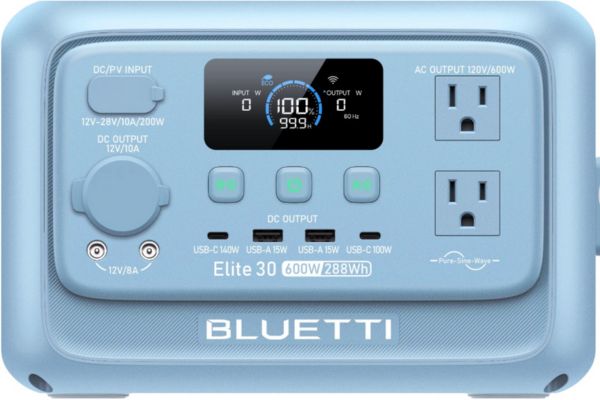
BLUETTI Elite 30 V2 portable power station—small, lightweight, and cute
BLUETTI®, one of the premier names in portable power stations, brings both style and substance to the table with the BLUETTI Elite 30 V2. Available in a variety of vintage colors, this compact power station proves that portable power doesn’t have to be boring. More importantly, it delivers the solid build quality and dependable warranty BLUETTI is known for. Check it out.
WANT MORE GADGET REVIEWS? Don’t miss our brand-new Great RV Accessories newsletter, filled to the brim with gadgets galore! Read it here, and make sure you’re subscribed.
WHAT IS YOUR WISH FOR 2026? “My wish for 2026 is for unity; that we would find the things we can agree upon and build from there. Along with unity and gratitude, there are a million things you can be thankful for every day. Not sure? Start with you opening your eyes, and your feet hitting the floor. Nothing is promised, so focus on what you have, and not on what you don’t have.” —Patricia B.
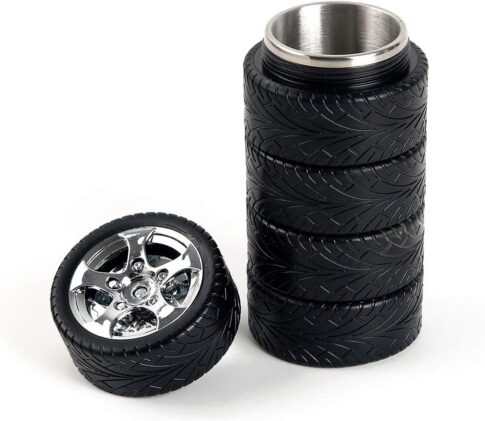
? MYSTERY PRODUCT OF THE DAY ? Ooooh, this made us chuckle. We’re still smiling as we type this. Funny, funny, funny. Do you fix things? Do you know things? Well, this is certainly for you.
Highlights from this week’s RV Daily Tips Newsletter
In the RV shop with Dustin Why you should use RV slide-out stabilizers and locks
Today, join me [Dustin] in my RV shop as I explain the importance of using slide-out stabilizers and locks for your RV. Slide-outs are fantastic features that provide additional living space inside your RV, but they can also pose challenges if not properly stabilized and secured. That’s where slide-out stabilizers and locks come into play.
RV tire safety Why do some tires fail? Is it ‘magic’?
Tire expert Roger Marble explains a frequent cause of tire failure here.
FREE IS GOOD! Heading to Oregon this year? Get free travel guides with places to go, things to do, and help planning your trip… by mail or online.
New 2026 firearm book a must-have for carrying RVers
This just-published 2026 traveler-first firearm law guide will inform you of current laws on guns to keep you out of legal trouble as you move from state to state. Not knowing the laws is not a defense. This is an important resource. Learn more or order.
For Lovers Only
TO: Mickeybean FROM: Your Honey “I knew from day one you were the girl for me. Now, here we are 56 years later, and I know I made the best decision I have ever made when I chose to spend the rest of my life with you. I love you more than you can imagine and I always will.”
TO: Snuggle Buddy FROM: Dancing with My Darling “Babe, you are my everything in this world. I can’t imagine a life without you! I want the world to know what an unbelievable person I am married to. The roses are still red, and the violets are still blue, and I am so deeply in love with you now forever and ever!”
Listen up, romantics. Valentine’s Day is coming up. If you have a special someone you’d like to surprise with a secret message right here on this website (could be your wife, husband, partner, child, neighbor, friend, etc.) submit it to us here. Oh, how fun it will be when they read it! We’ll feature these every day in our newsletters Sunday-Friday.
BUMPER SNICKER: “Our driveway is America.”
Readers’ pets of the day
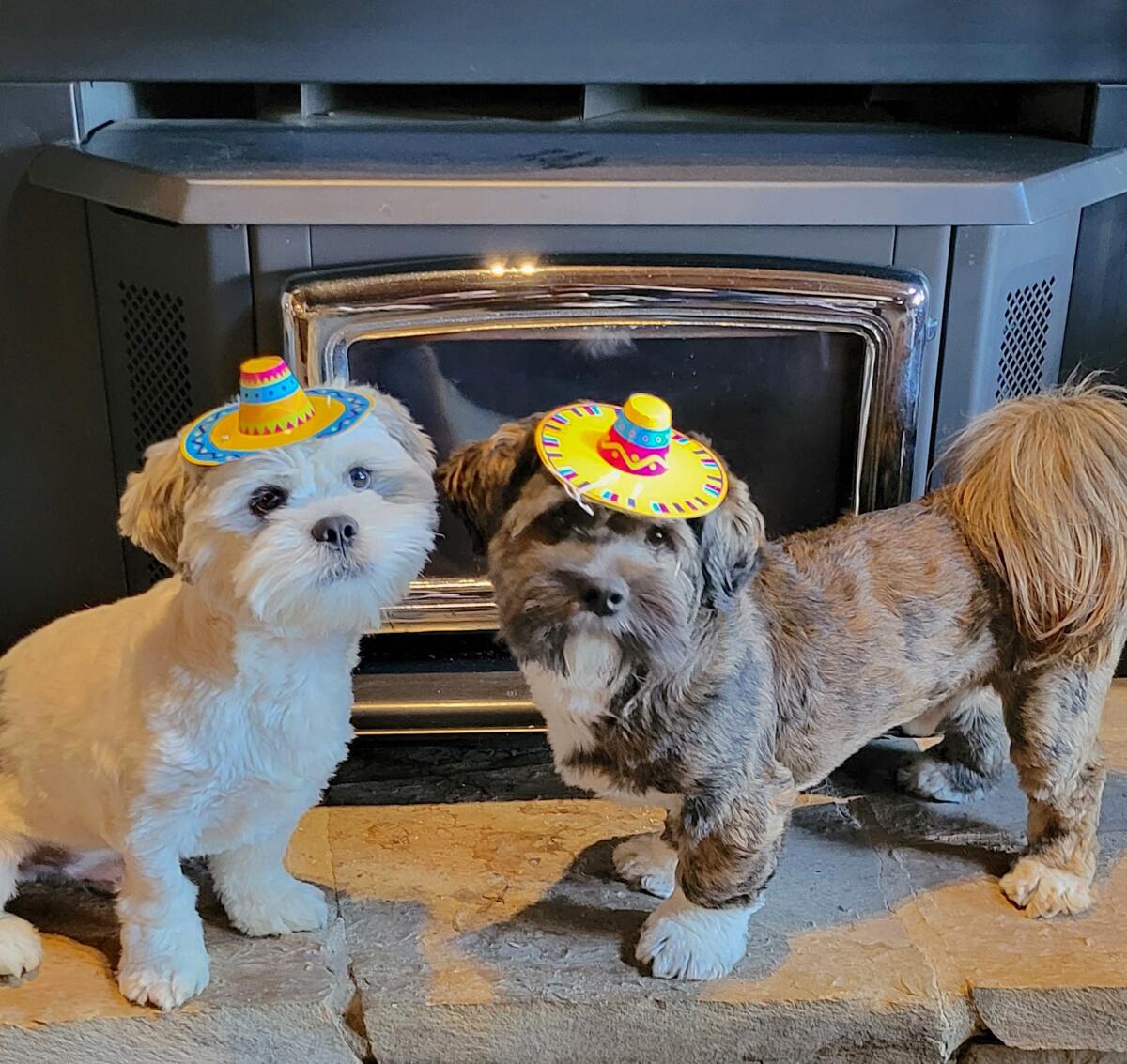
“Stachu & Simon are Lhasa Apso brothers. They’ve been camping a few times and love it, but we may need to get a larger camper because they love to chase each other.” —Tony Zurek
Want to see your pet in this newsletter? Please send us a photo of your pet with a short description. No blurry photos and please do not submit your photo more than once.
Trivia
Did you know that if you search Google for Pac-Man, Snake, Solitaire, or Tic Tac Toe, you can play directly in your browser? Try it!
EVEN MORE KNOWLEDGE! 85 percent of U.S. adults have camped at least once in their lifetime. That’s according to the new 2026 The Dyrt Camping Report.
HEALTH TIP: No specific food can prevent stomach cancer, but diet and lifestyle choices may help lower risk, according to Keck Medicine of USC. Dr. Sharon Shiraga says eating fewer processed foods and more fruits and vegetables may support stomach health. Regular exercise, healthy weight, and avoiding smoking and excessive alcohol also may reduce risk.
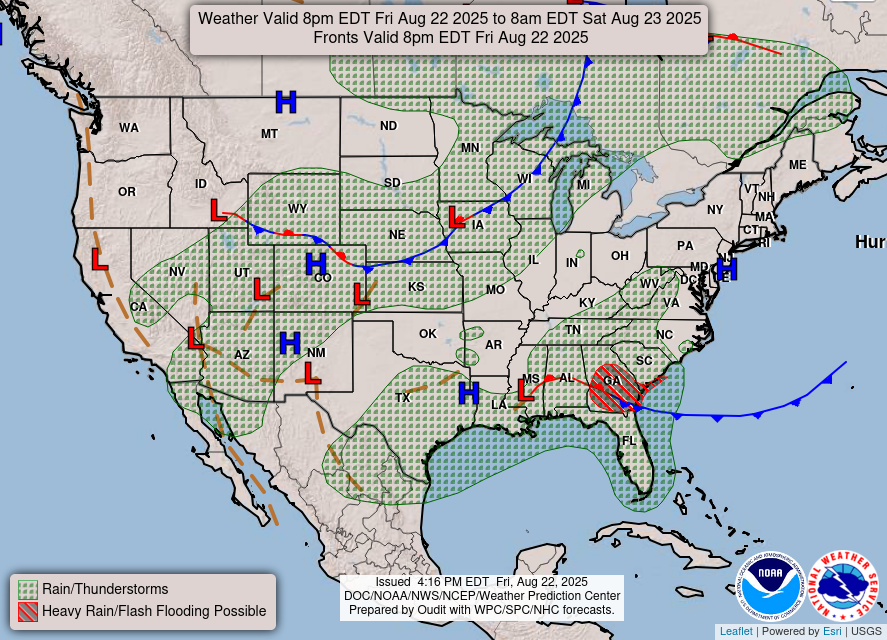
Today’s weather forecast across the nation THIS MAP UPDATES TWICE A DAY
Southern California has a lot to offer RVers. Here are five free things to do when you’re visiting beautiful SoCal.
I’ll also toss in (at no extra charge 😉 ) three RV campgrounds where you can stay during your visit. Let’s get started!
Paramount Ranch. Photo credit: NPS
Paramount Ranch
This iconic movie-set town sits in the Santa Monica Mountains near Agoura Hills. Wander among the old Western-town facades or stroll through chaparral and oak woodlands on easy trails.
Paramount Studios was one of the predominant motion picture studios from the mid-1920s into the 1940s. A total of 162 movies were filmed at Paramount Ranch between 1927 and 1943. It’s a fun place to visit!
Note: Before you go, check current access details or alerts.
Point Dume in CA. Wikipedia image
Point Dume State Beach
Point Dume State Beach is a dramatic point on the Malibu coast where rugged cliffs meet the Pacific. Hike to the bluff overlook for panoramic ocean views. Scan the water for seasonal whale migrations and explore sandy coves and tidepools at low tide. Plan to arrive early on weekends.
Getty Center. Image: Pixabay
Getty Center
The Getty Center in Brentwood, CA, offers free museum admission to world-class collections of European paintings, sculptures, and decorative arts. The collections are displayed in remarkable buildings. Stroll the Central Garden and terraces with views over LA.
Note: You’ll need to pay for parking.
Photo credit: SCRM
Southern California Railway Museum
Located in Perris, this sprawling railway museum offers free admission and parking. The site offers visitors the chance to see an enormous collection of historic locomotives, streetcars, and railcars. On weekends, you can purchase inexpensive tickets for train or trolley rides through the yard. In addition, there are docent-guided exhibits and interactive displays that bring rail history to life.
Griffith Observatory. Image: Observatory
Griffith Observatory
For RVers who love sweeping city panoramas and space geeks alike, the Griffith Observatory is a must-see. The Observatory offers free admission to its exhibits, telescopes, and outdoor terraces high above the city. Perched on the south slope of Mount Hollywood in Griffith Park, the Observatory lets you explore interactive astronomy displays, walk its scenic grounds, and peer through public telescopes when weather permits.
Don’t miss the rooftop public telescope viewing at night and great photo angles of the iconic Hollywood Sign.
Note: Planetarium shows have a small ticket cost, but most of what you’ll want to see is free.
Three centrally located RV parks
Where can you park your rig and still be relatively close to these five free sites? Consider these well-reviewed parks.
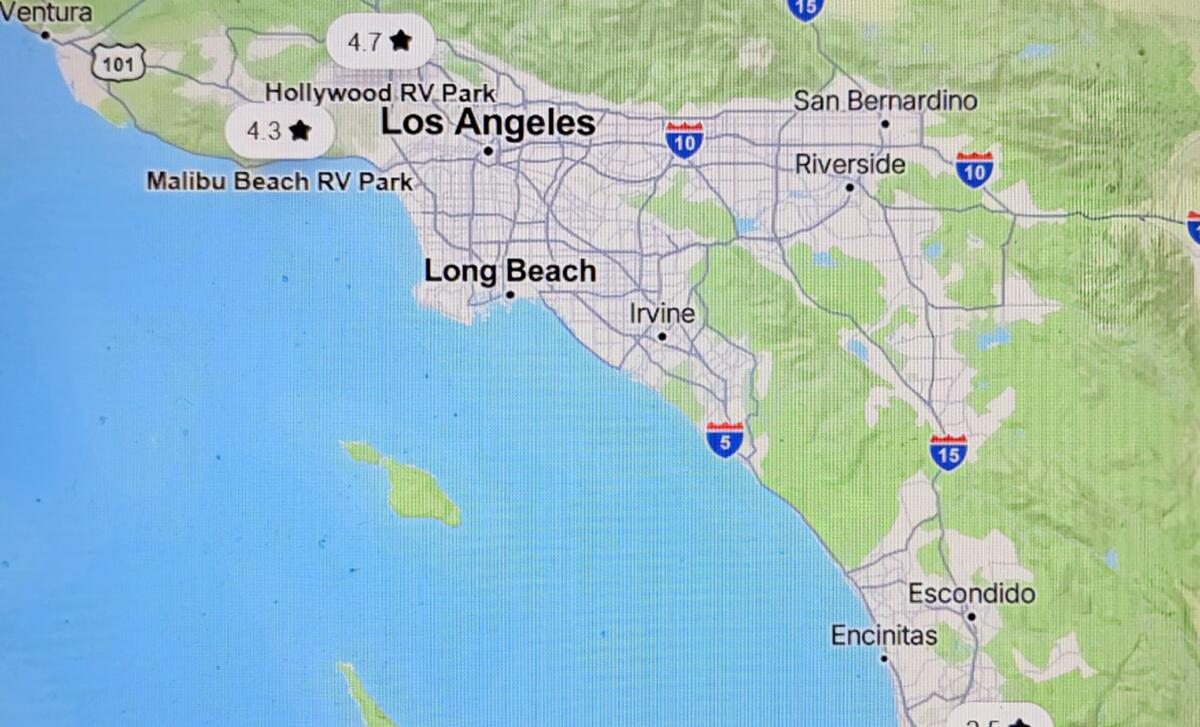
• Surf Outpost. This is a scenic coastal RV park right along the Pacific Coast Highway near Malibu’s beaches. RV sites overlook the ocean and put you close to Point Dume and scenic Pacific Coast Highway drives. Amenities include laundry, showers, and good cellular coverage. They are expensive, but the views are worth it. Spaces can fill up in peak season, so reservations are recommended.
• Hollywood RV Park. This highly regarded RV park is within Los Angeles proper. Its location provides easy access to the Getty Center, city sights, and a shorter overall drive to Malibu or Irvine than many out-of-town campgrounds. Reviewers praise the friendly staff and convenient location.
• Meadowbrook RV Park 55+. Located near Perris, this larger RV park offers full hookups and amenities. It’s ideal for visiting the Southern California Railway Museum and taking day trips to Orange County or LA. It’s a good choice if you want a comfortable midpoint between coastal stops and inland attractions.
Tips for RVers
Traffic in the LA metro can be heavy midday or during rush hours. Plan your drives early or later in the day. Bring water, sunscreen, and snacks for outings like Point Dume or Paramount Ranch, where amenities are limited.
Can you recommend additional free attractions in SoCal? Share your favorites in the comments below.
When you’re traveling in an RV, the “best” auto parts store isn’t about brand loyalty, at least not when you’re traveling in unfamiliar territory. But it is about who can get you back on the road the fastest.
Most RV breakdowns are chassis and tow-vehicle problems: batteries, belts, hoses, brakes, alternators, sensors, cooling systems, hubs, bearings, and “check engine” surprises that don’t care whether you’re in a Class A, a travel trailer, a fifth wheel, or a camper van.
The best auto parts stores for RVers are the ones with:
• Lots of locations
• Strong inventory
• Fast transfers
• Knowledgeable counter staff
• Easy returns and warranties
• Realistic pricing
• And the ability to help when your vehicle isn’t a “normal car”
Here’s a practical, road-tested guide to the best and worst places for RVers to stop and shop across the U.S.
The best auto parts stores for RVers
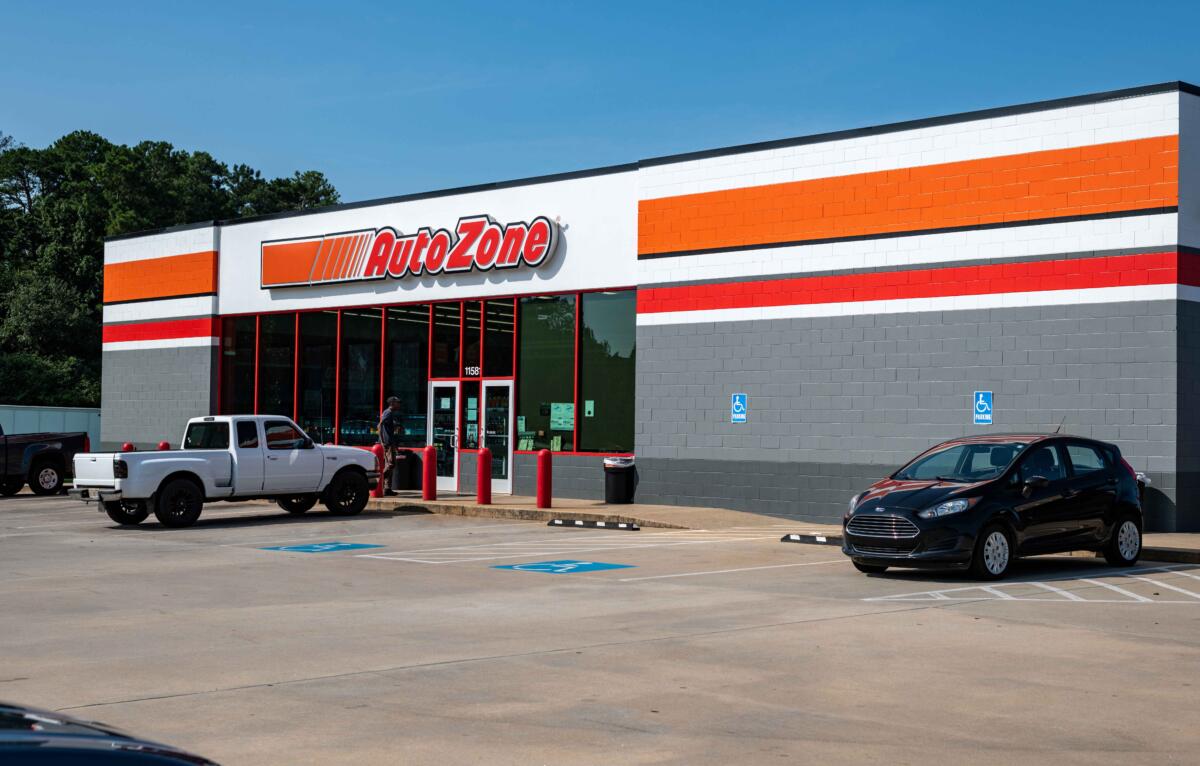
AutoZone
Best for: finding a store fast
If your top priority is simply getting to a parts store quickly, AutoZone is hard to beat. They’re everywhere—small towns, highway exits, rural routes, city centers—and that matters when you’re limping along with a warning light on.
AutoZone reported 6,627 U.S. stores as of Aug. 30, 2025.
Why RVers like it:
• Massive national footprint
• Usually solid stock of basics (batteries, hoses, fluids, filters, bulbs, fuses)
• Easy returns
• Good for quick, same-day fixes
• Rewards program can be worthwhile if you’re making multiple “road fix” purchases: $20 reward after every five qualifying $20+ purchases.
RVer reality:
AutoZone is often the fastest solution when you just need something now to keep moving.
NAPA Auto Parts
Best for: parts depth + fast special orders
NAPA is a favorite among experienced RVers and full-timers because it’s built around inventory access and logistics. If they don’t have it on the shelf, there’s a good chance they can get it fast.
NAPA says it offers 800,000+ unique parts through 6,000+ stores and a huge repair network.
Why RVers like it:
• Deep parts catalog
• Strong distribution networks
• Good same-day or next-day delivery options
• Better odds for older rigs and less-common parts
• Reward system is straightforward: 1 point per $1; 100 points = $5 off
RVer reality:
NAPA is often where you’ll end up when other stores say, “We don’t carry that.”
O’Reilly Auto Parts
Best for: knowledgeable counter help
O’Reilly shines when the part lookup isn’t straightforward—wrong part numbers, mismatched years, odd engines, or confusing chassis info. The staff at O’Reilly always seems to go above and beyond in helping you, at least in our experience.
Why RVers like it:
• Strong cross-referencing skills
• Helpful counter staff
• Good regional coverage
• Solid inventory for mechanical components
RVer reality:
When your situation is complicated, O’Reilly is often the place that figures it out.
FleetPride / TruckPro (Heavy-duty parts stores)
Best for: big rigs, HD chassis, and commercial-grade parts
If you’re in a Class A, Super C, or heavy-duty platform—or towing heavy—these stores can be lifesavers.
FleetPride has 450+ locations and 110+ service centers, and TruckPro has 145+ locations and 300,000+ parts in inventory.
Why RVers like them:
• Commercial-grade parts
• Heavy-duty brake systems
• Hubs, bearings, suspension, air systems
• Staff who deal with breakdowns for a living
RVer reality:
When car-parts stores can’t help, truck parts stores often can.
Pep Boys
Best for: when you need service, not just parts
Pep Boys is less about counter parts and more about repairs, installs, and diagnostics. They’re more about “I need someone to install this / diagnose it” at their 800+ shops nationwide.
Why RVers use it:
• Service bays
• Mechanical work on tow vehicles and chassis
• Quick repairs when you’re stuck in a city
RVer reality:
Good option when you need work done—not just parts in a bag. Pep Boys does not usually work on large RVs, but can assist with smaller RVs and tow vehicles.
The most frustrating stops for RVers
“Car-only” thinking
Any store becomes a bad store when staff treat your rig like a normal sedan. RVers often run into problems when:
• Parts are searched by RV model instead of chassis
• Systems don’t account for heavy loads
• Staff aren’t familiar with RV platforms
Result: wasted time, wrong parts, multiple trips.
Stores with shrinking footprints or thin inventory
Some chains are reorganizing, closing locations, and reshaping inventory. That can mean:
• Longer drives to the nearest store
• Thinner shelves
• More delays for transfers
Result: harder to rely on for road fixes.
Big-box stores and general retailers
Great for fluids and basics. Not great for:
• Diagnostics
• Correct-fit parts
• Specialty components
• Knowledgeable counter help
Result: fine for supplies, frustrating for repairs.
Smart auto parts shopping tips for RVers
1. Always lead with chassis info
Not your RV brand—your chassis and engine platform. This alone saves massive time and frustration.
2. Ask about transfers
The best stores can move parts fast—but you usually have to ask.
3. Join rewards programs on the spot
If you’re buying multiple items during a breakdown, rewards add up quickly.
4. Know when to go heavy-duty
If you’re dealing with brakes, hubs, suspension, or air systems, skip car stores and go straight to HD parts suppliers.
5. Don’t waste a full day on the wrong store
If one store clearly can’t help, move on fast. Time matters when you’re traveling.
Quick cheat sheet for RVers
• Fastest store to find: AutoZone
• Best parts depth: NAPA
• Best counter help: O’Reilly
• Best for big rigs and HD systems: FleetPride / TruckPro
• Best when you need repairs: Pep Boys
Bottom line
There is no single “perfect” auto parts store for every situation. The real strategy is knowing which store fits the problem:
• Need something immediately → AutoZone
• Need a hard-to-find part → NAPA
• Need help identifying the right part → O’Reilly
• Need heavy-duty components → FleetPride / TruckPro
• Need the repair done → Pep Boys
The smartest RVers won’t always stay loyal to brands; they stay loyal to getting back on the road.
By Russ and Tiña De Maris
Got emergency road service? Want a “hack” on how to get faster service next time you’re broken down beside the road? Here’s our “voice of experience” based on too many hours of waiting for the tow truck. Faster RV road service doesn’t have to be just a dream.
Our experience taught us about faster RV road service
Mahin Fayaz on flickr.com
Over the years, we’ve had several experiences with RV road service providers. On one occasion, one of our trailer tires gave up the ghost on Arizona’s Highway 95. We were a scant 30 miles south of Quartzsite, with plenty of daylight left. A call to our then-provider, Good Sam, brought cheerful assurances they’d have someone there soon. By the time all was said and done, we were finally on the way, long after darkness fell.
A few months back, a strange noise under the hood quickly turned into a skyrocketing engine temp, and a transmission warning alarm. We pulled over to find a shredded serpentine belt “took out” a cooling system elbow and yanked our tranny cooling lines loose enough to jet fluid in a way that would make a blowing whale envious. With a huge pool of tranny fluid and antifreeze under the truck, it was obvious we wouldn’t be doing our own roadside repair work.
20-minute dispatch promise a laugh
A couple of years ago, we switched providers from Good Sam to Coach-Net after we surveyed RVtravel.com readers about their experiences with providers. Our survey said Coach-Net was more reliable and typically provided faster RV road service than most of its competitors. Well, here was an opportunity to put those responses to the test.
We called Coach-Net’s dispatch, gave all the details, and were told we’d hear back “in about 20 minutes.” More than an hour later, we called again. This time we were told that the dispatch protocol was to call tow companies nearest our location, and if no service was available, then to call providers farther away. At this point, Coach-Net’s dispatcher told us they still hadn’t found anyone, but they’d keep at it.
Local tow service never heard from our dispatcher
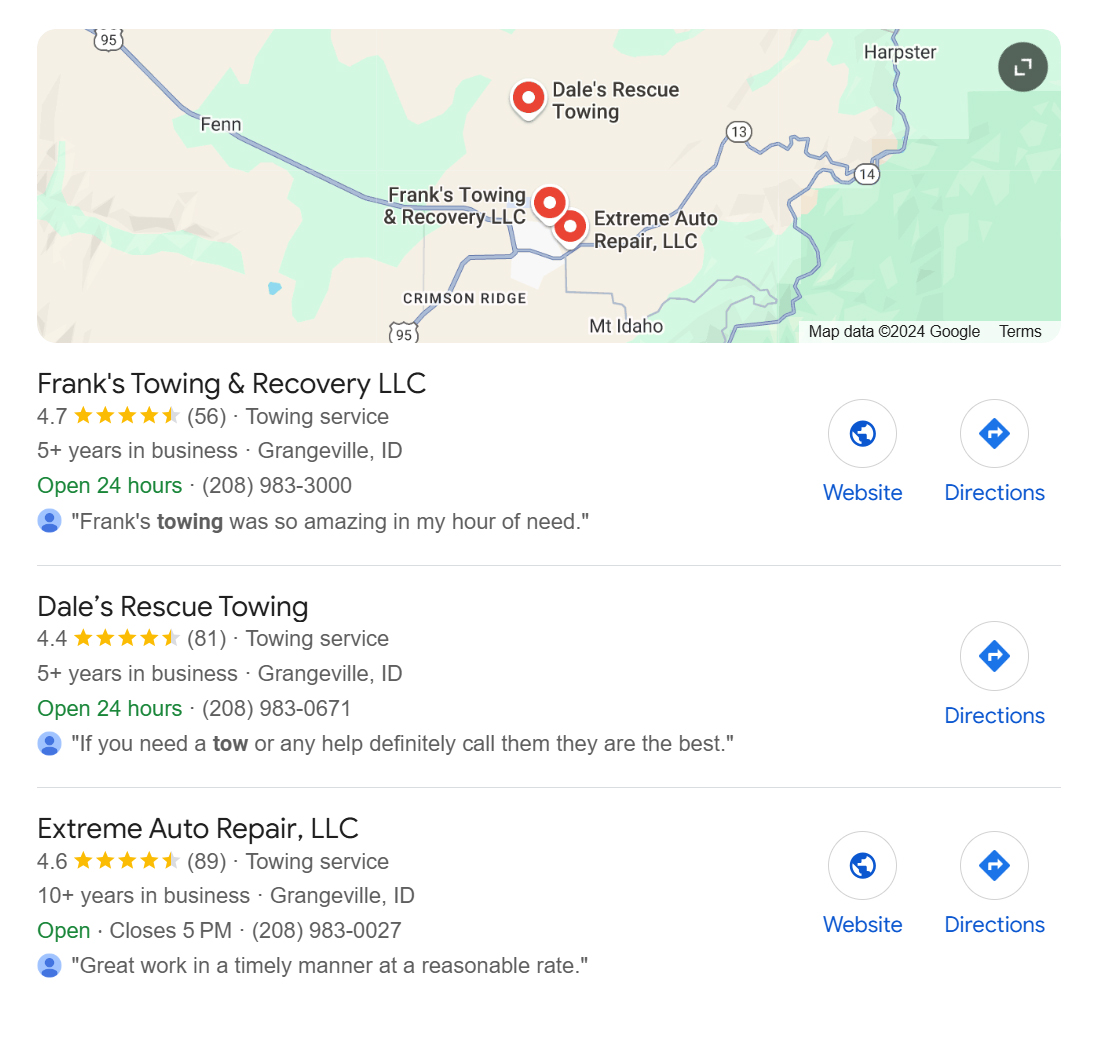
We’d already had a nice chat with a state patrol trooper who expressed concern about us sitting beside the highway as darkness was falling. The trooper suggested they could get a tow truck out there pronto, but we were concerned Coach-Net might not pick up the bill, so we declined. But after the trooper left us, we got to thinking. Maybe we should be a bit more proactive. We looked up tow providers for the nearest town—just 13 miles away, and called the first one on the list.
The gent who picked up the phone listened for a few seconds and asked, “You got the Ford pickup with the travel trailer, north of town on Highway 95?” That was us! “Yes. Did Coach-Net call you about us?” “Nope,” replied the tow guy, “I drove past you a little bit ago on my way to another call. Nobody’s called us.” Asked if he could help, the man assured us he could, but he’d need an agreement with Coach-Net’s dispatcher.
We hung up the phone and called our dispatcher back. We gave them the name of the tow firm and the phone number of the fellow we’d talked to. In just a few minutes, Coach-Net’s dispatcher called us back and said, sure enough, that very tow company would be out to assist us.
Here’s our faster RV road service strategy
So what’s the deal? The dispatcher had assured us that their protocol was to start with the tow companies nearest the breakdown. Yet our guy never got a call. Perhaps RV road service companies have a list of “favorites” they call. Maybe our tow company wasn’t on that list. Or maybe Coach-Net got hit with a raft of calls around the time of our mishap. If there are only so many folks at the dispatch center, you can bet they will probably not stick with your problem from start to finish. Maybe they called one tow company just up the road, got a turn down, and then went on to help another stranded customer.
Click to enlarge.
Whatever the reason, here’s our strategy for faster RV road service the next time we get in a fix. Once we’ve contacted our road service dispatch and they give us an estimate of how long it’ll be to hear something back, we’ll wait that long. But meanwhile, we’ll be looking up tow company phone numbers in the area. If we don’t get a commitment for help in the time frame given, we’ll start calling tow companies on our own.
Two tows in the place of one?
Another thing we learned in this round? Our breakdown happened on a Saturday afternoon. There were no service centers open that weekend. However, we did round up a local who gave us the name of a reliable mechanic and his cell phone number. Long before the tow guy hooked up our truck, the mechanic assured us he could help out.
Since the shops “nearest the disablement” of our rig were all closed for the weekend, we thought it would be great if we could get the truck towed to the amiable mechanic of our choice. However, that shop was another 17 miles beyond the closest town. Our tow guy was simply inclined to dump our truck in front of his building and wait until Monday to sort it out.
Instead, we convinced him to contact Coach-Net and see if they’d allow him to take us to our mechanic of choice. We listened to his side of the conversation, and after negotiating an additional fee, off went our truck to the mechanic. We got a call from Coach-Net to confirm the details. And they were quick to tell us that if we weren’t happy with our choice of mechanic, getting towed away from his shop was on our nickel. Not a problem.
Bottom line
Stuck beside the road, waiting to hear that your road service provider has found help for you? You may be able to get faster RV road service by acting as your own dispatcher. It won’t cost you any more, and you may save time and frustration.
Last week, I wrote about a few ways you could find the lowest prices on Amazon. If you want to stretch a fixed budget without sacrificing quality, or you like the idea of a small luxury splurge now and then, you’ve come to the right place! Amazon actually runs a couple of little-known corners on its site that are tailor-made for both approaches.
Two kinds of shopping
One niche is Amazon Resale (formerly Amazon Warehouse). That’s where used, open-box, and returned items are discounted and made available for repurchase.
The other is Amazon’s Outlet/Premium Brands Outlet (sometimes called the Premium Brands or Premium Outlet). This is where savvy RVers can score overstocks and designer goods at steep markdowns.
Both of these special Amazon sites are worth bookmarking for different reasons.
Why RVers like them
Living on the road means you may need small, practical things (water hoses, leveling blocks, portable heaters, compact cookware). You may also enjoy occasionally purchasing nicer items for comfort (cozy bedding, a higher-end pair of boots, or a compact Nespresso for the rig).
Both Amazon Resale and the Premium Brands Outlet can supply these buys at a less-than-full-price retail cost.
Amazon Resale
Amazon Resale lists returned, open box, refurbished, and otherwise pre-owned items at reduced prices. Product condition is usually described on the product page so you can pick “like new” or “acceptable” depending on your comfort level.
For RVers who prioritize saving money on gear, Amazon Resale is a practical way to get reliable items for less. Amazon organizes RV-specific categories within Resale (RV parts and accessories, RV electronics, exterior/interior parts). This means you can often find brand-name RV products at a discount.
Searches inside Amazon Resale show listings and categories for RV plumbing and exterior parts. You can expect to find brands like Camco when models are returned or overstocked. For example, a brass Camco regulator or an EvoFlex drinking hose can be real bargains when bought as open-box or outlet items. They’re a good example of small, high-impact purchases RVers need to save headaches on the road.
Premium Brands Outlet
The Premium Brands Outlet is Amazon’s outlet for higher-end, name-brand items. Here, you’ll mostly find designer shoes, outerwear, bags, and occasional home goods.
I’ve noticed recent discounts on brands like UGG, Nike, Coach, and Michael Kors in this section. If you’re an RV traveler who likes to dress warm and well for winter stays, or you want small luxury items for the rig (a designer throw, high-quality boots, or compact kitchen tools), Amazon’s Premium Brands Outlet can be an excellent place to score those. It’s geared toward shoppers who want brand-name quality at outlet prices rather than strictly bargain-basement used goods.
Pros and cons of Amazon Resale
Pros
On Amazon Resale, you can potentially realize the biggest savings on functional gear, buy name-brand RV supplies for less, and choose items based on Amazon Resale’s condition grades. Amazon Resale is helpful for tight budgets and replacing worn-out RV gear.
Cons
Amazon Resale is hit-or-miss because inventory depends on returns and open-box items. You may need to check back frequently to find a specific RV part in the condition you want. Some items may show cosmetic wear even if they function fine.
Note: Always check the Amazon/retail price for a new item to see how much you’re really saving. Some buys save little, while others make super savings over retail.
Pros and cons for Amazon’s Premium Brands Outlet
Pros
Amazon Premium Brands Outlet offers major discounts on name-brand clothing and home items. It can be a good place to pick up quality clothing and compact appliances at a lower price.
Cons
This site is centered on fashion and home goods, so you won’t find many RV-specific items. The sizes or models you want may not be available, and “designer” items may feel unnecessary if you’re strictly looking for function as you RV.
How to access each site
To reach Amazon Resale: Type amazon.com into your browser, then paste or navigate to the Amazon Resale page or search on the site for “Amazon Resale” or “Amazon Warehouse.” Bookmark the page and check categories like RV parts & accessories, RV electronics, and RV exterior/interior parts.
To reach the Premium Brands Outlet: Go to amazon.com/outlet or search Amazon for “Premium Brands Outlet” or “Premium Brands Outlet: Clothing, Shoes & Jewelry” to browse the curated outlet sections. For curated designer markdowns and outlet deals, look for “Premium Brands Outlet” pages and the Outlet landing page.
Practical shopping tips for RVers
If you need an RV part fast, search Resale first. Check the item’s condition notes and return policy before buying.
Use the Outlet when you want to upgrade RV comfort. Choose compact, multi-use items that won’t take up much storage space.
Combine Prime delivery or Amazon Locker addresses (or mail-forwarding services) with campground directions if you’re on the move. (Note: Always check with your campground manager to see if Amazon deliveries are allowed.)
For the best value, create a short list of must-have RV items and check both Resale and Outlet periodically: Resale for functional parts and Outlet for occasional comfort upgrades.
Did you know about Amazon Resale and Amazon Premium Brands Outlet? Do you use Amazon while RVing? Tell us in the comments below.
Do you hesitate to embark on a grand life adventure because of a fear of being alone once you’ve hit the road? Don’t be afraid. While it’s entirely possible to be secluded as much as you’d like, it’s also quite possible to find your “tribe” out there on the highway. How? Let’s talk!
One of the things I’ve heard from people who are reticent to go full-time or even spend a great deal of time on the road is that they don’t want to be alone. But you absolutely don’t have to be lonely out here. Something that has really surprised me about traveling is how quickly you find a “tribe” of people who are aligned with your style and ideas—yes, even on the road.
As I write this, I am quite literally out in the middle of the desert in Quartzsite, Arizona, following a week of volunteering to manage the seminar tent at the Quartzsite Sports, Vacation & RV Show. It’s an oddly convoluted path as to how I became this volunteer, but here we are. And that’s the first thing.
Volunteer
One of the easiest ways to find others aligned with your ideas is to volunteer within that realm. For example, I absolutely love trains. If I could, I’d spend all my summers volunteering at tourist trains doing the various things that tourist train railroads do. But I also know that I’m weird.
But that doesn’t mean you’re not weird, too.
Seriously, though, if you have a passion for something, perhaps find a way to volunteer in that area. I know of wineries that need volunteers. You can volunteer at charitable organizations—a friend of mine volunteers at Habitat for Humanity. And there are an endless number of organizations that could use your help.
But while you’re doing that voodoo that you do so well, you’re also meeting others doing the same good things. A surprising number of volunteer organizations will have a way to do good while also having your RV nearby.
We also had a guest on our podcast who spoke about volunteering at places he loves (Yosemite was his favorite). This helped him bypass all the crowds at the reservation desk and also allowed him to spend time with others who share his passion and camp in incredible places. We know of a number of people who volunteer seasonally or even for short stints at places they enjoy.
It’s said that RVing is fixing the things that go wrong in beautiful places. But you can also volunteer—so now there are two reasons to go where you want to go.
Social media isn’t all bad
Something I’ve found here in the desert is that people are camping with people like them. For example, adjacent to our camp is a big collection of older Foretravel motorhomes. There’s a big rally of Grand Design products. There is the Rainbow Group and a whole collection of people who choose to be au naturel. There are stargazers, as well as several groups of members of Escapees and FRVA clubs and chapters.
In other words, there are groups of all sorts of travelers, and people seem to be able to find those groups through social media.
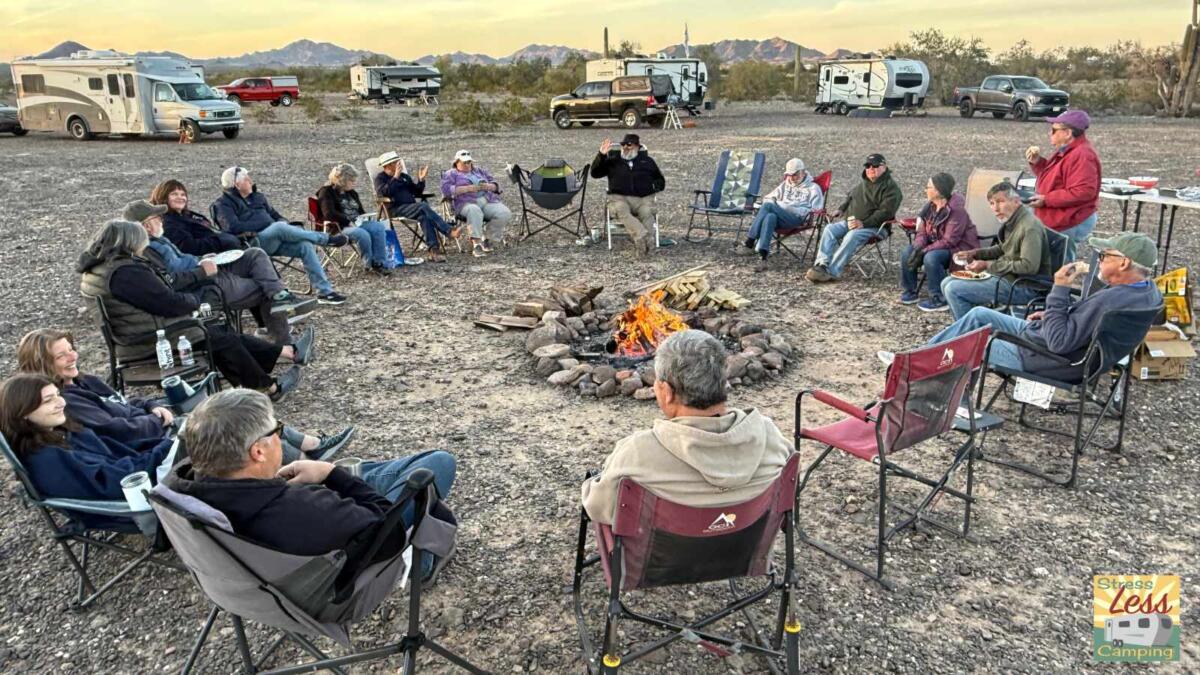
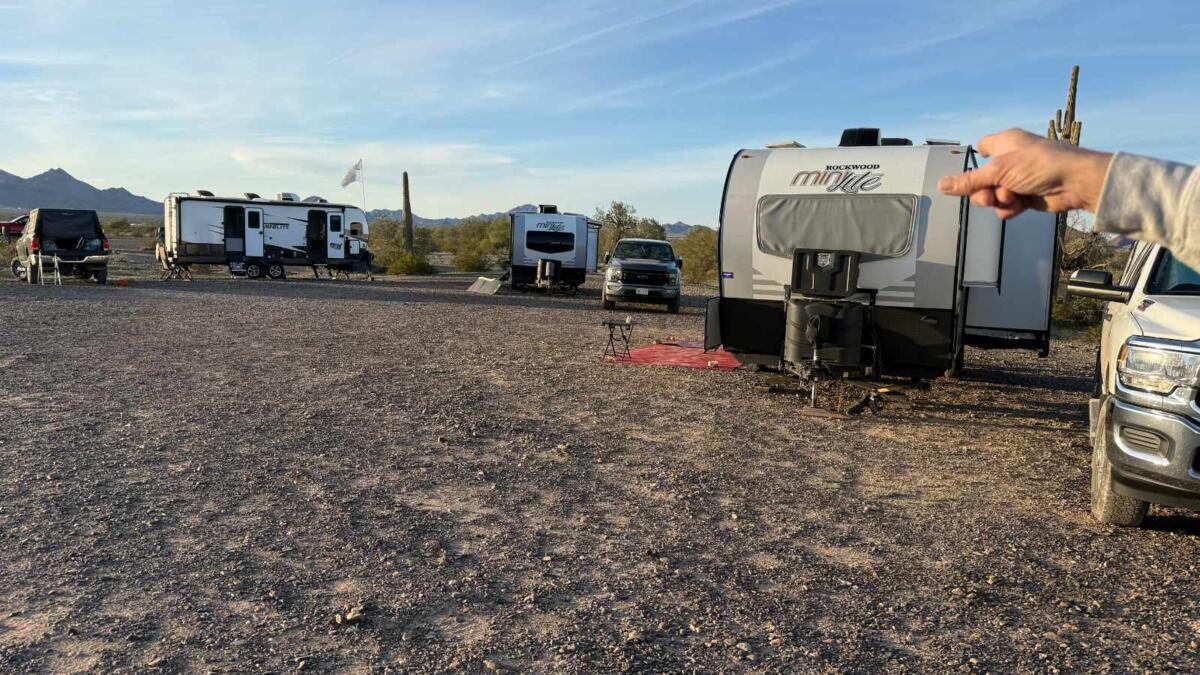
We all could make the case that social media is more antisocial. But, truthfully, I use it a lot to find the people with whom I’m most closely aligned. I happen to have a Rockwood Mini Lite, and there are quite a few of us out here. We have members of the Mini Lite Group I started in 2017 from New York, Maine, Northern California, Arizona, Missouri, and other places. We all sit around the campfire and solve the world’s problems.
Well, really, we sit around the campfire, talk about who’s cooking what, and help solve RV problems. We don’t talk about religion, and we don’t talk about politics.
What about church?
One of the big reasons I’ve heard for people not wanting to leave their community is their church. A lot of people find comfort and fellowship in their local church, of course, and I can see why leaving town would be a bummer in this case.
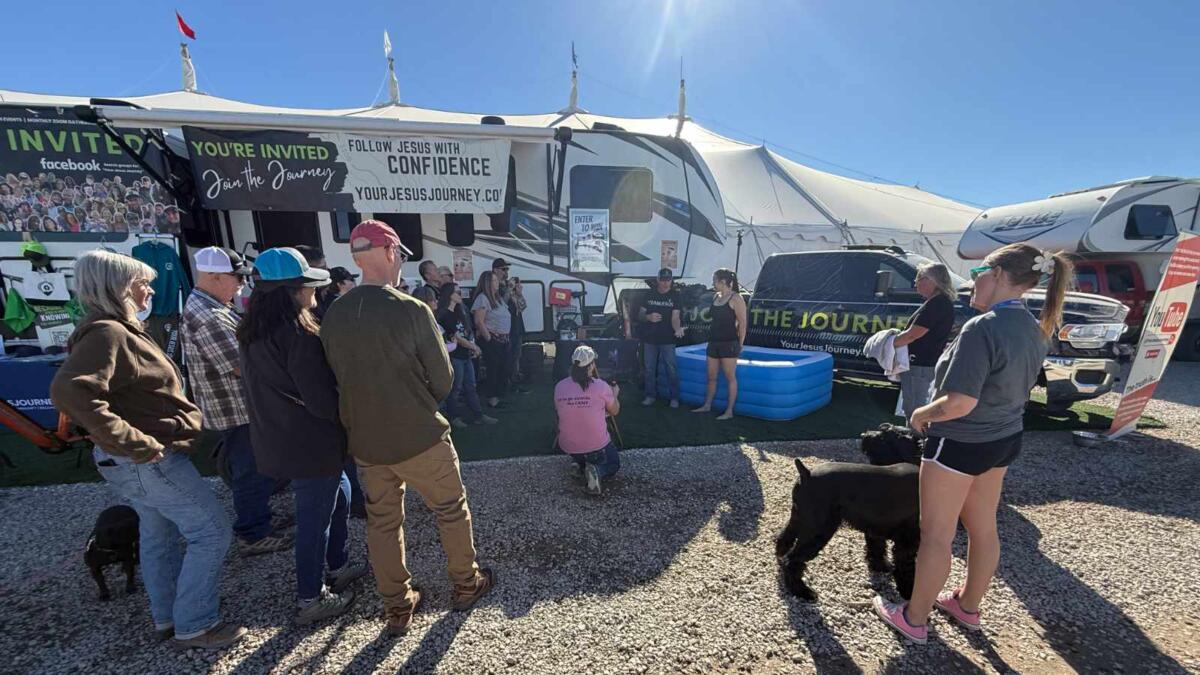
But we also found a mobile church and interviewed them on our weekly podcast. Our Jesus Journey is one of the organizations that provides religious fellowship on the road. In fact, at the most recent Quartzsite RV Show, they actually baptized someone right on the midway. That was not something I had seen before. (I had seen people get baptized, just not at an RV show.)
Apparently, there are quite a few religious organizations that accommodate travelers and even have meetups, so this may be less of a barrier than you thought.
What about the gym?
We also recently interviewed a couple from Active RV Life who brought up the fact that many people enjoy going to the gym for the fellowship there. Honestly, I had never really thought about the gym as a place for fellowship, although, if you see me in person, you’ll realize the gym is about the furthest thing from my mind… or my waistline.
But Sarah said that the fellowship of the gym was something she missed quite a bit. So that’s something the couple is offering in addition to helping people figure out how to stay healthy and active on the road.
(Click to enlarge.)
Be all that you can be
I do know people who just want to be away from others and spend time with their own thoughts. But there are plenty of people who seek others and have found volunteering, social media, clubs, common interests, and any manner of other things bring them closer to the people who share their ideology.
So, if you’re concerned that you will be alone out here on the road, don’t be.
Here’s a funny story about that: We were in a campground in Indiana and were walking around looking at the campground. Someone messaged us on Facebook and asked if it was us in the campground. It was, and we had met the other campers through the FRVA (formerly FMCA) at breakfasts, where they often serve donuts. They were our donut buddies!
You never know where you’re going to find like-minded friends, but you certainly will. Donut despair.
BLUETTI®, one of the premier names in portable power stations, brings both style and substance to the table with the BLUETTI Elite 30 V2. Available in a variety of vintage colors, this compact power station proves that portable power doesn’t have to be boring. More importantly, it delivers the solid build quality and dependable warranty BLUETTI is known for.
This lightweight power station isn’t designed for serious, long-term boondocking or running large appliances. Instead, it’s ideal for charging phones, tablets, laptops, and other everyday electronics. It also makes an excellent small backup power source at home.
I find myself using it most often outdoors—powering my laptop while working at a picnic table, running music, or providing lighting for an evening gathering at camp. It’s small, quiet, and incredibly convenient.
BLUETTI Elite 30 V2 Specs
• ≤10ms Pro-Grade UPS backup: Seamless switch with 980W bypass power, offering reliable protection for sensitive electronics during outages
• 600W rated power, 1500W lifting power: Handles essential appliances and power surges with ease
• 140W PD fast charging: Quickly charges laptops, tablets, and smartphones
• UltraCell™ technology: Up to 50% less self-consumption with only 4.5W standby power for excellent energy efficiency
• 288Wh capacity with 9 versatile outlets: Power multiple devices at once
• Long-lasting LFP battery: Over 3,000 charge cycles and an estimated 10-year lifespan
• TurboBoost charging: Recharge to 80% in just 45 minutes
• <30dB whisper-quiet operation: Nearly silent under light loads—perfect for RVs, bedrooms, or shared spaces
What I especially like about the BLUETTI Elite 30 V2
• Only 9.4 lbs., and easy to carry.
• Compact size at just 9.8 × 7 × 6.6 inches.
• You can run your devices and recharge the unit at the same time.
• Full 600W output, with Power Lifting Mode available for up to 1500W when needed.
• Upgraded UltraCell tech and smart cooling system reduce power consumption by 50%, improving efficiency and extending runtime.
• Supports AC wall charging (380W/200W adjustable), solar charging, and car charging—0–80% in 45 minutes and 0–100% in 70 minutes (battery-safe).
• Can also be charged via a portable solar panel (sold separately).
• In an emergency power outage, the UPS mode switches seamlessly within just 10ms—virtually unnoticeable.
• Comes in lots of fun colors.
Can anything be improved?
Not really. This is a small, entry-level power station, so it naturally has its limits. But it performs perfectly within those limits and does exactly what it’s designed to do.
It was a spur-of-the-moment decision. I happened to mention to my DH that the largest RV show in the U.S. was happening in Tampa, FL.
It was the Sunday before the show’s Wednesday opening, and DH said those two glorious words beloved by RVers near and far: “Let’s go!”
(Note: Hershey, PA, also claims the “largest in the U.S.” title. Everyone wants to be the biggest, it appears.)
The trip
We made the 1,042-mile trip in two days—just in time for the opening of the show. And what an opening it was! So. Many. People. (I should mention that my DH is scheduled for knee replacement in two weeks. He was not in tip-top condition but braved the crowds and the large show footprint without complaint.)
The 2026 Florida RV SuperShow promoters boasted more than 1,300 individual RVs onsite. We saw at least half of them. I was most interested in the debut of new models and floor plans, so we worked off my RV list first.
I love to observe RVers and potential RVers at these shows. Here’s a glimpse of what I saw and heard as we toured the RV show in Tampa. I’m hopeful that my observations provide some insights that may help you at the next RV show you visit.
So big!
A young child was accompanied by what looked to be his grandparents. He ran from RV to RV at a brisk pace. His grandparents scurried to keep up. At one RV, the little guy exclaimed, “Wow! This is the biggest one we’ve seen!”
Yes, some RVs are big—really big! But before you let the rig’s gigantic size mesmerize you, consider:
Will I feel comfortable driving it?
How will I park it?
Is it a match for the number of people I’ll most often travel with?
How will I pay for it?
Newbies
We were “resting” DH’s knee inside a Class C motorhome when a young couple entered. The man said, “Now this is what I’m talking about!”
His wife didn’t seem convinced. “Hey, I don’t even know if I’ll like RVing. I’m not willing to go into debt for one.”
My husband and I exchanged a glance that said, “Hope he listens to her.”
If you’ve never RVed before, I suggest you camp with a friend who has an RV. A couple of days on the road will help you know if RVing suits you. As an alternative, rent different classes of RVs to see which class best matches how you like to travel and live on the road.
Money isn’t everything
Money isn’t the only consideration when purchasing an RV. Even if you can afford to buy the most expensive model, that class and its features might not be the best fit for you. Ask yourself these questions:
How do we most like to travel? (Enjoy visiting a particular location for a day, then move on? Or spend several days/weeks in one place?)
What locations do we plan to visit? (Many national parks, state parks, COE parks, and others have restrictions in place as to what size RV their campsites will accommodate. Keep this in mind!)
How will we store our RV when we’re not traveling? (Your backyard may be spacious enough to park a travel trailer, but not a large 5th wheel or motorhome.) What costs are involved with storing an RV at a storage facility?
If looking at a travel trailer or fifth wheel RV, can our current truck safely tow this rig, or will we need to upgrade our truck? (That’s a huge additional expense!)
Put on blinders
Try to look past the glitz and glam and concentrate your attention on the functionality of the RV.
Don’t be shy! Actually stand in the shower to see if you fit comfortably. Sit on the commode. Try getting in and out of the bed. Is there a dedicated spot for your CPAP machine? Count the charging ports throughout the rig. Are they easy to access? Open and close doors, drawers, and cabinet doors. How are they constructed? Do they operate smoothly?
You get the point. Try to imagine living life in each RV model you tour. Go through the motions even if other folks are inside the RV with you. (They should be doing what you’re doing, too.)
Facts, not emotions
It’s important to guard your emotions as you move from RV to RV. Take notes about the floor plan and photograph the features you’ve prioritized.
Is a dedicated office space on your list of “must-haves”?
That full-size refrigerator is impressive. However, it’s not practical if you mostly plan to boondock.
The heavy fifth wheel RV has lots of space, but will you feel comfortable driving it in the mountains?
Note the positive and negative features you discover in each RV. Plan to review your notes, but remember: There is no perfect RV. Your goal is to find the one that has the most features you want with the least negatives that you can (hopefully) overlook.
Your emotions should not determine an RV purchase (or any large purchase). You need facts and time to think clearly. Remember that many RV dealerships hold over their “show prices” for at least a week after the RV show. (Ask about this.) Take advantage of that time to make the decision that’s best for you.
No pressure
A salesperson I talked with said his team hoped to sell at least 50 RVs over the course of the Tampa show. That averages out to ten RV sales for each of the five days. That’s a hefty sales goal! I shivered to think about the pressure tactics that the sales team would use to reach their ambitious goal. And they’re not alone.
The pressure to purchase an RV can feel overwhelming at an RV show. You can always get up and walk away. A good salesperson knows that, and should understand your need to carefully consider all your options.
Have you attended any RV shows? What are your likes and dislikes? Tell us using the comments below.
By Cheri Sicard
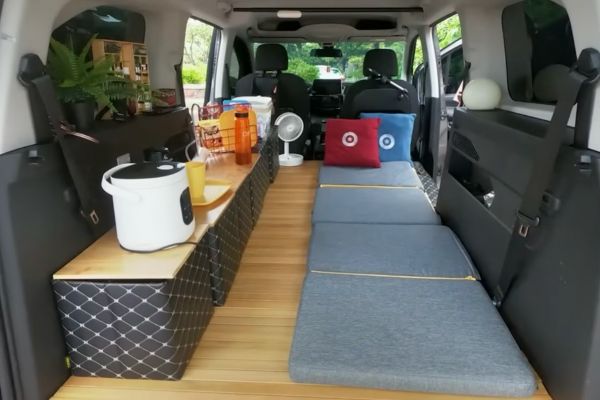
Wood floors show up in a lot of RV and van builds for a simple reason: They make a small space feel lived-in.
Travel & Design wanted that same homey feel in a Citroën Berlingo, but without turning the van into a permanent project. The goal was a floor that feels good under bare feet, works in different seasons, and can be removed fast when it’s time to drive like normal again.
In the video at the end of this post, they show how they did it.
Why wood flooring feels so good in a micro camper
A wooden floor changes the mood inside a vehicle right away. It’s not just about looks. It’s the feel when someone steps in barefoot and gets that warm, textured surface instead of cold plastic.
Wood also helps with comfort throughout the year. It tends to feel warmer in winter and cooler in summer, which matters in a metal van body that swings with the weather. Some woods even bring a light, natural scent that makes the space feel calmer, like a tiny cabin on wheels.
This build had one big rule: Keep the passenger seats. Keeping the seats means the van can switch roles without drama. A solo beach day and a multi-person trip can both work. When plans change, the interior can change too, without pulling parts out of the van or committing to a single layout.
The floor was designed around a few practical targets:
Easy installation and disassembly, so it can switch from work mode to leisure mode quickly
Easy to clean, since camping always brings sand, dirt, and spills
No interior changes, which helps avoid safety issues, insulation problems, legal risks, and headaches during inspection or resale
Reasonable cost, with simple tools and beginner-friendly steps
Travel & Design stuck to a no-trace modification mindset, meaning the van stays original and the add-ons come out when needed.
A roll-up layout inspired by bed slats
A single large wooden sheet wouldn’t work because seats need to fold and move. Hinges could solve that, but hinges can create bumps and awkward lines.
Instead, the idea came from IKEA-style bed slats: narrow boards connected by fabric strips. That creates a flexible panel that can roll forward or back to match the space. In a minivan setup, that same idea could leave a row of seats ready to use, then roll the floor out only when extra flat space is needed.
Materials and measurements
With the passenger seat flattened, the usable plane measured about 3’11” wide and 6’11” long.
For wood, Travel & Design chose cypress (hinoki), picked for durability, easy handling, and its natural aroma. Cypress is also known for resisting termites, insects, and decay. The boards came from a lumber manufacturer in Hualien, listed as Vietnamese cypress panels.
• Board size bought: 7’10” long, 1.4″ wide, 03 cm thick
• Quantity: 30 boards, each cut down to 3’11”
To protect the surface, a water-based polyurethane finish was applied. It fills small holes, helps block water, and keeps the grain visible. It’s also easier to clean and less likely to show watermarks.
Building it, fixing the first failure, and testing it at the beach
The build was simple: Cut, sand, varnish, then connect the boards using nylon webbing and hot-melt glue. Nylon webbing was picked because it’s strong, it doesn’t tear easily, and its small pores let glue sink in for better grip. The webbing also needed to be wide and thin to avoid a raised edge.
The first install test failed. The boards were packed too tightly, so they bumped into each other and shifted, and the hot-melt glue didn’t have enough time to soak into the fibers. The fix was to leave small gaps between boards and use an iron to fully resoften the glue so it could bond deeper into the webbing and wood.
On the second test, the floor unrolled flat and stayed put. It could roll up again to make room for seats. A real-world check happened on a beach day, where the back seat was flattened, the floor spread forward, gear stacked out of the way, and the space turned into a simple summer hangout with a sea view.
This roll-up wood floor shows how a small change can make a van feel more like a place to rest. It stays removable, keeps the seats usable, and avoids drilling or permanent changes. For Travel & Design, it set a clear standard for the Berlingo: comfort first, simple build, and a setup that can change whenever plans do.
We use cookies to ensure that we give you the best experience on our website. By continuing to use our site, you consent to accepting cookies. We NEVER have or will sell reader's data. For more info, please see our privacy policy page.




 Spray protects your RV’s most important electrical connection