Home Blog Page 78

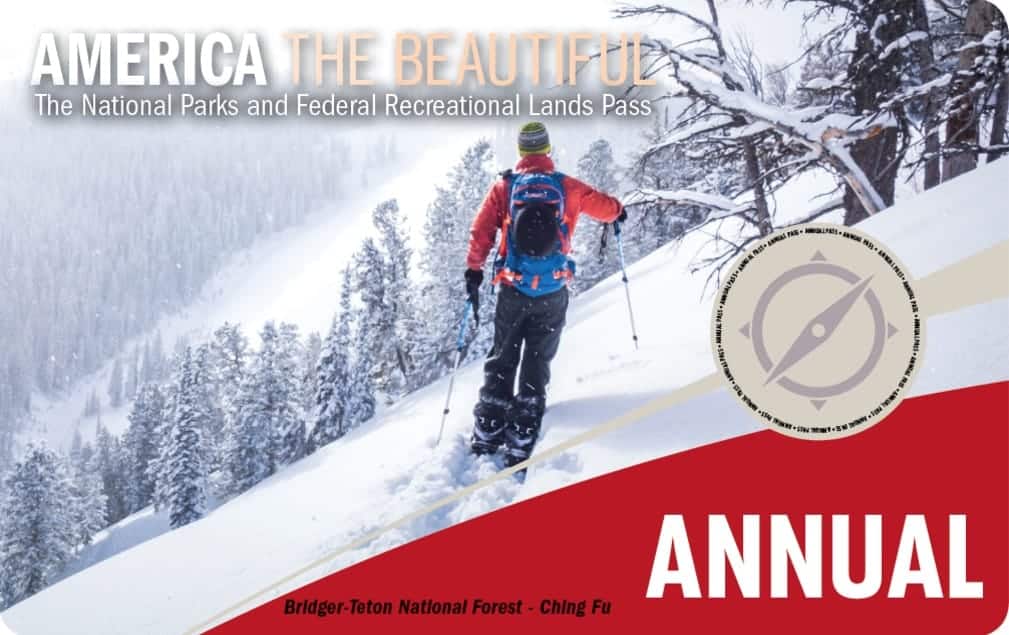
Do you currently have a National Park Service America the Beautiful Pass?

23

If you travel to national parks often, you probably have (or will want) an America the Beautiful Pass. The pass gives you access to every national park, as well as more than 2,000 federal recreation sites (wildlife refuges, national forests and grasslands, and for lands managed by the BLM, Bureau of Reclamation, and the U.S. Army Corps of Engineers). Nice, right?

The pass isn’t just for individuals—it can cover a vehicle full of passengers at per-vehicle fee areas, making it a great deal for families and groups traveling together. Plus, it’s valid for an entire year from the month of purchase, so you don’t have to worry about losing time if you buy it mid-year. Many frequent travelers find that it pays for itself after just a couple of visits.

If you’re planning a cross-country road trip or a tour of the national parks, this pass can be a game-changer. It simplifies entry, saves you money, and encourages you to explore lesser-known sites along the way. Whether you love hiking, wildlife spotting, or scenic drives, having the pass in your wallet means one less thing to think about when you pull up to the gate.

The annual pass costs $80, and if you’re a current U.S. military member or have a medically determined disability, it’s free.

Oh, and if you’re a senior, 62 or over, the pass costs $80 for a lifetime. You can learn more here.

Do you have an America the Beautiful Pass? Tell us in today’s poll. Thanks!

MORE POLLS YOU MIGHT LIKE:

RVDT2856

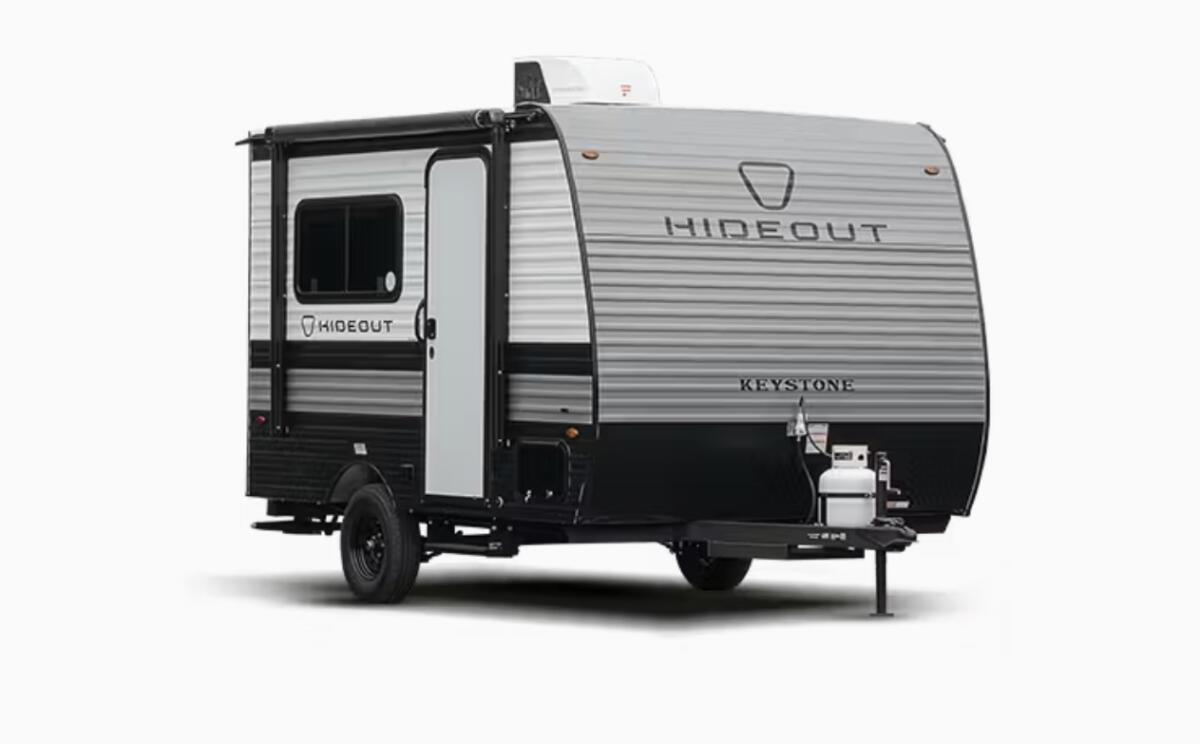
2026 Keystone Hideout Mini 199BHS: Nice surprises, not-nice surprises

If you want a lightweight, easy-to-tow bunkhouse, the 2026 Keystone Hideout Mini 199BHS might be a contender.

The Hideout is small in size yet includes many features that surprised me.

Behind the walls

Keystone builds the Hideout Mini line with 8-foot-wide construction. The trailer has an aluminum exterior and a number of durability features. These include Dyna Span seamless floor decking, AlphaPly TPO roof membrane, and four-point stabilizer jacks, as well.

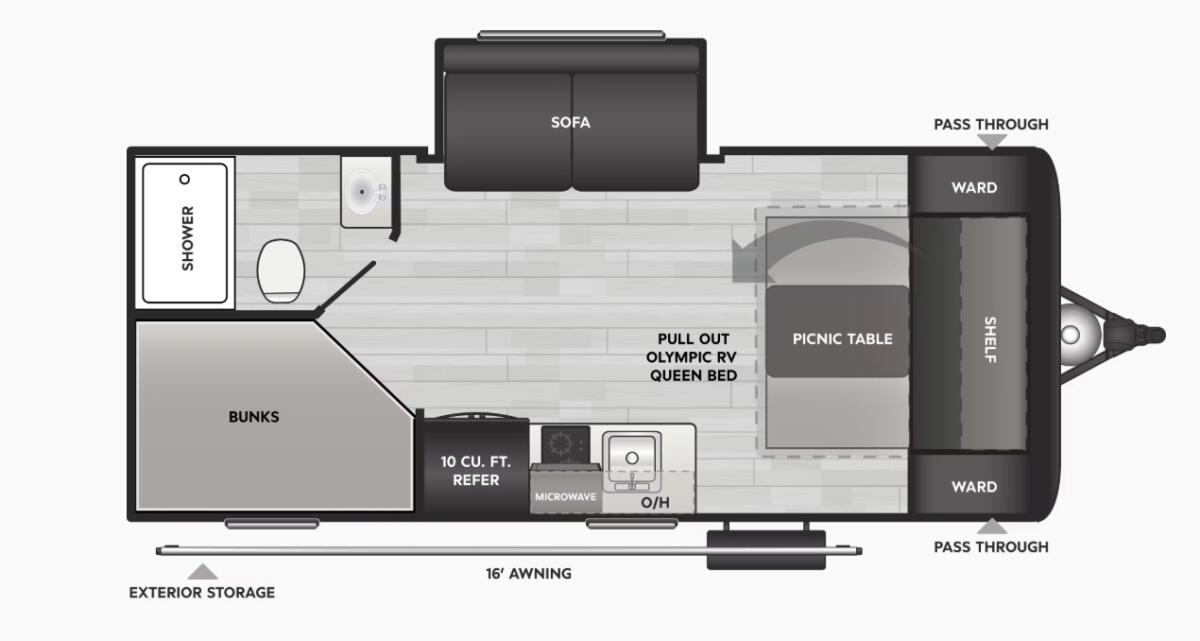
The Mini series is single-axle for lighter towing, and the 199BHS includes one slide (the bunk/dinette slide) to open up living room space.

Key specs

• Length: 23 ft. 4 in.
• Dry weight: about 4,085 lbs.
• GVWR: 6,100 lbs.
• Sleeps: up to 7 (pull-out queen, sofa, double bunks)
• Fresh water capacity: 45 gal.
• Furnace: 20k BTU
• Water heater: tankless
• A/C: 8,000 BTU roof A/C
• Awning: power awning with LED lights
• MSRP / Price: Base MSRP listed at about $27,134.

Screenshot

Interior and living space

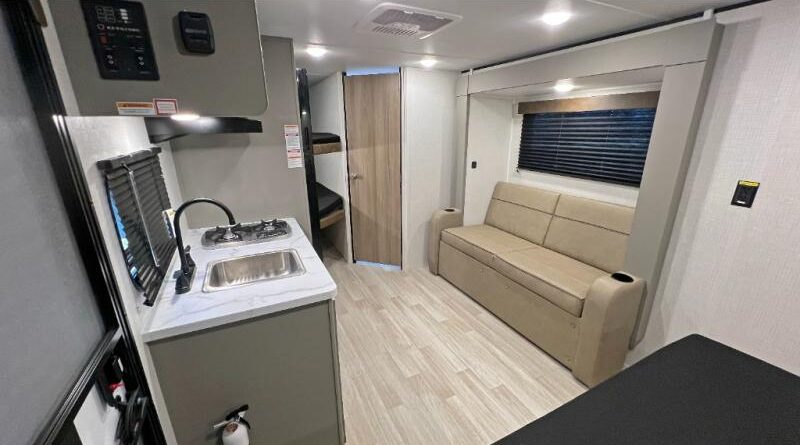
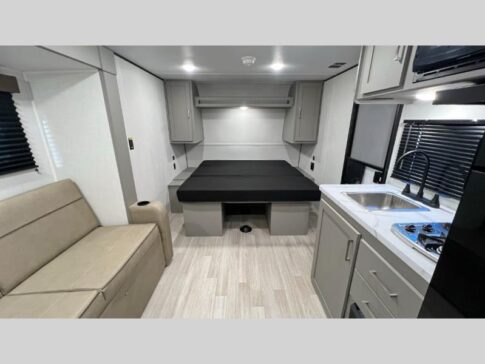
When I walked in, I was surprised at how large the 199BHS feels (for a small trailer). The single slide creates a more open center by moving the dinette/sofa assembly out. The compact galley is positioned along the curb side. Light tones in Keystone’s 2026 Mini help the small footprint feel larger and brighter—another nice surprise.

2026 Keystone Hideout Mini Image: SRI RV

Kitchen

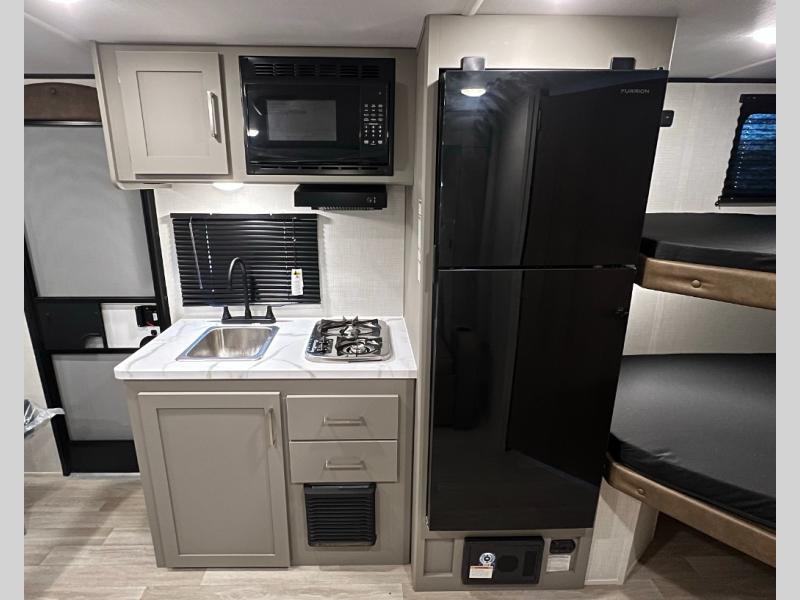
The galley is very compact and includes a two-burner cooktop, microwave, and a 10 cu. ft. refrigerator. In my opinion, an outside grill is a must because it would be extremely difficult to make an entire meal in the Hideout Mini’s kitchen.

Counter space is so limited that I was surprised Keystone didn’t find a way to add pull-out or flip-up countertops for additional prep space. Even a sink cover would help!

2026 Keystone Hideout Mini Image: SRI RV

Dining

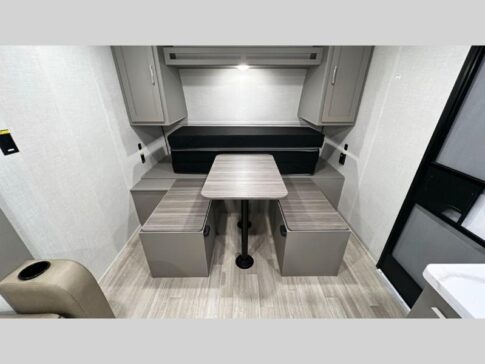
Another surprise to me is that the Mini’s footprint allows for both a dinette and a sofa. The dinette benches offer much-needed storage with very easy access. A downside to the dining arrangement is the lack of backrests on the benches. (Note that this area will transform to become the “bedroom” for sleeping.)

2026 Keystone Hideout Mini Image: SRI RV

Living area

With the slide open, the dinette/sofa area becomes the social center. The model I saw did not include a television. However, an electrical outlet, cable connections, and a TV mount are included. (You should use a swivel mount if you like to watch TV from the bed.)

The jack-knife sofa easily folds into extra sleeping space when needed. I like the window placement, which allows for cross breezes on pleasant days. The Mini’s windows are large and tinted, so you get good light and a view without losing privacy. LED interior lighting and blackout shades are standard, which keeps evenings comfortable.

Bath

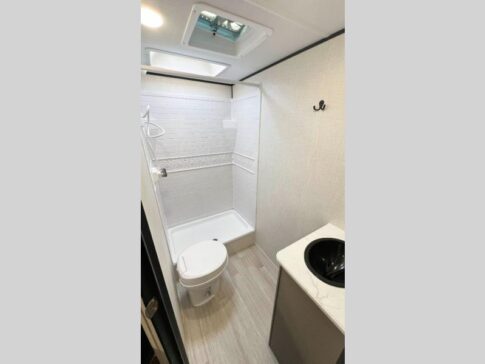
The 199BHS places the bathroom at the rear corner, which maximizes privacy and keeps plumbing straightforward. Expect a standard shower (not a massive stall), a toilet, and a small vanity. The tankless heater helps shorten waits for hot water, even with quick showers back-to-back. Storage space is limited, but functional.

2026 Keystone Hideout Mini Image: SRI RV

Bedroom

Up front is the pull-out Olympic RV queen bed. This space-friendly solution provides a true sleeping surface without taking up floor area during the daytime. Overhead cabinets and side storage are available, though limited. The queen setup is roomy enough for two and features bedside tables for RVers who may need to use a CPAP machine. The fold-away bed frees up visual and practical space during the day so that the Mini’s short-length doesn’t feel cramped.

2026 Keystone Hideout Mini Image: SRI RV

Bunk “room”

I understand that Keystone’s intention was to provide sleeping space for seven. That’s a tall order for a 23 ft. RV, but the Mini delivers on beds for heads. Even at this lower price point, the Hideout Mini 199BHS allows a family plenty of sleeping space. However, on rainy days, the small footprint + seven campers inside, well, I’d feel claustrophobic—but that’s just me.

I wish they had made this space into an office. Removing the awkward “crawl into bunks” would allow plenty of room for a remote office. Crafters and hobbyists alike would appreciate this space without bunks. All it needs is a table and a door!

Overview

For large families who want a no-fuss, tow-easy bunk trailer, this could work. For couples who may be looking to downsize, there are definite downsides to the 2026 Hideout Mini 199BHS that are hard to ignore.

See for yourself. Watch a video walkthrough here and leave a comment below telling me what you think.

RELATED

RVDT2856

The importance of RV water pump maintenance

By Dustin Simpson
Let this post serve as a reminder to clean your water pump filter. The filter is there to help catch particles and prevent damage to your water pump.

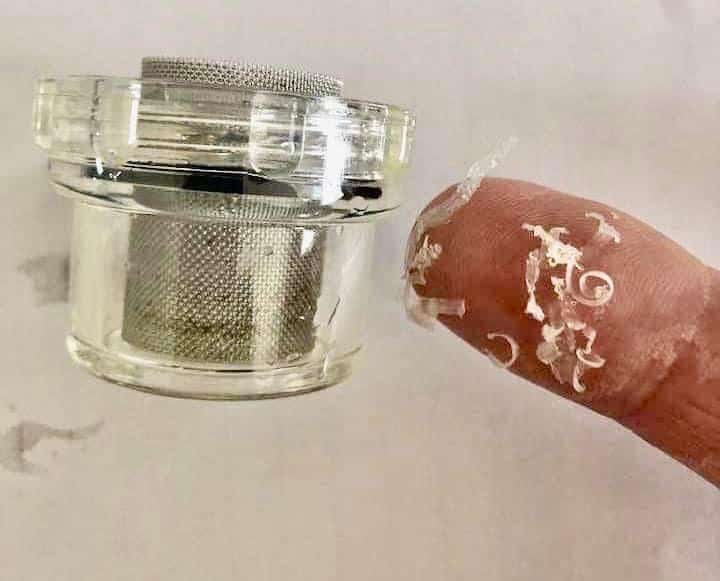
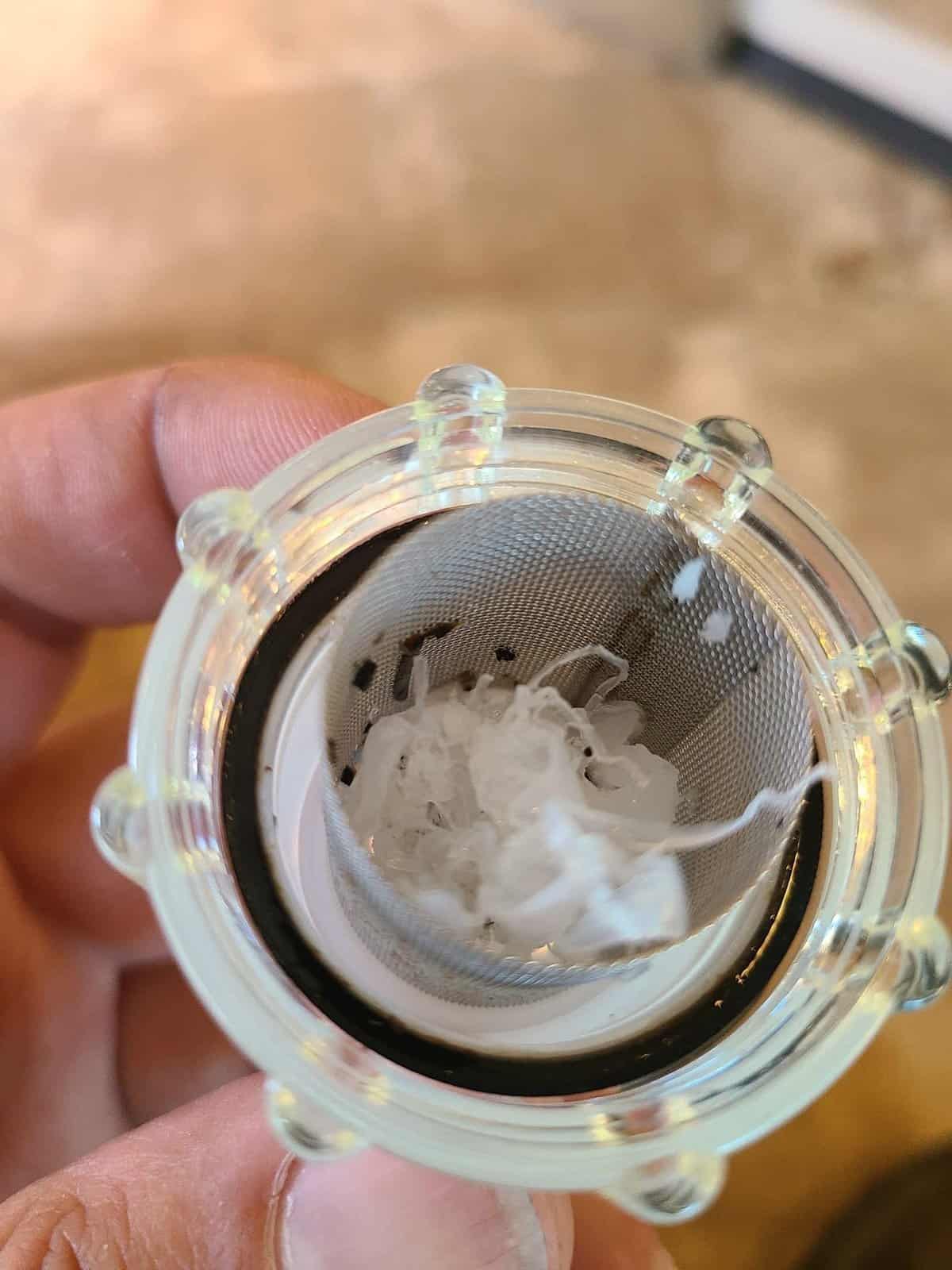
The following pictures show a lot of shavings that came from production. Sometimes it can take a number of uses for them to get into the filter.

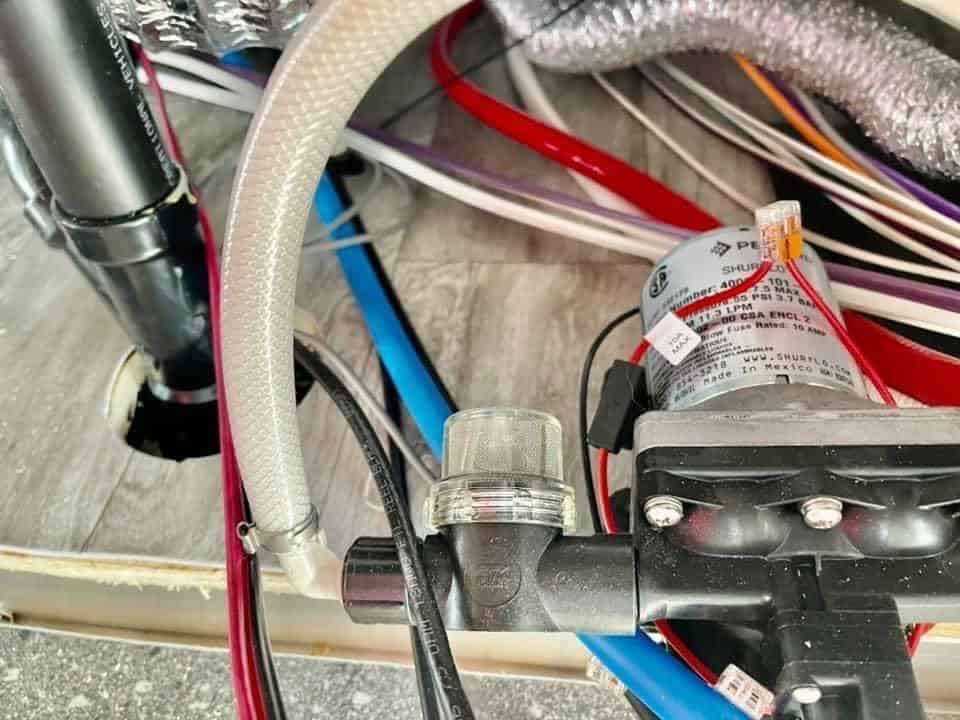
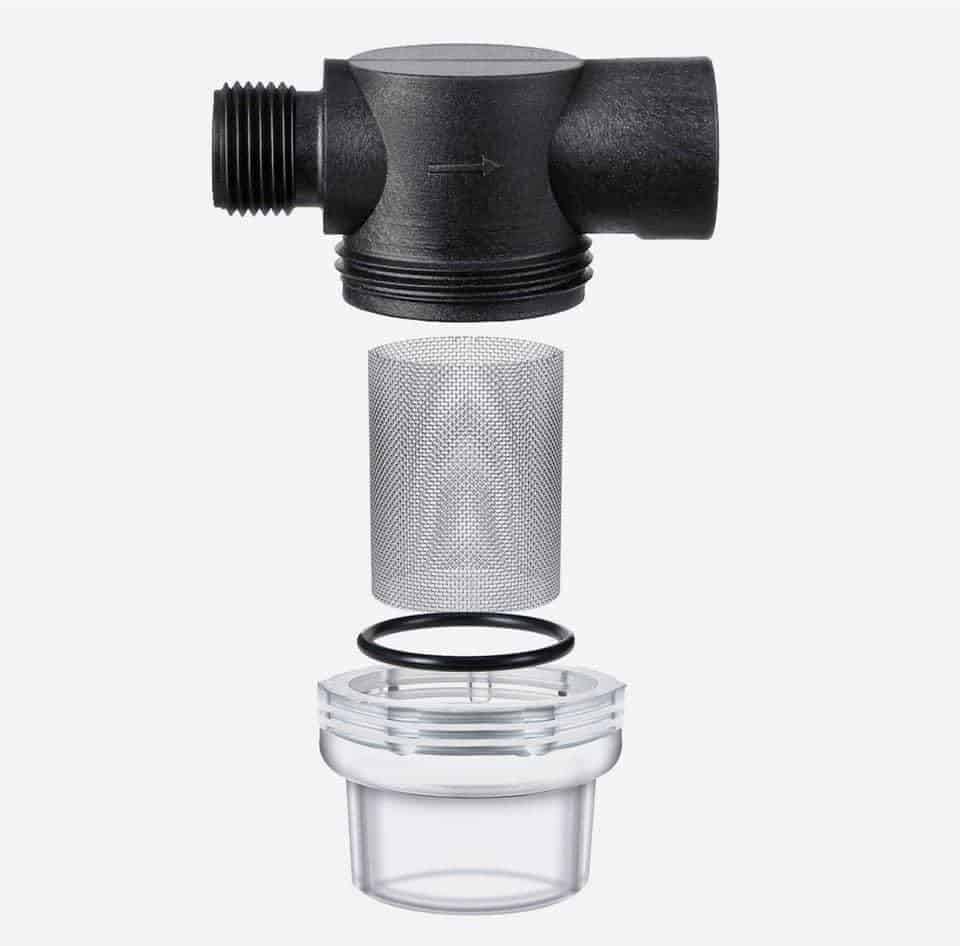
The water pump strainer filter is a 1/2″ twist-on pipe strainer. These are typically attached to your water pumps. In most cases, they are hidden behind the panel in your compartment area.

Don’t forget to clean them regularly. A dirty water pump filter can cause low pressure on the water pump side. Not to mention, it causes your pump to work harder, which can cause damage over time.

Do you need a replacement filter? If so, you can find one here.

Additional ways of maintaining your RV water pump

Outside of filter maintenance, there are additional ways of maintaining your RV water pump. These include:

Water line inspection

Check for any kinks or cracks in the water lines. Also, ensure that mounting brackets are secure. Leaks can cause your water pump to work harder than it needs to.

Connection inspection

Road vibration can cause connections to come loose. Loose connections can cause leaks, excessive noise and the water pump to work harder.

Sanitization

Algae or scale buildup on the diaphragm and valves can cause low flow and leak-back issues. Routinely sanitizing your fresh water system can prolong the life of your water pump.

Winterize your unit prior to winter storage.

More from Dustin

Read more of Dustin’s articles here.

RELATED

RVDT2856

RVtravel.com readers reveal the special times in their lives

This page is updated often

By Chuck Woodbury
Recently I asked you to write me about some of your special life moments or accomplishments of which few others, if any, were aware.

The idea came from a thought I recalled recently from years ago when I was spending a third of each year on the road writing and publishing my “on the road” newspaper Out West. I would often stop in small towns to learn what was interesting. I’d read the local newspapers for ideas.

I’d read the obituaries. And there I would learn details of many of the local citizens’ lives that I suspected few others ever knew about. For example, the well-liked owner of a hardware store might have been a heroic soldier in World War II. Or perhaps a quiet older woman who played Bingo at her church had been a child actress.

And so, now, here are a few of many responses from our readers. The previous week’s contributions follow the newest ones directly below.

Please use the form below to tell us about your life’s special moments.

Your latest contributions

From Carl Hay
While trying to get to flight training in the Air Force in 1968, I was in a military aircraft that crashed. Hello life in a wheelchair. I took up flying again as soon as possible and in 1995, flew the RV6 that I built from a kit. Went everywhere in it for 23 years, retired from flying and started RVing. My grandson and I built a camper van with a lift on it. Now, we pull a 21-foot trailer with a lift on it, so we have two “bedrooms”. I’m still camping at 80 thanks to my amazing wife, Olivia, and service dog, Maddi. Nothing special, just always tried to be kind and live the way I want. It’s not what you can’t do that counts, it’s what you CAN do. Love it!

From Tom W
A window seat after being dumped, a beautiful brown-eyed girl asked, “Is this seat taken?” Married, seniors in high school.

From Alice R
I have a quilt in the Smithsonian Museum’s permanent collection. As a pretty new quilter, I belonged to a guild that was invited, along with many other guilds, to make miniature quilts to hang on many Christmas trees one holiday season. As a new quilter I worked very hard on mine; it was about 3” x 4”, a nine patch on point. At the end of the exhibition, the quilts were absorbed into the Smithsonian’s collections so, despite being a very average quilter, I get to say I have a quilt in the Smithsonian Museum’s permanent collection.

PLEASE TELL US ABOUT YOUR SPECIAL MOMENTS (use the form near the bottom)

Previous contributions

From Bruce B.
My bride and I have been RVing for 50 years and almost 35 full time. Bought a VW camper at the factory in Germany and had one trip where we drove to the tip of Italy and sailed to North Africa seeing North Africa. We celebrated our 50th anniversary in Mexico in February and will be picking up a new RV in June. It’s been a great ride with hopefully much more ahead.

From Tim Connors
In 2021 our travel trailer broke an axle in Madison, SD. We met Wayne Westerberg, who’s RV Repair Service repaired our trailer. Wayne was a key person in the life and travels of Chris McCandless who lived and died in an abandoned city bus in a remote area of Alaska, which was chronicled in the book “Into the Wild” by Jon Krakauer.

From William Usher
I am 82, Brenda 75. Together 9 years. I have Macular Degeneration. Brenda has driven us all over the country. The best part. I love the woods, she does too. She has been my eyes and this has allowed me to be able to walk the trails in the woods again, after many years of not being able to. She is my everything. At our age, a second chance at LOVE!

From William Michell
I went to a 1-room grade school for 6 years (1 teacher, grades 1-6), graduated from high school in a class of 25, got my B.S. in Secondary Education, did 6 years in the Navy as a Naval Aviator and worked 28 years at a nuclear power plant, 19 of them in the control room. As a sidelight, have been married for 46 years, raised 3 wonderful kids and lived in the same house for those 46 years. I think I did pretty well for a Pennsylvania farm boy.

From Beth Holt
I met and fell in love with Lee, an Army soldier, in 1989 while I was working for the Army in Heilbronn, Germany. Little did I know that in 1982-1983 I had been his military occupational specialty (MOS) career assignment manager when I worked at the Army personnel center in Virginia. Although I don’t recall ever making an assignment move for him during this time…it must have been kismet that eventually brought us together. We’ve been married and adventuring now over 30 years. Life is good!

From Rebecca N.
Fifty years ago this coming Saturday, on the first day of spring 1976, a handsome stranger sat next to me on a cross-country train. We talked all night, exchanged addresses, he stole a kiss as I got up to leave, and the rest is history. We’re still in love! EDITOR’S RESPONSE: What a wonderful story, Rebecca. You two are so blessed! We should all be so lucky!

From Robert Deerhake
After we were married our honeymoon was a 30-day RVing trip in a 16-foot camper. We moved up to a 37-foot motorhome and traveled all over the USA including Alaska. We flew to Hawaii and took many cruises for 60 years. I was sad to quit when she passed after 65 years. Great memories!

From David Plummer
After a long career, I have learned that at the end of that career the amount of money you made does not matter, the title on the business card does not matter, what matters is how many people you helped along the way. EDITOR’S RESPONSE: David, you are a wise man! Thanks for sharing!

Vince S.
I worked at the last mine to operate in Death Valley National Park. As a heavy equipment mechanic, I worked 1,120 feet underground for American Borate Company at the Billie Mine. Lacking a quality water source, water was hauled day and night from wells at the Nevada/California border off Highway 127. Before power poles could reach the mine, we relied on 3 Cat D399 diesel generators for electricity. There was a company trailer park (with clubhouse and swimming pool) between the mine and Death Valley Junction on Highway 190 that we called “3000 Foot Level” due to its elevation. It’s called “The Pads” on Google Maps today since the trailer patios are all that remain.

From Dennis G.
I was the editor of Opel Motorsport Club magazine, for 8 years, and the VP sales of Opel GT Sourcer. Through those connections I’ve met the actor Joe Montegna, the late Chuck Jordan of GM, Erhard Schnell who penned the Opel GT, and his then apprentice Morad Nasser. I have even spent a day in a German beer garden with an Opel executive. All because of the love of a car most people under the age of 50, have never even heard of.

From Beth Holt
My first husband and I were told we were the first married Army couple assigned to the Army in Europe (USAREUR) headquarters in Heidelberg, Germany, on arrival in 1974. After returning to Fort Sam Houston Texas in San Antonio in 1977, we were then the first Army couple awarded joint Army Commendation Medals for our accomplishments in Germany.

From Craig Phillips
As a child, I read National Geographics cover to cover and dreamt of places to visit. Number one was the Great Wall of China. Years later, I walked on it as an adult.

From Michele Traynor
I just wanted to comment on how awesome all of these stories are from ‘ordinary people’! It’s a shame how society continues to emulate vacuous celebrities and worship professional athletes, when we have such amazing people doing great things right in our midst on a daily basis. We just need to appreciate the opportunities to get to know a stranger’s stories.

From Jack D.
Although I’ve been involved with the promotion side of the motorsports and automotive industries for 64 of my 74 years, my distraction has been with “time,” or with clocks. Odd shapes or sizes, unique mechanical workings, transportation themed or commemorative event are the main qualifications. My first clock was the pendulum “Ball Clock” from the 1939 New York World Fair – I now have 7 in different colors – in my collection of 200+. Once my friends see my rec room, they understand my dislike of Daylight Saving Time changes.

From George B.
As a police officer for over 20 years I’ve saved several lives, raised three wonderful children, been married for 45 years and lived in 15 town and cities. My wife, my children and the lives I saved are the highlights of my life. My health could be better but I’ve always liked the adage, “I complained because I had no shoes until I met the man who had no feet.”

From Bill Byler
My best part time job ever: I was the PA announcer for the New York Mets minor league baseball team The Savannah Sand Gnats in Savannah Georgia. This was before they became The Savannah Bananas.

From Jeff Winkler
I lived in 8 different places in the US before graduating high school, my dad worked for Campbell Soup and was transferred to their different business units. Once I graduated college, I bought a house at 25 years old and have been there for 41 years, and don’t plan to move anytime soon!

From Chuck Kruse
I ran with the Olympic Torch into Calgary for the 1988 Winter Olympics.

From Robert Cordy
I have made the Northwest Passage. Not in an RV but aboard a US Coast Guard Ice Breaker, USCGC Polar Sea, 1985, Thule, Greenland to Prudhoe Bay, Alaska. I have RVed in England, Scotland, Wales, Ireland, Norway, Sweden, Germany, Austria, Switzerland, France, Austria, Greece, Italy, Czech Republic, Hungary, Hawaii and New Zealand.

From P.J.
I once had to breast feed my son in the Sistine Chapel. The guard kept yelling at me to get him quiet. I thought I had fed him enough to get through the tour and he wouldn’t take a bottle. BUT that got him quiet and I just sat and enjoyed looking at the ceiling and yes he was covered.

From Jamie Caroland
Many folks have viewed but few/no one I know knows that I publish photos on Pexels

From Fred Burns
I am a 4th generation American whose ancestors came here from Ireland in the mid 1800s. Each generation thereafter just happened to marry full-blooded Irish partners, so I am still 100% Irish blood, after 4 generations. To top it off, I was born on St Patrick’s Day.

From Jane Asbury
I grew up climbing trees. As a young girl, my grandmother would sew matching dresses for me and Mom. We were wearing them one year at a Boy Scout Jamboree at the local fairgrounds pavilion. There I saw a climbing pole going high up in the air. Yep, this little ‘Tom Boy’ decided she could easily climb that pole so up I went. Embarrassingly, my mother never heard the end of “So that was your little girl?” I felt quite proud.

From Betty Stuzinski
I have actually toured all 7 continents since I retired and a highlight was in Australia when I got a hug from a Koala bear.

From Douglas Ratcliff
I hike and kayak all over the country and collect lost and abandoned fishing gear which cleans up the trees and protects the wildlife. In 10 years I have accumulated almost 13,000 lures and removed miles of fishing line. I also saw Captain Sullenberger land on the Hudson River from my office.

From Daniel Armstrong
I aspired to be a professional musician. My inspiration was my elementary music teacher who taught and could play every instrument in the orchestra and band. I started on violin, added viola, cello, piano, flute, string bass, mandolin, tuba, bassoon, 3 manual+bass church organ and baritone horn, plus I played professionally in 3 orchestras after I retired from the Navy.

PLEASE TELL US ABOUT YOUR SPECIAL MOMENTS (use the form below)

From Denny K
I have traveled to 5 continents except Africa and Australia, traveling through 12 countries by vehicle; have seen the Himalayas; been to the Taj Mahal; visited the Taj Lake Palace in India, a James Bond movie location; traveled through the Khyber Pass in Pakistan; slept on the floor of a tea house in northern Afghanistan. All were with missions team except traveling to Antarctica in the Navy where one leg broke through the ice on edge of frozen ocean.

From Richard Chabrajez
At age 58, I started racing go karts competitively.

From Charles Booth
I was a 17 year old high school dropout who needed my parents’ permission to join the U.S. Coast Guard and my CO’s permission to get married. My career arc ran from officer’s steward to electronics tech to commissioned officer and helicopter pilot. The USCG Museum ran a story about me in their magazine. I have built my own computer and a 19Kw solar system for my house. I currently drive a school bus. My wife and I have been married for 55 years this September.

From K.S.
Before retirement, I was a licensed wildlife rehabilitator, specialized in raptor care. I have held hundreds of bald eagles, hawks, owls and falcons. I set broken bones and gave them medications to save their lives. And I was honored to release them back to the wild after they healed.

From Jim Johnson
There is in our minds NOTHING interesting or special about us. That is not saying we are bored or boring. We married in our 20s, still married after getting closer to 5 decades, have a couple good kids, a few grandchildren. We both worked, went through some tough patches in our careers pinching pennies. Managed to keep a roof over our heads, food on the table and save a little for retirement.

EDITOR’S REPLY: Jim, give us 10 minutes with you and I guarantee we will find plenty of interesting and/or remarkable things. Actually, we think how you have lived your life, and the success of your marriage and children is remarkable all by itself!

From Franklin Forrey
I am a Bronze Medalist in the 2002 Corporate Winter Games which were held in Park City, Utah, at Deer Valley Resort right after the World Olympic Games. I competed in the Giant Slalom and represented AT&T.

From Richard West
I saved a man from bleeding to death and assisted several wreck victims during 20 yrs. RVing. I rescued people from elevator, petted bears in Canada and cheetahs in South Africa, and volunteered on an orphanage build in Mexico. I fixed many RVs for “Campground friends”. I can hit a prairie dog beyond 600 yds w/ a .223. Pronghorn at 925 yds w/ 6.5. Usual stuff.

From Barbara Wilde
I shook hands with President Johnson at an Air Force base. I was the first woman to be “allowed” to join the Army ROTC at my private college. It was sooooo much fun! They called me little Annie Oakley out at the shooting range at Fort Ord.

We will have more stories in future issues. Please share your own story by using the form below.

Name
Please enter your email, so we can follow up with you if necessary. This email will NOT be visible to readers, only our editors.
Is it okay to use your name (as you stated above) if we post this??
Please limit to 70 words or less. Tell us about an unusual or otherwise interesting skill, talent, time or incident in your life that hardly anyone knows about.

RVT1253

Escondido’s special gem: Deer Park Winery and Auto Museum

1

Nestled in the northern Escondido, California, hills, this special place is worth a stop. Deer Park Winery and Auto Museum combines a small family winery and tasting room with what’s often described as a world-class collection of convertible cars.

Deer Park Winery and Auto Museum is located near Old Highway 395 at 29013 Champagne Boulevard in Escondido. The venue is open from 10 a.m. – 5 p.m., Thursday through Monday.

How it began

Robert Knapp started his winery in 1979. His collection of convertibles soon began to fill what is now contained within three very large buildings. Knapp was a real estate millionaire and loved to collect convertibles, antique radios, typewriters, kitchen appliances, televisions, neon signs, and more.

What you’ll see

Deer Park sits on roughly 15 acres of vineyards, orchards, and picnic lawns. The massive auto displays occupy three large buildings. They are best known for the collection of American convertibles from the mid-20th century.

More than 100 vehicles are displayed across multiple buildings. But that’s not all. You’ll also see kitschy collections from the past: neon signs, mid-century household items, and other memorabilia.

The winery produces small-batch estate wines and runs weekend tastings. It also has a marketplace where you can buy bottles, charcuterie-style snacks, and seasonal items.

What travelers mention

Visitors report that the car collection is genuinely impressive and often the highlight of a Southern California road trip. Opinions about the wine and maintenance of some displays vary.

If wine is your primary reason for your stop, consider calling ahead about current tastings. If cars and a pleasant picnic are your goal, you’re likely to be very pleased.

Practical tips

The museum posts current hours, admission, and tasting info on its official site. You can also call before arriving if you have questions (760-749-1666).

Typical public hours and ticket prices are available through the Deer Park Winery and Auto Museum site and local museum listings. Currently, general admission tickets are $14, and military and 60+ seniors are $12. Children 9 and under are free.

Tips for your visit

• Call the museum’s phone listed on their site to confirm RV parking or event closures (760-749-1666).

• The museum is easy to reach from I-15 and sits close to the Lawrence Welk Resort area of Escondido. If you’re touring north San Diego County, add the winery/museum to your itinerary.

• On-site parking exists for cars. If you’re driving a large motorhome or towing a long trailer, call ahead to confirm where to park.

• Allow 60–120 minutes to wander the cars, museum rooms, and patio.

• Bring a folding chair and a small cooler if you plan to picnic on the grounds. You may also want to bring a jacket if you plan to stay after sunset. The shady oak lawns are one of the nicest parts of the visit.

• If you’re mapping an afternoon, pair Deer Park with a tasting at neighboring vineyards or a stroll around old-town Escondido.

You should go!

For RVers who appreciate picturesque detours off the interstate, Deer Park Winery and Auto Museum is exactly the sort of quirky, photo-friendly stop to visit. Still need convincing? Check out the video below.

Have you visited Deer Park Winery and Auto Museum? Share your thoughts using the comments below.

MORE LIKE THIS:

RVT1251

My new favorite small, folding camp table

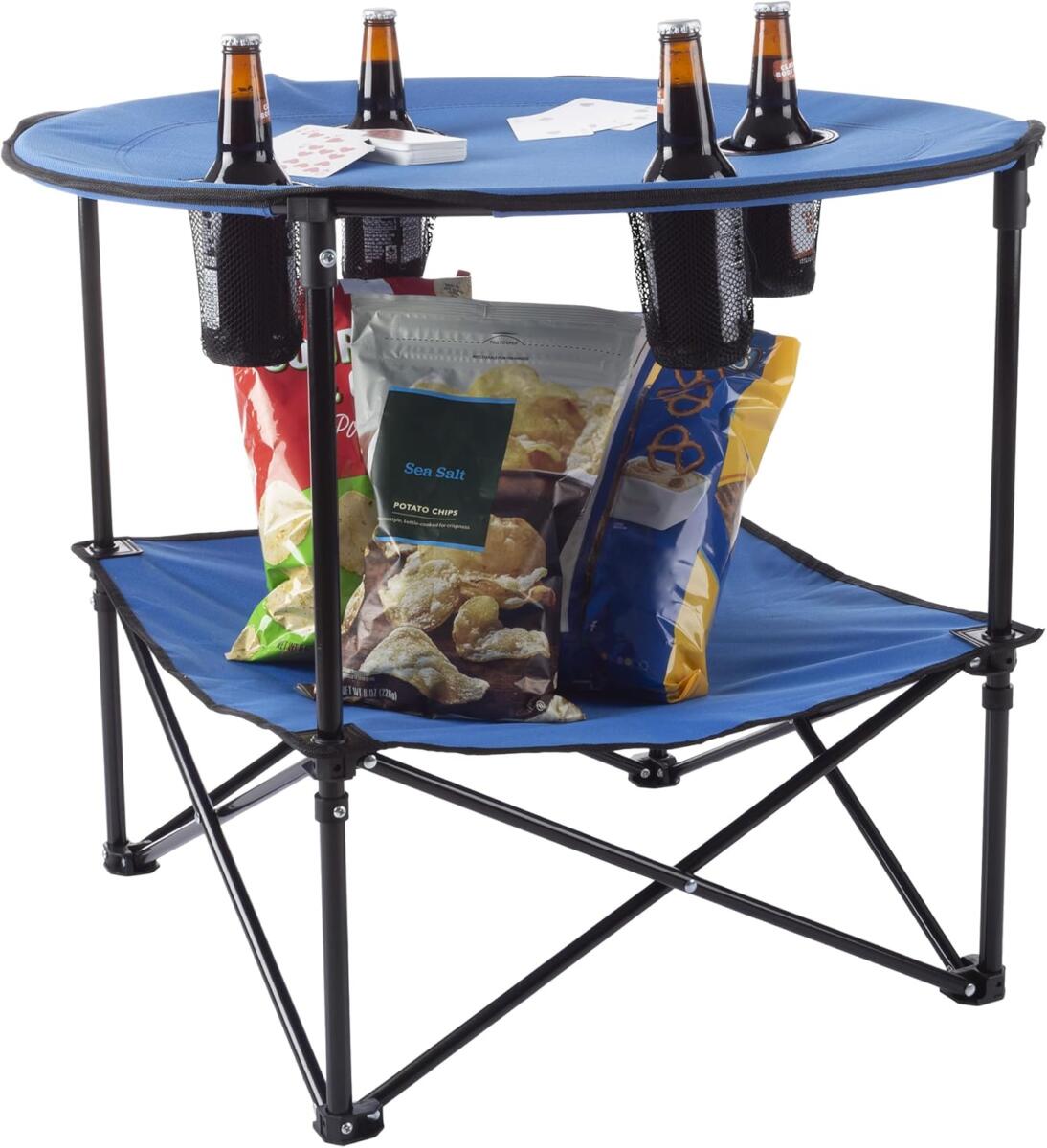
I was gifted this folding camp table, and it has become one of my favorite and most used camping accessories. It adds HUGE functionality to life outside the RV and around the campfire. It keeps snacks nearby and drinks securely in place until needed.

When not in use, it folds small and flat, making it perfect for RVers or even tent and car campers.

What I especially like about the Wake folding camp table

• The two tiers provide lots of space! Equipped with a tabletop as well as a lower shelf for additional storage, the table offers plenty of room to set snacks, plates, phones, sunglasses, or anything else you like!

• The four mesh cup holders securely hold drinks. No spills, even on unstable surfaces.

• Each tier holds up to 20 lbs.

• Easy to clean—just hose it off.

• When not in use, the table folds flat and hardly takes up any space.

• Weighs just 6.48 lbs. (or 5.5 lbs., depending on where you’re reading it).

• Carrying bag included.

• If you have a small dog, like me, that bottom shelf makes a terrific off-the-ground dog bed.

Table

What can be improved?

It’s quick and easy to put together… once you get used to it. But it does take some practice the first time. I almost gave up as I could not get the two pieces—base and tabletop—to securely clip together. A neighbor more patient than I gave it a go and got it to work. The trick is that you must fully spread out the base, more than you think you do. Once in the maximum extended position, the top will clip on.

But be warned: The first time you try you will think, no way this is going to work. Stick it out and get the knack of it, because once you do, you will find this handy table to be invaluable around the campsite.

Stats

• Materials: 600D Oxford and Steel Tube

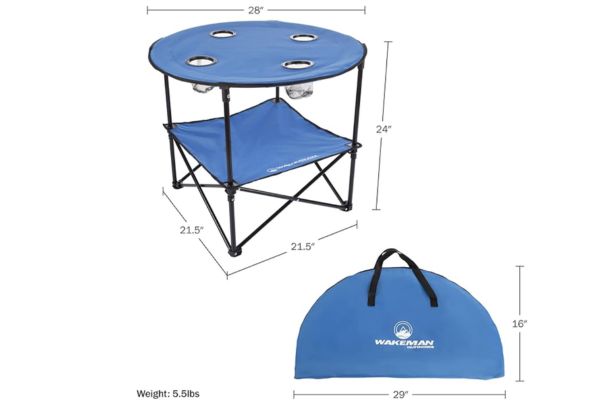
• Table dimensions: (diameter) 28″x (height) 24″

• Carrying bag dimensions: (width) 29″x (height) 16″

• Weighs 6.48 lbs. (or 5.5 lbs.)

Order from Amazon.

Read all recent gadget reviews here

RVT1251

Confession of a coffee addict: The trick that saves my day

By Chuck Woodbury
I have one significant addiction. It’s coffee. So far, in all the scientific articles I have ever read, nobody has said, flat out, that drinking a lot of coffee is bad. Or nobody has convinced me of it. So why stop, is what I say.

I am so ridiculously addicted to it that I can now drink two or three cups and still fall quickly asleep. Go figure.

But the point of this article: I like my coffee with milk. I like cream, but my cardiologist doesn’t agree. I do not like my coffee black. Tried it: Nope, no can do.

So, whenever I travel, whether in my RV, or by plane or car, I must have milk. Most of the time, at least when traveling with my RV, I have a quart or half-gallon of it handy. But I can run out, which happens. And that is when this little 8-ounce miracle of ultra-pasteurization saves my day.

It also comes in handy for cereal, for when the main milk supply runs out or goes bad.

Horizon milk
An eight-ounce container

It’s called Horizon Organic Milk. It comes in different flavors as well as in 1 percent, 2 percent and whole. But unlike regular milk, it does not need to be refrigerated until after you open it. The shelf life is a few months. So I always keep a couple of 8-ounce containers handy for when I run out of the regular stuff. It tastes just like regular milk.

The milk is “ultra” pasteurized by heating it to a very high temperature for a few seconds, which destroys bacteria for a longer shelf life than normal milk. It comes from the same cows that produce Horizon’s traditional organic milk.

At home in Seattle, I buy it from Fred Meyer (Kroger) stores. But other big markets have it. It’s available on Amazon in 8, 12 and 18 packs.

And here, for other coffee fanatics like me, is what else I carry in my coffee emergency kit. I have provided Amazon links for your convenience.

Single cup water heater: When hot water isn’t available, heat your own with this small, inexpensive device.
Starbucks instant coffee: Comes in many blends and quantities.
Individual coffee creamers: These ultra-pasteurized packets will also work for your coffee.
Sugar packets: I don’t sweeten my coffee, but for those who do, here are a number of products, natural and artificial.

So there you go, java junkies. Bottoms up!

RVT1251

5 important lessons to learn from watching RV crashes

By Cheri Sicard
Like a lot of RVers, Joe of RVing with Joe has watched a lot of RVing YouTube videos over the years. He also admits to watching a lot of videos of RV crashes.

No, Joe is not just being voyeuristic. He says that you can learn a whole lot about RV safety by watching RV crashes and figuring out what went wrong. He demonstrates this in the video below.

Joe also says that keeping images of RV crashes, no matter how horrific, in the back of your mind can help you stay mindful while on the road.

I have to agree with him. Especially when I see inexperienced or irresponsible RVers whizzing past me at top speeds on windy, winding mountain roads.

In the video, he focuses on seven particular crashes that help him keep important RV driving safety practices in mind. Be sure to watch the video for the visuals.

RV crashes #1 and #2: Pay attention to height!

The RV crashes in the first two videos, fortunately, do not put anyone’s life in danger, but they most assuredly cost the RV owners a whole lot of money. In the first, the driver ignores signs and warning lights and plows forward under a low bridge at regular speeds, and shears off his RV’s air conditioner in the process.

In the second video, a fifth wheel owner drives smack into the shelter of a bank ATM drive-up lane.

RV crash #3: Don’t drive distracted or drowsy

In this video, we see a truck and travel trailer serpentining all over the road. It culminates with the trailer flipper entirely over! The cause? A drowsy driver. Luckily, no one was hurt in this particular incident, but it could have easily been a deadly head-on collision had it happened in another location.

RV crashes #4 and #5: Driving in high winds

If you see too much sway going on in your rearview mirrors as a result of high winds, it’s a good idea to pull over and stop as soon as you can safely do so, even if you are driving at slow speeds. The driver in this video did not do that and, as a result, flipped his travel trailer over.

If you see trucks and RVs pulling over in windy conditions, you should probably do the same. Don’t be the last person on the road in a windy situation.

In video #5, the tow vehicle was lighter than the trailer, and the high winds flipped the trailer, which in turn flipped the tow vehicle.

RV Crash #6: Don’t drive too fast!

This driver ignored speed warning signs on a winding and icy mountain road during a snowstorm and ended up wrecking his RV. Luckily, he slid into the mountainside and not over the cliff. Also luckily, he did not hit the semi-truck coming at him in the other lane.

RV Crash #7: Avoid trailer sway

A trailer that is not properly loaded can result in severe trailer sway, as this video demonstrates. If this happens, Joe says you should lightly hit the trailer brakes, not the vehicle brakes. In the video, both the trailer and the vehicle end up flipping due to trailer sway.

This video is especially important for those whose tow vehicles are lighter than their trailers, a less-than-ideal situation to begin with.

RELATED

RVT1251

How to remove rusty bolts from your RV

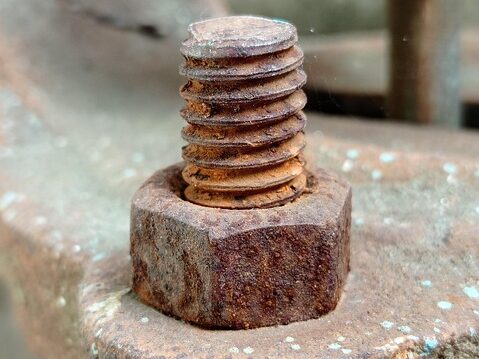
A routine RV exterior check revealed several rusty bolts on our rig. Rusty bolts can show up in all the places where your RV meets the weather.

You might discover them in undercarriage suspension and frame hardware, slide-out rails, awning brackets, roof mounts, jacks, and more.

Why worry?

Rusty bolts are a bigger deal on RVs than on a lot of other vehicles because they can affect safety, reliability, and repair costs all at once. Here are several reasons why rusty bolts should be addressed.

First, rust weakens the bolt itself. Corrosion eats away at the metal, reducing its strength and making it more likely to snap under load. On an RV, bolts often secure critical components like suspension parts, stabilizer jacks, slide mechanisms, hitch hardware, and awnings. If a corroded bolt fails while driving or during setup, it can lead to component damage or even a safety hazard.

Second, rust can lock parts together. When corrosion forms between the threads of a bolt and the nut or frame, the bolt can seize in place. That turns simple maintenance jobs—like adjusting slide-out components—into time-consuming repairs. Seized bolts often break when you try to remove them, which means drilling, cutting, or extracting what’s left, adding labor and cost.

Third, RVs live in harsher conditions than most cars. They sit for long periods, get exposed to rain, snow, road salt, coastal air, and campground moisture, and then vibrate constantly when traveling. That combination accelerates corrosion. Because RV frames and mounts often use thinner metal than heavy trucks, a broken or rusted bolt can damage the surrounding material, not just the fastener.

Why does it rust?

Salt air, road spray, trapped moisture, and contact between dissimilar metals speed corrosion. The constant vibration of travel can let a bit of surface rust lock metal together over time. These are common trouble spots for RVers because water + metal + time = seized fasteners.

Avoid this!

If you reach for a breaker bar or an oversized wrench without preparation, you risk snapping the bolt or rounding or stripping the head. What’s more, you may damage the surrounding area (thin RV skin, fiberglass, or a threaded mount).

Once a bolt breaks or the head is ruined, you’re a lot closer to cutting, drilling, or rebuilding. All of these are harder and costlier than a patient removal. Many pros and how-to guides warn that slow, controlled methods prevent turning a simple job into a big one.

The patient method

Start with cleaning and inspection. Brush loose rust and grit away so treatments can reach metal-to-metal contact.

Spray a quality penetrating oil at the bolt/nut interface and let it soak. Long soak times can really help. (This can be minutes to overnight.) The soak time is important because the fluid needs to wick into the joint.

Try gentle mechanical persuasion next. Use the correctly sized socket or wrench and apply steady torque. Use controlled leverage rather than sudden jerks. If the bolt still won’t budge, an impact driver or an impact wrench can break the corrosion by applying short, percussive force while turning. That vibration is what often frees stuck fasteners.

For bolts with rounded heads, bolt-grip extractors or tapered extractor sockets grab onto the metal and let you turn them without destroying the surrounding area.

If the bolt head is gone or the shank is seized, try soaking with the penetrating oil once more. Then gently tap the bolt. Sometimes that gentle tap can dislodge problematic bits of rust. Still stuck? You can cut off the head and remove the remaining stud. Or carefully drill and use an extractor.

When to change tactics

If the torque is rounding the head, stop and switch to an extractor or cutting method. More force will often break the bolt and multiply your work.

If you’re near fiberglass, wiring, or gas lines, or if you’re unsure about cutting into a structural area, step back and consider hiring a professional shop to handle the problem.

Guides and pros recommend escalation: soak, tap/vibrate, apply steady torque, use impact, use extractors/cutting, then drill/extract. Don’t skip safety or start off with the most destructive option.

Quick tips

Always wear eye protection and gloves. Use the correct socket size. (A loose fit rounds heads.) Support nearby components so heat or leverage doesn’t bend or break mounts. Keep a spare bolt, nut, and a matching replacement on hand so you can finish the repair cleanly when you’ve removed the old hardware.

Preventing rusted bolts

When you reassemble, do what you can to stop future corrosion. Swap in stainless or hot-dip galvanized fasteners where strength and thread fit allow. Or use a high-quality anti-seize compound on threads before tightening to prevent metal bonding.

Seal joints and fastener heads with sealant or a bead of marine-grade silicone around roof penetrations and exposed hardware. Keep drainage paths clear so water doesn’t pool, and inspect vulnerable areas often. A quick clean and a dab of anti-seize or corrosion inhibitor will save time later.

Can you add to these tips? Please do. Use the comments below to weigh in.

RELATED

RVT1251

The true cost and hidden dangers of disposable propane cylinders; an alternative

14

By Russ and Tiña De Maris
How Americans love their propane-fired equipment. We take cookstoves and lanterns camping. We step into the shop and fire up our propane torches to do plumbing, other repairs, and even hobby heating.

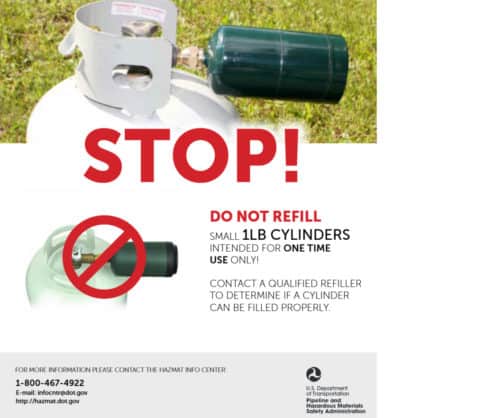
But sadly, those colorful little cylinders don’t love us back. They are, by their nature, disposable. Once used, now dead, they head to landfills. While some do refill them, they do so at their own physical and legal peril. Is there a way to have these great mini-tanks and avoid the problems?

Disposable propane cylinders a major problem for parks

National park visitors often just leave LP cylinders at the campground dumpster. Ten years ago, Yosemite National Park officials say 23,000 of these “orphans” were left in the park. At that time, it cost the park $1 each to properly dispose of them. Who knows how many more of these cylinders are dumped in the nation’s parks each year. And a buck a cylinder for disposal a decade ago has gone up. For example, disposing of a “disposable” one-pound cylinder in Lake County, Illinois, can be up to $4.25.

Just how many of these little gas containers are used in the U.S.? The Propane Education & Research Council (PERC) and other industry sources that track the sales and usage of propane in the U.S. put it at around 40 million per year. Put another way, 40 million disposable propane cylinders—all tossed into the standard 4-yard dumpsters typically seen in campgrounds—would require 825,000 dumpsters. That’s a lot of waste!

It’s no wonder that those with a consciousness of caring for the planet figure there’s got to be a better way. Why not refill disposable cylinders, reducing the amount of waste, and save a bit of money, as well?

How much does this gas really cost?

The average price of a disposable isn’t cheap. Big box stores like Walmart, Home Depot, and Lowe’s typically sell disposable propane cylinders in packs (e.g., a 2-pack or 4-pack). A 2-pack might cost around $6 to $8. If we average it, your $7 disposable is ringing up at more than 43 cents per ounce. If you paid that price to fill your smaller RV cylinder, it would cost you $137 per fill-up. Wow!

There are plenty of adapters that make it possible to fill a disposable from a refillable propane container. Doing the math says even if you paid $3 a gallon for propane, your refilled cost per disposable would amount to a piddling 71 cents.

But then there’s safety

But there’s another side to the equation: How much is your safety worth? Disposable propane cylinders are built far differently than their larger, refillable brothers. The metal walls of the disposable type are thin, and repeated contraction and expansion of those thin walls can lead to metal fatigue and eventual rupture.

Likewise, a disposable’s valve is not designed for repeated use. Also, unlike an LP cylinder designed to be refilled, there’s no “bleeder” valve to indicate when the disposable is filled to the safe point, making over-filling a real problem. And while plenty of people refill their disposable cylinders without trouble, how much are you willing to gamble that you can get away with it?

disposable propane cylindersThen there’s another financial consideration. While it is technically legal to refill a disposable cylinder, transporting it on a public highway is a very different matter. Federal regulations (administered by the U.S. Department of Transportation) prohibit transport of refilled “DOT 39” cylinders (of which classification small cylinders fall under). Violate that regulation, you’re liable for a fine of up to $250,000 as an individual, and up to five years in prison.

If something bad were to happen, say an explosion or accident, things get uglier. The violator may be held liable for the damages, which can include personal injury, property damage, and environmental cleanup costs. In such cases, penalties can far exceed the maximum fines listed above.

Disposable propane cylinder alternative

Give up on using those handy one-pound cylinders in favor of the environment? Run the risk of life and limb and refill the disposables? Enter an alternative: Safe and legally refillable one-pound cylinders. Flame King offers cylinders designed for refill, along with a refill kit to pump your own. The cylinders themselves are heavy-duty and equipped with an “80% valve” that indicates when the safe “full” point has been reached.

disposable propane cylindersHow does it work? The refill system includes a stand on which you can safely place an inverted 20-pound cylinder. That cylinder is connected to an adapter, and it to the refillable cylinder. Using an included Allen wrench (hex key), you crack open the bleeder valve and press a dispensing lever on the adapter. When liquid propane begins to spit out of the bleeder valve, let up on the fill lever, close the bleeder valve, and disconnect the refilled cylinder. Users happily report that, unlike refills of disposable cylinders, it’s easy to get a full cylinder, with no need to stick it in a freezer to encourage a full fill.

You’ll need to run your figures to determine your break-even point. The whole kit, including the refill system and a single, one-pound refillable cylinder, usually runs about $67; additional cylinders are about $17. Yes, the up-front cost may look a little imposing, but on the other hand, if you’re paying $7 per disposable, it doesn’t take much to figure the savings both financially and environmentally. And as opposed to the inherent dangers of refilling disposables, this Flame King system looks like a winner.

In two years, you won’t be able to buy a disposable propane cylinder in California. Under a new law, disposable cylinders will be a thing of the past. Considering the issues of what to do with 40 million throw-away cylinders sold each year, other states may follow suit.

RELATED

RVT1251

What are your top two main considerations when choosing a campsite?

48

When it comes to choosing the perfect campsite, we often have different priorities, shaped by our lifestyle, travel goals, and even the sizes of our RVs. For some of us, the beauty of a site’s location and scenery is paramount. Mountain vistas, lakeside views, or a private forest hideaway can turn a simple campsite into a memorable destination. These RVers see their campsite as part of the experience itself.

Others RVers focus on amenities, prioritizing hookups, clean restrooms, and perhaps even pools, gyms, or laundry facilities. Especially for full-timers or those staying for a longer period, these comforts make a big difference. Families with kids or pets often look for campsites with playgrounds, dog parks, or kid-friendly activities. These RVers choose spots that offer a balance between the comforts of home and the adventure of being on the road.

Then there are those who prioritize privacy and space, valuing peace and quiet over convenience. For them, a crowded campground with lots of neighboring campers can detract from the experience, making it feel less like an escape and more like a busy neighborhood. These RVers may seek out campgrounds that offer larger, more spaced-out sites or even dispersed camping options where they can fully unwind, embracing solitude and nature.

Finally, budget-conscious travelers often have to weigh location, amenities, and privacy against affordability. With some popular campgrounds charging steep nightly rates, they’re left deciding what features are worth the splurge and what’s okay to compromise on.

In today’s poll, you can select up to two options. Please answer which ones are generally most important to you when reserving a campsite. And if you answer “Other”, please leave a comment and explain your answer. Thank you!

MORE POLLS YOU MIGHT LIKE:

RVT1251