Home Blog Page 298

RV Daily Tips. Tuesday, June 3, 2025

Issue 2657


Today’s thought

“Half the lies they tell about me aren’t true.” —Yogi Berra


Need an excuse to celebrate? Today is National Egg Day! (Love eggs? This article is for you.)

On this day in history: 1889 – The first long-distance electric power transmission line in the United States is completed, running 14 miles (23 km) between a generator at Willamette Falls and downtown Portland, Oregon.


Tip of the day
22 uses for prescription medicine bottles in your RV

By Gail Marsh
Every 30 days. That’s how often I end up with an empty medicine bottle. Over time, all of these translucent, amber bottles pile up. If you have excess medicine bottles, you might check with your local recycling outlets to see if they accept the bottles. Our local recycling company does not recycle them. Neither will our pharmacy. So… what do I do with all of these bottles? I upcycle them! Check out these nifty uses for medicine bottles.


Tips from this weekend you may have missed:


Ask Dave
Staples are coming up through my RV’s vinyl floor. Should I be concerned?

Hello, Dave, 
I’m inquiring about my 2020 Artic Fox 5th wheel trailer’s flooring. I noticed that there are staples coming up through the linoleum in the floor. There are two spots where this is happening, and it looks like a factory issue. Has anyone else had any issues? Thanks. —Dane, 2020 Arctic Fox 5th wheel  Read Dave’s answer.

ALSO FROM DAVE: How do I fix RV’s torn vinyl floor when I can’t find a match for it?


Article and video
How to camp in cities without drawing attention

By Cheri Sicard
Thinking about urban camping? A lot of people believe that to camp in a city, you need a “stealth camper” to avoid unwanted attention. But is that really the case? It might not be. In today’s video, the team from We’re the Russos explores why you might not need a stealth camper for urban stealth camping adventures.


Featured article
Embracing the childlike joy of RVing and rediscovering life’s simple wonders

By Nanci Dixon
More people than ever are looking at ways to rediscover that childlike wonder and awe they once had. We as RVers have the upper hand in getting there. We get to be in nature and discover, travel to, and uncover amazing places all the time. Do you remember the first time you thought about RVing? Continue reading.


Reader poll
How many miles are on your motorhome or tow vehicle?
Respond here.


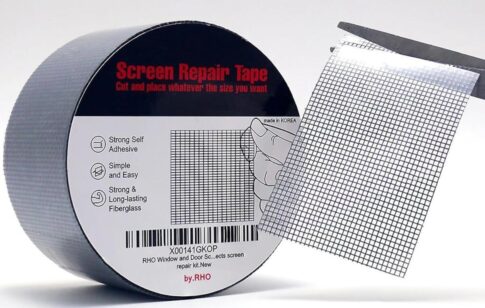
Window or door screens damaged or torn? This helps!
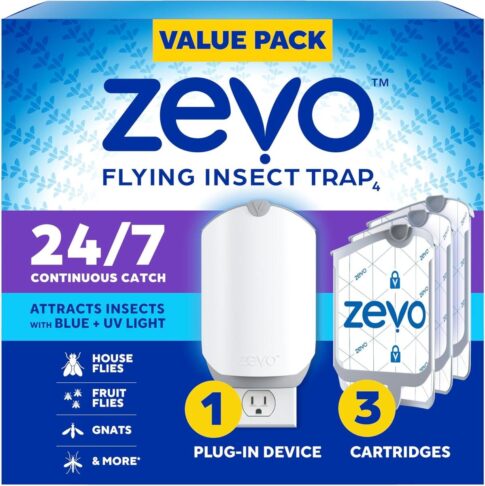
If you have damaged window or door screens in your home or RV, this screen-repair tape will help. No tools or special skills required. Simply cut, peel, and stick for a fast, permanent, and hassle-free solution that anyone can complete in just minutes. You won’t be able to tell there was ever a hole or tear! Don’t let any bugs in your RV this summer! Learn more or order.


Quick tip
Use caution when using bleach

From longtime reader Doug W.: “Caution—never disconnect a hose full of bleach without releasing the pressure first! I tried to sanitize my tank, but the bleach wouldn’t go through the filter. When I removed the hose, it sprayed all over me—face, eyes, arms! Bleach stings way worse than shampoo. Quick trip to the eye wash, ruined clothes, and a big lesson learned: Always disconnect at the faucet end—slowly!” Thanks for the important tip, Doug!


On this day last year…


Website of the day

SunsetWx
Gail Marsh mentioned this website a while back and we gotta say, it’s pretty cool! If you want to see how intense the sunset or sunrise will be in your location, or at what time it will occur, this is the website.


And the survey says…

We’ve polled RVtravel.com readers close to 5,000 times in recent years. Here are a few things we’ve learned about them:

• 37 percent say they enjoy photography very much and find themselves taking photos often.
• If they could make one room in their RV bigger, most would choose to make the bathroom bigger, followed by the bedroom (or bed area), the “living room,” and, lastly, the kitchen.
• 81 percent always carry binoculars with them in their RV.

Recent poll: What kind of roads do you dislike driving the most?


? MYSTERY PRODUCT OF THE DAY ?
Get yourself an *almost* free vacation to Hawaii with this! Grab a chair, a towel, some sunscreen, a book, and you’ll be all set…


Trivia

A single blink of a Formula One racer’s eyes may be closed for 65 feet in competition, which is probably why drivers do it selectively. Unlike normal humans who blink randomly, these racers, researchers say, close their eyelids during the same parts of each lap. Data from eye trackers on helmets showed that racers avoid blinking while changing speed or rounding corners; they save blinking for straight stretches.


Readers’ pet of the day

“We lost our sweet Pittie, Mae, last month (at age 11). She was a great traveler and hiker. She loved our little trailer, especially because we couldn’t tell her to ‘get out of the kitchen.'” —Nancy Leist

Send us a photo of your pet with a short description. We publish one each weekday in RV Daily Tips and in our Sunday RV Travel newsletter. No blurry photos, please! Please do not submit your photo more than once. Thanks!


Leave here with a laugh


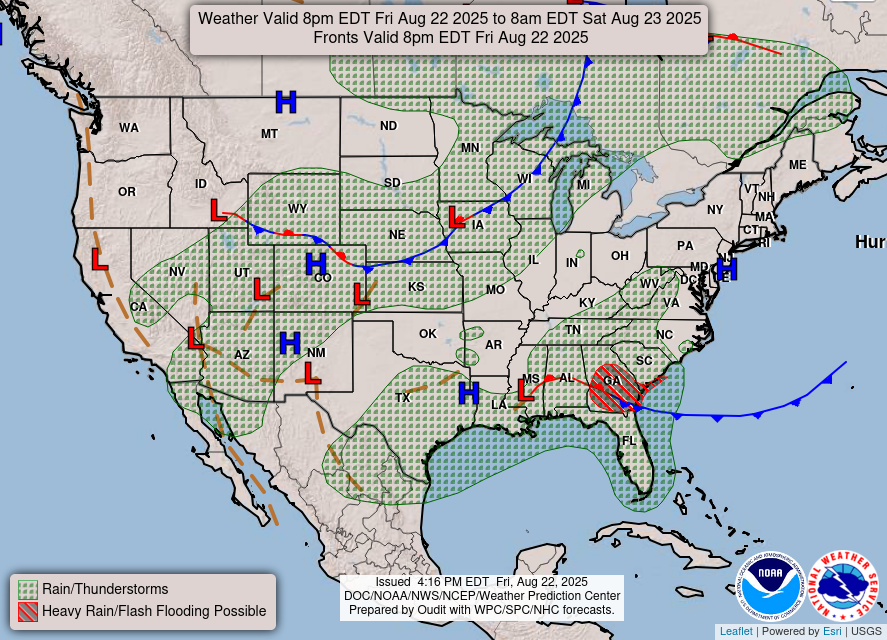
Today’s weather forecast across the nation
THIS MAP UPDATES TWICE A DAY
Visit Current National Radar Weather Map

Current fire and smoke map from AirNow


Did you miss the latest RV Travel Newsletter? If so, read it here.
Oh, and if you missed the Latest News for RVers, make sure to catch up here.


If you shop at Amazon.com we’d appreciate you using this link. We get an itty bitty commission if you buy something, but they add up and help us pay our bills (most importantly our hard-working writers!).


RVtravel.com All-Star Team

Click here for information about our staff and how to contact us.

Our policy on using artificial intelligence.

Staples are coming up through my RV’s vinyl floor. Should I be concerned?

Hello, Dave, 
I’m inquiring about my 2020 Arctic Fox 5th wheel trailer’s flooring. I noticed that there are staples coming up through the linoleum in the floor. There are two spots where this is happening, and it looks like a factory issue. Has anyone else had any issues? Thanks. —Dane, 2020 Arctic Fox 5th wheel

Hi, Dane,
One of the challenges in troubleshooting construction issues in the RV industry is the lack of documentation and running line changes during production. The RV industry is not regulated like the auto and truck industry, so manufacturers can make a change in materials or design any time.

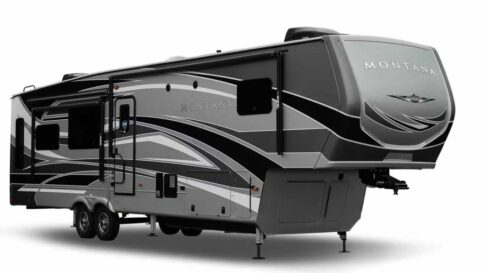
Typical flooring in Northwood products

The reason I point this out is, according to online brochures and Northwood documentation, the floors in its units are 5/8th-inch tongue-and-groove plywood and not chipboard. This flooring would be secured to the under-carriage framework with either a secure screw or a “huck bolt”. There would be no staples used on the upper plywood flooring that I am aware of.

However, your unit would fall into the “COVID build” category. That could mean they used almost anything and no documentation. So, they might have used chipboard plywood and stapes.

Options regarding the flooring

If you can visually see the staples, then you can either pound them back down, or remove them. If you can’t actually see the staple, I would cut a line in the vinyl at the bump and pull it slightly back to see what is happening.

It might be worth trying to pull the vinyl back in that main area and see what other staples or foreign objects there are. You can cut a large square starting under a cabinet or close to the wall and pull it back. Typically, with vinyl you can glue it down to the substructure when you reinstall it.

Unfortunately, a unit that is almost 6 years old would not be covered by warranty even though it seems to be a factory defect. However, I don’t think it is much of a structural issue—it’s just annoying and requires some vinyl repair.

I’m interested to find out if anyone else has had staple issues in their rigs.


 You might also enjoy these posts from Dave 


Dave Solberg is a leading expert in the RV industry and the author of the “RV Handbook.”

Read more from Dave here

HAVE A QUESTION FOR DAVE?

Send your inquiries to him using the form below.

Name
Drag & Drop Files, Choose Files to Upload

RVDT2657

22 uses for prescription medicine bottles in your RV

11

By Gail Marsh
Every 30 days. That’s how often I end up with an empty medicine bottle. Over time, all of these translucent, amber bottles pile up. If you have excess medicine bottles, you might check with your local recycling outlets to see if they accept the bottles. Our local recycling company does not recycle them. Neither will our pharmacy. So… what do I do with all of these bottles? I upcycle them!

Check out these nifty uses for medicine bottles. You’ll want to thoroughly clean both the outside and inside of the bottles before repurposing them. You can use contact paper or craft paper to decorate them, if you like. Then, let your creativity take charge.

Sewing helpers

Machine tools. I like to sew, and my sewing machine comes along on almost every extended RV trip we take. One medicine bottle neatly holds my machine bobbins. Another bottle contains machine needles, and yet another holds fabric pins. Larger bottles could corral different pressure feet and spools of thread, as well.

Sewing kit. Here’s a tutorial that shows you how to make a bottle cap pin cushion (you won’t need a sewing machine for this). I followed the video directions to make a pin cushion for the cap of a medicine bottle. Inside the bottle, I store sewing needles and a thimble. A small spool of thread also fits inside. Now everything is in one convenient place when I need to replace a button.

Buttons. Speaking of buttons, I keep a few white and black “shirt buttons” inside a bottle—just in case.

Coin corral

Laundry coins. I keep quarters inside one of my medicine bottles. At least two dollars’ worth of coins will fit. I tuck the bottle into my clothes bag and the money is ready to use at the campground laundry.

Shopping cart. If you shop at Aldi’s you’re probably familiar with their shopping cart policy. In order to get a cart, you’ll need a quarter. By keeping quarters inside a bottle in our car, I always have a coin ready for a cart.

Snacks. When we receive change from fast food eateries, I slip the coins into a medicine bottle instead of dropping them in the car console or into the hidden depths of my purse. The bottle keeps the coins gathered together and we use the money for future snacks and treats.

Parking meters. Our stash of coins in the bottles also comes in handy if we need coins for parking meters.

Jewelry

Rings. I don’t always take my rings with us when we travel. If, however, we plan to be gone for an extended period of time, I’ll pack my rings inside a medicine bottle until I choose to wear them.

Earrings. I also take along a few favorite pairs of earrings in a separate bottle. This keeps earrings paired and together in one place.

Personal care

Hair care. Medicine bottles easily contain shampoo and conditioner for short RV trips. (Ditto for hand lotion.) I put a different color rubber band around the outside of each bottle for quick and easy identification. You could also use a permanent marker to label each bottle.

Polish remover. I fill a larger bottle with cotton balls. Then I add fingernail polish remover to the bottle. Medicine bottles seal tightly so I have ready access to polish remover when we’re on the road. To use, simply insert your finger into the bottle and twist.

Hair pins, clips. Store your hair clips, rubber bands, and pins inside a medicine bottle.

Campsite helpers

Campfire. Coat cotton balls with Vaseline for quick fire starters. Store the fire starters inside a bottle and keep the bottle with the s’mores equipment or other campfire items.

Matches. Medicine bottles work great for storing stick matches.

First aid. Follow these directions to turn a medicine bottle into a first aid kit that will fit inside a pocket.

Hobbies, crafts, and more

Craft supplies. If you take crafting supplies along as you RV, medicine bottles can help hold small items for you. Think beads, sequins, glitter, and more.

Seed keeper. I store garden seeds inside medicine bottles. Use a permanent marker to label the bottles.

Batteries. Keep high humidity away from batteries by storing them inside medicine bottles.

Earbuds. I’m no longer losing my earbuds! Why? Because they “live” inside a medicine bottle when I’m not using them! Now they’re much easier to locate.

Baking. Medicine bottles can store cake decorating tips and nozzles.

Tool items. Keep track of small nuts, bolts, and screws by storing them inside medicine bottles.

Knit, crochet, etc. Forget buying that ball winder. Instead, wind yarn around a medicine bottle. It will create the yarn ball with the central gap you need. Here are directions.

Inspired? I hope so. If you can add to this list, please do so in the comments section.

YOU MIGHT ALSO ENJOY:

##RVDT2657

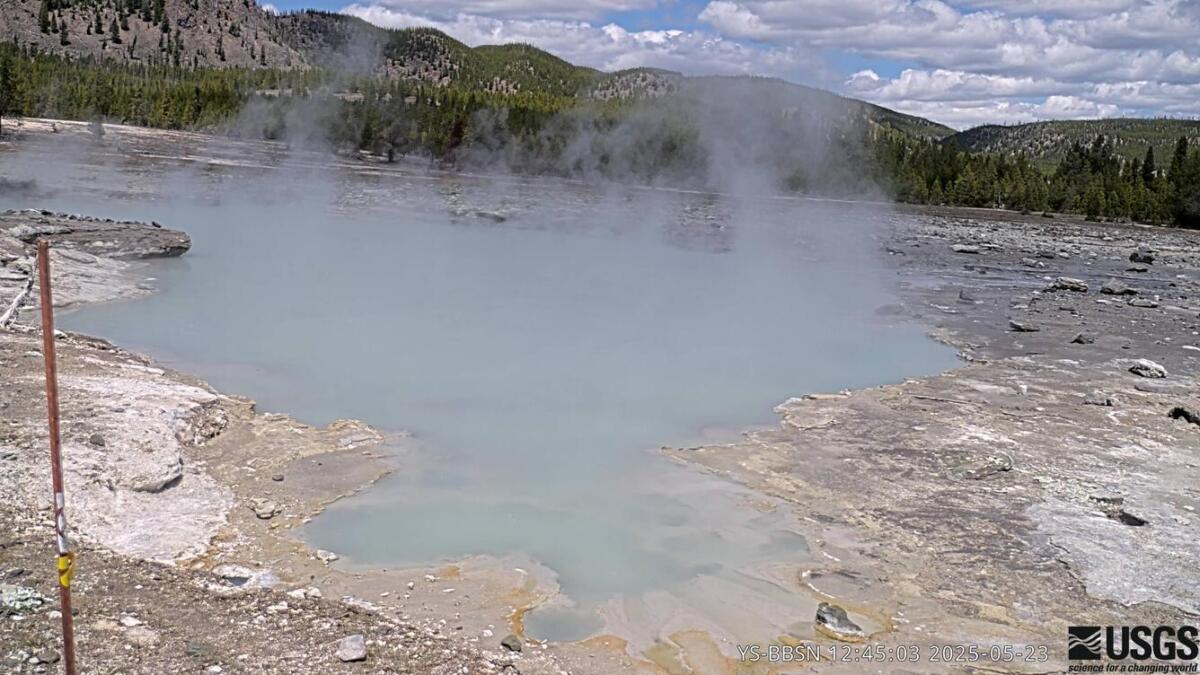
Popular geothermal area in Yellowstone National Park closed for summer

2

If you’re planning an RV trip to Yellowstone National Park this summer, it’s important to note that Biscuit Basin, a popular geothermal area, remains closed for the 2025 season.

This closure follows a significant hydrothermal explosion that occurred last July at the Black Diamond Pool. The explosion propelled boiling water, steam, and debris into the air, damaging the boardwalk and surrounding areas. Fortunately, no injuries were reported.

The National Park Service has decided to keep Biscuit Basin closed through the summer of 2025 due to ongoing safety concerns. The area remains geothermally active, and the risk of additional hydrothermal events persists.

Park officials, in collaboration with the Yellowstone Volcano Observatory, are closely monitoring the site and will reopen it only when it’s deemed safe for visitors.

What this means for RV travelers

While Biscuit Basin is off-limits, the rest of Yellowstone National Park remains open. Nearby geothermal areas like Black Sand Basin and Midway Geyser Basin provide stunning views and are accessible to visitors. The Grand Loop Road, which offers access to many of the park’s highlights, remains open as well.

Safety tips

Yellowstone’s geothermal features are both beautiful and dangerous. Visitors are urged to stay on designated boardwalks and trails as the ground in thermal areas can be thin and unstable, with scalding water just below the surface. There have been incidents where individuals suffered severe burns after stepping off the designated paths.

Stay informed

For the latest updates on park conditions and closures, RV travelers should regularly check the National Park Service’s official Yellowstone website. Additionally, the Yellowstone Volcano Observatory provides real-time monitoring data and information on geothermal activity.

MORE YELLOWSTONE NEWS:

RVT1212b

250 million bees escape after truck crash

8

On Friday, May 30, 2025, just before dawn, a tractor-trailer hauling roughly 70,000 pounds of honeybee hives overturned on Weidkamp Road near Lynden, Washington. The accident resulted in spilling an estimated 250 million bees into nearby fields and roadsides.

What happened

Time and place: Shortly before 4 a.m. on May 30, a semi-truck negotiating a curve on Weidkamp Road veered off, flipping onto its side. Weidkamp Road is a narrow, two-lane route about 2 miles north of Bender Road, connecting Lynden to rural farmlands and border crossings into Canada.

Bee spill: By around 9 a.m., hive lids had popped open from the crash impact, freeing about 250 million honeybees across the roadside, fields, and ditches. The driver was unhurt, but dozens of hives were knocked over, sending bees swarming throughout the area.

Road closures and traffic impacts

• Immediate closure: The Whatcom County Sheriff’s Office (WCSO) quickly blocked Weidkamp Road between Loomis Trail Road and West Badger Road. They warned motorists to “AVOID THE AREA” due to swarming bees. That roughly one-mile stretch remained closed until beekeepers finished rehiving as many colonies as possible.

• Rerouting for RVs: Many RV routes to the Lynden–Canada crossing or nearby campgrounds (like Oyster Creek Campground) rely on Weidkamp Road as a shortcut.

The road is now reopened.

Why were the bees being transported?

According to the Washington State Department of Agriculture: “1) Bees are transported on trucks to move them from fields that are done blooming to new fields beginning to bloom. 2) If the hives are set upright on the roadside, most bees should return to their hives by nightfall. Most bees should survive.”

Safety tips for RVers for similar events

Keep RV windows and vents closed. If you’re camping anywhere within a few miles of the crash site, keep windows and roof vents shut. Swarming honeybees can wander hundreds of yards from their hives before returning, especially during late afternoon when temperatures drop.

Bees are naturally drawn to blooms and fruit. If your campsite has wildflowers or fruit trees, park at least half a mile away, if possible. Even if you don’t see bees right away, displaced colonies may forage there.

Have an allergy action plan. If anyone in your RV is allergic to stings, carry an epinephrine auto-injector and know the location of the nearest urgent care or hospital.

If you are near an event like this, use caution!

In similar situations like this, if you can, avoid the affected area altogether—at least until authorities have cleared the wreckage, rehomed the bees, and opened all of the affected access roads.

RELATED

RVT1212

Texas overpass collapse on I-27; highway closed indefinitely

2

If you’re planning to travel through the Texas Panhandle anytime soon, be aware of a significant road closure on Interstate 27 (I-27) near Tulia, Texas.

Incident overview

Around 7:25 a.m. on May 27, a semi-truck transporting a crane was traveling southbound on I-27. The crane’s arm collided with the FM 928 overpass. The impact caused significant structural damage, including the buckling of the bridge and debris falling onto the roadway. Later that day, the compromised overpass collapsed entirely. Fortunately, the truck driver sustained only minor injuries, and no other injuries were reported.

Current road conditions

• Southbound I-27 closure: The southbound lanes of I-27 at FM 928 are closed.

• Traffic diversion: Vehicles are being redirected to the west service road just before the FM 928 exit.

• No reopening timeline: Authorities have not provided an estimate for when the overpass will be repaired and the highway reopened.

Alternative routes

If you’re navigating through this area, consider the following detours:

• U.S. Highway 87: Runs parallel to I-27 and can serve as an alternative route between Amarillo and Lubbock.

• State Highway 207: Connects to U.S. 87 and can help bypass the affected area.

Always check the latest traffic updates and road conditions before setting out, as detours may change. Also check to make sure any detours will accommodate your RV’s dimensions.

Nearby RV-friendly stops

While rerouting, you might want to consider these RV-friendly locations:

Caprock Canyons State Park: Located east of Tulia, offering scenic views and RV accommodations.

Palo Duro Canyon State Park: Situated near Amarillo, known for its stunning landscapes and RV facilities.

Buffalo Springs Lake: Near Lubbock, providing camping spots suitable for RVs.

Stay informed

For real-time updates on road conditions and closures:

• Texas Department of Transportation (TxDOT) website.

• Local news outlets: Keep an eye on news from Amarillo and Lubbock for the latest information.

MORE ROAD INFORMATION

Death Valley roads and popular attractions to close until 2026

The most dangerous U.S. roads for RVs

RVT1212

Driver 2.5x over blood alcohol limit in fatal Yellowstone-area wreck

The driver of a Dodge Ram pickup that demolished a tour van near Idaho’s Yellowstone National Park on May 1, killing seven, was way over the limit for alcohol consumption. The Yellowstone tour van crash is still under investigation, but authorities released the cause.

Yellowstone tour van crash “a wake-up call”

On Friday, Idaho State Police announced that the driver, Isaiah Moreno, had a blood alcohol level of 0.20, two-and-a-half times the state’s legal limit of 0.08. The 27-year-old Moreno, a resident of Humble, Texas, died in the incident, along with six passengers in the tour van he hit.

“This tragedy should be a wake-up call,” said Capt. Chris Weadick of the Idaho State Police. “Nobody sets out to cause a crash or take a life, but the choices we make matter.”

Altogether, 14 people were involved in the crash. The six passengers in the tour van came from across the globe, from as near as California, to as far away as Italy and China.

They were traveling on a roadway that connects Yellowstone National Park and Grand Teton National Park. The route is commonly used between the two parks before Grand Teton fully opens for high-season travel.

Gut-wrenching video

Gut-wrenching video of the incident was carried by many major network media outlets. Some of it comes from Roger Merrill, who was driving home and arrived on the scene shortly after the crash, he told the AP.

Roger Merrill told the service he waited for first responders to arrive while bystanders tried to care for the victims.

“It is a very dangerous highway because it leads to the main entrance of Yellowstone National Park. It’s extremely busy,” he shared, adding, “It took an unnervingly long time for help to arrive just because of the location.” Merrill’s comments were quoted by people.com.

RELATED

What we can learn from RV accidents. Don’t make these mistakes!

How to prevent RV rollover accidents

What to do in the event of an RV accident

Do you have a dash camera on your RV or tow vehicle?

RVT1212

Robot-powered glamping resort breaks ground in NC

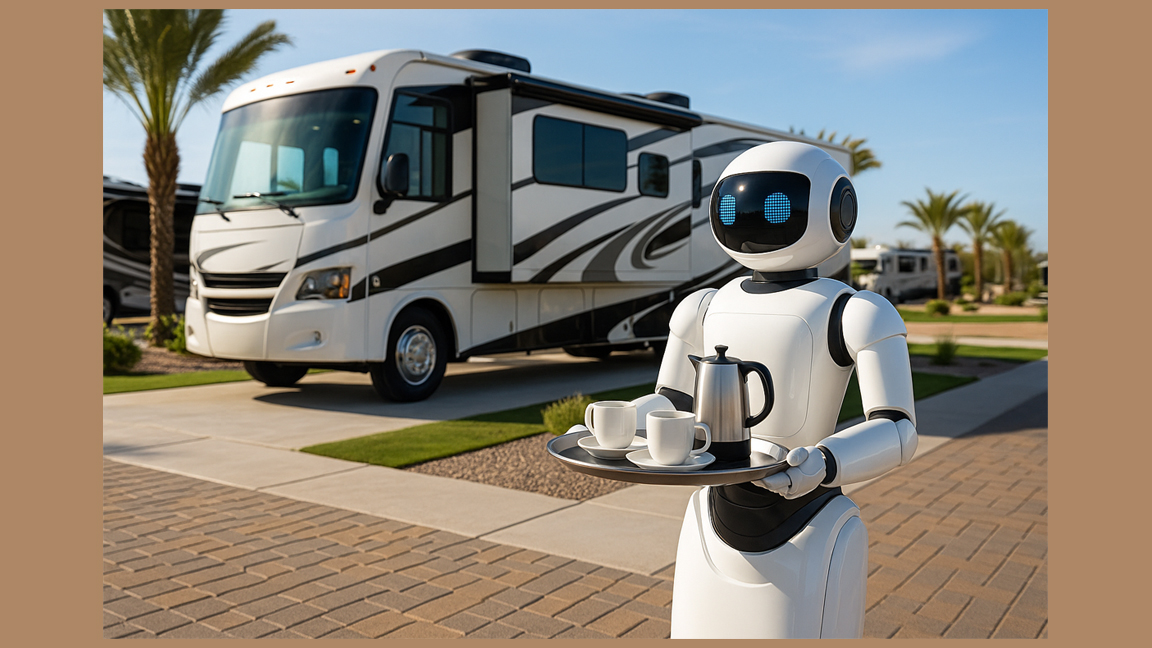
Technology is storming the RV world. We’re all getting more used to checking into RV parks with smartphones, but how about an RV resort that will deliver coffee to you—at the “hands” of a robot? Hang on. Two entrepreneurs say come next year, you can have this—and more—at their North Carolina glamping resort. Are you ready for glamping with robot bartenders?

Hidden Beach RV Resort promises North Carolina glamping with robot bartenders

According to a story in Woodall’s Campground Magazine, the 80-site Hidden Beach RV Resort will open in 2026 to woo lovers of high-tech and nature. If you like the thought of a human-like robot picking up your trash, serving mixed drinks, staffing the store and delivering to your door, maybe you’ll fall for staying at the resort—not in your RV, but in a treehouse.

The resort on a saltwater lagoon idea comes from Zac Hoyt and Kevin Jones, of Maverik Asher Capital. They think RVers (and others) will flood their futuristic glampground for a touch of these features:

• Super speed Wi-Fi

• Robots that bartend

• Airstream trailers (so you won’t need to bring your own rig)

• And a host of other things you’d never expect

It all raises a question. One source calls glamping “camping with training wheels.” Eight million people went glamping in 2023—9% of all campers. People are looking for a soft landing in the campground. And campground owners are responding, putting in more yurts, platform tents, and cozy cabins.

Will glamping sites push out RVers? With robots set to deliver drinks to RVers, this glampground doesn’t appear to be a serious threat.

To learn more about North Carolina glamping with robot bartenders and to check out a video feature, visit the Woodall’s site.

MORE ON GLAMPING

RVer notes RV site infrastructure wearing out; money going towards glamping areas

Will glamping sites push out RVers?

KOA takes a holistic view of glamping

RVers discuss camping vs. glamping, but does the difference really matter?

Did Henry Ford invent glamping and the charcoal briquette?

RVT1212

RV Daily Tips. Monday, June 2, 2025

Issue 2656


Today’s thought

“A laugh is a smile that bursts.” —Mary H. Waldrip


Need an excuse to celebrate? Today is International Volkswagen Bus Day!

On this day in history: 1910 – Charles Rolls, a co-founder of Rolls-Royce Limited, becomes the first man to make a non-stop double crossing of the English Channel by plane.


Tip of the day
A gadget that easily fixes stripped screw holes

By Nanci Dixon
Rocking and rolling down the road in an RV can loosen and strip even the most tightly held screws. As our RV gets older, we are finding more screws shake loose and more screw holes stripped out when we try to replace or tighten. Sometimes it just takes a fatter screw, but that doesn’t always work, especially when going through tight metal brackets or hinges.

One major issue for us has been a wall—yes, literally a wall—that was never screwed down in manufacturing. The factory fixed it once but, in time, the screws have loosened, the holes have been stripped, and now the bathroom door flaps open while driving.

Searching across Amazon, YouTube, and RV sites, I finally found what might be a better solution than the short-lived glue and toothpicks in the wood holes. Continue reading.


Ask Dave
Can I add an inverter to run my RV refrigerator on 120-volt while driving?

Dear Dave,
I want to add an inverter to run the RV refrigerator only. I want it to run on shore power when plugged in and on inverter while traveling. What is the simplest but best way to do that? Any suggestions on inverter brand? —Eddie, 2016 Keystone Cougar 330RBK  Read Dave’s answer.


In the RV shop with Dustin
Using a water heater tank rinser is the key to maintaining your RV’s water heater

In the past, Dave Solberg and I met weekly for a livestream called Talkin’ RV Tech. We not only answered technical questions, but we also shared what we like to call “cool tools.” These are tools and gadgets that we actually use! We also believe they will be helpful to you. This captures one of our shares, the Camco water heater tank rinser.


Article and video
The secret to walking up and down hills without getting tired or hurting your knees

By Cheri Sicard
Walking up hills can really take it out of a person. What if it didn’t have to be so hard? There’s a way to make those climbs easier and more enjoyable. The secret is to use your body efficiently, relying on your biggest muscles and conserving energy. Learn more.


Fix roof leaks and extend your RV roof another 18-20 years with the ONLY liquid butyl rubber in the world
RV Roof Magic’s unique solvent-based drying process allows for a chemical bond not found in other RV sealants. That is why it never needs a primer and only one coat. We offer a 10-year warranty. Apply RV Roof Magic to all roofs except silicone and PVC. Over 30 years of history of success. Visit our site for our monthly special!


The latest news for RVers

To read more recent news, click here.


Featured article
“Max Pressure” is NOT the maximum you can have in your tires

By Roger Marble
I understand how this incorrect information occurs when people assume “Max Pressure” means the maximum air pressure you can have in your tires. People decide to read the wording on the side of their tires and not the federally mandated vehicle certification label. Continue reading


BUMPER SNICKER: “I don’t brake for tornadoes … but I yield to flying cows.”


Reader poll
Do you have a dash camera on your RV or tow vehicle?

Respond here.


Quick tip
Scraping bottom when exiting a parking lot?

If your RV bumper scrapes when entering or exiting a parking lot or other driveway, try taking the exit with your rig at an angle rather than straight on. Still no help? You may want to add skid wheels to the back of your trailer. Two types: bolt on and weld on. The former sometimes tear off, so the added hassle of finding a welding shop may be worth the trouble. Read about skid wheels/rollers here and here.


Website of the day

See Jurassic Park Come to Life at These Amazing Dinosaur Fossil Parks
Take a look at the photos in this article—it’s hard to believe they’re real, but they are! It would be incredible to see these in person, especially if you’re traveling with kids or grandkids.


? MYSTERY PRODUCT OF THE DAY ?
Oh, we’d pay good money to watch these in action! In fact, this could probably even become an Olympic sport! A very tasty Olympic sport for a certain someone… And, yes, we’d try it…


Trivia

Utah has five national parks, 45 state parks, 5 national historic sites and trails, and a dozen national monuments and recreation areas. No wonder it’s so popular with travelers.


Readers’ pet of the day

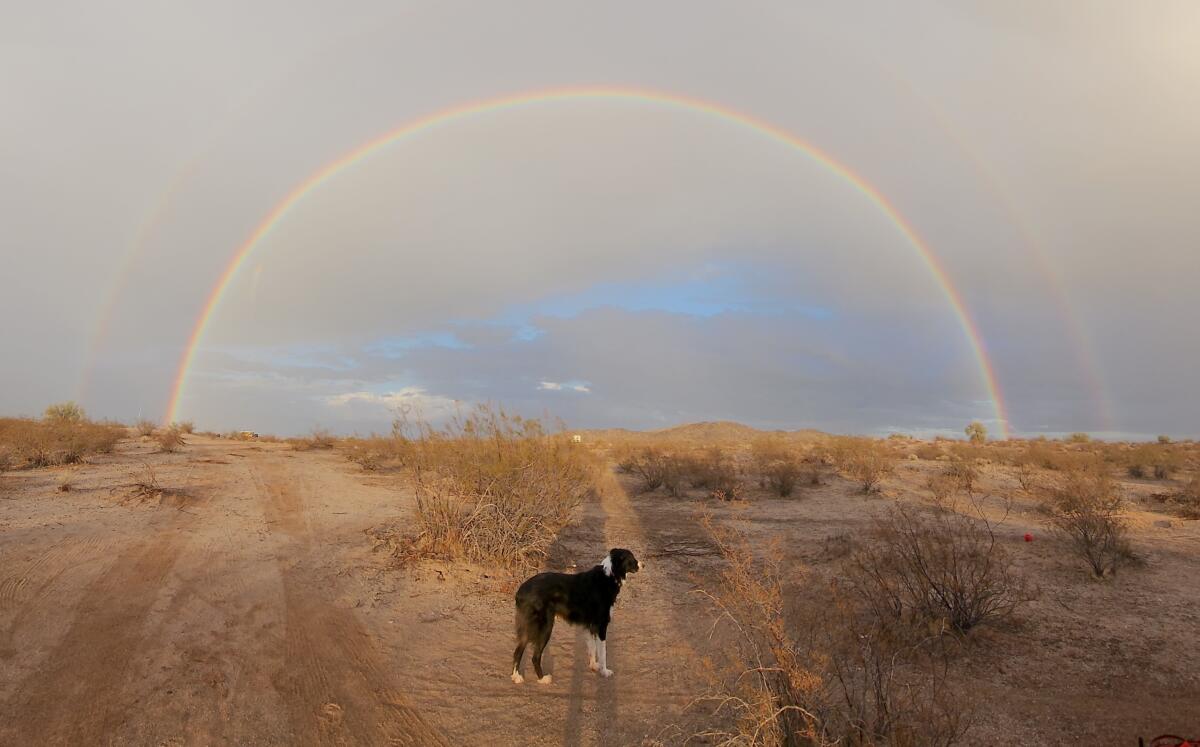
“Here’s six-year-old Rylie relaxing after a long walk. We have been on the road since April 1st. She’s always happy to meet new people in her travels.” —Glenn Halpin

Send us a photo of your pet with a short description. No blurry photos and please do not submit your photo more than once. Thanks!


Leave here with a laugh

There! Problem solved!

Today’s weather forecast across the nation
THIS MAP UPDATES TWICE A DAY

Visit Current National Radar Weather Map

Current fire and smoke map from AirNow.


Did you miss the latest RV Travel Newsletter? If so, read it here.
Oh, and if you missed the Latest News for RVers, make sure to catch up here.


If you shop at Amazon.com we’d appreciate you using this link. We get an itty bitty commission if you buy something, but they add up and help us pay our bills (most importantly our hard-working writers!).


RVtravel.com All-Star Team

Click here for information about our staff and how to contact us.

Our policy on using artificial intelligence.

Can I add an inverter to run my RV refrigerator on 120-volt while driving?

Dear Dave,
I want to add an inverter to run the RV refrigerator only. I want it to run on shore power when plugged in and on inverter while traveling. What is the simplest but best way to do that? Any suggestions on inverter brand? —Eddie, 2016 Keystone Cougar 330RBK

Dear Eddie,
From what I can find online, it looks like your refrigerator is an 8-cubic-foot, two-door absorption refrigerator. That means it can run on LP mode or 120-volt power. There are several variables to this equation, including the ambient temperature inside the rig, size of battery bank your unit has, and the size/output of your alternator. According to what I can find online, the average 8 cu. ft. refrigerator draws approximately 300 watts.

Ambient temperature

During travel times, you will not be able to run the roof air conditioner, so the inside of the rig will get warmer as the temperature rises. That means your refrigerator will “cycle” more often and draw more power.

Engine alternator

Some tow vehicles have a single alternator that may only produce about 6 amps of charging voltage. That would not be sufficient to keep up with your power demands. However, some of the larger trucks—which I assume you might have to pull a larger 5th wheel—have dual alternators and can provide up to 20 amps charging power.

Battery bank

The variable here is the type of battery and the amp hours available. If you have flooded lead acid (FLA) batteries, you should only drain them down to 50% State Of Charge (SOC), while lithium can be drained down almost 100%. Plus, the more batteries you have, the more available amp hours that can be depleted. This means your inverter could provide power much longer even if your alternator cannot keep up with the power requirements.

I don’t have all the specific power requirements. However, Mike Sokol did an experiment with a residential refrigerator running on a 100 Ah lithium battery through a 1000-watt inverter and got 10 hours at 70 degree ambient temperature. This would mean an FLA battery would get approximately 5 hours.

From the test, Mike indicated that not only did the refrigerator draw power, but the inverter was the weakest link. However, you don’t have much of an option other than replacing the refrigerator with a 12-volt compressor-driven model connected directly to the 12-volt system, which got almost 40 hours!

Another variable to consider is solar charging. If your rig has solar panels mounted on the roof, this could also add charging power to the equation, if there is appropriate sunlight.

Size and type of inverter

Most of the people that I have talked with state that a 1000-watt inverter would be sufficient, and the battery bank is the most important issue. If you want the power to switch from the inverter drawing 12 volts from the battery, you will need an inverter with a pass-through feature, also called a transfer switch. It would have a 120-volt line coming in from the distribution center. When it senses 120-volt power, it transfers to that source. I would recommend the 1500-watt Go Power! model you can find on Amazon here.

GP1500TS
Go Power! SW1500TS inverter and transfer switch

I do not see a 1000-watt model that has the transfer feature. Keep in mind that wiring both 12 volt and 120 volt would need to be spec’d and sized accordingly.

Can it be done?

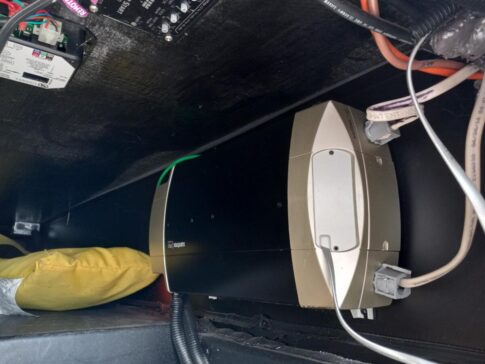
So, can it be done? Yes, if you do the math and upgrade to what power requirements your refrigerator needs. Here is a photo of the Xantrex inverter that was installed in the 2016 Thor Challenger we worked on a few years ago.

Xantrex Inverter

It is an 1800-watt inverter with the pass-through feature, as you can see the Romex coming in and out. The original setup would not keep up with the two Interstate batteries and we swapped them out for two Expion 360 100 Ah lithium batteries. It works well.

I’ll be interested to see what others have tried and what works.


 You might also enjoy these posts from Dave 


Dave Solberg is a leading expert in the RV industry and the author of the “RV Handbook.”

Read more from Dave here

HAVE A QUESTION FOR DAVE?

Send your inquiries to him using the form below.

Name
Drag & Drop Files, Choose Files to Upload

RVDT2656

RVs destroyed by gustnado—Can you prepare for one?

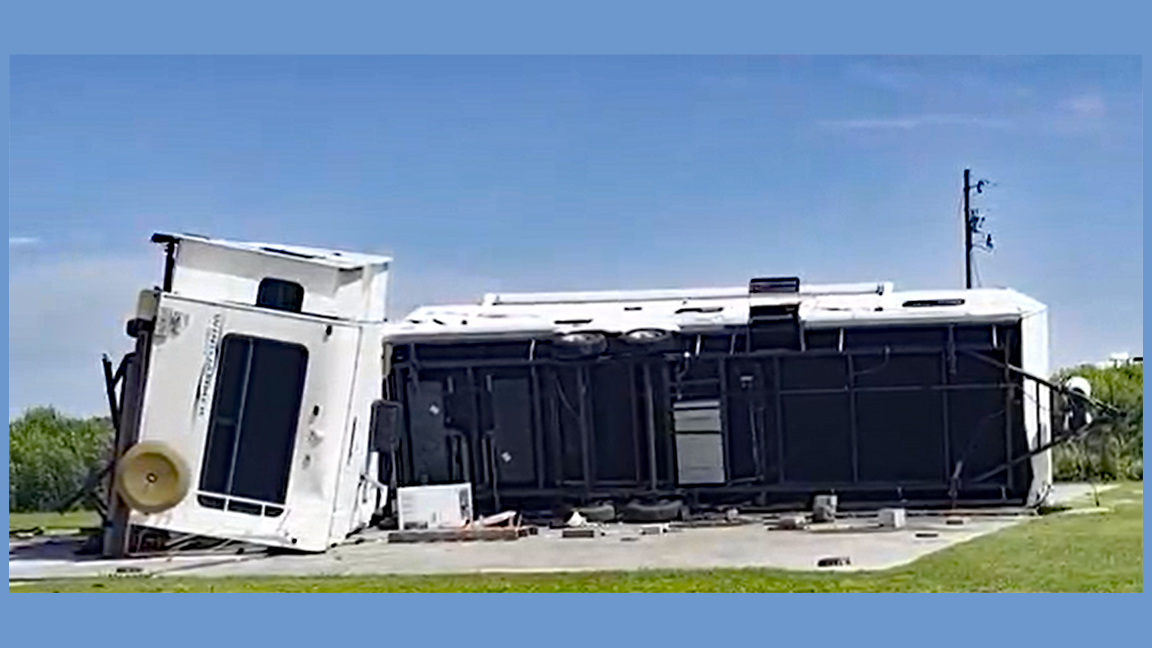
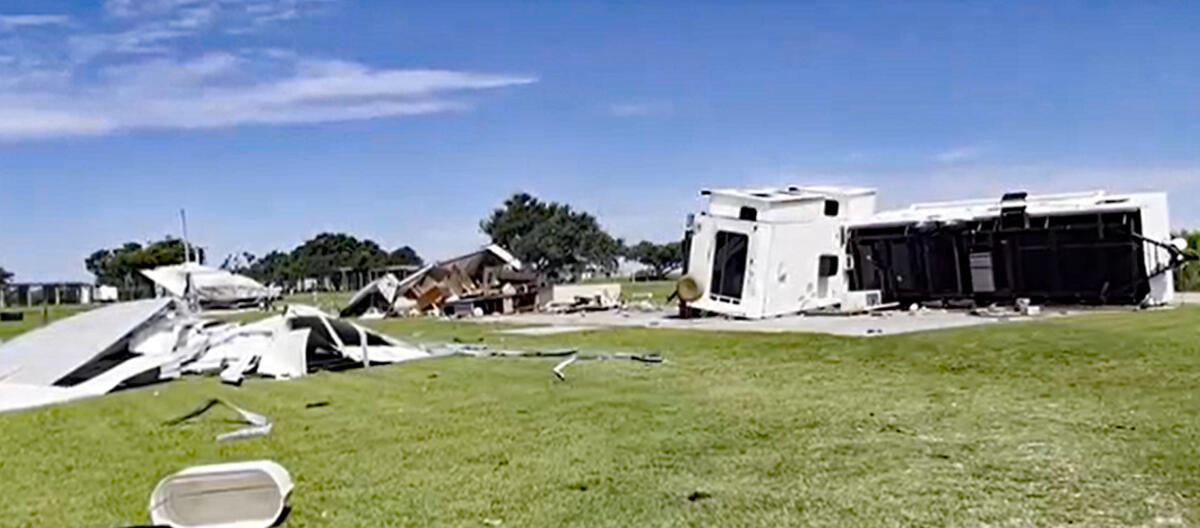
At least three RVs were “tossed like toys” in Cameron, Louisiana, on Tuesday, May 27. No, it wasn’t a tornado. In this case it was a gustnado that flipped the rigs—totally destroying at least one. What’s a “gustnado,” and can you protect yourself against one?

Gustnado: A “weak whirlwind’ that can lead to an RV disaster

A gustnado (short for “gust front tornado”) is a short-lived, weak whirlwind that forms along a gust front—the leading edge of cool air rushing out from a thunderstorm. Despite the name, it is not a true tornado because it doesn’t originate from the storm’s mesocyclone (rotating updraft). While the definition includes the words “weak whirlwind,” don’t let it fool you. The Louisiana gustnado proved that these winds can be RV-damaging, if not fatal.

One rig totally destroyed by gustnado. kplctv.com

Cameron’s gustnado was the offspring of a severe thunderstorm. The Weather Service reported that the gustnado touched down at four in the morning, blasting away with 80-mile-per-hour winds. Firefighters responded to the scene of the wreckage and pulled one injured person out.

What do we know about gustnadoes?

• Short-lived — Typically lasts a few seconds to a few minutes.

• Weak — Usually results in wind damage similar to strong straight-line winds.

• Non-mesocyclonic — Not associated with supercell rotation.

• Often looks like a small dust devil or dirt whirl, but can still be dangerous.

These facts about gustnadoes are what make them so dangerous. Tornadoes can typically be predicted by radar detection. Their rotating supercells (mesocyclones) are usually spottable in advance. Gustnadoes form along gust fronts—outflow boundaries of storms. They’re not associated with organized rotation aloft, and generally can’t be spotted by radar.

Gustnadoes form rapidly and close to the ground and usually have no visible connection to clouds aloft. They’re the radar equivalent of “no-see-ums.” And since they develop so quickly and don’t last long, there’s no way to sound a warning for people to take cover.

Thunderstorms a precursor

Thunderstorms viewed by radar. Gustnado was 30 miles south of Lake Charles. accuweather.com

The Louisiana gustnado case does provide a measure of how to be on the lookout for these events. Doug Cramer, a warning coordinator meteorologist with the National Weather Service, was interviewed by KPLC TV. He told the station, “We had a severe thunderstorm warning on this segment of thunderstorms. It’s a good reminder to everyone in Southwest Louisiana and Southeast Texas that this type of damage can occur with severe thunderstorms; it doesn’t necessarily have to be a tornado,” Cramer said.

But don’t think gustnadoes are limited to Louisiana and Texas. Gustnadoes occur relatively frequently, especially in the central and southeastern United States during the spring and summer months when strong thunderstorms are common. They tend to form along gust fronts or squall lines and are often seen in areas like the Great Plains and the Midwest.

Severe thunderstorm warning? Take cover!

If you RV in these areas in spring and summer, you’d be wise to keep a weather warning radio on hand. Make sure it’s operating and tuned to the area where you’re staying. If a severe thunderstorm warning is broadcast, consider taking shelter.

Indoors:

• Go inside a sturdy building as soon as possible.

• Stay away from windows and glass doors, which could shatter.

• Take shelter in a small, interior room on the lowest floor—like a bathroom, hallway, or closet.

• Avoid garages, sunrooms, or sheds. These are often not reinforced and may collapse in strong winds.

In a vehicle:

• If you’re already driving, do not try to outrun the gustnado—it may change direction suddenly.

• If safe to do so, pull over and park.

• Stay inside the vehicle with your seatbelt on.

• Keep your head below the windows and cover it with your arms or a coat if possible.

• Avoid stopping under trees or near power lines that could fall.

Outdoors:

If caught outside with no shelter:

• Move away from trees and unsecured objects that could become airborne.

• Try to find a low spot like a ditch or depression, lie flat, and protect your head.

• Be alert for lightning and flooding if heavy rain is also present.

Statistics are cold comfort

kplctv.com

The U.S. experiences between dozens to more than 100 gustnadoes each year. Happily, most are so short-lived they don’t have the opportunity to create major damage. But if you and your RV get in the way of one, those statistics are cold comfort.

RELATED

RVT1211