Home Blog Page 40

Starlink’s growing pains could matter to RVers more than anyone

Love it or hate it, Starlink has changed RV travel. For many RVers, especially those who boondock or spend time far from cities, satellite internet turned places once considered “offline” into workable campsites. Suddenly, streaming, remote work, video calls, weather tracking, and even telehealth became possible from places where campground Wi-Fi barely handled email.

That’s why a growing wave of complaints and concerns surrounding Starlink may matter to RVers more than almost anyone else.

A recent report from Fast Company highlighted mounting complaints filed with the FCC involving SpaceX and its Starlink satellite internet system. The complaints reportedly range from billing disputes and customer service frustrations to reliability concerns and equipment issues.

For RVers, that may sound familiar

Many users praise Starlink for delivering internet access where traditional providers failed. But RV forums and social media groups also contain no shortage of stories about sudden speed slowdowns, congestion during busy travel seasons, support delays, and confusion over changing service plans.

That doesn’t necessarily mean Starlink is failing. In many ways, it may mean the opposite.

Success may be creating new problems

Starlink has grown incredibly fast. What began as a niche satellite internet service for rural users has become a mainstream connectivity option for homeowners, travelers, truckers, boaters, emergency responders, and, of course, RVers.

That rapid growth creates pressure.

Every new customer adds demand to a network that depends on thousands of satellites working together overhead. In heavily used areas, especially popular travel destinations, some users have already noticed slower speeds during peak periods.

RVers may feel those growing pains first because they often travel directly into high-demand recreation areas where cellular networks are already overloaded. A crowded campground on a holiday weekend can stress almost every communications system available, including satellite internet.

For RVers who now rely on Starlink for work or day-to-day communication, that matters.

Why the FCC complaints matter

FCC complaints do not automatically prove a company is doing something wrong. Large companies often accumulate complaints simply because they have massive customer bases.

Still, complaints can reveal patterns.

The Fast Company report suggests some customers are frustrated with support responsiveness, billing concerns, and equipment replacement issues. Those are the kinds of problems that can hit RVers particularly hard because many travel far from shipping centers, service locations, or reliable backup internet options.

If your home internet goes down in suburbia, you may have alternatives. If your internet goes down while boondocking 30 miles from the nearest town, the situation changes quickly.

For some RVers, internet access is no longer just entertainment. It may be tied to:

  • Remote work
  • Online banking
  • Navigation
  • Weather monitoring
  • Campground reservations
  • Telehealth visits
  • Emergency communication

That raises the stakes considerably.

More satellites, more scrutiny

Starlink is also drawing growing attention from astronomers, regulators, competitors, and environmental researchers concerned about the sheer number of satellites entering orbit.

Some worry about orbital congestion and the long-term risk of collisions or space debris. Others argue satellite brightness can interfere with astronomy observations.

These concerns often spark heated debates online, especially among Starlink supporters and critics.

But for RVers, the bigger practical question may simply be this: Can Starlink continue expanding fast enough to maintain reliable service as more users come onboard?

That may become one of the most important questions in mobile internet over the next few years.

Ironically, the increased scrutiny may eventually help RVers. Regulators are already considering rule changes that could allow satellite broadband systems to operate more efficiently and deliver stronger performance. Competition from other satellite providers could also push improvements in pricing, support, and service quality.

RVers may be more dependent than they realize

A decade ago, many RVers viewed internet access as optional.

Today, for a growing number of travelers, it has become essential infrastructure.

That’s why Starlink’s growing pains matter. The debate is no longer just about satellites or tech industry competition. It’s about whether RVers can continue relying on the systems that increasingly power modern RV travel.

And for now, despite the complaints and controversies, many RVers appear willing to tolerate some bumps in exchange for something they once struggled to find at all: reliable internet far from civilization.

Sources
Fast Company: “FCC complaints are piling up against Starlink”

Reuters: “US set to ease power limits on space-based broadband”

RELATED

RVT1259b
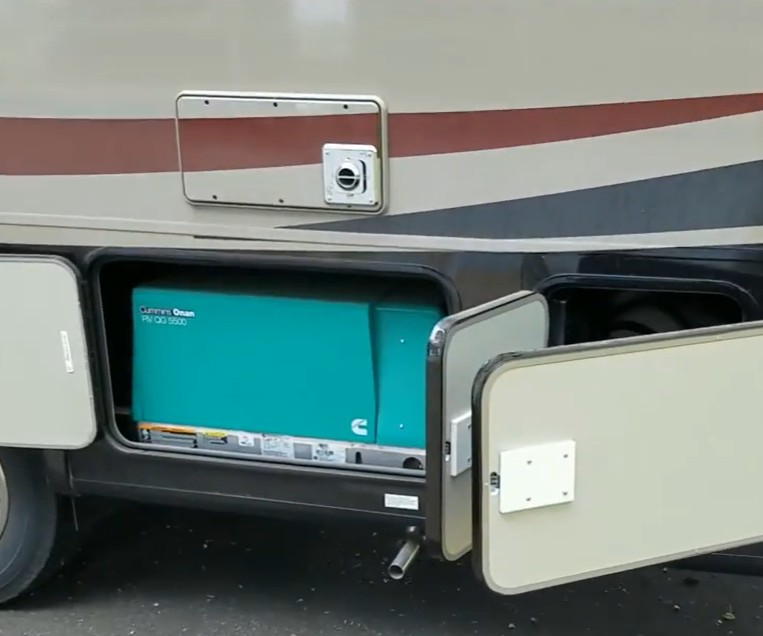
Recall: Winnebago generators may turn on without warning

1

Winnebago Industries is recalling certain 2022-2027 EKKO motorhomes. The touchscreen display may register unintended or phantom inputs and turn on the generator without the operator’s knowledge. More than 1,500 RVs may be affected by this safety recall, which was issued April 22.

People in an enclosed space, such as a garage, with a running generator may be at an increased risk of injury or death from carbon monoxide poisoning.

There is no warning that precedes the defect condition. Once the generator starts, the operator may notice engine noise and vibration.

Remedy

Owners are advised to park outside until the repair has been performed. Winnebago will release an over-the-air (OTA) software update, free of charge. Owner notification letters are expected to be mailed June 18.

Owners may contact Winnebago customer service at 1-641-585-6939 or 1-800-537-1885. Winnebago’s number for this recall is 205.

MORE WINNEBAGO RECALLS

RVT1259b

RV Daily Tips. Wednesday, April 29, 2026

America’s Original RV Newsletter. Since 2001
Issue 2893 • New issue every weekday
If you find this newsletter helpful, please consider supporting our work with a donation of your choice. Thank you!


Today’s thought

“The purpose of a storyteller is not to tell you how to think, but to give you questions to think upon.” ―Brandon Sanderson


Need an excuse to celebrate? Today is National Shrimp Scampi Day!

On this day in history: 2004 – The final Oldsmobile is built in Lansing, Michigan, ending 107 years of vehicle production.


Tip of the day
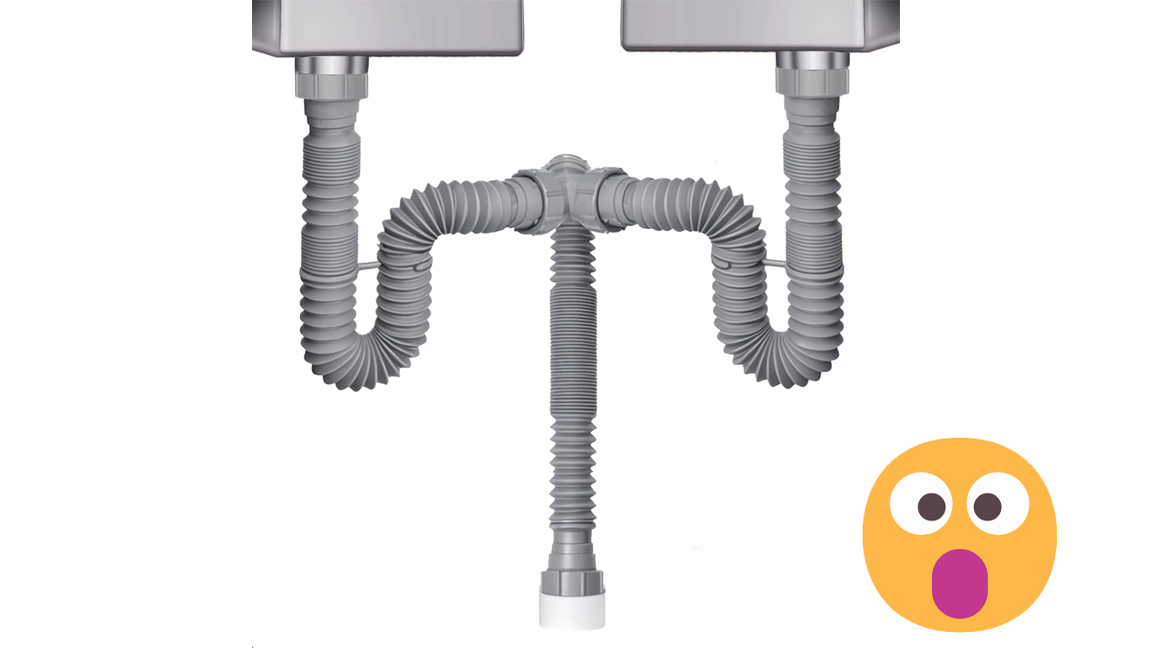
I replumbed my RV sink with flex pipe. Genius or totally unhinged?

By Russ and Tiña De Maris
When we write a piece, we’re typically in agreement. Not so today—the distaff side thinks I’ve lost my mind. In fact, she thinks I’m so far off the mark that she tried to nix the whole story. But, hang on. “I” figured this was something readers needed to hear about. Flexible drain pipe in your RV—a brilliant stroke? Or a disaster in the making? Well, here’s our story.


Quantum Class C motorhomeRV review
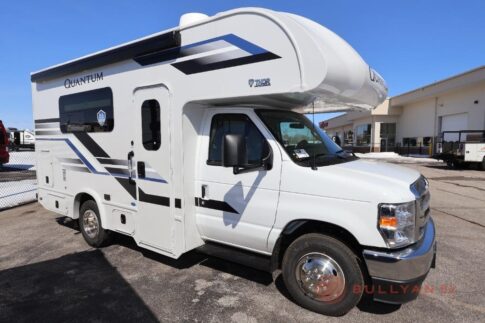
2027 Thor Quantum LX19 Class C review: 21 feet, no slide

Short Class C motorhomes are hard to find. The 2027 Thor Motor Coach Quantum LX19 is thus a rarity. It packs the basics into a 21-foot coach with no slide, which makes it easy to drive, park and fit into almost all campsites. For downsizing RVers or minimalists who find even the most basic RV amenities a relative luxury, this one might be right on the money.


You love Uno, but have you played the Wilderness edition yet?
Take your favorite card game to a new level! It’s just like Uno (so you won’t have to learn any new rules) but this version should stay in the camper or car at all times for every outdoor adventure. And if someone you know needs a gift, this is it! Learn more or order here. Have fun playing!


In the RV shop with Dustin
Two additional uses for EternaBond tape on your RV

A while ago, I shared reasons why I don’t recommend utilizing EternaBond tape on your RV roof (outside of using it as a patch). But today, I want to share two additional ways I do recommend using EternaBond tape on your RV.


Article and video
How much lithium battery power does an RV need?

Picking the right lithium battery bank can feel harder than the install itself. For many RV owners, the goal is simple: enough power for the way they camp, without paying for far more than they need. That is why a simple set of amp-hour ranges helps. Instead of getting lost in battery math, RV owners can match their camping style to a practical starting point. Here, our favorite certified RV inspector, Duane of the RV Inspection and Care YouTube channel, breaks it all down.


WEDNESDAY WISDOM: If the week were a road trip, Wednesday would be the scenic overlook where you stop, stretch, and realize you’re making good time.


Featured article
Everything you need to know about RV insurance – You may not be in good hands

By Dave Solberg
It’s something we don’t like talking about and hope we never need—insurance for our RV. It may sound simple: Just call your home or auto coverage company and tell them what you bought and they should be able to put together a policy, right? It’s not that easy, and if you don’t get a policy designed for your type of RVing, you will pay too much and probably not have the coverage you need. Learn all about RV insurance here.


Bumper snicker

Tailgate
Kinda mean… Kinda funny. Get one for yourself here.

Ask Dave
I can’t find the make or model of my RV furnace or how to access it

Read Dave’s suggestions.


The wildest multi-tool gadget…
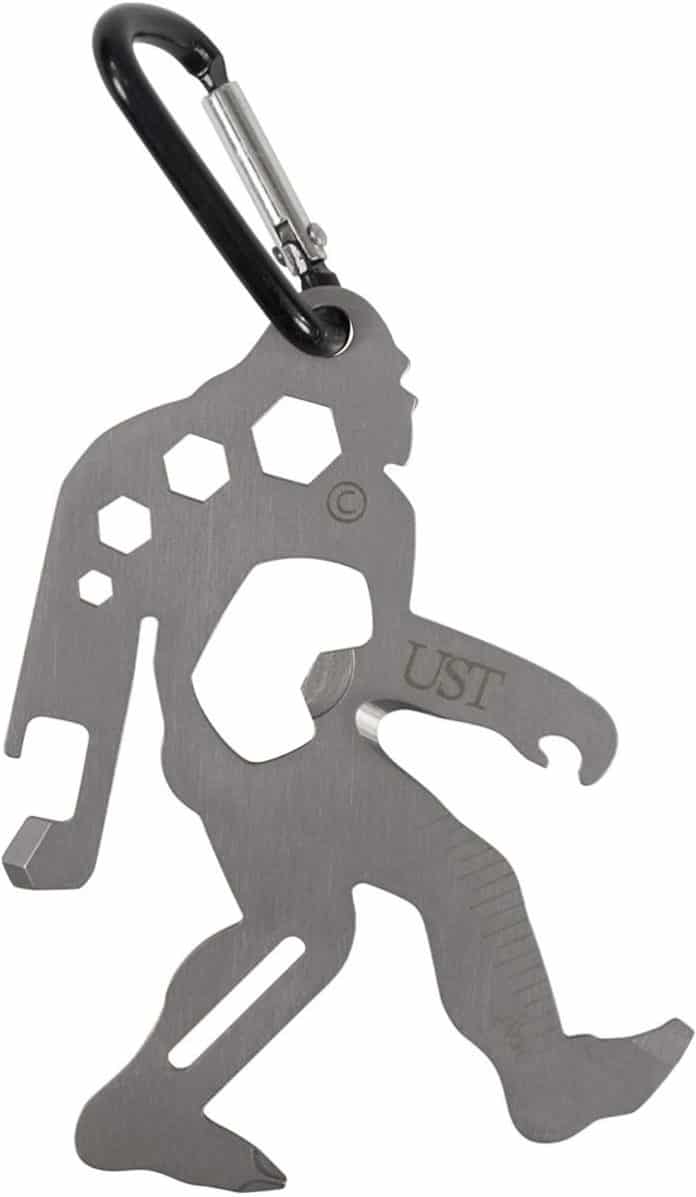
This wild, elusive, totally unique multi-tool carabiner is perfect to keep on your key ring or backpack. When someone asks you for a screwdriver, wrench, can opener, bottle opener, cord-cutter, or ruler, tell them Sasquatch can help! Every camper and outdoor enthusiast needs one of these! It’s cool, but it will also come in handy at the campsite! Learn more or order. (Hurry, before he disappears again!)


Reader poll
When washing your hands, do you wet your hands first or apply soap first?

Respond here.

IT’S AMAZING AND TRUE! View and participate in more than 2,000 of our previous polls!


Quick tip
How to wash out your water heater

A lot of people overlook washing out their water heaters a minimum of once a year. It’s simple. Suburban water heaters usually have an anode rod. It takes a 1-1/16 socket to remove it. Your Atwood water heater only needs a plug, no anode rod. Also, after you clean your water heater do not turn it on immediately. Contrary to popular belief, turning on an empty RV water heater will not result in the “motherboard” circuit burning up. However, turning it on electric (120 volts AC) will burn up the heating element. Turning it on gas (propane), while not a good idea, will not result in any immediate damage.

Make sure water comes out of the pressure relief valve after refilling, assuring water is in the tank, and you can turn it on immediately. Otherwise, give it about a half-hour before turning it on. If your faucets are not running well after cleaning, remove the screens on each faucet and clean them. —Thanks to Steve K. for the tip from the RVtravel.com RV Advice Facebook page. And thanks to Dave Helgeson for the updated info.


On this day last year…


Website of the day

The Most Hippie Town in All 50 States
Still living in the ’70s? Well, good, because these towns are, too! See how many of these hippie towns you’ve been to.


? MYSTERY PRODUCT OF THE DAY ?
In case you or someone you know has been a little forgetful lately… And note that they’re extra strong.


Trivia

While Americans love their beer, the Czechs love it more. According to data from the Japanese beer brand Kirin, people in Czechoslovakia consumed 39.3 gallons of beer per capita in 2024. In 2023, Americans consumed a mere 17.3 gallons per capita. Overall, in 2024, global beer consumption totaled 194.12 million kiloliters in 2024, which would fill about 547 billion standard 12-ounce bottles.


MORE FACTS! How many steps does it take to walk 1 mile? Generally speaking, you can count on 2,000 steps to equal one mile. But, depending upon your length of stride, it might take 2,500 steps to equal 1 mile.


Readers’ pets of the day

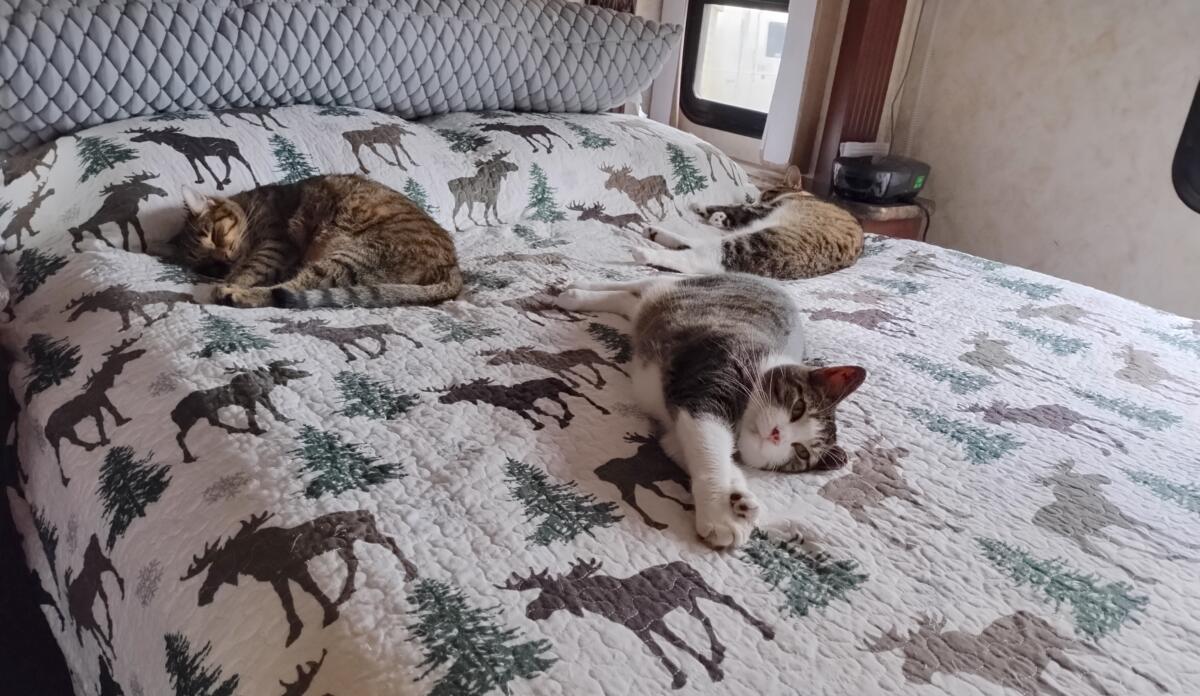
1000002282“Camping and getting afternoon sun in the motorhome.” —Gloria Sluder

Send us a photo of your pet with a short description. No blurry photos and please do not submit your photo more than once. Thanks!


Leave here with a laugh


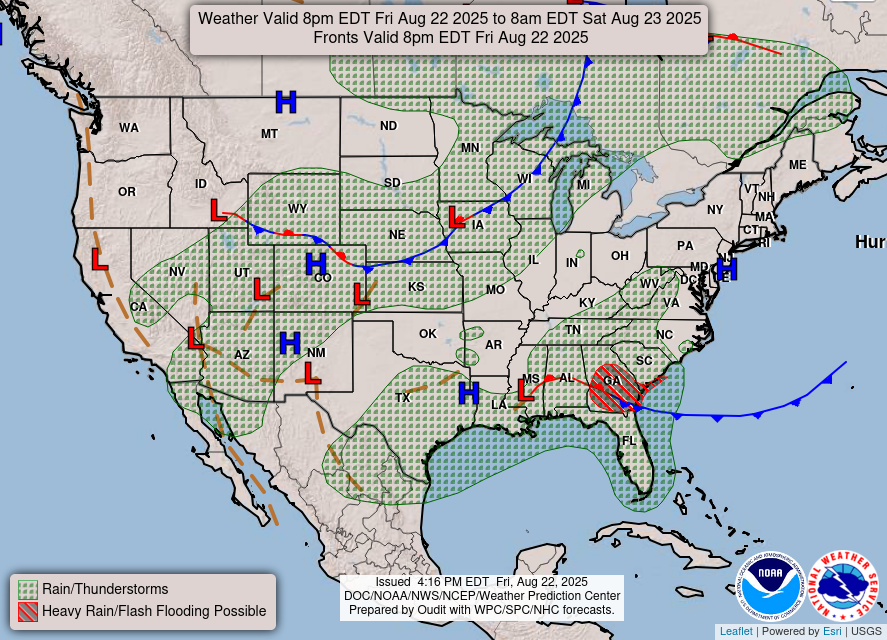
Today’s weather forecast across the nation
THIS MAP UPDATES TWICE A DAY

Visit Current National Radar Weather Map


Did you miss the latest RV Travel Newsletter? If so, read it here.
Oh, and if you missed the Latest News for RVers, make sure to catch up here.


If you shop at Amazon.com we’d appreciate you using this link. We get an itty bitty commission if you buy something, but they add up and help us pay our bills (most importantly our hard-working writers!). 


RVtravel.com All-Star Staff

Click here for information about our staff and how to contact us.

WHY WE ASK FOR DONATIONS INSTEAD OF SELLING SUBSCRIPTIONS.

Our policy on using artificial intelligence.

I can’t find the make or model of my RV furnace or how to access it

Dear Dave,
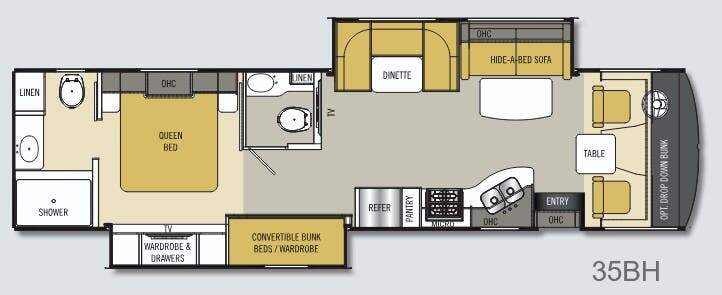
I just purchased a used unit from a private seller. It is the regular gas model. I am trying to find out the make and model of the furnace. Also, I can see the vent in the rear driver’s side section of the coach but cannot figure out how the access the furnace. It appears to be under the bed or thereabout. Can you shed any light on this. I have tried to the Coachmen site but everything i have found is vague info. —Patrick, 2017 Coachmen Mirada 35BH

Dear Patrick,
From what I can see on the internet, Coachmen used an Atwood/Dometic 30,000 btu furnace. You can see the outside exhaust port on the driver side of the rig. There should be the Dometic name stamped on the exhaust port, and on the thermostat inside.

Dometic Furnace
Dometic furnace

Access to the furnace

Typically, the access to the module board and burner assembly are from the outside of the rig. First, remove the screws for the exhaust flange and pull it out. Then remove the six screws holding the exterior plate and you should have access to everything. This is an image from etrailer.com of the guts of your furnace.

Etrailerfurnace
etrailer.com furnace

It does look like the guts of the furnace are located under the bed platform. Trust me, the designers don’t have to work on these so they are usually not in an easy-to-access location.

Mirada Floorplan
Mirada floorplan

How the furnace works

There is not much maintenance required, but rather an understanding of the operation. When the thermostat calls for heat, the blower motor starts to exhaust anything in the burner assembly and draws interior air through the return air grate. Airflow is directed over the burner assembly to the interior vents and passes over a sail switch. The airflow must be strong enough to lift the switch that creates a closed circuit, sending voltage to the module board verifying proper operation and open the gas valve. You should then hear the spark ignite and the burner assembly starting.

Troubleshooting

Most troubleshooting you might need should be accessed through the outside opening. There is a reset button that is a high temperature override and an LED light that will blink a code if there is something wrong.

  • 1 Flash w/3-second pause – Air Flow/Limit Switch – either low airflow or high temperature
  • 2 Flash w/3-second pause – Flame Sense Fault
  • 3 Flash w/3-second pause – Ignition Lockout Fault
  • Steady On/No Flashing – Internal Control Failure

The only routine maintenance is checking the cover for a tight seal and no moisture penetration and blowing out the exhaust port to make sure there are no spider webs, dust, or mud daubers.


 You might also enjoy these posts from Dave 

DAVE HAS ANSWERED MORE THAN 1,000 readers’ maintenance and repair questions. Read a directory here. There is so much to learn!


Dave Solberg is a leading expert in the RV industry and the author of the “RV Handbook.”

HAVE A QUESTION FOR DAVE?

Send your inquiries to him using the form below.

Name
Drag & Drop Files, Choose Files to Upload

RVDT2893

I replumbed my RV sink with flex pipe. Genius or totally unhinged?

By Russ & Tiña De Maris
When we write a piece, we’re typically in agreement. Not so today—the distaff side thinks I’ve lost my mind. In fact, she thinks I’m so far off the mark that she tried to nix the whole story. But, hang on. “I” figured this was something readers needed to hear about. Flexible drain pipe in your RV—a brilliant stroke? Or a disaster in the making?

New sink install leads to flexible drain pipe

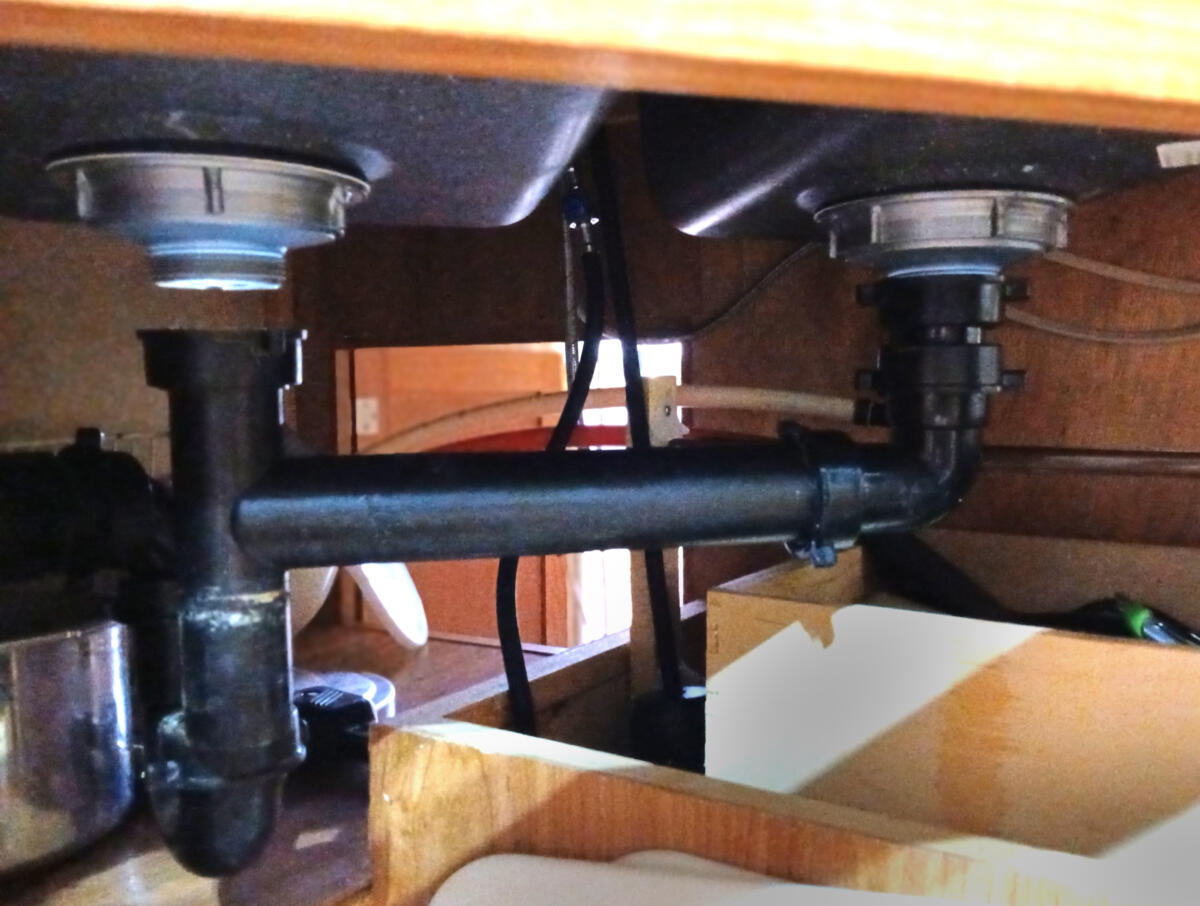
How did we get here? Our older travel trailer (everything we own is “older”) has put up with a lot of bumpy roads, bumpy moods, and general harassment. But the kitchen sink finally took offense to the apparent mistreatment, and a crack developed in the bottom of the basin. As clever as I think I am, it was beyond my jury-rigging ability to stop that nasty drip. Time for a new sink.

Should be easy to replace a kitchen sink, right? Wrong! Unless I was willing to buy into revamping the countertop to accommodate a smaller sink, or go really out on a limb and build a bigger countertop (with all the associated issues of putting down new laminate—I could see myself stuck between the wood and the laminate), I had to find “just the right size.”

Trouble in River City

flexible drain pipe
R&T De Maris photo

I did find the right-sized sink. Only trouble is, while one basin was close to the depth of the original, the other side was a fair bit deeper. That difference never occurred to me prior to getting a big box from the UPS guy. I pulled the old sink out with gusto, and was soooo pleased with myself when the new sink dropped down into the existing “sink hole” without any modifications needed. But when it came time to hook up the drain lines, there was trouble.

flexible drain pipe
R&T De Maris photo

The hard PVC pipes just couldn’t, wouldn’t line up. Adding to the fun, the design of the kitchen drawers, combined with the fact that the right-hand basin was much narrower than the original, led to an impossible-to-plumb situation. We have an old friend who’s a plumber. But, hey, why do I want to drag someone in when, after all, I have the male gene that says, “I can do anything!”

“Redneck installation”

flexible drain pipe
R&T De Maris photo

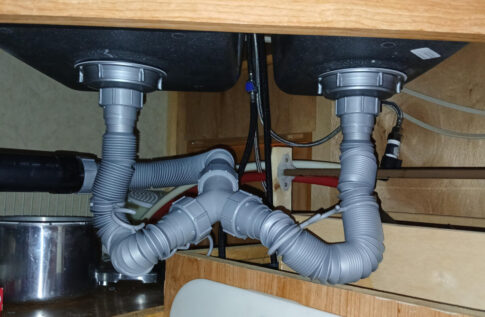
So I visited my favorite hardware store, aka Amazon dot com. I settled on one of their flexible drain pipe systems, and sure enough, in fairly short order, I was able to drop in the new drain system. Never mind, now that our plumber gal-friend has seen it and declared it a thoroughly “redneck installation.” She stated that she would NEVER install accordion-style plumbing drains, accusing them of being a “case of diverticulosis getting ready to happen.”

As I said, not everyone is as generous with their praise of my plumbing nightmare. The sweetie of this writing duo simply says that when she sees the arrangement, the only word that comes to her mind is simply “hilarious.”

Redneck. Diverticulosis-ridden. Hilarious. Thank goodness my skin is a bit thick.

No specters rising from the drain—not yet, anyway

So what do you think? Am I off the rails? Yes, since installing this stuff, I’ve learned that I’d never get away with it in a “sticks-and-bricks” home. After all, “Most building codes do not allow the use of flexible drain pipes, especially the corrugated, accordion-style ones, for sink drains. These pipes are typically prohibited due to their propensity to clog and their inability to effectively self-clean like smooth-walled pipes.”

“Propensity to clog”? Where have I heard that before? Well, the rig recently returned from a 40-day expedition, wherein dishes were washed pretty much daily. I might add (he said, chest puffing out) that I was the dishwasher extraordinaire. I’ve noticed no clogs, no smells, no specters rising from the drain. Does that prove my flexible drain pipe works? Maybe that’s not long enough for trouble to surface. But I’ve read up on social media (surely a reliable source) of at least one other smart guy who says his accordion drain has been happily draining for two years without a hiccup.

I can’t say that I “recommend” you install a drain system like this. But keep it in mind if you get into a pickle. And WE will surely let you know if we run into a mess under the sink as we go down the road.

RELATED

RVTDT2893

How much lithium battery power does an RV need?

By Cheri Sicard
Picking the right lithium battery bank can feel harder than the install itself. For many RV owners, the goal is simple: Have enough power for the way they camp, without paying for far more than they need. That is why a simple set of amp-hour ranges helps. Instead of getting lost in battery math, RV owners can match their camping style to a practical starting point.

In the video at the end of this post, our favorite certified RV inspector, Duane of the RV Inspection And Care YouTube channel, breaks it all down.

Why more RV owners are choosing lithium batteries

Lithium batteries keep gaining ground because they solve several common RV problems at once:

  • They are much lighter than flooded lead-acid batteries, often by three to five times.
  • They take up less space and can be up to 30 percent smaller.
  • They usually last two to three times longer.
  • They do not off-gas, so placement is more flexible.
  • They offer far more usable capacity than lead-acid or AGM batteries.

That last point matters most. A lead-acid or AGM bank usually should not be drained much below 50% if long life is the goal. Lithium gives RV owners far more usable power from the same rated capacity.

Lithium vs. flooded lead-acid and AGM

A quick side-by-side view makes the difference easier to see.

Battery type Weight and size Usable capacity Lifespan Off-gassing
Lithium Lighter and smaller Up to full rated capacity, though not ideal for daily use Longer No
Flooded lead-acid Heavier and larger About 50% for regular use Shorter Yes
AGM Heavier and larger than lithium About 50% for regular use Shorter than lithium Less concern than flooded, but still limited vs. lithium

For many RV owners, that mix of lower weight, smaller size, and more usable power makes lithium an easy upgrade.

A simple way to size an RV lithium battery bank

Exact power use depends on the RV, the gear inside it, and how it is used. Camping style matters too, especially for boondocking. A precise answer also means working through watt hours, amp hours, charging plans, and inverter demands.

This guide keeps things simple. It focuses on three common use levels, not on 12V, 24V, or 48V systems, recharge strategy, or inverter sizing.

Scenario 1: The average RVer: For weekend trips and the occasional vacation, 200 amp hours is often enough. That size can usually handle lights, the refrigerator, the water pump, and a few days off-grid.

Scenario 2: The mid-range power user: For longer trips and heavier daily use, around 400 amp hours is a better fit. This range makes more sense for RVers running a microwave, hair dryer, TV, or computer, sometimes at the same time. It also stretches boondocking time and cuts recharge frequency.

Scenario 3: The high power user: Heavy users often need at least 600 amp hours, and sometimes more. That setup fits extended off-grid camping and pairs well with a larger solar system that keeps feeding power back into the bank.

Protecting battery life matters, too

Lithium batteries can be drained much deeper than lead-acid batteries, but regular zero-percent discharge still shortens their life. A better target is stopping at about 20% remaining capacity.

That approach still beats the 50% rule that usually applies to flooded lead-acid and AGM batteries. It also helps RV owners keep the long service life that makes lithium worth the higher upfront cost.

Extra capacity is usually the safer choice

Going a little bigger than expected needs is often the smarter move. More capacity means more flexibility, fewer recharges, and more room for future power use.

Battery size should match camping style, not guesswork. For many RV owners, 200, 400, or 600-plus amp hours is a practical place to start, and a little extra capacity is often money well spent.

RELATED

RVDT2893

When washing your hands, do you wet your hands first or apply soap first?

17

Think about the last time you washed your hands. Chances are, you didn’t give the order of operations a second thought—you just did what you always do.

But habits like this are funny. Many of us follow the same little routine every day without ever questioning it. Some people turn on the water first, get their hands wet, then reach for the soap. Others pump the soap into dry hands first and add water after. And once you’ve done it one way long enough, it can feel like the only sensible method.

It’s one of those tiny everyday differences that can surprise people. You might live with someone for years and never realize they do it the opposite way. Then one day you catch them at the sink and suddenly question everything.

Maybe you’ve never even noticed that other people do it differently until you saw someone else at a sink and thought, Wait… what are they doing?

So, now we’re curious: When washing your hands, do you wet your hands first or apply soap first?

Vote in the poll below and, if you’d like, leave a comment telling us why your method is the right one. You just might convince somebody to switch. Thanks for voting!

MORE POLLS YOU MIGHT LIKE:

RVDT2893

Two additional uses for EternaBond tape on your RV

By Dustin Simpson
A while ago, I shared reasons why I don’t recommend utilizing EternaBond tape on your RV roof (outside of using it as a patch). But today, I want to share two additional ways I do recommend using EternaBond tape on your RV.

Slide out roof

While I don’t recommend utilizing EternaBond® tape on the roof of the RV, I do recommend using it on the roof of your slide out—specifically at the T-flange seam. In fact, RV manufacturers install EternaBond tape there, as well. This wasn’t the case years ago.

EternaBond tape is a great option for this application because this water barrier provides a lower profile option compared to a sealant. It also allows the slide out seals to efficiently glide over the tape. Lastly, should you have your slide outs open and debris falls on the slide out roof, you won’t risk getting the debris stuck in the sealant.

Manufacturers typically install 4″ EternaBond tape strips in this location. Servicing your slide out and keeping the slide out roof clean and wiper seals conditioned is key to the longevity of your slide out function. Should the EternaBond tape on your slide out roof be past its prime, I recommend doing the following:

  • Thoroughly scrub your slide out roof and clean your existing EternaBond tape strip with a solvent cleaner. Let slide out roof dry.
  • Ensure T-flange is fully secured.
  • Remove any parts of the original EternaBond tape that is no longer sticking to the roof of the slide out or T-flange.
  • Install 6″-width tape over the existing EternaBond tape, ensuring the new tape goes up the T-flange by 1/4″ – 1/2″ and the remainder of the tape grabs the new slide out roof material.
  • Thoroughly press tape down and smooth out throughout the length of the slide out.

Please note: You will want to use 6″-wide EternaBond tape for this repair. It is offered in the following colors:

Moldings

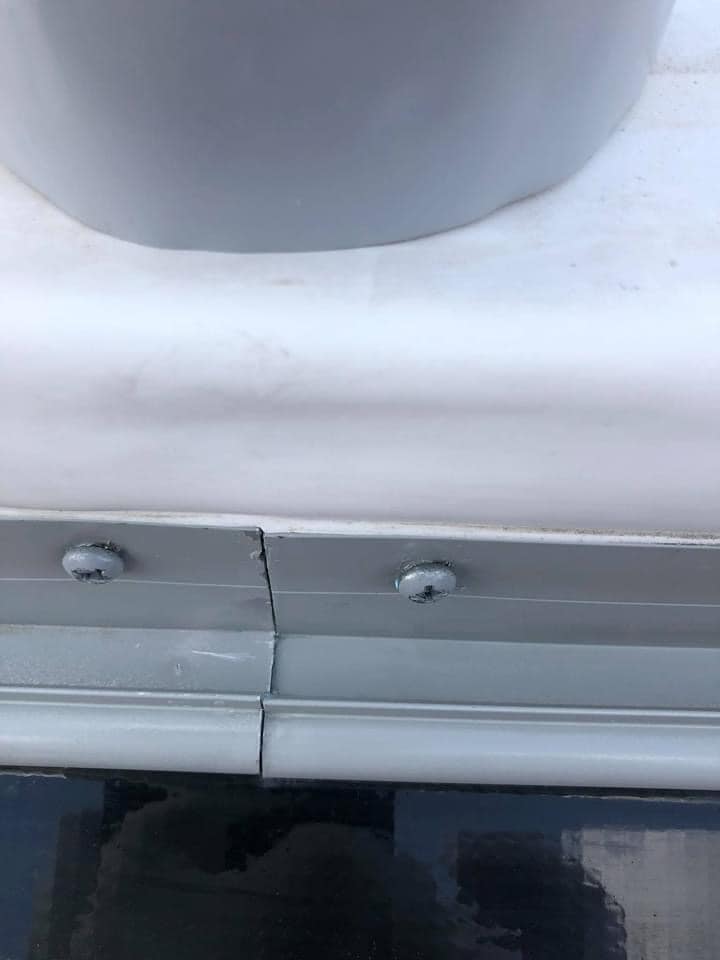
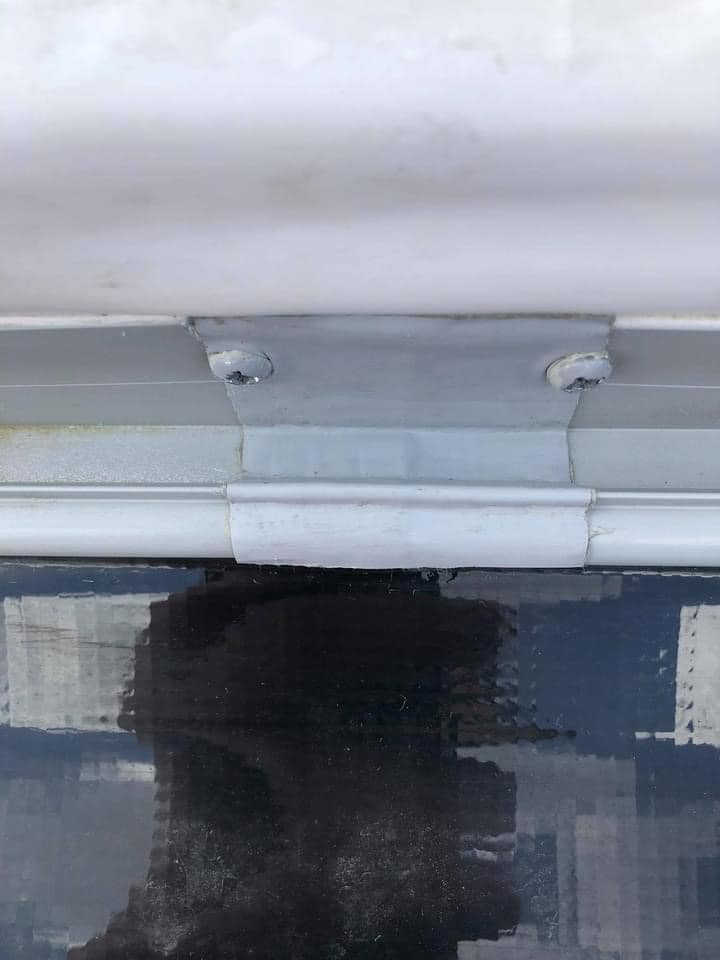
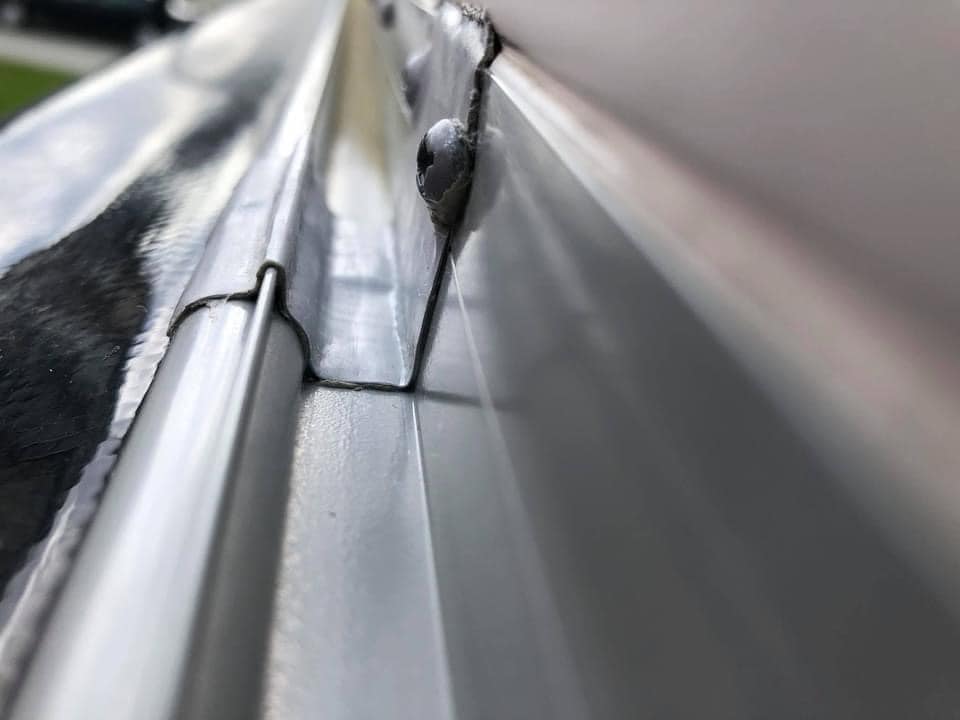
All moldings (rain gutter molding, awning/slide out topper molding or a combination) are made in either 8-foot or 16-foot lengths. Depending on the length of your unit and how your manufacturer installed them, you will have at least one joint where two moldings are butted against each other.

While the gap between the moldings appears insignificant, in my experience it’s just enough to let rain, morning condensation or condensation from an air conditioner drip down the side of your RV. This drip is not only annoying but it can cause streaks.

Here is an easy way to prevent the drips:

  • Remove screws near the area where the moldings are butted against each other.
  • Clean the molding surface and let dry.
  • Peel and center a 3″ – 4″ length of tape over the joint of the two moldings.
  • Press the tape into the molding and smooth out.
  • Reinstall screws.

Please note: You will want to use 2″-wide EternaBond tape to do this repair. It is offered in the following colors:

More from Dustin

Read more of Dustin’s articles here.

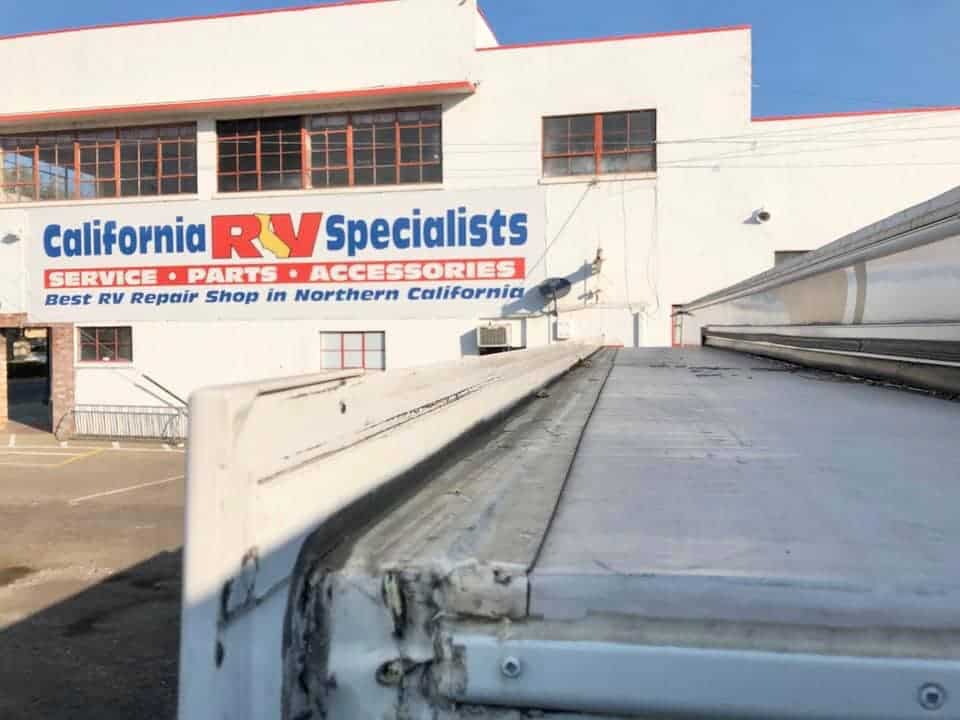
Dustin owns and operates California RV Specialists, an independent RV repair shop located in Lodi, CA. He thrives on sharing his knowledge and enthusiasm of RV repair and maintenance with his team, customers, and virtual friends.

Be sure to check out his YouTube channel where he shares what’s going on in the shop and the product offerings in the store. Dustin is also very active on Facebook. Join his group, RV Repairs and Tips – What’s in the shop!

RELATED

RVTDT2893

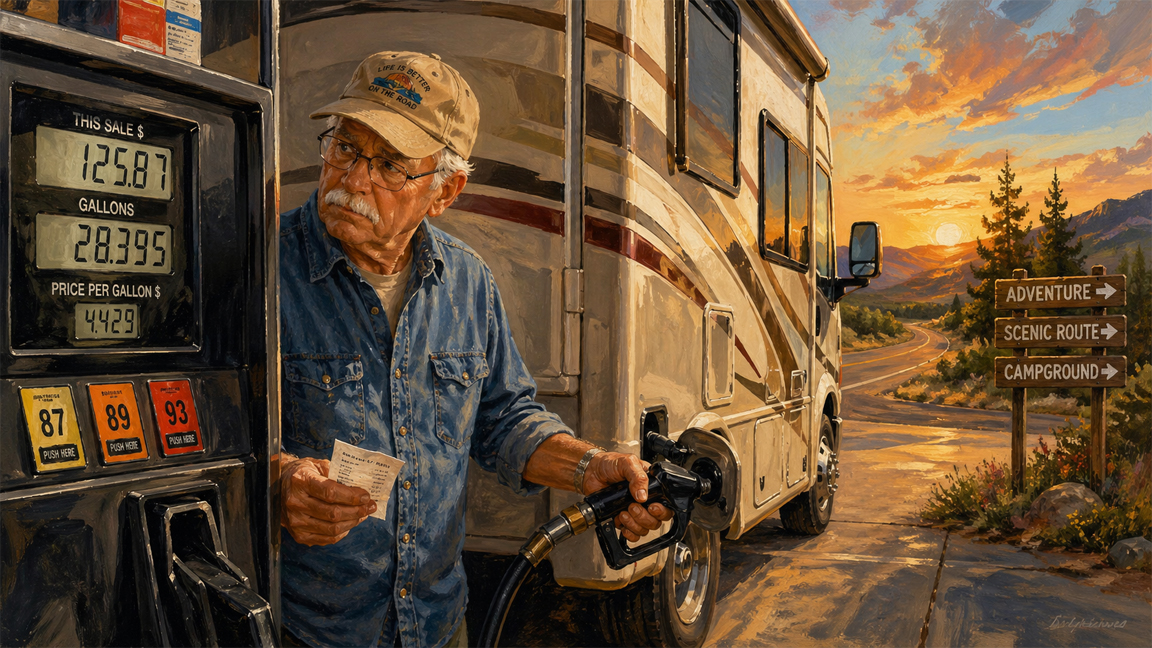
Higher gas prices could affect next year’s Social Security COLA

Few RVers cheer when gas prices jump. But those painful fill-ups can sometimes have an unexpected side effect: They may help push future Social Security cost-of-living adjustments (COLAs) higher.

That doesn’t mean retirees should celebrate higher fuel prices. Anyone towing a trailer or driving a motorhome already knows what a 50-cent jump at the pump can do to a travel budget. But economists say sharp increases in gasoline prices can ripple through the same inflation measurements used to calculate annual Social Security COLAs.

And that suddenly matters again after new data showed gasoline prices jumped 21.2% in March—the biggest monthly increase in years.

Why gas prices matter to Social Security

Social Security COLAs are based on inflation, specifically a government measurement called the Consumer Price Index for Urban Wage Earners and Clerical Workers, better known as CPI-W.

Gasoline is one of the categories included in that inflation basket. When fuel prices rise quickly, they can help push overall inflation readings higher. If inflation remains elevated during the key measuring months later this year, next year’s Social Security COLA could end up larger than expected.

That doesn’t mean one month of expensive gas automatically guarantees a bigger adjustment. Housing costs, food prices, medical expenses, insurance, and many other factors also feed into the final inflation number.

Still, fuel prices have historically played an outsized role in how inflation “feels” to consumers—and in how quickly inflation gauges can move.

RVers often feel fuel inflation first

For many RVers, rising gas and diesel prices hit harder than they do for the average commuter.

A retiree driving a compact car may notice a modest increase at the pump. Someone fueling a Class A motorhome or diesel pickup towing a fifth wheel can see travel costs jump dramatically in just a few weeks.

That’s especially true during spring and summer travel season, when fuel demand normally rises, anyway.

Some RVers may respond by shortening trips, traveling more slowly, staying longer in one location, or delaying longer cross-country plans until prices stabilize.

Others may simply absorb the higher costs and hope future COLA increases help offset at least part of the damage.

There’s still a lot that could change

Economists caution that it’s still far too early to predict next year’s actual Social Security COLA.

Fuel prices can reverse quickly if oil supplies stabilize, refineries recover, or global tensions ease. Inflation readings over the next several months will matter far more than any single spike.

But for retirees living on fixed incomes, the connection between fuel prices and future COLAs is one more reminder that what happens at the gas pump can affect far more than travel plans.

Source
Yahoo Finance: Gas Prices Jumped 21% in March. Here’s How That Could Raise Your Social Security Benefit Next Year

RELATED

RVT1259b

They sold everything to live in an RV at Disney World. Some RVers may understand why

For a lot of RVers, the dream was always supposed to come later: Work the job, pay off the house, wait for retirement, and then finally hit the road to start making memories.

One Florida family decided not to wait. A couple with two children sold their 10,000-square-foot home, downsized into an RV, and now spends much of the year living at Disney World’s Fort Wilderness campground. The unusual lifestyle has generated plenty of online attention, partly because of the Disney connection and partly because it touches a nerve many RVers already understand: The idea that experiences may matter more than square footage.

Most RVers probably would not choose to spend that kind of money camping near Disney year-round. Still, the story raises a question that has quietly followed RV culture for decades: At what point does “more house” stop meaning “more life”?

From a giant house to an RV campsite

The family says they wanted more time together and fewer distractions from what they considered important. Instead of maintaining a massive home, they shifted toward a lifestyle built around travel, shared experiences, and flexibility.

That idea may sound familiar to longtime RVers. For decades, RV life has carried a certain promise: less focus on possessions and more focus on experiences. Campfires instead of lawns. Travel instead of accumulation. Memories instead of maintenance.

The Disney connection simply makes the story louder.

Disney’s Fort Wilderness Resort is hardly roughing it. The campground has long been one of the most famous RV destinations in America, with golf carts, organized activities, ferry access to the parks, restaurants, pools, and enough amenities to feel more like a resort community than a traditional campground.

For some RVers, it probably sounds magical. For others, it sounds exhausting.

The Disney campground lifestyle is not cheap

Here is the part likely to stop many readers cold: This lifestyle comes with a serious price tag.

According to reports, campsite costs during one recent 26-day stay exceeded $8,000. Depending on season and campsite type, Fort Wilderness nightly rates can rival upscale hotel prices.

That financial reality changes the tone of the story considerably. This is not the classic “live cheaply in an RV and escape the rat race” narrative many people associate with full-time RVing. In some ways, it may actually cost more than conventional living arrangements in many parts of the country.

Still, the story touches a nerve because it taps into something many RVers already understand: The value equation changes when people begin prioritizing time and experiences over square footage.

More house—or more life?

That question sits quietly underneath the entire story.

A 10,000-square-foot home represents one version of success. For many Americans, it is the version they are taught to chase.

But RVers have long occupied a somewhat different corner of the culture. Even owners of large rigs often talk about freedom, mobility, flexibility, and simplicity in ways traditional homeowners do not.

That does not mean RV living is automatically cheaper, easier, or less stressful. Any experienced RVer knows better than that. Campground fees climb. Fuel prices swing wildly. Repairs happen at the worst possible time. And full-time RV life can become surprisingly expensive once the honeymoon phase wears off.

Still, many RVers understand the emotional logic behind the family’s decision—even if they would never personally choose to live at Disney World.

 “For some RVers, the appeal is not really about Disney. It is about deciding that life should happen now instead of someday.”

Social media has changed the RV dream

Stories like this also reveal how much the public image of RVing has evolved.

For older generations, RV life was often tied to retirement. Today, younger families increasingly view RVs as tools for mobility and lifestyle flexibility while their children are still young.

Social media has amplified that shift dramatically. Platforms like Instagram, TikTok, Facebook, and YouTube are filled with families documenting life on the road, campground stays, and unconventional living arrangements.

Sometimes those portrayals can drift into fantasy. The difficult parts of RV living do not always make the highlight reel. But beneath the polished videos and carefully framed campsite photos, there is often a very real question driving the conversation: How much house do people really need if what they actually want is more time together?

The bottom line for RVers

Most RVers probably are not about to sell everything and move to Disney World.

But many may understand the instinct behind the story better than non-RVers do. Because once someone experiences the freedom of mobility, the idea of trading “more stuff” for “more life” no longer sounds quite so strange.

RELATED

RVT1259b

RV Daily Tips. Tuesday, April 28, 2026

America’s Original RV Newsletter. Since 2001
Issue 2892 • New issue every weekday
If you find this newsletter helpful, please consider supporting our work with a donation of your choice. Thank you!


Today’s thought

“Don’t count the days, make the days count.” —Muhammad Ali


Need an excuse to celebrate? Today is National Blueberry Pie Day!

On this day in history: 1930 – The Independence Producers host the first night game in the history of Organized Baseball in Independence, Kansas.


Tip of the day
Water gadgets you need for your RV

If you’ll be camping in a park with “city water”—that is, water from a faucet—there are some good accessories to keep in your RV storage compartment. These can make your visit easier—even safer—for your rig. They’re inexpensive, and you’ll be glad you have them when you need them.

Even before you hang the hose on the tap, there are a couple of helpful devices you might need. First, there are situations where the “threads” on the water faucet are stripped, or deliberately not there to prevent folks from hooking a hose to an otherwise good spigot. Continue reading.


Article and video
Clearing up confusion over diesel fuel types

By Cheri Sicard
Switching to a diesel truck or RV can bring up a lot of questions about fuel. What’s the difference between all those diesel types at the pump? What about additives? In this video from RV MilesJason Epperson breaks down the basics of diesel fuel, so owners can keep their engines running smoothly for years to come.

Psst: Don’t feel like or don’t like watching videos? Did you know that Cheri writes articles to go along with the video? Here, she summarizes everything Jason says (and it’s 1,100 words! See? No video needed). 


AmazonfindsrvtRVtravel.com editors’ and readers’ all-time favorite products at Amazon
Welcome to the wonderful world of RVtravel.com’s favorite Amazon finds! This is the first time EVER that we’re sharing this list with you. This is our personal list that we use every day to recommend products to YOU. These are the products we actually use, talk about, recommend, and keep in our own rigs. And no, none of them are sponsored or paid for or anything like that. We’ve been compiling this list for years! Not to toot our own horn, but this is impressive!


Featured article
A poem about RVing for National Poetry Month

April is National Poetry Month, a month-long celebration that was launched by the Academy of American Poets in 1996. Since then, it has grown into the largest literary celebration in the world. 2026 marks the 30th anniversary of this special month. Read Gail Marsh’s poem about RVing, then submit your own.


Ask Dave
Follow-up on RV rodent problem with unique fix

Read the tip here.


Did you miss the news?


Reader poll
In what season(s) of the year do you most often RV?

Respond here.


Quick tip

Relieve that dripping water heater valve 

If your RV’s water heater pressure relief valve is dripping, it may not necessarily need a replacement. Since water expands dramatically when heated, if your tank is full of water, then the “temperature and pressure relief valve” (T&P) may sense the need to let a little pressure off when your water temp rises. Restoring a head of air at the top of the tank may be all that’s required to stop that weeping. Here’s how to do it:

1. Turn off the heat. Shut off the LP burner or electric heater to the tank. ALLOW THE WATER HEATER TO COOL DOWN BEFORE PROCEEDING.
2. Turn off the water. Shut down the city water line to your rig, or turn off the water pump that supplies water—whichever applies in your situation.
3. Relieve the pressure. Open a faucet in your rig—both the hot and cold side—and leave it open. The idea is to relieve the pressure from the lines.
4. Open the T&P valve by flipping the lever up. Water will likely be released, hence the importance of allowing the heater to cool down before getting to this step. When the water stops coming out of the T&P, close the lever.
5. Restore power and water. Check to ensure the dripping has stopped at your T&P.
It’s not unusual to have to repeat this occasionally, as the air pocket may need to be restored now and again. However, if the valve should start to drip again soon, it may be you need a new T&P valve.


? MYSTERY PRODUCT OF THE DAY ?
You’ve seen a prairie dog, right? So you know how cute they are? Good. Well, what if we told you that you could become a prairie dog for a day? Or even a week! Check this out—you can!


Website of the day

The 57 Most Beautiful Places in the World
This list from Condé Nast Traveler will inspire you to leave that RV behind and go explore other parts of our beautiful world. Some of these places are in the U.S., but you’ll surely want to book a plane ticket after reading this one!


And the survey says…

We’ve polled RVtravel.com readers more than 5,000 times in recent years. Here are a few things we’ve learned about them:

• 11 percent have stayed in more than one National Park campground within the past year. An additional 9 percent have stayed in one.
• 74 percent say they would continue traveling in their RV if their partner died.
• 54 percent say they put in a lot of effort to make sure they recycle.

Recent poll: Would you avoid a park if cell service is poor or nonexistent?


Trivia

Johnny Morris, legendary angler and noted conservationist, started Bass Pro Shops in 1972 in an 8-square-foot space in his father’s liquor store in Springfield, Mo. That was the company’s sole location for its first 13 years.


Bored? Not for long! Here’s a list of every article and newsletter recently published on RVtravel.com. We don’t know what bored is around here—we never stop working! You’ll have fun looking through all these articles, and we bet you’ll learn something, too.


Readers’ pet of the day

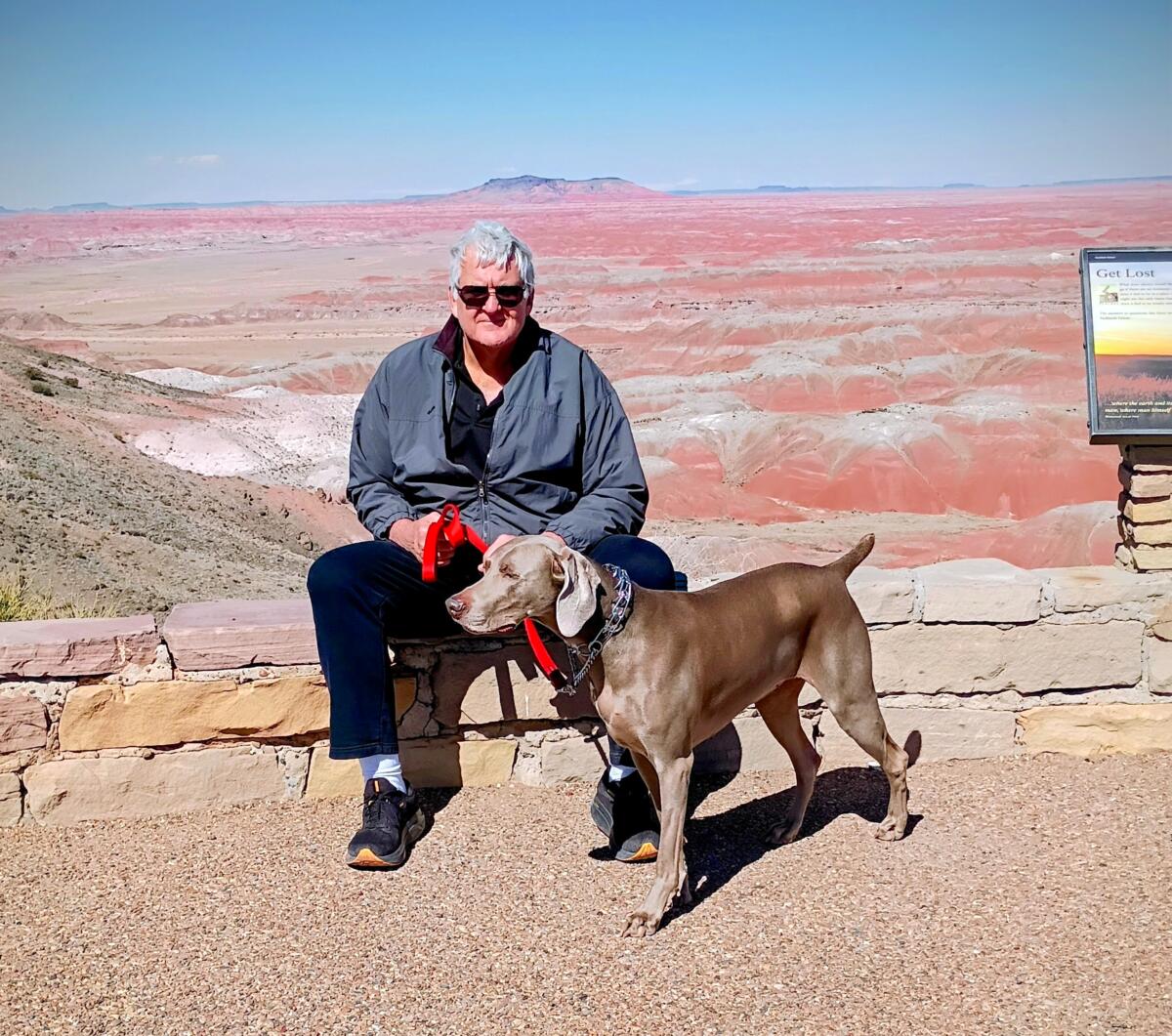
Img 20260305 1122524012 6484473b17b2be0561745e05cb3d3ed9“Gracie (Weimaraner, age 5) loves our new adventures in our new Arctic Fox travel trailer. We’re all newbies since February 2026. So far, we think we’ve made the best decision since retiring, and Gracie seems to like the trips, too. Here we are at the Painted Desert in February.” —Chris and Molly Waidner

Send us a photo of your pet with a short description. We publish one each weekday in RV Daily Tips and in our Sunday RV Travel newsletter. No blurry photos, please! Please do not submit your photo more than once. Thanks!

RVing with Dogs group on Facebook. You’ll love it.


Version 1.0.0Fresh, flavorful diabetic diet meals for RVers over 60
Eating well on the road doesn’t have to be complicated or bland. This diabetic cookbook for people over 60 is packed with quick, practical recipes designed to support steady blood sugar and boost daily energy, all with simple ingredients. With clear nutrition info and a built-in 4-week meal plan, it takes the guesswork out of healthy cooking so you can focus on feeling good and enjoying the journey. Learn more or order.


FREE IS GOOD! See a map of 12,000+ gas stations that provide free air for tires at FreeAirPump.com.


Leave here with a laugh


Today’s weather forecast across the nation
THIS MAP UPDATES TWICE A DAY

Visit Current National Radar Weather Map


Did you miss the latest RV Travel Newsletter? If so, read it here.
Oh, and if you missed the Latest News for RVers, make sure to catch up here.


If you shop at Amazon.com we’d appreciate you using this link. We get an itty bitty commission if you buy something, but they add up and help us pay our bills (most importantly our hard-working writers!). 


RVtravel.com All-Star Staff

Click here for information about our staff and how to contact us.

WHY WE ASK FOR DONATIONS INSTEAD OF SELLING SUBSCRIPTIONS.

Our policy on using artificial intelligence.

Follow-up on RV rodent problem with unique fix

Dear Dave,
I sent you a message via RV Travel a few days ago about holes through the frame and rodent access to the enclosed belly through those holes.

After spotting a Walt Disney-cute, but wholly unwanted, field mouse inside the cabin, the above issue has taken a higher priority. Near as I can determine, the mouse gained access via the enclosed belly. S/he came up through the large opening under our shower and through a large cutout on the shower base where the bathroom vanity piping connects above the floor but under the shower.

The shower base cutout is not easily accessible due to narrow access between the two fixtures. Likewise, it’s near impossible to reach via the access plate through the plumbing connections under the base. Best I could do was to shove an entire bag of course steel wool around the pipes and compressed in place between the two fixtures.

Large hole in frame lets rodents in

But back to that large hole through the frame (see below). The enclosed screw is 1.5” in diameter. I cleaned the frame around the hole with acetone.

Rodent Hole
Rodent hole.

I found this drywall patch at our local hardware store (see below). In addition to the nylon mesh, there is a layer of aluminum mesh, all sticky with adhesive. Using a 1.5” bottle cap I outlined a circle – offset to accommodate the space between the screw and the cogged support rod. I used scissors to cut in from the edge and cut out the circle. Each 45 degrees, I made a tiny snip through the opening edge to allow the aluminum to act as a wiper.

Drywall Mesh
Drywall mesh

Here is the applied patch (see below). I don’t trust an indoor-rated adhesive to last long stuck to painted steel. After this photo was taken I smeared a fair amount of metal-rated silicon sealant through and over the mesh around  the hole.

Rodent Hole Patch
Rodent hole patch

May be temporary solution, but better than alternative

While I am pretty sure this mesh will hold for the near term, I don’t know if it will survive slide room retraction in about six weeks when we pack up and head back to Michigan. And if it does survive, I have no idea if it will survive the Texas summer or the slide room extension next fall. While crawling under a slide on crushed rock is less than pleasant, if need be, I will scrape off the old and apply a new patch next fall. It is a lot less work than the alternative.

Sounds like your RV Show tour was well-received. —Jim

Dear Jim,
Thanks for the follow-up. This looks like a great fix to keep Mickey back at “The Happiest Place on Earth”!

I think you are correct in the assumption that it might not stay attached during the trip home and a few extensions and retractions of the slide room. However, you might try some J-B Weld for steel around the perimeter or even EternaBond®. I think the steel frame rail is too thick to try attaching screws, so you might need to periodically reattach the mesh. But it looks like a good idea.


 You might also enjoy this from Dave 

Do ultrasonic mice deterrents work?

Dear Dave, 
I saw your response about keeping mice out by sealing up access points and using scent deterrents. I was wondering if you or any of your readers had experience with those ultrasonic devices that can go under the hood that are supposed to keep rodents and other critters away? Are they just a scam? Do they work in specific but limited instances? We haven’t had a problem yet but want to keep it that way. (We’ve only been full-time RVing for a year.) Thanks in advance! —Tim, 2024 Leisure Travel Vans Unity RL

Read Dave’s answer.

MORE FROM DAVE ON RV PESTS

DAVE HAS ANSWERED MORE THAN 1,000 readers’ maintenance and repair questions. Read a directory here. There is so much to learn!


Dave Solberg is a leading expert in the RV industry and the author of the “RV Handbook.”

HAVE A QUESTION FOR DAVE?

Send your inquiries to him using the form below.

Name
Drag & Drop Files, Choose Files to Upload

RVDT2892