Home Blog Page 68

Where to celebrate Pi (pie) Day across the U.S.

1

For RVers who love a good road trip and a great dessert, March 14 offers the perfect excuse to pull over and indulge.

Pi Day celebrates the mathematical constant (3.14…, symbol π), but over the years it has also become an unofficial holiday for pie lovers everywhere.

Bakeries, cafés, and pie shops across the country mark the day with special slices, discounts, and creative flavors. And if you’re traveling in your RV, it’s the perfect opportunity to plan a tasty detour.

History of pie

Pie has long been a symbol of American comfort food. From fruit-filled classics like apple and cherry to rich cream pies, it remains one of the most beloved desserts in the United States. Data from grocery and delivery services shows that apple pie consistently ranks as the nation’s favorite, followed by pumpkin and pecan pies. (That pretty well explains Costco’s choices, doesn’t it?)

Where to find great pie

Here are several well-known pie destinations across the country where RV travelers can celebrate Pi Day with a perfect piece of pie.

Petee’s Pie Company (New York City). This shop focuses on traditional American pies made from scratch with seasonal ingredients. It has become a favorite among locals and visitors alike for flavors like sour cherry crumb and classic apple.

Proper Pie Co. (Richmond, VA). This shop combines traditional American sweets with savory hand pies inspired by New Zealand baking traditions. The menu changes frequently, but visitors often find favorites like bourbon pecan, key lime, and hearty savory pies filled with meats or vegetables.

Kathy’s Pies (Cedar Rapids, IA). Discover mouthwatering pies like turtle pecan cheesecake, two crust raisin (pictured above), and more at this favorite Midwest location. They also sell yummy cakes if you’d prefer.

The Blue Owl (Kimmswick, MO). Blue Owl’s “Levee High Caramel Apple Pecan” pie is a wonder! Honoring the 1993 flood that almost wiped out the town, this pie towers high and is filled with caramel, cinnamon, and apples. It’s sure to please.

Royers Round Top Café (Round Top, TX). Here, RVers can enjoy a piece of Texas Trash Pie. This decadent dessert is a sweet-and-salty mix of graham crackers, chocolate chips, coconut, pretzels, and caramel. Your taste buds will thank you!

Range Café (Albuquerque, NM, area locations). If you haven’t tried it, you must! The Range Café makes the best green chile apple pie in the state! They mix roasted green chiles with crisp apples and crunchy pine nuts for a memorable pie experience you won’t soon forget. It’s a New Mexico tradition.

Three Babes Bakeshop (San Francisco, CA). The bakery is known for its commitment to organic ingredients and fruit sourced from California farms. Its seasonal pies highlight whatever produce is freshest. The shop’s focus on sustainability and small-batch baking has helped it gain recognition in national food publications.

Willamette Valley Pie Company (Salem, OR). Willamette Valley Pie Company is well known throughout the region for its Marionberry pie. The bakers top a flaky, buttery crust with locally sourced dark purple berries, called Marionberries. Marionberries are not well known outside of the state. They are a mix of different blackberries that provide both a sweet and tart taste all at one time. Yum!

Snohomish Pie Co. (Snohomish and Mountlake Terrace, WA). It’s a local favorite (especially for the RVtravel.com staff). This small-town shop serves the best pies, and it’s won awards for its Apple Berry Crumb flavor. Mmmm!

Traditional treats

For RVers, celebrating Pi Day is more than just dessert. It’s an excuse to explore small towns, urban neighborhoods, and roadside bakeries that might otherwise be missed. A slice of pie can turn an ordinary travel stop into a memorable part of the journey.

So on March 14 (today), consider planning your route around a pie stop or two. Pi Day is the perfect reason to treat yourself on the road.

What’s your favorite type of pie? Tell us in the comments below.

RVT1252b
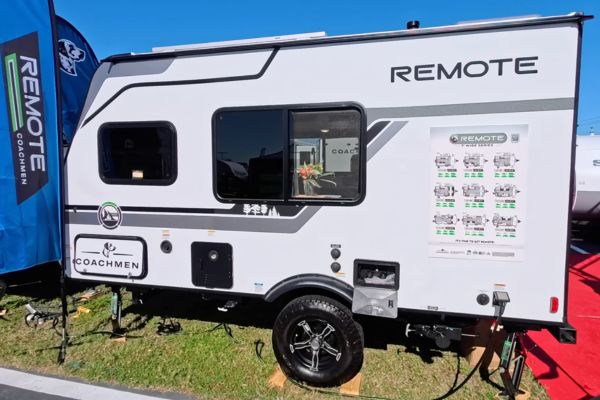
2026 Coachmen Remote 14R— A small, off-grid trailer with big rig features

At the 2026 Florida RV SuperShow, the Day Hiker from the Six stopped by the Coachmen display (Forest River) to check out the 7-foot-wide Remote series, with a focus on the Remote 14R. Their quick takeaway: It’s a small, good-looking couple’s trailer that packs in off-grid gear without pushing the price into the stratosphere.

With a show price of $18,999 and a listed weight of 2,753 lbs., it’s aimed at shoppers who want to tow light but still camp comfortably.

In the video at the end of this post, Greg gives us a walkthrough tour.

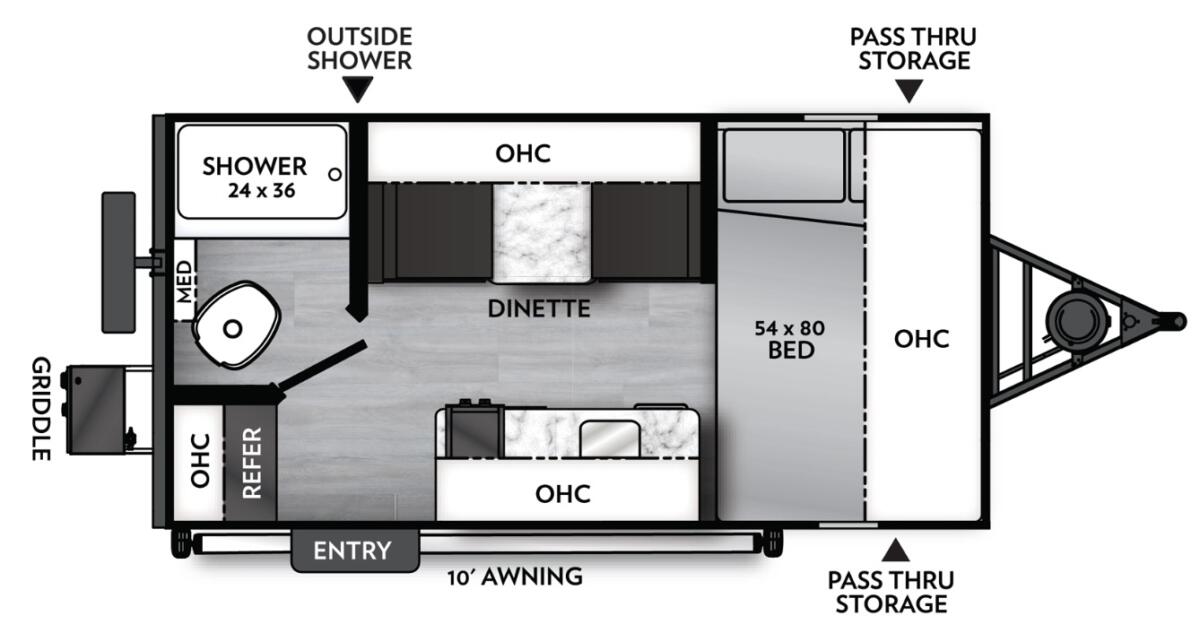
This floor plan stands out because it pairs small-trailer size with big-trip capacity. The off-grid highlights include:

  • 52-gallon fresh-water tank
  • 27-gallon gray tank and 27-gallon black tank
  • 200 watts of solar standard, with an option to upgrade to 400 watts
  • A Maxxair fan, plus a furnace for cold-weather camping

All that comes in a trailer that still feels open, thanks to the amount of glass. It sleeps three, using the main bed plus the dinette conversion.

Construction notes included aluminum framing, a lot of composite materials (including Azdel), and a TPO membrane roof.

Exterior

Up front, the pass-through storage is large, and the door uses a magnetic hold-open. Inside that compartment sits a griddle that mounts on the back of the trailer. Nearby, the utility area includes the fresh-water fill for that 52-gallon tank, city-water hookup, black-tank flush, and an outdoor shower. The trailer also uses a Fogatti® on-demand water heater, although Greg, the reviewer, would have preferred a tank-style heater for off-grid simplicity.

A fast-drain low-point system helps empty the fresh tank quickly before towing. Out back, the dump valves sit right at the edge, which makes them easy to reach. Still, they look a bit exposed to rocks coming off the Goodyear Wrangler tire option.

Only two upgrades were called out: the Goodyear Wrangler tires (instead of highway tires) and the extra 200 watts of roof solar. Other exterior notes include rear backup camera prep, gutters, stabilizers on both ends, bumper storage for the sewer hose, a 30-amp plug, and a propane quick disconnect. One drawback is that there is no rear trailer hitch.

Screenshot

Interior

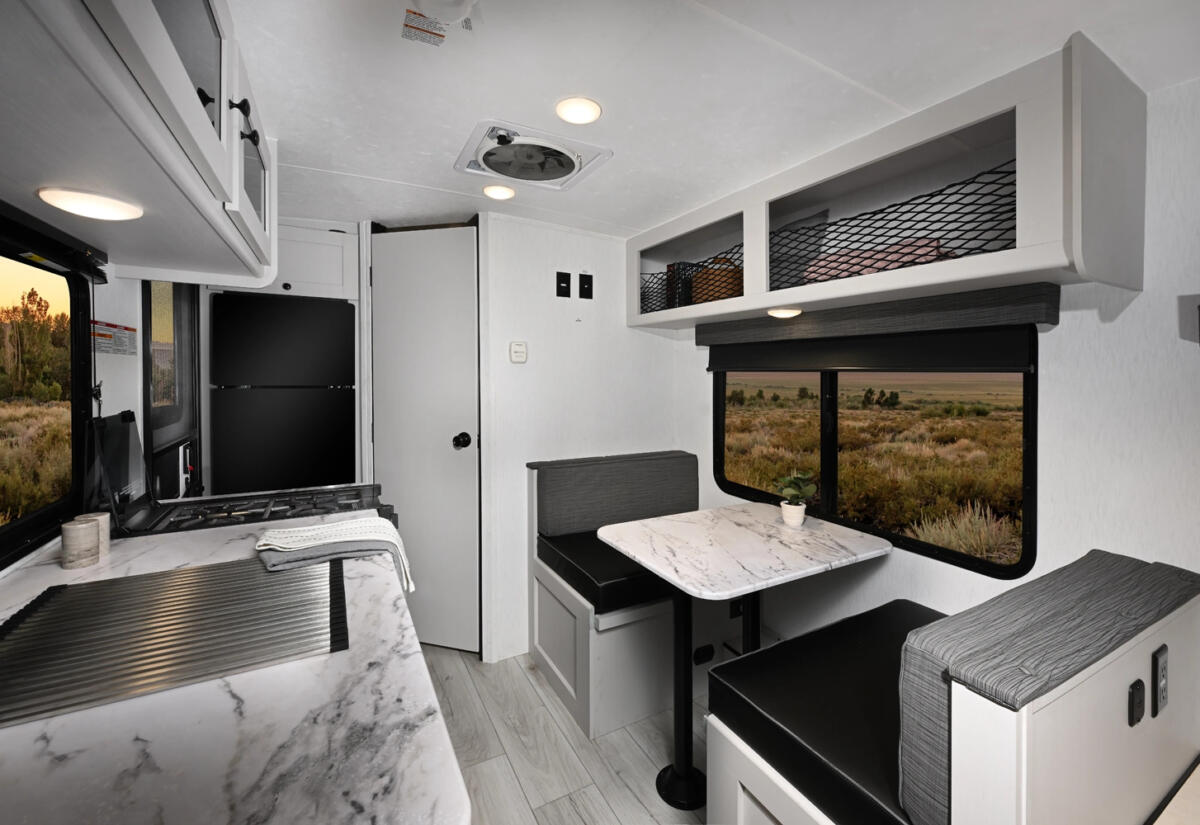
The layout places the fridge on the left, the bathroom in the rear corner by the fridge, the kitchen to the right of the entry, the dinette across from the kitchen, and the bed up front. The windows are a huge part of the vibe, since they make the interior feel airy for a 14-foot trailer.

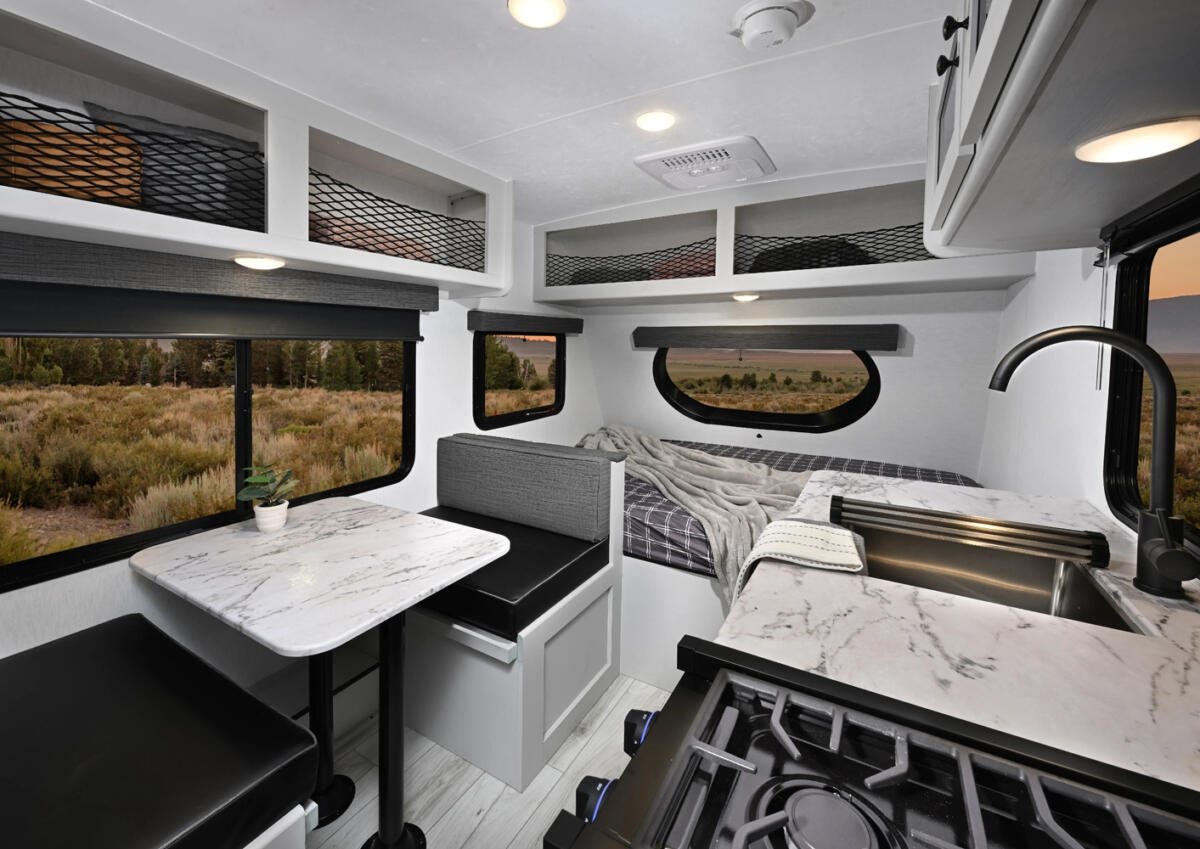
The 12-volt fridge is a solid size for this price point. In the kitchen, the counter is thermofoil, paired with a stainless sink, a residential-style faucet, a two-burner cooktop, and a Furrion convection microwave that also works as an air fryer. Storage is a strong point, with deep overhead cabinets (smoked glass), big lower compartments, and drawers for smaller items.

The dinette is just a two-person setup. It includes 12-volt plugs underneath, blackout shades, and vinyl on the lower cushions for easy wipe-down. Up top, you won’t have to worry about cabinets opening during travel because there is netted storage that adds space for soft items or items in baskets, as shown.

Remote 14r B2f Copy 2 Remote 14r F2b Copy 2

Up front, the bed area gets windows on both sides, although the front windshield does not open. Under-bed storage connects back to the pass-through, which helps keep bulky gear out of the living area.

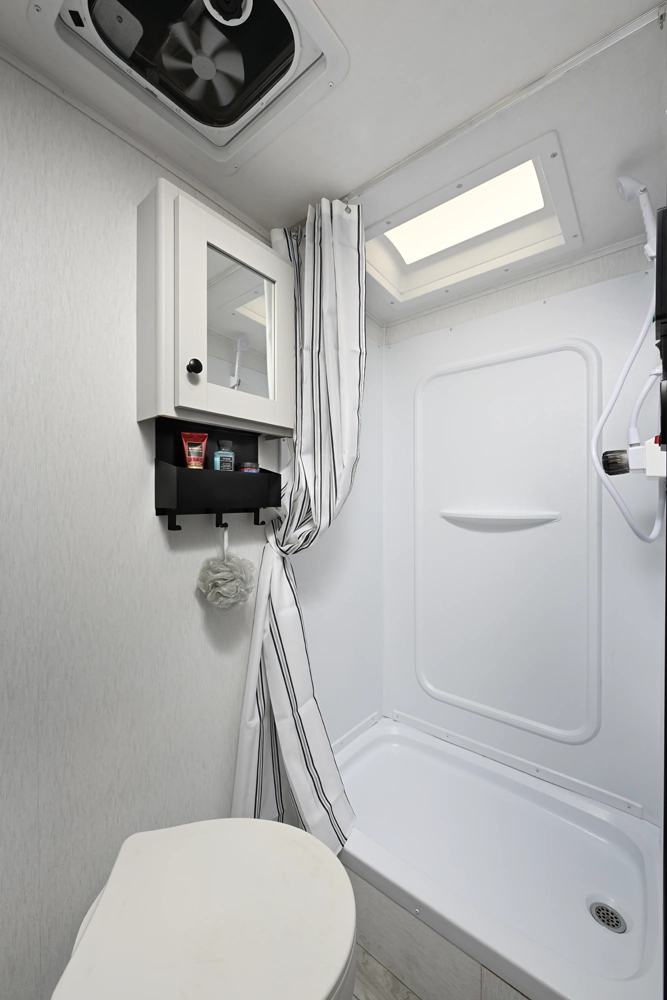
In the bathroom, the big win is that it’s a dry bath in a small, budget-friendly trailer. It includes a 120-volt outlet, towel hooks, a cabinet, a vent fan, tank heater switches (even though the underbelly is not enclosed), monitor panel controls, and a water pump switch. Shower headroom should work for many campers, with the reviewer (6 feet tall) fitting with about 1 to 2 inches to spare under the skylight. A toilet paper holder was not included.

Remote 14r Bath Copy 2

Bottom line on value and what could be improved

The Remote 14R left a strong impression because it mixes low weight, big tanks, solar, and a Maxxair fan at an $18,999 show price. At the same time, the reviewer wished for a single-piece fiberglass roof instead of a membrane roof. Also, Forest River’s build quality always sits in the back of some shoppers’ minds.

Still, the show unit looked well-finished, and the overall package came off as a smart pick for couples who want off-grid features without a huge payment.

Learn more about the Coachmen Remote 14R here.

MORE RV REVIEWS LIKE THIS:

RVT1252b

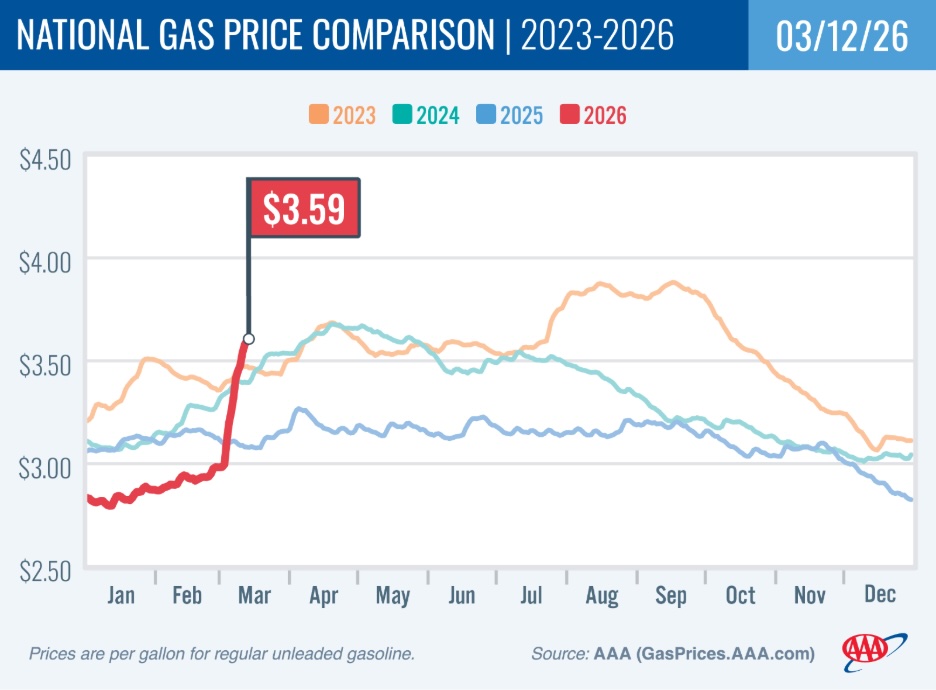
Gas prices continue to rise; up 35 cents from last week

14

Spring Break season is here, and the national average for a gallon of regular gasoline jumped nearly 35 cents in the past week. Current prices are now similar to those seen during spring 2024.

Gasoline demand typically increases this time of year as the weather warms up and more drivers begin traveling. But another factor is pushing prices higher right now: rising global oil prices tied partly to growing tensions in the Middle East, including the conflict involving Iran. Oil markets tend to react quickly to instability in major energy-producing regions, and concerns about possible supply disruptions have pushed crude prices higher in recent days.

Crude oil has surpassed the $100-per-barrel mark multiple times recently, which directly affects what drivers pay at the pump. When oil prices climb quickly, gasoline prices usually follow within days or weeks.

RVtravel.com publisher Chuck Woodbury is currently traveling in northern California where he reports he has seen regular unleaded gasoline priced at around $6 a gallon and diesel approaching $7.

To help offset rising prices, the U.S. announced it will release 172 million barrels of oil from the Strategic Petroleum Reserve over four months. The move is part of a broader effort by the International Energy Agency to release a total of 400 million barrels, the largest coordinated emergency release in the agency’s history.

Today’s national average: $3.598
One week ago: $3.251
One month ago: $2.944
One year ago: $3.080

According to new data from the Energy Information Administration (EIA), gasoline demand increased last week from 8.29 million barrels per day to 9.24 million. Total domestic gasoline supply decreased from 253.1 million barrels to 249.5 million, while gasoline production increased, averaging 9.9 million barrels per day.

Oil market dynamics

At the close of Wednesday’s formal trading session, West Texas Intermediate crude rose $3.80 to settle at $87.25 per barrel. The EIA reports U.S. crude oil inventories increased by 3.8 million barrels from the previous week. At 443.1 million barrels, inventories remain about 2% below the five-year average for this time of year.

State stats

Most expensive gasoline markets:

California ($5.36), Hawaii ($4.76), Washington ($4.74), Nevada ($4.39), Oregon ($4.30), Arizona ($4.06), Alaska ($3.96), Florida ($3.71), Pennsylvania ($3.66), Illinois ($3.66).

Least expensive gasoline markets:

Kansas ($3.04), Oklahoma ($3.05), North Dakota ($3.09), Arkansas ($3.11), Missouri ($3.12), Mississippi ($3.16), South Dakota ($3.18), Kentucky ($3.19), Wisconsin ($3.21), Iowa ($3.22).

EV charging

The national average price for electricity at a public EV charging station increased 2 cents this past week to 41 cents per kilowatt hour.

To see all recent news for RVers, click here

RVT1252b

Buc-ee’s receives ‘F’ rating from Better Business Bureau

39

Buc-ee’s has long been a cult favorite for some road trippers and RVers. Buc-ee’s offers travelers enormous stores, miles of snacks, barbecue, and famously clean restrooms.

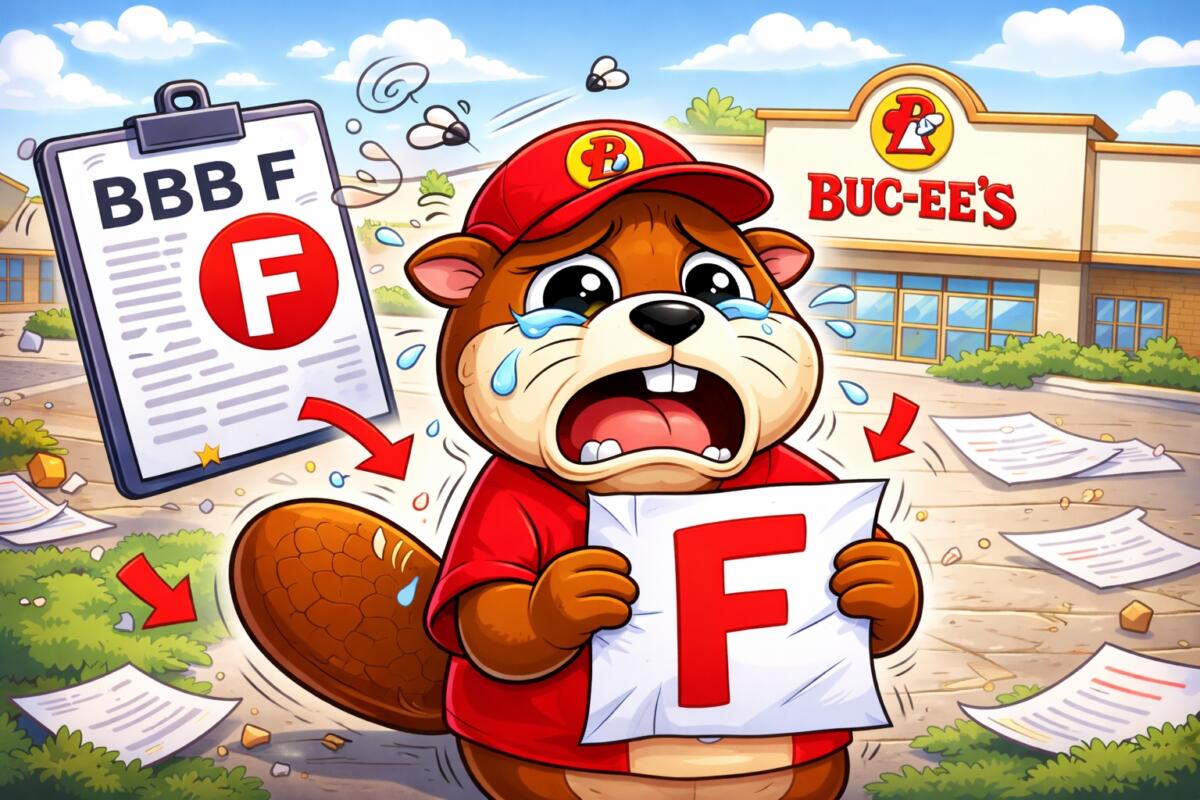
Lately, though, the glow has dimmed. Recently, the chain was given an “F” grade by the Better Business Bureau. That’s quite a fall from the company’s ranking just last year.

2025: The good ol’ days?

In 2025, Buc-ee’s ranked fifth among all convenience stores in the American Customer Satisfaction Index, surpassing major brands like Shell and ExxonMobil. That number 5 ranking was down from previous years, as well.

Buc-ee’s was also named the top quick service restaurant in the U.S. in the dunnhumby Retailer Preference Index. It outperformed competitors like Kwik Trip, In-N-Out, Raising Cane’s, and Chick-fil-A.

So, what happened? How can a company fall so far in such a short amount of time? Are more people visiting Buc-ee’s in 2026 and giving less-than-stellar reviews? Has the quality of staff or the cost of Buc-ee’s products driven ratings down?

With several new Buc-ee’s stores set to open, you can bet that corporate management is searching to find an answer—and fast!

An “F”

The BBB’s grade is meant to reflect how a company handles customer issues. In this case, the bureau pointed to a pattern of nearly 90 complaints over the past few years. Problems include issues with refunds, returns, billing, and difficulty reaching customer support.

The BBB flagged Buc-ee’s apparent refusal to engage with its customers’ complaints. The combined issues of number of complaints and non-response to consumers pushed the BBB’s rating to its lowest mark.

Buc-ee’s fans

Fans (including many full-time and part-time RVers) point out the favorite perks that draw them back to Buc-ee’s again and again. They love the huge parking lots, abundant pumps, and walk-in retail that’s more like a small store than a gas station.

Buc-ee's Beaver Nuggets Image: Walmart.com

Many fans have their particular Buc-ee’s favorites—like brisket sandwiches and Beaver Nuggets. Of course, Buc-ee’s restrooms are legendary, boasting the cleanest stops along the highway.

Not fans

Not everyone loves Buc-ee’s, however. Several RVtravel.com readers posted negative comments on a recent Buc-ee’s article. On busy days, Buc-ee’s can be jam-packed. RVers can face long lines at the pumps, crowded aisles, long check-out lines, and full parking bays that make maneuvering an RV tricky.

Other RVers say the Buc-ee’s lots aren’t laid out with oversized rigs in mind. Even the roads approaching large Buc-ee’s stores can be problematic for folks towing RVs. When the crowds are heavy, the positive features (clean bathrooms, lots of food choices) don’t erase the hassle of waiting for space or unfriendly staff.

Corporate scale vs. small-business service

A national chain that grows fast can accumulate customer issues across several locations. Complaints concentrated across dozens of stores can look like a pattern even if some individual outlets run smoothly.

At the same time, BBB-style ratings reward responsiveness (answering and resolving complaints), which doesn’t always scale smoothly for a company focused on retail operations and expansion.

Troubling optics

Expansion plans make this an awkward moment for the Buc-ee’s brand. It markets itself as a consistent, family-friendly roadside experience. Yet consumer watchdog attention raises questions about whether corporate support systems are keeping pace with Buc-ee’s growth.

Weighing pros and cons

If your priority is a single-stop solution where everyone in the rig can stretch, eat, buy supplies, and use clean restrooms, Buc-ee’s still delivers.

If your priority is flawless post-sale support or easy phone contact, the recent BBB findings are a red flag to plan alternatives. If you’re looking for fewer crowds, drive an oversized rig, or want bargain prices, our readers’ comments suggest you look elsewhere.

Your turn

Rate Buc-ee’s from 1 to 5 (5 = great experience, 1 = very poor). Vote with the number that matches your experience, then leave a comment, if you’d like, to explain your reason for voting the way you did. Thank you!

RELATED

RVT1252b

Hit-and-run crashes reach record high in U.S.— What if it happens to you?

A new report from the AAA Foundation for Traffic Safety says fatal hit-and-run crashes in the United States have reached a record high. The trend has been building for years. Since 2009, hit-and-run deaths have climbed steadily, according to the research group. Many of those killed are pedestrians or bicyclists.

For RVers, that raises two practical questions. First, how do you avoid becoming a victim? Second, what happens if the driver who caused the crash simply disappears?

Many victims aren’t inside vehicles

hit-and-run crashes
Pedestrians can be hard for drivers to see on dark roads. Safety experts say lights or reflective gear can help reduce the risk.

Hit-and-run crashes often involve people outside vehicles. That matters for RVers. Campground life includes plenty of walking. People stroll park roads, walk dogs, ride bikes, or head to bathhouses and camp stores. Many of those trips happen after dark.

Lighting in campgrounds and rural parks can be limited. Drivers may not expect pedestrians. And in some places—especially near boondocking areas—traffic may include vehicles traveling faster than you might expect.

Those conditions can make pedestrians harder to see.

A few simple steps can reduce risk

No one can control another driver’s behavior. But RVers can take steps to make themselves easier to see.

A flashlight or headlamp can help drivers notice you sooner. Reflective clothing or bands also increase visibility. Even reflective dog leashes can help.

Staying alert on campground roads also matters. Some drivers move faster than posted speeds. Golf carts, pickup trucks, and other vehicles may appear suddenly around corners or between rigs.

When possible, use sidewalks or marked paths instead of roadways. And along rural highways, walking on the shoulder after dark carries obvious risks.

If the driver disappears

Even cautious pedestrians and cyclists can’t eliminate every risk. And if a driver flees the scene after an accident, the consequences can become complicated quickly.

When the responsible driver cannot be identified, there may be no one to pursue for damages. Medical bills, lost wages, and other costs may fall on the victim.

That’s where uninsured-motorist or underinsured-motorist coverage—often called UM or UIM—can become important.

These types of coverage are designed to protect you if the other driver has no insurance, carries too little insurance, or cannot be identified in a hit-and-run crash.

In other words, the protection may come from your own policy when the other driver disappears. UIM is an attachment to your vehicle policy, and kicks in if your covered rig is hit by a vanishing motorist.

No, sorry, it won’t help you if you’re clobbered by a hit-and-runner and your rig isn’t involved—say, you’re walking along a roadside when the incident happens. Look closely at those protections we mentioned above.

A quick insurance check may be worthwhile

Many drivers assume their policy already includes this coverage. In reality, coverage varies widely depending on the policy and the state where it was issued.

Some policies include uninsured-motorist protection automatically. Others require it as an optional add-on.

For RV owners, a quick call to an insurance agent may confirm whether the policy includes UM or UIM coverage—and how much protection it provides.

RVers spend plenty of time on unfamiliar roads and in dark campgrounds. A flashlight in your pocket can help drivers see you. And the right insurance coverage may help protect you if one of them doesn’t stop.

RELATED

RVT1252b

Tech startup plans debut of new ‘smart’ RV trailer with weeks of off-grid power

Another tech startup says it wants to reinvent the travel trailer. China-based company Skydream announced plans to introduce its “next-generation smart RV technology” at a Silicon Valley event later this month. The company says it hopes to begin U.S. deliveries of its travel trailer by December 2026.

That’s the promise, at least.

What Skydream is proposing fits into a growing trend: startups that approach RVs more like electric vehicles or smart homes than traditional campers. Big batteries, lots of solar, and software-controlled systems are the centerpiece of the design.

Some of the ideas sound intriguing. Others raise questions RVers will want answered before getting too excited.

The big claim: a massive battery system

One specification in the announcement jumps out immediately. Skydream says its trailer could carry a lithium-iron-phosphate battery system ranging from about 45 to 85 kilowatt-hours.

To put that into RV perspective—that’s huge.

Most RV lithium upgrades fall somewhere in the 3–10 kWh range, with high-end systems occasionally pushing higher. The numbers Skydream is talking about are closer to the battery capacity of an electric car.

If those figures hold up, the trailer could theoretically run major appliances—including air conditioning—for extended periods without a generator.

The company also says the trailer could carry up to 2,200 watts of solar and remain off-grid for as long as two weeks.

Those numbers sound impressive. But they’ll depend heavily on real-world conditions—things like weather, usage, and how large the trailer actually is.

Automation and “smart” features

Skydream is also leaning heavily into technology. The company describes a trailer equipped with automated leveling, voice-controlled interior systems, and electronic stability features designed to assist while towing.

The press release also mentions concepts like parking assistance and automated hitching systems.

Exactly how those would work hasn’t been explained yet. If they prove reliable, features like that could make towing less intimidating for newer RVers.

But for now, they remain claims rather than demonstrated capabilities.

A growing wave of tech-driven RV startups

Skydream is part of a broader movement in the RV world. In the past few years, several technology-focused companies have announced high-tech trailers built around large batteries, solar power, and advanced electronics.

The idea is simple enough: Eliminate generators, reduce propane use, and allow longer off-grid stays.

Traditional RV manufacturers have begun experimenting with similar systems, but most still rely on relatively small battery banks and conventional power setups.

Startups, on the other hand, are trying to leap several generations ahead all at once.

The unanswered questions

For now, there’s still a lot we don’t know about the Skydream trailer.

The announcement does not say:

  • How much the trailer will cost.
  • How heavy it will be.
  • What size or floorplans it will offer.
  • Whether there will be a U.S. dealer network.
  • Where the trailers will be built.

Weight could be especially important. A battery pack large enough to store 45–85 kWh of electricity could add significant mass, which would directly affect what tow vehicles could handle it.

There’s also the reality that many RV startups struggle to move from prototype to production. Designing a flashy concept is one thing. Building RVs at scale—and supporting them with parts and service—is another challenge entirely.

Will it make it to campgrounds?

Skydream says it plans to reveal more details at its Silicon Valley debut on March 23.

Until then, the trailer exists mostly on paper.

If the company can deliver on even part of what it promises—especially the large battery capacity—it could point toward where some RV technology is heading.

But RVers have seen plenty of futuristic RV concepts over the years. The real test isn’t the press release…

It’s whether the thing actually shows up at a campground.

RELATED

RVT1252b

Is RV travel really cheaper? The industry says yes; many RVers say it depends

Is RV travel cheaper than other types of vacations? The RV industry says yes. According to the RV Industry Association (pdf), a family of four can vacation by RV for 27% to 60% less than trips that rely on hotels, flights, and restaurant meals.

The claim appears frequently in industry reports and promotional materials and is often cited as one of the major advantages of RV travel.

But ask experienced RVers about that claim, and you’re likely to hear a familiar answer.

It depends.

Where the savings are supposed to come from

The RV industry’s argument isn’t entirely without merit. RV travel can reduce several expenses that typically drive up the cost of traditional vacations.

For example, families traveling by RV may avoid:

  • Airline tickets
  • Rental cars
  • Hotel stays
  • Restaurant meals for every meal
  • Pet boarding fees

Instead, RV travelers often cook their own food, sleep in their own beds, and bring along everything they need for the trip.

For families traveling together—especially those with children—the savings can add up quickly.

And for RVers who already own their rigs and stay in reasonably priced campgrounds, the math can work out favorably.

Where the math starts to get fuzzy

Where many RVers start to question the industry’s claim is in the costs that are harder to capture in simple vacation comparisons.

For starters, there’s the RV itself.

Even a modest travel trailer can cost tens of thousands of dollars. Larger fifth wheels and motorhomes can run far higher. When purchase price, financing, insurance, and depreciation are factored in, the financial picture becomes more complicated.

Fuel is another major variable.

Large motorhomes commonly average 8 to 10 miles per gallon, and heavy tow vehicles pulling trailers aren’t much better. Long-distance trips can burn through a lot of fuel in a hurry.

Then there are campground fees. Once known for modest prices, many campgrounds now charge:

  • $40 to $80 per night in many areas
  • $100 or more at some popular destinations

Maintenance adds another layer. RV owners quickly learn about the ongoing costs of:

  • Tires
  • Roof sealing
  • Appliance repairs
  • Routine servicing

Those costs rarely appear in simple vacation comparisons.

A clue hidden in the industry’s own numbers

Interestingly, the RV industry’s own shipment data offers a hint about how travelers are responding to those financial realities.

In 2025, roughly 342,000 RVs were shipped to dealers in the United States, according to the RV Industry Association. Of those, about 89% were towable RVs, such as travel trailers and fifth wheels. Only about 11% were motorhomes.

That imbalance likely isn’t accidental.

Towable RVs typically cost far less than motorhomes and can be pulled by vehicles many families already own. For buyers trying to keep RV travel affordable, trailers often represent the easier entry point.

In other words, the market itself may be quietly adjusting to the same cost pressures RVers talk about around campfires.

For many RVers, it’s not really about the money

Even so, many RV travelers say the real appeal of RVing has never been purely financial.

Instead, they point to advantages that don’t fit neatly into a cost comparison.

RV travel allows people to:

  • Bring pets along
  • Sleep in their own beds
  • Cook their own meals
  • Change travel plans at a moment’s notice
  • Stay close to national parks and outdoor destinations

For many RVers, those benefits outweigh the question of whether the trip costs a little more—or a little less—than another kind of vacation.

The bottom line

RV travel can be cheaper than other types of vacations. But the answer depends heavily on factors such as:

  • The type of RV
  • How often it’s used
  • Fuel prices
  • Campground choices

In other words, the industry’s claim isn’t necessarily wrong.

It’s just not the whole story.

And as many seasoned RVers will tell you, the real value of RV travel isn’t always measured in dollars. It’s measured in places visited, sunsets watched, and the freedom to go wherever the road leads next.

Many RVers eventually reach the same conclusion.
The real question isn’t always whether RV travel is cheaper—
It’s whether it’s better.

RELATED

RVT1252b

RV Daily Tips. Friday, March 13, 2026

America’s Original RV Newsletter. Since 2001
Issue 2860 • New issue every weekday
If you find this newsletter helpful, please consider supporting our staff’s work in producing it with a donation of your choice. Thank you very much!


Today’s thought

“Do you wish me a good morning, or mean that it is a good morning whether I want it or not; or that you feel good this morning; or that it is a morning to be good on?” ―J.R.R. Tolkien


Need an excuse to celebrate? Today is National Good Samaritan Day! Do something good for somebody today, please!

On this day in history: 1969 – Apollo 9 returns safely to Earth after testing the Lunar Module.


Tip of the day
5 ways to improve RV resale value

By Cheri Sicard
One of our favorite YouTubers, Duane from the RV Inspection and Care YouTube channel, is here with an important video for anyone who ever hopes to sell their RV. His five ways to improve the RV resale value of your rig can be an invaluable aid in getting the most you can when it comes time to sell. Don’t feel like watching the video? Keep reading, I’ll break it down for you.


RV review
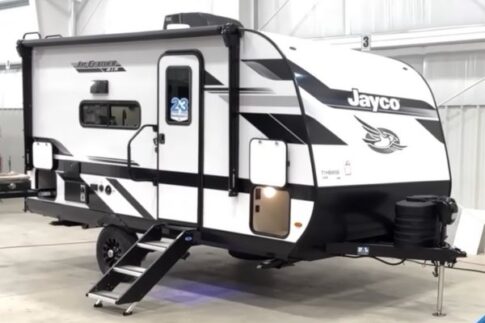
2026 Jayco Jay Feather Air 16RB—pretty nice!

A small travel trailer usually comes with small-trailer compromises. The 2026 Jayco Jay Feather Air 16RB tries to flip that script with a wide body, a smart layout, and a kitchen that feels bigger than it should. Here, Josh the RV Nerd from Bish’s RV walks through why it works well for a couple, a solo camper, or someone traveling with a pet. Check it out.


FRIDAY THE 13TH SUPERSTITION: If you say, “This setup should only take 10 minutes,” it definitely won’t.


In the RV shop with Dustin
The importance of inspecting your seven-way cord and junction box

In 2022, a class action lawsuit was filed in a Montana federal court against Forest River, Inc. It alleged that all Forest River fifth wheels built between 2002-2022 were equipped with an unsafe wiring system. 50 pages of documents accused the manufacturer of not safely insulating and protecting wires between the towing vehicle’s seven-way cord junction box and an RV’s battery. This can increase the risk of a short and create a hazardous condition. If you own a fifth wheel or travel trailer, your unit is equipped with a seven-way cord and junction box. Continue reading.


AirfilterTiny, portable air purifier is RV-sized
If your RV ever smells a little too much like last night’s dinner or the campground fire pit, this compact air purifier is a hero. It uses a true HEPA filter to trap dust, pollen, smoke, pet dander, and odors, runs whisper-quiet in sleep mode, and is small enough for an RV, car, or bedside table. With simple touch controls and USB-C power, it’s an easy way to keep the air fresh and breathable wherever you park. Check it out.


Our most popular tips for RVers so far this year:

  1. Simple RV gadgets that solve annoying camping problems
  2. The easiest way to find a quality campground or RV park nearby
  3. Our top 10, most-read tips for RVers in 2025
  4. The six critical photos you need to keep on your phone
  5. RV spare parts you should always carry

Article and video
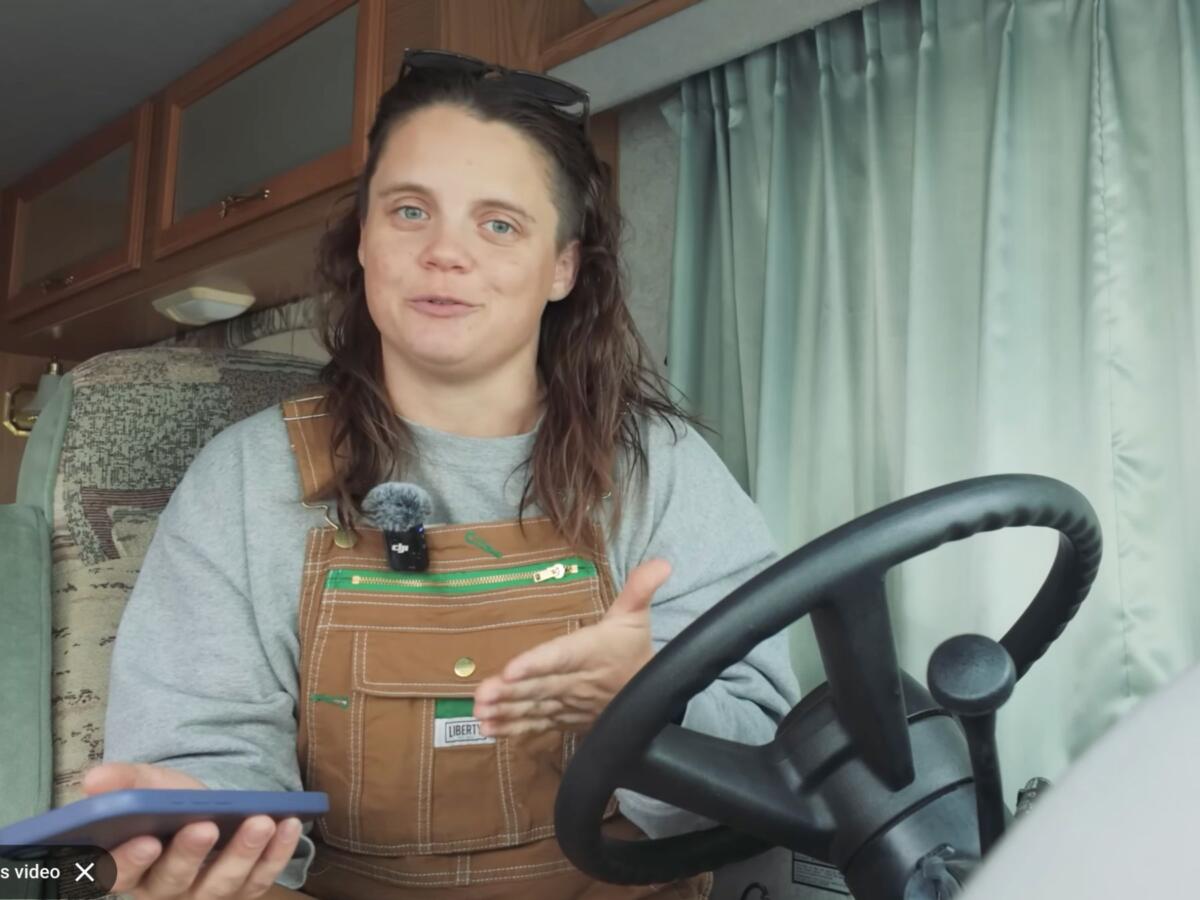
Real RVers share their 20 most useful RV hacks in 20 minutes

Certified RV Tech Emily, aka the RV Repair Woman, put out a call to her followers, and more than 200,000 RVers shared the hacks they wish someone had told them earlier. The best ones aren’t fancy, they just prevent the classic RV headaches: dead batteries, warm fridges, stuck slides, and surprise repair bills. Emily shares the most useful takeaways—you get 20 essential RV hacks in just 20 minutes!


Featured article
Readers speak out: Scary times at unsafe and creepy campsites

By Cheri Sicard
We asked RVtravel.com readers about creepy campsites with this question: Have you ever left a campsite or campground because you felt unsafe or otherwise just creeped out? If so, why? As usual, our readers had a lot to say. However, we were happy with the large number of respondents who had never had this unfortunate experience. Read what many of your fellow RVers said here. (Tip: Listen to your gut.)


Ask Dave
Is Freightliner Custom Chassis Corp. getting into the Class A gas motorhome market?

Dave discusses it here.


You may have missed these recent popular stories…


RV inline tank sanitizerDevice keeps fresh water tank clean
Tony Barthel writes: “The RV Inline Sanitizer is the simplest of solutions. It’s essentially a reservoir in which you put bleach and then use a source hose and a delivery hose to fill your fresh water tank. The sanitizer effectively adds the bleach as you fill the tank. It is truly that simple.” Read more about this nifty device here.


Reader poll
Do you swim in campground pools?

Respond here.


Are ye ol’ eyes giving you problems? Is the small type getting too small to read? (It happens to the best of us.) This will save your day.


Quick tip
Drive straight and slow over speed bumps

Try to hit speed bumps straight on (both wheels over at the same time) and very slowly. If you drive over them at an angle (one wheel over slightly ahead of the other), your coach will rock back and forth, from side to side, especially in the back. Even going dead slow (creeping), driving over the speed bumps at an angle may cause the coach to rock enough to actually cause things to fly out of the upper cabinets! This is true with the small speed bumps, too. —From Ron Jones, About RVing.


Screenshot
Photo credit: The Pierce-Arrow Society

THE MORE YOU KNOW… The first RV ever mass-produced was the Pierce-Arrow Touring Landau in 1910.


Website of the day

BBC Travel: Places that don’t belong
This section on the BBC Travel website is fun to explore. See places that just seem a little… well, oddly placed, around the world.


Trivia

When it comes to fast-food burger restaurants, McDonald’s leads its top rivals by a long shot. The average McDonald’s location in 2024 took in $4 million a year in sales compared to Wendy’s $2.1 million and Burger King’s $1.6 million.


Readers’ pets of the day

Tired 79efb20d01292c742d877636948573d4“Our Mylo (Shih Tzu, age 10) and his cousin, Chloe (Golden Retriever, age 11), at the end of a long, tough day.” —Richard Pendleton

Send us a photo of your pet with a short description. No blurry photos and please do not submit your photo more than once. Thanks!

RVing with Dogs group on Facebook. You’ll love it.


? MYSTERY PRODUCT OF THE DAY ?
We think it’s VERY important that every single RVer who does this has one of these! In fact, it’s so important that everyone who does this, whether they’re an RVer or not, should have one! Trust us. Please?


FINISHED READING THIS NEWSLETTER? Great job! Now you can move on to yesterday’s brand-new Great RV Accessories newsletter—filled with all your RV gadget hopes and dreams!


Leave here with a laugh


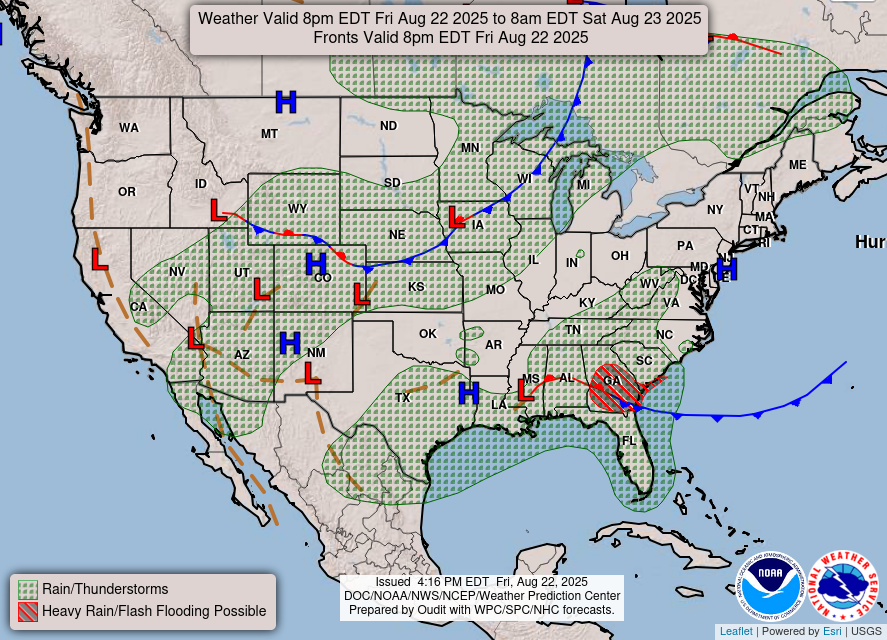
Today’s weather forecast across the nation
THIS MAP UPDATES TWICE A DAY

Visit Current National Radar Weather Map


Did you miss the latest RV Travel Newsletter? If so, read it here.
Oh, and if you missed the Latest News for RVers, make sure to catch up here.


If you shop at Amazon.com we’d appreciate you using this link. We get an itty bitty commission if you buy something, but they add up and help us pay our bills (most importantly our hard-working writers!). 


RVtravel.com All-Star Team

Click here for information about our staff and how to contact us.

WHY WE ASK FOR DONATIONS INSTEAD OF SELLING SUBSCRIPTIONS.

Our policy on using artificial intelligence.

Is Freightliner Custom Chassis Corp. getting into the Class A gas motorhome market?

Earlier I posted an article regarding Ford discontinuing the F53 chassis and the impact it would have on the Class A gas motorhome market. It generated a lot of discussion—both positive and negative.

Freightliner releases a statement

On March 10, 2026, Freightliner Custom Chassis Corp. (FCCC) released a statement that they were developing a chassis with Roush Power Systems utilizing a Chevrolet 6.6L gas engine. RVtravel.com reader Mikal beat me to the punch in the comments, as I was asked by FCCC not to post this until after the announcement was made official.

The press release was featured in both RVBusiness and RV PRO with the following statements:

FCCC, Roush Power Systems Collaborate for Next-Gen Gas Engine

Freightliner Custom Chassis Corp. (FCCC) announced a new collaboration with Roush on the development of the next-generation 6.6L gas engine.

Through the new agreement, FCCC will work with Roush Power Systems, a recently formed division of Roush, to integrate the new GM 6.6L gas engine into its chassis products across a range of applications and markets. The exclusive agreement will ensure these new engine products are designed to meet future requirements for emissions and engine compliance, FCCC said in a release.

“This partnership brings together two of the most respected and renowned names in commercial innovation and expertise,” said Akbar Ghous, vice president of sales and marketing for FCCC. “And it signifies our tireless commitment to the walk-in van market, while also providing us the enhanced ability to explore the deployment of this engine in additional vocations moving forward.”

By combining world-class powertrains and FCCC’s legendary chassis with Roush’s decades of engineering expertise, the team will deliver turn-key certified power systems for a range of applications, including walk-in van, shuttle bus and trolley, FCCC said.

“We’re thrilled to continue growing the capabilities and impact of Roush Power Systems,” said Tom Patterson, general manager for Roush Power Systems. “Our development agreement with DTNA proves that we are uniquely positioned to support industry-leading OEMs and scale new trucking solutions in global markets. As we celebrate our 50th year as a company, our goal is to build on Roush’s legacy of delivering commercialized solutions and empower innovation over the next 50 years and beyond.”

My research

According to my research, the Chevrolet 6.6L engine is known as the L8T and features 401 hp and 464 lb-ft of torque. It has been used in the Chevy Silverado 2500 and 3500 truck series paired with the Allison 10-speed transmission.

The Silverado specs list an 18,700 lb. towing capacity. However, we have found there are several variables when it comes to towing such as payload, hitch weight, Gross Combined Weight Rating (GCWR) and others.

There are no specs yet on the new offering as to Gross Vehicle Weight Rating (GVWR) or wheelbase. The release did not list the RV market. However, it was sent to two top RV publications. All indications point to an RV chassis offering—that is, “IF” there is a Class A gas market in the future! According to my contact at FCCC, it is part of the program.


 You might also enjoy these posts from Dave 

DAVE HAS ANSWERED MORE THAN 1,000 readers’ maintenance and repair questions. Read a directory here. There is so much to learn!


Dave Solberg is a leading expert in the RV industry and the author of the “RV Handbook.”

HAVE A QUESTION FOR DAVE?

Send your inquiries to him using the form below.

Name
Drag & Drop Files, Choose Files to Upload

RVDT2860

5 ways to improve RV resale value

By Cheri Sicard
One of our favorite YouTubers, Duane from the RV Inspection And Care YouTube channel, is here with an important video for anyone who ever hopes to sell their RV. His five ways to improve the RV resale value of your rig can be an invaluable aid in getting the most you can when it comes time to sell.

Don’t feel like watching the video? Keep reading—I’ll break it down for you.

The top 5 ways to maintain your RV resale value

#1 Fix and maintain your RV regularly: Buyers will pay more for an RV that is in really good condition. It’s just common sense. Especially be sure to repair leaks in joints and seals: This is essential for keeping damaging water out of the RV. Be sure to watch the video as Duane shows what people are looking for regarding water damage when buying an RV. Duane says it’s a good idea to keep a regular maintenance schedule checklist.

# 2 Keep good records: Keep good records of all the repairs and maintenance you have ever done on the rig. That way, you can prove its value. Here’s the maintenance log book we recommend.

#3 Keep your RV clean inside and out: Make sure your RV looks clean and well-maintained. Duane says the appearance of your RV can add thousands of dollars to its selling price. Most people especially neglect the exterior, so be sure to watch the video for Duane’s tips on how to care for yours. Be sure to also treat seals and other rubber parts regularly with a UV inhibitor like this one. Inside the RV, pay special attention to the carpet.

#4 Protect your RV while in storage: If you are not a full-time RVer, you are going to want to take extra steps to protect your rig while it is in storage. Keep it inside if possible or, at a minimum, covered to protect from UV damage. Depending on where you store your RV, humidity may also be a factor you need to deal with. If you are in a humid climate, a dehumidifier is suggested to protect against mold.

#5 Keep renovations reasonable: Not everyone has the same tastes or needs. Therefore, if you plan to sell the RV down the road, try to make changes or renovations that will appeal to the greatest percentage of potential buyers. Believe it or not, not everyone will want a Barbie pink RV.

Duane also suggests that if you do major renovations, such as removing the dinette, keep the dinette you removed so it can be put back in should the new buyer desire.

These upgrades will pay off

Duane ends the video with some upgrades you could do that will add monetary value to your RV. He says these upgrades will pay off:

• Upgrading the mattress

• Installing a better toilet

• Upgrading the kitchen appliances

I would add solar capabilities, an inverter, and lithium batteries to that list.

Do you have other tips to help maintain or improve the resale value of your RV? Be sure to drop them in the comments below.

RELATED

RVDT2860

Real RVers share their 20 most useful RV hacks in 20 minutes

0

By Cheri Sicard
Certified RV Tech Emily, aka the RV Repair Woman, put out a call to her followers, and more than 200,000 RVers shared the hacks they wish someone had told them earlier. The best ones aren’t fancy, they just prevent the classic RV headaches: dead batteries, warm fridges, stuck slides, and surprise repair bills.

In the video at the end of this post, Emily shares the most useful takeaways, explained in simple English so they’re easy to use on the next trip. You get 20 essential RV hacks in just 20 minutes!

Storage and fuel – keep the engine and generator ready to run

  • For motorhomes going into storage for more than three months, Emily recommends adding Sea Foam (a gas stabilizer) to the gas tank. It’s easy to find at auto parts stores like O’Reilly’s or AutoZone, and it helps keep fuel from going bad.
  • There’s also a generator twist that catches people off guard. Gas can go bad faster in smaller amounts, so generator fuel issues can show up before the main tank has trouble. After adding stabilizer to the main tank, running the generator for about 15 minutes helps move treated fuel through the generator system. That one small step can save a stressful “won’t start” moment later.

Cold drinks and daily comfort: small upgrades that feel big

  • A countertop ice maker came up again and again. Absorption fridges (the ones that run on electric or propane) can struggle to make solid ice, especially when it’s over about 85° F outside. A small icemaker can help in three ways: reliable ice for drinks, extra freezer space, and a bag of ice in the fridge on hot days to help temps stay down.
  • A simple rug on the floor also gets surprising praise. It adds insulation, helps in winter, and makes mornings less brutal on bare feet.
  • Another comfort fix is adding extra cup holders from auto parts stores. The goal is simple: more stable places to put drinks around the RV.

Towing and power: safety and “why won’t this work” problems

  • One safety tip stands out: Get more truck than expected. Overloaded trucks can sag in the back, which takes weight off the front tires. Emily notes that about 80% of braking power comes from the front tires, so losing that grip matters. She also warns against relying on a salesperson’s opinion, and reminds buyers that sticker weights don’t include personal gear.
  • Power confusion causes a lot of needless service calls. DC power (from batteries) runs lights, slides, leveling jacks, and propane appliances. AC power (from shore power, a generator, or an inverter with a large solar setup) runs outlets, microwaves, and often the air conditioner and electric water heater settings. If outlets and the microwave quit but the lights still work, checking the campground pedestal makes sense.

Quick fixes and space savers that reduce everyday friction

  • A shower tension rod can make the shower feel bigger when needed and smaller when it’s not. For taller RVers, a command hook can help move the shower head higher.
  • Tension rods also do a lot beyond showers, from holding items in place to creating a quick drying spot. Read even more ideas here.
  • If doors need to be slammed, the striker plate (the latch plate) may just need a minor adjustment. Loosening screws, shifting it slightly, and tightening again often fixes the issue. Some people add a small amount of Vaseline to help the latch glide.
  • Turkish towels save space while still drying well, and they don’t trap sand like thick terry cloth.

Buying, maintenance, and repairs: Prevent the expensive surprises

  • Before leaving a dealership, checking slide seals can prevent future leaks. The rubber flap around the slide should move correctly as the slide travels. A quick test helps: Turn off interior lights and look along the slide edge for daylight. If light gets in, water and bugs can too. Emily often recommends a third-party inspection when possible.
  • For long stays, some RVers hire a porta-potty pumping company to dump tanks on-site (often around $80 to $115). It can help people who can’t easily break camp.
  • Budgeting matters because repairs are normal. Lead-acid batteries may need replacement every 2 to 3 years, sooner in hot climates, and a single mobile service call can run close to $500 in some areas.
  • Emily also points out that many “RV parts” are standard items with a markup. PEX plumbing fittings, for example, are commonly available at hardware stores. A practical tip from her own experience: When asking for help in-store, focusing on the part needed (not saying it’s for an RV) can avoid confusion.
  • Two more handy items round out the list. VHB tape is a very strong double-sided tape that holds up outdoors, but anything stuck with it should be treated as close to permanent. And getting on the roof twice a year to check Dicor sealant for cracks wider than a thumbnail can prevent major water damage and roof replacement costs.

Tanks and emergency exits: Avoid messes and know the override

  • One commenter suggested leaving the gray tank open all the time, but the RV Repair Woman says her preferred approach is to open the gray briefly at first to check for leaks, close it, dump black, then dump gray to rinse the hose. That leaves less black residue in the line.
  • For stuck slides, Emily recommends learning the manual override before an emergency happens. Many systems allow a drill and socket to turn the motor or pump manually, once the access point is found. She notes that Lippert makes many slide and leveling systems, and their tutorials can be a helpful reference. Learning that process now, then writing it down, can prevent getting stranded.

These hacks all point to the same lesson: RV life gets easier when small problems get handled early. Fuel stabilizer, roof checks, power basics, and a plan for dumping or overrides can prevent the stressful stuff.

If you have other useful RV hacks, be sure to share them in the comments below.

RELATED

RVDT2860

Do you swim in campground pools?

17

It’s a hot summer day (ahhhh, doesn’t that sound nice—if only!) and you pull into a new campground. Your site faces the public swimming pool—a welcome amenity on a hot day like today. Do you… jump right in? Do you go dip your toes just to test out the waters? Or do you stay far, far away?

For some, the pool is the first stop after setting up camp. There’s nothing like cooling off in the water after a long drive, especially when the sun is beating down.

Families with kids often find the campground pool to be a lifesaver—an easy way to keep little ones entertained for hours. Others might see it as a chance to socialize, meeting fellow campers while floating around or lounging poolside with a cold drink.

On the other hand, not everyone is eager to dive in. Some campers avoid public pools, preferring privacy or the more natural option of a nearby lake or river. Concerns about cleanliness, crowds, or noisy splashing can be a deterrent, especially if the pool is packed with energetic kids. Then there’s the question of temperature—will it be refreshingly cool or an uncomfortably warm bath?

And let’s not forget the in-between crowd—those who enjoy a quick dip but aren’t the type to spend hours poolside.

Maybe you prefer an evening swim when the sun isn’t as intense, or perhaps you only use the pool if it’s particularly clean and well-maintained. Some RVers even travel with their own inflatable pools, ensuring they can cool off without setting foot in the public one.

After you vote, please leave a comment and be more specific about your campground pool-using habits. Thanks!

RELATED

RVDT2860