Home Blog Page 74

Tech startup plans debut of new ‘smart’ RV trailer with weeks of off-grid power

Another tech startup says it wants to reinvent the travel trailer. China-based company Skydream announced plans to introduce its “next-generation smart RV technology” at a Silicon Valley event later this month. The company says it hopes to begin U.S. deliveries of its travel trailer by December 2026.

That’s the promise, at least.

What Skydream is proposing fits into a growing trend: startups that approach RVs more like electric vehicles or smart homes than traditional campers. Big batteries, lots of solar, and software-controlled systems are the centerpiece of the design.

Some of the ideas sound intriguing. Others raise questions RVers will want answered before getting too excited.

The big claim: a massive battery system

One specification in the announcement jumps out immediately. Skydream says its trailer could carry a lithium-iron-phosphate battery system ranging from about 45 to 85 kilowatt-hours.

To put that into RV perspective—that’s huge.

Most RV lithium upgrades fall somewhere in the 3–10 kWh range, with high-end systems occasionally pushing higher. The numbers Skydream is talking about are closer to the battery capacity of an electric car.

If those figures hold up, the trailer could theoretically run major appliances—including air conditioning—for extended periods without a generator.

The company also says the trailer could carry up to 2,200 watts of solar and remain off-grid for as long as two weeks.

Those numbers sound impressive. But they’ll depend heavily on real-world conditions—things like weather, usage, and how large the trailer actually is.

Automation and “smart” features

Skydream is also leaning heavily into technology. The company describes a trailer equipped with automated leveling, voice-controlled interior systems, and electronic stability features designed to assist while towing.

The press release also mentions concepts like parking assistance and automated hitching systems.

Exactly how those would work hasn’t been explained yet. If they prove reliable, features like that could make towing less intimidating for newer RVers.

But for now, they remain claims rather than demonstrated capabilities.

A growing wave of tech-driven RV startups

Skydream is part of a broader movement in the RV world. In the past few years, several technology-focused companies have announced high-tech trailers built around large batteries, solar power, and advanced electronics.

The idea is simple enough: Eliminate generators, reduce propane use, and allow longer off-grid stays.

Traditional RV manufacturers have begun experimenting with similar systems, but most still rely on relatively small battery banks and conventional power setups.

Startups, on the other hand, are trying to leap several generations ahead all at once.

The unanswered questions

For now, there’s still a lot we don’t know about the Skydream trailer.

The announcement does not say:

  • How much the trailer will cost.
  • How heavy it will be.
  • What size or floorplans it will offer.
  • Whether there will be a U.S. dealer network.
  • Where the trailers will be built.

Weight could be especially important. A battery pack large enough to store 45–85 kWh of electricity could add significant mass, which would directly affect what tow vehicles could handle it.

There’s also the reality that many RV startups struggle to move from prototype to production. Designing a flashy concept is one thing. Building RVs at scale—and supporting them with parts and service—is another challenge entirely.

Will it make it to campgrounds?

Skydream says it plans to reveal more details at its Silicon Valley debut on March 23.

Until then, the trailer exists mostly on paper.

If the company can deliver on even part of what it promises—especially the large battery capacity—it could point toward where some RV technology is heading.

But RVers have seen plenty of futuristic RV concepts over the years. The real test isn’t the press release…

It’s whether the thing actually shows up at a campground.

RELATED

RVT1252b

Is RV travel really cheaper? The industry says yes; many RVers say it depends

Is RV travel cheaper than other types of vacations? The RV industry says yes. According to the RV Industry Association (pdf), a family of four can vacation by RV for 27% to 60% less than trips that rely on hotels, flights, and restaurant meals.

The claim appears frequently in industry reports and promotional materials and is often cited as one of the major advantages of RV travel.

But ask experienced RVers about that claim, and you’re likely to hear a familiar answer.

It depends.

Where the savings are supposed to come from

The RV industry’s argument isn’t entirely without merit. RV travel can reduce several expenses that typically drive up the cost of traditional vacations.

For example, families traveling by RV may avoid:

  • Airline tickets
  • Rental cars
  • Hotel stays
  • Restaurant meals for every meal
  • Pet boarding fees

Instead, RV travelers often cook their own food, sleep in their own beds, and bring along everything they need for the trip.

For families traveling together—especially those with children—the savings can add up quickly.

And for RVers who already own their rigs and stay in reasonably priced campgrounds, the math can work out favorably.

Where the math starts to get fuzzy

Where many RVers start to question the industry’s claim is in the costs that are harder to capture in simple vacation comparisons.

For starters, there’s the RV itself.

Even a modest travel trailer can cost tens of thousands of dollars. Larger fifth wheels and motorhomes can run far higher. When purchase price, financing, insurance, and depreciation are factored in, the financial picture becomes more complicated.

Fuel is another major variable.

Large motorhomes commonly average 8 to 10 miles per gallon, and heavy tow vehicles pulling trailers aren’t much better. Long-distance trips can burn through a lot of fuel in a hurry.

Then there are campground fees. Once known for modest prices, many campgrounds now charge:

  • $40 to $80 per night in many areas
  • $100 or more at some popular destinations

Maintenance adds another layer. RV owners quickly learn about the ongoing costs of:

  • Tires
  • Roof sealing
  • Appliance repairs
  • Routine servicing

Those costs rarely appear in simple vacation comparisons.

A clue hidden in the industry’s own numbers

Interestingly, the RV industry’s own shipment data offers a hint about how travelers are responding to those financial realities.

In 2025, roughly 342,000 RVs were shipped to dealers in the United States, according to the RV Industry Association. Of those, about 89% were towable RVs, such as travel trailers and fifth wheels. Only about 11% were motorhomes.

That imbalance likely isn’t accidental.

Towable RVs typically cost far less than motorhomes and can be pulled by vehicles many families already own. For buyers trying to keep RV travel affordable, trailers often represent the easier entry point.

In other words, the market itself may be quietly adjusting to the same cost pressures RVers talk about around campfires.

For many RVers, it’s not really about the money

Even so, many RV travelers say the real appeal of RVing has never been purely financial.

Instead, they point to advantages that don’t fit neatly into a cost comparison.

RV travel allows people to:

  • Bring pets along
  • Sleep in their own beds
  • Cook their own meals
  • Change travel plans at a moment’s notice
  • Stay close to national parks and outdoor destinations

For many RVers, those benefits outweigh the question of whether the trip costs a little more—or a little less—than another kind of vacation.

The bottom line

RV travel can be cheaper than other types of vacations. But the answer depends heavily on factors such as:

  • The type of RV
  • How often it’s used
  • Fuel prices
  • Campground choices

In other words, the industry’s claim isn’t necessarily wrong.

It’s just not the whole story.

And as many seasoned RVers will tell you, the real value of RV travel isn’t always measured in dollars. It’s measured in places visited, sunsets watched, and the freedom to go wherever the road leads next.

Many RVers eventually reach the same conclusion.
The real question isn’t always whether RV travel is cheaper—
It’s whether it’s better.

RELATED

RVT1252b

RV Daily Tips. Friday, March 13, 2026

America’s Original RV Newsletter. Since 2001
Issue 2860 • New issue every weekday
If you find this newsletter helpful, please consider supporting our staff’s work in producing it with a donation of your choice. Thank you very much!


Today’s thought

“Do you wish me a good morning, or mean that it is a good morning whether I want it or not; or that you feel good this morning; or that it is a morning to be good on?” ―J.R.R. Tolkien


Need an excuse to celebrate? Today is National Good Samaritan Day! Do something good for somebody today, please!

On this day in history: 1969 – Apollo 9 returns safely to Earth after testing the Lunar Module.


Tip of the day
5 ways to improve RV resale value

By Cheri Sicard
One of our favorite YouTubers, Duane from the RV Inspection and Care YouTube channel, is here with an important video for anyone who ever hopes to sell their RV. His five ways to improve the RV resale value of your rig can be an invaluable aid in getting the most you can when it comes time to sell. Don’t feel like watching the video? Keep reading, I’ll break it down for you.


RV review
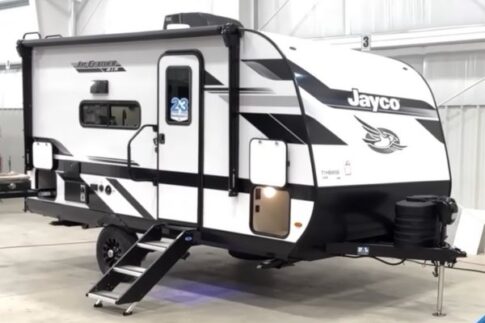
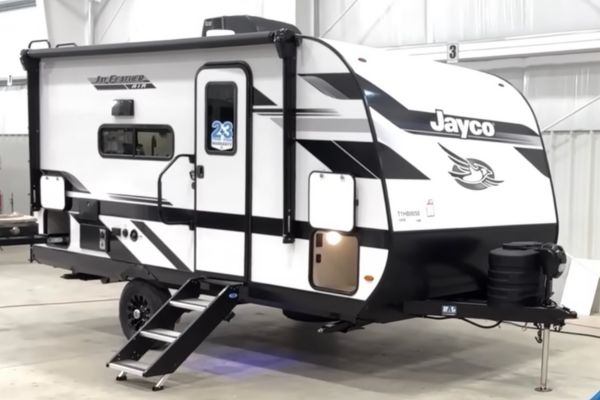
2026 Jayco Jay Feather Air 16RB—pretty nice!

A small travel trailer usually comes with small-trailer compromises. The 2026 Jayco Jay Feather Air 16RB tries to flip that script with a wide body, a smart layout, and a kitchen that feels bigger than it should. Here, Josh the RV Nerd from Bish’s RV walks through why it works well for a couple, a solo camper, or someone traveling with a pet. Check it out.


FRIDAY THE 13TH SUPERSTITION: If you say, “This setup should only take 10 minutes,” it definitely won’t.


In the RV shop with Dustin
The importance of inspecting your seven-way cord and junction box

In 2022, a class action lawsuit was filed in a Montana federal court against Forest River, Inc. It alleged that all Forest River fifth wheels built between 2002-2022 were equipped with an unsafe wiring system. 50 pages of documents accused the manufacturer of not safely insulating and protecting wires between the towing vehicle’s seven-way cord junction box and an RV’s battery. This can increase the risk of a short and create a hazardous condition. If you own a fifth wheel or travel trailer, your unit is equipped with a seven-way cord and junction box. Continue reading.


AirfilterTiny, portable air purifier is RV-sized
If your RV ever smells a little too much like last night’s dinner or the campground fire pit, this compact air purifier is a hero. It uses a true HEPA filter to trap dust, pollen, smoke, pet dander, and odors, runs whisper-quiet in sleep mode, and is small enough for an RV, car, or bedside table. With simple touch controls and USB-C power, it’s an easy way to keep the air fresh and breathable wherever you park. Check it out.


Our most popular tips for RVers so far this year:

  1. Simple RV gadgets that solve annoying camping problems
  2. The easiest way to find a quality campground or RV park nearby
  3. Our top 10, most-read tips for RVers in 2025
  4. The six critical photos you need to keep on your phone
  5. RV spare parts you should always carry

Article and video
Real RVers share their 20 most useful RV hacks in 20 minutes

Certified RV Tech Emily, aka the RV Repair Woman, put out a call to her followers, and more than 200,000 RVers shared the hacks they wish someone had told them earlier. The best ones aren’t fancy, they just prevent the classic RV headaches: dead batteries, warm fridges, stuck slides, and surprise repair bills. Emily shares the most useful takeaways—you get 20 essential RV hacks in just 20 minutes!


Featured article
Readers speak out: Scary times at unsafe and creepy campsites

By Cheri Sicard
We asked RVtravel.com readers about creepy campsites with this question: Have you ever left a campsite or campground because you felt unsafe or otherwise just creeped out? If so, why? As usual, our readers had a lot to say. However, we were happy with the large number of respondents who had never had this unfortunate experience. Read what many of your fellow RVers said here. (Tip: Listen to your gut.)


Ask Dave
Is Freightliner Custom Chassis Corp. getting into the Class A gas motorhome market?

Dave discusses it here.


You may have missed these recent popular stories…


RV inline tank sanitizerDevice keeps fresh water tank clean
Tony Barthel writes: “The RV Inline Sanitizer is the simplest of solutions. It’s essentially a reservoir in which you put bleach and then use a source hose and a delivery hose to fill your fresh water tank. The sanitizer effectively adds the bleach as you fill the tank. It is truly that simple.” Read more about this nifty device here.


Reader poll
Do you swim in campground pools?

Respond here.


Are ye ol’ eyes giving you problems? Is the small type getting too small to read? (It happens to the best of us.) This will save your day.


Quick tip
Drive straight and slow over speed bumps

Try to hit speed bumps straight on (both wheels over at the same time) and very slowly. If you drive over them at an angle (one wheel over slightly ahead of the other), your coach will rock back and forth, from side to side, especially in the back. Even going dead slow (creeping), driving over the speed bumps at an angle may cause the coach to rock enough to actually cause things to fly out of the upper cabinets! This is true with the small speed bumps, too. —From Ron Jones, About RVing.


Screenshot
Photo credit: The Pierce-Arrow Society

THE MORE YOU KNOW… The first RV ever mass-produced was the Pierce-Arrow Touring Landau in 1910.


Website of the day

BBC Travel: Places that don’t belong
This section on the BBC Travel website is fun to explore. See places that just seem a little… well, oddly placed, around the world.


Trivia

When it comes to fast-food burger restaurants, McDonald’s leads its top rivals by a long shot. The average McDonald’s location in 2024 took in $4 million a year in sales compared to Wendy’s $2.1 million and Burger King’s $1.6 million.


Readers’ pets of the day

Tired 79efb20d01292c742d877636948573d4“Our Mylo (Shih Tzu, age 10) and his cousin, Chloe (Golden Retriever, age 11), at the end of a long, tough day.” —Richard Pendleton

Send us a photo of your pet with a short description. No blurry photos and please do not submit your photo more than once. Thanks!

RVing with Dogs group on Facebook. You’ll love it.


? MYSTERY PRODUCT OF THE DAY ?
We think it’s VERY important that every single RVer who does this has one of these! In fact, it’s so important that everyone who does this, whether they’re an RVer or not, should have one! Trust us. Please?


FINISHED READING THIS NEWSLETTER? Great job! Now you can move on to yesterday’s brand-new Great RV Accessories newsletter—filled with all your RV gadget hopes and dreams!


Leave here with a laugh


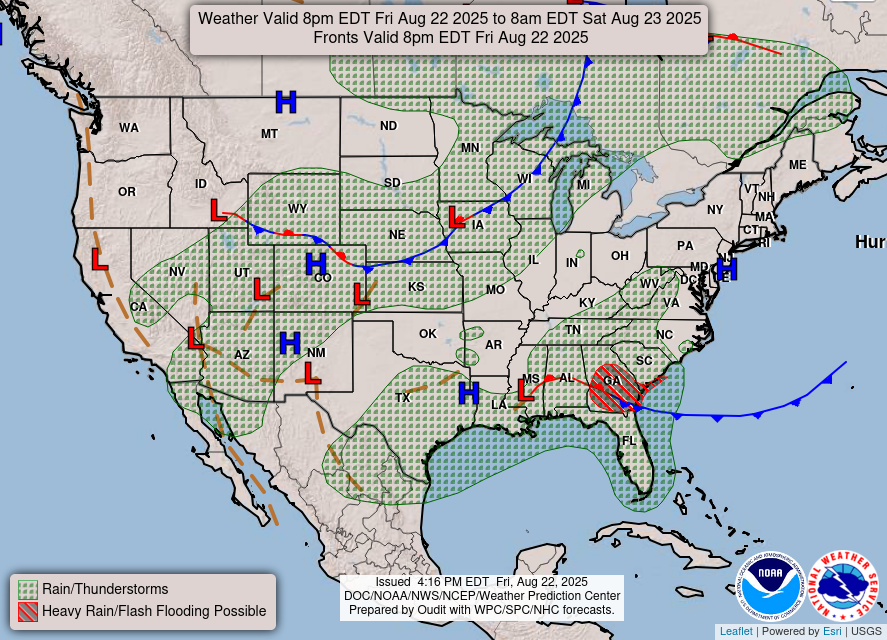
Today’s weather forecast across the nation
THIS MAP UPDATES TWICE A DAY

Visit Current National Radar Weather Map


Did you miss the latest RV Travel Newsletter? If so, read it here.
Oh, and if you missed the Latest News for RVers, make sure to catch up here.


If you shop at Amazon.com we’d appreciate you using this link. We get an itty bitty commission if you buy something, but they add up and help us pay our bills (most importantly our hard-working writers!). 


RVtravel.com All-Star Team

Click here for information about our staff and how to contact us.

WHY WE ASK FOR DONATIONS INSTEAD OF SELLING SUBSCRIPTIONS.

Our policy on using artificial intelligence.

Is Freightliner Custom Chassis Corp. getting into the Class A gas motorhome market?

Earlier I posted an article regarding Ford discontinuing the F53 chassis and the impact it would have on the Class A gas motorhome market. It generated a lot of discussion—both positive and negative.

Freightliner releases a statement

On March 10, 2026, Freightliner Custom Chassis Corp. (FCCC) released a statement that they were developing a chassis with Roush Power Systems utilizing a Chevrolet 6.6L gas engine. RVtravel.com reader Mikal beat me to the punch in the comments, as I was asked by FCCC not to post this until after the announcement was made official.

The press release was featured in both RVBusiness and RV PRO with the following statements:

FCCC, Roush Power Systems Collaborate for Next-Gen Gas Engine

Freightliner Custom Chassis Corp. (FCCC) announced a new collaboration with Roush on the development of the next-generation 6.6L gas engine.

Through the new agreement, FCCC will work with Roush Power Systems, a recently formed division of Roush, to integrate the new GM 6.6L gas engine into its chassis products across a range of applications and markets. The exclusive agreement will ensure these new engine products are designed to meet future requirements for emissions and engine compliance, FCCC said in a release.

“This partnership brings together two of the most respected and renowned names in commercial innovation and expertise,” said Akbar Ghous, vice president of sales and marketing for FCCC. “And it signifies our tireless commitment to the walk-in van market, while also providing us the enhanced ability to explore the deployment of this engine in additional vocations moving forward.”

By combining world-class powertrains and FCCC’s legendary chassis with Roush’s decades of engineering expertise, the team will deliver turn-key certified power systems for a range of applications, including walk-in van, shuttle bus and trolley, FCCC said.

“We’re thrilled to continue growing the capabilities and impact of Roush Power Systems,” said Tom Patterson, general manager for Roush Power Systems. “Our development agreement with DTNA proves that we are uniquely positioned to support industry-leading OEMs and scale new trucking solutions in global markets. As we celebrate our 50th year as a company, our goal is to build on Roush’s legacy of delivering commercialized solutions and empower innovation over the next 50 years and beyond.”

My research

According to my research, the Chevrolet 6.6L engine is known as the L8T and features 401 hp and 464 lb-ft of torque. It has been used in the Chevy Silverado 2500 and 3500 truck series paired with the Allison 10-speed transmission.

The Silverado specs list an 18,700 lb. towing capacity. However, we have found there are several variables when it comes to towing such as payload, hitch weight, Gross Combined Weight Rating (GCWR) and others.

There are no specs yet on the new offering as to Gross Vehicle Weight Rating (GVWR) or wheelbase. The release did not list the RV market. However, it was sent to two top RV publications. All indications point to an RV chassis offering—that is, “IF” there is a Class A gas market in the future! According to my contact at FCCC, it is part of the program.


 You might also enjoy these posts from Dave 

DAVE HAS ANSWERED MORE THAN 1,000 readers’ maintenance and repair questions. Read a directory here. There is so much to learn!


Dave Solberg is a leading expert in the RV industry and the author of the “RV Handbook.”

HAVE A QUESTION FOR DAVE?

Send your inquiries to him using the form below.

Name
Drag & Drop Files, Choose Files to Upload

RVDT2860

5 ways to improve RV resale value

By Cheri Sicard
One of our favorite YouTubers, Duane from the RV Inspection And Care YouTube channel, is here with an important video for anyone who ever hopes to sell their RV. His five ways to improve the RV resale value of your rig can be an invaluable aid in getting the most you can when it comes time to sell.

Don’t feel like watching the video? Keep reading—I’ll break it down for you.

The top 5 ways to maintain your RV resale value

#1 Fix and maintain your RV regularly: Buyers will pay more for an RV that is in really good condition. It’s just common sense. Especially be sure to repair leaks in joints and seals: This is essential for keeping damaging water out of the RV. Be sure to watch the video as Duane shows what people are looking for regarding water damage when buying an RV. Duane says it’s a good idea to keep a regular maintenance schedule checklist.

# 2 Keep good records: Keep good records of all the repairs and maintenance you have ever done on the rig. That way, you can prove its value. Here’s the maintenance log book we recommend.

#3 Keep your RV clean inside and out: Make sure your RV looks clean and well-maintained. Duane says the appearance of your RV can add thousands of dollars to its selling price. Most people especially neglect the exterior, so be sure to watch the video for Duane’s tips on how to care for yours. Be sure to also treat seals and other rubber parts regularly with a UV inhibitor like this one. Inside the RV, pay special attention to the carpet.

#4 Protect your RV while in storage: If you are not a full-time RVer, you are going to want to take extra steps to protect your rig while it is in storage. Keep it inside if possible or, at a minimum, covered to protect from UV damage. Depending on where you store your RV, humidity may also be a factor you need to deal with. If you are in a humid climate, a dehumidifier is suggested to protect against mold.

#5 Keep renovations reasonable: Not everyone has the same tastes or needs. Therefore, if you plan to sell the RV down the road, try to make changes or renovations that will appeal to the greatest percentage of potential buyers. Believe it or not, not everyone will want a Barbie pink RV.

Duane also suggests that if you do major renovations, such as removing the dinette, keep the dinette you removed so it can be put back in should the new buyer desire.

These upgrades will pay off

Duane ends the video with some upgrades you could do that will add monetary value to your RV. He says these upgrades will pay off:

• Upgrading the mattress

• Installing a better toilet

• Upgrading the kitchen appliances

I would add solar capabilities, an inverter, and lithium batteries to that list.

Do you have other tips to help maintain or improve the resale value of your RV? Be sure to drop them in the comments below.

RELATED

RVDT2860

Real RVers share their 20 most useful RV hacks in 20 minutes

0

By Cheri Sicard
Certified RV Tech Emily, aka the RV Repair Woman, put out a call to her followers, and more than 200,000 RVers shared the hacks they wish someone had told them earlier. The best ones aren’t fancy, they just prevent the classic RV headaches: dead batteries, warm fridges, stuck slides, and surprise repair bills.

In the video at the end of this post, Emily shares the most useful takeaways, explained in simple English so they’re easy to use on the next trip. You get 20 essential RV hacks in just 20 minutes!

Storage and fuel – keep the engine and generator ready to run

  • For motorhomes going into storage for more than three months, Emily recommends adding Sea Foam (a gas stabilizer) to the gas tank. It’s easy to find at auto parts stores like O’Reilly’s or AutoZone, and it helps keep fuel from going bad.
  • There’s also a generator twist that catches people off guard. Gas can go bad faster in smaller amounts, so generator fuel issues can show up before the main tank has trouble. After adding stabilizer to the main tank, running the generator for about 15 minutes helps move treated fuel through the generator system. That one small step can save a stressful “won’t start” moment later.

Cold drinks and daily comfort: small upgrades that feel big

  • A countertop ice maker came up again and again. Absorption fridges (the ones that run on electric or propane) can struggle to make solid ice, especially when it’s over about 85° F outside. A small icemaker can help in three ways: reliable ice for drinks, extra freezer space, and a bag of ice in the fridge on hot days to help temps stay down.
  • A simple rug on the floor also gets surprising praise. It adds insulation, helps in winter, and makes mornings less brutal on bare feet.
  • Another comfort fix is adding extra cup holders from auto parts stores. The goal is simple: more stable places to put drinks around the RV.

Towing and power: safety and “why won’t this work” problems

  • One safety tip stands out: Get more truck than expected. Overloaded trucks can sag in the back, which takes weight off the front tires. Emily notes that about 80% of braking power comes from the front tires, so losing that grip matters. She also warns against relying on a salesperson’s opinion, and reminds buyers that sticker weights don’t include personal gear.
  • Power confusion causes a lot of needless service calls. DC power (from batteries) runs lights, slides, leveling jacks, and propane appliances. AC power (from shore power, a generator, or an inverter with a large solar setup) runs outlets, microwaves, and often the air conditioner and electric water heater settings. If outlets and the microwave quit but the lights still work, checking the campground pedestal makes sense.

Quick fixes and space savers that reduce everyday friction

  • A shower tension rod can make the shower feel bigger when needed and smaller when it’s not. For taller RVers, a command hook can help move the shower head higher.
  • Tension rods also do a lot beyond showers, from holding items in place to creating a quick drying spot. Read even more ideas here.
  • If doors need to be slammed, the striker plate (the latch plate) may just need a minor adjustment. Loosening screws, shifting it slightly, and tightening again often fixes the issue. Some people add a small amount of Vaseline to help the latch glide.
  • Turkish towels save space while still drying well, and they don’t trap sand like thick terry cloth.

Buying, maintenance, and repairs: Prevent the expensive surprises

  • Before leaving a dealership, checking slide seals can prevent future leaks. The rubber flap around the slide should move correctly as the slide travels. A quick test helps: Turn off interior lights and look along the slide edge for daylight. If light gets in, water and bugs can too. Emily often recommends a third-party inspection when possible.
  • For long stays, some RVers hire a porta-potty pumping company to dump tanks on-site (often around $80 to $115). It can help people who can’t easily break camp.
  • Budgeting matters because repairs are normal. Lead-acid batteries may need replacement every 2 to 3 years, sooner in hot climates, and a single mobile service call can run close to $500 in some areas.
  • Emily also points out that many “RV parts” are standard items with a markup. PEX plumbing fittings, for example, are commonly available at hardware stores. A practical tip from her own experience: When asking for help in-store, focusing on the part needed (not saying it’s for an RV) can avoid confusion.
  • Two more handy items round out the list. VHB tape is a very strong double-sided tape that holds up outdoors, but anything stuck with it should be treated as close to permanent. And getting on the roof twice a year to check Dicor sealant for cracks wider than a thumbnail can prevent major water damage and roof replacement costs.

Tanks and emergency exits: Avoid messes and know the override

  • One commenter suggested leaving the gray tank open all the time, but the RV Repair Woman says her preferred approach is to open the gray briefly at first to check for leaks, close it, dump black, then dump gray to rinse the hose. That leaves less black residue in the line.
  • For stuck slides, Emily recommends learning the manual override before an emergency happens. Many systems allow a drill and socket to turn the motor or pump manually, once the access point is found. She notes that Lippert makes many slide and leveling systems, and their tutorials can be a helpful reference. Learning that process now, then writing it down, can prevent getting stranded.

These hacks all point to the same lesson: RV life gets easier when small problems get handled early. Fuel stabilizer, roof checks, power basics, and a plan for dumping or overrides can prevent the stressful stuff.

If you have other useful RV hacks, be sure to share them in the comments below.

RELATED

RVDT2860

Do you swim in campground pools?

17

It’s a hot summer day (ahhhh, doesn’t that sound nice—if only!) and you pull into a new campground. Your site faces the public swimming pool—a welcome amenity on a hot day like today. Do you… jump right in? Do you go dip your toes just to test out the waters? Or do you stay far, far away?

For some, the pool is the first stop after setting up camp. There’s nothing like cooling off in the water after a long drive, especially when the sun is beating down.

Families with kids often find the campground pool to be a lifesaver—an easy way to keep little ones entertained for hours. Others might see it as a chance to socialize, meeting fellow campers while floating around or lounging poolside with a cold drink.

On the other hand, not everyone is eager to dive in. Some campers avoid public pools, preferring privacy or the more natural option of a nearby lake or river. Concerns about cleanliness, crowds, or noisy splashing can be a deterrent, especially if the pool is packed with energetic kids. Then there’s the question of temperature—will it be refreshingly cool or an uncomfortably warm bath?

And let’s not forget the in-between crowd—those who enjoy a quick dip but aren’t the type to spend hours poolside.

Maybe you prefer an evening swim when the sun isn’t as intense, or perhaps you only use the pool if it’s particularly clean and well-maintained. Some RVers even travel with their own inflatable pools, ensuring they can cool off without setting foot in the public one.

After you vote, please leave a comment and be more specific about your campground pool-using habits. Thanks!

RELATED

RVDT2860

The importance of inspecting your seven-way cord and junction box

By Dustin Simpson
In 2022, a class action lawsuit was filed in a Montana federal court against Forest River, Inc. This lawsuit alleged that all Forest River fifth wheels built between 2002 through 2022 were equipped with an unsafe wiring system.

Fifty pages of documents accused the manufacturer of not safely insulating and protecting wires between the towing vehicle’s seven-way cord junction box and an RV’s battery. This can increase the risk of a short and create a hazardous condition.

The documentation also stated that the units were manufactured without having a fuse or circuit breaker installed to protect the wiring system. Should a short occur between the seven-way junction box and the battery, the unprotected wire will overheat, which can create a fire risk.

If you own a fifth wheel or travel trailer, your unit is equipped with a seven-way cord and junction box. Outside of the risks outlined in the above-mentioned class action lawsuit, poorly installed seven-way cords and/or junction boxes can also cause brake failure.

Inspecting the seven-way cord and junction box

The following pictures were shared with me by one of my Facebook group members. I wanted to share some tips with you to keep you safely on the road.

As you can tell from my sea of red arrows, I am concerned about several items.

• The junction box appears to be held in place by zip ties, instead of being secured in place with fasteners.

• It appears that the seven-way cord is pulled out of the clamp socket. It should have a second metal/rubber clamp to secure it onto the frame.

• There is a lot of wiring that is floating around. It should be covered and secured in place.

Alternative seven-way cord and junction box

If you are looking for an alternative seven-way cord and junction box, THIS is an excellent option. This weatherproof 8-foot cord is connected to a sturdy junction box. This junction box comes with color-marked 7-poles that can be easily identified.

Standard wiring schematic

For the most part, RVs will follow the standard wiring schematic below. But not all 7-pin plugs will be wired according to this same color pattern. Before you start changing wires, confirm the operation of all systems.

  • Red = left turn signal/stop
  • Brown = right turn signal/stop
  • Green = tail lights
  • Blue = electric brakes
  • Yellow = backup/reverse or auxiliary lights
  • Black = 12V battery connector
  • White = ground wire

Know before you go

I hope this serves as a reminder to inspect your junction box and tow cord wiring before you hit the road. Make sure that your cord and junction box are secure and in good shape before traveling. This will ensure your safety and the safety of those behind you.

More from Dustin

Read more of Dustin’s articles here.

Dustin owns and operates California RV Specialists, an independent RV repair shop located in Lodi, CA. He thrives on sharing his knowledge and enthusiasm of RV repair and maintenance with his team, customers, and virtual friends.

RELATED

RVDT2860

2026 Jayco Jay Feather Air 16RB—pretty nice!

A small travel trailer usually comes with small-trailer compromises. The 2026 Jayco Jay Feather Air 16RB tries to flip that script with a wide body, a smart layout, and a kitchen that feels bigger than it should.

In the video at the end of this post, Josh the RV Nerd at Bish’s RV walks through why it works well for a couple, a solo camper, or someone traveling with a pet.

Last year, Jayco had Jay Feather Air and Jay Feather Micro, and plenty of shoppers got stuck asking, “Wait, which one is which?” For 2026, Jayco simplified the naming. It’s just Jay Feather Air now. The bigger point is what changed in the build. This series is a full 8 feet wide, yet it still lands in a weight range that feels realistic for a lot of tow vehicles.

Interior

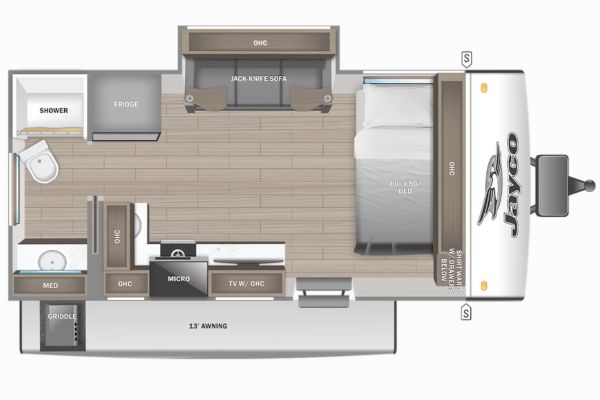
Jayco Jay Feather 16FBS travel trailer floorplan

The 16RB sets up like a classic cozy camper. The bed is up front, the living space sits in the middle, and the full rear bath takes the back wall.

The front bed is an east-west true queen at 60 x 80 inches. That matters because plenty of small trailers use shorter “RV queen” sizes. In this one, Jayco sticks to the standard. Shoppers who want a north-south bed can find other Jayco options, but they tend to be longer, heavier, and cost more.

A pivoting smart TV can swing to face the bed.

This floor plan uses a very shallow Schwintek slide for the sofa. It’s not a deep, heavy slide box, and that’s the point. The result is a surprising sense of open floor space for a trailer this short.

The sofa also folds down into a small sleeper, but there’s no dinette swap on this layout. Since there isn’t a built-in dining spot, Jayco includes small swivel stands for a place to set a plate or laptop.

Josh also shows the trailer with the slide pulled in, and it’s still usable. That raises a real question some buyers will care about: Would it be worth giving up the slide to save weight and cost? Personally, I vote yes, as I would prefer to forgo the hassles and maintenance of a slide, and this slide really does not add much value, in my opinion.

Kitchen in the Jayco Jay Feather Air 16RB

The kitchen counter space is the kind of thing people notice right away, because it’s not common in a small single-axle trailer.

A 10-cubic-foot 12-volt compressor fridge stays in the mix here, instead of shrinking to an 8-cubic-foot unit like other tiny trailers. The two-burner cooktop also gets an exhaust hood, which is rare in this class.

A few small choices stand out: Inverter outlets are labeled on the faceplates (not stickers), vents run from the cabinet bases, and there’s a dedicated slot under the sink for a waste basket. Up front, under-bed space includes an open corner that’s easy to load with totes.

The rear bathroom is compact but functional. The toilet sits close to the shower, so long legs may feel tight, and the 6’6″ ceiling height means taller campers will likely hit the skylight space in the shower. Jayco still includes blackout roller shades, and the vanity counter is deeper than expected, with a cabinet that has useful depth.

On the systems side, the air conditioner is 13,500 BTU by default, with a 15,000 BTU upgrade available. The roof also carries 200 watts of solar, and Josh points out cleaner roof sealant work than he’s seen on some past units.

Exterior

Outside, the trailer includes a few features that don’t always show up on small campers:

  1. A pop-out griddle area paired with an outside hot and cold shower for quick rinses.
  2. A factory ladder on the rear; no removable ladder to store.
  3. Prep for a rear receiver hitch, plus four corner stabilizer jacks.

Construction notes include Azdel sidewalls, an enclosed underbelly, a Norco huck-bolted chassis with a Z-frame style, and Jayco’s 2-year warranty. A Baja package is also available for more ride height, with the usual tradeoff of added weight and reduced cargo capacity.

2026 Jayco Jay Feather Air 16RB specs

Spec Detail
Hitch weight 400 lb.
GVWR 4,995 lb.
Empty weight 3,915 lb.
Cargo capacity 1,080 lb.
Length 20 ft. 2 in.
Height 10 ft. 10 in.
Width 8 ft. 0 in.
Ceiling height 6 ft. 6 in.
Awning 13 ft. 0 in.
Fresh water 55 gal.
Gray tank 38 gal.
Black tank 30 gal.
Solar 200W

Final thoughts

The 2026 Jayco Jay Feather Air 16RB is built for shoppers who want a small trailer that doesn’t feel cramped, especially in the kitchen and main walkway. It stays under 5,000 pounds GVWR, keeps a true queen bed, and adds practical touches inside and out.

Learn more about the 2026 Jayco Jay Feather Air 16RB here.

RELATED

RVDT2860

California officials stall plan that would legalize RV living on private land

3

A Northern California county considering whether to allow people to live in recreational vehicles on private property has delayed a final decision, sending the proposal back for revisions after a lengthy public debate.

The Nevada County Board of Supervisors voted 4–1 Tuesday to postpone action on a proposed ordinance that would allow RVs to be used as residential units on certain rural parcels. Instead, the county’s staff will revise the proposal and bring it back for consideration later this year.

The ordinance has been under discussion for about a year as local officials grapple for ways to address the region’s housing shortage.

Under the proposal, RVs could potentially be used as additional dwelling units on properties of at least three acres in unincorporated areas of the county. Only one RV would be allowed per parcel.

Strict requirements

There is far more involved in the requirements of living legally on the private lands. The RV would need to connect to approved water, septic and electrical systems. Property owners would need a permit and periodic inspections.

Public interest in the issue has been high. Nearly two hours of public comment preceded the vote, with many speakers supporting the proposal as a way to create more affordable housing.

Supporters say the ordinance could help people already living in RVs do so legally.

Supervisor Heidi Hall said many residents have turned to RVs because they cannot find affordable housing. “We’re trying to give them a path to compliance,” she said, suggesting the proposal could serve as a pilot program to see how the idea works in practice.

Other supervisors expressed concerns about possible impacts on neighborhoods and infrastructure.

Supervisor Sue Hoek said she wanted more information about how expanded RV living might affect property values, road access and emergency services. Supervisor Hardy Bullock also questioned whether RVs should be treated as permanent housing.

Board Chair Lisa Swarthout proposed a compromise that would allow temporary RV living in hardship situations rather than immediately approving the broader ordinance.

Current county regulations allow people to live in an RV only in limited circumstances, such as while building a home or providing medical care for someone on the property.

Supervisors directed county staff to return with revised options that could include a hardship category for temporary RV living, along with possible pilot programs or time limits. The board is expected to revisit the issue later this year.

Why this matters to RVers

The debate reflects a growing trend across the United States as communities grapple with housing shortages. Some local governments are exploring whether RVs can serve as legal temporary or long-term housing. The RV Industry Association, which regulates RV construction and use, states that RVs are for temporary living only.

For RV owners, especially those living full-time in their rigs, local ordinances can determine whether parking and living in an RV on private property is legal, restricted, or prohibited.

Nevada County’s decision could signal how other rural communities approach the question of RV living in the future.

RELATED

RVT1252b
Great RV Accessories Newsletter #85

Greetings, fellow RVers!

Let’s get hitched! This issue, among other great stuff we are liking, we focus on gear that gets towed and/or takes advantage of your RV’s hitch. Read on!


Let’s get hitched!!

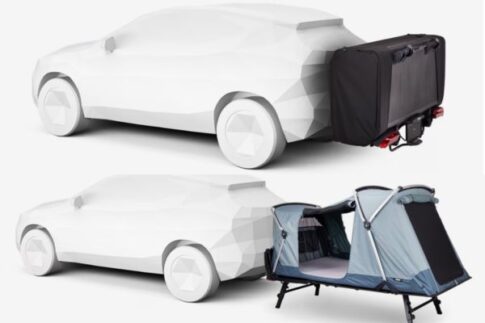
Thule Outset hitch mounted foldable tent

Thule Outset foldable hitch tent—a clever rooftop tent alternative

Many camping setups force a trade-off. Bring a trailer and deal with towing, or mount a rooftop tent and give up roof space. The Thule Outset takes a different route by mounting a foldable tent at the back of the vehicle on a hitch setup, not on the roof, and not behind the vehicle as a trailer. That simple change opens up a few practical wins for campground life, including the ability to be left behind without having to break camp. Learn more about this tent camping innovation here.

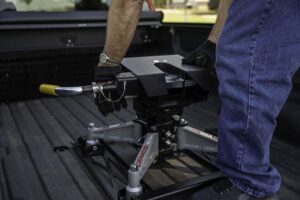
Demco's folding fifth wheel hitch Recon Stealth Image: Demco website

Demco Recon Stealth: The first foldable fifth wheel hitch

If you tow a fifth wheel and miss using your truck bed on non-towing days, this hitch provides a solution. Demco calls the Recon Stealth™ a foldable gooseball-mounted, fifth wheel hitch. It easily collapses for compact storage yet quickly returns to full towing duty when you need it. Discover more about this unique hitch here.

How to replace a hitch shock absorber

In this post, Dustin Simpson and his technicians inspect a B&W Companion Fifth Wheel Hitch and discover a leaking shock absorber on the hitch head assembly. This is actually more common than most people realize—that small hydraulic damper inside the head is what helps control articulation movement, prevent violent chucking, and smooth out tow feel. When it leaks, you’ll often feel more clunk, slap, and harsh motion when starting or stopping. Learn more.

reese trailer hitch lock

The small but mighty Reese trailer hitch lock

The lock that can completely theft-proof your trailer does not exist, and a determined thief will always have a way. Therefore, it becomes about deterrence and getting the thief to move on to an easier target. This little lock delivers big on that promise. Discover why and how here.


Our best-selling gadgets on Amazon this month (so far):

  1. Wooden Adhesive Hat Hooks for Wall (as recommended in this article)
  2. Dash Deluxe Egg Bite Maker
  3. Gracula Garlic Crusher (funny!)
  4. Camp’N RV Vent Cover Opener Extendable Stick
  5. Funny Hand Towels – Cute Cat Hanging Towel

Other stuff we’re liking:

Amazonfindsrvt

RVtravel.com editors’ and readers’ all-time favorite products at Amazon

This section is short in this issue because there is SO MUCH to take in with this one list!  This is the first time EVER that we’re sharing this list with our readers. Yep, that’s right. This is RV Travel’s personal list that we use every day to recommend products to YOU in our newsletters and across our website. Almost 200 items, conveniently in one place, and divided by category. Check out our editors’ and readers’ favorite RV gear. Wowie!


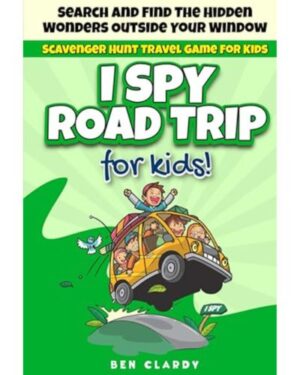
i spy road trip for kids bookThe book nook
I Spy Road Trip for kids!

The perfect travel game to keep curious minds occupied while on long car rides—turning everyday scenes into thrilling scavenger hunts that will sharpen your child’s eye and spark their imagination. With engaging challenges and clever clues, your child will learn to see the magic in the mundane and the extraordinary in the everyday, all while helping them to develop their cognitive abilities. This is where boredom ends and the scavenger hunt begins—right outside their window. Learn more or order here.


Gadget quick takes

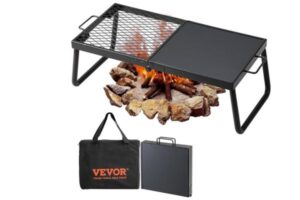
foldable grill grate

VEVOR folding campfire grill, heavy duty steel mesh grate

Heavy-duty welded steel frame with steel-mesh grill top provides long-lasting performance for outdoor cooking. Legs angle outward for stability and fold underneath for compact storage and easy transport. Perfect for camping cookware, including cast-iron pots and pans over open fires.

refrigerator thermometer

Refrigerator/freezer thermometer

Is your RV fridge or your cooler keeping your food safely cold? There’s one way to find out.  Take its temperature!

PhoneumbrellaPhone umbrella—more practical than it looks or sounds

A phone umbrella might sound ridiculous, but if you have ever tried to use your phone in the glaring sun or the rain, you’ll know this gadget makes practical sense. Funny!


Rvtravel 300x250 Promo 10bTake an extra 10% off a GhostBed luxury RV mattress!
The GhostBed RV mattress is 10” deep, crafted with gel memory foam for coolness, has 3 layers of luxurious comfort and is perfectly sized for your RV! Ahhhh… Wake up relaxed and rejuvenated. RVtravel.com readers now get an EXTRA 10% OFF a GhostBed Luxury RV Mattress! CLICK HERE and use code RVTRAVEL10. Watch RVtravel.com’s Tony Barthel’s RV mattress review here.


More recent gadget articles and reviews:


giant bread pillowGadget giggles
Giant bread pillow

Do you know someone who REALLY loves bread? Let them cuddle up with a big warm loaf with this realistic-looking pillow. Made of skin-friendly plush fabric with cotton lining, it’s soft, silky, and comfortable. Can be used as a back cushion, bolster, or body pillow. Available in three sizes. Order here.


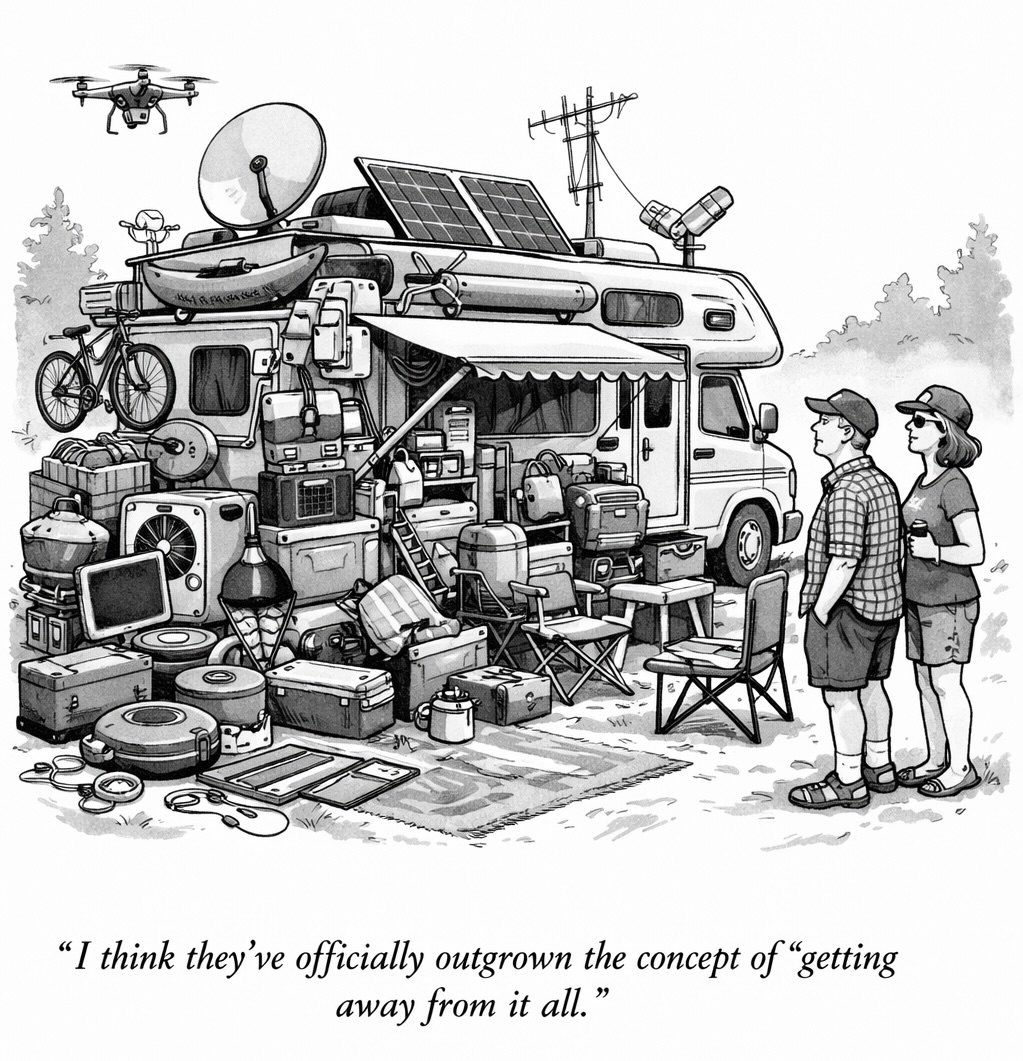
Gettingawayfromitall


FINISHED READING THIS ISSUE? Great! Now you can move on over to today’s brand-new RV Daily Tips newsletter.


RVtravel.com All-Star Team

Click here for information about our staff and how to contact us.

RV Daily Tips. Thursday, March 12, 2026

America’s Original RV Newsletter. Since 2001
Issue 2859 • New issue every weekday


Today’s thought

“I would rather lose in a cause that will some day win, than win in a cause that will some day lose!” —Woodrow Wilson


Need an excuse to celebrate? Today is National Girl Scout Day! We hear that is an excuse to buy Girl Scout cookies… Yum!

On this day in history: 1912 – The Girl Guides (later renamed the Girl Scouts of the United States of America) is founded in the United States.


Tip of the day
How to stop and prevent annoying spam phone calls

By Gail Marsh
It was a quiet morning on the water. As the sun gently burned through the mist, I spotted a doe and her fawn approaching. Then… my phone’s jarring ringtone blasted through the peaceful setting. The deer bounded away, and I almost dropped my camera! And for what? A spam call!

Robocalls and spoofed numbers are still pouring into American phone lines in huge numbers. Recent industry tracking shows billions of robocalls in a single month. That means you can no longer rely on a single fix. Layering protections is the practical approach to tackling the spam issue. Spam calls are everywhere, but you can dramatically cut the noise with a few smart moves. Read on to find out how.


Article and video
5 steps to keep mice out of your RV during storage

Here, the team from The Camping Loop talks about five steps you can take to keep mice out of your RV. And if you have ever dealt with the aftermath of mice in your RV, you KNOW you want to prevent this destructive, unsanitary, and messy problem from ever occurring again. Especially if you are storing your RV for any length of time, you will want to pay attention to this video. (Cheri breaks it down for you in her article, too.)


Featured article
The last Airstream built before WWII

When this 1941 Airstream Clipper came up for sale, the Gulleys were extremely excited and jumped at the chance to own another piece of trailer history! Thinking it may be a rare piece, they didn’t hesitate to seal the deal and take possession. Turns out it wasn’t the trailer they were told it was; however, it did have an even more desirable provenance! Learn more.


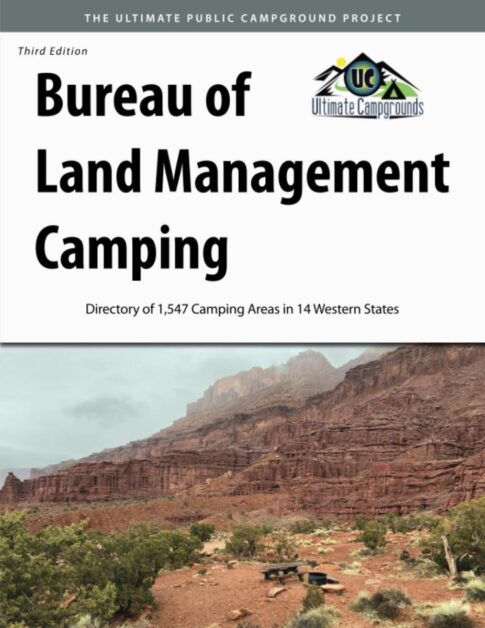
The best directory of where to camp on public lands
The Bureau of Land Management Camping book describes 1,547 camping areas managed by the BLM in 14 Western states. Details for each camping area include the number of campsites, amenities, facilities, fees, reservation information, GPS coordinates, and more. You’ll want this book if you camp or are interested in camping on BLM land. Learn more or order.


Ask Dave
How can I test my RV’s “emergency start switch”?

Here’s Dave’s answer.


Reader poll
Do you have vision or hearing impairment(s)?

Respond here.


FREE IS GOOD! Sign up at Jimmy John’s and get a free sandwich after your first order, as well as a tasty surprise on your birthday, plus more rewards.


Quick tip
How long can you store eggs?

Eggs may be refrigerated for three to five weeks from when they are put in the refrigerator. The “Sell-By” date will usually expire by then, but the eggs will be safe to use. Always purchase eggs before their “Sell-By” or Exp (expiration) date. To keep them safe, take eggs straight home and store them immediately in the refrigerator set at 40° F or slightly below. Leave them in their carton and place them in the coldest part of the refrigerator, not in the door. After hard cooking, eggs can be stored for a week in the refrigerator. S0URCE: USDA

Bonus tip: To tell if an egg is still good, perform the float test. Place an egg in a bowl or glass of water. If the egg sinks, it’s good; if it floats, it’s gone bad. Easy!


Website of the day

America’s Most Beautiful Springtime Destinations
If you’re near any of these beautiful locations, know that we’re jealous of you! These are some of the most beautiful places to visit in the spring. Now, just try to not let all that pollen make you sneeze…


? MYSTERY PRODUCT OF THE DAY ?
One of these that doesn’t smell? It’s a meow-acle! This is too funny. We know quite a few people we could gift this to!


And the survey says…

We’ve polled RVtravel.com readers close to 5,000 times in recent years. Here are a few things we’ve learned about them:

• 55 percent are a member of AARP.
• 28 percent say they do not wear sunscreen when outside in the sun.
• 8 percent say they’ve traveled 200,000 miles or more with their RV in their adult life.

Recent poll: What are your top two main considerations when choosing a campsite?


Are ye ol’ eyes giving you problems? Is the small type getting too small to read (it happens to the best of us)? This will save your day.


Trivia

With 280 state park units, more than 840 miles of coastline, 970 miles of lake and river frontage, 15,000 campsites, 5,200 miles of trails, 3,195 historic buildings and more than 11,000 known prehistoric and historic archaeological sites, the California State Park System manages the largest and most diverse recreational, natural and cultural heritage holdings of any state agency in the nation.


Readers’ pet of the day

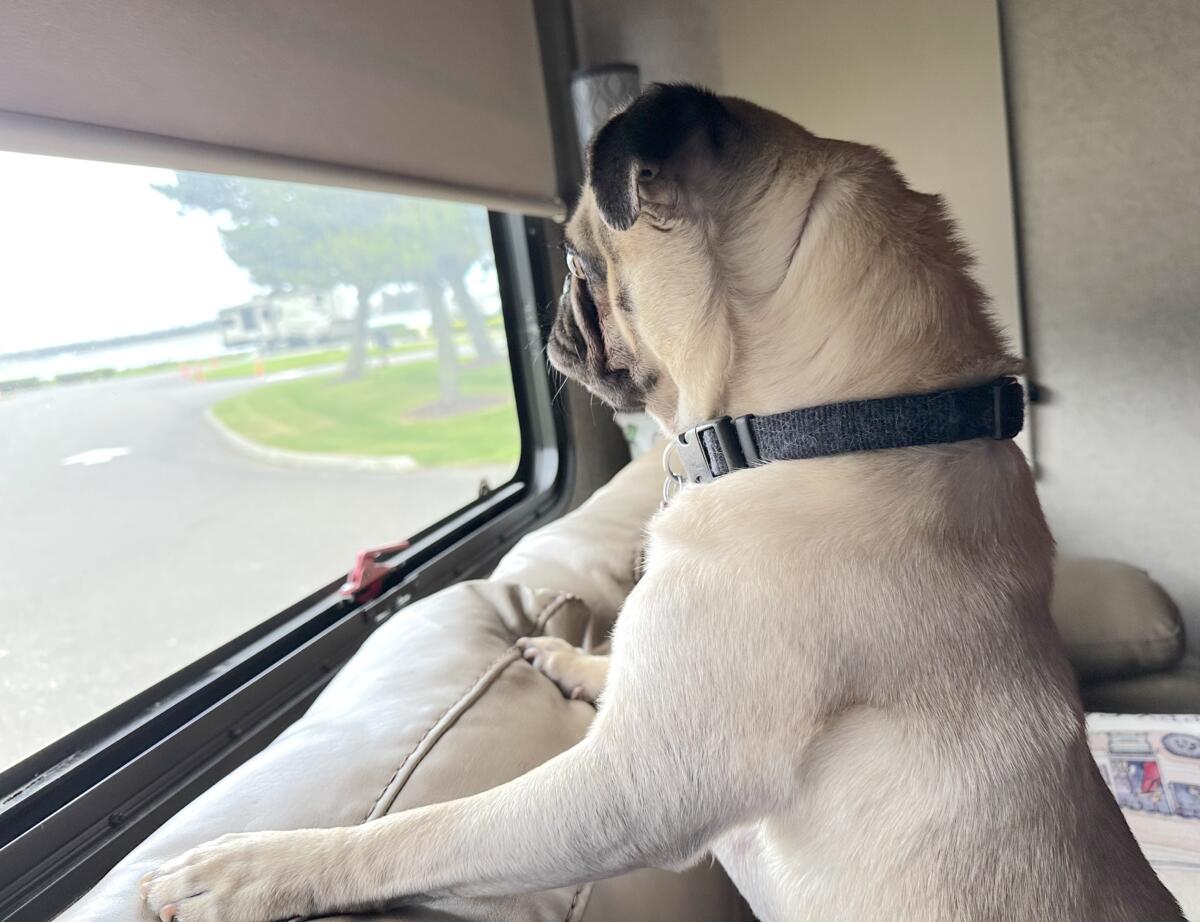
Img 2967 6694a1a272ce1ebf9e567a53938e739a“Spunky (Pug, age 3.5) loves to RV, and I have named him the official meet and greeter at whatever campground we are staying.” —Jim Miner

Send us a photo of your pet with a short description. No blurry photos and please do not submit your photo more than once. Thanks!

RVing with Dogs group on Facebook. You’ll love it.


HEX: May dog owners who do not pick up after their pet’s waste in a public area step on another dog’s pile soon thereafter.


Leave here with a laugh


Today’s weather forecast across the nation
THIS MAP UPDATES TWICE A DAY

Visit Current National Radar Weather Map


Did you miss the latest RV Travel Newsletter? If so, read it here.
Oh, and if you missed the Latest News for RVers, make sure to catch up here.


If you shop at Amazon.com we’d appreciate you using this link. We get an itty bitty commission if you buy something, but they add up and help us pay our bills (most importantly our hard-working writers!). 


RVtravel.com All-Star Team

Click here for information about our staff and how to contact us.

WHY WE ASK FOR DONATIONS INSTEAD OF SELLING SUBSCRIPTIONS.

Our policy on using artificial intelligence.