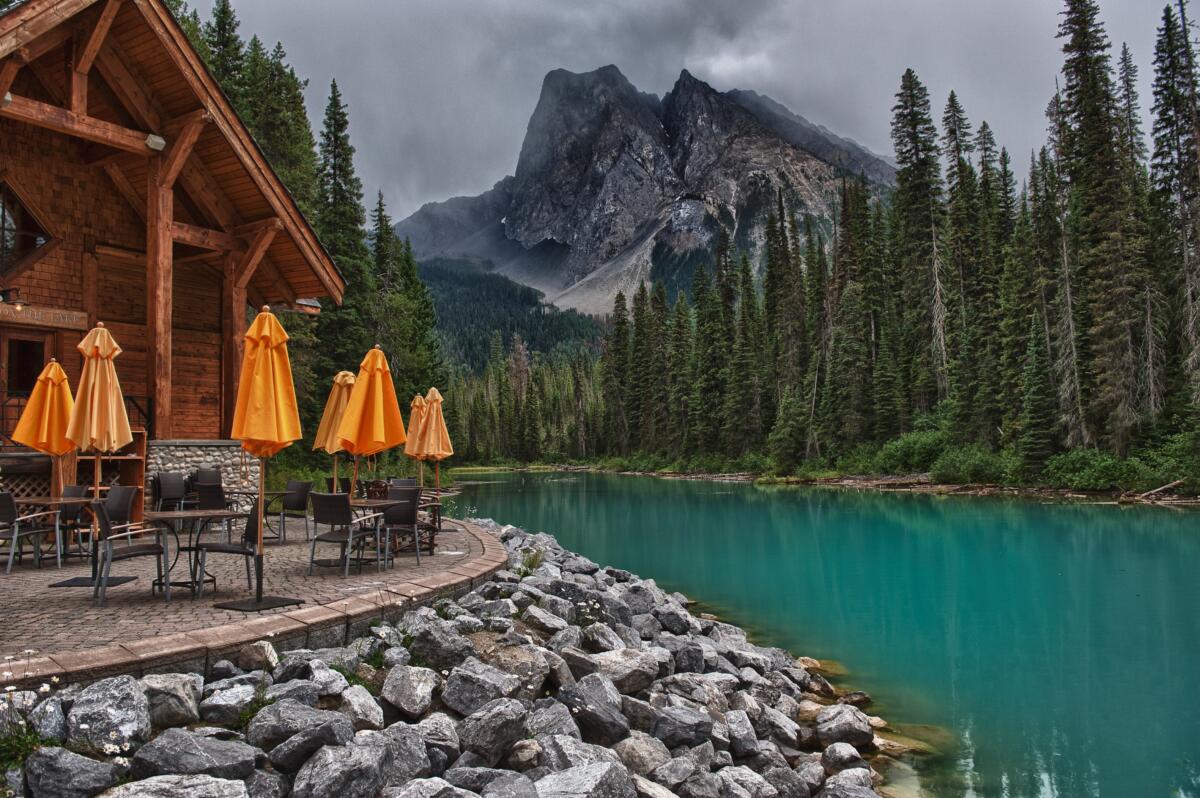
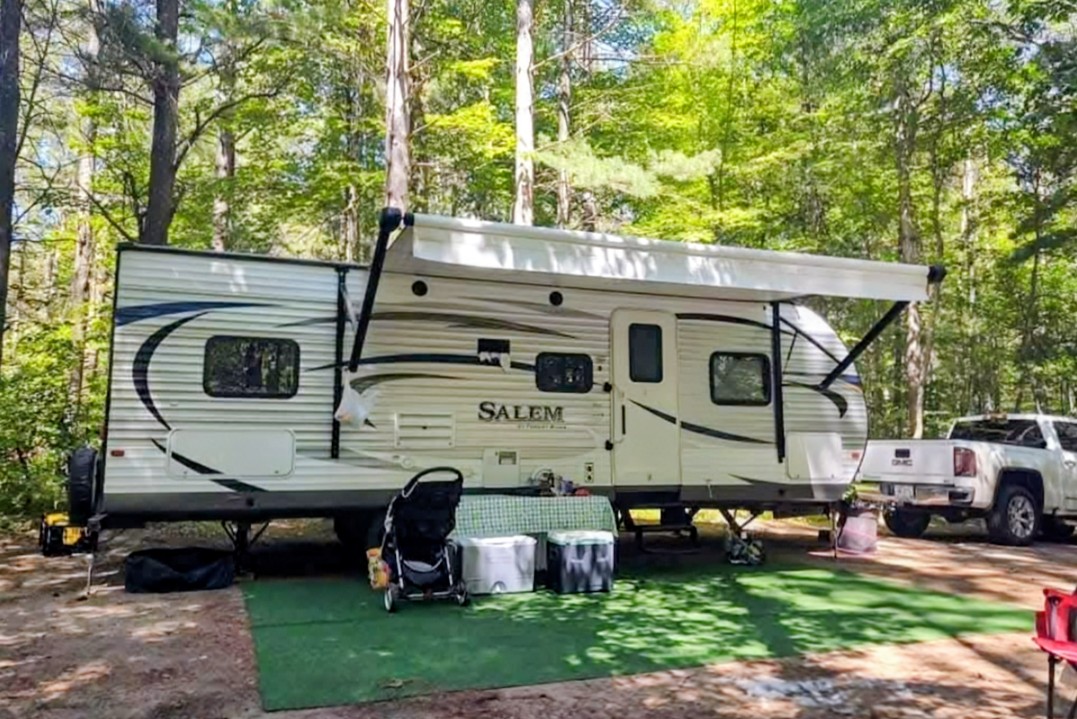
If you have been waiting for a good summer to point your RV north, 2026 just might be the year!
Parks Canada and the Government of Canada say the Canada Strong Passwill bring free admission to Parks Canada places from June 19 through September 7, 2026. And that’s not all! Read on to discover the biggest travel savings Parks Canada has offered in recent years.
Details
The free-entry part applies to national parks, national historic sites, and national marine conservation areas operated by Parks Canada. You can also take advantage of free lockage on Parks Canada-administered historic canals.
For RVers, the camping discount may be the most valuable part of the deal. Parks Canada is offering a 25% savings for tent and RV campers. Reservations already booked through Parks Canada for dates inside the promotion period will reflect the discount. In addition, first-come, first-served stays will be charged the reduced rate when you register on arrival.
During the free period, no entry pass or ticket is required at Parks Canada locations during regular operating hours. This will make gate arrival a little simpler for RV travelers.
Note: Because popular parks fill quickly, it is smart to check the specific park website before you roll in.
Savings
The usual price tag at Parks Canada sites is not small, which is why this summer’s promotion matters.
Banff National Park’s posted 2026 fees show a daily admission rate of $12.25 for adults, $10.75 for seniors, and $24.50 for a family or group.
A Parks Canada Discovery Pass is listed at $83.50 for adults, $71.50 for seniors, and $167.50 for a family or group.
Banff also lists camping examples such as $34 for several unserviced frontcountry sites, $40 for electrical sites, and $47.25 for water, sewer, and electrical hookups at Tunnel Mountain, so the 25% discount can add up fast on a longer RV trip.
Book ahead
Booking ahead is important! Parks Canada’s reservation system is the place to make camping and roofed-accommodation bookings, and 2026 reservation launches began in January. So, if you haven’t already made reservations, do it now!
If you are thinking about a multi-park trip, the Discovery Pass still matters outside the free-entry window because it covers admission to more than 80 Parks Canada destinations for 12 months.
Parks Canada also says annual passes that are valid during a Canada Strong Pass period will be automatically extended, and no action is required by the pass holder. That makes the current promotion especially useful for travelers who are already planning shoulder-season or later-season visits.
Not free
RVers should note that the free park entry does not apply to provincial or territorial parks, Sépaq parks in Québec, municipal or private parks, or sites run by third parties. For more exclusions, click here and scroll down.
Act now
To take advantage of the Canadian National Parks free admission, pick the parks you want. Reserve the campground first and treat the free admission as a bonus rather than the main plan.
For RVers, that means checking campsite hookups, fire permit rules, shuttle fees, parking fees, and any special services before departure. Parks Canada says those extras can still apply even when admission itself is free.
With the right reservation in hand, this summer could be one of the easiest and most affordable times in years to see Canada’s national parks from the comfort of your rig.
Do you have a favorite Canadian National Park? Tell us in the comments below.
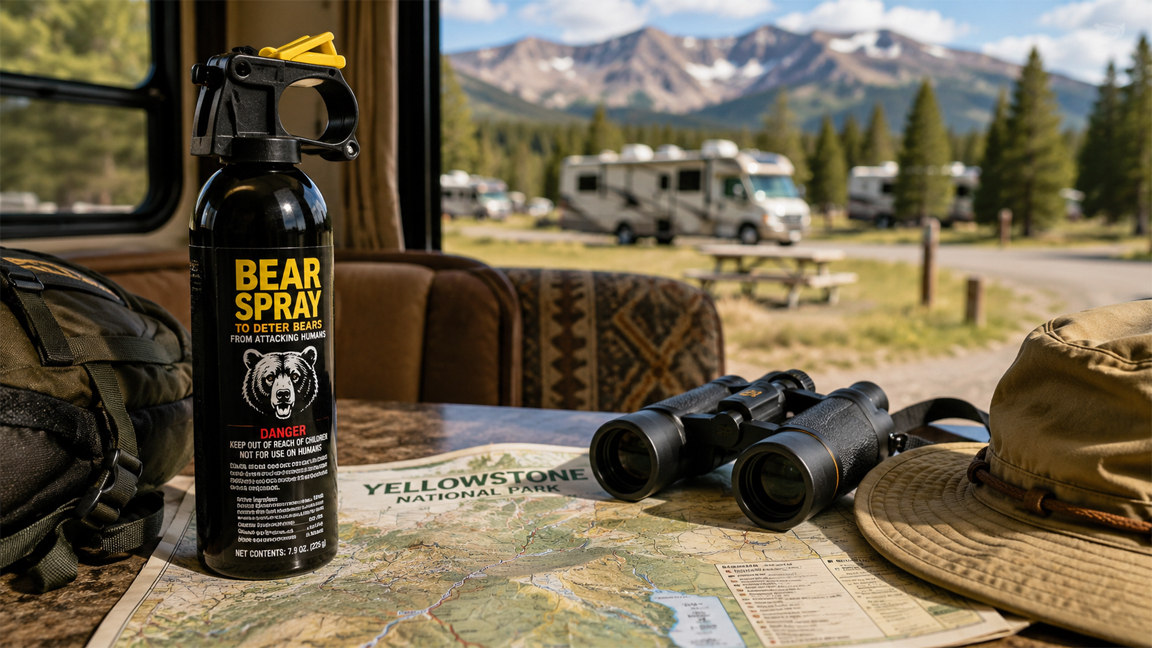
Millions of people heading into places like Yellowstone and Glacier are hearing the same message from park officials, outdoor retailers, and experienced hikers: Carry bear spray. But growing concerns about bear spray disposal are creating unexpected problems in some national park gateway communities.
And, honestly, it’s good advice. Wildlife experts widely consider bear spray one of the most effective tools available during a close-range bear encounter.
But there is another side to the story that almost nobody discusses with travelers, especially RVers: What happens to those cans afterward?
That question is starting to create real problems around some national parks, particularly in gateway communities where millions of visitors arrive every year. Buy bear spray for a single trip, then try to figure out what to do with it before heading home.
According to a recent report from SFGATE, partially filled bear spray cans are now exploding during trash compaction operations near Yellowstone. Workers at transfer stations reportedly have been exposed to the powerful capsaicin spray when discarded cans rupture inside garbage trucks and compactors.
When a can ruptures inside a garbage truck or transfer-station compactor, the effects can be immediate. Workers can suddenly be exposed to airborne capsaicin—the same concentrated irritant designed to stop an attacking bear. Even brief exposure can cause intense burning of the eyes, coughing, breathing difficulty, skin irritation, and temporary loss of vision. In enclosed equipment areas, the spray can quickly affect multiple workers at once.
That has turned what sounds like a simple disposal issue into a growing safety concern.
Why this matters to RVers
For traveling RVers, the issue is especially relevant because many RV owners move repeatedly through bear country across the West, from Yellowstone and Glacier to parts of the Pacific Northwest, Canada, and the Rockies.
Some buy bear spray for a specific trip, use none of it, then simply tuck the can into a cabinet or storage compartment afterward. Months or even years later, the can may still be riding in the RV.
That creates another issue many owners never think about: storage inside a vehicle that may sit in extreme summer heat.
Bear spray canisters are pressurized. Manufacturers generally warn against exposing them to extreme temperatures, including leaving them inside hot vehicles for extended periods. Inside a closed RV or tow vehicle parked in direct summer sun, temperatures can climb dramatically.
That doesn’t mean cans are routinely exploding inside RVs. Reports of that appear rare. But experts do caution travelers to store bear spray carefully and avoid high-heat areas such as dashboards, windowsills, or enclosed compartments exposed to direct sun. We’ve written about cases where cans have exploded in vehicles, and the “clean-up on aisle 9” wasn’t that simple.
A small discharge inside an RV could create a miserable situation very quickly.
And, unlike ordinary pepper spray, bear spray disperses a large, fog-like cloud designed specifically to stop an aggressive animal.
Many visitors only need it once
Part of the problem is that many Yellowstone and Glacier visitors are not regular backcountry travelers. They buy bear spray for a once-in-a-lifetime vacation, use none of it, then face a dilemma at trip’s end.
You cannot normally take bear spray on commercial airlines, either in carry-on luggage or checked bags, because it is considered a hazardous material.
That leaves visitors scrambling for options.
Some gateway communities and visitor centers have experimented with donation boxes, recycling programs, or informal exchanges where travelers pass unused cans to incoming visitors. But disposal systems remain inconsistent.
Meanwhile, trash workers are dealing with the consequences when cans end up in ordinary garbage streams.
What RVers should know
Outdoor safety experts generally recommend a few common-sense practices for RVers and others carrying bear spray:
Keep it accessible while hiking, not buried in a backpack.
Avoid storing it in direct sunlight or areas that become extremely hot.
Don’t leave it rolling loose inside a vehicle or RV.
Check expiration dates periodically.
Don’t throw partially full cans into regular campground dumpsters unless local disposal rules specifically allow it.
Look for local disposal guidance near major national parks or ask ranger stations about current options.
For RVers who frequently travel through bear country, keeping a properly stored can for future trips may make sense. But for occasional travelers, the growing disposal issue highlights a problem many people never consider when they buy it at the start of a vacation.
And with another busy summer season building across the national parks, workers in Yellowstone gateway communities are hoping fewer visitors treat bear spray cans like ordinary trash.
“Millions of Yellowstone visitors are buying bear spray. Now parks and gateway towns have a disposal problem.”
That may not be the part of bear safety brochures anybody remembers. But it is becoming a “beary” real issue behind the scenes.
Clam lovers rejoice: It’s a special week for you if you live or are traveling this week in Rhode Island. The Rhode Island Department of Environmental Management and the Rhode Island Seafood Marketing Collaborative are holding the 10th annual Quahog Week, which began yesterday and continues through Saturday (May 23).
The event celebrates the cultural and economic importance of the quahog, the state’s official clam.
Restaurants and seafood markets across Rhode Island will feature special quahog dishes during the weeklong event. Organizers expect a record number of participants this year. A list of participating locations and specials is available here.
“Quahog Week is an opportunity to celebrate Rhode Island’s shellfish industry and the bounty of Narragansett Bay,” said Governor Dan McKee. “Quahogging has a long history in the Ocean State and this ‘shell-ebration’ is a great opportunity to support local harvesters, restaurants, and seafood markets and enjoy a favorite quahog dish or discover something new.”
State officials said ongoing investments in water quality, infrastructure and shellfish monitoring have opened thousands of acres of new shellfishing waters in recent years, helping support Rhode Island’s seafood industry.
Quahogs are Rhode Island’s most valuable fishery in Narragansett Bay. More than 11 million were harvested last year by more than 400 quahoggers, generating more than $3 million. Demand peaks during summer, when littlenecks, clam cakes and stuffies are especially popular.
Three free public events are planned during Quahog Week, including complimentary littlenecks shucked by members of the Rhode Island Shellfisherman’s Association and samples from participating vendors.
Events include: • Tiverton Farmers Market, May 17
• Narragansett Brewery in Providence, May 19
• Newport Craft and Distillery, May 21
America’s Original RV Newsletter. Since 2001
Issue 2906 • New issue every weekday This free edition is made possible by 6% of our readers who support RV Travel with a voluntary subscription. Advertising helps, but that alone is not sufficient.
Today’s thought
“Never leave a friend behind. Friends are all we have to get us through this life—and they are the only things from this world that we could hope to see in the next.” ―Dean Koontz
Need an excuse to celebrate? Today is National No Dirty Dishes Day!
On this day in history: 1980 – Mount St. Helens erupts in Washington, United States, killing 57 people and causing $3 billion in damage.
Tip of the day Save your RV’s refrigerator: Leveling tips for overnight stops
By Dave Helgeson
I read this tip:
Do you level? That’s a question repeatedly posted on RV forums, regarding leveling an RV when stopping at the end of the day. Here’s a typical response: “I try to get it relatively close unless it’s just for an overnight stop, in which case I don’t bother.” Unless it’s an overnight stop? ALWAYS level your RV. Another comment tells you why: “I’m on my second Dometic 4-door. I level METICULOUSLY every time I stop to camp and I check level every morning. I refuse to go thru all that replacement AGAIN.”
RV refrigerators need to be level to work properly, and to prevent damage. No absorption-type RV refrigerator has ever read the fine print that says, “Don’t count the damage caused by operating off-level if it’s only overnight.” Seriously, damage to an RV cooling unit is CUMULATIVE, and every “only overnight” adds up. Can’t level? Shut off the fridge.
I was rather shocked by people’s thinking that running an absorption refrigerator out of level overnight or for any length of time is an acceptable practice. It’s not! Continue reading.
RV review
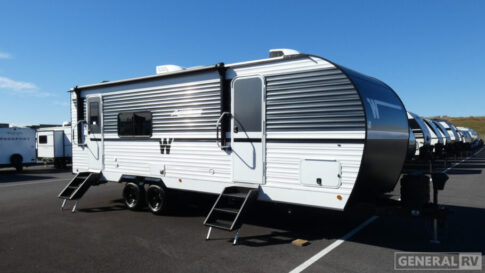
2026 Winnebago Access 25RK— There’s a lot to like here
By Gail Marsh
There’s a lot to like about the 2026 Winnebago Access 25RK travel trailer. A quick glance at this travel trailer’s floor plan tells me it features a rear kitchen, a nice bathroom, and a private bedroom. With those three key areas checked off, it’s time for a closer look.
Keep your essentials right where you need them while driving
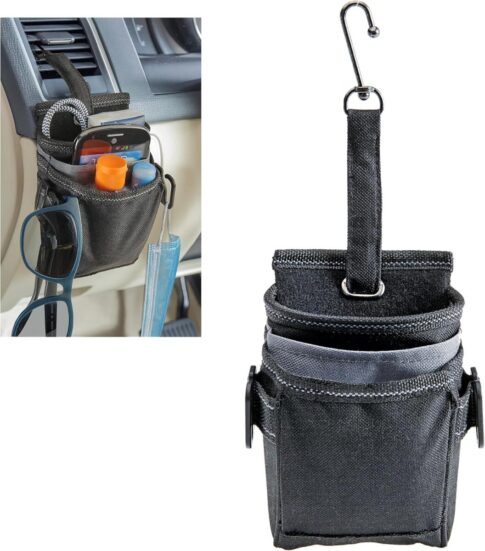
This vent-mounted organizer gives RVers and all drivers a place for phones, cords, sunglasses, and more without cluttering the dash. The three-pocket design keeps your phone secure (even while charging) and everyday essentials within easy reach, making long drives and busy travel days more organized and less fumbly. Learn more or order.
In the RV shop with Dustin Reminder: Check that fridge drip tray before it floods into your RV
The below question was posted in one of my many Facebook groups. One group member, Alan, asked this question: “Any ideas where to start the investigation? 2022 Grand Design RV Solitude 380FL. Last night we noticed water collecting on the right side of the fridge on the flooring. The inside of the fridge is dry. … ” Continue reading.
A Permanent Address for RV Freedom Full-time RVers trust Americas Mailbox for mail forwarding, vehicle registration, residency help, licenses and other services — with quick, reliable support. Big tax advantages, too.
Article and video Amazing stealth camper van where every inch has a purpose
Ryan Bell of Outdoors Embrace built “Megalodon,” his stealth camper van, to be a full-time home where no space goes to waste. After four years living in his “Great White Van,” he sold it, bought the largest Ford Transit he could, and turned it into a stunning, self-built rig with climate control, a central kitchen, a hidden shower, and a full media setup. We get a tour here.
Featured article The Frontier Texas museum is a travel gem
By Nanci Dixon
I recently visited the Frontier Texas museum in Abilene, TX. During my visit, I will admit that being the only one in the museum’s darkened room made me wish I had dragged my husband with me. Picture buffalo stampedes, saloons with poker games gone bad, cattle drives, and Indian attacks. But overall, it’s a museum that should not be missed. (Apparently, Nanci was a madam at a well-established brothel in a former life. What?!)
Taillights can get dim from dirty contacts. Make sure there’s no power to the taillights, then pull the bulbs. Use Scotch-Brite™ to clean bulb contacts and base then use a contact cleaner such as DeoxIT or CRC Contact Cleaner. Do the same for the contacts and base of the taillight fixture.
Website of the day
Ultimate Bunker
Okay, even if you’re not planning on building an underground bunker, this website is still totally cool. They build custom bunkers, safe rooms, custom shipping containers and more. You’ll want one of these as your man-cave or she-shed!
? MYSTERY PRODUCT OF THE DAY ? Now THIS is fun! This would be a perfect rainy-day activity for a summer day. Wait, what? Oh, just click hereand you’ll see.
Monday Motivation
“Being unafraid of making mistakes makes everything easy for me. Not worrying about what people think frees you to do things, and doing things allows you to win or learn from your loss, which means you win either way. Hear me now: you are better off being wrong ten times and being right three than you are if you try only three times and always get it right.”
―Gary Vaynerchuk, Crushing It!: How Great Entrepreneurs Build Their Business and Influence and How You Can Too
DID YOU ENJOY THIS ISSUE?If you enjoyed it, learned something from it, or it gave you a new idea or perspective… please help us continue to bring you quality, unbiased coverage of RVing with a voluntary pledge. Thank you!
Trivia
To tell if eggs are bad, perform a water test by placing them in a bowl of water—fresh, good eggs sink, while old, bad eggs float.
Readers’ pet of the day
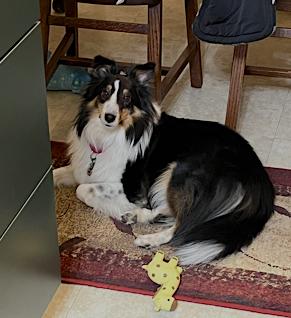
“Kyah (Sheltie) is two years old and is always ready for a new adventure on her next camping trip. She loves people and enjoys making new friends along the way.” —Terri Lewis
Send us a photo of your pet with a short description. No blurry photos and please do not submit your photo more than once. Thanks!
Leave here with a laugh
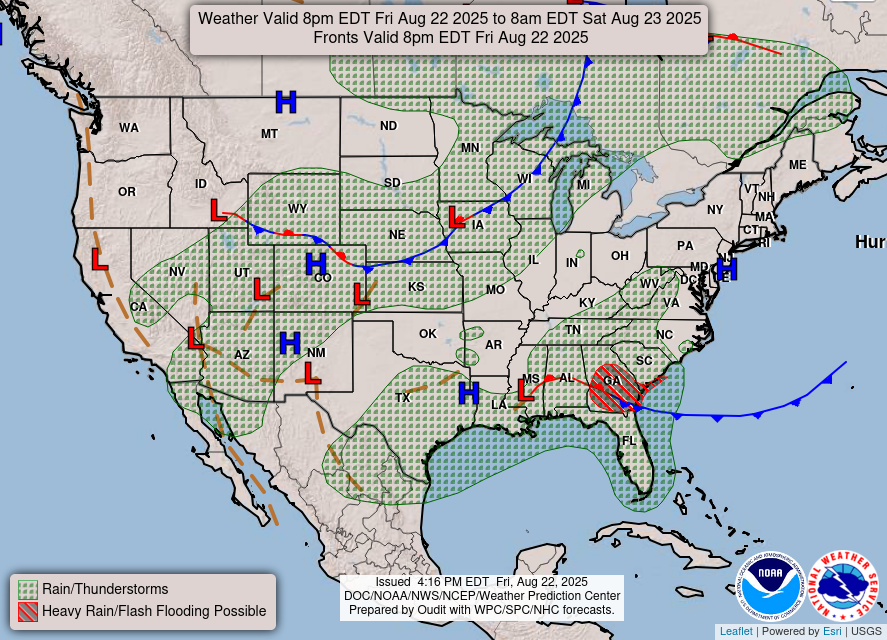
Today’s weather forecast across the nation THIS MAP UPDATES TWICE A DAY
If you shop at Amazon.com we’d appreciate you using this link. We get an itty bitty commission if you buy something, but they add up and help us pay our bills (most importantly our hard-working writers!).
Dear Dave,
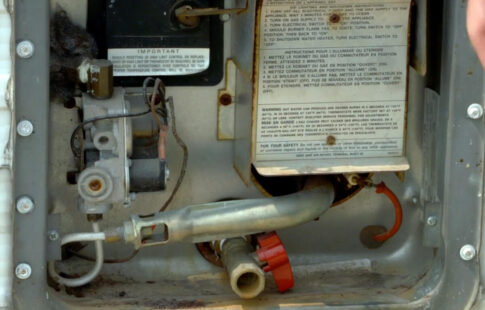
Can you replace the water heater plug with a ball valve? I have a 1998 Jamboree. Are there ball valves available with the right screw threads that could replace the plastic plug? Any reason this might be a bad idea? —Judy, 1998 Jamboree
Dear Judy,
Since you indicated the water heater has a plastic drain plug, it should be an Atwood water heater that does not utilize an anode rod. The Suburban models have a magnesium anode rod that acts as a sacrificial probe for minerals in the hard water. The Atwood version has a different tank that does the same.
So, yes, you can replace the plastic plug with a ball valve, and I have seen this done several times. There are several adapters and reducers that can match threads with the water heater and the ball valve.
Installing a ball valve would make it convenient to drain the water heater without needing any tools, and you won’t lose the drain plug. Plus, sometimes the plastic plug gets really hot and literally melts the threads, making it tough to remove and sometimes even stripping the nut on the top.
Drawbacks to installing a ball valve
However, if you install a ball valve, it will limit the flow of draining water and you will also not be able to get a flush wand inside to flush out the sediment that collects on the bottom of the tank. Since the drain hole is not at the lowest point, it is important to get all the calcium and sediment out either when you drain it for winterizing, or before filling it up in the spring.
Here is a screen capture of one that was installed on the trailer we did videos on for RV Lifestyle & Repair. I’m not sure how the former owner installed it, as the handle hit the burner tube when we tried to remove it. We had to cut off the handle and remove the burner tube to get it out. We took it out, as this model was a Suburban and needed to have an anode rod and the former owner had swapped it out.
Follow-up to above
After sending the rough draft of my answer to Judy, she provided an update with some research she found:
After I sent the question, I did more research and there appears to be an issue with aluminum tanks and metal causing galvanic corrosion. They did mention using aluminum or bronze as soft metals. Plus, the valve may not allow all water to empty. I don’t think I’ll attempt this. Probably buy spare plug and tool to better handle the plug. —Judy
Do you level? That’s a question repeatedly posted on RV forums, regarding leveling an RV when stopping at the end of the day. Here’s a typical response: “I try to get it relatively close unless it’s just for an overnight stop, in which case I don’t bother.” Unless it’s an overnight stop? ALWAYS level your RV. Another comment tells you why: “I’m on my second Dometic 4-door. I level METICULOUSLY every time I stop to camp and I check level every morning. I refuse to go thru all that replacement AGAIN.”
RV refrigerators need to be level to work properly, and to prevent damage. No absorption-type RV refrigerator has ever read the fine print that says, “Don’t count the damage caused by operating off-level if it’s only overnight.” Seriously, damage to an RV cooling unit is CUMULATIVE, and every “only overnight” adds up. Can’t level? Shut off the fridge.
I was rather shocked by people’s thinking that running an absorption refrigerator out of level overnight or for any length of time is an acceptable practice. As mentioned above, the damage is cumulative, adding up each time you operate your refrigerator out of level.
Analogy of what happens when you operate absorption fridge out of level
Here is a good analogy to help RVers understand what happens when you operate an absorption refrigerator out of level.
Compare it to the human body and the plaque that slowly builds up inside your arteries each time you eat something your cardiologist says you shouldn’t. You can’t see the plaque accumulating slowly in your arteries until you are rushed to the hospital with a heart attack caused by a blockage.
The same thing happens inside the cooling unit “arteries” at the back of your absorption refrigerator. Each time you operate your refrigerator out of level, the solution of water, ammonia, hydrogen gas and sodium chromate are unable to circulate properly (via gravity). The circulating solution gets hot, causing crystals to accumulate on the inside of the cooling unit tubes. All is good until enough crystals (i.e., “plaque”) create a blockage and your refrigerator suffers a “heart attack” due to the lack of circulation.
“Off-level operation causes overheating in the boiler section. Continued operation in an over-heated condition results in cooling unit blockage when the sodium chromate particles turn to crystal and block sections of internal piping in the boiler.” This is one of many leveling tips provided by the late Gary Bunzer, the RV Doctor.
Turn off the refrigerator
Anytime I find myself having to park the RV out of level for 30 minutes or more at a roadside attraction, grocery store, lunch stop, etc., I turn off the refrigerator. I am on my fifth travel trailer over my 40-plus years of RVing and have never experienced a cooling unit failure.
“If your fridge runs while tilted for longer than about 30 minutes, you run the risk of damaging the refrigerator’s cooling unit.” Per most experts.
Not only do I level my travel trailer to protect the refrigerator, but I also prefer not to have blood rushing to my head or falling out of bed while sleeping, either.
Statistically, more than 50% of you reading this own a “towable” RV in the form of a fifth wheel or travel trailer, like me. The following leveling tips are for you.
Like other RVers, I like to take the easy way out and prefer not to unhitch my towable RV from my tow vehicle to level it for an overnight stop. After all, I will just have to hitch it back up again in the morning to resume my travels.
Bonus tip
In fact, you might even consider me lazy, as I prefer not to unhitch even if I am camped somewhere for days. There is another advantage to keeping the tow vehicle hooked to a towable RV—stability! Staying hooked up greatly reduces front to rear rocking in my travel trailer as my pickup truck (tow vehicle), with the parking brake set and transmission in park, acts as a 5,000-pound anchor. Staying hooked up also negates the need for wheel chocks. No need to retrieve them from storage, bend down and deploy them, then collect and stow them again before leaving camp. Much easier to leave the truck hooked up. Okay, maybe I am lazy!
Leveling tip to keep the refrigerator happy
This is all fine and good until you find yourself at an overnight stop that isn’t level front to rear and the leveling gear on your rig is not capable of bringing your rig into level. I suspect this is the number one reason towable RV owners fail to level their rig for an overnight stop—too much work for a short stay.
Here is what I do when faced with a sloped campsite:
• If the back-in campsite slopes downhill from front to rear, leaving the nose of the trailer too high to level: I place blocks/ramps behind the wheels on both sides of the trailer and back onto them until the rear of the trailer is level with the front, or is close enough. If it is close, I can “fine tune” the leveling with my stabilizing jacks.
Back the trailer onto blocks on both sides to bring it into level while hooked to the tow vehicle. Staying hooked to the truck adds stability and negates the need for wheel chocks.
• If the back-in campsite slopes uphill from front to rear, leaving the nose of the trailer too low to level: I place blocks/ramps behind the rear wheels on both sides of the truck and back onto them, raising the rear of the truck high enough that the nose of the trailer is raised sufficiently to be level with the rear of the trailer, or is close enough. As above, if it is close, I can “fine tune” the leveling with my stabilizing jacks.
Back or pull the rear wheels of the truck onto blocks to raise the tongue of the trailer into level. Fine tune with tongue jack.
You will be amazed at how 3 to 4 inches of lift to the trailer axle or rear of the tow vehicle axle helps in leveling an RV in a sloped campsite.
Note: If the campsite is also unlevel side to side, just add more blocks to the low side before backing onto them.
Give these leveling tips a try next time you find yourself in a sloped campsite regardless of whether it’s just an overnight stop or at your destination. Not only will your absorption refrigerator appreciate it, but you will enjoy the experience of a more stable, level RV with less work setting up and breaking camp.
Do you think you’ll spend more time RVing this summer than you did last summer, in 2025? If so, a lot more time? A little more time? Or do you think you’ll spend less time RVing than you did last summer? About the same?
For many of us, summer is the prime season to hit the road—whether it’s going to the mountains to escape the heat, visit national parks, or take grandkids on a memorable trip before school starts again. But a lot can change in a year. High fuel prices, campground availability, and personal health or family obligations can all influence how much time you’re able—or want—to spend traveling.
Some of us may be scaling back our plans this summer due to higher costs or campground reservation challenges. Others might have added more trips to their calendar, especially if they’ve retired recently, picked up a new travel trailer, or finally scored reservations at that bucket-list campground.
Everyone’s situation is different, and that’s what makes hearing from a wide range of RVers so interesting.
It’s also worth noting that some of us may not measure our RV time just in nights spent camping, but in overall quality of the experience—less travel but longer stays, more boondocking, or simply picking spots that feel less rushed. So when you think about your plans compared to last year, we’d love to know whether it’s about quantity, quality, or a little bit of both.
As always, thanks for voting. We appreciate your input.
By Dustin Simpson
The below question was posted in one of my many Facebook groups. This one was in Grand Design RV – In The RV Shop, where we have more than 53,000 members. Members post problems and the group members and I try to help each other out with problems, concerns, products, and upgrades.
One group member, Alan, asked this question:
“Any ideas where to start the investigation? 2022 Grand Design RV Solitude 380FL. Last night we noticed water collecting on the right side of the fridge on the flooring. The inside of the fridge is dry. There are no water lines running under the slide, nor is there water on the underbody of the fridge slide.
Pooling water on flooring.
“We had been running the A/C. I was pretty aggressively washing dishes at the water bay last night. I pulled everything out of the front bay and inspected for water wicking from the under walls, but nothing—it was dry. It eventually went away inside, as I checked before bedtime and nothing.
“This morning, we found more water pooling in front of the fridge. No A/C, but I am noticing runoff outside on the gutters and roof. I will inspect the roof, back of the fridge, pull the walls down in the front bay at the Nautilus system. Wondering if the seals around the slide are allowing moisture to wick inside? Didn’t notice anything like this during the rainy season just a few months ago, though.”
What’s the problem and where’s the water coming from?
Working with Alan, the RV owner, and others online, we traced the problem back to the rear refrigerator drip tray. It was being overfilled beyond the drip tray and leaking into the back side of the rear refrigerator access and leaking into the inside of the RV on the floor.
Area that water was coming through. You can see stain on wood paneling.
Fridge drip tray findings
During the inspection, the owner was advised to check the refrigerator’s back side, and he confirmed the fridge drip tray was full, as seen in this picture.
The water was leaking and coming underneath the refrigerator, getting into the inside of the RV and running onto the floor. Lucky for the owners this presented itself, because in the past, we have seen a number of different refrigerator leaks that have caused damage to slide out floors and cabinet supports, which over time caused major damage and additional issues.
My recommendations
To help people in high-humidity areas, if you own a Norcold refrigerator and are having this issue, here is one of my recommendations: You can either extend the drain line to drain outside the vent door, or you can drill a small hole and extend the drain hose through the floor and have it drain outside.
Norcold Drain Hose.
Here are some example pictures.
Original designed to fill drip tray.The hose was extended and plumbed down through the floor to drain underneath the slide out.The line was secured in place and secured to the lower aluminum sheeting brace to allow draining on the ground.
These Facebook groups were created to help educate owners about parts, problems, repairs, fixes, and upgrades on RV units. We will be sharing videos that include WHAT’S IN THE SHOP? and SHOP TALK episodes with information on accessories and products that we use and install on the units from the shop.
We try and help, as time allows, to answer questions and problems. We encourage others to share their experience so we can build a resource page to help everyone.
Please follow us on YouTube, see our published articles on RVtravel.com and other social media pages.
Please feel free to share your stories, problems, and upgrades with us so we can build a resource page to help others.
America’s Original RV Newsletter. Since 2001 Issue 1261
Today’s thought
“Knowing how to think empowers you far beyond those who know only what to think.” ―Neil deGrasse Tyson
Need an excuse to celebrate? Today is National Cherry Cobbler Day!
On this day in history: 1900 – The children’s novel The Wonderful Wizard of Oz, by L. Frank Baum, is first published in the United States. The first copy is given to the author’s sister.
Great ideas from real RVers (with photos!)
They say a picture is worth a thousand words. That’s never truer than when attempting to share a great RV tip. Sometimes an idea demands a photo. Here are some great tips from folks who really RV. You will definitely get a new idea here!
Disconnected trailer causes RV crash. How owners can reduce the risk
An Indiana highway crash is serving as a harsh reminder about RV trailer safety after a disconnected trailer struck and flipped a camper on U.S. 41, near Evansville, sending two people to the hospital. Authorities are still investigating exactly what happened. But incidents like this highlight a reality many RVers already know: A trailer disconnect at highway speed can become violent in seconds. Here’s how you can reduce your risk.
Do you legally have to use your signal in a turn-only lane? RVer finds out the hard way
Folks recently gathered around the campfire to console Mark. Unfortunately, he was ticketed for not using his turn signal. Mark felt unfairly targeted. “There I was,” Mark explained, “in the right-turn-only lane. What did the officer think I planned to do? My big rig should have been a great, big, obvious clue since it was fully inside the turning lane. But I got a ticket!” Marty wanted to know, “So, why were you ticketed?” Read on to learn why.
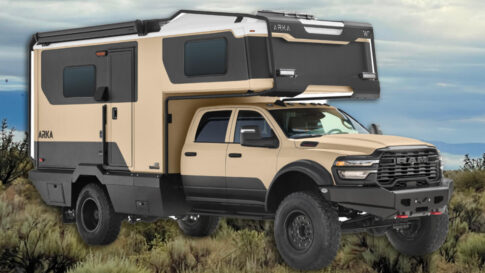
Today’s RV review… Winnebago ARKA world debut—an overlanding beast
Today’s RV review is of the new-for 2027 Winnebago ARKA 20Z, an off-road-capable, adventure-ready overlanding RV that is based on the Ram 5500 chassis, which has been modified for extreme capability. There are a number of this type of overlanding rigs out there, typically from smaller companies. But this one breaks a lot of new ground and really has hit the mark quite well.
Tony’s tips Dear RV company websites, You need to do better
As someone who does RV reviews, I spend a lot of time looking at RV company websites. Often, it’s just to see if I can find a specification, but I’m also curious what standard features are included on RVs and other details. I’m not sure what the heck is going on in Indiana, but almost every RV company’s website is terrible. And you could argue that part of the frustration that so many prospects and buyers have with the RV industry is just the misinformation that’s out there. Continue reading.
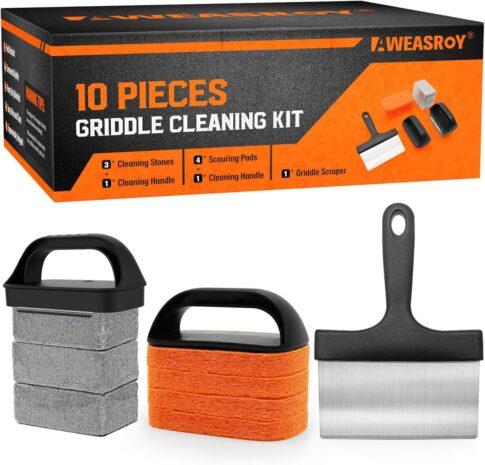
Keep your Blackstone/griddle good-as-new
This griddle cleaning kit helps RVers keep their flat-top grills in great shape. With scrapers, scouring pads, and a pumice grill stone, it quickly removes grease, burnt bits, and buildup without scratching the surface. Clean before and after cooking, and your griddle will last longer. Learn more about cleaning your Blackstone in Gail’s article here, or buy this griddle kit here.
You may share this Tanner Toon, unaltered, on your website, blog or social media with our compliments. The musings from Tanner Woods’ creative mind appear in this newsletter every Saturday and Sunday and in many RV Daily Tips newsletters through the week. Sign up for our RV Daily Tips Newsletter so you don’t miss a single Tanner Toon.
FACTOID: The word “mortgage” comes from a French word meaning “death pledge” from mort (dead) and gage (pledge).
Transportation Secretary says, “Hit the road!” Seriously?? With these costs??
Transportation Secretary Sean Duffy has a message for Americans: Hit the road and celebrate America’s 250th birthday with a great American road trip! Ordinary Americans are supposed to what? Cheerfully pile into the family SUV, hook up the RV, and pretend fuel prices aren’t punishing? Pretend campground rates haven’t climbed? Pretend food prices haven’t become ridiculous? Pretend a simple weekend getaway doesn’t now require a budgeting spreadsheet? Continue reading.
Truck campers not welcome at some RV parks
By Gail Marsh
An longtime RVtravel.com reader recently commented on my review of a truck camper RV. Jim Johnson said, “The problem with truck campers today is the RV parks that won’t accept them.” Jim’s comment prompted me to mentally review the countless RV parks we’ve visited. Turns out, he’s right! Looking back, I haven’t seen too many. Fifth wheels? Check! Travel trailers? Check! Motorhomes? Check! Tents? Check! But truck campers? Not many. I had to learn more.
Elvis Presley’s jet—now a converted RV—travels to Graceland
A piece of Elvis Presley history hit the interstate with no air filter, no prior fuel stop, and 1,659 miles ahead. Jimmy’s World had only driven the RV made from Elvis Presley’s jet a few short times, so this trip looked like one giant test drive with Graceland as the destination. Oh, what fun!
FUNNY T-SHIRT OF THE DAY: Make the handyman or woman in your family laugh with this. Hah!
Reader poll Overall, has the last year of your life been among the best, worst, or the same as others?
Want to run your RV air conditioner with a small generator like a Honda 2200? SoftStartRV™ cuts startup power demand by up to 70%, making it easier to stay cool almost anywhere you camp. It can even help many RVers run two A/C units on 30-amp service. See why our publisher is a big fan of SoftStartRV.
We want to know… What do you like about your RV?
We spend a lot of time talking about RV problems, repairs, frustrations, and the things we wish manufacturers would do differently. But this time, we want to flip that around. What do you genuinely like about your RV? Maybe it’s the perfect floorplan. Maybe it’s the giant windows, the outdoor kitchen, the roomy shower, or the fact that your smaller rig fits just about anywhere. Please tell us here.
BEWARE!Between 2020 and 2024, U.S. fire departments responded to an annual average of 12,141 home fires involving grills, hibachis, and barbecues, including 6,110 structure fires and 6,031 outside or unclassified fires. These fires caused 15 civilian deaths, 171 reported civilian injuries, and $241 million in direct property damage.
Travel destinations
Visit the only “micronation” inside the U.S.: Slowjamastan
The Republic of Slowjamastan is a self-described “micronation” located in Southern California. If you like strange and unique stops along your RV route, Slowjamastan is both! This is neat!
Las Cruces, New Mexico: A desert destination for RVers
Las Cruces, a true desert destination, is nestled in southern New Mexico’s scenic Mesilla Valley. This Chihuahuan Desert city of about 117,000 is situated between the Rio Grande and the majestic Organ Mountains. What makes Las Cruces a great destination for RVers? Read on to find out.
? MYSTERY PRODUCT OF THE DAY ? We promise, like, wholeheartedly promise you are going to want this. Did we intend to buy this for ourselves? No. Did we buy this for ourselves? Yes.
Highlights from this week’s RV Daily Tips Newsletter
IF YOU’RE NOT SIGNED UP FOR OUR RV DAILY TIPS NEWSLETTER… Well, why not? That’s just blasphemous! It’s our readers’ favorite newsletter for good reason! Sign up here. (Pretty please?)
In the RV shop with Dustin Slide-out resealing: A guide for long-lasting protection
When it comes to resealing your RV’s slide-outs, you’re on the right track. The good news is that you can use any appropriate brand of sealant, regardless of what the manufacturer might suggest. The key is making sure you’re using a high-quality sealant that’s designed for RVs and compatible with your slide-out materials.
RV tire safety Tire speed rating: Can you really drive 112 mph?
By Roger Marble
A quick look at almost any RV owner blog, and you will find someone saying that they drive at “xx” mph because that is the “Speed Rating” on the tire sidewall. This is definitely not a good idea and, in my opinion, is definitely unsafe. Continue reading.
RV gadgets and gizmos Drinking from a reusable water bottle? Use caution!
Reusable bottles are convenient, significantly reduce waste, and can keep your beverages colder/hotter longer. For many RVers, the day starts with filling up a reusable water bottle. The bottle is then placed inside the truck’s (or RV or car) cup holder, where it’s easily accessible. Once at the campground, the water bottle is all but forgotten while the campers set up and settle in. And that’s where the problems start…
DID YOU ENJOY THIS ISSUE? If this newsletter taught you something, made you smile, or gave you a helpful idea, would you consider supporting RVtravel.com with a voluntary pledge? Our small team works hard to bring you honest, independent RV news and information all year long. Advertising helps, but reader support is what makes a big difference. If you think what we do is worth a few bucks, we’d truly appreciate your help. Thank you!
Live cam
Kīlauea Volcano, Hawaii
Readers’ pet of the day
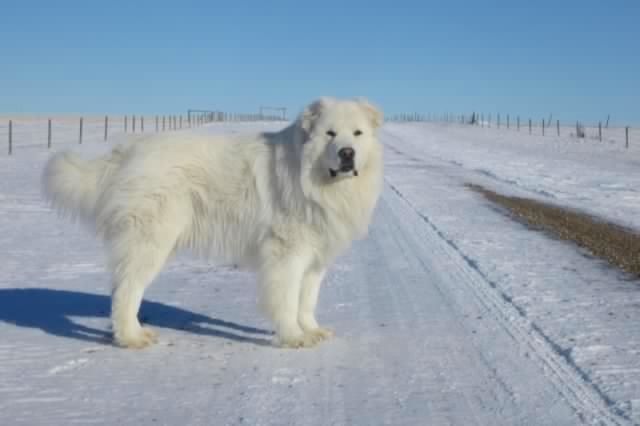
“Gunner (Pyrenees, age 5) is a lovable BIG dog that I would never take on an RV trip. Home is where his heart is. He would rather be outside in -40 temperatures than inside with us. On the other hand, when the temps hit 80 and up, then coming inside where it’s cool is acceptable. We boondock in the desert, and I would have hated it had he gotten cactus in his paws.”
Want to see your pet in this newsletter? Please send us a photo of your pet with a short description. No blurry photos and please do not submit your photo more than once.
Do you know where the saying “When it rains it pours!” comes from? Today, we use the phrase to indicate that bad things tend to flood into our lives all at once. But the phrase was originally an incredibly smart marketing slogan. Historically, in humid climates, or on rainy days, table salt poured very poorly because the humidity caused the salt to clump together. Back in the early 20th century, the Morton Salt Company introduced magnesium carbonate to its table salt. Including this anti-caking agent resulted in salt that would pour out freely, despite the humid weather. “When it rains it pours” became the company’s new marketing slogan (still a registered trademark of the company!). Even today, the Morton Salt label features a girl walking under an umbrella with a container of salt pouring out freely.
If you want to have a wonderful day, send $10, $50 or $100 to a local food bank. Millions of our fellow citizens, including little kids, are going hungry. If you have ever considered donating, now is the time. You will feel so good if you contribute—helping people less fortunate than you go to bed without the pain of an empty stomach. Find a local food bank here.
Sunday funny
Keep your windshield clean!
No more dirty windshield—inside or out! This windshield cleaner comes in three different sizes, and the large, swivel head easily wipes dirt, grime, dust, and whatever else is dirtying up your windshield right off. Too easy! Thank us later. Learn more or order.
FREE IS GOOD! From Potbelly Sandwich Shop, Perks members get a free cookie, bag of chips, or fountain drink when you purchase an entree from May 18 to 24.
Today’s weather forecast across the nation THIS MAP UPDATES TWICE A DAY
They say a picture is worth a thousand words. That’s never truer than when attempting to share a great RV tip. Sometimes an idea demands a photo.
Here are some great tips from folks who really RV. The good news is that you won’t need to read much about each tip. The accompanying photo handles the explanation for most of the ideas just fine.
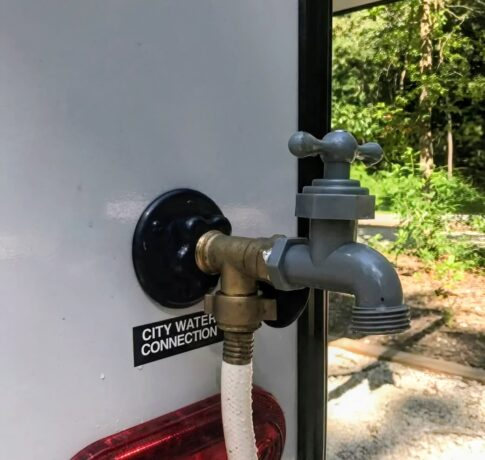
Outside tap
These RVers figured out a way to wash dishes, hands, and more without going inside the RV.
Outdoor rug tips
Photo credit: RV Road Family
Use artificial turf instead of buying an outdoor rug. Saves money, and the hardware store will cut the exact size you need.
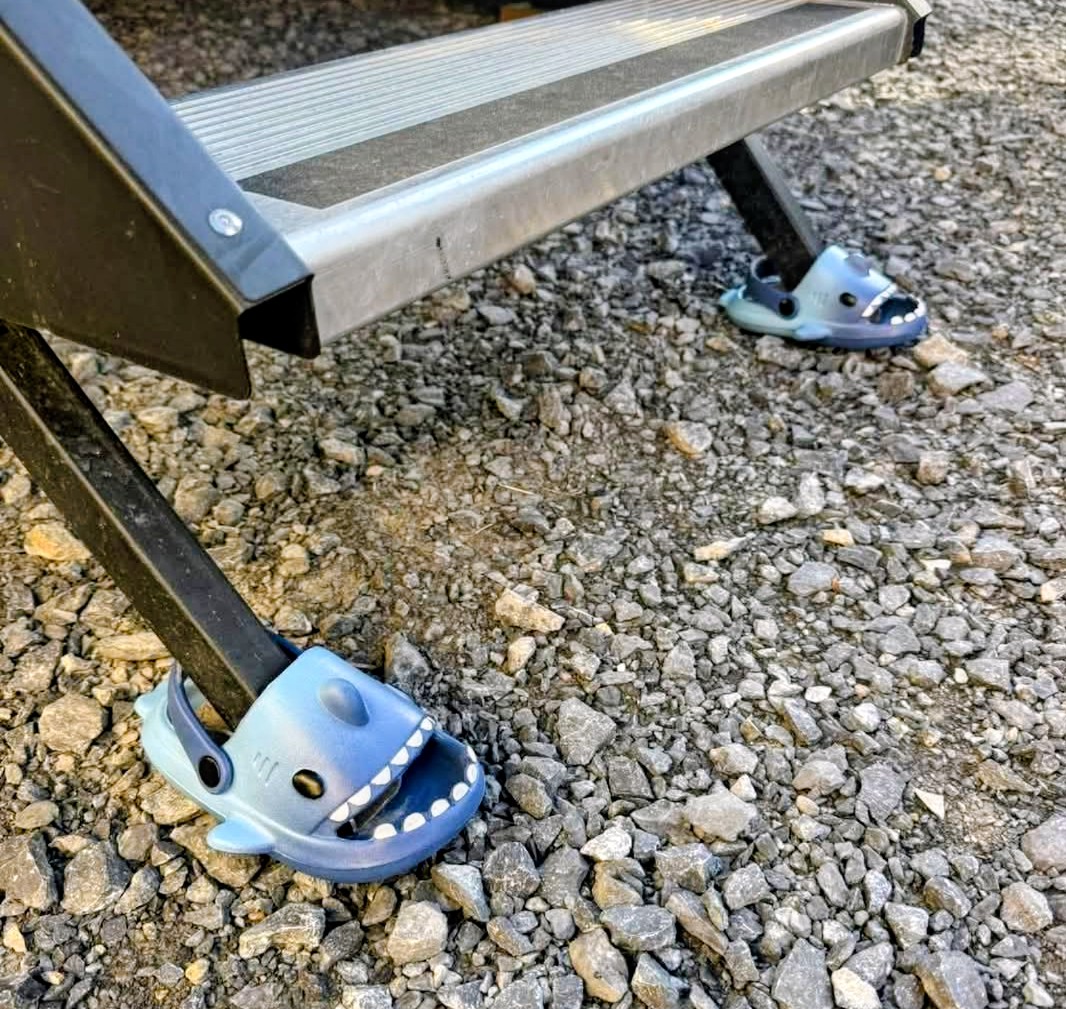
Purchase children’s crocks from the Dollar Store (size 5/6). Slip one on each “foot” of your RV steps to protect your outdoor rug or grass from rips or holes.
Photo credit: RV Family, Facebook
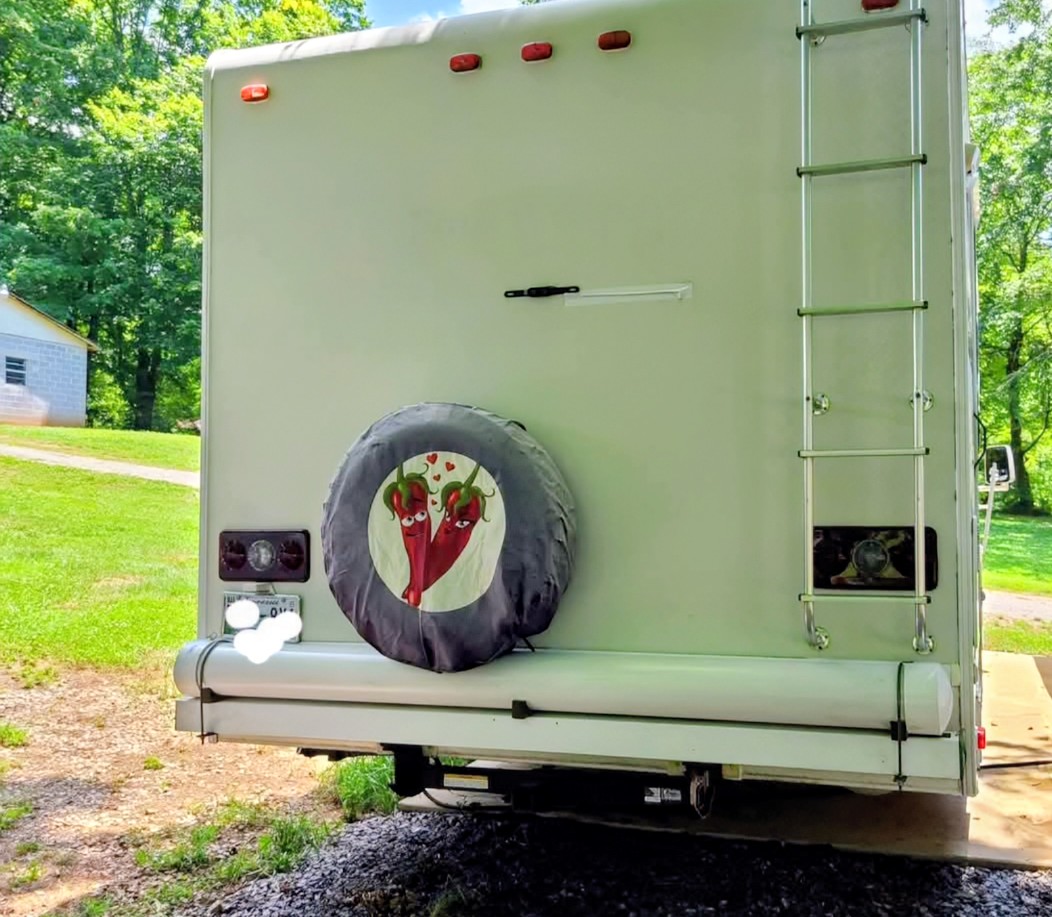
Mount a PVC pipe to your back bumper. It can contain your outdoor rug and keep it dry even when travel days are downright drippy!
Fridge tips for travel days
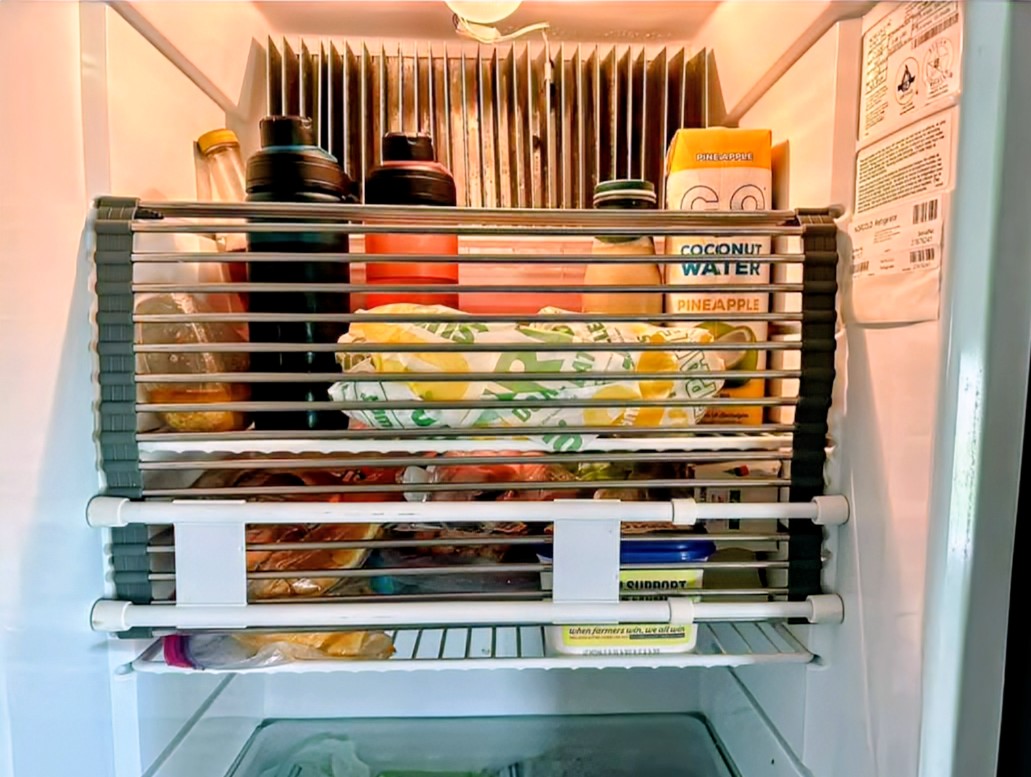
Use your roll-up dish drainer to secure refrigerated foods on travel days.
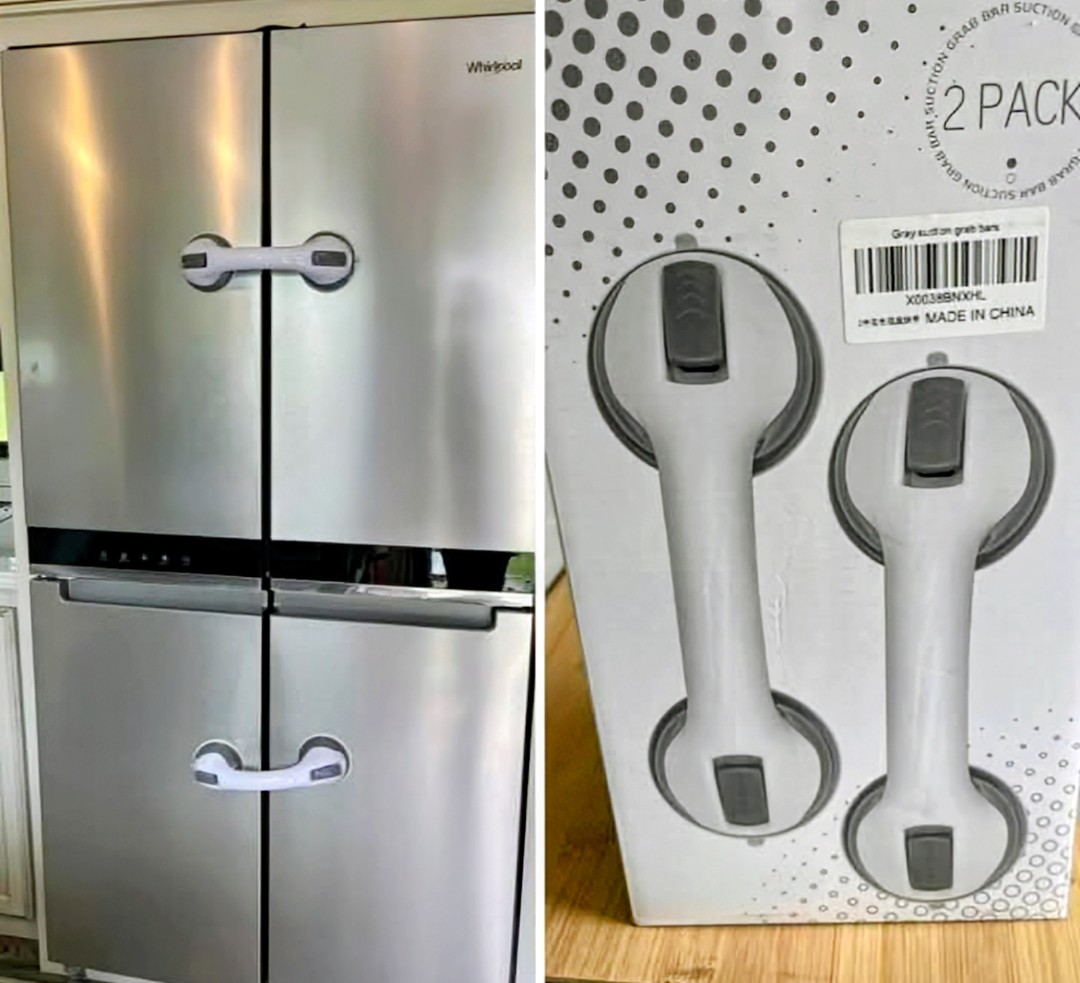
Use suction cup handles to keep your RV refrigerator doors securely closed on moving days.
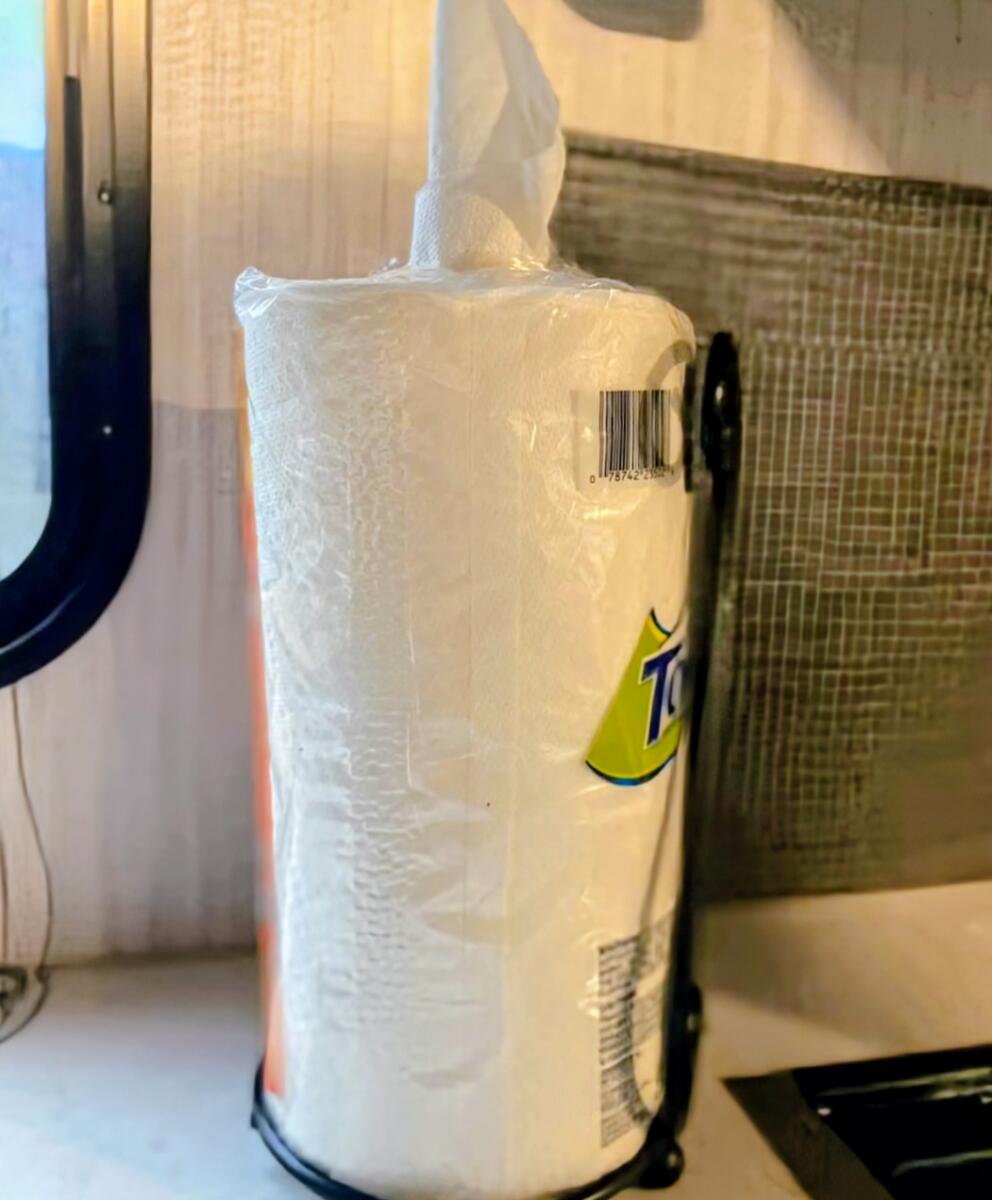
Remove the cardboard tube and pull the towels from the center.
Photo credit: RV Road Family
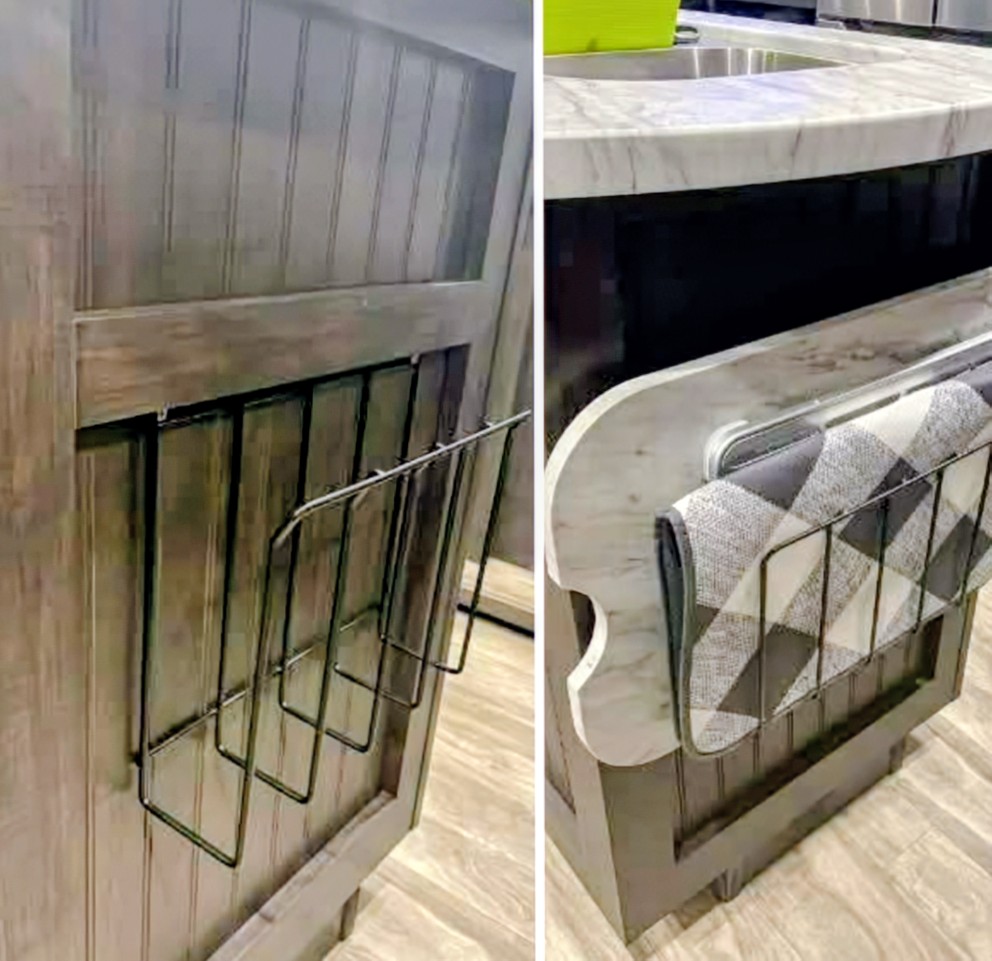
A wire magazine rack mounted to the end of a kitchen cabinet holds cutting boards, a sink cover and a drying mat.
RV window and door tips
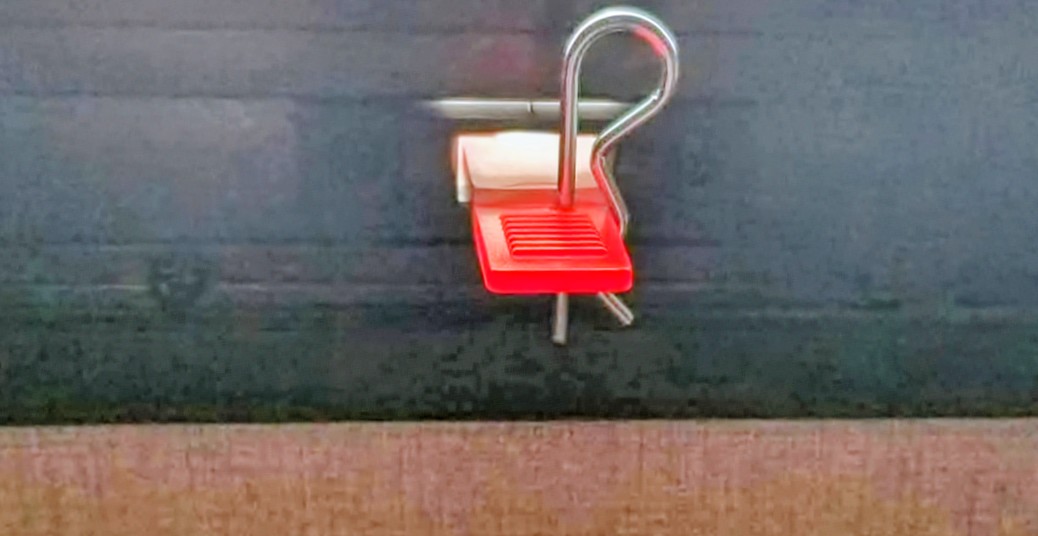
An unexpected wind gust can cause your emergency window latch bar to fall outside. Drill a small hole and secure with an R-pin. (For safety, remove the pin when the window is closed.)
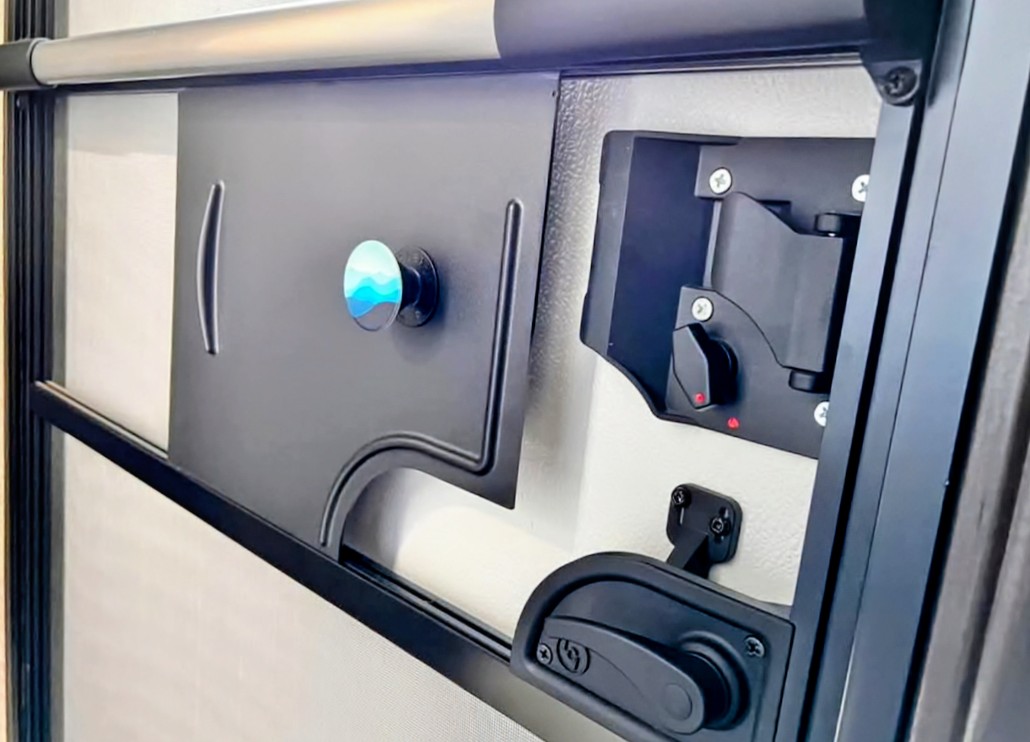
A pop socket (made for a cell phone) provides a better grip.
Light the night
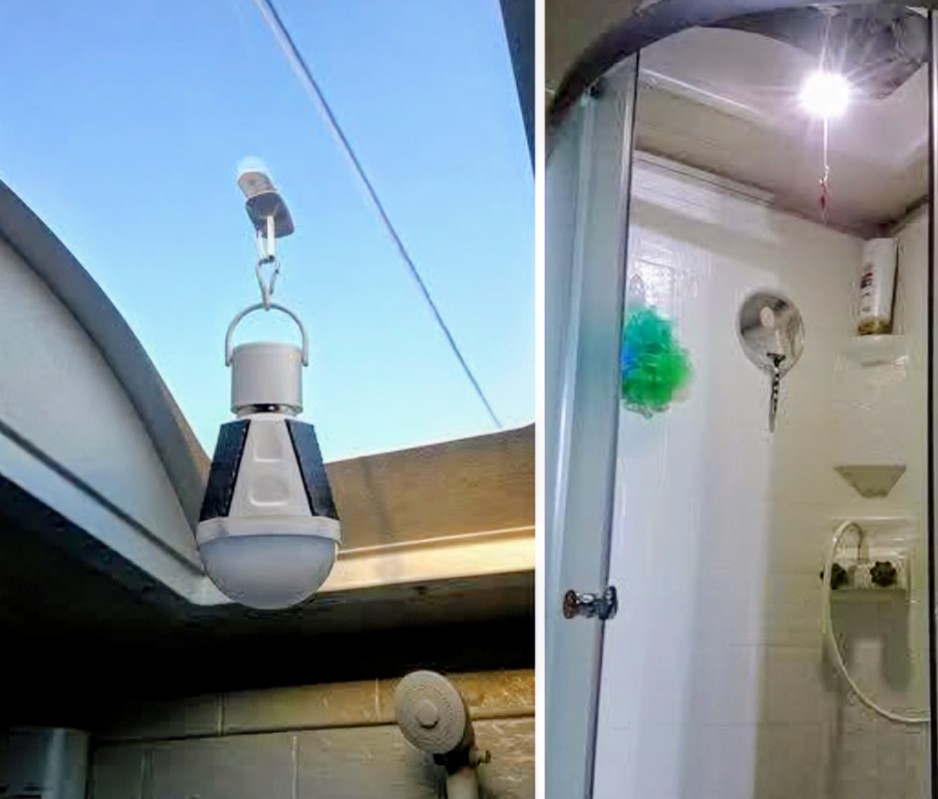
RVer (and Facebook contributor) Orianne Delafleur needed a nightlight in her RV. She mounted an outdoor solar light (similar to this one) in her RV bathroom’s skylight, and it works perfectly!
Clothing tips
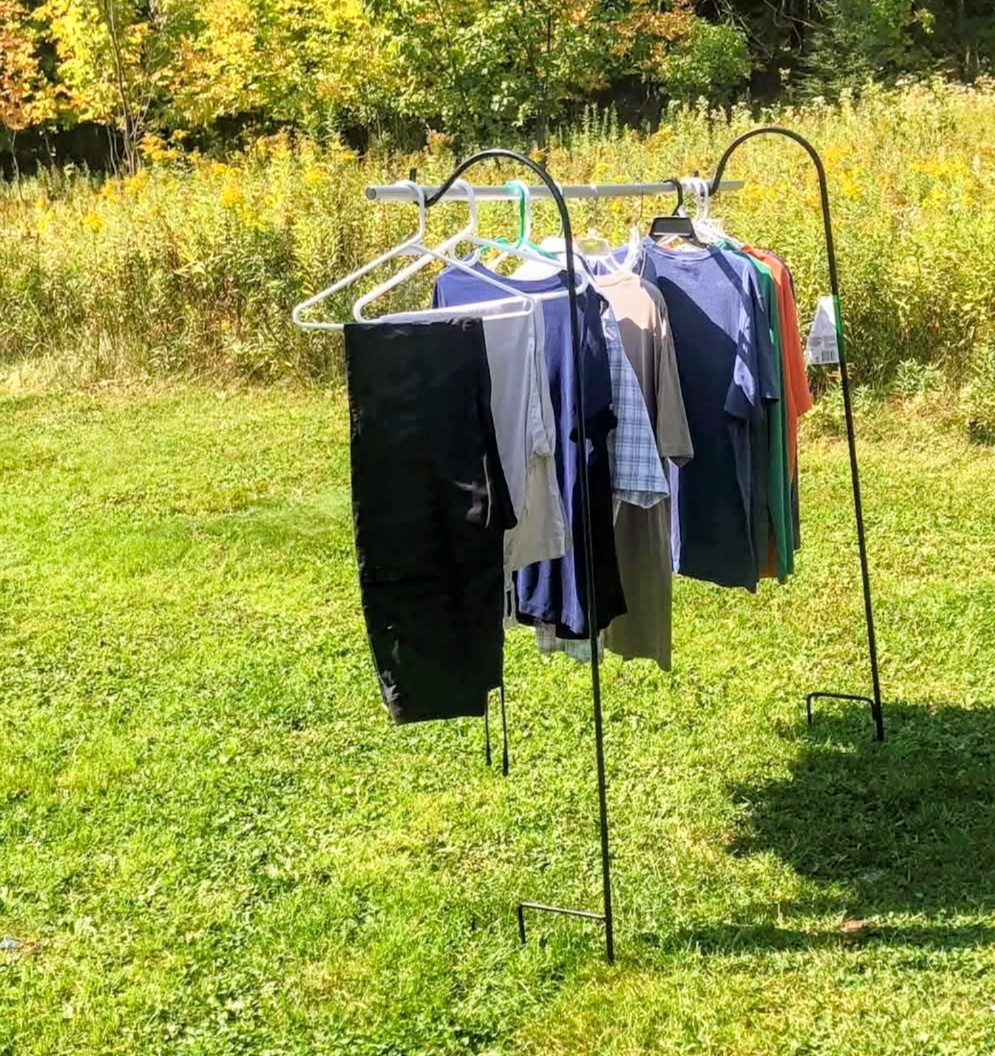
Two shepherd hooks and a length of PVC make an impromptu clothesline to dry clothes.
Photo credit: RV Family
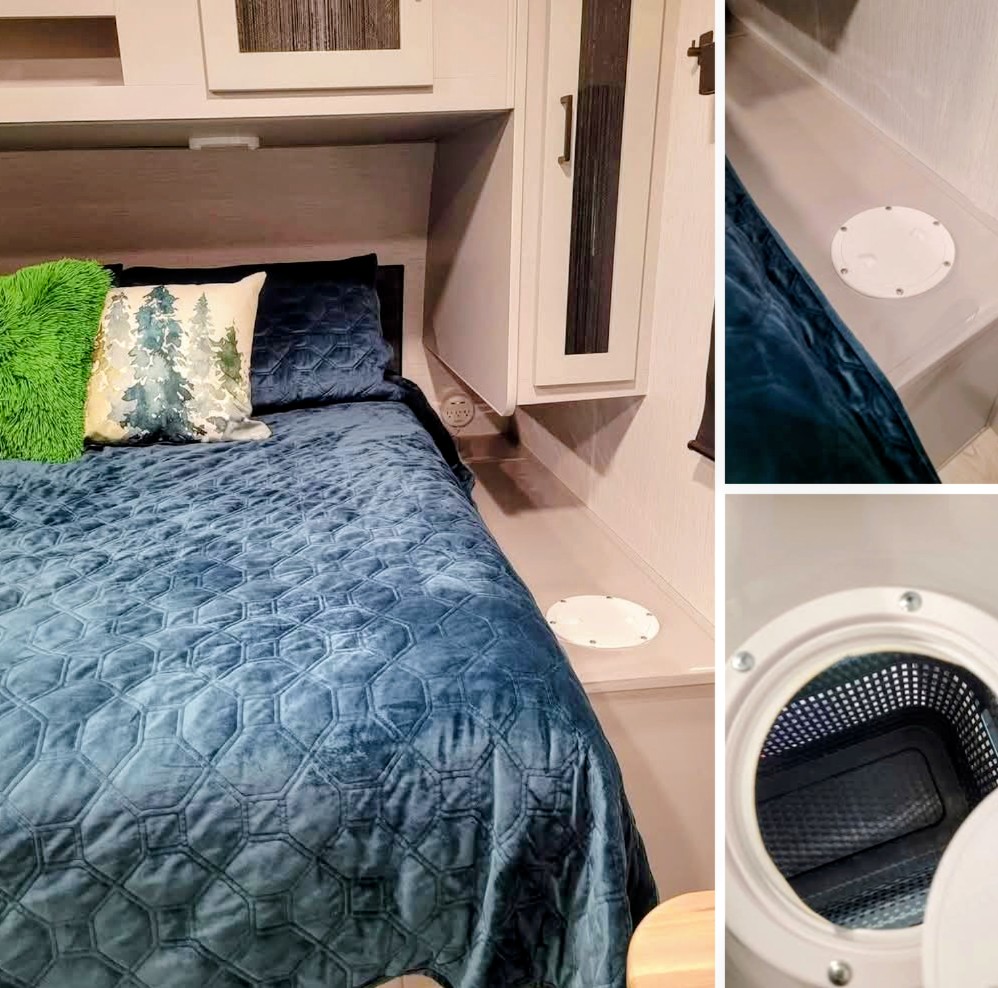
A boat deck portal caps the hole cut for a clothes laundry chute. Clothes fall into the storage area below.
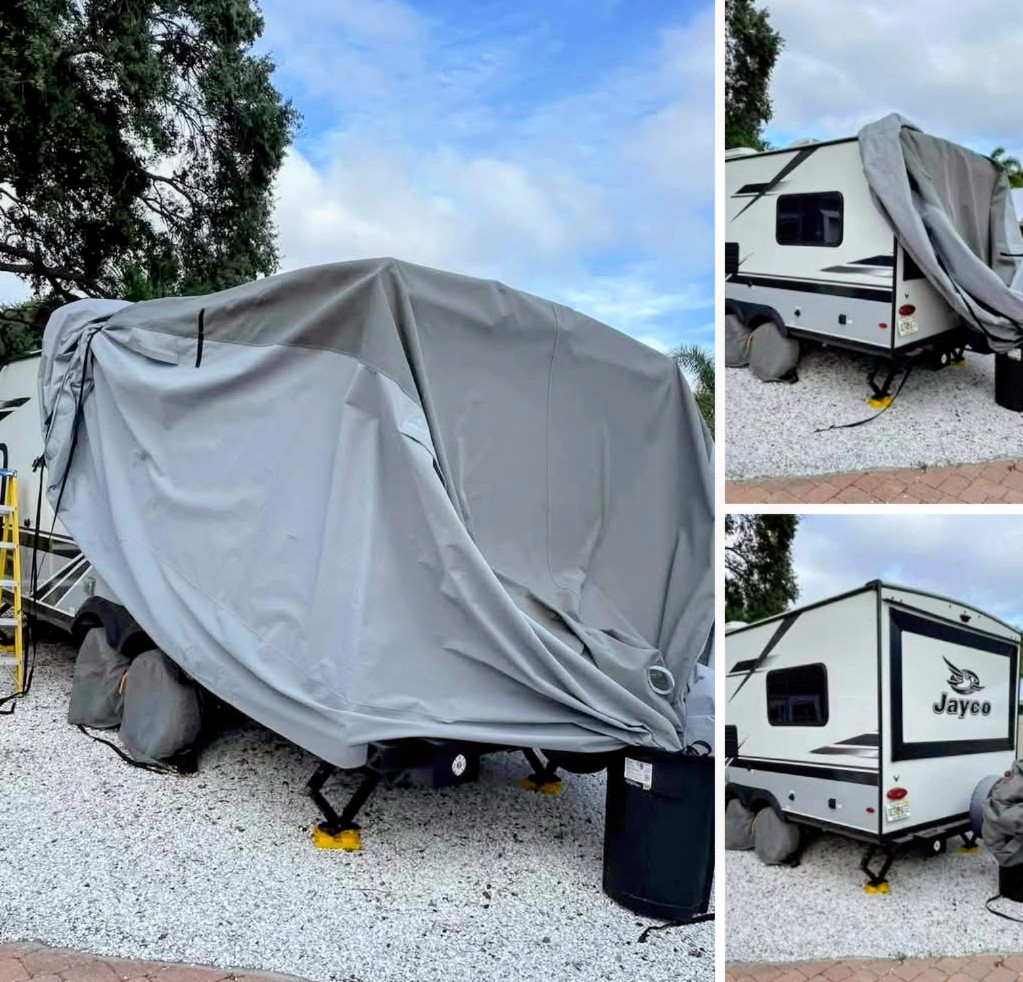
Place a clean, large trash bin behind your RV. Remove the cover by pulling it from the back and put it directly into the bin. To replace, just pull the cover up and forward.
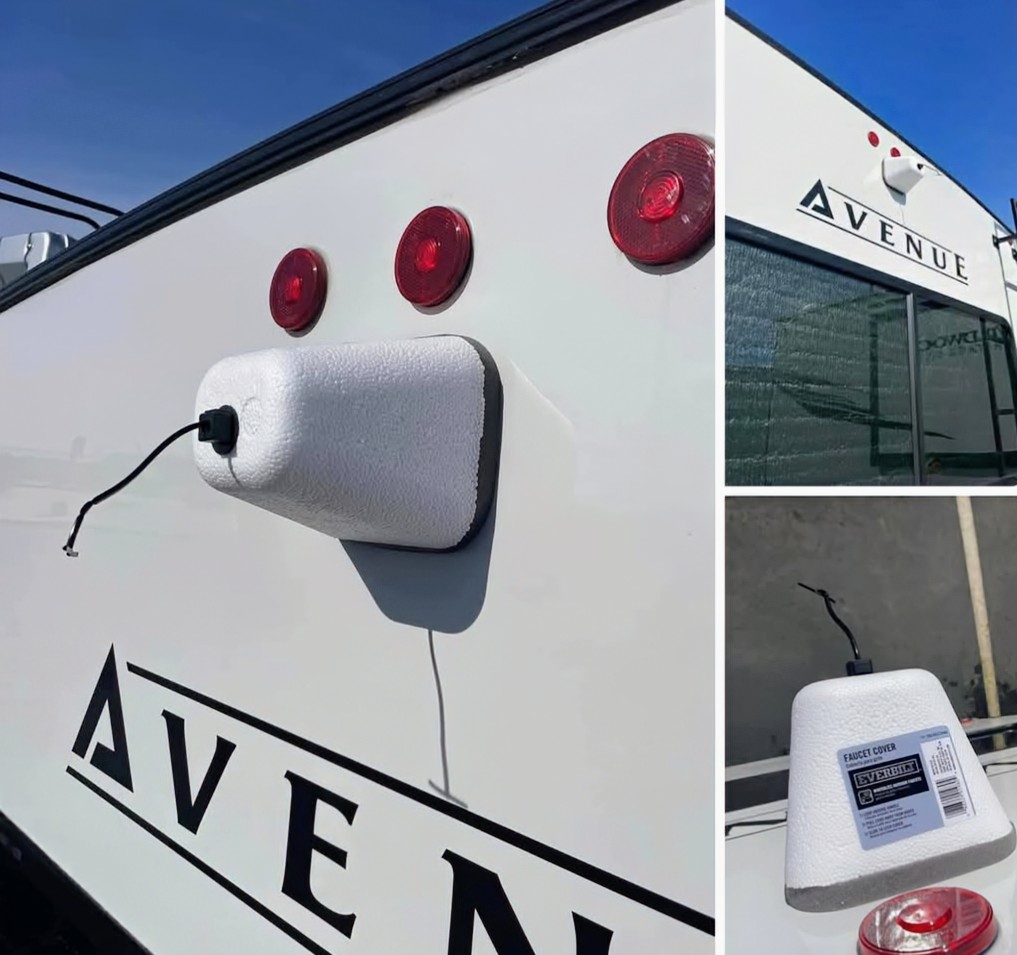
Protect your expensive backup camera from the sun and weather with an insulated hose bib cover. Remove on travel days, of course!
There’s one in every RV crowd!
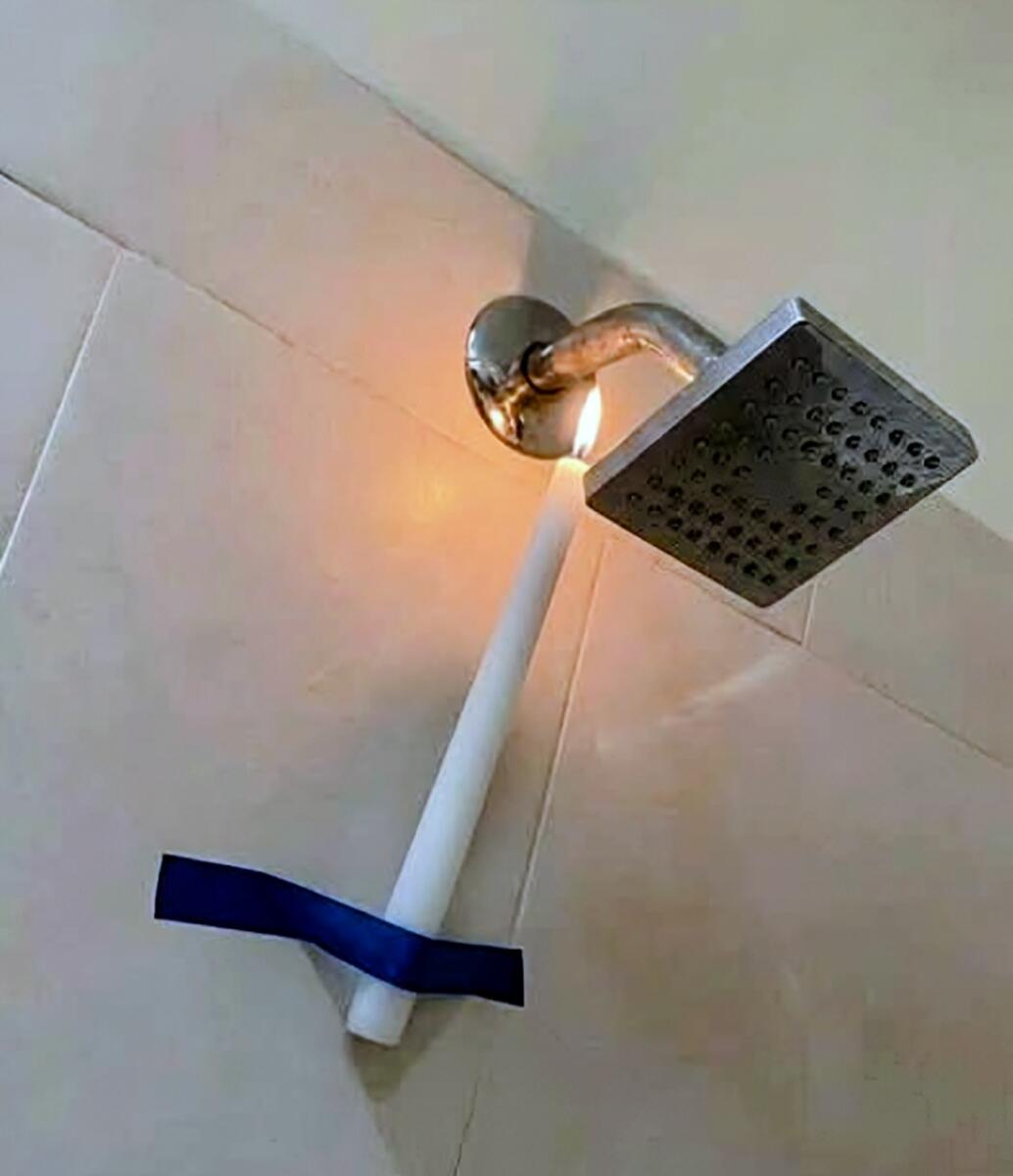
Final “tip” from an RVer with a sense of humor!
Do you have a tip to share? Tell us in the comments below!
OPINION
Transportation Secretary Sean Duffy has a message for Americans: Hit the road and celebrate America’s 250th birthday with a great American road trip!
That would be adorable if it weren’t so breathtakingly tone deaf and hypocritical.
This is the same official who reportedly spent seven months on the road traveling with his family, filming a reality TV show—at taxpayer expense, with corporate sponsorships helping make that possible. Nice work if you can get it.
Meanwhile, ordinary Americans are supposed to what? Cheerfully pile into the family SUV, hook up the RV, and pretend fuel prices aren’t punishing? Pretend campground rates haven’t climbed? Pretend food prices haven’t become ridiculous? And pretend a simple weekend getaway doesn’t now require a budgeting spreadsheet?
For RVers, this is especially insulting. I’m an avid RVer who finds herself stuck at home this entire season because of prohibitively expensive fuel costs. I KNOW I am not alone.
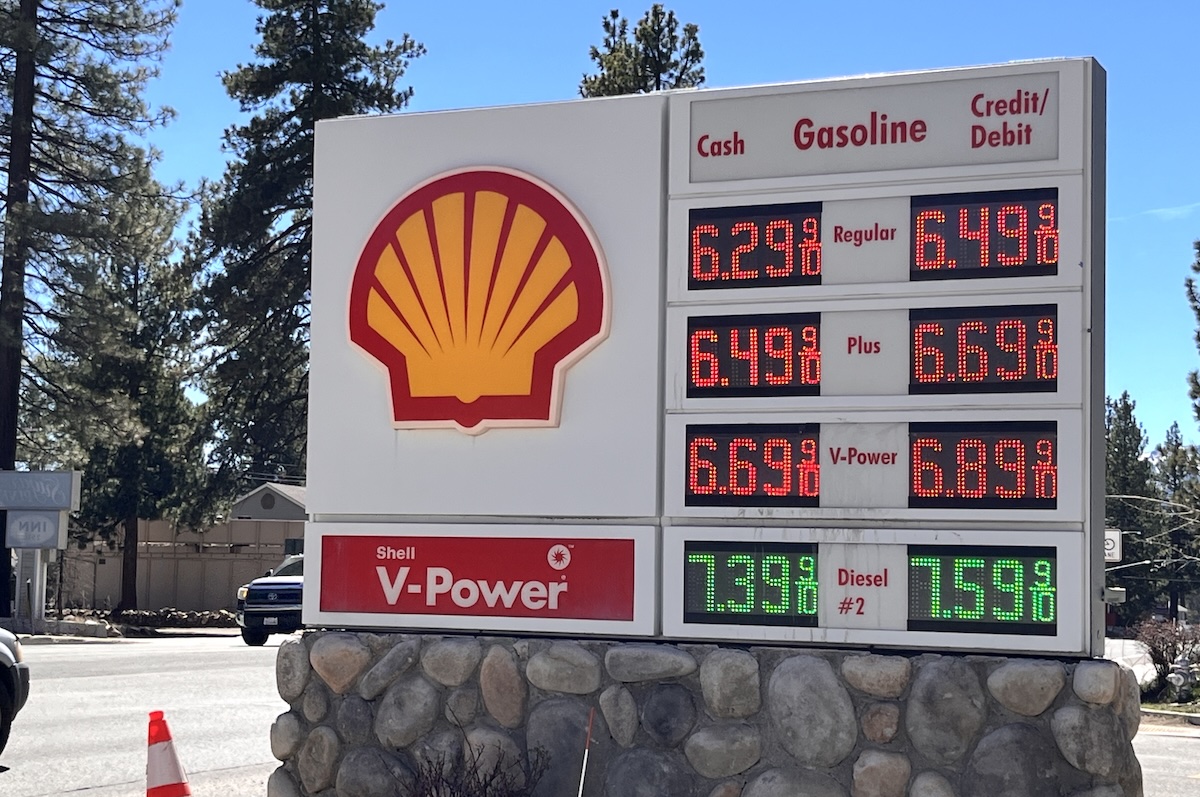
RVtravel.com publisher Chuck Woodbury snapped this photo in April at South Lake Tahoe, California. The prices have gone up since then.
RVers live with the reality of road travel costs. We know what it feels like to wince at the pump while filling a truck that tows a trailer. We know that a tank of fuel can vaporize a couple hundred bucks before you’ve even reached the state line. And we know that “the affordable American vacation” increasingly isn’t affordable at all.
And that’s what makes this so maddening.
Road trips used to be the democratic vacation. The everyman adventure. You didn’t need first-class airfare or a luxury resort budget. You just needed a reliable vehicle, a map, and enough gas money to chase the horizon.
Now we’re being told to celebrate by doing the very thing that’s becoming financially out of reach for millions. It has a real “let them eat cake” vibe.
If government officials want Americans to embrace road travel, maybe start by making it economically realistic instead of delivering cheerful travel advice from the comfort of a sponsored media tour.
Because for most Americans, the problem isn’t patriotism. It’s the price tag.
A longtime RVtravel.com reader recently commented on my review of a truck camper RV. Jim Johnson said (in part), “The problem with truck campers today is the RV parks that won’t accept them.”
Jim’s comment prompted me to mentally review the countless RV parks we’ve visited. Turns out, he’s right! Looking back in my mind’s eye, I haven’t seen too many truck campers. Fifth wheel RVs? Check! Travel trailers? Check! Motorhomes? Check! Tents? Check! But truck campers? Not many. Could it be that some RV parks really do disallow them? I had to learn more!
Definition(s)
Just what is a truck camper? I’ve always believed it’s a self-contained, manufactured RV unit sized to slide into the bed of a pickup truck. RVIA agrees with me. It classifies an RV unit that sits in the bed of a pickup truck as one of the core RV types (along with fifth wheels, travel trailers, and motorhomes). Truck campers are also called pickup campers.
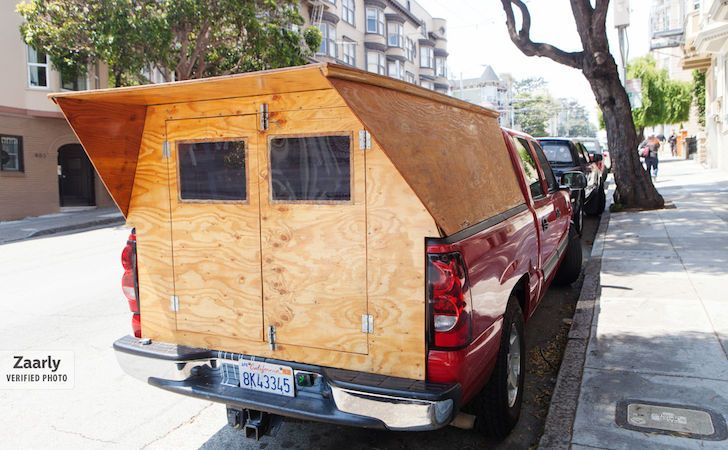
You’d think this definition would suffice. However, there are also homemade truck campers, like the one pictured above. If you ask Google, you’ll find many, many do-it-yourself truck camper building plans.
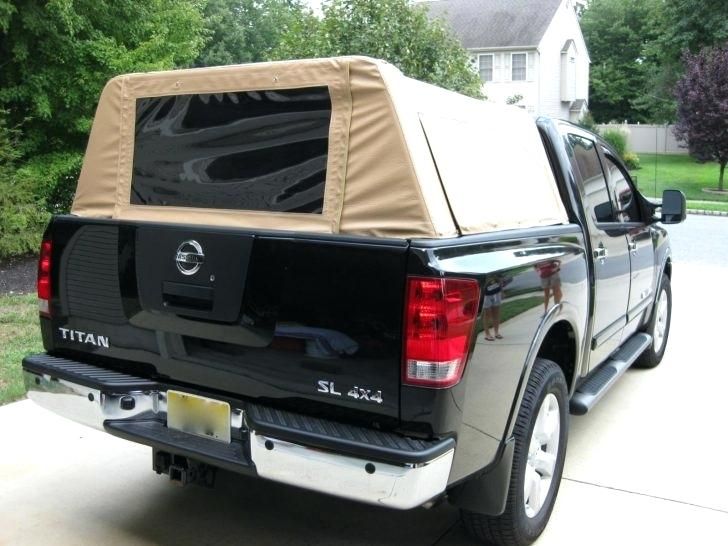
But wait! There’s more. You can also purchase a soft-sided truck camper. These popular setups feature canvas or screen “walls” similar to a tent. They provide more usable space for comfort.
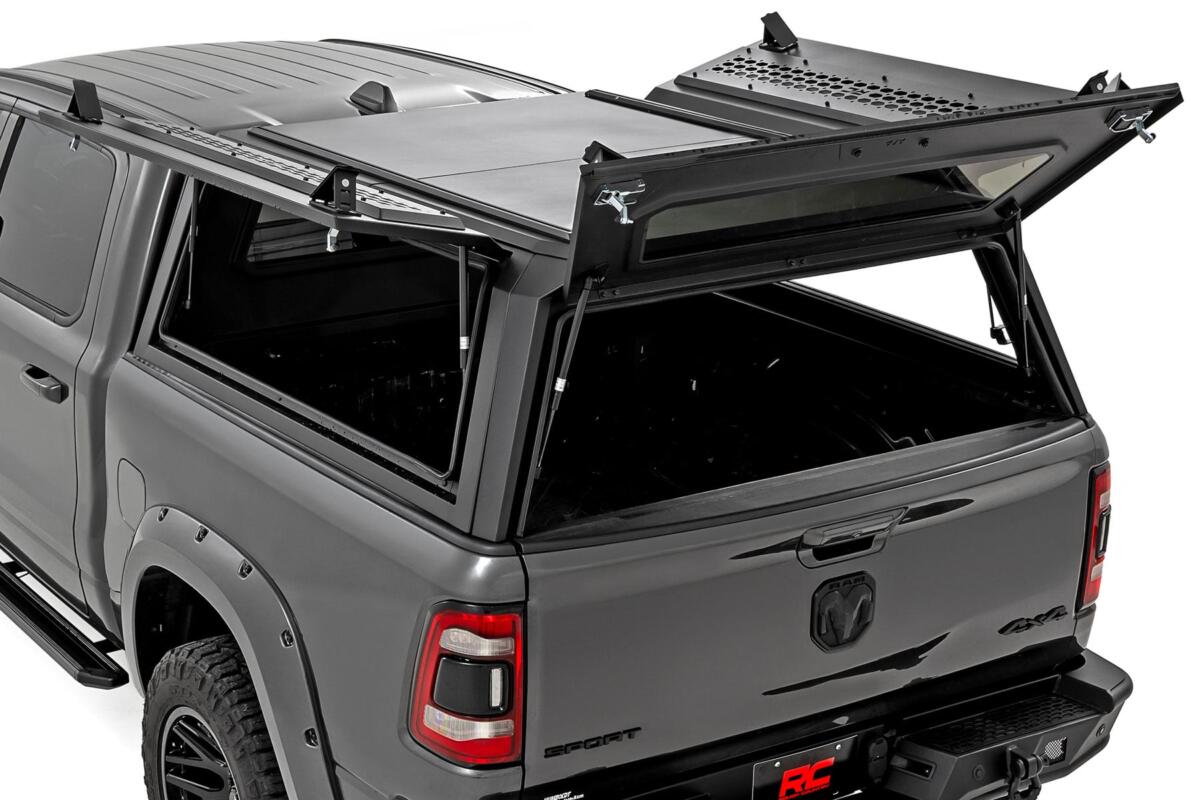
Then, there are folks who define a truck camper as any configuration that allows for sleeping. A truck topper (see above) qualifies with this definition. For that matter, an open truck bed with an inflatable mattress tossed inside could qualify as a “camper,” I guess.
Not welcome
Many RV parks and campgrounds—especially private and resort-style facilities—have rules that prohibit truck campers. This is not a federal law, but rather a policy set by individual operators.
Here are some reasons why truck campers are not always welcome:
• Insurance and liability concerns. Some owners cite insurance as a reason. In earthquake- or fire-prone areas, they may require campers to remain on the truck at all times so they can be evacuated quickly if needed. Others may have had trouble removing abandoned or damaged truck campers, making removal more costly than with a standard trailer.
• Appearance rules. Certain parks want to maintain a “clean” or “resort” look. Truck campers can be seen as less RV-like. Some park operators use these restrictions to wean out people they consider undesirable—such as those living in vehicles long-term or who may be homeless. This is about appearances and perceived suitability for the campground’s clientele.
• Safety. Bear country can create another layer of restrictions. When a campground is closed to soft-sided camping, pickup campers with exposed canvas or truck-bed tent campers may be barred for safety reasons. (Hard-sided truck campers may still be allowed.) The White River National Forest did exactly that at Difficult Campground in 2025 because of bear activity. The notice specifically excluded truck-bed tent campers.
• Classification and certification. Some parks require RVs to be certified by the RVIA (Recreation Vehicle Industry Association) for safety features like wiring, plumbing, and fire alarms. Many truck campers are self-built and may not meet these standards, so they are turned away.
Why choose a truck camper
A lot of RVers like truck campers because they are compact, flexible, and easy to take into places where bigger rigs struggle. Another reason for the truck camper’s popularity is cost. Truck campers often cost much less than many other RV choices. Especially if you choose to purchase a previously loved manufactured model.
What can truck camper owners do?
The good news is that truck camper owners still have plenty of places to stay. Look for state and national park campgrounds that explicitly list truck campers, pickup campers, or small RVs as allowed equipment. (Always read the site notes before booking.) Big Bend National Park, TX, for example, allows a smaller RV or pickup camper at certain group sites. Many front country campgrounds are built for tents, RVs, and towables in general.
If you are not tied to hookups, BLM dispersed camping is another solid option. It is usually managed with clear stay limits and area-specific rules.
Bottom line
If you own a truck camper, check each campground’s posted rules before booking. If you can’t find a place that accepts your truck camper, consider public land campgrounds, van-friendly RV parks, or boondocking.
What about you?
Do you own, or have you ever owned, a truck camper? Have you ever been turned away from an RV park or campground with yours? Tell us about it using the comments below.
We use cookies to ensure that we give you the best experience on our website. By continuing to use our site, you consent to accepting cookies. We NEVER have or will sell reader's data. For more info, please see our privacy policy page.