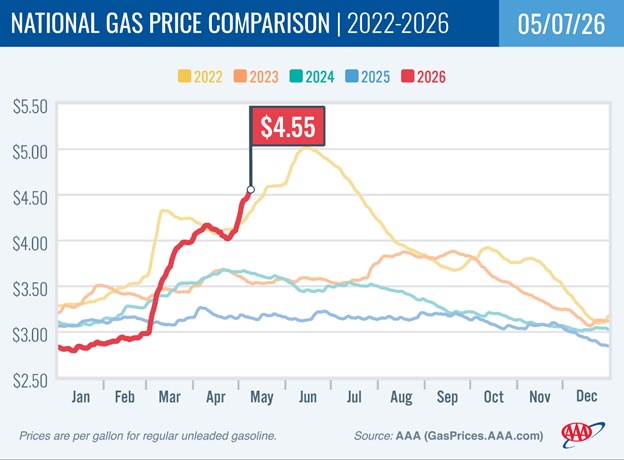
The cost of RVing and any other activity that involves operating a motor vehicle got more expensive this past week. The national average retail price for regular gasoline rose 25 cents a gallon for the second consecutive week, to $4.55.
Pump prices are now $1.40 higher than they were a year ago and have reached their highest level since 2022, when the national average peaked at $5.01 per gallon. California prices were the highest at $6.16.
While crude oil prices dipped below $100 per barrel amid ongoing negotiations to reopen the Strait of Hormuz, gasoline prices continue to face upward pressure from global supply concerns.
• Today’s National Average: $4.558
• One Week Ago: $4.300
• One Month Ago: $4.140
• One Year Ago: $3.154
According to new data from the Energy Information Administration (EIA), gasoline demand decreased last week from 9.10 million b/d to 8.81 million. Total domestic gasoline supply decreased from 222.3 million barrels to 219.8 million. Gasoline production decreased last week, averaging 9.6 million barrels per day.
Oil market dynamics
At the close of Wednesday’s formal trading session, WTI fell $7.19 to settle at $95.08 a barrel. The EIA reports crude oil inventories decreased by 2.3 million barrels from the previous week. At 457.2 million barrels, U.S. crude oil inventories are about 1% above the five-year average for this time of year
EV charging
The national average per kilowatt hour of electricity at a public EV charging station remained the same, at 41 cents.
State stats
Gasoline
The nation’s top 10 most expensive gasoline markets are California ($6.16), Washington ($5.76), Hawaii ($5.66), Oregon ($5.34), Nevada ($5.23), Alaska ($5.21), Illinois ($4.99), Arizona ($4.84), Ohio ($4.78), and Michigan ($4.78).
The nation’s top 10 least expensive gasoline markets are Oklahoma ($3.98), Mississippi ($4.00), Louisiana ($4.02), Arkansas ($4.02), Nebraska ($4.08), Texas ($4.09), Georgia ($4.09), Alabama ($4.10), Kansas ($4.11), and Missouri ($4.16).
Electric The nation’s top 10 most expensive states for public charging per kilowatt hour are West Virginia (53 cents), Hawaii (51 cents), Alaska (50 cents), New Hampshire (47 cents), Louisiana (47 cents), California (46 cents), South Carolina (46 cents), New Jersey (45 cents), Arkansas (44 cents), and Illinois (44 cents).
The nation’s top 10 least expensive states for public charging per kilowatt hour are Kansas (29 cents), Missouri (31 cents), Utah (33 cents), Maryland (33 cents), Nebraska (33 cents), Iowa (34 cents), South Dakota (34 cents), Vermont (35 cents), New Mexico (37 cents), and Delaware (37 cents).
America’s Original RV Newsletter. Since 2001
Issue 2900 • New issue every weekday
This free edition is made possible by 6% of our readers who support RV Travel with a voluntary subscription. Advertising helps, but that alone is not sufficient.
Today’s thought
“You just can’t beat the person who never gives up.” —Babe Ruth
Need an excuse to celebrate? Today is National Coconut Cream Pie Day!
On this day in history: 1886 – Pharmacist John Pemberton first sells a carbonated beverage named “Coca-Cola” as a patent medicine.
Tip of the day #1 tip on how to maximize the life of RV batteries
No matter if you are a new or experienced RVer, you probably have encountered times when it just seemed like your RV battery did not last that long. Josh the RV Nerd at Bish’s RV regularly sees RVers who are changing their batteries every year or two!
If you have had that experience, Josh wants to share why that’s happening and what you can do to avoid it and thereby get a better return on investment from your RV batteries. Continue reading the article, then watch Josh’s video.
RV review
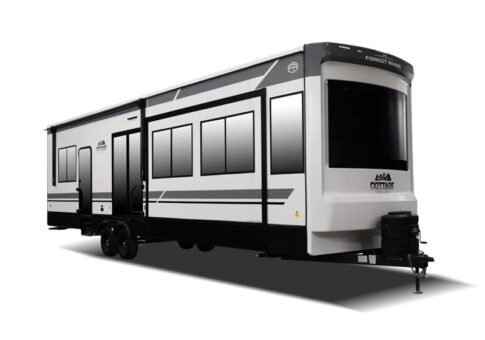
2026 Forest River Cedar Creek Cottage 40CMK—a could-be year-round home
By Gail Marsh
The 2026 Forest River Cedar Creek Cottage 40CMK has a comfortable floor plan with a residential feel. I think this would make a nice destination RV for a single or a couple. Bonus: It has room for an occasional guest, as well. Forest River builds the Cedar Creek Cottage product line with residential intention. You’ll find 3M-bonded sidewalls with a 3-inch wall featuring R11 insulation. Windows are double-paned for buffering weather and noise. Continue reading.
STAY COOL THIS SUMMER: Run your RV’s air conditioner when you otherwise cannot! Learn why our publisher Chuck Woodbury raves about this. (Plus, a special RVtravel.com reader discount!)
In the RV shop with Dustin How to prevent damage to your RV furniture
Why is my RV furniture cracking, peeling or looking terrible?! Most RV furniture isn’t necessarily known for its durable, long-lasting construction. In fact, it carries quite the reputation for flaking, peeling, and tearing—even after minimal use. My shop sees around 25-35 units a week. It doesn’t matter the year, make or model, most of them have damaged or blemished furniture after time and use. Continue reading.
Trivia answer (from question in email alert): Abraham Lincoln
Article and video Clever van life upgrade with a cheap toy hauler
After years on the road in her van, Carrie wanted less driving, more room to work, and a real shower. That led her to a used toy hauler that gave her extra space without giving up the van setup she already liked. In this article and video, she shares her story. Very clever, indeed!
Featured article Life expectancy calculator gives me sobering number: 16.9 years left to live. What to do with that precious time?
By Nanci Dixon
Back in 2021, I wrote an article about using a tape measure as a metaphor for measuring my life. It examines how much time I have spent living and the statistics about how much time is left. Using the Social Security Life Expectancy Calculator, it looks like I have 16.9 years left. That is pretty sobering. What do I do with these precious years?
FUNNY RV THOUGHT: The older an RVer gets, the more exciting weather radar becomes.
Ask Dave How can I make my RV’s roof air conditioner quieter?
Fresh, flavorful diabetic diet meals for RVers over 60
Eating well on the road doesn’t have to be complicated or bland. This diabetic cookbook for people over 60 is packed with quick, practical recipes designed to support steady blood sugar and boost daily energy, all with simple ingredients. With clear nutrition info and a built-in 4-week meal plan, it takes the guesswork out of healthy cooking so you can focus on feeling good and enjoying the journey. Learn more or order.
? MYSTERY PRODUCT OF THE DAY ? We SO want to tell you that this is a silly, stupid invention… but there’s just no way we can deny that they might actually come in handy. Flip through the pictures to see how it works.
Quick tip RVing and carbon monoxide poisoning
Carbon monoxide (CO) poisoning is a real danger for RVers because it comes from fuel-burning sources common in RVing—generators, engines, heaters and stoves. The gas is colorless and odorless, so you won’t detect it without an alarm. Early symptoms often feel like the flu: headache, dizziness, weakness, nausea and shortness of breath. In an RV, that can be easy to miss—especially when multiple people feel “off” at the same time. Symptoms can progress to confusion, chest pain, loss of consciousness, and even death. Risk increases when running generators near the RV, idling engines, or using fuel heaters in enclosed or poorly ventilated spaces. If symptoms appear, get outside to fresh air immediately and call for help.
If you have a carbon monoxide detector, make sure you check and change the batteries. And if you don’t have one, you need one. It could save your life.
Website of the day
The Best Historic Town to Visit in Each State
Love history? Love exploring new and scenic towns? This list from Sherman’s Travel will point you in the direction of the best historic towns in each state across the U.S. Have fun!
Trivia
Bison consumption in the U.S. is minimal compared to beef, with Americans consuming roughly 0.07 lbs. of bison annually, according to the National Bison Association. In contrast, Americans will eat an average of about 55 pounds of beef in that same year.
Readers’ pet of the day
“Zola (Basenji/Lab mix, age 5) is new to camping and loves being outdoors. She’s been on one campout to a local state park and did well, so we plan on doing more with her in the future. This is her thinking she’s a lap dog; she jumped right over the back of the chair and landed right on my lap.” —Lori Richards
Send us a photo of your pet with a short description. No blurry photos and please do not submit your photo more than once. Thanks!
By Dave Solberg Dear Dave,
What is your opinion of the WackO RV A/C Silencer for the Coleman-Mach Air? I have watched installation videos and it appears it directs most of the airflow through the duct system, which makes me wonder if this would create backup pressure on the unit. It appears the reduction in decibels is not that significant quantitatively, but folks report the A/C noise is reduced to their satisfaction. Thanks in advance for your feedback. —Gary, 2021 Jayco Melbourne 24L
Dear Gary, I met the founder of the WackO® product at the Florida RV SuperShow in Tampa a few years ago in the vendor hall and got the “lowdown” on the product. Since then, I have watched the install videos, reviews, and promotional videos. I thought it was funny the product was called “WackO”, as it reminded me of the ShamWow or Popeil products.
In my opinion, the last time I checked, this product did not reduce the noise. Rather, it was the procedure of taping the poor workmanship of the RV manufacturer with the HVAC foil tape that reduces the noise. The elastomeric filter is not recommended by most air conditioner companies as it restricts airflow more than the cell foam version when it gets dirty.
What is causing the noise?
Original equipment manufacturers (OEMs) of the air conditioners make a generic unit that can be used for direct airflow out of the bottom of the unit or customized for ductwork in the ceiling. The OEM sends the unit with a diverter that needs to be cut to size by the RV manufacturer and installed with HVAC foil tape. This directs the conditioned air to the ductwork throughout the ceiling of the rig.
Unfortunately, most RV manufacturers do not take the time and effort to properly seal all the gaps, holes, and rough spots. Therefore, the air conditioner runs less efficiently and is loud when the air hits certain rough spots and openings. If you watch the video, the majority of time is spent taping the inside of the air chamber. Anyone can do this with some HVAC foil tape from a home improvement store.
Issue with ducted roof air conditioners
This has been an issue with ducted roof air conditioners, as RV manufacturers cut the diverter too small and simply apply one strip of tape at the top. I have found several units locally that had poor air circulation or were blowing warm air. It turned out that the diverter was laying sideways or was detached completely.
I would be a little skeptical about covering the outgoing duct completely, like the install video shows. This would create a block in the airflow and could cause the compressor to freeze up. If you look at the reviews on Amazon or RecPro, they are mostly 4-5 stars. However, this is due to making the unit quieter—which is not from the product but rather the procedure.
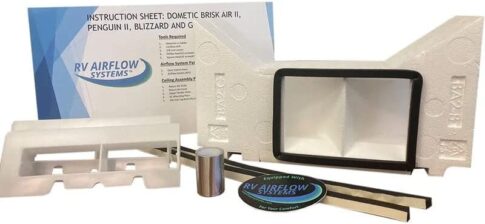
Personally, I like the RV Airflow Systems™ product. It inserts a smooth, curved foam module that has been very popular.
RV Airflow Systems
It also suggests using HVAC foil tape to cover some of the gaps and holes. In addition, the curved vents increase airflow to the ductwork. You can find it on Amazon here.
Cut to the chase
Personally, I think installing HVAC foil tape to the inside and covering all the gap and holes will reduce the noise and increase the airflow sufficiently. Then just make sure the filter is cleaned periodically, the evaporator coils cleaned and have good airflow, and the mounting bolts are torqued tight each year.
You might also enjoy this from Dave
My RV’s roof air conditioner is so noisy I can’t hear my husband 15 feet away!
Dear Dave,
First on my list is to thank you for ALL of your knowledge. I am wondering why my air conditioners are so loud in my unit and how I can quiet them down? When the air is on I can’t hear my husband talk 15 feet away, or watch television, for that matter. Help. Thank you. —Karen, 40’ 2021 Heartland Cyclone 3713 fifth wheel toy hauler
By Cheri Sicard
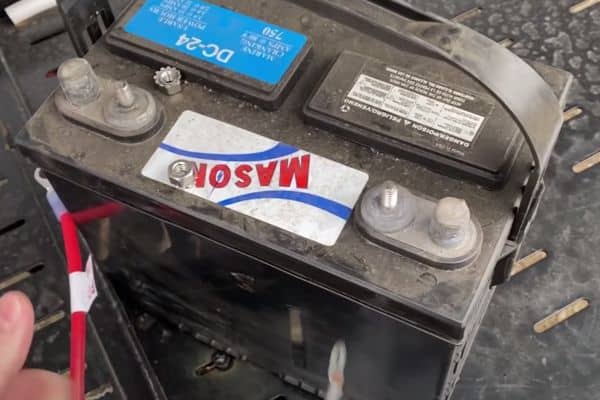
No matter if you are a new or experienced RVer, you probably have encountered times when it just seemed like your RV battery did not last that long. Josh the RV Nerd at Bish’s RV [formerly Haylett RV] regularly sees RVers who are changing their batteries every year or two!
If you have had that experience, Josh wants to share why that’s happening and what you can do to avoid it and thereby get a better return on investment from your RV batteries.
Why might your RV batteries not be lasting?
Josh begins by looking into reasons your RV batteries might be draining faster than they should.
Today’s RVs have more electronic gizmos and gadgets and technology than ever before and it is not always properly managed as to power. Watch the video for details, but the bottom line is, most RVers have things that are trickle-drawing the power, even when the RV is not being used.
If you have lead acid batteries, you know they shouldn’t go below 50%, and doing so repeatedly will shorten their life.
Even if you have a battery disconnect switch on your RV, Josh says chances are high that there are still things slowly pulling at that battery—systems hard-wired into the RV.
So what can you do about it?
The solution is quick, easy, and costs nothing. If you are going to be storing the RV for any extended period of time, physically disconnect the wires that connect the batteries to the RV.
Taking the time to do this will stop any and all “parasitic load” from trickle-drawing off your RV batteries.
What constitutes an “extended period”? Josh says for anything over two weeks you can benefit from disconnecting your RV’s batteries at the source.
Josh will sometimes disconnect his batteries for just a week or even a couple of days’ storage. He says that the fact is, the sooner you disconnect your batteries, the more you are saving them. But two weeks is a good rule of thumb.
What if you will be storing the RV batteries for a long time?
If you will be storing the RV for six months or so, Josh says to remove the battery, store it in a cool, dry, well-ventilated place (not in your RV’s living area), and keep a low-cost trickle charger on it. Watch the video for more details and more tips to help stay safe and guide you in putting it all back together.
IMPORTANT TIP
Before you disconnect the battery, take a quick photo of what the battery setup looks like so you can quickly put it all back together.
By Cheri Sicard
Carrie did not replace her Sprinter van. She added a cheap toy hauler trailer and solved the problems the van could not. In the video at the end of this post from Cheap RV Living, she shares her story.
After years on the road in her van, Carrie wanted less driving, more room to work, and a real shower. That led her to a used toy hauler that gave her extra space without giving up the van setup she already liked.
When Carrie first shared her van life setup, she was living on the road full-time. Now she travels about four to six months a year, and her daily life looks different. She is driving less, moving more, and making room for exercise and full-time remote work.
That shift pushed her toward a 2012 Sportsmen Classic toy hauler by KZ, nicknamed “Sporty Spice.” The trailer is about 17 feet long, with a 14-foot box. Because it is a toy hauler, it starts lighter than many standard trailers, which matters when a Sprinter is doing the towing.
Inside, the big win is open space. The van is still her bedroom, bathroom, kitchen, and home for a 12-volt fridge. The trailer gives her a living room, office, workout area, and a place to host friends. The opposing benches can seat around eight people, even though she admits they are not comfortable.
The shower and setup changed daily life
The biggest upgrade was a shower. For someone who spent six years in a van, that changed a lot. The trailer has a standard RV bathroom with a conventional toilet and shower. Still, Carrie prefers the composting toilet in her van because the RV toilet pulls in extra water with each flush. That matters when fresh water is limited.
Her favorite upgrade is the Geyser shower system. It holds about 0.8 gallons, uses a 12-volt pump, and can heat water. She said she can wash her hair, face, and whole body with that amount. A normal RV shower would use at least 3 gallons, then fill the gray tank faster.
The trailer has a 5-gallon black tank, a 10-gallon gray tank, and an added 15-gallon fresh tank mounted behind the axle. Carrie moved water weight back there because the trailer was front-heavy, and she wants the tongue weight close to 10 percent for stable towing.
Power, cooling, and a better workday
Carrie also built the trailer around work. She removed the propane fridge to save weight and free up room. The microwave and propane stove are still there, though the stove is mostly backup for cloudy days.
A 13-year-old window A/C cools the trailer well and pulls about 750 watts at max. For power, she installed a 100Ah lithium battery on the tongue for lights, the fan, and a bit of furnace use. But she relies more on portable systems because the trailer wiring is, in her words, spaghetti.
Her fold-down desk may be the smartest part of the build. It clears the mounted 34-inch monitor, covers the old fridge vent openings, and gives her a proper place to work. The couches also fold into a king bed, though she mainly keeps them as seating and guest space.
Final thoughts
For $5,000, Carrie got what the van could not give her on its own: room to spread out, a better work setup, and a shower that uses very little water.
The trailer is not perfect. It bounces, cushions move, and gear still needs better tie-downs. Even so, this setup shows how a small, older toy hauler can add a lot to a full-timer’s quality of life, without starting over from scratch.
Are you kicking back in your RV right this very second as you read this? We know that many of you take a moment each morning to catch up on our latest newsletter (Thank you!) while sipping coffee at a campground picnic table or relaxing in a comfy recliner somewhere while on the road.
RV life offers the unique ability to be at home anywhere—whether that’s a mountain overlook, a beachside park, or a quiet corner of a desert plain. So, when we ask, “Are you in your RV right now?” we’re genuinely curious about where your travels have taken you today. Maybe you’re in motion, parked at a scenic spot, or even boondocking somewhere off-grid.
There’s something fun and a little bit magical about knowing that RVers from across the country—and even Canada—are reading the same poll from all different places. You could be in the rain in Oregon while another reader answers from sunny Florida. Or maybe you’re neighbors and don’t even know it!
As always, thank you for voting in today’s poll. The answers help us get a better idea of how and where people are using their RVs, and, of course, we love hearing about it.
If you’re comfortable sharing, tell us where you are right now! You don’t need to get specific—a state is plenty. Thanks!
By Dustin Simpson
Why is my RV furniture CRACKING, PEELING, or looking terrible?! Most RV furniture isn’t necessarily known for its durable, long-lasting construction. In fact, it carries quite the reputation for flaking, peeling, and tearing—even after minimal use.
Why is RV furniture so easily damaged?
I was recently approached by one of the top RV furniture manufacturers. They asked me to carry their products in our store. I asked them, “Have you seen your furniture after it’s been in an RV?” My shop sees around 25-35 units a week. It doesn’t matter the year, make or model, most of them have damaged or blemished furniture after time and use.
The RV furniture manufacturer explained that “RV manufacturers purchase the cheapest quality of RV furniture that we can produce. They do this to save money.”
When I told them that I wasn’t interested in carrying cheap furniture in my store, the furniture manufacturer said, “No, we want you to carry our aftermarket furniture. This furniture is more like a ‘La-Z-Boy’ and it’s better constructed. We use better materials that last a lot longer than the standard stuff that we sell to the RV manufacturers. When customers come in with damaged furniture, you would certainly have the opportunity to sell them better quality furniture.”
Maintenance is key!
No, thank you! I am not in the furniture business. I am in the repairs and maintenance business. Here is my advice on protecting and maintaining what you have:
Everything from the oil in your skin, the products we wear (lotions and potions), sun exposure, moisture in the RV, and storage temperatures can cause the materials on your RV furniture to break down.I recommend doing a regular cleaning: wiping off furniture with 303 Leather 3-In-1 Complete Care to regularly remove sand, dirt, and other grime that finds its way onto your furniture.
One of the best ways to maximize the longevity of your furniture is to keep it clean because when oils, dirt, and other residues have time to sit and soak into your furniture, the quicker those materials break down.
This product works great for cleaning your RV! If you’re tired of seeing tired, worn-out furniture, use 303 Leather 3-In-1 Complete Care.
More from Dustin
Dustin owns and operates California RV Specialists, an independent RV repair shop located in Lodi, CA. He thrives on sharing his knowledge and enthusiasm of RV repair and maintenance with his team, customers, and virtual friends.
Be sure to check out his YouTube channel where he shares what’s going on in the shop and the product offerings in the store. Dustin is also very active on Facebook. Join his group, RV Repairs and Tips – What’s in the shop!
The 2026 Forest River Cedar Creek Cottage 40CMK has a comfortable floor plan with a residential feel. I think this would make a nice destination RV for a single or a couple. Bonus: It has room for an occasional guest, as well.
Behind the walls
Forest River builds the Cedar Creek Cottage product line with residential intention. You’ll find 3M-bonded sidewalls with a 3-inch wall featuring R11 insulation. Windows are double-paned for buffering weather and noise.
The rig has a 101-inch-wide body frame with an all-aluminum superstructure on 16-inch centers or less. There is an AlphaPly TPO roof membrane and Vixenite™ slide-room floor panels.
The 40CMK also has triple slides and a generous ceiling height, which helps the interior feel more like a small home than a compact RV.
Key specs
Length: 41’6”
Dry weight: 12,529 lbs.
GVWR: 14,000 lbs.
Fresh water: 75 gal.
Gray water: 42 gal.
Black water: 41 gal.
Tankless water heater
A/C output: 45,000 BTU
50″ Smart TV in the living room; 32″ TV in the bedroom
15′ electric awning with LED night lighting
Washer/dryer available
Price: Sale prices range from the high $70Ks and up (see dealer)
Interior and living space
The first impression is that this RV was designed to function as a year-round home. There is a front kitchen, a central living area, and a private rear suite. The easy flow from front to back makes the whole coach feel relaxed and open—just what I’d want in a destination RV.
Kitchen
I always check the kitchen’s countertop space first. The Cedar Creek Cottage 40CMK has good counter prep space, especially if you include the countertop that looks back into the living area. I like that the layout allows two people to prep in the kitchen when necessary.
The front kitchen also has plenty of storage, with several dovetail-jointed drawers and generously sized cabinets. The pantry features pull-out slide access, making the storage easily accessible.
The large stainless-steel refrigerator with ice maker is also a plus, and a 3-burner cooktop with gas oven is ready for cooking and baking.
I wish the over-the-range microwave were a micro/convection combination unit. That would have compensated for having only a three-burner cooktop. The 40CMK kitchen includes prep for a dishwasher, and a cutting-board drawer with a trash funnel and a built-in trash cabinet.
Dining/living area
The dining/living space continues the Cedar Creek Cottage 40CMK’s residential feel. You’ll find an L-shaped sectional sofa, a TV and fireplace, and a free-standing dining table nearby. This social space seems ready for meals, a game of cards, or simply relaxing after dinner.
Because the kitchen opens toward this area, conversation should flow easily, which is great for extended stays.
Bedroom
The 2026 Forest River Cedar Creek Cottage 40CMK bedroom stays focused on comfort and storage. It features a king bed, a bedroom TV, washer/dryer prep, and a roomy wardrobe. I love all the drawers that designers incorporated into this space. You’ll also like the reading lights, USB ports, and extra linen storage.
Personally, I would have liked a queen bed in the bedroom, rather than the king. A queen would perhaps allow at least one functional bedstand. As it is, the king minimizes access to the washer/dryer and wardrobe. A queen would be better, in my opinion.
Bath
The rear bath in this rig is big. Really big. It has an easy-access toilet, a linen closet, and a large vanity with two sinks. The 48-inch by 30-inch shower allows plenty of space and features a seat. The Cottage’s expansive ceiling height makes the bathroom feel even larger and open. I appreciate the window and exhaust fan, too.
I would have liked to see more drawer space in the bathroom. Sure, you can use baskets or other storage solutions, but in a “residential style” RV bath for two, I expected to see at least one dedicated drawer for toothpaste and more.
Overall take
The 2026 Cedar Creek Cottage 40CMK looks like a smart pick for RVers who want a long-stay destination trailer with real-home comforts. I appreciate the well-placed, open shelving throughout the rig for personal photos, plants, and more. The expanded ceiling height (even in the slides) makes the entire RV feel quite spacious. Window placement brings a generous amount of natural light into every room, as well.
The generous kitchen and rear bath make it especially appealing for singles, couples, or empty nesters who want something that feels fresh and residential.
You can take a virtual tour in the below video.
Tell us your opinion of the 2026 Forest River Cedar Creek Cottage 40CMK using the comments below.
A new federal study has found traces of the rare but deadly “brain-eating amoeba” Naegleria fowleri in warm recreational waters at several Western national park sites, including Yellowstone National Park, Grand Teton National Park, Lake Mead National Recreation Area, Olympic National Park, and Newberry National Volcanic Monument.
For RVers and other campers traveling in these areas, experts say it’s smart to use extra caution around warm freshwater and geothermal pools, especially in hot weather. Avoid jumping or diving into warm stagnant water, try not to get water up your nose, and think twice before letting pets swim in shallow hot springs or thermal runoff areas.
For now, researchers say the risk of infection remains extremely low, with fewer than 10 cases reported annually in the U.S.
Researchers analyzed 185 water samples from 40 thermally influenced national park recreation sites between 2016 and 2024 and detected the amoeba in 34% of samples.
The organism thrives in warm freshwater, especially hot springs and shallow geothermal waters, and can cause primary amebic meningoencephalitis (PAM), a rare brain infection with a 98% fatality rate.
The study found positive samples at several popular geothermal areas in Yellowstone, Grand Teton, and Lake Mead, though researchers noted many test sites were remote or lightly used thermal waters rather than major swimming beaches. No human cases have been reported at the tested park locations.
Scientists warned that warming temperatures may be helping expand the amoeba’s geographic range farther north. The authors called for increased monitoring, public awareness, and safety messaging at warm freshwater recreation sites.
Winnebago Industries, Inc. is recalling certain 2026-2027 Solis Class B motorhomes. The liquid propane (LP) hose may be incorrectly routed over (rather than behind) the exhaust heat shield. An LP hose routed over the heat shield is subject to continuous elevated heat exposure, which can cause the hose material to harden, become brittle, and develop micro-cracks.
A damaged hose by such elevated heat exposure may leak fuel, increasing the risk of a fire, which can lead to injury. For owners, there is no warning that a problem occurs.
Remedy
Dealers will reroute the LP hose, free of charge. Owner notification letters are expected to be mailed July 3, 2026. Owners may contact Winnebago customer service at 1-641-585-6939 or 1-800-537-1885. Winnebago’s number for this recall is 206.
*** The RVtravel.com newsletter is an “original,” says Google!
What is the longest continuously published newsletter about RV travel in the United States? Here’s what Google says: “The RV Travel Newsletter has been in continuous publication online since 2001… It is widely recognized as ‘America’s longest continuously published RVing newsletter’.” BE HISTORIC! SIGN UP!
“I AM SO MAD AT MYSELF!” That’s what you’ll say if you miss a super great bargain today only on something you really want! CHECK HERE!
For years, electric pickups have felt just out of reach for many RVers. Prices pushed into luxury territory, and real-world towing raised more questions than answers. Now Ford is signaling a different path—one that could finally pull some RVers into the electric conversation.
The company is working on a new, smaller electric pickup with a target price around $30,000. That number alone changes the tone. Instead of a high-end experiment, this is shaping up to be something closer to a practical tool, at least on paper.
But RVers will zero in on one issue right away…
How does it tow?
A smaller, cheaper electric truck takes shape
Ford’s upcoming electric pickup won’t look or behave like the big, expensive trucks that defined the first wave of EVs. Instead of going bigger, the company is going smaller—closer in spirit to a mid-size or compact pickup than a full-size rig.
That shift is intentional. Ford is reportedly building this truck on a new platform designed to reduce cost, simplify manufacturing, and use fewer parts. The goal is straightforward: Make an electric pickup that more people can actually afford.
It’s also a quiet acknowledgment that the first generation missed the mark for many buyers. Trucks like the Ford F-150 Lightning grabbed attention but struggled with price, weight, and profitability.
This next attempt aims squarely at the middle of the market.
Why RVers might finally take a closer look
A $30,000 price tag puts this truck in familiar territory for many RV buyers. That alone lowers the barrier to entry.
For RVers who don’t tow large rigs, the concept starts to make sense. Think lighter setups—teardrops, pop-ups, small travel trailers, or even just hauling gear to a campsite. In those scenarios, a smaller electric pickup could cover a lot of ground.
There’s also the appeal of simplicity. Lower operating costs, fewer moving parts, and the ability to charge at home all fit neatly into how many RVers already plan their travel.
In short, this is the first electric pickup that feels like it might be built with everyday use in mind—not just headline-grabbing specs.
The concern RVers won’t ignore
Still, there’s a reason many RVers have held back on electric trucks. It comes down to physics.
Towing cuts range. Sometimes dramatically.
Real-world testing shows just how quickly that can happen. When MotorTrend did a test of the Ford F-150 Lightning towing travel trailers, range dropped to roughly 115 miles with a light trailer—and sank to about 90 miles with a heavier RV. That’s a very different kind of trip than most RVers are used to planning.
And that reality doesn’t disappear just because a truck is cheaper. In fact, a smaller, more affordable electric pickup may rely on a smaller battery to hit that price point. That could make range even more sensitive when pulling a trailer.
RVers who travel long distances—or who camp far from reliable charging—will immediately see the challenge. Planning routes around charging stations is one thing in a car. Doing it with a trailer in tow is another.
And unlike gas stations, many charging locations still aren’t designed with trailers in mind. Tight spaces, limited pull-through access, and wait times all add friction to the experience.
That’s the reality Ford’s next, smaller electric pickup will have to contend with—no matter how affordable it becomes.
A different kind of electric truck
What Ford appears to be building isn’t a replacement for every gas-powered tow vehicle. It’s something more specific.
This is likely a truck for shorter trips, lighter loads, and more predictable travel patterns. Weekend camping. Regional travel. Maybe even full-time use for those who stay within a tighter radius.
For that kind of RVer, the equation starts to work.
For cross-country travelers or those pulling heavier rigs, the limitations may still outweigh the benefits.
What this could mean for the road ahead
Ford’s move signals something bigger than just one new truck. It suggests the electric pickup market is shifting toward practicality—away from oversized, high-cost models and toward something more usable.
That’s a step many RVers have been waiting to see. But the key question hasn’t changed.
Until an electric pickup can deliver reliable range while towing—and do it without turning every trip into a charging strategy session—RVers are likely to keep one foot in the gas-powered world.
Ford’s $30,000 truck may bring more people to the edge of that decision. Whether it pushes them across it will depend on how well it handles the one job RVers care about most.
Today we turn our focus to shade, awnings, and other outdoor accessories that provide respite from the blazing sun. Of course, as always, we include other great stuff we are liking too. Read on!
Having it made in the shade!
How to replace your RV’s awning
It might seem like replacing an RV awning would be a daunting task, but the truth is, with a ladder and an extra set of hands, it’s easy to do yourself! Check out the easy awning replacement demo.
Awning tear? How to fix it yourself
If your awning has a tear, don’t despair! With a few simple tools and a little time, you can easily fix that problem yourself. Learn how to repair your awning.
How to clean an RV awning
Why bother to clean your RV’s awning? Because water is the enemy of awning longevity, and a clean awning repels water more effectively than a dirty one. Discover the best way to clean an RV awning.
The pros and cons of solar awnings
This technology is still emerging, but Jared Gillis of All About RVs wanted to check out some of the solar awnings currently on the market to see if they are worth it and examine the pros and cons of each. Jared also gives his overall thoughts on the topic and recommends who would best benefit from them. Learn more about solar awnings here.
Pop-up bug tent: Under the Weather MonsterMeshPod keeps the bugs away!
Like many RVers, I camp in many breathtakingly beautiful spots around the country. Besides bucolic scenery, these inspiring places have something else in common: pesky bugs, and lots of them. This ultra-large popup room by Under the Weather lets us enjoy time outside without the pests. Check out this useful outdoor accessory.
Our highest-trending products on Amazon this month (so far):
This funny camping flag is our #1 trending product right now, and we know it’s because all RVers can relate.
Tired of losing your glasses or sunglasses? Not anymore with this glasses visor clip. Handy!
Other stuff we’re liking:
Water gadgets your RV needs
If you’ll be camping in a park with “city water”—that is, water from a faucet—there are some good accessories to keep in your RV storage compartment. These can make your visit easier—even safer—for your rig. These RV water gadgets are inexpensive and you’ll be glad you have them when you need them. Check out this handy water gadget roundup.
The cheapest Harbor Freight hitch cargo carrier put to the test
Cheap gear usually comes with a catch. In this case, the surprise is that the cheapest hitch cargo carrier that Tristan of SUV Camping could find held up far better than expected. After two months, 3,000 miles, wet weather, and off-road use, this $60 Harbor Freight rack proved to be more than a throwaway buy. This post details where it works as well as where it falls short. Get the results of how this low-cost gadget held up to scrutiny.
Essential Ikea RV gear for 2026
An RV is small, but it is still a house on wheels. That is why IKEA makes so much sense. Its products are built for tight spaces, and many of them cost less than so-called camping versions. Check out these IKEA RV-friendly finds.
Take an extra 10% off a GhostBed luxury RV mattress!
The GhostBed RV mattress is 10” deep, crafted with gel memory foam for coolness, has 3 layers of luxurious comfort and is perfectly sized for your RV! Ahhhh… Wake up relaxed and rejuvenated. RVtravel.com readers now get an EXTRA 10% OFF a GhostBed Luxury RV Mattress! CLICK HERE and use code RVTRAVEL10. Watch RVtravel.com’s Tony Barthel’s RV mattress review here.
Each foldable RV shoe rack holds one pair of shoes and is 10.8×10.4×6.29 inches when closed. It comes with two self-adhesive hooks for simple installation. Nice!
Transform your haircare routine and keep your tiny RV bathroom neat with the innovative PAK hair brush, designed with a unique storage slider that neatly tucks away 30 essential hair accessories.
Keep those water (and other) bottles clean! This versatile set includes a cup brush, a gap brush, and a corner brush with durable bristles, catering to all your cleaning needs. (Did you know your reusable water bottle is dirtier than a toilet seat? It’s true!)
The book nook Not JUST for RVers—Milk Street 365: The All-Purpose Cookbook for Every Day of the Year
By Cheri Sicard
I’m a self-confessed cookbook addict—or maybe a recovering one. I read cookbooks the way other people read novels, and for years I even reviewed them professionally. But when I downsized to move my home base from Los Angeles, CA, to Baja, Mexico in 2017—and later began spending most of the year traveling in my RV—those hundreds of cookbooks were the first things to go. I made myself a deal: I could keep just one cookbook in my RV. For me, that book is Christopher Kimball’s Milk Street 365. Discover why in my full review.
Fix roof leaks and extend your RV roof another 18-20 years with the ONLY liquid butyl rubber in the world
RV Roof Magic’s unique solvent-based drying process allows for a chemical bond not found in other RV sealants. That is why it never needs a primer and only one coat. We offer a 10-year warranty. Apply RV Roof Magic to all roofs except silicone and PVC. Over 30 years of history of success. Visit our site for our monthly special!
Instantly achieve the summer body you’ve always dreamed of
Skip the crunches and pass the s’mores. These hilarious “instant summer body” T-shirts give you beach-ready abs or bikini curves the second you put them on. Printed with perfectly sculpted torsos, they’re the ultimate no-diet, no-exercise solution for looking summer-fit while RVing, lounging, or strolling the campground. Lightweight, cheeky, and guaranteed to get laughs, they prove once and for all that the easiest way to achieve a perfect summer body… is to just wear one. Check ’em out here.
Our all-time favorite products at Amazon Welcome to the wonderful world of RVtravel.com’s favorite Amazon finds! This is the first time EVER that we’re sharing this list with you. Yep, that’s right, this is our personal list that we use every day to recommend products to YOU. These are the products we actually use, talk about, recommend, and keep in our own rigs. And no, none of them are sponsored or paid for or anything like that. We’ve been compiling this list for years! Not to toot our own horn, but this is impressive!
We use cookies to ensure that we give you the best experience on our website. By continuing to use our site, you consent to accepting cookies. We NEVER have or will sell reader's data. For more info, please see our privacy policy page.









 NOT SIGNED UP TO OUR SUNDAY RV TRAVEL NEWSLETTER?