Welcome to my J.A.M. (Just Ask Mike) Session, a weekly column where I answer your basic electrical questions. If you’re a newbie who’s never plugged in a shore power cord (or ask – what’s a shore power cord?), or wonder why your daughter’s hair dryer keeps tripping the circuit breaker, this column is for you. Send your questions to Mike Sokol at mike (at) noshockzone.org with the subject line – JAM.
Dear Mike, While watching the news here in northern California they were showing a RVer using his RV generator to power his and neighbors’ homes. There were power cords laying across the street and I’m not sure this happens but i would expect cars drive across the cords.
I’m hoping the cords are the proper gauge for the load and distance. Bu it would seem to me to be a bad idea to have cords unprotected from car tires like that. Shouldn’t a cord cover of some sort be used? —Tom Hart
Dear Tom, Yes, you are 100% correct. It’s a very bad idea to be driving vehicles over unprotected extension or shore power cords, especially on asphalt or concrete. Doing so will cause the wiring insulation to collapse and begin to break the strands of copper wire. Eventually you’ll have a short circuit or a fire from overheating, neither of which is good. So protecting your cables from traffic is important.
Enter the Yellow Jackets
When I used to do rock music shows where we had to run power and signal wires through the crowd and over driveways, we also brought along cable ramps called “Yellow Jackets,” named so because they were always black and yellow for visual warning.
While these used to be terribly expensive to purchase (considering I would sometimes need 150 feet or more of cable coverage), the new generation of mid-duty cable ramps are pretty affordable, with a 3-pack of 40″ ramps (or 10 ft. worth) costing about $70 delivered.
Protect your cables from tire damage
You need to protect your cables from this sort of damage. So it’s best to get your power wires into some sort of protective cable ramp that will prevent them from damage. As you can see from the picture, the cables are nestled in their own little compartment which can be driven over with most vehicles.
These particular cable ramps are rated for vehicles up to 11,000 lbs. per axle, which should be good for most traffic. Now, I’m not recommending these particular ramps for placement across a busy highway or intersection. If that’s what they need to do, then the price goes up by a factor of 10x or so for heavy-duty versions that fire trucks and semi-trailers can drive over.
Of course there are cheaper ways to accomplish this same thing by using a pair of 8 ft. 2×4’s with a plywood cover. That’s how we used to build cheap cable ramps for theaters that didn’t have the money for the professional version. I’ll draw up a diagram later on how to make your own on a budget, but in the meantime it’s hard to beat these factory-built cable ramps which get high ratings on Amazon.
OK, everyone. Remember that electricity is a useful and powerful force, so we all need to pay attention to safety precautions while using it.
Let’s play safe out there….
Mike Sokol is an electrical and professional sound expert with 50+ years in the industry. His excellent bookRV Electrical Safety is available at Amazon.com. For more info on Mike’s qualifications as an electrical expert, click here. Join Mike’s popular and informative Facebook group.
And you don’t want to miss Mike’s webcasts on his YouTube channel.
For information on how to support RVelectricity and No~Shock~Zone articles, seminars and videos, please click the I Like Mike Campaign
It is said that wherever your relationship is going, traveling together in an RV will take it there sooner. Here are some thoughts and pointers for traveling (and living) in close quarters with your loved one.
“Right” and “Wrong” — get rid of them
Does your brain work like this: “If I think one thing, and somebody else thinks differently — well, then, if I am right they must be wrong.” Ain’t necessarily so. Two people can be very different, and both can be right. Remember that old “I’m OK — You’re OK” book? Same idea. Blame, hurt, guilt — these are all part of being wrong, and they should not be part of your RV cargo.
You can’t fix the other guy
Remember how hard it was for you to change something in yourself that you really wanted to change (quitting smoking, fear of snakes, whatever)? Imagine if someone was demanding you change. Now imagine how difficult it would be to force a change in someone else who doesn’t even want to change. Let’s face it — we can barely, sometimes, make small fixes to ourselves. There’s just no way we can fix the other person. Let’s not try.
Are you a partner or a dependent?
Are you more concerned about loving your partner well or that your partner loves you? When you disagree, are you more concerned for your partner’s welfare or your own? Who would you rather turn out to be right? (There’s that word again.) Look for ways to care more about your partner than you care what he/she thinks of you.
Make it “their” choice
When you know they’re wrong (there’s that word again), and you know exactly how they can fix it, and you just can’t keep your mouth shut (this happens to us all) — give them the choice — really, give it to them. Be fully okay with what they decide. Try using a question instead of a command: “Do you think it would work better if you tried this?” instead of, “You should really do this thing this way.”
Nobody is (or can be) perfect
We’ve heard this so often that we no longer listen. All of us are riddled with imperfections. We’ll never fix them all — so let’s concentrate on the serious issues and let the petty stuff slide. Ask yourself: Is this really a serious issue with your partner? Be honest.
Right things are done for right reasons
A fundamental truth: Every human on earth makes the best decision they can at every moment of their lives. Sometimes they base decisions on horribly flawed data or dismally bad influences, and very poor decisions result. But those crummy decisions are the result of the information worked with, not any intrinsic failing of the person.
Respect is the cornerstone
Love is mercurial, capricious, magical and maddening. Respect, on the other hand, is foundational, heartfelt and lasting. Know, deeply, that your companion is being the best person possible. Respect them for that and help them — cooperatively, gently, supportively — in any way you can.
Can you wait?
In relationships, patience is a huge virtue. Today’s insufferable torture can well be tomorrow’s minor annoyance. Today’s steadfast refusal to change drifts into a bemused “we’ll see” later in the week. Moods and attitudes do change — even your own.
What do you really want?
Be honest with yourself. A “want” can be a must-have or a nice-to-have. Try to place as many as possible in the nice-to-have category, because this enables that “choice” for your partner. A must-have is a non-negotiable demand and should be used rarely if at all. So what if you are presented with a must-have? A refusal puts you both in the rock-and-a-hard-place scenario — not good. How about a more flexible, “I really, really want this (grin)” or “Well, let’s talk about it (wink),” as a starting point.
Negotiate for fun, but not for love
Approval, respect, love — these are not for sale. “I’ll do the dishes, you take out the trash” is fine. But approval, disapproval, love or shame should not be involved. Every partnership is a compendium of trade-offs. Make them cheerfully. If you love and respect your partner, you will not be concerned about getting the best of the deal; in fact, you’ll try to give them the advantage — because they are worth it.
Greg Illes is a retired systems engineer who loves thinking up RV upgrades and modifications. When he’s not working on his motorhome, he’s traveling in it. You can follow his blog at www.divver-city.com/blog.
Welcome to RVtravel.com, the newsletter for intelligent, open-minded RVers. If you comment on an article, do it with respect for others. If not, you will be denied posting privileges. Please tell your friends about us!
Learn about RV camping, RV travel, RV news and much more. This newsletter, now in its 20th year of continuous publication, is funded primarily through advertising and voluntary subscription contributions from our readers, plus the generous financial support of SoftStartRV, an inexpensive device every RV with an air conditioner should have.
If you shop at Amazon, please visit through our affiliate site (we get a little commission that way – and you don’t pay any extra). Thank you!
Sunday, September 13, 2020 Non-Members (advertising supported) edition
[activecampaign form=38]
Trailer Life, MotorHome magazines to cease publication
It’s no surprise that America’s two largest RV magazines are set to publish their final issues. The magazines have been thin, uninspired versions of what they once were and it was obvious to RV insiders that it was only a matter of time before they’d disappear. Good Sam Club CEO Marcus Lemonis will launch a new title, RV Magazine, to replace them. Our prediction: It won’t be much more than a marketing tool for Camping World. Read more.
The West is burning up. Be careful where you travel
By Chuck Woodbury
I just walked outside my home north of Seattle and glanced upward. There, barely visible, was the sun, nearly totally obscured by the orange sky. Wildfires are burning up and down the West Coast and the smoke moves where the wind blows it. I can see it and I can smell it. It’s eerie. Read more including a list of resources you should check before heading off soon in the West with your RV.
Readers send their “smoky skies” photos
In yesterday’s issue, we asked RV Travel readers to send us photos of their smoky skies. We couldn’t get them all in, but we’ve got quite a few to show you. From dark gray to maroon red, they sent some haunting images. See them here.
That was the RV week that was
September 6 – 12, 2020
The Bureau of Land Management in California will be opening its Long-Term Visitor Areas (LTVA)come September 15, despite the coronavirus situation. These LTVAs are on the opening list: Midland. Mule Mountain (although Wiley’s Well Campground will remain briefly closed to implement guidance from the State of California). Hot Springs ( while the Hot Springs Tub area will remain closed to implement Imperial County guidance). Pilot Knob. Tamarisk. It’s recommended visitors bring toilet paper and hand sanitizer. They should also follow CDC guidance on prevention and spread of infectious diseases, including maintaining social distancing, covering your mouth and nose when you cough or sneeze, and staying home if you feel sick.
Fiona McGarry-Gatzke on facebook
An RVer pulling a fifth-wheel near Biggar, Saskatchewan, owes his life to a woman with a cool head and quick responses. Karen Jiricka got a phone call from her daughter telling her a man had driven his rig into a slough near her house. Karen made a quick trip the half-mile to the scene, and found the driver sitting in his truck, partially submerged in water. He rolled down his window and called he was alright – but moments later the pickup was completely submerged. Jiricka and a male passerby hit the water and found the man’s foot was caught and he couldn’t get free. They finally got the man free of the truck and Karen, recalling years-old lifeguard techniques, towed him to shore. The unidentified man said he’d been on the way to celebrate his anniversary with his wife when he had the ill-fated meetup with the water hazard.
A Reno, Nevada, RVer has been arrested in California, charged with starting the “139 Fire” in Lassen County. The 139 Fire was actually three separate fires, one smaller than an acre, and the largest burning more than 30 acres. The unidentified man didn’t use matches to start the fire – rather, wheel bearings on his towable unit failed, causing the rig to lose a wheel. The trailer was then pulled 40 miles from Adin to Eagle Lake, dragging an axle, which shot sparks from roadway contact. He ended his trip in the Lassen County Jail, charged with suspicion of unlawful and reckless actions causing a fire. It’s recommended that trailer wheel bearings be inspected on an annual basis.
A hat-tip to campers at Oregon’s Collier State Park. Early last Tuesday wildfire roared toward the park, and an urgent evacuation order was issued. Host Micki Forester told local news media, “It was a controlled panic,” as might be expected. But “controlled” is the operative word. Forrester added, “Everybody did a great job of packing up and getting out, and the people that had packed up who didn’t have as much to pack up and got packed up really quickly, they were helping other people pack up.” In the end, host and campers all made it out of the campground without injury.
The U.K. version of the popular TV game show, Who Wants to be a Millionaire?, just had its first millionaire winner in 14 years. The brainy winner, Donald Fear (57) of Telford, says he’ll gift 70% of his winnings to relatives. And what about that remaining amount? Fear and his wife are RVers, owning a “caravan” or travel trailer. But the two will be stepping out for a road tour of Britain in a new motorhome. Fear’s winning answer? To the question: “In 1718, which pirate died in battle off the coast of what is now North Carolina?” Fear – a history teacher – answered, “Blackbeard!”
If you’ve camped at a KOA, you’ve probably heard about Care Camps. The big RV park franchise sponsors camping experiences for children affected by cancer, giving them and their families a free respite. But one of the biggest Care Camps in the system is hurting now, as Camp Okizu in Berry Creek, California, took a major hit from the North Complex wildfire. Organizers are determined to rebuild, and folks who make a donation to the cause will find it doubled through a match-grant program this month in honor of Childhood Cancer Awareness Month. More info here.
Do you fit the profile? According to The Media Audit, if advertisers want to reach RV owners, they should put their ad money in newspapers – the old-fashioned, ink-on-paper variety. While the typical U.S. adult spends 14.9% of their “media day” with newspapers, RVers spend 20.3%, or 57% more time than the average adult.
The state of Rhode Island will add a new state campground in 2021. Echo Lake Campground, located on 2,200 feet of freshwater frontage, was opened by private owners in 1952. The Burrillville, Rhode Island, property will sell for slightly more than $2 million. The state is funding the purchase with a bond, approved by voters back in 2016. The purchase will make for the state’s second park in the northwest corner of the Little Rhody State.
City of Windom
What do you do when the city campground has a substantial list of code violations? If you’re the Windom, Minnesota, City Council, and you’ve just heard your own park and recreation commission recommend you close it – you don’t. With RV sites about 50% smaller than they should be, some a third farther from bathrooms than permitted, and the dump station twice as close to the concession stand and potable water supply than lawful, some felt enough was enough. Councilors heard that it was a wonder the park was, in fact, licensed, as it never had been in compliance with the codes. But all being said, city councilors voted unanimously to allow their campground to remain open – after all, they have nothing else to replace it with.
While many RVers in the West are doing their best to avoid (or escape) wildfires, some in Chama, New Mexico, had a different worry. Snow and high winds hit a local campground, dropping tree limbs, knocking out power, and trapping some in their rig. In the end, about 50 people had to be evacuated and put up at hotels and an emergency shelter. It all blew in last Wednesday morning.
global bc via electrek.com
A Tesla is credited with coming to the rescue of a stolen RV. An RV owner in Langley, B.C., identified only as Derek, had fetched his travel trailer from storage and parked it in his driveway. The next morning, the RV had vanished. Derek’s Tesla automobile had been parked in the driveway next to the RV, and was equipped with what Tesla calls its “Sentry Mode.” A souped-up surveillance system, evidently Sentry had detected a threat – someone or something coming near to the car, and switched on a video recording system. Sure enough, the clever Tesla recorded a full-length video of the crooks and the truck they used to swipe the 29’ trailer. Police recognized the truck, and in combination with tips received on social media, the RV – and others also potentially stolen – were recovered the next day.
For years, Robin and Peggy Lawton, of Sarasota, Florida, have made Maine their summer respite. But finding a place to stay with their RV has proved a challenge – sometimes reservations had to be made months in advance. The Lawtons decided enough was enough, they’d just buy a piece of Maine property of their own and set it up for their rig. But the idea of a small chunk of land got a bit bigger, when they ended up with a 33-acre parcel in West Bay, Maine. What do you do? Apply to turn the land into a 26-site RV park. The Lawtons just got a favorable, unanimous nod from the local planning board and are one step closer to having the permits required to build their new park.
claycountygove.com
Here’s a campground for the birds. Municipally-owned Camp Chowenwaw Park near Jacksonville, Florida, features rental – not cabins – but birdhouses. The super-sized birdhouses are screened, above-ground dwellings and have bunks (but no power) that rent for $35 a night. The “tree houses” are in a section of the park called Treehouse Point. More info?
Next week, Rocky Mountain, Alberta, residents will get the opportunity to “take the money and run.” Or maybe not. At the center of the question is the future of what was once the Centennial Campground located in their town. The town, which now holds the land, says residents can decide if they’d like to see the old campground turned into a residential development, which would include senior housing, individual residences and apartments. This choice is a big moneymaker according to officials. The other option? Let the campground continue with a few improvements, and toss in a community garden and playground. We’ll fill you in on the vote as the information becomes available.
2020 … in one picture. (Thanks to Tom Hart)
Jackson Lake State Park in Morgan County, Colorado, has been designated as an International Dark Sky Park by the International Dark Sky Association, becoming the fifth park in Colorado to receive the designation and the only site located east of I-25. The International Dark Sky Places (IDSP) program consists of roughly 150 certified IDSPs in the world, 95 of which are located in the United States and 74 of those are west of the Mississippi River. The state park has always attracted amateur astronomers. “I think this puts us on the map so that we’re easier for people to recognize us as a dark sky place,” said Park Ranger Amy Brandenburg. “It was a unique opportunity to do that.”
A New Zealand RVer is a bit peeved with a reception he got when shopping a couple of stores in Hamilton, New Zealand. Kenny Paton parked his Class C rig in a parking lot to do a spot of shopping in a Kmart and another store. Since his rig wouldn’t fit in a single slot, he carefully drove out to the fringes of the lot and took two spaces to park his rig. On his return he found a parking ticket on his windshield, demanding a $60 payment. Paton fumed, but decided to ignore the citation, until he got a “reminder” letter by mail. Only after making a stink with the local media did the private company that issued the citation back down and waive the charges. Paton said he was just trying to do his bit and support the local economy when he stopped to shop while passing through the area.
RV Crime News
The new owner of a Class C motorhome in Jones County, Georgia, got quite a surprise. It’s not unusual to find silverware, dishes, even clothing left in a second-hand RV. But the man who bought the 1978 Dodge rig found something rather suspicious: A metal pipe, with end caps, one with a hole drilled into it. When police asked the previous owner about the pipe bomb, he denied any knowledge of the device, but did point police in the direction of a man who had lived in the rig. Police called on the “tenant,” Victor Hall, at his new home. They found a plastic bag of black powder in Hall’s possession, put two-and-two together and booked him on possession of explosive devices and reckless conduct.
STOLEN RVs An anguished Scamp owner reports their 2019 Standard Layout 6 (16 footer) was ripped off while waiting for service at the Greensboro/Colfax, North Carolina Camping World. It looks like just about any other Scamp, but if somebody tries to sell you one that has a DryFlush toilet, instead of the factory standard toilet, you may have found the missing merchandise. Last seen with North Carolina license plate CL-61998. Here’s a link to the owner’s craigslist ad, the only contact information we have on this one.
Pickup truck news
According to our recent survey, about 80 percent of RVtravel.com readers own at least one pickup truck. Recognizing that, we’ll provide the latest news highlights about the vehicles here each week.
Idaho brothers debut campers in a box for pickup trucks
Talus Expedition Gear, owned by brothers Dan and Will Sunderland in Boise, Idaho, has introduced a new approach to the camper lifestyle. It’s a “box” that mounts on the bed of daily driver pickup trucks – from a Ford F-150 to a Toyota Tacoma. The camper van is currently offered in two options: the $11,900 CampPack and $13,750 VenturePack. Learn more.
Reader poll
For towable RV owners only:
Do you have a tire pressure monitoring system on your RV?
Brain teaser
A man who owned a winery passed away. In his will, he left 21 barrels (seven of which are filled with wine, seven of which are half full, and seven of which are empty) to his three sons. However, the wine and barrels must be split so that each son has the same number of full barrels, the same number of half-full barrels, and the same number of empty barrels. There are no measuring devices handy. How can the barrels and wine be evenly divided?
All of California’s U.S. National Forests closed in an unprecedented move toward safety. Earlier, eight of the Golden State forests were shut down. On Wednesday officials closed the last ten. The National Forests closed as a measure labeled as “temporary.” Service officials will eyeball the situation on a daily basis. Read more.
As of yesterday at 4 p.m. Central Standard Time, the National Weather Service has issued a Hurricane Watch for the Coastal Baldwin County, Alabama, area, which includes the Gulf Shores and the Fort Morgan Peninsula, due to the expected impacts from Tropical Storm Sally. In addition, a Flash Flood Watch has been issued. Significant rain fall totals in the amount of 10 to 15 inches are expected through the duration of the storm and anticipated to begin as early as Monday morning.
Southern Idaho Tourism is seeing an increase in interest in travel with an RV. “Camping has been through the roof, pretty much since May,” said Southern Idaho Tourism Executive Director Melissa Barry. “People have been buying RVs and really going and traveling across country in their campers and just exploring these different places that are in their backyard. So campgrounds have been packed for a long time.”
Despite a heatwave that raised temperatures to 107° F, more than 70,000 people visited Zion National Park over the Labor Day weekend, according to park officials. This isn’t much lower than the previous few years, where upwards of 80,000 people go to Zion for the holiday weekend. Missing this year: international visitors.
Across the USA, even as the pandemic has claimed nearly 200,000 lives and nearly 30 million people are on unemployment, sales of camping, outdoor and recreational equipment have been surging. Sales of bicycles jumped 63% in June from a year earlier, data from the NPD Group shows. Spending on paddle sports such as kayaking, which had faced declines before the pandemic, bounced up 56%. There were similarly big gains in sales of golf equipment, camping equipment and binoculars, as more people go bird-watching.
The largest free RV show in the USA, held each January in Quartzsite, Arizona, is still a “go” according to organizers. No need for campground reservations if you plan to attend: most showgoers hole up on free Bureau of Land Management areas within a mile or two of the show, set for January 16 through 24, 2021, in a huge tent erected each year for the event.
Campground chatter
Developments at RV parks and campgrounds across the USA
Janet Groene reports each week on developments at RV parks and campgrounds across the USA and Canada. There’s a lot of good information here that you can use to plan your travels. Read the current installment of “Campground Chatter” here.
Make your phone screen quadruple in size!
This phone screen magnifier amplifies your phone screen 3 to 4 times its size. Using HD zoom optical technology, this lightweight projector is perfect for when you don’t have access to a TV and want to watch videos on your phone. It doesn’t need a power supply, so you never have to charge it. Check it out here.
Here are the latest U.S. average prices per gallon of gasoline and diesel fuel as of September 8, 2020: Regular unleaded gasoline: $2.21 [Calif.: $3.11]
Change from week before: Down 1 cent; Change from year before: Down 34 cents. Diesel: $2.44 [Calif.: $3.28]
Change from week before: Down 1 cent; Change from year before: Down 54 cents.
Sign up for an email reminder for our weekday RV Daily Tips Newsletter, published every Monday through Friday. You won’t want to miss it!
This is a must-have for state park campers!
This newly published book, “50 States: 500 State Parks,” is a must-have for all state park campers and explorers. The beautiful book takes you on a journey through America’s best state parks. Whether you’re looking for stunning vistas, rare wildlife, a dose of history or an enjoyable hike, state parks offer an array of experiences. Learnmore or order.
Free and bargain camping
From Overnight RV Parking
Click here to view this week’s free and bargain camping spots.
Make more money while workamping…
Levi and Natalie Henley, of Henley’s Happy Trails, are experienced work campers who put pen to paper this spring to tell others about their workamping experiences in their new book, Seasonal Workamping for a Living: How We Did It. Read this article and learn more about the book.
Brain teaser answer:
Two half-full barrels are dumped into one of the empty barrels. Two more half-full barrels are dumped into another one of the empty barrels. This results in nine full barrels, three half-full barrels, and nine empty barrels. Each son gets three full barrels, one half-full barrel, and three empty barrels.
Sunday funny
A couple was married 60 years. They kept no secrets from each other. The wife, however, had a shoebox that she told her husband to never open, which he didn’t. But when the wife was dying, the man asked if he could now look inside. She said yes. In it, he found two crocheted dolls and $20,000. He asked her about it. “My grandmother told me the secret of a happy marriage is to never argue. She said if I ever got angry with you, I should keep quiet and crochet a doll.” The husband was moved to tears, for only two dolls were in the box. “But, Honey, what about the money? “Oh,” she said, “that’s what I made from selling all the other dolls.”
RV Travel staff
CONTACT US at editor@RVtravel.com
Editor and Publisher: Chuck Woodbury.Managing editor: Diane McGovern. Senior editors: Emily Woodbury, Russ and Tiña De Maris.
This website utilizes some advertising services. As an Amazon Associate we earn from qualifying purchases. Regardless of this potential revenue, unless stated otherwise, we only recommend products or services we believe provide value to our readers.
Everything in this newsletter is true to the best of our knowledge. But we occasionally get something wrong. We’re just human! So don’t go spending $10,000 on something we said was good simply because we said so, or fixing something according to what we suggested (check with your own technician first). Maybe we made a mistake. Tips and/or comments in this newsletter are those of the authors and may not reflect the views of RVtravel.com or this newsletter.
The latest news about camping and developments in North American campgrounds and RV parks from Janet Groene.
DISCLAIMER: This blog is for news for RV travelers. Information is believed current at press time but conditions are still changing quickly. Check ahead by phone directly with the campground. Don’t rely on websites or Facebook. Full facilities and activities may not be open. Get specifics about rates, campground facilities, reservation policies, campsite specifications and the condition of access roads including tolls. No endorsement of any campground or product is implied by this reporter nor this website.
FULL ALERT: The schedules of openings, partial openings, re-closings and cancellations are still in flux and are fixed by state, county and city authorities. They may apply differently to private and public campgrounds and to residents versus non-residents of that state or county. Check ahead for details.
DATELINE:September 12, 2020
ARIZONA FLOATS ANNUAL RIVER TRIP
It’s a 40+ year tradition to have a group float down the Parker Strip on the Colorado River from Buckskin Mountain State Park to La Paz County Park. It’s scheduled for June 12, 2021. RV sites at Buckskin Mountain have water and 30-amp electric hookups. Cost for the float is $25 per person. Camping is extra. Call the campground reservations desk at 1-877-MY PARKS (697-2757). Ask how to get separate reservations for the float.
ARKANSAS STATE PARK CELEBRATES SUNRISE
See Sunrise on the Summit in a special event on November 7 at Pinnacle Mountain State Park, Roland. Make the climb with a park interpreter to marvel at the 360-degree view of the Arkansas River Valley at sunrise. Call (501) 868-5806.
CALIFORNIA RESORT AREA CLAWING BACK
After suffering devastating snow damage over several years followed by several years of close-down, Saddlebag Lake Resort and Tioga Pass Resort in Inyo National Forest are gradually reopening services and facilities. The campground can accommodate smaller RV rigs on a first-come basis. No hookups are here but potable water and toilets are on the premises and sites have picnic tables. At an altitude of 10,000 feet, the resort area offers spectacular lake and mountain scenery, hiking, fishing and the High Sierra Fishing Slam – that is, you might catch four types of trout on the same day. For information call a park ranger at (760) 876-6219.
FLORIDA STATE PARK HAS FULL MOON HIKES
They call them Almost a Full Moon Night Hikes at Myakka River State Park near Sarasota. The moon will be bright on November 27, 28 and 29, and the fall weather perfect for hiking a five-mile loop trail through some of the state’s most diverse wilderness. Advance sign-up is a must and a separate $10 fee is charged for the event. An email ticket will be sent in advance. Three camping areas are suitable for RVs. Don’t miss the tree-top boardwalk. Contact hikeitflorida.com about the hike. For camping reservations go to https://floridastateparks.reserveamerica.com/
FLORIDA RV SUPERSHOW OFFERS SUPER CAMPING
It’s already time to plan for the Florida RV Supershow at the Florida State Fairgrounds in Tampa on January 13-17. See the latest RVs, gear and services. Talk to RV experts. Attend seminars. Meet other RV groupies. Inquire about RV camping in the enormous camping area at (813) 621-7821.
ILLINOIS HAS 35 NEW RV CAMPSITES
Just opened in Loud Thunder Forest Preserve, Illinois City, is Deer Haven, a full-service campground with large 35 pull-through sites. Built on the site of the preserve’s former picnic area, it’s the first new camping area in Loud Thunder in decades. For now only online reservations are available here.
IOWA CAMPGROUND UPGRADES AND GOES YEAR-ROUND
Marble Beach State Recreation Area north of Spirit Lake has downsized and upgraded. It’s the site of the largest campground in the Iowa Great Lakes, offering a long list of activities including watersports, hunting, hiking, fishing and mountain biking. The original 223 campsites have been pared to 122 for better spacing. RV travelers now find 50-amp hookups and modernized restrooms. The call center for Iowa State Parks is (877) 427-2757.
MICHIGAN CAMPGROUND BROUGHT BACK TO LIFE
Antrim Meadows Campground in Mancelona, 75 miles south of the Mackinac Bridge, reopened in July after sitting empty for four years. There are 25 campsites with water and electric hookups, and the new owners plan to add two rental cabins on the property. (231) 916-2493
OHIO CAMPGROUND NOW HAS LIVE CAM
Watch the park’s famous ospreys without disturbing them thanks to the new live cam at Pleasant Hill Lake Park, Perrysville. Upgrades continue at the park, which has 400 campsites, some with full hook-ups and 50-amp power. Rent a kayak and paddle the Hidden History Water Trail or bring your horse to enjoy one of the 50 equestrian campgrounds and miles of riding trails. (419) 938-7884
OKLAHOMA CALF FRY SLATED FOR 2021
Tickets and wristbands are needed for both the festival and camping at next year’s Calf Fry, the largest annual outdoor 3-Day Red Dirt/Country Music Festival in Oklahoma. Held in Stillwater at the Tumbleweed Amphitheater, the 2021 concert dates and information are available only by logging in at calffry.com .
Stay Tuned
• It’s approved and soon to be a reality. A new, nine-site campground with bathhouse at Popham Beach in Phippsburg, Maine, will be build on the site where Percy’s General Store once stood. Sites will have water, electricity, sewer and a fire pit. The facility will also have a two-story bathhouse for guests.
• In Wyoming, the new 78-space Buffalo Bluff RV Park is being built on 13.42 acres recently annexed by the City of Cody. It’s expected to have full hookups and paved pads.
Janet Groene is the author of more than 25 books including Living Aboard Your RV, 4th Edition, available at Amazon.com. Her new Farley Halladay book, “May Misfire,a Yacht Yenta Mystery,” is available at Amazon.com. See Janet Groene’s weekly Solo Woman posts at SoloWomanRV.
Please send us your campground news. Just fill out the form.
By Chuck Woodbury
It’s no surprise that America’s two largest RV magazines, Trailer Life and MotorHome, are set to publish their final issues in December. The magazines have been thin versions of what they once were and it’s been obvious to me and my industry friends that their days were numbered, like countless other consumer magazines made obsolete by the Internet.
Good Sam Club CEO Marcus Lemonis will launch a new title, RV Magazine, to replace them. I can’t envision it being much more than a marketing tool for Camping World, packed with ads from RV manufacturers and Camping World. Content will likely be aimed at promoting RVs and services sold by Camping World or Gander RV and products in their stores.
TrailerLife.com will continue, focusing on specific products and services for the towable enthusiasts. MotorHome.com will “convert into a full motorhome marketplace showcasing products and services needed to enhance and protect the investment for the motorized RV consumer,” according to a news release. Lemonis has debuted RV.com, which he says will “cater to all RV and outdoor enthusiasts – from beginners to experts – tent campers to motorhome owners and everyone in between.”
I expect RV.com and RV Magazine will cover pretty much the same topics already adequately covered in a thousand websites, blogs, forums, and on social media. Its first issue is set for January.
The only remaining general interest RV magazines of any size are those from the Escapees RV Club and the Family Motor Coach Association (FMCA). The Escapees Magazine is excellent, while Family RVing from financially challenged FMCA is uninspired, losing money and struggling to attract advertising – not good omens for its future.
I just walked outside my home north of Seattle and glanced upward. There, barely visible, was the sun, nearly totally obscured by the orange sky. Wildfires are burning up and down the Pacific coast and the smoke moves where the wind blows it. I can see it and I can smell it. It’s eerie.
The smoke is so thick and widespread that NASA’s EPIC camera aboard the NOAA Deep Space Climate Observatory spacecraft captured a photo on Sept. 9 from one million miles away that clearly showed smoke from the West Coast wildfires.
About 2.5 million acres of California is burning, about two-thirds the size of Connecticut. At least 19 deaths have been reported in California. The blazes have engulfed more than 1 million acres of land in Oregon, leaving at least eight people dead and forcing evacuations in populous counties and parts of the state unaccustomed to wildfire. An estimated 500,000 people, or more than 10 percent of the state’s residents, were under evacuation warnings or orders Saturday. At least five entire towns have been destroyed by fire in Oregon. So has much of Malden, Washington, and swaths of Big Creek and Berry Creek, both in California. A 1-year-old died in Washington state, and his parents are in critical condition after they were unable to escape a wildfire. The couple lost their unborn baby, as well.
As of Thursday morning, 102 large fires have burned 4.4 million acres in 12 states, including California, Oregon and Washington, according to the National Interagency Fire Center.
Look at this video of the devastation in Medford, Oregon. I have visited Medford many times and never imagined a fire like this could happen there.
As I started putting together a list yesterday (Saturday) of all the lands in the West where campgrounds and recreation facilities are now off-limits I realized it would be far too long for me to include here. So I suggest if you are traveling now and headed anywhere in the Western states that you investigate where you are going, and passing through, before you hit the road.
Please leave a comment below about places you have encountered that are now off-limits, including those campgrounds and RV parks where your reservations have been cancelled.
For the latest fire information, check these sources
Good luck wherever you are. My advice: Stay put for now if you will be anywhere near a fire scene. It’s ugly outside now. The air isn’t a whole of fun to breathe and it’s not healthy, either.
We asked our readers yesterday to send us photos of where they are located if they’re dealing with smoky skies. Here are some of their photos, most from Oregon.
Brad Wartman sent the two photos below taken Wednesday and Thursday at his home in Salem, Oregon.
Debbie Mason sent the photo below from near her home in Trout Creek, Montana. “We are 35 miles from the Idaho border and not too far (as the crow flies) from the Canadian border. In the last few days we’ve started getting the smoke from the fires in surrounding states. We’ve been lucky so far (knock on wood) and no huge fires in Montana and only small, quickly controlled ones near us. We can barely see some of the hills/mountains just across the river and valley today.”
Roy DeRousie sent the photo below. “We live in Washougal, Washington. This is from our deck where we usually see the Columbia River, which is about 3/4 of a mile away. Haven’t seen it for 3 days. Air quality index has been 300-350. The local news said it is the worst air quality in the world right now.” John Morgan sent us this photo he snapped in Stayton, Oregon, “where Highway 22 is blocked going east into the Santiam Canyon. Hell on earth.”
Wayne Girard snapped this photo of the Yaquina Bay Bridge on U.S. Highway 101 over the harbor in Newport, Oregon. “We are staying at the 5 star Pacific Shores RV Resort about 3 miles from the bridge.”
Full-time RVer Johanne Cardinal sent the photo below. “We’re staying at the Driftwood RV Park until September 26, safely located in the harbor. But we’ve been muffled in smoke and maritime fog for the past week now. It’s still better swathed in cotton ball landscape than be in harm’s way. The Pacific Ocean is in the background.”
Jeffrey snapped this haunting image “taken at Chinook Winds Casino in Lincoln City, Oregon, on Sept 8th. We had been evacuated from our campsite to here and then the next morning had a level 3 mandatory evacuation to get out of Lincoln City!”
From Don Hutchins, camped at the Deschutes County Fairgrounds in Redmond, Oregon. “Through Thursday the many fires in the Oregon Cascades were blowing west and our air was crystal clear. Thursday night the wind shifted to the west and as the sun set we could see the smoke coming at us over the mountains. Here’s a pic of Thursday’s sun setting into the murk.”
Lindy Maynes-Kolthoff took the photo below in Pittsburg, Calif., east of San Francisco. “I took this the other morning from inside my living room. It was 9 a.m. and my living room is usually bathed with sunlight.”
Ted Van Tuyl took the photo below at the Thousand Trails Crescent Bar Resort in Quincy, Washington.
Thanks for the photos! Stay safe, all of you. — Chuck W.
Free and inexpensive places to stay with your RV in the U.S. and Canada!
Updated weekly
When it comes to free places to stay a night in an RV, Walmart is the best bet. We estimate that about 58 percent of all its stores in the USA allow stays in self-contained RVs.
Other businesses that allow free overnight stays include Flying J Travel Centers, Cabela’s, Cracker Barrel restaurants (official policy is overnight stays are NOT permitted although most stores allow the practice), Costco and Kmart. Many RVers routinely stay in shopping center or factory outlet parking lots. Many casinos allow or even encourage overnight stays in RVs.
Recent reports of free and inexpensive places to stay with an RV:
From OvernightRVParking.com
Trafton Park & Rest Area, Malta, MT ALMOST FREE! Overnight parking is allowed! The city park has unmarked dry camping; room for several rigs. Be alert for low branches in the park. No hookups, central water fill. No dump station; see listing for nearby West Side Truck Stop. Restrooms, BBQ grills, picnic shelters and picnic tables on-site as well as basketball & volleyball courts, softball fields, playground, and a horseshoe pit. Fishing access in the adjacent river. Open May-Nov.; exact dates depend on weather & snow. No reservations. Self-register, self-pay at payment box. 2020 rate: $5/night. Click here for details.
Toonerville, KS Parking area, Elkhart, KS FREE! Overnight parking is allowed in KS roadside parks, etc. for one night only. This paved parking area is for Toonerville, a historic site in the Cimarron National Grasslands, a work camp for people restoring grasslands damaged in the dust bowl of the 1930s. The parking area is ~ 225 ft. long & 40 ft. wide, off & separate from hwy, with entrances at both ends. No marked parking spaces. Park without interfering with movement by any other vehicles. Fairly level, unlit, and appears safe. No amenities. Click here for details.
Overnight RV Parking, with more than 14,000 locations listed, is the largest and best resource for locating free and inexpensive places to spend a night in an RV. For membership information and a demo of the site, click here. A modest membership fee required, but try the free demo. Watch a video about OvernightRVparking.com.
Two new guides to free campgrounds
Roundabout Publications has teamed up with the Ultimate Public Campground Project on these two new guides. Discover thousands of designated camping areas in the West and in America’s Heartland – real places – not big box store parking lots. Included are areas managed by various governmental agencies. Learn more about the West edition or Heartland edition.
And make sure you join our NEW Facebook group, Outstanding but affordable RV parks. You’ll find tons of great campgrounds and RV parks there.
See last week’s free (or almost free) locations here.
Resources • Walmart Directory: Best printed directory of Walmart locations • Overnight RV Parking: More than 14,000 location listings. Inexpensive membership required.
• Harvest Hosts: Members can stay free overnight at farms & wineries.
By James Raia
Talus Expedition Gear, owned by brothers Dan and Will Sunderland in Boise, Idaho, has introduced a new approach to the camper lifestyle.
It’s a “box” that mounts on the bed of daily driver pickup trucks – from a Ford F-150 to a Toyota Tacoma.
Talus Expedition Gear debuts campers in a box for pickup trucks.
The camper van is currently offered in two options: the $11,900 CampPack and $13,750 VenturePack.
Named after their accident misfortunes (they both broke their talus bones), the Sunderlands made the camper vans for ease of use with their injuries.
“We wanted to take the limitations we felt with our injuries and turn it into a new opportunity,” Will Sunderland stated. “It only made sense to use the dual meaning of the word ‘talus’ as the company name—taking our broken bones and pointing toward the mountain slopes we want to reach.”
Both products include the “kitchen and storage in a box” idea with propane-powered dual burner stovetops, a refrigerator, storage drawers, and a 16-gallon water tank that supplies the sink.
The VenturePack can be charged with solar power; the CampPack doesn’t have that capability.
“We are trying to show that there is another option for folks who already have the truck and are wondering how to maximize the camping capacity of that truck,” the company said.
The Sunderlands believe a pickup truck camper is more efficient than an RV or camper van. The “box” has a lower profile and doesn’t affect gas mileage averages.
James Raia, a syndicated columnist in Sacramento, California, publishes a free weekly automotive podcast and electronic newsletter. Sign-ups are available on his website, www.theweeklydriver.com. He can be reached via email: james@jamesraia.com.
There comes a time in every recreational vehicle’s life that it has to dump its holding tanks. For most of us, that moment comes regularly — after a week of boondocking or in an RV park with no sewer hookup.
And when that time comes, the place to go is the nearest dump station. Sometimes it’s inside the campground or RV park, but other times we need to drive a few miles (or a lot of miles!). Dump stations are less common these days along major highways due to abuse or because of government budget cuts.
Finding a dump station can be downright difficult. And sometimes when we finally do find one, the price of using it can be $10, $20 or more.
On busy days — Sundays are the worst in the travel season — the line of RVs waiting to dump can be long. A wait of 15 or 20 minutes is common, but some RVers report they have waited for an hour or more.
Welcome to RVtravel.com, the newsletter for intelligent, open-minded RVers. If you comment on an article, do it with respect for others. If not, you will be denied posting privileges. Please tell your friends about us!
Learn about RV camping, RV travel, RV news and much more. This newsletter, now in its 20th year of continuous publication, is funded primarily through advertising and voluntary subscription contributions from our readers, plus the generous financial support of SoftStartRV, an inexpensive device every RV with an air conditioner should have.
If you shop at Amazon, please visit through our affiliate site (we get a little commission that way – and you don’t pay any extra). Thank you!
September 12, 2020 Non-Members (advertising supported) edition
Editor’s corner
With Chuck Woodbury
When the topic of heroes comes up, as it often does when talking about those brave men and women who serve or served in the military, I’d like to suggest we include another group of people – firefighters. And not just those who protect us in our cities and small towns, who are, without question, among the bravest of the brave.
No, I am referring to those brave men and women who fight wildfires. Countless thousands are out there right now, battling vast, devastating fires in California and elsewhere. In many (if not most) cases, they are working with barely any rest in Hellish conditions.
How would you like to stand in front of a roaring campfire hour upon hour on a 100-degree day? But I’m not talking about standing in front of a campfire. I’m talking about putting every ounce of strength and stamina into battling a massive wildfire, laboring so hard you worry at times that you could die. That is what these brave people are doing, and right now.
FOR FOUR SUMMERS during college I fought fires for the U.S. Forest Service. In all those years, I was never on a fire for more than a few days at a time, and I can only remember one fire when the daytime temperature exceeded 90 degrees. I remember that day because it was Hell on Earth. I was 19 years old, and my body could tolerate the punishment. Today, I’d drop dead in an hour. I do not exaggerate.
I remember times when my boots were so hot from standing on smoldering ashes that I could barely endure the pain. I remember incredible fatigue, where I was forced to carry on when my energy was spent and I didn’t know how I could possibly keep going. Finally, back in camp, I would fall asleep in a few seconds in my filthy, sweaty clothes, in my government-supplied paper sleeping bag, only to be awakened six hours later to resume the battle.
BUT WHAT I EXPERIENCED pales in comparison to what today’s firefighters must endure. There are more major fires now in a single season than the four years I fought them combined. They are bigger and deadlier.
I can’t begin to tell you how much I admire those brave men and women on the fire line. Day after day they endure almost unbearable heat, pushed to their physical limits. And when the fire is extinguished – their work done – many barely have time to rest before being shipped out to another.
I honor you, every one of you, who stand today in harm’s way to protect me and others, our forests and even our homes. You are among my greatest heroes! May God bless and protect every one of you!
IN TOMORROW’S ISSUE
Big news: Trailer Life and MotorHome magazines will cease publishing in December. Good Sam/Camping World CEO Marcus Lemonis plans to establish a more dominant online presence, which we will discuss.
MEET YOUR FELLOW READERS
In our search to know our readers better, we’ve asked that they tell us about themselves. We know that thousands of them have followed us for a decade or more. We’ve met a few hundred of them through the years, which has been very nice. But who else, we wonder, reads what we write week after week? So, please, tell us about yourself! Here’s our second installment of Meet our Readers.
WRITERS AND EDITORS WANTED
We still have a room for another freelance writer or two. Must know RVing inside out, be highly motivated, love to write and have strong journalism background. In most cases, it’s part-time to start. Contact us if you believe you’re qualified and are interested in exploring possibilities.
WILDFIRES WORST IN HISTORY
This is an unretouched photo from the back porch of our staff writer Emily Woodbury’s home north of Seattle. On a normal day, you’d see forest and a beautiful wetland.
The smoke is thick today in Seattle. Wildfires are burning all around us – in California, Oregon, and here in Washington. In California, last year by this time 118,000 acres had burned. This year, it’s already more than 3 million acres – almost the size of Connecticut. The state is currently battling five of the 20 most destructive fires in the last century. All National Forests in California are closed, no hiking, no camping. Between Ashland and Medford, Oregon, along I-5, the Almeda Fire has killed at least two people, torched 3,200 acres and destroyed an estimated 600 homes and 100 businesses. I have never seen anything like this in my lifetime. We’ll have a complete rundown of the fires and how it affects where we can visit and camp in tomorrow’s newsletter. If you are in an area with heavy smoke or fire, please send me a photo that I can use tomorrow (chuck@rvtravel.com). Be safe!
Quick Survey
Have something to add? Please feel free to comment.
Stories in tomorrow’s newsletter
• The last two major RV magazines will be pronounced dead in December. A new one will surface, but you can bet its purpose will not be focused on helping RVers but to mine their pocketbooks.
• Updates on Western wildfires and how they may affect your RV travels.
PLUS: Campground updates • Latest fuel prices • Latest RV recalls • Free and bargain camping locations • Stolen RVs • Reader survey • and much more …
Are we worth two cents to you? RVtravel.com, and the 650 newsletters about RVing we publish every year, would not be possible without the financial support of our members, those who voluntarily subscribe. Now, in the most challenging time of our lifetimes, your help is needed more than ever for us to be your #1 source of news, information and advice about RVing. Every contribution, whatever size, makes a difference. A donation of only $12 a year comes out to less than 2 cents for each issue we publish! And when you become a member, you receive a special member-only ad-free version of this newsletter. Learn more or donate.
Clint is ready to head out on a road trip to the East Coast from his smoke-choked home in central Oregon. In this illustration, he was thinking “Pandemic, fires, political meltdown, or whatever else holds you back, find a way to do something.” In his case, that means getting his rig ready to see the USA.
Crowded campgrounds news and discussion
RV Travel readers chime in with their stories, and we try to make sense of how to deal with the huge influx of new RVers competing for a mostly unchanging number of places to stay. Read the fourth installment of this weekly blog.
DANGER: Beware of camping with only one road in and out
Only one road in and out: It’s a situation that RV owners need to take to heart, which became more obvious this week when a fire raged through a Northern California campground. Two hundred people camping in RVs and tents beat hasty retreats into nearby Shaver Lake, plunging into the water to stay safe from the threatening blaze. Read more.
Yikes! There’s a freeze warning – Tips to keep the water flowing
By Nanci Dixon
Yikes! It is starting to get colder in our neck of the woods in Minnesota, and just north of us there is a freeze warning. We are full-timers and don’t leave the rapidly cooling north until mid-October, well past the first freeze and the first snow shower. Time to put the heated water hose on, the water filter heater blanket on, check the furnaces, and pull out the portable heaters. Read these great tips, and learn from their mistakes.
Casino RV Camping, September 12, 2020
NEW WEEKLY FEATURE: We asked readers to send information about their favorite casinos with RV parks or that allow overnight stays in their parking lots. Judging by the sheer number of responses, a lot of RVers casino camp. Casinos can be the perfect place to stop en route or even as a destination campground. Read more, including tips and tricks from our readers and suggestions on where to stay.
Dollar stores that stock groceries are ideal for RV travel
By Barry Zander
When my wife and I discovered the grocery section in dollar stores, it was an “AHA!” moment. “These folks are selling food packaged for RV-size storage and refrigerators… And it’s $1!” … When we swallowed our pride along the road to wander into a dollar store just to explore, we ventured into the back and, to our surprise, found an extensive grocery section. We had never experienced that before. But now, it seems every dollar store is giving over more and more precious space to foodstuffs. Read more.
Bears are hungry now, like “four-legged walking stomachs”
If you’ll be in “bear country” anytime soon, keep an eye out for bears. Their numbers in parks is expected to grow rapidly in coming days as the animals are now in hyperphagia, the period when bruins are preparing for hibernation and spend up to 20 hours a day on the hunt for 20,000 or more daily calories. Read more, including several tips to keep bears away from your campsite.
Last year at this time, these were the most popular articles
A man who owned a winery passed away. In his will, he left 21 barrels (seven of which are filled with wine, seven of which are half full, and seven of which are empty) to his three sons. However, the wine and barrels must be split so that each son has the same number of full barrels, the same number of half-full barrels, and the same number of empty barrels. There are no measuring devices handy. How can the barrels and wine be evenly divided?
(Shhh. Don’t give it away. Answer in tomorrow’s Sunday News newsletter.)
A fun way to solve problems with your RV!
This amazing Digital Inspection Endoscope makes discovering problems with your RV fun! This small two-camera endoscope with a viewing monitor allows you to see into tight, small, dark spaces to locate where problems might occur. Have mice? See where they’re coming in. Have a wire that has come loose? Peek at it and see where it needs to be tightened. Have a water leak? Find the source! Read more about this amazing device here. Every RVer needs one!
Reader Poll
How long have you waited in line at a dump station?
Please let us know. After you click your response, you’ll see how others have responded. Feel free to leave a comment. We’ll post the final results in next week’s newsletter. CLICK HERE.
The most popular poll in this past week’s RV Daily Tips newsletters: How important is an electric hookup when choosing where to stay for two days? See how nearly 2,200 other RVers responded here.
Do you know what you’re getting into on a dirt road?
By Barry Zander
How many spouses of RV pilots have questioned the decision to ignore good sense by veering off onto a dirt road? “What a fine kettle of fish you got us into this time,” as Laurel would often say to Hardy. I’m sure you know NOT to stray off a blacktop highway onto a dirt road, unless: 1) you know where the road leads, 2) you know the condition of the road, 3) you have a truck camper with mud tires, and 4) you’re lookin’ for trouble. Read about Barry’s harrowing first RVing excursion.
The new face of COVID-19 litter. What do we do about it?
By Nanci Dixon
The new face of litter is hitting the trails, parking lots and even the prismatic springs at Yellowstone National Park. Face masks, gloves, sanitizer bottles and disinfecting wipes are everywhere. My husband and I were park hosts in Arizona at a major hiking area and found a lot of masks and wipes littering the ground even before the state mandated them. As we have moved further north we are finding even more litter in parking lots and on sidewalks. Learn more.
I’ve been bitten by the RV bug. Did it happen to you once too?
By Keith Ward
I’ve been bitten by the RV bug. And, like so many of you, it happened for one reason: I’m starting to lose my mind. It happens as we age. When I became eligible for the “Senior Discount” at iHop on my last birthday, I realized that I could only continue to refer to myself as “middle-aged” if I was going to live to be 110. Read more.
RV travels the highway with slideout extended. Dangerous?
When we saw this photo, we cringed. How can this be safe? How can this be legal? We wondered why anyone would travel this way. Isn’t this dangerous? The slide is only about halfway out. Will it continue to extend with each passing bump and turn? Read more, then feel free to comment (politely, please).
Do you pay $2,007 a year for coffee? Here’s a breakdown of what you may be paying
Ever wonder how much you spend on coffee when on the road? There’s research you’ll find interesting … but it probably won’t change your habits. If you make daily stops at fast-food restaurants around midmorning for a cup of coffee, there are benefits, but the cost might surprise you. We’ll break it down for you here.
New to RVing or know someone who is? Sign up for our Beginner’s Guide to RVing Newsletter. Reader Robert McG says, “Wow. Really enjoy the crisp format and valuable information, thank you!” Sign up here.
A wonderful alternative to crowded RV parks Stay overnight for free at more than 1,040 wineries, farms, breweries, etc.! Harvest Hosts members can taste great wines and micro-brews, eat fresh produce and stay in peaceful settings far from the crowds. Save 15 percenton a membershipby using code HHFRIENDS15 at checkout. Learn more
Boondocking gone badly wrong!
The title of this video is “Super Duty, Super Stuck” as in “Super Duty truck stuck in sand in the Arizona desert.” The moral of this story is to not only know the normal condition of a road you’re about to travel on to a perfect boondocking site, but to know its CURRENT condition. In this video, a tow truck (a Jeep!) responds to a fifth wheel and its Ford Super Duty truck that is hopelessly bogged down in sand … Read more and watch the interesting rescue.
RV ready: Easy peasy Instant Pot spaghetti
By Nanci Dixon Keeping the Instant Pot® on the counter is working! The weather is getting cooler, Labor Day is over and the campsites are clearing out. Time for some warm comfort food. This week I made easy peasy spaghetti in the Instant Pot. No steaming up the RV boiling water or using up propane – and only one pot to clean. Mmmm! Try this delicious recipe here.
Airstream film takes you back in time
You’ll love this — a promotional film from Airstream from 40 years ago. If you own an Airstream trailer, you will thoroughly enjoy this. But even if you’re not an Airstream owner, this 20-minute film will transport you back to a simpler time. How many times will you ever see a film with an elephant walking by an American recreational vehicle? You’ll see it here.
So did they want a motorhome or a fifth wheel? Don’t try this at home!
You probably know at least one person who has trouble deciding what they want. Do you know anyone who has had trouble deciding what type of RV they want? Motorhome or fifth wheel? Well, if you know the person who designed (we say design lightly…) this RV, you do. Check this out.
How would you like to win this George Foreman Grill? Well, this might be your lucky day! In one of this past week’s RV Daily Tips Newsletters we published a secret phrase. Simply email the phrase to us at RVcontests@gmail.com . We’ll select a winner at random out of all entries we receive today (September 12, 2020) by 11 a.m. Pacific time. Remember, you can only enter once and after we notify you by email that you won, you have 24 hours to respond or we’ll give the prize to someone else.
LAST WEEK’S WINNER of the Open Fire Popcorn Set was Henry Knight of Fairfield Heights, Illinois. The previous week’s winner of the Retro RV Cutting Board was Terry Roznos of Whittier, California.
Turn your wall outlet into an extension cord
Wow, we wish we’d known about this sooner! How neat is this? This outlet cover plugs right into an outlet and doubles as an extension cord. If you’ve got a hard-to-reach outlet in your home or RV, this will help you out greatly. Learn more or order one (or two or three) here.
Where to complain about bad RVs, dealers, service, RV parks. This is an ever-expanding list of resources where you can report, share or discuss your problems with RV manufacturers or dealers.
Directory of RV parks with storm shelters
In case you’re on the road with your RV and the weather report is showing a tornado headed your way, have this list handy.
Stuck with a lemon RV?Contact Ron Burdge, America’s premier RV lemon law attorney.
Keep those nasty mosquitoes away!
What if we told you we had a solution for all those mosquito bites and bee stings? We do! This LED lantern (and flashlight) lures mosquitoes and other flying bugs and zaps them as soon as they fly up and touch it, providing a 16×16-foot mosquito-free zone. Neat, huh? Never swat away a bug again! It’s waterproof, non-toxic, and harmless to humans. Learn more or order.
RV Electricity
First-hand report on Hurricane Laura recovery operations
Dear Readers, Mike Zimmerman is one of our administrators on the RVelectricity Facebook group and is currently working in Lake Charles, LA. He’s part of the team restoring electric power to the area in the aftermath of Hurricane Laura. While it’s not getting a lot of news coverage right now, there will be months (if not years) of recovery work on the Gulf Coast just to restore basic utilities and housing to millions of residents. I believe the latest estimate was $25 billion in damage. Continue reading for Mike Z’s “boots on the ground” report.
This week’s J.A.M. (Just Ask Mike) Session:
Be prepared for hurricanes
Hard to believe, but hurricane season has just begun this year and we’ve already had one of the largest weather systems to hit the United States in 150 years. Yikes!!! The only good thing about hurricanes is that, unlike tornadoes, you generally get a few days’ warning. … Read about an essential piece of equipment Mike recommends to help you prepare for and survive a hurricane here.
Read Part 2 of Mike’s series on Boondocking Power Requirements, sponsored by CarGenerator™, here. NOTE: CarGenerator will keep your household essentials running for up to 70 hours when your power is out due to any blackout, natural or otherwise.
What is the “10% safety margin” for tire inflation referring to?
“Roger: When you refer to a 10% safety factor, is the tire any safer at 10% over it’s rated load psi? If it is, why don’t the manufacturers recommend a higher psi for the load? Or, is the 10% factor to cover the days when the ambient temp is lower, which would lower the CIP eliminating the need to adjust the pressure? …” Read the rest of the question and Roger’s explanation.
RV Gadgets and Gizmos
Tony Barthel reviews the weBoost Drive 4G-X cell signal booster. He installed it permanently in his travel trailer. How did that go? Is the device worthwhile? Is his cell phone signal stronger with it? Does it make your online browsing better? Tony will tell you if you click here.
Building an RV Park
Information overload with so much exciting news!
Read about all of the progress Machelle and AJ have made on their plans and projects, and how some of the townsfolks came to their rescue when someone illegally dumped a huge truckload of tree stumps on their property. Oh … and Happy 24th Birthday to Jenna! What a fun time she had at her party! Read all of the good news here.
The RV Kitchen
Muesli Your Way
Breakfast to Grab and Go. In 1900, a Swiss doctor put together a toothsome, nourishing mix of grains, dairy, fruit and perhaps nuts or seeds. On that day, the world’s easiest breakfast was born. It takes some advance planning, but it’s good for you and it sticks to the ribs. It can be made for a family or just for yourself. It can be different every morning and different for each person – the possibilities are endless. Get the recipe.
The Digital RVer
It’s easy to make an album from your group’s photos
Using Google Photos, you can make an album and then invite people to contribute photos and comments to the album. Once they have done so, you will see their name appear in the corner of the photo thumbnail. It’s a great way to collect photos from everyone at an event or on a trip. Then you can even print a photo book of the results. Learn how easy it is here.
Temperature gun is “essential equipment” for many RVers Aim this non-contact IR temperature gun to measure the temperature of your refrigerator, tires, A/C and heater output, or, heck, even your oven (and the list goes on). It turns on and begins reading the temperature in Celsius or Fahrenheit with one press of the trigger. A laser light aids in aiming, and can be turned on or off. Many RVers consider this essential equipment. Learn more or order at a huge discount.
Reader letters
Dear Chuck: RVing Women cannot thank you enough for recommending our organization in your newsletter last Saturday to the woman who had lost her husband. We are thankful we have been able to help many women in that situation continue to enjoy their RVs and get out on the road. I posted a link to your newsletter in our magazine, Facebook page, and on our two Facebook groups, encouraging anyone who reads it to consider subscribing to your newsletter. I know I love getting it. You do an amazing job. Thank you! —Yvonne Johnson
Dear Yvonne,
I am always happy to let RVers know about your wonderful organization. I have praised it for decades. A membership to RVing Women should be essential to any woman who travels alone with an RV.
What does “full-time RVer” mean?
Dear Chuck,
Is there a definition of a “full time” RVer? The reason I ask is that I have noticed the term being used many ways. Examples of statements made by different people: They say, “We full time” and then we find out they live in a New England state, store their RV in Florida and “full time” for two weeks nearly every year. Some are more definitive when they state clearly that they “full time” every summer.
And then there are those, like my wife and I, that didn’t claim to be “full timers” until we moved out of our “sticks-and-bricks” house to make our RV (30-foot trailer) our home – wherever it is parked. … Read the rest of Sam Crabtree’s letter and Chuck’s response here.
Boondockers Welcome — Stay at homes of RVers who welcome you in their driveways, yards, farmland or other space on their private property. Great alternative to crowded RV parks. Modest membership fee. Learn more.
Readers’ Pet of the Day
“One of our daughters is a Dementia/Alzheimer’s director at a facility in Massachusetts. Her dog, Bullet, accompanies her to work every day. Upon arriving at work, Bullet proceeds to go to each room and greet the residents where he has become a welcome visitor. During group gatherings of the residents, Bullet has displayed the ability to sense if a resident is having a bad day and then goes to that resident and sits in their lap to bring soothing distraction to that person. He participates in the activities of the residence where his ‘mommy’ dresses him for the occasion. This is Bullet dressed for ’60s Day at the facility.” — David Plummer
Stretching alongside the Columbia River and just 22 miles east of Portland, Oregon, Rooster Rock State Park is a perfect place to spend a day away from the city. But did you know that the park has a special “clothing optional” beach? It’s true. It may be the only state park in the United States to offer such an area. Oh, you may want to wear one piece of clothing these days: a mask!
Have you seen a funny bumper sticker? Send it to editor(at)RVtravel.com
Joke of the Week
Three dinosaurs were out hunting for food when they came across a shiny lamp. One of them rubs it and a blue genie appears. “Hello, I am a genie! You each get one wish. What can I grant you?” “I wish for a large piece of meat, I’m hungry!” The first dinosaur says. And so a large piece of meat materialized before his eyes. “I wish for an entire shower of meat!” The second dinosaur says. And the genie makes all different sorts of meat rain down from a small cloud about the dinosaur’s head. Not wanting to be outdone by his friends, the third dinosaur tries to think of something better. “I wish for a meatier shower!” … And that, ladies and gentlemen, explains it all.
Publisher: Chuck Woodbury.. Editor: Emily Woodbury.Managing editor: Diane McGovern. Senior editors: Emily Woodbury, Russ and Tiña De Maris. Contributing writers: Mike Sokol, Roger Marble, Dave Helgeson, Janet Groene, Julianne Crane, Chris Guld, Machelle James, Nanci Dixon, Barry and Monique Zander, J.M. Montigel, Tony Barthel, Clint Norrell, and Andrew Robinson. Social media and special projects director: Jessica Sarvis. Financial affairs director: Gail Meyring. IT wrangler: Kim Christiansen.
FOREVER IN OUR MEMORIES — OUR STAFF MEMBER IN HEAVEN, Gary Bunzer, the RV Doctor.
Honorary Correspondents: Loyal readers who regularly email us leads about news stories and other information and resources that aid our own news-gathering efforts. • Mike Sherman • George Bliss • Tom and Lois Speirs • Steve Barnes + others who we will add later.
REGIONAL AND LOCAL ADVERTISING: We can now run banners on RVtravel.com in your town or in a designated area near you, for example to readers within 100, 200, etc., miles of your business. Learn more here.
Everything in this newsletter is true to the best of our knowledge. But we occasionally get something wrong. We’re just human! So don’t go spending $10,000 on something we said was good simply because we said so, or fixing something according to what we suggested (check with your own technician first). Maybe we made a mistake.Tips and/or comments in this newsletter are those of the authors and may not reflect the views of RVtravel.com or this newsletter.
RVtravel.com is a participant in the Amazon Services LLC Associates Program, an affiliate advertising program designed to provide a means for sites to earn advertising fees by advertising and linking to Amazon.com. As an Amazon Associate we earn from qualifying purchases. Regardless of this potential revenue, unless stated otherwise, we only recommend products or services we believe provide value to our readers.
By Tony Barthel
How do you get great Internet when you’re on the road in your RV? As more and more RVers take to the road, the challenges of staying connected become greater. While many RV parks boast that they have Wi-Fi, as someone who travels a lot I can tell you I almost never find RV park Wi-Fi to be worth a darn.
weBoost has really become the company to turn to for boosting cell signal on the road. Their combination of antennae and products are well respected and tend to work well. There is also a big community of users out there and lots of resources in the event things don’t work out as well as you had hoped.
The pieces
There are basically three main pieces of the weBoost system: an outdoor antenna, an amplifier and an indoor antenna. The outdoor antenna is connected by cable to the amplifier which is connected by cable to the indoor antenna.
Installation
The weBoost Drive 4X amplifier and indoor antenna installed in my RV.
As instructed, we mounted the weBoost exterior antenna on the ladder of our travel trailer. The antenna wants to mount to something metal and the ladder is one of the few metal things on the trailer. They also want it to be higher than the air conditioner, if possible, and away from windows as much as possible as those are framed in metal. We had to custom craft a mount for our weBoost Drive 4G-X but now weBoost is selling the Drive X RV which comes with a better antenna and a ladder mount.
The outdoor antenna has a cable that must be routed to the interior booster box and ours was routed along the roof down through the same hole that was drilled by the RV manufacturer for the TV antenna. We then had it pulled out near the TV antenna connector and attached to the amplifier.
Our trailer has both 110vac plugs and also the typical cigarette lighter adapter right near one another so I simply plug the amplifier into the cigarette lighter adapter and we’re good to go. Since this works all the time whether we’re connected to shore power or boondocking, it has worked out well.
Does it work?
Cell signal is measured in decibels, or dBm. The lower the number, the better, essentially. Signals that measure about -110 dBm are almost completely worthless, whereas an excellent signal is -50 dBm. This is also a logarithmic scale so a -3dBm signal change represents a doubling of power.
In other words, a cell signal that measures -76 dBm is twice as powerful as a cell signal that comes in at -79 dBm. weBoost claims it can provide up to -50dBm of gain – which is really impressive – and, of course, this depends on a lot of factors.
How do you know your signal’s strength?
Smartphones come with a field test mode. While we are used to seeing the bars on the phone to represent signal strength, smartphones can be placed into field test mode to show the actual decibel reading. iPhones and Android phones access this differently and if you’re nerdy enough, as I am, it’s easy to find how to determine this.
On two recent outings I measured the results of the weBoost to see what was actually happening.
On the coast when the weBoost was turned off I was getting -135 dBm, which means I wasn’t able to use the phone for anything more than holding the door open. With the weBoost turned on the signal went to -115 dBm, which wasn’t great but made it so I could at least make a lousy phone call.
However, the fact that the boosted signal was so meager explained why the campground had two working pay phones on the property.
While camping in the Redwoods recently I did a similar test and the cell signal went from -105 dBm to -80 dBm, which is a significant change and made a vast difference in my phone’s usability.
In both cases I was using an iPhone XS Max.
The bad
The weBoost cell antenna on my RV
weBoost’s interior antenna device really has poor range. Unless you’re right near the interior antenna, you’re not going to get much. Further, if you’re in a smaller RV, as we are, having the outdoor antenna and the indoor antenna too close together can also be problematic as it creates a feedback loop or “oscillation” issue where the antenna are effectively interfering with one another. This would also be problematic if you’re in something like a Class B RV.
Worth the money?
Would I buy this device again for the current $500? You bet. The weBoost Drive X RV absolutely turns the lousy cell coverage that I have out here in Northern California into something that’s at least usable. While I wouldn’t rely on it for streaming video and such, you can usually boost the signal sufficiently to make an emergency phone call or catch up on what’s happening on social media.
The weBoost also works with essentially all major phone carriers and there is nothing to change and no settings based on phone carriers. In fact, setting this all up out of the box is really easy, even if you’re going to permanently mount it, as we did.
I also bought a second antenna for the device which is a small magnetic antenna that sits on the roof of my pickup truck so that I can use it going down the road. Since the amplifier portion is powered by a cigarette lighter, we just take it out of the RV and bring it into the truck where there are separate outside and inside antennae. Nothing like making our phone-based GPS usable where the signal is weak.
What about Wi-Fi?
There are Wi-Fi amplifiers and many new RVs are coming with either a Wi-Fi amplifier or enough pieces that you can upgrade to one. Some require specific plans and such, though. Meh.
My RV park Wi-Fi experience has been wholly miserable at best. There was a case where I was at a park with decent Wi-Fi and got my personal information hacked. This isn’t difficult to do for someone who knows how. Essentially they just look at the information that is being sent to the park’s Wi-Fi and store that info. If that happens to be user names or passwords or credit card information, they now have that.
If you happen to come across an RV park that actually has serviceable Wi-Fi make sure you are behind some form of router to protect your information. The cell companies are pretty good at protecting your information so I am less worried using a cell phone over the cellular network to make purchases than I am using park Wi-Fi.
The Bottom Line
If you’re on the road a lot and want to be able to use cellular devices, the weBoost Drive X is a game changer. It can take a signal that’s barely usable and turn it into something functional. Since the absolute vast majority of RV parks that I’ve been to have horrible Wi-Fi, I still rely on my cell signal for anything usable.
And, for that, the weBoost is what makes it tolerable.
We use cookies to ensure that we give you the best experience on our website. By continuing to use our site, you consent to accepting cookies. We NEVER have or will sell reader's data. For more info, please see our privacy policy page.


 Welcome to my J.A.M. (Just Ask Mike) Session, a weekly column where I answer your basic electrical questions. If you’re a newbie who’s never plugged in a shore power cord (or ask – what’s a shore power cord?), or wonder why your daughter’s hair dryer keeps tripping the circuit breaker, this column is for you. Send your questions to Mike Sokol at mike (at) noshockzone.org with the subject line – JAM.
 When I used to do rock music shows where we had to run power and signal wires through the crowd and over driveways, we also brought along cable ramps called “Yellow Jackets,” named so because they were always black and yellow for visual warning.
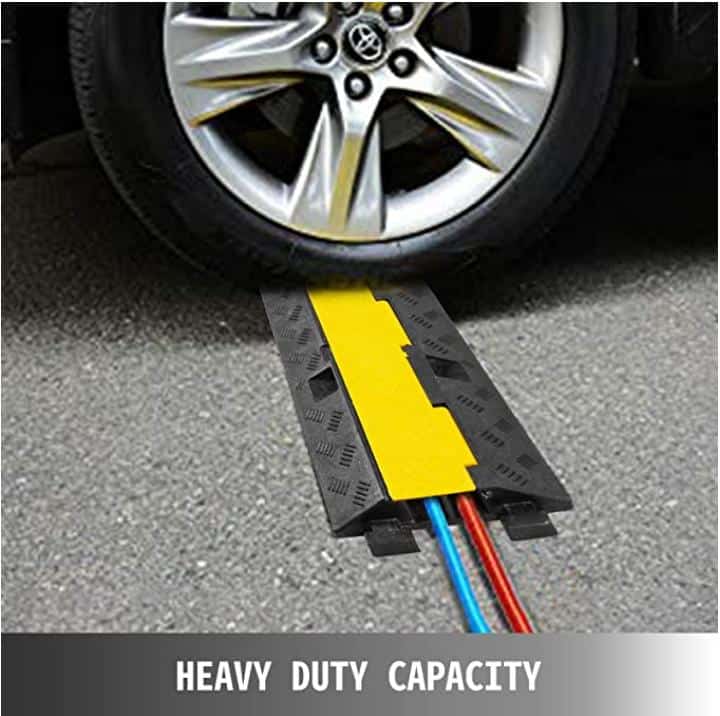 You need to protect your cables from this sort of damage. So it’s best to get your power wires into some sort of protective cable ramp that will prevent them from damage. As you can see from the picture, the cables are nestled in their own little compartment which can be driven over with most vehicles.

 Join Mike’s popular and informative Facebook group.


 It’s no surprise that America’s two largest RV magazines are set to publish their final issues. The magazines have been thin, uninspired versions of what they once were and it was obvious to RV insiders that it was only a matter of time before they’d disappear. Good Sam Club CEO Marcus Lemonis will launch a new title, RV Magazine, to replace them. Our prediction: It won’t be much more than a marketing tool for Camping World.
  Readers send their “smoky skies” photos
 That was the RV week that was


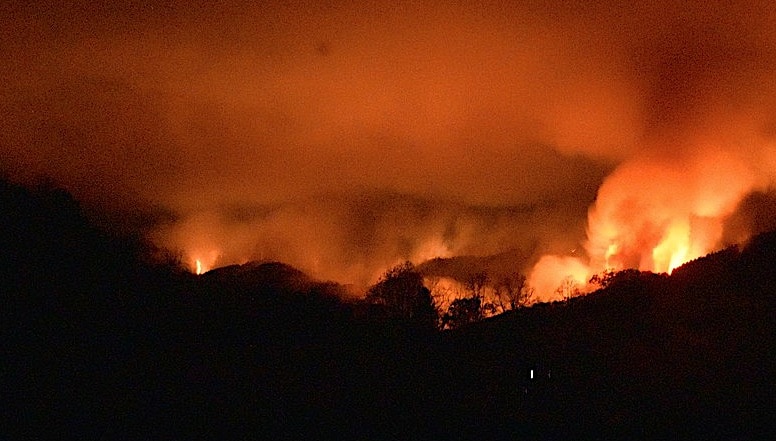

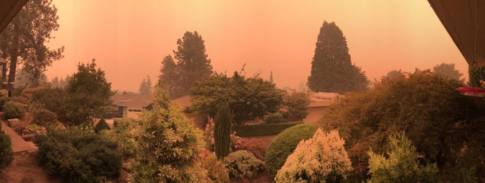
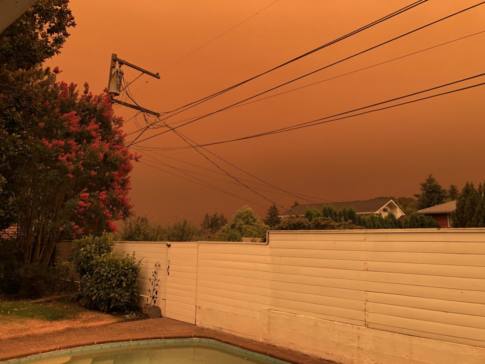
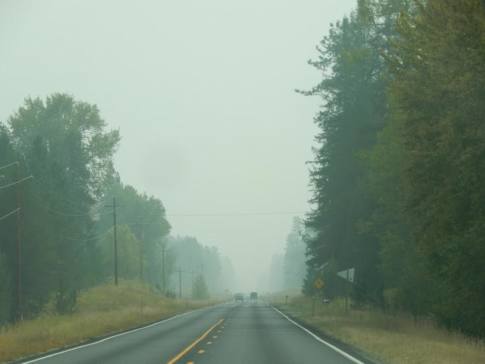
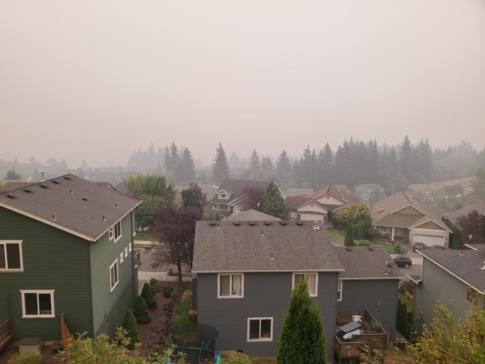 John Morgan sent us this photo he snapped in Stayton, Oregon, “where Highway 22 is blocked going east into the Santiam Canyon. Hell on earth.”

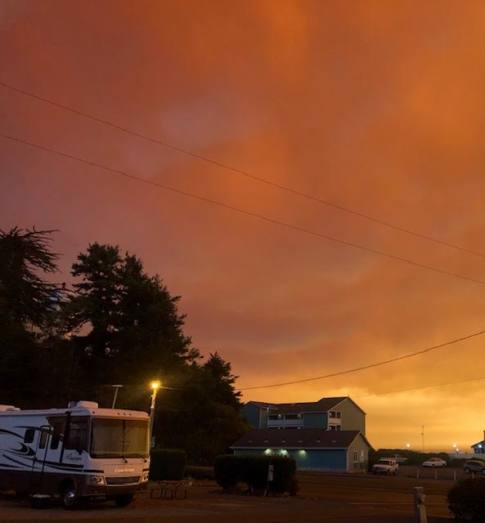
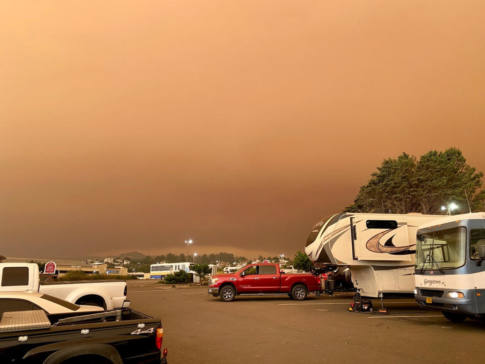
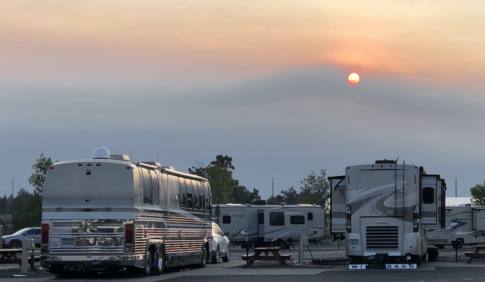
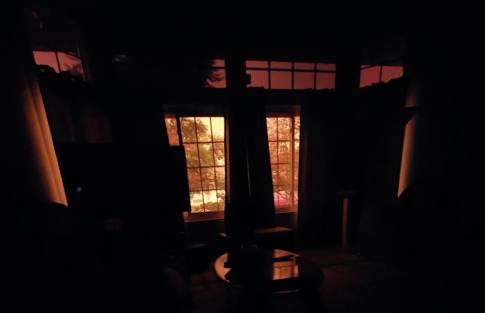
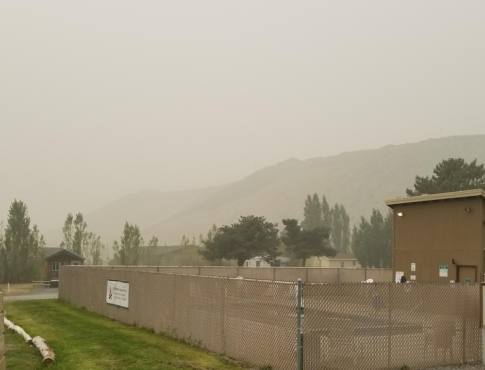



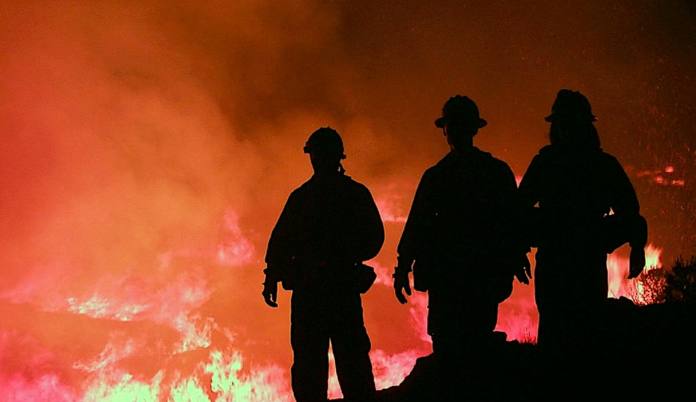


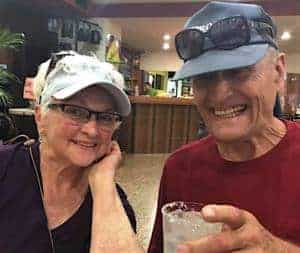 In our search to know our readers better, we’ve asked that they tell us about themselves. We know that thousands of them have followed us for a decade or more. We’ve met a few hundred of them through the years, which has been very nice. But who else, we wonder, reads what we write week after week? So, please, tell us about yourself! Here’s our second installment of
 • The last two major RV magazines will be pronounced dead in December. A new one will surface, but you can bet its purpose will not be focused on helping RVers but to mine their pocketbooks.
 RVtravel.com, and the 650 newsletters about RVing we publish every year, would not be possible without the financial support of our members, those who voluntarily subscribe. Now, in the most challenging time of our lifetimes, your help is needed more than ever for us to be your #1 source of news, information and advice about RVing. Every contribution, whatever size, makes a difference. A donation of only $12 a year comes out to less than 2 cents for each issue we publish! And when you become a member, you receive a special member-only ad-free version of this newsletter.


 A fun way to solve problems with your RV!
 Stay overnight for free at more than 1,040 wineries, farms, breweries, etc.! Harvest Hosts members can taste great wines and micro-brews, eat fresh produce and stay in peaceful settings far from the crowds.
 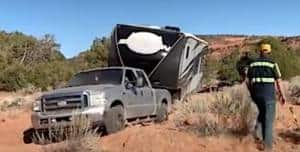 The title of this video is “Super Duty, Super Stuck” as in “Super Duty truck stuck in sand in the Arizona desert.” The moral of this story is to not only know the normal condition of a road you’re about to travel on to a perfect boondocking site, but to know its CURRENT condition. In this video, a tow truck (a Jeep!) responds to a fifth wheel and its Ford Super Duty truck that is hopelessly bogged down in sand …


 RV Gadgets and Gizmos
 RVing Women cannot thank you enough for recommending our organization in your newsletter last Saturday to the woman who had lost her husband. We are thankful we have been able to help many women in that situation continue to enjoy their RVs and get out on the road. I posted a link to your newsletter in our magazine, Facebook page, and on our two Facebook groups, encouraging anyone who reads it to consider subscribing to your newsletter. I know I love getting it. You do an amazing job. Thank you! —Yvonne Johnson